04
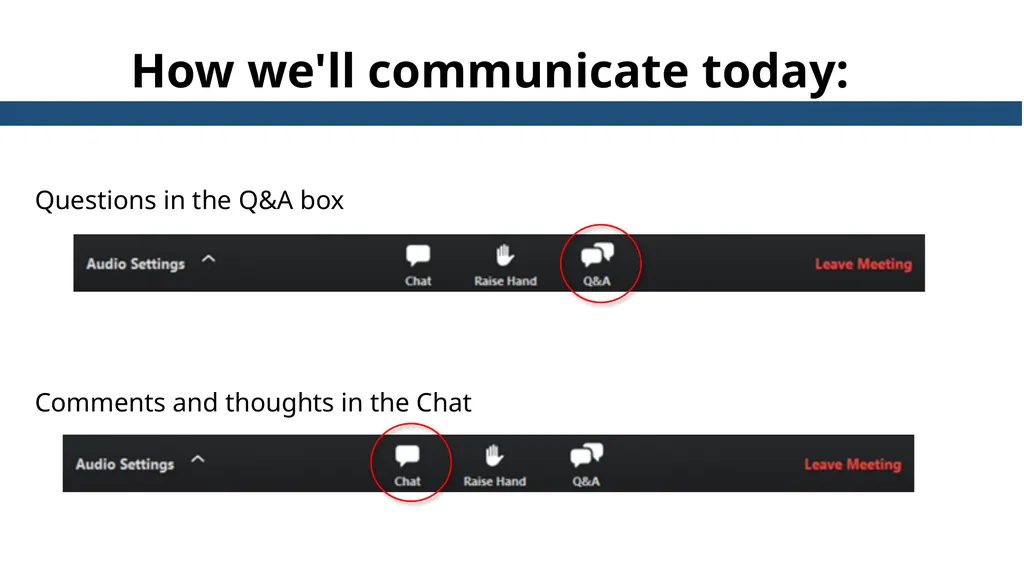
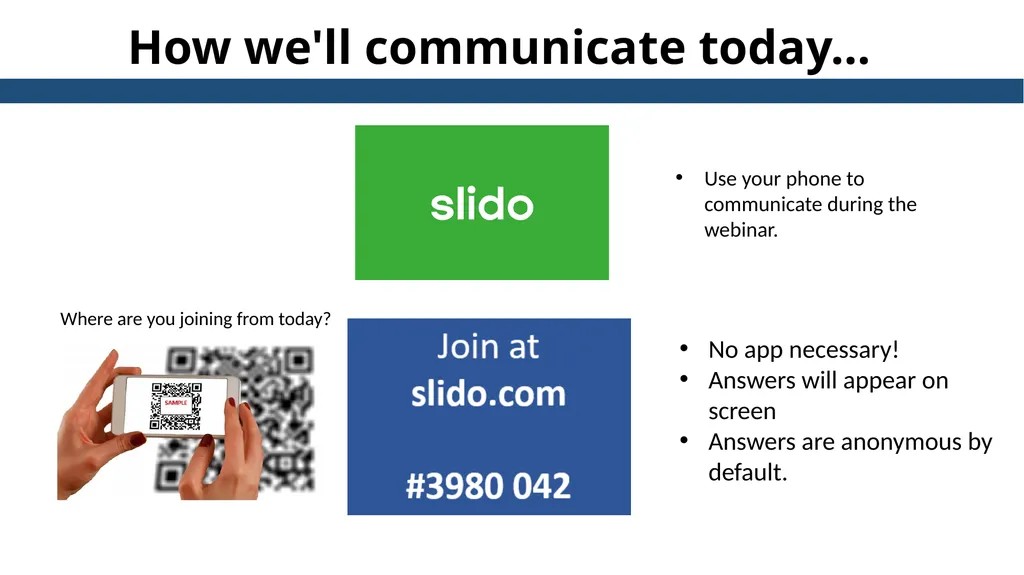
How we'll communicate today... No app necessary!
Answers will appear on screen
Answers are anonymous by default. Use your phone to communicate during the webinar. Where are you joining from today?<br>
05
Where are you calling in from? ⓘ Start presenting to display the poll results on this slide.<br>
06
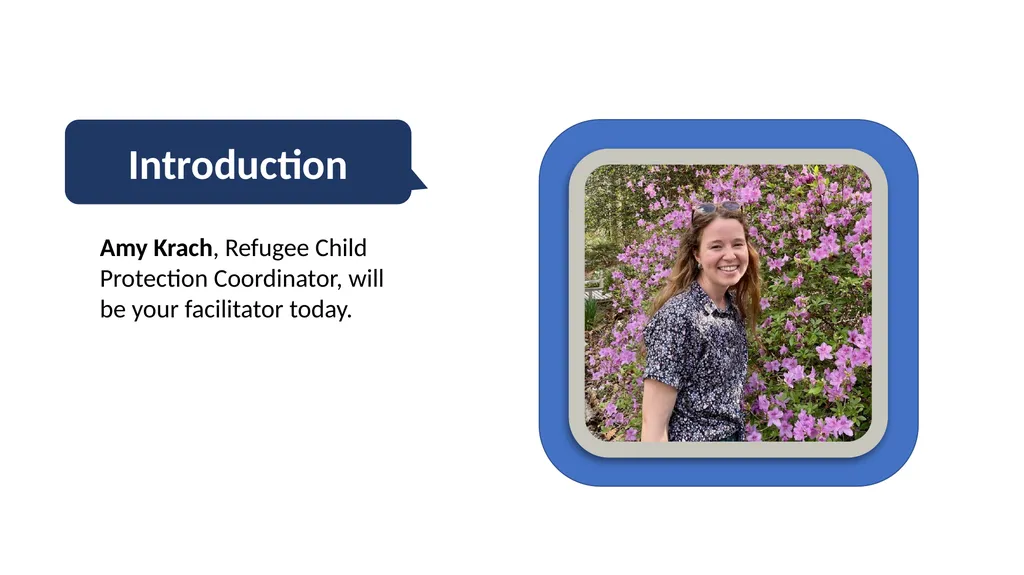
Introduction Amy Krach, Refugee Child Protection Coordinator, will be your facilitator today.<br>
07
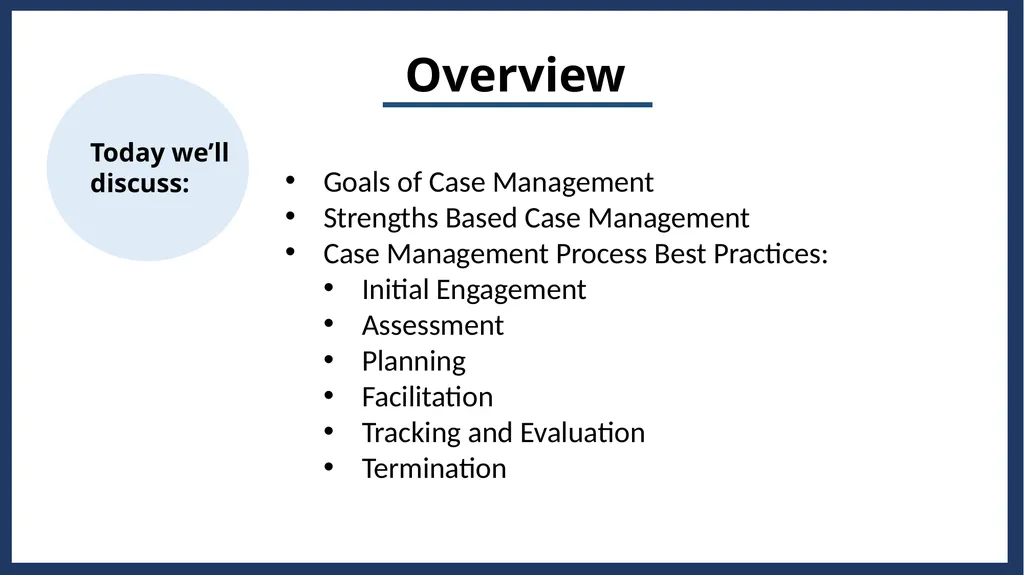
Overview Goals of Case Management
Strengths Based Case Management
Case Management Process Best Practices:
Initial Engagement
Assessment
Planning
Facilitation
Tracking and Evaluation
Termination Today we’ll discuss:<br>
08
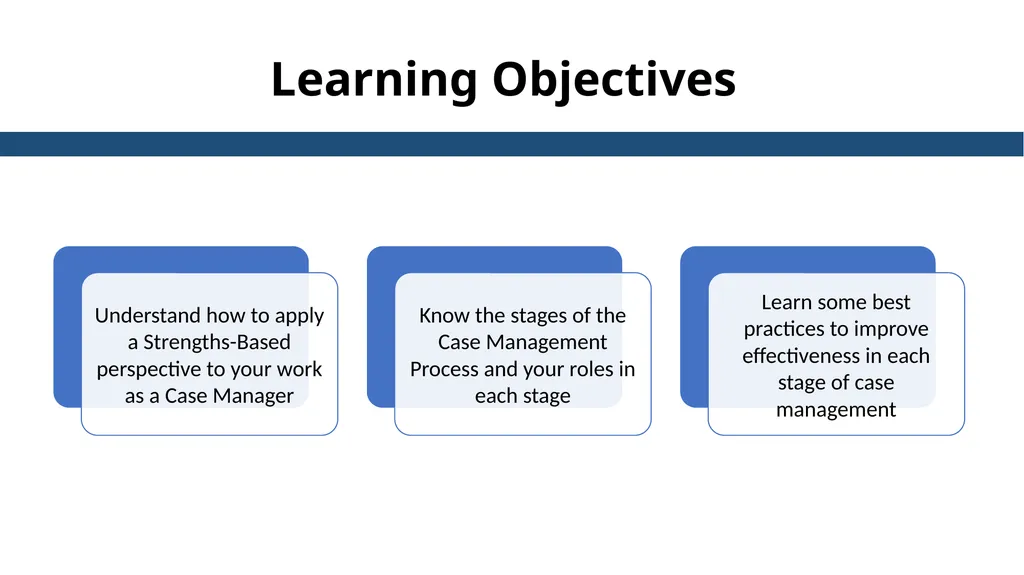
Learning Objectives<br>
09
Today’s content is based on USCCB’s newly-released Case Management Manual
Copies coming your way
MRS Connect<br>
10
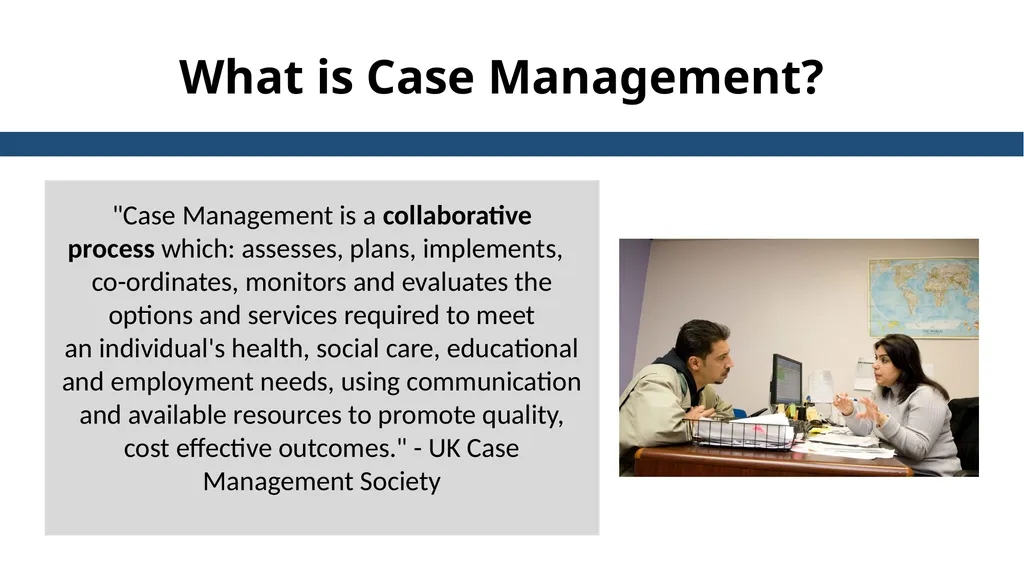
What is Case Management? "Case Management is a collaborative process which: assesses, plans, implements,
co-ordinates, monitors and evaluates the options and services required to meet an individual's health, social care, educational and employment needs, using communication and available resources to promote quality, cost effective outcomes." - UK Case Management Society<br>
11
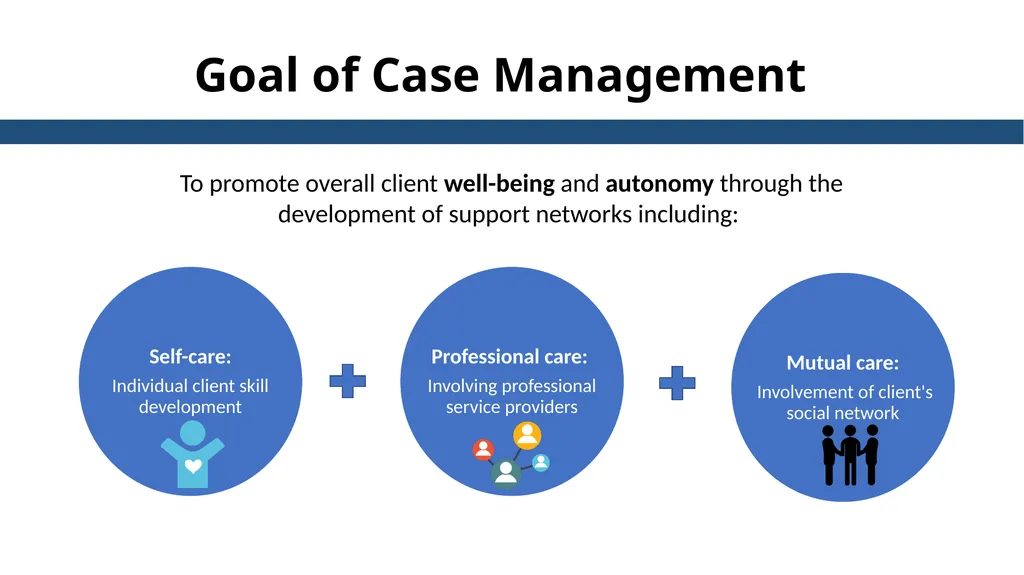
Goal of Case Management Self-care:
Individual client skill development Professional care:
Involving professional service providers Mutual care:
Involvement of client's social network To promote overall client well-being and autonomy through the development of support networks including:<br>
12
Strengths-Based Case Management<br>
13
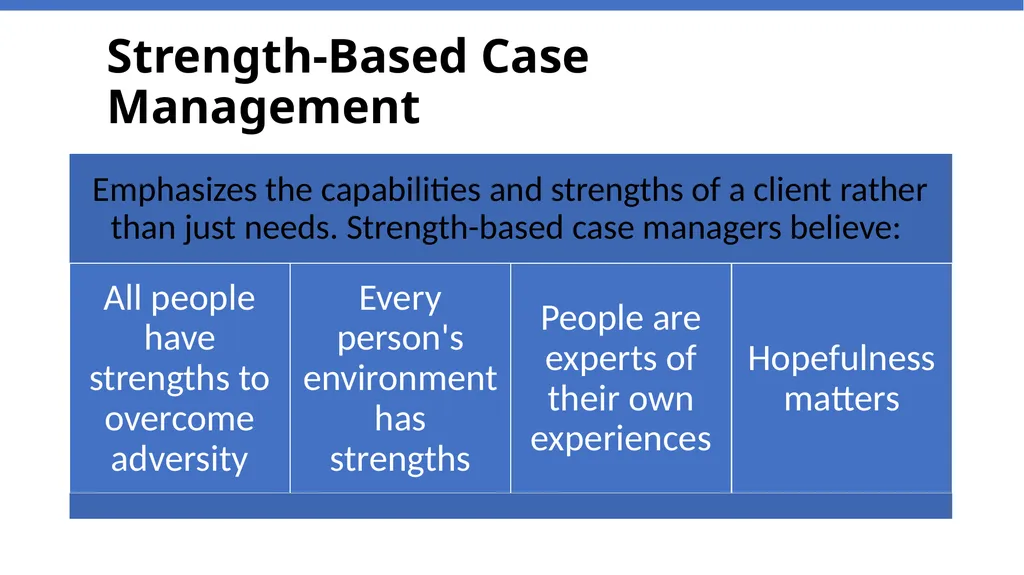
Strength-Based Case Management<br>
14
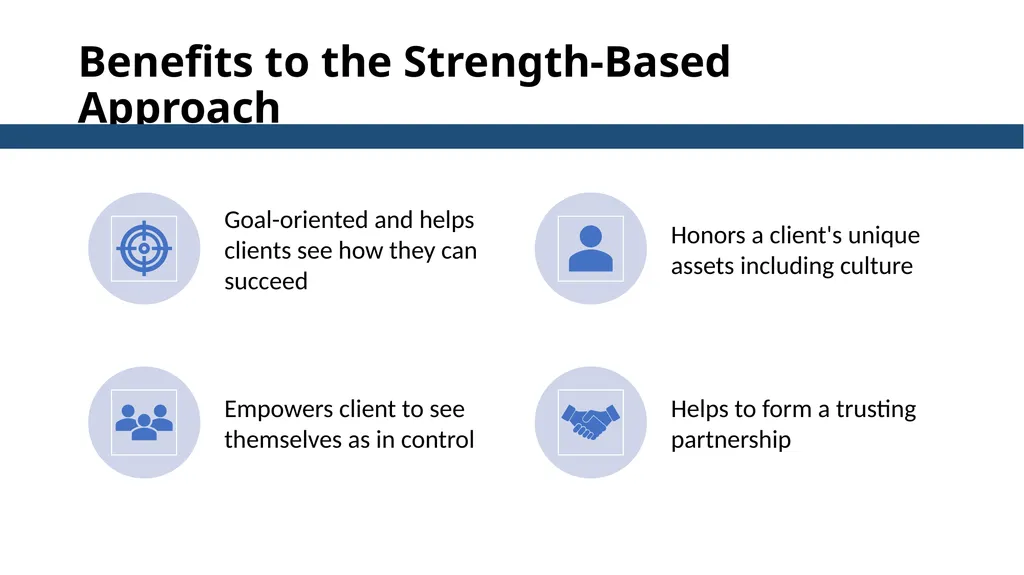
Benefits to the Strength-Based Approach<br>
15
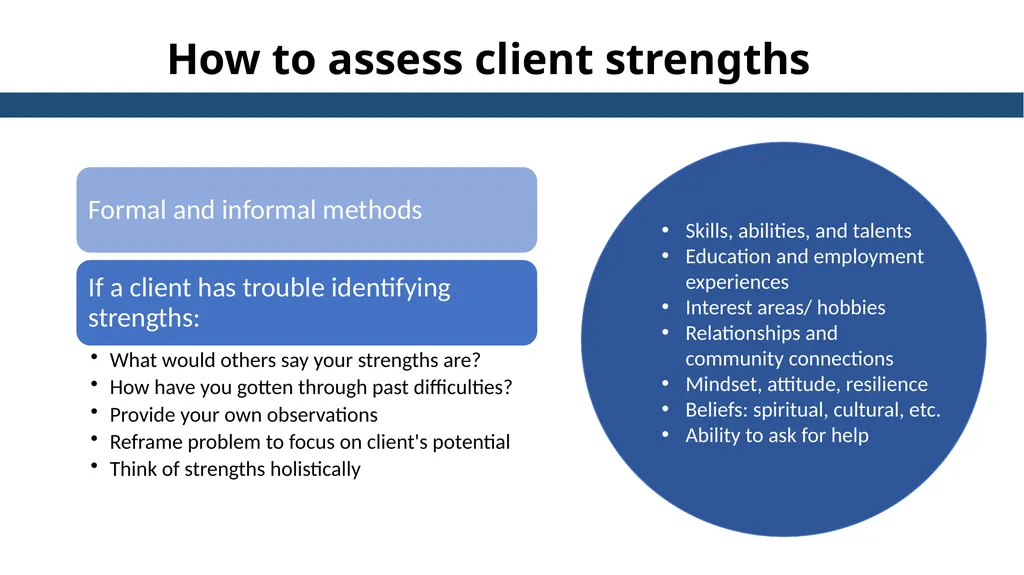
How to assess client strengths Skills, abilities, and talents
Education and employment experiences
Interest areas/ hobbies
Relationships and community connections
Mindset, attitude, resilience
Beliefs: spiritual, cultural, etc.
Ability to ask for help<br>
16
A pause for questions.<br>
17
The Case Management Process<br>
18
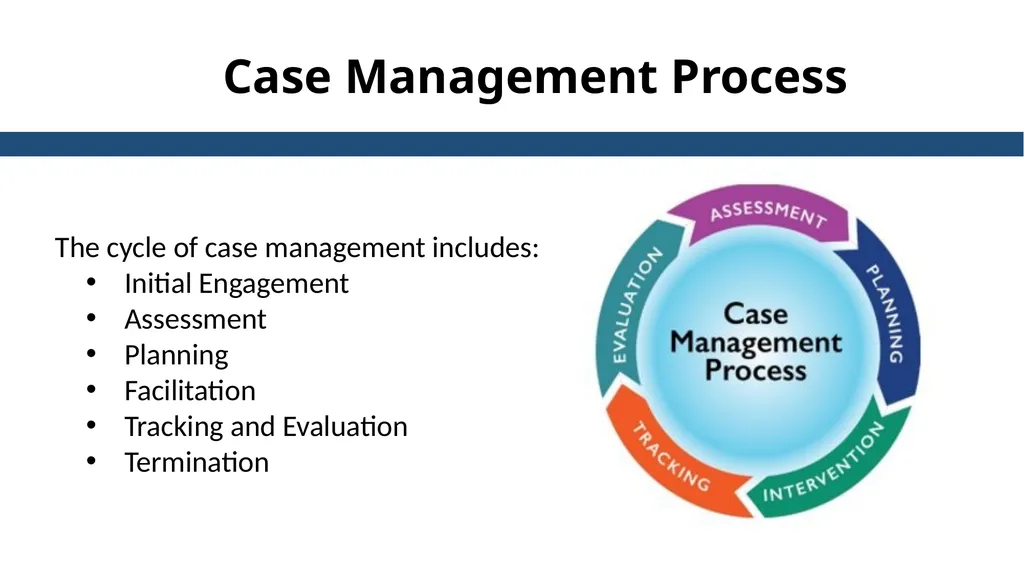
Case Management Process The cycle of case management includes:
Initial Engagement
Assessment
Planning
Facilitation
Tracking and Evaluation
Termination<br>
19
Initial Engagement<br>
20
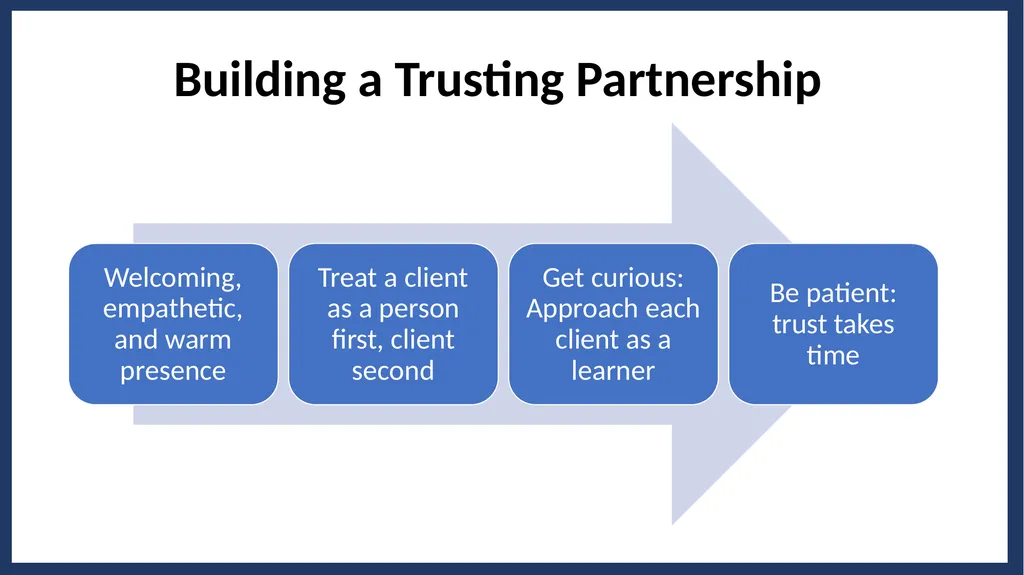
Building a Trusting Partnership<br>
21
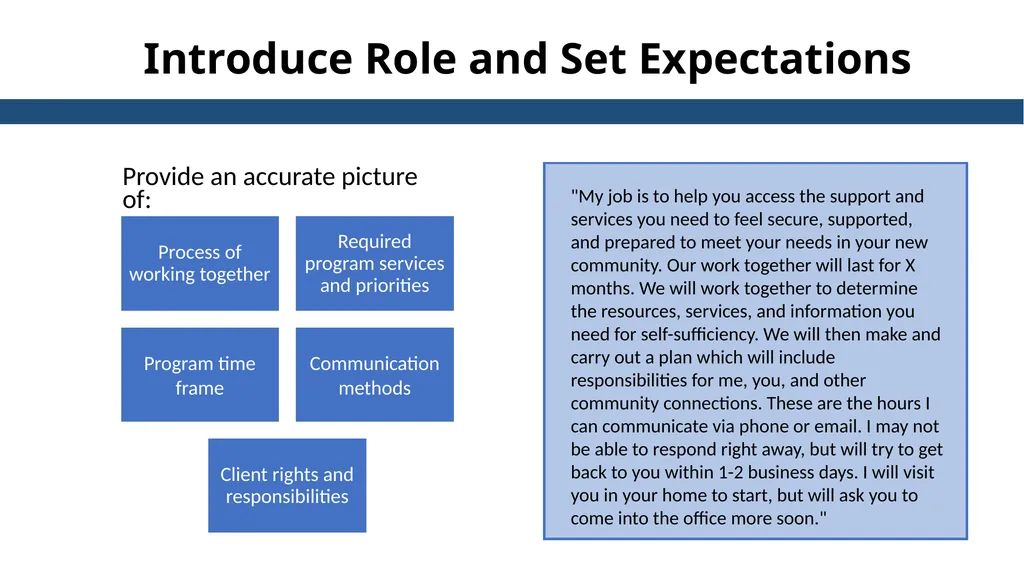
Introduce Role and Set Expectations Provide an accurate picture of: "My job is to help you access the support and services you need to feel secure, supported, and prepared to meet your needs in your new community. Our work together will last for X months. We will work together to determine the resources, services, and information you need for self-sufficiency. We will then make and carry out a plan which will include responsibilities for me, you, and other community connections. These are the hours I can communicate via phone or email. I may not be able to respond right away, but will try to get back to you within 1-2 business days. I will visit you in your home to start, but will ask you to come into the office more soon."<br>
23
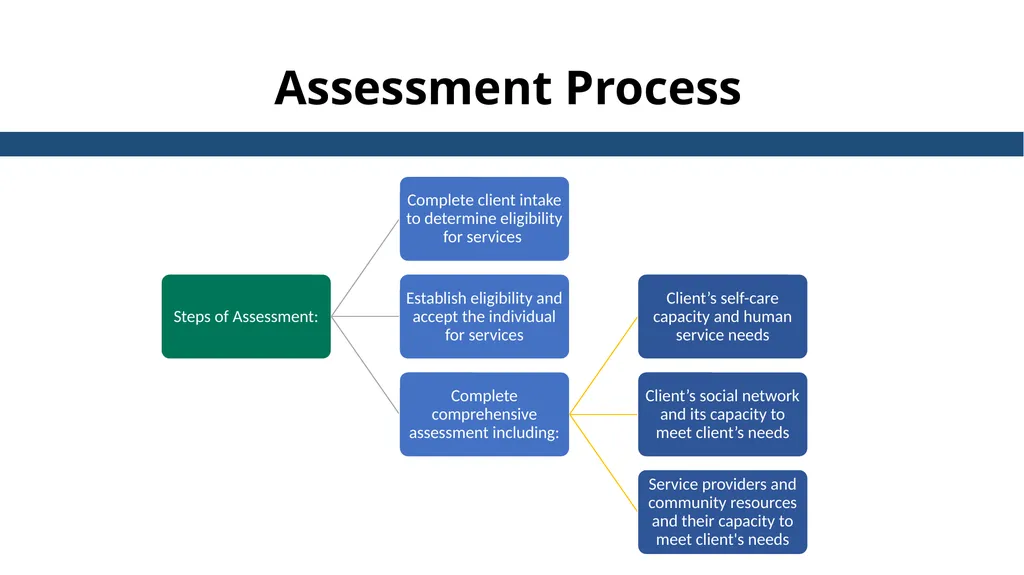
Assessment Process<br>
24
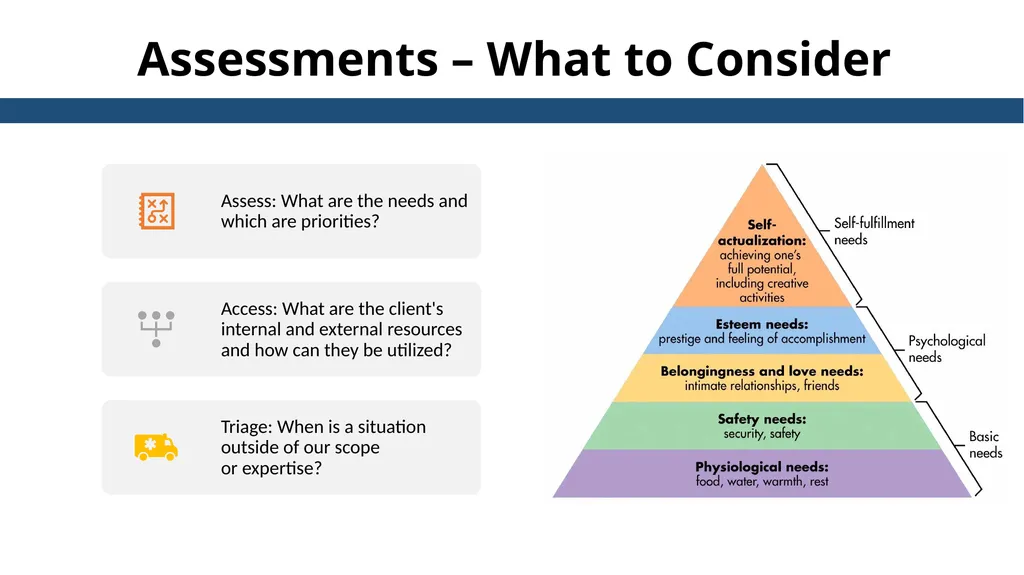
Assessments – What to Consider<br>
26
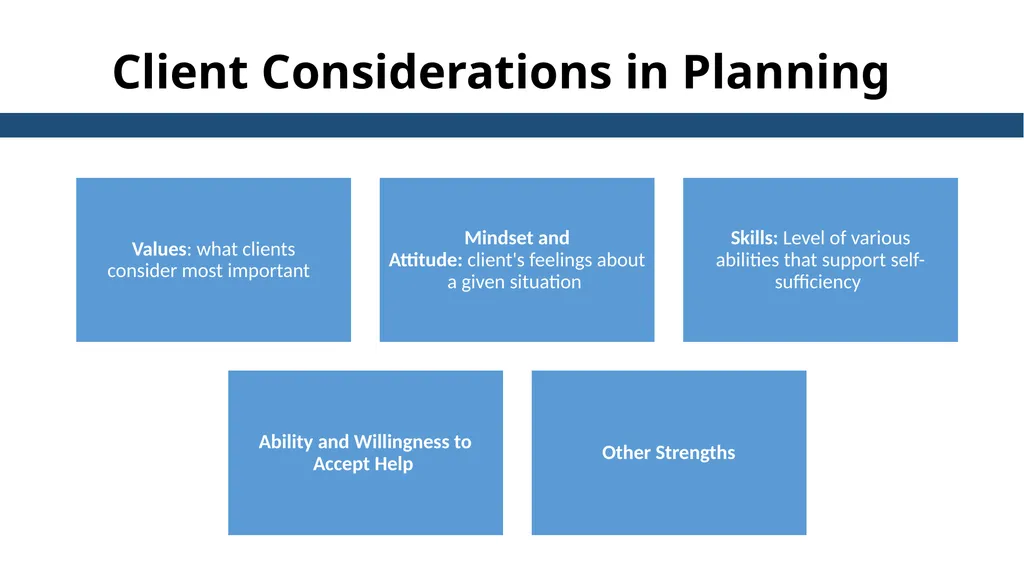
Client Considerations in Planning<br>
27
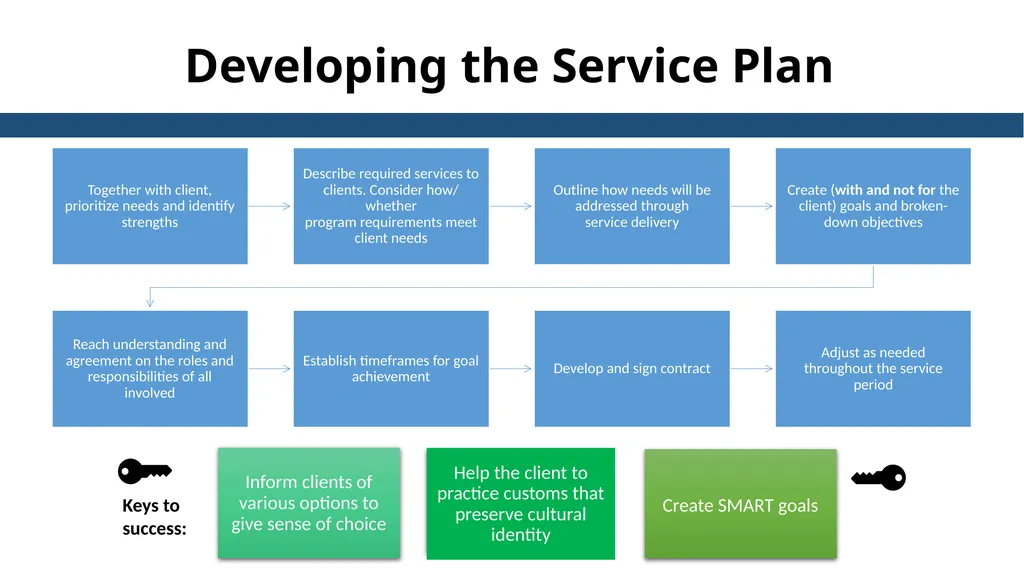
Developing the Service Plan Keys to success:<br>
28
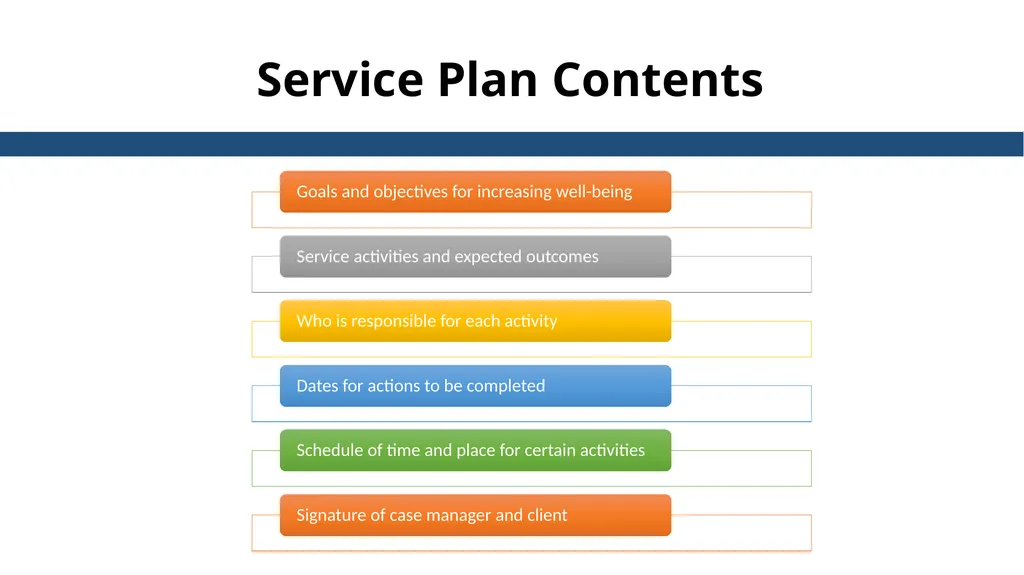
Service Plan Contents<br>
29
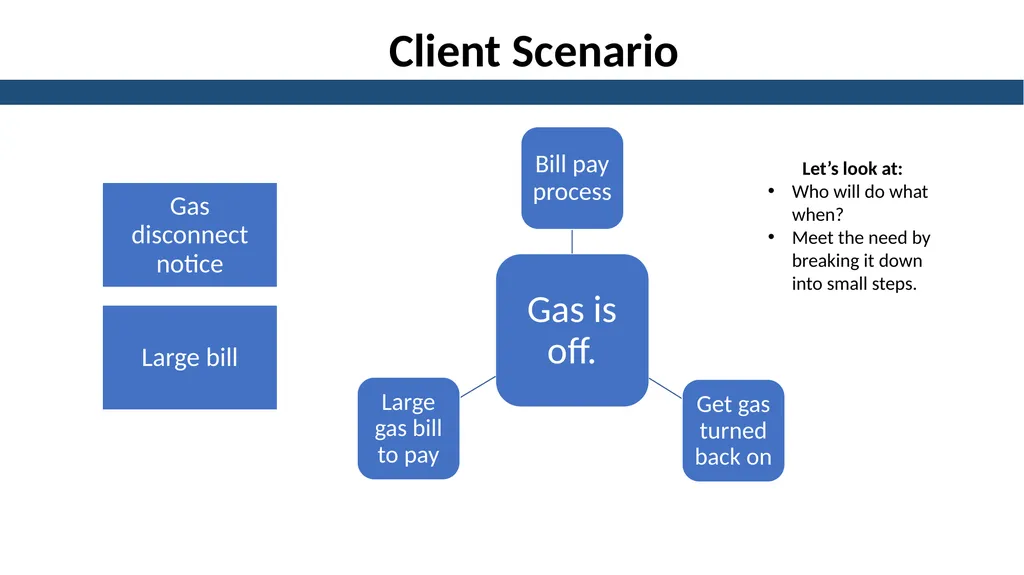
Client Scenario Let’s look at:
Who will do what when?
Meet the need by breaking it down into small steps.<br>
30
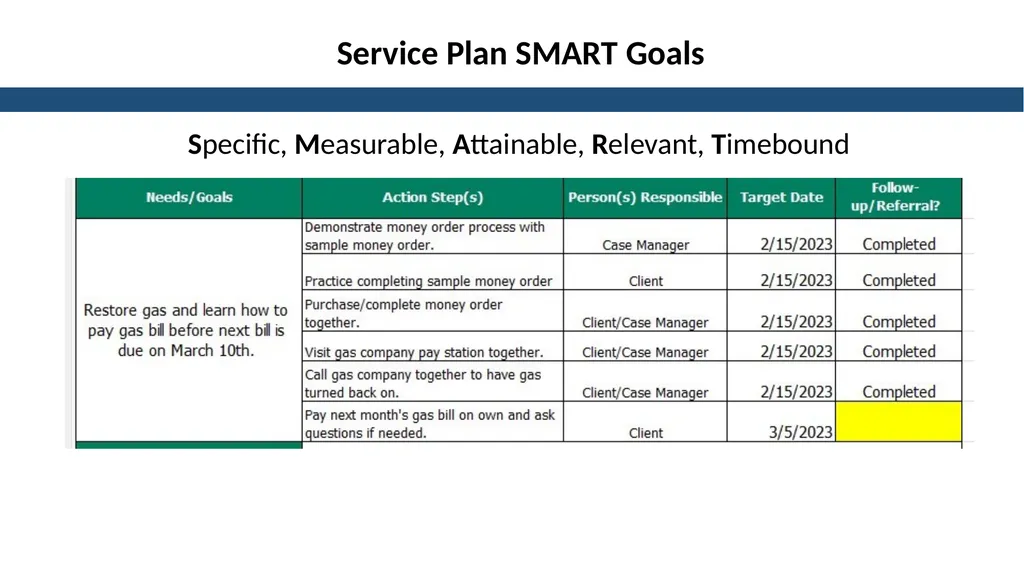
Service Plan SMART Goals Specific, Measurable, Attainable, Relevant, Timebound<br>
32
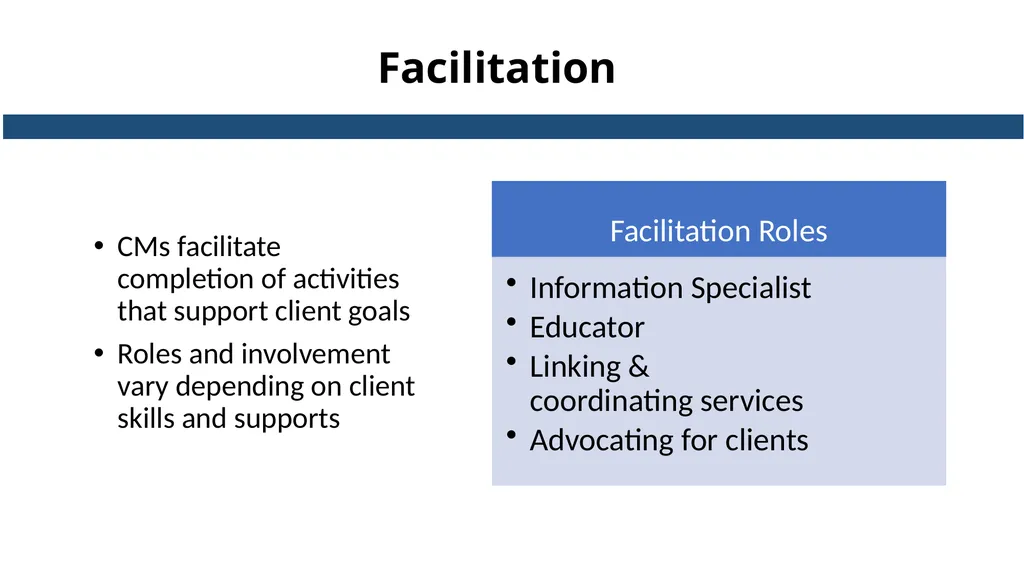
Facilitation CMs facilitate completion of activities that support client goals
Roles and involvement vary depending on client skills and supports<br>
33
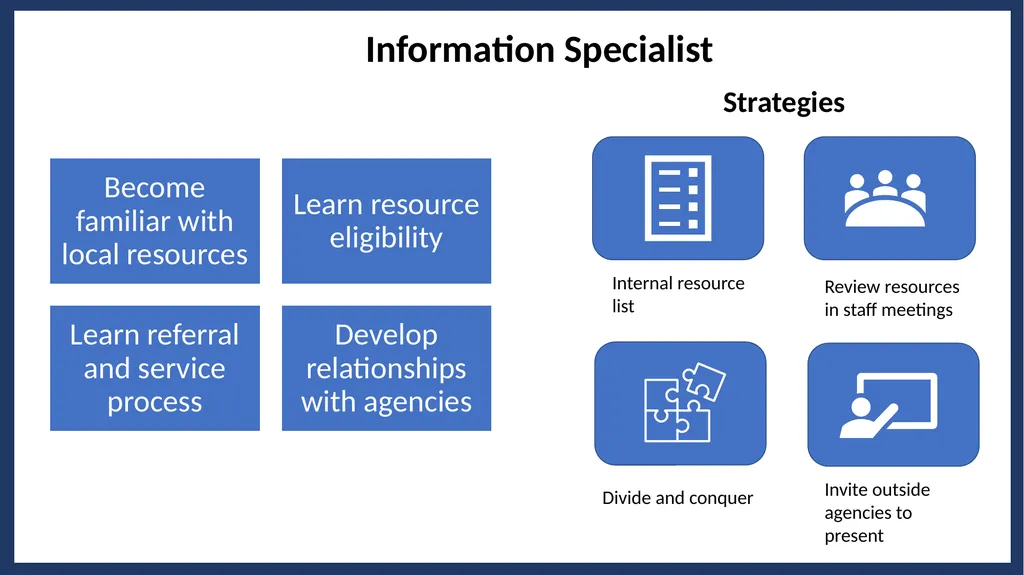
Become familiar with local resources Learn resource eligibility Learn referral and service process Develop relationships with agencies Information Specialist Strategies Review resources in staff meetings Internal resource list Divide and conquer Invite outside agencies to present<br>
34
What are some ways your agency stays on top of local resources? (Staff meetings, resource list, divide and conquer, agency presentations, other ideas?) ⓘ Start presenting to display the poll results on this slide.<br>
35
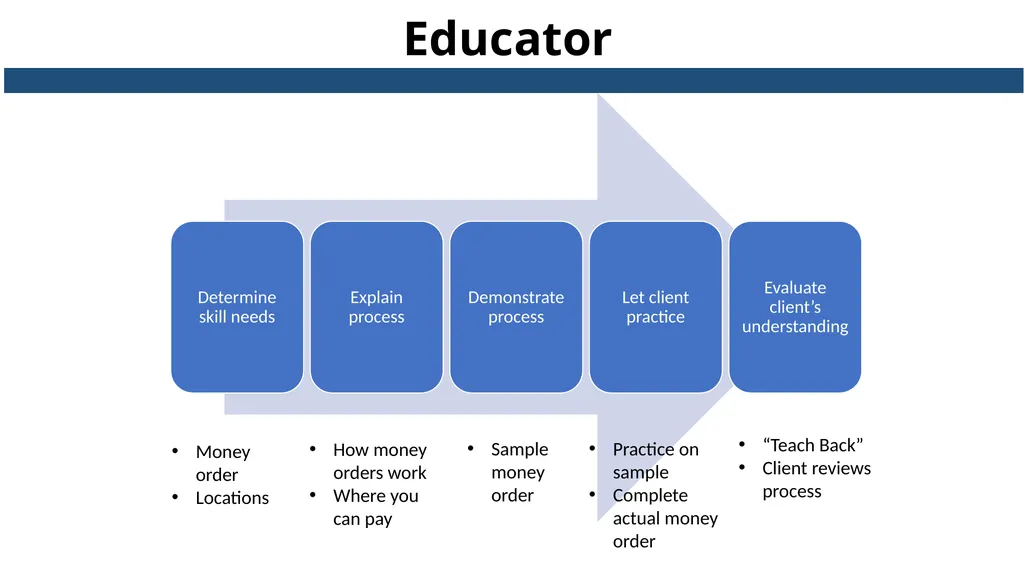
Determine skill needs Explain process Demonstrate process Let client practice Evaluate client’s understanding Money order
Locations Sample money order Practice on sample
Complete actual money order How money orders work
Where you can pay “Teach Back”
Client reviews process Educator<br>
36
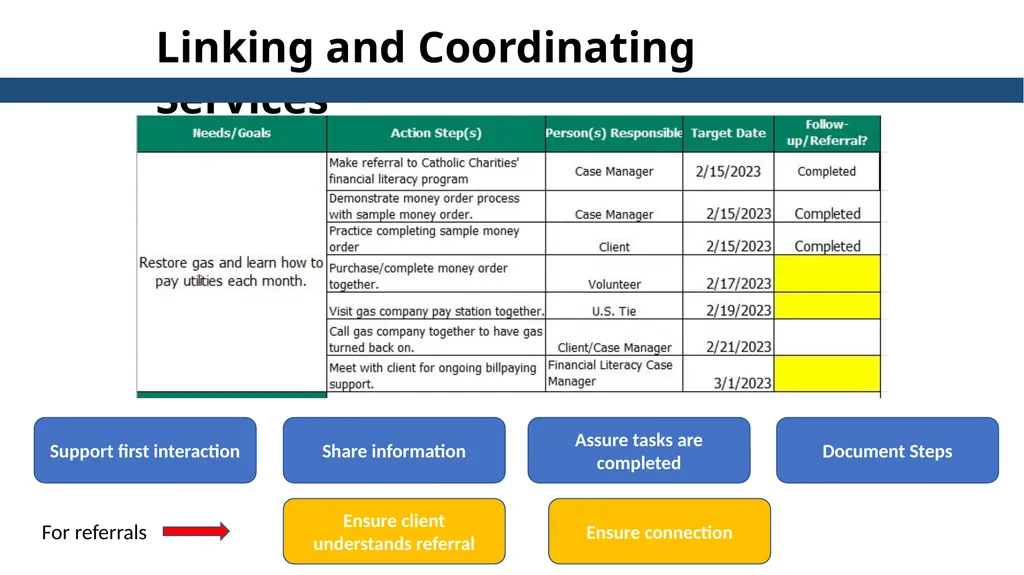
Linking and Coordinating Services Support first interaction Share information Assure tasks are completed Document Steps Ensure client understands referral Ensure connection<br>
37
Advocacy helps ensure clients have equitable access to services (within your agency or in the community)
Effective advocacy can include: Advocating for Clients School must provide interpretation Does school have a grievance process? Start closest to student Escalate to supervisor and school admin<br>
38
A pause for questions.<br>
39
Tracking & Evaluation<br>
41
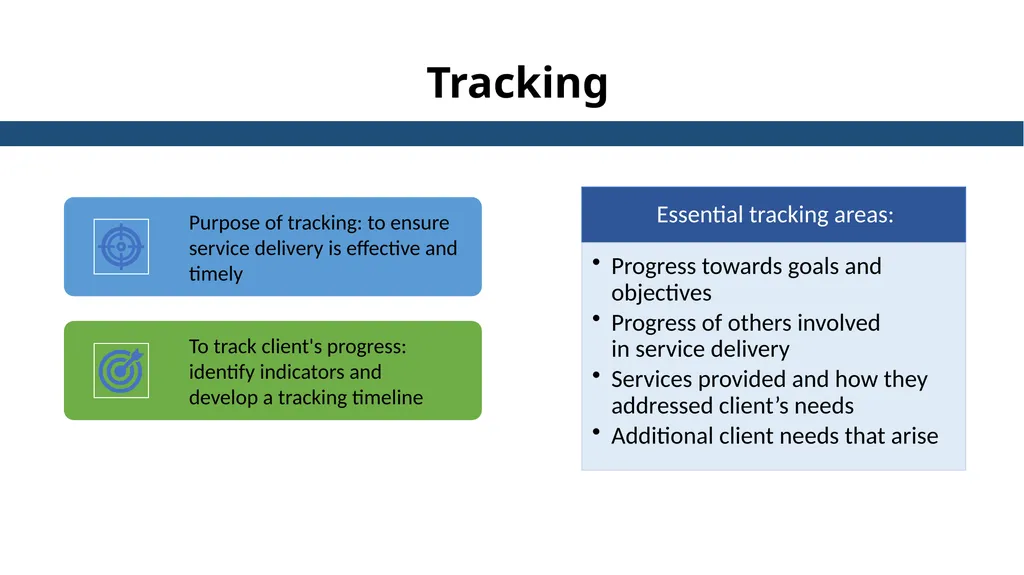
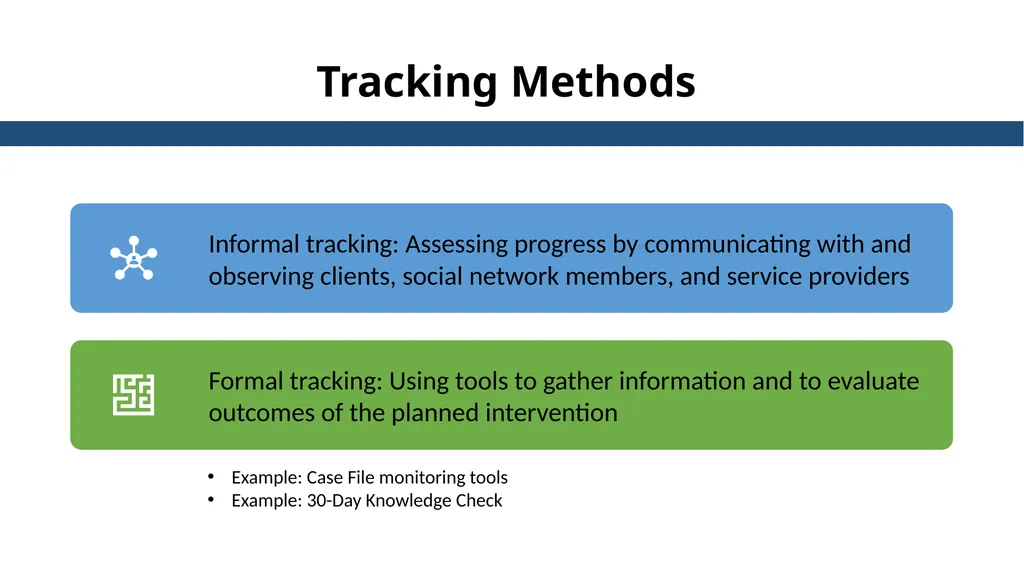
Tracking Methods Example: Case File monitoring tools
Example: 30-Day Knowledge Check<br>
42
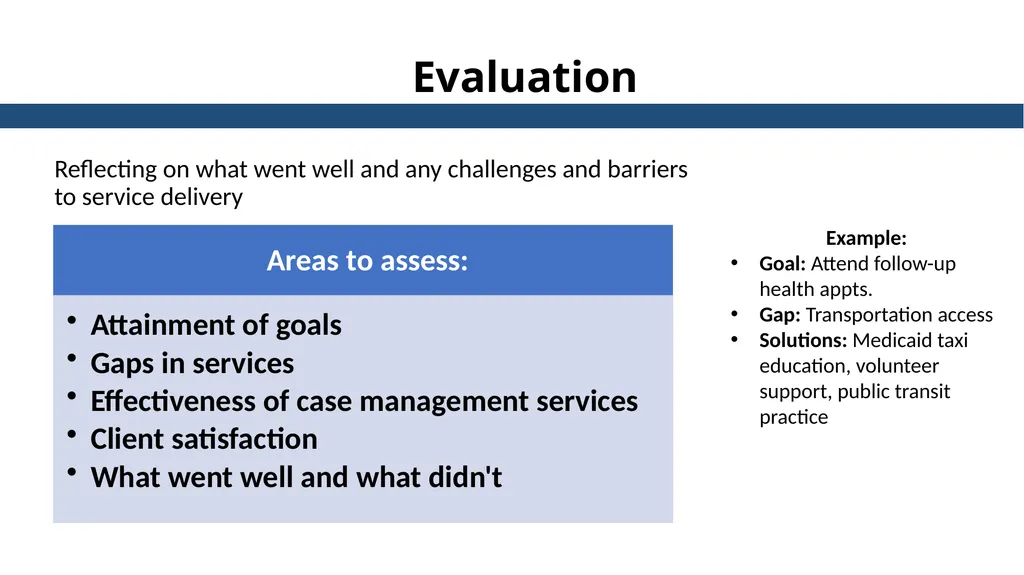
Reflecting on what went well and any challenges and barriers to service delivery Evaluation Example:
Goal: Attend follow-up health appts.
Gap: Transportation access
Solutions: Medicaid taxi education, volunteer support, public transit practice<br>
44
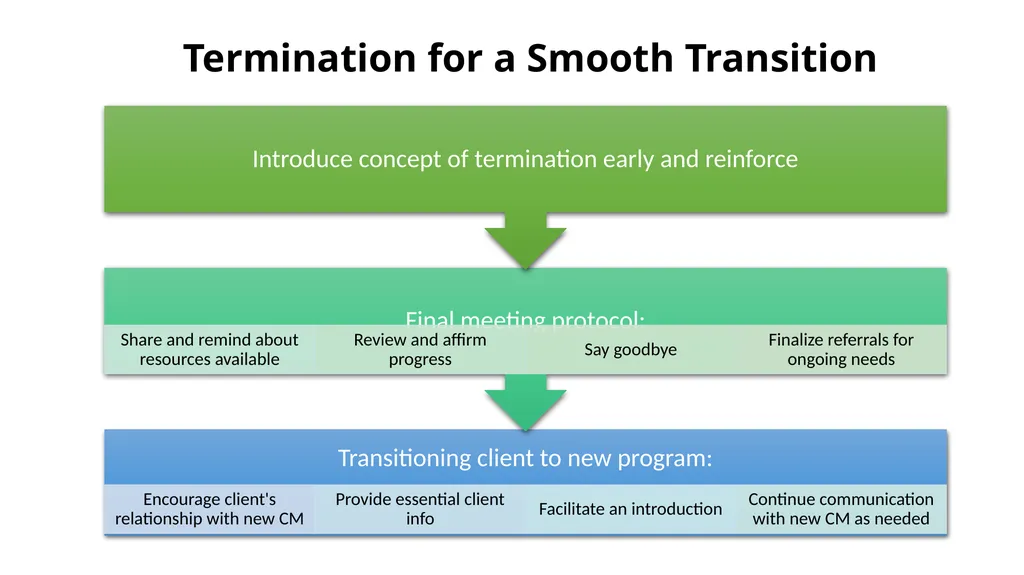
Termination for a Smooth Transition<br>
45
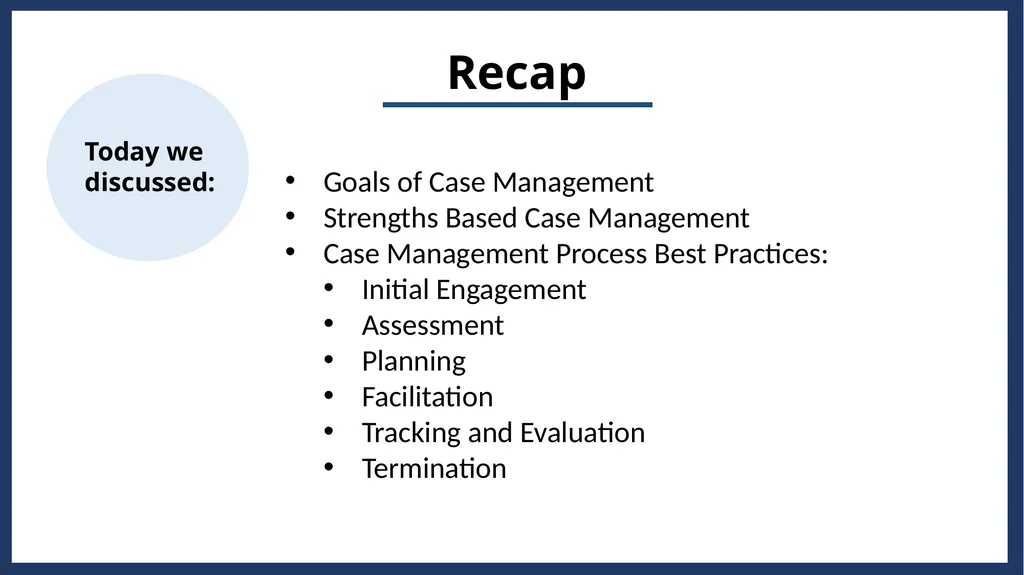
Recap Goals of Case Management
Strengths Based Case Management
Case Management Process Best Practices:
Initial Engagement
Assessment
Planning
Facilitation
Tracking and Evaluation
Termination Today we discussed:<br>
47
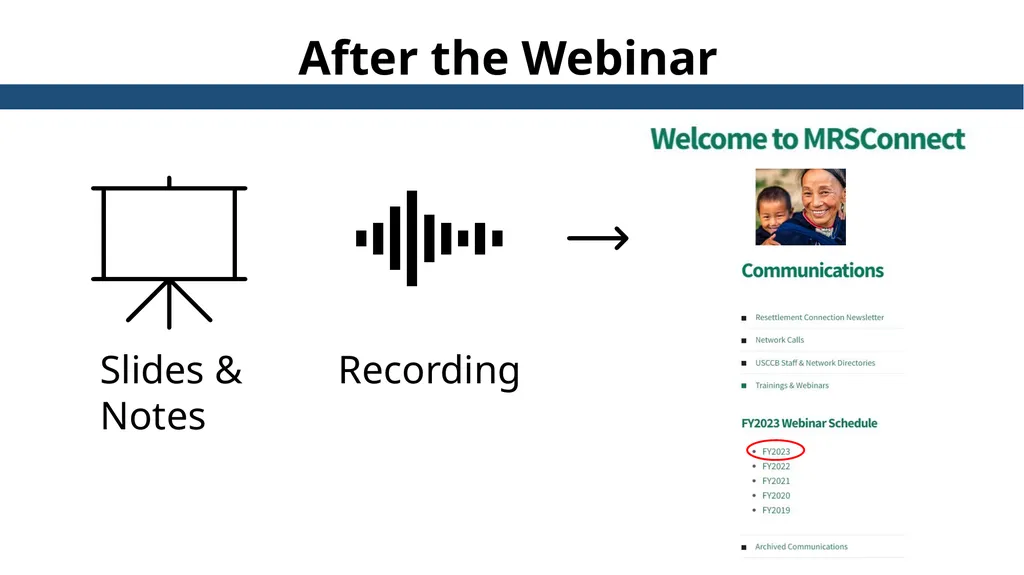
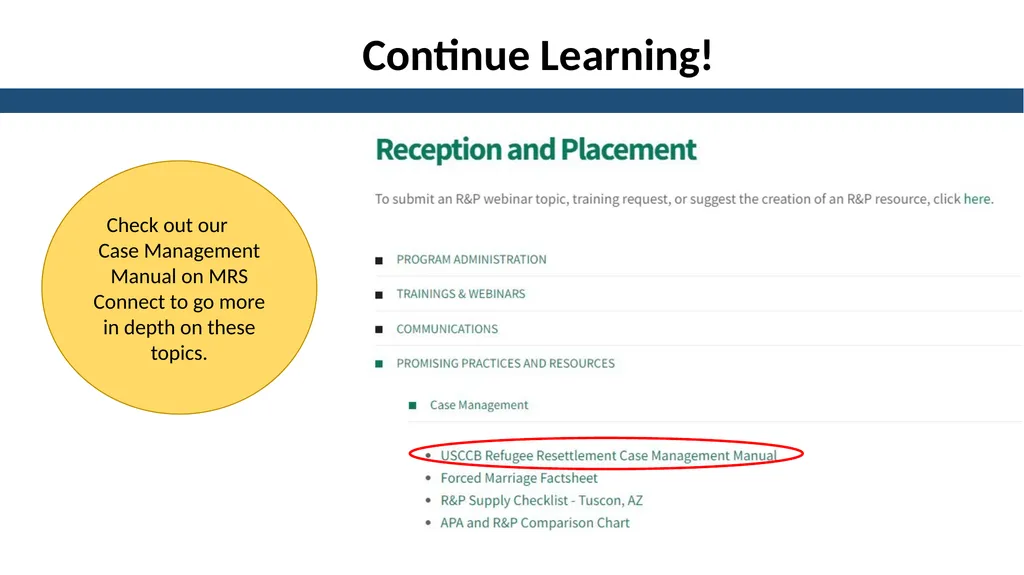
Continue Learning! Check out our Case Management Manual on MRS Connect to go more in depth on these topics.<br>
48
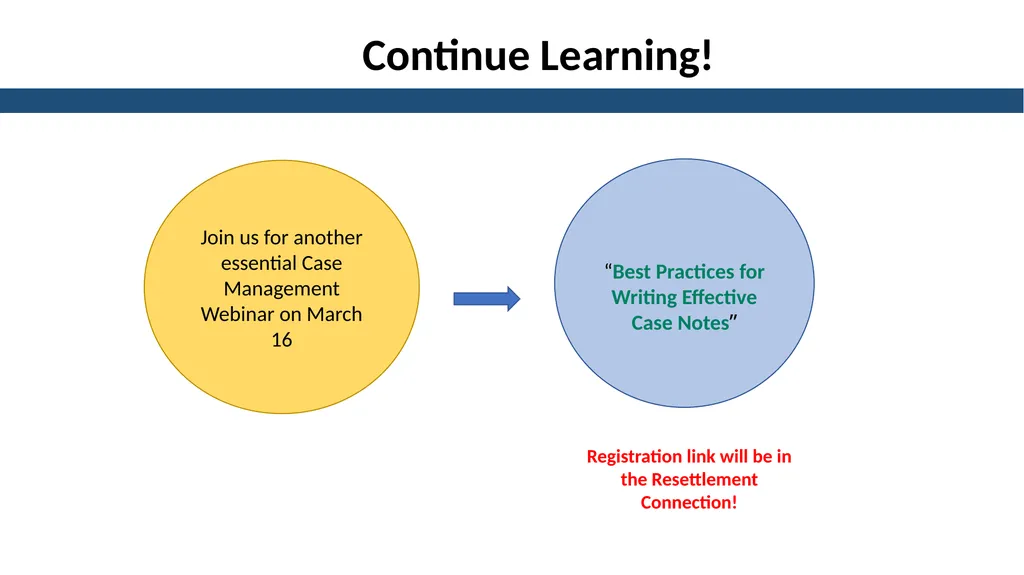
Continue Learning! Join us for another essential Case Management Webinar on March 16 “Best Practices for Writing Effective Case Notes” Registration link will be in the Resettlement Connection!<br>
49
Questions?
Please add questions to the Q&A box or raise your hand.<br>