Ethics Theory and Business Practice 10.2 The Responsibilities of Business Executives Part Two Specifying Normative Stakeholder Theory aims to describe how normative stakeholder theory differs from instrumental stakeholder theory and
"Ethics Theory and Business Practice 10.2 The" is the property of its rightful owner. Permission is granted to
download and print the materials on this website for personal, non-commercial use only, and to display it
on your personal computer provided you do not modify the materials and that you retain all copyright
notices contained in the materials. By downloading content from our website, you accept the terms of this
agreement.
Presentation Transcript
01
Ethics Theory and Business Practice 10.2 The Responsibilities of Business Executives – Part Two
Specifying Normative Stakeholder Theory<br>
02
aims to describe how normative stakeholder theory differs from instrumental stakeholder theory and enlightened shareholder theory<br>
03
1. distinguishing normative stakeholder theory from instrumental stakeholder theory instrumental stakeholder theory: highlighting the instrumental importance of influential stakeholders
normative stakeholder theory: highlighting the ethical importance of all stakeholders<br>
04
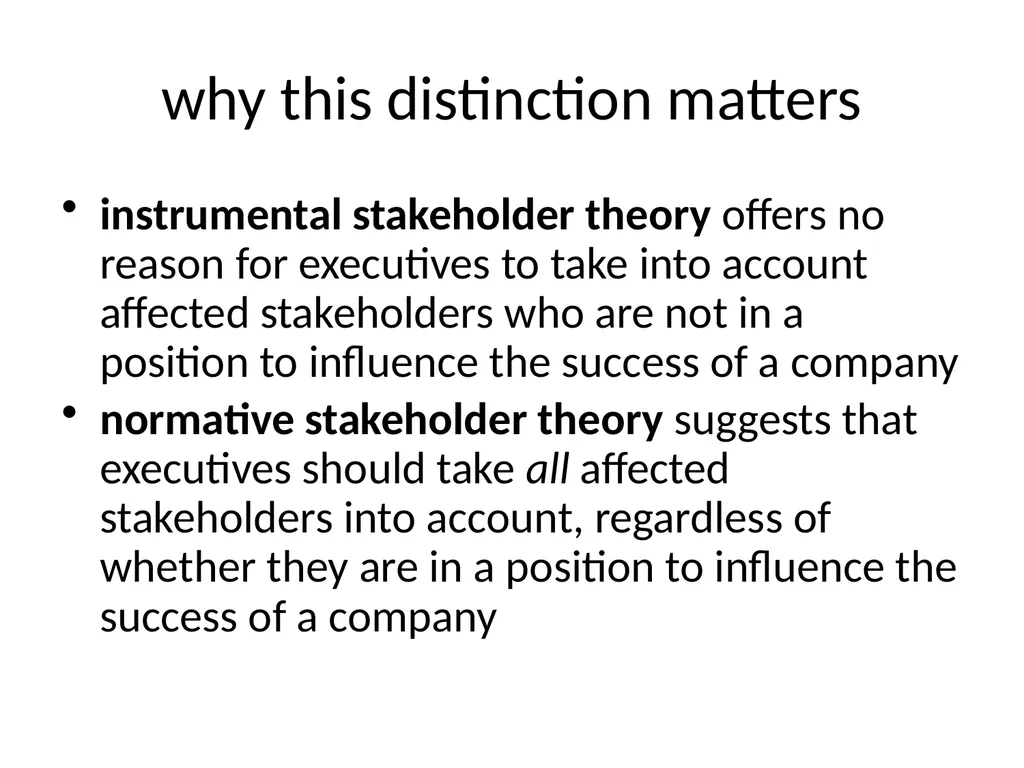
why this distinction matters instrumental stakeholder theory offers no reason for executives to take into account affected stakeholders who are not in a position to influence the success of a company
normative stakeholder theory suggests that executives should take all affected stakeholders into account, regardless of whether they are in a position to influence the success of a company<br>
05
theory in practice do banks have a responsibility to provide all customers with free access to their funds?<br>
06
2. distinguishing normative stakeholder theory from enlightened shareholder theory enlightened shareholder theory: highlighting the potential commercial importance of all stakeholders
influential stakeholders matter because of their instrumental importance
non-influential stakeholders matter because influential stakeholders may care about how the company treats them<br>
07
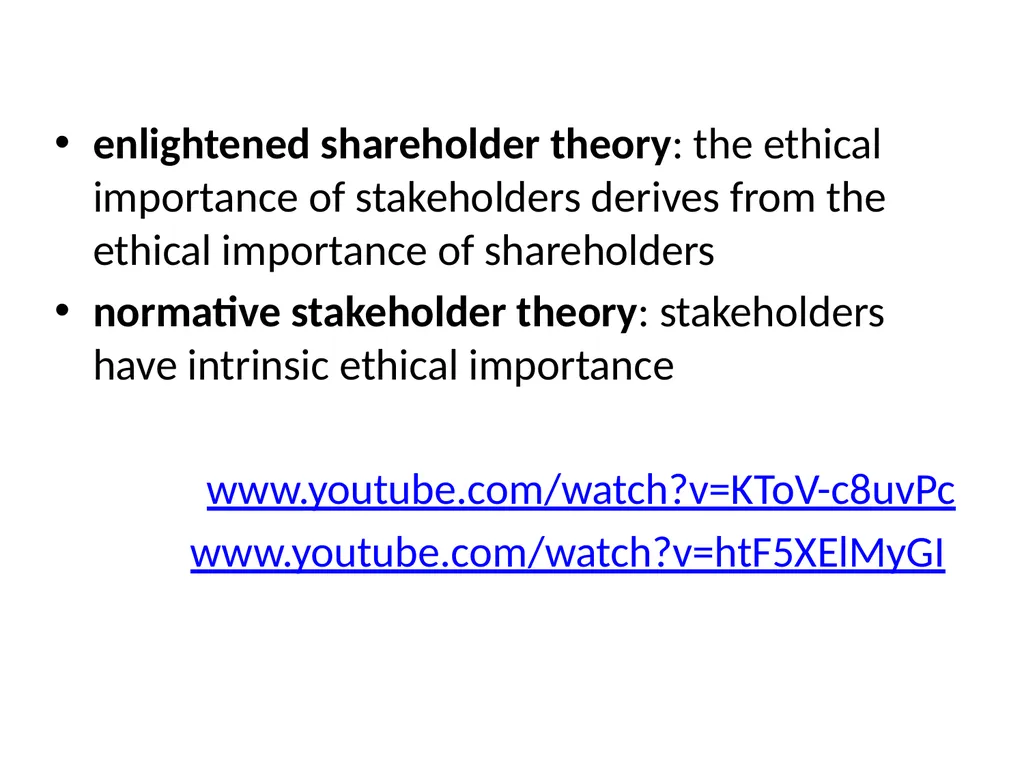
enlightened shareholder theory: the ethical importance of stakeholders derives from the ethical importance of shareholders
normative stakeholder theory: stakeholders have intrinsic ethical importance
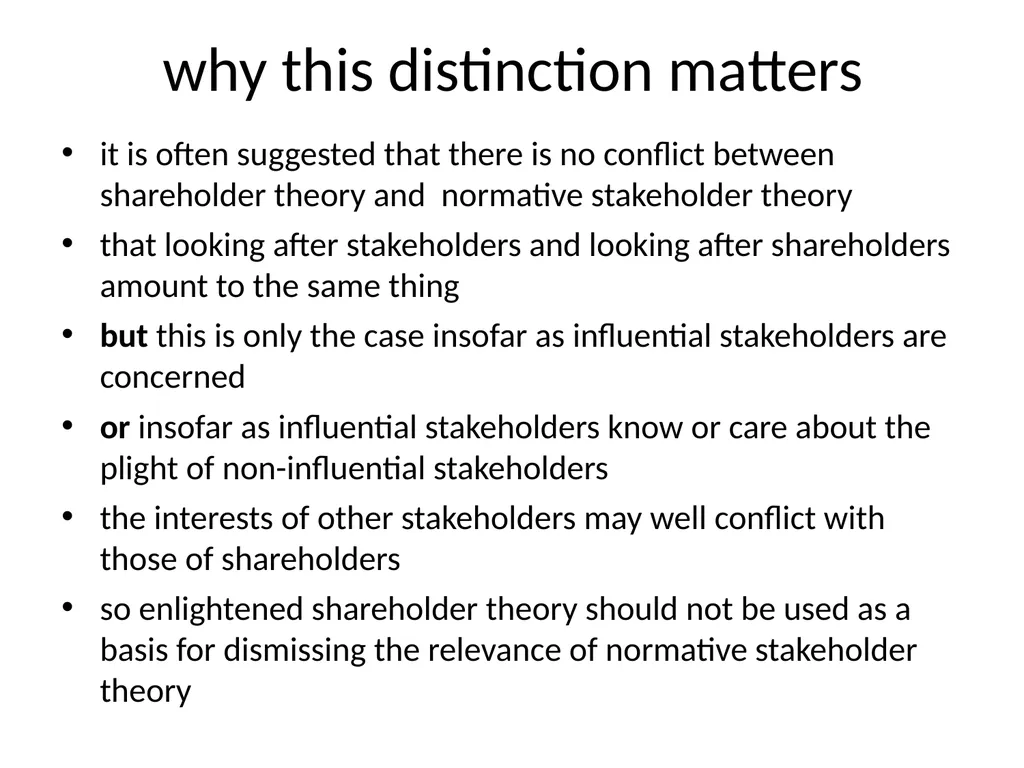
why this distinction matters it is often suggested that there is no conflict between shareholder theory and normative stakeholder theory
that looking after stakeholders and looking after shareholders amount to the same thing
but this is only the case insofar as influential stakeholders are concerned
or insofar as influential stakeholders know or care about the plight of non-influential stakeholders
the interests of other stakeholders may well conflict with those of shareholders
so enlightened shareholder theory should not be used as a basis for dismissing the relevance of normative stakeholder theory<br>
09
key points instrumental stakeholder theory and enlightened shareholder theory are often used to downplay conflicts between the interests of shareholders and those of other stakeholders
however, conflicts between the interests of shareholders and those of some stakeholders frequently occur
therefore, the shareholder theory – normative stakeholder theory debate is an important one<br>