Everything you ever wanted to know about DVTPE .. but were afraid to ask Alice Greene, MD Medical Director of Clinical Documentation Integrity Thrombophilia is synonymous with hypercoaguable state. Hypercoaguable state unspecified codes
"Everything you ever wanted to know about DVT/PE" is the property of its rightful owner. Permission is granted to
download and print the materials on this website for personal, non-commercial use only, and to display it
on your personal computer provided you do not modify the materials and that you retain all copyright
notices contained in the materials. By downloading content from our website, you accept the terms of this
agreement.
Presentation Transcript
01
Everything you ever wanted to know about DVT/PE ….. but were afraid to ask Alice Greene, MD Medical Director of Clinical Documentation Integrity<br>
02
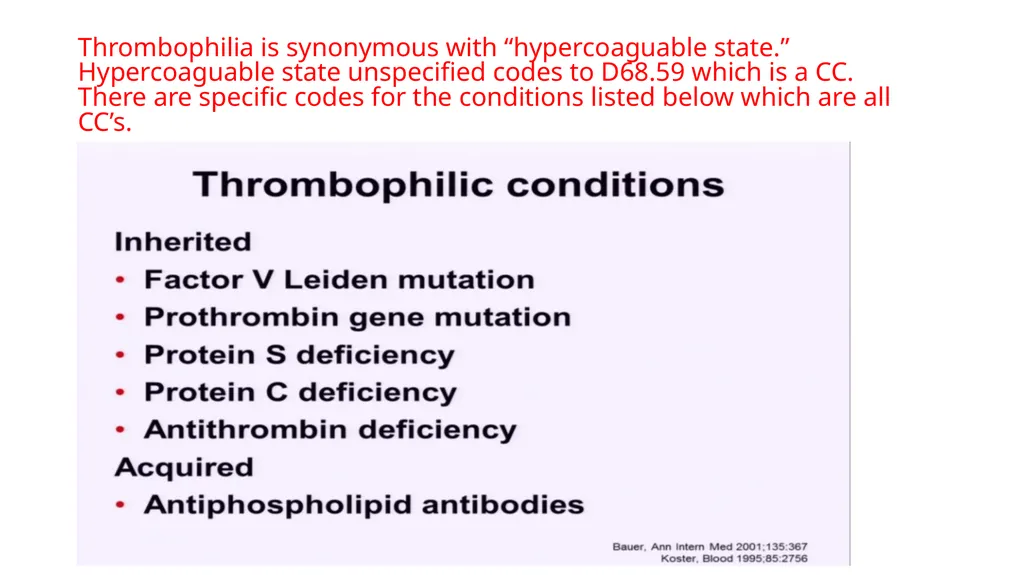
Thrombophilia is synonymous with “hypercoaguable state.” Hypercoaguable state unspecified codes to D68.59 which is a CC. There are specific codes for the conditions listed below which are all CC’s.<br>
03
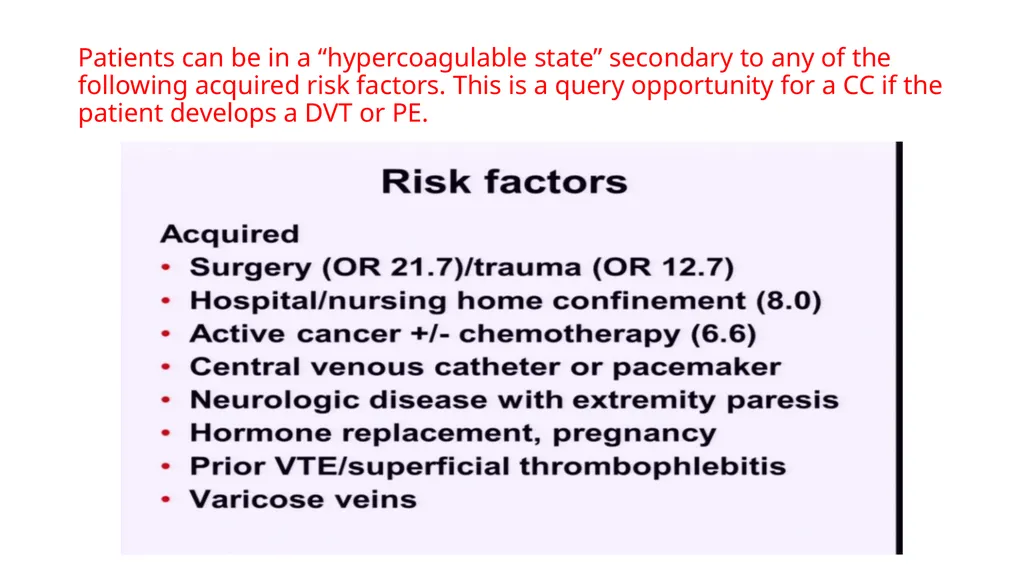
Patients can be in a “hypercoagulable state” secondary to any of the following acquired risk factors. This is a query opportunity for a CC if the patient develops a DVT or PE.<br>
04
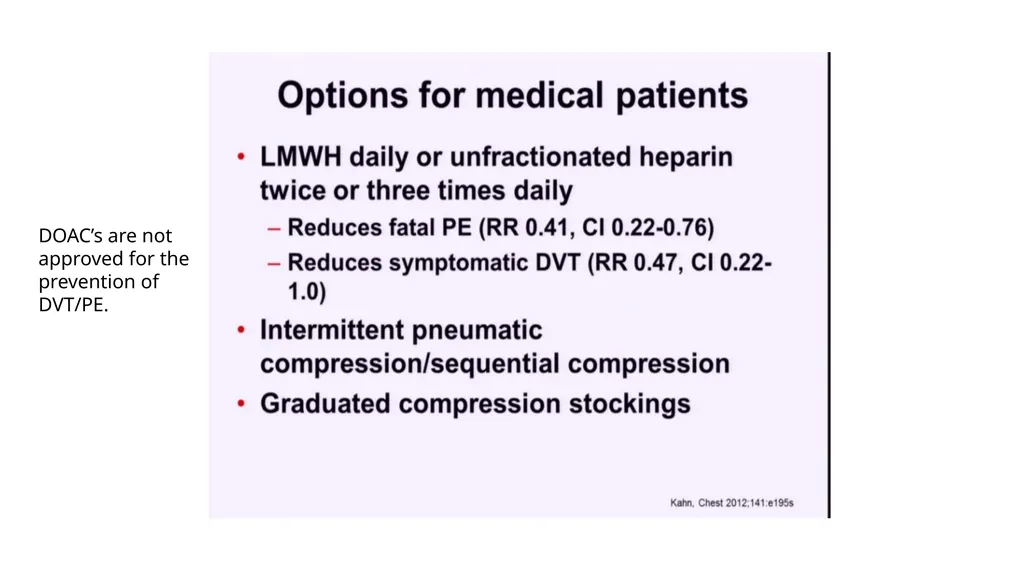
DOAC’s are not approved for the prevention of DVT/PE.<br>
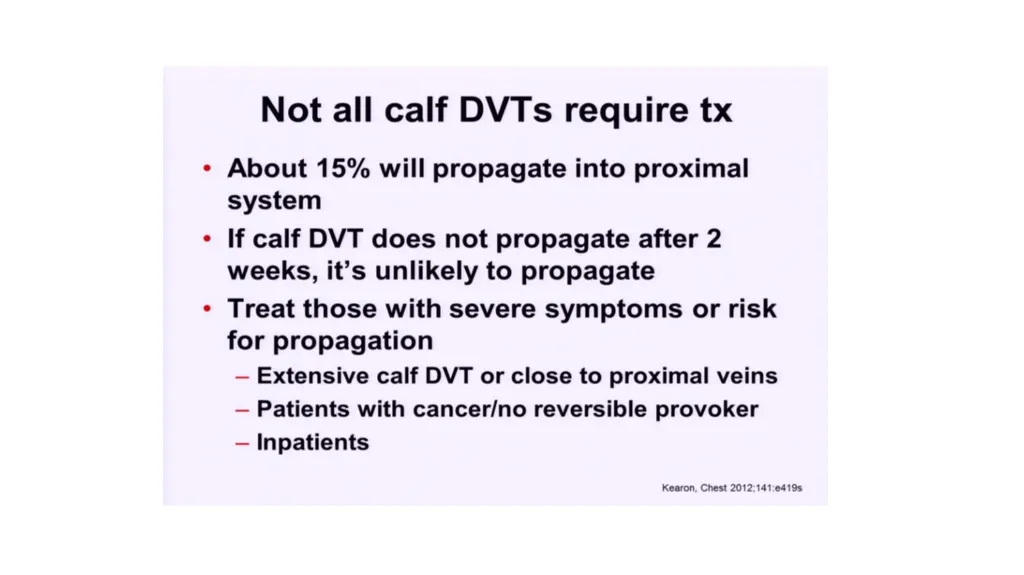
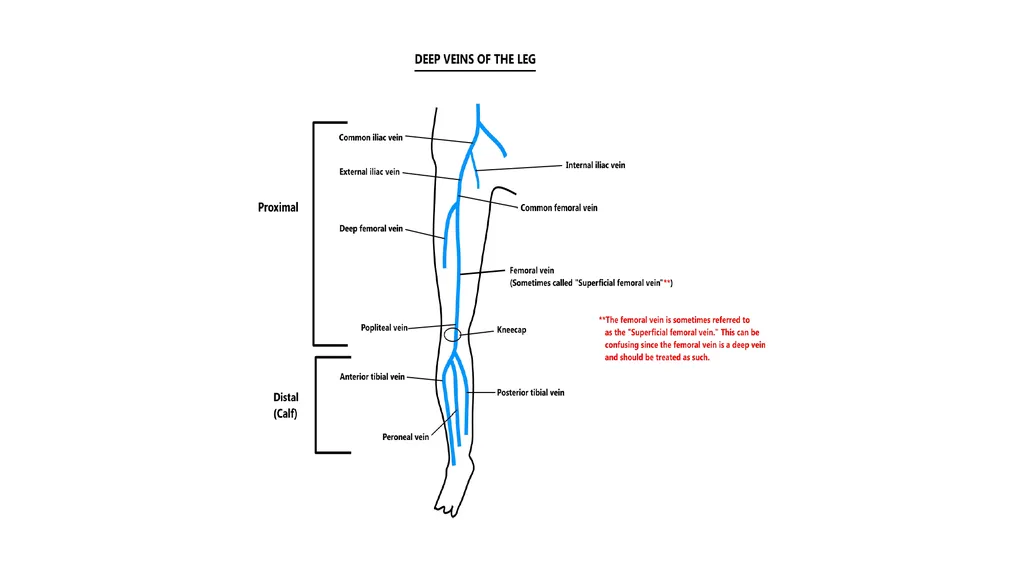
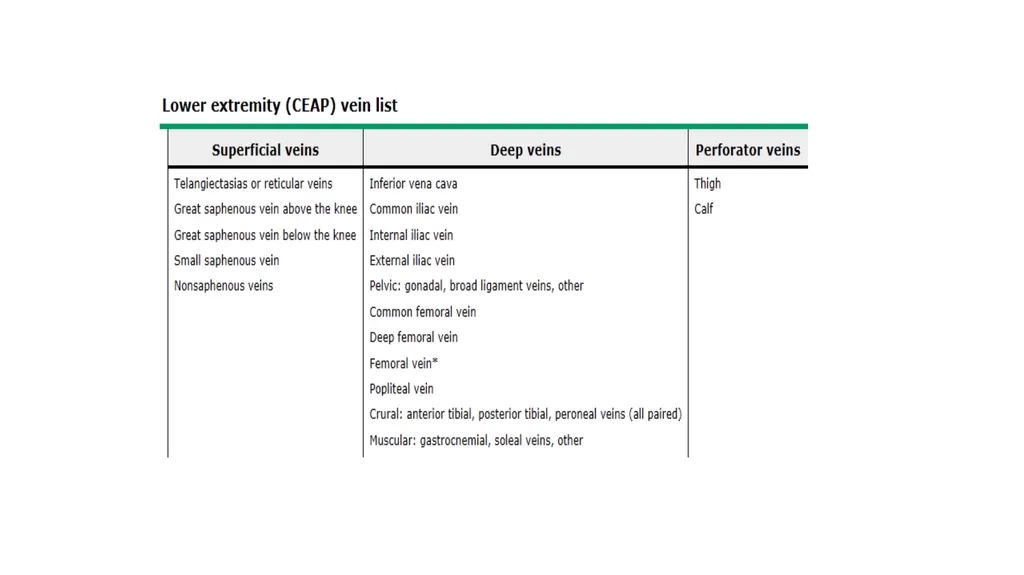
Any DVT from popliteal and above is considered a proximal DVT. Any DVT below the knee is considered a calf/distal DVT.
Calf/distal DVT’s (I82.4Z) are excluded from PSI 12 – perioperative DVT/PE rate as they are considered low risk for PE
Be sure to dig deeper on any cases coded as unspecified DVT (I82.40) to determine the affected vein. Review the Doppler to determine if it was it a DVT of a proximal or distal/calf deep vein.
Make sure the thrombosis is not in a superficial vein. They code as “superficial vein thrombosis of LE (182.81). These are NOT DVT’s.<br>
08
Typically, an acute DVT is considered a new thrombosis that requires the initiation of anticoagulant therapy (perhaps, up to 3 months of treatment, but no consensus).
A chronic DVT is an old or previously diagnosed thrombus that requires continuation of anticoagulation therapy.
Both acute and chronic DVT’s are CC’s.
In the coding rules, there are no specific timelines for when DVT or any other condition becomes chronic. The assignment of acute verses chronic DVT should be based on provider documentation<br>
09
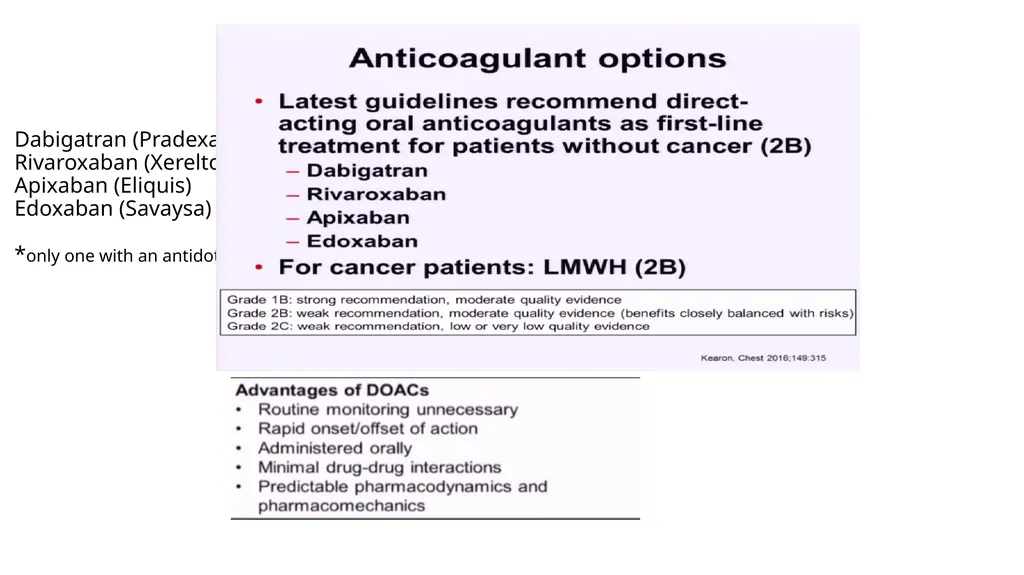
Dabigatran (Pradexa)* Rivaroxaban (Xerelto) Apixaban (Eliquis) Edoxaban (Savaysa) *only one with an antidote<br>
10
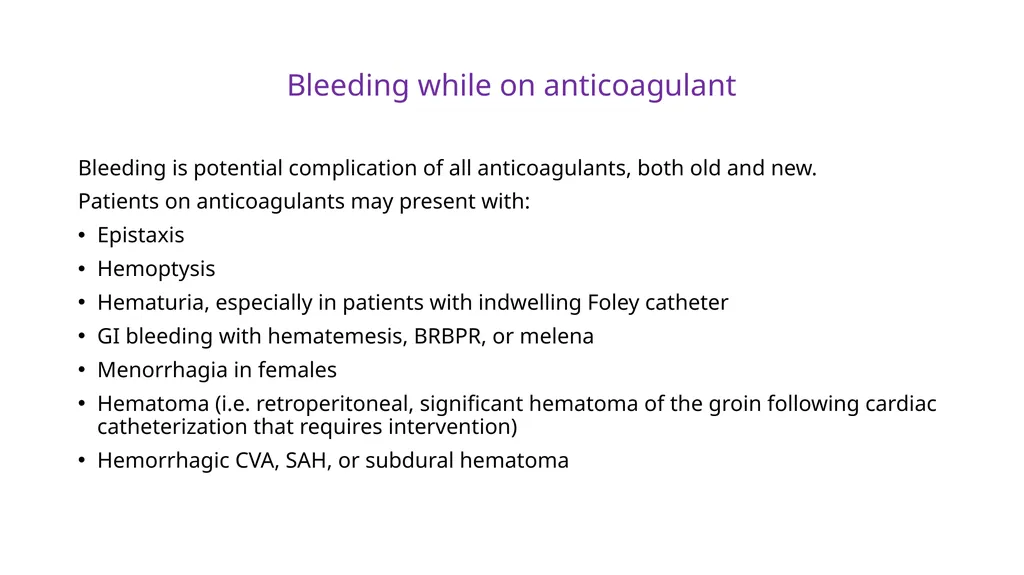
Bleeding while on anticoagulant Bleeding is potential complication of all anticoagulants, both old and new.
Patients on anticoagulants may present with:
Epistaxis
Hemoptysis
Hematuria, especially in patients with indwelling Foley catheter
GI bleeding with hematemesis, BRBPR, or melena
Menorrhagia in females
Hematoma (i.e. retroperitoneal, significant hematoma of the groin following cardiac catheterization that requires intervention)
Hemorrhagic CVA, SAH, or subdural hematoma<br>
11
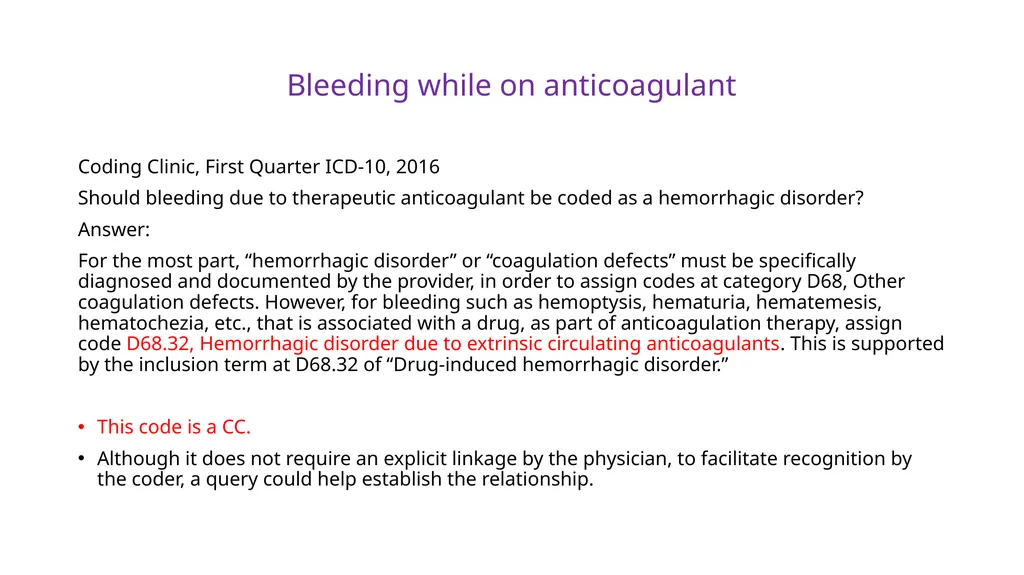
Bleeding while on anticoagulant Coding Clinic, First Quarter ICD-10, 2016
Should bleeding due to therapeutic anticoagulant be coded as a hemorrhagic disorder?
Answer:
For the most part, “hemorrhagic disorder” or “coagulation defects” must be specifically diagnosed and documented by the provider, in order to assign codes at category D68, Other coagulation defects. However, for bleeding such as hemoptysis, hematuria, hematemesis, hematochezia, etc., that is associated with a drug, as part of anticoagulation therapy, assign code D68.32, Hemorrhagic disorder due to extrinsic circulating anticoagulants. This is supported by the inclusion term at D68.32 of “Drug-induced hemorrhagic disorder.”
This code is a CC.
Although it does not require an explicit linkage by the physician, to facilitate recognition by the coder, a query could help establish the relationship.<br>
12
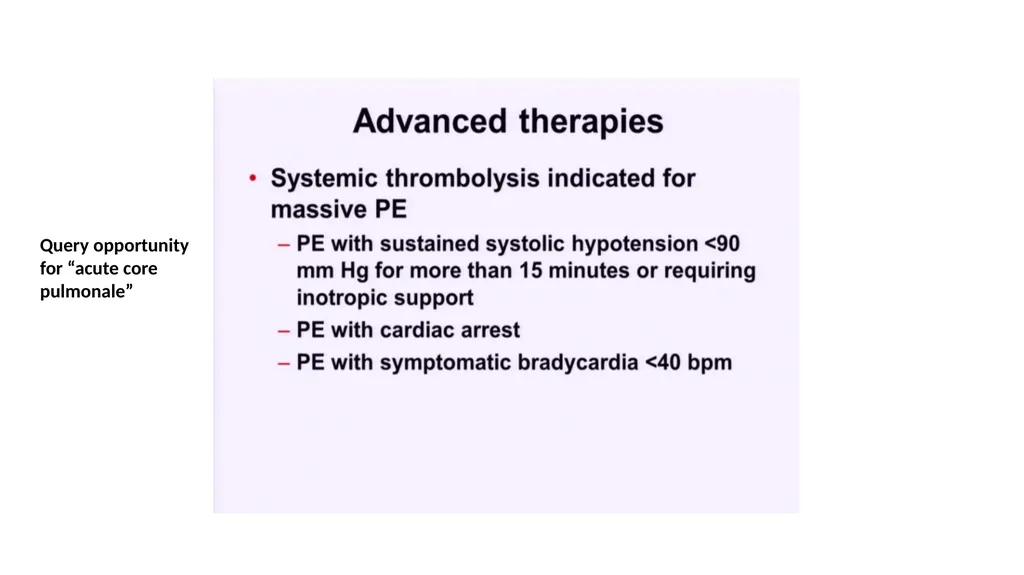
Query opportunity for “acute core pulmonale”<br>
13
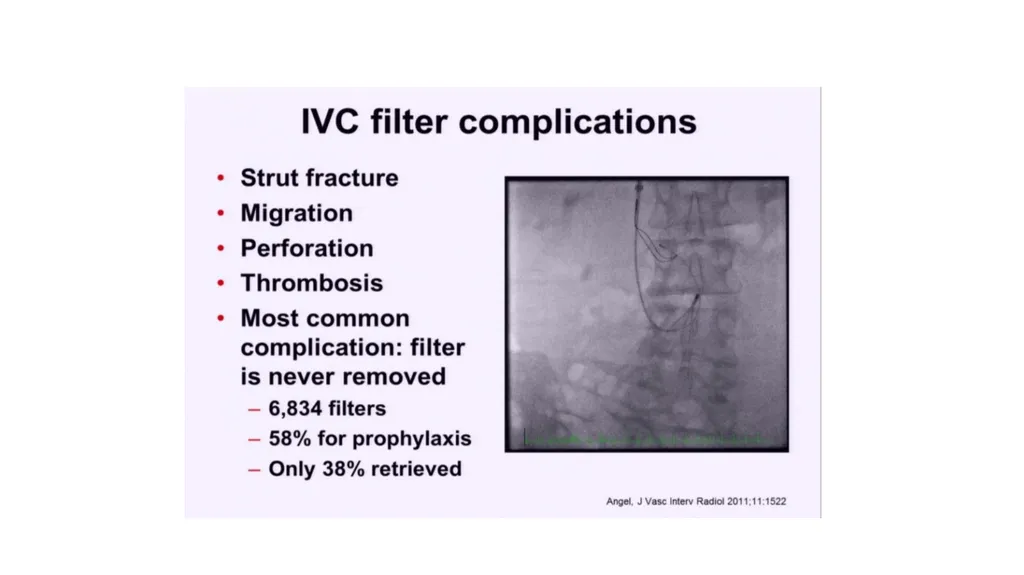
Not recommended for treatment of acute DVT in combination with anticoagulation.<br>
14
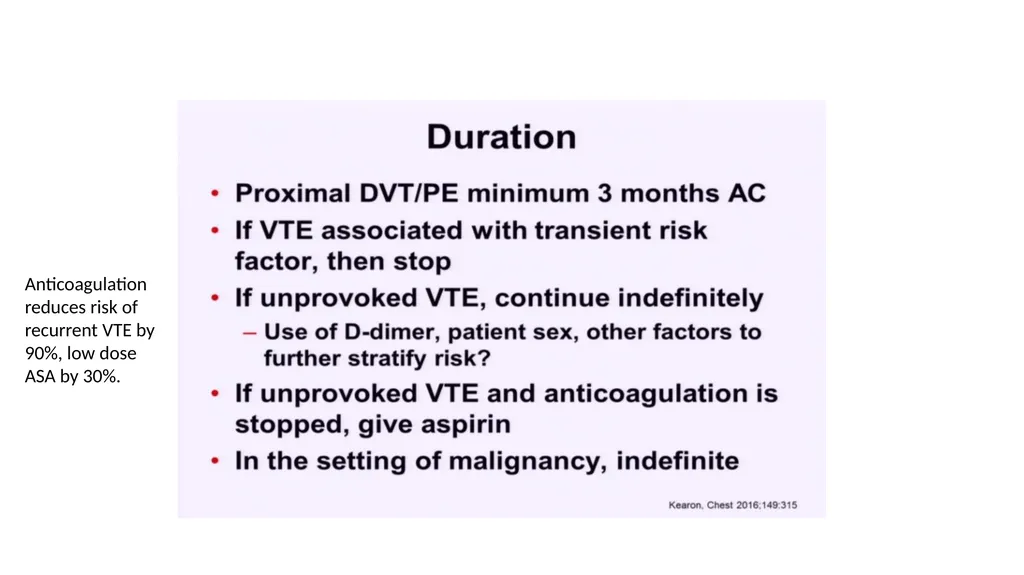
Anticoagulation reduces risk of recurrent VTE by 90%, low dose ASA by 30%.<br>