Evolution ethics a social behavior counts as altruistic if it reduces the fitness of the organism performing the behavior, but boosts the fitness of others. Altruism Game theory with fitness rewards and punishments that then iterate over
"Evolution & ethics a social behavior counts as" is the property of its rightful owner. Permission is granted to
download and print the materials on this website for personal, non-commercial use only, and to display it
on your personal computer provided you do not modify the materials and that you retain all copyright
notices contained in the materials. By downloading content from our website, you accept the terms of this
agreement.
Presentation Transcript
01
Evolution & ethics<br>
02
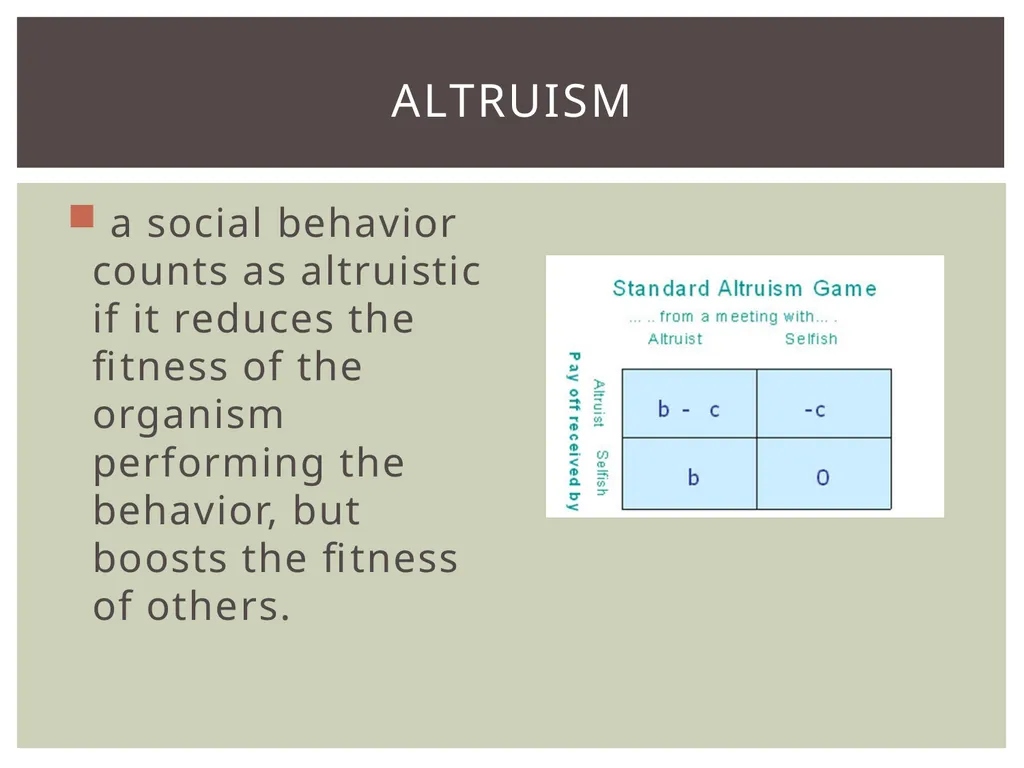
a social behavior counts as altruistic if it reduces the fitness of the organism performing the behavior, but boosts the fitness of others. Altruism<br>
03
Game theory with fitness rewards and punishments that then iterate over generations
Fundamental findings: altruism is an evolutionary unstable strategy. A population of altruists can be invaded by selfish agents, who then drive down the proportion of altruists to 0 Evolutionary Game Theory<br>
04
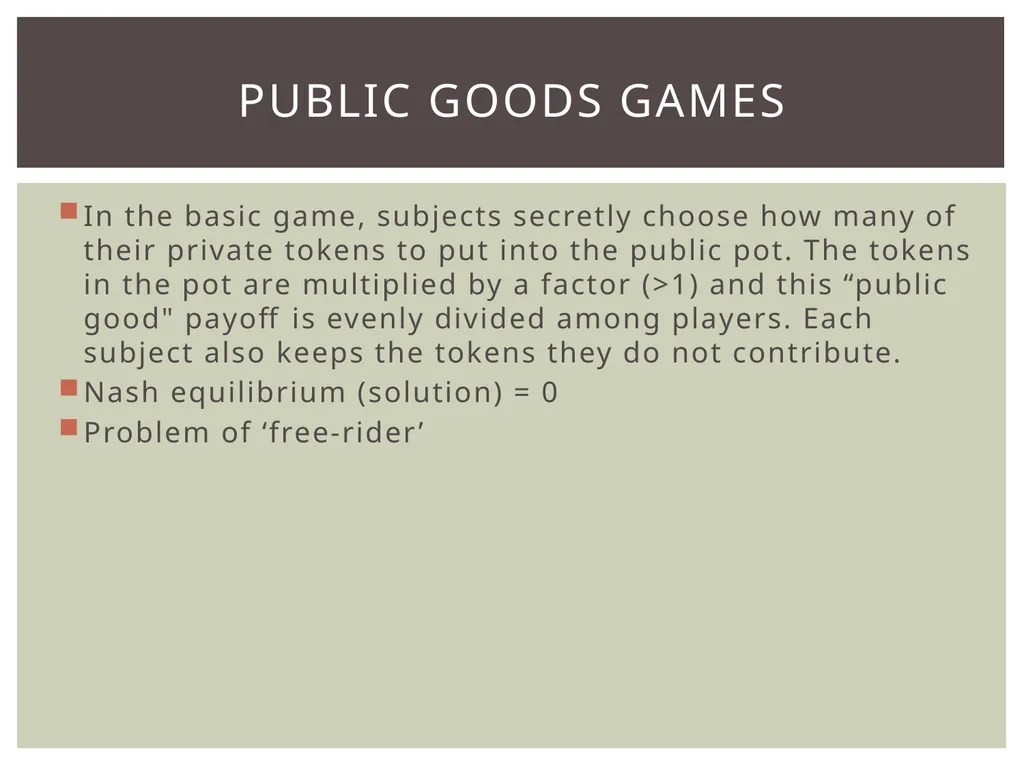
In the basic game, subjects secretly choose how many of their private tokens to put into the public pot. The tokens in the pot are multiplied by a factor (>1) and this “public good" payoff is evenly divided among players. Each subject also keeps the tokens they do not contribute.
Nash equilibrium (solution) = 0
Problem of ‘free-rider’ Public Goods Games<br>
05
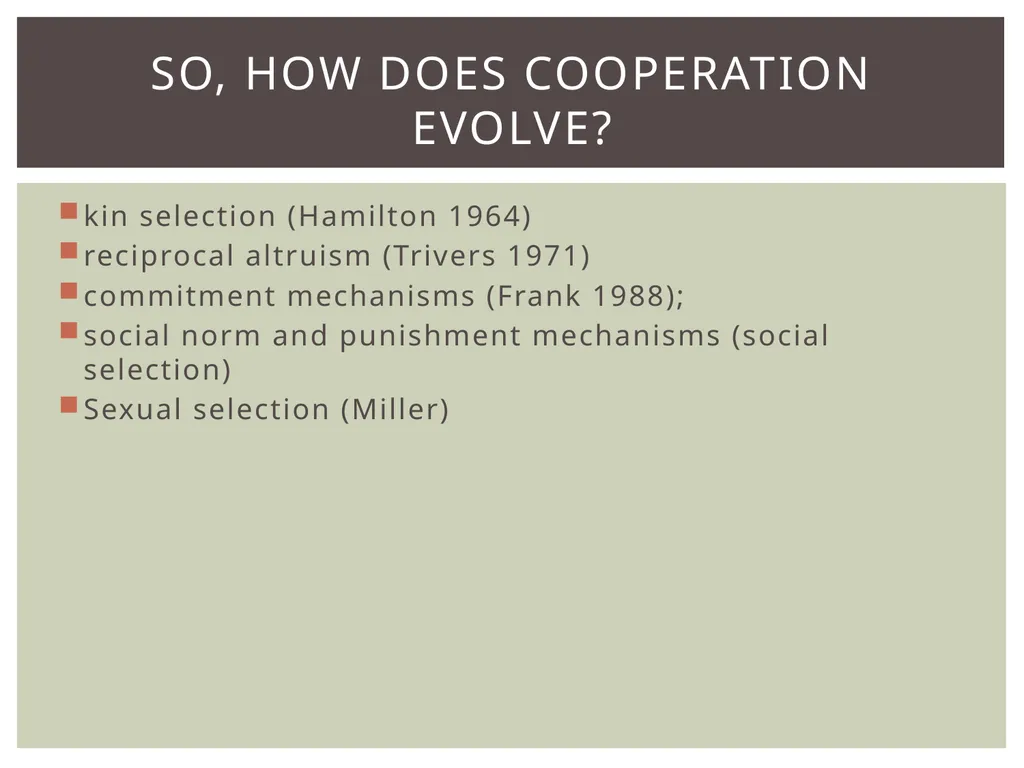
kin selection (Hamilton 1964)
reciprocal altruism (Trivers 1971)
commitment mechanisms (Frank 1988);
social norm and punishment mechanisms (social selection)
Sexual selection (Miller) So, how does cooperation evolve?<br>
06
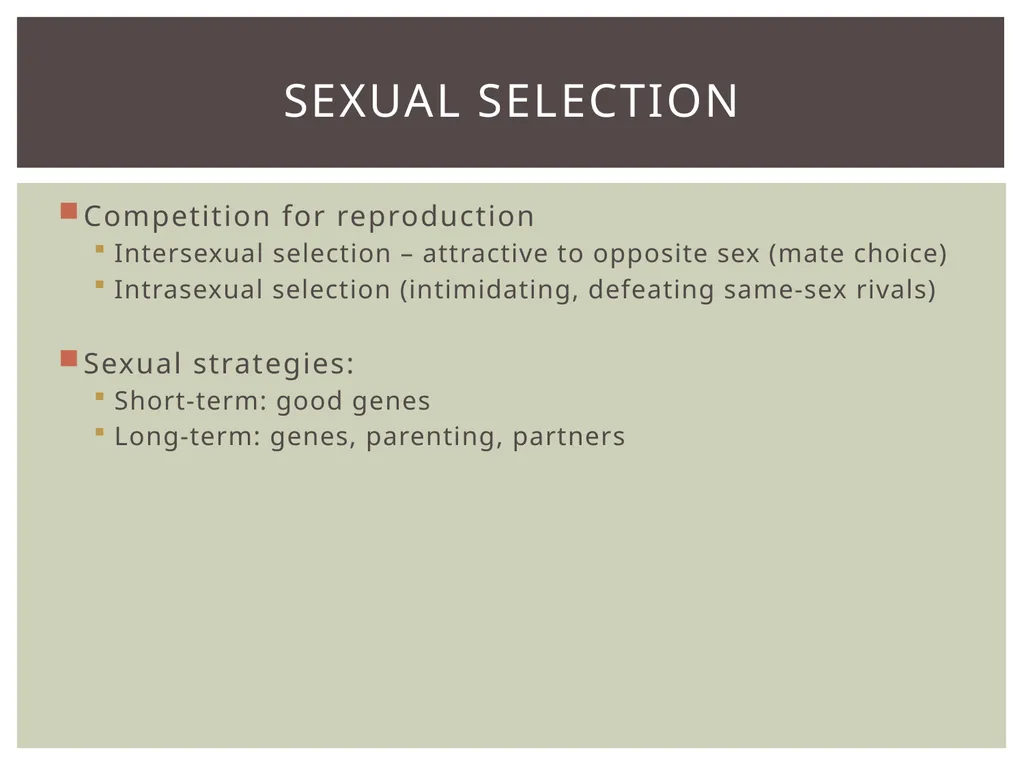
Competition for reproduction
Intersexual selection – attractive to opposite sex (mate choice)
Intrasexual selection (intimidating, defeating same-sex rivals)
Sexual strategies:
Short-term: good genes
Long-term: genes, parenting, partners Sexual selection<br>
07
costly signaling a signal is so costly that only high health, high status, high condition animals can afford to produce it, the signal can remain evolutionarily reliable Mate Choice<br>
08
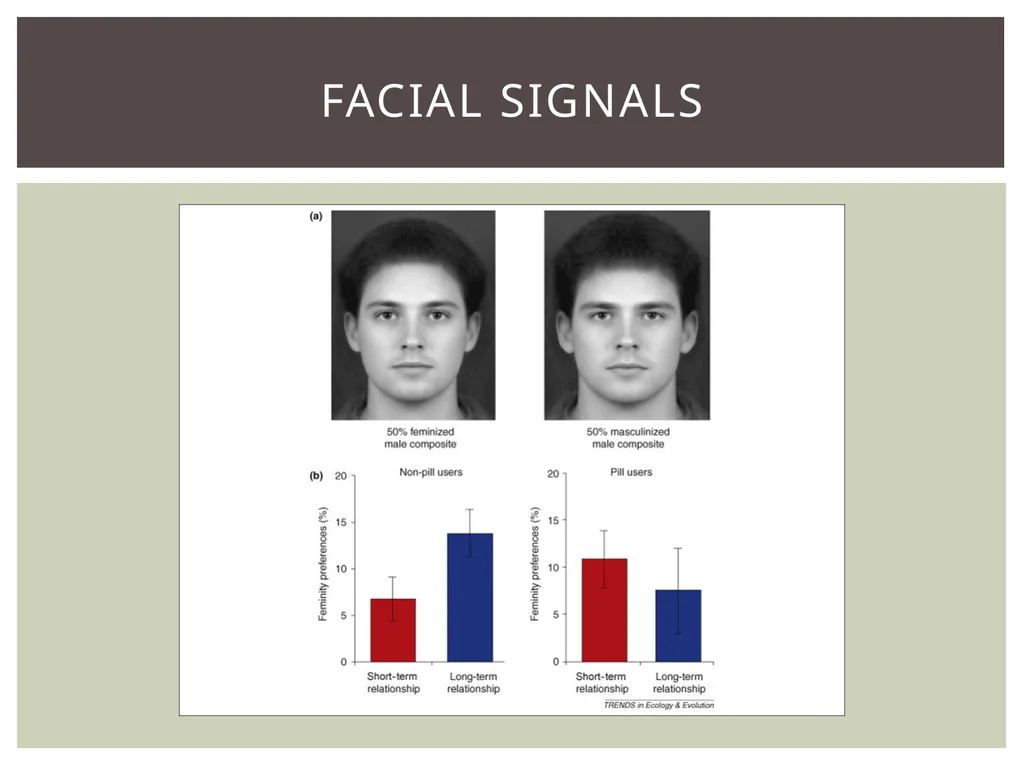
Facial signals<br>
09
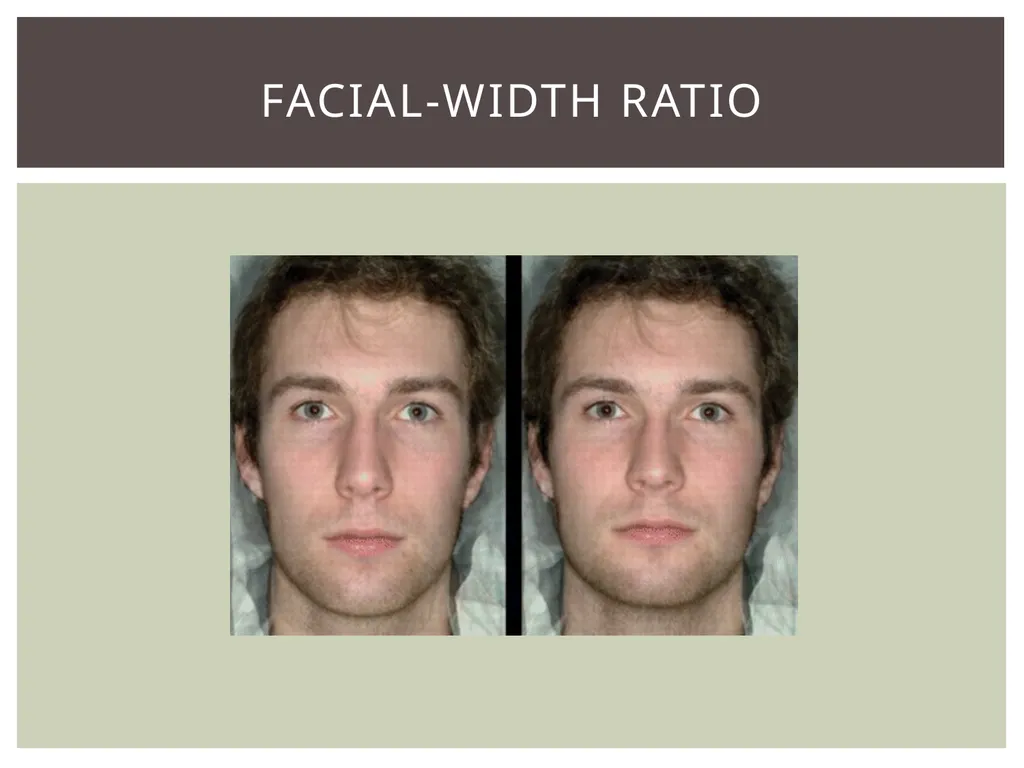
facial-width ratio<br>
10
Apart from physical appearance and social status, which traits most excite our romantic impulses? People often fall in love based on positive assessments of each other’s generosity, kindness, honesty, courage, social sensitivity, political idealism, intellectual integrity, empathy to children, respectfulness to parents, or loyalty to friends. Moral Virtues as costly signals<br>
11
kindness: emotional responsiveness to the needs of others
empathy: lovingness, affection, fondness, commitment, forgivingness, trust, and perspective-taking
niceness: agreeableness and nonviolence
honesty
heroism Attractive moral virtues<br>
12
Morality through mate-choice model also has distinctive strengths and weaknesses that can explain some moral virtues—especially those that show high sexual attractiveness, assortative mating, phenotypic and genetic variance, heritability, condition-dependent costs, conspicuous display in courtship settings, and young adult age peaks in display
not to suggest that human morality is sexually motivated at the level of individual behavior. Evolutionary functions do not equal proximate motivations Moral Behavior<br>
13
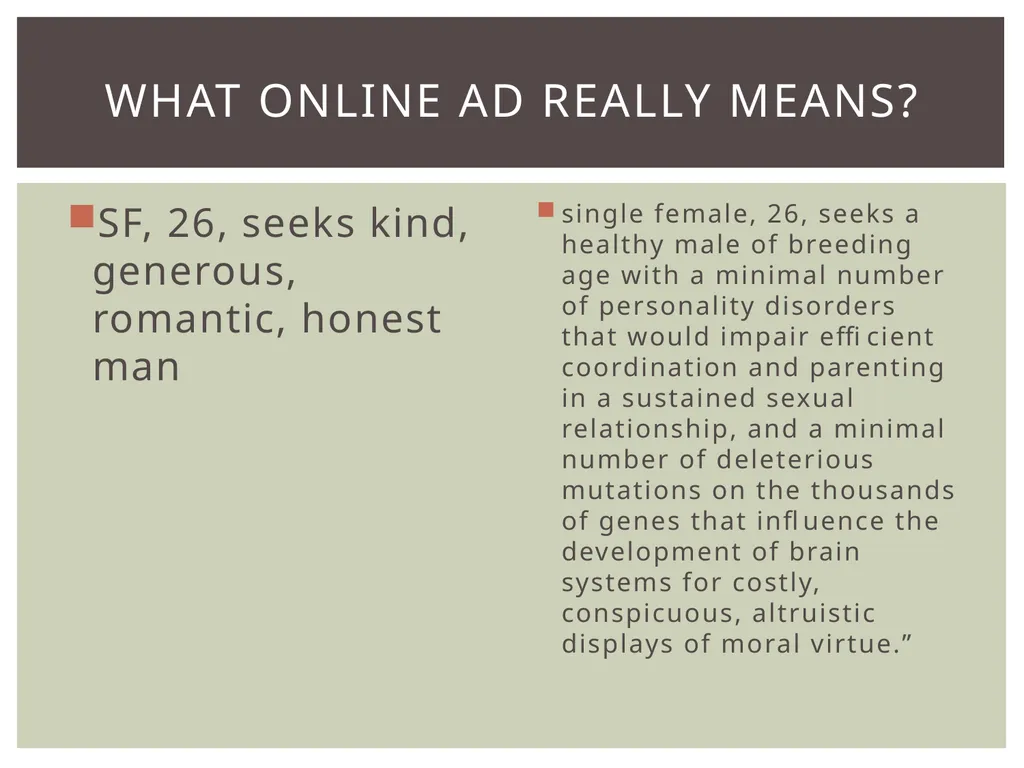
SF, 26, seeks kind, generous, romantic, honest man single female, 26, seeks a healthy male of breeding age with a minimal number of personality disorders that would impair efficient coordination and parenting in a sustained sexual relationship, and a minimal number of deleterious mutations on the thousands of genes that influence the development of brain systems for costly, conspicuous, altruistic displays of moral virtue.” What online ad really means?<br>