Exam II-solution 4 problems 4 - 2 4 - 3
Description: Exam II-solution 4 problems 4 - 2 4 - 3 SOLUTION: Based on the cross section geometry, calculate the location of the section centroid and moment of inertia. 4 - 4 4 - 5 A 1600 lb-in couple is applied to a rectangular wooden beam in a plane

Related Topics
Download Presentation
"Exam II-solution 4 problems 4 - 2 4 - 3" is the property of its rightful owner. Permission is granted to download and print the materials on this website for personal, non-commercial use only, and to display it on your personal computer provided you do not modify the materials and that you retain all copyright notices contained in the materials. By downloading content from our website, you accept the terms of this agreement.
Presentation Transcript
slide1. Exam II-solution 4 problems<br>
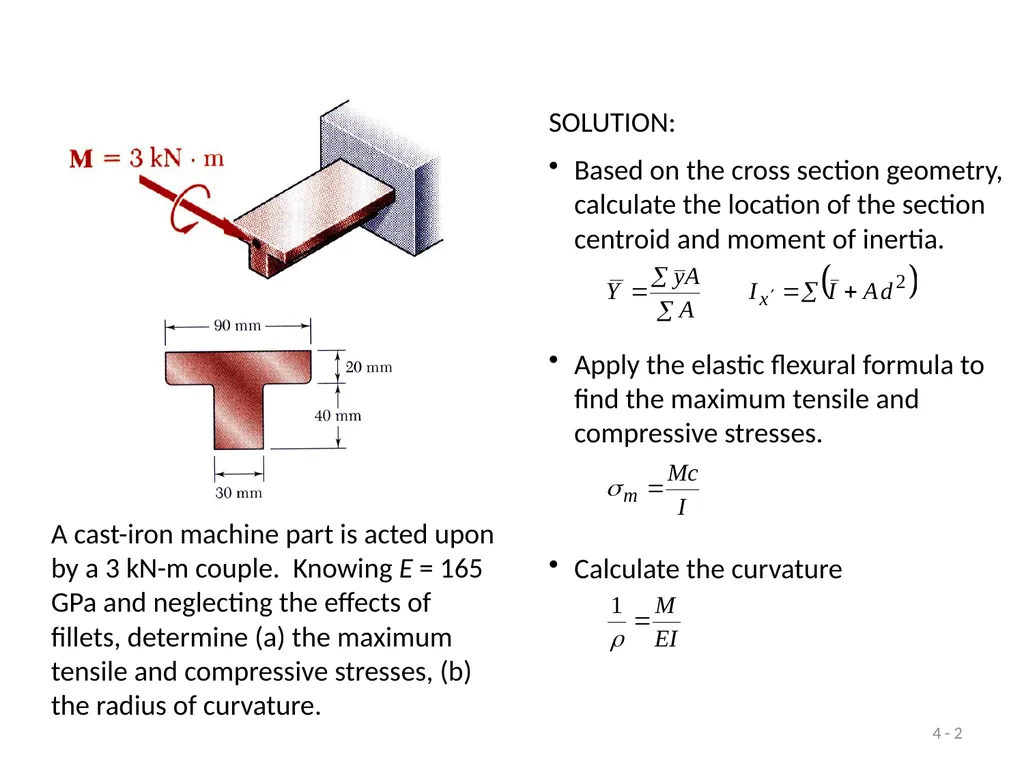
slide2. 4 - 2<br>
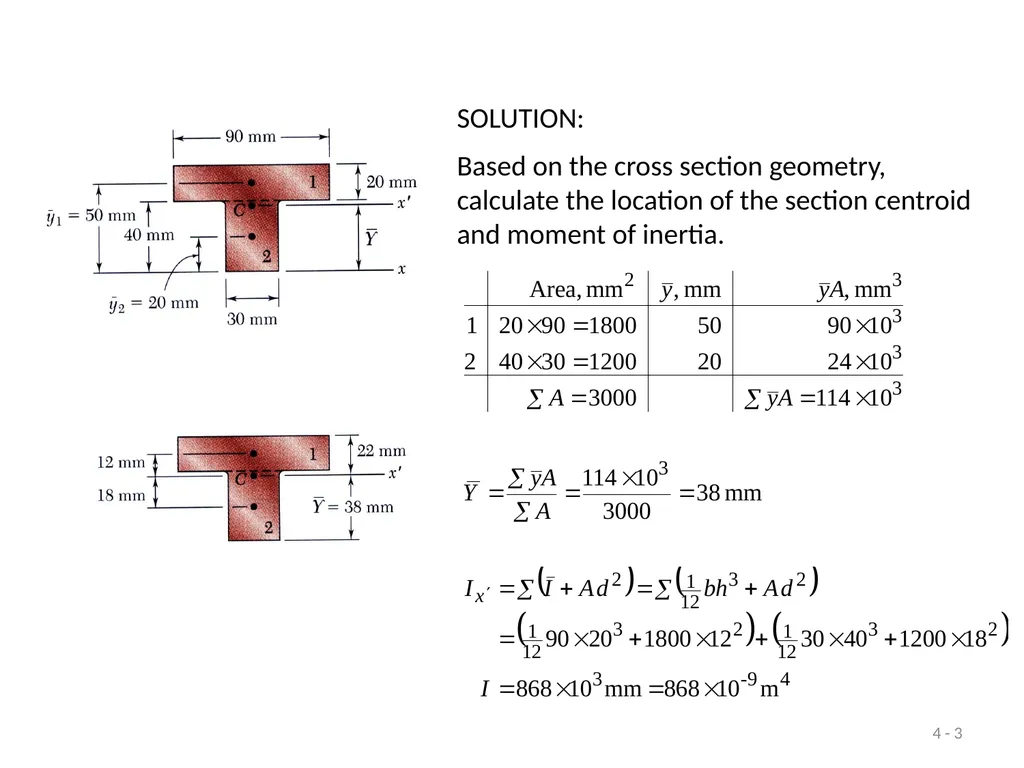
slide3. 4 - 3 SOLUTION:
Based on the cross section geometry, calculate the location of the section centroid and moment of inertia.<br>
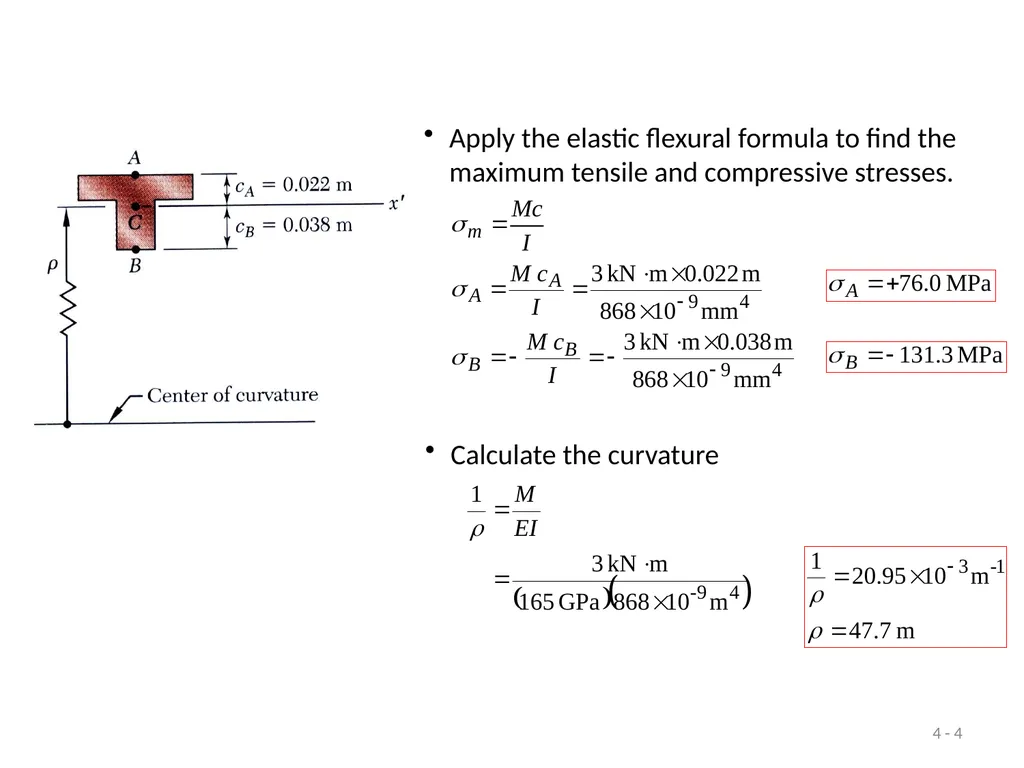
slide4. 4 - 4<br>
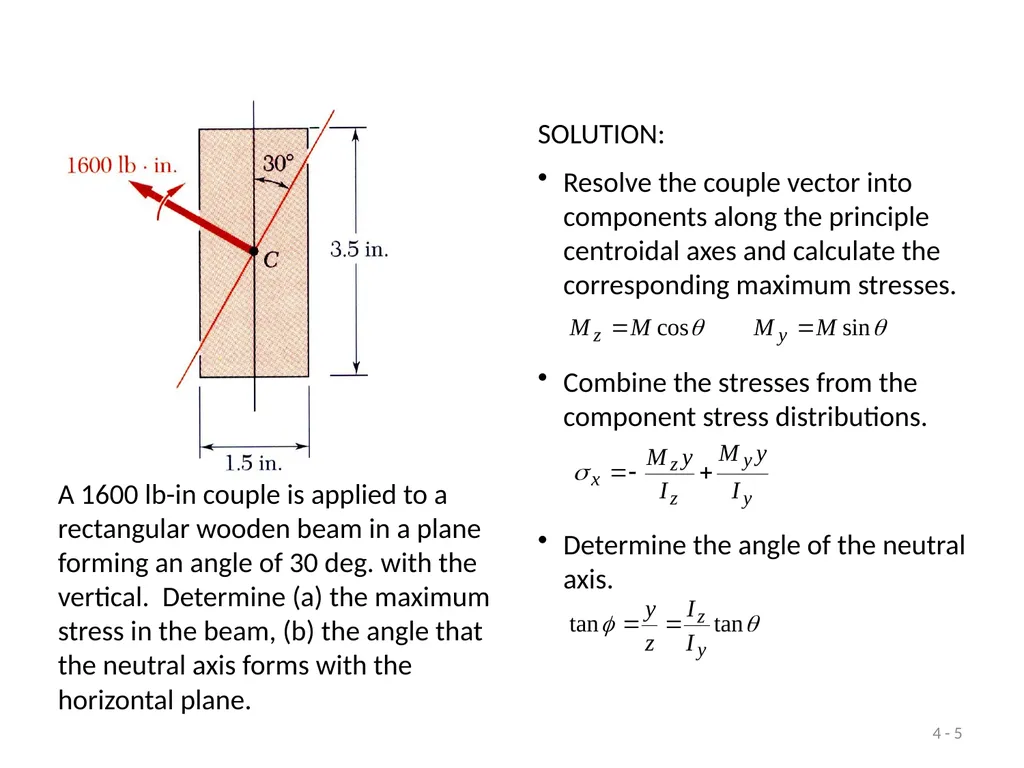
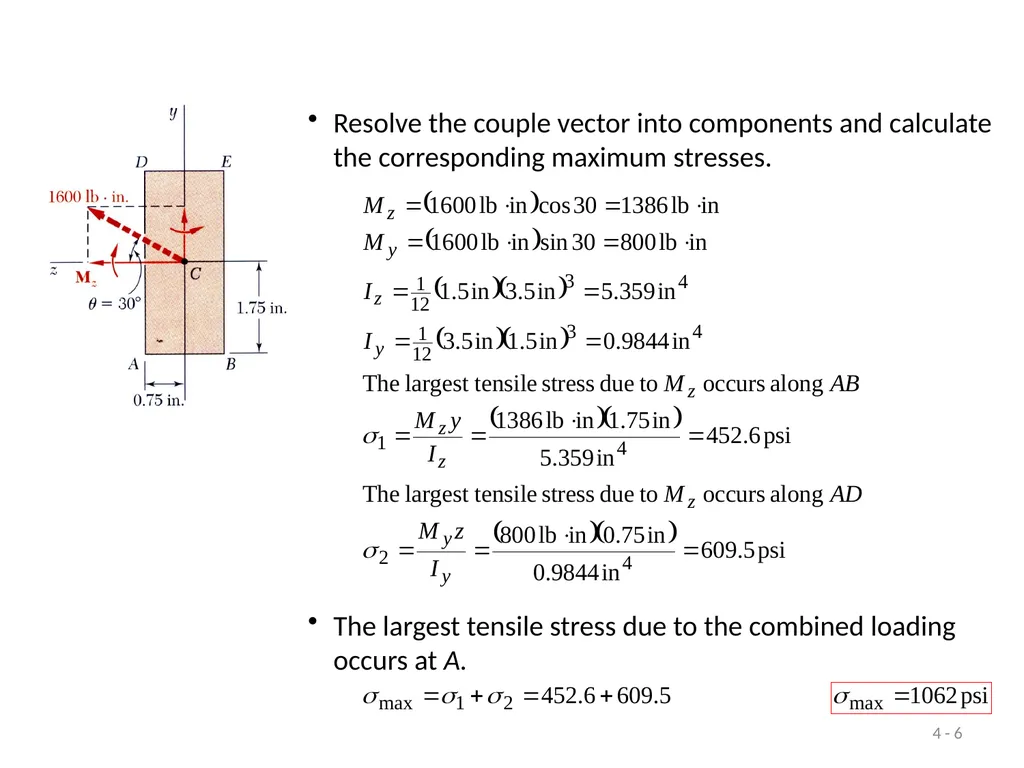
slide5. 4 - 5 A 1600 lb-in couple is applied to a rectangular wooden beam in a plane forming an angle of 30 deg. with the vertical. Determine (a) the maximum stress in the beam, (b) the angle that the neutral axis forms with the horizontal plane.<br>
slide6. 4 - 6<br>
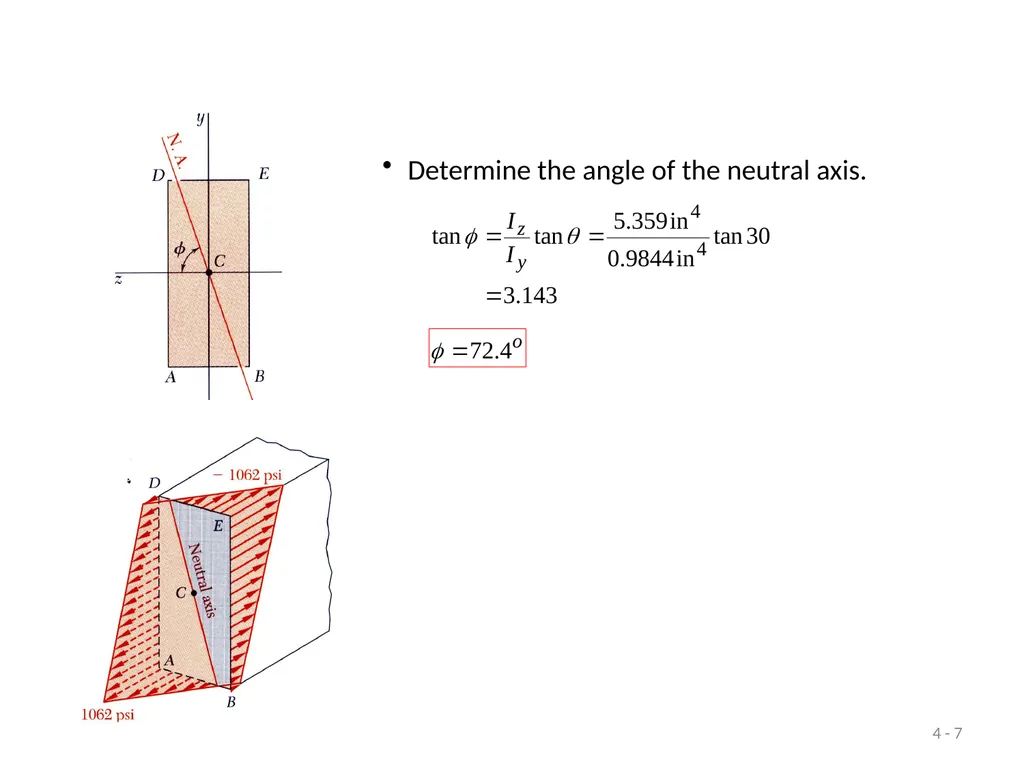
slide7. 4 - 7 Determine the angle of the neutral axis.<br>
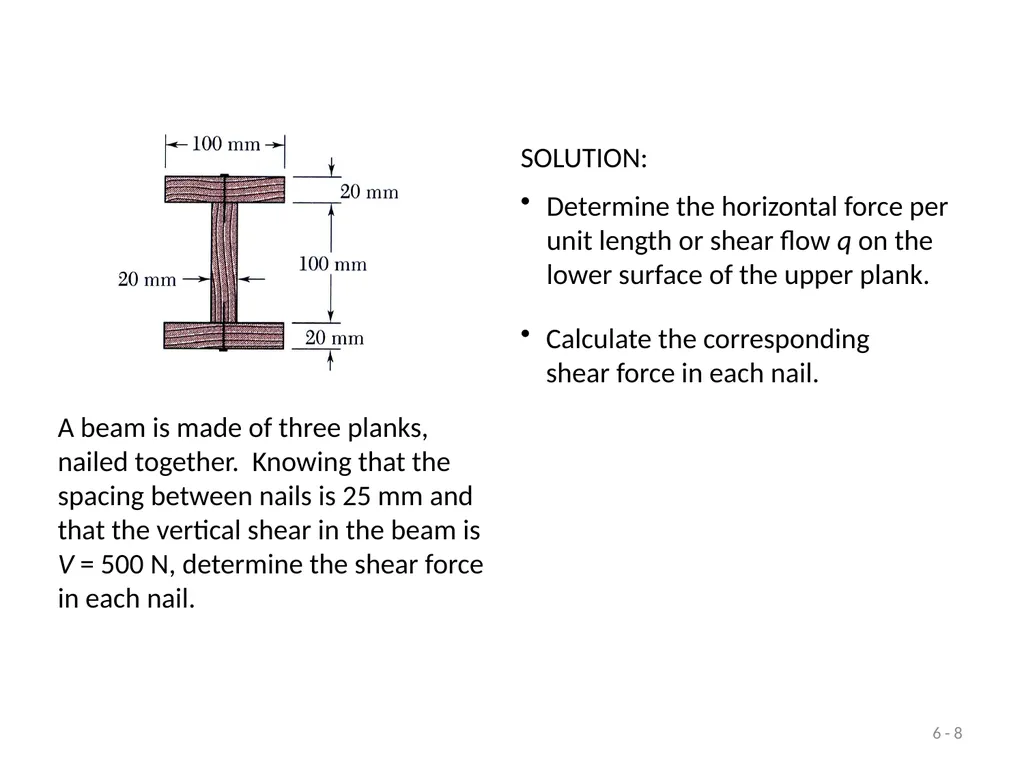
slide8. 6 - 8 A beam is made of three planks, nailed together. Knowing that the spacing between nails is 25 mm and that the vertical shear in the beam is V = 500 N, determine the shear force in each nail. SOLUTION:
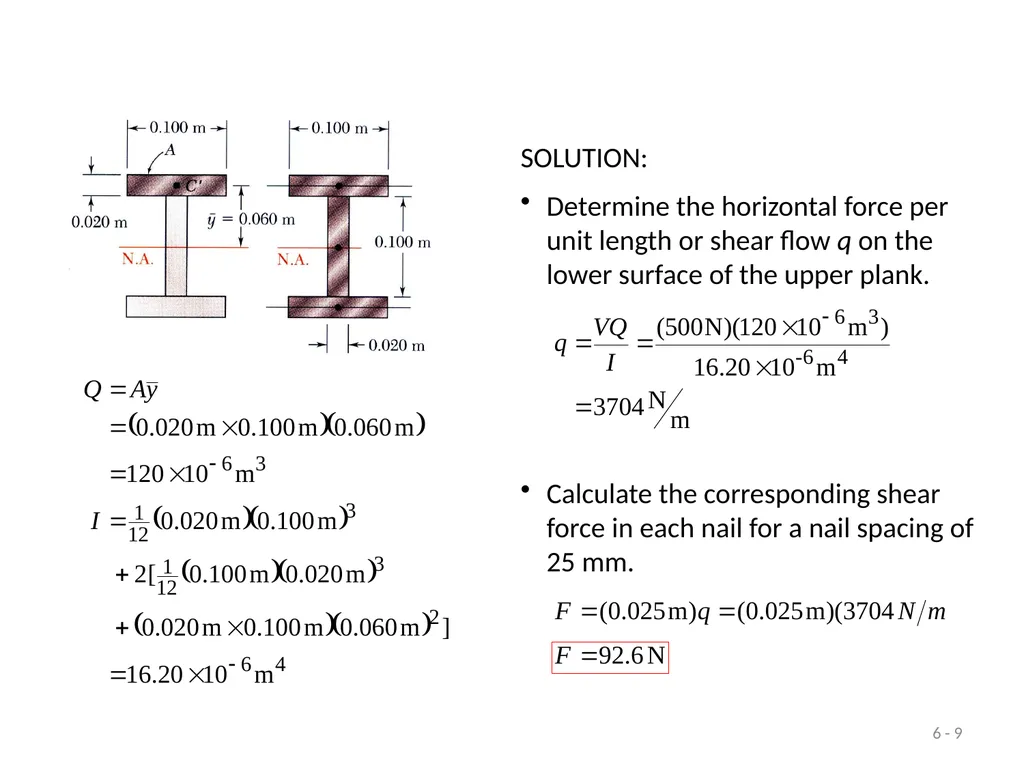
Determine the horizontal force per unit length or shear flow q on the lower surface of the upper plank. Calculate the corresponding shear force in each nail.<br>
slide9. 6 - 9<br>
slide2. 4 - 2<br>
slide3. 4 - 3 SOLUTION:
Based on the cross section geometry, calculate the location of the section centroid and moment of inertia.<br>
slide4. 4 - 4<br>
slide5. 4 - 5 A 1600 lb-in couple is applied to a rectangular wooden beam in a plane forming an angle of 30 deg. with the vertical. Determine (a) the maximum stress in the beam, (b) the angle that the neutral axis forms with the horizontal plane.<br>
slide6. 4 - 6<br>
slide7. 4 - 7 Determine the angle of the neutral axis.<br>
slide8. 6 - 8 A beam is made of three planks, nailed together. Knowing that the spacing between nails is 25 mm and that the vertical shear in the beam is V = 500 N, determine the shear force in each nail. SOLUTION:
Determine the horizontal force per unit length or shear flow q on the lower surface of the upper plank. Calculate the corresponding shear force in each nail.<br>
slide9. 6 - 9<br>