EXAMINATION OF UPPER LIMB DEEP TENDON REFLEXES Dr
Description: EXAMINATION OF UPPER LIMB DEEP TENDON REFLEXES Dr Kenfine P Johnson DTR is a monosynaptic stretch reflex, sudden lengthening stretches the muscle spindles which sends impulses via the primary spindle afferents into the spinal cord. The
Related Topics
Download Presentation
"EXAMINATION OF UPPER LIMB DEEP TENDON REFLEXES Dr" is the property of its rightful owner. Permission is granted to download and print the materials on this website for personal, non-commercial use only, and to display it on your personal computer provided you do not modify the materials and that you retain all copyright notices contained in the materials. By downloading content from our website, you accept the terms of this agreement.
Presentation Transcript
slide1. EXAMINATION OF UPPER LIMB DEEP TENDON REFLEXES Dr Kenfine P Johnson<br>
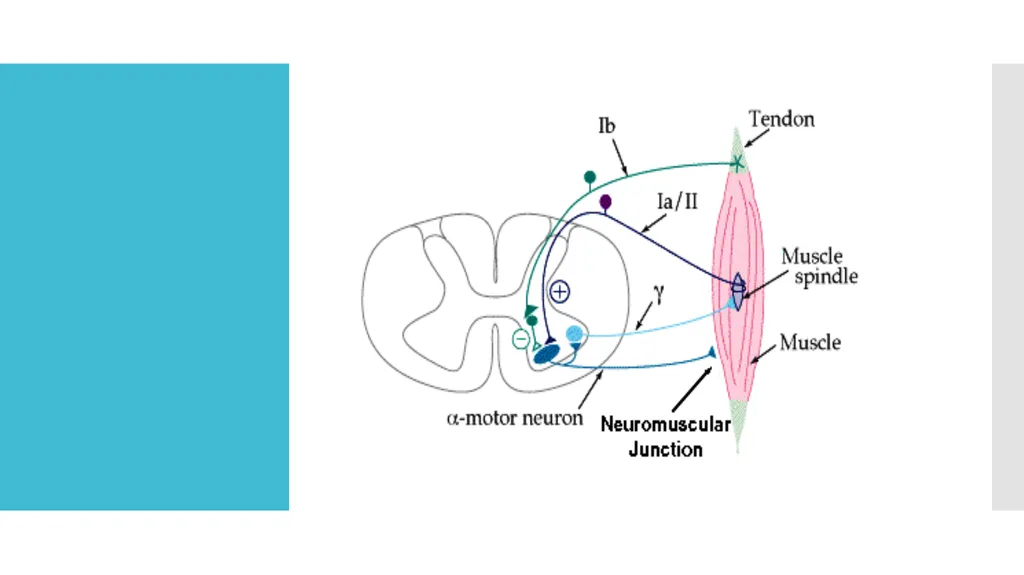
slide2. DTR is a monosynaptic stretch reflex, sudden lengthening stretches the muscle spindles which sends impulses via the primary spindle afferents into the spinal cord.
The spindle afferents synapse on the alpha motor neurons innervating the muscles causing a reflex contraction of muscle.
This sequence of lenghthening ,contraction and then relaxation is a stretch reflex(deep tendon/muscle stretch/myotatic/proprioceptive)<br>
slide4. Stretch reflexes serve a protective role as it help to encounter any sudden unexpected forces and maintain erect posture
The DTR are elicited by application of stretch stimulus to either tendons,periosteum or occasionally to bones, joints, fascia or aponeurotic structures.<br>
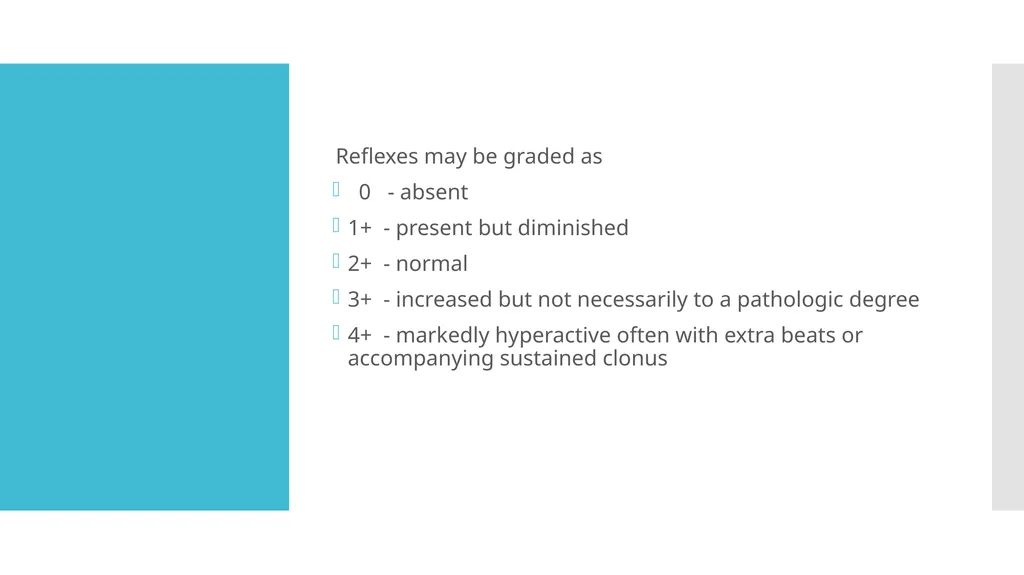
slide5. Reflexes may be graded as
0 - absent
1+ - present but diminished
2+ - normal
3+ - increased but not necessarily to a pathologic degree
4+ - markedly hyperactive often with extra beats or accompanying sustained clonus<br>
slide6. The activity of a reflex is judged by speed and vigor of the response ,the range of movement and duration of contraction.
When the reflex is very active ,the response may involve adjacent or contralateral muscles and the contraction of one muscle may be accompanied by contraction of other muscles. This is referred as spread or irradiation of reflex
Inverted reflexes are contractions of the opposite / antagonists when the segmental reflex is absent<br>
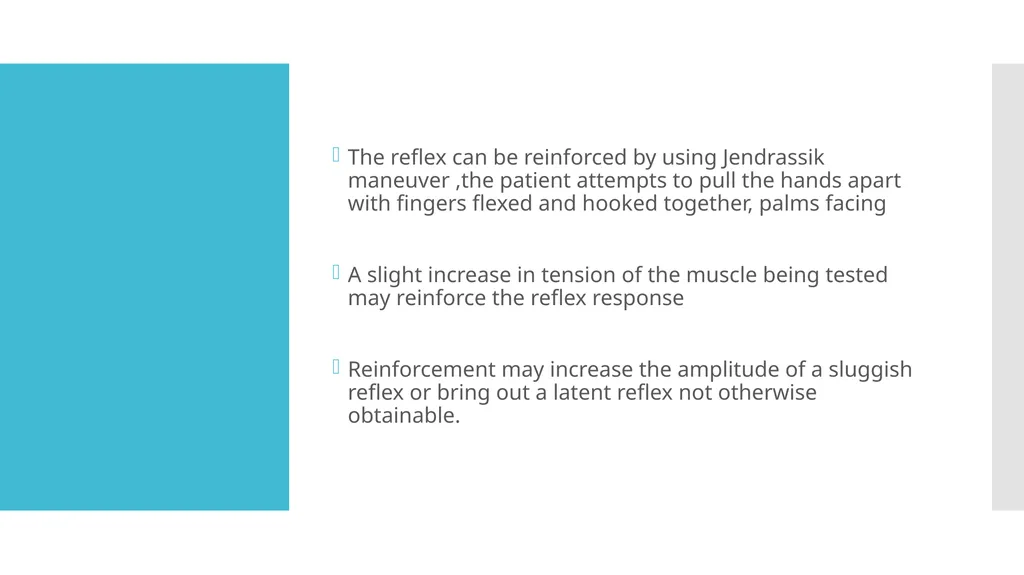
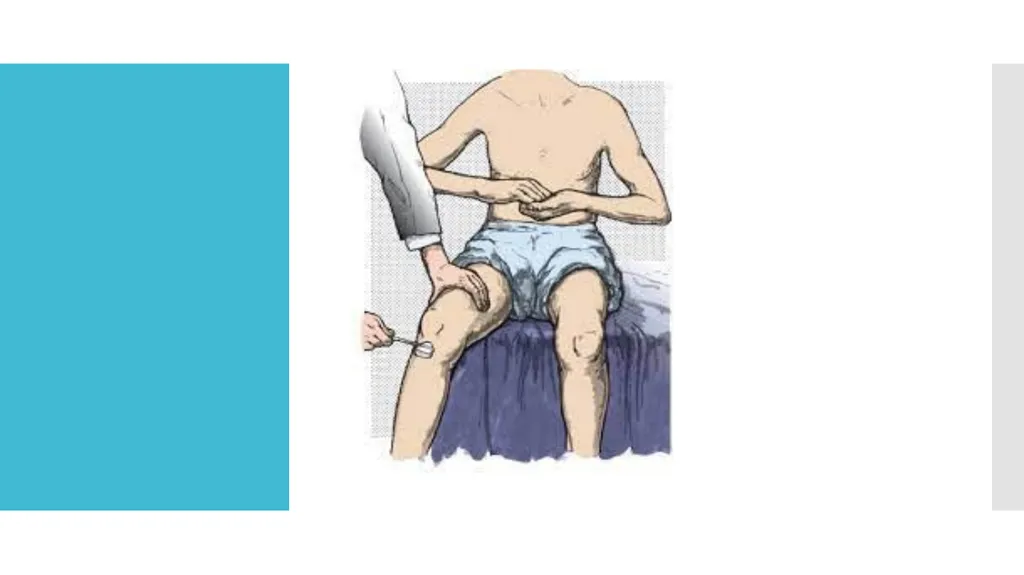
slide7. The reflex can be reinforced by using Jendrassik maneuver ,the patient attempts to pull the hands apart with fingers flexed and hooked together, palms facing
A slight increase in tension of the muscle being tested may reinforce the reflex response
Reinforcement may increase the amplitude of a sluggish reflex or bring out a latent reflex not otherwise obtainable.<br>
slide9. Hypoactive reflexes A depressed or absent reflex can be due to lesions involving sensory nerve,posterior root,dorsal root ganglion,or intramedullary pathways between dorsal root entry zone and anterior horn,motor unit
Abnormal in peripheral neuropathy,myopathy,myasthenia,muscular dystrophy.
Often absent in deep coma,narcosis,sedation and spinal shock<br>
slide10. Hyperactive reflexes Characterised by decrease in threshold,decrease in latency exaggeration of power and range of movement,prolongation of reflex contraction,extension of reflexogenic zone and spread of reflex response
Seen in lesions of corticospinal tract
In hemiplegia flexor reflexes of upper extremities are exaggerated<br>
slide11. Biceps reflex Segmental level is C5-C6
Peripheral nerve is musculocutaneus nerve
Major response is contraction of biceps muscle with flexion of elbow and supination
If the reflex is exaggerated there may be spread /irradiation of reflex with flexion of wrist and fingers and adduction of thumb<br>
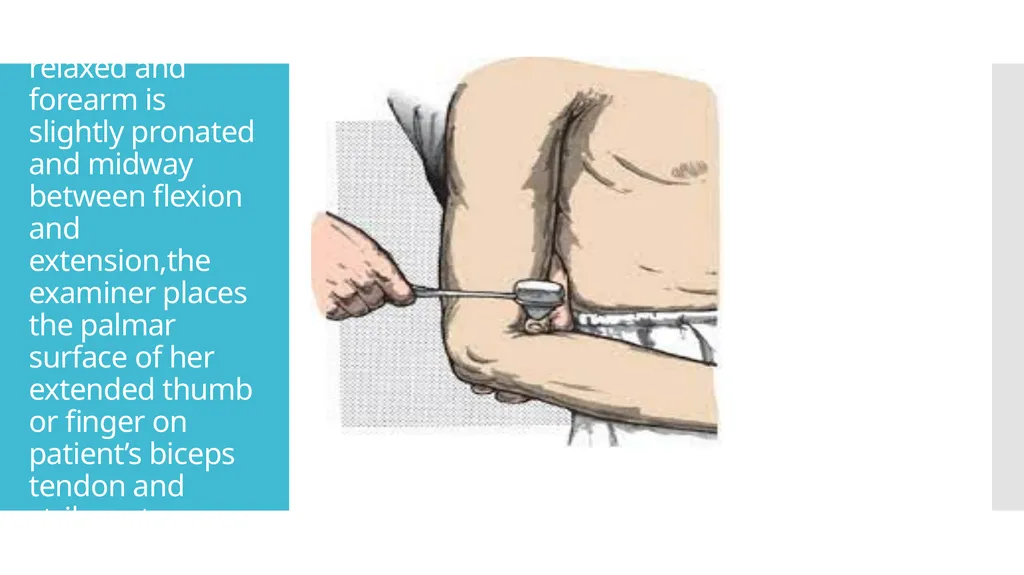
slide12. The arm is relaxed and forearm is slightly pronated and midway between flexion and extension,the examiner places the palmar surface of her extended thumb or finger on patient’s biceps tendon and strike extensor surface<br>
slide13. Triceps reflex Segmental level is C6-C7
Peripheral nerve is radial nerve
Response is contraction of triceps muscle with extension of elbow
The paradoxical or inverted triceps jerk consists of flexion of elbow with percussion of triceps tendon,occurs in lesions of C7,C8 segments.<br>
slide14. The arm is placed midway between flexion and extension and may be rested in patient’s lap ,on her thigh or hip or on the examiners hand. Tapping triceps tendon just above its insertion on the olecranon process of ulna.<br>
slide15. Brachioradialis /Supinator reflex Segmental level is C5-C6
Peripheral nerve is radial nerve
Response is flexion of elbow with variable supination
If the reflex is exaggerated there is associated flexion of wrist and fingers without flexion and supination of elbow is termed as inversion of the reflex.<br>
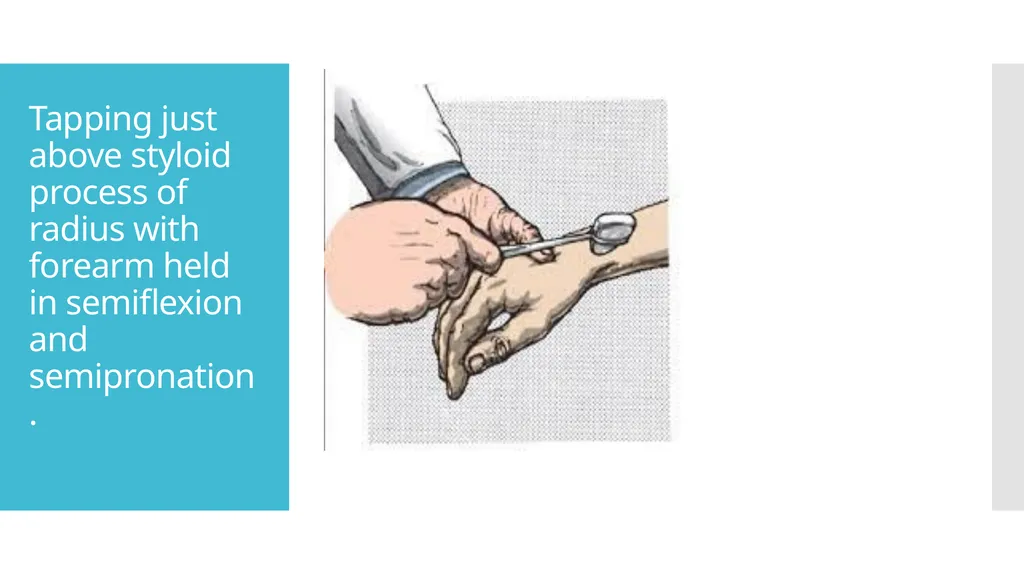
slide16. Tapping just above styloid process of radius with forearm held in semiflexion and semipronation .<br>
slide17. Finger flexor reflex Segment level is C8-T1
Response is flexion of fingers and distal phalanx of thumb
Also known as Wartenberg’s sign<br>
slide18. The patient’s hand is held in supination with the fingers slightly flexed.The examiner places her fingers against the patient’s fingers and taps the back of her own fingers lightly<br>
slide19. Deltoid reflex Segment is C5C6 via axillary nerve
Tapping over insertion of deltoid muscle at the junction of upper and middle third of lateral aspect of humerus
Response is slight abduction of upper arm<br>
slide20. Pectoralis reflex Mediated by medial and lateral pectoral nerve C5-T1
Response is adduction and slight internal rotation of arm at the shoulder.
In patients with cervical myelopathy a hyperactive pectoralis reflex indicates cord compression at C2C3 and or C3C4 levels.<br>
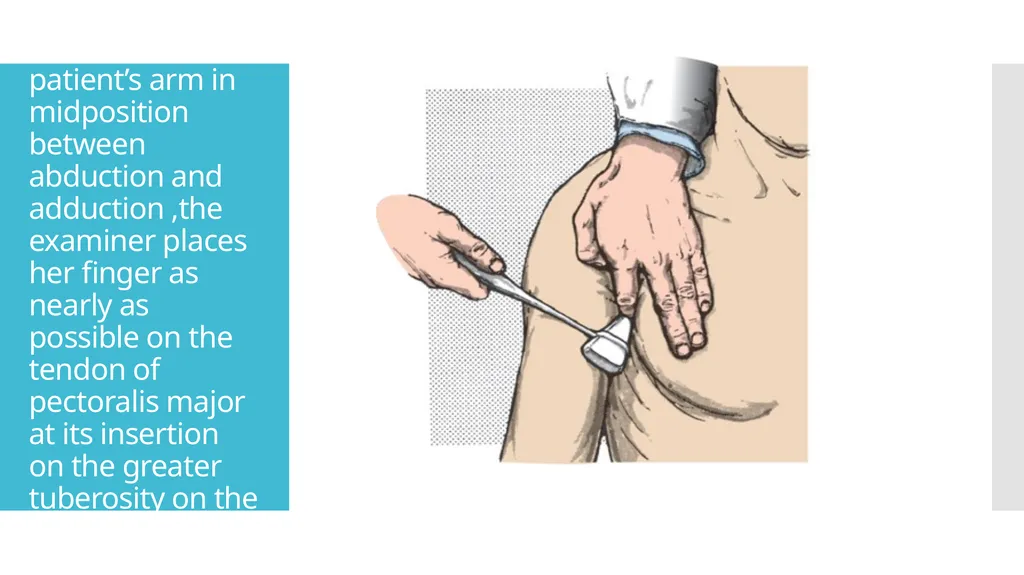
slide21. With the patient’s arm in midposition between abduction and adduction ,the examiner places her finger as nearly as possible on the tendon of pectoralis major at its insertion on the greater tuberosity on the humerus.<br>
slide22. Clavicle Reflex In patients with upper extremity hyperreflexia tapping over the lateral aspect of clavicle is followed by extensive contraction of various muscle groups in upper limb
This is an indication of spread of reflex response
Response is minimal ,usually absent except in upper extremity hyperreflexia<br>
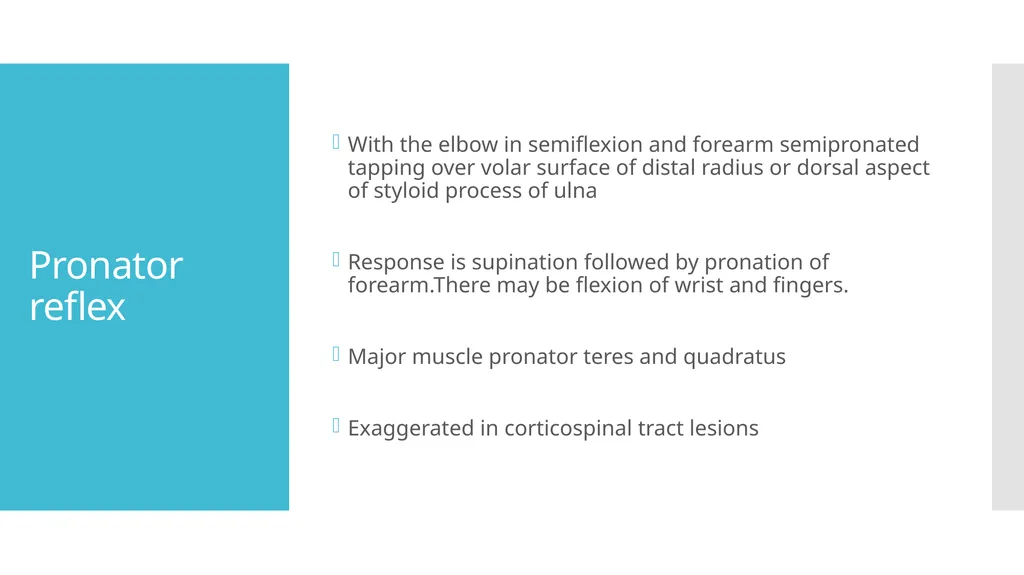
slide23. Pronator reflex With the elbow in semiflexion and forearm semipronated tapping over volar surface of distal radius or dorsal aspect of styloid process of ulna
Response is supination followed by pronation of forearm.There may be flexion of wrist and fingers.
Major muscle pronator teres and quadratus
Exaggerated in corticospinal tract lesions<br>
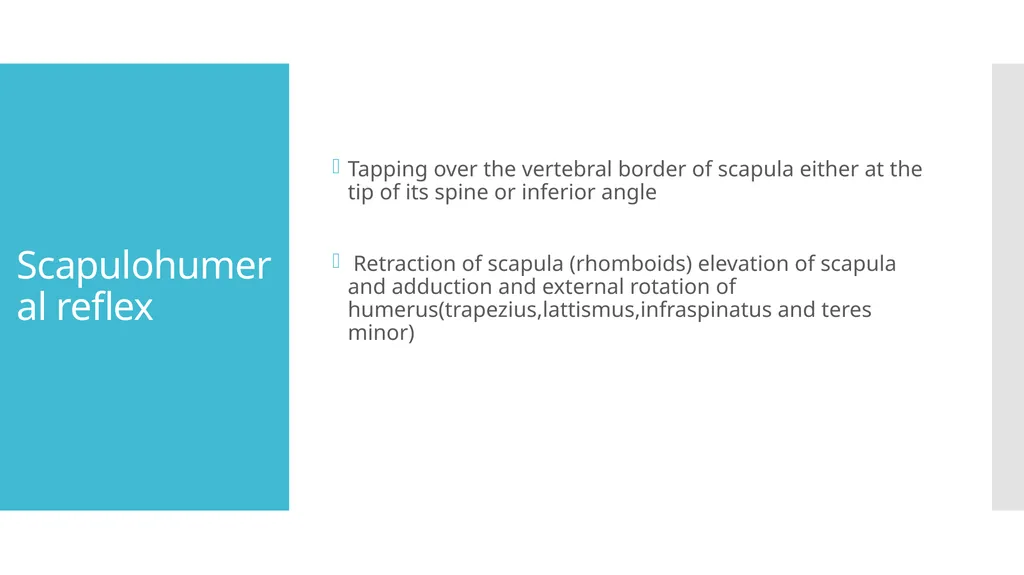
slide24. Scapulohumeral reflex Tapping over the vertebral border of scapula either at the tip of its spine or inferior angle
Retraction of scapula (rhomboids) elevation of scapula and adduction and external rotation of humerus(trapezius,lattismus,infraspinatus and teres minor)<br>
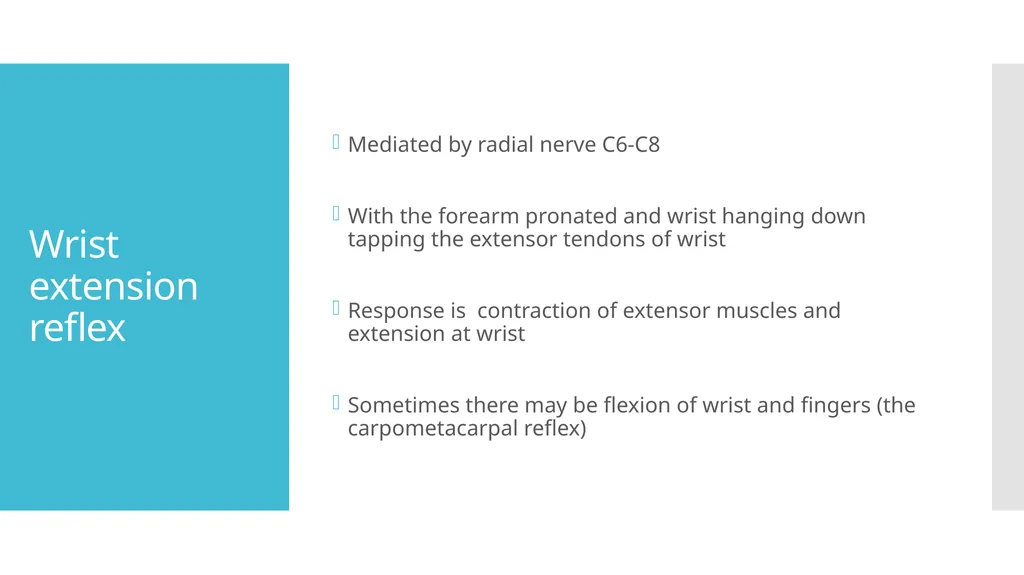
slide25. Wrist extension reflex Mediated by radial nerve C6-C8
With the forearm pronated and wrist hanging down tapping the extensor tendons of wrist
Response is contraction of extensor muscles and extension at wrist
Sometimes there may be flexion of wrist and fingers (the carpometacarpal reflex)<br>
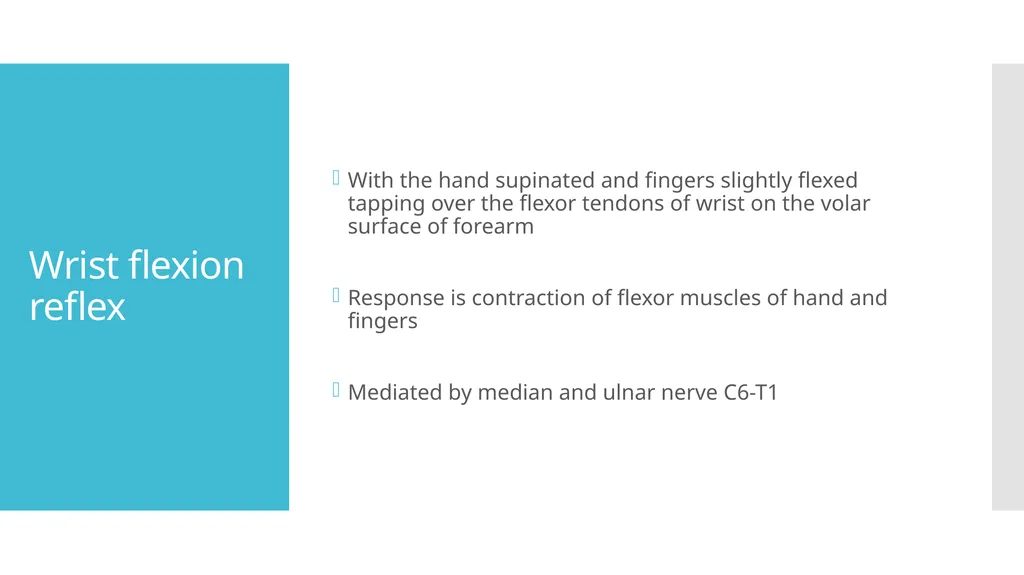
slide26. Wrist flexion reflex With the hand supinated and fingers slightly flexed tapping over the flexor tendons of wrist on the volar surface of forearm
Response is contraction of flexor muscles of hand and fingers
Mediated by median and ulnar nerve C6-T1<br>
slide27. Thumb reflex Tapping the flexor pollicis longus tendon just above the pronator quadratus
Response is flexion of distal phalanx of thumb<br>

slide28. Thank you<br>
slide2. DTR is a monosynaptic stretch reflex, sudden lengthening stretches the muscle spindles which sends impulses via the primary spindle afferents into the spinal cord.
The spindle afferents synapse on the alpha motor neurons innervating the muscles causing a reflex contraction of muscle.
This sequence of lenghthening ,contraction and then relaxation is a stretch reflex(deep tendon/muscle stretch/myotatic/proprioceptive)<br>
slide4. Stretch reflexes serve a protective role as it help to encounter any sudden unexpected forces and maintain erect posture
The DTR are elicited by application of stretch stimulus to either tendons,periosteum or occasionally to bones, joints, fascia or aponeurotic structures.<br>
slide5. Reflexes may be graded as
0 - absent
1+ - present but diminished
2+ - normal
3+ - increased but not necessarily to a pathologic degree
4+ - markedly hyperactive often with extra beats or accompanying sustained clonus<br>
slide6. The activity of a reflex is judged by speed and vigor of the response ,the range of movement and duration of contraction.
When the reflex is very active ,the response may involve adjacent or contralateral muscles and the contraction of one muscle may be accompanied by contraction of other muscles. This is referred as spread or irradiation of reflex
Inverted reflexes are contractions of the opposite / antagonists when the segmental reflex is absent<br>
slide7. The reflex can be reinforced by using Jendrassik maneuver ,the patient attempts to pull the hands apart with fingers flexed and hooked together, palms facing
A slight increase in tension of the muscle being tested may reinforce the reflex response
Reinforcement may increase the amplitude of a sluggish reflex or bring out a latent reflex not otherwise obtainable.<br>
slide9. Hypoactive reflexes A depressed or absent reflex can be due to lesions involving sensory nerve,posterior root,dorsal root ganglion,or intramedullary pathways between dorsal root entry zone and anterior horn,motor unit
Abnormal in peripheral neuropathy,myopathy,myasthenia,muscular dystrophy.
Often absent in deep coma,narcosis,sedation and spinal shock<br>
slide10. Hyperactive reflexes Characterised by decrease in threshold,decrease in latency exaggeration of power and range of movement,prolongation of reflex contraction,extension of reflexogenic zone and spread of reflex response
Seen in lesions of corticospinal tract
In hemiplegia flexor reflexes of upper extremities are exaggerated<br>
slide11. Biceps reflex Segmental level is C5-C6
Peripheral nerve is musculocutaneus nerve
Major response is contraction of biceps muscle with flexion of elbow and supination
If the reflex is exaggerated there may be spread /irradiation of reflex with flexion of wrist and fingers and adduction of thumb<br>
slide12. The arm is relaxed and forearm is slightly pronated and midway between flexion and extension,the examiner places the palmar surface of her extended thumb or finger on patient’s biceps tendon and strike extensor surface<br>
slide13. Triceps reflex Segmental level is C6-C7
Peripheral nerve is radial nerve
Response is contraction of triceps muscle with extension of elbow
The paradoxical or inverted triceps jerk consists of flexion of elbow with percussion of triceps tendon,occurs in lesions of C7,C8 segments.<br>
slide14. The arm is placed midway between flexion and extension and may be rested in patient’s lap ,on her thigh or hip or on the examiners hand. Tapping triceps tendon just above its insertion on the olecranon process of ulna.<br>
slide15. Brachioradialis /Supinator reflex Segmental level is C5-C6
Peripheral nerve is radial nerve
Response is flexion of elbow with variable supination
If the reflex is exaggerated there is associated flexion of wrist and fingers without flexion and supination of elbow is termed as inversion of the reflex.<br>
slide16. Tapping just above styloid process of radius with forearm held in semiflexion and semipronation .<br>
slide17. Finger flexor reflex Segment level is C8-T1
Response is flexion of fingers and distal phalanx of thumb
Also known as Wartenberg’s sign<br>
slide18. The patient’s hand is held in supination with the fingers slightly flexed.The examiner places her fingers against the patient’s fingers and taps the back of her own fingers lightly<br>
slide19. Deltoid reflex Segment is C5C6 via axillary nerve
Tapping over insertion of deltoid muscle at the junction of upper and middle third of lateral aspect of humerus
Response is slight abduction of upper arm<br>
slide20. Pectoralis reflex Mediated by medial and lateral pectoral nerve C5-T1
Response is adduction and slight internal rotation of arm at the shoulder.
In patients with cervical myelopathy a hyperactive pectoralis reflex indicates cord compression at C2C3 and or C3C4 levels.<br>
slide21. With the patient’s arm in midposition between abduction and adduction ,the examiner places her finger as nearly as possible on the tendon of pectoralis major at its insertion on the greater tuberosity on the humerus.<br>
slide22. Clavicle Reflex In patients with upper extremity hyperreflexia tapping over the lateral aspect of clavicle is followed by extensive contraction of various muscle groups in upper limb
This is an indication of spread of reflex response
Response is minimal ,usually absent except in upper extremity hyperreflexia<br>
slide23. Pronator reflex With the elbow in semiflexion and forearm semipronated tapping over volar surface of distal radius or dorsal aspect of styloid process of ulna
Response is supination followed by pronation of forearm.There may be flexion of wrist and fingers.
Major muscle pronator teres and quadratus
Exaggerated in corticospinal tract lesions<br>
slide24. Scapulohumeral reflex Tapping over the vertebral border of scapula either at the tip of its spine or inferior angle
Retraction of scapula (rhomboids) elevation of scapula and adduction and external rotation of humerus(trapezius,lattismus,infraspinatus and teres minor)<br>
slide25. Wrist extension reflex Mediated by radial nerve C6-C8
With the forearm pronated and wrist hanging down tapping the extensor tendons of wrist
Response is contraction of extensor muscles and extension at wrist
Sometimes there may be flexion of wrist and fingers (the carpometacarpal reflex)<br>
slide26. Wrist flexion reflex With the hand supinated and fingers slightly flexed tapping over the flexor tendons of wrist on the volar surface of forearm
Response is contraction of flexor muscles of hand and fingers
Mediated by median and ulnar nerve C6-T1<br>
slide27. Thumb reflex Tapping the flexor pollicis longus tendon just above the pronator quadratus
Response is flexion of distal phalanx of thumb<br>
slide28. Thank you<br>