FACIAL NERVE PLASY Dr.Satguru Saran Singh
Description: FACIAL NERVE PLASY Dr.Satguru Saran Singh Assistant Professor Department of ENT Pons to parotid Mixed nerve sensory root (nerve of wrisberg) Special visceral efferents-motor root General visceral efferent secretomotor fibres to lacrimal
Related Topics
Download Presentation
"FACIAL NERVE PLASY Dr.Satguru Saran Singh" is the property of its rightful owner. Permission is granted to download and print the materials on this website for personal, non-commercial use only, and to display it on your personal computer provided you do not modify the materials and that you retain all copyright notices contained in the materials. By downloading content from our website, you accept the terms of this agreement.
Presentation Transcript
slide1. FACIAL NERVE PLASY Dr.Satguru Saran Singh
Assistant Professor
Department of ENT<br>
slide2. Pons to parotid
Mixed nerve – sensory root (nerve of wrisberg)<br>
slide3. Special visceral efferents-motor root
General visceral efferent – secretomotor fibres to lacrimal ,submandiblar ,sublingual glands & small secretory glands in nasal mucosa & palate
Special visceral afferent – taste from ant 2/3 rd tongue via chorda tympani ,soft & hard palate via greater superficial petrosal nerve
General somatic afferents –general sensation from concha,postero-sup part of external canal & tympanic memb<br>
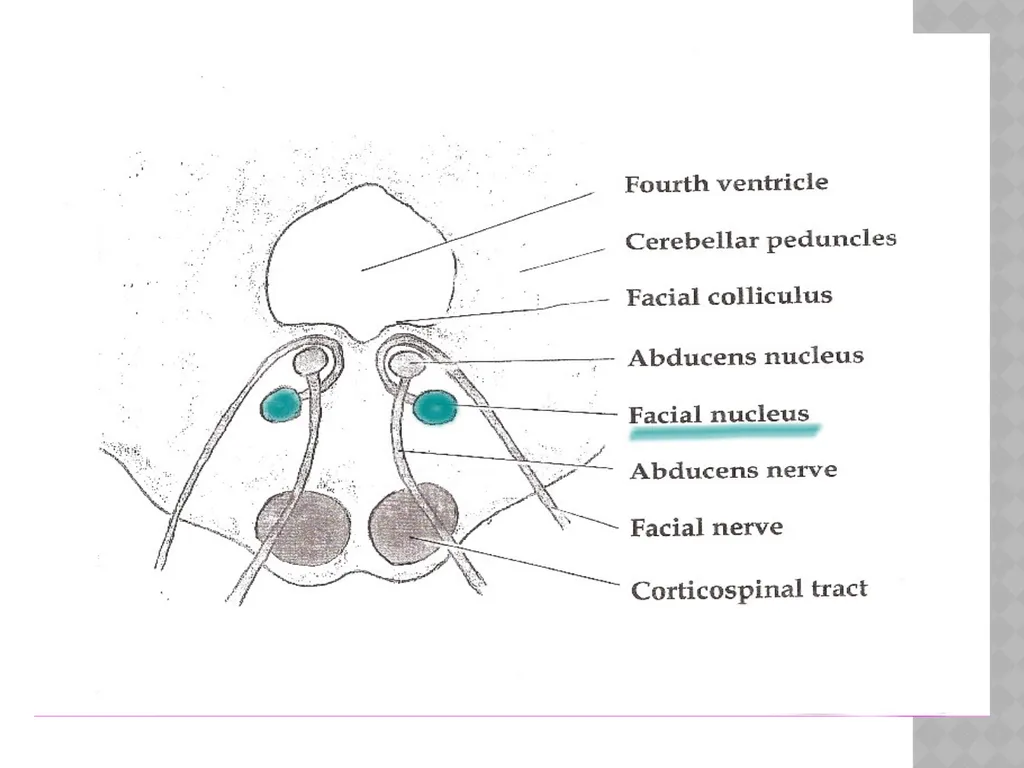
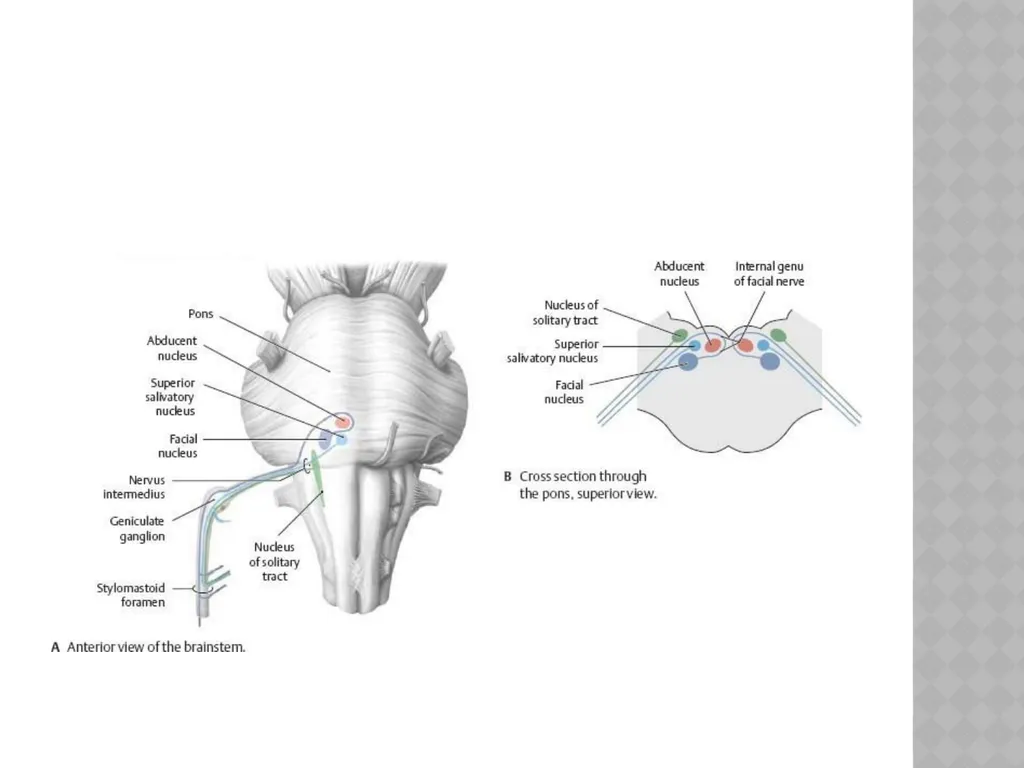
slide4. Motor ncleus – pons<br>
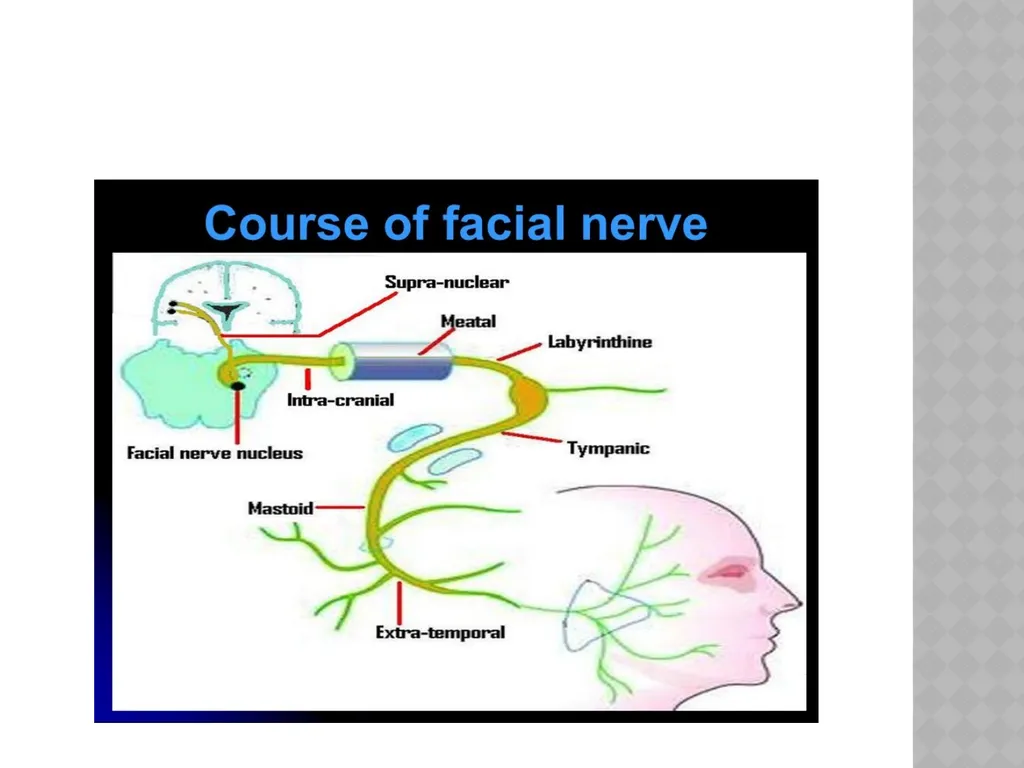
slide10. Intracranial
Intratemporal
Extracranial<br>
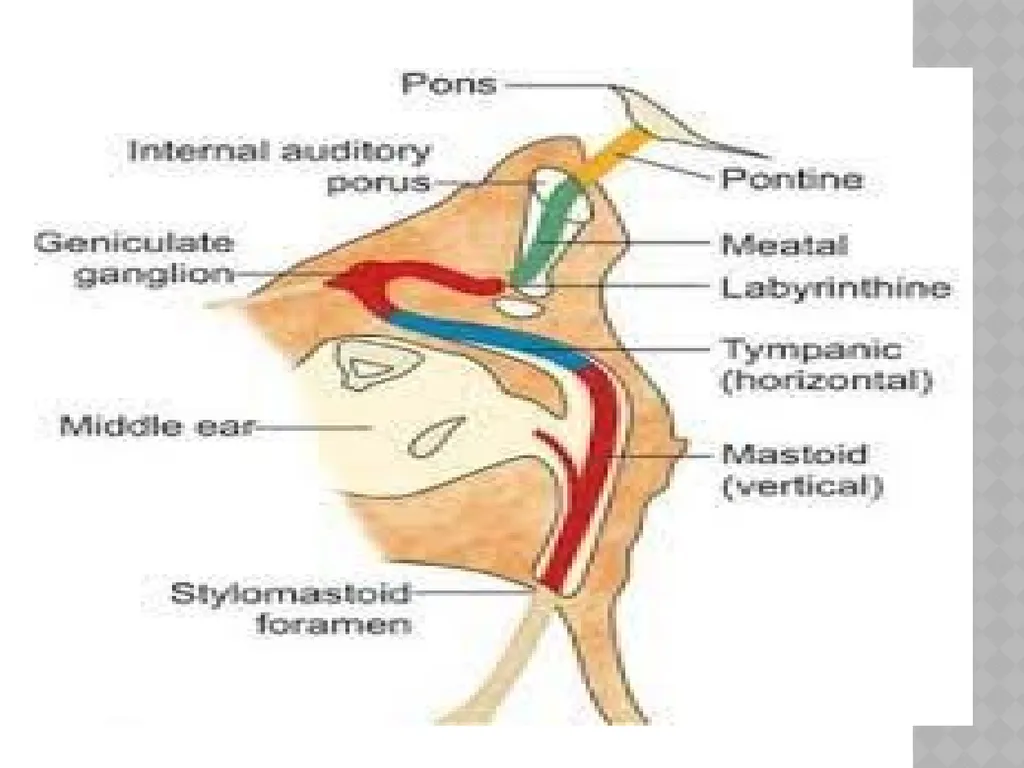
slide11. INTRACRANIAL Intracranial part –From pons to Internal Acostic meatus
15-17 mm<br>
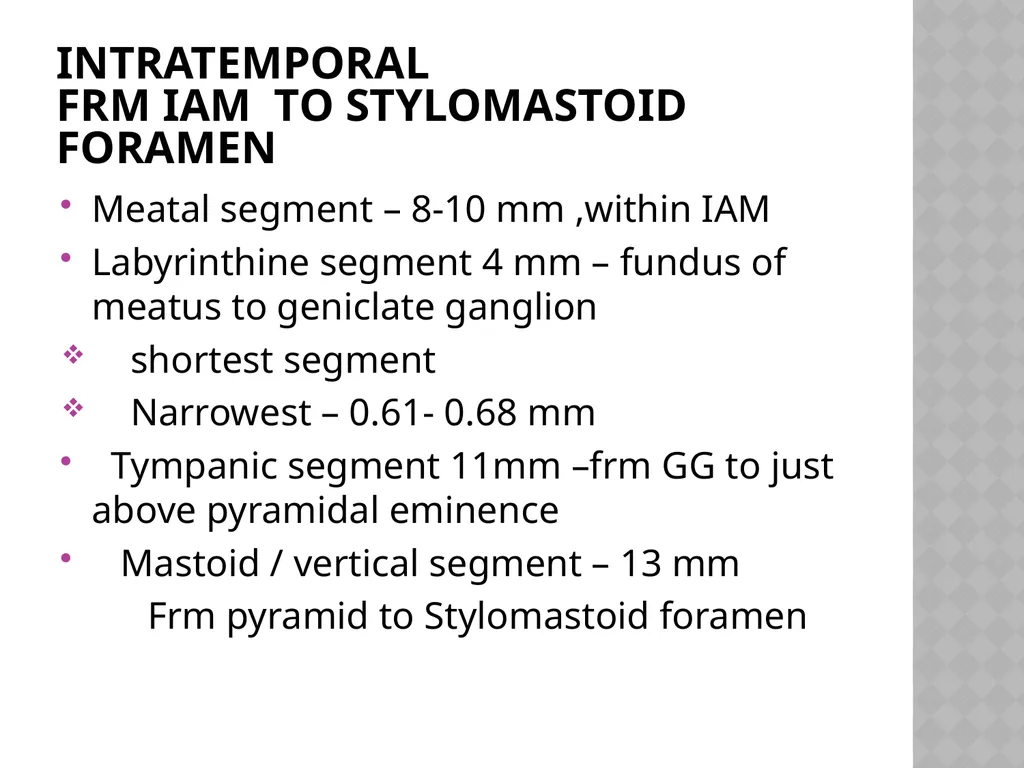
slide12. Intratemporal Frm IAM to stylomastoid foramen Meatal segment – 8-10 mm ,within IAM
Labyrinthine segment 4 mm – fundus of meatus to geniclate ganglion
shortest segment
Narrowest – 0.61- 0.68 mm
Tympanic segment 11mm –frm GG to just above pyramidal eminence
Mastoid / vertical segment – 13 mm
Frm pyramid to Stylomastoid foramen<br>
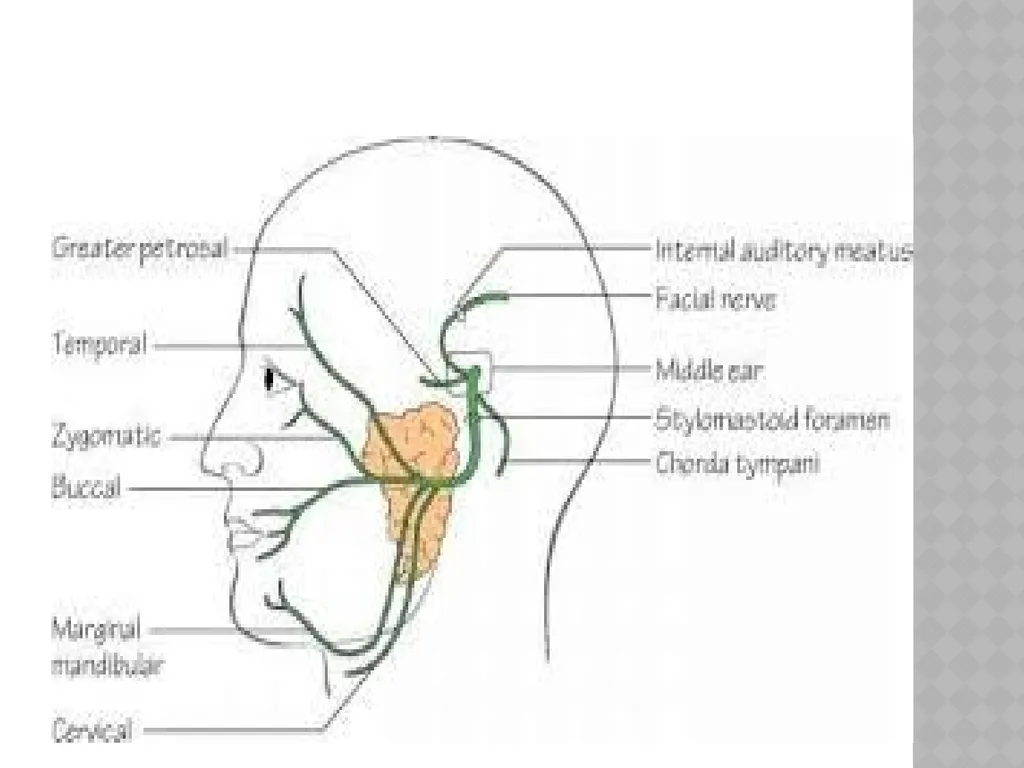
slide15. Extracranial Frm stylomastoid foramen to peripheral branches<br>
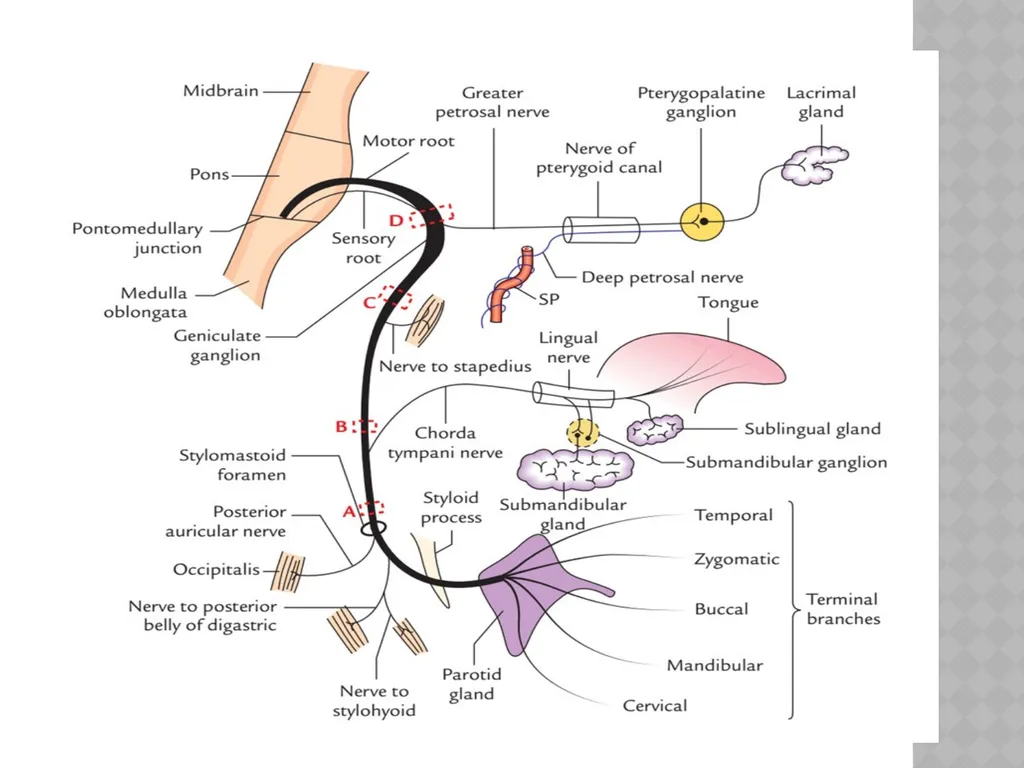
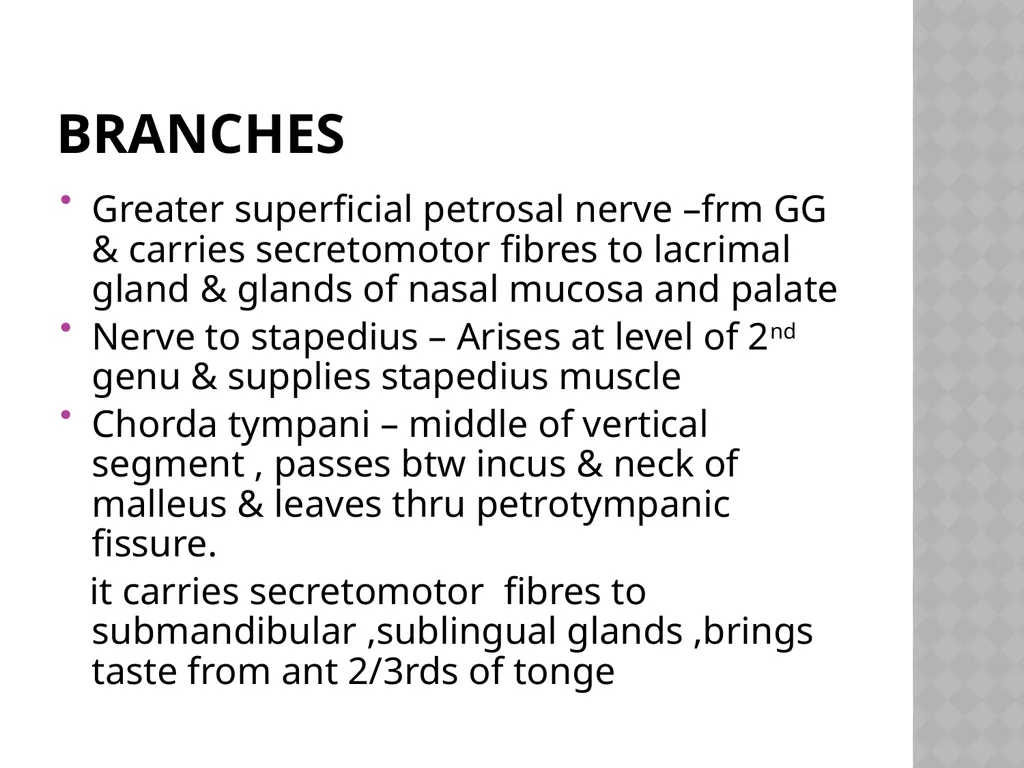
slide19. BRANCHES Greater superficial petrosal nerve –frm GG & carries secretomotor fibres to lacrimal gland & glands of nasal mucosa and palate
Nerve to stapedius – Arises at level of 2nd genu & supplies stapedius muscle
Chorda tympani – middle of vertical segment , passes btw incus & neck of malleus & leaves thru petrotympanic fissure.
it carries secretomotor fibres to submandibular ,sublingual glands ,brings taste from ant 2/3rds of tonge<br>
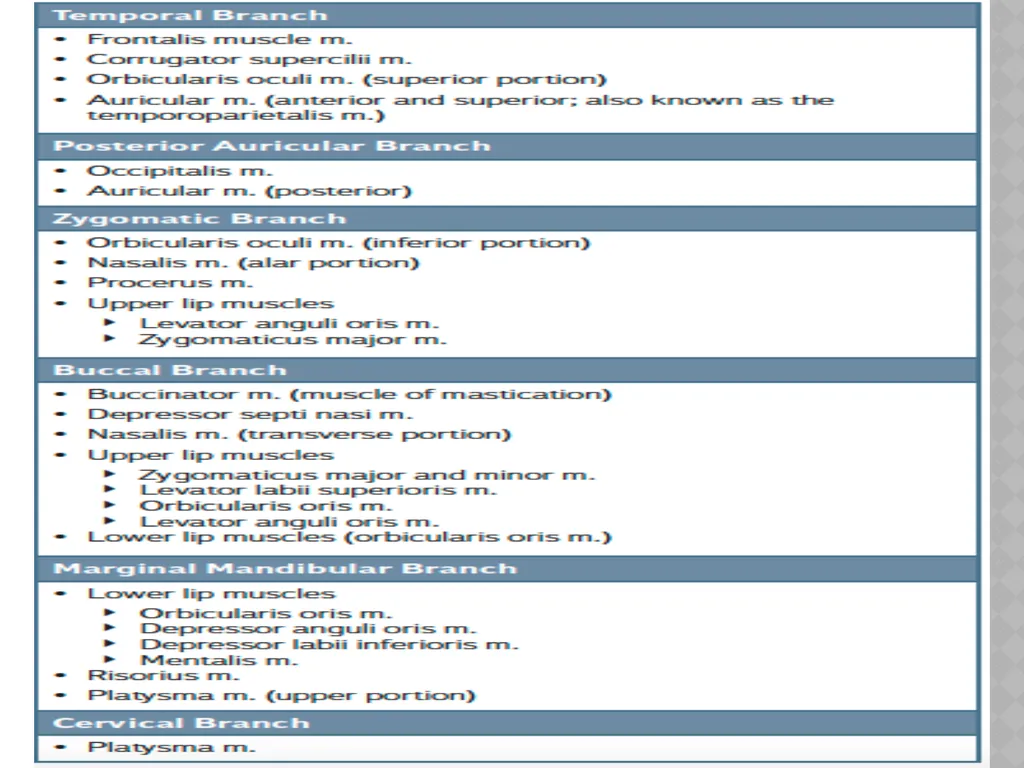
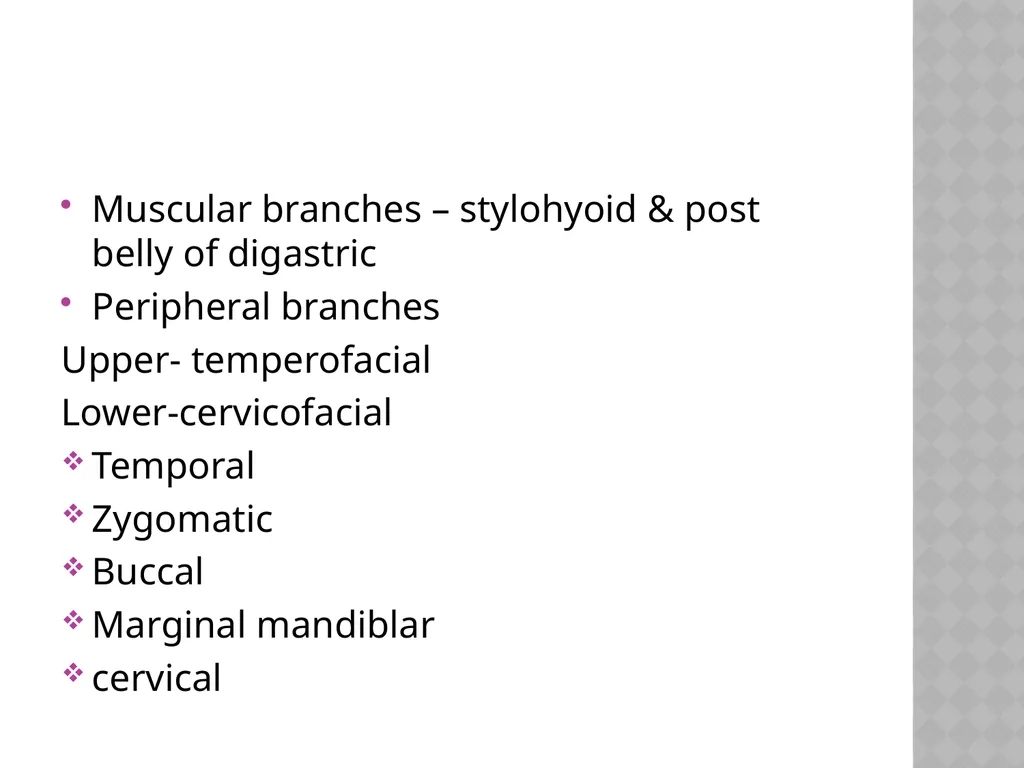
slide20. Muscular branches – stylohyoid & post belly of digastric
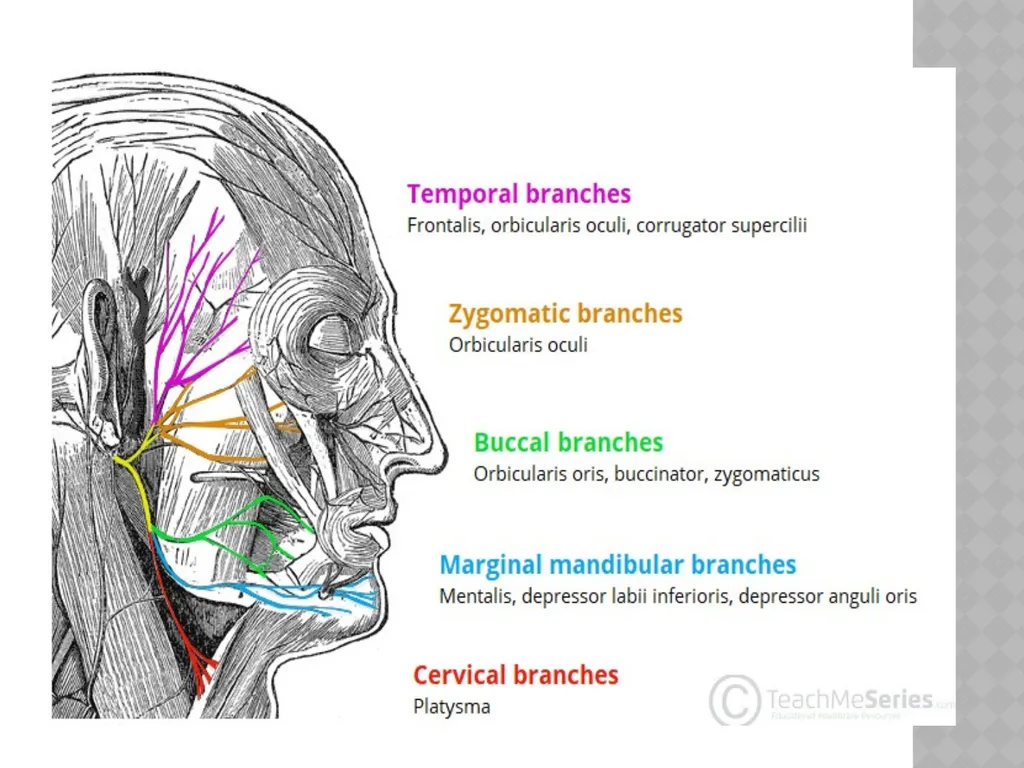
Peripheral branches
Upper- temperofacial
Lower-cervicofacial
Temporal
Zygomatic
Buccal
Marginal mandiblar
cervical<br>
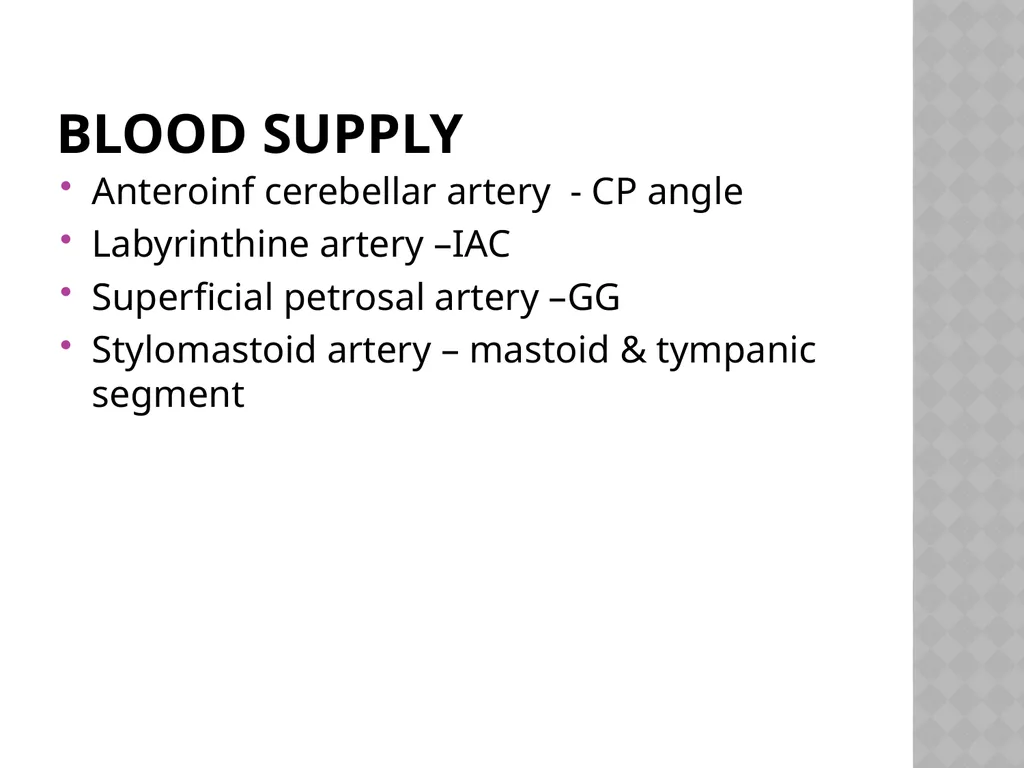
slide21. BLOOD SUPPLY Anteroinf cerebellar artery - CP angle
Labyrinthine artery –IAC
Superficial petrosal artery –GG
Stylomastoid artery – mastoid & tympanic segment<br>
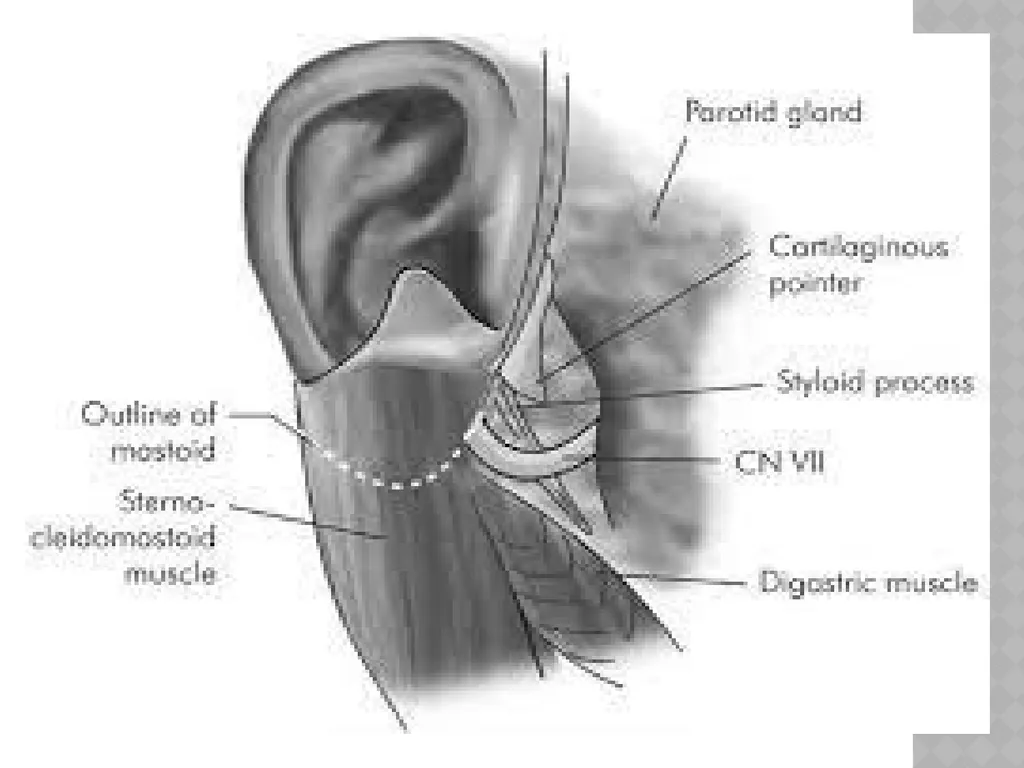
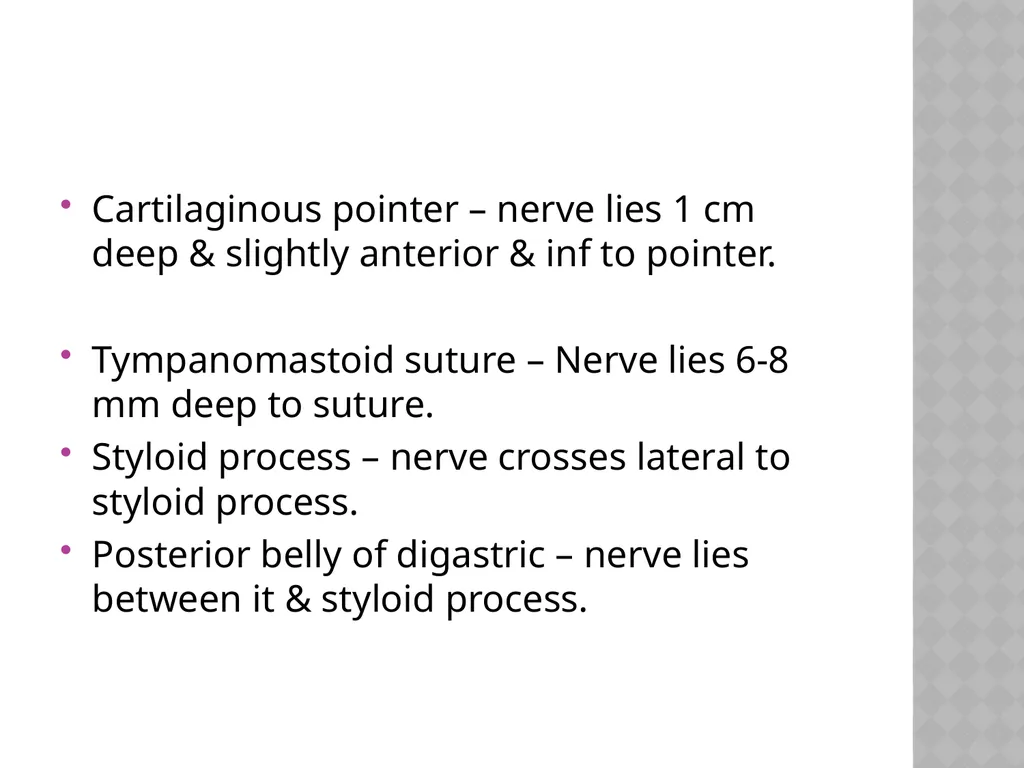
slide24. Cartilaginous pointer – nerve lies 1 cm deep & slightly anterior & inf to pointer.
Tympanomastoid suture – Nerve lies 6-8 mm deep to suture.
Styloid process – nerve crosses lateral to styloid process.
Posterior belly of digastric – nerve lies between it & styloid process.<br>
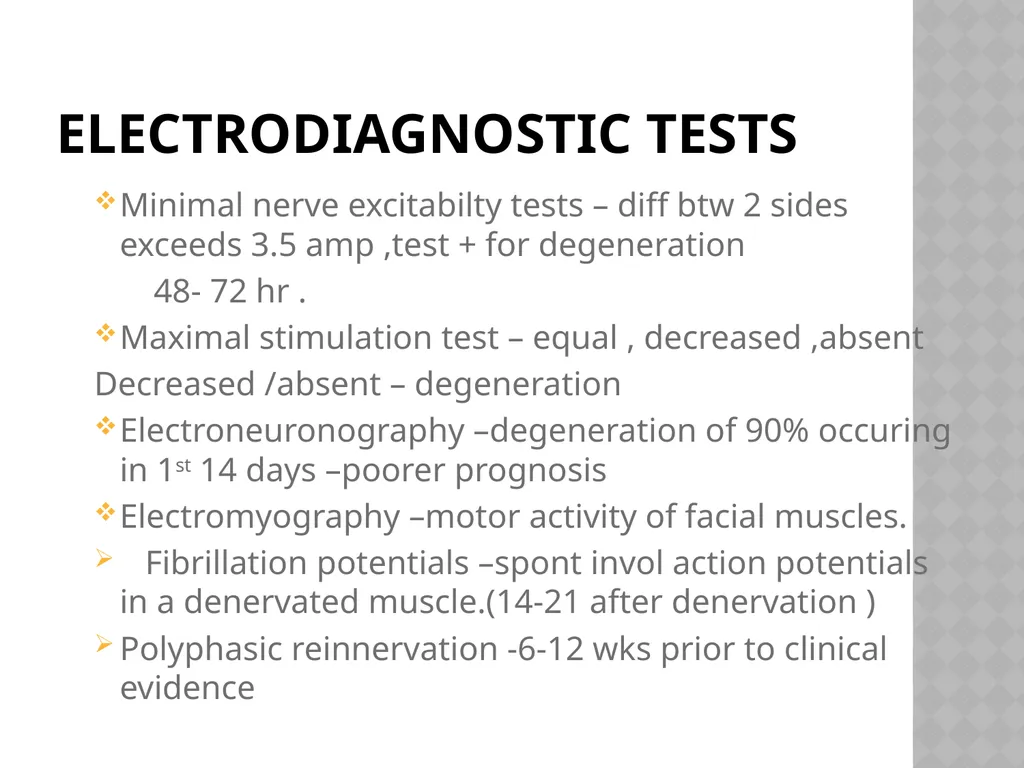
slide29. Electrodiagnostic tests Minimal nerve excitabilty tests – diff btw 2 sides exceeds 3.5 amp ,test + for degeneration
48- 72 hr .
Maximal stimulation test – equal , decreased ,absent
Decreased /absent – degeneration
Electroneuronography –degeneration of 90% occuring in 1st 14 days –poorer prognosis
Electromyography –motor activity of facial muscles.
Fibrillation potentials –spont invol action potentials in a denervated muscle.(14-21 after denervation )
Polyphasic reinnervation -6-12 wks prior to clinical evidence<br>
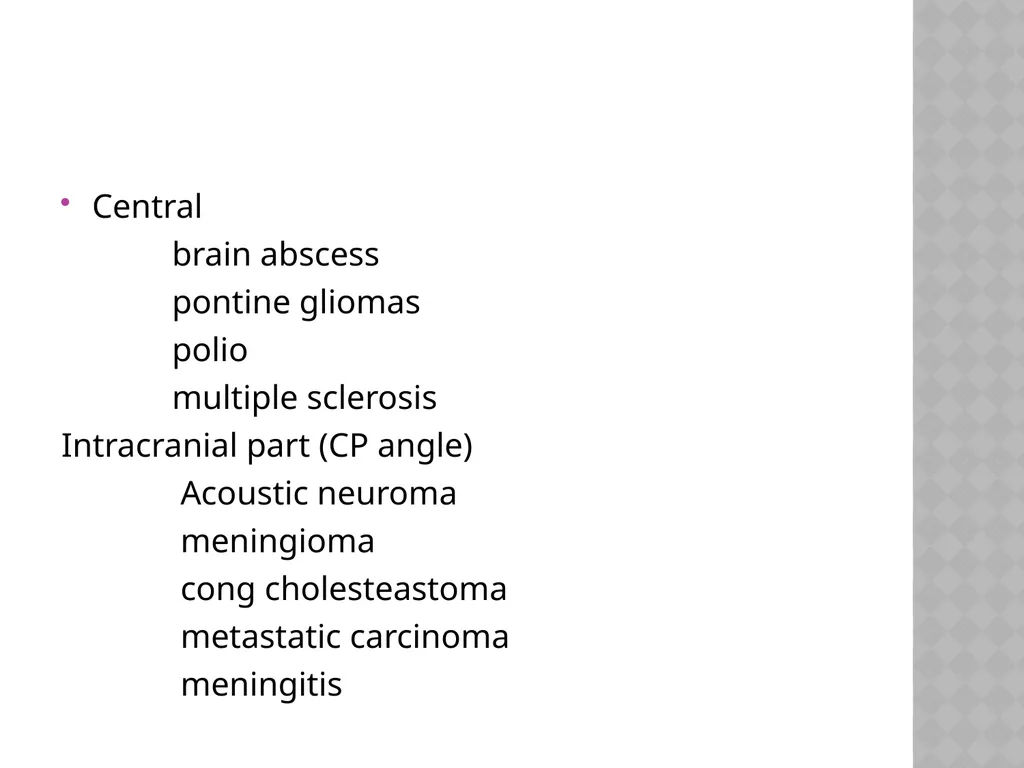
slide30. Central
brain abscess
pontine gliomas
polio
multiple sclerosis
Intracranial part (CP angle)
Acoustic neuroma
meningioma
cong cholesteastoma
metastatic carcinoma
meningitis<br>
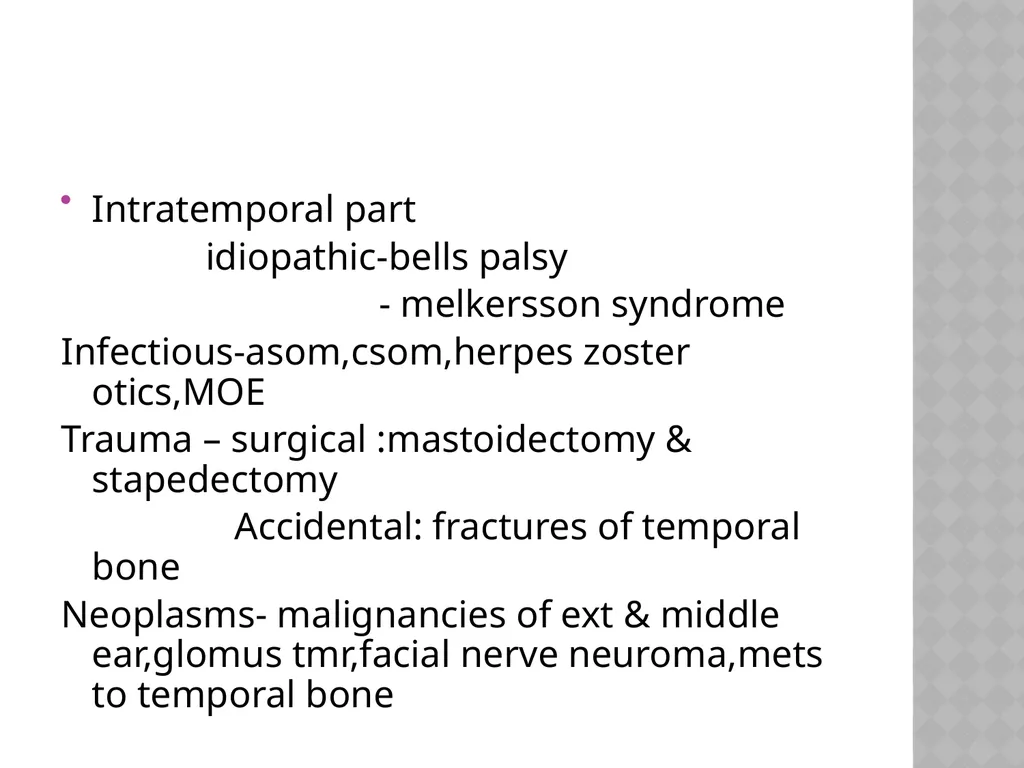
slide31. Intratemporal part
idiopathic-bells palsy
- melkersson syndrome
Infectious-asom,csom,herpes zoster otics,MOE
Trauma – surgical :mastoidectomy & stapedectomy
Accidental: fractures of temporal bone
Neoplasms- malignancies of ext & middle ear,glomus tmr,facial nerve neuroma,mets to temporal bone<br>
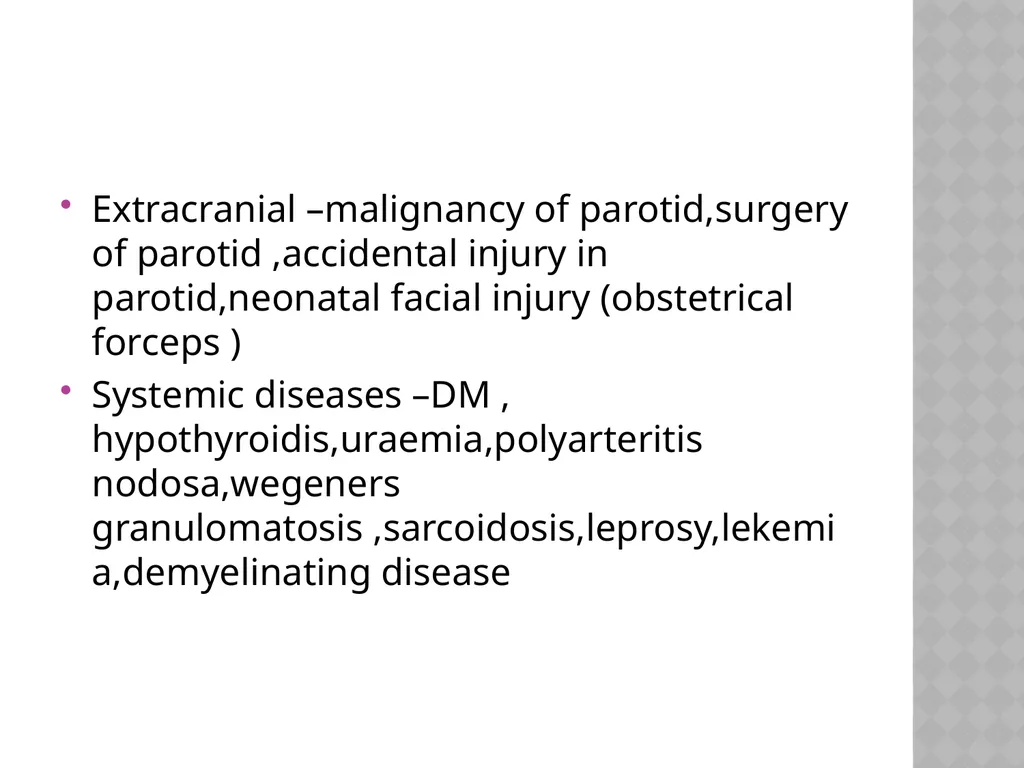
slide32. Extracranial –malignancy of parotid,surgery of parotid ,accidental injury in parotid,neonatal facial injury (obstetrical forceps )
Systemic diseases –DM , hypothyroidis,uraemia,polyarteritis nodosa,wegeners granulomatosis ,sarcoidosis,leprosy,lekemia,demyelinating disease<br>
slide33. BELLS PALSY 60-75% of facial paralysis
Idiopathic , peripheral facial paralysis or paresis of acute onset.
Equal sexes affected
Any age grp maybe affected
Postive family history -6-8 %
Risk is more in DM ,pregnant women<br>
slide34. AETIOLOGY Viral infections – HSV ,HZ,EBV
Vascular ischemia –pri –cold,emotional stress
sec – result of pri ischaemia
Hereditary
Autoimmune disorder<br>
slide37. Diagnosis By exclusion
History
Ent examination
X ray studies
Blood sugar
Serology
Nerve excitabilty tests
Topodiagnostic tests<br>
slide38. general Reassurance
Analgesics
Eye care
physiotherapy<br>
slide39. medical Steroids – prednisolone 1mg/kg
Surgical - nerve decompression – vertical & tympanic segmnent
Prognosis – 85-90% recover fully<br>
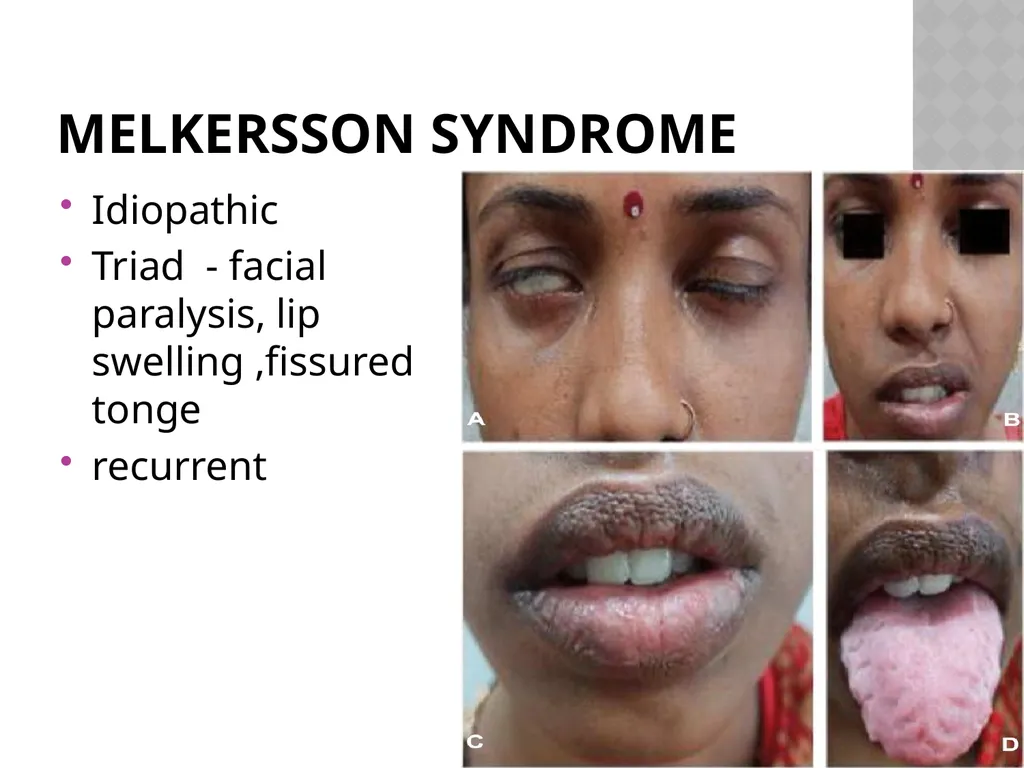
slide40. Melkersson syndrome Idiopathic
Triad - facial paralysis, lip swelling ,fissured tonge
recurrent<br>
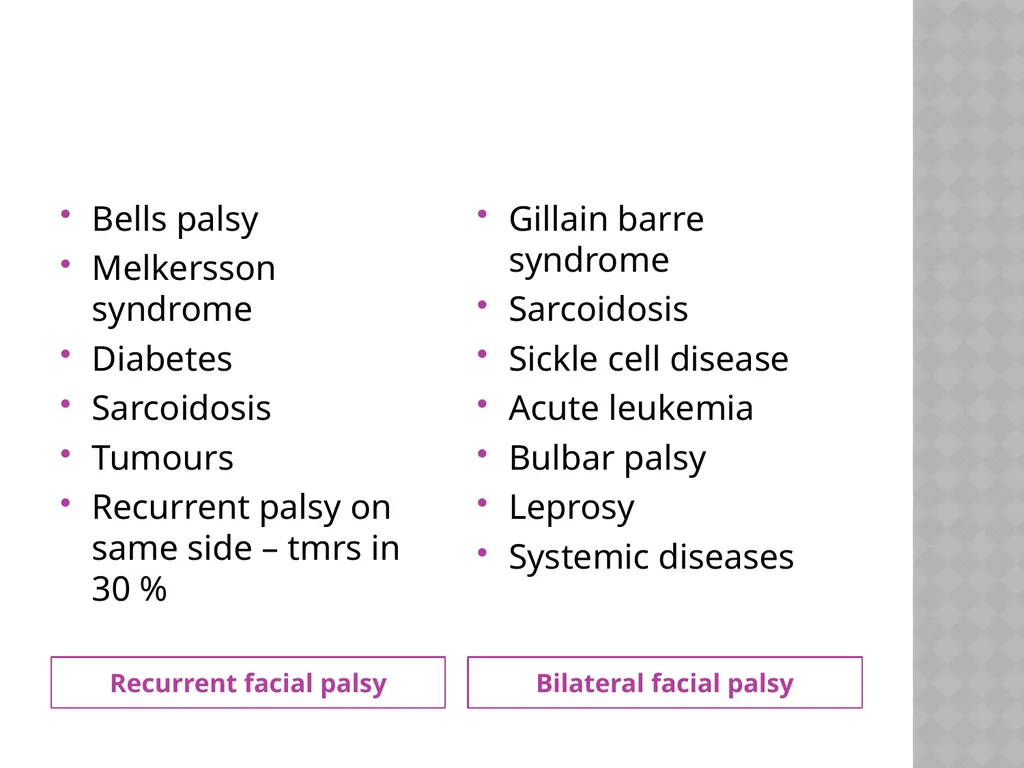
slide41. Recurrent facial palsy Bilateral facial palsy Bells palsy
Melkersson syndrome
Diabetes
Sarcoidosis
Tumours
Recurrent palsy on same side – tmrs in 30 % Gillain barre syndrome
Sarcoidosis
Sickle cell disease
Acute leukemia
Bulbar palsy
Leprosy
Systemic diseases<br>
slide42. Ramsay hunt syndrome/Herpes zoster oticus Facial palsy
Vesicular rash eac & pinna
Anaesthesia of face , giddiness<br>
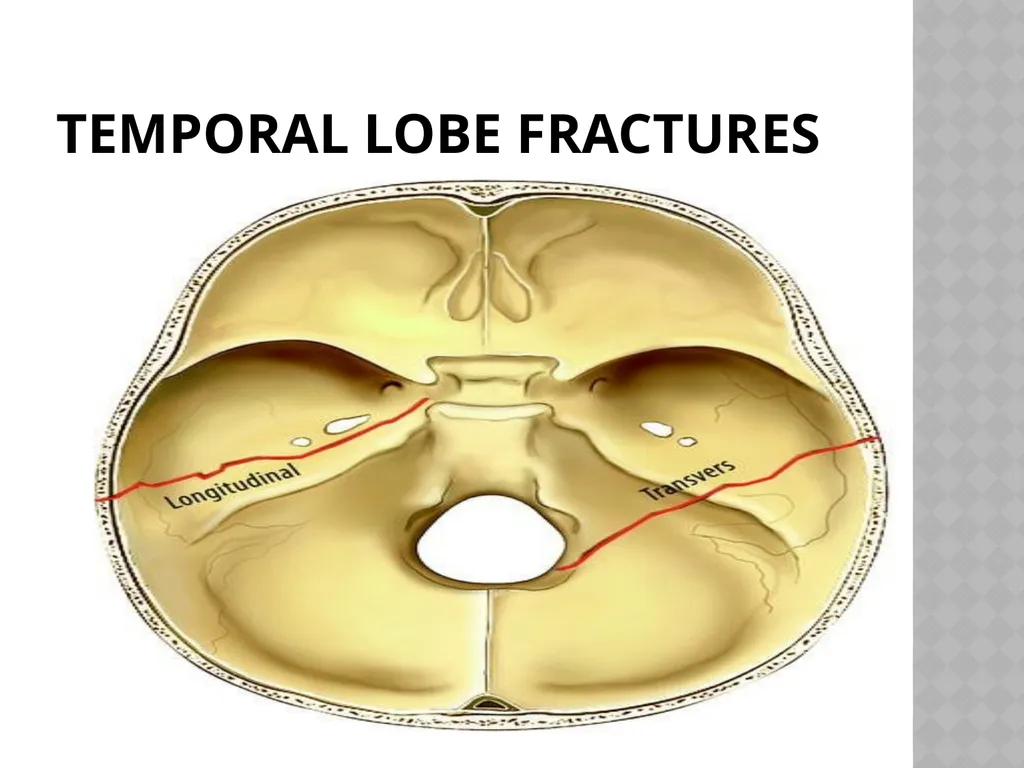
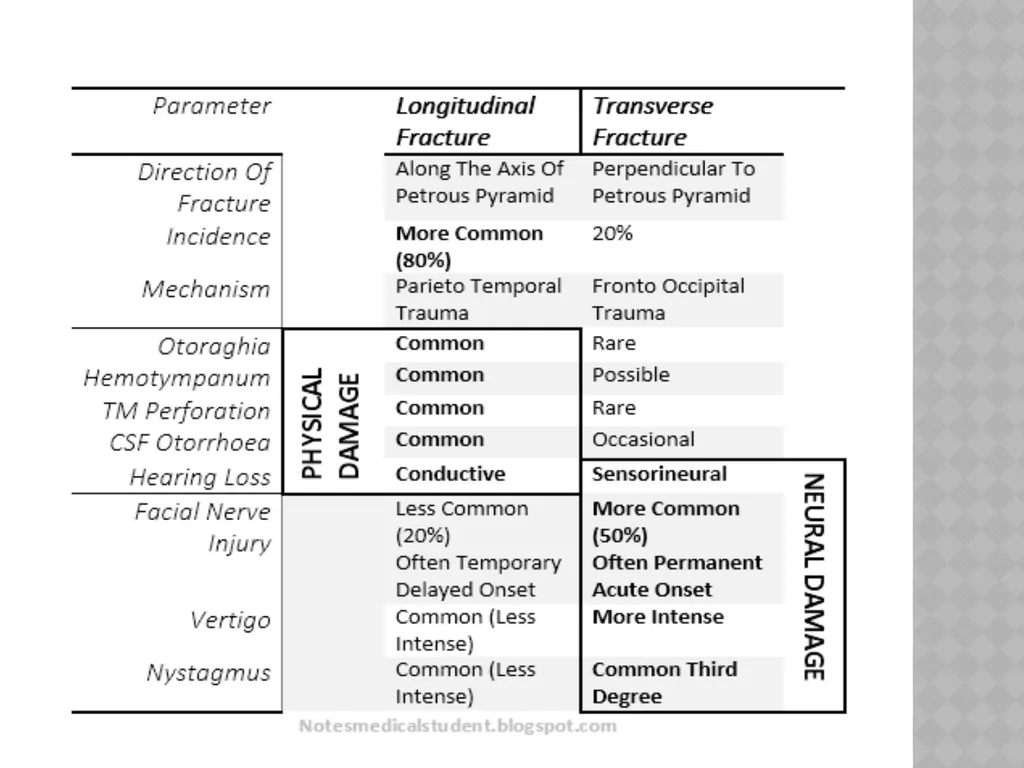
slide43. Temporal lobe fractures<br>
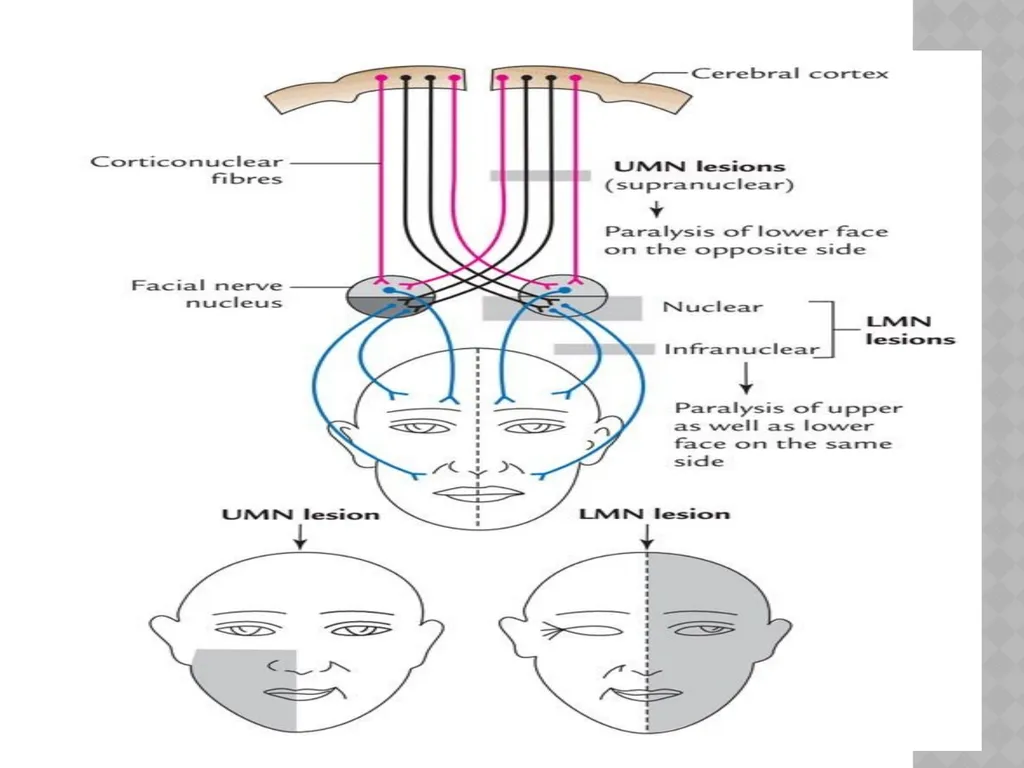
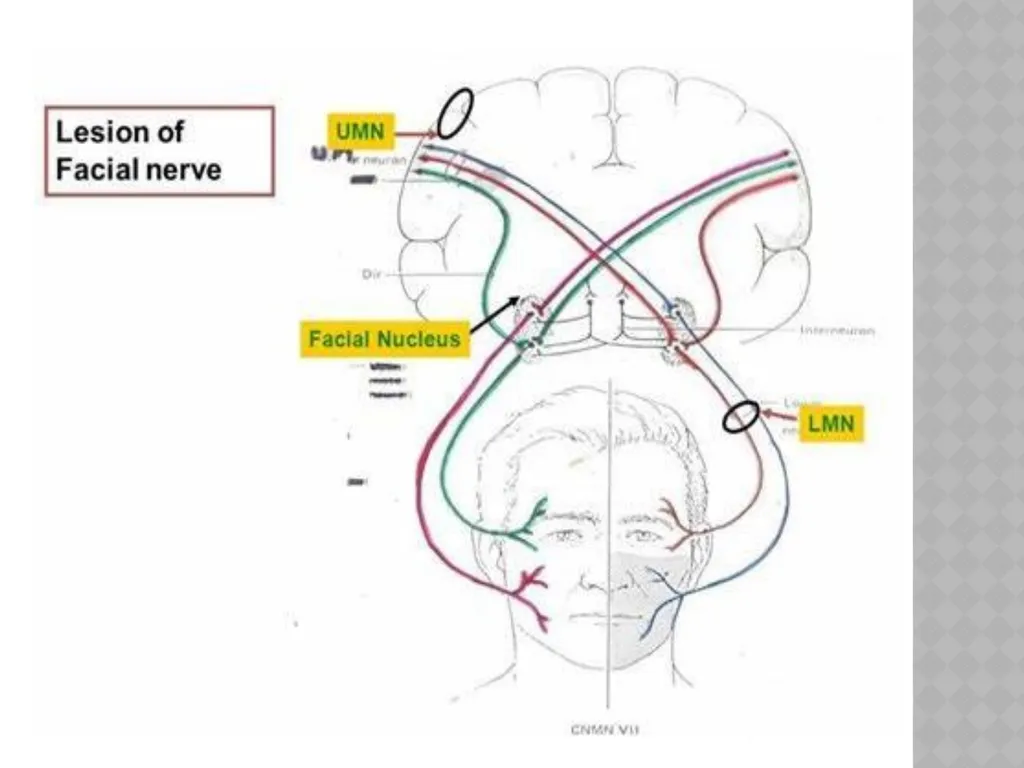
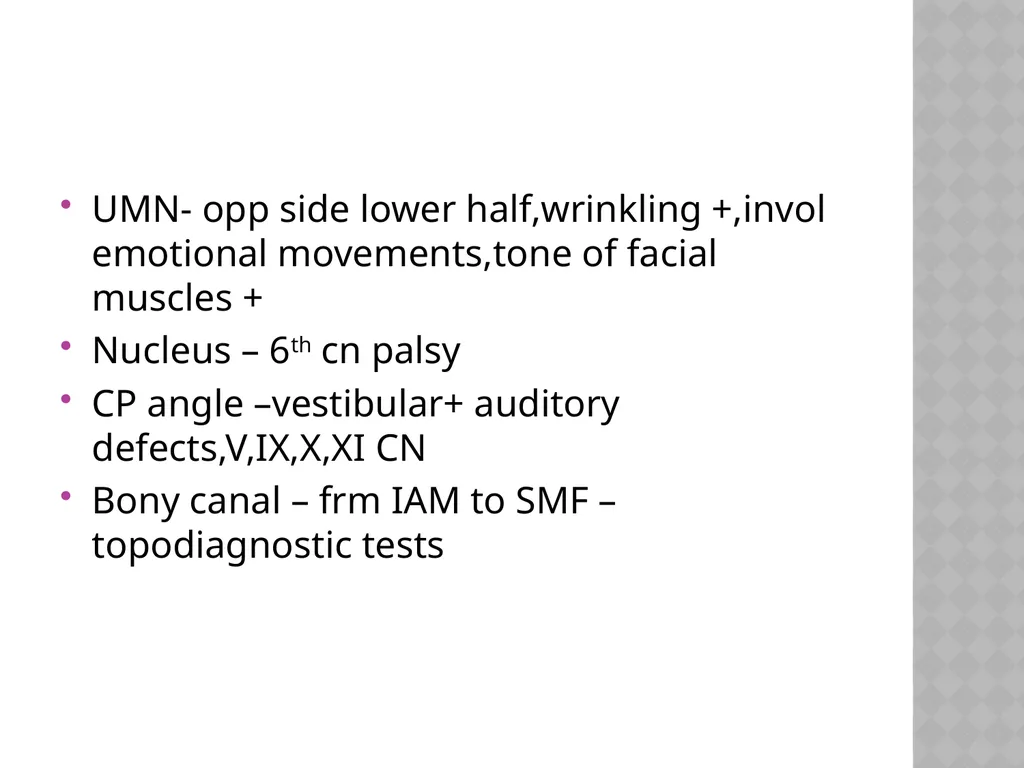
slide45. UMN- opp side lower half,wrinkling +,invol emotional movements,tone of facial muscles +
Nucleus – 6th cn palsy
CP angle –vestibular+ auditory defects,V,IX,X,XI CN
Bony canal – frm IAM to SMF –topodiagnostic tests<br>
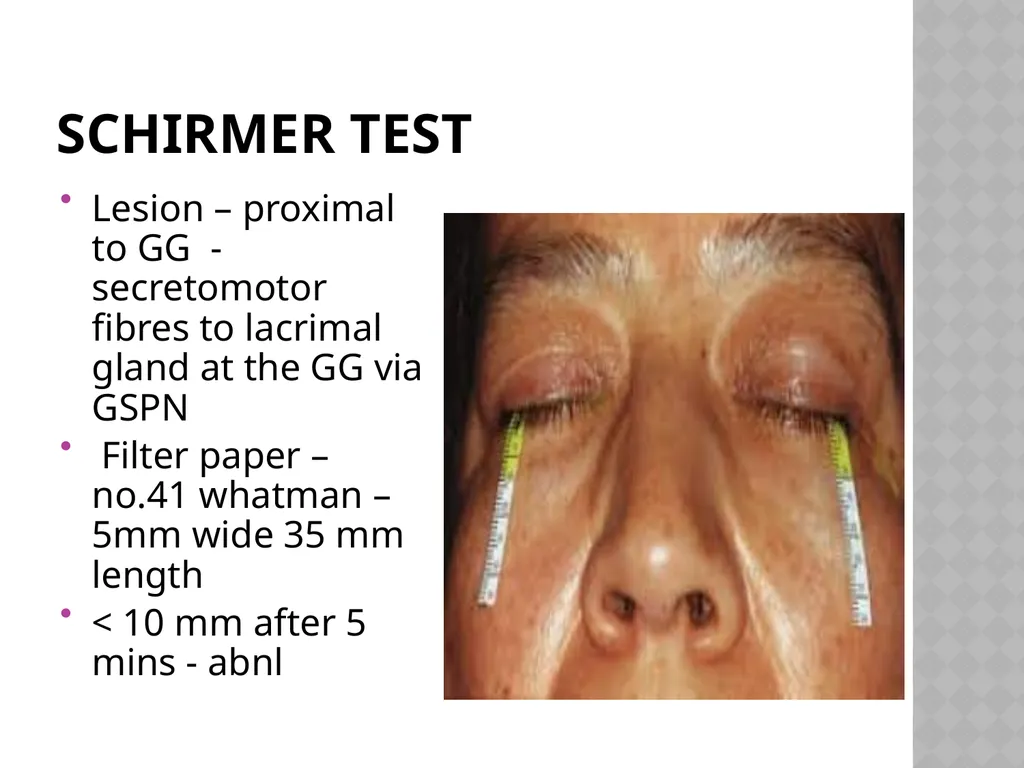
slide46. SCHIRMER TEST Lesion – proximal to GG - secretomotor fibres to lacrimal gland at the GG via GSPN
Filter paper – no.41 whatman – 5mm wide 35 mm length
< 10 mm after 5 mins - abnl<br>
slide47. Stapedial reflex Lost in lesions above n. to stapedius<br>
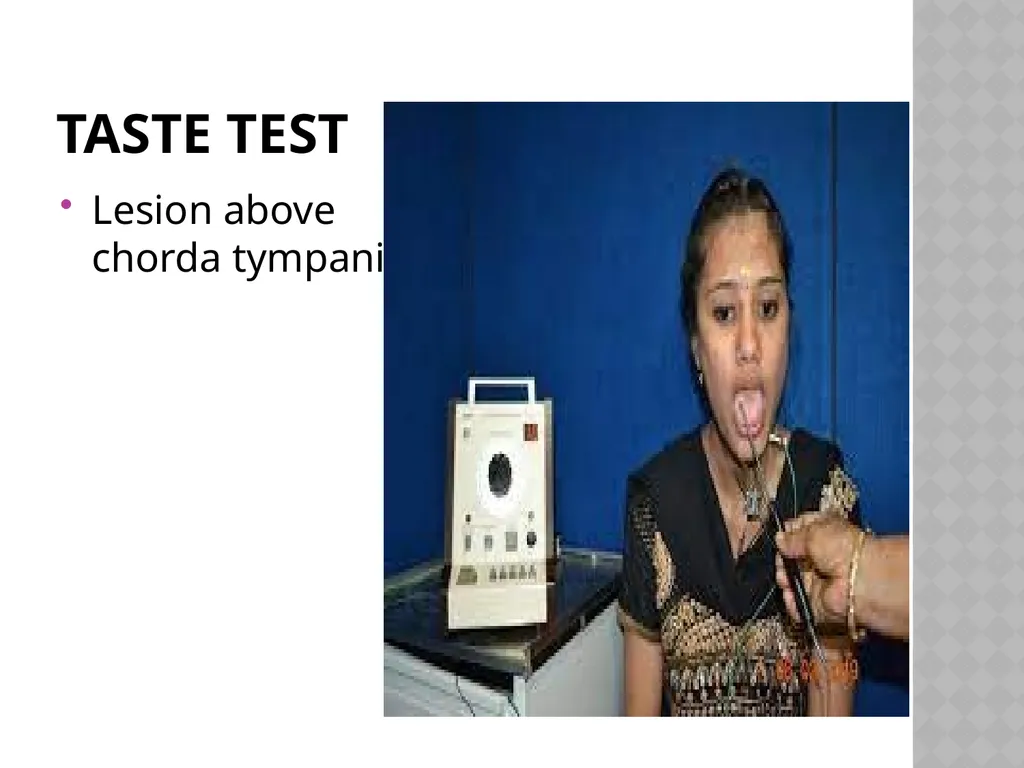
slide48. Taste test Lesion above chorda tympani<br>
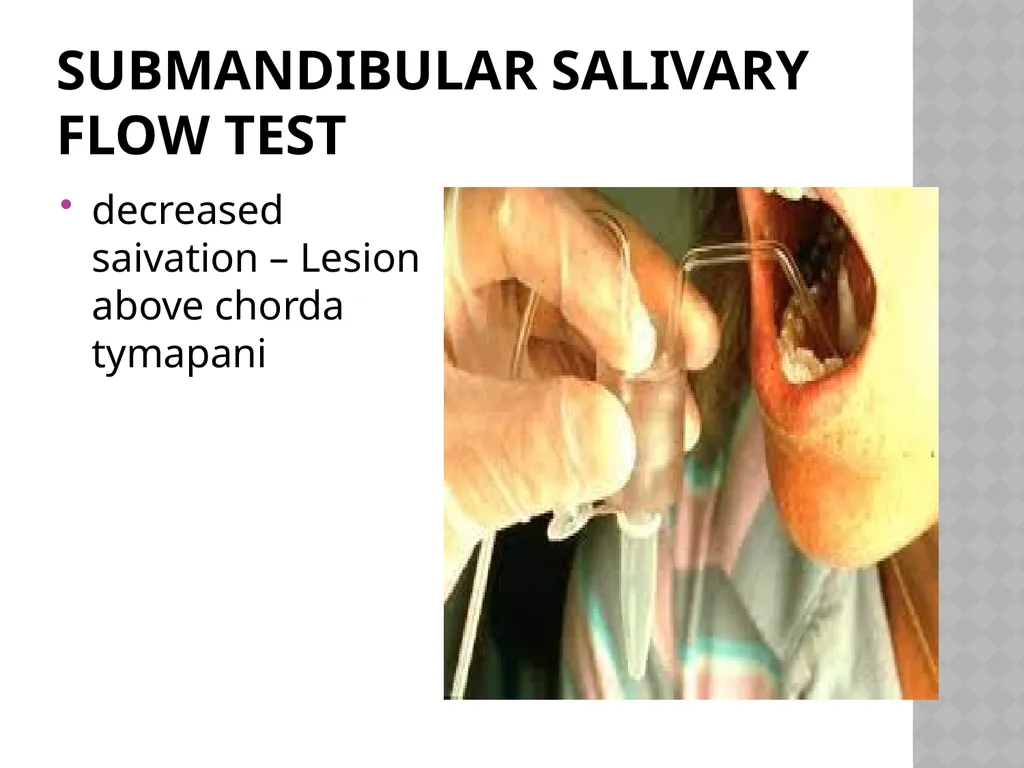
slide49. Submandibular salivary flow test decreased saivation – Lesion above chorda tymapani<br>
slide50. complications Incomplete recovery
Exposure keratitis
Synkinesis ( mass movements ) –cross innervation
Contractures
Psychological & social problems<br>
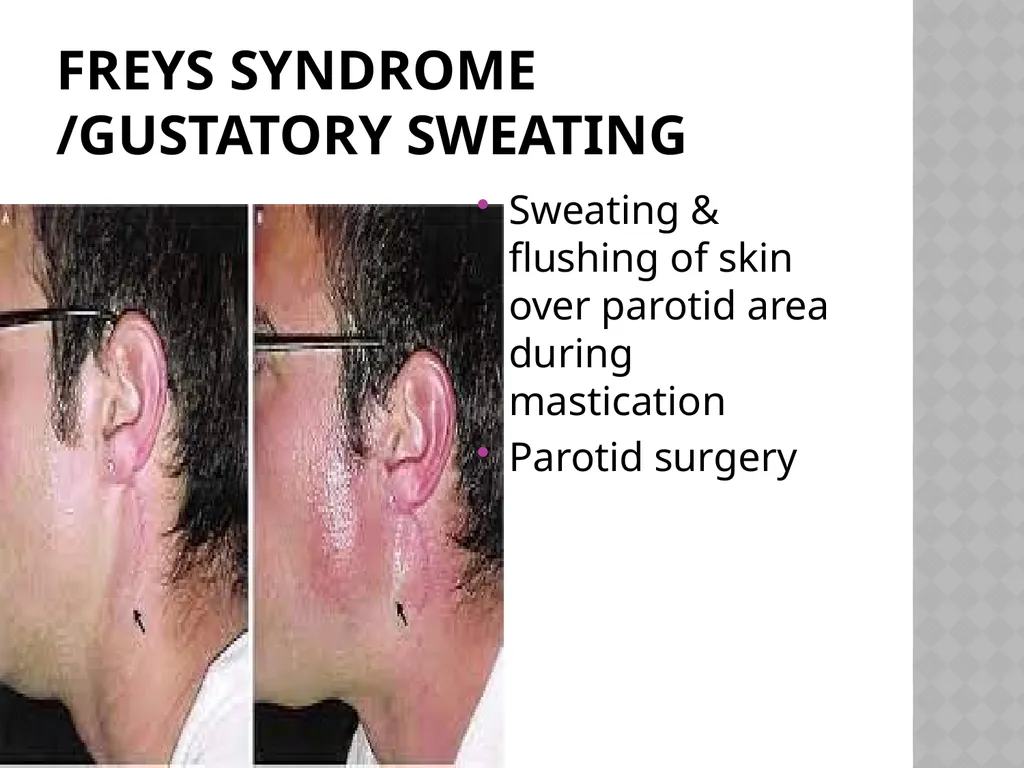
slide52. Freys syndrome /gustatory sweating Sweating & flushing of skin over parotid area during mastication
Parotid surgery<br>
slide53. Facial nerve surgery Decompression
End to end anastomosis
Nerve /graft cable- greater auricular ,sural nerve,lateral cutaneous nerve of thigh
Hypoglossal –facial anastomsis
Plastic procedures – facial slings , face lift operation,slings of masseter & temporalis muscle<br>

Assistant Professor
Department of ENT<br>
slide2. Pons to parotid
Mixed nerve – sensory root (nerve of wrisberg)<br>
slide3. Special visceral efferents-motor root
General visceral efferent – secretomotor fibres to lacrimal ,submandiblar ,sublingual glands & small secretory glands in nasal mucosa & palate
Special visceral afferent – taste from ant 2/3 rd tongue via chorda tympani ,soft & hard palate via greater superficial petrosal nerve
General somatic afferents –general sensation from concha,postero-sup part of external canal & tympanic memb<br>
slide4. Motor ncleus – pons<br>
slide10. Intracranial
Intratemporal
Extracranial<br>
slide11. INTRACRANIAL Intracranial part –From pons to Internal Acostic meatus
15-17 mm<br>
slide12. Intratemporal Frm IAM to stylomastoid foramen Meatal segment – 8-10 mm ,within IAM
Labyrinthine segment 4 mm – fundus of meatus to geniclate ganglion
shortest segment
Narrowest – 0.61- 0.68 mm
Tympanic segment 11mm –frm GG to just above pyramidal eminence
Mastoid / vertical segment – 13 mm
Frm pyramid to Stylomastoid foramen<br>
slide15. Extracranial Frm stylomastoid foramen to peripheral branches<br>
slide19. BRANCHES Greater superficial petrosal nerve –frm GG & carries secretomotor fibres to lacrimal gland & glands of nasal mucosa and palate
Nerve to stapedius – Arises at level of 2nd genu & supplies stapedius muscle
Chorda tympani – middle of vertical segment , passes btw incus & neck of malleus & leaves thru petrotympanic fissure.
it carries secretomotor fibres to submandibular ,sublingual glands ,brings taste from ant 2/3rds of tonge<br>
slide20. Muscular branches – stylohyoid & post belly of digastric
Peripheral branches
Upper- temperofacial
Lower-cervicofacial
Temporal
Zygomatic
Buccal
Marginal mandiblar
cervical<br>
slide21. BLOOD SUPPLY Anteroinf cerebellar artery - CP angle
Labyrinthine artery –IAC
Superficial petrosal artery –GG
Stylomastoid artery – mastoid & tympanic segment<br>
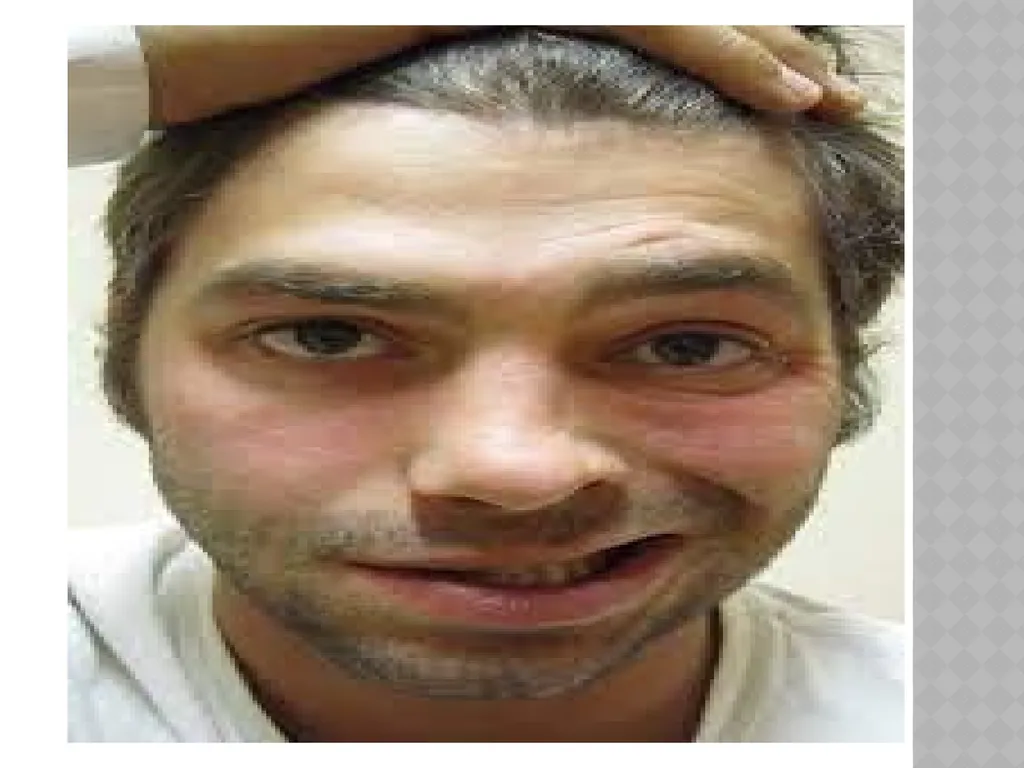
slide24. Cartilaginous pointer – nerve lies 1 cm deep & slightly anterior & inf to pointer.
Tympanomastoid suture – Nerve lies 6-8 mm deep to suture.
Styloid process – nerve crosses lateral to styloid process.
Posterior belly of digastric – nerve lies between it & styloid process.<br>
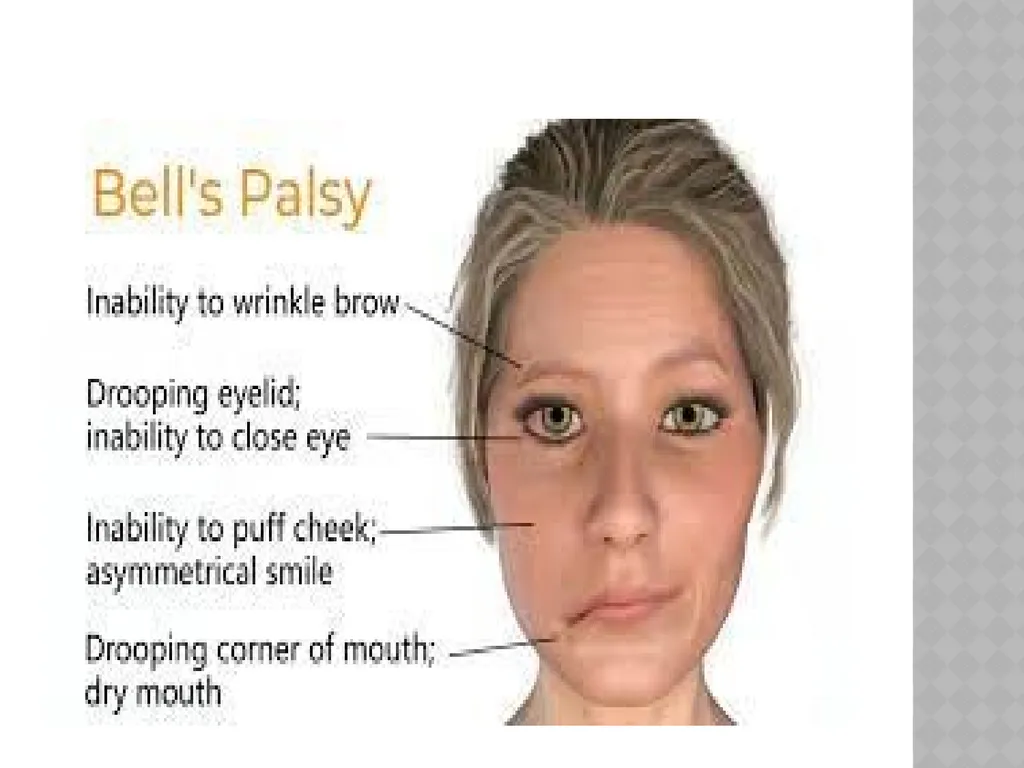
slide29. Electrodiagnostic tests Minimal nerve excitabilty tests – diff btw 2 sides exceeds 3.5 amp ,test + for degeneration
48- 72 hr .
Maximal stimulation test – equal , decreased ,absent
Decreased /absent – degeneration
Electroneuronography –degeneration of 90% occuring in 1st 14 days –poorer prognosis
Electromyography –motor activity of facial muscles.
Fibrillation potentials –spont invol action potentials in a denervated muscle.(14-21 after denervation )
Polyphasic reinnervation -6-12 wks prior to clinical evidence<br>
slide30. Central
brain abscess
pontine gliomas
polio
multiple sclerosis
Intracranial part (CP angle)
Acoustic neuroma
meningioma
cong cholesteastoma
metastatic carcinoma
meningitis<br>
slide31. Intratemporal part
idiopathic-bells palsy
- melkersson syndrome
Infectious-asom,csom,herpes zoster otics,MOE
Trauma – surgical :mastoidectomy & stapedectomy
Accidental: fractures of temporal bone
Neoplasms- malignancies of ext & middle ear,glomus tmr,facial nerve neuroma,mets to temporal bone<br>
slide32. Extracranial –malignancy of parotid,surgery of parotid ,accidental injury in parotid,neonatal facial injury (obstetrical forceps )
Systemic diseases –DM , hypothyroidis,uraemia,polyarteritis nodosa,wegeners granulomatosis ,sarcoidosis,leprosy,lekemia,demyelinating disease<br>
slide33. BELLS PALSY 60-75% of facial paralysis
Idiopathic , peripheral facial paralysis or paresis of acute onset.
Equal sexes affected
Any age grp maybe affected
Postive family history -6-8 %
Risk is more in DM ,pregnant women<br>
slide34. AETIOLOGY Viral infections – HSV ,HZ,EBV
Vascular ischemia –pri –cold,emotional stress
sec – result of pri ischaemia
Hereditary
Autoimmune disorder<br>
slide37. Diagnosis By exclusion
History
Ent examination
X ray studies
Blood sugar
Serology
Nerve excitabilty tests
Topodiagnostic tests<br>
slide38. general Reassurance
Analgesics
Eye care
physiotherapy<br>
slide39. medical Steroids – prednisolone 1mg/kg
Surgical - nerve decompression – vertical & tympanic segmnent
Prognosis – 85-90% recover fully<br>
slide40. Melkersson syndrome Idiopathic
Triad - facial paralysis, lip swelling ,fissured tonge
recurrent<br>
slide41. Recurrent facial palsy Bilateral facial palsy Bells palsy
Melkersson syndrome
Diabetes
Sarcoidosis
Tumours
Recurrent palsy on same side – tmrs in 30 % Gillain barre syndrome
Sarcoidosis
Sickle cell disease
Acute leukemia
Bulbar palsy
Leprosy
Systemic diseases<br>
slide42. Ramsay hunt syndrome/Herpes zoster oticus Facial palsy
Vesicular rash eac & pinna
Anaesthesia of face , giddiness<br>
slide43. Temporal lobe fractures<br>
slide45. UMN- opp side lower half,wrinkling +,invol emotional movements,tone of facial muscles +
Nucleus – 6th cn palsy
CP angle –vestibular+ auditory defects,V,IX,X,XI CN
Bony canal – frm IAM to SMF –topodiagnostic tests<br>
slide46. SCHIRMER TEST Lesion – proximal to GG - secretomotor fibres to lacrimal gland at the GG via GSPN
Filter paper – no.41 whatman – 5mm wide 35 mm length
< 10 mm after 5 mins - abnl<br>
slide47. Stapedial reflex Lost in lesions above n. to stapedius<br>
slide48. Taste test Lesion above chorda tympani<br>
slide49. Submandibular salivary flow test decreased saivation – Lesion above chorda tymapani<br>
slide50. complications Incomplete recovery
Exposure keratitis
Synkinesis ( mass movements ) –cross innervation
Contractures
Psychological & social problems<br>
slide52. Freys syndrome /gustatory sweating Sweating & flushing of skin over parotid area during mastication
Parotid surgery<br>
slide53. Facial nerve surgery Decompression
End to end anastomosis
Nerve /graft cable- greater auricular ,sural nerve,lateral cutaneous nerve of thigh
Hypoglossal –facial anastomsis
Plastic procedures – facial slings , face lift operation,slings of masseter & temporalis muscle<br>