
FACULTY ASSEMBLY Fall Semester, 2023 Budget

Description: FACULTY ASSEMBLY Fall Semester, 2023 Budget Discussion Todays Discussion: How We Get a Margarita Machine the Budget Works? Where our money comes from and how we allocate it? What are the primary focuses for Budget Development? How does (or
Related Topics
Download Presentation
"FACULTY ASSEMBLY Fall Semester, 2023 Budget" is the property of its rightful owner. Permission is granted to download and print the materials on this website for personal, non-commercial use only, and to display it on your personal computer provided you do not modify the materials and that you retain all copyright notices contained in the materials. By downloading content from our website, you accept the terms of this agreement.
Presentation Transcript
slide1. FACULTY ASSEMBLY Fall Semester, 2023
Budget Discussion<br>
slide2. Today’s Discussion: How We Get a Margarita Machine the Budget Works?
Where our money comes from and how we allocate it?
What are the primary focuses for Budget Development?
How does (or can) our budget incentivize units?<br>
slide3. Question 1: How the budget works? Translation: How does Public Higher Education funding work,
It’s not simple, but it’s also not that complicated<br>
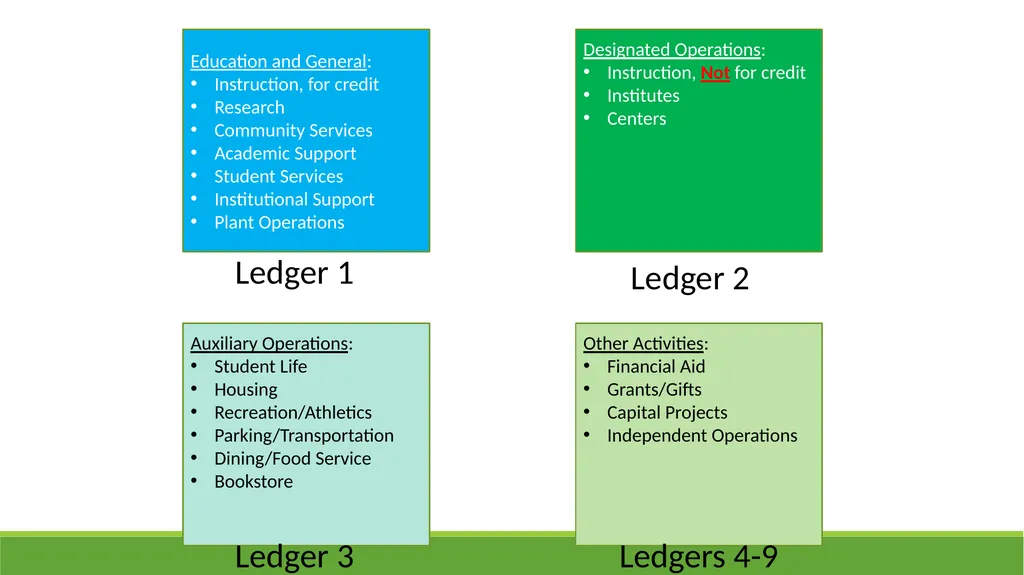
slide4. Education and General:
Instruction, for credit
Research
Community Services
Academic Support
Student Services
Institutional Support
Plant Operations Designated Operations:
Instruction, Not for credit
Institutes
Centers Auxiliary Operations:
Student Life
Housing
Recreation/Athletics
Parking/Transportation
Dining/Food Service
Bookstore Other Activities:
Financial Aid
Grants/Gifts
Capital Projects
Independent Operations Ledger 1 Ledger 2 Ledger 3 Ledgers 4-9<br>
slide5. Education and General:
Instruction, for credit
Research
Community Services
Academic Support
Student Services
Institutional Support
Plant Operations Designated Operations:
Instruction, Not for credit
Institutes
Centers Auxiliary Operations:
Student Life
Housing
Recreation/Athletics
Parking/Transportation
Dining/Food Service
Bookstore Other Activities:
Financial Aid
Grants/Gifts
Capital Projects
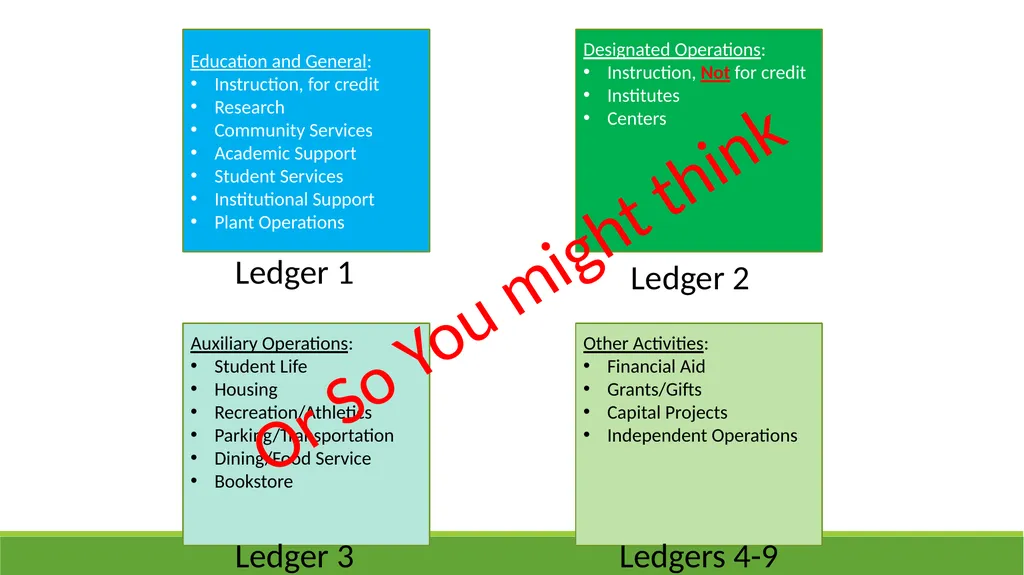
Independent Operations Ledger 1 Ledger 2 Ledger 3 Ledgers 4-9 Or So You might think<br>
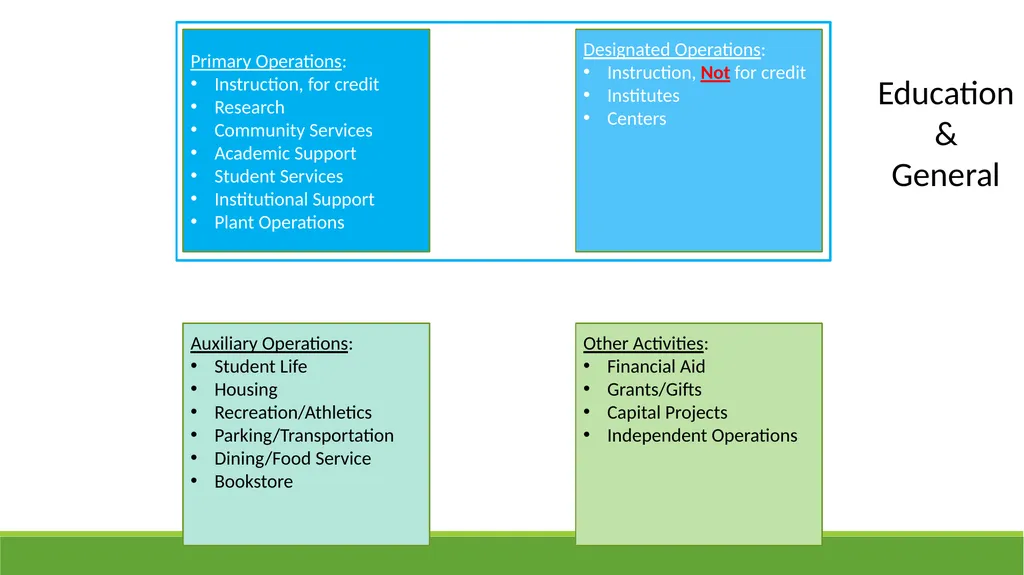
slide6. Primary Operations:
Instruction, for credit
Research
Community Services
Academic Support
Student Services
Institutional Support
Plant Operations Designated Operations:
Instruction, Not for credit
Institutes
Centers Auxiliary Operations:
Student Life
Housing
Recreation/Athletics
Parking/Transportation
Dining/Food Service
Bookstore Other Activities:
Financial Aid
Grants/Gifts
Capital Projects
Independent Operations Education
&
General<br>
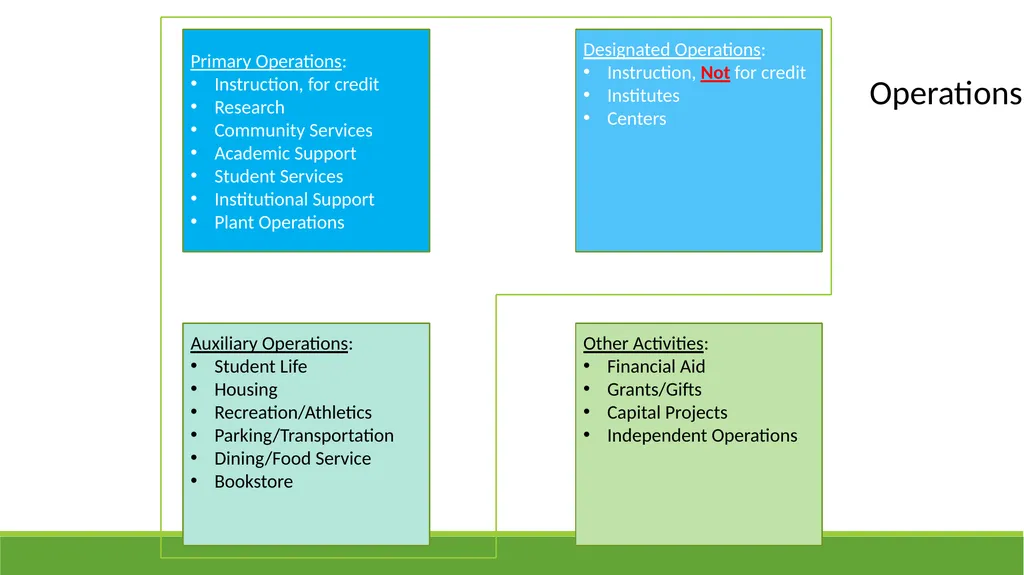
slide7. Primary Operations:
Instruction, for credit
Research
Community Services
Academic Support
Student Services
Institutional Support
Plant Operations Designated Operations:
Instruction, Not for credit
Institutes
Centers Auxiliary Operations:
Student Life
Housing
Recreation/Athletics
Parking/Transportation
Dining/Food Service
Bookstore Other Activities:
Financial Aid
Grants/Gifts
Capital Projects
Independent Operations Operations<br>
slide8. Designated Operations:
Instruction, Not for credit
Institutes
Centers Primary Operations:
Instruction, for credit
Research
Community Services
Academic Support
Student Services
Institutional Support
Plant Operations Auxiliary Operations:
Student Life
Housing
Recreation/Athletics
Parking/Transportation
Dining/Food Service
Bookstore Other Activities:
Financial Aid
Grants/Gifts
Capital Projects
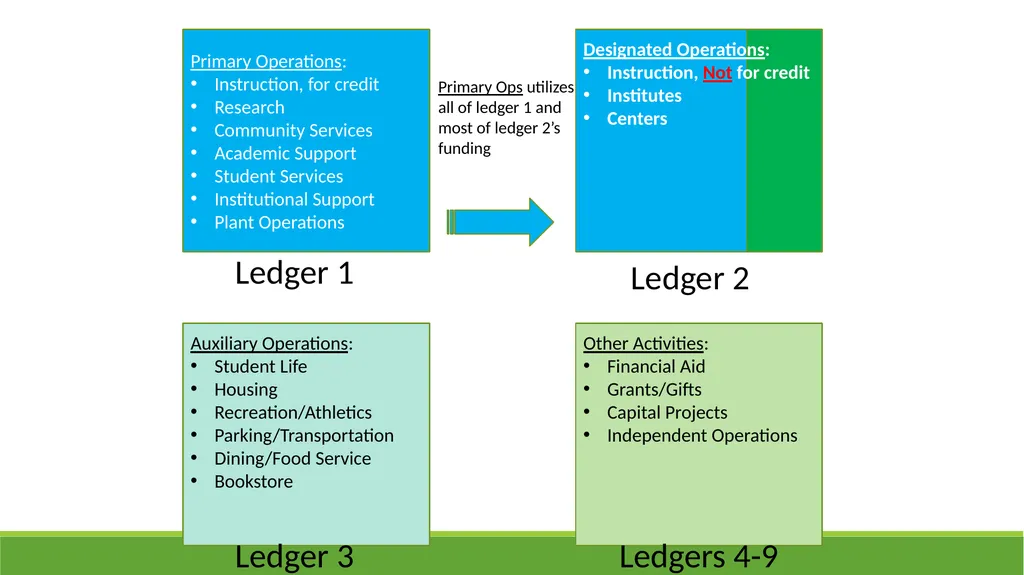
Independent Operations Ledger 1 Ledger 2 Ledger 3 Ledgers 4-9 Primary Ops utilizes
all of ledger 1 and
most of ledger 2’s
funding<br>
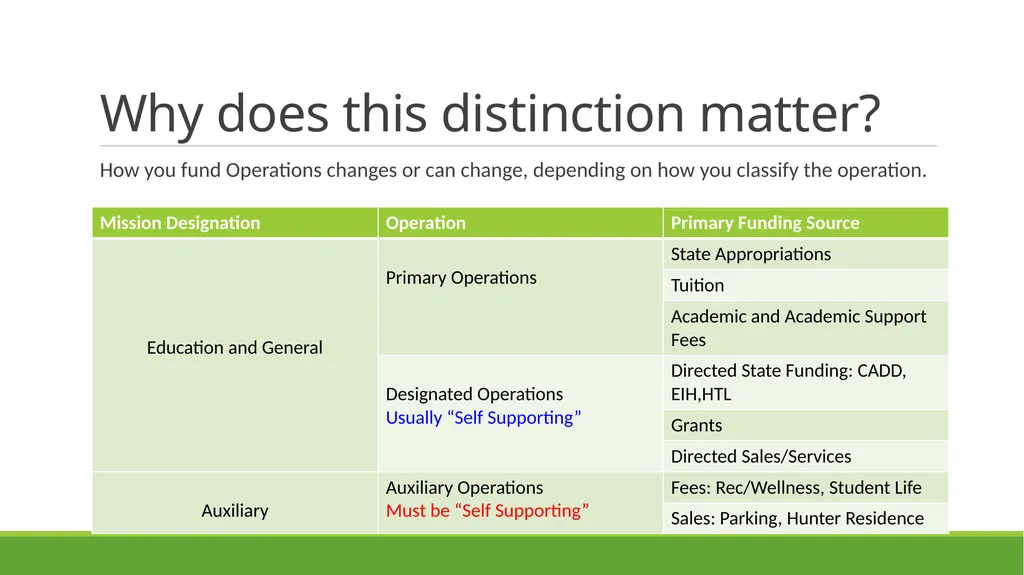
slide9. Why does this distinction matter? How you fund Operations changes or can change, depending on how you classify the operation.<br>
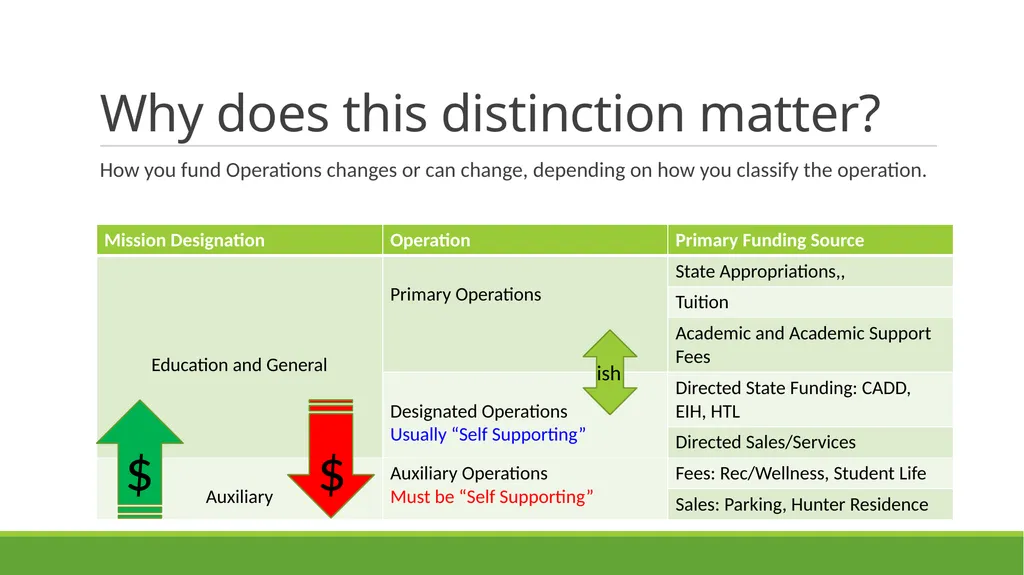
slide10. Why does this distinction matter? How you fund Operations changes or can change, depending on how you classify the operation. $ $ ish<br>
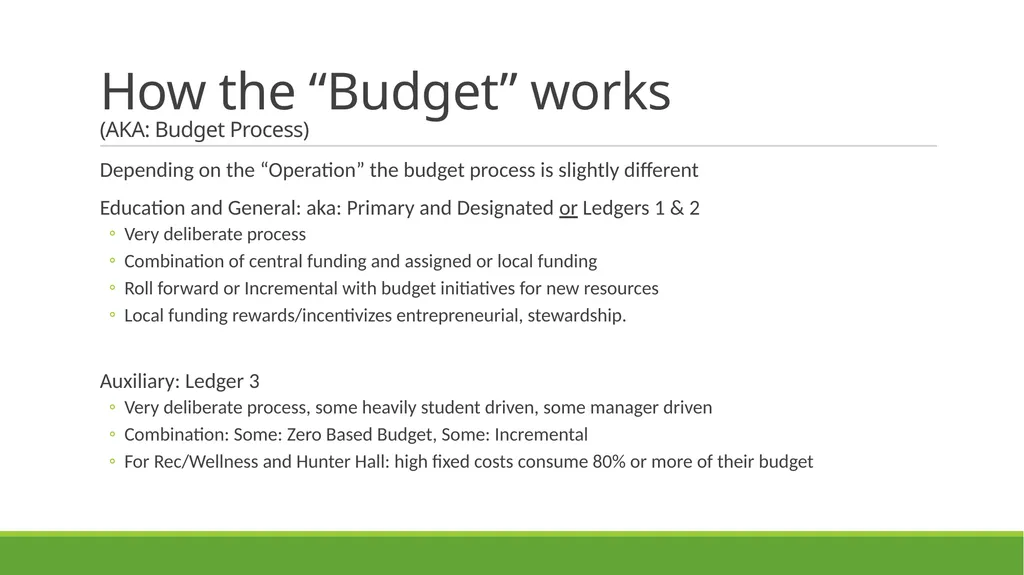
slide11. How the “Budget” works (AKA: Budget Process) Depending on the “Operation” the budget process is slightly different
Education and General: aka: Primary and Designated or Ledgers 1 & 2
Very deliberate process
Combination of central funding and assigned or local funding
Roll forward or Incremental with budget initiatives for new resources
Local funding rewards/incentivizes entrepreneurial, stewardship.
Auxiliary: Ledger 3
Very deliberate process, some heavily student driven, some manager driven
Combination: Some: Zero Based Budget, Some: Incremental
For Rec/Wellness and Hunter Hall: high fixed costs consume 80% or more of their budget<br>
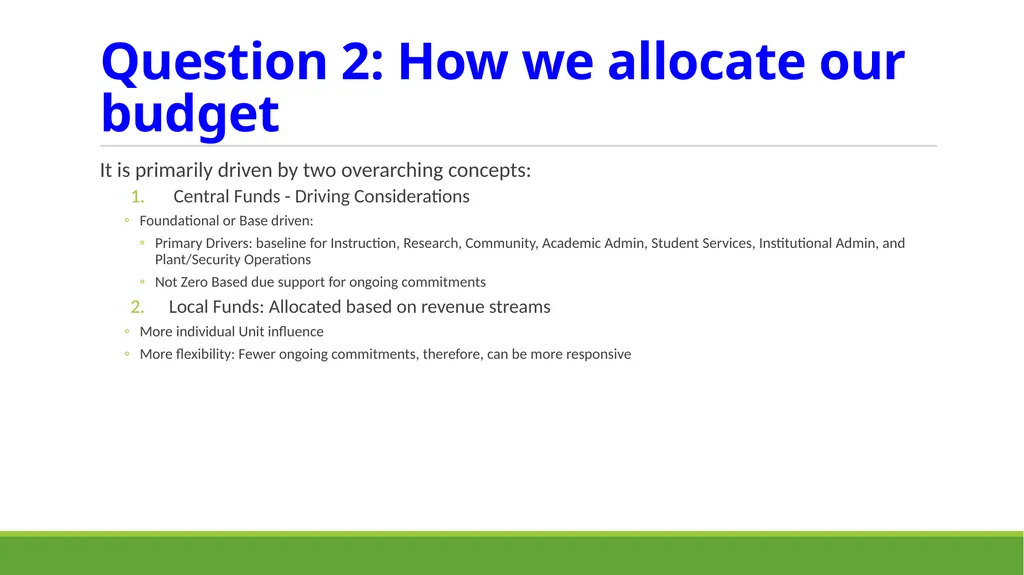
slide12. Question 2: How we allocate our budget It is primarily driven by two overarching concepts:
Central Funds - Driving Considerations
Foundational or Base driven:
Primary Drivers: baseline for Instruction, Research, Community, Academic Admin, Student Services, Institutional Admin, and Plant/Security Operations
Not Zero Based due support for ongoing commitments
Local Funds: Allocated based on revenue streams
More individual Unit influence
More flexibility: Fewer ongoing commitments, therefore, can be more responsive<br>
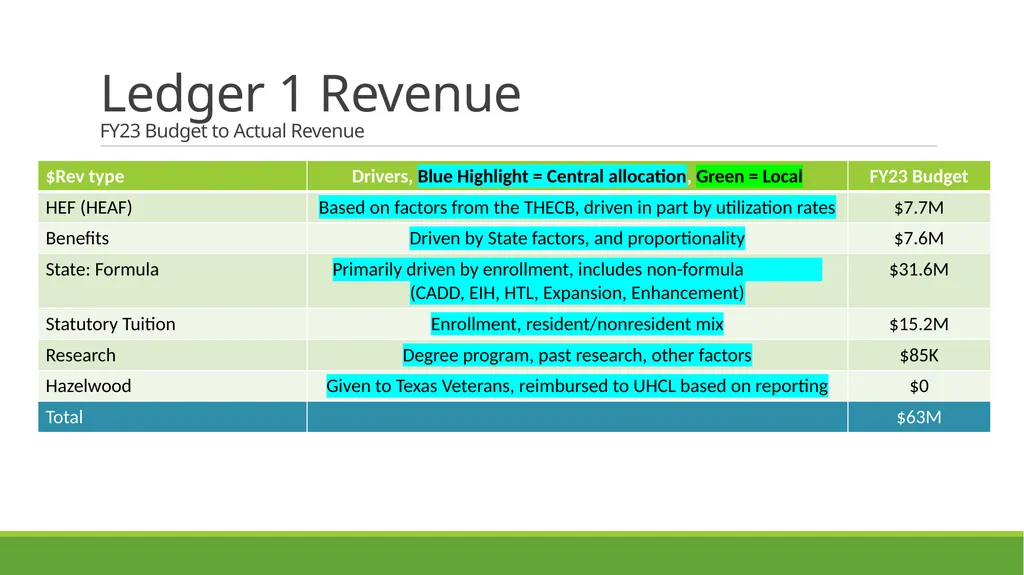
slide13. Ledger 1 Revenue FY23 Budget to Actual Revenue<br>
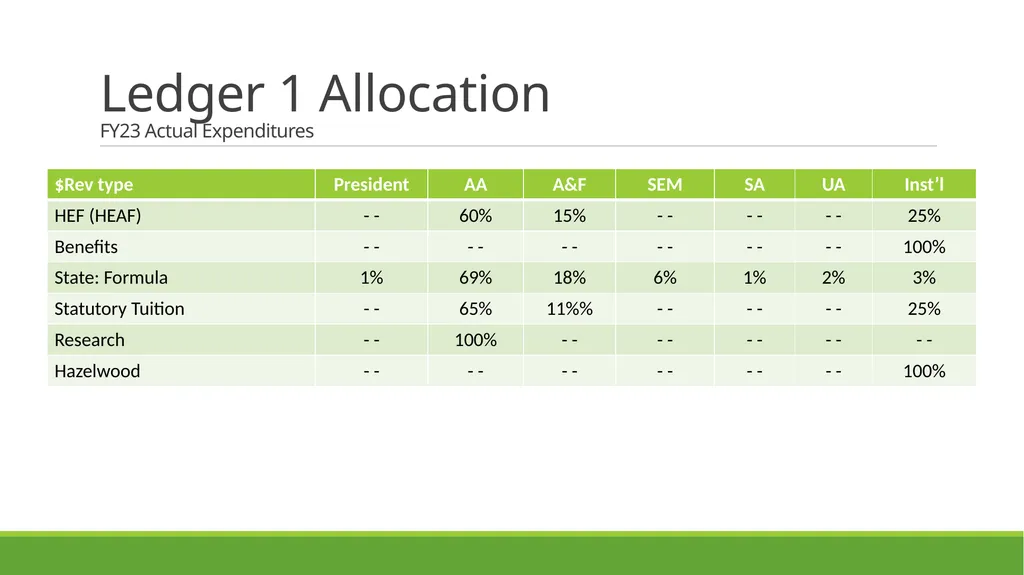
slide14. Ledger 1 Allocation FY23 Actual Expenditures<br>
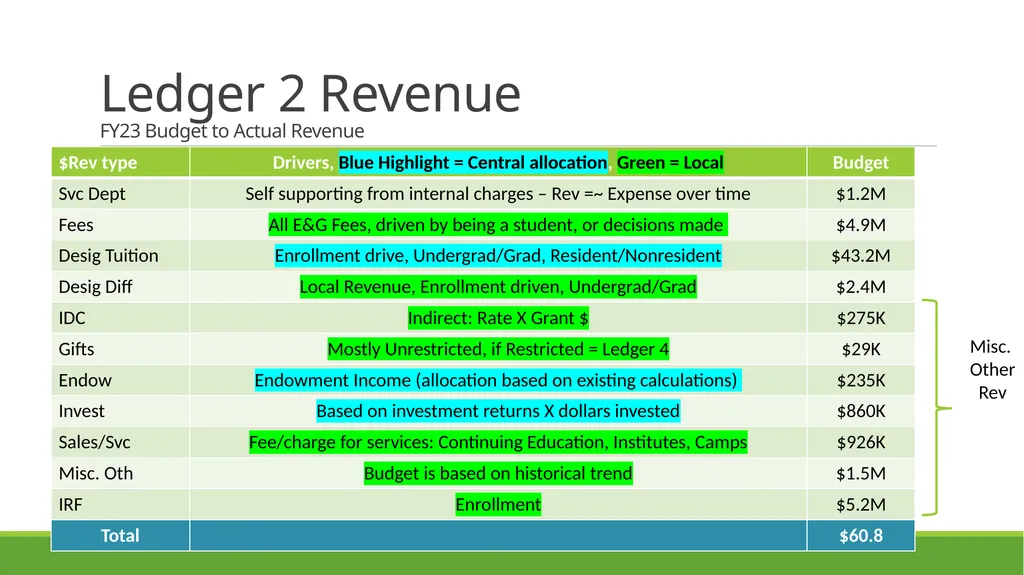
slide15. Ledger 2 Revenue FY23 Budget to Actual Revenue Misc.
Other
Rev<br>
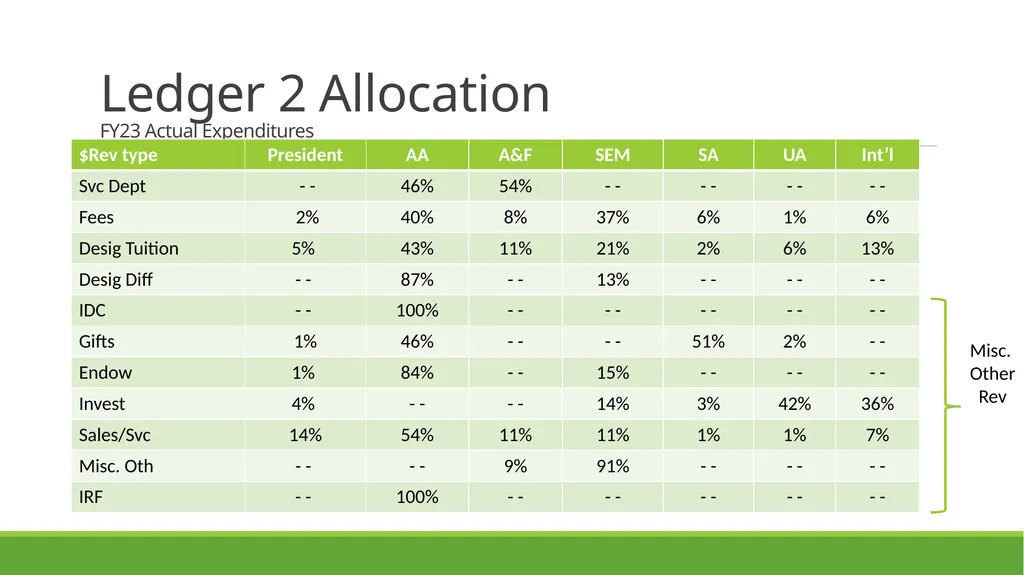
slide16. Ledger 2 Allocation FY23 Actual Expenditures Misc.
Other
Rev<br>
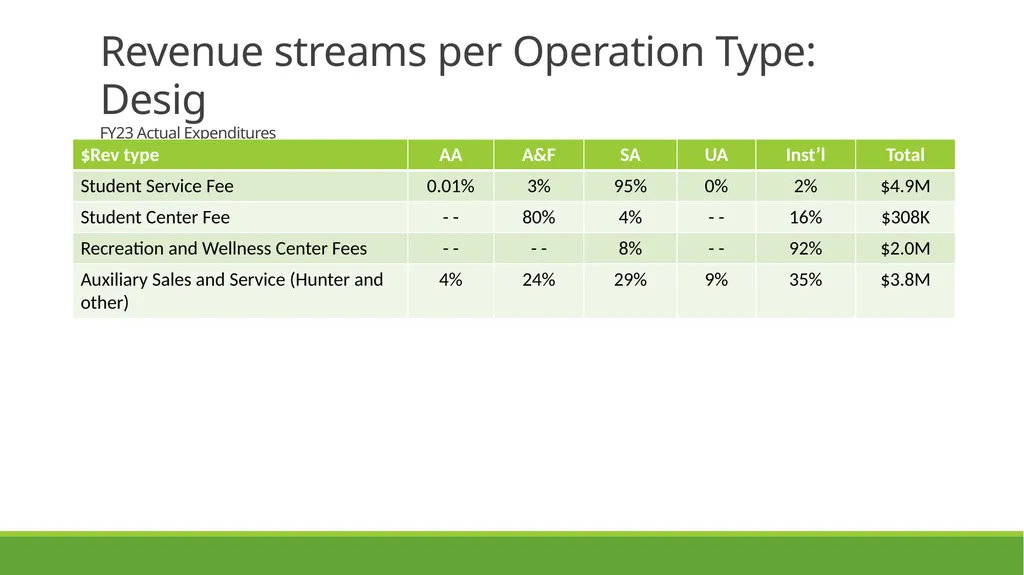
slide17. Revenue streams per Operation Type: Desig FY23 Actual Expenditures<br>
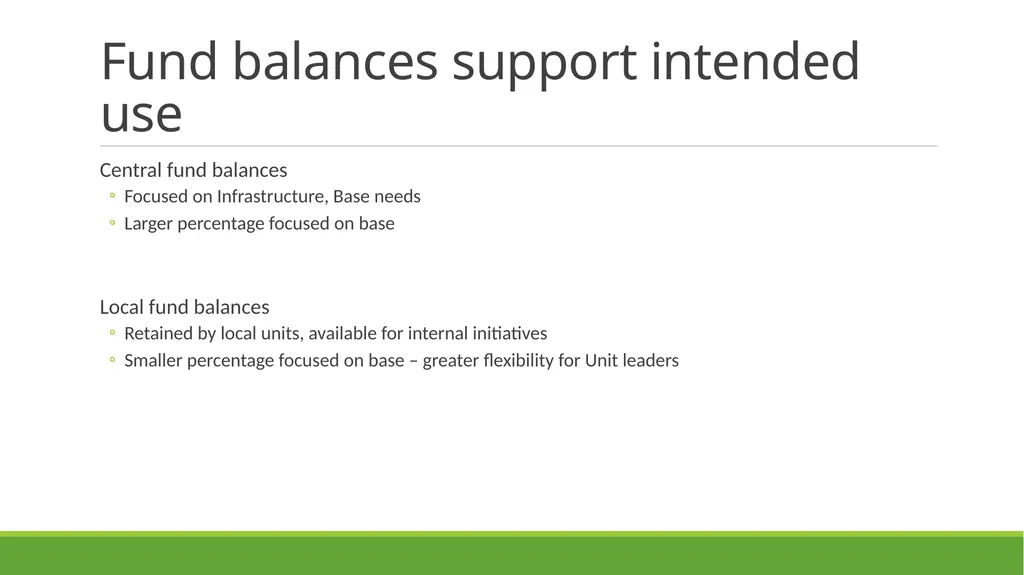
slide18. Fund balances support intended use Central fund balances
Focused on Infrastructure, Base needs
Larger percentage focused on base
Local fund balances
Retained by local units, available for internal initiatives
Smaller percentage focused on base – greater flexibility for Unit leaders<br>
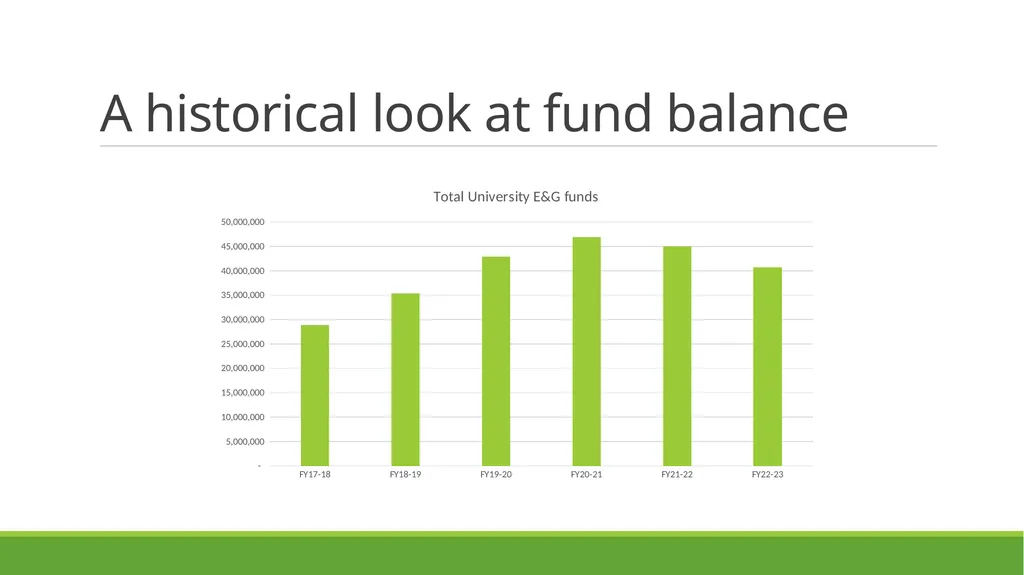
slide19. A historical look at fund balance<br>
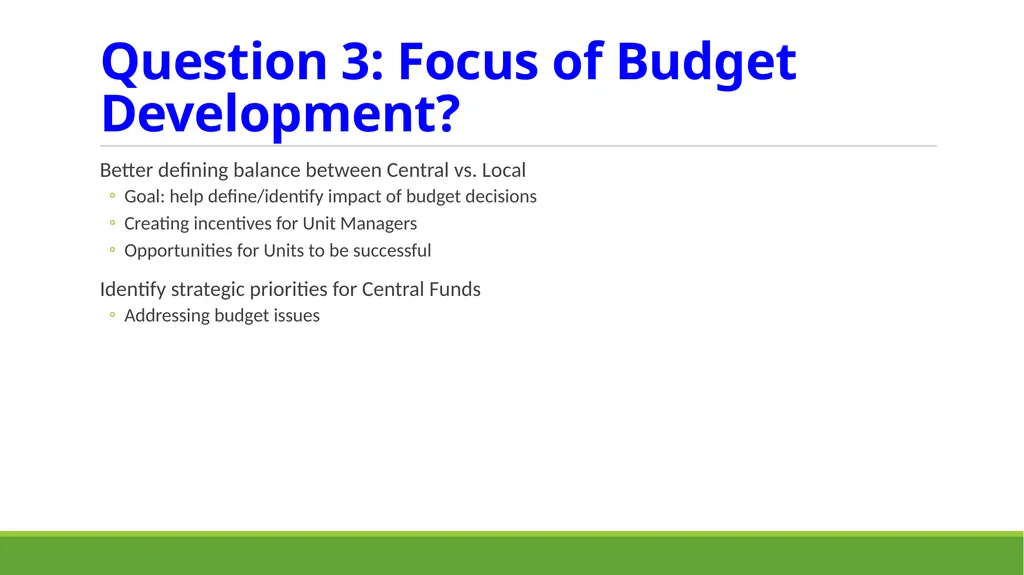
slide20. Question 3: Focus of Budget Development? Better defining balance between Central vs. Local
Goal: help define/identify impact of budget decisions
Creating incentives for Unit Managers
Opportunities for Units to be successful
Identify strategic priorities for Central Funds
Addressing budget issues<br>
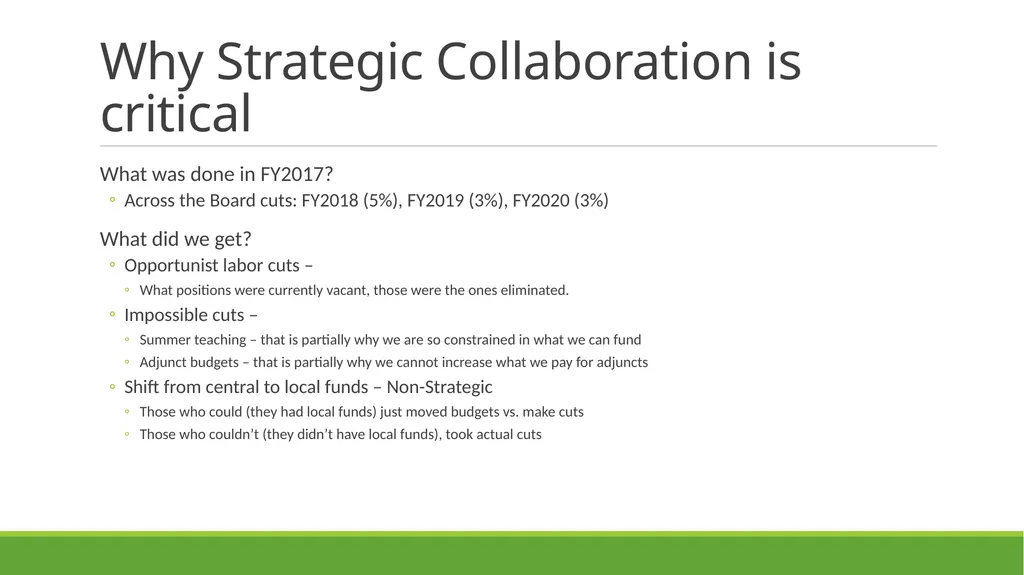
slide21. Why Strategic Collaboration is critical What was done in FY2017?
Across the Board cuts: FY2018 (5%), FY2019 (3%), FY2020 (3%)
What did we get?
Opportunist labor cuts –
What positions were currently vacant, those were the ones eliminated.
Impossible cuts –
Summer teaching – that is partially why we are so constrained in what we can fund
Adjunct budgets – that is partially why we cannot increase what we pay for adjuncts
Shift from central to local funds – Non-Strategic
Those who could (they had local funds) just moved budgets vs. make cuts
Those who couldn’t (they didn’t have local funds), took actual cuts<br>
slide22. Process Collaborative, strategic budget development process
Develop Budget Initiatives that represent that process
Discussions through Shared Governance<br>
slide23. What will the FY2025 budget be?<br>
slide24. Through the Shared Governance Process As discussed, we will honor the commitment to Shared Governance<br>
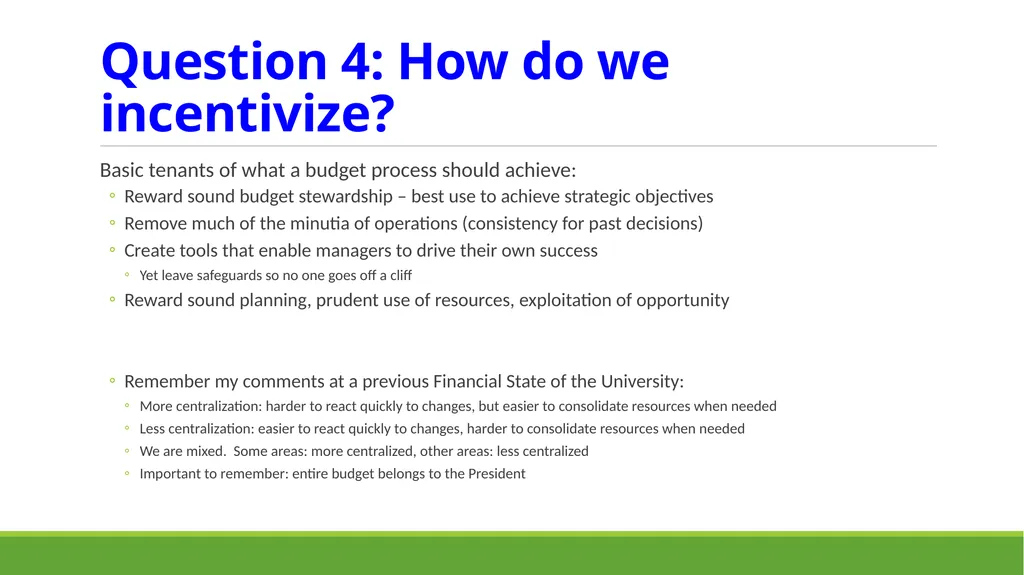
slide25. Question 4: How do we incentivize? Basic tenants of what a budget process should achieve:
Reward sound budget stewardship – best use to achieve strategic objectives
Remove much of the minutia of operations (consistency for past decisions)
Create tools that enable managers to drive their own success
Yet leave safeguards so no one goes off a cliff
Reward sound planning, prudent use of resources, exploitation of opportunity
Remember my comments at a previous Financial State of the University:
More centralization: harder to react quickly to changes, but easier to consolidate resources when needed
Less centralization: easier to react quickly to changes, harder to consolidate resources when needed
We are mixed. Some areas: more centralized, other areas: less centralized
Important to remember: entire budget belongs to the President<br>
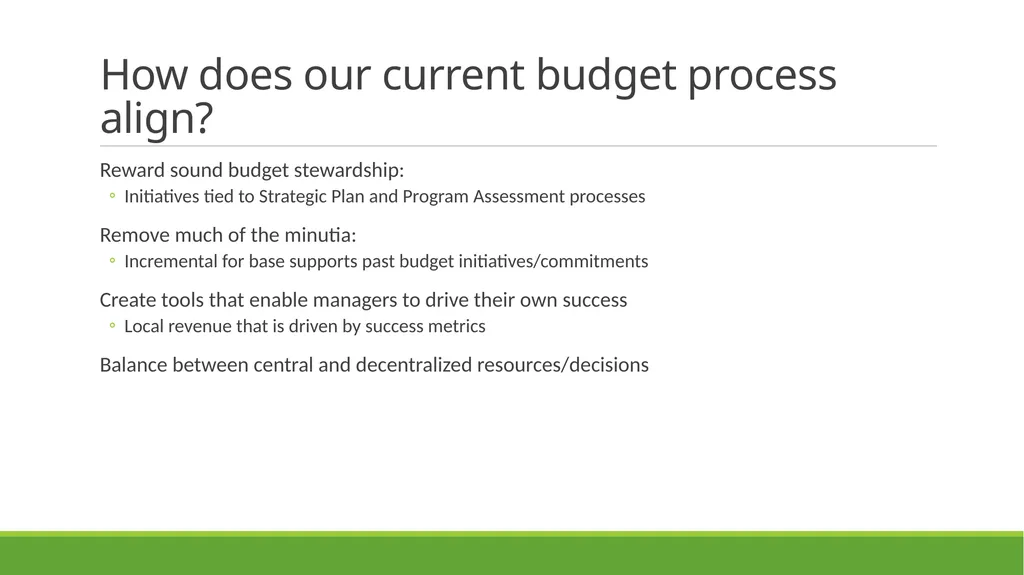
slide26. How does our current budget process align? Reward sound budget stewardship:
Initiatives tied to Strategic Plan and Program Assessment processes
Remove much of the minutia:
Incremental for base supports past budget initiatives/commitments
Create tools that enable managers to drive their own success
Local revenue that is driven by success metrics
Balance between central and decentralized resources/decisions<br>
slide27. Questions ?<br>
Budget Discussion<br>
slide2. Today’s Discussion: How We Get a Margarita Machine the Budget Works?
Where our money comes from and how we allocate it?
What are the primary focuses for Budget Development?
How does (or can) our budget incentivize units?<br>
slide3. Question 1: How the budget works? Translation: How does Public Higher Education funding work,
It’s not simple, but it’s also not that complicated<br>
slide4. Education and General:
Instruction, for credit
Research
Community Services
Academic Support
Student Services
Institutional Support
Plant Operations Designated Operations:
Instruction, Not for credit
Institutes
Centers Auxiliary Operations:
Student Life
Housing
Recreation/Athletics
Parking/Transportation
Dining/Food Service
Bookstore Other Activities:
Financial Aid
Grants/Gifts
Capital Projects
Independent Operations Ledger 1 Ledger 2 Ledger 3 Ledgers 4-9<br>
slide5. Education and General:
Instruction, for credit
Research
Community Services
Academic Support
Student Services
Institutional Support
Plant Operations Designated Operations:
Instruction, Not for credit
Institutes
Centers Auxiliary Operations:
Student Life
Housing
Recreation/Athletics
Parking/Transportation
Dining/Food Service
Bookstore Other Activities:
Financial Aid
Grants/Gifts
Capital Projects
Independent Operations Ledger 1 Ledger 2 Ledger 3 Ledgers 4-9 Or So You might think<br>
slide6. Primary Operations:
Instruction, for credit
Research
Community Services
Academic Support
Student Services
Institutional Support
Plant Operations Designated Operations:
Instruction, Not for credit
Institutes
Centers Auxiliary Operations:
Student Life
Housing
Recreation/Athletics
Parking/Transportation
Dining/Food Service
Bookstore Other Activities:
Financial Aid
Grants/Gifts
Capital Projects
Independent Operations Education
&
General<br>
slide7. Primary Operations:
Instruction, for credit
Research
Community Services
Academic Support
Student Services
Institutional Support
Plant Operations Designated Operations:
Instruction, Not for credit
Institutes
Centers Auxiliary Operations:
Student Life
Housing
Recreation/Athletics
Parking/Transportation
Dining/Food Service
Bookstore Other Activities:
Financial Aid
Grants/Gifts
Capital Projects
Independent Operations Operations<br>
slide8. Designated Operations:
Instruction, Not for credit
Institutes
Centers Primary Operations:
Instruction, for credit
Research
Community Services
Academic Support
Student Services
Institutional Support
Plant Operations Auxiliary Operations:
Student Life
Housing
Recreation/Athletics
Parking/Transportation
Dining/Food Service
Bookstore Other Activities:
Financial Aid
Grants/Gifts
Capital Projects
Independent Operations Ledger 1 Ledger 2 Ledger 3 Ledgers 4-9 Primary Ops utilizes
all of ledger 1 and
most of ledger 2’s
funding<br>
slide9. Why does this distinction matter? How you fund Operations changes or can change, depending on how you classify the operation.<br>
slide10. Why does this distinction matter? How you fund Operations changes or can change, depending on how you classify the operation. $ $ ish<br>
slide11. How the “Budget” works (AKA: Budget Process) Depending on the “Operation” the budget process is slightly different
Education and General: aka: Primary and Designated or Ledgers 1 & 2
Very deliberate process
Combination of central funding and assigned or local funding
Roll forward or Incremental with budget initiatives for new resources
Local funding rewards/incentivizes entrepreneurial, stewardship.
Auxiliary: Ledger 3
Very deliberate process, some heavily student driven, some manager driven
Combination: Some: Zero Based Budget, Some: Incremental
For Rec/Wellness and Hunter Hall: high fixed costs consume 80% or more of their budget<br>
slide12. Question 2: How we allocate our budget It is primarily driven by two overarching concepts:
Central Funds - Driving Considerations
Foundational or Base driven:
Primary Drivers: baseline for Instruction, Research, Community, Academic Admin, Student Services, Institutional Admin, and Plant/Security Operations
Not Zero Based due support for ongoing commitments
Local Funds: Allocated based on revenue streams
More individual Unit influence
More flexibility: Fewer ongoing commitments, therefore, can be more responsive<br>
slide13. Ledger 1 Revenue FY23 Budget to Actual Revenue<br>
slide14. Ledger 1 Allocation FY23 Actual Expenditures<br>
slide15. Ledger 2 Revenue FY23 Budget to Actual Revenue Misc.
Other
Rev<br>
slide16. Ledger 2 Allocation FY23 Actual Expenditures Misc.
Other
Rev<br>
slide17. Revenue streams per Operation Type: Desig FY23 Actual Expenditures<br>
slide18. Fund balances support intended use Central fund balances
Focused on Infrastructure, Base needs
Larger percentage focused on base
Local fund balances
Retained by local units, available for internal initiatives
Smaller percentage focused on base – greater flexibility for Unit leaders<br>
slide19. A historical look at fund balance<br>
slide20. Question 3: Focus of Budget Development? Better defining balance between Central vs. Local
Goal: help define/identify impact of budget decisions
Creating incentives for Unit Managers
Opportunities for Units to be successful
Identify strategic priorities for Central Funds
Addressing budget issues<br>
slide21. Why Strategic Collaboration is critical What was done in FY2017?
Across the Board cuts: FY2018 (5%), FY2019 (3%), FY2020 (3%)
What did we get?
Opportunist labor cuts –
What positions were currently vacant, those were the ones eliminated.
Impossible cuts –
Summer teaching – that is partially why we are so constrained in what we can fund
Adjunct budgets – that is partially why we cannot increase what we pay for adjuncts
Shift from central to local funds – Non-Strategic
Those who could (they had local funds) just moved budgets vs. make cuts
Those who couldn’t (they didn’t have local funds), took actual cuts<br>
slide22. Process Collaborative, strategic budget development process
Develop Budget Initiatives that represent that process
Discussions through Shared Governance<br>
slide23. What will the FY2025 budget be?<br>
slide24. Through the Shared Governance Process As discussed, we will honor the commitment to Shared Governance<br>
slide25. Question 4: How do we incentivize? Basic tenants of what a budget process should achieve:
Reward sound budget stewardship – best use to achieve strategic objectives
Remove much of the minutia of operations (consistency for past decisions)
Create tools that enable managers to drive their own success
Yet leave safeguards so no one goes off a cliff
Reward sound planning, prudent use of resources, exploitation of opportunity
Remember my comments at a previous Financial State of the University:
More centralization: harder to react quickly to changes, but easier to consolidate resources when needed
Less centralization: easier to react quickly to changes, harder to consolidate resources when needed
We are mixed. Some areas: more centralized, other areas: less centralized
Important to remember: entire budget belongs to the President<br>
slide26. How does our current budget process align? Reward sound budget stewardship:
Initiatives tied to Strategic Plan and Program Assessment processes
Remove much of the minutia:
Incremental for base supports past budget initiatives/commitments
Create tools that enable managers to drive their own success
Local revenue that is driven by success metrics
Balance between central and decentralized resources/decisions<br>
slide27. Questions ?<br>