Federally Funded Research and Development CenterFrederick National Laboratory for Cancer Research and the Division of Cancer Control and Population Sciences Paige A. Green, PhD, MPH October 1, 2015 DCCPS Mission and Vision Aims to reduce
"Federally Funded Research and Development" is the property of its rightful owner. Permission is granted to
download and print the materials on this website for personal, non-commercial use only, and to display it
on your personal computer provided you do not modify the materials and that you retain all copyright
notices contained in the materials. By downloading content from our website, you accept the terms of this
agreement.
Presentation Transcript
01
Federally Funded Research and Development Center/Frederick National Laboratory for Cancer Research and the Division of Cancer Control and Population Sciences Paige A. Green, PhD, MPH October 1, 2015<br>
02
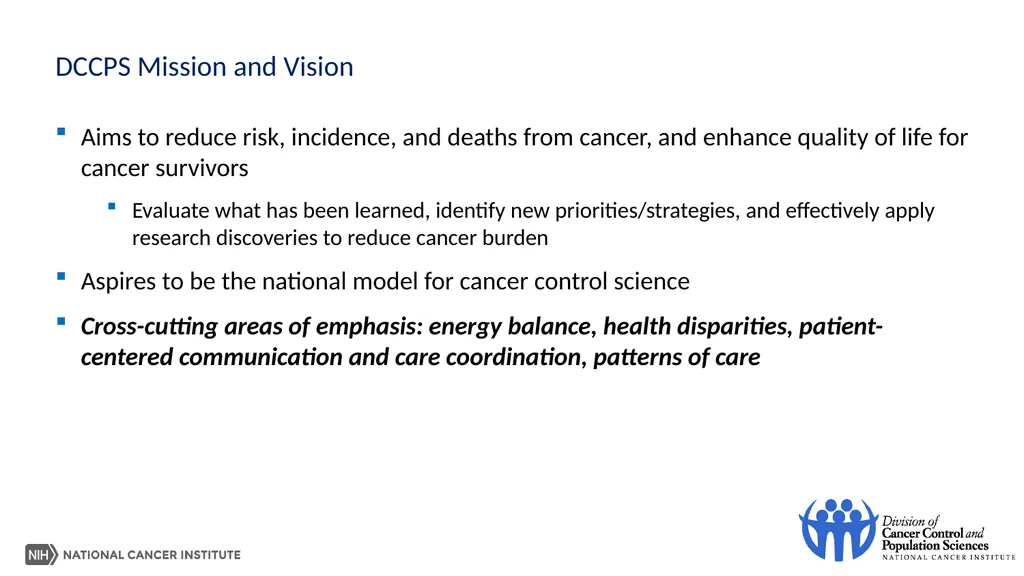
DCCPS Mission and Vision Aims to reduce risk, incidence, and deaths from cancer, and enhance quality of life for cancer survivors
Evaluate what has been learned, identify new priorities/strategies, and effectively apply research discoveries to reduce cancer burden
Aspires to be the national model for cancer control science
Cross-cutting areas of emphasis: energy balance, health disparities, patient-centered communication and care coordination, patterns of care<br>
03
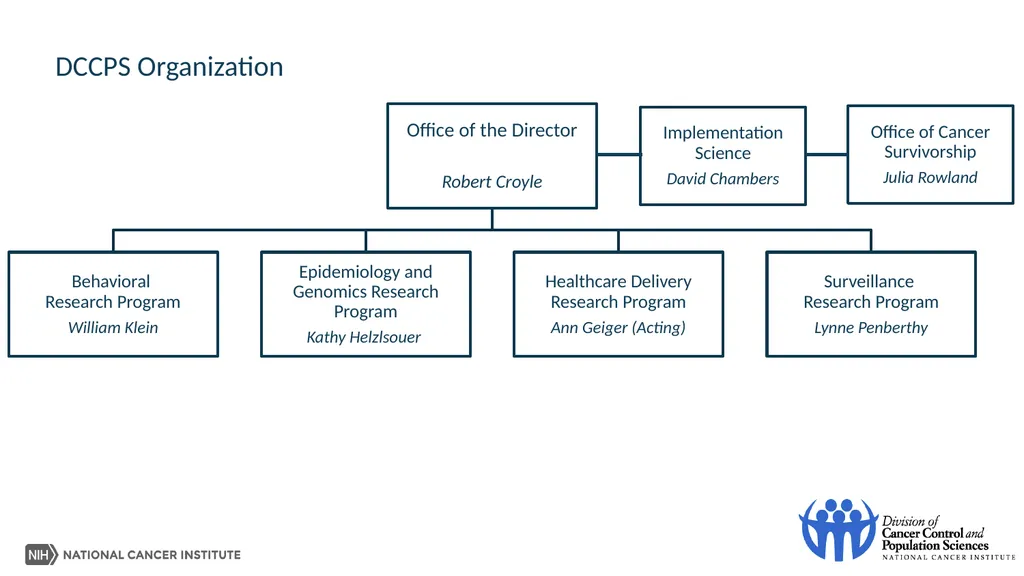
DCCPS Organization<br>
04
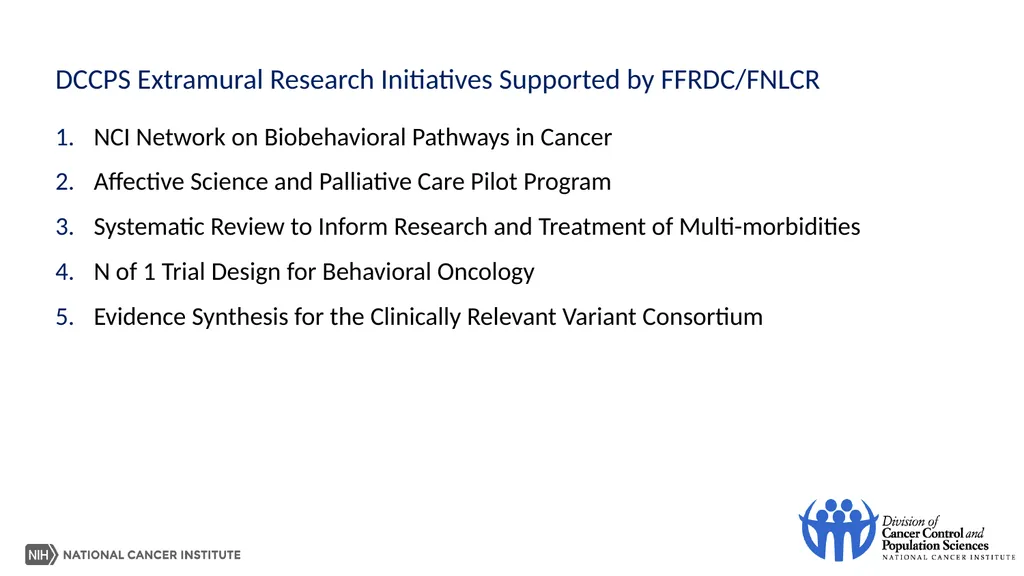
DCCPS Extramural Research Initiatives Supported by FFRDC/FNLCR NCI Network on Biobehavioral Pathways in Cancer
Affective Science and Palliative Care Pilot Program
Systematic Review to Inform Research and Treatment of Multi-morbidities
N of 1 Trial Design for Behavioral Oncology
Evidence Synthesis for the Clinically Relevant Variant Consortium<br>
05
The National Cancer Institute Network on Biobehavioral Pathways in Cancer<br>
06
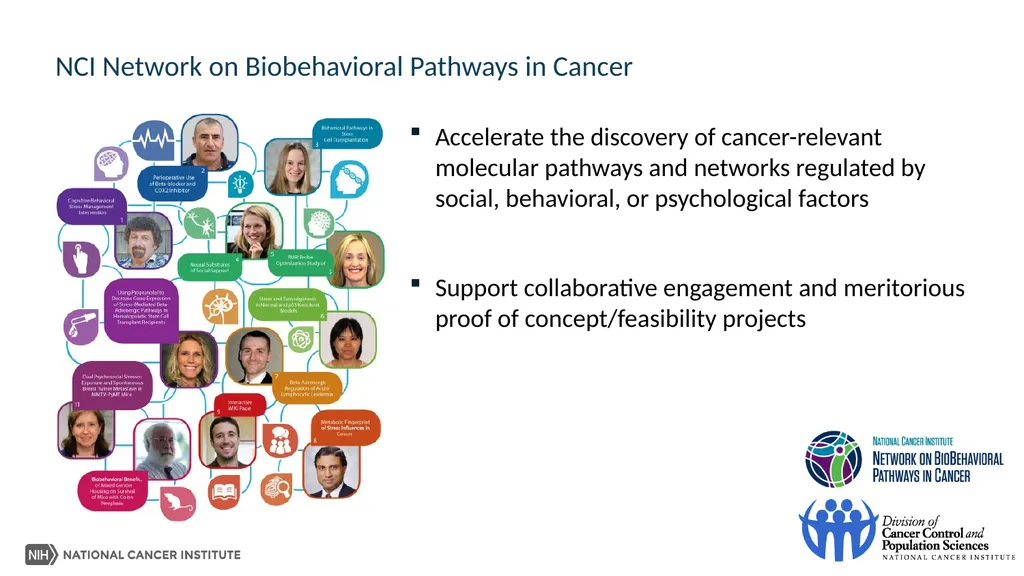
NCI Network on Biobehavioral Pathways in Cancer Accelerate the discovery of cancer-relevant molecular pathways and networks regulated by social, behavioral, or psychological factors
Support collaborative engagement and meritorious proof of concept/feasibility projects<br>
07
NCI Network on Biobehavioral Pathways in Cancer Based on a fully collaborative model between the FFRDC contractor, Academia, International Partners, and Consultants
See details of partnerships in the following slides, and note that each collaboration includes the involvement and coordination of the FFRDC contractor<br>
08
Novel Small Scale Pilot Projects to Advance the Mission of the NCI Network on Biobehavioral Pathways in Cancer
Perioperative Use of Beta-Blocker and COX2 Inhibitor
fMRI Probe Optimization Study of Social Support
Stress and Tumorigenesis in Normal and p53 Knockout Models Network Projects Supported by FFRDC/FNLCR<br>
09
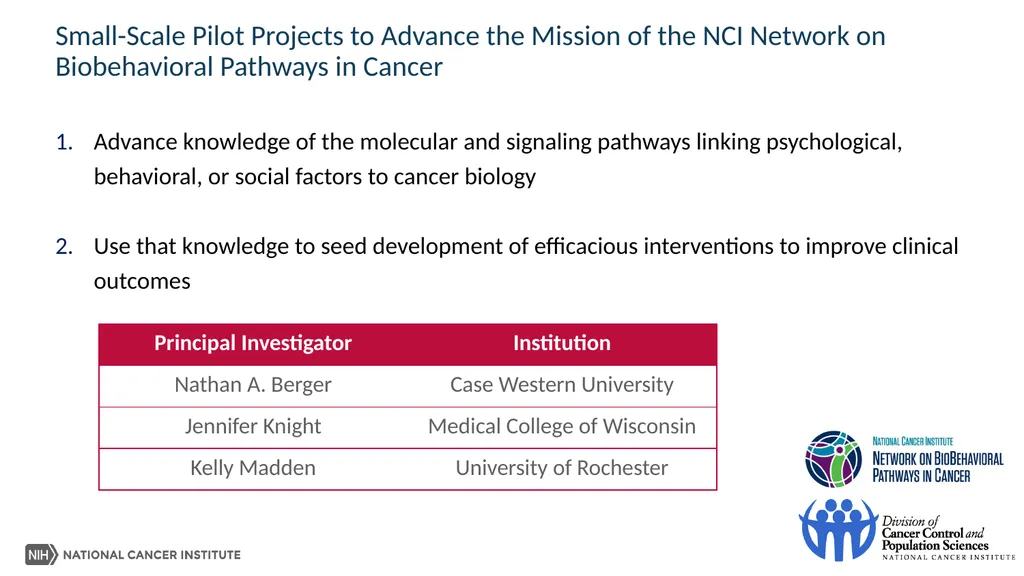
Small-Scale Pilot Projects to Advance the Mission of the NCI Network on Biobehavioral Pathways in Cancer Advance knowledge of the molecular and signaling pathways linking psychological, behavioral, or social factors to cancer biology
Use that knowledge to seed development of efficacious interventions to improve clinical outcomes<br>
10
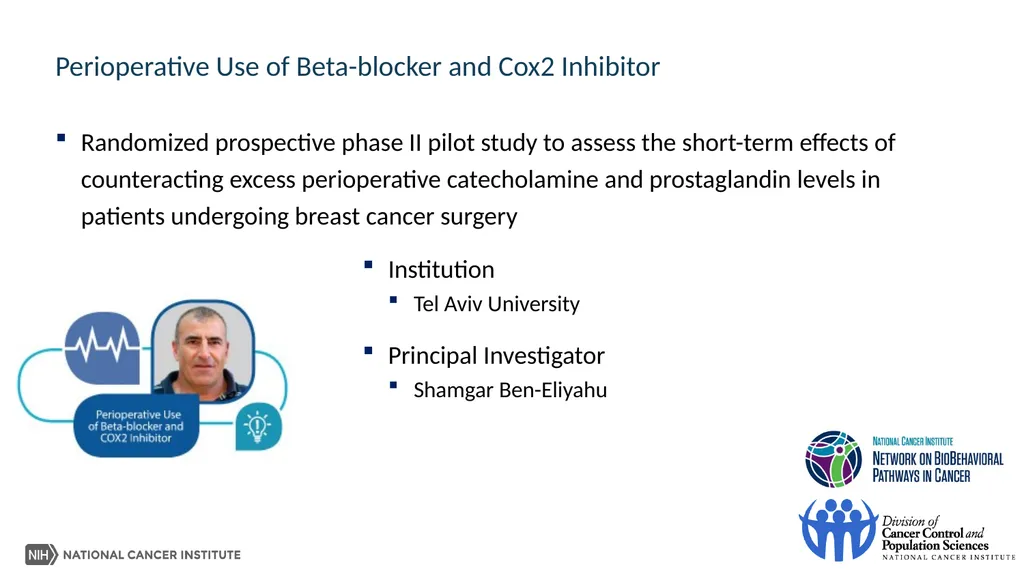
Perioperative Use of Beta-blocker and Cox2 Inhibitor Randomized prospective phase II pilot study to assess the short-term effects of counteracting excess perioperative catecholamine and prostaglandin levels in patients undergoing breast cancer surgery
Institution
Tel Aviv University
Principal Investigator
Shamgar Ben-Eliyahu<br>
11
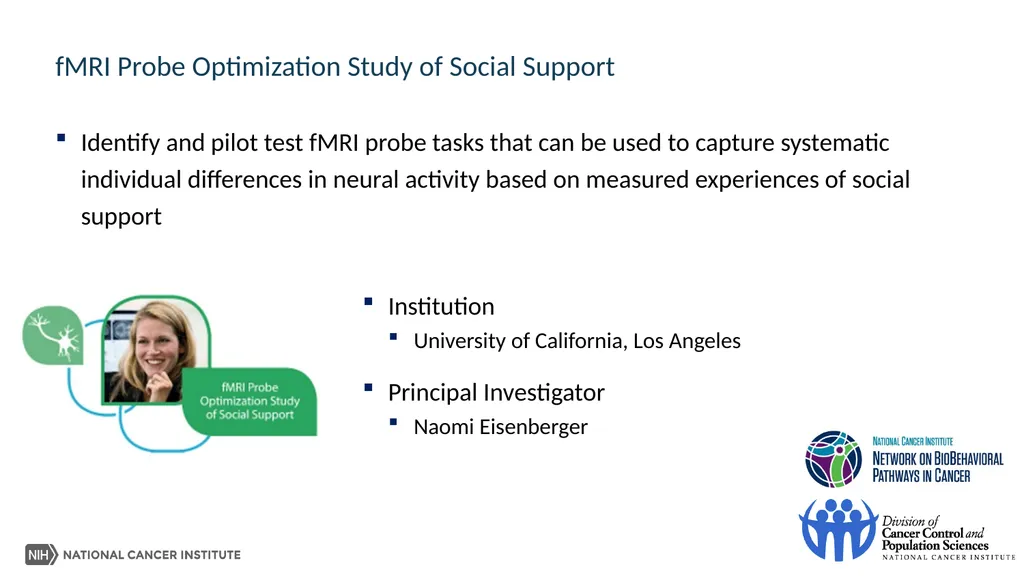
fMRI Probe Optimization Study of Social Support Identify and pilot test fMRI probe tasks that can be used to capture systematic individual differences in neural activity based on measured experiences of social support
Institution
University of California, Los Angeles
Principal Investigator
Naomi Eisenberger<br>
12
Stress and Tumorigenesis in Normal and p53 Knockout Models Test whether use of an established restraint stress paradigm results in an accumulation of DNA damage, as determined by sequencing of DNA and DNA copy number analysis of cells
Institution
Rutgers Robert Wood Johnson Medical School
Principal Investigator
Wenwei Hu<br>
13
Affective Science and Palliative Care Pilot Program<br>
14
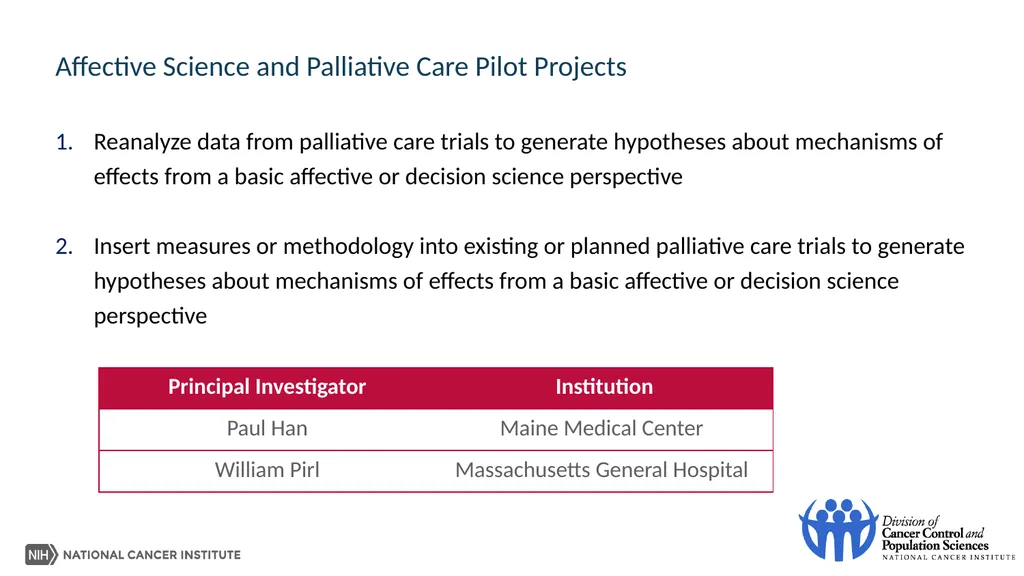
Affective Science and Palliative Care Pilot Projects Reanalyze data from palliative care trials to generate hypotheses about mechanisms of effects from a basic affective or decision science perspective
Insert measures or methodology into existing or planned palliative care trials to generate hypotheses about mechanisms of effects from a basic affective or decision science perspective<br>
15
Systematic Review to Inform Research and Treatment of Multi-morbidities<br>
16
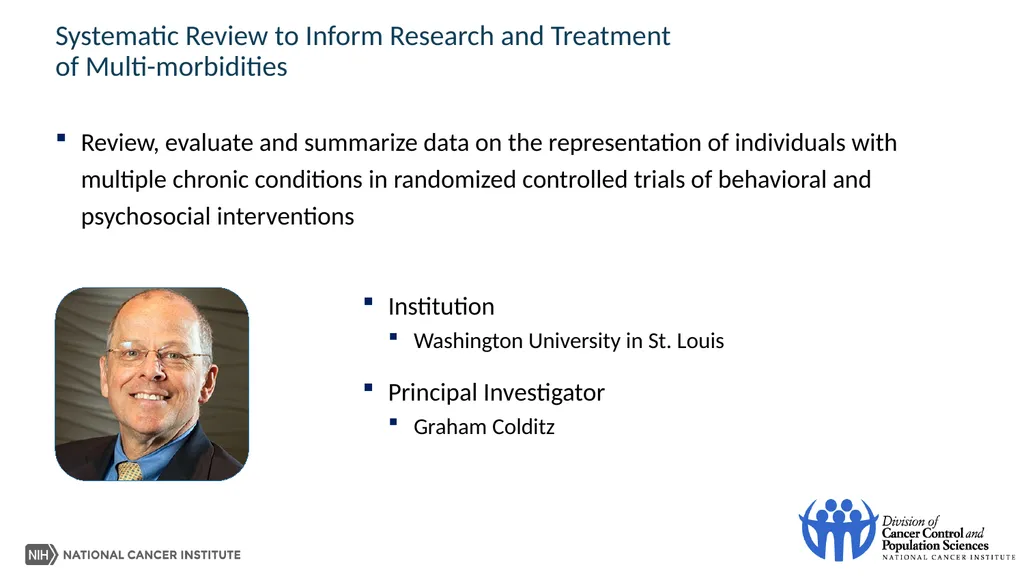
Systematic Review to Inform Research and Treatment of Multi-morbidities Review, evaluate and summarize data on the representation of individuals with multiple chronic conditions in randomized controlled trials of behavioral and psychosocial interventions
Institution
Washington University in St. Louis
Principal Investigator
Graham Colditz<br>
17
N of 1 Trial Design in Behavioral Oncology<br>
18
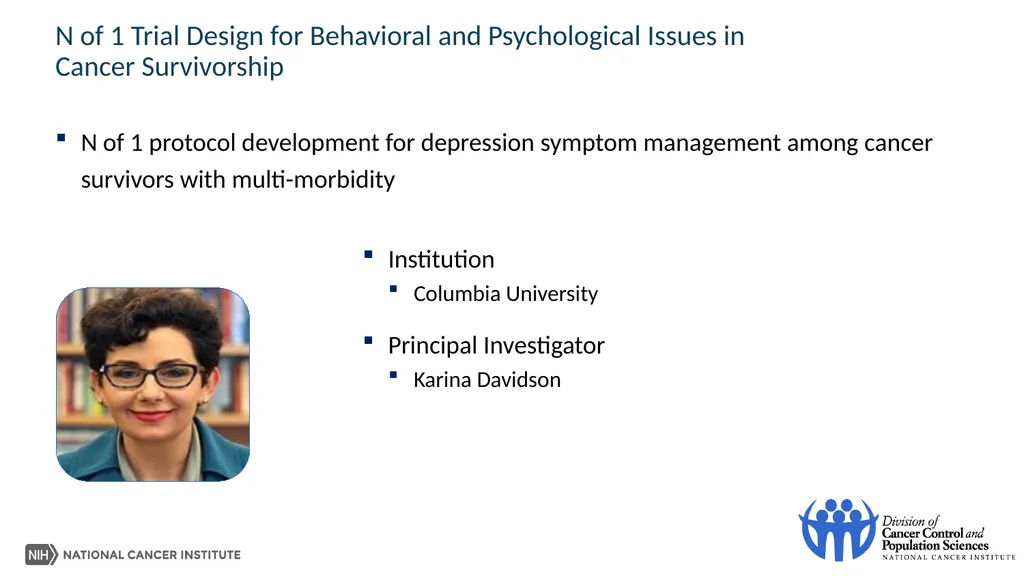
N of 1 Trial Design for Behavioral and Psychological Issues in Cancer Survivorship N of 1 protocol development for depression symptom management among cancer survivors with multi-morbidity
Institution
Columbia University
Principal Investigator
Karina Davidson<br>
19
Evidence Synthesis for the Clinically Relevant Variant Consortium<br>
20
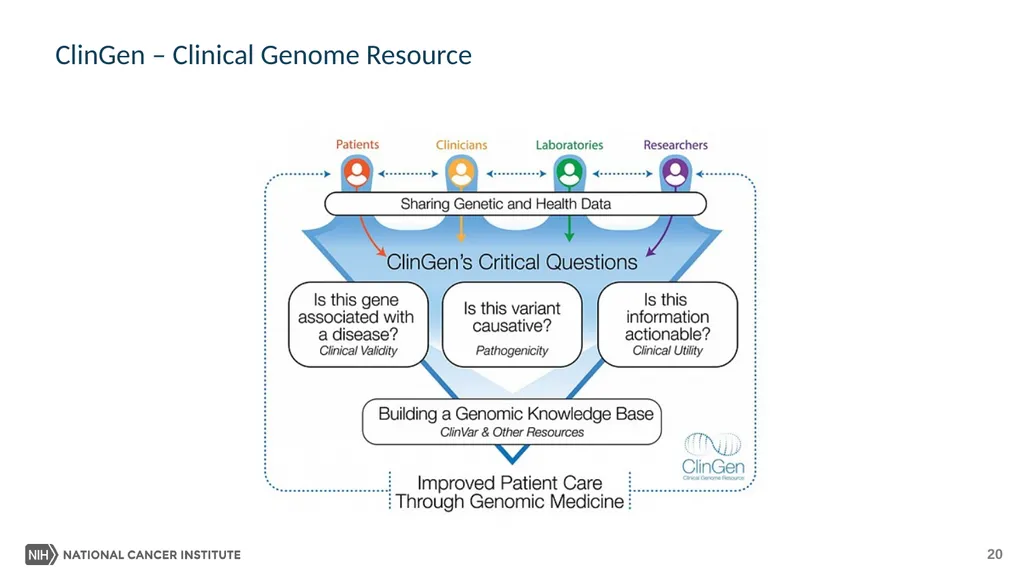
ClinGen – Clinical Genome Resource<br>
21
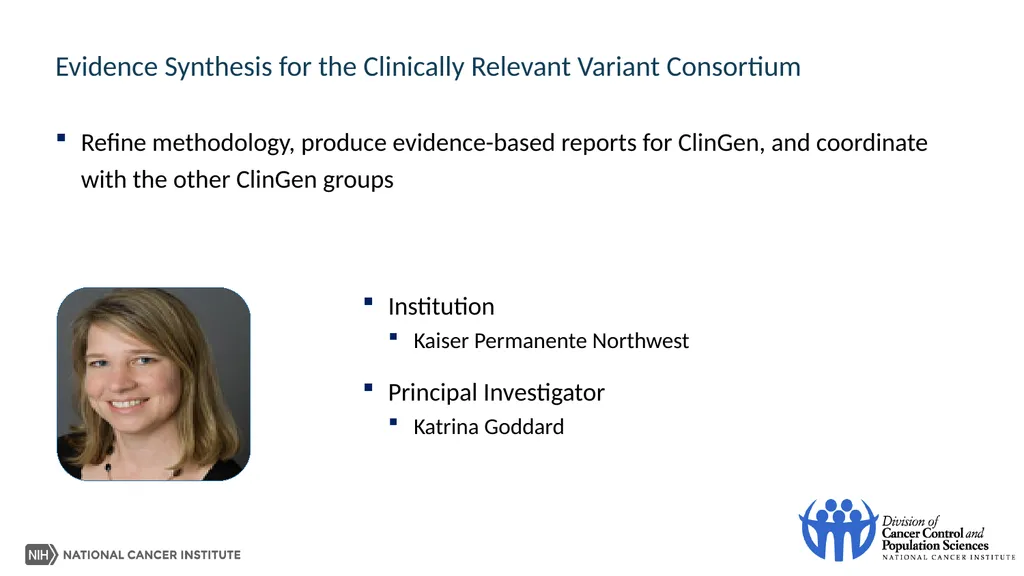
Evidence Synthesis for the Clinically Relevant Variant Consortium Refine methodology, produce evidence-based reports for ClinGen, and coordinate with the other ClinGen groups
Institution
Kaiser Permanente Northwest
Principal Investigator
Katrina Goddard<br>
22
DCCPS Extramural Research Initiatives Supported by FFRDC/FNLCR NCI Network on Biobehavioral Pathways in Cancer
Affective Science and Palliative Care Pilot Program
Systematic Review to Inform Research and Treatment of Multi-morbidities
N of 1 Trial Design for Behavioral Oncology
Evidence Synthesis for the Clinically Relevant Variant Consortium<br>