Field Artillery Site Suitability Analysis Captain Cody Gilham ctg5225psu.edu Adviser: Dr. Fritz Kessler Agenda Professional Background Howitzer Types Video Physical and Emplacement Limitations Optimal Criteria for Emplacement Current Site
"Field Artillery Site Suitability Analysis Captain" is the property of its rightful owner. Permission is granted to
download and print the materials on this website for personal, non-commercial use only, and to display it
on your personal computer provided you do not modify the materials and that you retain all copyright
notices contained in the materials. By downloading content from our website, you accept the terms of this
agreement.
Presentation Transcript
01
Field Artillery Site Suitability Analysis Captain Cody Gilham
ctg5225@psu.edu
Adviser: Dr. Fritz Kessler<br>
02
Agenda Professional Background
Howitzer Types
Video
Physical and Emplacement Limitations
Optimal Criteria for Emplacement
Current Site Selection Process
Research Objective
Problem Statement
General Workflow
Study Area
Data and Methods
Results
Analysis Improvements
Future Use
Timeline<br>
03
Professional Background Military Occupation Specialty
Career Path
Commander Responsibilities
The mission of the Field Artillery is to destroy, defeat, or disrupt the enemy with integrated fires to enable maneuver commanders to dominate in unified land operations (ADRP 3-09)
From this mission arises the emplacement problem<br>
04
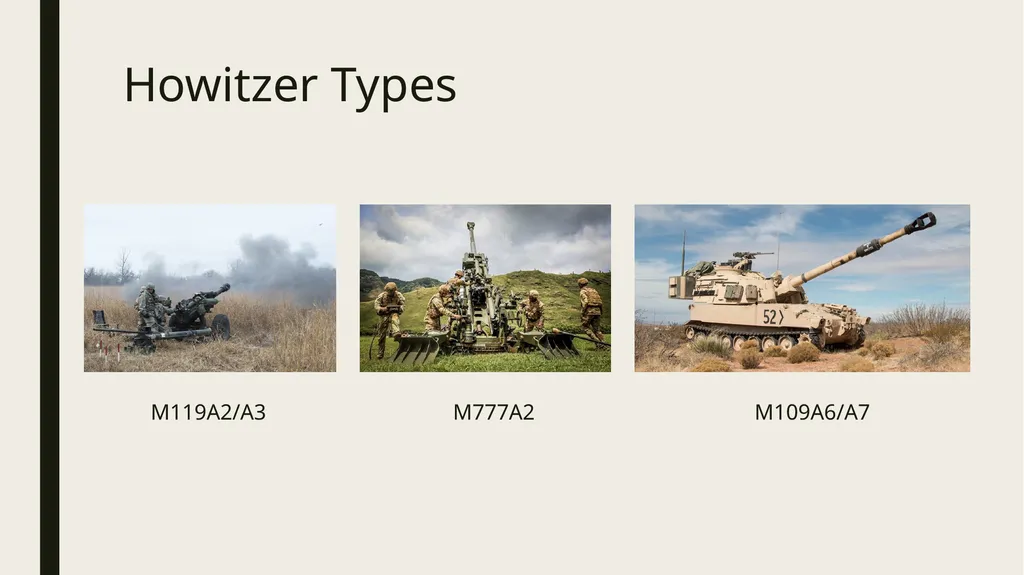
Howitzer Types M119A2/A3 M777A2 M109A6/A7<br>
05
Video<br>
06
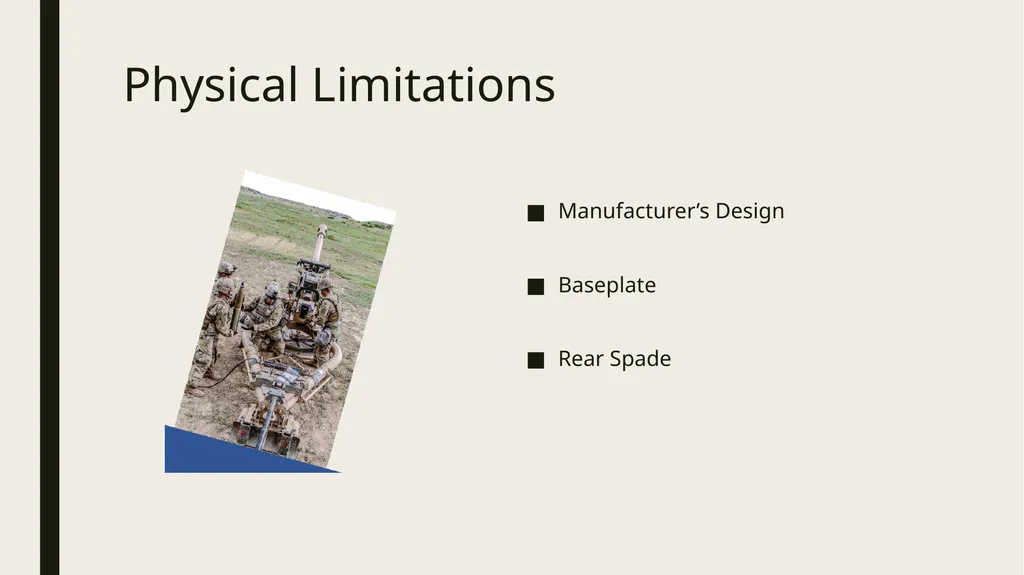
Physical Limitations Manufacturer’s Design
Baseplate
Rear Spade<br>
07
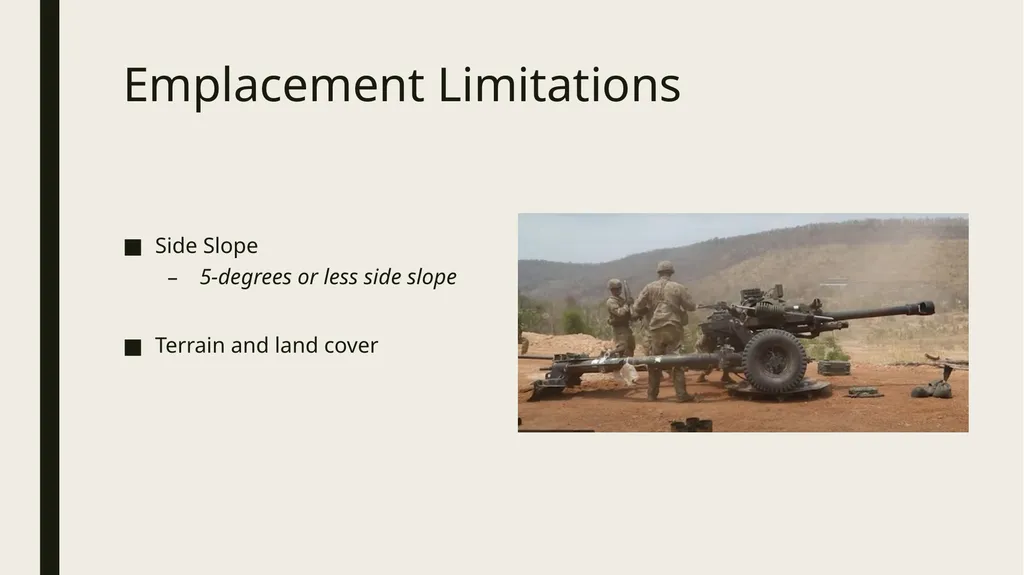
Emplacement Limitations Side Slope
5-degrees or less side slope
Terrain and land cover<br>
08
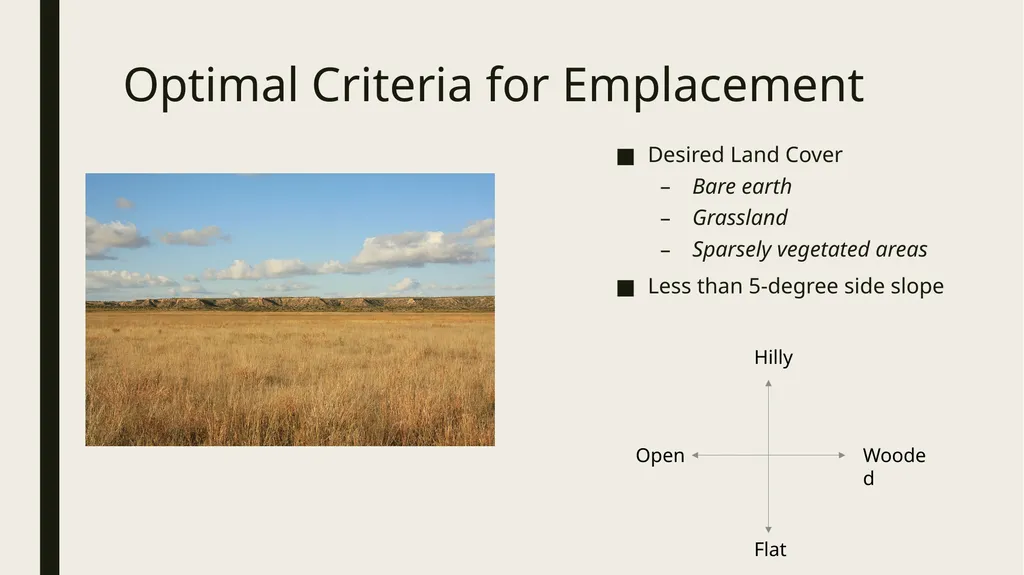
Optimal Criteria for Emplacement Desired Land Cover
Bare earth
Grassland
Sparsely vegetated areas
Less than 5-degree side slope Hilly Wooded Flat Open<br>
09
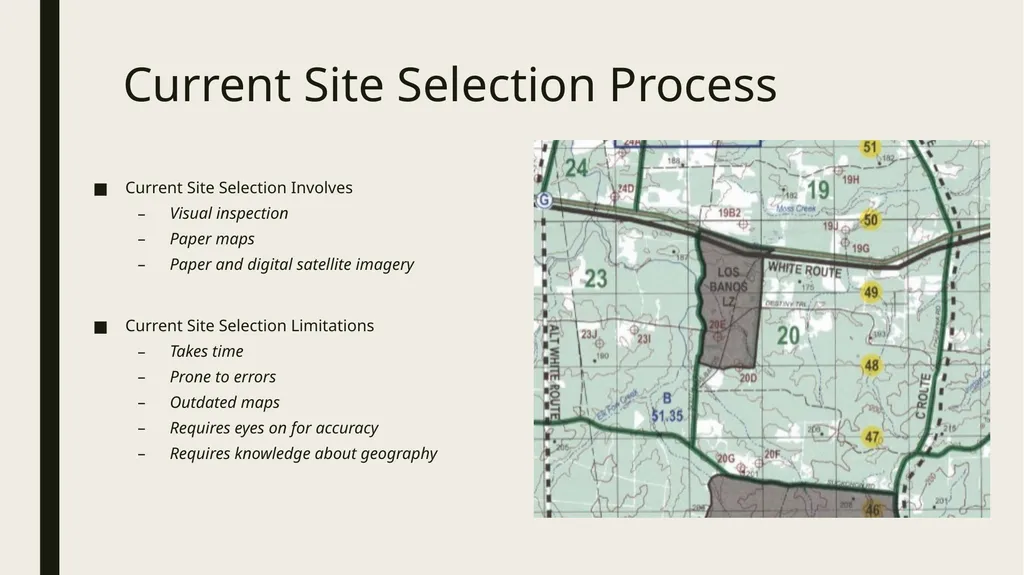
Current Site Selection Process Current Site Selection Involves
Visual inspection
Paper maps
Paper and digital satellite imagery
Current Site Selection Limitations
Takes time
Prone to errors
Outdated maps
Requires eyes on for accuracy
Requires knowledge about geography<br>
10
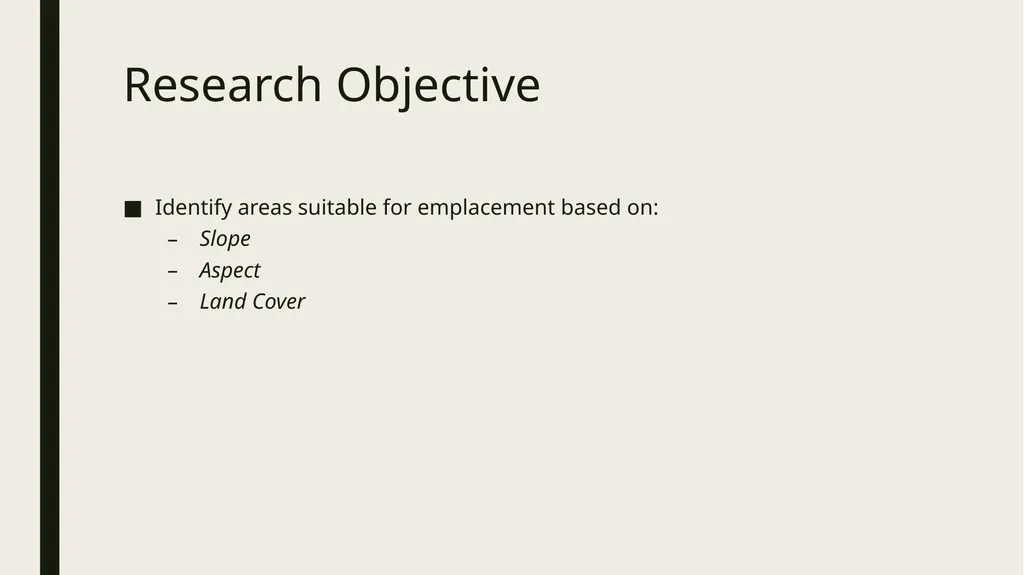
Research Objective Identify areas suitable for emplacement based on:
Slope
Aspect
Land Cover<br>
11
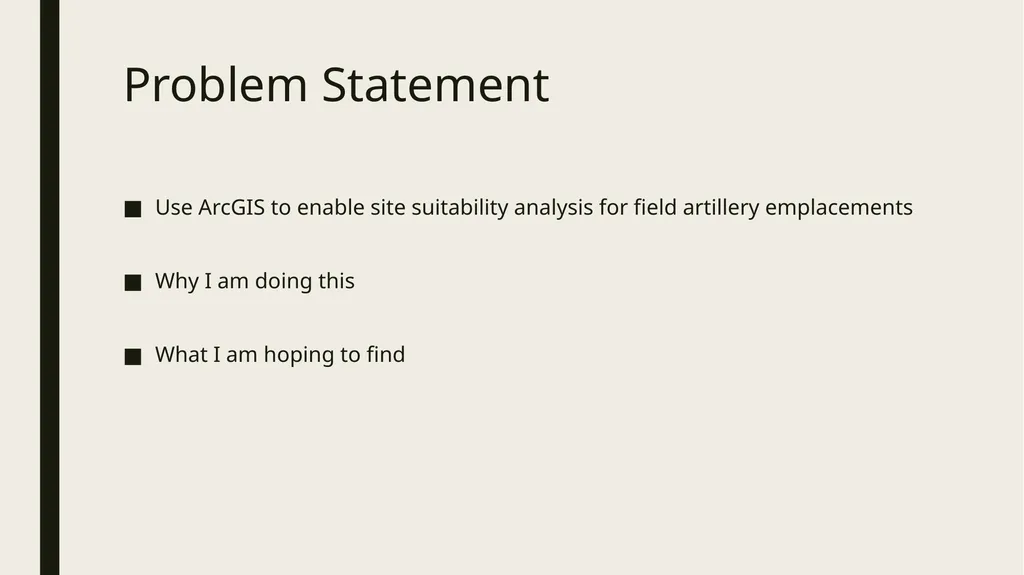
Problem Statement Use ArcGIS to enable site suitability analysis for field artillery emplacements
Why I am doing this
What I am hoping to find<br>
12
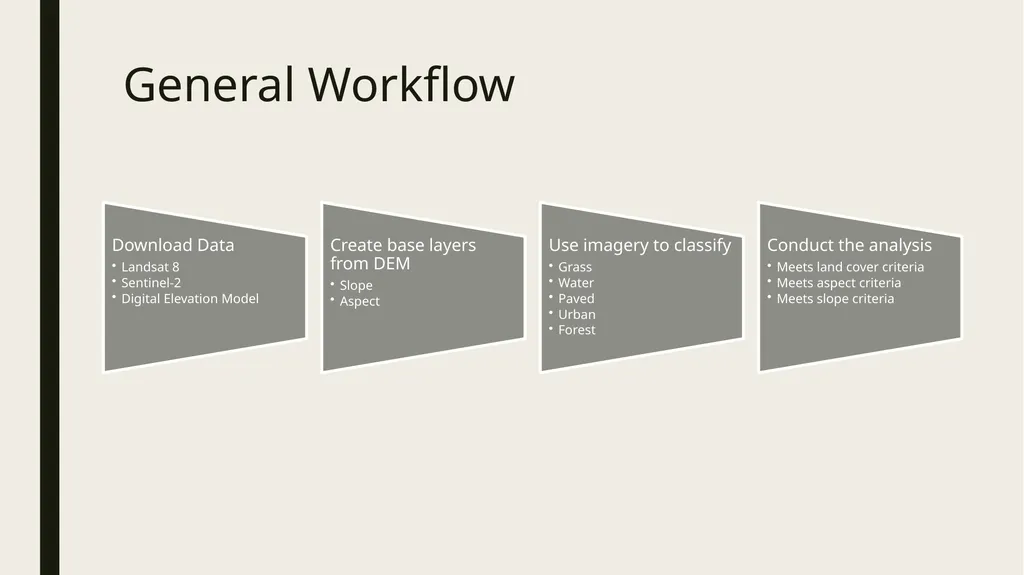
General Workflow<br>
13
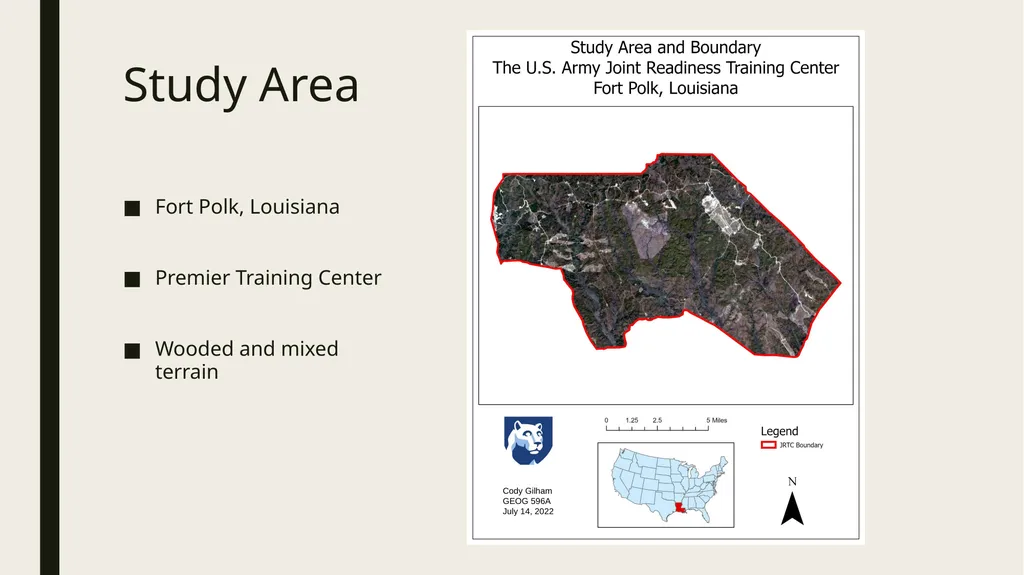
Study Area Cody Gilham
GEOG 596A
July 14, 2022 Fort Polk, Louisiana
Premier Training Center
Wooded and mixed terrain<br>
14
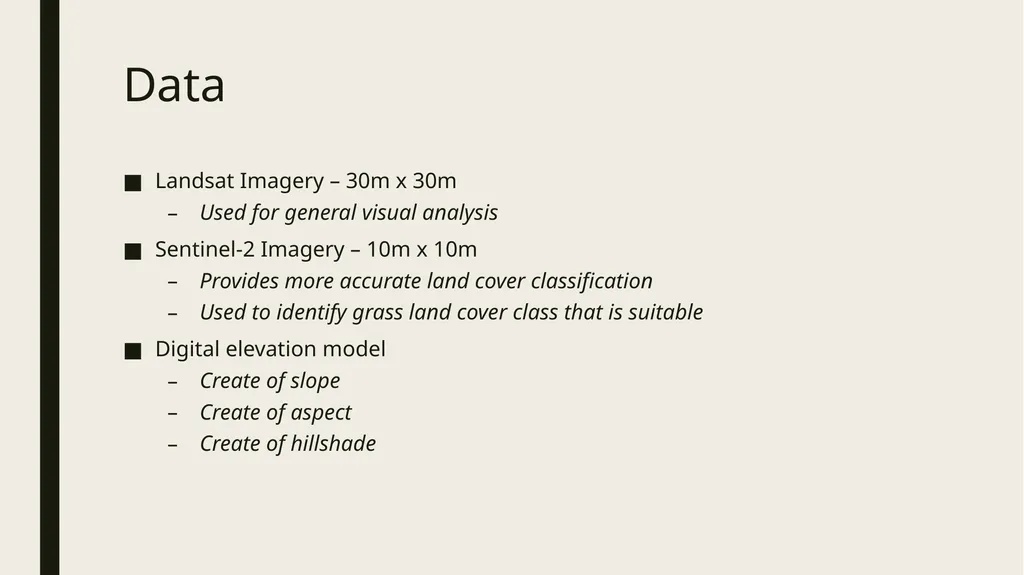
Data Landsat Imagery – 30m x 30m
Used for general visual analysis
Sentinel-2 Imagery – 10m x 10m
Provides more accurate land cover classification
Used to identify grass land cover class that is suitable
Digital elevation model
Create of slope
Create of aspect
Create of hillshade<br>
15
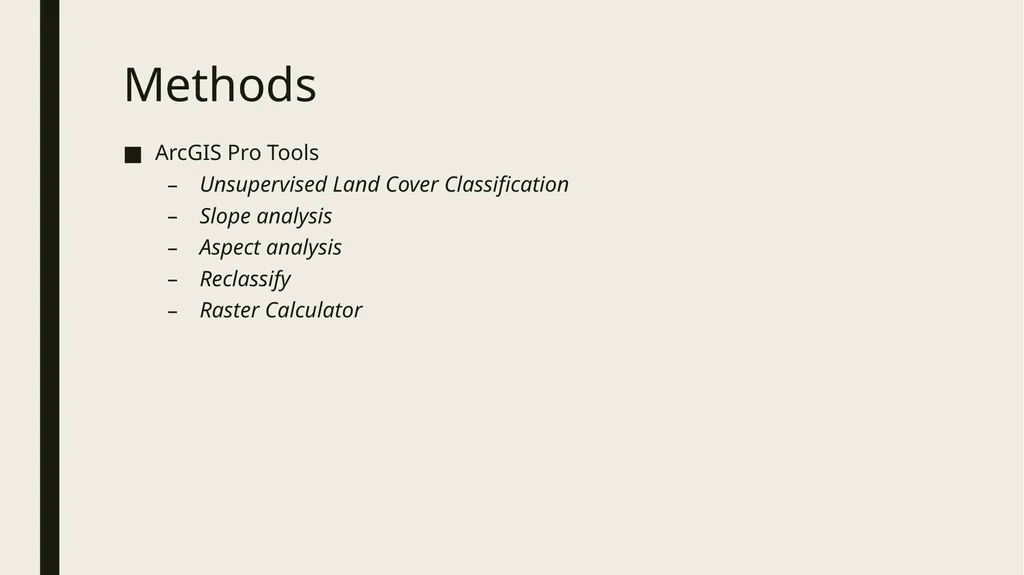
Methods ArcGIS Pro Tools
Unsupervised Land Cover Classification
Slope analysis
Aspect analysis
Reclassify
Raster Calculator<br>
16
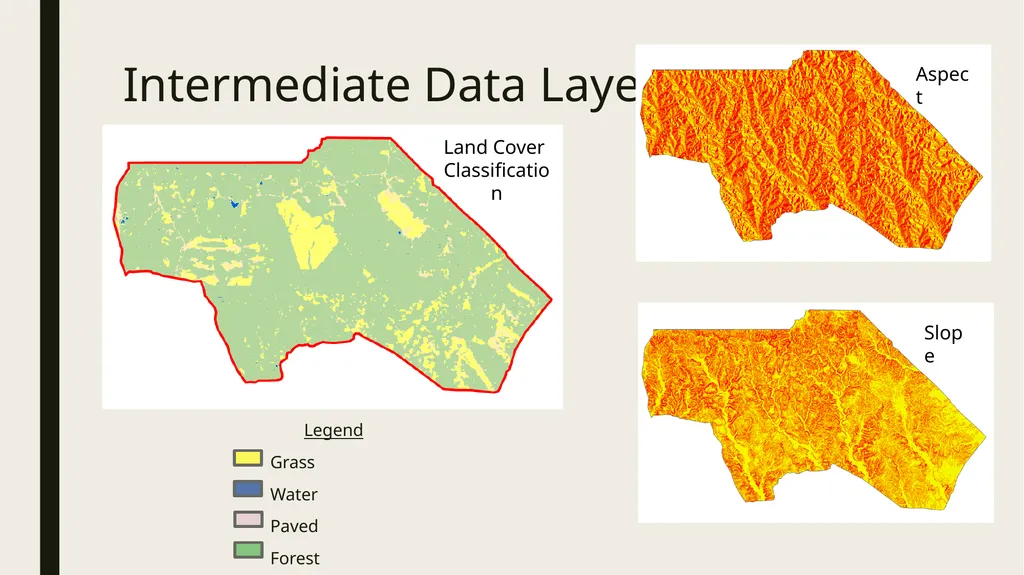
Intermediate Data Layers Land Cover
Classification Aspect Slope Legend
Grass
Water
Paved
Forest<br>
17
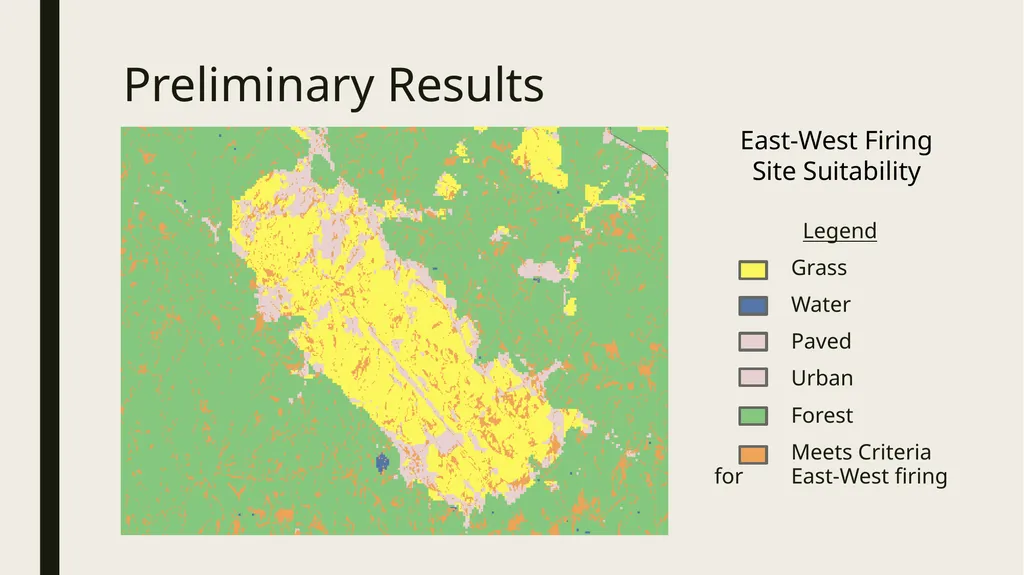
Preliminary Results Legend
Grass
Water
Paved
Urban
Forest
Meets Criteria for East-West firing East-West Firing
Site Suitability<br>
18
Analysis Improvements LiDAR Data
To include tree height and other structures into analysis
Distance from objects
To include criteria based on distance from trees or objects
Other study areas
Fort Irwin, California which is mountainous and desert
Fort Campbell, Kentucky which is less wooded than Fort Polk but generally flat<br>
19
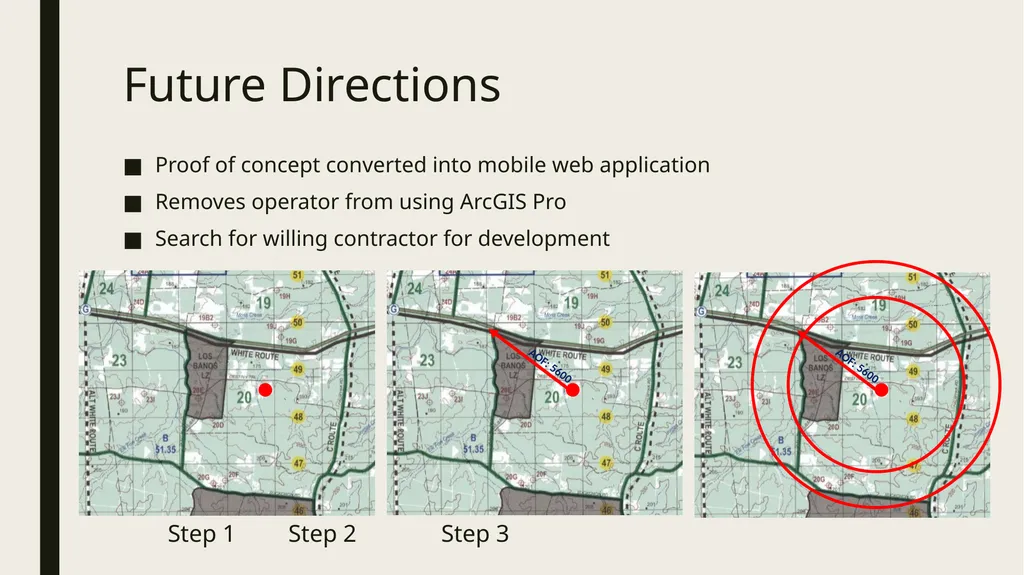
Future Directions Proof of concept converted into mobile web application
Removes operator from using ArcGIS Pro
Search for willing contractor for development AOF: 5600 AOF: 5600 Step 1 Step 2 Step 3<br>
20
Timeline August 2022
Refine workflow and process
Conduct and finalize analysis on the three study areas
September 2022
Finalize paper
October 2022
Published in Field Artillery Journal<br>