
Fight, Flight or Freeze – I’m fighting! The
MS
Published · 64 slides · 0 views

1 / 1




Description
Fight, Flight or Freeze Im fighting! The application of EMDR in a group based violence reduction treatment programme Dr Rachel Worthington Alpha Hospitals, Bury and University of Central Lancashire (UCLan) Content Theories of Violence
Related Topics
Share
Embed code
Download this presentation From Below
"Fight, Flight or Freeze – I’m fighting! The" is the property of its rightful owner. Permission is granted to download and print the materials on this website for personal, non-commercial use only, and to display it on your personal computer provided you do not modify the materials and that you retain all copyright notices contained in the materials. By downloading content from our website, you accept the terms of this agreement.
Presentation Transcript
01
Fight, Flight or Freeze – I’m fighting! The application of EMDR in a group based violence reduction treatment programme Dr Rachel Worthington
Alpha Hospitals, Bury and University of Central Lancashire (UCLan)<br>
Alpha Hospitals, Bury and University of Central Lancashire (UCLan)<br>
02
Content Theories of Violence and Aggression
Effects of Trauma
Trauma and Aggression
Current Treatment Approaches
The future – EMDR and Aggression<br>
Effects of Trauma
Trauma and Aggression
Current Treatment Approaches
The future – EMDR and Aggression<br>
03
Aggression - Definition According to Siever (2008) “Aggression may be classified in a number of ways, for example, by the target of aggression (e.g., self-directed or other-directed), mode of aggression (e.g., physical or verbal, direct or indirect), or cause of aggression (e.g., medical). The most widely utilized and perhaps most heuristically valuable classification of aggression is that of premeditated versus impulsive aggression” (pp429).<br>
04
Theories of Aggression – the early years… Initial theories of aggression focussed less on violence and more on theories of anti-social behaviour
Also focused more on the nature of aggression rather than the individual motive
Focussed on proactive and reactive definitions
Frustration-aggression theories(Gustafson, 1989)
Social Learning (Baron et al.,2006)<br>
Also focused more on the nature of aggression rather than the individual motive
Focussed on proactive and reactive definitions
Frustration-aggression theories(Gustafson, 1989)
Social Learning (Baron et al.,2006)<br>
05
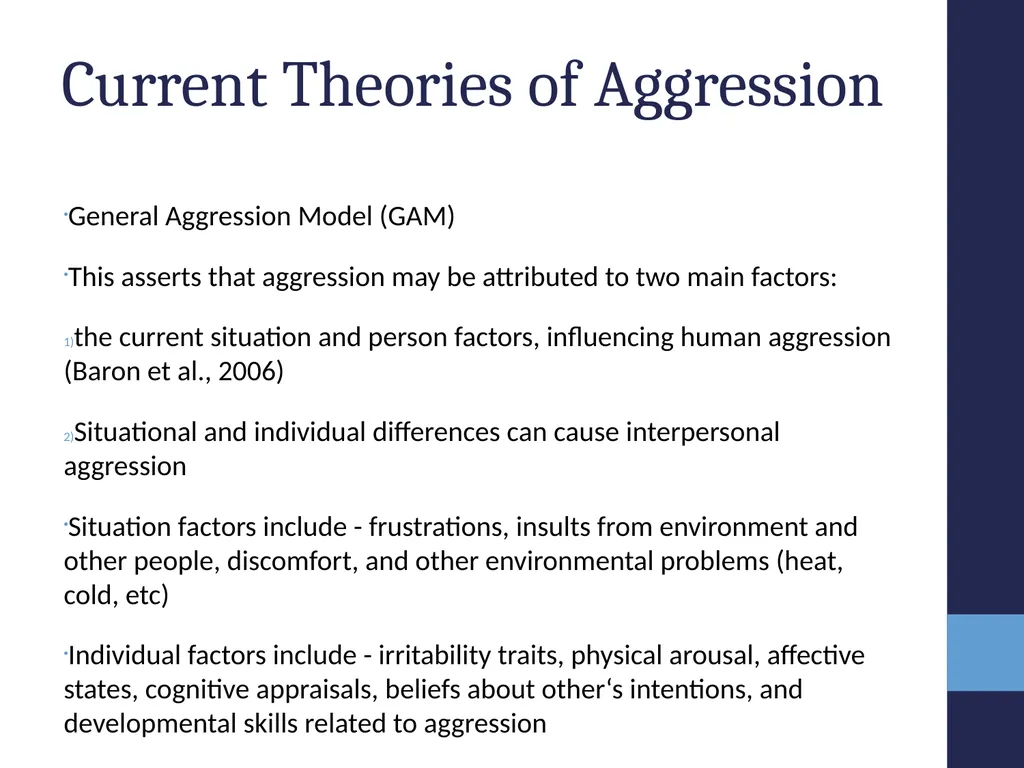
Current Theories of Aggression General Aggression Model (GAM)
This asserts that aggression may be attributed to two main factors:
the current situation and person factors, influencing human aggression (Baron et al., 2006)
Situational and individual differences can cause interpersonal aggression
Situation factors include - frustrations, insults from environment and other people, discomfort, and other environmental problems (heat, cold, etc)
Individual factors include - irritability traits, physical arousal, affective states, cognitive appraisals, beliefs about other‘s intentions, and developmental skills related to aggression<br>
06
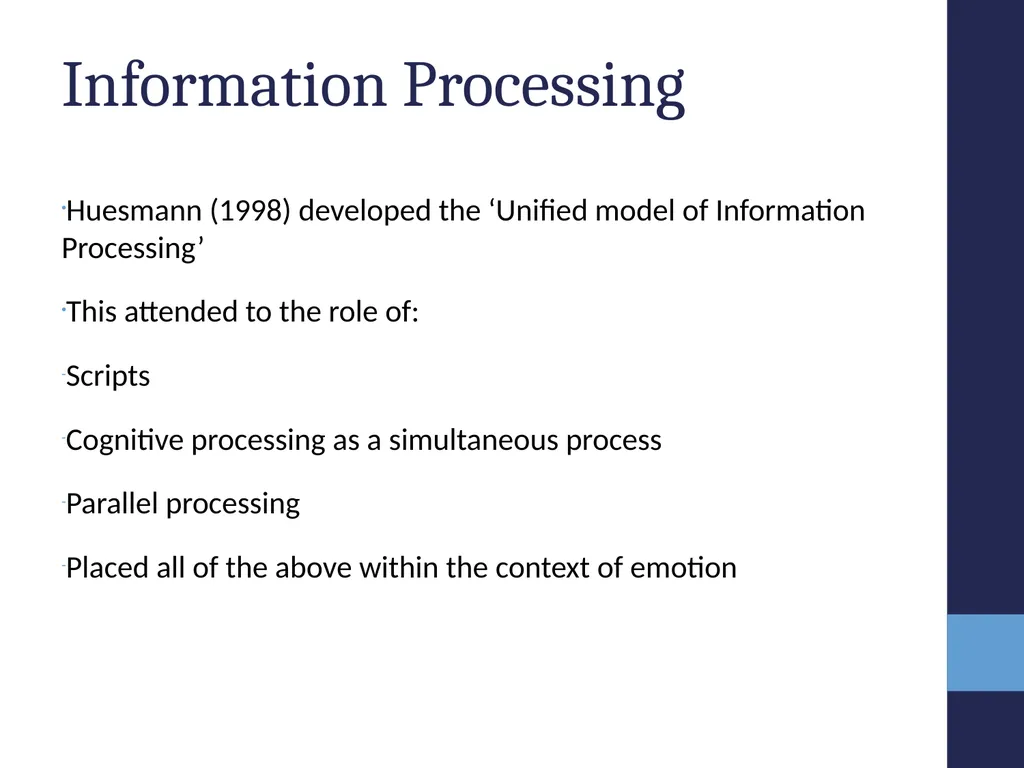
Information Processing Huesmann (1998) developed the ‘Unified model of Information Processing’
This attended to the role of:
Scripts
Cognitive processing as a simultaneous process
Parallel processing
Placed all of the above within the context of emotion<br>
This attended to the role of:
Scripts
Cognitive processing as a simultaneous process
Parallel processing
Placed all of the above within the context of emotion<br>
07
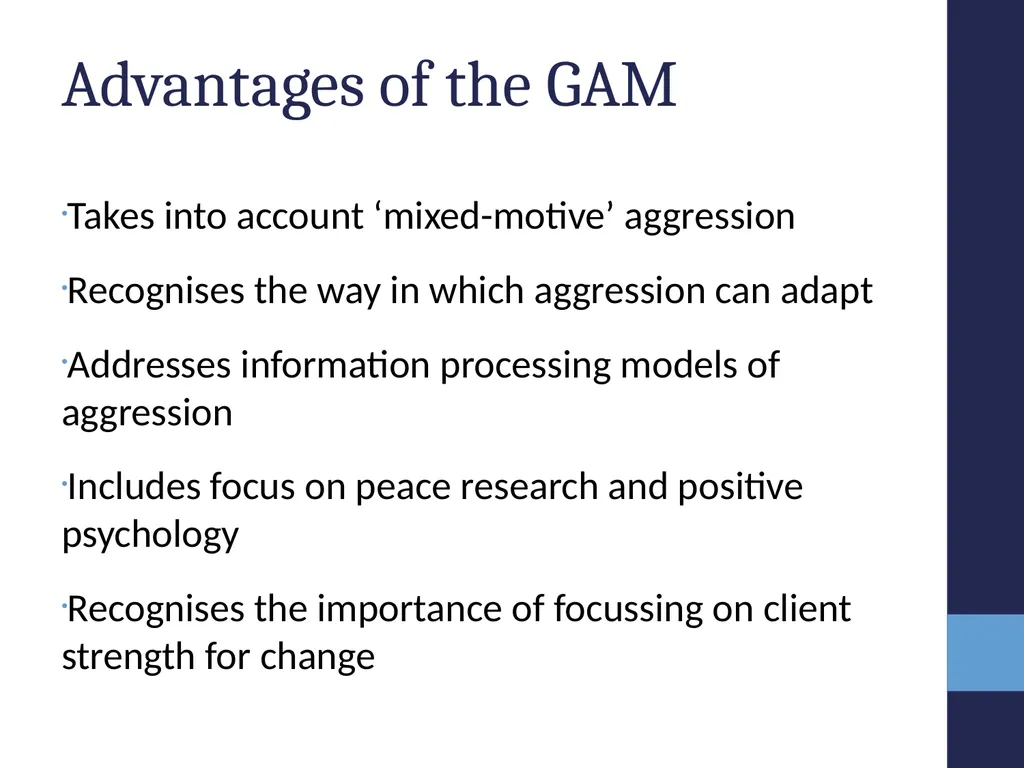
Advantages of the GAM Takes into account ‘mixed-motive’ aggression
Recognises the way in which aggression can adapt
Addresses information processing models of aggression
Includes focus on peace research and positive psychology
Recognises the importance of focussing on client strength for change<br>
Recognises the way in which aggression can adapt
Addresses information processing models of aggression
Includes focus on peace research and positive psychology
Recognises the importance of focussing on client strength for change<br>
08
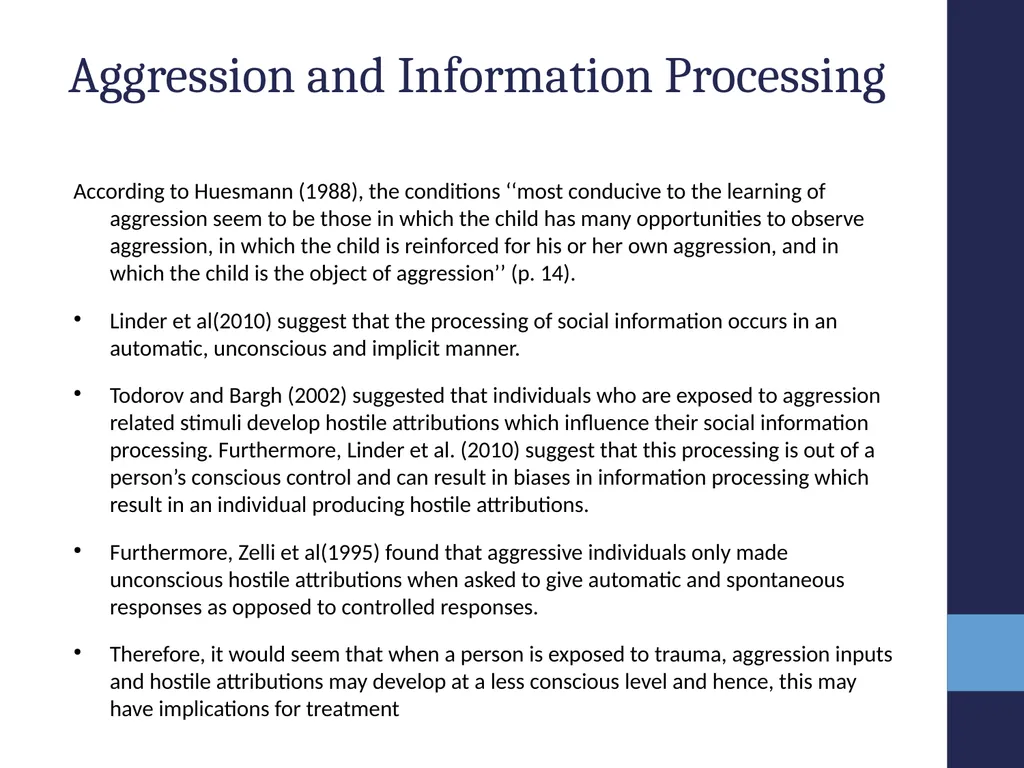
Aggression and Information Processing According to Huesmann (1988), the conditions ‘‘most conducive to the learning of aggression seem to be those in which the child has many opportunities to observe aggression, in which the child is reinforced for his or her own aggression, and in which the child is the object of aggression’’ (p. 14).
Linder et al(2010) suggest that the processing of social information occurs in an automatic, unconscious and implicit manner.
Todorov and Bargh (2002) suggested that individuals who are exposed to aggression related stimuli develop hostile attributions which influence their social information processing. Furthermore, Linder et al. (2010) suggest that this processing is out of a person’s conscious control and can result in biases in information processing which result in an individual producing hostile attributions.
Furthermore, Zelli et al(1995) found that aggressive individuals only made unconscious hostile attributions when asked to give automatic and spontaneous responses as opposed to controlled responses.
Therefore, it would seem that when a person is exposed to trauma, aggression inputs and hostile attributions may develop at a less conscious level and hence, this may have implications for treatment<br>
09
Information Processing
and Trauma In terms of trauma experiences, there is evidence that those who have been exposed to traumatic experiences remain in a hyper-aroused state, overly attending to environmental stimulus, that they experienced reduced levels of trust and their experience of negative emotions is intensified (Solomon and Heide, 2005)
In addition, it has also been noted that in those exposed to trauma, rehearsal may take the form of both nightmares and flashbacks of the experience (Duke et al., 2008) as well as fear which Jarymowicz and Bar-Tal (2006, p. 367) suggest could lead the individual to store both conscious and unconscious memories which can lead to ‘‘pre-emptive aggression’’.
Furthermore, Siever (2008) found that exposure to repeated acts of aggression can leave individuals with a neurobiological susceptibility to aggression as a result of an imbalance between the prefrontal cortex and the amygdala. The authors argued that this affects the ‘‘top down’’ circuitry and reduces the person’s ability to modulate aggression<br>
10
Trauma and Aggression Therefore, this would seem to suggest that exposure to aggression and trauma can result in both conscious, unconscious and neurobiological changes which could increase a person’s potential to use pre-emptive aggression as a means of managing fear as well as a reduced capacity for modulating aggression<br>
11
Links between trauma and aggression There is a growing body of research into the prevalence and impact of prior psychologically traumatic experiences on psychological functioning, impulsive externalizing and violent behaviour (Ford et al., 2007). Within forensic samples rates can be as high as 90%
More aggressive individuals report higher rates than non-aggressive individuals (Sarchiapone, Carli, Cuomo, Marchetti, & Roy, 2009).
Experiencing childhood abuse has also been associated with increased risk of later child abuse perpetration (Milner et al., 2010), often using similar forms of abusive behaviour on their victims that they were exposed to as children (e.g. Felson & Lane, 2009).<br>
12
Trauma and Aggression cont Studies also find exposure to childhood trauma is related to subsequent perpetration of intimate partner violence (Merrill, Hervig, & Milner, 1996; Reitzel-Jaffe & Wolfe, 2001; Schumacher,Feldbau-Kohn, Slep, & Heyman, 2001),
homicidal ideation, person offenses, and problem behaviours (Clark, Reiland, Thorne & Cropsey, 2014)
physically and/or sexually violent behaviours in adulthood (Jakupcak & Tull, 2005).
It is related to violence in populations with psychosis (Sarkar et al., 2005; Spidel et al., 2010).
It is also related to instability of employment (Sansone et al., 2012) and relationships (Colman & Widom, 2004).<br>
13
Trauma and Dual Aggression Substance use may also lead to greater trauma exposure, for example Afful, Strickland, Cottler, and Bierut (2010) found higher rates of interpersonal violence, in particular rape or sexual assault in women (58% vs. 33%) in treatment vs. community samples.
The common pathway theory suggests that both trauma and drug use are symptoms of the same underlying factors, such as a low distress tolerance and a tendency to use avoidant coping to manage negative emotional states, such as dissociation or risk-taking—phenomena common to substance abuse and reactions to trauma (e.g., Najavits & Walsh, 2012; Otto, Safren, & Pollack, 2004). These explanations could also be used to explain the relationship between trauma and violence (Clark et al., 2014).<br>
The common pathway theory suggests that both trauma and drug use are symptoms of the same underlying factors, such as a low distress tolerance and a tendency to use avoidant coping to manage negative emotional states, such as dissociation or risk-taking—phenomena common to substance abuse and reactions to trauma (e.g., Najavits & Walsh, 2012; Otto, Safren, & Pollack, 2004). These explanations could also be used to explain the relationship between trauma and violence (Clark et al., 2014).<br>
14
Trauma and PTSD Exposure to interpersonal violence is more likely than non-violent trauma to precipitate PTSD with such individuals reporting problems with attention and emotion regulation (van der Kolk, Roth, Pelcovitz, Sunday, & Spinazzola, 2005)
too much and too little autonomic activity (Corrigan, Fisher, & Nutt, 2011), and either too little or too much arousal is known to have a negative impact cognition (DePierro, D’Andrea, & Pole, 2013).<br>
too much and too little autonomic activity (Corrigan, Fisher, & Nutt, 2011), and either too little or too much arousal is known to have a negative impact cognition (DePierro, D’Andrea, & Pole, 2013).<br>
15
Trauma and Cognitive Changes Models of anxiety and PTSD suggest that conditioning may be central to understanding an individual’s response to trauma cues.
Mower’s two-factor model of anxiety has been applied to PTSD and suggests that classical conditioning explains the initial fear response to the trauma cue, whereas operant conditioning explains the continuation of this fear response in terms of a reinforcing reduction in negative affect.<br>
Mower’s two-factor model of anxiety has been applied to PTSD and suggests that classical conditioning explains the initial fear response to the trauma cue, whereas operant conditioning explains the continuation of this fear response in terms of a reinforcing reduction in negative affect.<br>
16
Trauma and PTS Research suggests that individuals who are exposed to potentially traumatic childhood experiences (e.g. family violence or natural disasters) are vulnerable to symptoms of post-traumatic stress (PTS).
PTS manifests in three broad clusters of symptoms:
avoidance
re-experiencing
hypervigilance .<br>
PTS manifests in three broad clusters of symptoms:
avoidance
re-experiencing
hypervigilance .<br>
17
Trauma – Biological changes Heide and Solomon (2006) also proposed that trauma experienced in childhood through neglect and/or abuse leads to ‘‘biological changes involving the nervous and endocrine systems’’ (p. 221). They further argue that these changes impact upon ‘‘physiological, emotional, cognitive and social function, including the ability to regulate, affect, relate to other people, and develop empathy’’ (p. 221). However, it is important to note that at all victims of trauma may experience negative biological responses and aggression, therefore, consideration should be given to the potential of genetic predisposition to trauma, the type of trauma and the role of individual differences<br>
18
Nature of Trauma Emerging evidence suggests that the nature of the trauma may explain the diverse symptomology. It is hypothesised that the separate clusters of symptoms of post-traumatic distress arise from two distinct dimensions of
harm–life threat = Life threat is predicted to lead to symptoms of anxiety, hyper-arousal, hostility, anger and aggression
social betrayal = lead to symptoms of dissociation, emotional numbness, depression and constricted or abusive relationships.
Both = post-traumatic stress disorder where individuals may show symptoms from all clusters.<br>
19
Types of Trauma Therefore, in order to consider the complexities of the nature and degree of trauma Solomon and Heide (1999) suggested that trauma could be differentiated into three types, the most extreme being type III which is regarded as ‘‘severe abuse and/or neglect particularly during early childhood’’ (p. 221) and ‘‘trauma characterised by multiple traumatic experiences that typically begin at an early age may be perceived as life threatening’’ (p. 221).<br>
20
Trauma and logical thinking Heide and Solomon (2005) argue that type III trauma survivors have difficulties engaging in logical thinking and decision making because their responses are more automatically driven. Furthermore, they argue that long term childhood maltreatment can result in chronic physiological ‘‘hyper-arousal’’ and ‘‘survival mode’’ which when exposed to triggers associated with trauma can result in a ‘‘fight or flight’’ response. In addition, they argue that in an attempt to dampen this arousal, trauma survivors may seek to dissociate from their experiences by using alcohol and drugs which may ‘‘impair judgement and reduce inhibition, making violent acting out even more likely’’ (p. 222).<br>
21
GAM and trauma Following the model of GAM, the ‘‘inputs’’ that a person may bring as a consequence of childhood were also explored by Schore (2003) who suggested that childhood traumatic stress interferes with the development of neural circuits in the brain which connect emotional, psychological and social development.
Heide and Solomon (2006, p. 223) suggest that stress associated with child abuse and neglect ‘‘compromises right brain development’’ resulting in specific impairments of the orbitofrontal cortex which is involved in social adjustment and the control of mood, drive and responsibility and regulating emotions (Rolls, 1999).
Heide and Solomon (2006) also suggest that as a result of these changes situations in which a person who has been exposed to trauma is required to engage in relationships with others may also be impaired<br>
22
Trauma and Criminality Best et al. (2002) also found that abnormal development of the neural circuits in the brain and the orbitofrontal cortex was associated with reduced inhibition of rage and is associated with ‘‘sociopathy”
Blake et al. (1995) to concluded that severe physical abuse may interact with neurological brain dysfunction and contribute to violent behaviour<br>
Blake et al. (1995) to concluded that severe physical abuse may interact with neurological brain dysfunction and contribute to violent behaviour<br>
23
Implications of Trauma on Interventions Berkowitz (1993) postulated that aversive and unpleasant experiences directly activate aggression-related motor programs, without the need for actively mindful cognitive processing. In terms of cognitions, in the case of trauma, both the ability to recall memories and the ability to generate cognitions associated with aggression may be impaired.
Parnell (2007) suggested that psychological trauma is believed to cause disassociation of hemispheric processing. That is, the left hemisphere (which is responsible for verbal and motor control, the manipulation of words and symbols, and the sequential processing of information) is locked out thus leaving the encoding of memory as implicit memory in the right hemisphere.<br>
Parnell (2007) suggested that psychological trauma is believed to cause disassociation of hemispheric processing. That is, the left hemisphere (which is responsible for verbal and motor control, the manipulation of words and symbols, and the sequential processing of information) is locked out thus leaving the encoding of memory as implicit memory in the right hemisphere.<br>
24
Continued.... Parnell (2007) proposed that fear blocks the hippocampus so that information will not go into explicit memory. Moreover, some argue (Parnell, 2007) that early abusive experiences are stored in the right hemisphere of the brain which is separate from the language centre of the left brain causing synaptic pruning in the orbital frontal cortex resulting in hyper arousal, the misreading of external cues and difficulty with self-soothing or calming.
This results in trauma freezing the integrative processes with the memory and the memory remaining as implicit stored in the limbic system which is responsible for fleeing, fighting, feeding and reproduction<br>
This results in trauma freezing the integrative processes with the memory and the memory remaining as implicit stored in the limbic system which is responsible for fleeing, fighting, feeding and reproduction<br>
25
Trauma, Memory and arousal Heide and Solomon (2004) also argued that episodic memories of traumatic experiences ‘‘may be stored in the right limbic system indefinitely’’ (p. 226) because of the restricted ability to process information into the left cerebral cortex where it would be filed away for retrieval when required. The authors proposed that as a result memories of the trauma (including thoughts, feelings, body sensations, sounds and smells) are not processed into semantic memories but instead result in heightened arousal, emotional looping, anxiety and an inability to learn from experiences.<br>
26
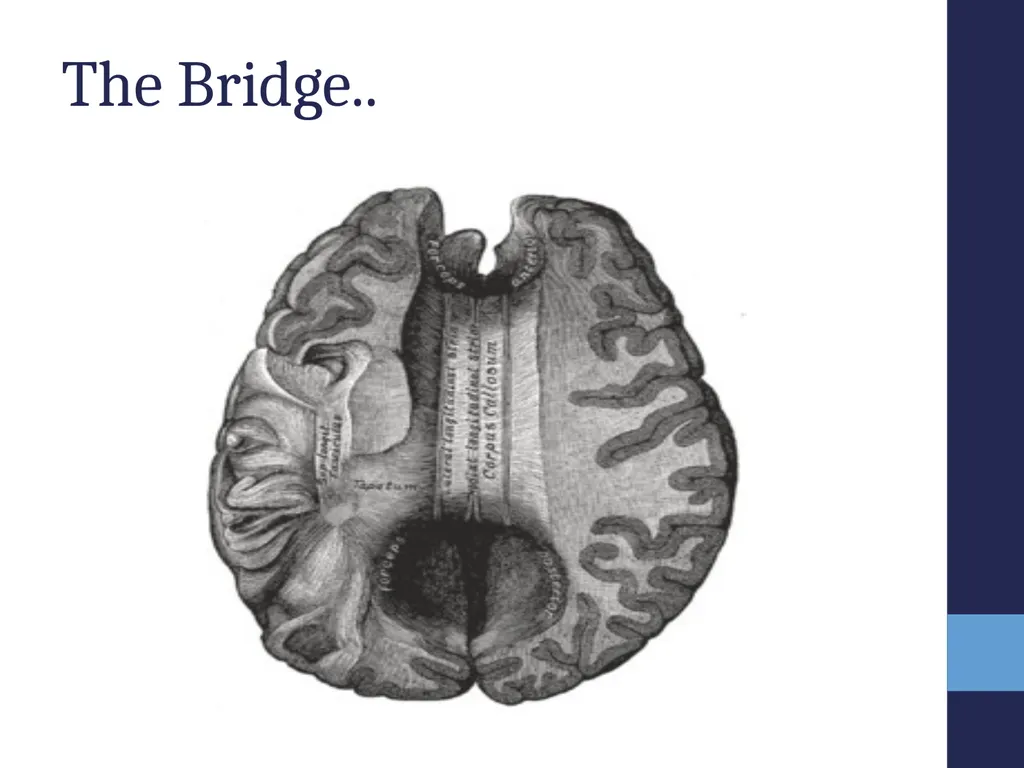
The Bridge..<br>
27
Trauma, arousal and processing Rauch et al. (2000) suggest that this inability to process episodic memories to the left cerebral cortex results in the emotions associated with the trauma being stored in the amygdala and the right limbic system.
Rauch et al. (2000) propose that as a result when any stimulus is triggered which is associated with the trauma this results in an exaggerated response from the amygdala and responses are generated by the limbic system.
Heide and Solomon (2004) suggest that as a result the person responds in an emotional rather than a rational way. Therefore, this would seem to suggest that focusing on the rational cognitive aspects of aggression alone would not take into account the inability of the individual to process information into the left cerebral cortex<br>
28
Trauma, recall and language In the case of trauma, early abusive experiences are stored in the right hemisphere of the brain which is separate from the language centre of the left brain causing synaptic pruning in the orbital frontal cortex resulting in hyper arousal, the misreading of external cues and difficulty with self-soothing or calming.
Teicher et al. (2004) also noted how the trauma may impact on the capacity of the corpus callosum resulting in reduced neural activity between the logical and reasoned left side of the brain with the emotional right side of the brain.
There is some evidence that the ability of the individual to recall the function of aggression in the context of both the emotional right hemisphere with the logical and reasoned linguistic left hemisphere may be compromised<br>
29
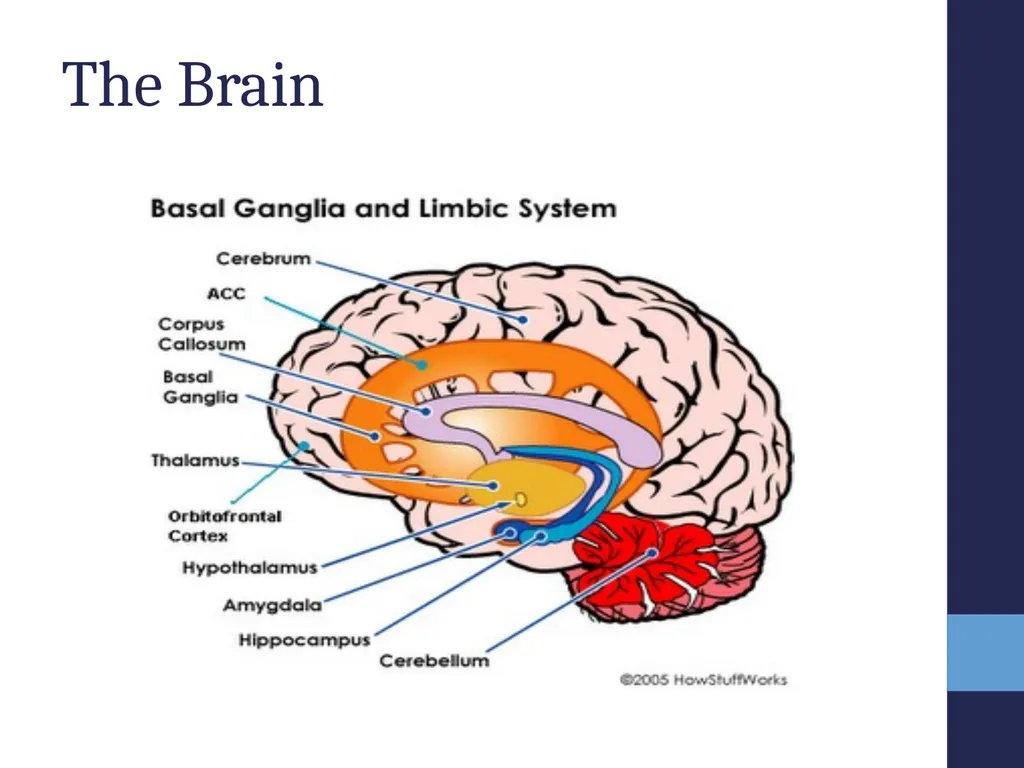
How many brains do you have - one or two? Actually, this is quite easy to answer...you have only one brain. However, the cerebral hemispheres are divided right down the middle into a right hemisphere and a left hemisphere. Each hemisphere appears to be specialized for some behaviours. The hemispheres communicate with each other through a thick band of 200-250 million nerve fibers called the corpus callosum. (A smaller band of nerve fibers called the anterior commissure also connects parts of the cerebral hemispheres.) One brain or two?<br>
30
The Brain<br>
31
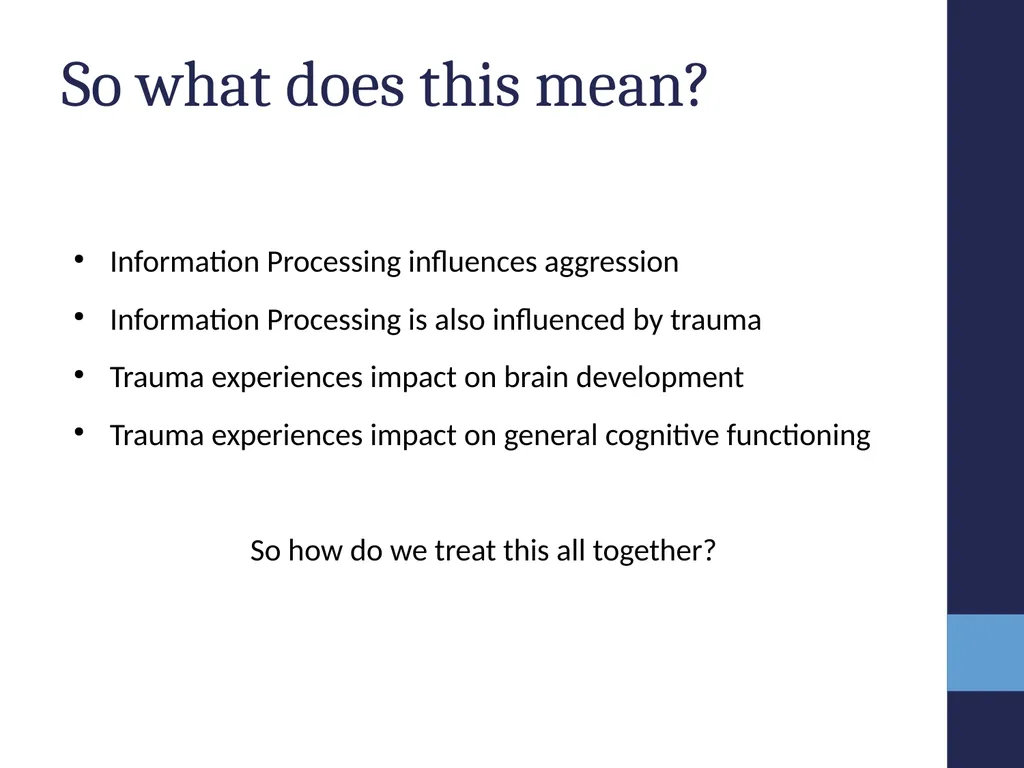
So what does this mean? Information Processing influences aggression
Information Processing is also influenced by trauma
Trauma experiences impact on brain development
Trauma experiences impact on general cognitive functioning
So how do we treat this all together?<br>
Information Processing is also influenced by trauma
Trauma experiences impact on brain development
Trauma experiences impact on general cognitive functioning
So how do we treat this all together?<br>
32
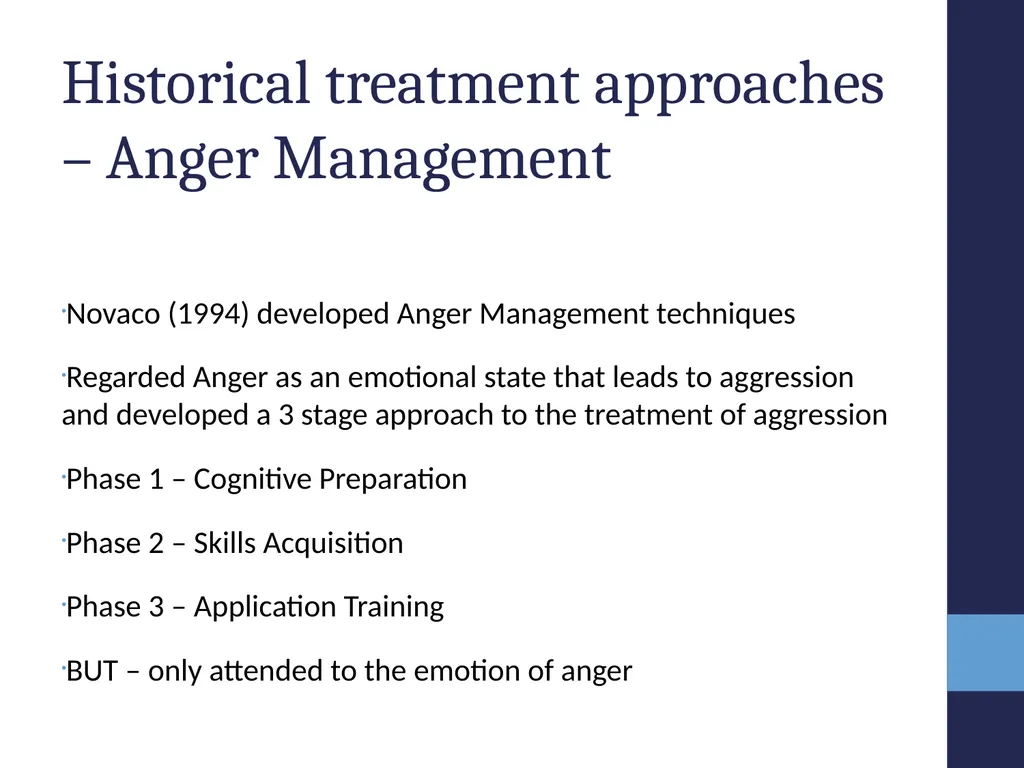
Historical treatment approaches – Anger Management Novaco (1994) developed Anger Management techniques
Regarded Anger as an emotional state that leads to aggression and developed a 3 stage approach to the treatment of aggression
Phase 1 – Cognitive Preparation
Phase 2 – Skills Acquisition
Phase 3 – Application Training
BUT – only attended to the emotion of anger<br>
Regarded Anger as an emotional state that leads to aggression and developed a 3 stage approach to the treatment of aggression
Phase 1 – Cognitive Preparation
Phase 2 – Skills Acquisition
Phase 3 – Application Training
BUT – only attended to the emotion of anger<br>
33
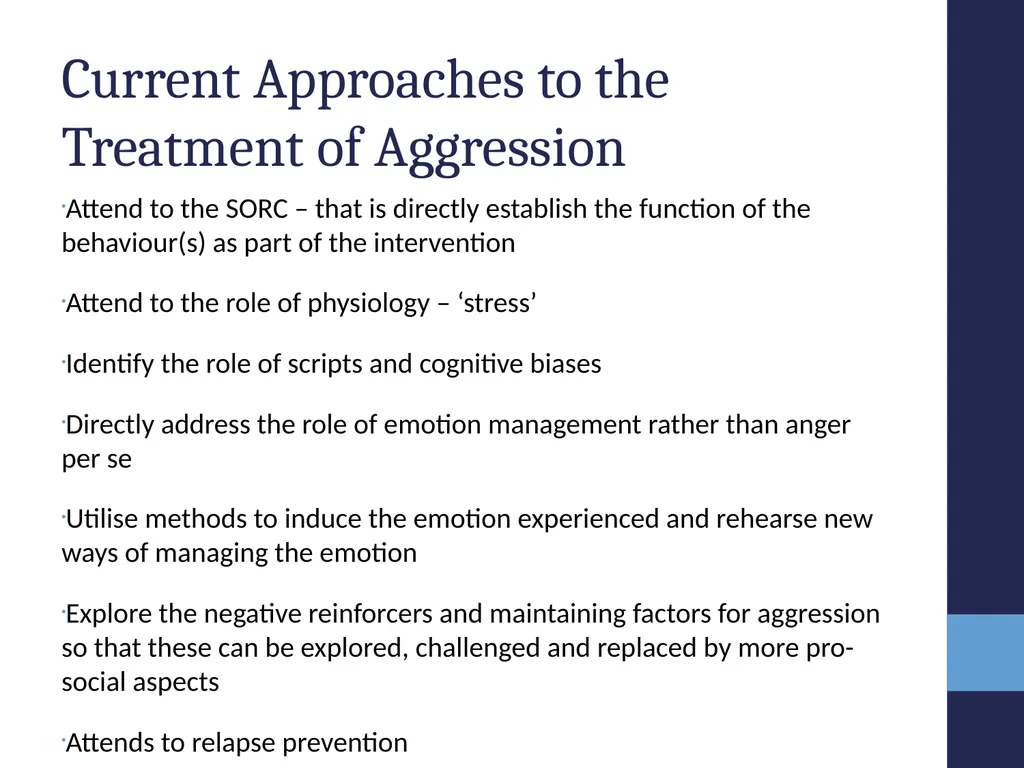
Current Approaches to the Treatment of Aggression Attend to the SORC – that is directly establish the function of the behaviour(s) as part of the intervention
Attend to the role of physiology – ‘stress’
Identify the role of scripts and cognitive biases
Directly address the role of emotion management rather than anger per se
Utilise methods to induce the emotion experienced and rehearse new ways of managing the emotion
Explore the negative reinforcers and maintaining factors for aggression so that these can be explored, challenged and replaced by more pro-social aspects
Attends to relapse prevention<br>
34
Current Aggression Interventions continued According to Ireland et al. (2009) treatment aimed to reduce aggression expression should focus on the four areas identified in the Unified Model of Information processing proposed by Huesmann (1998). Specifically, this noted:
1. social scripts;
2. normative beliefs;
3. emotions and the impact of these on processing; and
4. perception errors<br>
1. social scripts;
2. normative beliefs;
3. emotions and the impact of these on processing; and
4. perception errors<br>
35
Aggression interventions Aggression Replacement Training
Controlling Anger and Learning to Manage it (CALM)
Cognitive Self-Change programme (CSCP) now Self Change Programme
Healthy Relationships Programme (HRP)
Integrated Domestic Abuse Programme
Community Domestic Violence Programme
Chromis
Life Minus Violence (LMV)
Violence Reduction Programme (VRP)<br>
36
Examples of Treatment Approaches in practice – LMV The LMV treatment modules form part of an intensive high-dosage psychological treatment programme. The LMV programme is cognitive behavioural in basis and uses a range of techniques to convey learning points including: The modules include;
Motivation;
Stress and coping;
How I got here (development of aggression)
Emotional regulation
Information processing and aggression
Consequences
Empathy, emotional intelligence and theory of mind
Interpersonal skills
Working towards the future – Relapse prevention<br>
Motivation;
Stress and coping;
How I got here (development of aggression)
Emotional regulation
Information processing and aggression
Consequences
Empathy, emotional intelligence and theory of mind
Interpersonal skills
Working towards the future – Relapse prevention<br>
37
Constraints of current approaches Do not account for emotional memories
Do not account for the impact of trauma on brain development
Do not account for the impact of trauma on cognitive functioning
Are highly cognitive
Are verbal/language based
Underestimates the ‘state’ of the client<br>
Do not account for the impact of trauma on brain development
Do not account for the impact of trauma on cognitive functioning
Are highly cognitive
Are verbal/language based
Underestimates the ‘state’ of the client<br>
38
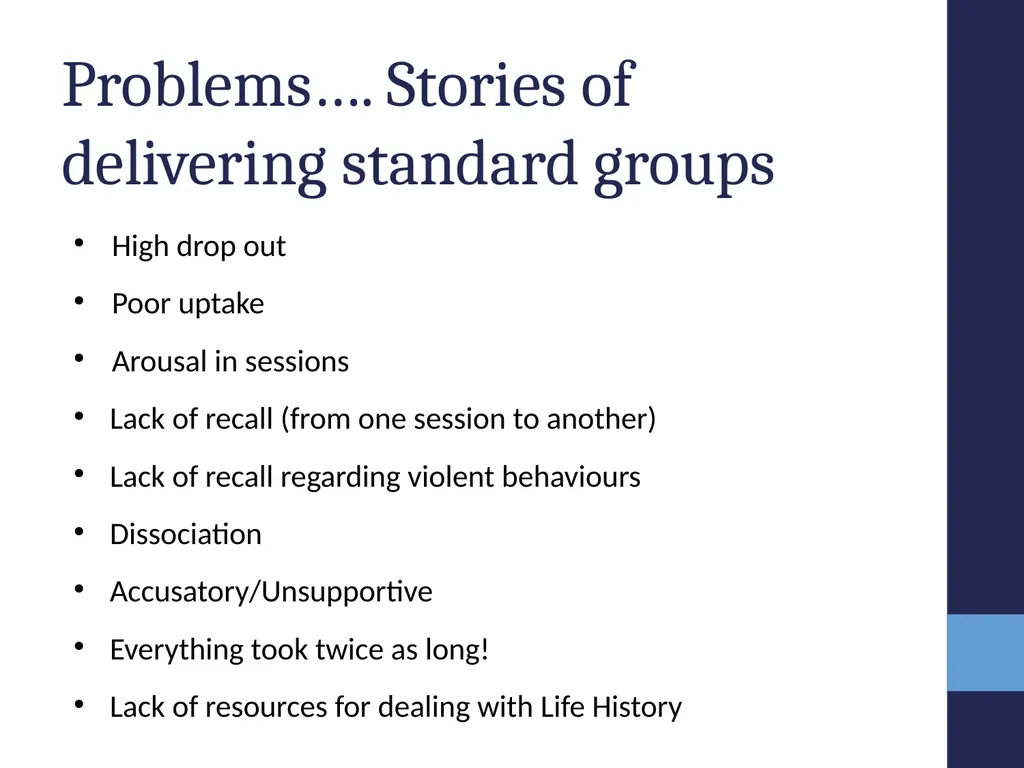
Problems…. Stories of delivering standard groups High drop out
Poor uptake
Arousal in sessions
Lack of recall (from one session to another)
Lack of recall regarding violent behaviours
Dissociation
Accusatory/Unsupportive
Everything took twice as long!
Lack of resources for dealing with Life History<br>
Poor uptake
Arousal in sessions
Lack of recall (from one session to another)
Lack of recall regarding violent behaviours
Dissociation
Accusatory/Unsupportive
Everything took twice as long!
Lack of resources for dealing with Life History<br>
39
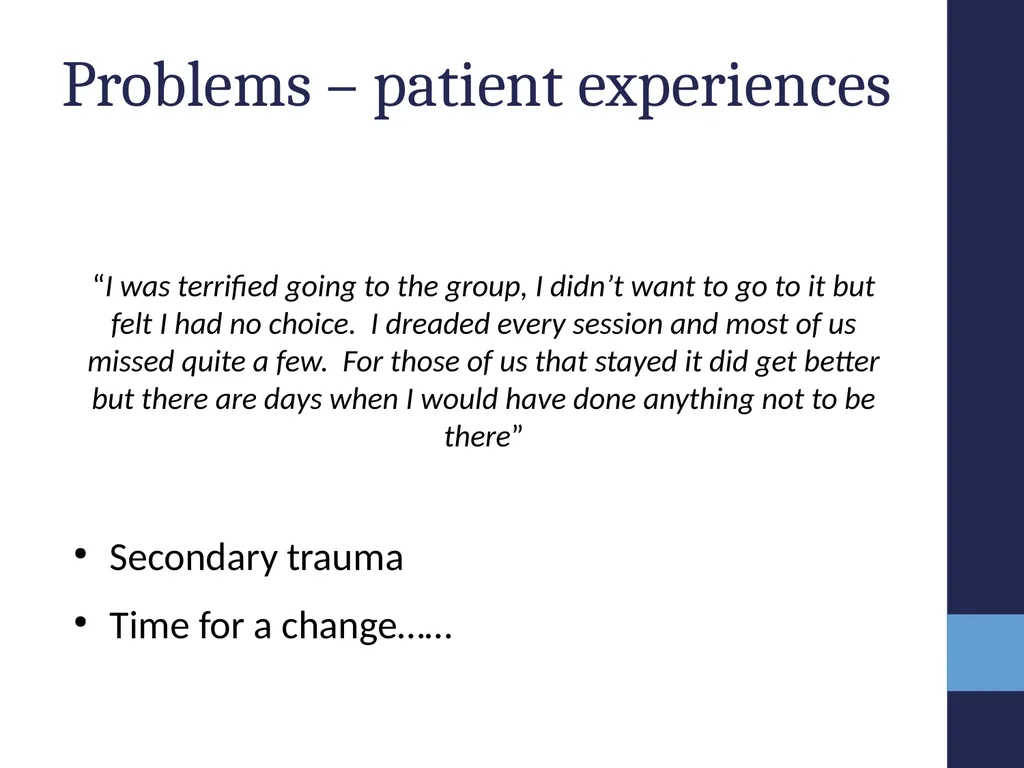
Problems – patient experiences “I was terrified going to the group, I didn’t want to go to it but felt I had no choice. I dreaded every session and most of us missed quite a few. For those of us that stayed it did get better but there are days when I would have done anything not to be there”
Secondary trauma
Time for a change……<br>
Secondary trauma
Time for a change……<br>
40
The FUTURE? Something has to change..<br>
41
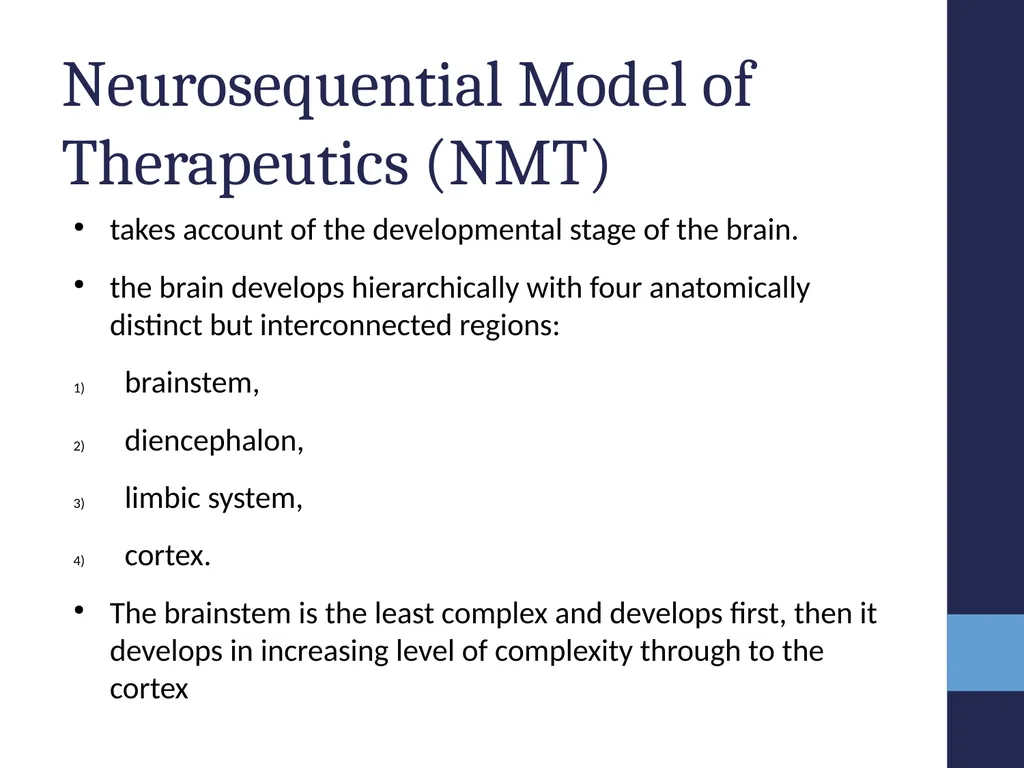
Neurosequential Model of Therapeutics (NMT) takes account of the developmental stage of the brain.
the brain develops hierarchically with four anatomically distinct but interconnected regions:
brainstem,
diencephalon,
limbic system,
cortex.
The brainstem is the least complex and develops first, then it develops in increasing level of complexity through to the cortex<br>
the brain develops hierarchically with four anatomically distinct but interconnected regions:
brainstem,
diencephalon,
limbic system,
cortex.
The brainstem is the least complex and develops first, then it develops in increasing level of complexity through to the cortex<br>
42
Application of NMT to adult brains therapeutic techniques to be timed to be more effectively in harmony with brain development
therapeutic interventions should also match the order of brain development. This is for interventions aimed at the cortex level to be maximised by improvements feeding it to it from the lower parts of the brain. This is because Perry (2008) stated “the organisation of higher parts of the brain depends upon input from the lower parts of the brain” (p242).<br>
therapeutic interventions should also match the order of brain development. This is for interventions aimed at the cortex level to be maximised by improvements feeding it to it from the lower parts of the brain. This is because Perry (2008) stated “the organisation of higher parts of the brain depends upon input from the lower parts of the brain” (p242).<br>
43
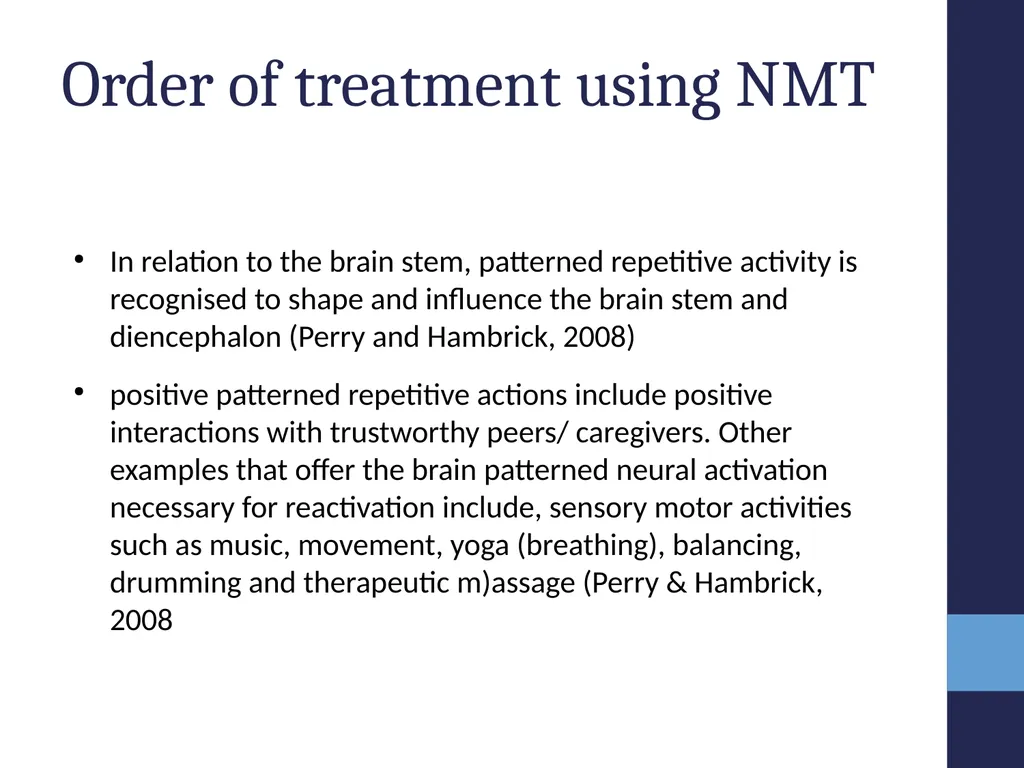
Order of treatment using NMT In relation to the brain stem, patterned repetitive activity is recognised to shape and influence the brain stem and diencephalon (Perry and Hambrick, 2008)
positive patterned repetitive actions include positive interactions with trustworthy peers/ caregivers. Other examples that offer the brain patterned neural activation necessary for reactivation include, sensory motor activities such as music, movement, yoga (breathing), balancing, drumming and therapeutic m)assage (Perry & Hambrick, 2008<br>
positive patterned repetitive actions include positive interactions with trustworthy peers/ caregivers. Other examples that offer the brain patterned neural activation necessary for reactivation include, sensory motor activities such as music, movement, yoga (breathing), balancing, drumming and therapeutic m)assage (Perry & Hambrick, 2008<br>
44
Eye Movement Desensitization and Reprocessing (EMDR) EMDR seeks to activate client’s information processing systems by focusing on a target related to a trauma in an attempt to stimulate the memory network where the trauma is stored. Once this is done, alternating eye movements or bilateral stimuli (BLS) is added in order to stimulate accelerated information processing.
According to Parnell (2007) EMDR transforms psychological memory to objective memory, that is, ‘‘memory that feels emotionally charged, alive and self referential into functional and devoid of emotional charge memory’’ (p. 7).<br>
According to Parnell (2007) EMDR transforms psychological memory to objective memory, that is, ‘‘memory that feels emotionally charged, alive and self referential into functional and devoid of emotional charge memory’’ (p. 7).<br>
45
EMDR – effects on physiology Research investigating the neurological effects of eye movements has assisted with this. For example, it has been demonstrated that saccadic eye movements create changes in brain activation that enhance memory processing (Christman et al., 2003, 2004, 2006).
There is also evidence that eye movements produce physiological de-arousal (Sondergaard and Elofsson, 2008).
Schubert et al. (2010) suggest that EMDR may be particularly suitable for patients who cannot tolerate the high-stress associated with standard therapies such as exposure therapies which expose the client to stimulus which triggers emotions<br>
46
Benefits of EMDR Greenwald (2002) proposed that EMDR has the benefit of being adapted for clients who may not be comfortable providing in depth memories of trauma and/or for those who may have difficulty articulating in depth details of trauma, and for those who may become frustrated and impatient in being asked to provide in depth details.
Farkas et al. (2010) also agree that EMDR has the advantage because homework is not required and because the client is not required to verbalise insight into their experiences nor is there an expectation of any level of cognitive functioning (Seubert, 2005).
Hence, there would seem to be evidence that EMDR may be able to assist clients to reduce the associated effects of trauma and that this may have benefits over other interventions because of the way in which the client is not required to disclose in depth verbal accounts of the trauma, nor are they required to complete homework.<br>
47
Group Treatment using EMDR Cochrane review (Bisson & Andrew; 2009) found the following
Individual TFCBT, EMDR, stress management and group TFCBT are effective in the treatment of PTSD.
Other non-trauma focused psychological treatments did not reduce PTSD symptoms as significantly.
There was some evidence that individual TFCBT and EMDR are superior to stress management in the treatment of PTSD at between 2 and 5 months following treatment
TFCBT (both individual and group), EMDR and stress management were more effective than other therapies<br>
48
Features of effective groups Group therapy is a well-proven form of treatment for traumatized children and adolescents (Cemalovic, 1997; Kristal-Andersson, 2000; Meichenbaum, 1994; Samec, 2001).
Key features that build a therapeutic, safe, and respectful environment. These features include:
- group membership determined by shared type of trauma
- disclosure and validation of the traumatic experience;
- normalization of trauma-related responses
- validation of behaviours required for survival during the time of the trauma
- challenge to the idea that the non-traumatized therapist cannot be helpful through the presence of fellow survivors in the group<br>
49
Group EMDR? Current literature provides consistent evidence that group therapy, is associated with favourable outcomes across a number of symptoms. PTSD and depression are the most commonly targeted, but efficacy has also been demonstrated for a range other symptoms, including global distress, dissociation, self-esteem, and fear.
However, as was noted in the Cochrane Review, EMDR was also noted to be an effective treatment for PTSD.
How EMDR can be used in a group setting and whether this as a treatment maintains efficacy in the treatment of PTSD when used in a group.<br>
However, as was noted in the Cochrane Review, EMDR was also noted to be an effective treatment for PTSD.
How EMDR can be used in a group setting and whether this as a treatment maintains efficacy in the treatment of PTSD when used in a group.<br>
50
Group EMDR for trauma The EMDR-Integrative group Treatment protocol (EMDR-IGTP) was developed by members of AMAMECRISIS due to the extensive need for mental health services after Hurricane Pauline on the western coast of Mexico in 1997.
Combines the Standard EMDR Treatment Phases 1 through 8 (Shapiro, 1995, 2001) with a Group Therapy model (Artigas, Jarero, Mauer, López Cano, & Alcalá, 1999; Jarero, Artigas, Mauer, López Cano, & Alcalá, 2000).
Benefits - offers more extensive reach than individual EMDR applications and that the treatment may produce a more effective outcome than expected from traditional group therapy (Jarero et al., 2008).
EMDR-IGTP has also been found suitable for group work with adults (Jarero, & Artigas, 2010).<br>
51
Benefits of group EMDR Jarero, & Artigas (2010) argue that the advantages of this protocol are that unlike other group based PTSD interventions clients in the EMDR group are not required to verbalise information about the trauma.
Unlike group CBT approaches, group EMDR therapy can be completed on subsequent days without the need for homework (such as periods of exposure or diary monitoring etc).
Jarero, & Artigas (2010) propose that the group protocol taught easily to both new and experienced EMDR practitioners unlike TFCBT which may require a very experienced practitioner.<br>
52
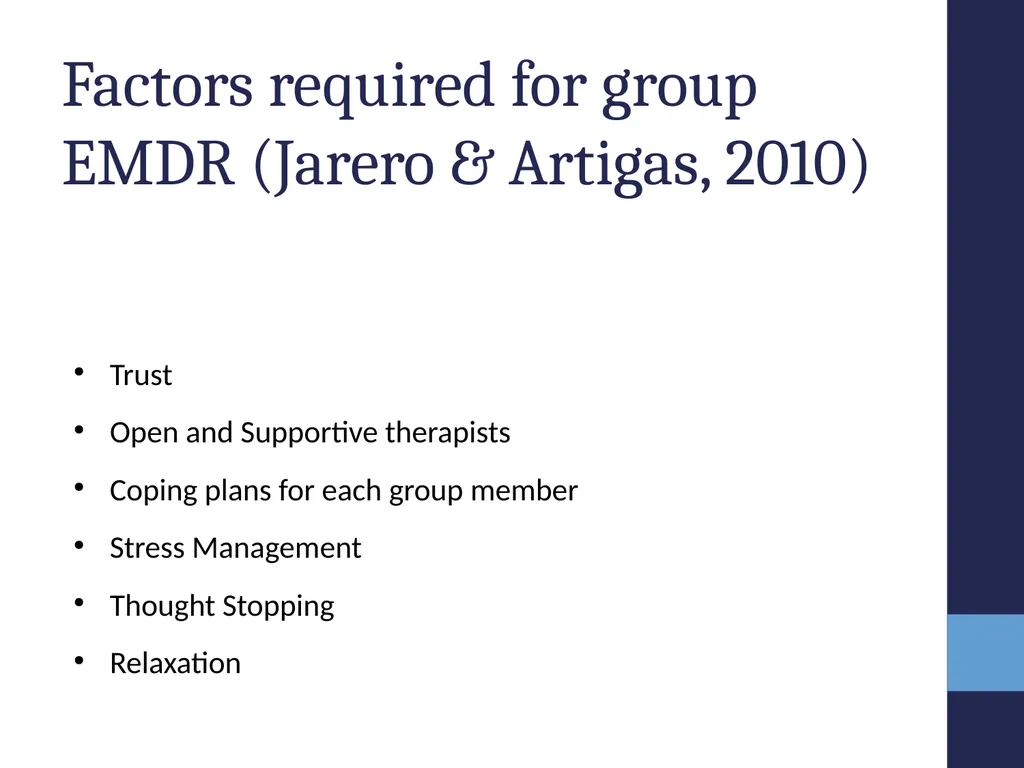
Factors required for group EMDR (Jarero & Artigas, 2010) Trust
Open and Supportive therapists
Coping plans for each group member
Stress Management
Thought Stopping
Relaxation<br>
Open and Supportive therapists
Coping plans for each group member
Stress Management
Thought Stopping
Relaxation<br>
53
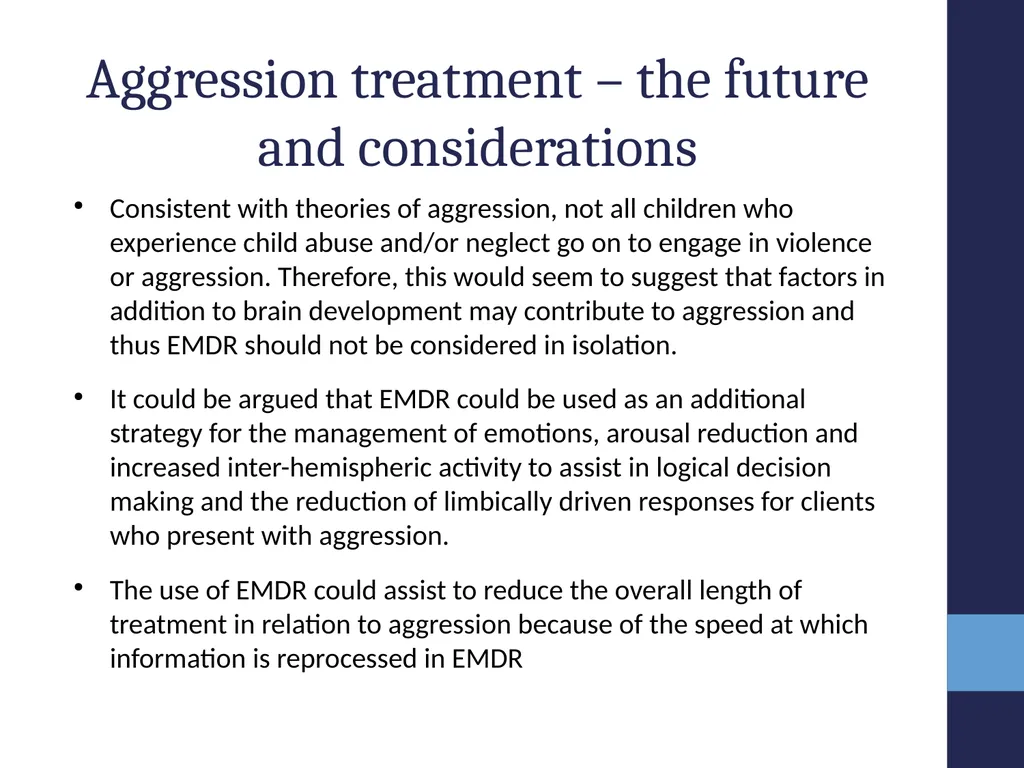
Aggression treatment – the future and considerations Consistent with theories of aggression, not all children who experience child abuse and/or neglect go on to engage in violence or aggression. Therefore, this would seem to suggest that factors in addition to brain development may contribute to aggression and thus EMDR should not be considered in isolation.
It could be argued that EMDR could be used as an additional strategy for the management of emotions, arousal reduction and increased inter-hemispheric activity to assist in logical decision making and the reduction of limbically driven responses for clients who present with aggression.
The use of EMDR could assist to reduce the overall length of treatment in relation to aggression because of the speed at which information is reprocessed in EMDR<br>
54
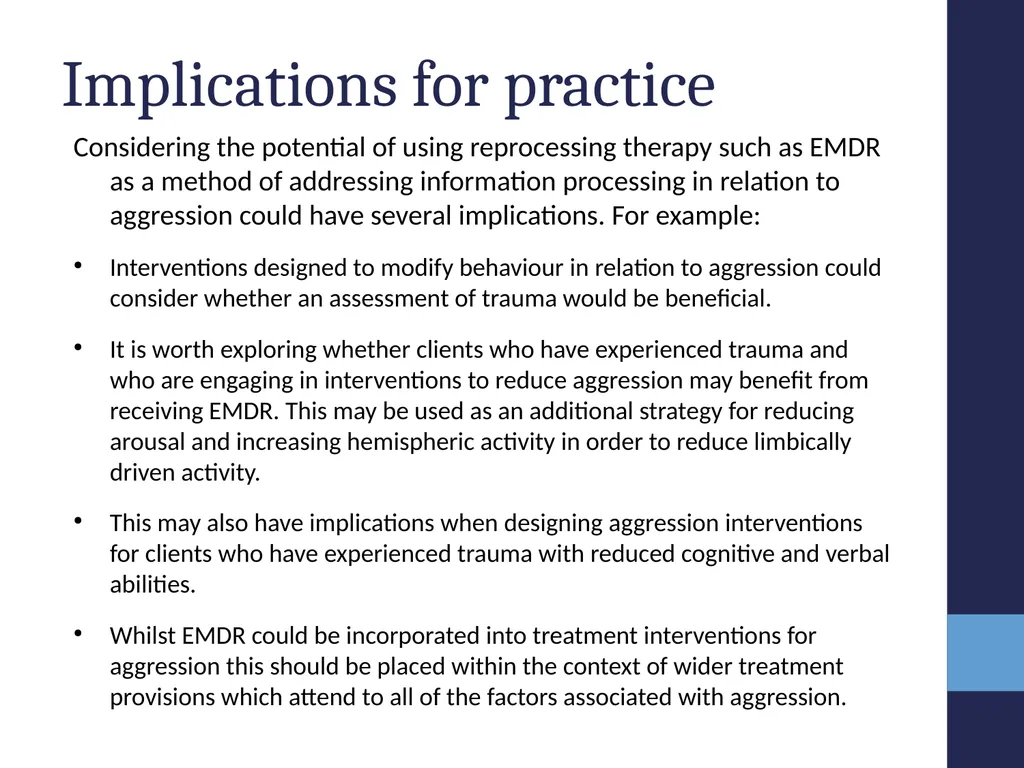
Implications for practice Considering the potential of using reprocessing therapy such as EMDR as a method of addressing information processing in relation to aggression could have several implications. For example:
Interventions designed to modify behaviour in relation to aggression could consider whether an assessment of trauma would be beneficial.
It is worth exploring whether clients who have experienced trauma and who are engaging in interventions to reduce aggression may benefit from receiving EMDR. This may be used as an additional strategy for reducing arousal and increasing hemispheric activity in order to reduce limbically driven activity.
This may also have implications when designing aggression interventions for clients who have experienced trauma with reduced cognitive and verbal abilities.
Whilst EMDR could be incorporated into treatment interventions for aggression this should be placed within the context of wider treatment provisions which attend to all of the factors associated with aggression.<br>
55
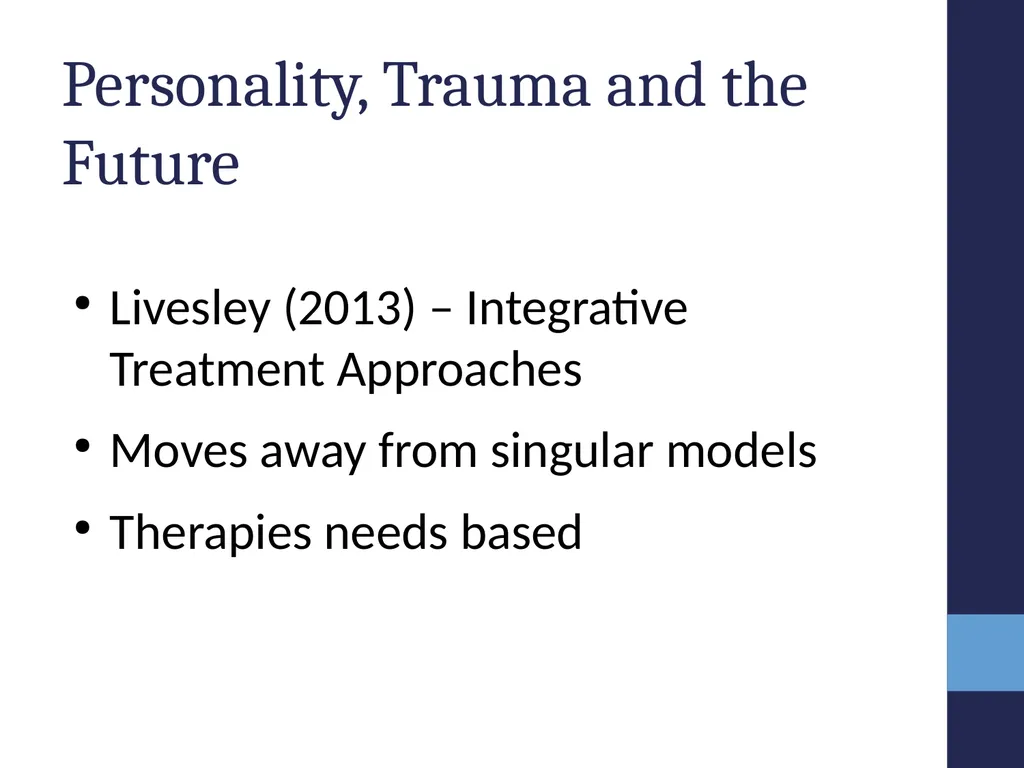
Personality, Trauma and the Future Livesley (2013) – Integrative Treatment Approaches
Moves away from singular models
Therapies needs based<br>
Moves away from singular models
Therapies needs based<br>
56
The Future – Trauma Informed Group Aggression Treatment Programme Dr Rachel Worthington
Alpha Hospitals and University of Central Lancashire
Dr Fiona Wilks-Riley
Alpha Hospitals and University of Central Lancashire
Professor Niki Graham-Kevan
University of Central Lancashire<br>
Alpha Hospitals and University of Central Lancashire
Dr Fiona Wilks-Riley
Alpha Hospitals and University of Central Lancashire
Professor Niki Graham-Kevan
University of Central Lancashire<br>
57
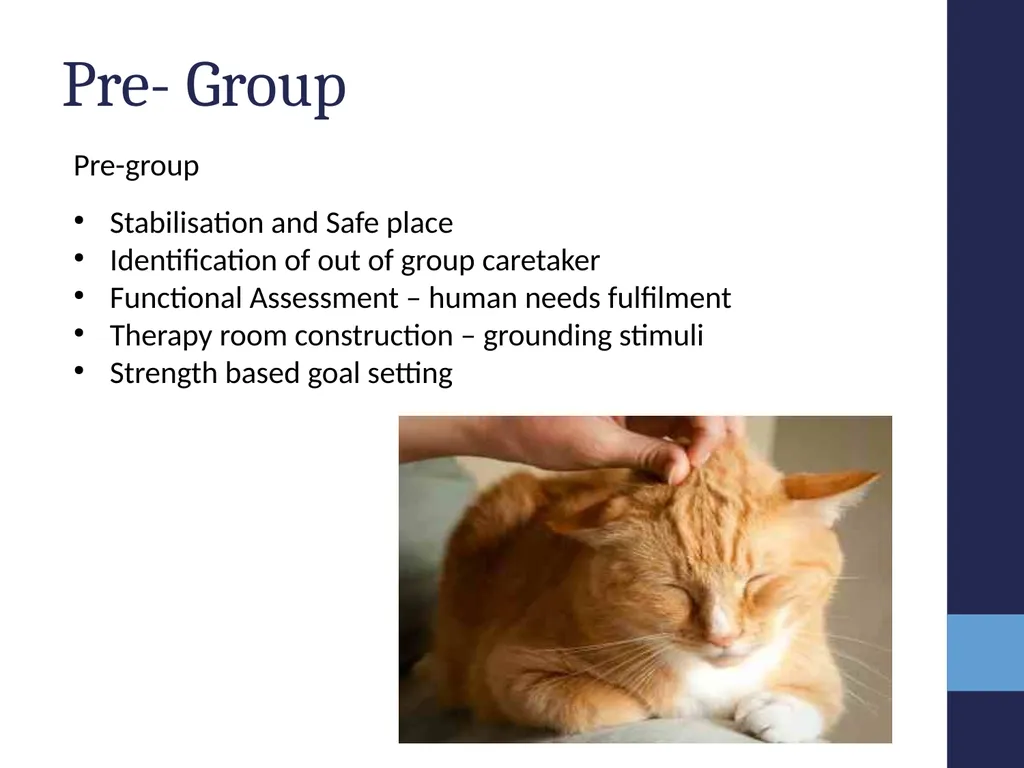
Pre- Group Pre-group
Stabilisation and Safe place
Identification of out of group caretaker
Functional Assessment – human needs fulfilment
Therapy room construction – grounding stimuli
Strength based goal setting<br>
Stabilisation and Safe place
Identification of out of group caretaker
Functional Assessment – human needs fulfilment
Therapy room construction – grounding stimuli
Strength based goal setting<br>
58
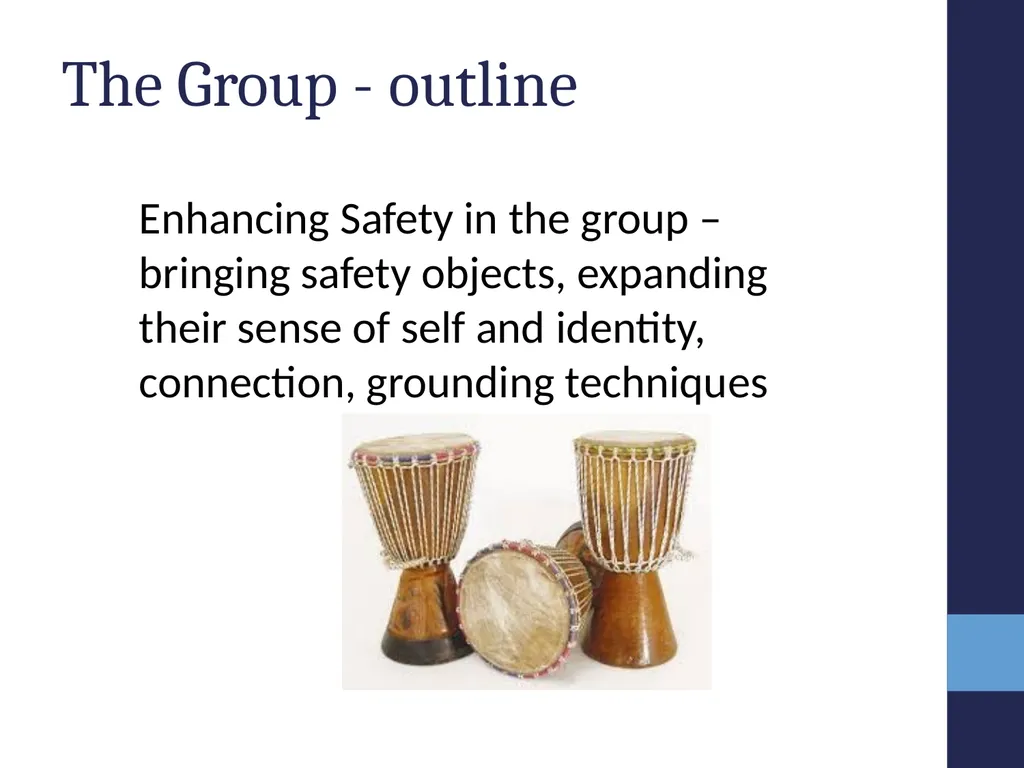
The Group - outline Enhancing Safety in the group – bringing safety objects, expanding their sense of self and identity, connection, grounding techniques<br>
59
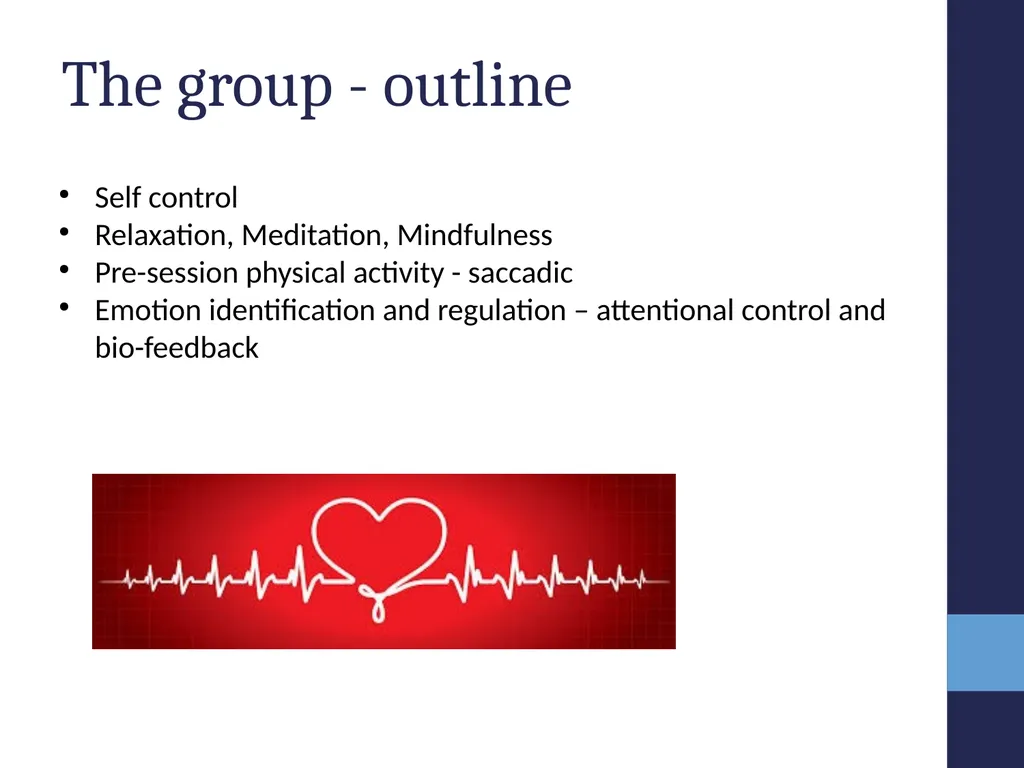
The group - outline Self control
Relaxation, Meditation, Mindfulness
Pre-session physical activity - saccadic
Emotion identification and regulation – attentional control and bio-feedback<br>
Relaxation, Meditation, Mindfulness
Pre-session physical activity - saccadic
Emotion identification and regulation – attentional control and bio-feedback<br>
60
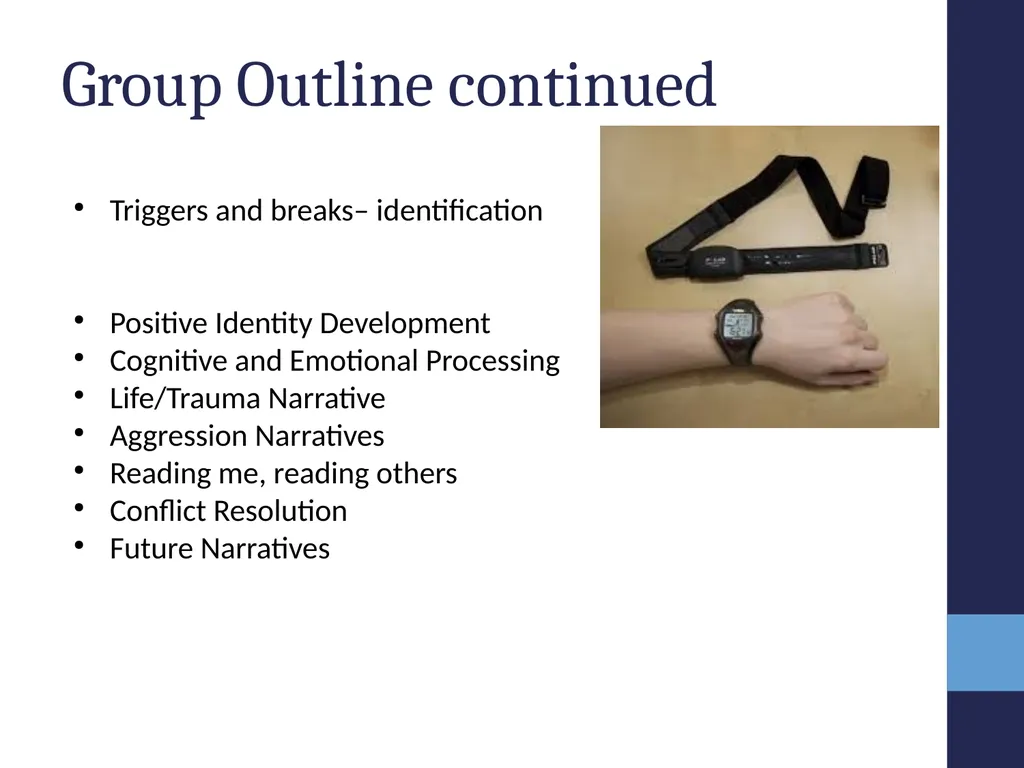
Group Outline continued Triggers and breaks– identification
Positive Identity Development
Cognitive and Emotional Processing
Life/Trauma Narrative
Aggression Narratives
Reading me, reading others
Conflict Resolution
Future Narratives<br>
Positive Identity Development
Cognitive and Emotional Processing
Life/Trauma Narrative
Aggression Narratives
Reading me, reading others
Conflict Resolution
Future Narratives<br>
61
Pilot Study 30 sessions (high need group)
Shorter version for lower need group
6 months
Twice a week
Closed group
2 therapists (team of 3)
Prison/Hospital sample
Male and female<br>
Shorter version for lower need group
6 months
Twice a week
Closed group
2 therapists (team of 3)
Prison/Hospital sample
Male and female<br>
62
Results Effects of treatment will be measured using both psychometric and incident data
Comparisons will be made for degree of trauma history as well as aggression risk history to better inform the principles of risk-need-responsivity
Quality of therapist delivery will be measured
Qualitative Analyses will explore client experiences<br>
Comparisons will be made for degree of trauma history as well as aggression risk history to better inform the principles of risk-need-responsivity
Quality of therapist delivery will be measured
Qualitative Analyses will explore client experiences<br>
63
Conclusions Trauma and Aggression are intrinsically linked
Current interventions do not adequately take into account the role of trauma and the effects this has on information processing
There is a need for group based trauma informed aggression interventions
This will be the first group based aggression treatment programme to address the role of trauma
Outcome data will be published once obtained<br>
64
Questions? rachel.worthington@alphahospitals.co.uk<br>