
FIRST SDM JOINT COORDINATION WORKSHOP 24/03/2012 –
Description: FIRST SDM JOINT COORDINATION WORKSHOP 24032012 25032012 Module 2.1 - Additionality First of its Kind (foik) Common Practise (CP) Challenges against the addiotionality demonstration. Input to improve the current Approach of
Related Topics
Download Presentation
"FIRST SDM JOINT COORDINATION WORKSHOP 24/03/2012 –" is the property of its rightful owner. Permission is granted to download and print the materials on this website for personal, non-commercial use only, and to display it on your personal computer provided you do not modify the materials and that you retain all copyright notices contained in the materials. By downloading content from our website, you accept the terms of this agreement.
Presentation Transcript
slide1. FIRST SDM JOINT COORDINATION WORKSHOP 24/03/2012 – 25/03/2012
Module 2.1 - Additionality<br>
slide2. First of its Kind (foik)
Common Practise (CP)
Challenges against the addiotionality demonstration.
Input to improve the current Approach of Additonality. 18.03.2012 Abteilung: 2<br>
slide3. First of Its Kind 18.03.2012 Abteilung: 3<br>
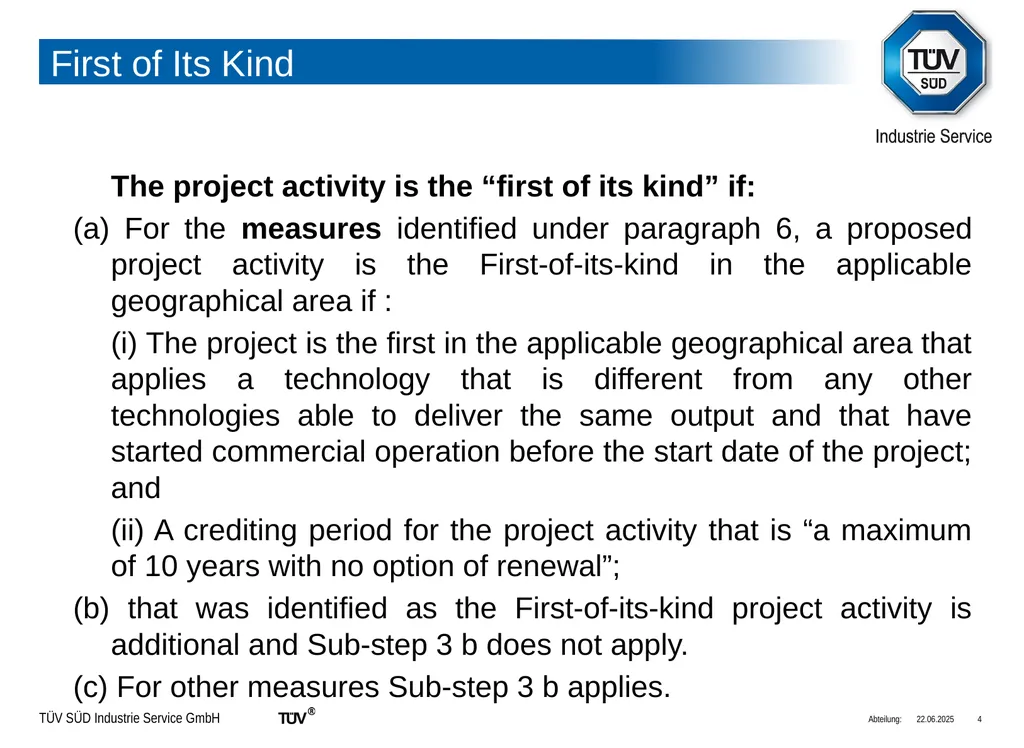
slide4. First of Its Kind The project activity is the “first of its kind” if:
(a) For the measures identified under paragraph 6, a proposed project activity is the First-of-its-kind in the applicable geographical area if :
(i) The project is the first in the applicable geographical area that applies a technology that is different from any other technologies able to deliver the same output and that have started commercial operation before the start date of the project; and
(ii) A crediting period for the project activity that is “a maximum of 10 years with no option of renewal”;
(b) that was identified as the First-of-its-kind project activity is additional and Sub-step 3 b does not apply.
(c) For other measures Sub-step 3 b applies. 18.03.2012 Abteilung: 4<br>
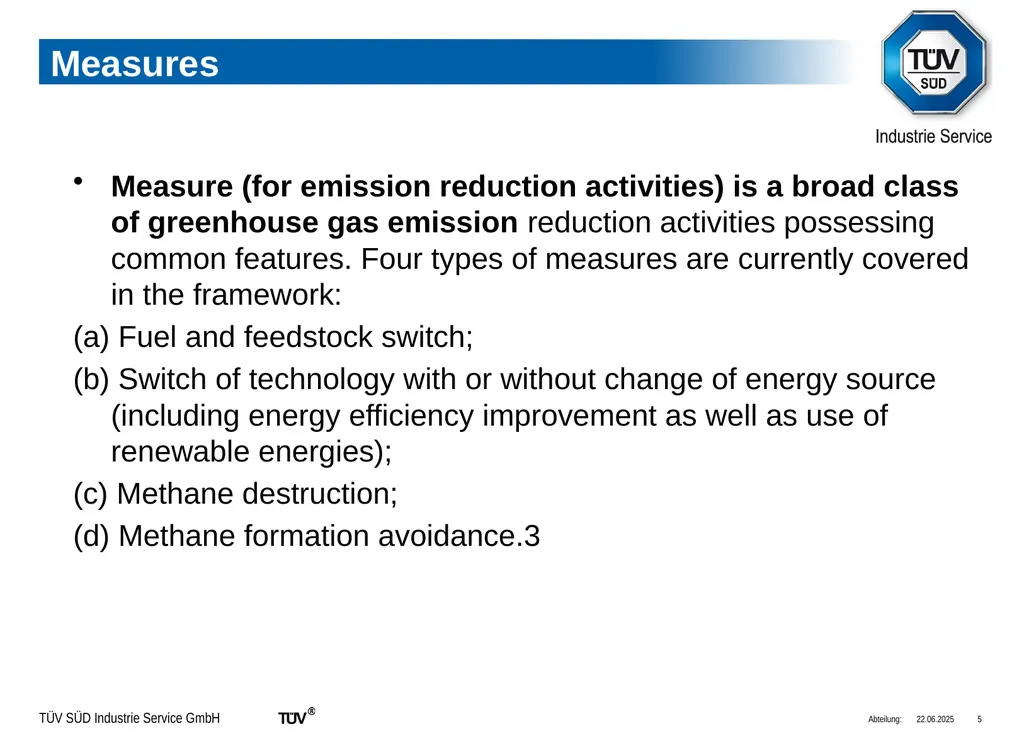
slide5. Measures Measure (for emission reduction activities) is a broad class of greenhouse gas emission reduction activities possessing common features. Four types of measures are currently covered in the framework:
(a) Fuel and feedstock switch;
(b) Switch of technology with or without change of energy source (including energy efficiency improvement as well as use of renewable energies);
(c) Methane destruction;
(d) Methane formation avoidance.3 18.03.2012 Abteilung: 5<br>
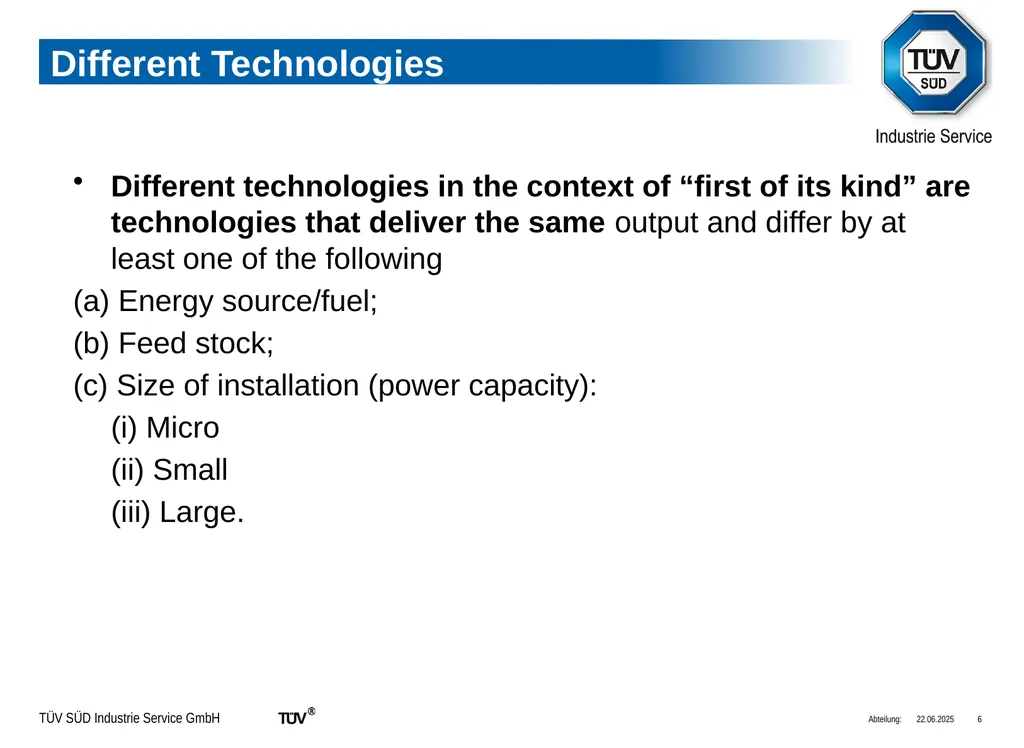
slide6. Different Technologies Different technologies in the context of “first of its kind” are technologies that deliver the same output and differ by at least one of the following
(a) Energy source/fuel;
(b) Feed stock;
(c) Size of installation (power capacity):
(i) Micro
(ii) Small
(iii) Large. 18.03.2012 Abteilung: 6<br>
slide7. Common Practise 18.03.2012 Abteilung: 7<br>
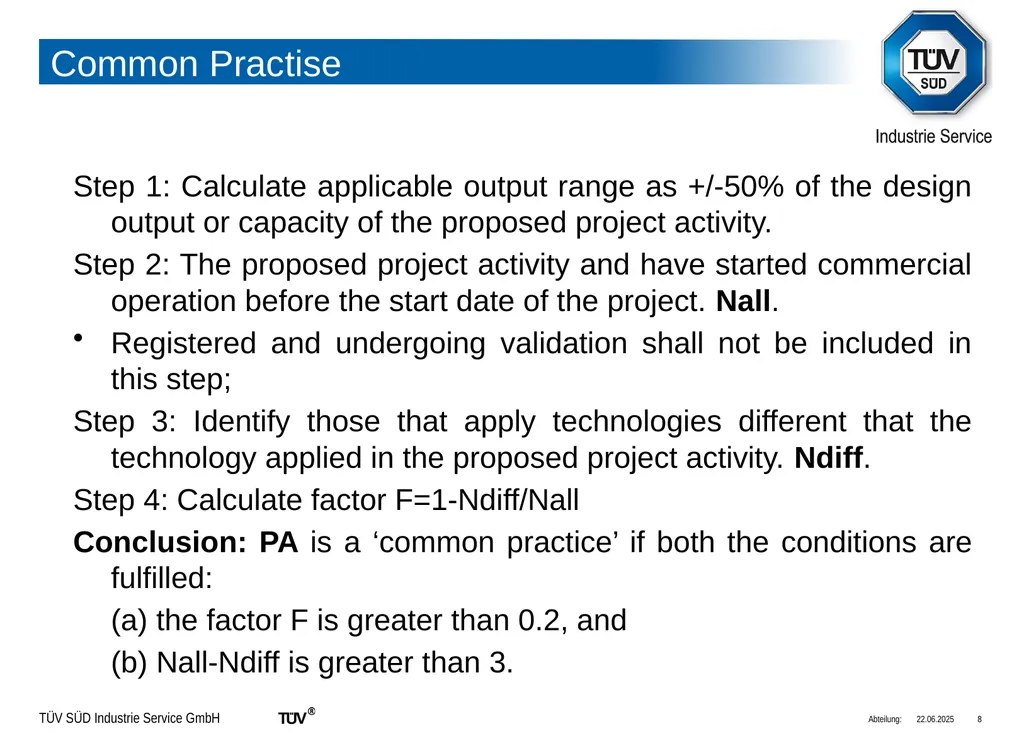
slide8. Common Practise Step 1: Calculate applicable output range as +/-50% of the design output or capacity of the proposed project activity.
Step 2: The proposed project activity and have started commercial operation before the start date of the project. Nall.
Registered and undergoing validation shall not be included in this step;
Step 3: Identify those that apply technologies different that the technology applied in the proposed project activity. Ndiff.
Step 4: Calculate factor F=1-Ndiff/Nall
Conclusion: PA is a ‘common practice’ if both the conditions are fulfilled:
(a) the factor F is greater than 0.2, and
(b) Nall-Ndiff is greater than 3. 18.03.2012 Abteilung: 8<br>
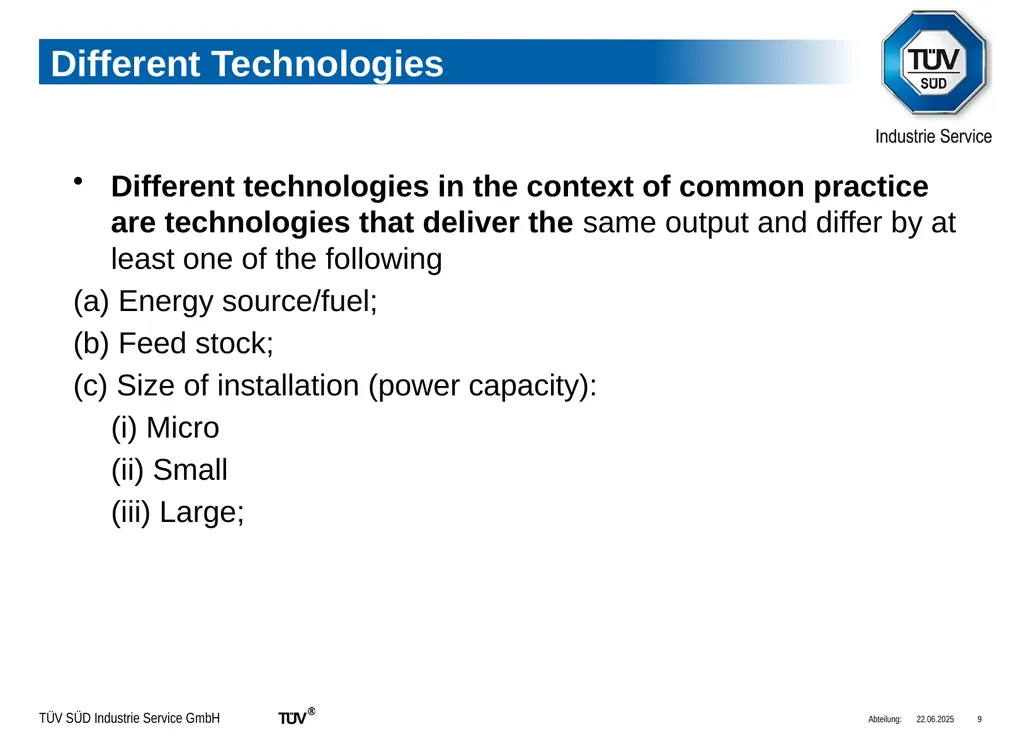
slide9. Different Technologies Different technologies in the context of common practice are technologies that deliver the same output and differ by at least one of the following
(a) Energy source/fuel;
(b) Feed stock;
(c) Size of installation (power capacity):
(i) Micro
(ii) Small
(iii) Large; 18.03.2012 Abteilung: 9<br>
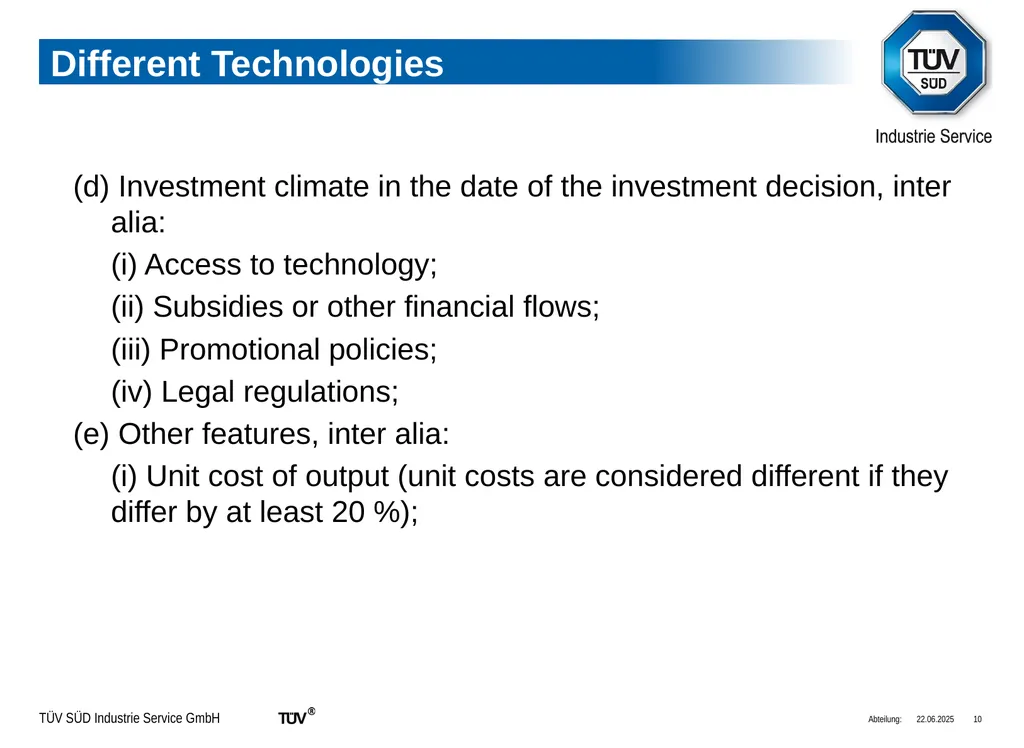
slide10. Different Technologies (d) Investment climate in the date of the investment decision, inter alia:
(i) Access to technology;
(ii) Subsidies or other financial flows;
(iii) Promotional policies;
(iv) Legal regulations;
(e) Other features, inter alia:
(i) Unit cost of output (unit costs are considered different if they differ by at least 20 %); 18.03.2012 Abteilung: 10<br>
slide11. Challenges against the addiotionality demonstration 18.03.2012 Abteilung: 11<br>
slide12. Relevant national and sectoral policies The Board agreed (EB 22 para 6) to differentiate the following two (2) types of national and/or sectoral policies that are to be taken into account when establishing baseline scenarios:
(a) National and/or sectoral policies or regulations that give comparative advantages to more emissions-intensive technologies or fuels over less emissions-intensive technologies or fuels; (E+)
(b) National and/or sectoral policies or regulations that give comparative advantages to less emissions-intensive technologies over more emissions-intensive technologies (e.g. public subsidies to promote the diffusion of renewable energy or to finance energy efficiency programs). (E-) 18.03.2012 Abteilung: 12<br>
slide13. Input to improve the current Approach of Additonality 18.03.2012 Abteilung: 13<br>
slide14. Input for Improvement There should be some defined technology based on which project is Additional (eg. Landfill project with flaring of gas).
Reduce the efforts to demonstrate the additionality.
There can be the some predefine –ve & +ve list of technologies. 18.03.2012 Abteilung: 14<br>
slide15. 18.03.2012 Abteilung: 15 Thank you for your attention! Nikunj Agarwal<br>
Module 2.1 - Additionality<br>
slide2. First of its Kind (foik)
Common Practise (CP)
Challenges against the addiotionality demonstration.
Input to improve the current Approach of Additonality. 18.03.2012 Abteilung: 2<br>
slide3. First of Its Kind 18.03.2012 Abteilung: 3<br>
slide4. First of Its Kind The project activity is the “first of its kind” if:
(a) For the measures identified under paragraph 6, a proposed project activity is the First-of-its-kind in the applicable geographical area if :
(i) The project is the first in the applicable geographical area that applies a technology that is different from any other technologies able to deliver the same output and that have started commercial operation before the start date of the project; and
(ii) A crediting period for the project activity that is “a maximum of 10 years with no option of renewal”;
(b) that was identified as the First-of-its-kind project activity is additional and Sub-step 3 b does not apply.
(c) For other measures Sub-step 3 b applies. 18.03.2012 Abteilung: 4<br>
slide5. Measures Measure (for emission reduction activities) is a broad class of greenhouse gas emission reduction activities possessing common features. Four types of measures are currently covered in the framework:
(a) Fuel and feedstock switch;
(b) Switch of technology with or without change of energy source (including energy efficiency improvement as well as use of renewable energies);
(c) Methane destruction;
(d) Methane formation avoidance.3 18.03.2012 Abteilung: 5<br>
slide6. Different Technologies Different technologies in the context of “first of its kind” are technologies that deliver the same output and differ by at least one of the following
(a) Energy source/fuel;
(b) Feed stock;
(c) Size of installation (power capacity):
(i) Micro
(ii) Small
(iii) Large. 18.03.2012 Abteilung: 6<br>
slide7. Common Practise 18.03.2012 Abteilung: 7<br>
slide8. Common Practise Step 1: Calculate applicable output range as +/-50% of the design output or capacity of the proposed project activity.
Step 2: The proposed project activity and have started commercial operation before the start date of the project. Nall.
Registered and undergoing validation shall not be included in this step;
Step 3: Identify those that apply technologies different that the technology applied in the proposed project activity. Ndiff.
Step 4: Calculate factor F=1-Ndiff/Nall
Conclusion: PA is a ‘common practice’ if both the conditions are fulfilled:
(a) the factor F is greater than 0.2, and
(b) Nall-Ndiff is greater than 3. 18.03.2012 Abteilung: 8<br>
slide9. Different Technologies Different technologies in the context of common practice are technologies that deliver the same output and differ by at least one of the following
(a) Energy source/fuel;
(b) Feed stock;
(c) Size of installation (power capacity):
(i) Micro
(ii) Small
(iii) Large; 18.03.2012 Abteilung: 9<br>
slide10. Different Technologies (d) Investment climate in the date of the investment decision, inter alia:
(i) Access to technology;
(ii) Subsidies or other financial flows;
(iii) Promotional policies;
(iv) Legal regulations;
(e) Other features, inter alia:
(i) Unit cost of output (unit costs are considered different if they differ by at least 20 %); 18.03.2012 Abteilung: 10<br>
slide11. Challenges against the addiotionality demonstration 18.03.2012 Abteilung: 11<br>
slide12. Relevant national and sectoral policies The Board agreed (EB 22 para 6) to differentiate the following two (2) types of national and/or sectoral policies that are to be taken into account when establishing baseline scenarios:
(a) National and/or sectoral policies or regulations that give comparative advantages to more emissions-intensive technologies or fuels over less emissions-intensive technologies or fuels; (E+)
(b) National and/or sectoral policies or regulations that give comparative advantages to less emissions-intensive technologies over more emissions-intensive technologies (e.g. public subsidies to promote the diffusion of renewable energy or to finance energy efficiency programs). (E-) 18.03.2012 Abteilung: 12<br>
slide13. Input to improve the current Approach of Additonality 18.03.2012 Abteilung: 13<br>
slide14. Input for Improvement There should be some defined technology based on which project is Additional (eg. Landfill project with flaring of gas).
Reduce the efforts to demonstrate the additionality.
There can be the some predefine –ve & +ve list of technologies. 18.03.2012 Abteilung: 14<br>
slide15. 18.03.2012 Abteilung: 15 Thank you for your attention! Nikunj Agarwal<br>