First World War Poetry in Context Exploring poetry and experience A CWGC education resource The Commonwealth War Graves Commission has many links to poetry, not only in the great war poets who are buried or commemorated at our various
"First World War Poetry in Context Exploring poetry" is the property of its rightful owner. Permission is granted to
download and print the materials on this website for personal, non-commercial use only, and to display it
on your personal computer provided you do not modify the materials and that you retain all copyright
notices contained in the materials. By downloading content from our website, you accept the terms of this
agreement.
Presentation Transcript
01
First World War Poetry in Context
Exploring poetry and experience A CWGC education resource<br>
02
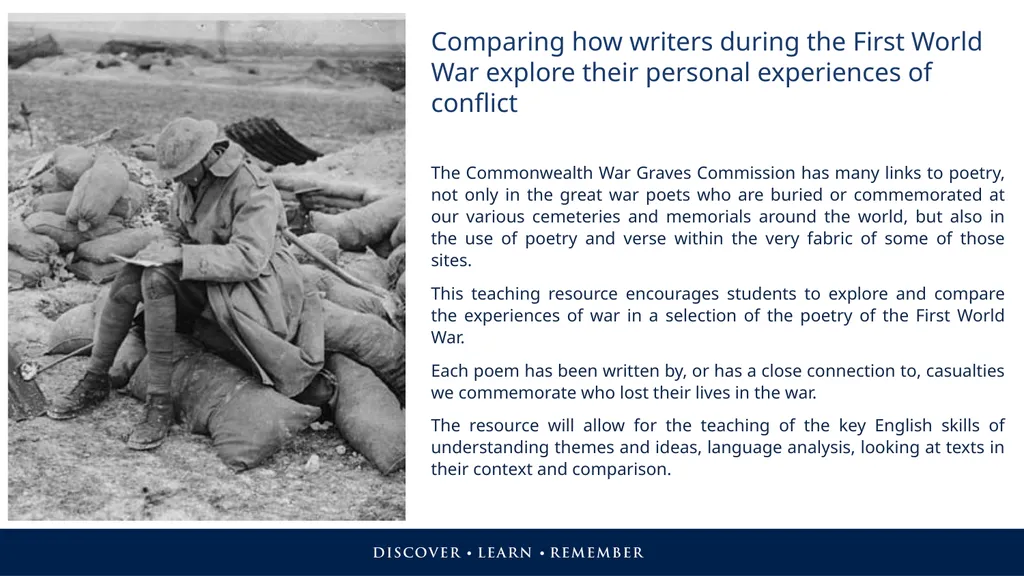
The Commonwealth War Graves Commission has many links to poetry, not only in the great war poets who are buried or commemorated at our various cemeteries and memorials around the world, but also in the use of poetry and verse within the very fabric of some of those sites.
This teaching resource encourages students to explore and compare the experiences of war in a selection of the poetry of the First World War.
Each poem has been written by, or has a close connection to, casualties we commemorate who lost their lives in the war.
The resource will allow for the teaching of the key English skills of understanding themes and ideas, language analysis, looking at texts in their context and comparison. Comparing how writers during the First World War explore their personal experiences of conflict<br>
03
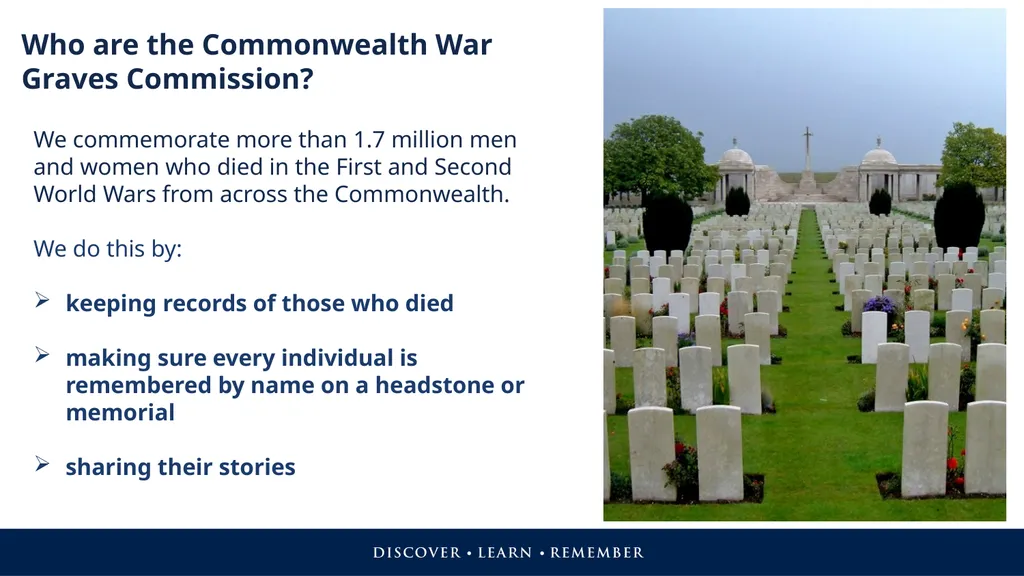
Who are the Commonwealth War Graves Commission? We commemorate more than 1.7 million men and women who died in the First and Second World Wars from across the Commonwealth.
We do this by:
keeping records of those who died
making sure every individual is remembered by name on a headstone or memorial
sharing their stories<br>
04
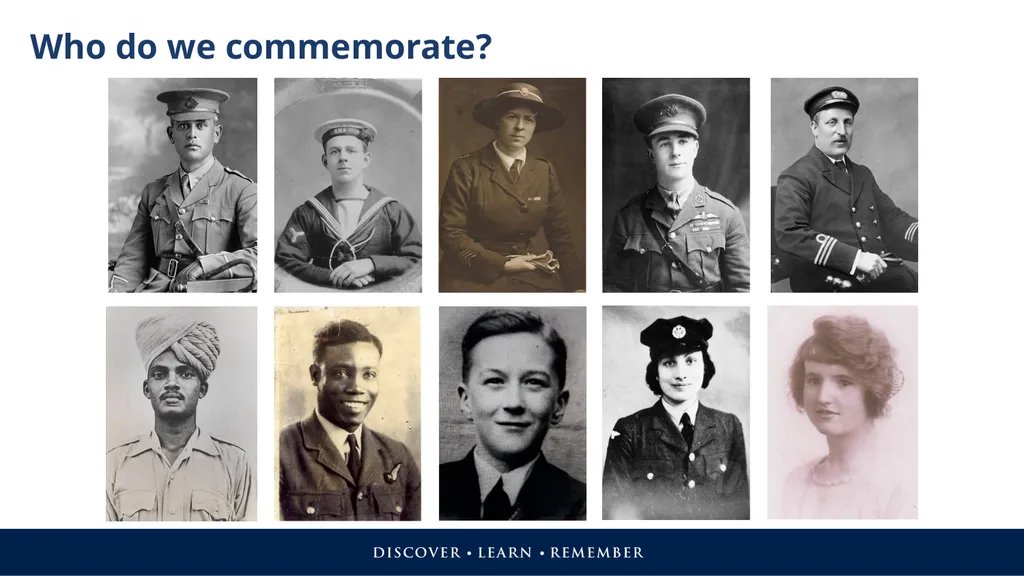
Who do we commemorate?<br>
05
Activity 1 - Context
Read the information sheet about the first poet.
Students highlight what they think are the key 5 facts about them.
They decide which one key fact they find most interesting and share with class with an explanation.
Activity 2 – Look at poem
Read poem and ask for initial thoughts on what they are saying about their experience of war.
Detailed analysis and annotation using prompt questions on slides – adapt this to your teaching objectives.
Draw final conclusions on how experience of poet has affected what they write about.
Activity 3 – Comparison
Once all three poems have been analysed, draw out comparisons between experience and how it has been expressed
Activity 4 – Written outcome
The resource is designed to work towards an analytical comparison of two of the poems using the question:
‘Compare how writers during the First World War explore their personal experiences of conflict’ Teaching notes Outline activities are intended as guidance only – the resource has been designed to be adaptable to your own requirements.<br>
06
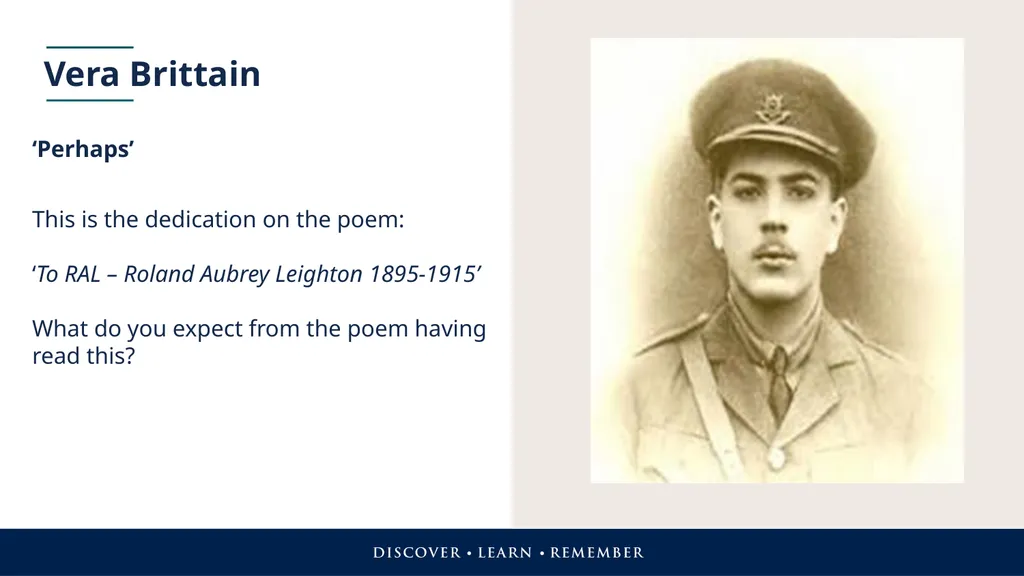
Vera Brittain ‘Perhaps’ This is the dedication on the poem:
‘To RAL – Roland Aubrey Leighton 1895-1915’
What do you expect from the poem having read this?<br>
07
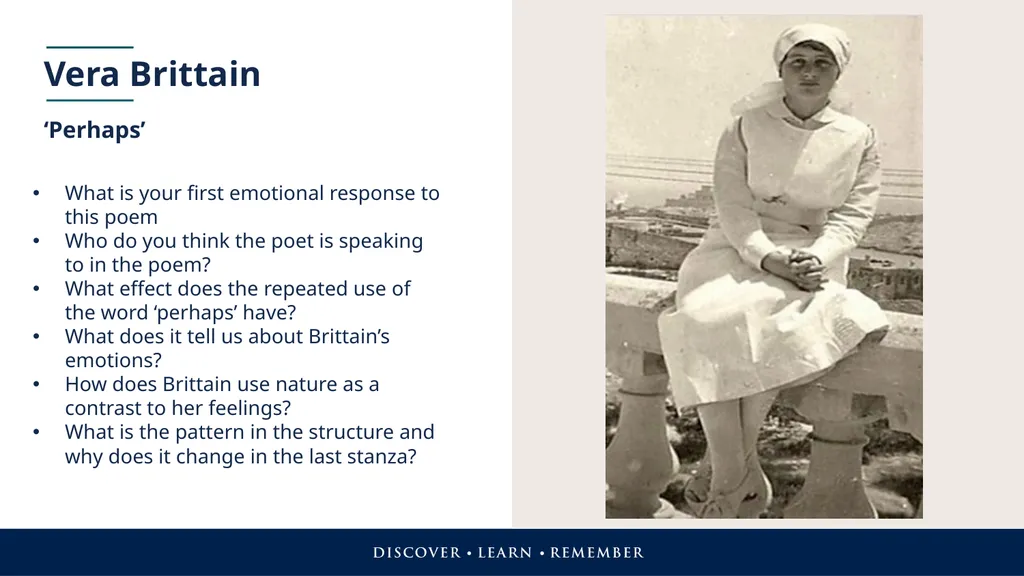
Vera Brittain ‘Perhaps’ What is your first emotional response to this poem
Who do you think the poet is speaking to in the poem?
What effect does the repeated use of the word ‘perhaps’ have?
What does it tell us about Brittain’s emotions?
How does Brittain use nature as a contrast to her feelings?
What is the pattern in the structure and why does it change in the last stanza?<br>
08
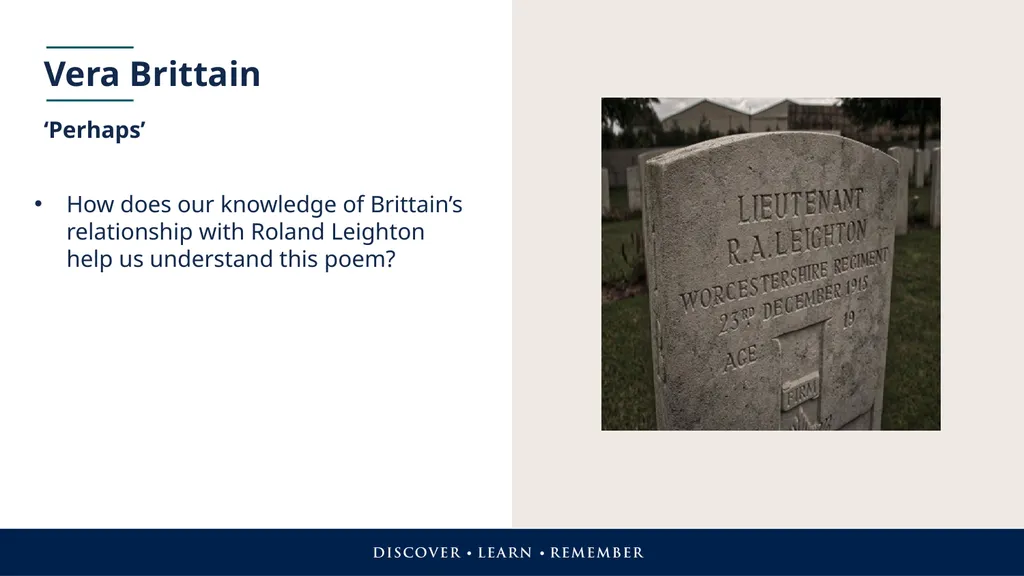
Vera Brittain ‘Perhaps’ How does our knowledge of Brittain’s relationship with Roland Leighton help us understand this poem?<br>
09
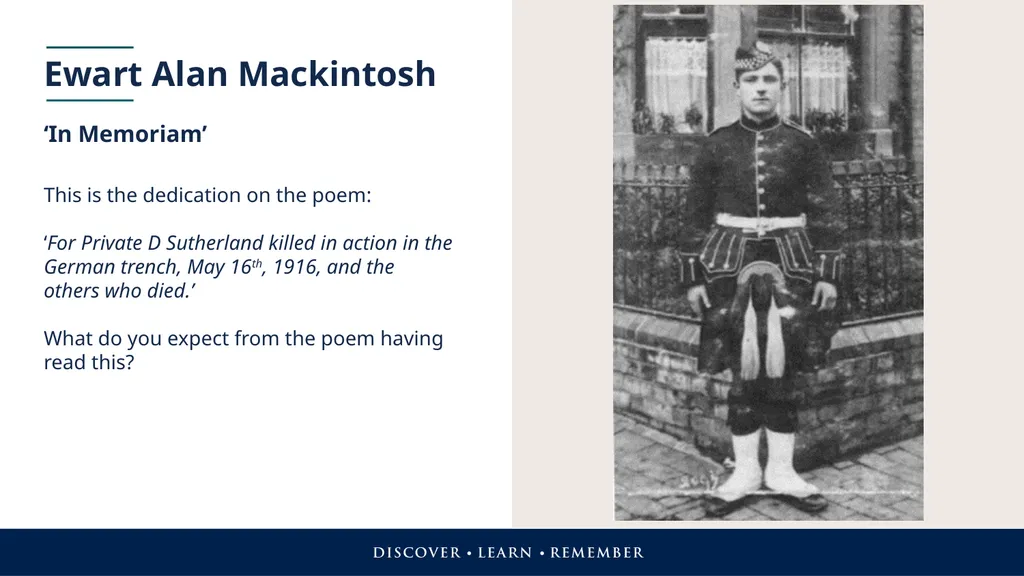
Ewart Alan Mackintosh ‘In Memoriam’ This is the dedication on the poem:
‘For Private D Sutherland killed in action in the German trench, May 16th, 1916, and the others who died.’
What do you expect from the poem having read this?<br>
10
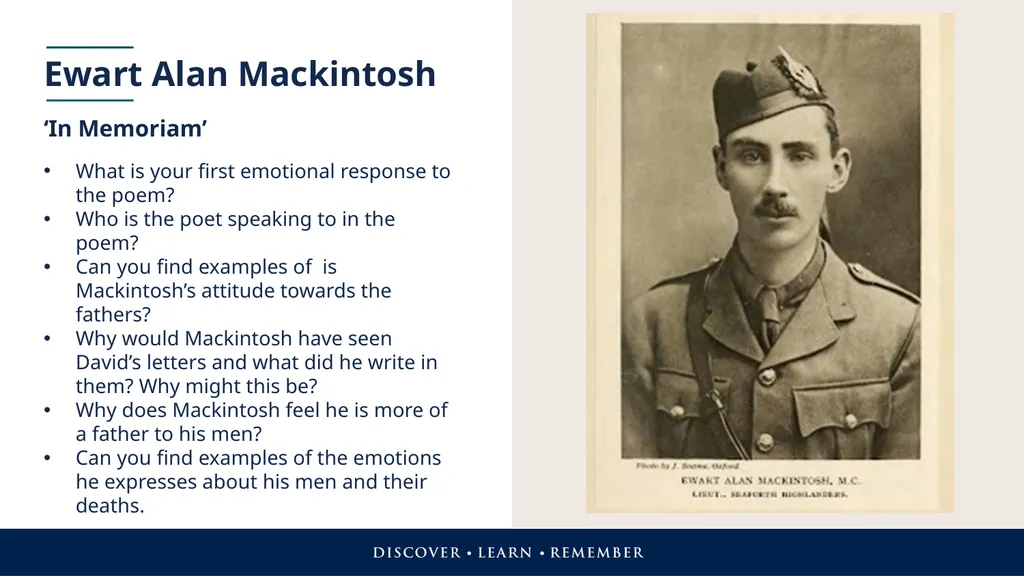
Ewart Alan Mackintosh ‘In Memoriam’ What is your first emotional response to the poem?
Who is the poet speaking to in the poem?
Can you find examples of is Mackintosh’s attitude towards the fathers?
Why would Mackintosh have seen David’s letters and what did he write in them? Why might this be?
Why does Mackintosh feel he is more of a father to his men?
Can you find examples of the emotions he expresses about his men and their deaths.<br>
11
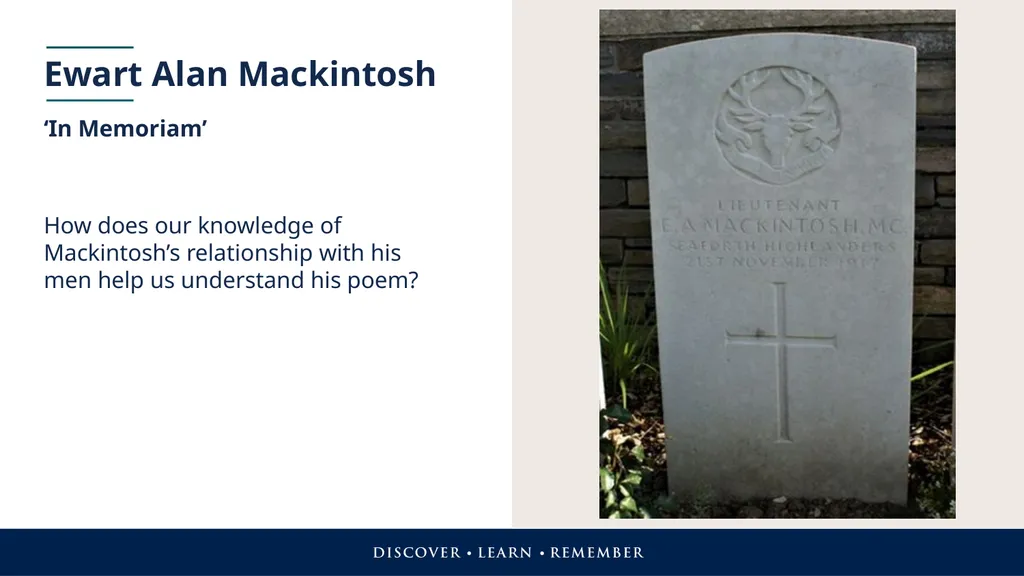
Ewart Alan Mackintosh ‘In Memoriam’ How does our knowledge of Mackintosh’s relationship with his men help us understand his poem?<br>
12
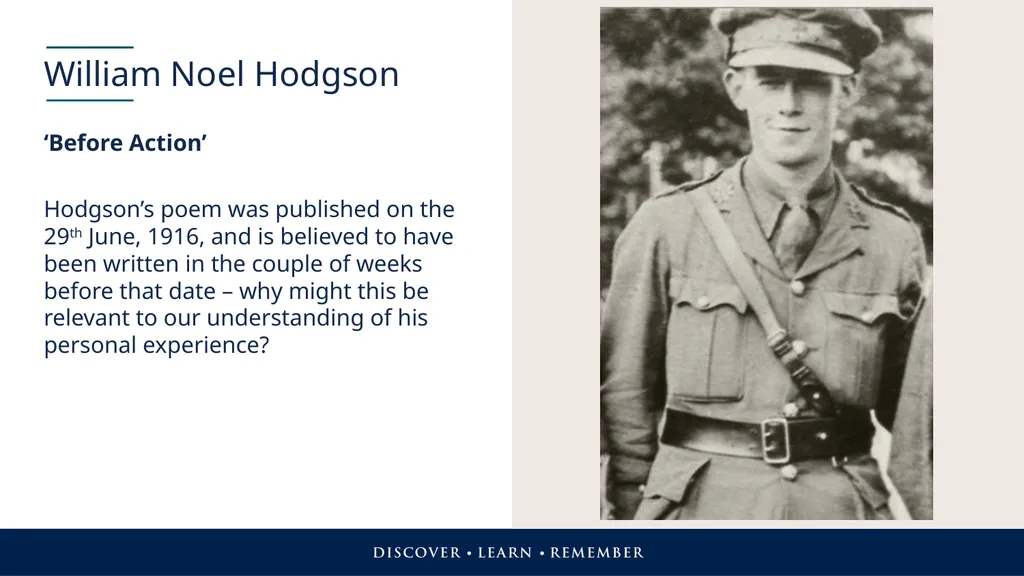
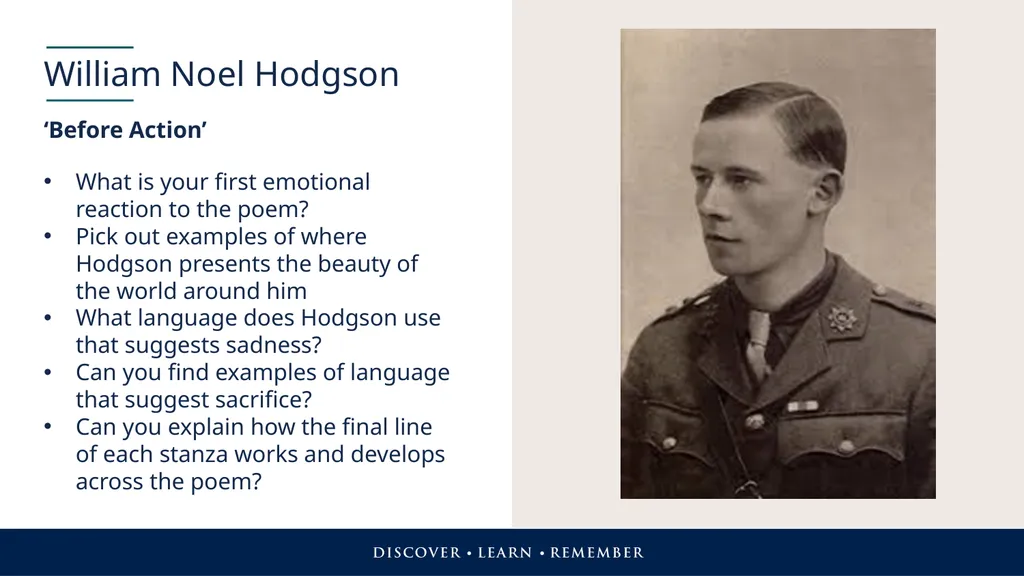
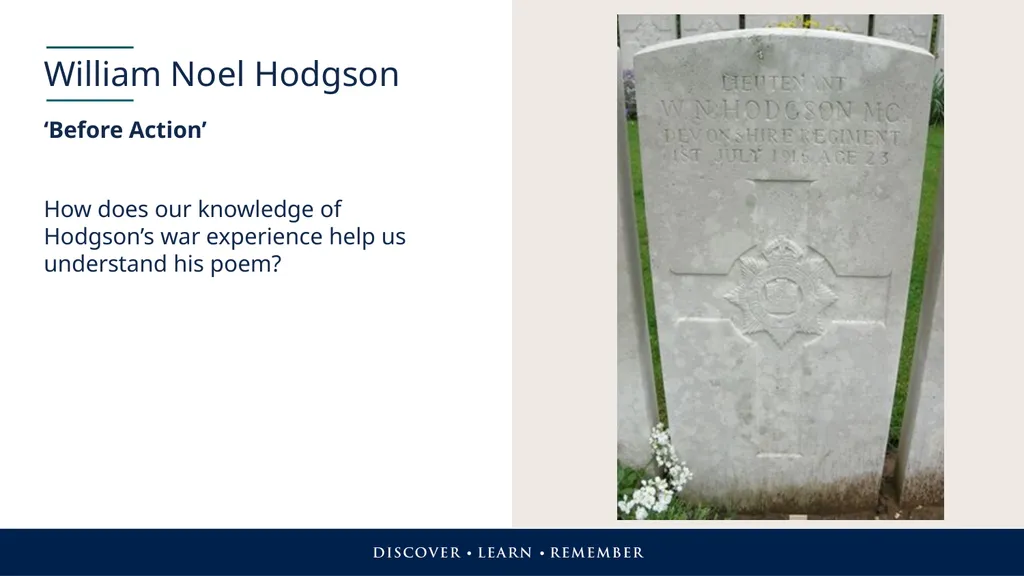
William Noel Hodgson ‘Before Action’ Hodgson’s poem was published on the 29th June, 1916, and is believed to have been written in the couple of weeks before that date – why might this be relevant to our understanding of his personal experience?<br>
13
William Noel Hodgson ‘Before Action’ What is your first emotional reaction to the poem?
Pick out examples of where Hodgson presents the beauty of the world around him
What language does Hodgson use that suggests sadness?
Can you find examples of language that suggest sacrifice?
Can you explain how the final line of each stanza works and develops across the poem?<br>
14
William Noel Hodgson ‘Before Action’ How does our knowledge of Hodgson’s war experience help us understand his poem?<br>
15
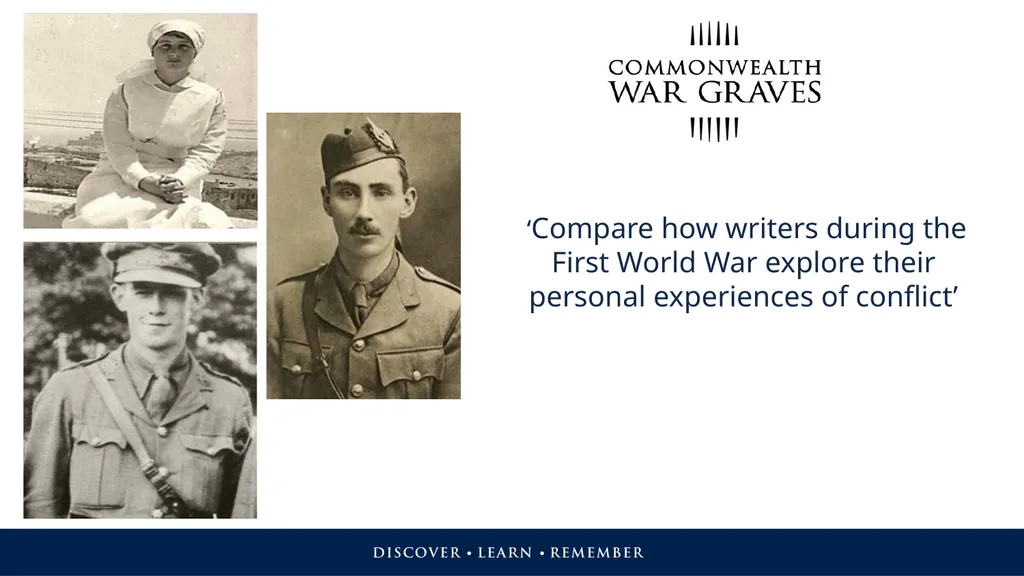
‘Compare how writers during the First World War explore their personal experiences of conflict’<br>