
Foot Protection When foot protection is required:

Foot Protection When foot protection is required:
1 / 1
Foot Protection When foot protection is required: - slide 1 of 2 Foot Protection When foot protection is required: - slide 2 of 2
Foot Protection When foot protection is required: If you deal with chemicals, corrosive substances, or biohazards, you are often required to wear foot protection to prevent exposure to harmful substances. Chemical-resistant boots can

Related Topics

Download this presentation From Below

"Foot Protection When foot protection is required:" is the property of its rightful owner. Permission is granted to download and print the materials on this website for personal, non-commercial use only, and to display it on your personal computer provided you do not modify the materials and that you retain all copyright notices contained in the materials. By downloading content from our website, you accept the terms of this agreement.

Presentation Transcript

01
Foot Protection<br>
02
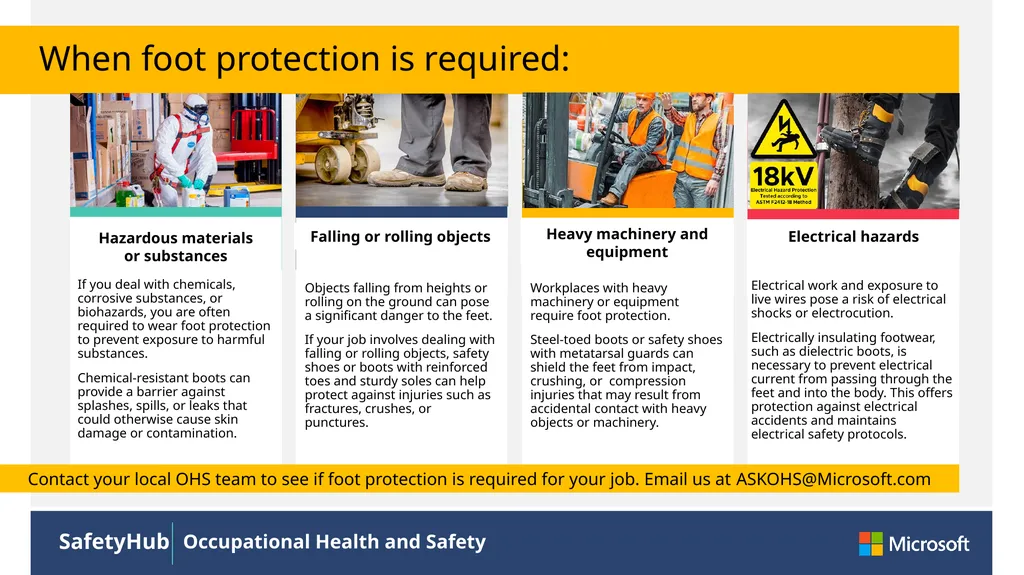
When foot protection is required: If you deal with chemicals, corrosive substances, or biohazards, you are often required to wear foot protection to prevent exposure to harmful substances. 
Chemical-resistant boots can provide a barrier against splashes, spills, or leaks that could otherwise cause skin damage or contamination. Objects falling from heights or rolling on the ground can pose a significant danger to the feet. 
If your job involves dealing with falling or rolling objects, safety shoes or boots with reinforced toes and sturdy soles can help protect against injuries such as fractures, crushes, or punctures. Workplaces with heavy machinery or equipment require foot protection.
Steel-toed boots or safety shoes with metatarsal guards can shield the feet from impact, crushing, or  compression injuries that may result from accidental contact with heavy objects or machinery. Hazardous materials or substances Falling or rolling objects Electrical hazards Heavy machinery and equipment Electrical work and exposure to live wires pose a risk of electrical shocks or electrocution. 
Electrically insulating footwear, such as dielectric boots, is necessary to prevent electrical current from passing through the feet and into the body. This offers protection against electrical accidents and maintains electrical safety protocols. Contact your local OHS team to see if foot protection is required for your job. Email us at ASKOHS@Microsoft.com<br>