Forces of Flight Scalar and Vector Quantities A scalar quantity has only magnitude A vector quantity has both magnitude and direction Scalar Quantities Length, area, volume, speed, mass, density, pressure, temperature, energy, entropy,
"Forces of Flight Scalar and Vector Quantities A" is the property of its rightful owner. Permission is granted to
download and print the materials on this website for personal, non-commercial use only, and to display it
on your personal computer provided you do not modify the materials and that you retain all copyright
notices contained in the materials. By downloading content from our website, you accept the terms of this
agreement.
Presentation Transcript
01
Forces of Flight<br>
02
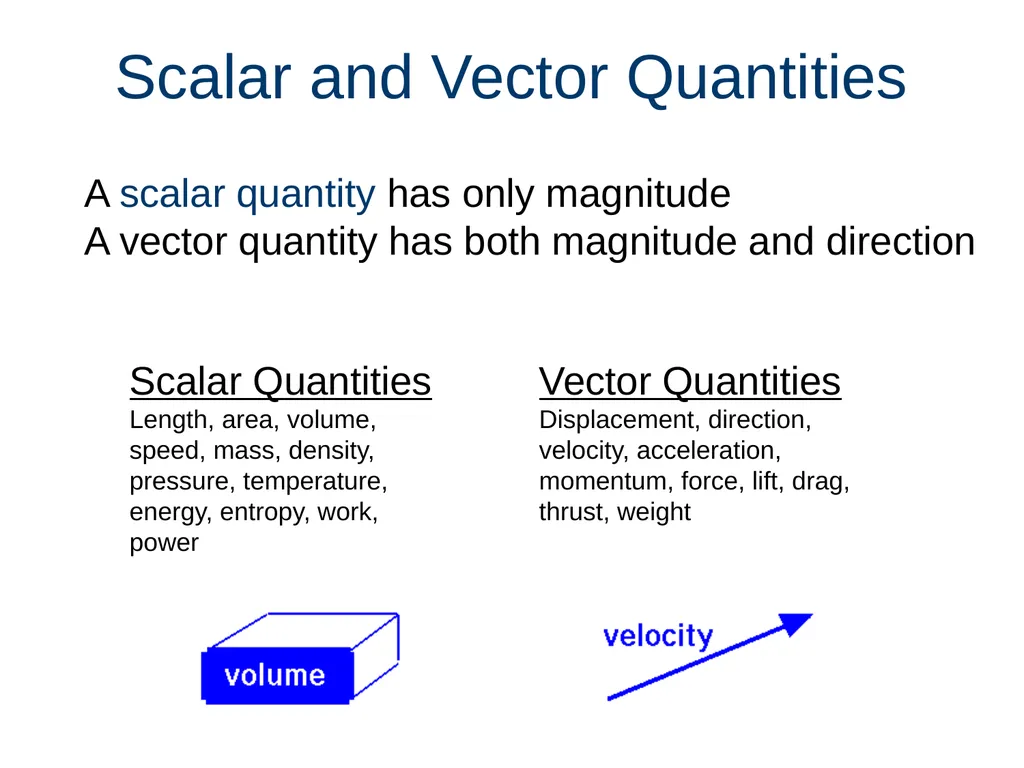
Scalar and Vector Quantities A scalar quantity has only magnitude
A vector quantity has both magnitude and direction Scalar Quantities
Length, area, volume, speed, mass, density, pressure, temperature, energy, entropy, work, power Vector Quantities
Displacement, direction, velocity, acceleration, momentum, force, lift, drag, thrust, weight<br>
03
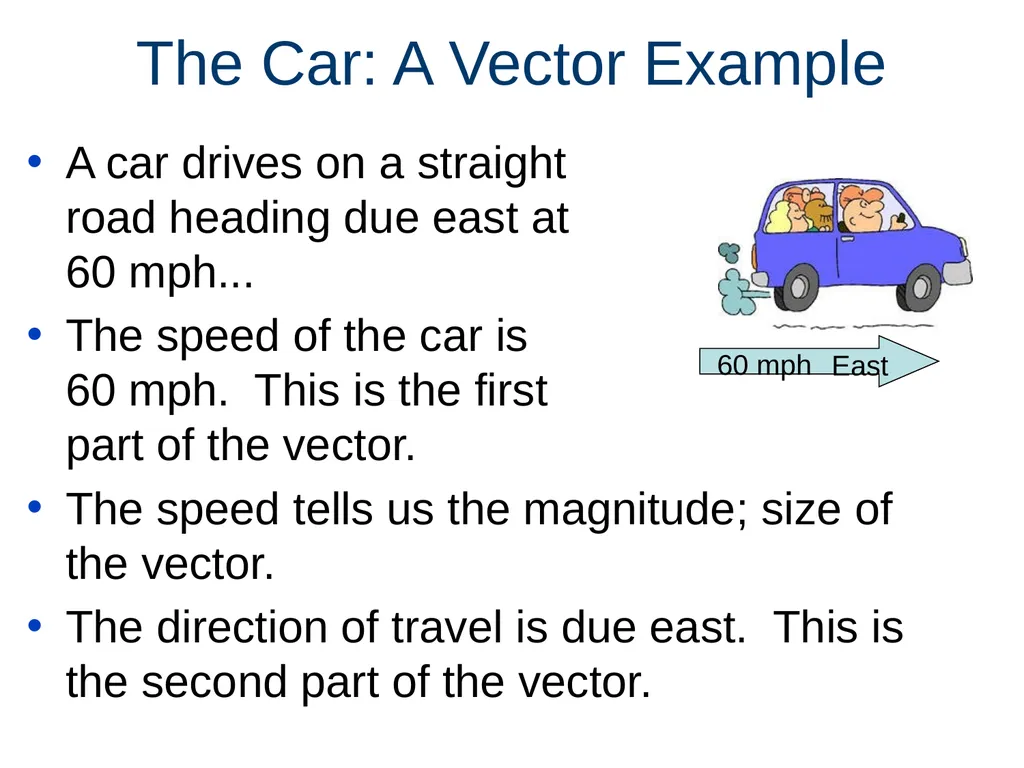
The Car: A Vector Example A car drives on a straight road heading due east at 60 mph...
The speed of the car is 60 mph. This is the first part of the vector.
The speed tells us the magnitude; size of the vector.
The direction of travel is due east. This is the second part of the vector.<br>
04
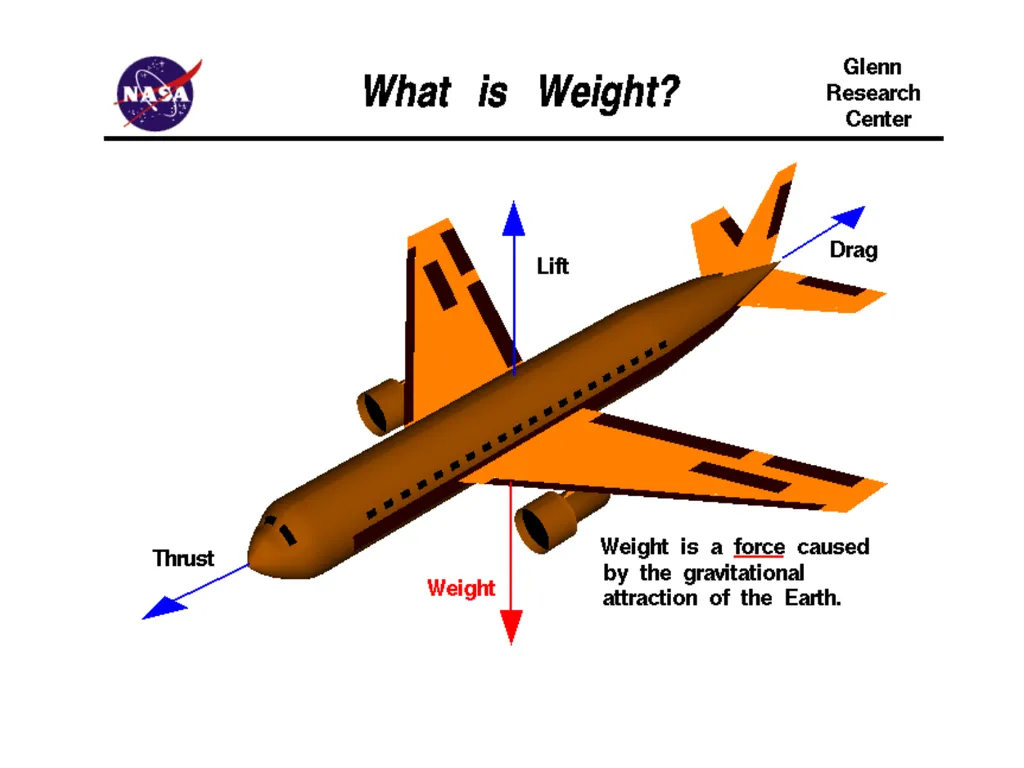
Weight or Gravity A negative force
A force always directed towards the center of the earth
Dependent upon the mass of all the airplane parts, plus the amount of fuel, plus any payload on board (people, baggage, freight, etc.)<br>
05
Weight or Gravity During a flight, an airplane's weight constantly changes as the aircraft consumes fuel.
The distribution of the weight then changes, so the pilot must constantly adjust the controls to keep the airplane balanced, or trimmed.<br>
06
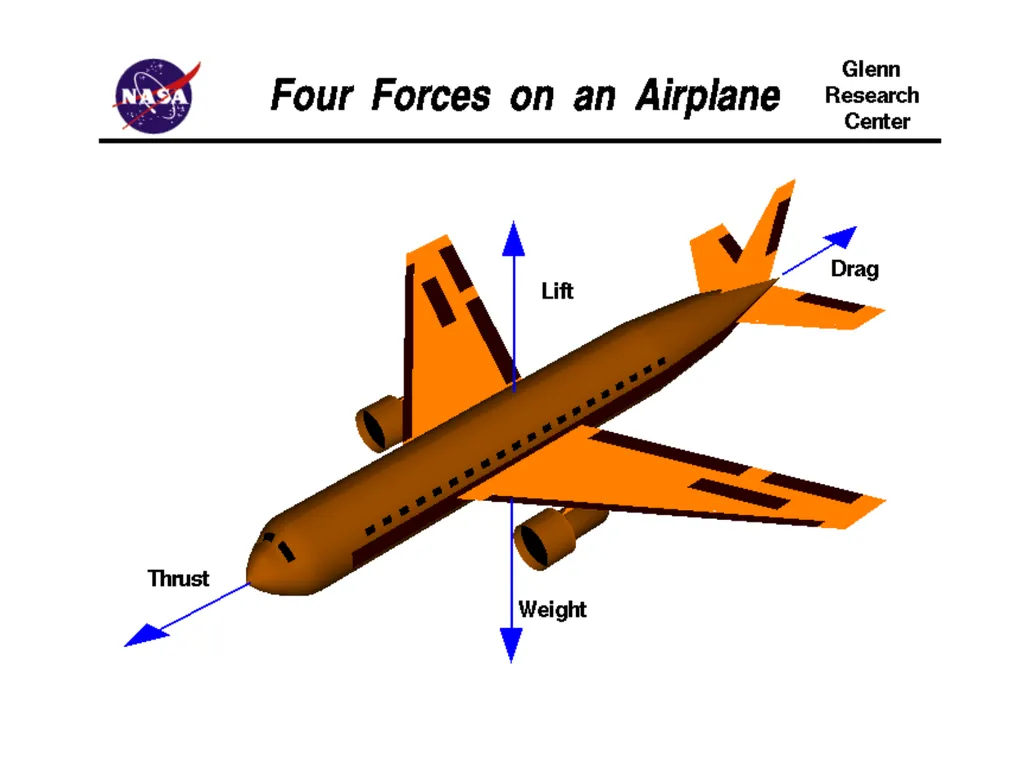
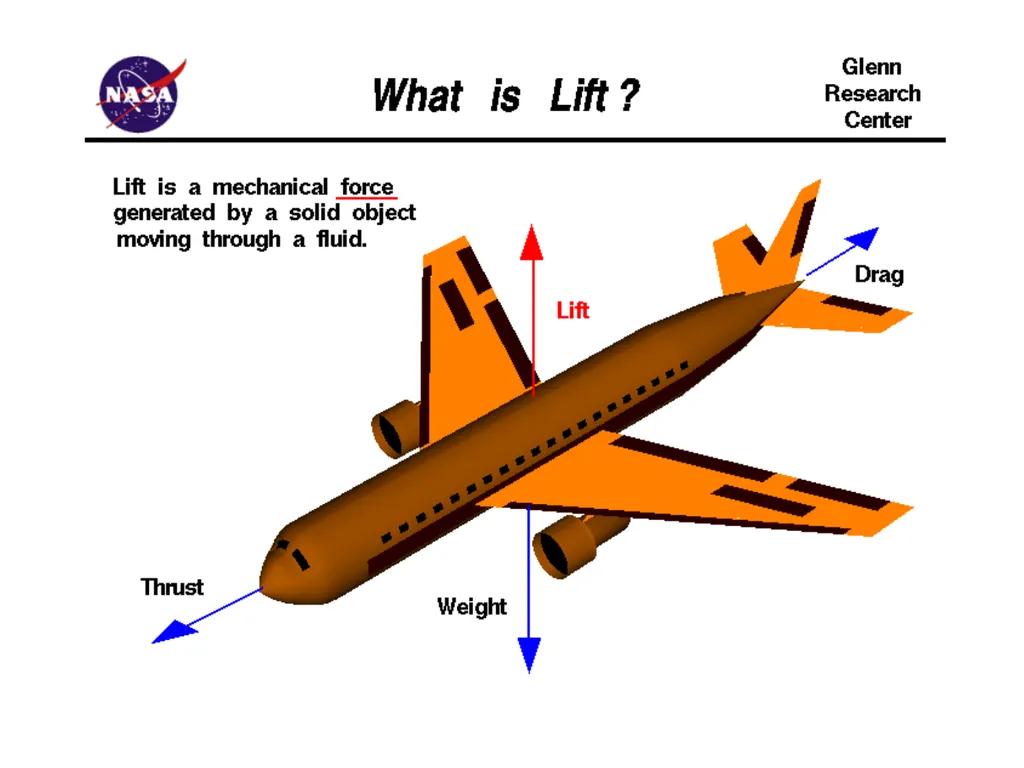
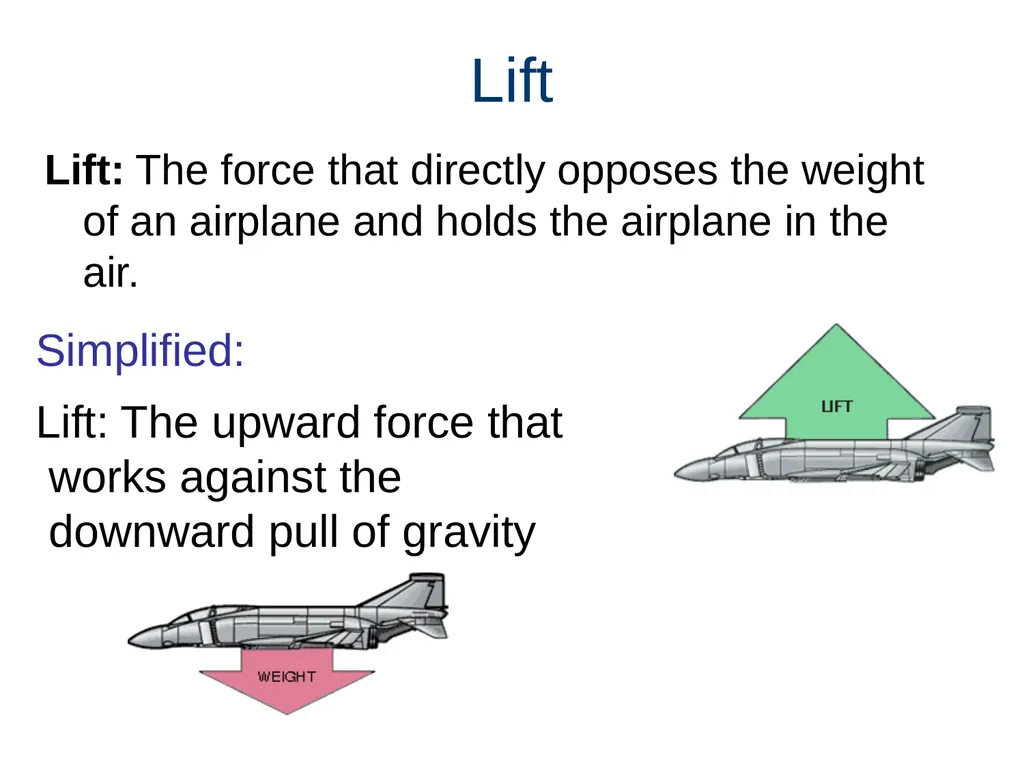
Lift Lift: The force that directly opposes the weight of an airplane and holds the airplane in the air. Simplified:
Lift: The upward force that works against the downward pull of gravity<br>
07
Lift A positive force
Needed to overcome the weight force
Lift is directed perpendicular to the flight direction.<br>
08
Lift Amount of lift depends on several factors including
Shape of the aircraft
Size of the aircraft
Velocity or speed of the aircraft
Shape of the wing
Density altitude<br>
09
Lift Most of the lift is generated by the wings
Air pressure below the wing is greater than air pressure above the wing<br>
10
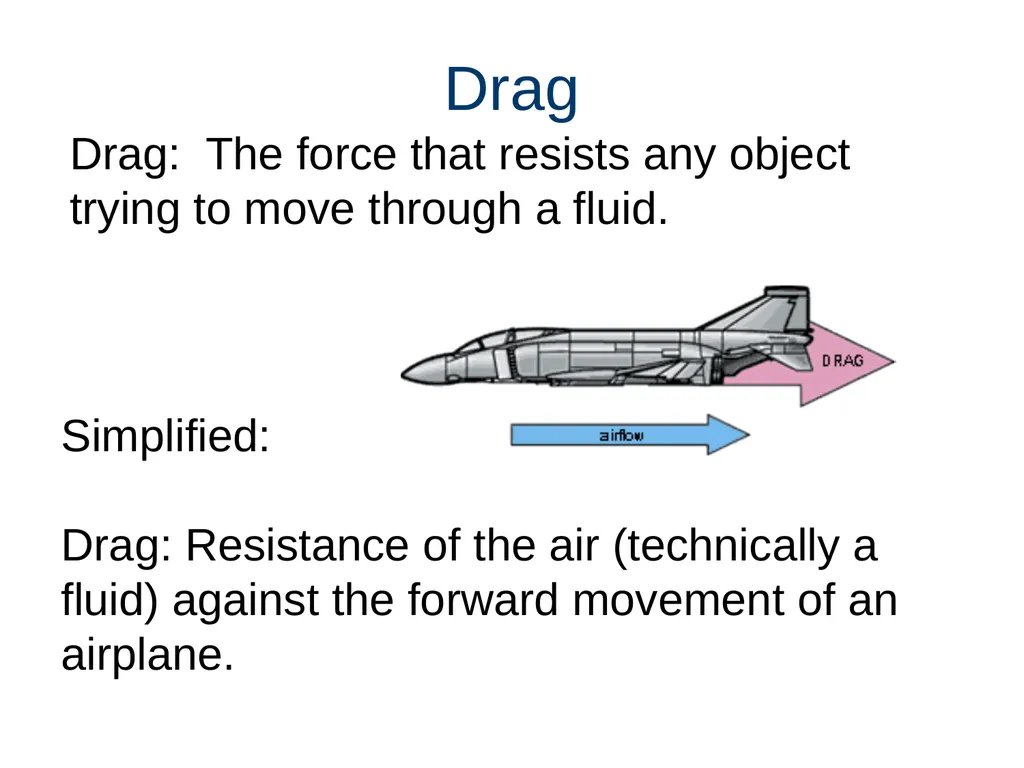
Drag Simplified:
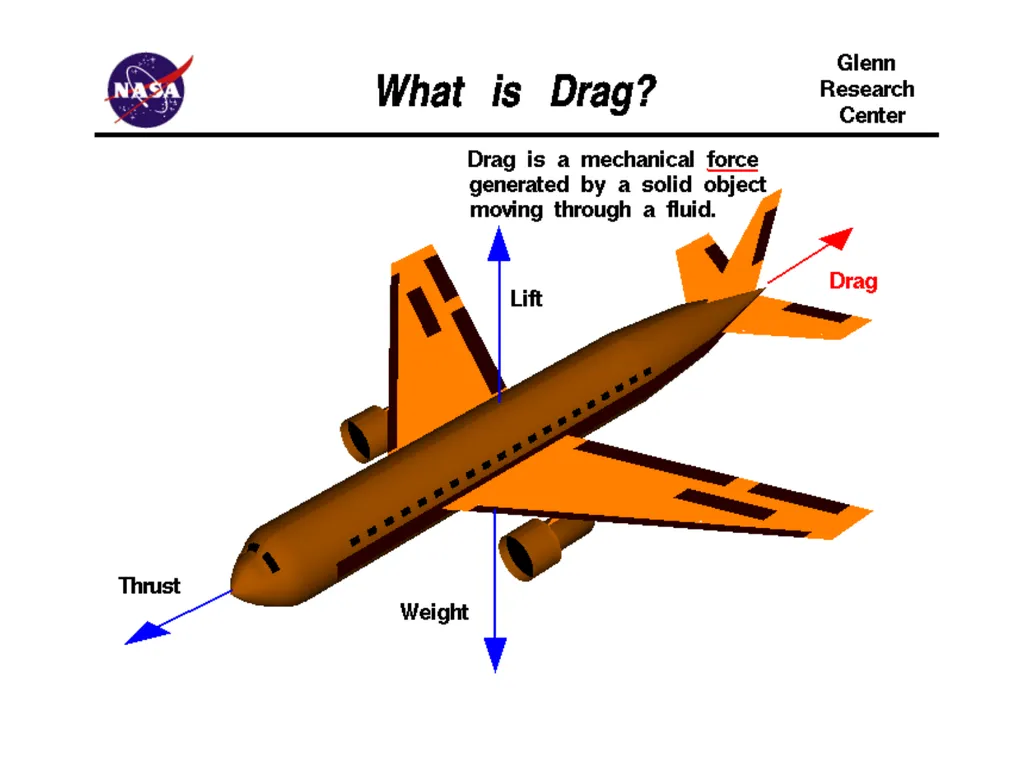
Drag: Resistance of the air (technically a fluid) against the forward movement of an airplane. Drag: The force that resists any object trying to move through a fluid.<br>
11
Drag As the airplane moves through the air, the air resists the motion of the aircraft.
Directed along and opposed to the flight direction.<br>
12
Drag Factors that affect the amount of drag
the shape of the aircraft
the "stickiness“ of the air
the speed of the aircraft
The type of material used on the aircraft<br>
13
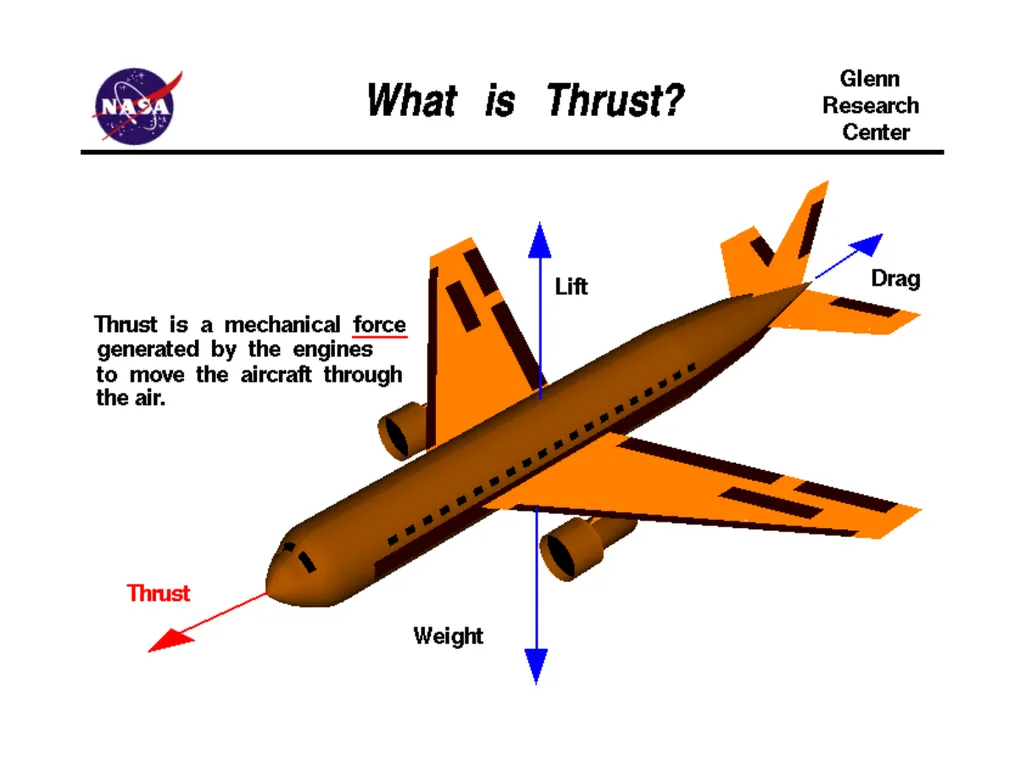
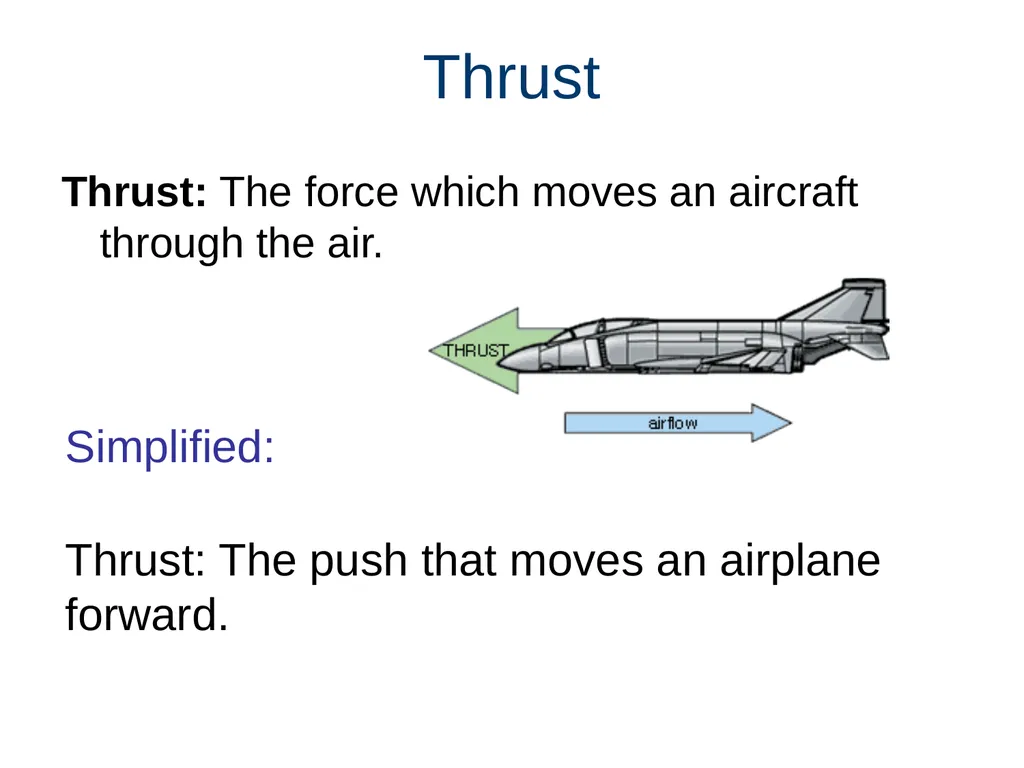
Thrust Thrust: The force which moves an aircraft through the air. Simplified:
Thrust: The push that moves an airplane forward.<br>
14
Thrust Overcomes drag
Airplanes use a propulsion system to generate the thrust
The amount of thrust depends on many factors associated with the propulsion system
type of engine
the number of engines
and the throttle setting<br>
15
Thrust The direction of the thrust force depends on how the engines are attached to the aircraft.
When engines are located under the wings, parallel to the body, thrust acts along the body centerline.<br>
16
Forces Summary The motion of the airplane through the air depends on the relative strength and direction of the forces you’ve been shown.
If the forces are balanced, the aircraft cruises at constant velocity.
If the forces are unbalanced, the aircraft accelerates in the direction of the largest force.<br>
17
Image Resources National Aeronautics and Space Administration (NASA). (n.d.). Virtual skies: Aeronautics tutorial. Retrieved June 24, 2009, from http://virtualskies.arc.nasa.gov/main/maeronautics.html<br>