Fordyce Granules (Spots) Linea Alba Denise Ferreira Section: D218 On the surface of the labial and buccal mucosa is a common variation of both Fordyce Spots and Linea Alba. Fordyce Granules: enlarged oil glands that are usually associated
"Fordyce Granules (Spots) & Linea Alba Denise" is the property of its rightful owner. Permission is granted to
download and print the materials on this website for personal, non-commercial use only, and to display it
on your personal computer provided you do not modify the materials and that you retain all copyright
notices contained in the materials. By downloading content from our website, you accept the terms of this
agreement.
Presentation Transcript
01
Fordyce Granules (Spots) & Linea Alba Denise Ferreira
Section: D218<br>
02
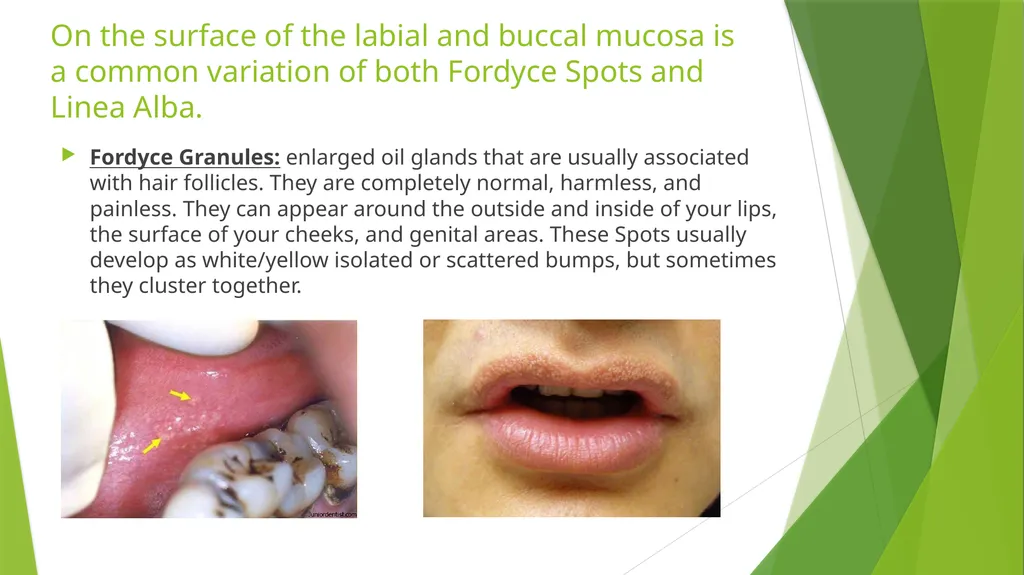
On the surface of the labial and buccal mucosa is a common variation of both Fordyce Spots and Linea Alba. Fordyce Granules: enlarged oil glands that are usually associated with hair follicles. They are completely normal, harmless, and painless. They can appear around the outside and inside of your lips, the surface of your cheeks, and genital areas. These Spots usually develop as white/yellow isolated or scattered bumps, but sometimes they cluster together.<br>
03
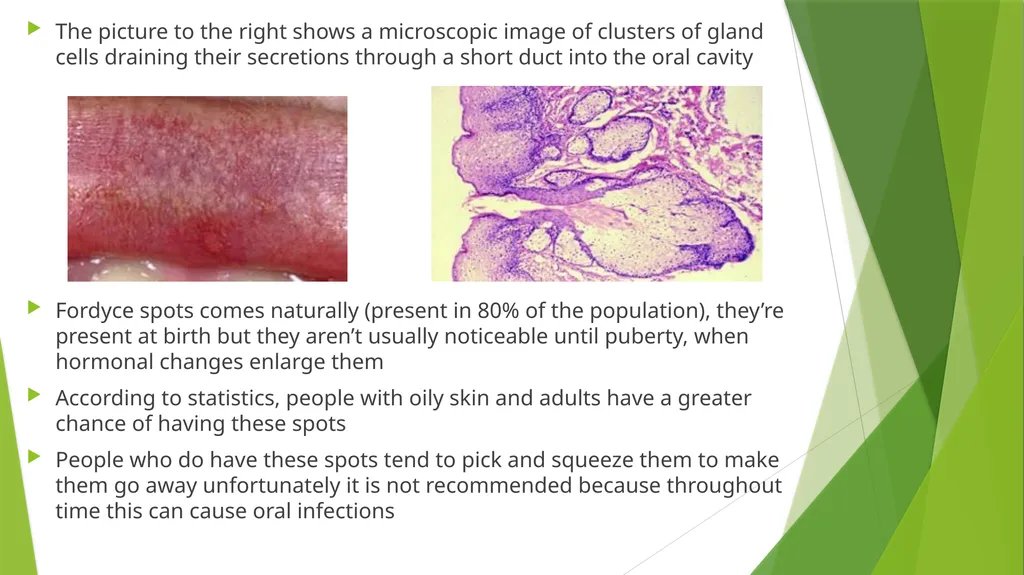
The picture to the right shows a microscopic image of clusters of gland cells draining their secretions through a short duct into the oral cavity
Fordyce spots comes naturally (present in 80% of the population), they’re present at birth but they aren’t usually noticeable until puberty, when hormonal changes enlarge them
According to statistics, people with oily skin and adults have a greater chance of having these spots
People who do have these spots tend to pick and squeeze them to make them go away unfortunately it is not recommended because throughout time this can cause oral infections<br>
04
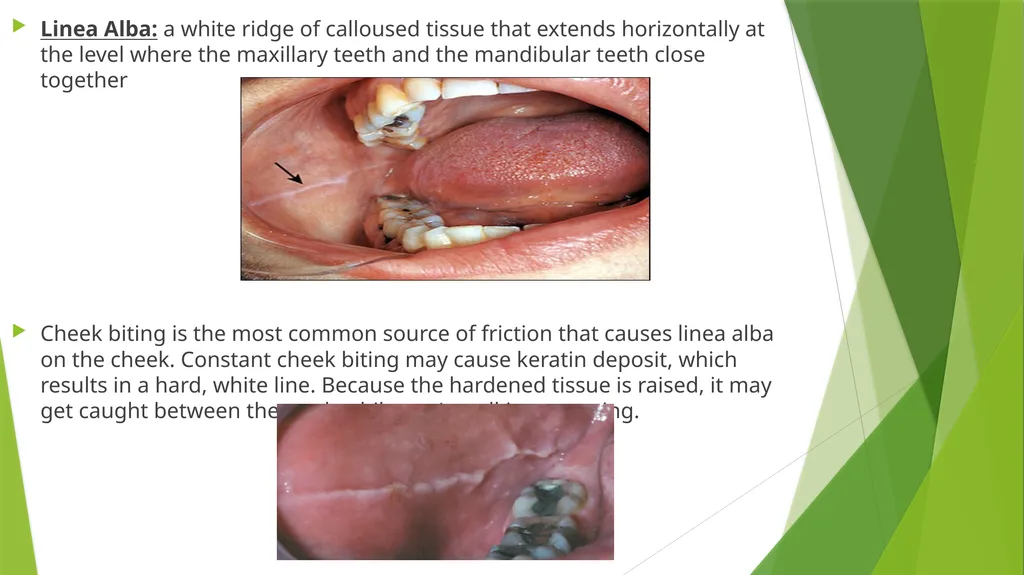
Linea Alba: a white ridge of calloused tissue that extends horizontally at the level where the maxillary teeth and the mandibular teeth close together
Cheek biting is the most common source of friction that causes linea alba on the cheek. Constant cheek biting may cause keratin deposit, which results in a hard, white line. Because the hardened tissue is raised, it may get caught between the teeth while you're talking or eating.<br>
05
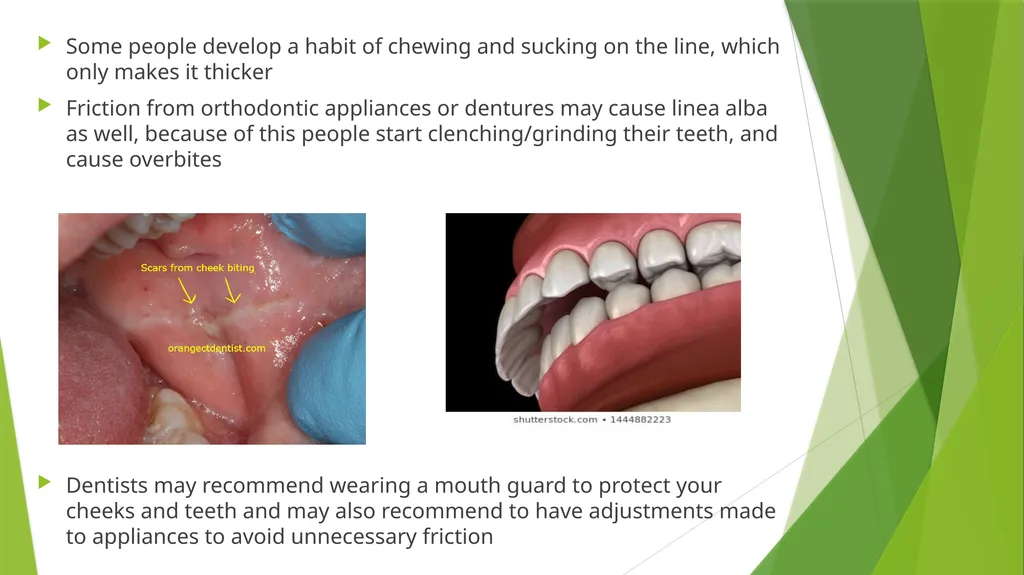
Some people develop a habit of chewing and sucking on the line, which only makes it thicker
Friction from orthodontic appliances or dentures may cause linea alba as well, because of this people start clenching/grinding their teeth, and cause overbites
Dentists may recommend wearing a mouth guard to protect your cheeks and teeth and may also recommend to have adjustments made to appliances to avoid unnecessary friction<br>
06
Although both Fordyce Granules and Linea alba are harmless they may look concerning. A patient may come in with various concerns and loss of confidence assuming the worst. That’s when the role of the dental team comes in. We inform professional information, advice, and treatment options to our patients and reassure them that everything is okay<br>