Forms & Genres in English Drama Comedy: types and
Description: Forms Genres in English Drama Comedy: types and forms Definitions Features A work which is intended to interest, involve and amuse us Characters engage our pleasurable attention than profound concern Readers feel confident that no great
Related Topics
Download Presentation
"Forms & Genres in English Drama Comedy: types and" is the property of its rightful owner. Permission is granted to download and print the materials on this website for personal, non-commercial use only, and to display it on your personal computer provided you do not modify the materials and that you retain all copyright notices contained in the materials. By downloading content from our website, you accept the terms of this agreement.
Presentation Transcript
slide1. Forms & Genres in English Drama Comedy: types and forms<br>
slide2. Definitions & Features A work which is intended to interest, involve and amuse us
Characters engage our pleasurable attention than profound concern
Readers feel confident that no great disaster will occur
Action turns out happily for the chief characters
Usually ends with lovers united or a marriage
Language of the common man as opposed to tragedies which uses a loftier literary style<br>
slide3. Types of Comedy Romantic Comedy
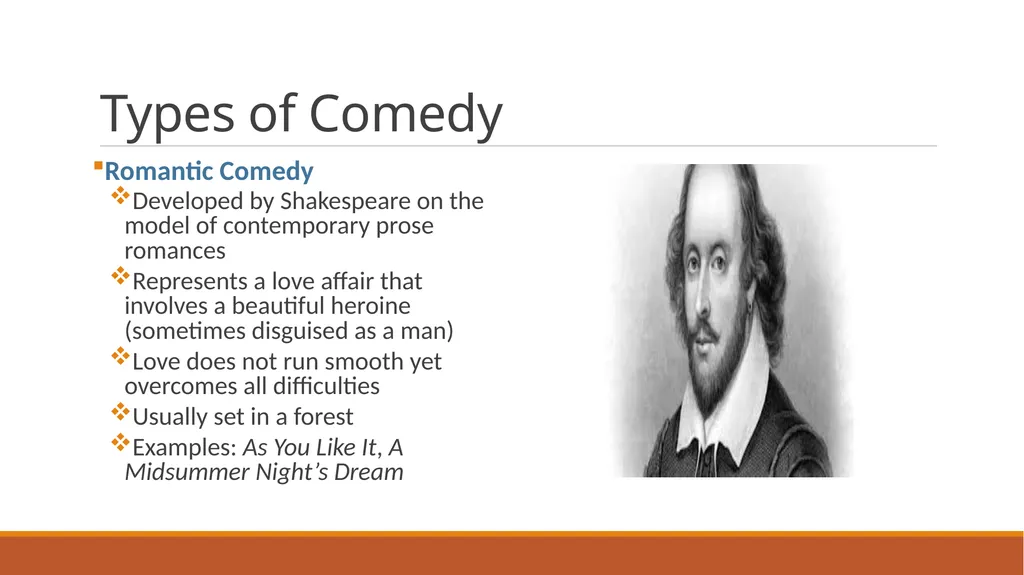
Developed by Shakespeare on the model of contemporary prose romances
Represents a love affair that involves a beautiful heroine (sometimes disguised as a man)
Love does not run smooth yet overcomes all difficulties
Usually set in a forest
Examples: As You Like It, A Midsummer Night’s Dream<br>
slide4. Satiric Comedy
Laughter arises out of ridicule, mockery
Attacks deviations from the social order or philosophical and political notions
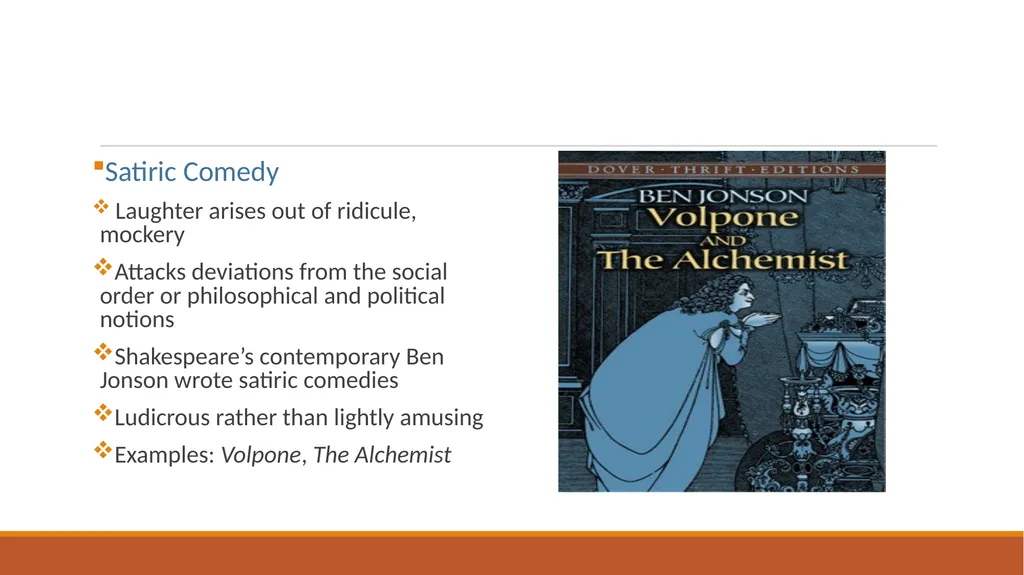
Shakespeare’s contemporary Ben Jonson wrote satiric comedies
Ludicrous rather than lightly amusing
Examples: Volpone, The Alchemist<br>
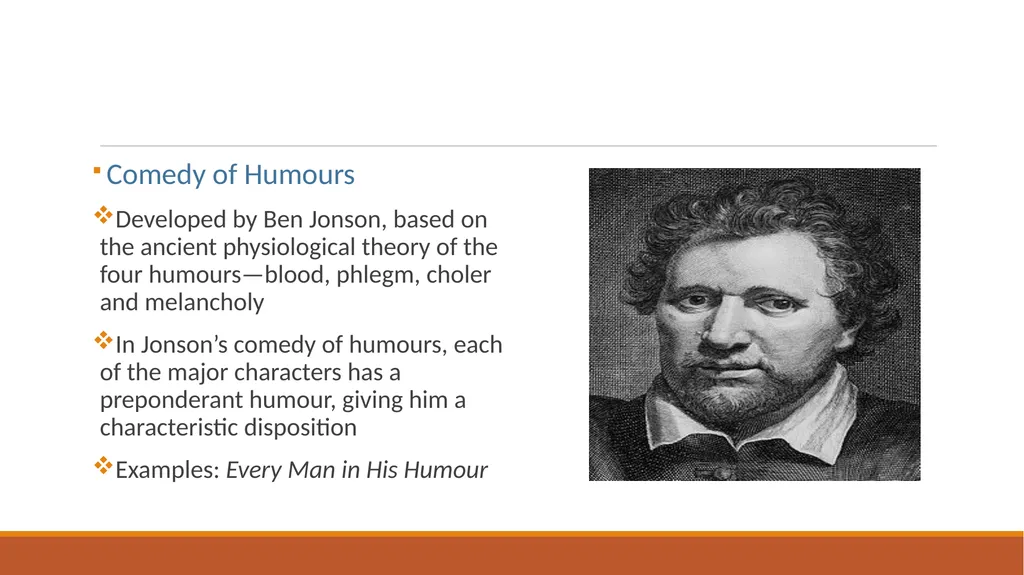
slide5. Comedy of Humours
Developed by Ben Jonson, based on the ancient physiological theory of the four humours—blood, phlegm, choler and melancholy
In Jonson’s comedy of humours, each of the major characters has a preponderant humour, giving him a characteristic disposition
Examples: Every Man in His Humour<br>
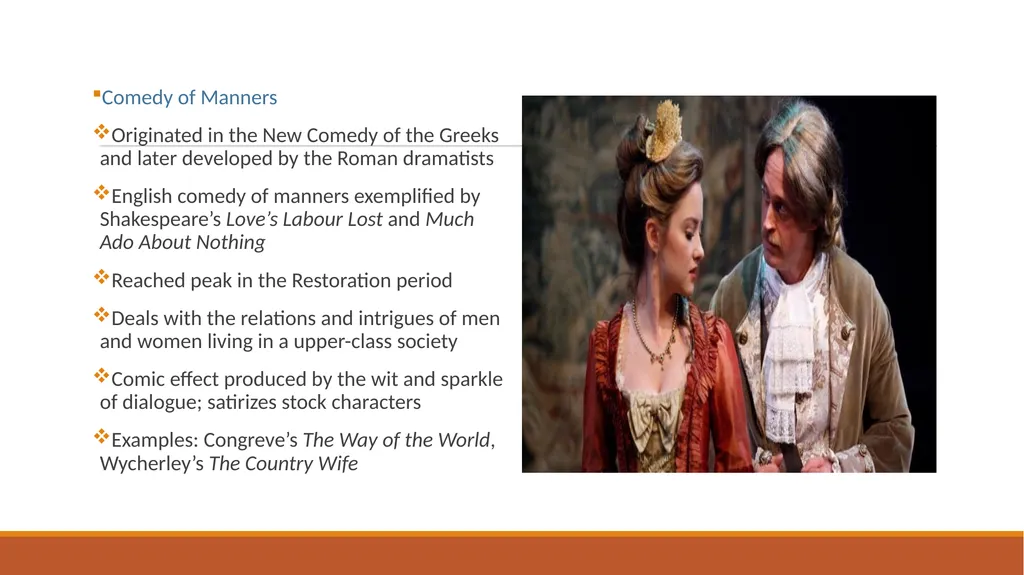
slide6. Comedy of Manners
Originated in the New Comedy of the Greeks and later developed by the Roman dramatists
English comedy of manners exemplified by Shakespeare’s Love’s Labour Lost and Much Ado About Nothing
Reached peak in the Restoration period
Deals with the relations and intrigues of men and women living in a upper-class society
Comic effect produced by the wit and sparkle of dialogue; satirizes stock characters
Examples: Congreve’s The Way of the World, Wycherley’s The Country Wife<br>
slide2. Definitions & Features A work which is intended to interest, involve and amuse us
Characters engage our pleasurable attention than profound concern
Readers feel confident that no great disaster will occur
Action turns out happily for the chief characters
Usually ends with lovers united or a marriage
Language of the common man as opposed to tragedies which uses a loftier literary style<br>
slide3. Types of Comedy Romantic Comedy
Developed by Shakespeare on the model of contemporary prose romances
Represents a love affair that involves a beautiful heroine (sometimes disguised as a man)
Love does not run smooth yet overcomes all difficulties
Usually set in a forest
Examples: As You Like It, A Midsummer Night’s Dream<br>
slide4. Satiric Comedy
Laughter arises out of ridicule, mockery
Attacks deviations from the social order or philosophical and political notions
Shakespeare’s contemporary Ben Jonson wrote satiric comedies
Ludicrous rather than lightly amusing
Examples: Volpone, The Alchemist<br>
slide5. Comedy of Humours
Developed by Ben Jonson, based on the ancient physiological theory of the four humours—blood, phlegm, choler and melancholy
In Jonson’s comedy of humours, each of the major characters has a preponderant humour, giving him a characteristic disposition
Examples: Every Man in His Humour<br>
slide6. Comedy of Manners
Originated in the New Comedy of the Greeks and later developed by the Roman dramatists
English comedy of manners exemplified by Shakespeare’s Love’s Labour Lost and Much Ado About Nothing
Reached peak in the Restoration period
Deals with the relations and intrigues of men and women living in a upper-class society
Comic effect produced by the wit and sparkle of dialogue; satirizes stock characters
Examples: Congreve’s The Way of the World, Wycherley’s The Country Wife<br>