Fundamentals of Language Teaching through
Description: Fundamentals of Language Teaching through Technology The Fundamentals of Language Teaching through Technology refers to the core principles and approaches used to integrate technology into language learning. Key Elements Blended Learning:
Related Topics
Download Presentation
"Fundamentals of Language Teaching through" is the property of its rightful owner. Permission is granted to download and print the materials on this website for personal, non-commercial use only, and to display it on your personal computer provided you do not modify the materials and that you retain all copyright notices contained in the materials. By downloading content from our website, you accept the terms of this agreement.
Presentation Transcript
slide1. Fundamentals of Language Teaching through Technology<br>
slide2. The "Fundamentals of Language Teaching through Technology" refers to the core principles and approaches used to integrate technology into language learning.<br>
slide3. Key Elements Blended Learning: Combining traditional classroom teaching with digital resources and online platforms. This includes tools like Learning Management Systems (LMS), virtual classrooms, and multimedia resources.<br>
slide4. Computer-Assisted Language Learning (CALL): Using software, apps, or online platforms specifically designed to help learners develop language skills. CALL programs may include grammar exercises, vocabulary builders, and pronunciation tools.<br>
slide5. Mobile-Assisted Language Learning (MALL): Learning a language through mobile devices (phones, tablets), often involving apps or mobile-friendly websites that facilitate anytime, anywhere learning.<br>
slide6. Interactive Multimedia: Using videos, audio recordings, games, and simulations to create a rich language-learning experience. Tools like language learning apps (e.g., Duolingo, Memrise) use multimedia to make learning more engaging.<br>
slide7. Online Communication Tools: Utilizing communication platforms like Zoom, Skype, or even chatbots to foster interaction in the target language. These tools can simulate real-life conversations and offer instant feedback.<br>
slide8. Gamification: Integrating elements of game design (points, levels, challenges) into learning platforms to make language acquisition more engaging and motivating.<br>
slide9. Artificial Intelligence (AI): AI-driven tools can personalize language learning by adapting to the learner's proficiency level and providing tailored feedback. Examples include chatbots and intelligent tutoring systems.<br>
slide10. Automated Assessment Tools: These tools provide instant feedback on language tasks, such as pronunciation, grammar, or writing, often powered by AI. They help learners track their progress without needing constant teacher input.<br>
slide11. Virtual Reality (VR) & Augmented Reality (AR): These emerging technologies allow for immersive language experiences. Learners can engage in virtual environments where they interact in the target language.<br>
slide12. Data Analytics: Tracking learner performance through digital tools and analytics to personalize the learning experience, identifying strengths and weaknesses.<br>
slide13. These fundamentals or key elements focus on enhancing language learning through the effective use of digital tools, making it more interactive, accessible, and adaptable to individual needs.<br>
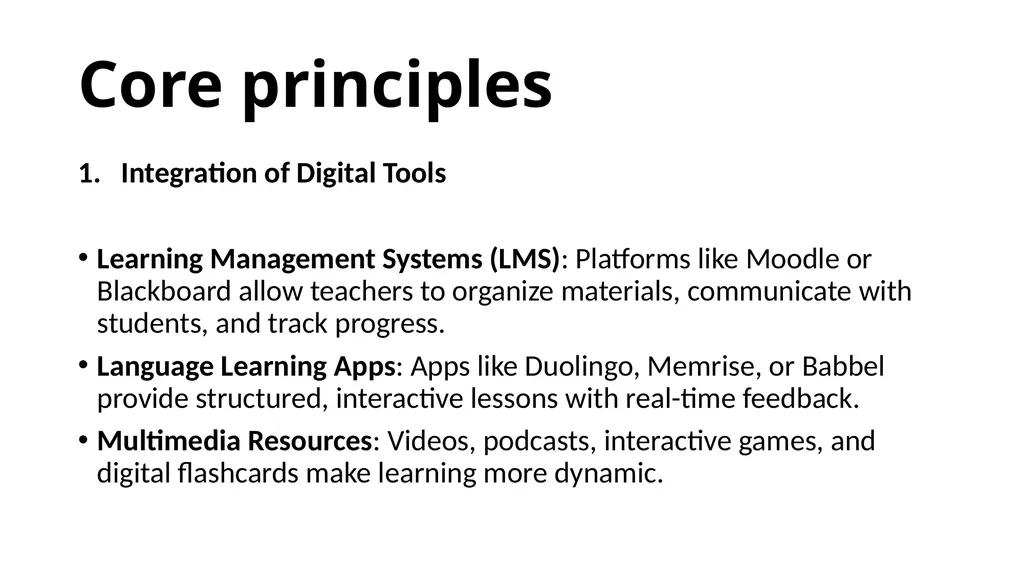
slide14. Core principles Integration of Digital Tools
Learning Management Systems (LMS): Platforms like Moodle or Blackboard allow teachers to organize materials, communicate with students, and track progress.
Language Learning Apps: Apps like Duolingo, Memrise, or Babbel provide structured, interactive lessons with real-time feedback.
Multimedia Resources: Videos, podcasts, interactive games, and digital flashcards make learning more dynamic.<br>
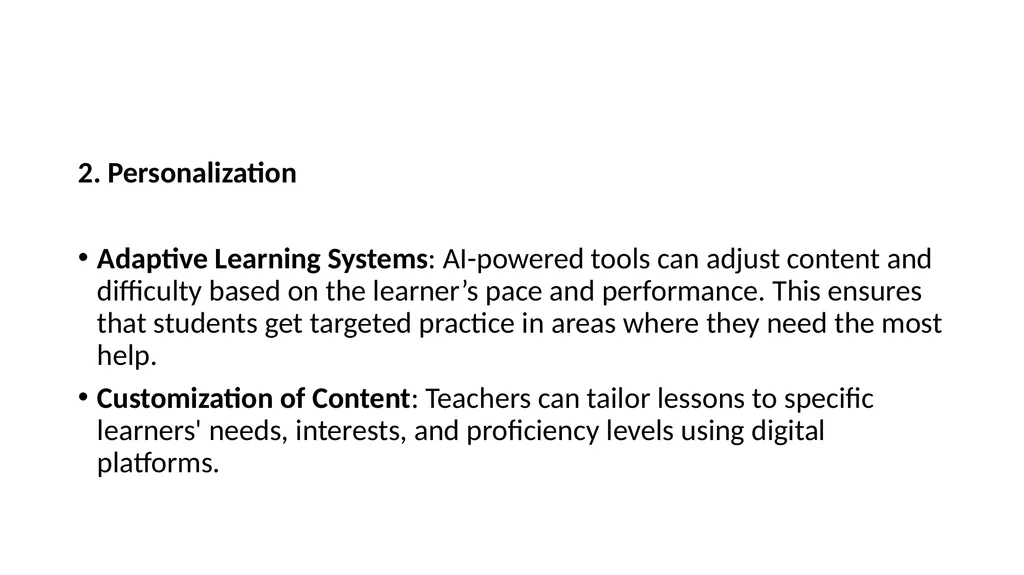
slide15. 2. Personalization
Adaptive Learning Systems: AI-powered tools can adjust content and difficulty based on the learner’s pace and performance. This ensures that students get targeted practice in areas where they need the most help.
Customization of Content: Teachers can tailor lessons to specific learners' needs, interests, and proficiency levels using digital platforms.<br>
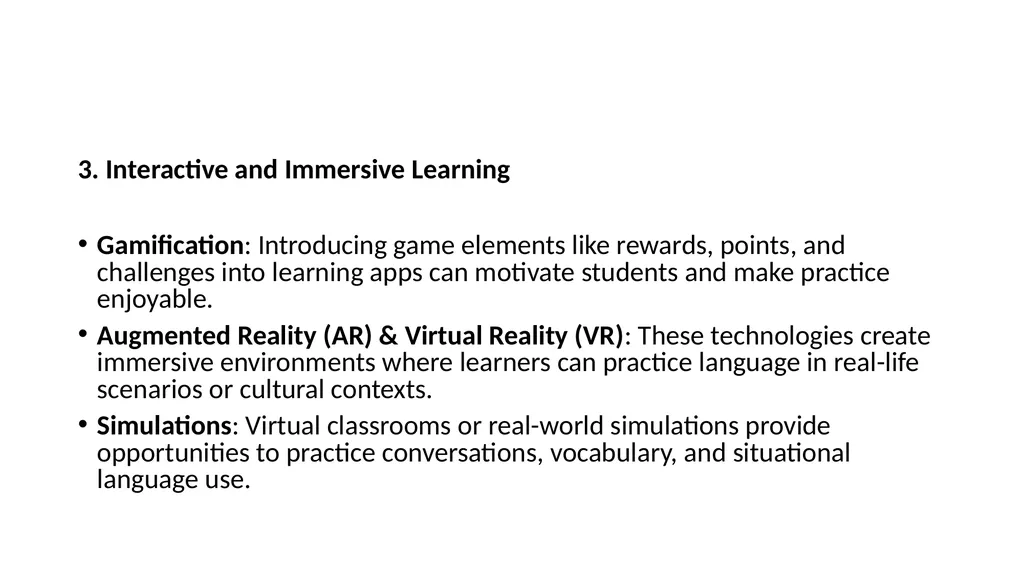
slide16. 3. Interactive and Immersive Learning
Gamification: Introducing game elements like rewards, points, and challenges into learning apps can motivate students and make practice enjoyable.
Augmented Reality (AR) & Virtual Reality (VR): These technologies create immersive environments where learners can practice language in real-life scenarios or cultural contexts.
Simulations: Virtual classrooms or real-world simulations provide opportunities to practice conversations, vocabulary, and situational language use.<br>
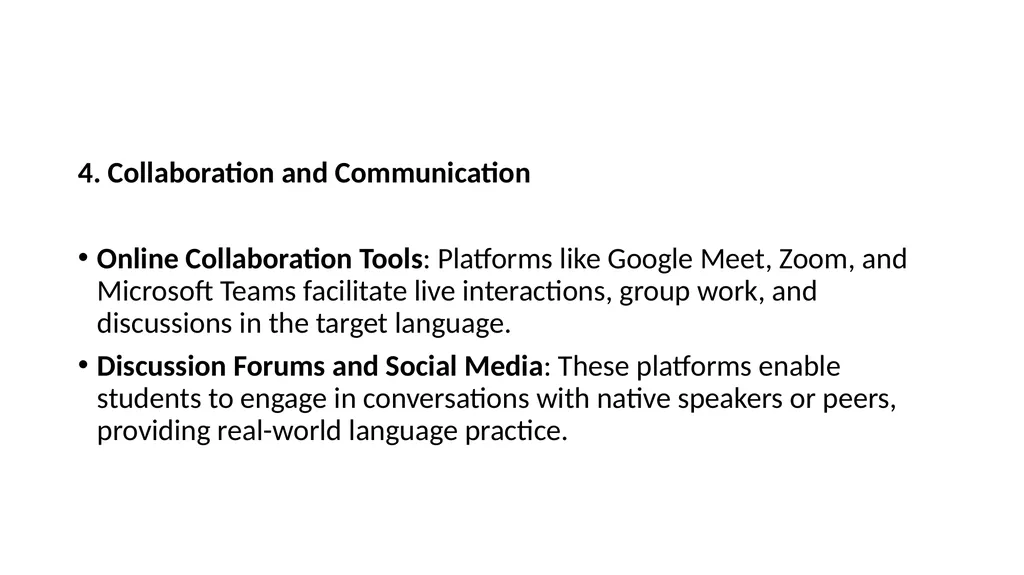
slide17. 4. Collaboration and Communication
Online Collaboration Tools: Platforms like Google Meet, Zoom, and Microsoft Teams facilitate live interactions, group work, and discussions in the target language.
Discussion Forums and Social Media: These platforms enable students to engage in conversations with native speakers or peers, providing real-world language practice.<br>
slide18. 5. Access to Authentic Language Materials
Content from Native Speakers: Podcasts, YouTube videos, blogs, and online newspapers expose learners to authentic, everyday language usage.
Real-Time Translation Tools: Applications like Google Translate or DeepL allow learners to understand and practice translations instantly, although careful guidance is needed to prevent over-reliance.<br>
slide19. 6. Automated Feedback and Assessment
AI-Driven Feedback: Tools like Grammarly or speech recognition software provide instant feedback on pronunciation, grammar, and writing.
Automated Assessments: Online quizzes, writing assessments, and language proficiency tests can be administered automatically, allowing learners to gauge their progress without waiting for instructor feedback.<br>
slide20. 7. Flexibility and Accessibility
Asynchronous Learning: Students can learn at their own pace through pre-recorded videos, downloadable materials, or apps, making it easier to fit language learning into their schedule.
Mobile-Assisted Language Learning (MALL): Learning on mobile devices allows students to study on-the-go, access lessons anywhere, and make learning more convenient.<br>
slide21. 8. Data-Driven Teaching
Learner Analytics: Teachers can analyze data on student performance, such as quiz scores or activity logs, to identify strengths, weaknesses, and trends. This helps in personalizing learning and improving outcomes.
Adaptive Testing: Tools that adjust the difficulty of tests based on the learner’s answers to accurately gauge their level of proficiency.<br>
slide22. 9. Engagement through Multimodal Learning
Visual, Auditory, and Kinesthetic: Integrating different media (videos, audio, interactive tasks) ensures learners with different styles can benefit, making language teaching more inclusive.<br>
slide23. 10. Collaboration between Educators and Technology Providers
Teacher Training: Teachers need training to effectively use technology in the classroom, such as learning how to operate new platforms, designing tech-based lessons, and troubleshooting common issues.
Continuous Development: Teachers and language technology providers should collaborate to keep content up-to-date and aligned with language learning best practices and curricula.<br>

slide2. The "Fundamentals of Language Teaching through Technology" refers to the core principles and approaches used to integrate technology into language learning.<br>
slide3. Key Elements Blended Learning: Combining traditional classroom teaching with digital resources and online platforms. This includes tools like Learning Management Systems (LMS), virtual classrooms, and multimedia resources.<br>
slide4. Computer-Assisted Language Learning (CALL): Using software, apps, or online platforms specifically designed to help learners develop language skills. CALL programs may include grammar exercises, vocabulary builders, and pronunciation tools.<br>
slide5. Mobile-Assisted Language Learning (MALL): Learning a language through mobile devices (phones, tablets), often involving apps or mobile-friendly websites that facilitate anytime, anywhere learning.<br>
slide6. Interactive Multimedia: Using videos, audio recordings, games, and simulations to create a rich language-learning experience. Tools like language learning apps (e.g., Duolingo, Memrise) use multimedia to make learning more engaging.<br>
slide7. Online Communication Tools: Utilizing communication platforms like Zoom, Skype, or even chatbots to foster interaction in the target language. These tools can simulate real-life conversations and offer instant feedback.<br>
slide8. Gamification: Integrating elements of game design (points, levels, challenges) into learning platforms to make language acquisition more engaging and motivating.<br>
slide9. Artificial Intelligence (AI): AI-driven tools can personalize language learning by adapting to the learner's proficiency level and providing tailored feedback. Examples include chatbots and intelligent tutoring systems.<br>
slide10. Automated Assessment Tools: These tools provide instant feedback on language tasks, such as pronunciation, grammar, or writing, often powered by AI. They help learners track their progress without needing constant teacher input.<br>
slide11. Virtual Reality (VR) & Augmented Reality (AR): These emerging technologies allow for immersive language experiences. Learners can engage in virtual environments where they interact in the target language.<br>
slide12. Data Analytics: Tracking learner performance through digital tools and analytics to personalize the learning experience, identifying strengths and weaknesses.<br>
slide13. These fundamentals or key elements focus on enhancing language learning through the effective use of digital tools, making it more interactive, accessible, and adaptable to individual needs.<br>
slide14. Core principles Integration of Digital Tools
Learning Management Systems (LMS): Platforms like Moodle or Blackboard allow teachers to organize materials, communicate with students, and track progress.
Language Learning Apps: Apps like Duolingo, Memrise, or Babbel provide structured, interactive lessons with real-time feedback.
Multimedia Resources: Videos, podcasts, interactive games, and digital flashcards make learning more dynamic.<br>
slide15. 2. Personalization
Adaptive Learning Systems: AI-powered tools can adjust content and difficulty based on the learner’s pace and performance. This ensures that students get targeted practice in areas where they need the most help.
Customization of Content: Teachers can tailor lessons to specific learners' needs, interests, and proficiency levels using digital platforms.<br>
slide16. 3. Interactive and Immersive Learning
Gamification: Introducing game elements like rewards, points, and challenges into learning apps can motivate students and make practice enjoyable.
Augmented Reality (AR) & Virtual Reality (VR): These technologies create immersive environments where learners can practice language in real-life scenarios or cultural contexts.
Simulations: Virtual classrooms or real-world simulations provide opportunities to practice conversations, vocabulary, and situational language use.<br>
slide17. 4. Collaboration and Communication
Online Collaboration Tools: Platforms like Google Meet, Zoom, and Microsoft Teams facilitate live interactions, group work, and discussions in the target language.
Discussion Forums and Social Media: These platforms enable students to engage in conversations with native speakers or peers, providing real-world language practice.<br>
slide18. 5. Access to Authentic Language Materials
Content from Native Speakers: Podcasts, YouTube videos, blogs, and online newspapers expose learners to authentic, everyday language usage.
Real-Time Translation Tools: Applications like Google Translate or DeepL allow learners to understand and practice translations instantly, although careful guidance is needed to prevent over-reliance.<br>
slide19. 6. Automated Feedback and Assessment
AI-Driven Feedback: Tools like Grammarly or speech recognition software provide instant feedback on pronunciation, grammar, and writing.
Automated Assessments: Online quizzes, writing assessments, and language proficiency tests can be administered automatically, allowing learners to gauge their progress without waiting for instructor feedback.<br>
slide20. 7. Flexibility and Accessibility
Asynchronous Learning: Students can learn at their own pace through pre-recorded videos, downloadable materials, or apps, making it easier to fit language learning into their schedule.
Mobile-Assisted Language Learning (MALL): Learning on mobile devices allows students to study on-the-go, access lessons anywhere, and make learning more convenient.<br>
slide21. 8. Data-Driven Teaching
Learner Analytics: Teachers can analyze data on student performance, such as quiz scores or activity logs, to identify strengths, weaknesses, and trends. This helps in personalizing learning and improving outcomes.
Adaptive Testing: Tools that adjust the difficulty of tests based on the learner’s answers to accurately gauge their level of proficiency.<br>
slide22. 9. Engagement through Multimodal Learning
Visual, Auditory, and Kinesthetic: Integrating different media (videos, audio, interactive tasks) ensures learners with different styles can benefit, making language teaching more inclusive.<br>
slide23. 10. Collaboration between Educators and Technology Providers
Teacher Training: Teachers need training to effectively use technology in the classroom, such as learning how to operate new platforms, designing tech-based lessons, and troubleshooting common issues.
Continuous Development: Teachers and language technology providers should collaborate to keep content up-to-date and aligned with language learning best practices and curricula.<br>