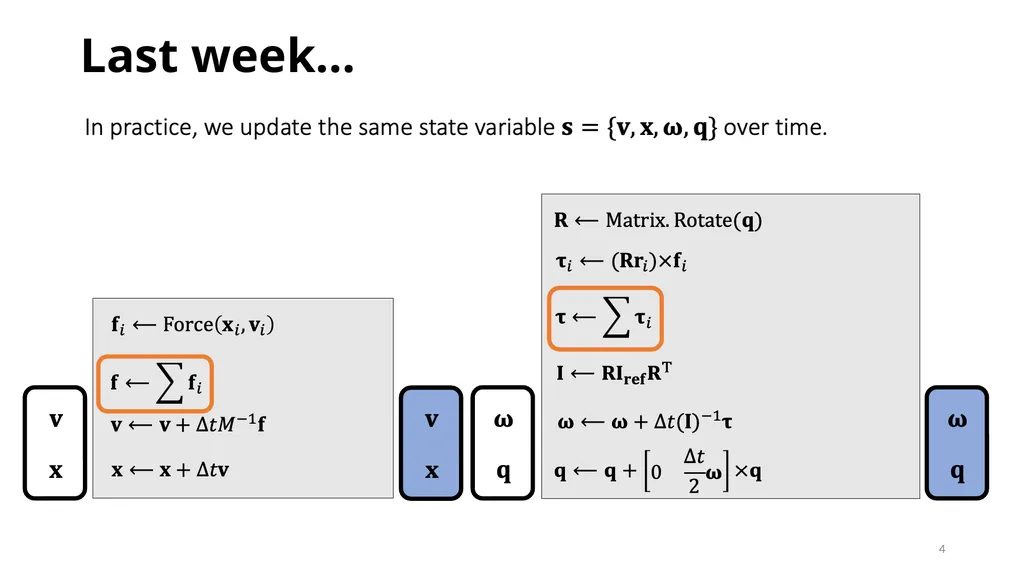
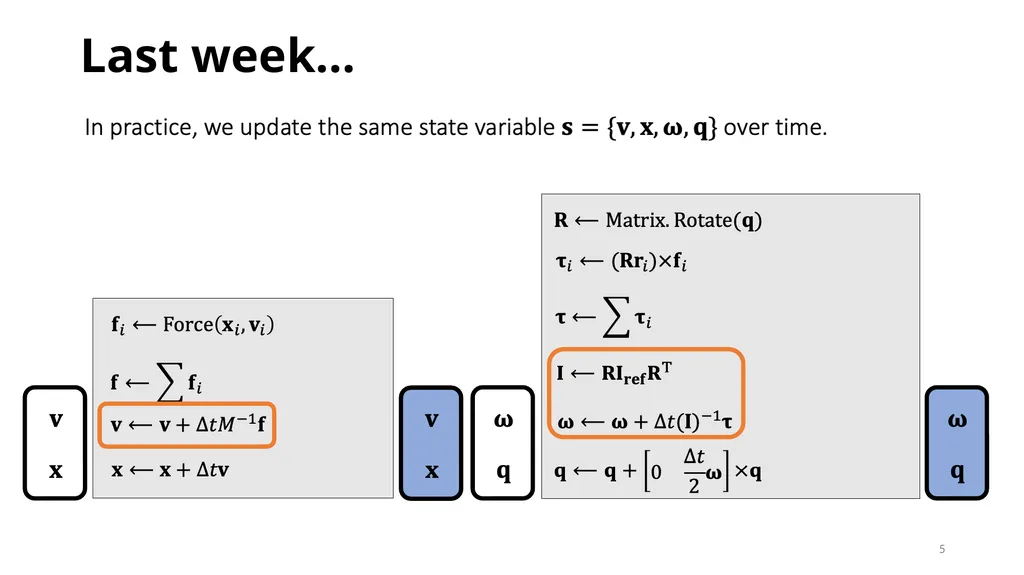
06
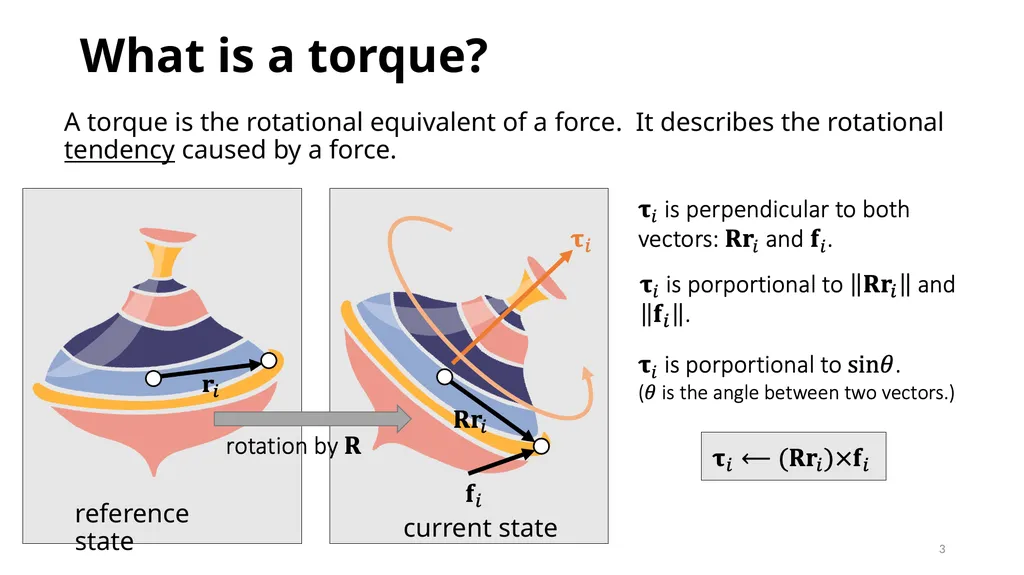
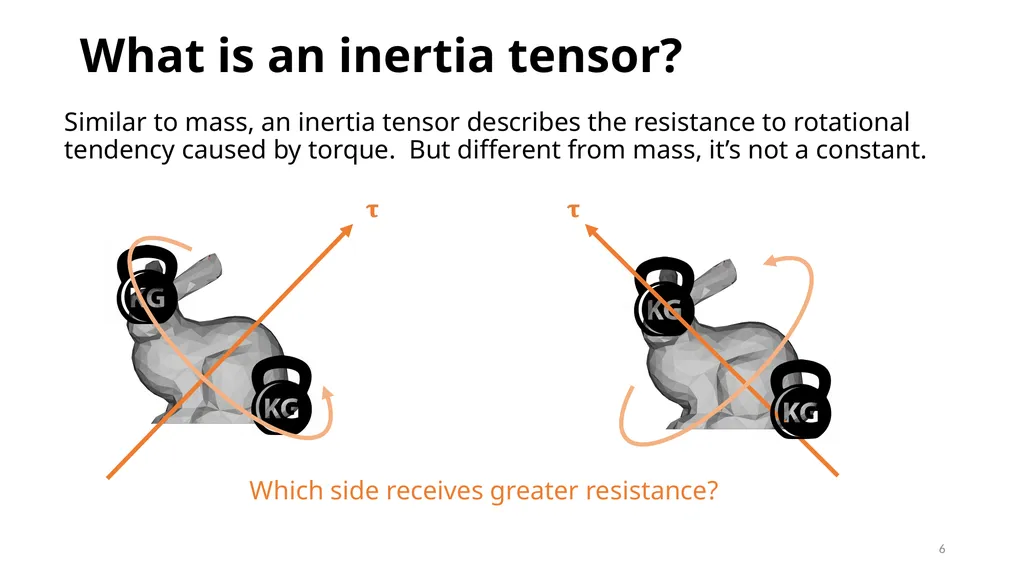
6 What is an inertia tensor? Similar to mass, an inertia tensor describes the resistance to rotational tendency caused by torque. But different from mass, it’s not a constant. Which side receives greater resistance?<br>
07
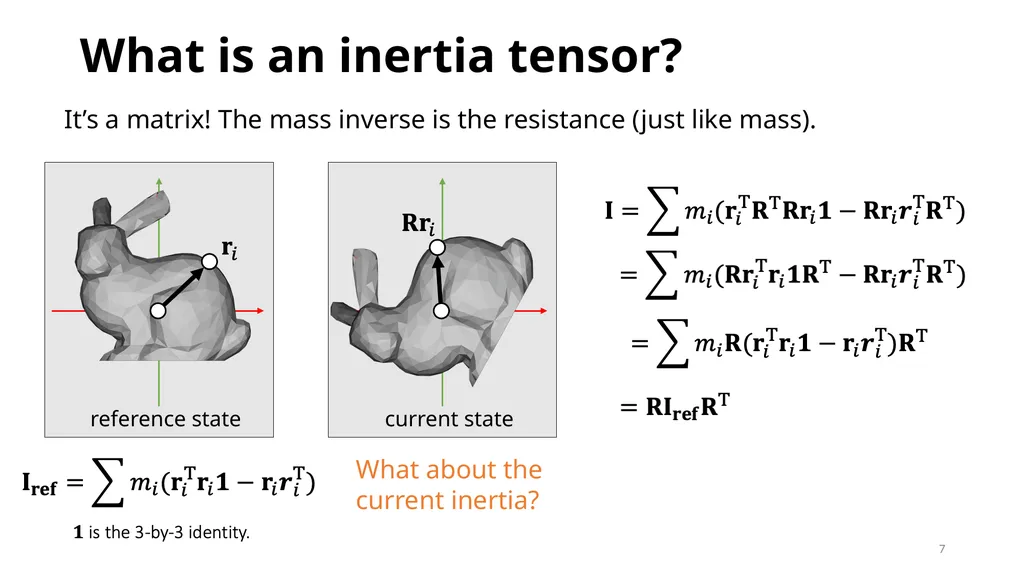
7 What is an inertia tensor? It’s a matrix! The mass inverse is the resistance (just like mass). reference state current state What about the current inertia?<br>
08
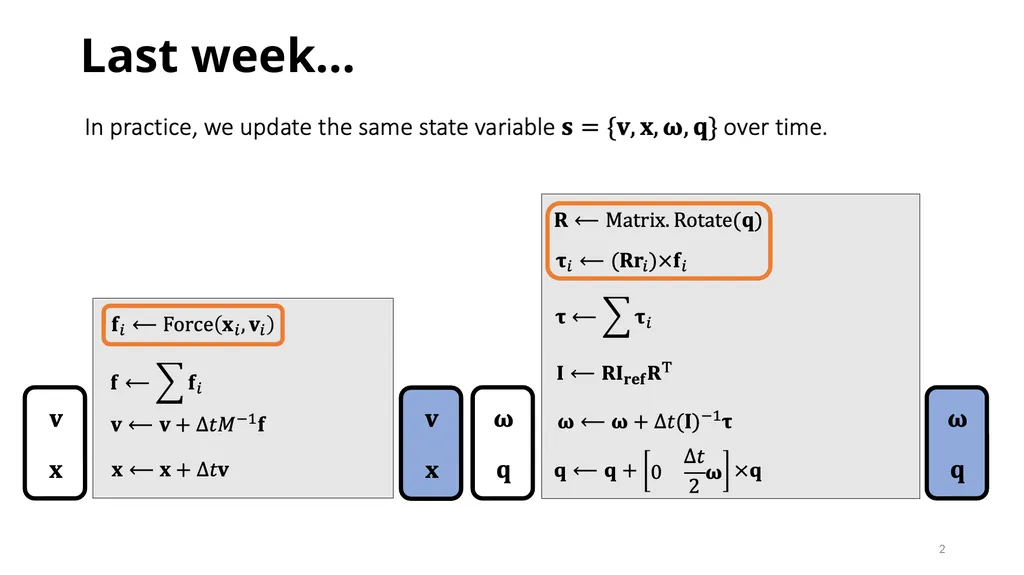
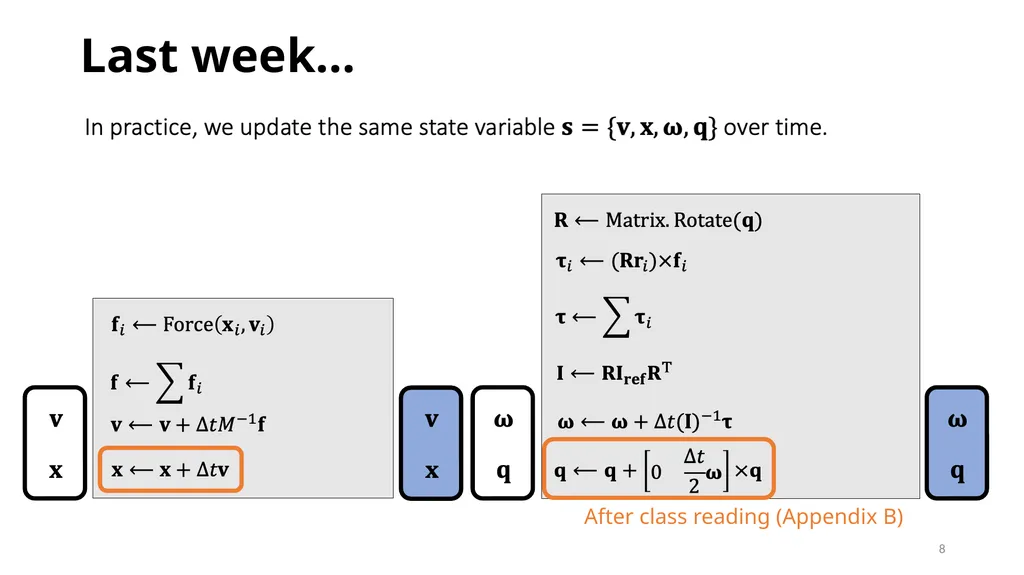
8 Last week… After class reading (Appendix B)<br>
09
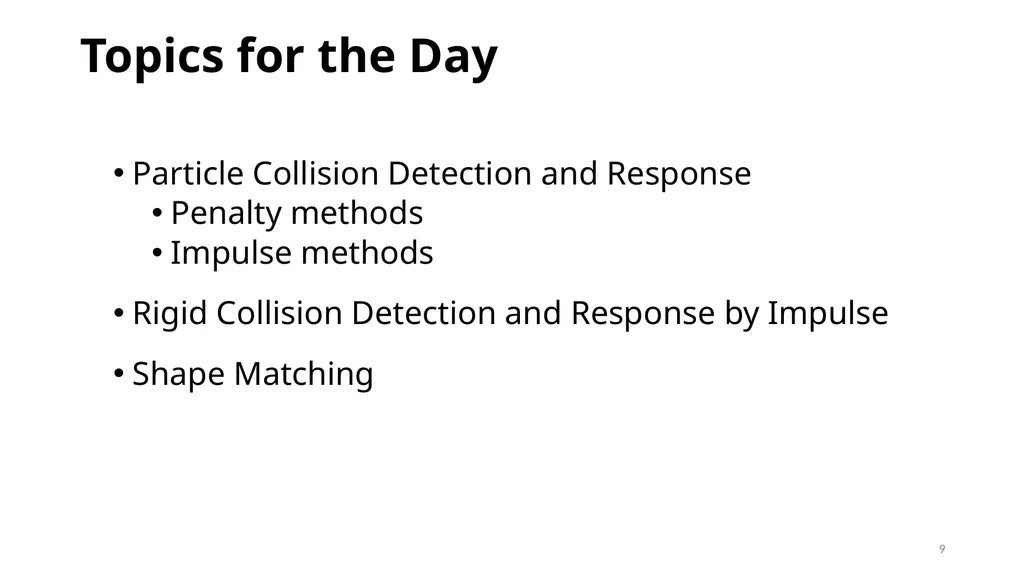
9 Topics for the Day Particle Collision Detection and Response
Penalty methods
Impulse methods
Rigid Collision Detection and Response by Impulse
Shape Matching<br>
10
Particle Collision �Detection and Response 10<br>
11
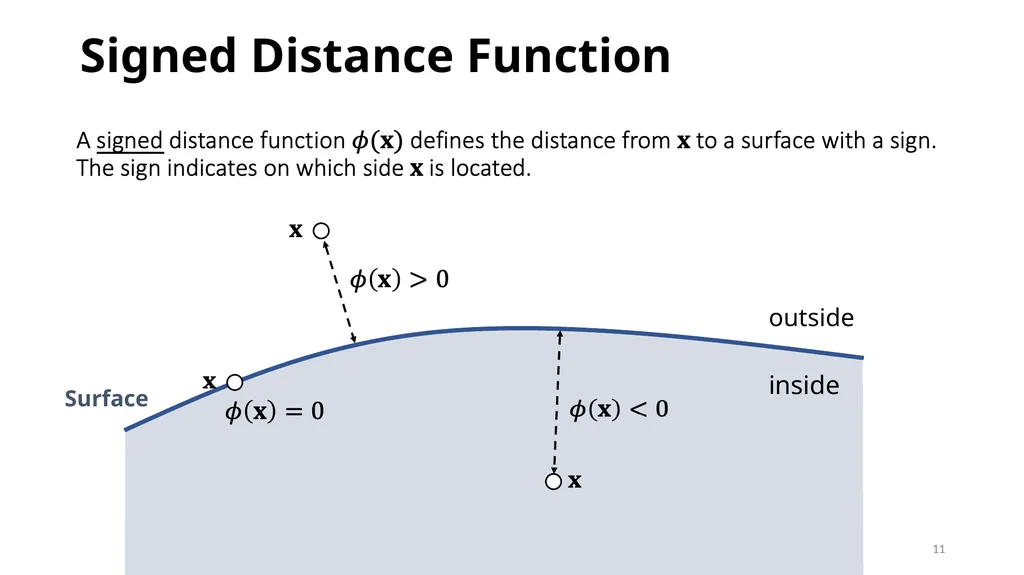
Signed Distance Function 11 Surface inside outside<br>
12
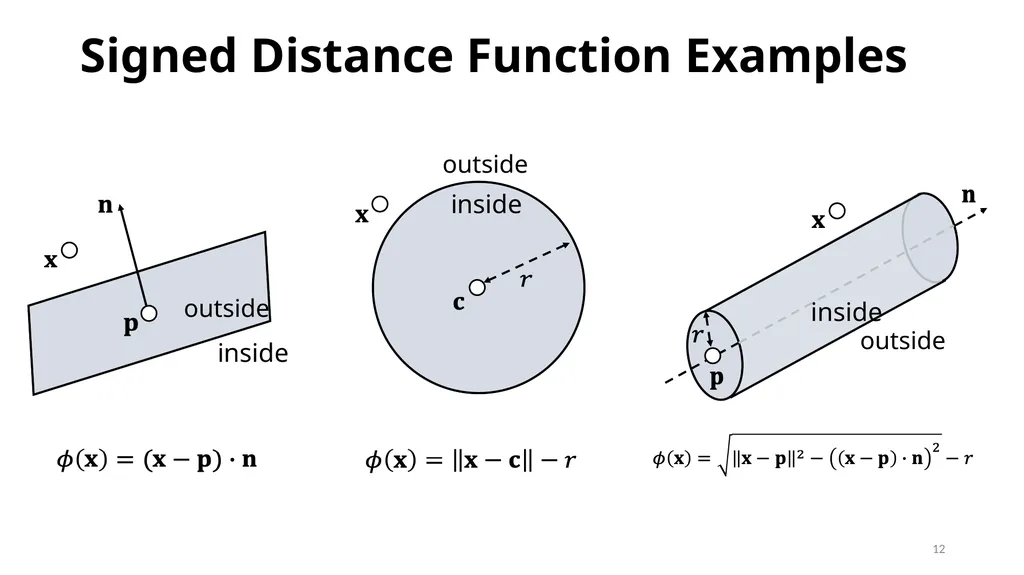
Signed Distance Function Examples 12 inside outside inside outside inside outside<br>
13
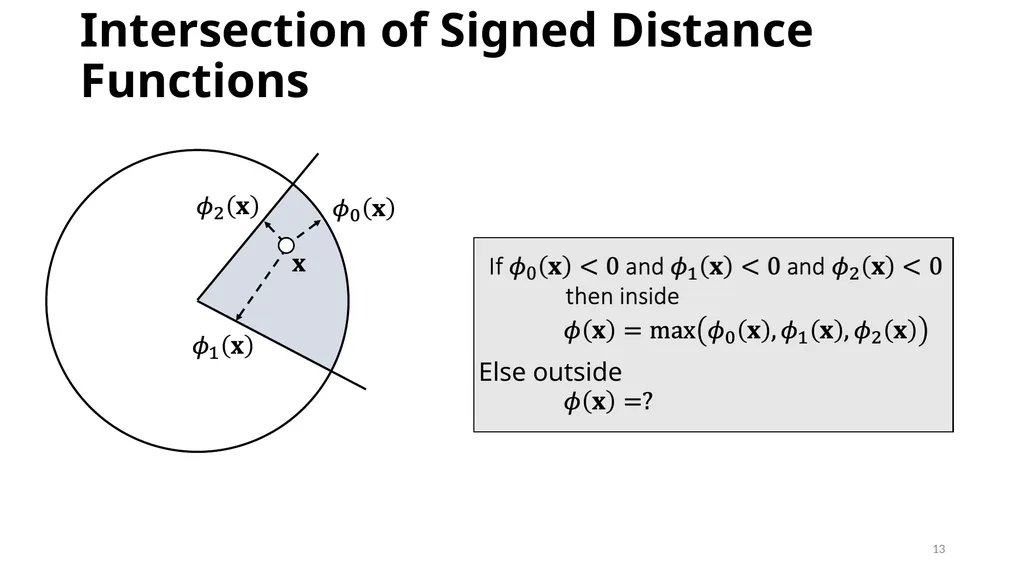
Intersection of Signed Distance Functions 13 Else outside<br>
14
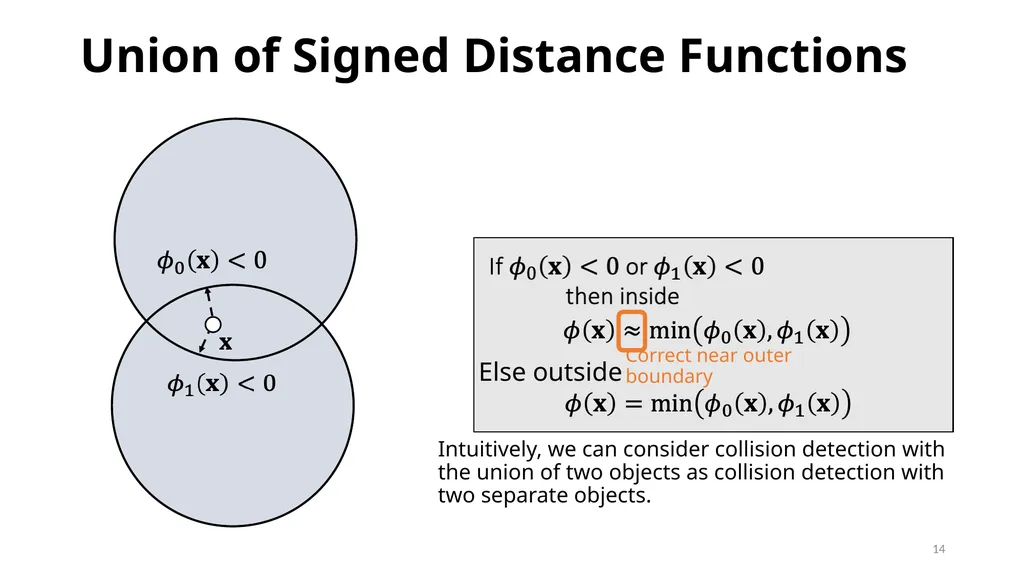
Union of Signed Distance Functions 14 Else outside Correct near outer boundary Intuitively, we can consider collision detection with the union of two objects as collision detection with two separate objects.<br>
15
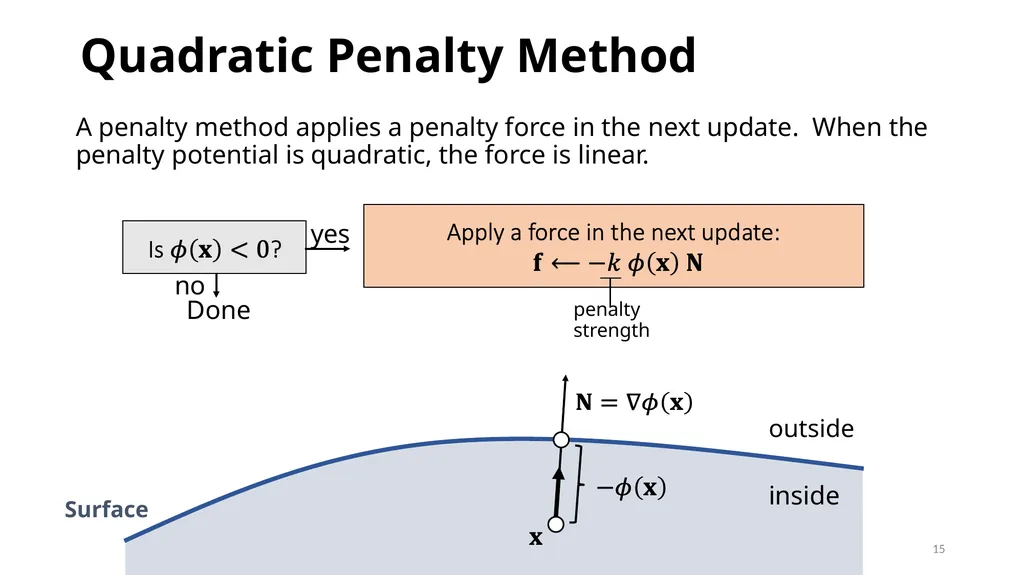
Quadratic Penalty Method 15 A penalty method applies a penalty force in the next update. When the penalty potential is quadratic, the force is linear. Surface inside outside Done no yes penalty strength<br>
16
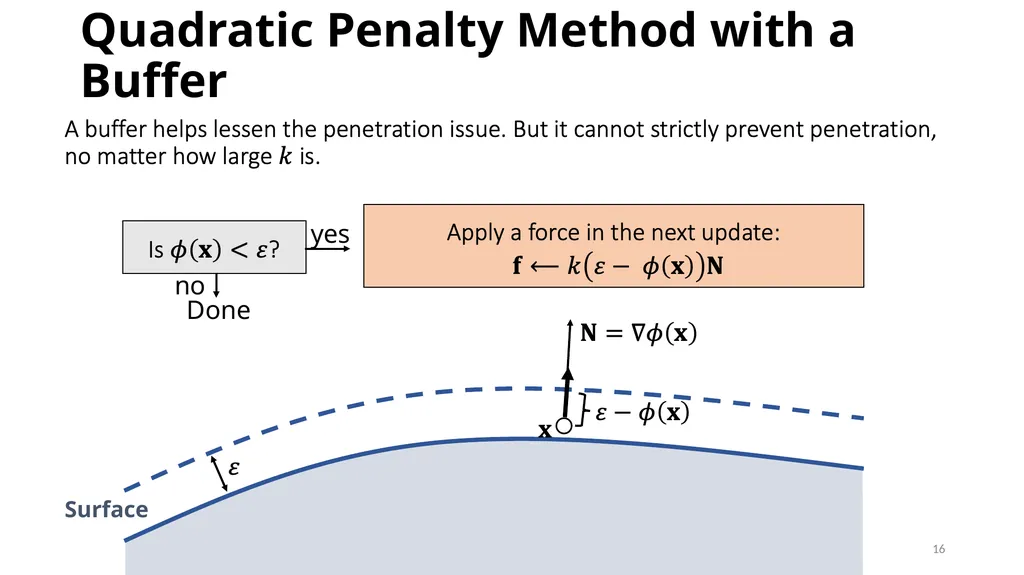
Quadratic Penalty Method with a Buffer 16 Surface Done no yes<br>
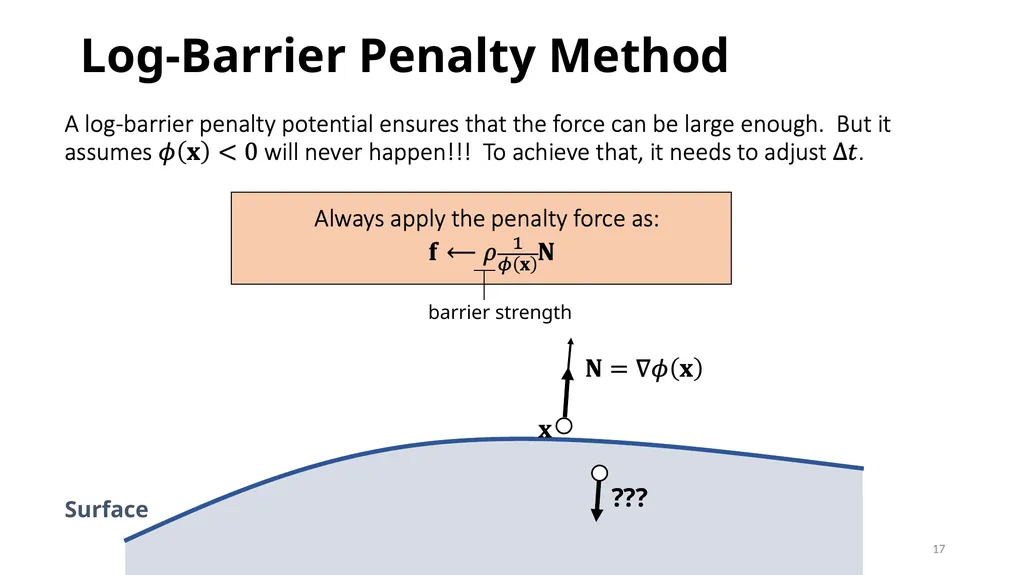
17
Log-Barrier Penalty Method 17 Surface ??? barrier strength<br>
18
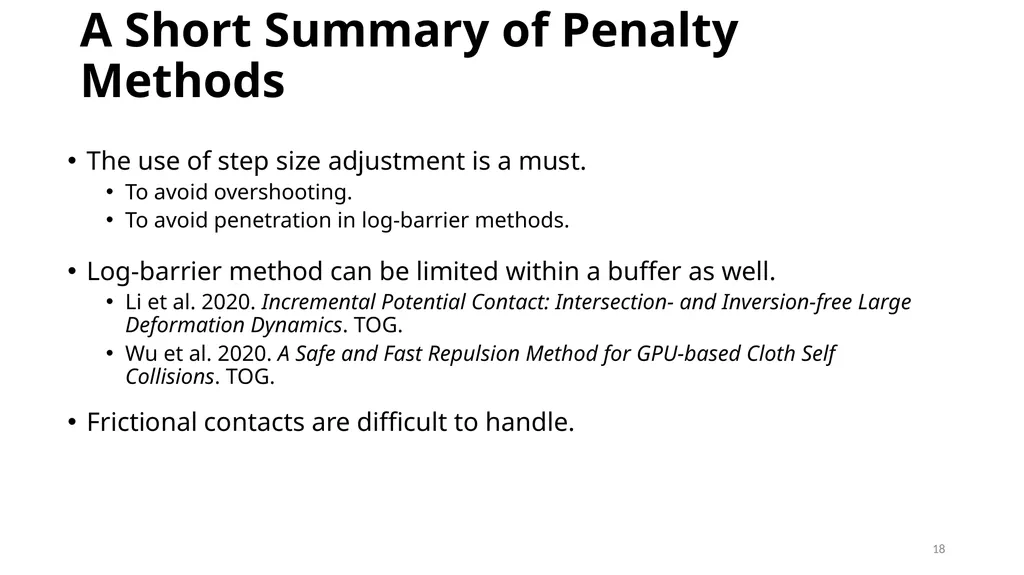
A Short Summary of Penalty Methods 18 The use of step size adjustment is a must.
To avoid overshooting.
To avoid penetration in log-barrier methods.
Log-barrier method can be limited within a buffer as well.
Li et al. 2020. Incremental Potential Contact: Intersection- and Inversion-free Large Deformation Dynamics. TOG.
Wu et al. 2020. A Safe and Fast Repulsion Method for GPU-based Cloth Self Collisions. TOG.
Frictional contacts are difficult to handle.<br>
19
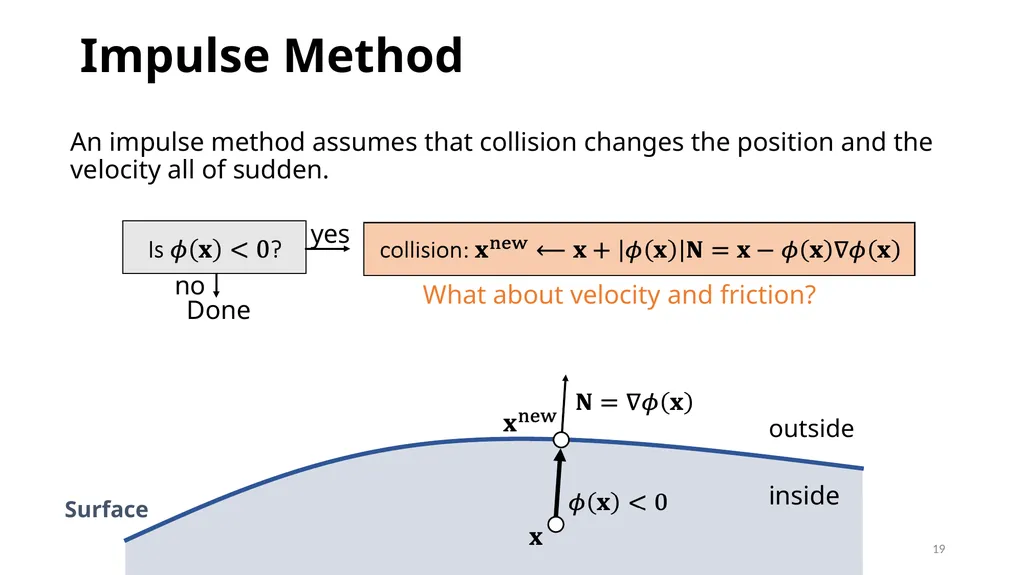
Impulse Method 19 An impulse method assumes that collision changes the position and the velocity all of sudden. Surface inside outside What about velocity and friction? Done no yes<br>
20
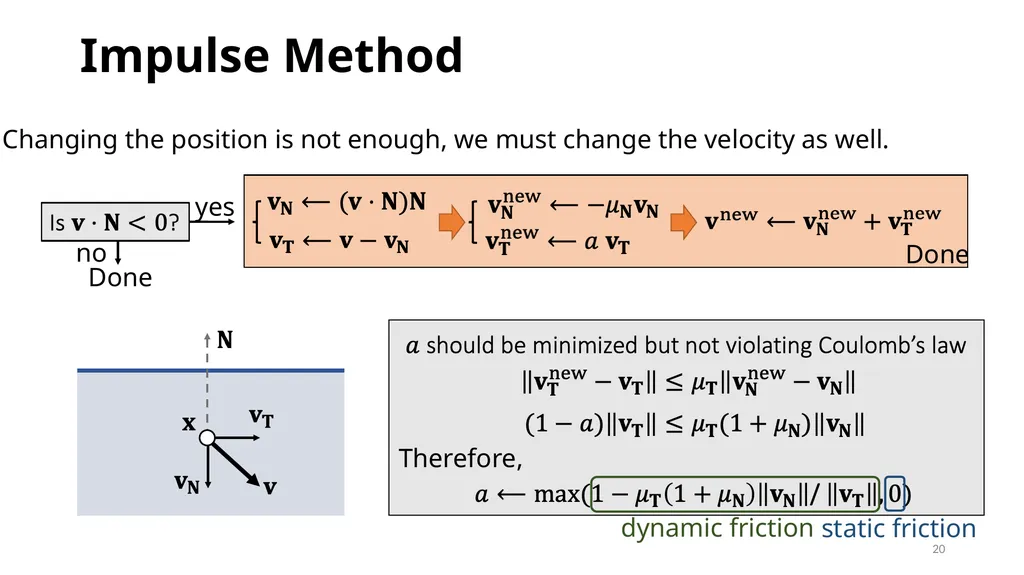
Impulse Method Changing the position is not enough, we must change the velocity as well. Done no yes Therefore, dynamic friction static friction Done 20<br>
21
Rigid Body Collision �Detection and Response 21<br>
22
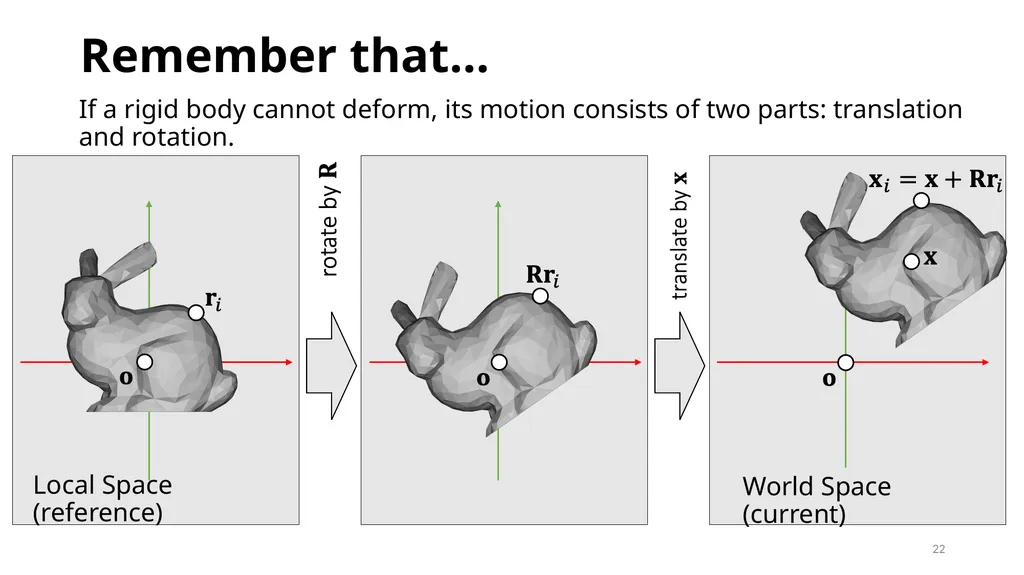
22 Remember that… If a rigid body cannot deform, its motion consists of two parts: translation and rotation. Local Space (reference) World Space (current)<br>
23
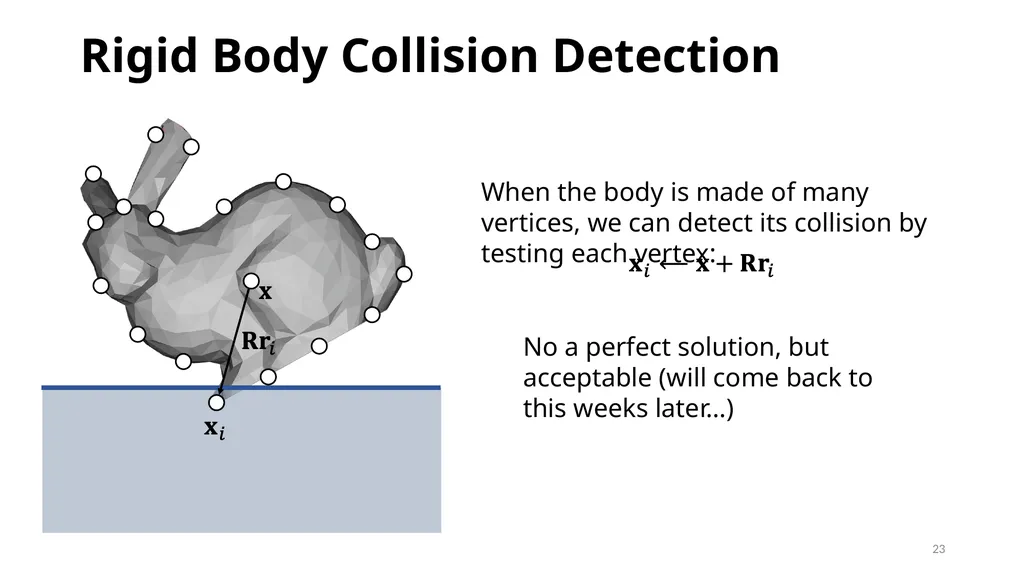
Rigid Body Collision Detection 23 When the body is made of many vertices, we can detect its collision by testing each vertex: No a perfect solution, but acceptable (will come back to this weeks later…)<br>
24
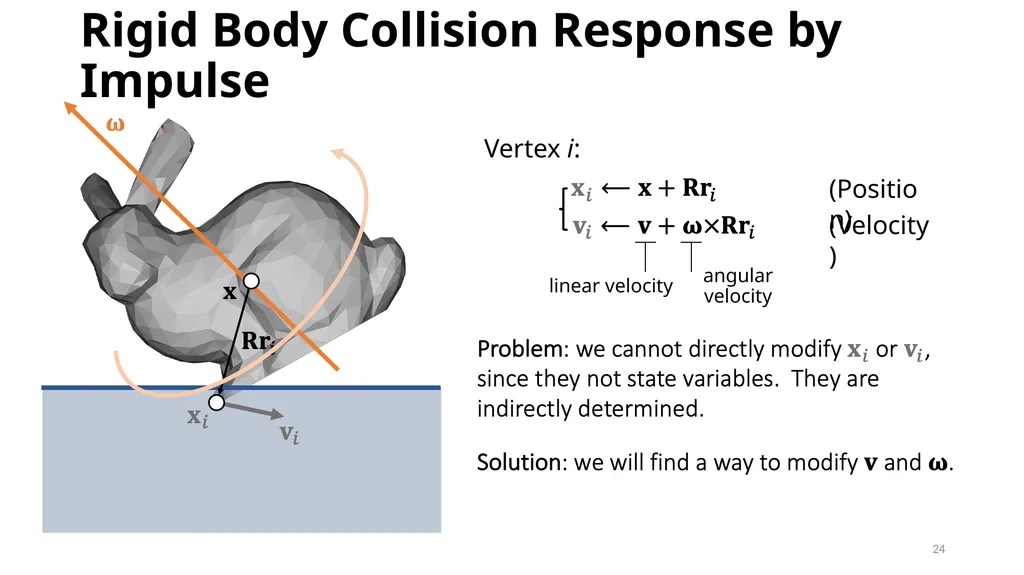
Rigid Body Collision Response by Impulse 24 Vertex i: linear velocity angular velocity (Position) (Velocity)<br>
25
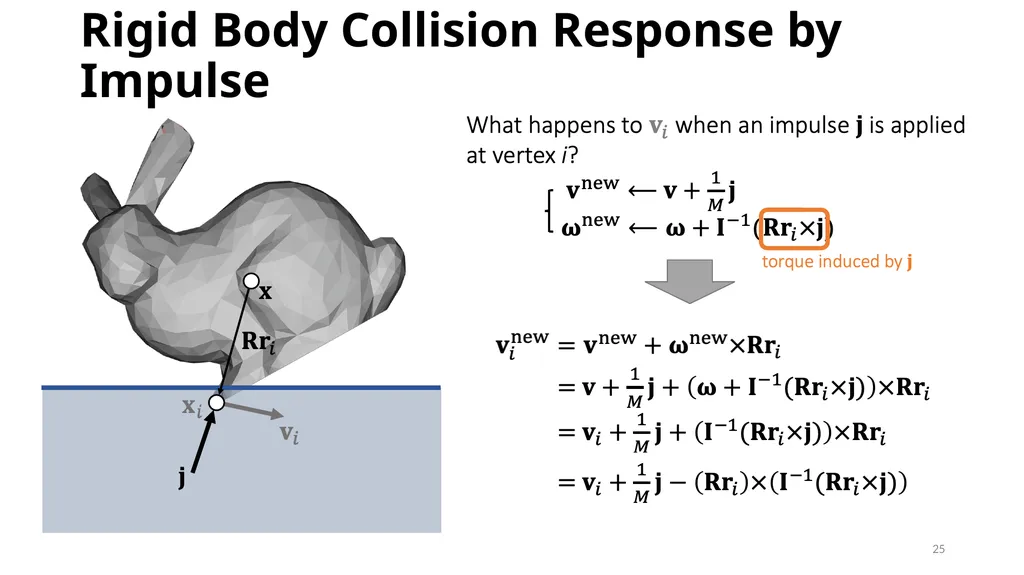
Rigid Body Collision Response by Impulse 25<br>
26
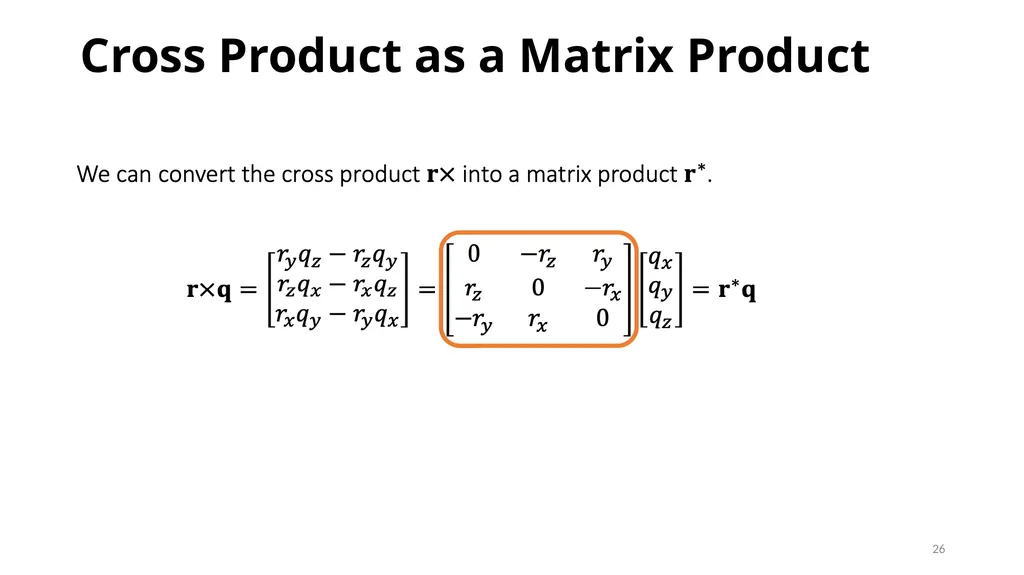
26 Cross Product as a Matrix Product<br>
27
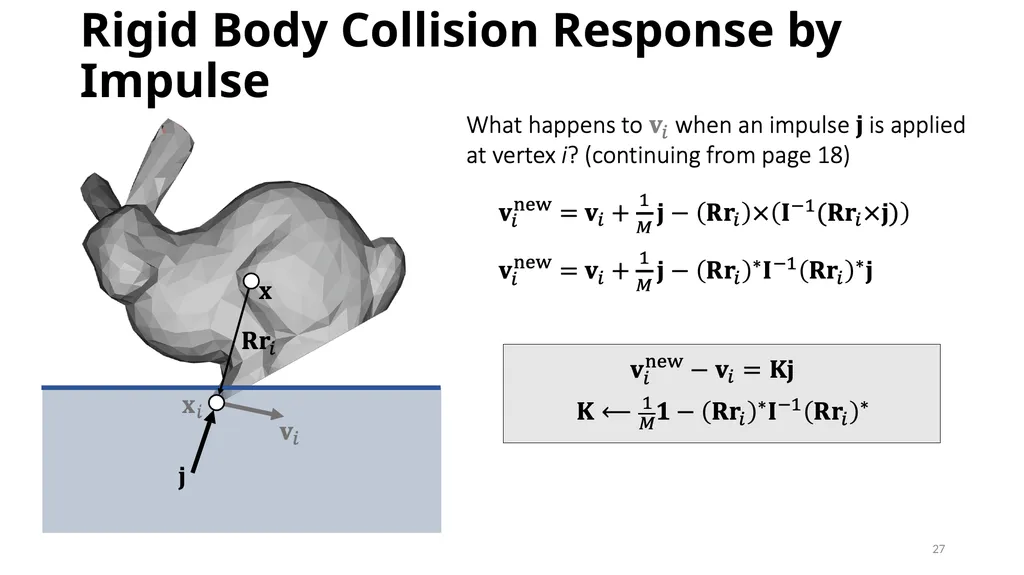
Rigid Body Collision Response by Impulse 27<br>
28
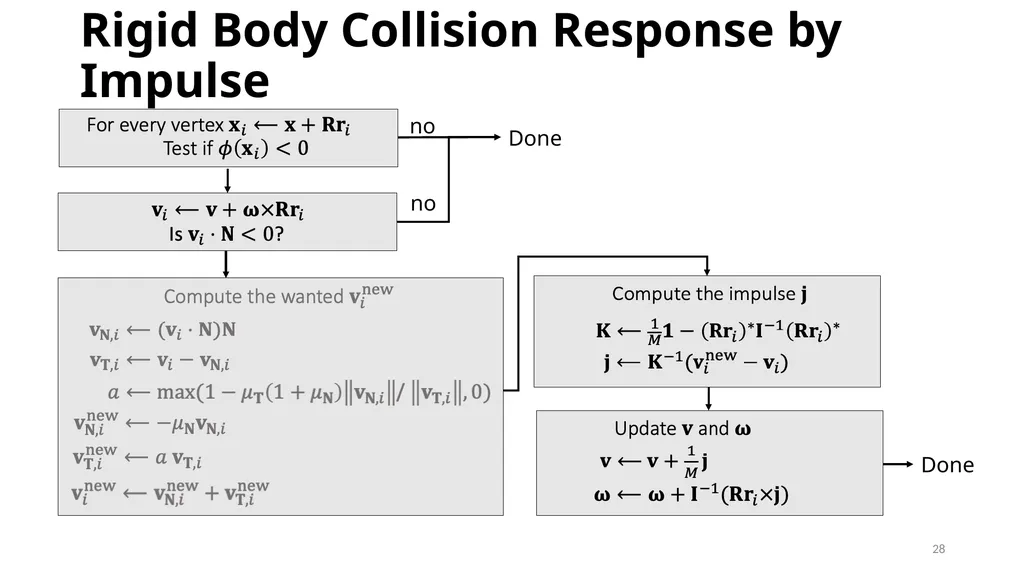
Rigid Body Collision Response by Impulse 28 Done no no Done<br>
29
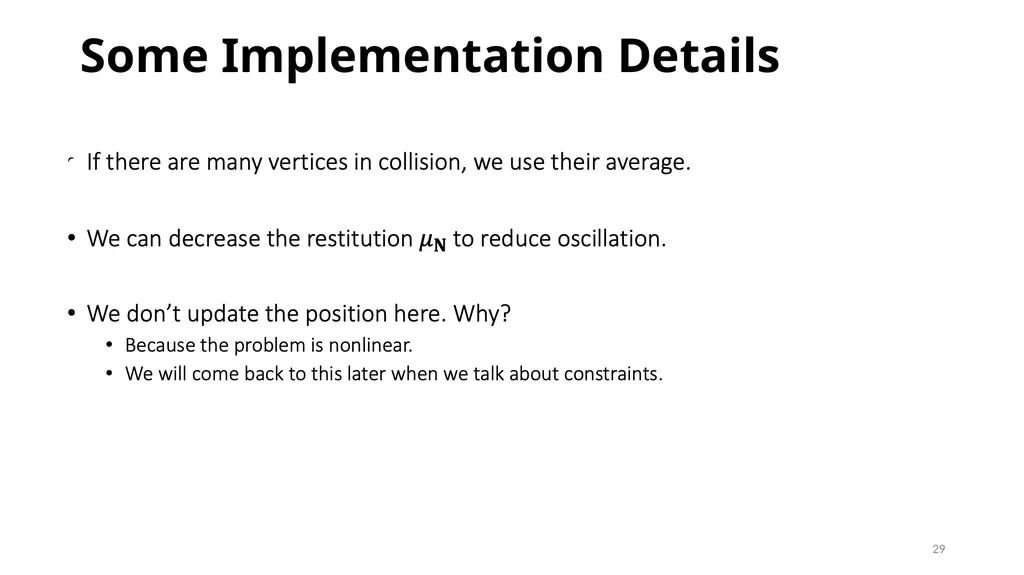
Some Implementation Details 29<br>
30
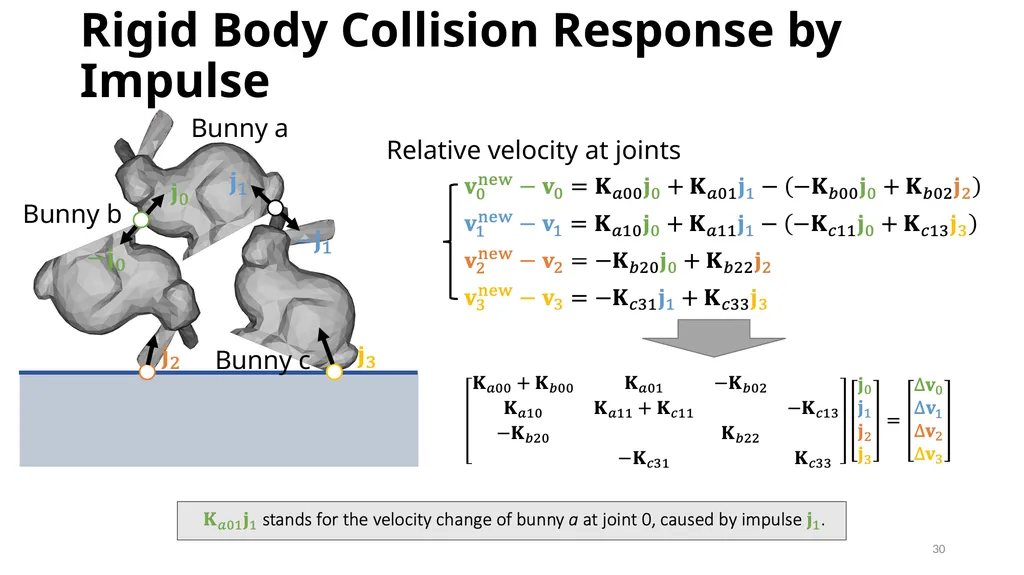
Rigid Body Collision Response by Impulse 30 Bunny a Bunny b Bunny c Relative velocity at joints<br>
31
https://graphics.pixar.com/pbm2001 After-Class Reading (Before Collision) 31<br>
33
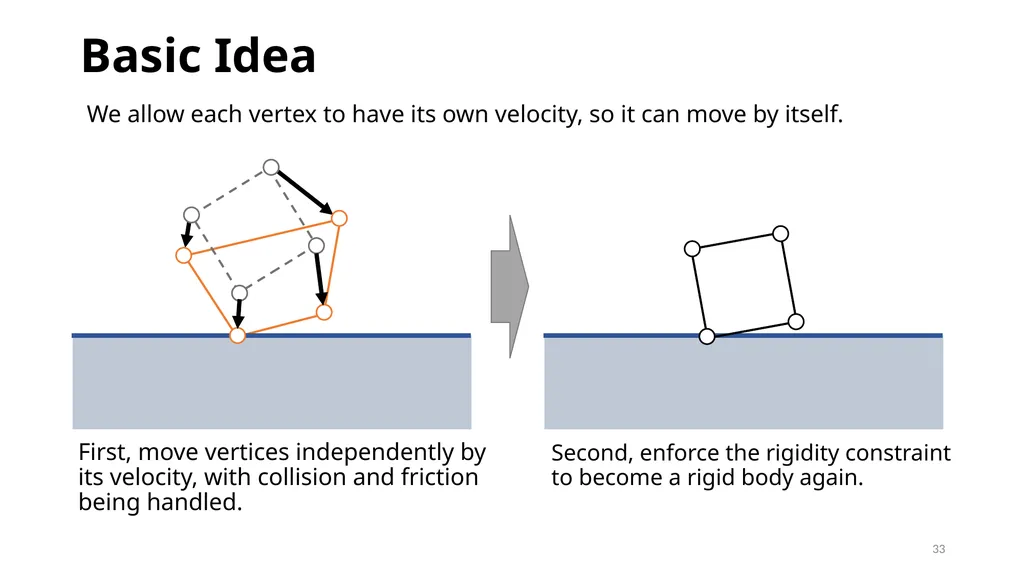
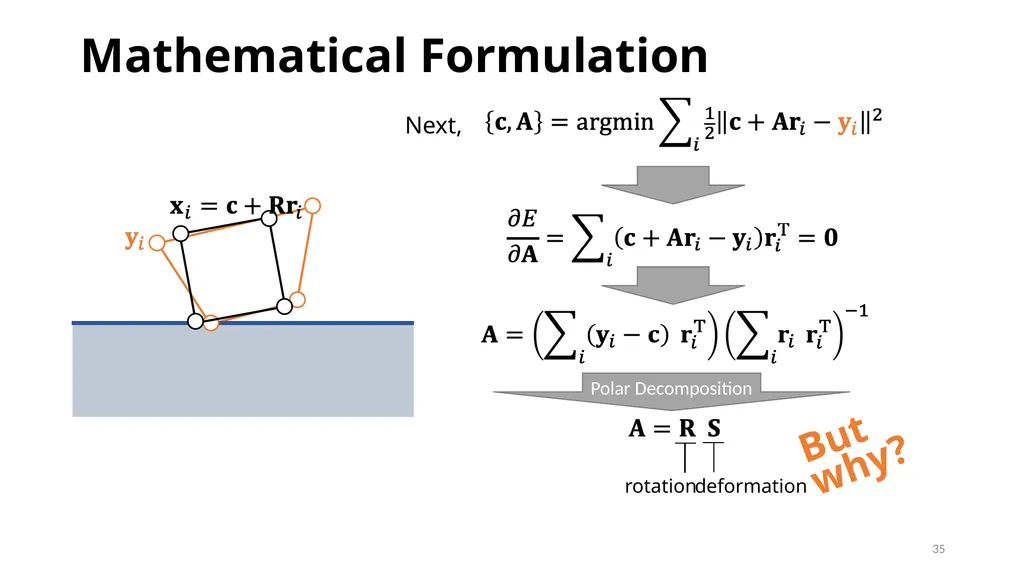
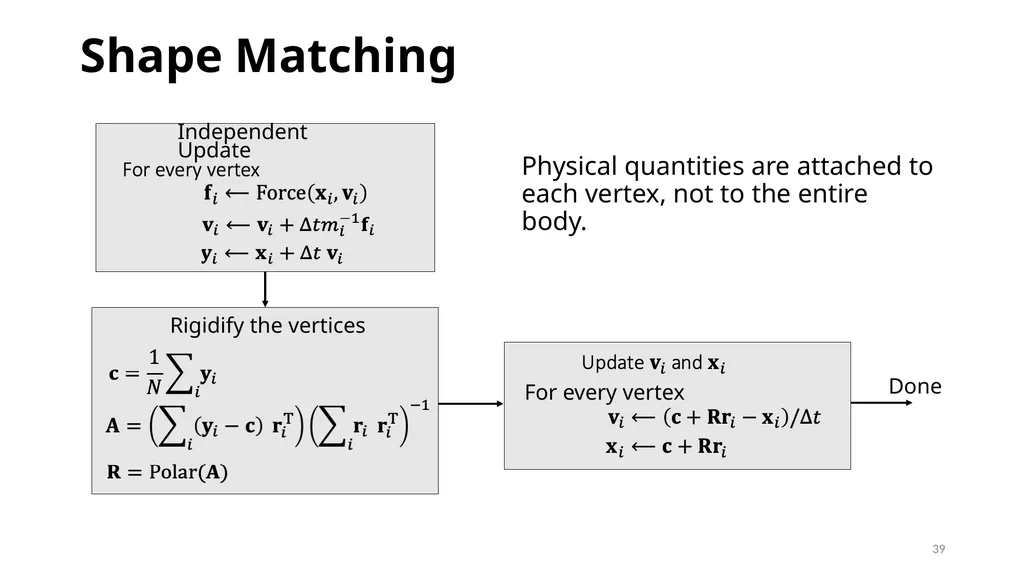
33 Basic Idea First, move vertices independently by its velocity, with collision and friction being handled. Second, enforce the rigidity constraint to become a rigid body again. We allow each vertex to have its own velocity, so it can move by itself.<br>
34
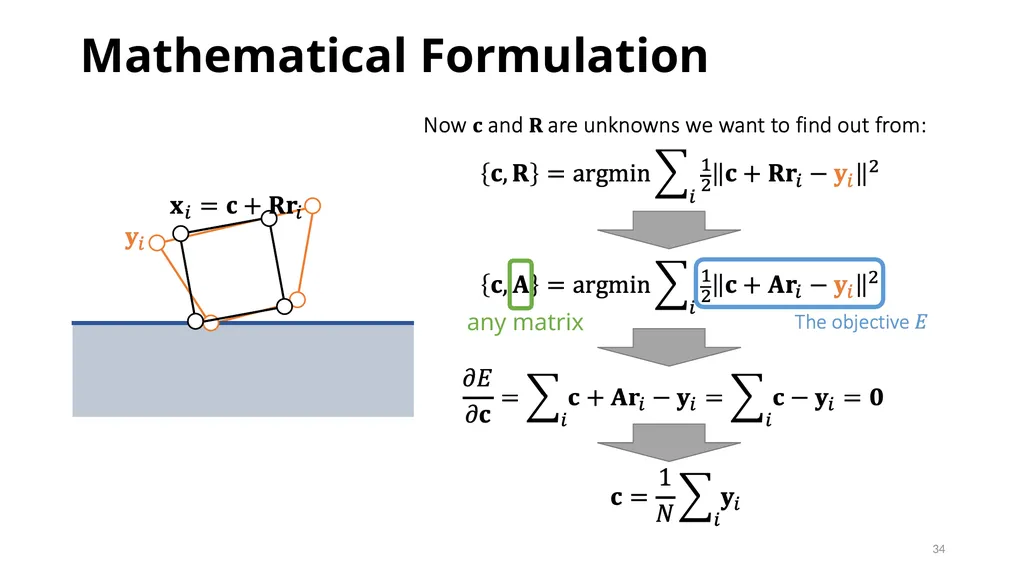
34 Mathematical Formulation any matrix<br>
35
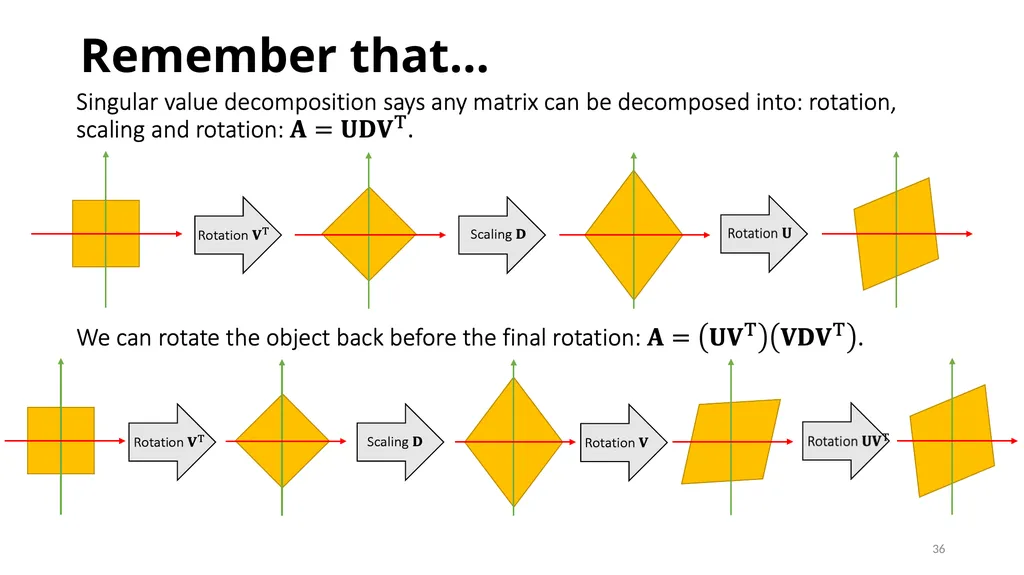
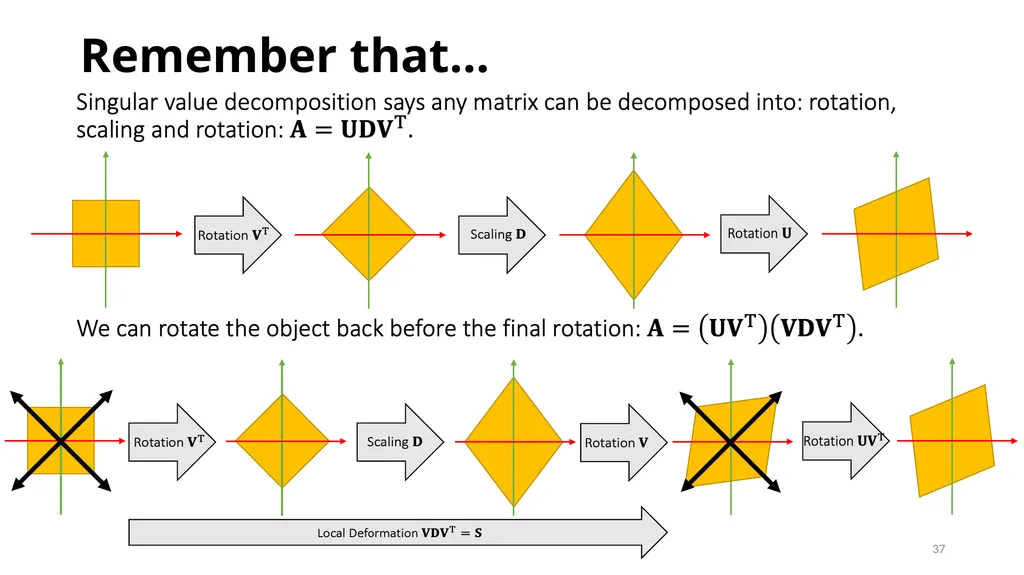
35 Mathematical Formulation Next, Polar Decomposition rotation deformation But why?<br>
38
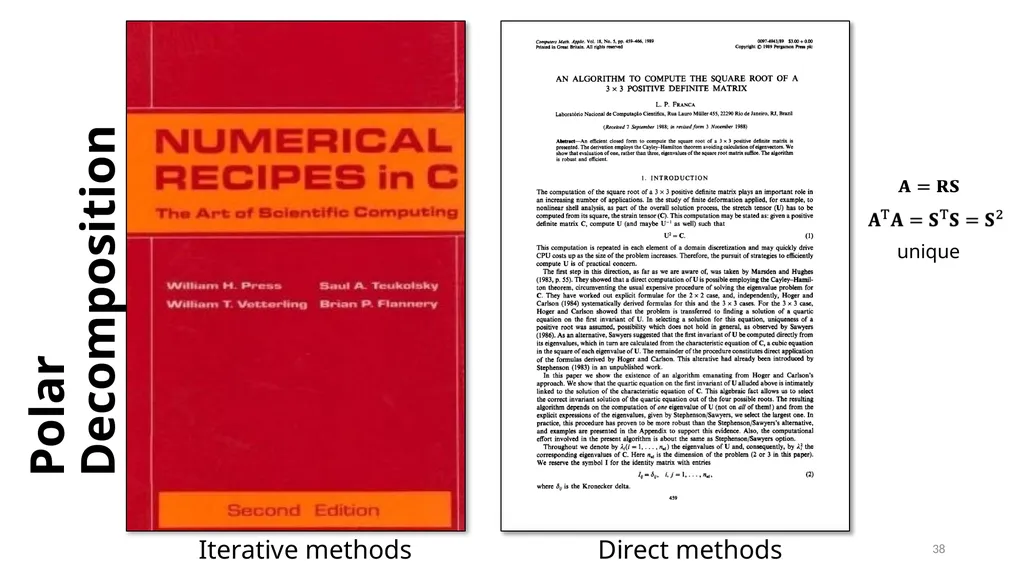
Polar Decomposition 38 Iterative methods Direct methods unique<br>
39
Shape Matching 39 Rigidify the vertices Done Independent Update For every vertex Physical quantities are attached to each vertex, not to the entire body.<br>
40
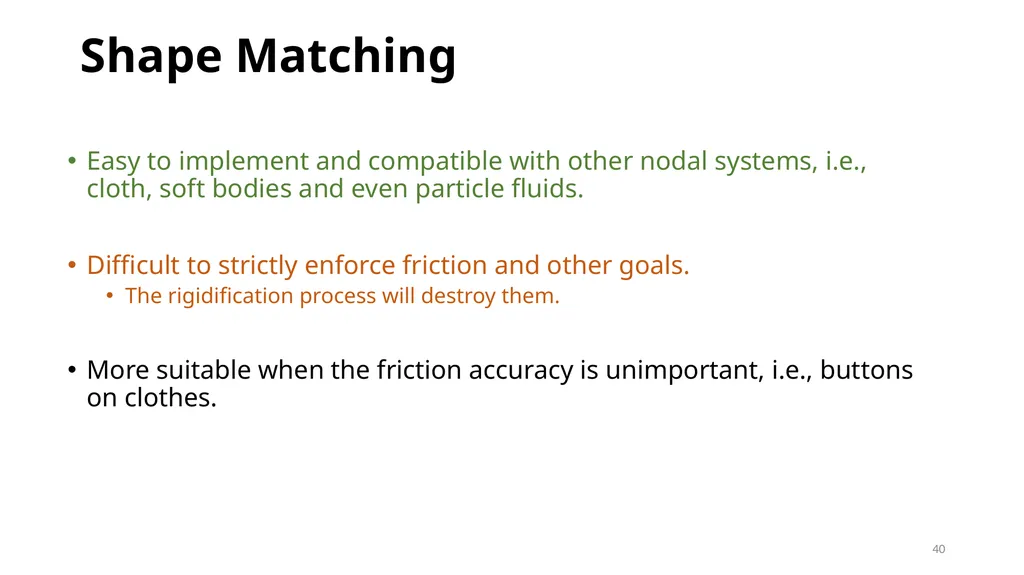
Shape Matching 40 Easy to implement and compatible with other nodal systems, i.e., cloth, soft bodies and even particle fluids.
Difficult to strictly enforce friction and other goals.
The rigidification process will destroy them.
More suitable when the friction accuracy is unimportant, i.e., buttons on clothes.<br>
41
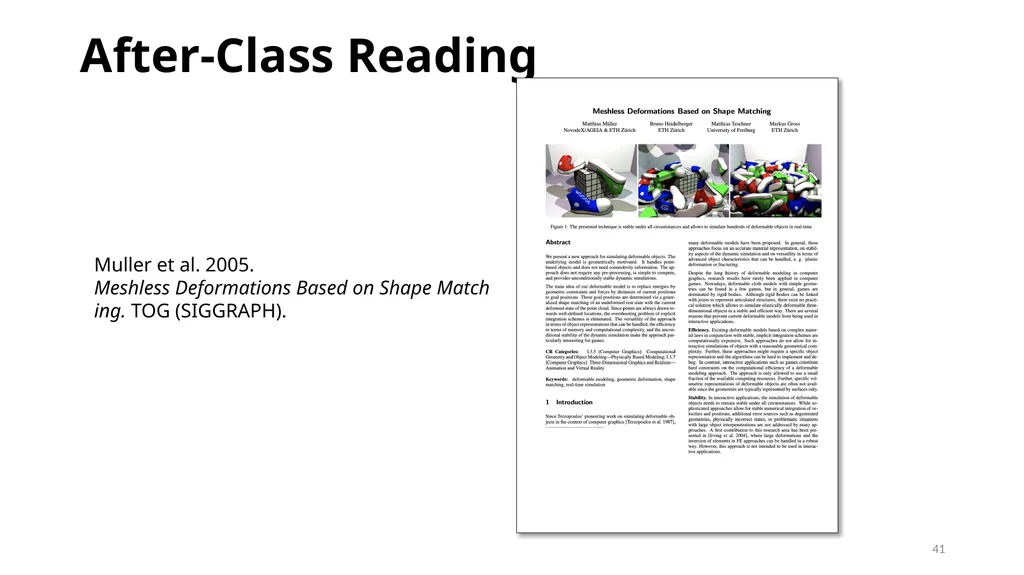
Muller et al. 2005. Meshless Deformations Based on Shape Matching. TOG (SIGGRAPH). After-Class Reading 41<br>