
Garry Sigman, M.D. Associate Professor, Pediatrics


Description: Garry Sigman, M.D. Associate Professor, Pediatrics Chairman Student Progress Committee SSOM Feedback and Remediation Definitions Feedback: An informed, non-evaluative, objective appraisal of performance intended to improve skills Ende,
Related Topics
Download Presentation
"Garry Sigman, M.D. Associate Professor, Pediatrics" is the property of its rightful owner. Permission is granted to download and print the materials on this website for personal, non-commercial use only, and to display it on your personal computer provided you do not modify the materials and that you retain all copyright notices contained in the materials. By downloading content from our website, you accept the terms of this agreement.
Presentation Transcript
slide1. Garry Sigman, M.D.
Associate Professor, Pediatrics
Chairman Student Progress Committee SSOM Feedback and Remediation<br>
slide2. Definitions Feedback: “An informed, non-evaluative, objective appraisal of performance intended to improve skills” Ende, 1983
Remediation
1. (Medicine) affording a remedy; curative
2. (Social Science / Education) denoting or relating to special teaching, teaching methods, or material for backward and slow learners remedial education<br>
slide3. Feedback: Micro-remediations- frequent, short encounters with students
Remediation: Methods of correcting problems in students who are performing poorly<br>
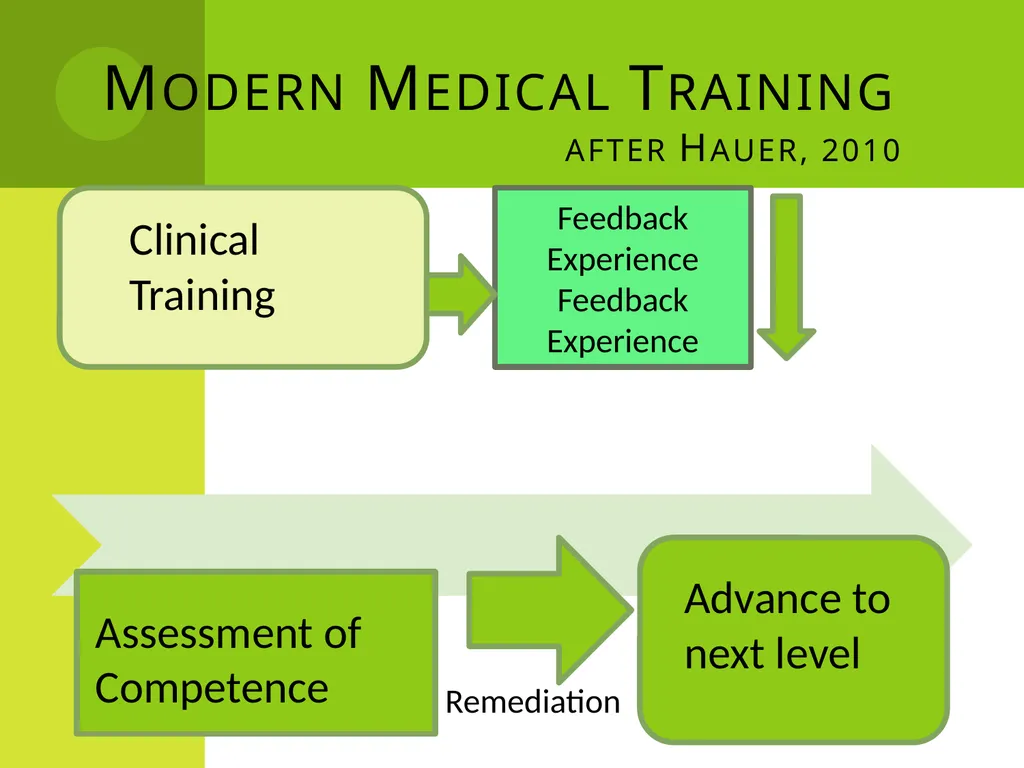
slide4. Modern Medical Training after Hauer, 2010 Feedback
Experience
Feedback
Experience Clinical Training Assessment of Competence Remediation Advance to next level<br>
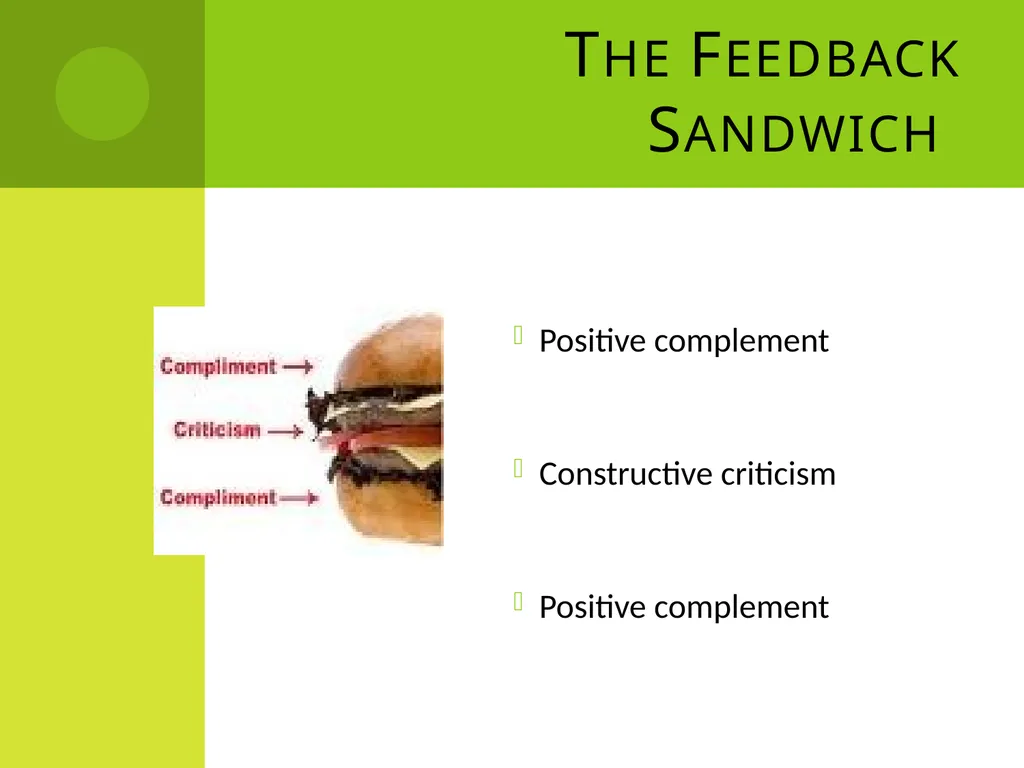
slide5. The Feedback Sandwich Positive complement
Constructive criticism
Positive complement<br>
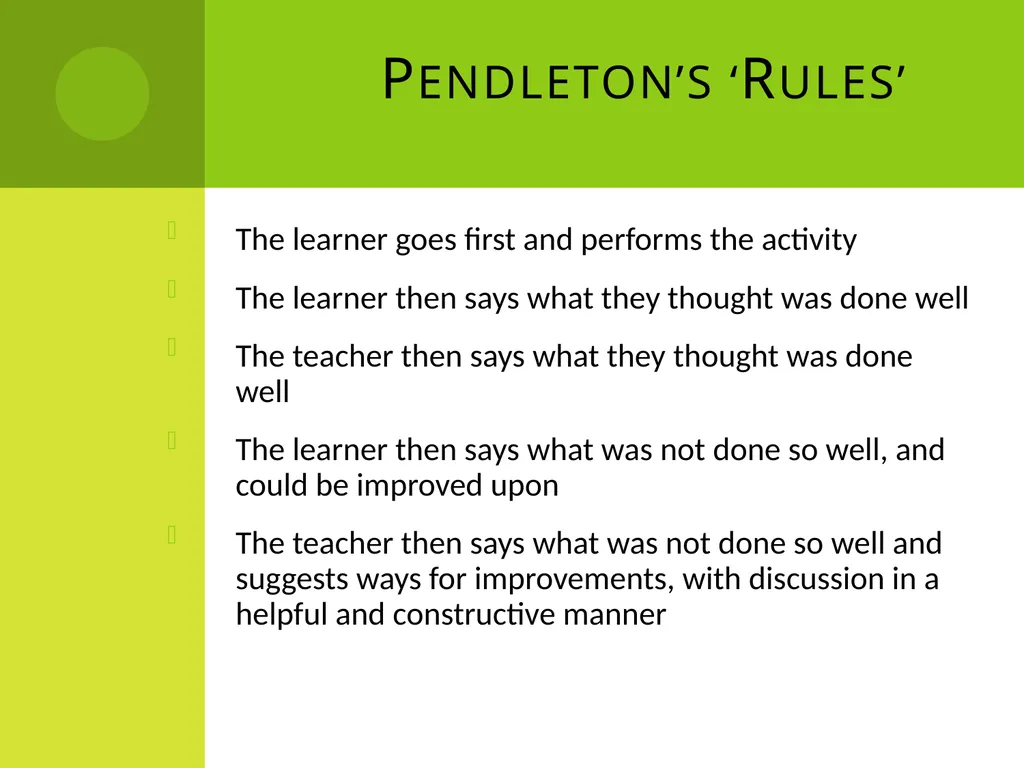
slide6. Pendleton’s ‘Rules’ The learner goes first and performs the activity
The learner then says what they thought was done well
The teacher then says what they thought was done well
The learner then says what was not done so well, and could be improved upon
The teacher then says what was not done so well and suggests ways for improvements, with discussion in a helpful and constructive manner<br>
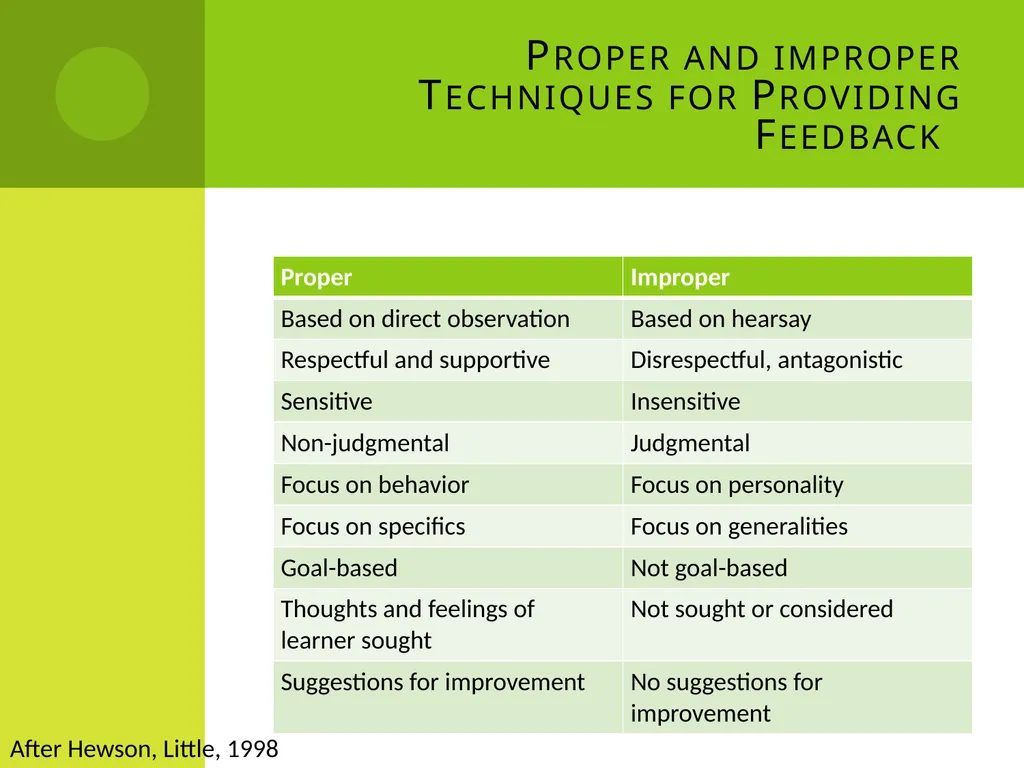
slide7. Proper and improper Techniques for Providing Feedback After Hewson, Little, 1998<br>
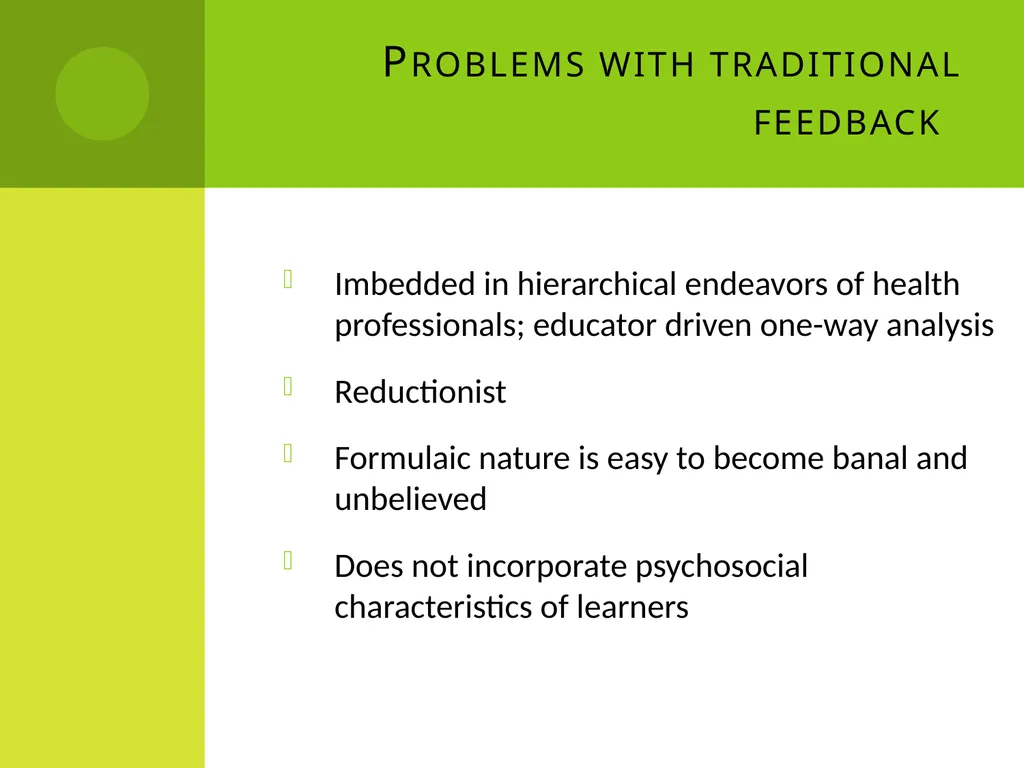
slide8. Problems with traditional feedback Imbedded in hierarchical endeavors of health professionals; educator driven one-way analysis
Reductionist
Formulaic nature is easy to become banal and unbelieved
Does not incorporate psychosocial characteristics of learners<br>
slide9. Problems with traditional feedback Traditional sandwich method- as soon as learner hears praise waits for criticism
Difficult to maintain positive emotional state
“Incompetency attacks”: negative emotional states can dominate interchange and can linger<br>
slide10. Learner issues with Feedback Self-assessment is not strongly validated; behavior and performance informed by unconscious mind focused on self-preservation
Recipients of negative feedback blame external factors and reject personal responsibility
Learners with high emotional stability, high levels of responsibility, and high sociability more likely to be motivated by feedback
Sargeant, 2006- in intervention group, those who received negative feedback often responded negatively, and behaved as if feedback to be obstructive to change
Poor feedback cause learner to believe that it was useless, burdensome, critical or controlling.<br>
slide11. The Net Generation- Characteristics Freedom
Customization
Scrutiny
Integrity
Collaboration
Acceptance
Entertainment
Speed
Innovation
Expression<br>
slide12. Agenda led- Outcomes based Analysis ALOBA Example:
Start with trainee’s agenda
Look at short term outcome
Encourage self-assessment and problem solving
Suggest alternatives
No negative feedback statements; make overall positive comment about performance<br>
slide13. Remediation Implies remedy
Remedy implies diagnosis
Diagnosis is best self-discovered<br>
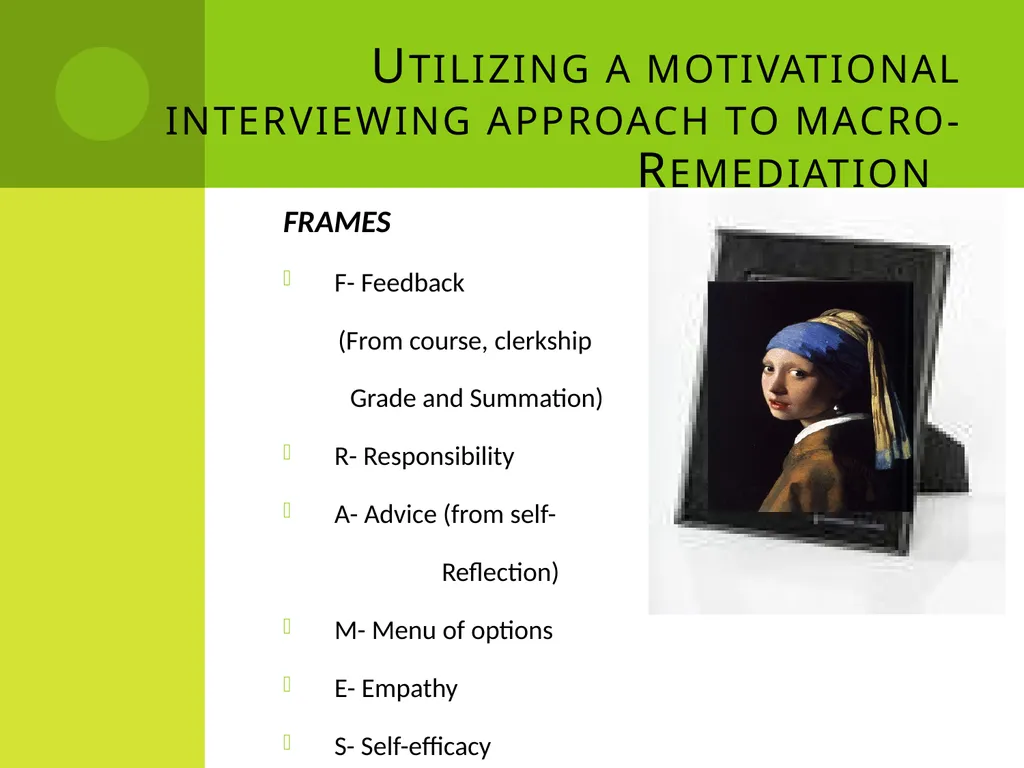
slide14. Utilizing a motivational interviewing approach to macro-Remediation FRAMES
F- Feedback
(From course, clerkship
Grade and Summation)
R- Responsibility
A- Advice (from self-
Reflection)
M- Menu of options
E- Empathy
S- Self-efficacy<br>
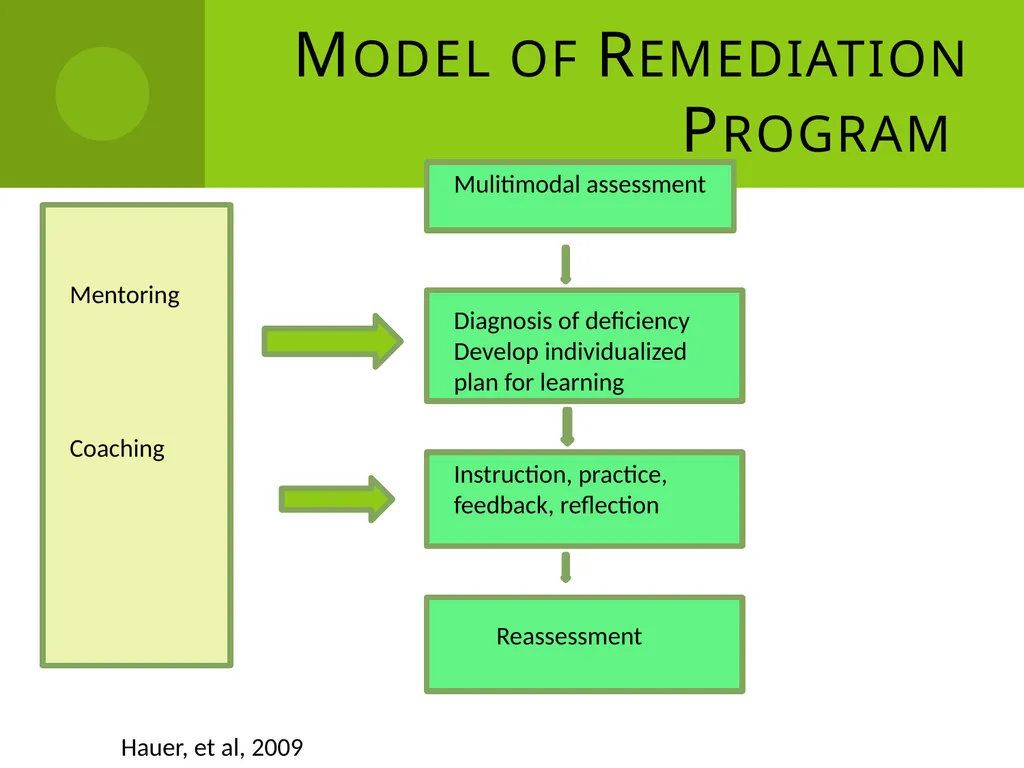
slide15. Model of Remediation Program Mentoring
Coaching Mulitimodal assessment Diagnosis of deficiency
Develop individualized plan for learning Instruction, practice, feedback, reflection Reassessment Hauer, et al, 2009<br>
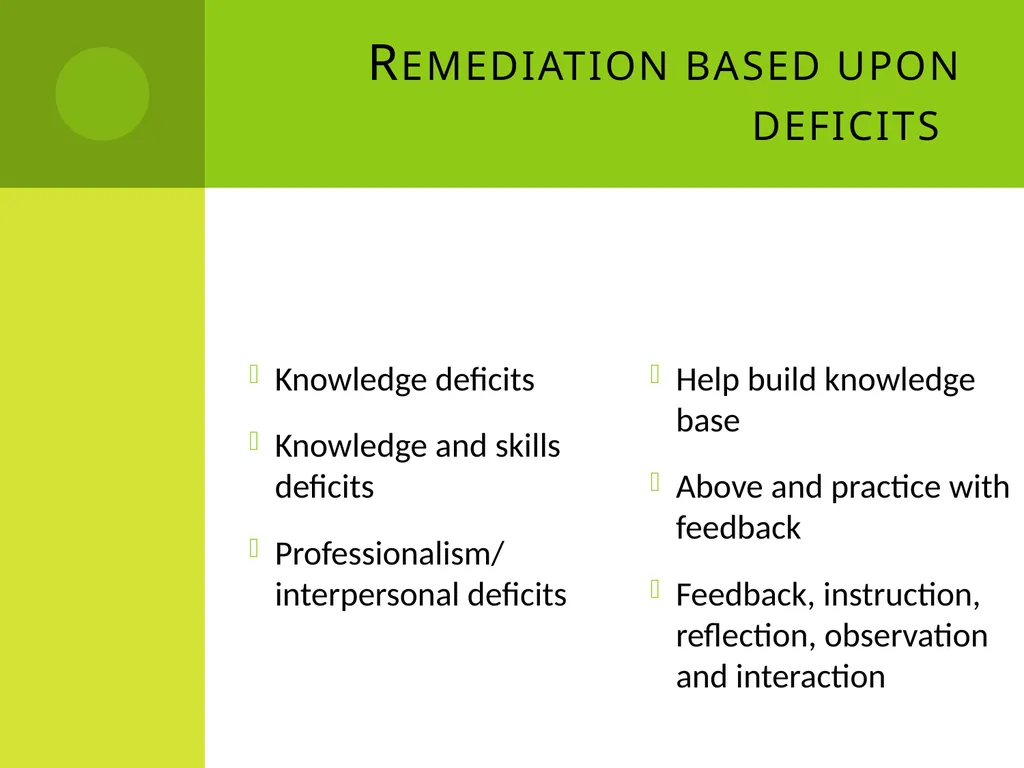
slide16. Remediation based upon deficits Knowledge deficits
Knowledge and skills deficits
Professionalism/ interpersonal deficits Help build knowledge base
Above and practice with feedback
Feedback, instruction, reflection, observation and interaction<br>
slide17. Remediation in medical education Little evidence for best practices
Small number of studies indicate:
Multi-assessment tools
Individualized instruction
Practice-feedback-reflection-reassment<br>
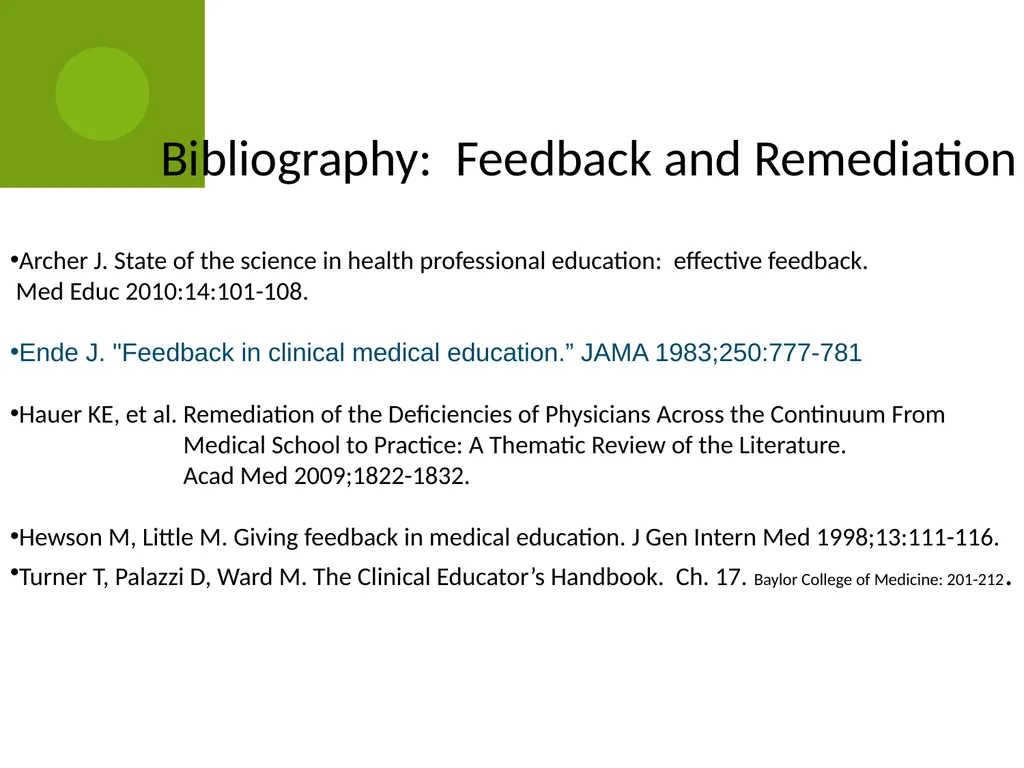
slide18. Bibliography: Feedback and Remediation
Archer J. State of the science in health professional education: effective feedback. Med Educ 2010:14:101-108.
Ende J. "Feedback in clinical medical education.” JAMA 1983;250:777-781
Hauer KE, et al. Remediation of the Deficiencies of Physicians Across the Continuum From Medical School to Practice: A Thematic Review of the Literature. Acad Med 2009;1822-1832.
Hewson M, Little M. Giving feedback in medical education. J Gen Intern Med 1998;13:111-116.
Turner T, Palazzi D, Ward M. The Clinical Educator’s Handbook. Ch. 17. Baylor College of Medicine: 201-212.<br>
Associate Professor, Pediatrics
Chairman Student Progress Committee SSOM Feedback and Remediation<br>
slide2. Definitions Feedback: “An informed, non-evaluative, objective appraisal of performance intended to improve skills” Ende, 1983
Remediation
1. (Medicine) affording a remedy; curative
2. (Social Science / Education) denoting or relating to special teaching, teaching methods, or material for backward and slow learners remedial education<br>
slide3. Feedback: Micro-remediations- frequent, short encounters with students
Remediation: Methods of correcting problems in students who are performing poorly<br>
slide4. Modern Medical Training after Hauer, 2010 Feedback
Experience
Feedback
Experience Clinical Training Assessment of Competence Remediation Advance to next level<br>
slide5. The Feedback Sandwich Positive complement
Constructive criticism
Positive complement<br>
slide6. Pendleton’s ‘Rules’ The learner goes first and performs the activity
The learner then says what they thought was done well
The teacher then says what they thought was done well
The learner then says what was not done so well, and could be improved upon
The teacher then says what was not done so well and suggests ways for improvements, with discussion in a helpful and constructive manner<br>
slide7. Proper and improper Techniques for Providing Feedback After Hewson, Little, 1998<br>
slide8. Problems with traditional feedback Imbedded in hierarchical endeavors of health professionals; educator driven one-way analysis
Reductionist
Formulaic nature is easy to become banal and unbelieved
Does not incorporate psychosocial characteristics of learners<br>
slide9. Problems with traditional feedback Traditional sandwich method- as soon as learner hears praise waits for criticism
Difficult to maintain positive emotional state
“Incompetency attacks”: negative emotional states can dominate interchange and can linger<br>
slide10. Learner issues with Feedback Self-assessment is not strongly validated; behavior and performance informed by unconscious mind focused on self-preservation
Recipients of negative feedback blame external factors and reject personal responsibility
Learners with high emotional stability, high levels of responsibility, and high sociability more likely to be motivated by feedback
Sargeant, 2006- in intervention group, those who received negative feedback often responded negatively, and behaved as if feedback to be obstructive to change
Poor feedback cause learner to believe that it was useless, burdensome, critical or controlling.<br>
slide11. The Net Generation- Characteristics Freedom
Customization
Scrutiny
Integrity
Collaboration
Acceptance
Entertainment
Speed
Innovation
Expression<br>
slide12. Agenda led- Outcomes based Analysis ALOBA Example:
Start with trainee’s agenda
Look at short term outcome
Encourage self-assessment and problem solving
Suggest alternatives
No negative feedback statements; make overall positive comment about performance<br>
slide13. Remediation Implies remedy
Remedy implies diagnosis
Diagnosis is best self-discovered<br>
slide14. Utilizing a motivational interviewing approach to macro-Remediation FRAMES
F- Feedback
(From course, clerkship
Grade and Summation)
R- Responsibility
A- Advice (from self-
Reflection)
M- Menu of options
E- Empathy
S- Self-efficacy<br>
slide15. Model of Remediation Program Mentoring
Coaching Mulitimodal assessment Diagnosis of deficiency
Develop individualized plan for learning Instruction, practice, feedback, reflection Reassessment Hauer, et al, 2009<br>
slide16. Remediation based upon deficits Knowledge deficits
Knowledge and skills deficits
Professionalism/ interpersonal deficits Help build knowledge base
Above and practice with feedback
Feedback, instruction, reflection, observation and interaction<br>
slide17. Remediation in medical education Little evidence for best practices
Small number of studies indicate:
Multi-assessment tools
Individualized instruction
Practice-feedback-reflection-reassment<br>
slide18. Bibliography: Feedback and Remediation
Archer J. State of the science in health professional education: effective feedback. Med Educ 2010:14:101-108.
Ende J. "Feedback in clinical medical education.” JAMA 1983;250:777-781
Hauer KE, et al. Remediation of the Deficiencies of Physicians Across the Continuum From Medical School to Practice: A Thematic Review of the Literature. Acad Med 2009;1822-1832.
Hewson M, Little M. Giving feedback in medical education. J Gen Intern Med 1998;13:111-116.
Turner T, Palazzi D, Ward M. The Clinical Educator’s Handbook. Ch. 17. Baylor College of Medicine: 201-212.<br>