Genetic Engineering What is the difference between the mice in these two groups? What is genetic engineering? Genetic engineering is the direct modification of an organisms genome, which is the list of specific traits (genes) stored in the
"Genetic Engineering What is the difference between" is the property of its rightful owner. Permission is granted to
download and print the materials on this website for personal, non-commercial use only, and to display it
on your personal computer provided you do not modify the materials and that you retain all copyright
notices contained in the materials. By downloading content from our website, you accept the terms of this
agreement.
Presentation Transcript
01
Genetic Engineering<br>
02
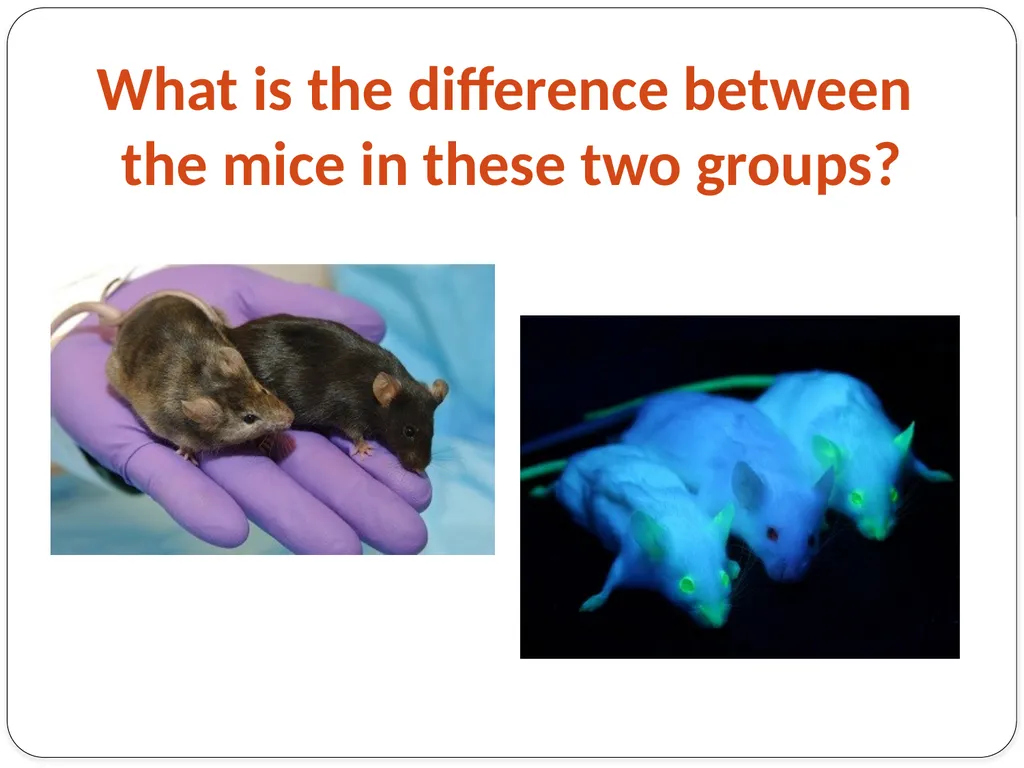
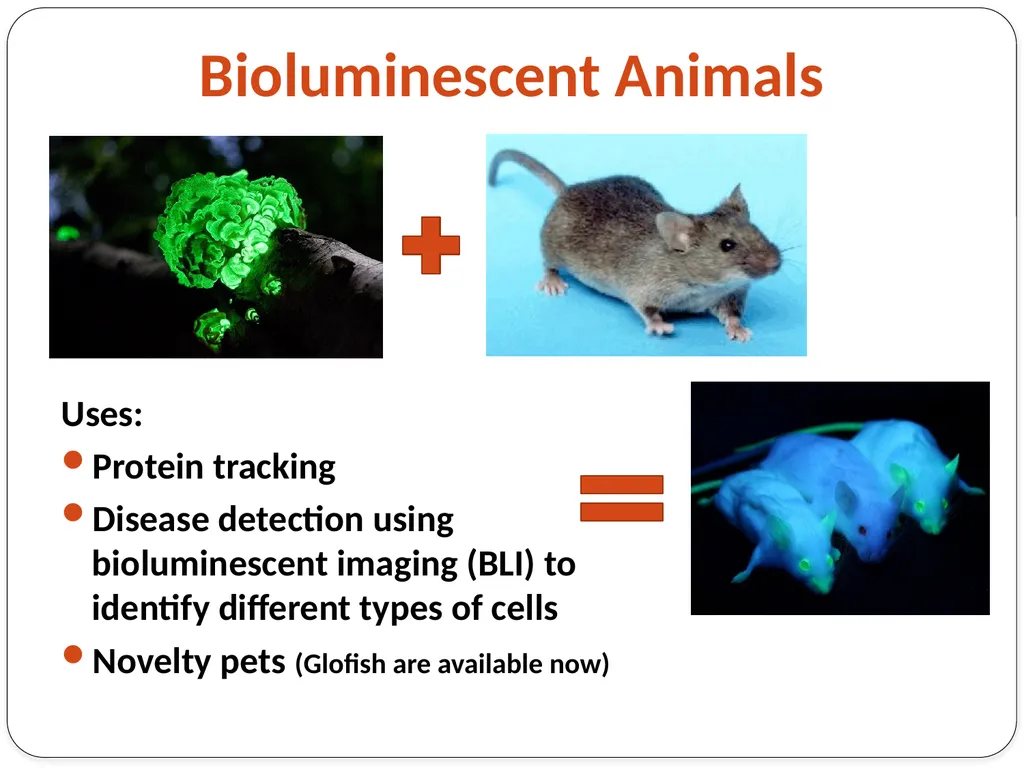
What is the difference between the mice in these two groups?<br>
03
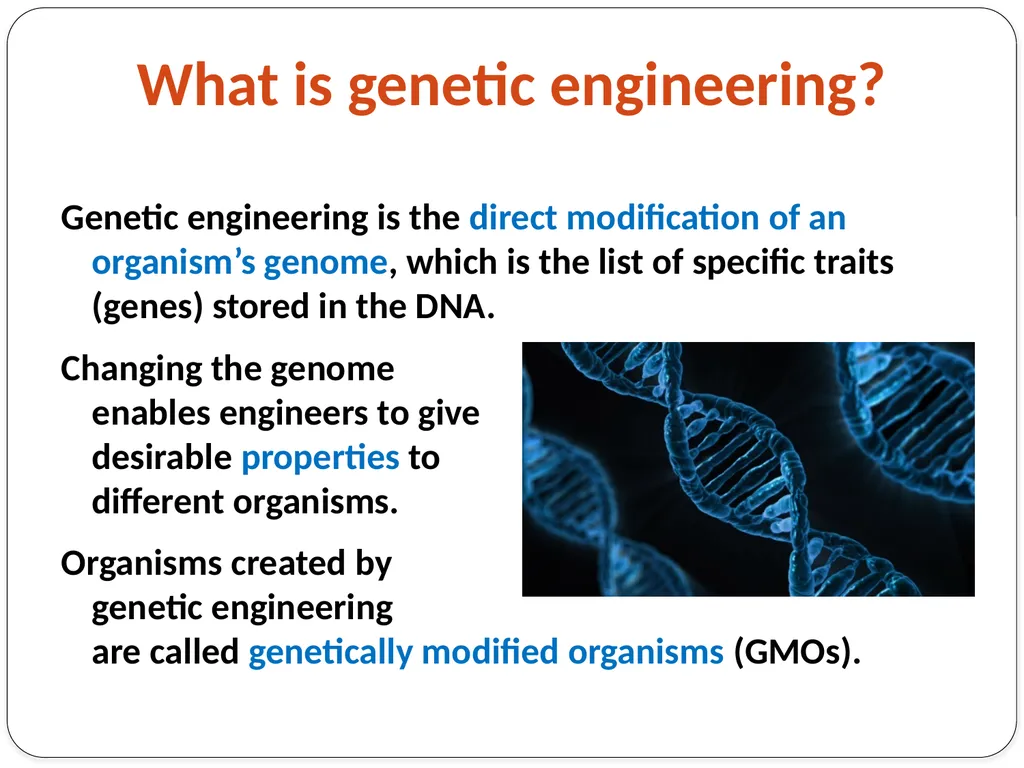
What is genetic engineering? Genetic engineering is the direct modification of an organism’s genome, which is the list of specific traits (genes) stored in the DNA.
Changing the genome enables engineers to give desirable properties to different organisms.
Organisms created by genetic engineering are called genetically modified organisms (GMOs).<br>
04
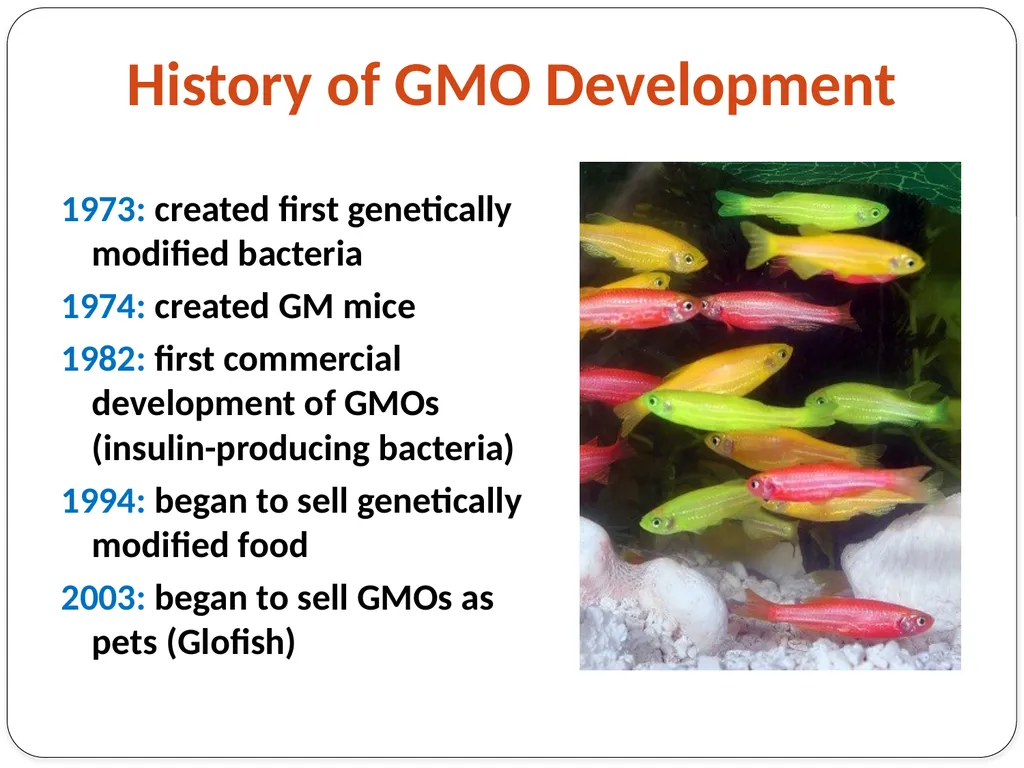
History of GMO Development 1973: created first genetically modified bacteria
1974: created GM mice
1982: first commercial development of GMOs (insulin-producing bacteria)
1994: began to sell genetically modified food
2003: began to sell GMOs as pets (Glofish)<br>
05
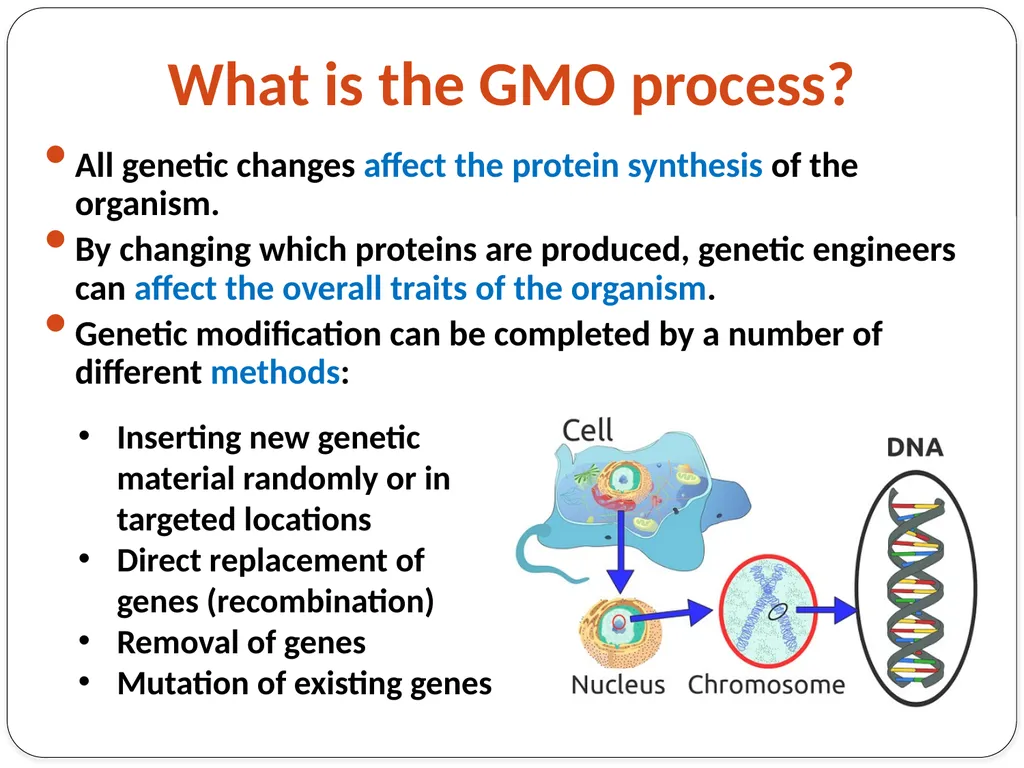
What is the GMO process? All genetic changes affect the protein synthesis of the organism.
By changing which proteins are produced, genetic engineers can affect the overall traits of the organism.
Genetic modification can be completed by a number of different methods: Inserting new genetic material randomly or in targeted locations
Direct replacement of genes (recombination)
Removal of genes
Mutation of existing genes<br>
06
GMO Bacteria Bacteria are the most common GMOs because their simple structure permits easy manipulation of their DNA.
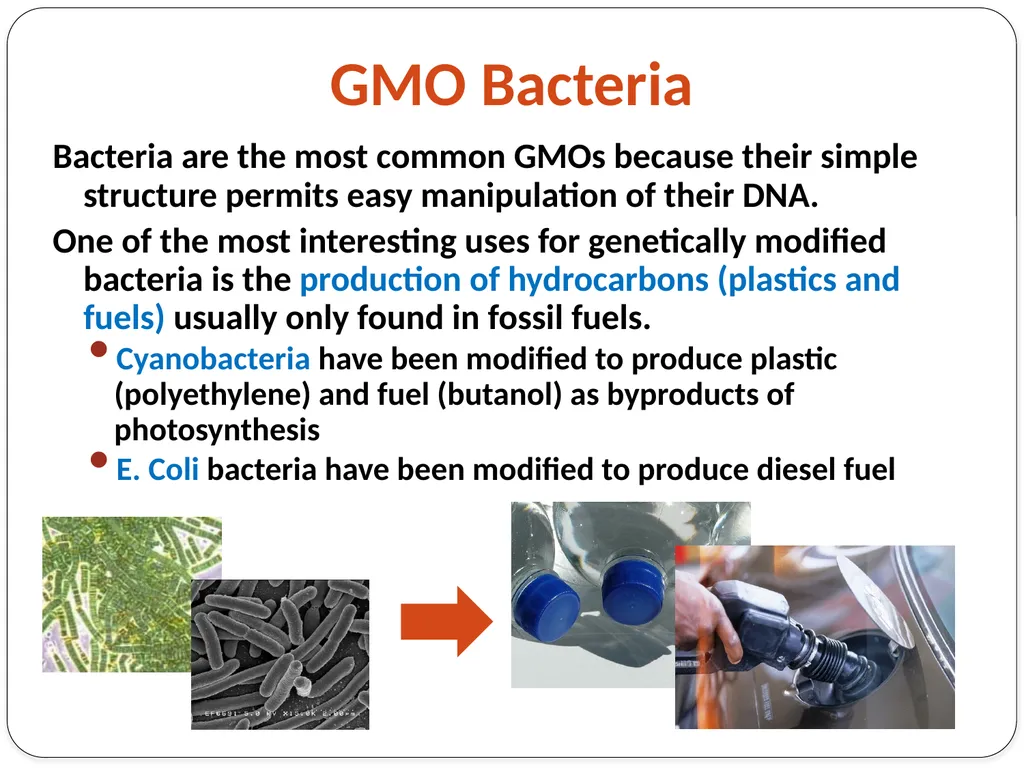
One of the most interesting uses for genetically modified bacteria is the production of hydrocarbons (plastics and fuels) usually only found in fossil fuels.
Cyanobacteria have been modified to produce plastic (polyethylene) and fuel (butanol) as byproducts of photosynthesis
E. Coli bacteria have been modified to produce diesel fuel<br>
07
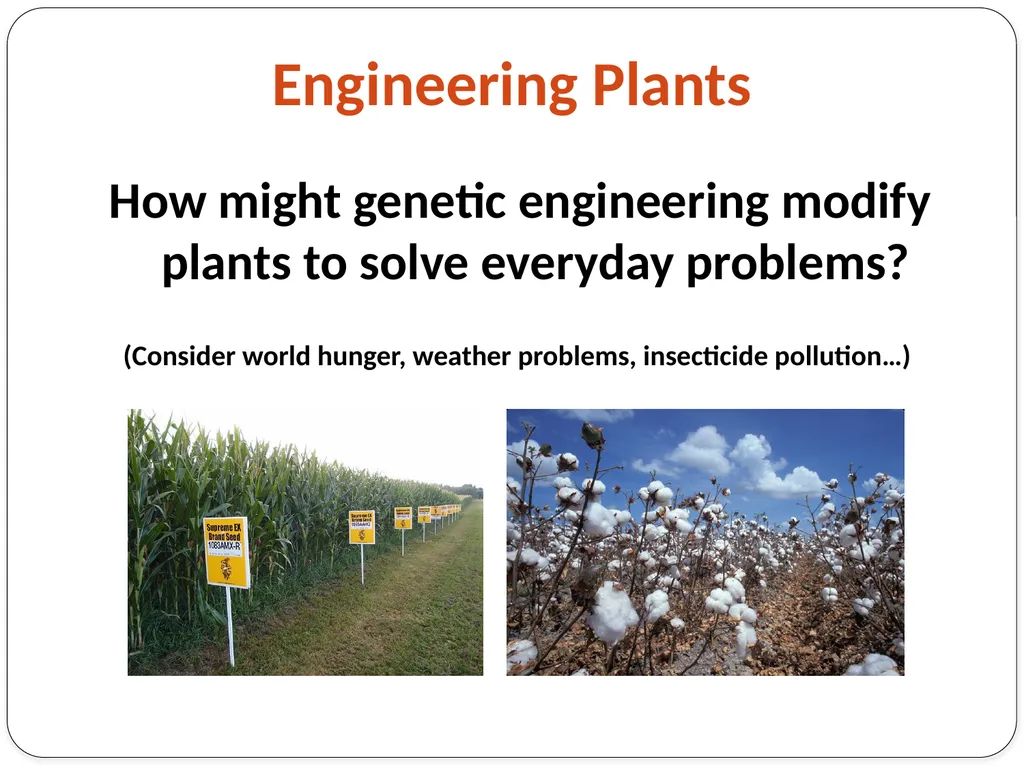
Engineering Plants How might genetic engineering modify plants to solve everyday problems?
(Consider world hunger, weather problems, insecticide pollution…)<br>
08
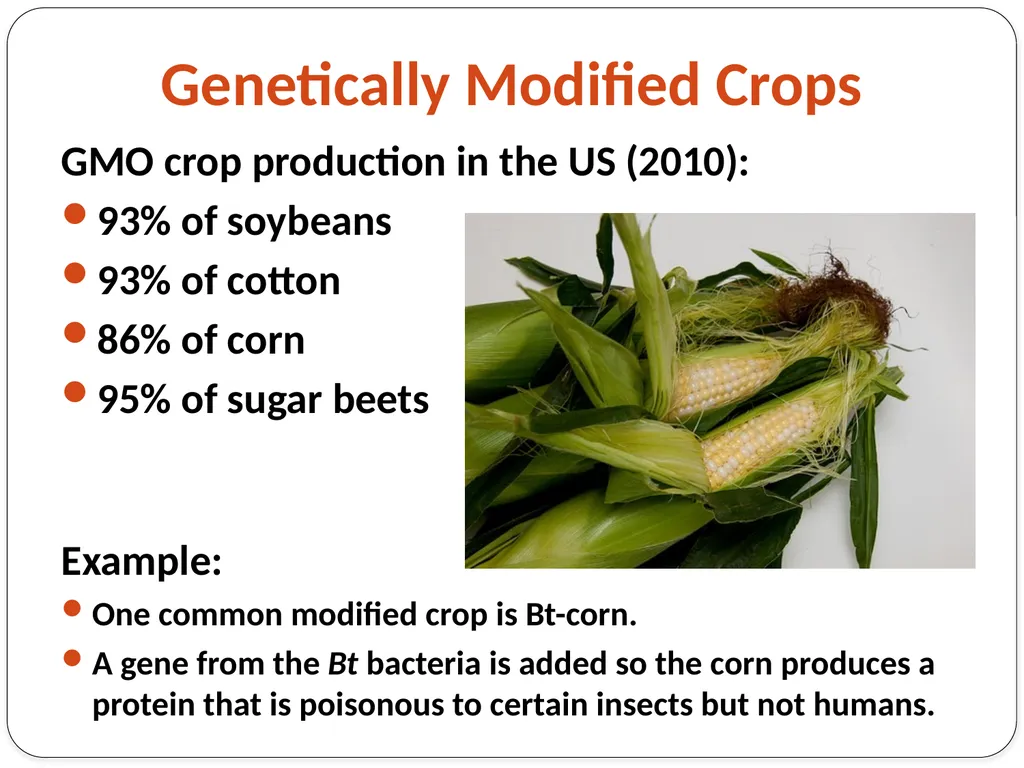
Genetically Modified Crops GMO crop production in the US (2010):
93% of soybeans
93% of cotton
86% of corn
95% of sugar beets
Example:
One common modified crop is Bt-corn.
A gene from the Bt bacteria is added so the corn produces a protein that is poisonous to certain insects but not humans.<br>
09
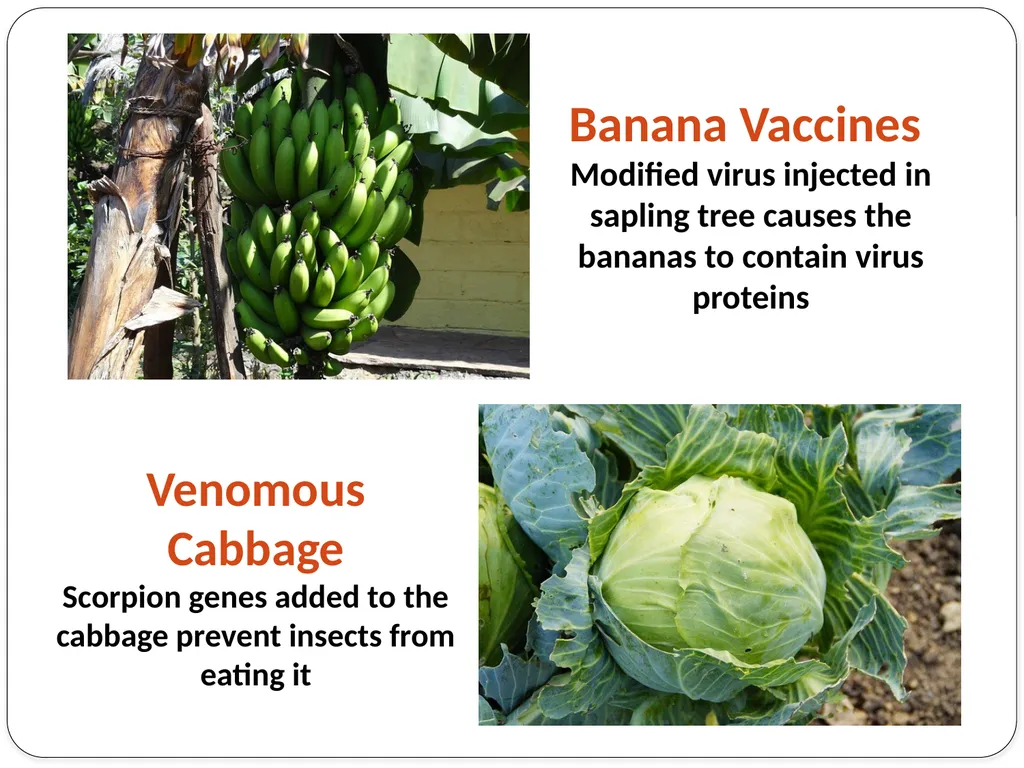
Banana Vaccines
Modified virus injected in sapling tree causes the bananas to contain virus proteins Venomous Cabbage
Scorpion genes added to the cabbage prevent insects from eating it<br>
Engineering Animals Could genetic engineering be used to modify any animals to solve problems?<br>
12
Bioluminescent Animals Uses:
Protein tracking
Disease detection using bioluminescent imaging (BLI) to identify different types of cells
Novelty pets (Glofish are available now)<br>
13
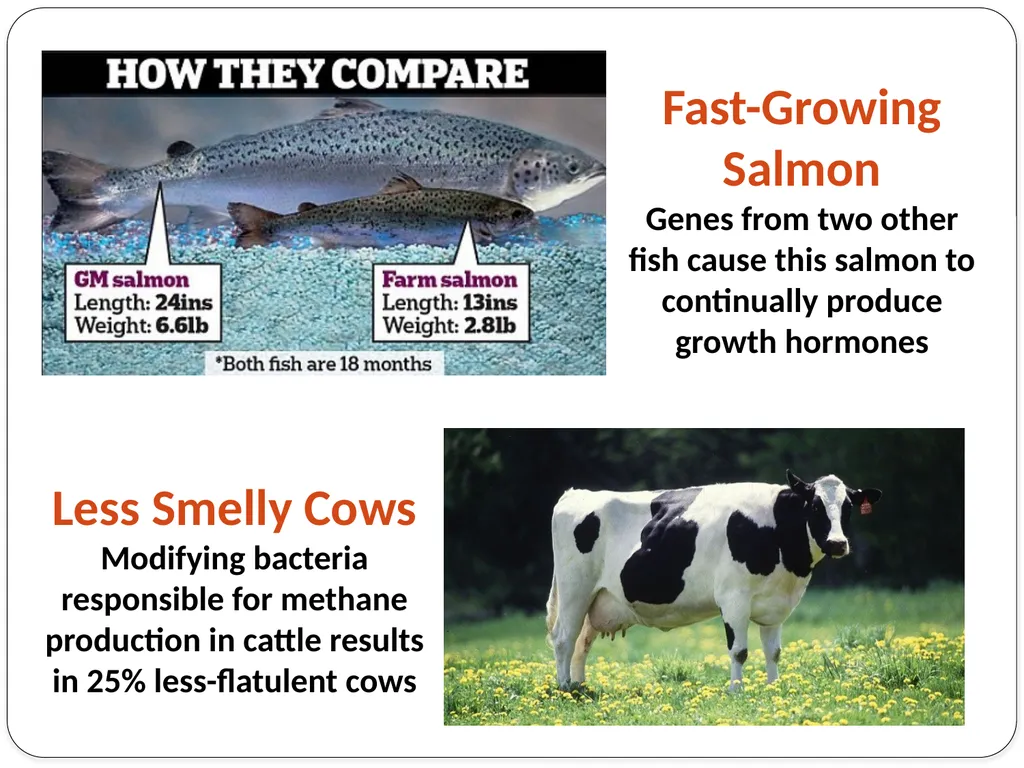
Fast-Growing Salmon
Genes from two other fish cause this salmon to continually produce growth hormones Less Smelly Cows
Modifying bacteria responsible for methane production in cattle results in 25% less-flatulent cows<br>
14
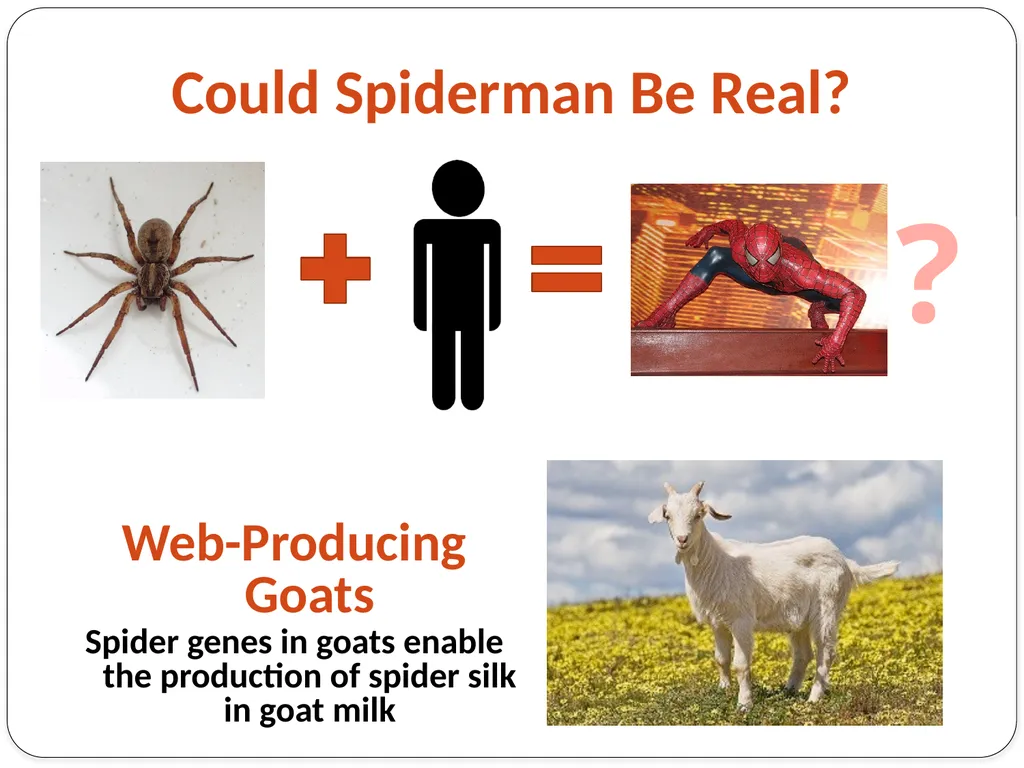
Could Spiderman Be Real? Web-Producing Goats
Spider genes in goats enable the production of spider silk in goat milk<br>
15
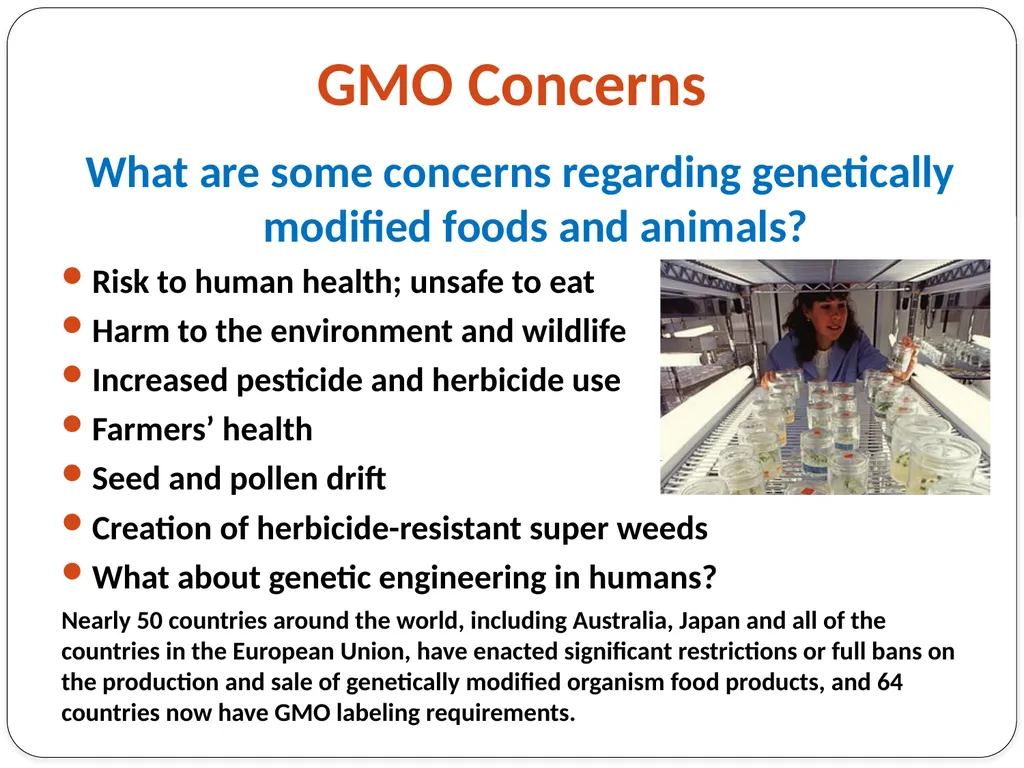
GMO Concerns What are some concerns regarding genetically modified foods and animals?
Risk to human health; unsafe to eat
Harm to the environment and wildlife
Increased pesticide and herbicide use
Farmers’ health
Seed and pollen drift
Creation of herbicide-resistant super weeds
What about genetic engineering in humans?
Nearly 50 countries around the world, including Australia, Japan and all of the countries in the European Union, have enacted significant restrictions or full bans on the production and sale of genetically modified organism food products, and 64 countries now have GMO labeling requirements.<br>