GENOMIC IMPRINTING By- Shubhani singh thakur Department of biochemistry GENOMIC IMPRINTIG Genomic imprinting is form of of epigenetic inheritance, the regulation of gene or chromosomal region is dependent on the sex of the transmitting
"GENOMIC IMPRINTING By- Shubhani singh thakur" is the property of its rightful owner. Permission is granted to
download and print the materials on this website for personal, non-commercial use only, and to display it
on your personal computer provided you do not modify the materials and that you retain all copyright
notices contained in the materials. By downloading content from our website, you accept the terms of this
agreement.
Presentation Transcript
01
GENOMIC IMPRINTING By- Shubhani singh thakur Department of biochemistry<br>
02
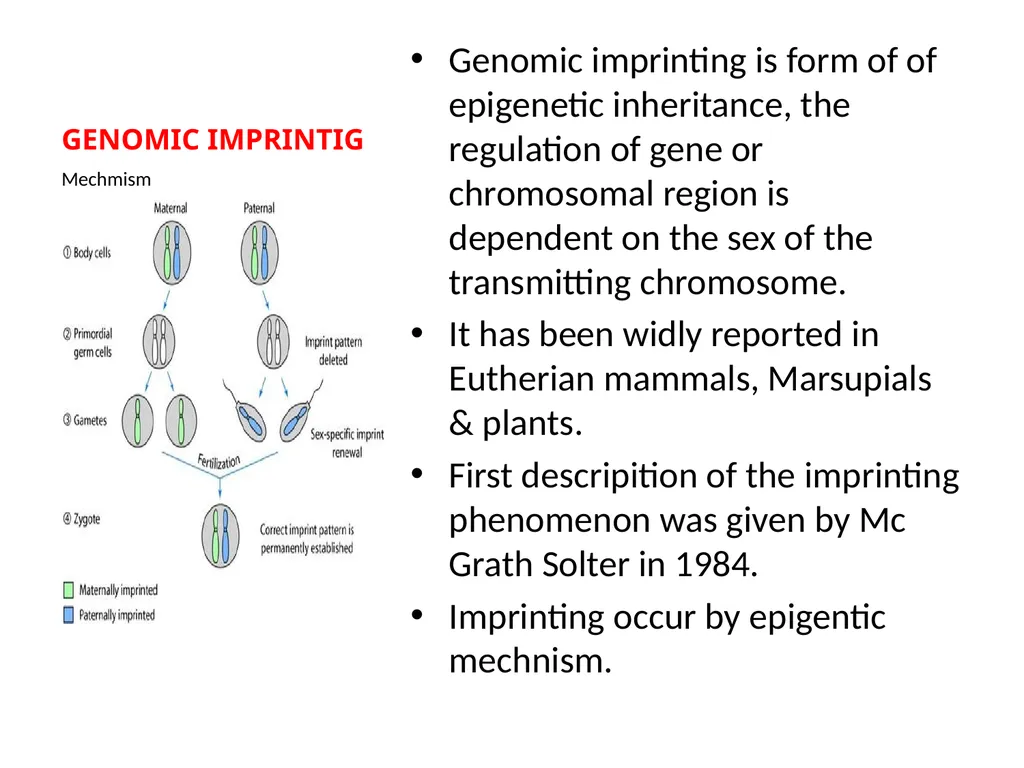
GENOMIC IMPRINTIG Genomic imprinting is form of of epigenetic inheritance, the regulation of gene or chromosomal region is dependent on the sex of the transmitting chromosome.
It has been widly reported in Eutherian mammals, Marsupials & plants.
First descripition of the imprinting phenomenon was given by Mc Grath Solter in 1984.
Imprinting occur by epigentic mechnism. Mechmism<br>
03
EVOLUTION OF G.I. The discovery or evolution of G.I. Where the experation of the allels depend on its parental origion, thus a diversity theory attempt to explain the existance.
Differnt scientist have propesd theories related to evolution:
1 Kinship theory by Haig &Colleagues
2 Sexual antagonasim theroy by Day &Bonduriansky’s
3 Maternal offspring coadaption theory by Wolf & Hanger’s<br>
04
Genomic imprinting is rare in mammals as most genes are not imprinted In early 1980’s nucleus transplantation experiments in mouse – Zygote were performed. These experiments confrimend that the normal mammalian development both maternal & the paternal genome is required . The vast majority of mouse embroys derived from Parthenogenesis(2 maternal\egg genome) & androgenisis ( 2 paternal\sperm genome) die at or before the implantation stage.<br>
05
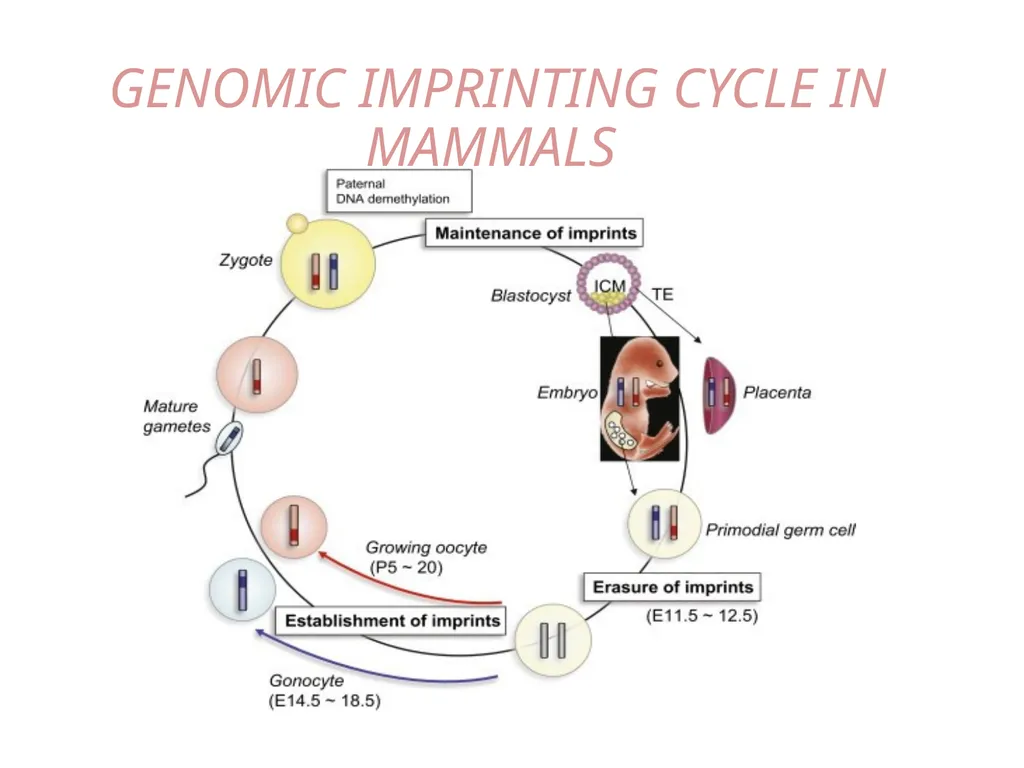
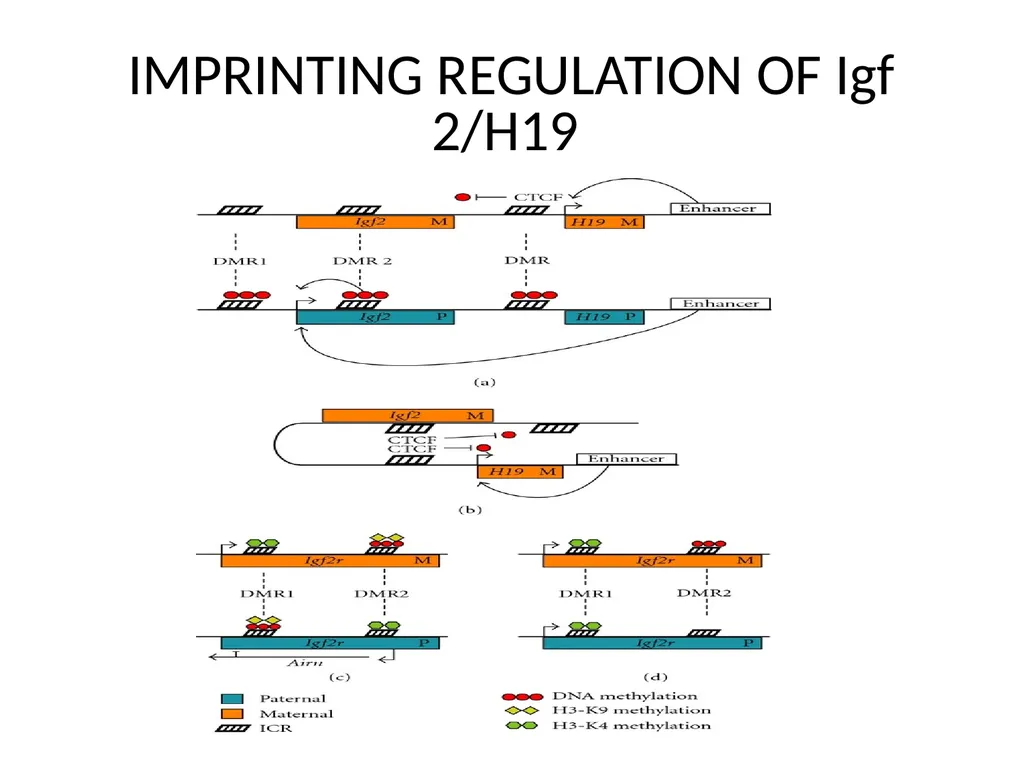
IMPRINTING IN MAMMELS In mammals most imprinted gens are found in clusters that share common ICRs to direct the parent-specific regulation of multiple gens with clusters.
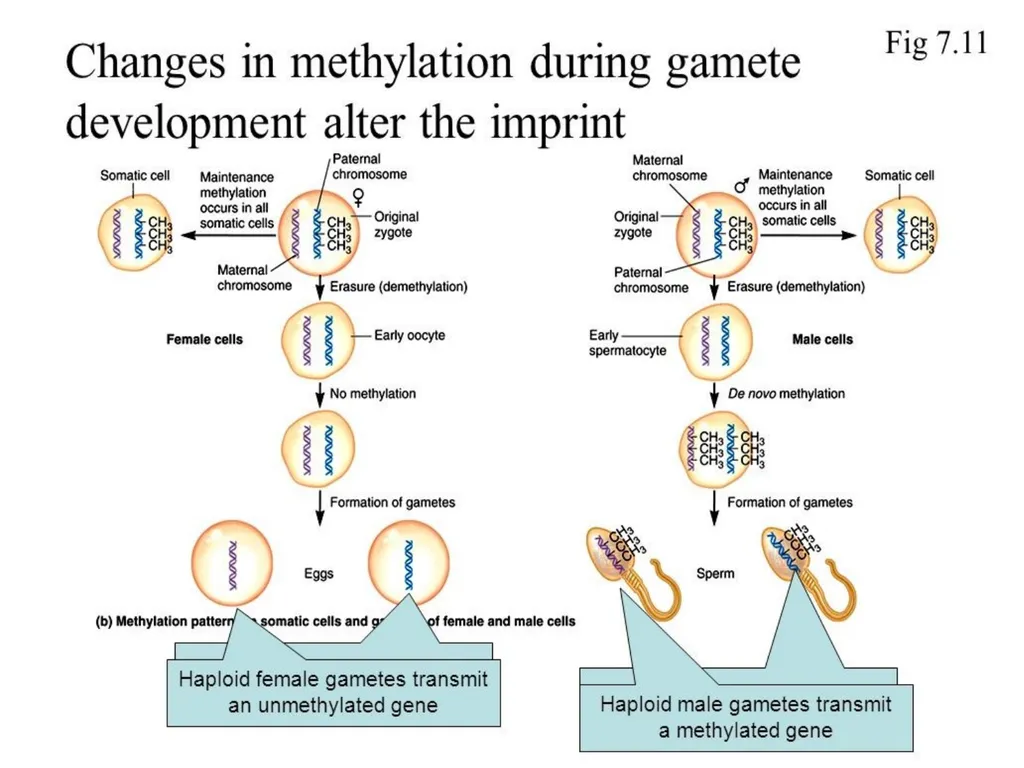
Many mammalian ICRs contain differtianly methyalted regions (*DMRs) that gain parent specific DNA methylation marks either in germline for imprint establishment or in somatic cells for imprint maintance.<br>
06
GENOMIC IMPRINTING CYCLE IN MAMMALS<br>
07
IMPRINTING REGULATION OF Igf 2/H19<br>
08
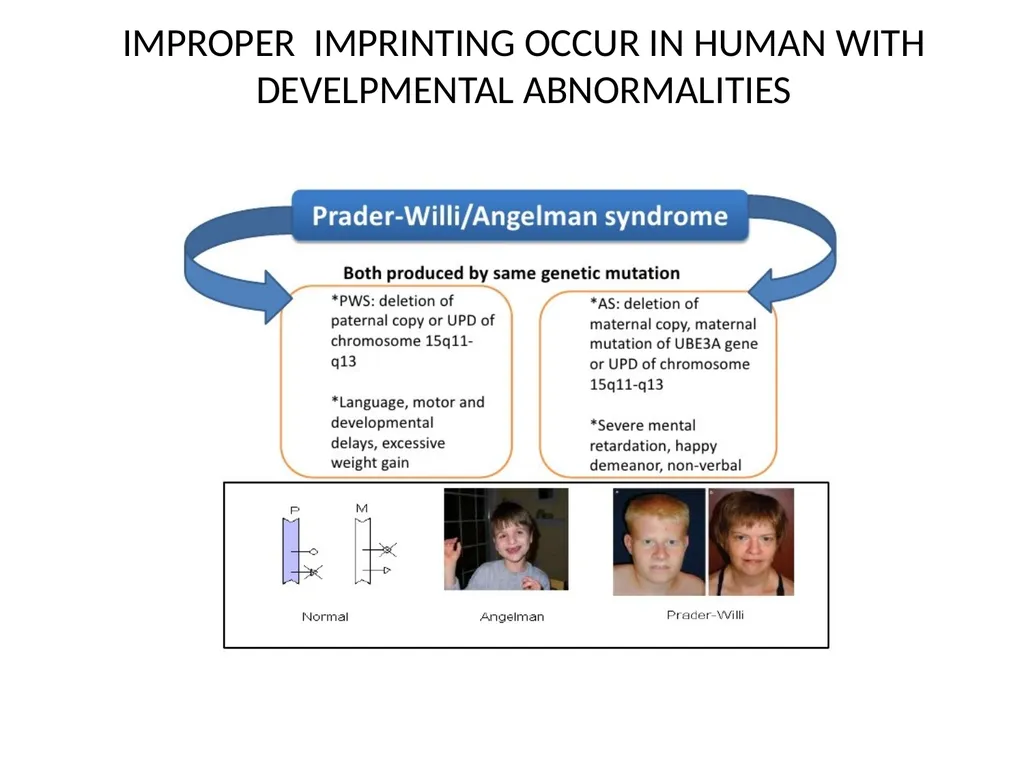
IMPROPER IMPRINTING OCCUR IN HUMAN WITH DEVELPMENTAL ABNORMALITIES<br>
09
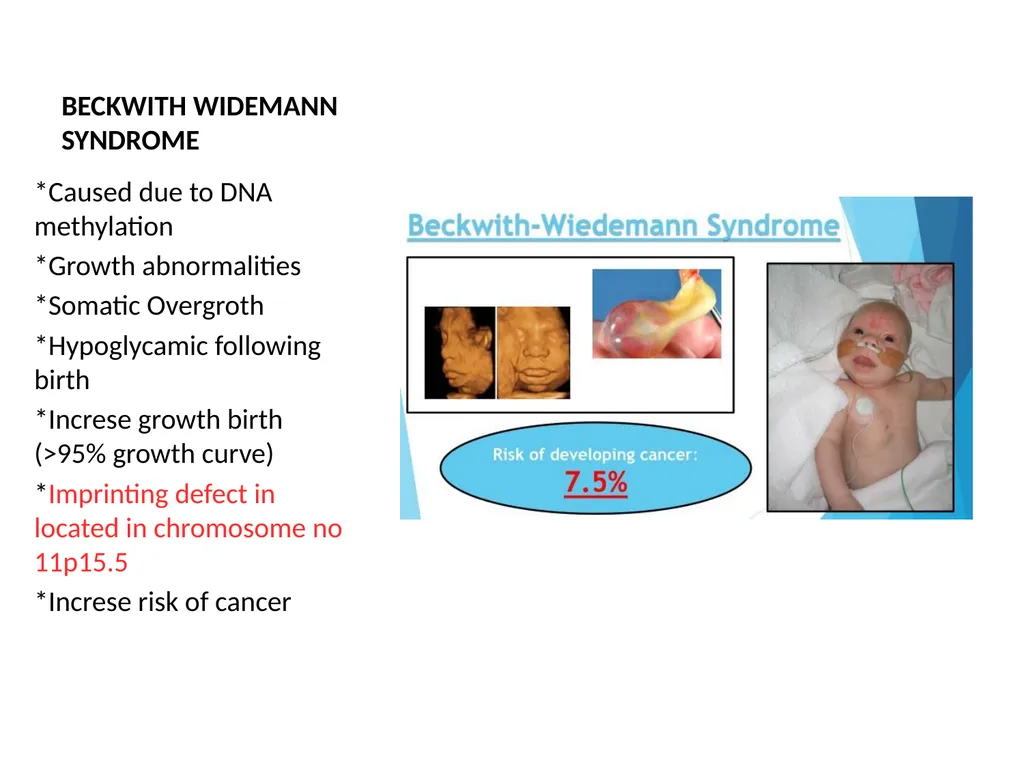
BECKWITH WIDEMANN SYNDROME *Caused due to DNA methylation
*Growth abnormalities
*Somatic Overgroth
*Hypoglycamic following birth
*Increse growth birth (>95% growth curve)
*Imprinting defect in located in chromosome no 11p15.5
*Increse risk of cancer<br>
10
IMPORTANCE OF GENOMIC IMPRINTING Imprinted geans
* Are crucial normal development
* Bypass epigenitic reprograming
*Are vulnerable to epigenitc copy machinery ROLL IN :
* Growth
* Behaviour
* Stem Cell
* Disease<br>
11
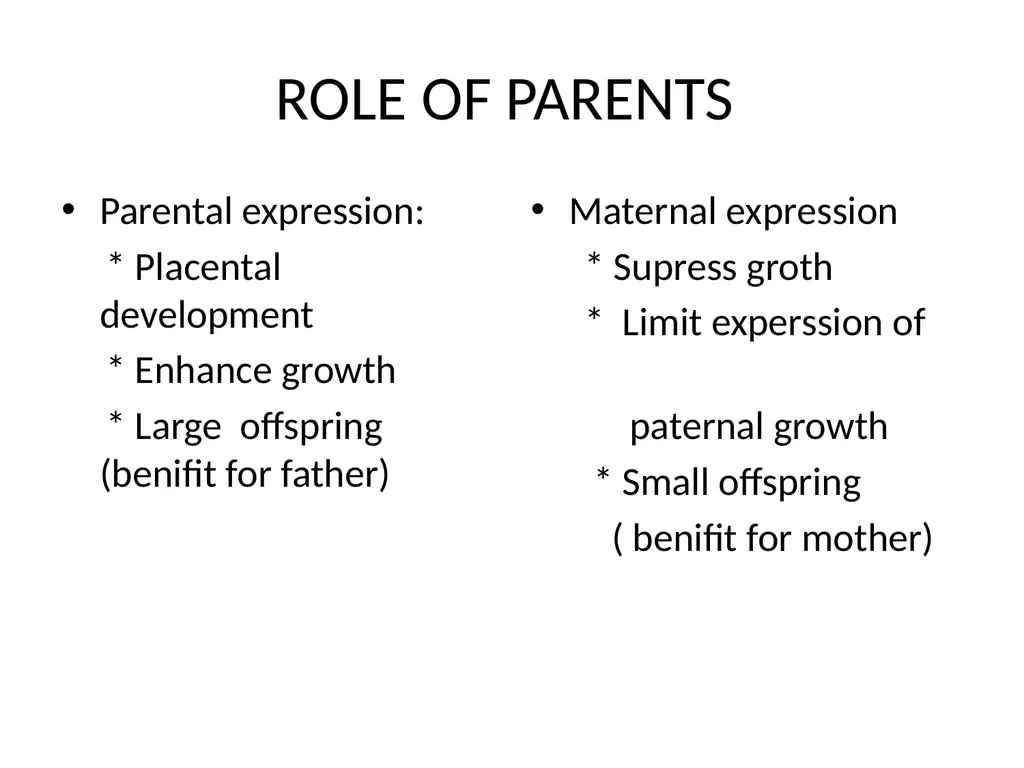
ROLE OF PARENTS Parental expression:
* Placental development
* Enhance growth
* Large offspring (benifit for father) Maternal expression
* Supress groth
* Limit experssion of
paternal growth
* Small offspring
( benifit for mother)<br>
12
CONCLUSION Failur of imprinting in somatic cells may lead to cancer.
Redused methylation & hance increasd expression of tumar oncogenes can also do.
Modificatin of histone protein as a mechnism of genome imprinting cause epigentic changes in the experssion of phenotype, but they do not alter the genetic constitution.<br>