
Getting Candid: Framing the Conversation Around

Description: Getting Candid: Framing the Conversation Around Youth Substance Use Prevention This project is supported by the Centers for Disease Control and Prevention (CDC) of the U.S. Department of Health and Human Services (HHS) as part of a
Related Topics
Download Presentation
"Getting Candid: Framing the Conversation Around" is the property of its rightful owner. Permission is granted to download and print the materials on this website for personal, non-commercial use only, and to display it on your personal computer provided you do not modify the materials and that you retain all copyright notices contained in the materials. By downloading content from our website, you accept the terms of this agreement.
Presentation Transcript
slide1. Getting Candid:
Framing the Conversation Around Youth Substance Use Prevention<br>
slide2. This project is supported by the Centers for Disease Control and Prevention (CDC) of the U.S. Department of Health and Human Services (HHS) as part of a financial assistance award totaling $2,000,000 with 100% funded by CDC/HHS. The contents are those of the author(s) and do not necessarily represent the official views of, nor an endorsement, by CDC/HHS or the U.S. Government.<br>
slide3. National Council for Mental Wellbeing – Project Lead
Metropolitan Group – Strategic Partner | Lake Research Partners – Data & Analysis Community Anti-Drug Coalitions of America (CADCA)
Behavioral Health Innovators
White Bison
Lifeway International
Collaborative to Advance Health Services, University of Missouri-Kansas City School of Nursing and Health Studies
FrameWorks Institute
Partnership to End Addiction DACCO Behavioral Health
Truth Initiative
School-Based Health Alliance
Center for Addiction and Mental Health Research, Kaiser Permanente
Peers Enjoying a Sober Education (PEASE) Academy
William J. Ostiguy High School More than 2,000 youth and providers of youth services gave insights and informed content through participation in the advisory group, a virtual discussion group or interview, or online assessments. Provider and Youth Advisory Group<br>
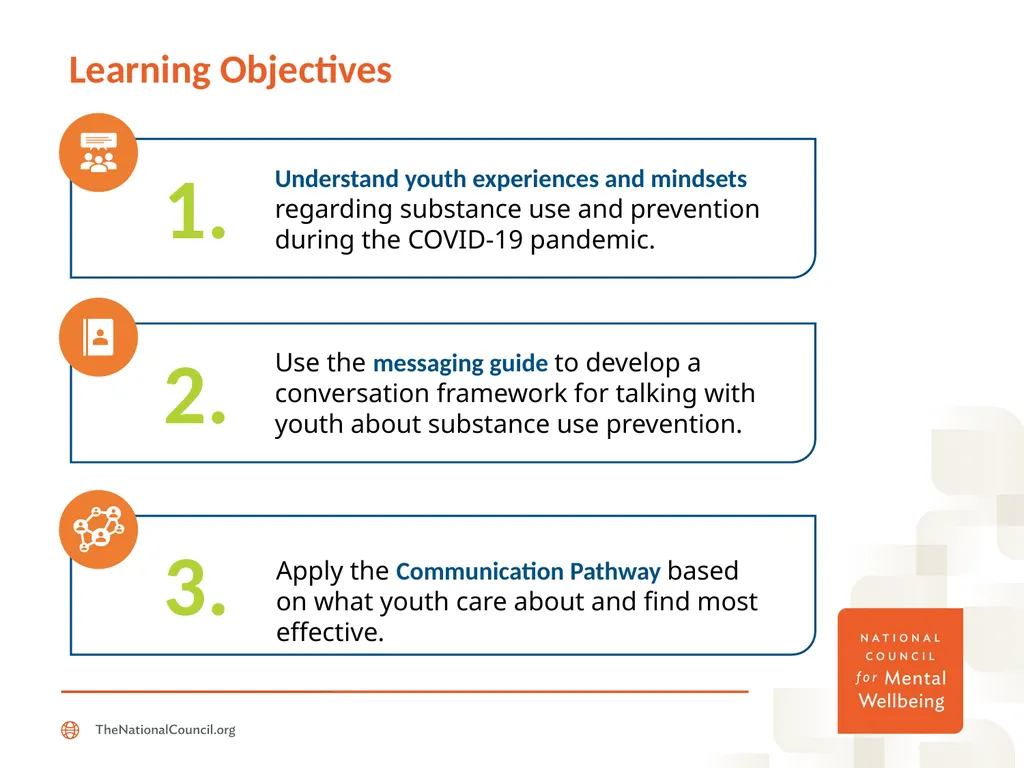
slide4. Learning Objectives<br>
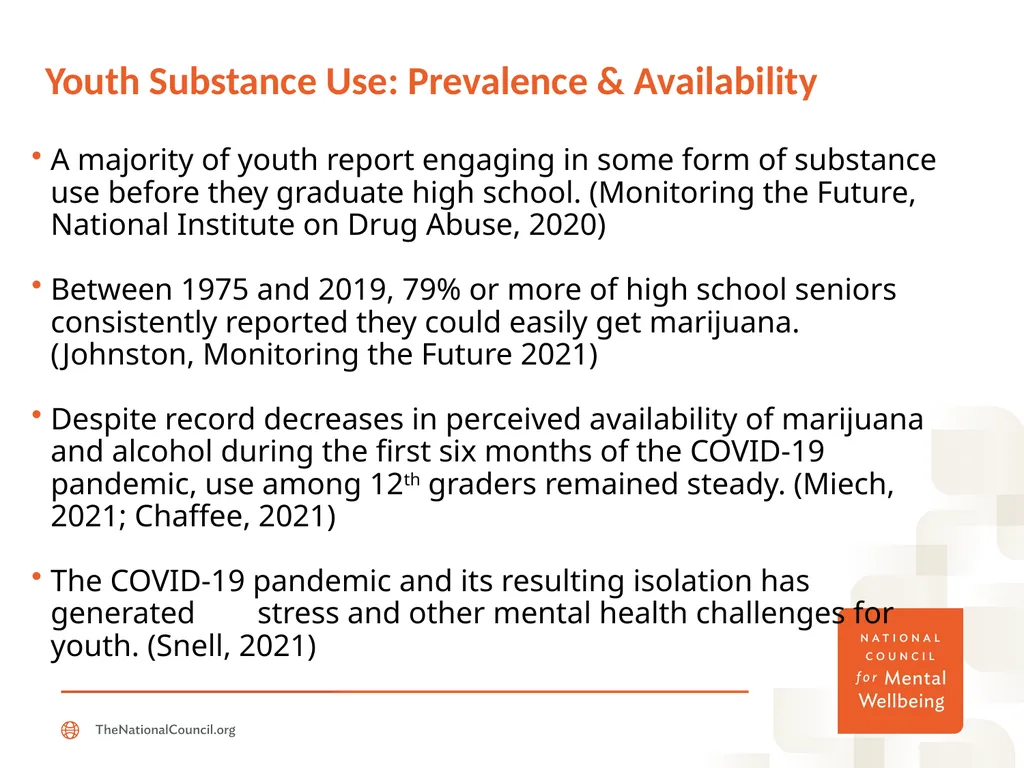
slide5. Youth Substance Use: Prevalence & Availability A majority of youth report engaging in some form of substance use before they graduate high school. (Monitoring the Future, National Institute on Drug Abuse, 2020)
Between 1975 and 2019, 79% or more of high school seniors consistently reported they could easily get marijuana. (Johnston, Monitoring the Future 2021)
Despite record decreases in perceived availability of marijuana and alcohol during the first six months of the COVID-19 pandemic, use among 12th graders remained steady. (Miech, 2021; Chaffee, 2021)
The COVID-19 pandemic and its resulting isolation has generated stress and other mental health challenges for youth. (Snell, 2021)<br>
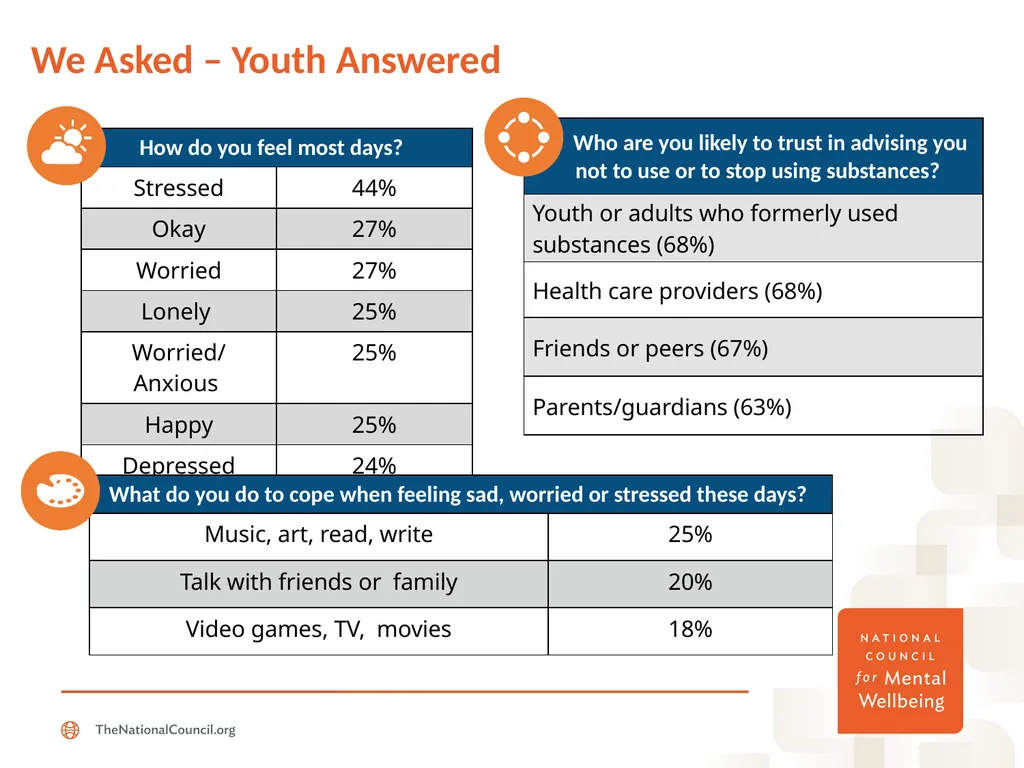
slide6. We Asked – Youth Answered<br>
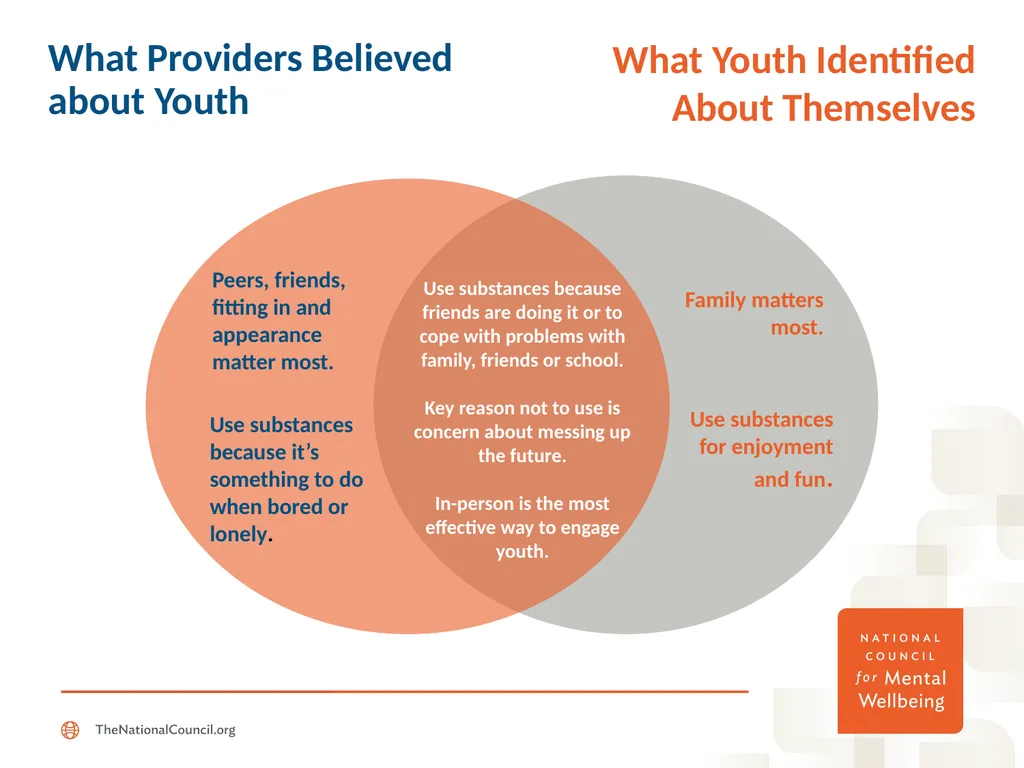
slide7. What Providers Believed about Youth What Youth Identified About Themselves Use substances because friends are doing it or to cope with problems with family, friends or school.
Key reason not to use is concern about messing up the future.
In-person is the most effective way to engage youth.<br>
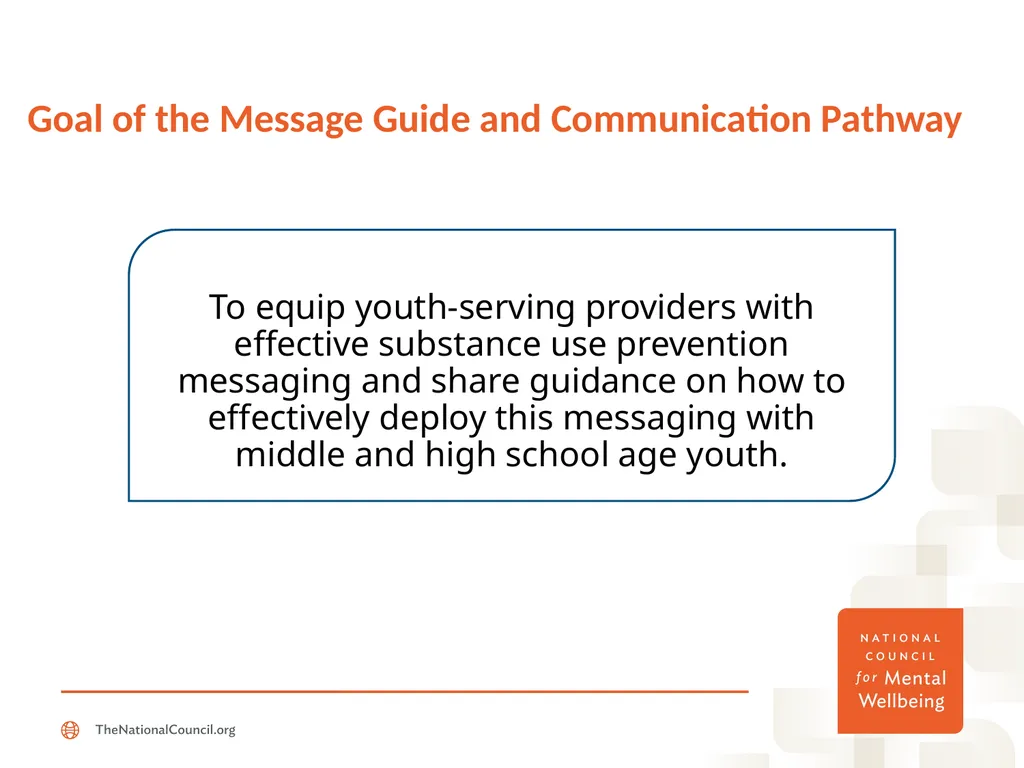
slide8. Goal of the Message Guide and Communication Pathway To equip youth-serving providers with effective substance use prevention messaging and share guidance on how to effectively deploy this messaging with middle and high school age youth.<br>
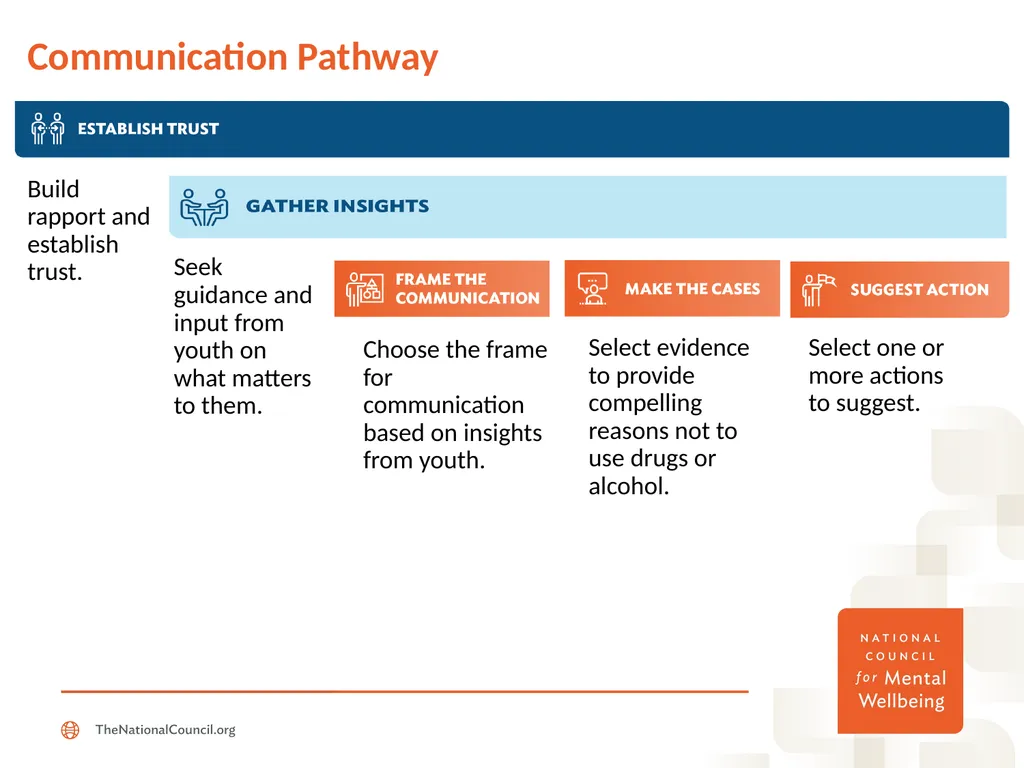
slide9. Communication Pathway Build rapport and establish trust. Seek guidance and input from youth on what matters to them. Choose the frame for communication based on insights from youth. Select evidence to provide compelling reasons not to use drugs or alcohol. Select one or more actions to suggest.<br>
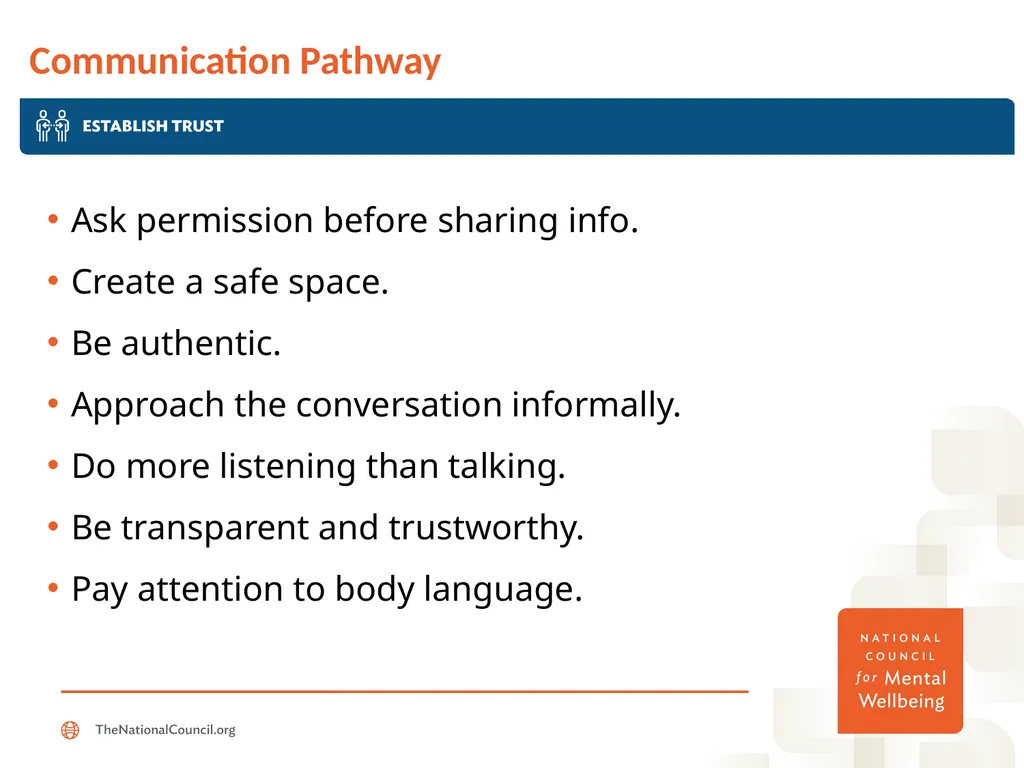
slide10. Communication Pathway Ask permission before sharing info.
Create a safe space.
Be authentic.
Approach the conversation informally.
Do more listening than talking.
Be transparent and trustworthy.
Pay attention to body language.<br>
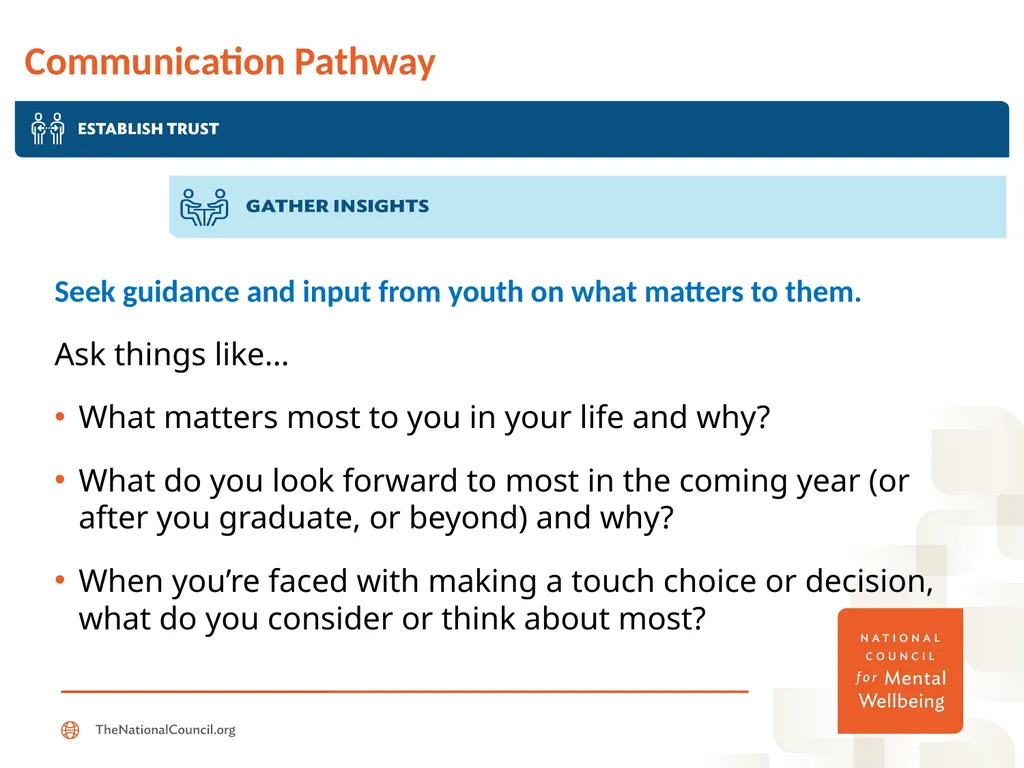
slide11. Communication Pathway Seek guidance and input from youth on what matters to them.
Ask things like…
What matters most to you in your life and why?
What do you look forward to most in the coming year (or after you graduate, or beyond) and why?
When you’re faced with making a touch choice or decision, what do you consider or think about most?<br>
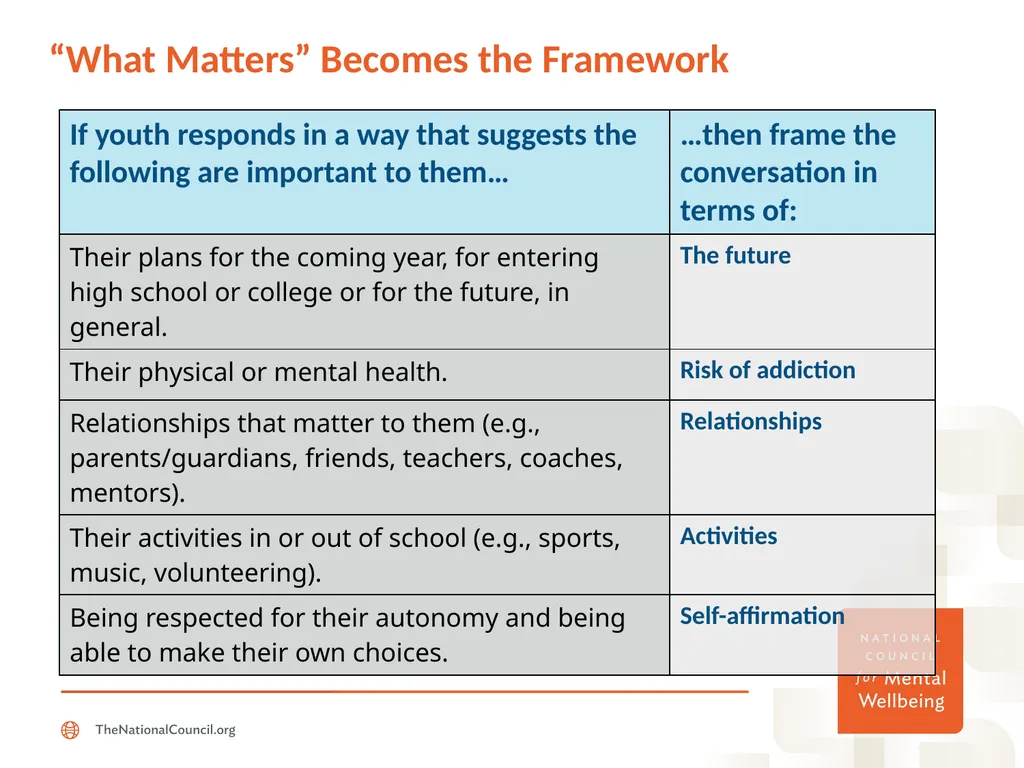
slide12. “What Matters” Becomes the Framework<br>
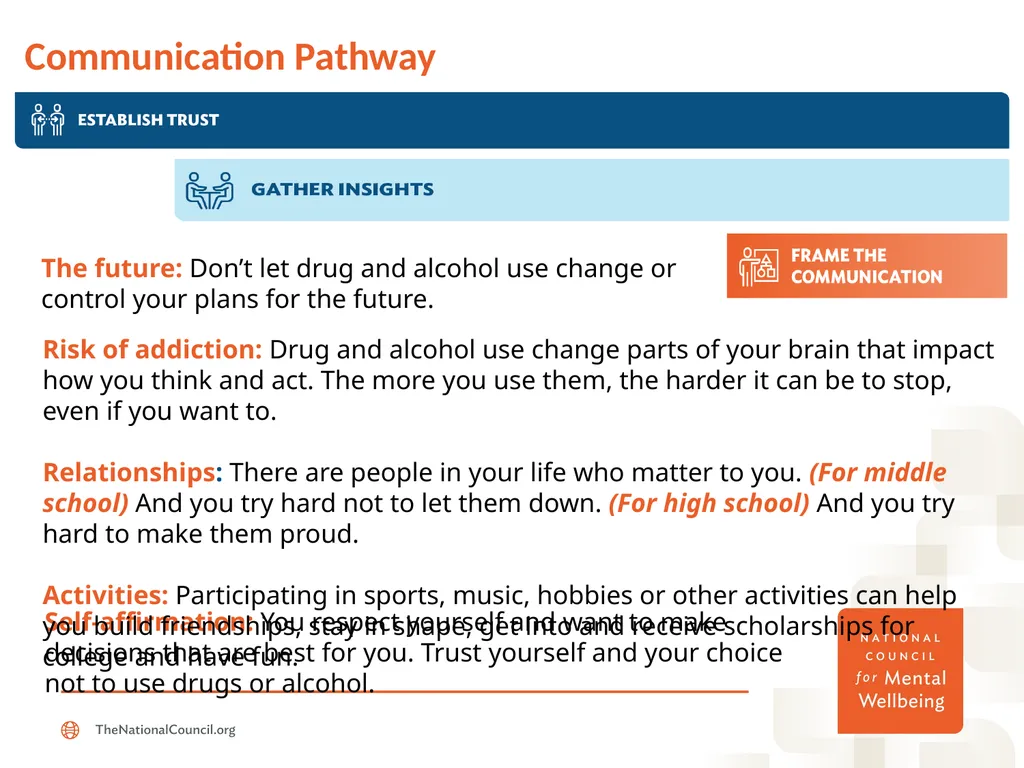
slide13. Communication Pathway The future: Don’t let drug and alcohol use change or control your plans for the future. Self-affirmation: You respect yourself and want to make decisions that are best for you. Trust yourself and your choice not to use drugs or alcohol. Risk of addiction: Drug and alcohol use change parts of your brain that impact how you think and act. The more you use them, the harder it can be to stop, even if you want to.
Relationships: There are people in your life who matter to you. (For middle school) And you try hard not to let them down. (For high school) And you try hard to make them proud.
Activities: Participating in sports, music, hobbies or other activities can help you build friendships, stay in shape, get into and receive scholarships for college and have fun.<br>
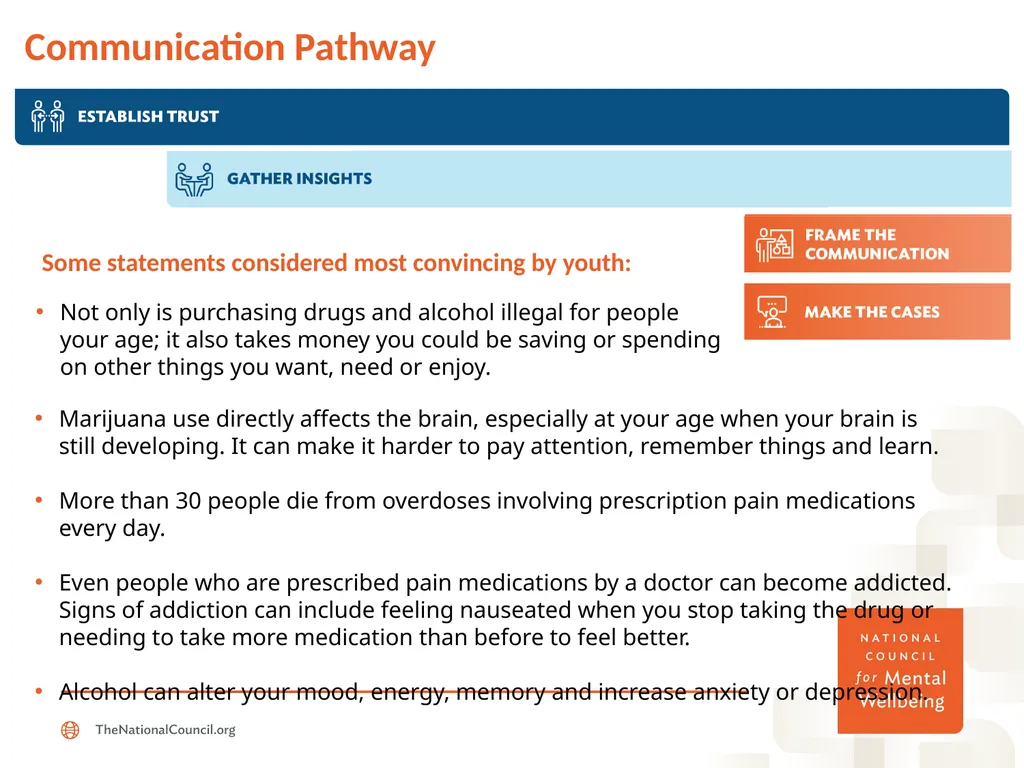
slide14. Communication Pathway Not only is purchasing drugs and alcohol illegal for people your age; it also takes money you could be saving or spending on other things you want, need or enjoy. Marijuana use directly affects the brain, especially at your age when your brain is still developing. It can make it harder to pay attention, remember things and learn.
More than 30 people die from overdoses involving prescription pain medications every day.
Even people who are prescribed pain medications by a doctor can become addicted. Signs of addiction can include feeling nauseated when you stop taking the drug or needing to take more medication than before to feel better.
Alcohol can alter your mood, energy, memory and increase anxiety or depression. Some statements considered most convincing by youth:<br>
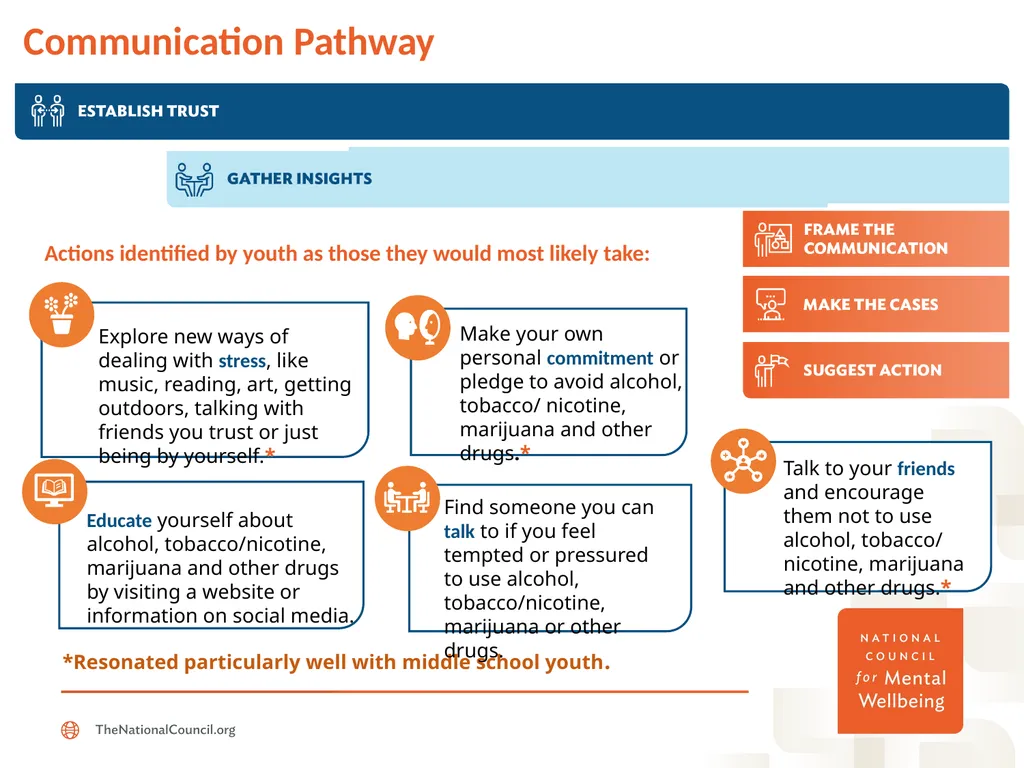
slide15. Communication Pathway Actions identified by youth as those they would most likely take: *Resonated particularly well with middle school youth. Talk to your friends and encourage them not to use alcohol, tobacco/ nicotine, marijuana and other drugs.* Make your own personal commitment or pledge to avoid alcohol, tobacco/ nicotine, marijuana and other drugs.* Find someone you can talk to if you feel tempted or pressured to use alcohol, tobacco/nicotine, marijuana or other drugs. Explore new ways of dealing with stress, like music, reading, art, getting outdoors, talking with friends you trust or just being by yourself.* Educate yourself about alcohol, tobacco/nicotine, marijuana and other drugs by visiting a website or information on social media.<br>
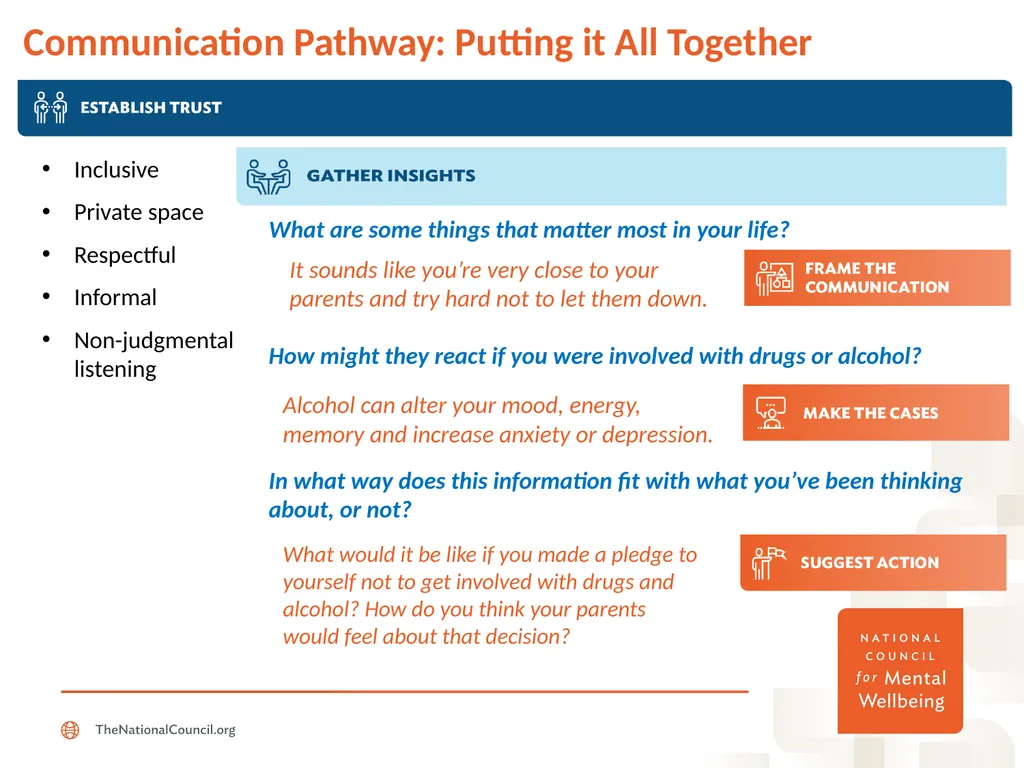
slide16. Communication Pathway: Putting it All Together Inclusive
Private space
Respectful
Informal
Non-judgmental listening What are some things that matter most in your life? It sounds like you’re very close to your parents and try hard not to let them down. In what way does this information fit with what you’ve been thinking about, or not? Alcohol can alter your mood, energy, memory and increase anxiety or depression. How might they react if you were involved with drugs or alcohol? What would it be like if you made a pledge to yourself not to get involved with drugs and alcohol? How do you think your parents would feel about that decision?<br>
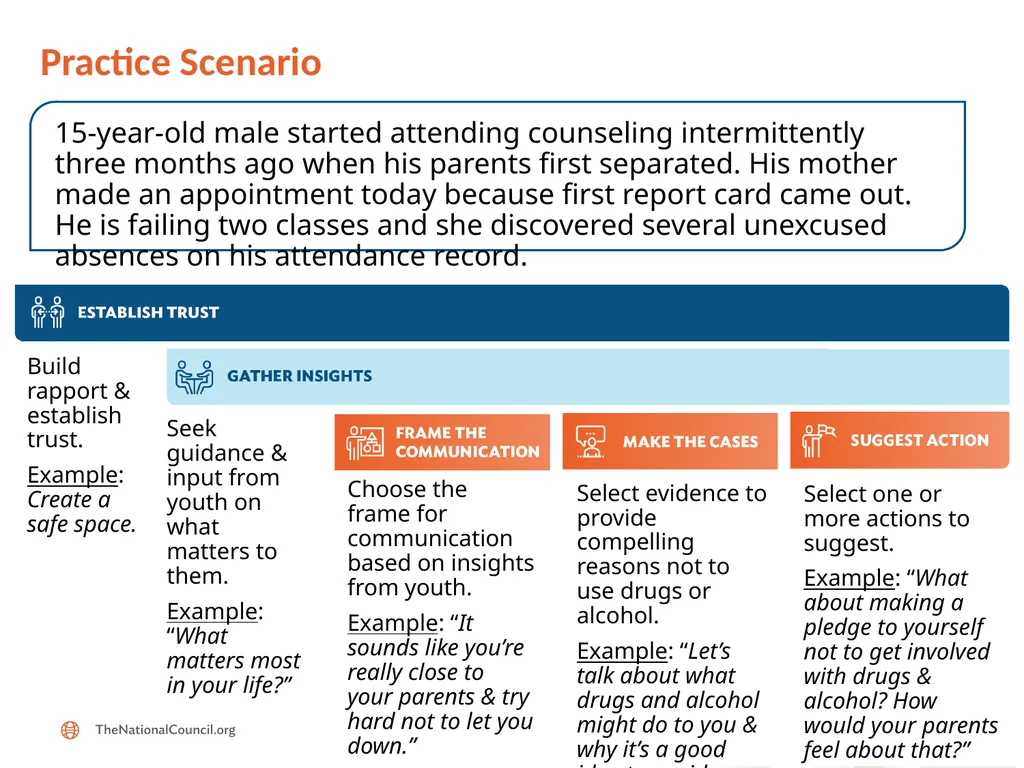
slide17. Practice Scenario 15-year-old male started attending counseling intermittently three months ago when his parents first separated. His mother made an appointment today because first report card came out. He is failing two classes and she discovered several unexcused absences on his attendance record. Build rapport & establish trust.
Example: Create a safe space. Seek guidance & input from youth on what matters to them.
Example: “What matters most in your life?” Choose the frame for communication based on insights from youth.
Example: “It sounds like you’re really close to your parents & try hard not to let you down.” Select evidence to provide compelling reasons not to use drugs or alcohol.
Example: “Let’s talk about what drugs and alcohol might do to you & why it’s a good idea to avoid them.” Select one or more actions to suggest.
Example: “What about making a pledge to yourself not to get involved with drugs & alcohol? How would your parents feel about that?”<br>
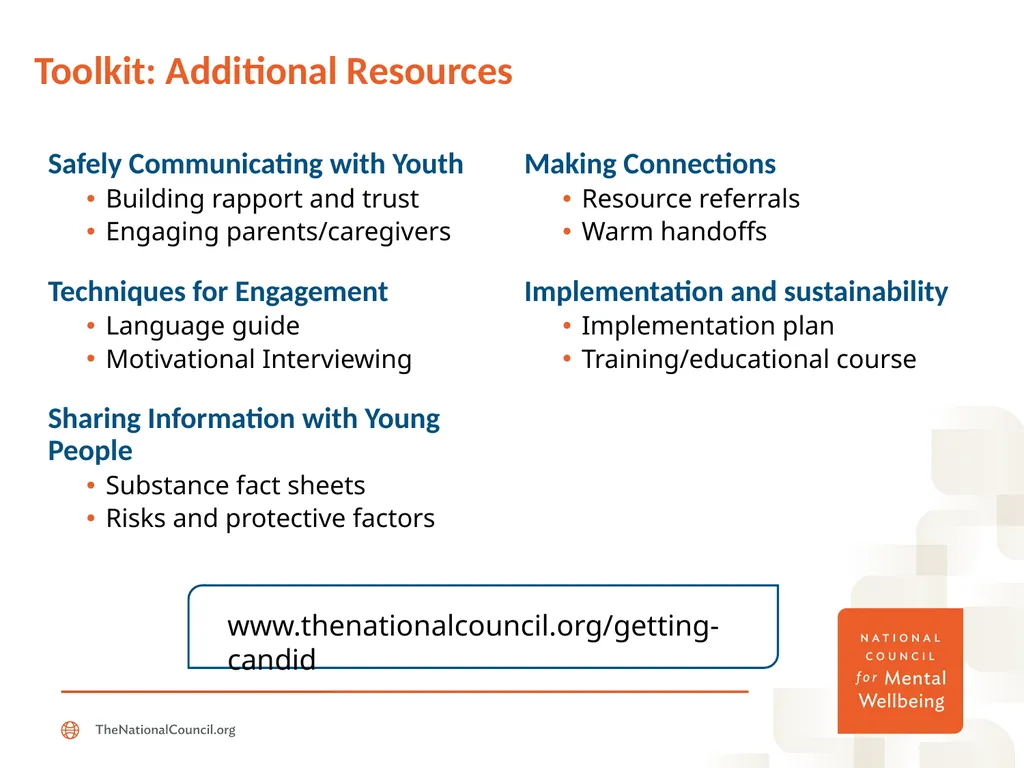
slide18. Toolkit: Additional Resources Safely Communicating with Youth
Building rapport and trust
Engaging parents/caregivers
Techniques for Engagement
Language guide
Motivational Interviewing
Sharing Information with Young People
Substance fact sheets
Risks and protective factors
Making Connections
Resource referrals
Warm handoffs
Implementation and sustainability
Implementation plan
Training/educational course www.thenationalcouncil.org/getting-candid<br>
slide2. This project is supported by the Centers for Disease Control and Prevention (CDC) of the U.S. Department of Health and Human Services (HHS) as part of a financial assistance award totaling $2,000,000 with 100% funded by CDC/HHS. The contents are those of the author(s) and do not necessarily represent the official views of, nor an endorsement, by CDC/HHS or the U.S. Government.<br>
slide3. National Council for Mental Wellbeing – Project Lead
Metropolitan Group – Strategic Partner | Lake Research Partners – Data & Analysis Community Anti-Drug Coalitions of America (CADCA)
Behavioral Health Innovators
White Bison
Lifeway International
Collaborative to Advance Health Services, University of Missouri-Kansas City School of Nursing and Health Studies
FrameWorks Institute
Partnership to End Addiction DACCO Behavioral Health
Truth Initiative
School-Based Health Alliance
Center for Addiction and Mental Health Research, Kaiser Permanente
Peers Enjoying a Sober Education (PEASE) Academy
William J. Ostiguy High School More than 2,000 youth and providers of youth services gave insights and informed content through participation in the advisory group, a virtual discussion group or interview, or online assessments. Provider and Youth Advisory Group<br>
slide4. Learning Objectives<br>
slide5. Youth Substance Use: Prevalence & Availability A majority of youth report engaging in some form of substance use before they graduate high school. (Monitoring the Future, National Institute on Drug Abuse, 2020)
Between 1975 and 2019, 79% or more of high school seniors consistently reported they could easily get marijuana. (Johnston, Monitoring the Future 2021)
Despite record decreases in perceived availability of marijuana and alcohol during the first six months of the COVID-19 pandemic, use among 12th graders remained steady. (Miech, 2021; Chaffee, 2021)
The COVID-19 pandemic and its resulting isolation has generated stress and other mental health challenges for youth. (Snell, 2021)<br>
slide6. We Asked – Youth Answered<br>
slide7. What Providers Believed about Youth What Youth Identified About Themselves Use substances because friends are doing it or to cope with problems with family, friends or school.
Key reason not to use is concern about messing up the future.
In-person is the most effective way to engage youth.<br>
slide8. Goal of the Message Guide and Communication Pathway To equip youth-serving providers with effective substance use prevention messaging and share guidance on how to effectively deploy this messaging with middle and high school age youth.<br>
slide9. Communication Pathway Build rapport and establish trust. Seek guidance and input from youth on what matters to them. Choose the frame for communication based on insights from youth. Select evidence to provide compelling reasons not to use drugs or alcohol. Select one or more actions to suggest.<br>
slide10. Communication Pathway Ask permission before sharing info.
Create a safe space.
Be authentic.
Approach the conversation informally.
Do more listening than talking.
Be transparent and trustworthy.
Pay attention to body language.<br>
slide11. Communication Pathway Seek guidance and input from youth on what matters to them.
Ask things like…
What matters most to you in your life and why?
What do you look forward to most in the coming year (or after you graduate, or beyond) and why?
When you’re faced with making a touch choice or decision, what do you consider or think about most?<br>
slide12. “What Matters” Becomes the Framework<br>
slide13. Communication Pathway The future: Don’t let drug and alcohol use change or control your plans for the future. Self-affirmation: You respect yourself and want to make decisions that are best for you. Trust yourself and your choice not to use drugs or alcohol. Risk of addiction: Drug and alcohol use change parts of your brain that impact how you think and act. The more you use them, the harder it can be to stop, even if you want to.
Relationships: There are people in your life who matter to you. (For middle school) And you try hard not to let them down. (For high school) And you try hard to make them proud.
Activities: Participating in sports, music, hobbies or other activities can help you build friendships, stay in shape, get into and receive scholarships for college and have fun.<br>
slide14. Communication Pathway Not only is purchasing drugs and alcohol illegal for people your age; it also takes money you could be saving or spending on other things you want, need or enjoy. Marijuana use directly affects the brain, especially at your age when your brain is still developing. It can make it harder to pay attention, remember things and learn.
More than 30 people die from overdoses involving prescription pain medications every day.
Even people who are prescribed pain medications by a doctor can become addicted. Signs of addiction can include feeling nauseated when you stop taking the drug or needing to take more medication than before to feel better.
Alcohol can alter your mood, energy, memory and increase anxiety or depression. Some statements considered most convincing by youth:<br>
slide15. Communication Pathway Actions identified by youth as those they would most likely take: *Resonated particularly well with middle school youth. Talk to your friends and encourage them not to use alcohol, tobacco/ nicotine, marijuana and other drugs.* Make your own personal commitment or pledge to avoid alcohol, tobacco/ nicotine, marijuana and other drugs.* Find someone you can talk to if you feel tempted or pressured to use alcohol, tobacco/nicotine, marijuana or other drugs. Explore new ways of dealing with stress, like music, reading, art, getting outdoors, talking with friends you trust or just being by yourself.* Educate yourself about alcohol, tobacco/nicotine, marijuana and other drugs by visiting a website or information on social media.<br>
slide16. Communication Pathway: Putting it All Together Inclusive
Private space
Respectful
Informal
Non-judgmental listening What are some things that matter most in your life? It sounds like you’re very close to your parents and try hard not to let them down. In what way does this information fit with what you’ve been thinking about, or not? Alcohol can alter your mood, energy, memory and increase anxiety or depression. How might they react if you were involved with drugs or alcohol? What would it be like if you made a pledge to yourself not to get involved with drugs and alcohol? How do you think your parents would feel about that decision?<br>
slide17. Practice Scenario 15-year-old male started attending counseling intermittently three months ago when his parents first separated. His mother made an appointment today because first report card came out. He is failing two classes and she discovered several unexcused absences on his attendance record. Build rapport & establish trust.
Example: Create a safe space. Seek guidance & input from youth on what matters to them.
Example: “What matters most in your life?” Choose the frame for communication based on insights from youth.
Example: “It sounds like you’re really close to your parents & try hard not to let you down.” Select evidence to provide compelling reasons not to use drugs or alcohol.
Example: “Let’s talk about what drugs and alcohol might do to you & why it’s a good idea to avoid them.” Select one or more actions to suggest.
Example: “What about making a pledge to yourself not to get involved with drugs & alcohol? How would your parents feel about that?”<br>
slide18. Toolkit: Additional Resources Safely Communicating with Youth
Building rapport and trust
Engaging parents/caregivers
Techniques for Engagement
Language guide
Motivational Interviewing
Sharing Information with Young People
Substance fact sheets
Risks and protective factors
Making Connections
Resource referrals
Warm handoffs
Implementation and sustainability
Implementation plan
Training/educational course www.thenationalcouncil.org/getting-candid<br>