Getting started as a Youth Sport Trust Young Leader Step 1 Purpose Overview for teacher Aim: Enable primary-age pupils to run fun and informal physical activities for other children in school. Audience: Pupils aged 8-11 years who are new
"Getting started as a Youth Sport Trust Young" is the property of its rightful owner. Permission is granted to
download and print the materials on this website for personal, non-commercial use only, and to display it
on your personal computer provided you do not modify the materials and that you retain all copyright
notices contained in the materials. By downloading content from our website, you accept the terms of this
agreement.
Presentation Transcript
01
Getting started as a Youth Sport Trust
Young Leader
Step 1 – Purpose<br>
02
Overview for teacher Aim: Enable primary-age pupils to run fun and informal physical activities for other children in school.
Audience: Pupils aged 8-11 years who are new to leading physical activities. You can determine if you would like to work with younger leaders and feel content is appropriate for them based on individuals.
Organisation:
This introductory resource includes four bitesize modules, which use pupil-facing slides and interactive tasks to help young leaders to get started. The four steps are:
Purpose
Plan
Do
Review Time:
Each module includes approx. 30 mins of core tasks plus 15-30 mins of optional tasks.
Preparation:
Read the individual slide notes to support your delivery of the module to your pupils.
Play the slides in slideshow mode to see how the animations work.
Refer to slide 4 for a summary of the module, including required equipment and resources.
Download the associated handouts to support pupils’ learning (optional).
Inclusion: The slide notes suggest alternatives to help you to include pupils with different needs and abilities.<br>
03
Module 1 summary: purpose<br>
04
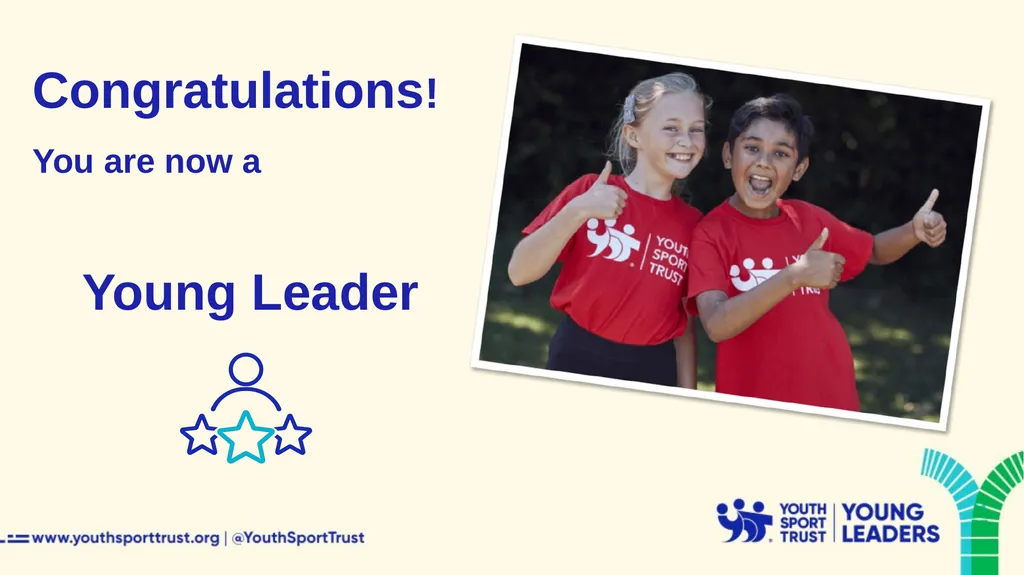
Congratulations!
You are now a
Young Leader<br>
05
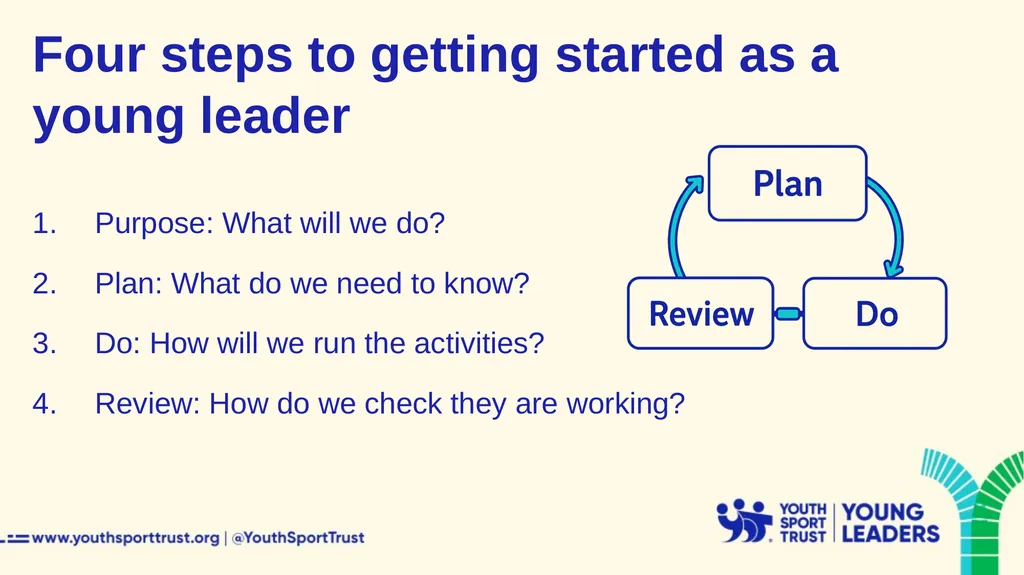
Four steps to getting started as a young leader
Purpose: What will we do?
Plan: What do we need to know?
Do: How will we run the activities?
Review: How do we check they are working?<br>
06
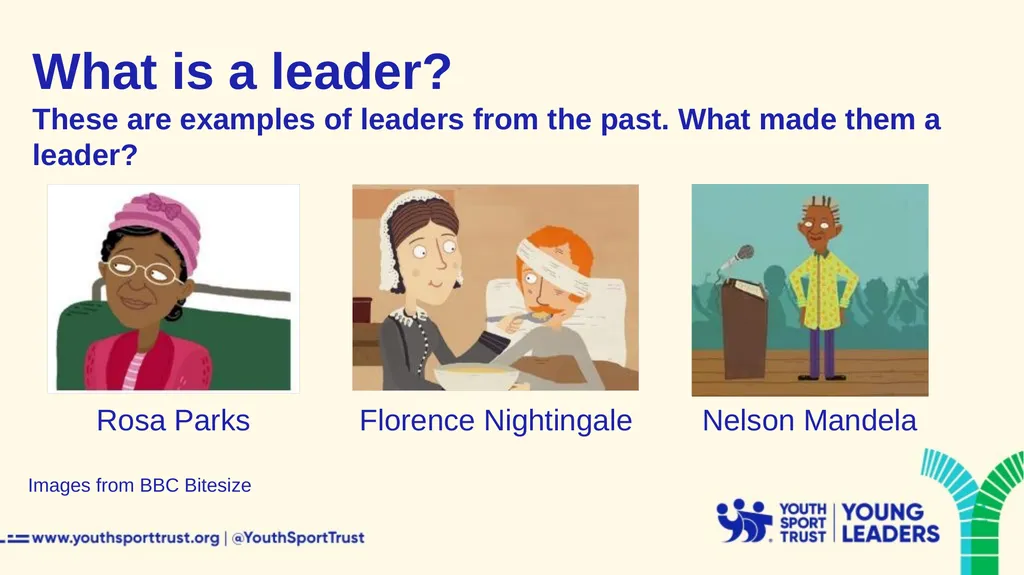
What is a leader? These are examples of leaders from the past. What made them a leader? Rosa Parks Florence Nightingale Nelson Mandela Images from BBC Bitesize<br>
07
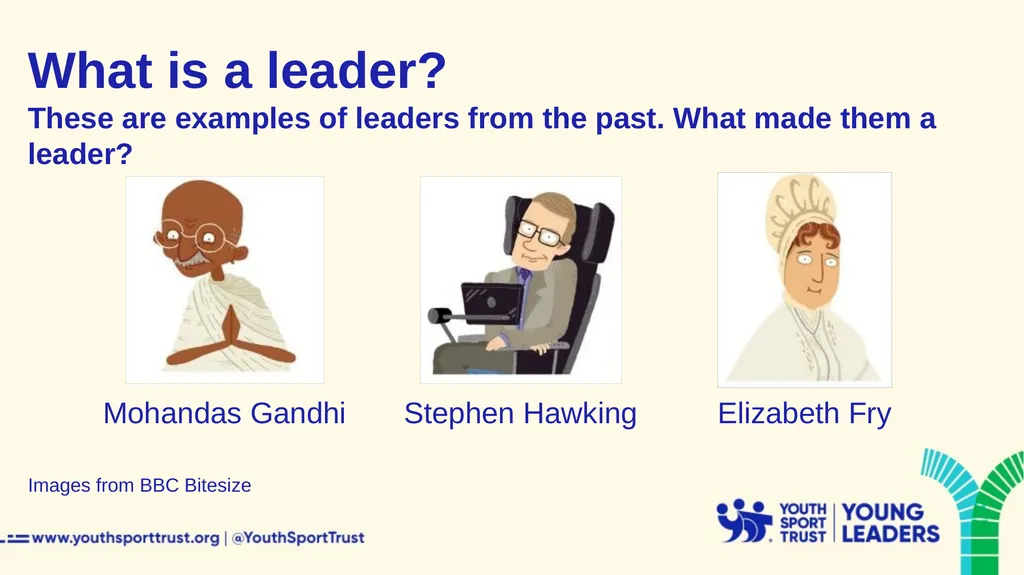
What is a leader?
These are examples of leaders from the past. What made them a leader? Mohandas Gandhi Stephen Hawking Elizabeth Fry Images from BBC Bitesize<br>
08
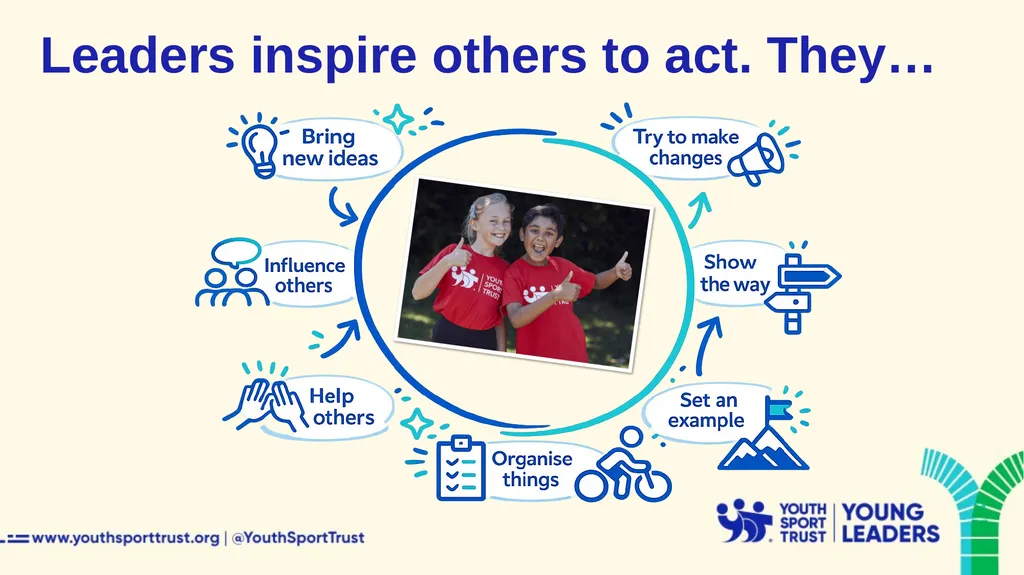
Leaders inspire others to act. They…<br>
09
What will we do?<br>
10
As a young leader, your goal is to get…
…by running fun physical activities in school. more children
more active<br>
11
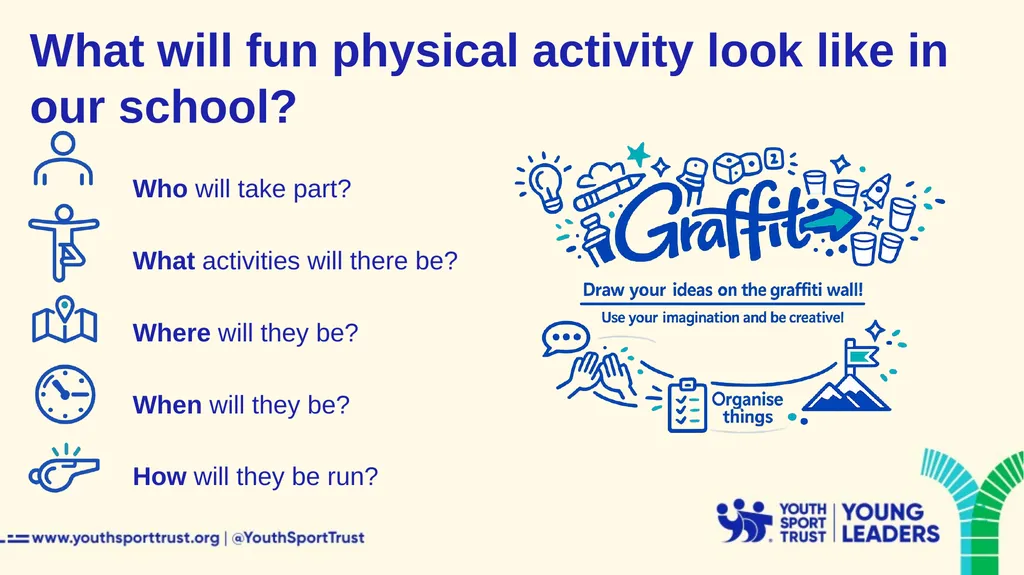
What will fun physical activity look like in our school? Who will take part?
What activities will there be?
Where will they be?
When will they be?
How will they be run?<br>
12
What matters most?<br>
13
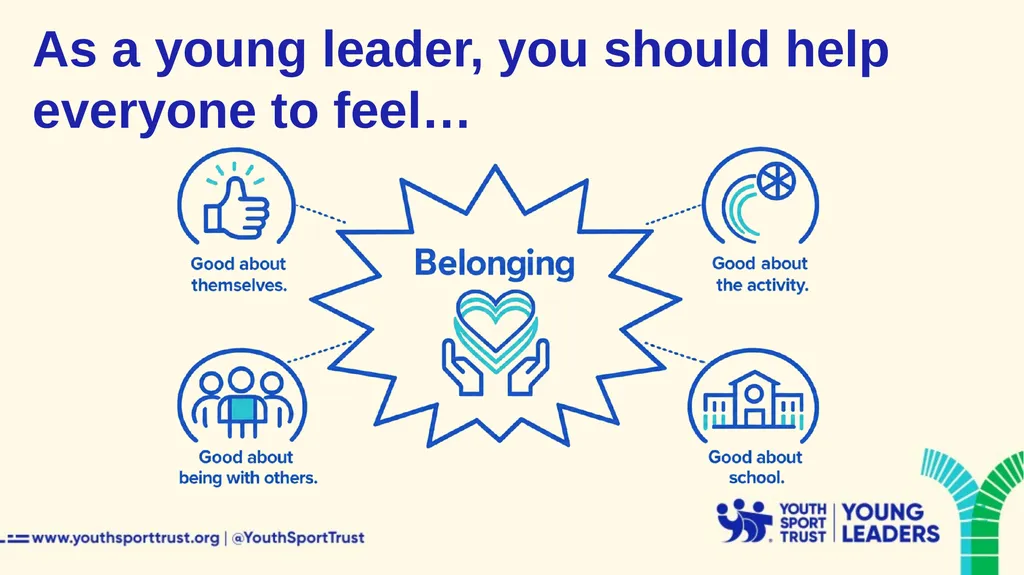
As a young leader, you should help everyone to feel…<br>
14
Active debate: what builds belonging? Think about the action.
Will it help to build children’s sense of belonging?
Move to the ‘agree’ or ‘disagree’ side to show your decision.
Share why you made that decision.<br>
15
We will build belonging by… 1. Running lots of competitions. Why do you think that? Share your views.<br>
16
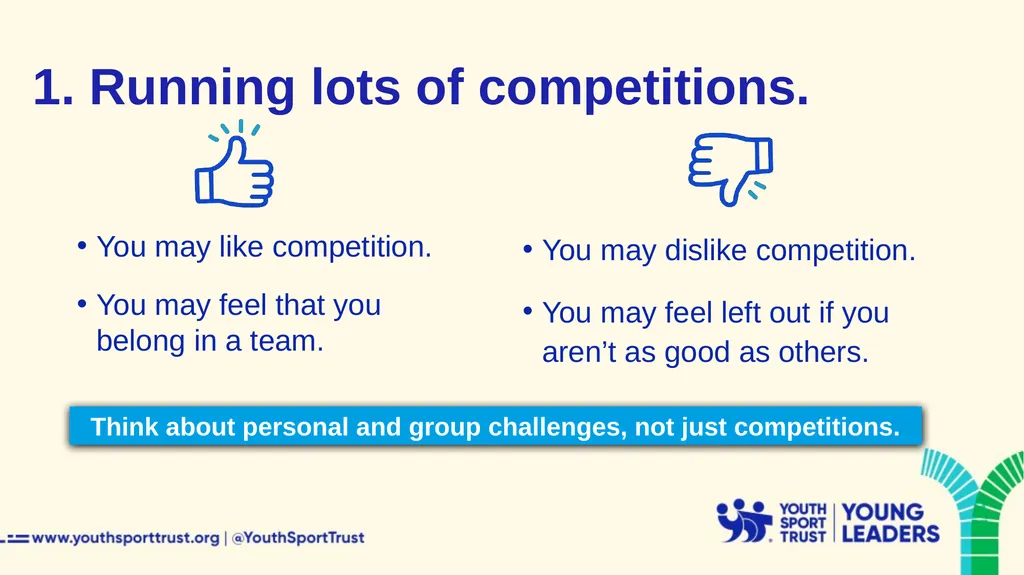
1. Running lots of competitions. You may like competition.
You may feel that you belong in a team. You may dislike competition.
You may feel left out if you aren’t as good as others. Think about personal and group challenges, not just competitions.<br>
17
We will build belonging by… 2. Letting people choose activities. Why do you think that? Share your views.<br>
18
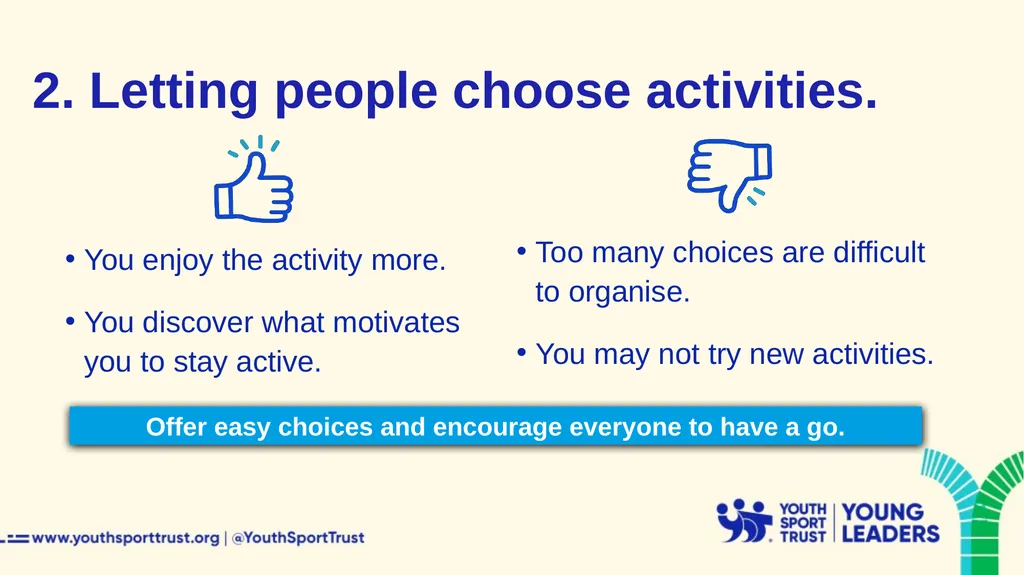
2. Letting people choose activities. You enjoy the activity more.
You discover what motivates you to stay active. Too many choices are difficult to organise.
You may not try new activities. Offer easy choices and encourage everyone to have a go.<br>
19
We will build belonging by… 3. Asking people to pick teams. Why do you think that? Share your views.<br>
20
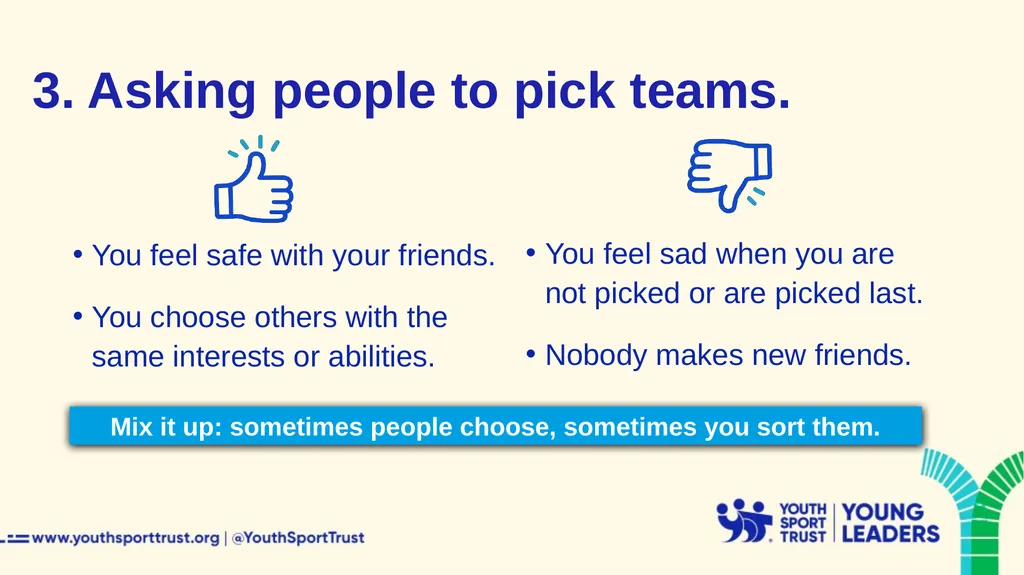
3. Asking people to pick teams. You feel safe with your friends.
You choose others with the same interests or abilities. You feel sad when you are not picked or are picked last.
Nobody makes new friends. Mix it up: sometimes people choose, sometimes you sort them.<br>
21
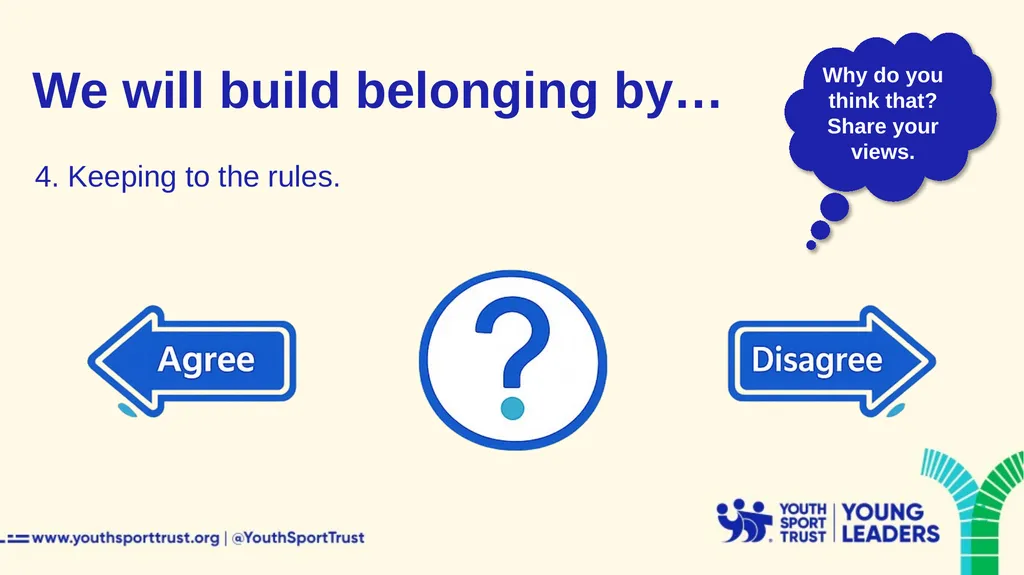
We will build belonging by… 4. Keeping to the rules. Why do you think that? Share your views.<br>
22
4. Keeping to the rules. Everyone plays safely.
You know what you should be doing. You aren’t having fun.
The rules don’t allow for people’s different needs and abilities. Adapt activities to suit the people – as long as they are safe.<br>
23
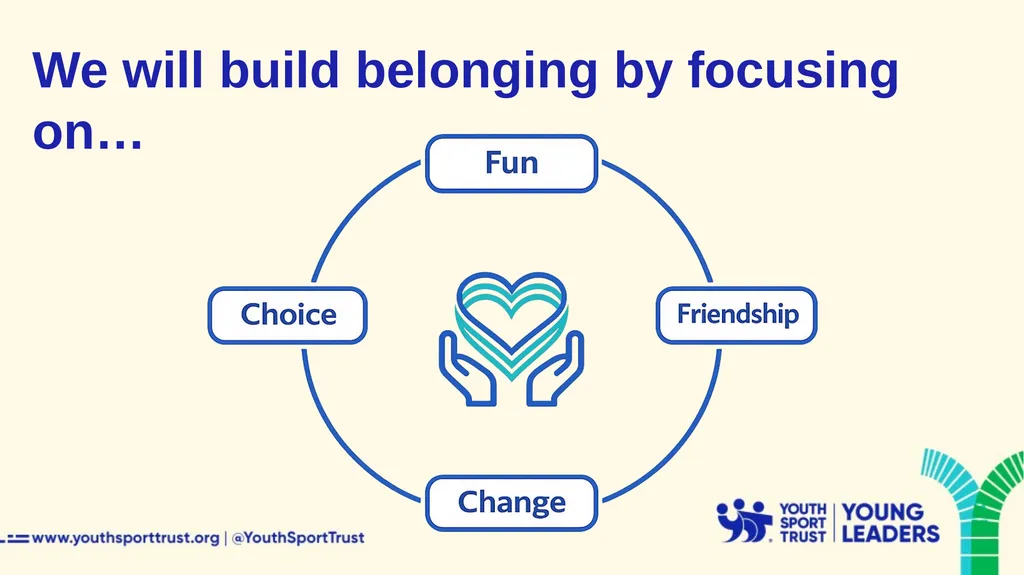
We will build belonging by focusing on…<br>
24
What will we gain?<br>
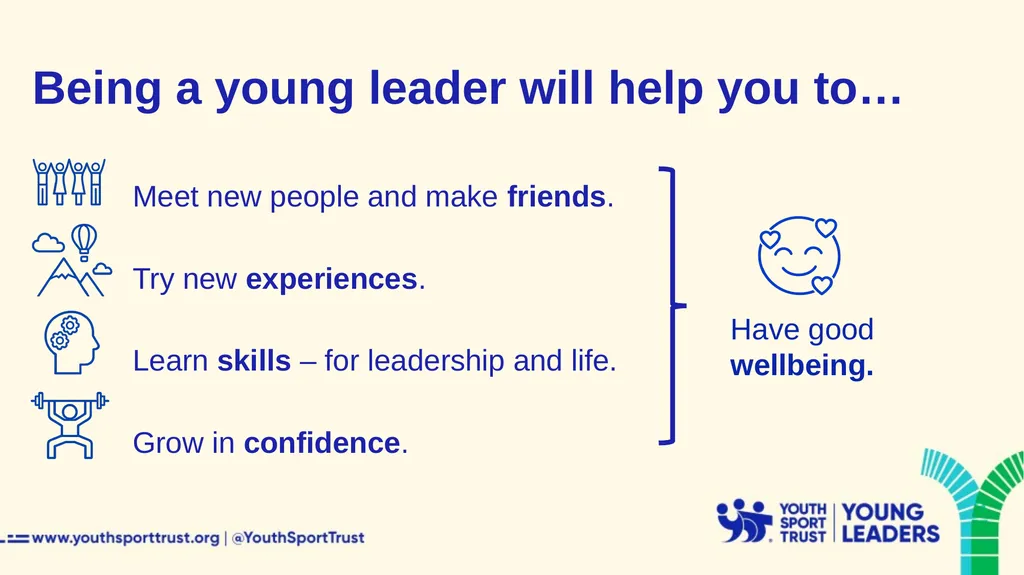
25
Being a young leader will help you to… Meet new people and make friends.
Try new experiences.
Learn skills – for leadership and life.
Grow in confidence. Have good wellbeing.<br>
26
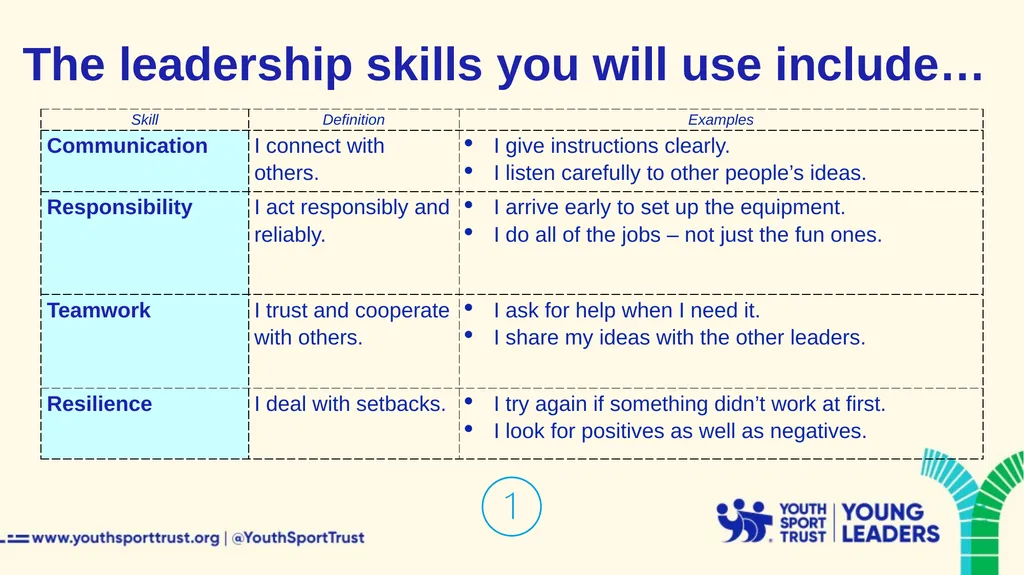
The leadership skills you will use include…<br>
27
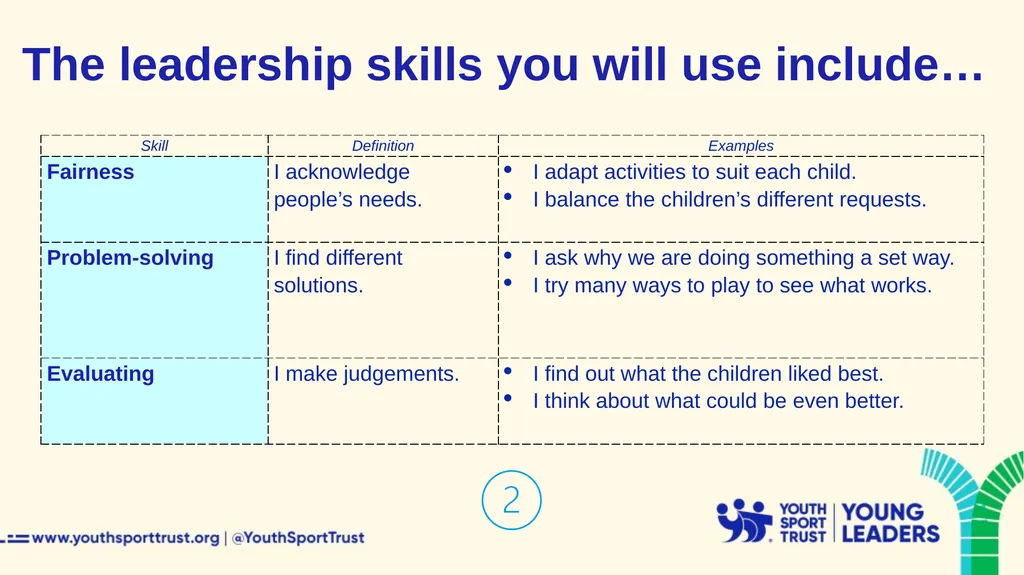
The leadership skills you will use include…<br>
28
What do you want to gain from being a young leader?
Use the handout to write or draw your personal goals.
Choose the leadership skills that you want to practise most. Insert image of handout when designed.<br>
29
Who are we?<br>
30
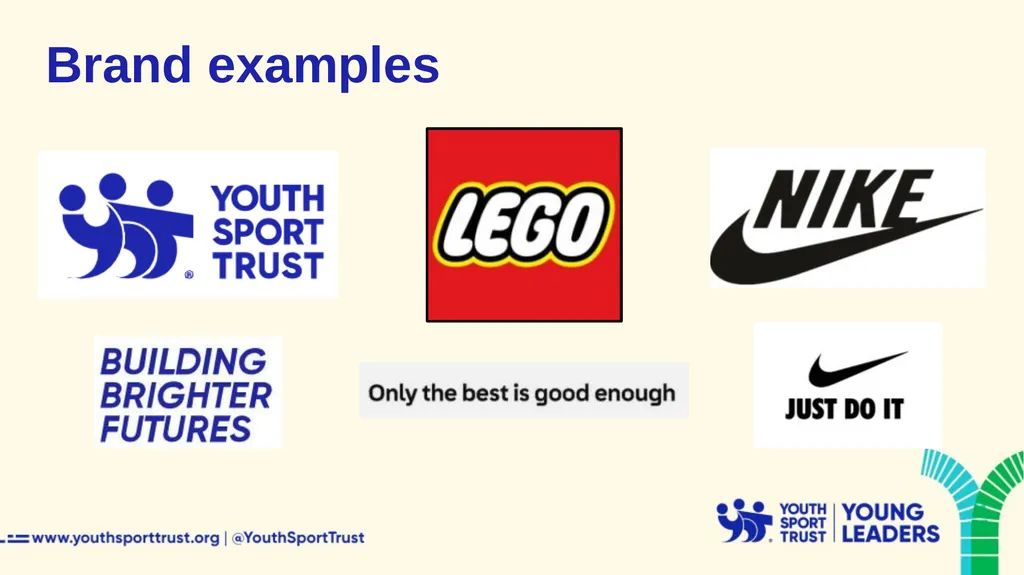
How will you promote yourselves?
What is your brand?
Name
Logo
Slogan<br>
31
Brand examples<br>
32
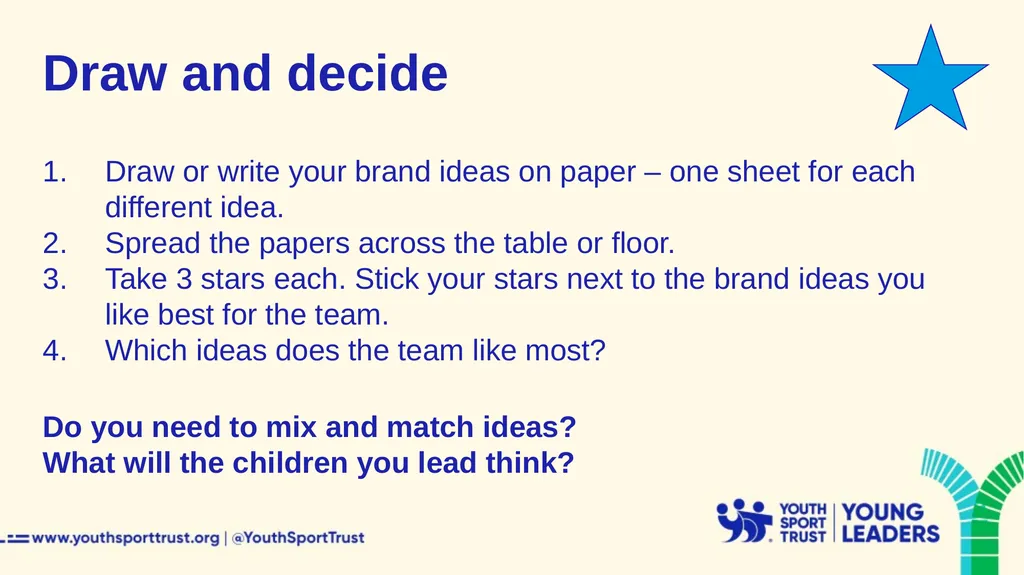
Draw and decide
Draw or write your brand ideas on paper – one sheet for each different idea.
Spread the papers across the table or floor.
Take 3 stars each. Stick your stars next to the brand ideas you like best for the team.
Which ideas does the team like most?
Do you need to mix and match ideas?
What will the children you lead think?<br>