
GIRFT update GIRFT process Started late 2019



Description: GIRFT update GIRFT process Started late 2019 Originally planned to be completed in 6 months, but then SWAG visits occurred between 2020-22 To date completed around 130 of 170 trusts nationally Dataset returned to GIRFT by cancer managers
Related Topics
Download Presentation
"GIRFT update GIRFT process Started late 2019" is the property of its rightful owner. Permission is granted to download and print the materials on this website for personal, non-commercial use only, and to display it on your personal computer provided you do not modify the materials and that you retain all copyright notices contained in the materials. By downloading content from our website, you accept the terms of this agreement.
Presentation Transcript
slide1. GIRFT update<br>
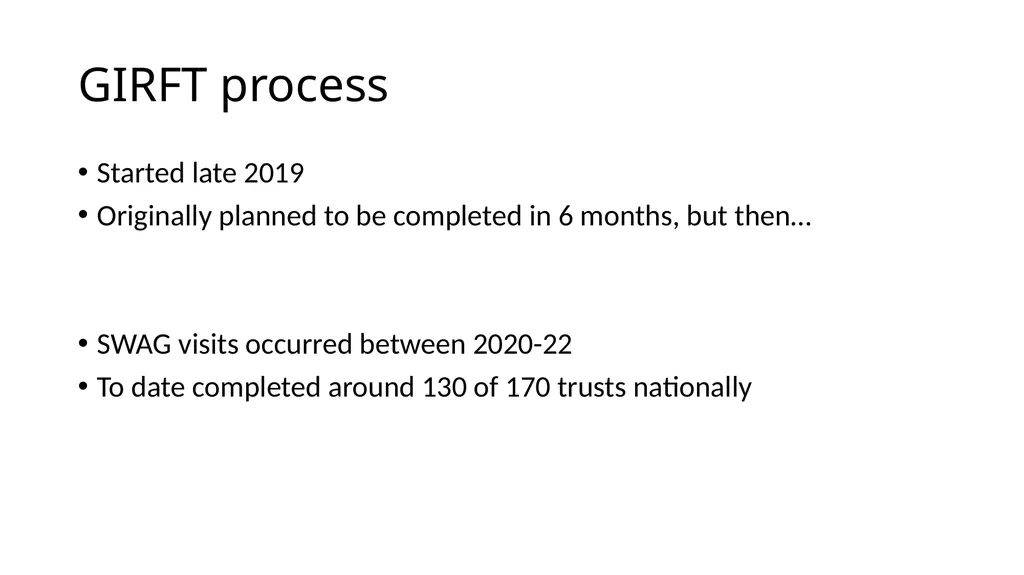
slide2. GIRFT process Started late 2019
Originally planned to be completed in 6 months, but then…
SWAG visits occurred between 2020-22
To date completed around 130 of 170 trusts nationally<br>
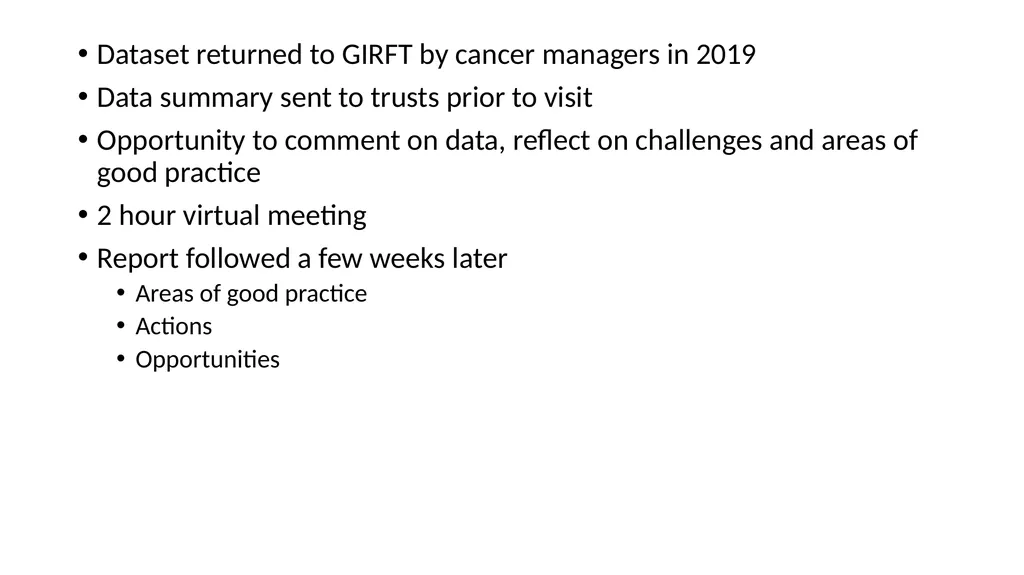
slide3. Dataset returned to GIRFT by cancer managers in 2019
Data summary sent to trusts prior to visit
Opportunity to comment on data, reflect on challenges and areas of good practice
2 hour virtual meeting
Report followed a few weeks later
Areas of good practice
Actions
Opportunities<br>
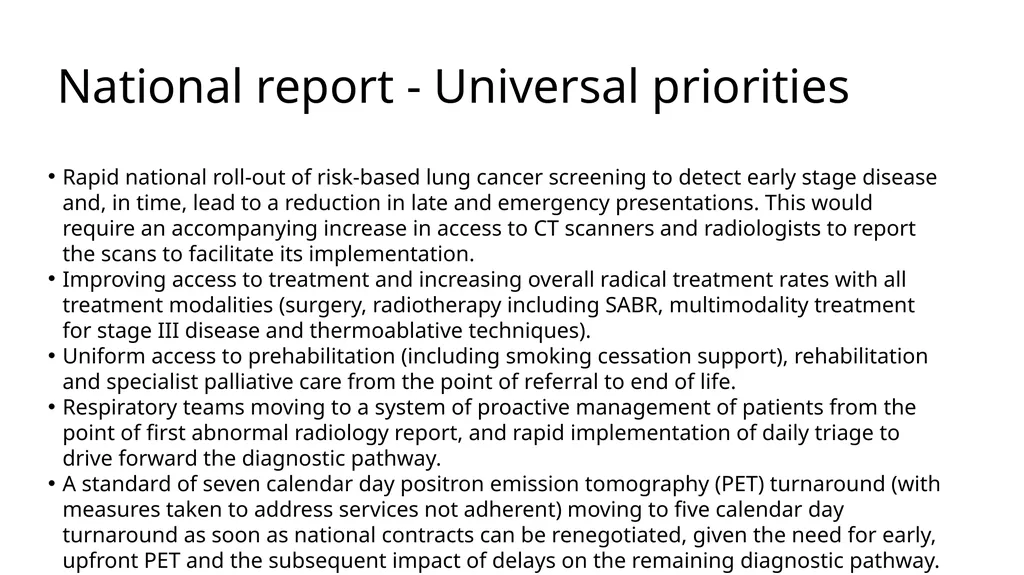
slide5. National report - Universal priorities Rapid national roll-out of risk-based lung cancer screening to detect early stage disease and, in time, lead to a reduction in late and emergency presentations. This would require an accompanying increase in access to CT scanners and radiologists to report the scans to facilitate its implementation.
Improving access to treatment and increasing overall radical treatment rates with all treatment modalities (surgery, radiotherapy including SABR, multimodality treatment for stage III disease and thermoablative techniques).
Uniform access to prehabilitation (including smoking cessation support), rehabilitation and specialist palliative care from the point of referral to end of life.
Respiratory teams moving to a system of proactive management of patients from the point of first abnormal radiology report, and rapid implementation of daily triage to drive forward the diagnostic pathway.
A standard of seven calendar day positron emission tomography (PET) turnaround (with measures taken to address services not adherent) moving to five calendar day turnaround as soon as national contracts can be renegotiated, given the need for early, upfront PET and the subsequent impact of delays on the remaining diagnostic pathway.<br>
slide6. Making a rapid and precise diagnosis
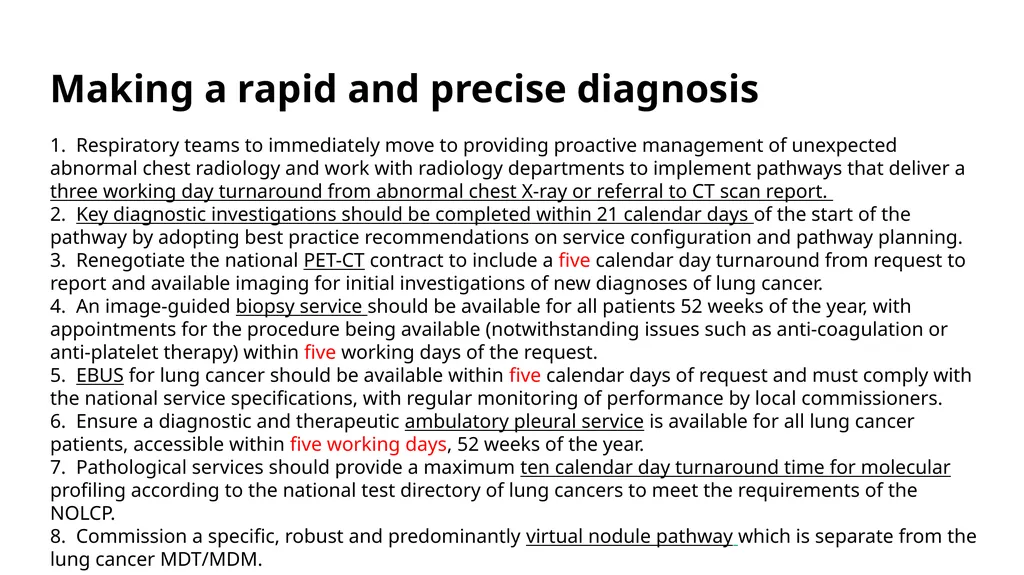
1. Respiratory teams to immediately move to providing proactive management of unexpected abnormal chest radiology and work with radiology departments to implement pathways that deliver a three working day turnaround from abnormal chest X-ray or referral to CT scan report.
2. Key diagnostic investigations should be completed within 21 calendar days of the start of the pathway by adopting best practice recommendations on service configuration and pathway planning.
3. Renegotiate the national PET-CT contract to include a five calendar day turnaround from request to report and available imaging for initial investigations of new diagnoses of lung cancer.
4. An image-guided biopsy service should be available for all patients 52 weeks of the year, with appointments for the procedure being available (notwithstanding issues such as anti-coagulation or anti-platelet therapy) within five working days of the request.
5. EBUS for lung cancer should be available within five calendar days of request and must comply with the national service specifications, with regular monitoring of performance by local commissioners.
6. Ensure a diagnostic and therapeutic ambulatory pleural service is available for all lung cancer patients, accessible within five working days, 52 weeks of the year.
7. Pathological services should provide a maximum ten calendar day turnaround time for molecular profiling according to the national test directory of lung cancers to meet the requirements of the NOLCP.
8. Commission a specific, robust and predominantly virtual nodule pathway which is separate from the lung cancer MDT/MDM.<br>
slide7. Delivering effective treatment
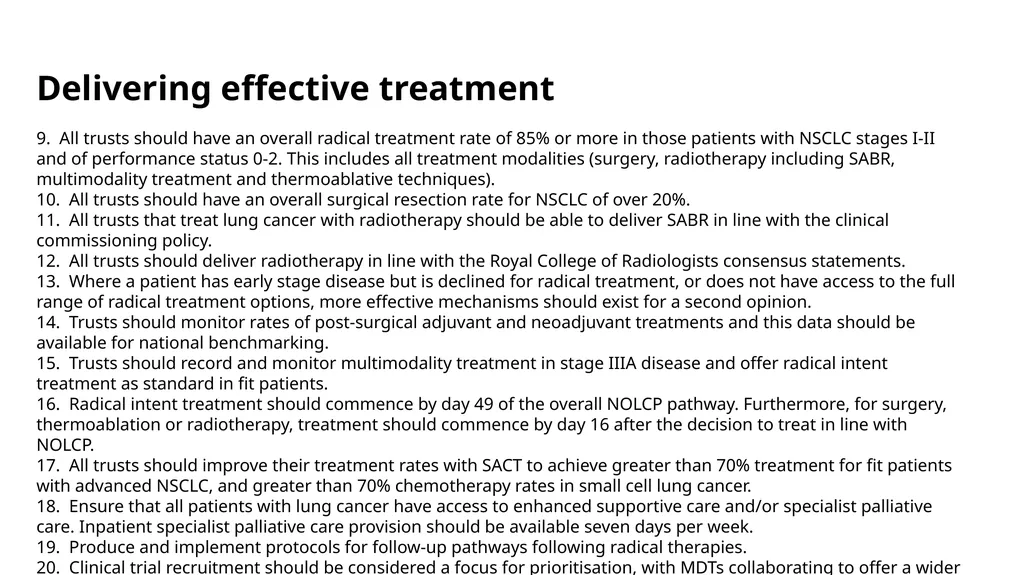
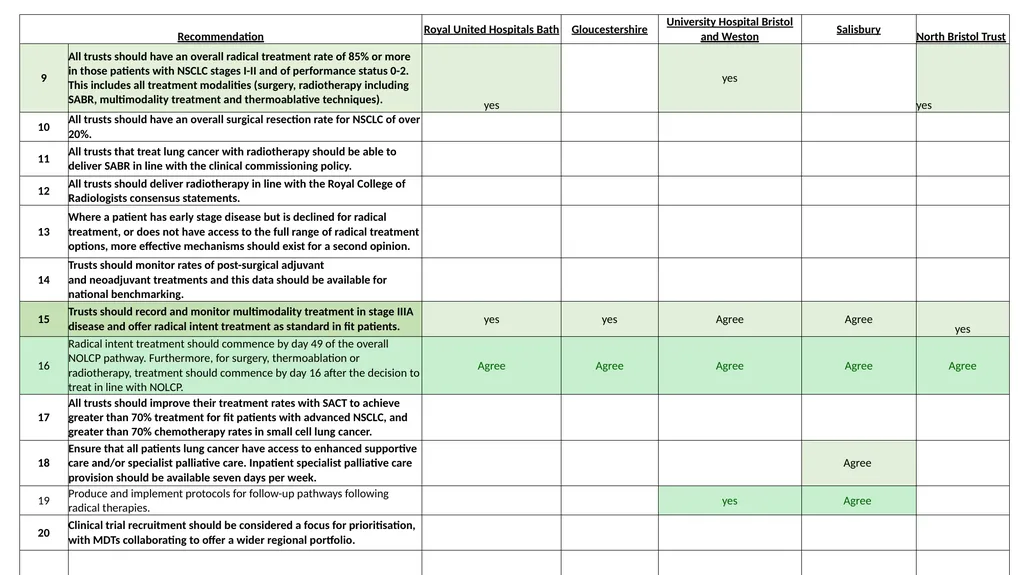
9. All trusts should have an overall radical treatment rate of 85% or more in those patients with NSCLC stages I-II and of performance status 0-2. This includes all treatment modalities (surgery, radiotherapy including SABR, multimodality treatment and thermoablative techniques).
10. All trusts should have an overall surgical resection rate for NSCLC of over 20%.
11. All trusts that treat lung cancer with radiotherapy should be able to deliver SABR in line with the clinical commissioning policy.
12. All trusts should deliver radiotherapy in line with the Royal College of Radiologists consensus statements.
13. Where a patient has early stage disease but is declined for radical treatment, or does not have access to the full range of radical treatment options, more effective mechanisms should exist for a second opinion.
14. Trusts should monitor rates of post-surgical adjuvant and neoadjuvant treatments and this data should be available for national benchmarking.
15. Trusts should record and monitor multimodality treatment in stage IIIA disease and offer radical intent treatment as standard in fit patients.
16. Radical intent treatment should commence by day 49 of the overall NOLCP pathway. Furthermore, for surgery, thermoablation or radiotherapy, treatment should commence by day 16 after the decision to treat in line with NOLCP.
17. All trusts should improve their treatment rates with SACT to achieve greater than 70% treatment for fit patients with advanced NSCLC, and greater than 70% chemotherapy rates in small cell lung cancer.
18. Ensure that all patients with lung cancer have access to enhanced supportive care and/or specialist palliative care. Inpatient specialist palliative care provision should be available seven days per week.
19. Produce and implement protocols for follow-up pathways following radical therapies.
20. Clinical trial recruitment should be considered a focus for prioritisation, with MDTs collaborating to offer a wider regional portfolio.<br>
slide8. Effective multidisciplinary working
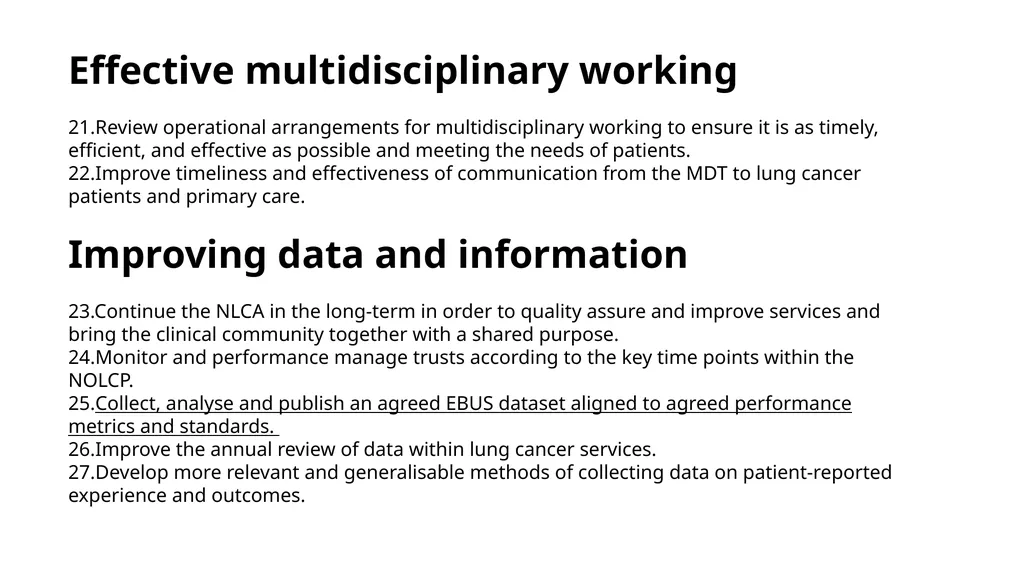
21.Review operational arrangements for multidisciplinary working to ensure it is as timely, efficient, and effective as possible and meeting the needs of patients.
22.Improve timeliness and effectiveness of communication from the MDT to lung cancer patients and primary care.
Improving data and information
23.Continue the NLCA in the long-term in order to quality assure and improve services and bring the clinical community together with a shared purpose.
24.Monitor and performance manage trusts according to the key time points within the NOLCP.
25.Collect, analyse and publish an agreed EBUS dataset aligned to agreed performance metrics and standards.
26.Improve the annual review of data within lung cancer services.
27.Develop more relevant and generalisable methods of collecting data on patient-reported experience and outcomes.<br>
slide9. Resources, organisation and accountability
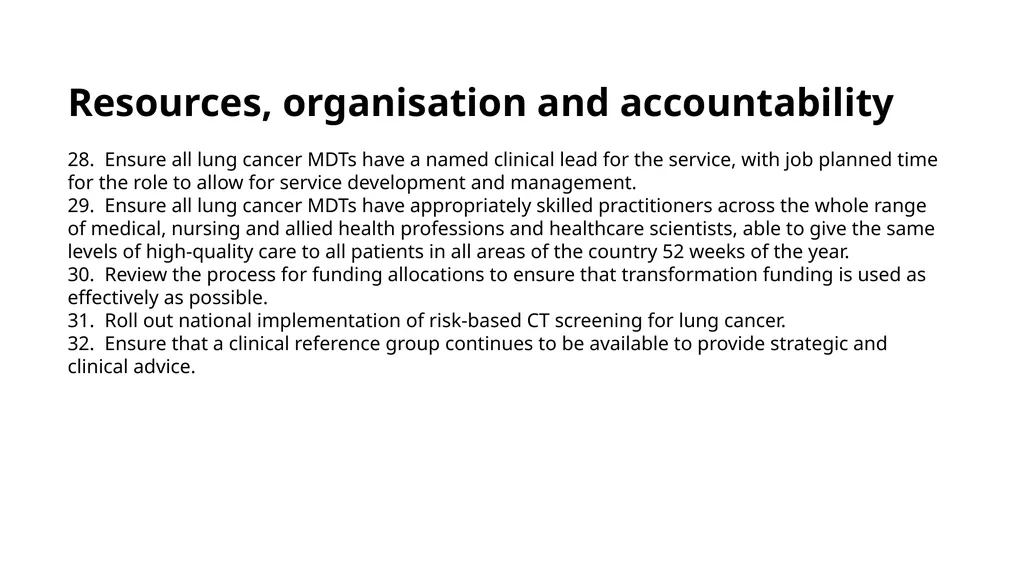
28. Ensure all lung cancer MDTs have a named clinical lead for the service, with job planned time for the role to allow for service development and management.
29. Ensure all lung cancer MDTs have appropriately skilled practitioners across the whole range of medical, nursing and allied health professions and healthcare scientists, able to give the same levels of high-quality care to all patients in all areas of the country 52 weeks of the year.
30. Review the process for funding allocations to ensure that transformation funding is used as effectively as possible.
31. Roll out national implementation of risk-based CT screening for lung cancer.
32. Ensure that a clinical reference group continues to be available to provide strategic and clinical advice.<br>
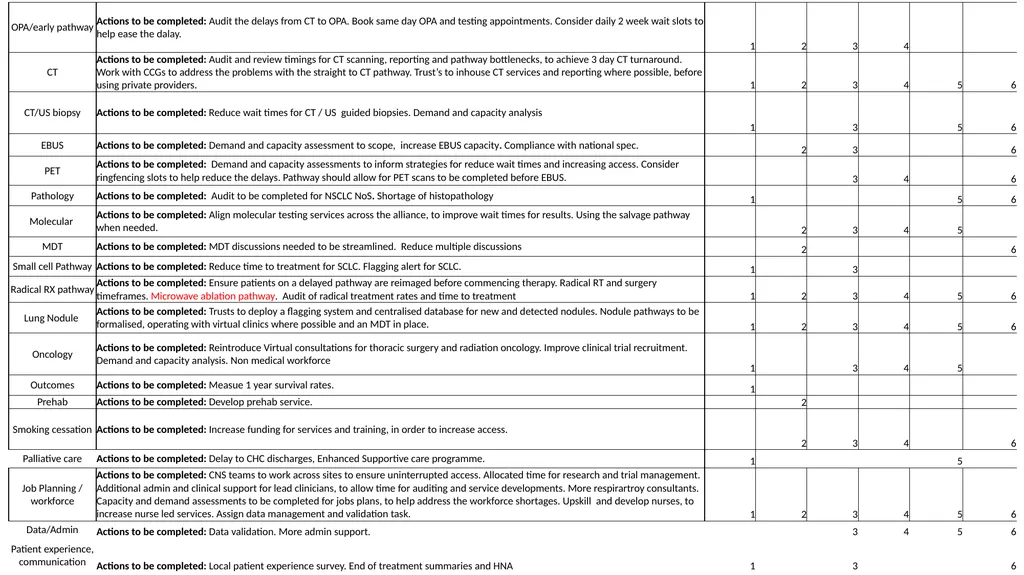
slide10. Treatment Variation Group recommendations<br>
slide13. Next steps<br>
slide14. SWAG Cancer Alliance Funding Patricia McLarnon<br>
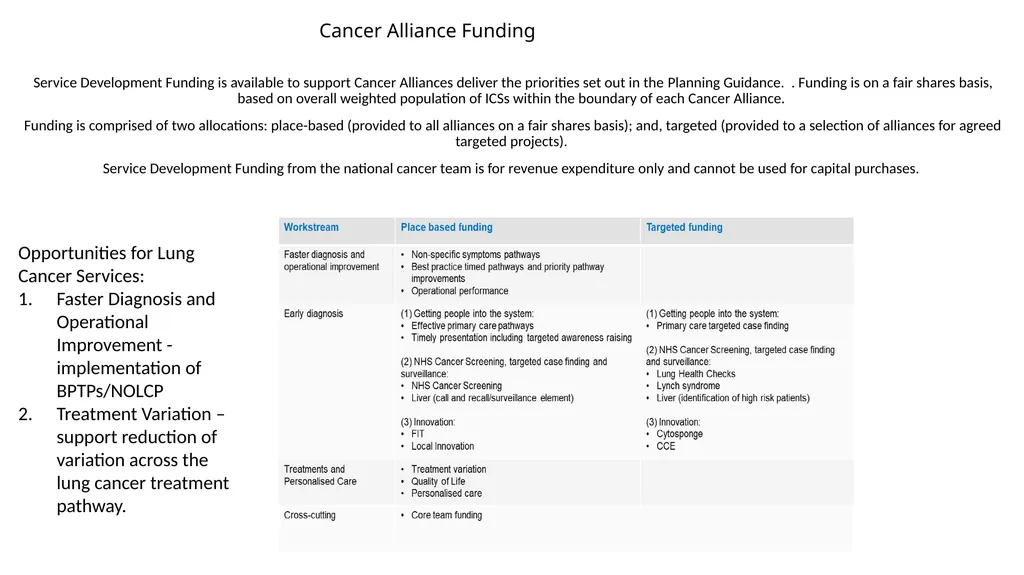
slide15. Cancer Alliance Funding Service Development Funding is available to support Cancer Alliances deliver the priorities set out in the Planning Guidance. . Funding is on a fair shares basis, based on overall weighted population of ICSs within the boundary of each Cancer Alliance.
Funding is comprised of two allocations: place-based (provided to all alliances on a fair shares basis); and, targeted (provided to a selection of alliances for agreed targeted projects).
Service Development Funding from the national cancer team is for revenue expenditure only and cannot be used for capital purchases. Opportunities for Lung Cancer Services:
Faster Diagnosis and Operational Improvement - implementation of BPTPs/NOLCP
Treatment Variation – support reduction of variation across the lung cancer treatment pathway.<br>
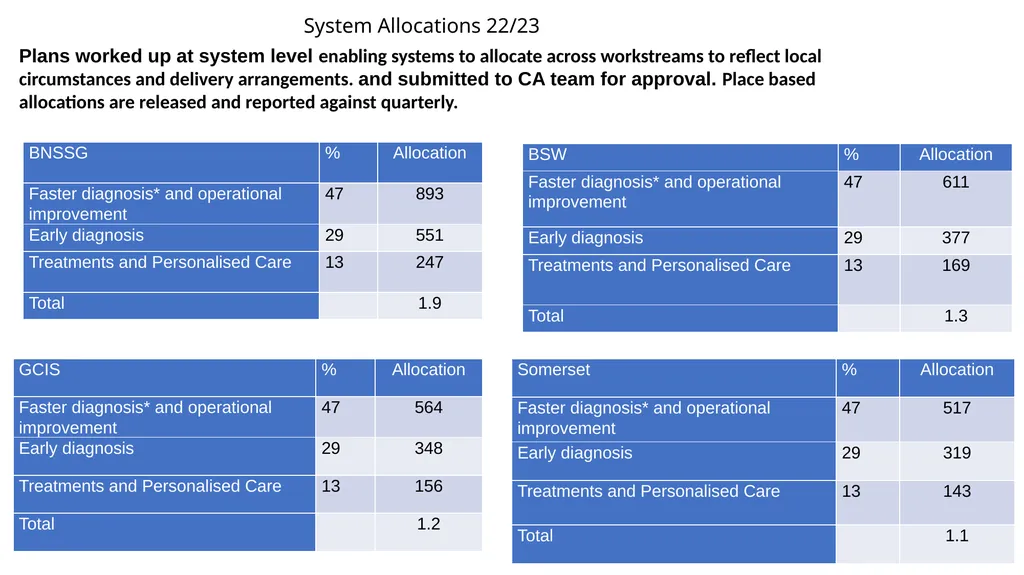
slide16. System Allocations 22/23 Plans worked up at system level enabling systems to allocate across workstreams to reflect local circumstances and delivery arrangements. and submitted to CA team for approval. Place based allocations are released and reported against quarterly.<br>
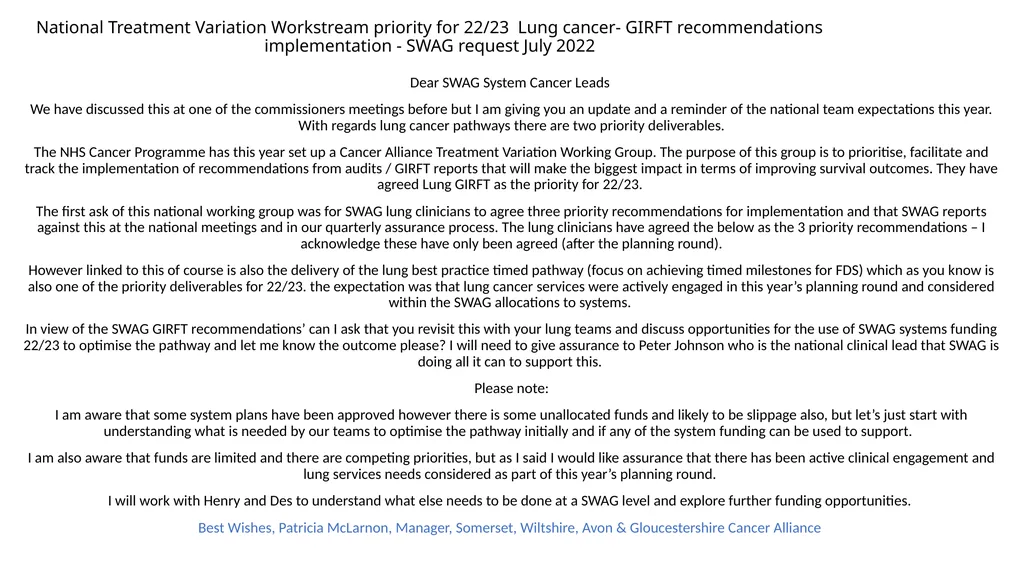
slide17. National Treatment Variation Workstream priority for 22/23 Lung cancer- GIRFT recommendations implementation - SWAG request July 2022 Dear SWAG System Cancer Leads
We have discussed this at one of the commissioners meetings before but I am giving you an update and a reminder of the national team expectations this year. With regards lung cancer pathways there are two priority deliverables.
The NHS Cancer Programme has this year set up a Cancer Alliance Treatment Variation Working Group. The purpose of this group is to prioritise, facilitate and track the implementation of recommendations from audits / GIRFT reports that will make the biggest impact in terms of improving survival outcomes. They have agreed Lung GIRFT as the priority for 22/23.
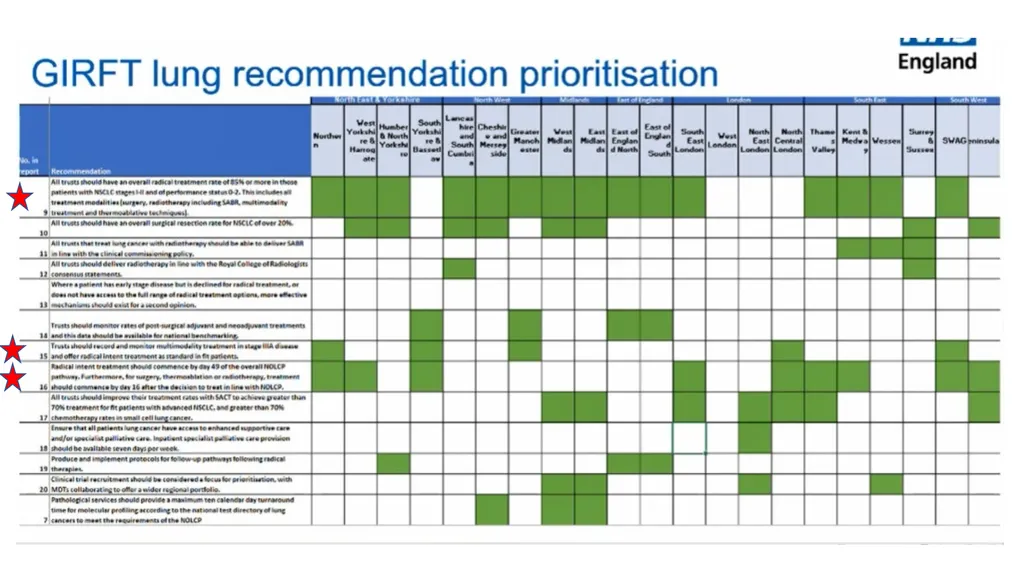
The first ask of this national working group was for SWAG lung clinicians to agree three priority recommendations for implementation and that SWAG reports against this at the national meetings and in our quarterly assurance process. The lung clinicians have agreed the below as the 3 priority recommendations – I acknowledge these have only been agreed (after the planning round).
However linked to this of course is also the delivery of the lung best practice timed pathway (focus on achieving timed milestones for FDS) which as you know is also one of the priority deliverables for 22/23. the expectation was that lung cancer services were actively engaged in this year’s planning round and considered within the SWAG allocations to systems.
In view of the SWAG GIRFT recommendations’ can I ask that you revisit this with your lung teams and discuss opportunities for the use of SWAG systems funding 22/23 to optimise the pathway and let me know the outcome please? I will need to give assurance to Peter Johnson who is the national clinical lead that SWAG is doing all it can to support this.
Please note:
I am aware that some system plans have been approved however there is some unallocated funds and likely to be slippage also, but let’s just start with understanding what is needed by our teams to optimise the pathway initially and if any of the system funding can be used to support.
I am also aware that funds are limited and there are competing priorities, but as I said I would like assurance that there has been active clinical engagement and lung services needs considered as part of this year’s planning round.
I will work with Henry and Des to understand what else needs to be done at a SWAG level and explore further funding opportunities.
Best Wishes, Patricia McLarnon, Manager, Somerset, Wiltshire, Avon & Gloucestershire Cancer Alliance<br>
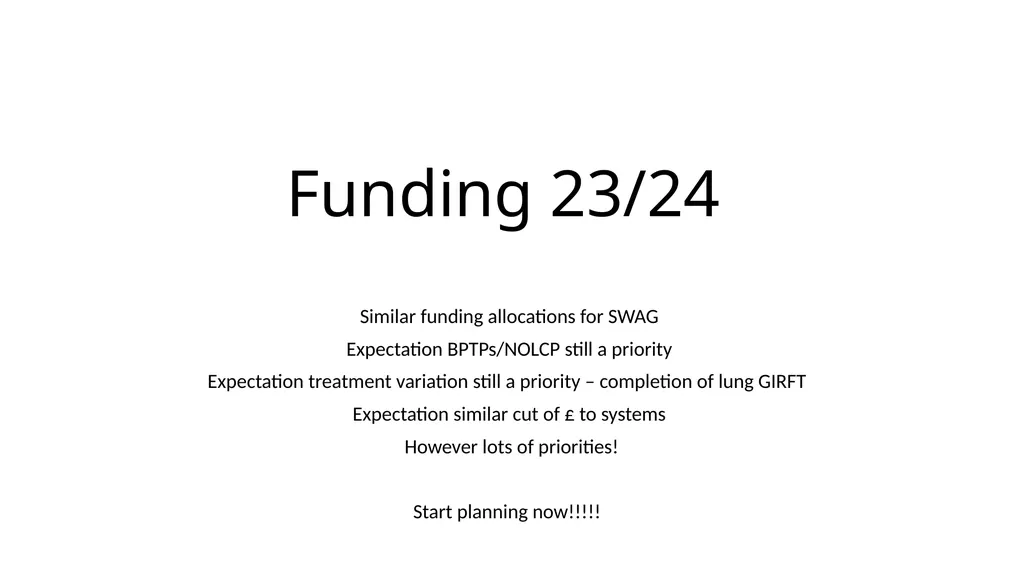
slide18. Funding 23/24 Similar funding allocations for SWAG
Expectation BPTPs/NOLCP still a priority
Expectation treatment variation still a priority – completion of lung GIRFT
Expectation similar cut of £ to systems
However lots of priorities!
Start planning now!!!!!<br>
slide2. GIRFT process Started late 2019
Originally planned to be completed in 6 months, but then…
SWAG visits occurred between 2020-22
To date completed around 130 of 170 trusts nationally<br>
slide3. Dataset returned to GIRFT by cancer managers in 2019
Data summary sent to trusts prior to visit
Opportunity to comment on data, reflect on challenges and areas of good practice
2 hour virtual meeting
Report followed a few weeks later
Areas of good practice
Actions
Opportunities<br>
slide5. National report - Universal priorities Rapid national roll-out of risk-based lung cancer screening to detect early stage disease and, in time, lead to a reduction in late and emergency presentations. This would require an accompanying increase in access to CT scanners and radiologists to report the scans to facilitate its implementation.
Improving access to treatment and increasing overall radical treatment rates with all treatment modalities (surgery, radiotherapy including SABR, multimodality treatment for stage III disease and thermoablative techniques).
Uniform access to prehabilitation (including smoking cessation support), rehabilitation and specialist palliative care from the point of referral to end of life.
Respiratory teams moving to a system of proactive management of patients from the point of first abnormal radiology report, and rapid implementation of daily triage to drive forward the diagnostic pathway.
A standard of seven calendar day positron emission tomography (PET) turnaround (with measures taken to address services not adherent) moving to five calendar day turnaround as soon as national contracts can be renegotiated, given the need for early, upfront PET and the subsequent impact of delays on the remaining diagnostic pathway.<br>
slide6. Making a rapid and precise diagnosis
1. Respiratory teams to immediately move to providing proactive management of unexpected abnormal chest radiology and work with radiology departments to implement pathways that deliver a three working day turnaround from abnormal chest X-ray or referral to CT scan report.
2. Key diagnostic investigations should be completed within 21 calendar days of the start of the pathway by adopting best practice recommendations on service configuration and pathway planning.
3. Renegotiate the national PET-CT contract to include a five calendar day turnaround from request to report and available imaging for initial investigations of new diagnoses of lung cancer.
4. An image-guided biopsy service should be available for all patients 52 weeks of the year, with appointments for the procedure being available (notwithstanding issues such as anti-coagulation or anti-platelet therapy) within five working days of the request.
5. EBUS for lung cancer should be available within five calendar days of request and must comply with the national service specifications, with regular monitoring of performance by local commissioners.
6. Ensure a diagnostic and therapeutic ambulatory pleural service is available for all lung cancer patients, accessible within five working days, 52 weeks of the year.
7. Pathological services should provide a maximum ten calendar day turnaround time for molecular profiling according to the national test directory of lung cancers to meet the requirements of the NOLCP.
8. Commission a specific, robust and predominantly virtual nodule pathway which is separate from the lung cancer MDT/MDM.<br>
slide7. Delivering effective treatment
9. All trusts should have an overall radical treatment rate of 85% or more in those patients with NSCLC stages I-II and of performance status 0-2. This includes all treatment modalities (surgery, radiotherapy including SABR, multimodality treatment and thermoablative techniques).
10. All trusts should have an overall surgical resection rate for NSCLC of over 20%.
11. All trusts that treat lung cancer with radiotherapy should be able to deliver SABR in line with the clinical commissioning policy.
12. All trusts should deliver radiotherapy in line with the Royal College of Radiologists consensus statements.
13. Where a patient has early stage disease but is declined for radical treatment, or does not have access to the full range of radical treatment options, more effective mechanisms should exist for a second opinion.
14. Trusts should monitor rates of post-surgical adjuvant and neoadjuvant treatments and this data should be available for national benchmarking.
15. Trusts should record and monitor multimodality treatment in stage IIIA disease and offer radical intent treatment as standard in fit patients.
16. Radical intent treatment should commence by day 49 of the overall NOLCP pathway. Furthermore, for surgery, thermoablation or radiotherapy, treatment should commence by day 16 after the decision to treat in line with NOLCP.
17. All trusts should improve their treatment rates with SACT to achieve greater than 70% treatment for fit patients with advanced NSCLC, and greater than 70% chemotherapy rates in small cell lung cancer.
18. Ensure that all patients with lung cancer have access to enhanced supportive care and/or specialist palliative care. Inpatient specialist palliative care provision should be available seven days per week.
19. Produce and implement protocols for follow-up pathways following radical therapies.
20. Clinical trial recruitment should be considered a focus for prioritisation, with MDTs collaborating to offer a wider regional portfolio.<br>
slide8. Effective multidisciplinary working
21.Review operational arrangements for multidisciplinary working to ensure it is as timely, efficient, and effective as possible and meeting the needs of patients.
22.Improve timeliness and effectiveness of communication from the MDT to lung cancer patients and primary care.
Improving data and information
23.Continue the NLCA in the long-term in order to quality assure and improve services and bring the clinical community together with a shared purpose.
24.Monitor and performance manage trusts according to the key time points within the NOLCP.
25.Collect, analyse and publish an agreed EBUS dataset aligned to agreed performance metrics and standards.
26.Improve the annual review of data within lung cancer services.
27.Develop more relevant and generalisable methods of collecting data on patient-reported experience and outcomes.<br>
slide9. Resources, organisation and accountability
28. Ensure all lung cancer MDTs have a named clinical lead for the service, with job planned time for the role to allow for service development and management.
29. Ensure all lung cancer MDTs have appropriately skilled practitioners across the whole range of medical, nursing and allied health professions and healthcare scientists, able to give the same levels of high-quality care to all patients in all areas of the country 52 weeks of the year.
30. Review the process for funding allocations to ensure that transformation funding is used as effectively as possible.
31. Roll out national implementation of risk-based CT screening for lung cancer.
32. Ensure that a clinical reference group continues to be available to provide strategic and clinical advice.<br>
slide10. Treatment Variation Group recommendations<br>
slide13. Next steps<br>
slide14. SWAG Cancer Alliance Funding Patricia McLarnon<br>
slide15. Cancer Alliance Funding Service Development Funding is available to support Cancer Alliances deliver the priorities set out in the Planning Guidance. . Funding is on a fair shares basis, based on overall weighted population of ICSs within the boundary of each Cancer Alliance.
Funding is comprised of two allocations: place-based (provided to all alliances on a fair shares basis); and, targeted (provided to a selection of alliances for agreed targeted projects).
Service Development Funding from the national cancer team is for revenue expenditure only and cannot be used for capital purchases. Opportunities for Lung Cancer Services:
Faster Diagnosis and Operational Improvement - implementation of BPTPs/NOLCP
Treatment Variation – support reduction of variation across the lung cancer treatment pathway.<br>
slide16. System Allocations 22/23 Plans worked up at system level enabling systems to allocate across workstreams to reflect local circumstances and delivery arrangements. and submitted to CA team for approval. Place based allocations are released and reported against quarterly.<br>
slide17. National Treatment Variation Workstream priority for 22/23 Lung cancer- GIRFT recommendations implementation - SWAG request July 2022 Dear SWAG System Cancer Leads
We have discussed this at one of the commissioners meetings before but I am giving you an update and a reminder of the national team expectations this year. With regards lung cancer pathways there are two priority deliverables.
The NHS Cancer Programme has this year set up a Cancer Alliance Treatment Variation Working Group. The purpose of this group is to prioritise, facilitate and track the implementation of recommendations from audits / GIRFT reports that will make the biggest impact in terms of improving survival outcomes. They have agreed Lung GIRFT as the priority for 22/23.
The first ask of this national working group was for SWAG lung clinicians to agree three priority recommendations for implementation and that SWAG reports against this at the national meetings and in our quarterly assurance process. The lung clinicians have agreed the below as the 3 priority recommendations – I acknowledge these have only been agreed (after the planning round).
However linked to this of course is also the delivery of the lung best practice timed pathway (focus on achieving timed milestones for FDS) which as you know is also one of the priority deliverables for 22/23. the expectation was that lung cancer services were actively engaged in this year’s planning round and considered within the SWAG allocations to systems.
In view of the SWAG GIRFT recommendations’ can I ask that you revisit this with your lung teams and discuss opportunities for the use of SWAG systems funding 22/23 to optimise the pathway and let me know the outcome please? I will need to give assurance to Peter Johnson who is the national clinical lead that SWAG is doing all it can to support this.
Please note:
I am aware that some system plans have been approved however there is some unallocated funds and likely to be slippage also, but let’s just start with understanding what is needed by our teams to optimise the pathway initially and if any of the system funding can be used to support.
I am also aware that funds are limited and there are competing priorities, but as I said I would like assurance that there has been active clinical engagement and lung services needs considered as part of this year’s planning round.
I will work with Henry and Des to understand what else needs to be done at a SWAG level and explore further funding opportunities.
Best Wishes, Patricia McLarnon, Manager, Somerset, Wiltshire, Avon & Gloucestershire Cancer Alliance<br>
slide18. Funding 23/24 Similar funding allocations for SWAG
Expectation BPTPs/NOLCP still a priority
Expectation treatment variation still a priority – completion of lung GIRFT
Expectation similar cut of £ to systems
However lots of priorities!
Start planning now!!!!!<br>