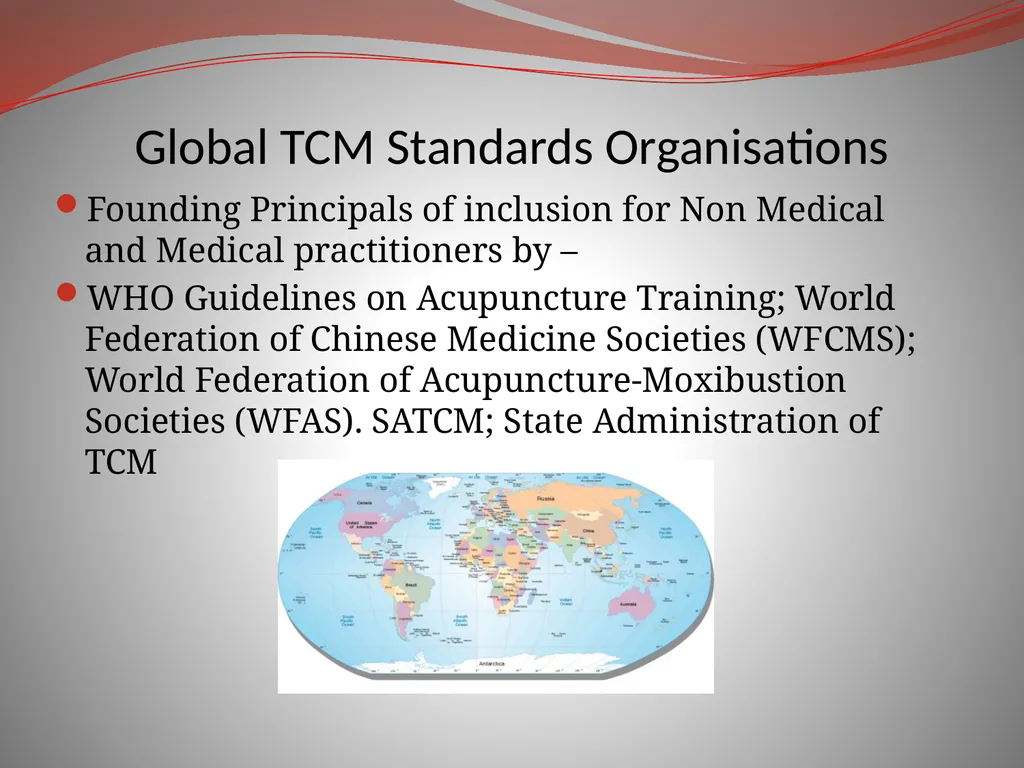
Global TCM Standards Organisations Founding Principals of inclusion for Non Medical and Medical practitioners by WHO Guidelines on Acupuncture Training; World Federation of Chinese Medicine Societies (WFCMS); World Federation of
"Global TCM Standards Organisations Founding" is the property of its rightful owner. Permission is granted to
download and print the materials on this website for personal, non-commercial use only, and to display it
on your personal computer provided you do not modify the materials and that you retain all copyright
notices contained in the materials. By downloading content from our website, you accept the terms of this
agreement.
Presentation Transcript
01
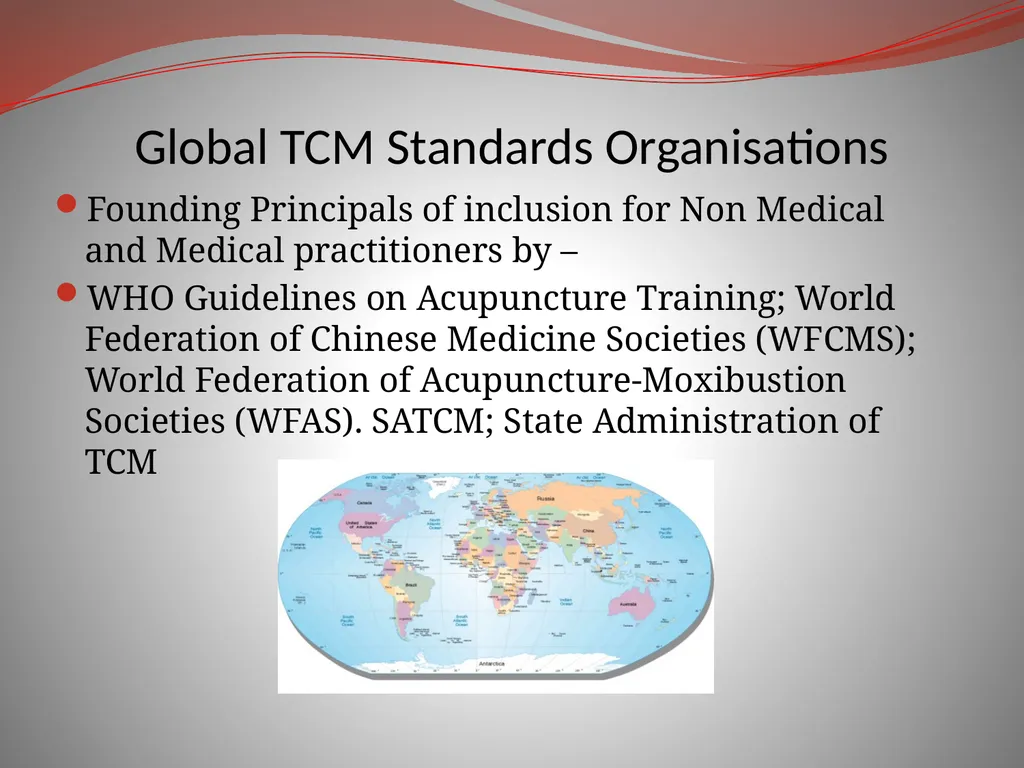
Global TCM Standards Organisations Founding Principals of inclusion for Non Medical and Medical practitioners by –
WHO Guidelines on Acupuncture Training; World Federation of Chinese Medicine Societies (WFCMS); World Federation of Acupuncture-Moxibustion Societies (WFAS). SATCM; State Administration of TCM<br>
02
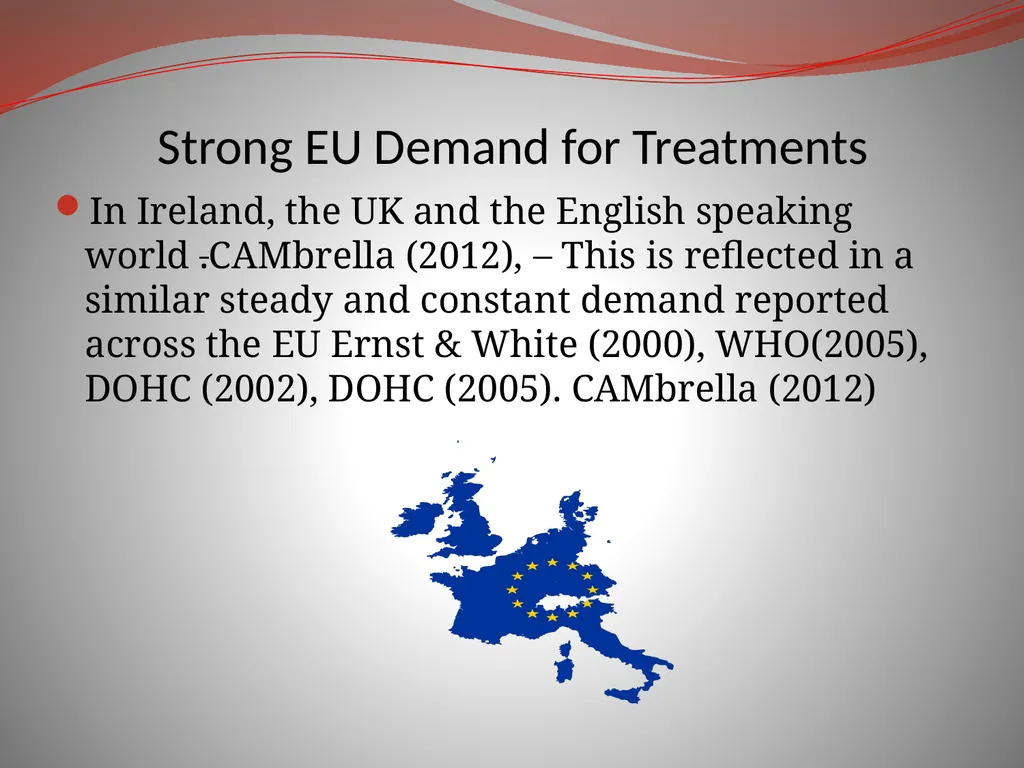
Strong EU Demand for Treatments In Ireland, the UK and the English speaking world .CAMbrella (2012), This is reflected in a similar steady and constant demand reported across the EU Ernst & White (2000), WHO(2005), DOHC (2002), DOHC (2005). CAMbrella (2012)<br>
03
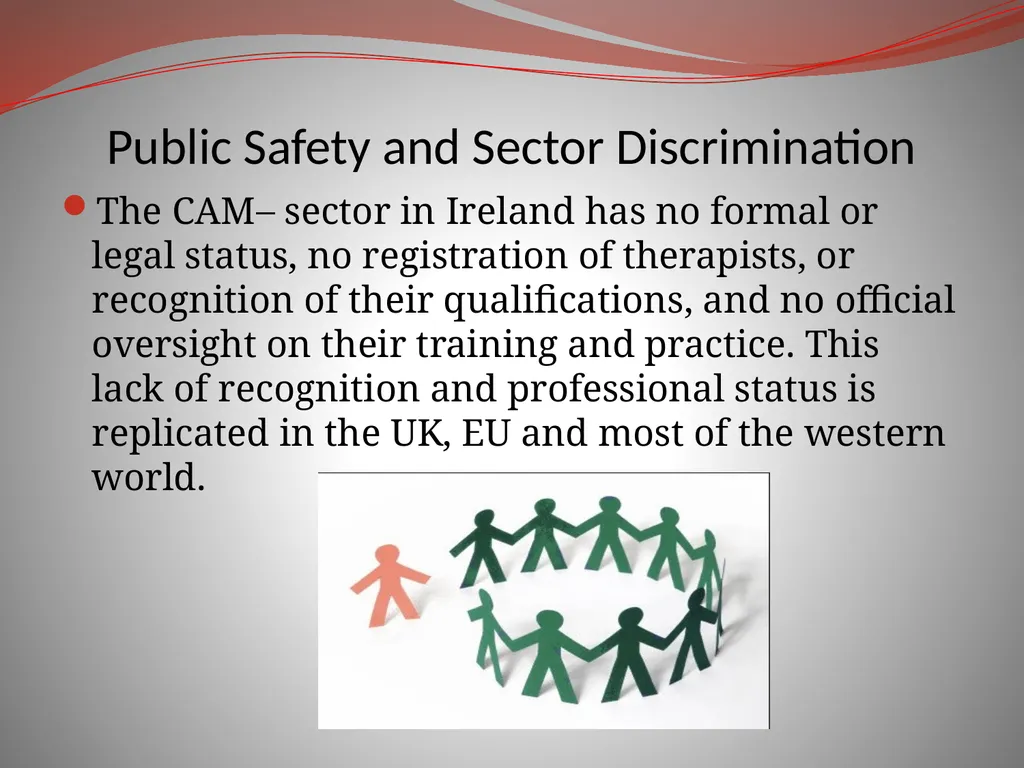
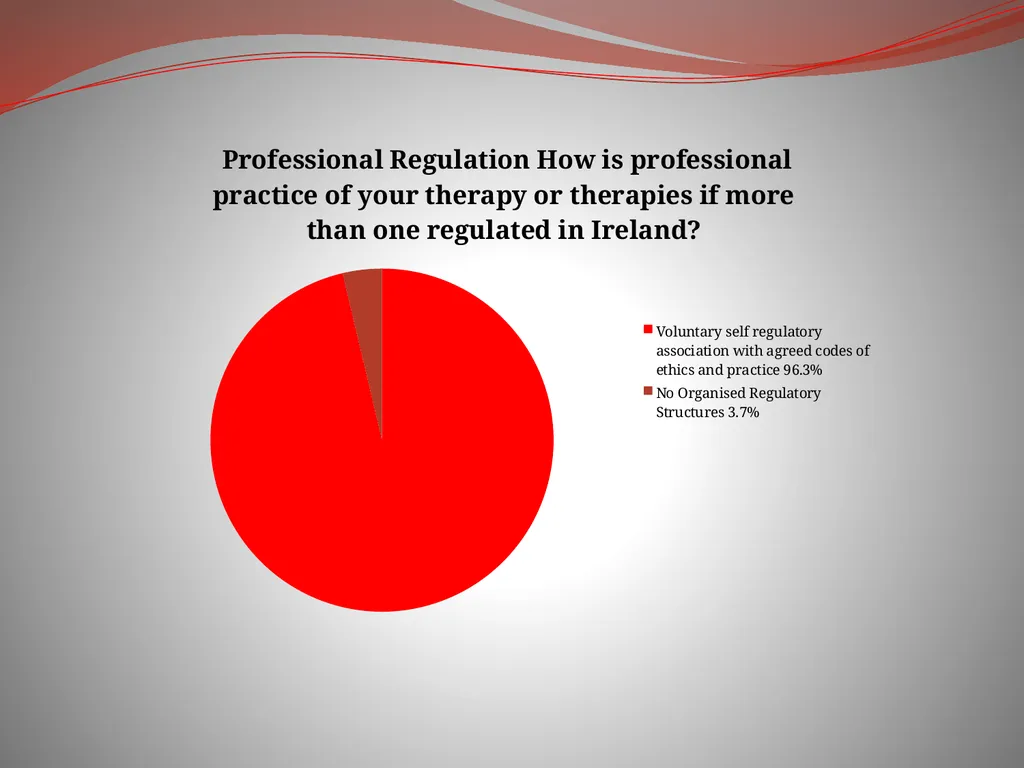
Public Safety and Sector Discrimination The CAM sector in Ireland has no formal or legal status, no registration of therapists, or recognition of their qualifications, and no official oversight on their training and practice. This lack of recognition and professional status is replicated in the UK, EU and most of the western world.<br>
04
No Regulation or Government support Despite consumer choice Acupuncture and CM in most of the EU remains unregulated and unsupported by successive governments ,. Budd & Mills (2000 Pg 8). No national registers of adequately trained practitioners - citizens in Ireland and the EU must search for competent and safe practitioners ,. CAMbrella(2012).<br>
05
EU has a “hands off” approach NO EU guidance to member states on possible structure or framework options for sector regulation and practice - noted in the CAMbrella Report to the EU (2012).<br>
06
Eu Resolution 1997 EU called for a process of developing structures for recognising non- conventional medicines.
Contradicted by the EU Treaties of Rome and Lisbon which stated that “each member state has the responsibility for their own health policies.
No willingness to harmonise regulatory structures within EU.<br>
07
Irish Government Initiatives The period between 2001 and 2006 was the most active for Irish government initiatives into CAM therapies.
2003 – 2006 and a National Working Group on the Regulation of CAM Therapists published recommendations for regulation. DOHC (2002, Pg 5).
No action on recommendations.<br>
08
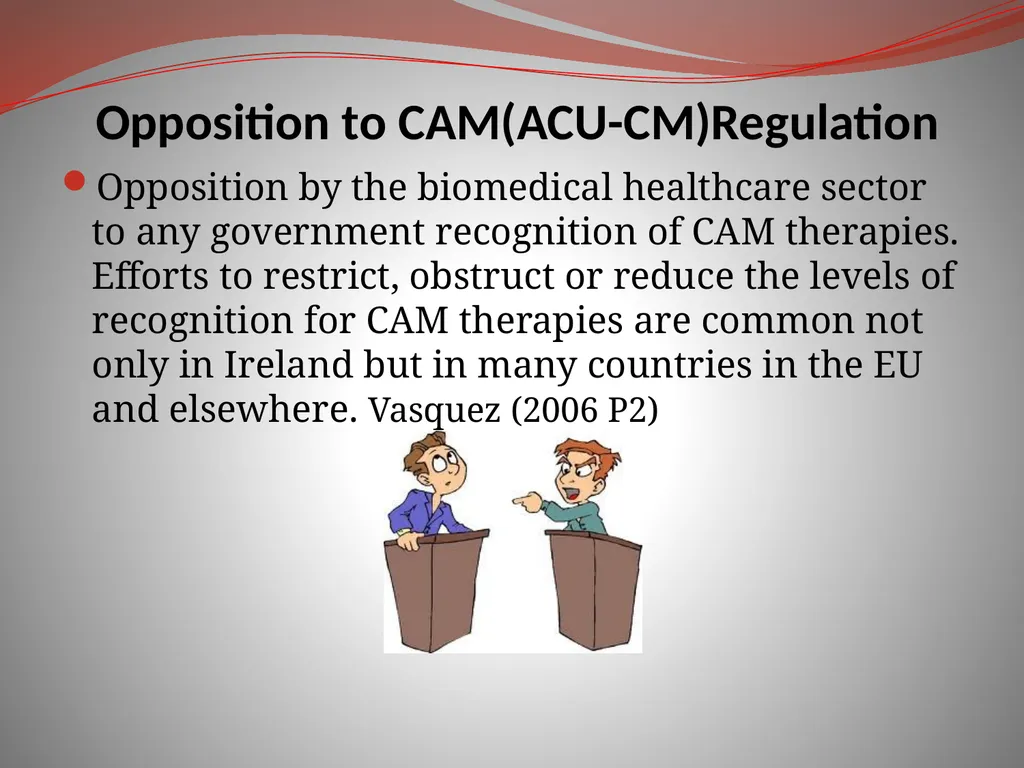
Opposition to CAM(ACU-CM)Regulation Opposition by the biomedical healthcare sector to any government recognition of CAM therapies. Efforts to restrict, obstruct or reduce the levels of recognition for CAM therapies are common not only in Ireland but in many countries in the EU and elsewhere. Vasquez (2006 P2)<br>
09
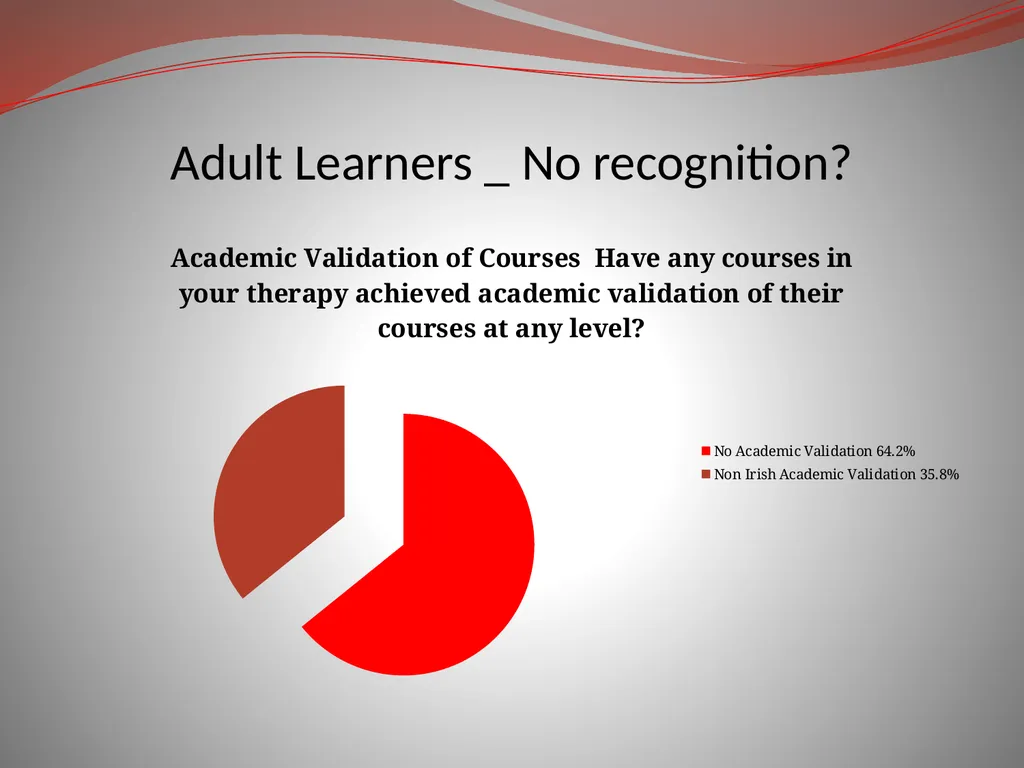
Adult Learners _ No recognition?<br>
10
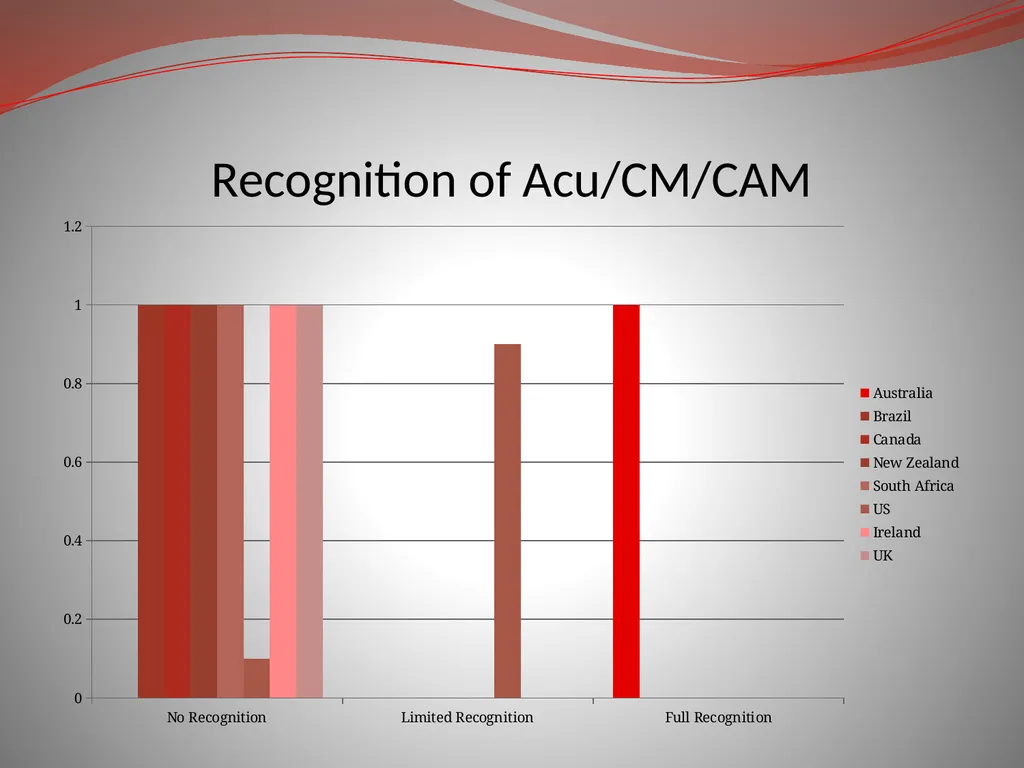
Recognition of Acu/CM/CAM<br>
11
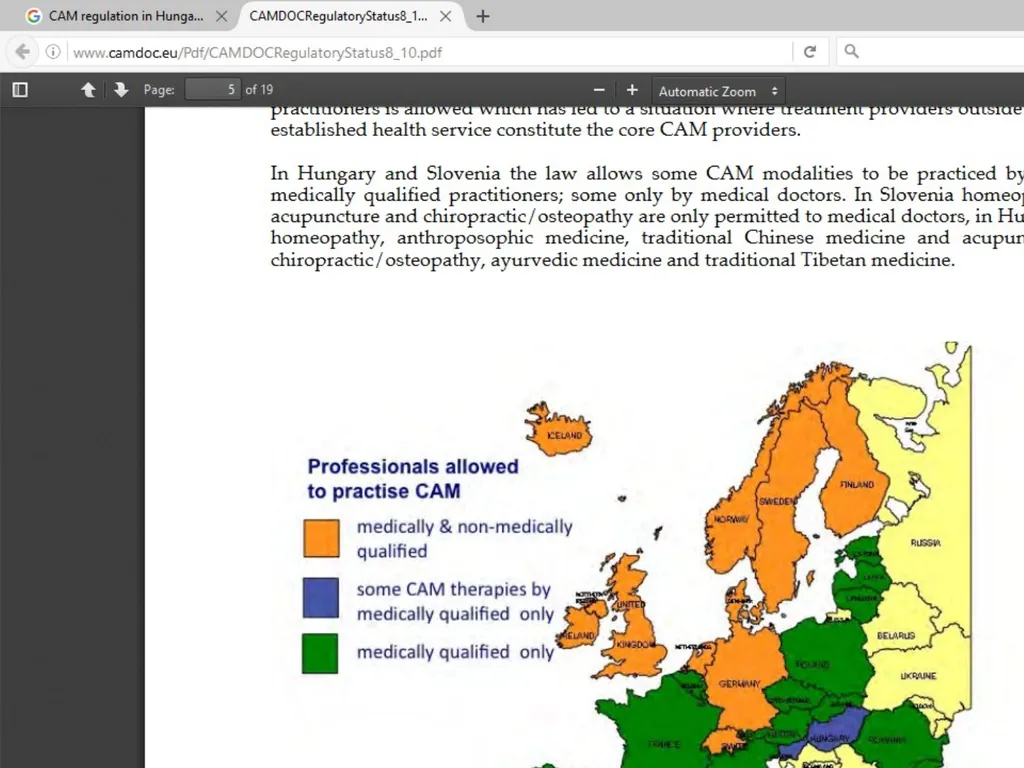
Recent European changes Hungary / Slovenia Medical doctors only -
Portugal – New CAM Regulation – Not Healthcare – treatments taxed.
Switzerland – Government Recognition and equal status to medical doctors. Included in healthcare.<br>
12
Excluded as healthcare professionals Acupuncture/CM - Models of regulation - limited options as we as outside of what some call the orthodox healthcare sector.<br>
13
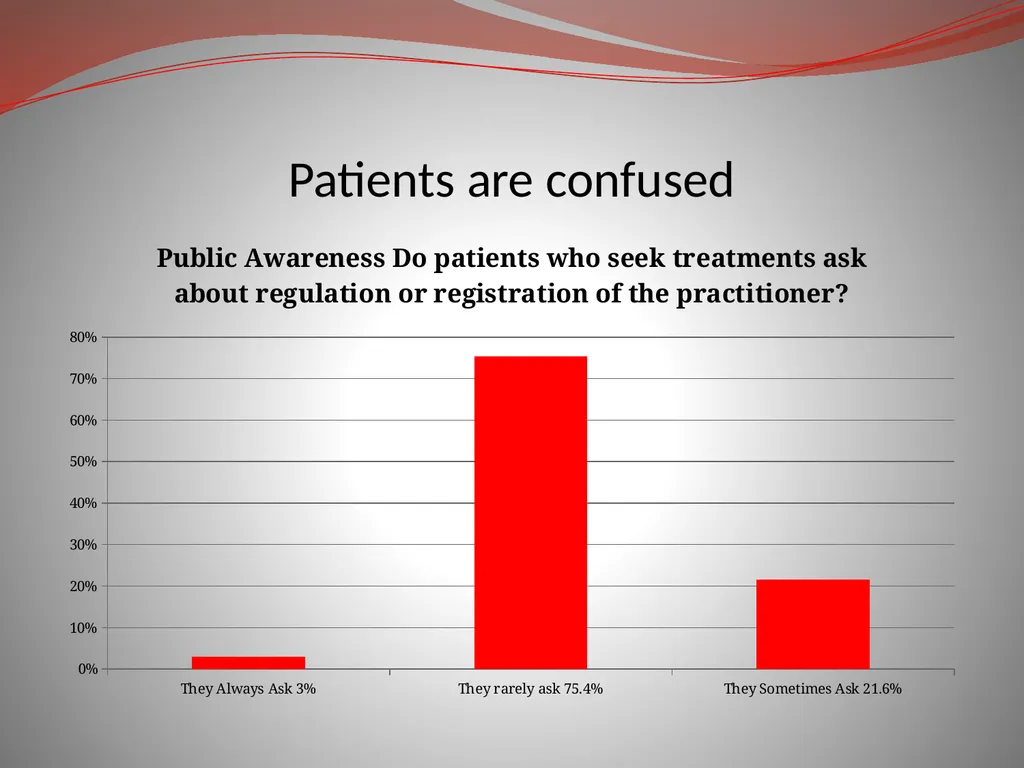
Patients are confused<br>
14
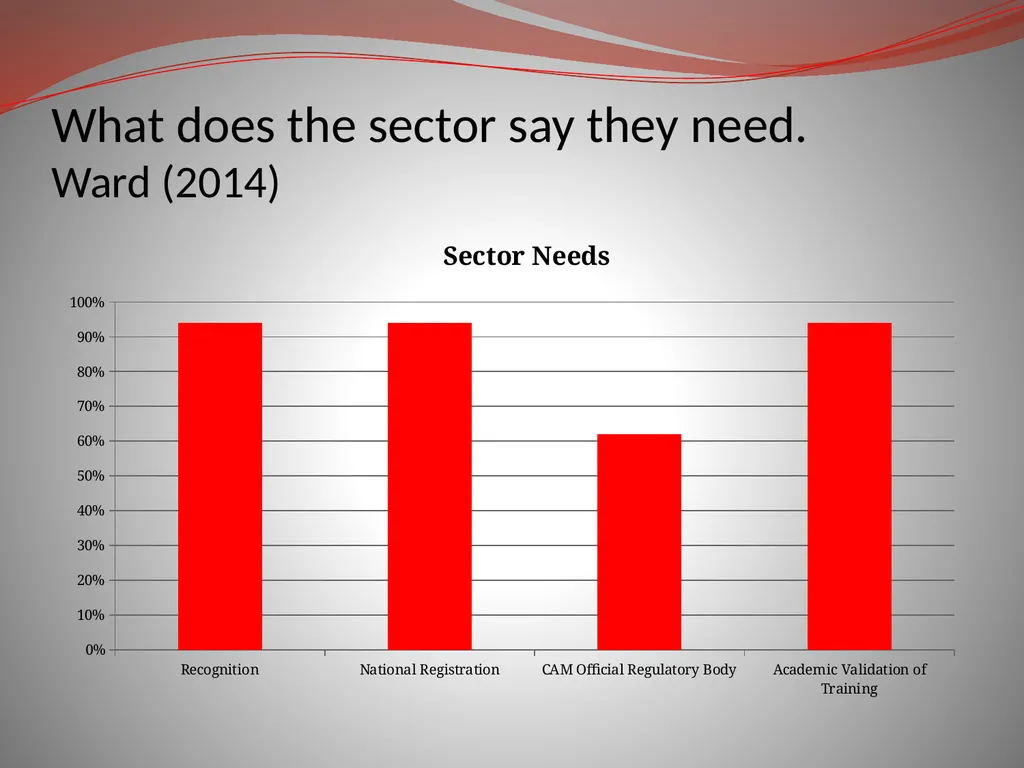
What does the sector say they need. Ward (2014)<br>
15
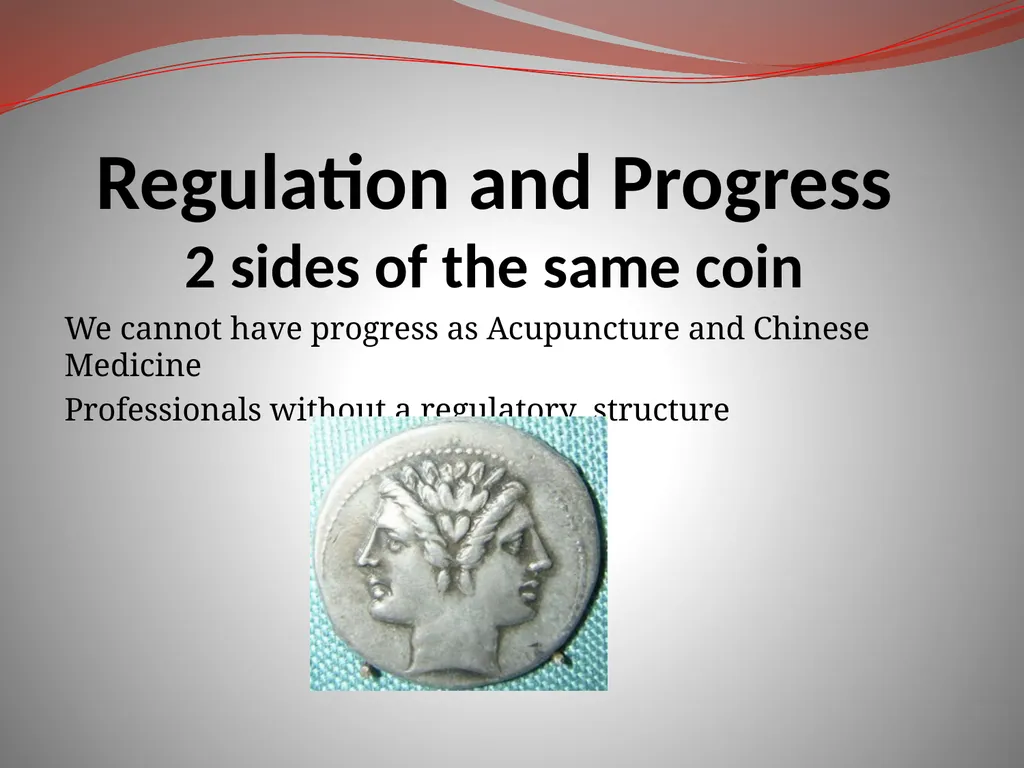
Regulation and Progress 2 sides of the same coin We cannot have progress as Acupuncture and Chinese Medicine
Professionals without a regulatory structure<br>
16
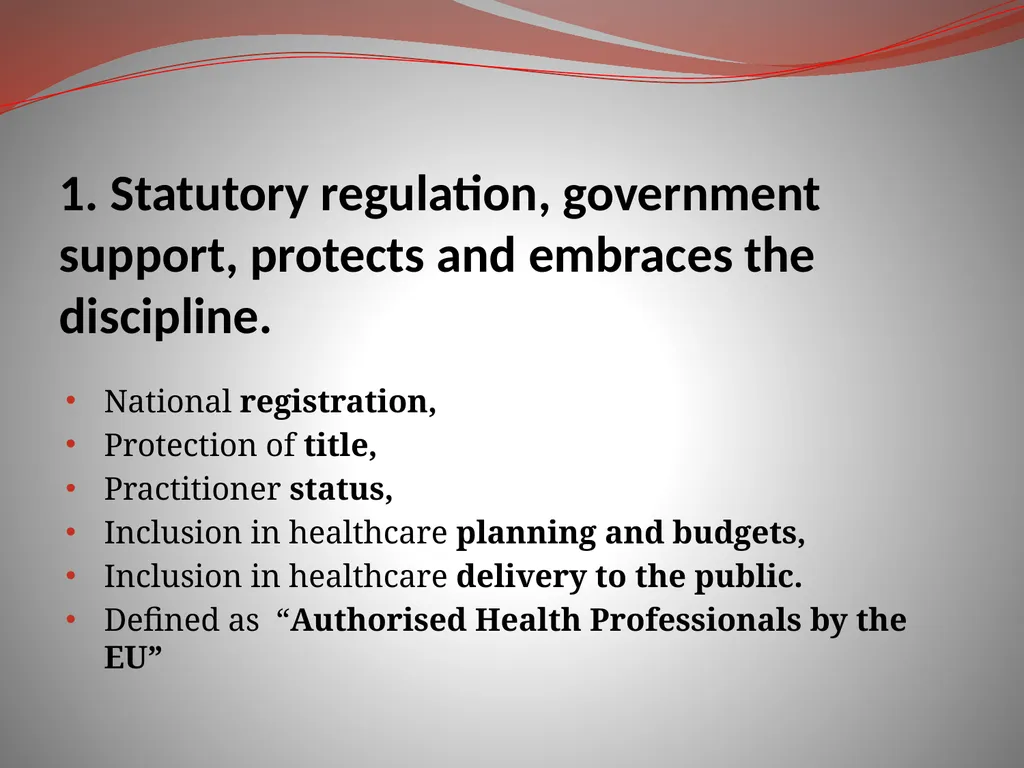
1. Statutory regulation, government support, protects and embraces the discipline. National registration,
Protection of title,
Practitioner status,
Inclusion in healthcare planning and budgets,
Inclusion in healthcare delivery to the public.
Defined as “Authorised Health Professionals by the EU”<br>
17
Voluntary Self Regulation does not provide National register of practitioners
Protection of title,
Inclusion in wider healthcare sector (planning, budgets, delivery)
Exclusion from taxation of treatments.<br>
18
Best of both worlds the big C CROMPROMISE<br>
19
Progressive Voluntary Regulatory Model “Light touch” regulation,
Self funded by the professions,
No financial pressure on budgets, and would provide
National Register of practitioners.
Protection of Title
Access to government healthcare programmes
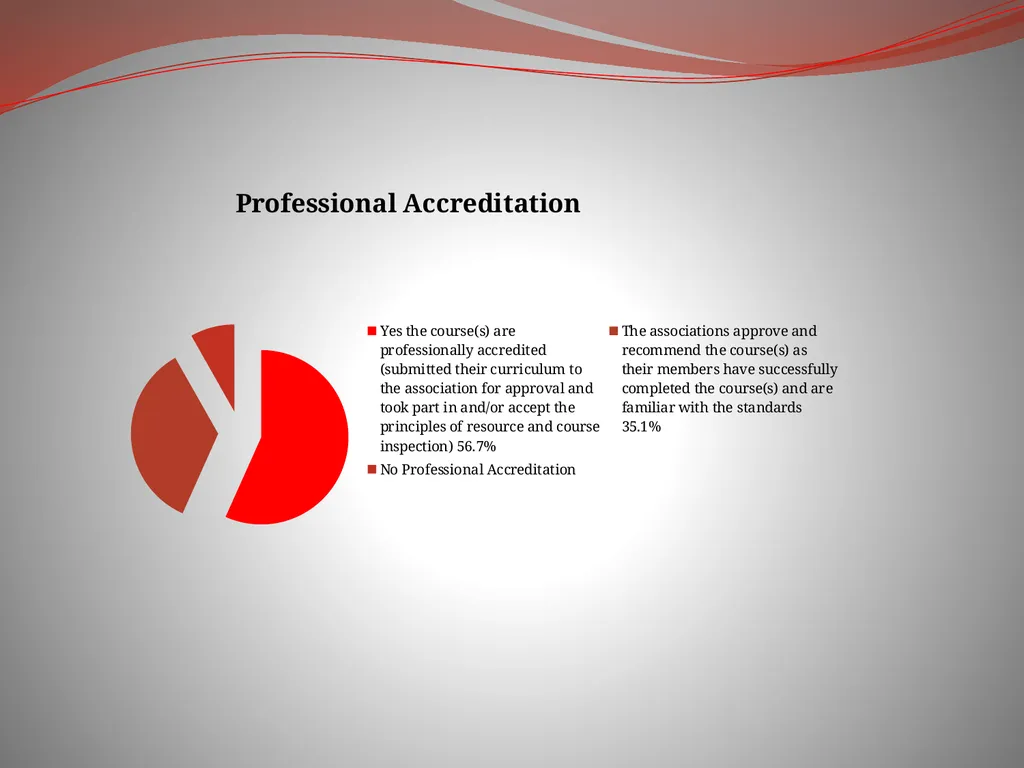
Academic validation of training courses
in higher education.
Designation as EU authorised health professionals.
–<br>
20
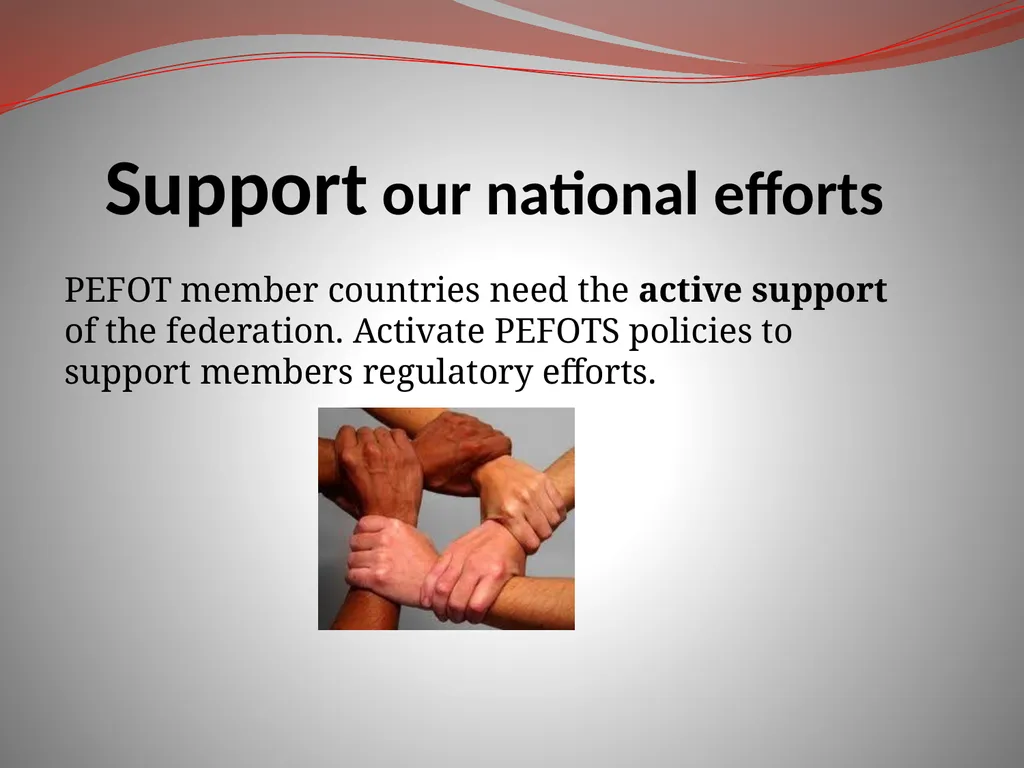
Support our national efforts PEFOT member countries need the active support of the federation. Activate PEFOTS policies to support members regulatory efforts.<br>
21
PEFOTS Pan European Federation of TCM Societies Through an active representative organisation like PEFOTS we can all help each other in our national battles.<br>
22
Bernadette Ward, PhD, Education) Dublin City University. Irl MSc, (Traditional Chinese Medicine) Middlesex University, UK Lic. Ac, Dip Herbs, (AFI - Nanjing University)
Vice President PEFOTS. Chair, PEFOTS Education Committee.
Email: bwardafi@hotmail.com
www.bernadetteward.com<br>