04
“Water promises to be to the 21st century what oil was the 20th century:
the precious commodity that determines the wealth of nations.”
� Fortune magazine, 2000<br>
05
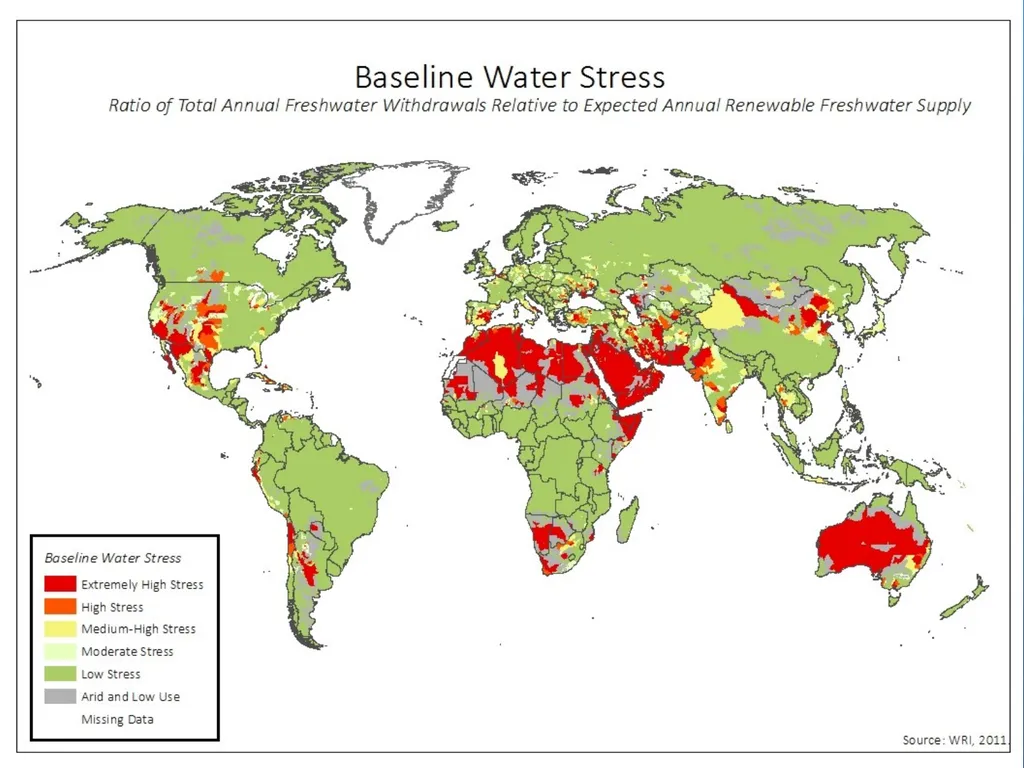
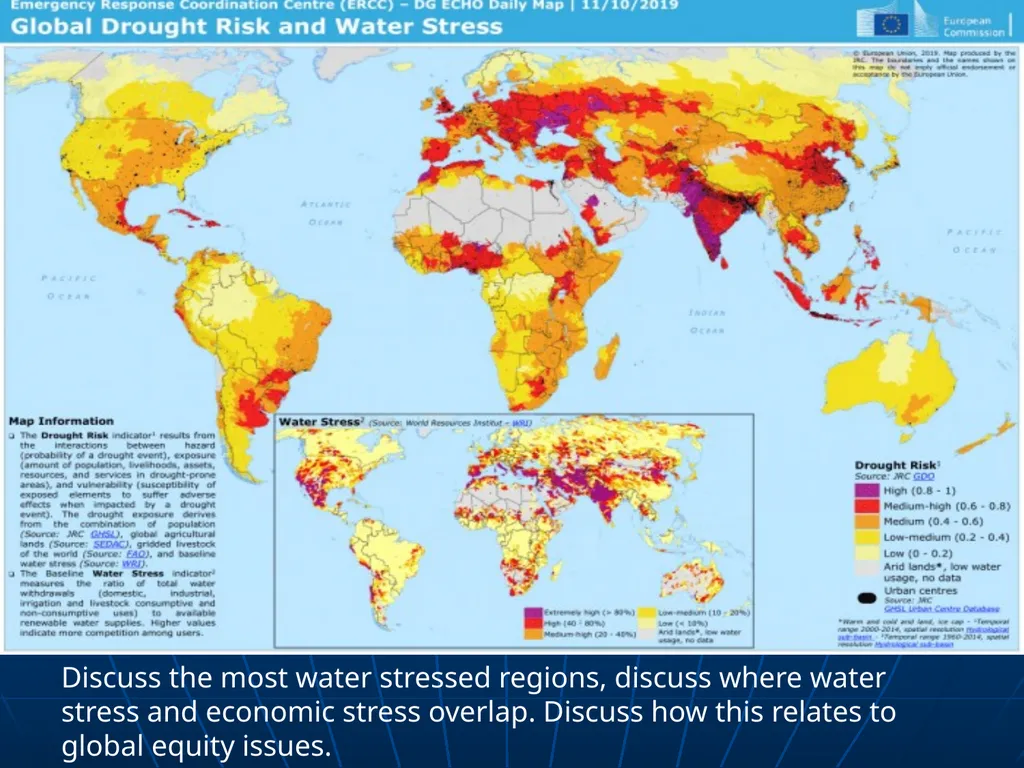
Discuss the most water stressed regions, discuss where water stress and economic stress overlap. Discuss how this relates to global equity issues.<br>
06
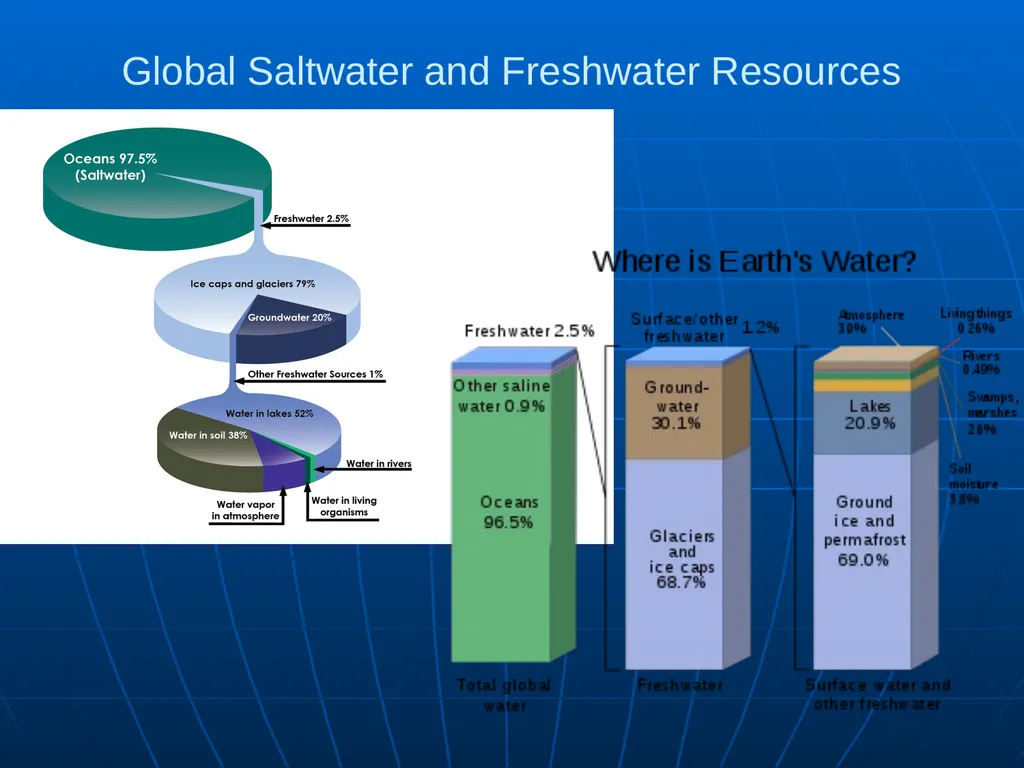
Global Saltwater and Freshwater Resources<br>
07
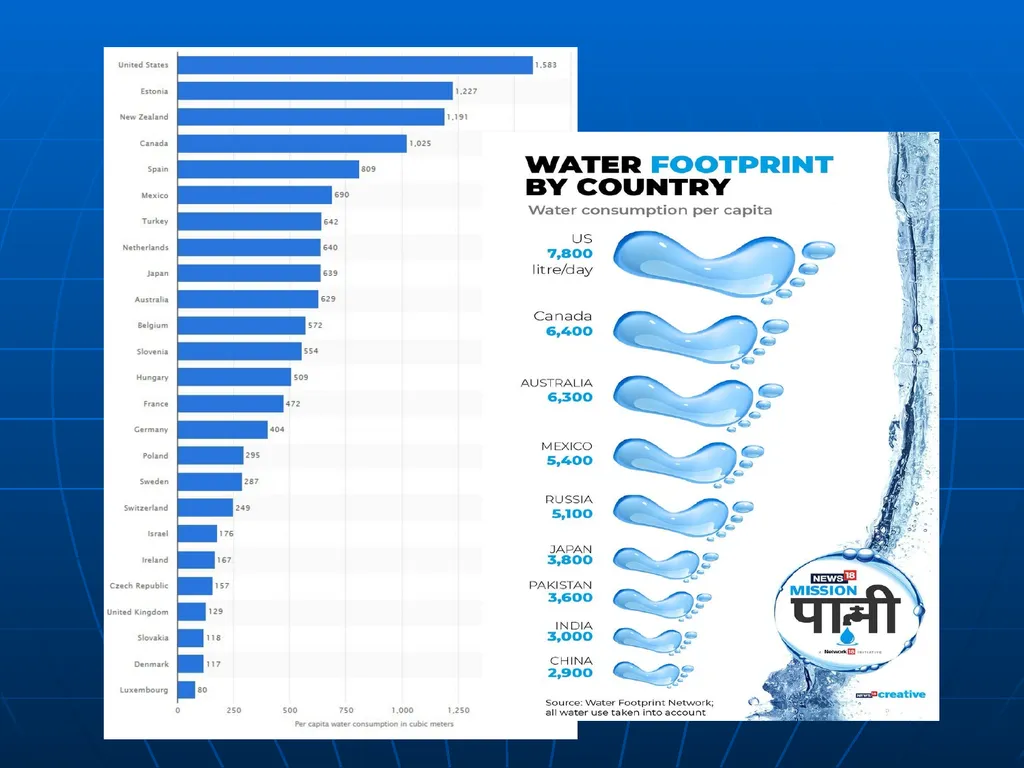
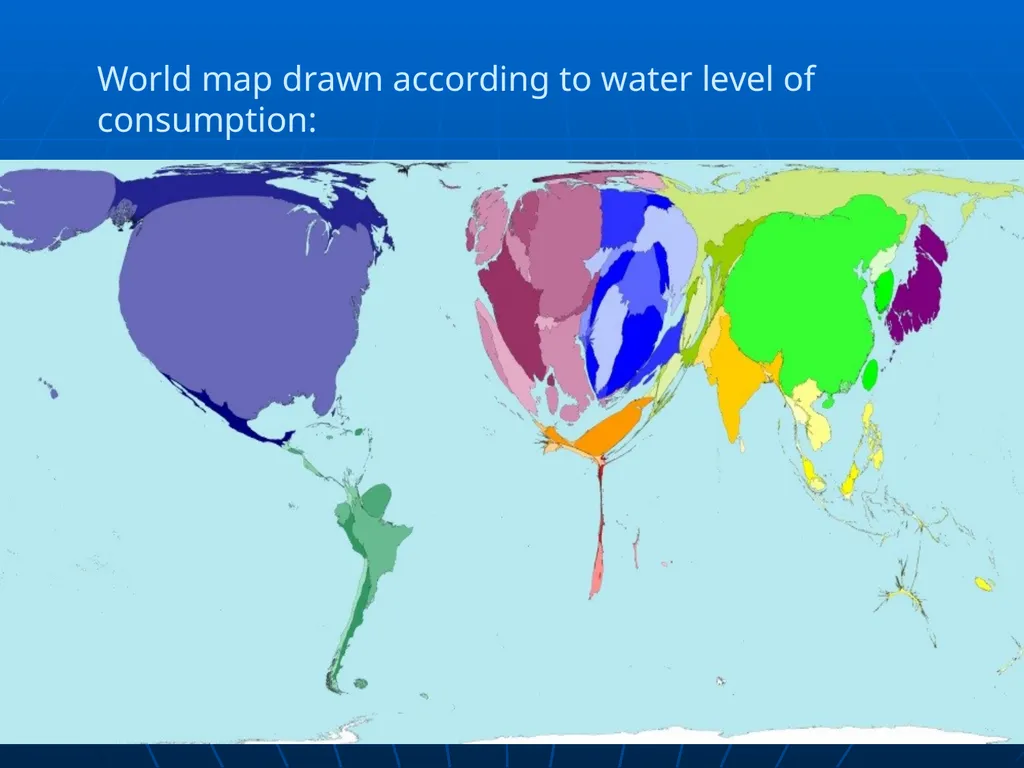
World map drawn according to water level of consumption:<br>
08
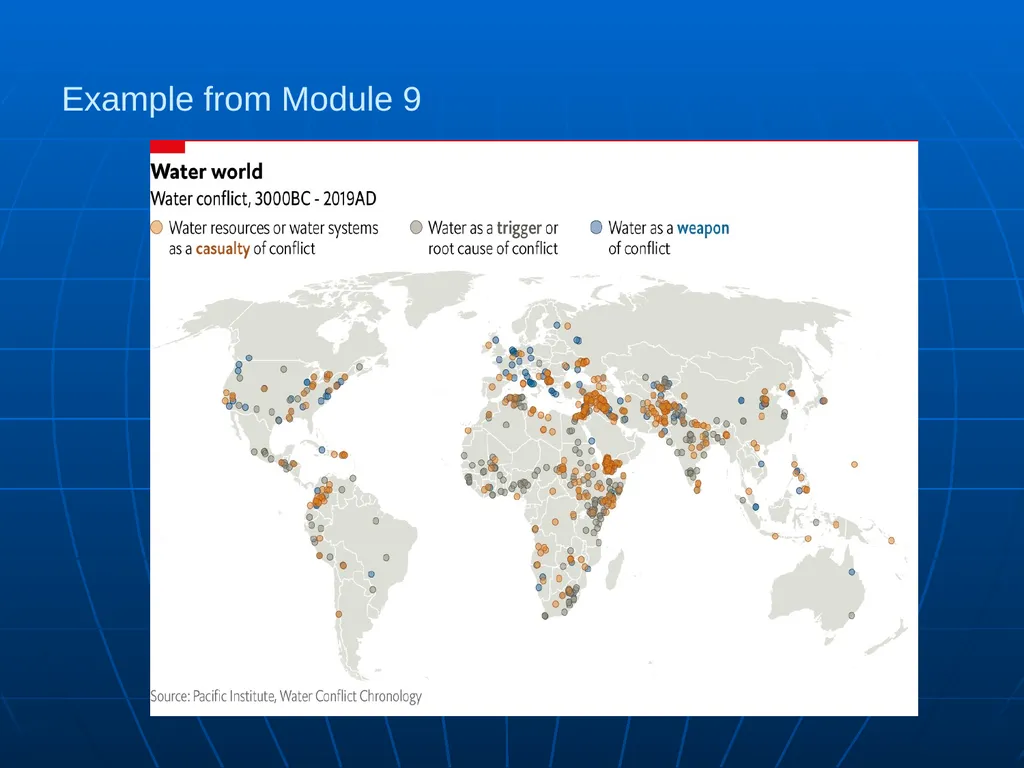
Global and regional water conflicts in which violence has occurred 2000-2020 (WCC 2020)<br>
09
Why do we care? Statistical perspective on water shortage and contamination:
6,000 children die each day of water-related problems (water scarcity, lack of access, or water-borne illnesses)
25 million people die each year due to water-borne pathogens
48 countries are severely short of water
Currently 1/3 of the world population does not have access to clean water. It is expected to worsen: By 2025, ½ of the world pop will not have access to clean water.
(Source: OXFAM 2020, WHO 2015-2020)<br>
10
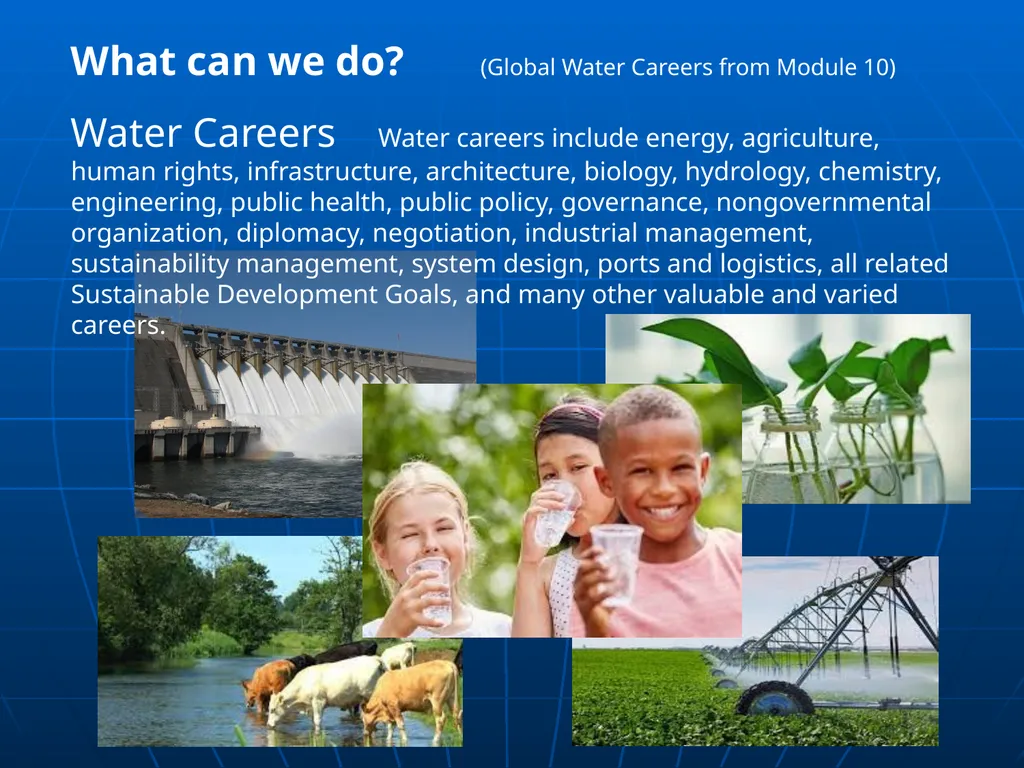
What can we do? (Global Water Careers from Module 10)
Water Careers Water careers include energy, agriculture, human rights, infrastructure, architecture, biology, hydrology, chemistry, engineering, public health, public policy, governance, nongovernmental organization, diplomacy, negotiation, industrial management, sustainability management, system design, ports and logistics, all related Sustainable Development Goals, and many other valuable and varied careers.<br>
11
Introduction to Modules
The Global Water Modules are vetted and modifiable learning modules for faculty. They are to be used to enhance faculty learning, explore resources, incorporate global water security, and connect local with global water issues in courses.
The modules were conceptualized and developed by Jenny Kehl, PhD. They are made possible by University of Wisconsin-Milwaukee, National Resource Center, Center for International Education, Global Studies, and International Studies.
Please contact Jenny Kehl at Kehl@uwm.edu for access to the modules.<br>
12
Global Water Modules Module 2:
Water and Equity
Part 1:
Equity Issues: The Poor Pay More
Accessible, vetted, and modifiable learning modules for faculty on global water security, connecting local and global, developed by Jenny Kehl, PhD. Made possible by UWM, CIE, GS, IS National Resource Center
Center for International Education
Global Studies
International Studies<br>
13
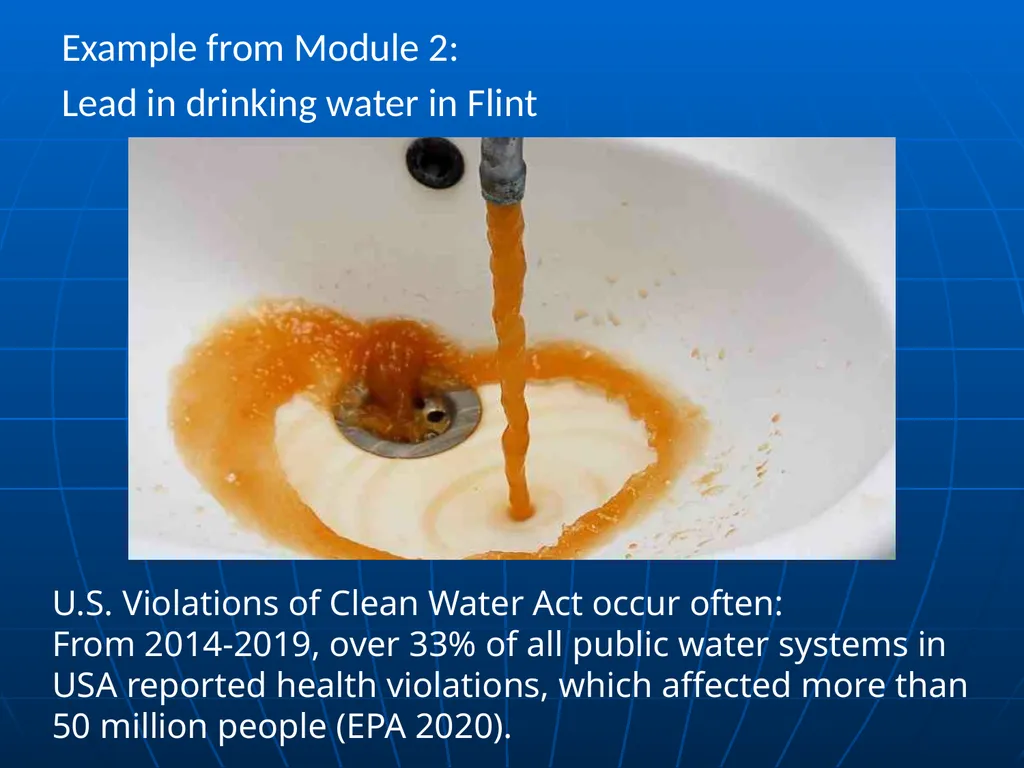
Example from Module 2:
Lead in drinking water in Flint U.S. Violations of Clean Water Act occur often:
From 2014-2019, over 33% of all public water systems in USA reported health violations, which affected more than 50 million people (EPA 2020).<br>
14
Global Water Modules Module 3:
Water and Equity
Part 2:
Equity Issues: Who owns the water?
Accessible, vetted, and modifiable learning modules for faculty on global water security, connecting local and global, developed by Jenny Kehl, PhD. Made possible by UWM, CIE, GS, IS Center for International Education
Global Studies
International Studies<br>
15
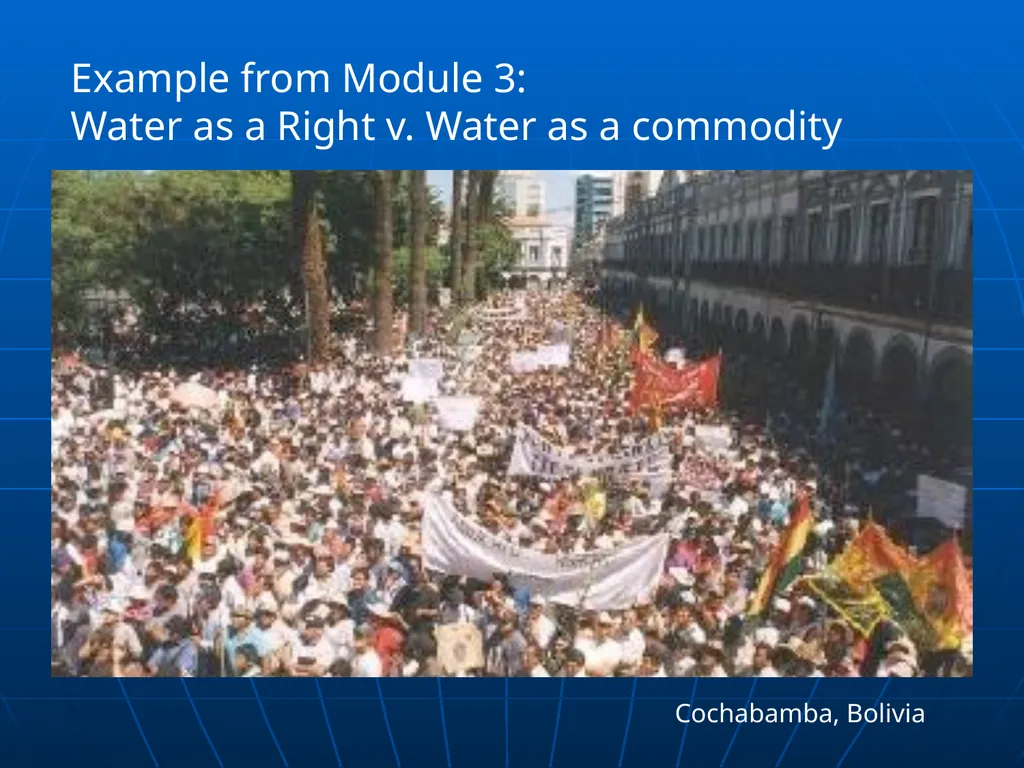
Example from Module 3:
Water as a Right v. Water as a commodity Cochabamba, Bolivia<br>
16
Global Water Modules Module 4:
Water and Food Security
Accessible, vetted, and modifiable learning modules for faculty on global water security, connecting local and global, developed by Jenny Kehl, PhD. Made possible by UWM, CIE, GS, IS National Resource Center
Center for International Education
Global Studies
International Studies<br>
17
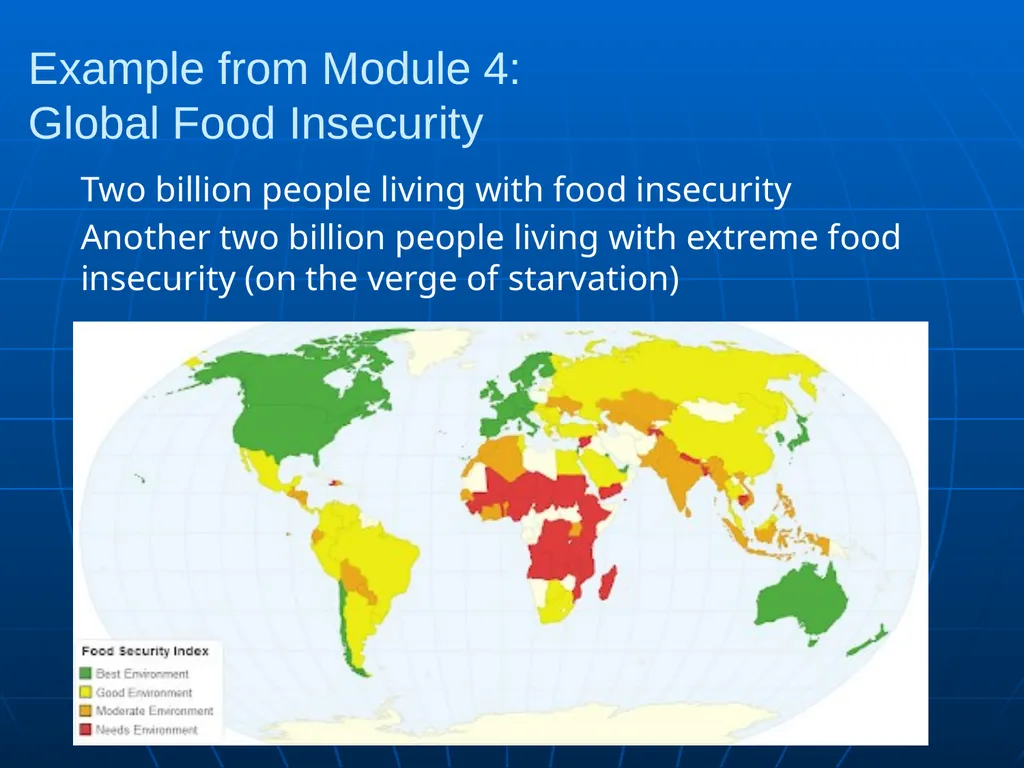
Example from Module 4:�Global Food Insecurity Two billion people living with food insecurity
Another two billion people living with extreme food insecurity (on the verge of starvation)<br>
18
Global Water Modules Module 5:
Water and Energy Security
Accessible, vetted, and modifiable learning modules for faculty on global water security, connecting local and global, developed by Jenny Kehl, PhD. Made possible by UWM, CIE, GS, IS National Resource Center
Center for International Education
Global Studies
International Studies<br>
19
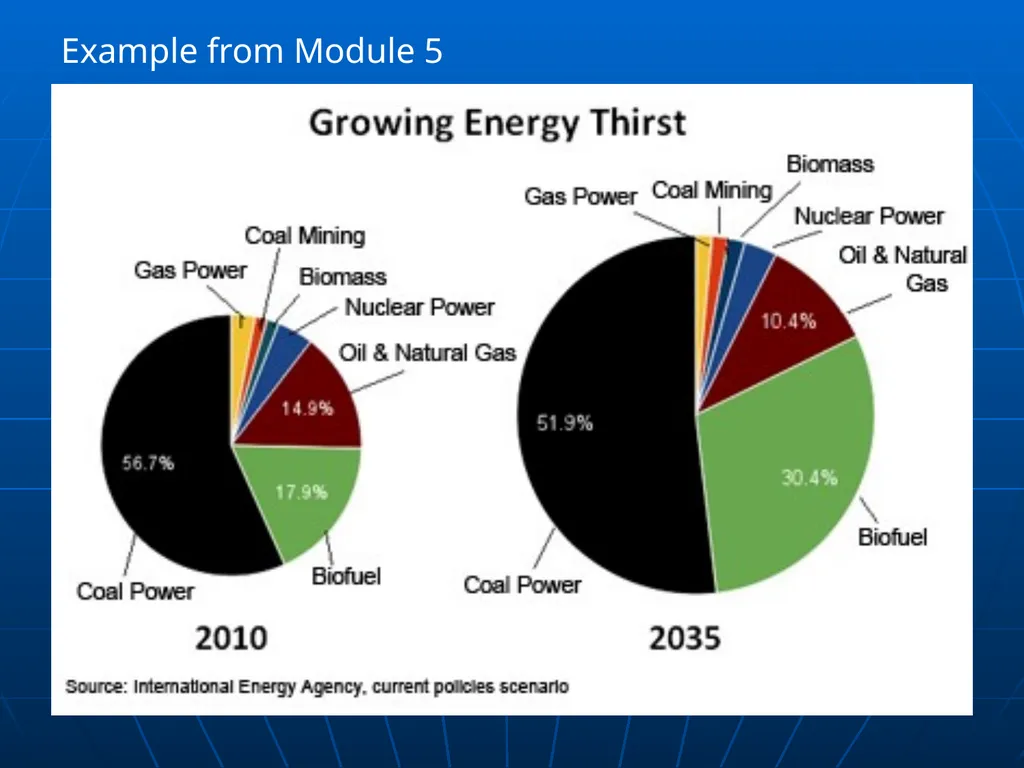
Example from Module 5<br>
20
Global Water Modules Module 6:
Water Security in MENA
Part 1:
Introduction and Nile Basin
Accessible, vetted, and modifiable learning modules for faculty on global water security, connecting local and global, developed by Jenny Kehl, PhD. Made possible by UWM, CIE, GS, IS National Resource Center
Center for International Education
Global Studies
International Studies<br>
21
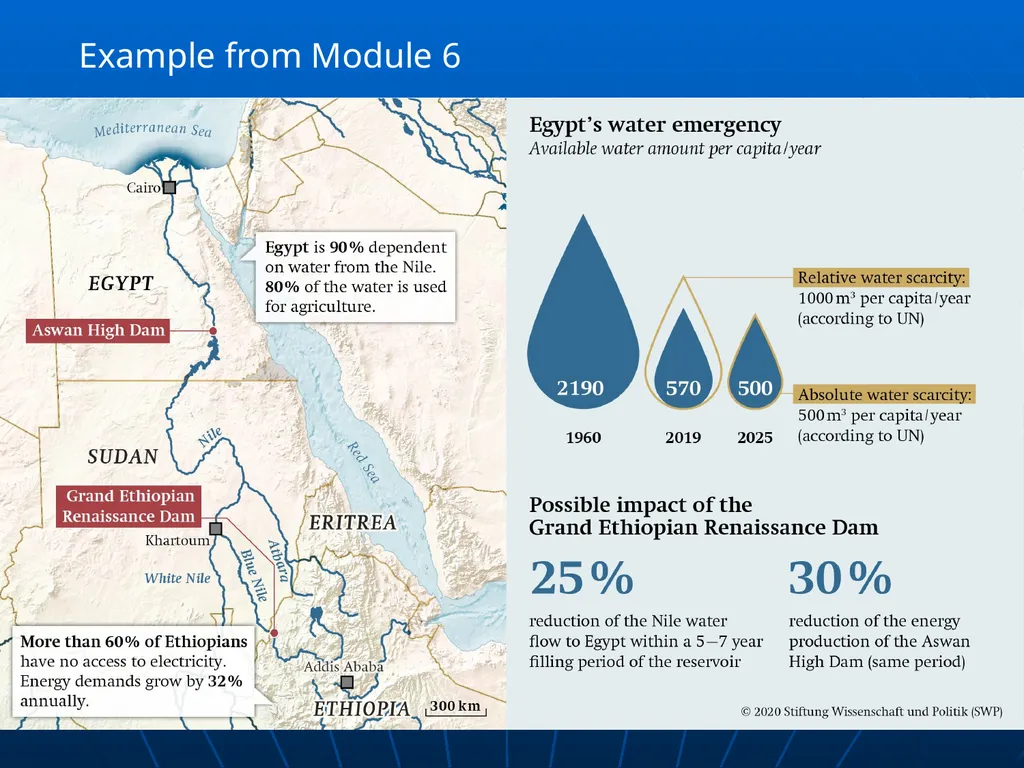
Example from Module 6<br>
22
Global Water Modules Module 7:
Water Security in MENA
Part 2:
Yemen and Iraq
Accessible, vetted, and modifiable learning modules for faculty on global water security, connecting local and global, developed by Jenny Kehl, PhD. Made possible by UWM, CIE, GS, IS National Resource Center
Center for International Education
Global Studies
International Studies<br>
23
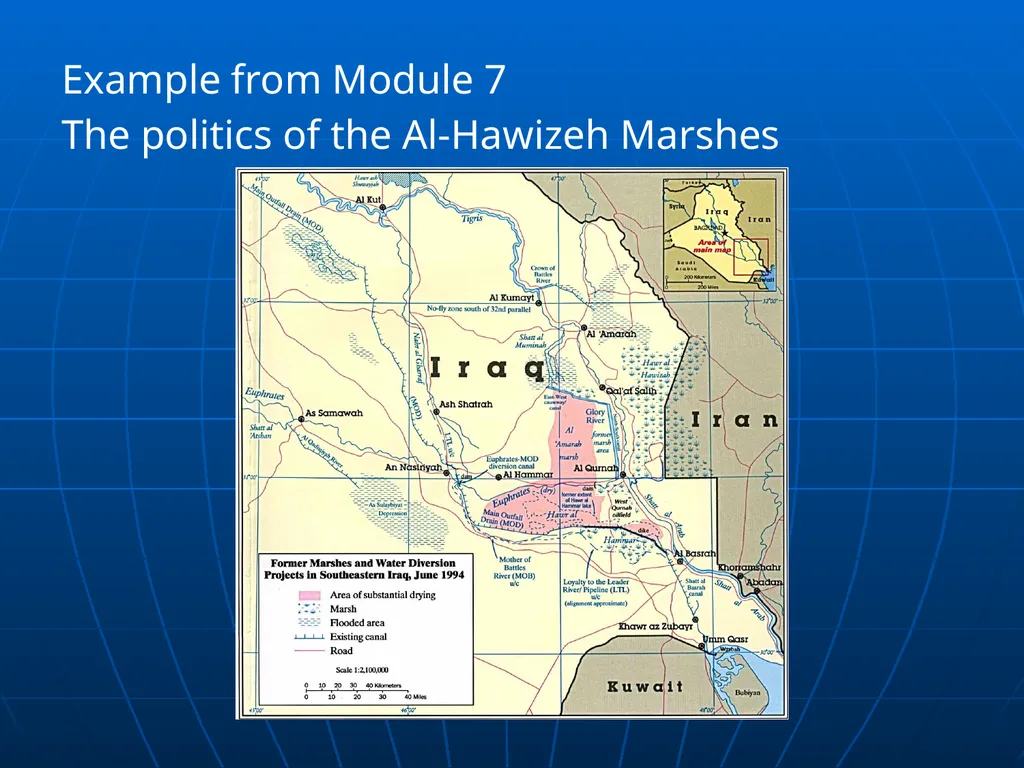
Example from Module 7
The politics of the Al-Hawizeh Marshes<br>
24
Global Water Modules Module 8:
Water and Global Health
Accessible, vetted, and modifiable learning modules for faculty on global water security, connecting local and global, developed by Jenny Kehl, PhD. Made possible by UWM, CIE, GS, IS National Resource Center
Center for International Education
Global Studies
International Studies<br>
25
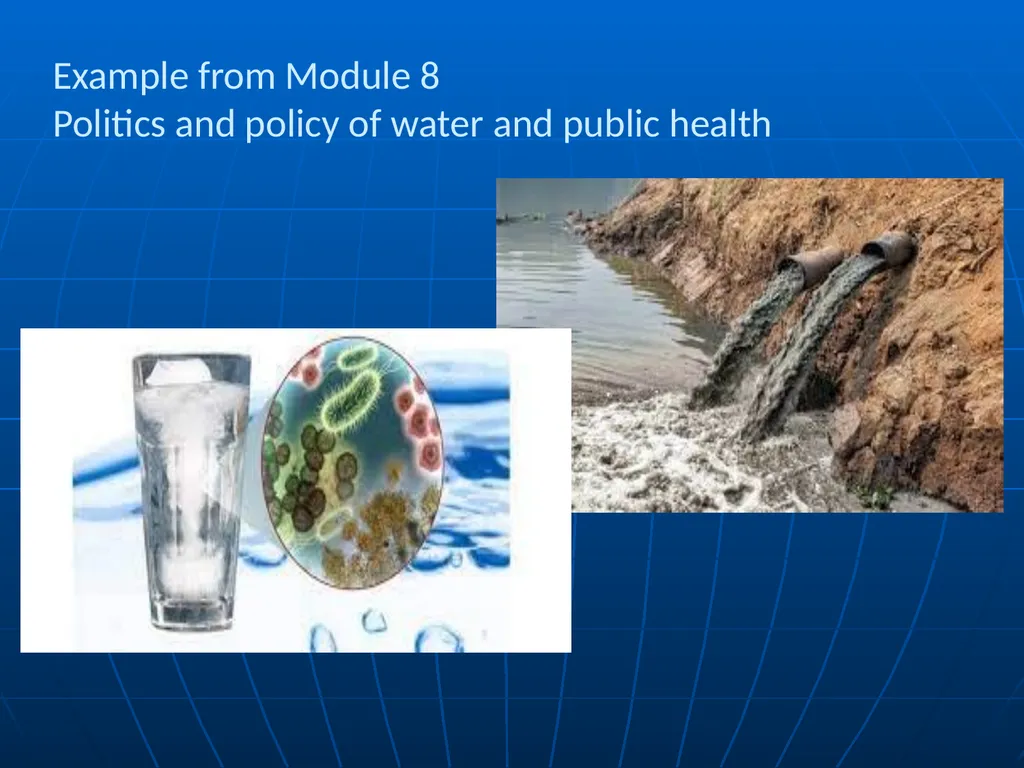
Example from Module 8�Politics and policy of water and public health<br>
26
Global Water Modules Module 9:
Examples of Water Wars
Accessible, vetted, and modifiable learning modules for faculty on global water security, connecting local and global, developed by Jenny Kehl, PhD. Made possible by UWM, NRC, CIE, GS, IS National Resource Center
Center for International Education
Global Studies
International Studies<br>
27
Example from Module 9<br>
28
Global Water Modules Module 10:
Global Water Careers
Accessible, vetted, and modifiable learning modules for faculty on global water security, connecting local and global water issues. Developed by Jenny Kehl, PhD. Made possible by University of Wisconsin-Milwaukee, NRC, CIE, GS, IS National Resource Center
Center for International Education
Global Studies
International Studies<br>
29
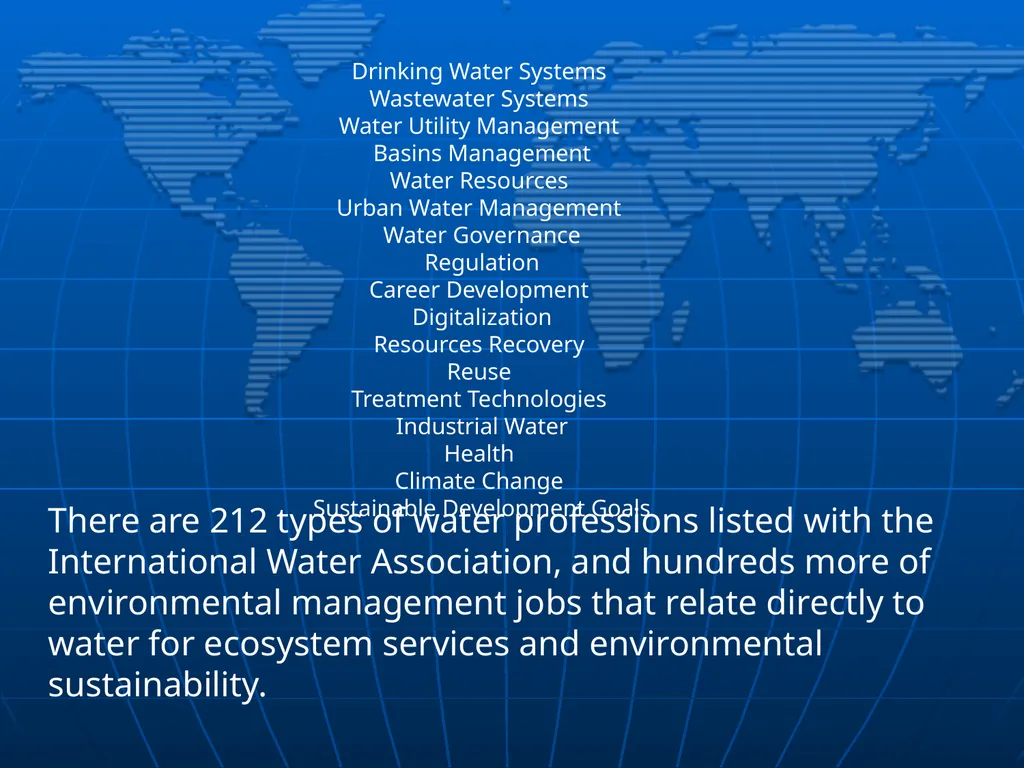
There are 212 types of water professions listed with the International Water Association, and hundreds more of environmental management jobs that relate directly to water for ecosystem services and environmental sustainability. Drinking Water Systems
Wastewater Systems
Water Utility Management
Basins Management
Water Resources
Urban Water Management
Water Governance
Regulation
Career Development
Digitalization
Resources Recovery
Reuse
Treatment Technologies
Industrial Water
Health
Climate Change
Sustainable Development Goals<br>
30
Together, let’s train our students to succeed in the water sector
(Global Water Careers from Module 10)
Water is the world’s most essential resource. Water is important for ecosystem services, food security, energy security, political stability, economic opportunity, human rights, public health, environmental sustainability, international conflict and cooperation, and the basic right to life. Managing water is a matter of survival, equity, and ethics.
“The water cycle and the life cycle are one.” Jacques Cousteau<br>
31
Global Water Modules
Module 1:
Introduction to Global Water National Resource Center
Center for International Education
Global Studies
International Studies<br>