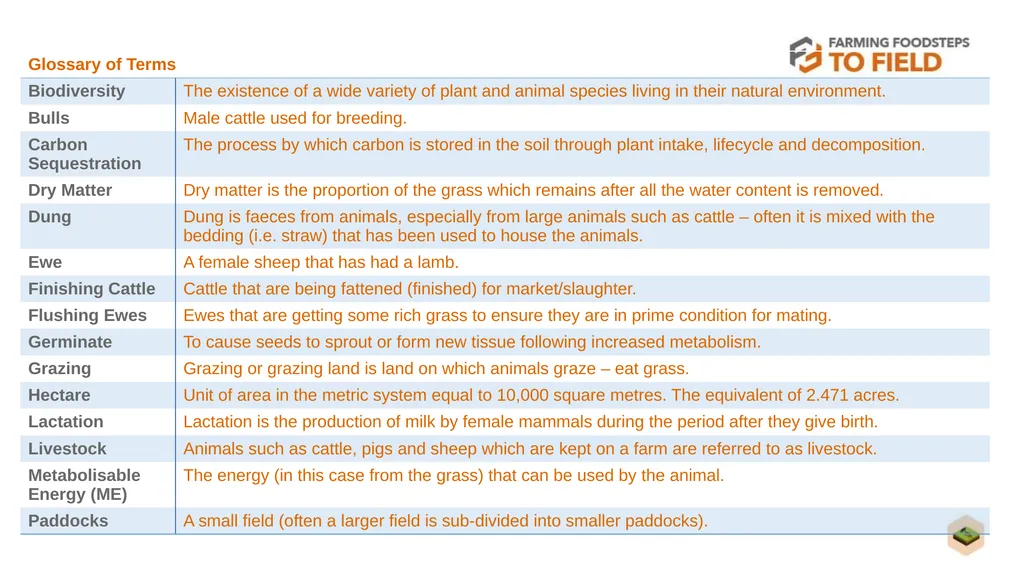
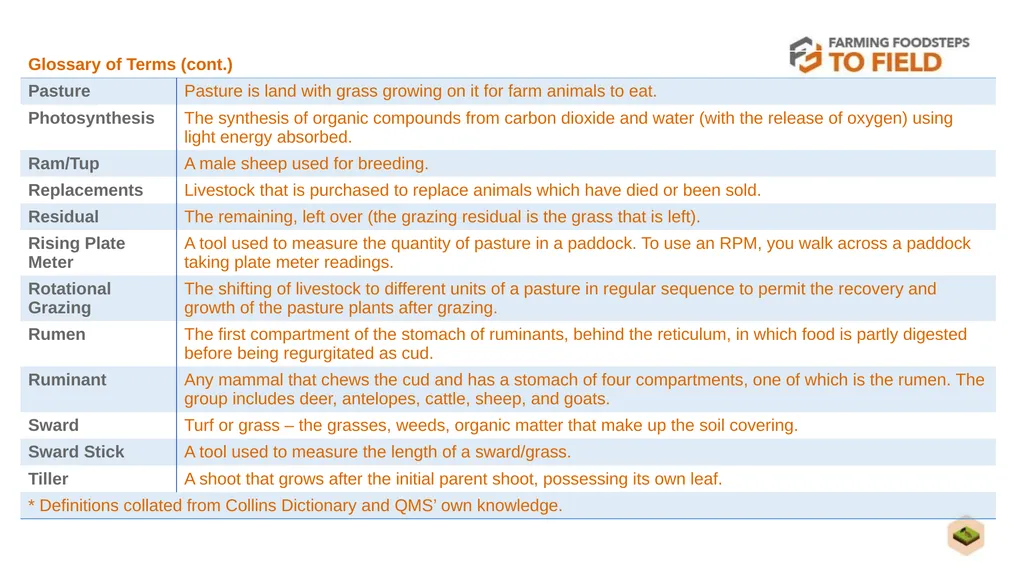
GLORIOUS GRASS (Second Level) This presentation will cover the following: An introduction to grass The importance of Grass for Scotland How Grass Grows Harvesting Grass Grass Measuring Why How? Grass Measuring Experiment Key Points
"GLORIOUS GRASS (Second Level) This presentation" is the property of its rightful owner. Permission is granted to
download and print the materials on this website for personal, non-commercial use only, and to display it
on your personal computer provided you do not modify the materials and that you retain all copyright
notices contained in the materials. By downloading content from our website, you accept the terms of this
agreement.
Presentation Transcript
01
GLORIOUS GRASS (Second Level)<br>
02
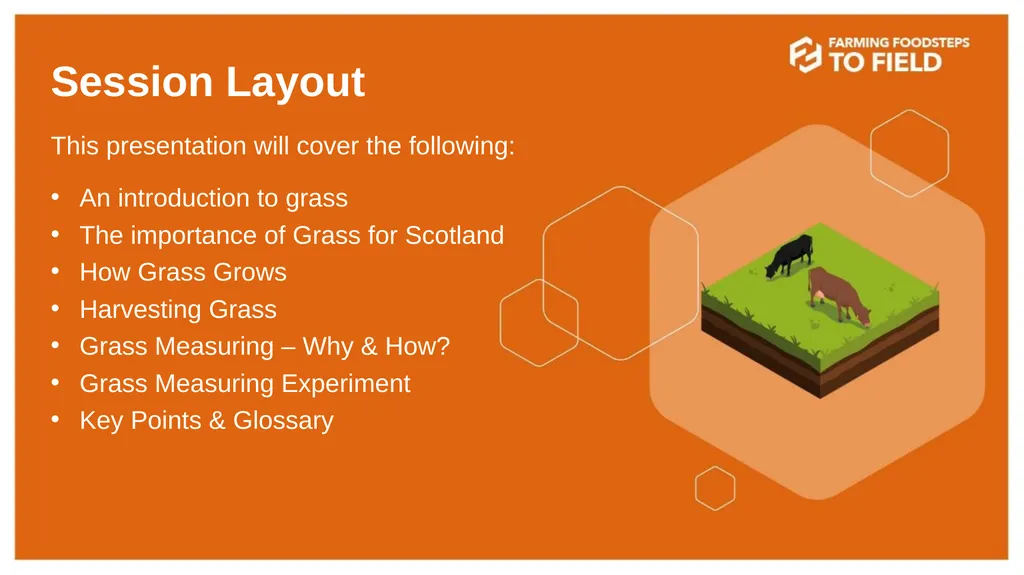
This presentation will cover the following:
An introduction to grass
The importance of Grass for Scotland
How Grass Grows
Harvesting Grass
Grass Measuring – Why & How?
Grass Measuring Experiment
Key Points & Glossary Session Layout<br>
03
Class Discussion How many different types of grass do you think there are?
What do we use grass for in Scotland?
Which animals eat grass?
Which sports use grass courts/pitches?
Do you think Scotland is a good country for growing grass?<br>
04
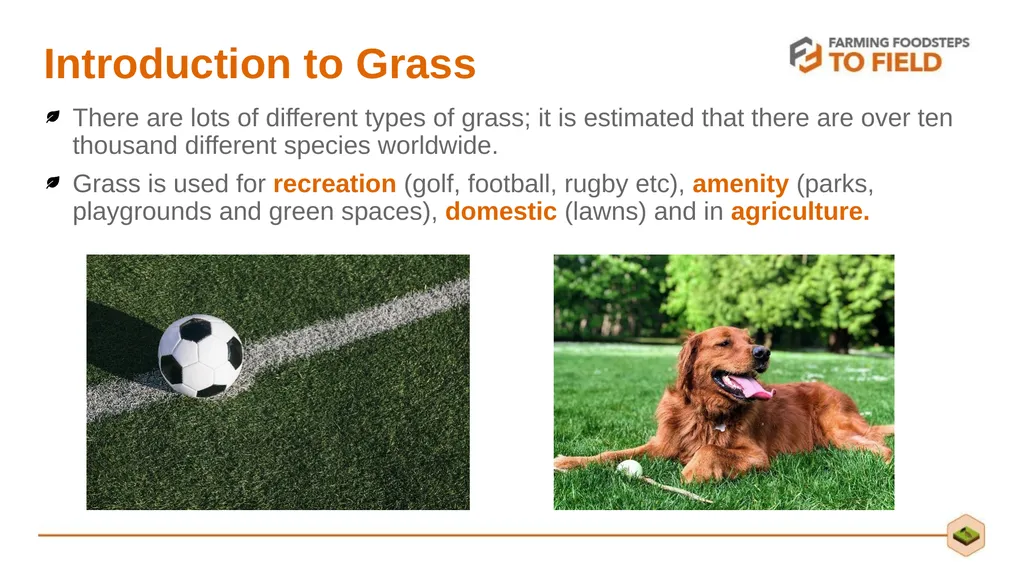
Introduction to Grass There are lots of different types of grass; it is estimated that there are over ten thousand different species worldwide.
Grass is used for recreation (golf, football, rugby etc), amenity (parks, playgrounds and green spaces), domestic (lawns) and in agriculture.<br>
05
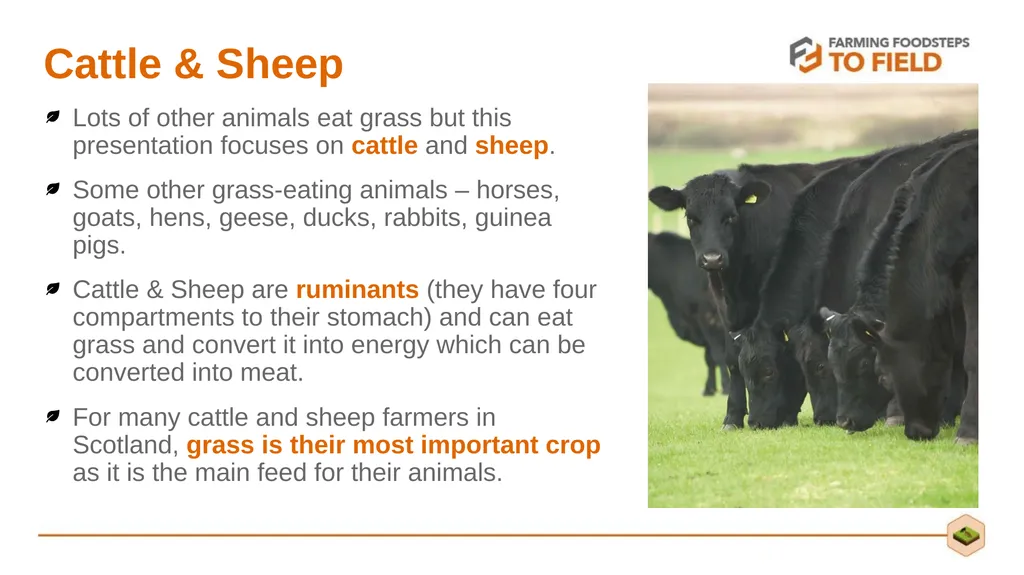
Cattle & Sheep Lots of other animals eat grass but this presentation focuses on cattle and sheep.
Some other grass-eating animals – horses, goats, hens, geese, ducks, rabbits, guinea pigs.
Cattle & Sheep are ruminants (they have four compartments to their stomach) and can eat grass and convert it into energy which can be converted into meat.
For many cattle and sheep farmers in Scotland, grass is their most important crop as it is the main feed for their animals.<br>
06
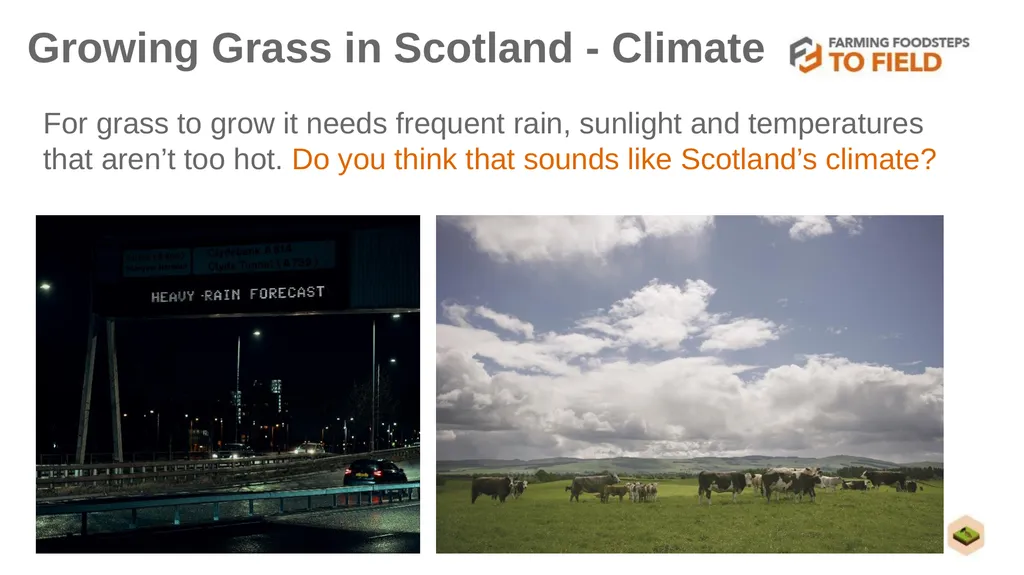
Growing Grass in Scotland - Climate For grass to grow it needs frequent rain, sunlight and temperatures that aren’t too hot. Do you think that sounds like Scotland’s climate?<br>
07
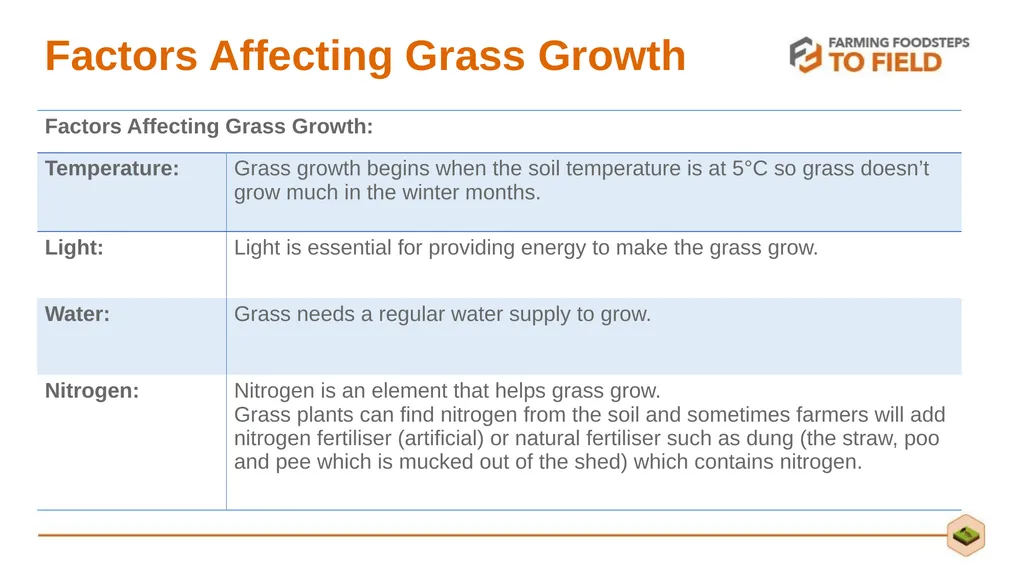
Factors Affecting Grass Growth<br>
08
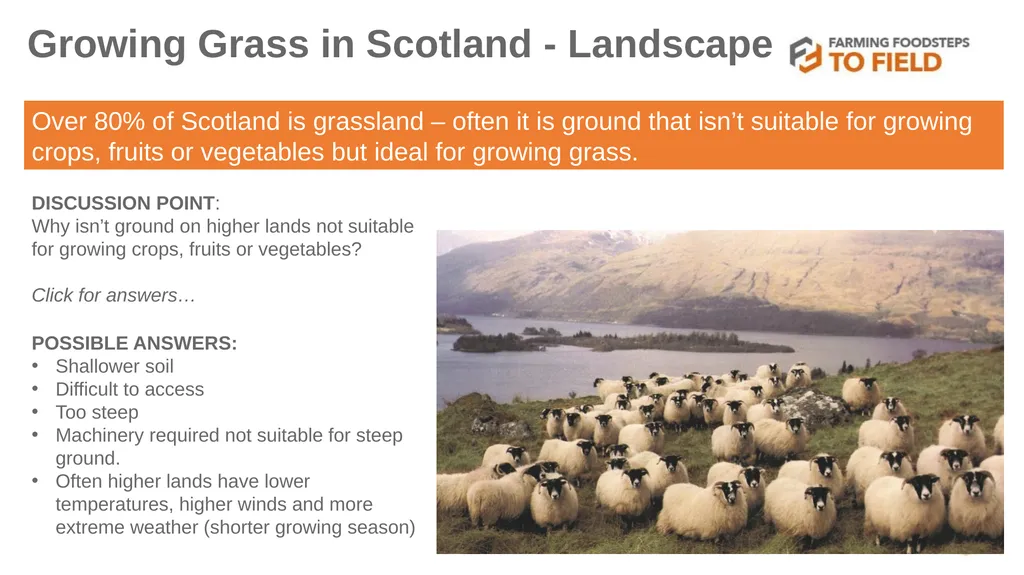
Growing Grass in Scotland - Landscape Over 80% of Scotland is grassland – often it is ground that isn’t suitable for growing crops, fruits or vegetables but ideal for growing grass. DISCUSSION POINT:
Why isn’t ground on higher lands not suitable for growing crops, fruits or vegetables?
Click for answers… POSSIBLE ANSWERS:
Shallower soil
Difficult to access
Too steep
Machinery required not suitable for steep ground.
Often higher lands have lower temperatures, higher winds and more extreme weather (shorter growing season)<br>
09
How Grass Grows The grass seed is sown.
The seedling germinates and the first leaf appears.
Each new leaf grows up encircled by the last one.
The oldest leaf is always on the outside and the young expanding leaf in the centre.
The seedling plant develops to produce new leaves (number varies depending on species).
Leaves continue to be produced but as each new leaf appears, the oldest one dies.
Grass plants have the ability to produce tillers (a shoot that grows after the initial parent shoot, possessing its own leaf). Tillering mainly happens in the Spring and Autumn.
Tillering continues until plants come into contact with each other, so all the gaps have been filled. Each tiller will live for about a year. If you search online for ‘grass growing timelapse soil cross section’ you can watch the process taking place or try your own grass growing experiment.<br>
10
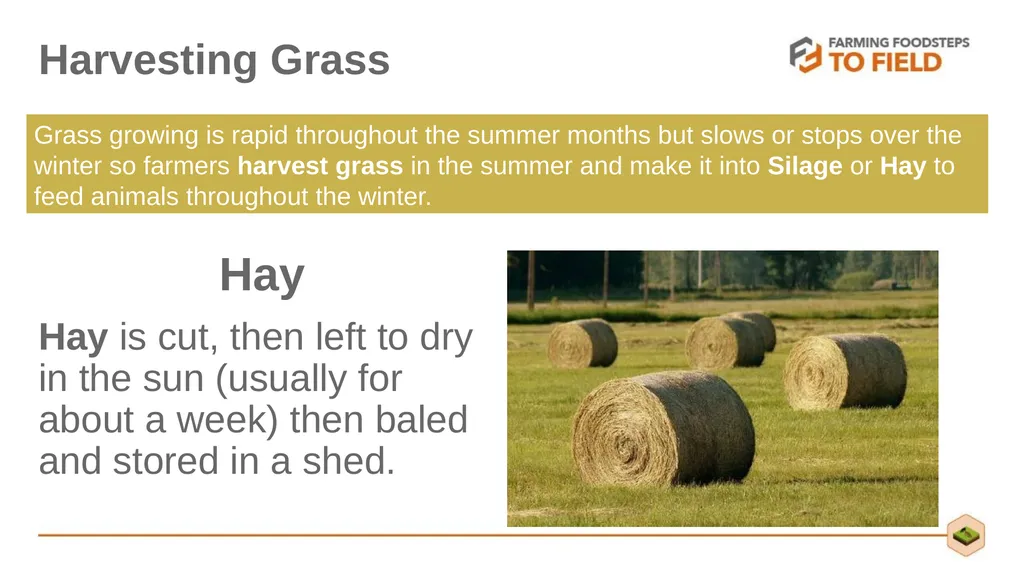
Hay Hay is cut, then left to dry in the sun (usually for about a week) then baled and stored in a shed. Grass growing is rapid throughout the summer months but slows or stops over the winter so farmers harvest grass in the summer and make it into Silage or Hay to feed animals throughout the winter. Harvesting Grass<br>
11
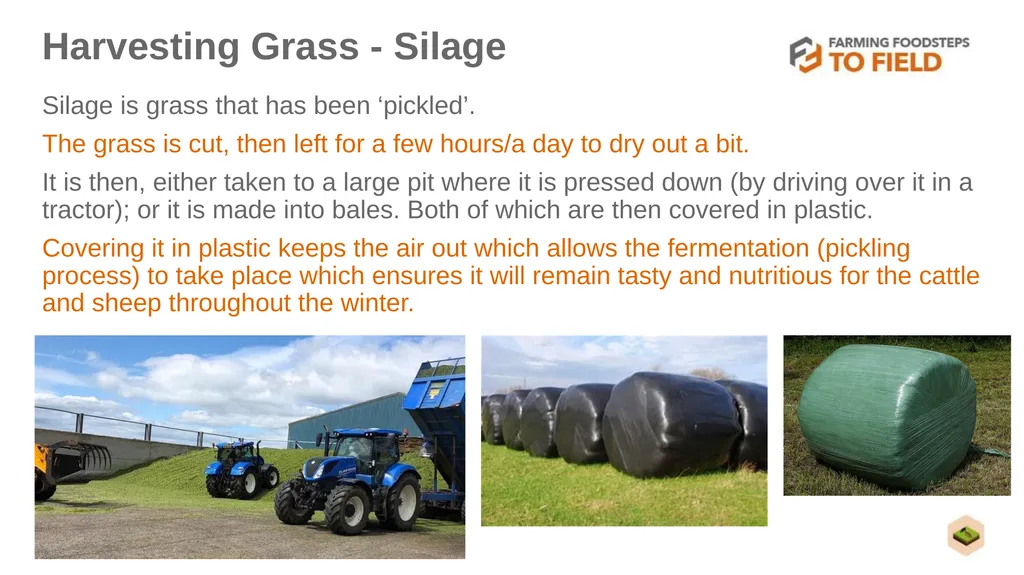
Silage is grass that has been ‘pickled’.
The grass is cut, then left for a few hours/a day to dry out a bit.
It is then, either taken to a large pit where it is pressed down (by driving over it in a tractor); or it is made into bales. Both of which are then covered in plastic.
Covering it in plastic keeps the air out which allows the fermentation (pickling process) to take place which ensures it will remain tasty and nutritious for the cattle and sheep throughout the winter. Harvesting Grass - Silage<br>
12
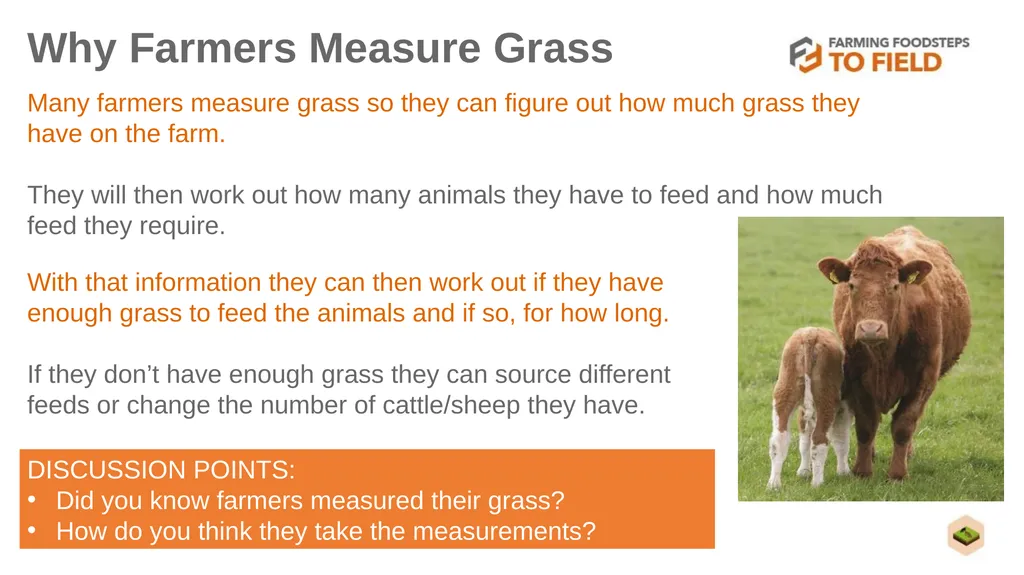
Why Farmers Measure Grass With that information they can then work out if they have enough grass to feed the animals and if so, for how long.
If they don’t have enough grass they can source different feeds or change the number of cattle/sheep they have. DISCUSSION POINTS:
Did you know farmers measured their grass?
How do you think they take the measurements? Many farmers measure grass so they can figure out how much grass they have on the farm.
They will then work out how many animals they have to feed and how much feed they require.<br>
13
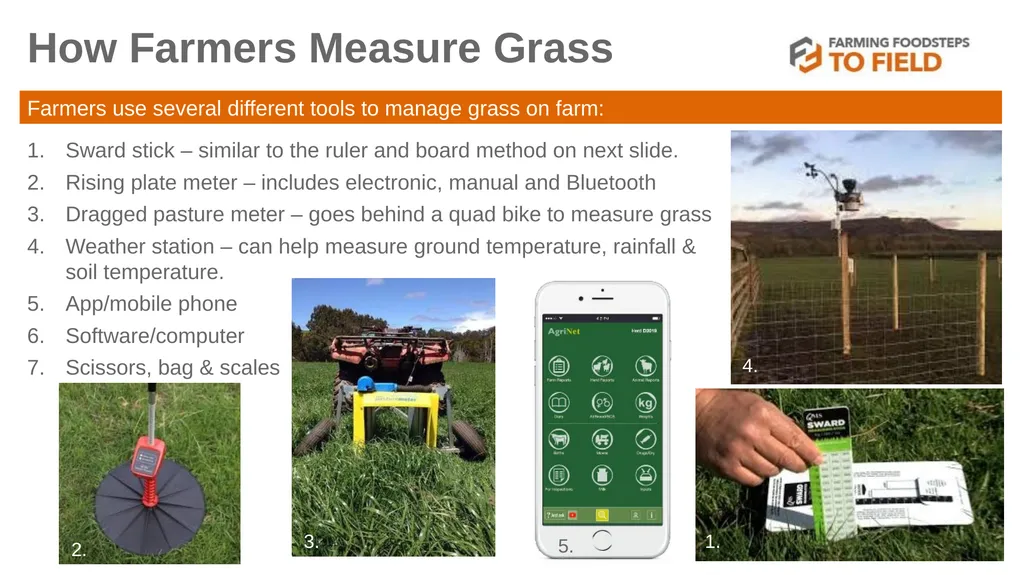
How Farmers Measure Grass Farmers use several different tools to manage grass on farm: Sward stick – similar to the ruler and board method on next slide.
Rising plate meter – includes electronic, manual and Bluetooth
Dragged pasture meter – goes behind a quad bike to measure grass
Weather station – can help measure ground temperature, rainfall & soil temperature.
App/mobile phone
Software/computer
Scissors, bag & scales 5. 2. 1. 3. 4.<br>
14
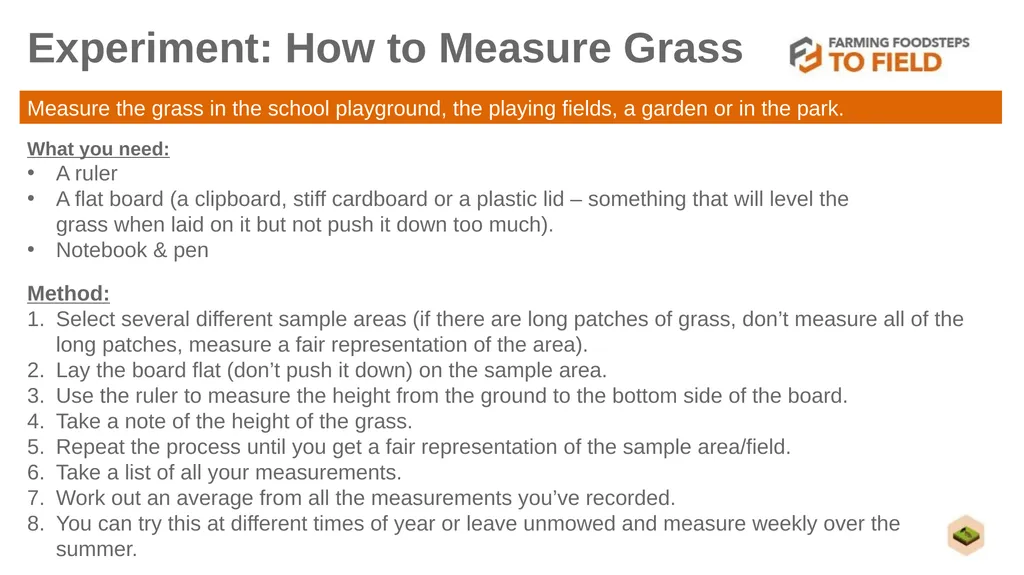
Experiment: How to Measure Grass Measure the grass in the school playground, the playing fields, a garden or in the park. What you need:
A ruler
A flat board (a clipboard, stiff cardboard or a plastic lid – something that will level the grass when laid on it but not push it down too much).
Notebook & pen Method:
Select several different sample areas (if there are long patches of grass, don’t measure all of the long patches, measure a fair representation of the area).
Lay the board flat (don’t push it down) on the sample area.
Use the ruler to measure the height from the ground to the bottom side of the board.
Take a note of the height of the grass.
Repeat the process until you get a fair representation of the sample area/field.
Take a list of all your measurements.
Work out an average from all the measurements you’ve recorded.
You can try this at different times of year or leave unmowed and measure weekly over the summer.<br>
15
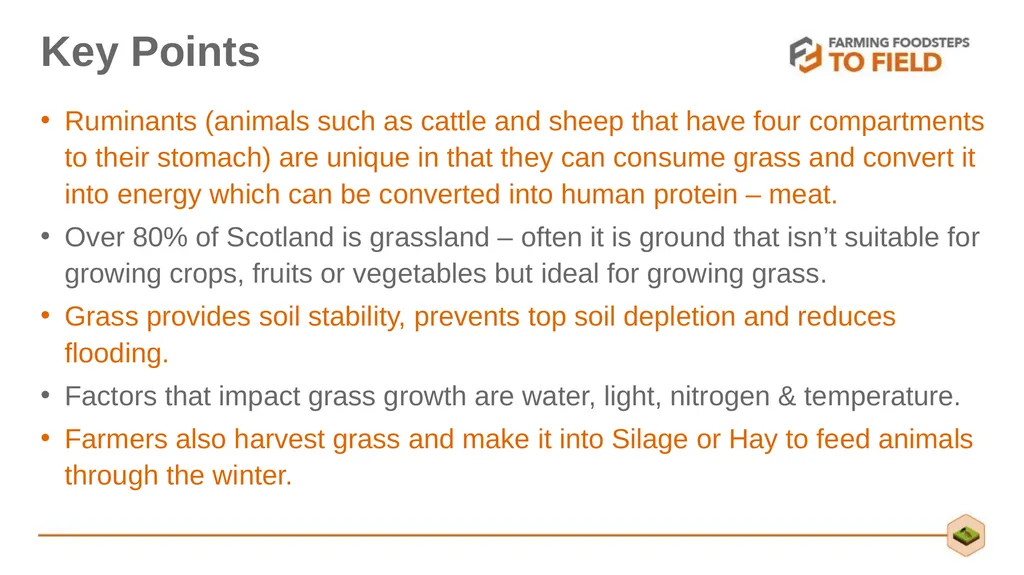
Key Points Ruminants (animals such as cattle and sheep that have four compartments to their stomach) are unique in that they can consume grass and convert it into energy which can be converted into human protein – meat.
Over 80% of Scotland is grassland – often it is ground that isn’t suitable for growing crops, fruits or vegetables but ideal for growing grass.
Grass provides soil stability, prevents top soil depletion and reduces flooding.
Factors that impact grass growth are water, light, nitrogen & temperature.
Farmers also harvest grass and make it into Silage or Hay to feed animals through the winter.<br>
16
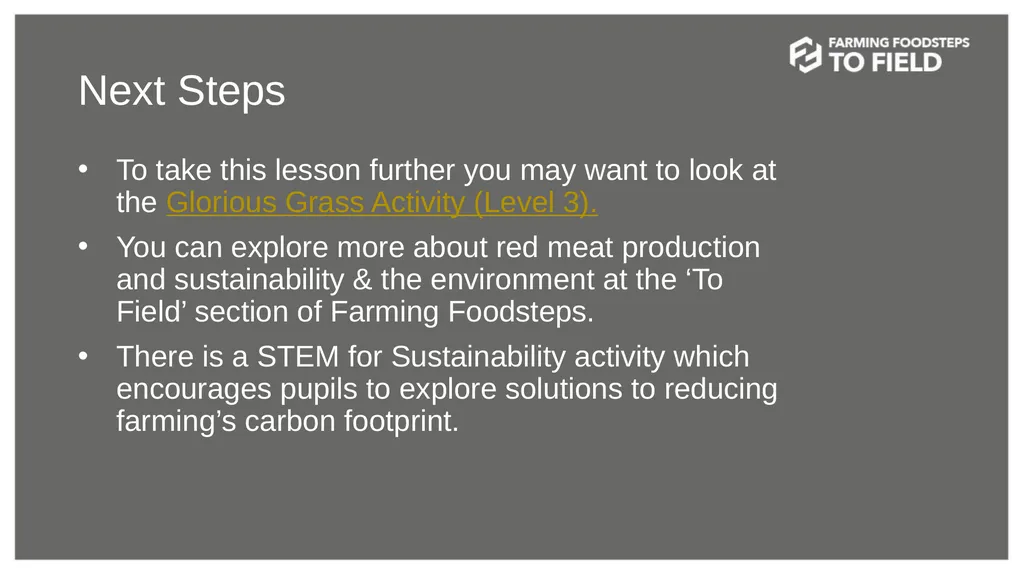
To take this lesson further you may want to look at the Glorious Grass Activity (Level 3).
You can explore more about red meat production and sustainability & the environment at the ‘To Field’ section of Farming Foodsteps.
There is a STEM for Sustainability activity which encourages pupils to explore solutions to reducing farming’s carbon footprint. Next Steps<br>
17
Content prepared by the Health & Education Team at Quality Meat Scotland For further information contact: education@qmscotland.co.uk<br>