
GoSkyWatch Planetarium App
Description: GoSkyWatch Planetarium App http:sciencenetlinks.comtoolsgoskywatch-planetarium-app Only on apple products Lesson title: Space Celestial objects 21st April Key Words Astronomy Star Planet Moon Asteroid Comet Galaxy Lesson Objectives:
Related Topics
Download Presentation
"GoSkyWatch Planetarium App" is the property of its rightful owner. Permission is granted to download and print the materials on this website for personal, non-commercial use only, and to display it on your personal computer provided you do not modify the materials and that you retain all copyright notices contained in the materials. By downloading content from our website, you accept the terms of this agreement.
Presentation Transcript
slide1. GoSkyWatch Planetarium App http://sciencenetlinks.com/tools/goskywatch-planetarium-app/
Only on apple products<br>
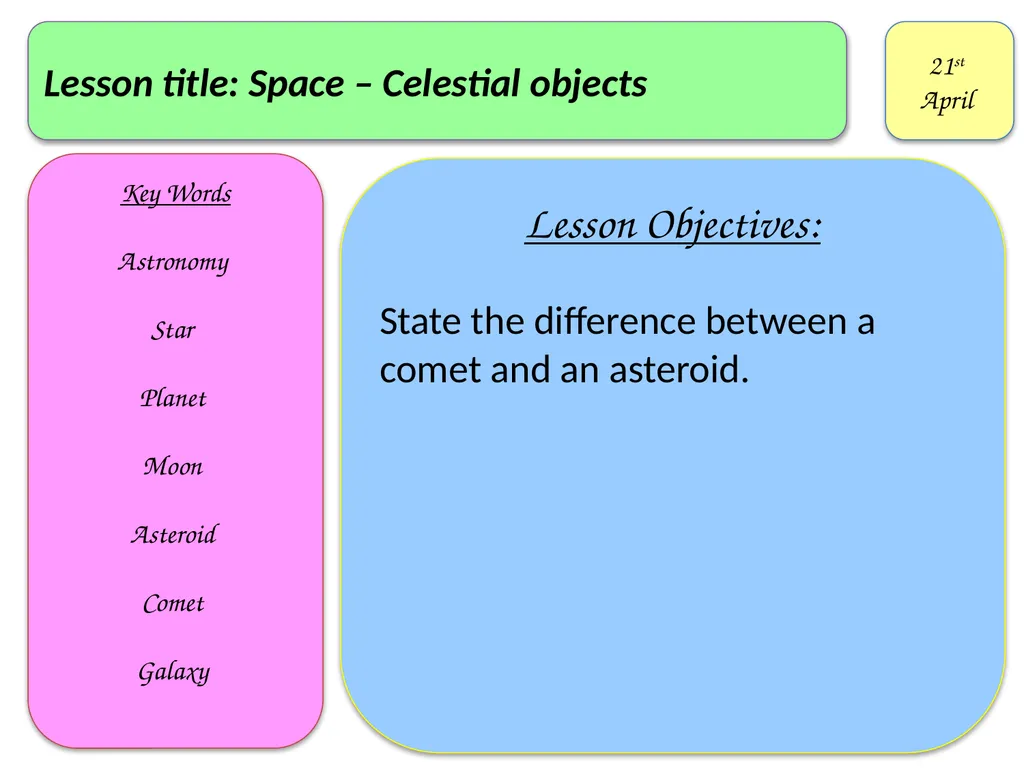
slide2. Lesson title: Space – Celestial objects 21st
April Key Words
Astronomy
Star
Planet
Moon
Asteroid
Comet
Galaxy Lesson Objectives:
State the difference between a comet and an asteroid.<br>
slide3. Astronomy What words do you think of when you hear the word ‘Astronomy’? Astronomy is the study of the universe beyond the Earth’s atmosphere.<br>
slide4. Celestial Bodies A celestial body is a naturally made object outside the Earth’s atmosphere.
We shall look at some of these bodies in our universe now..<br>
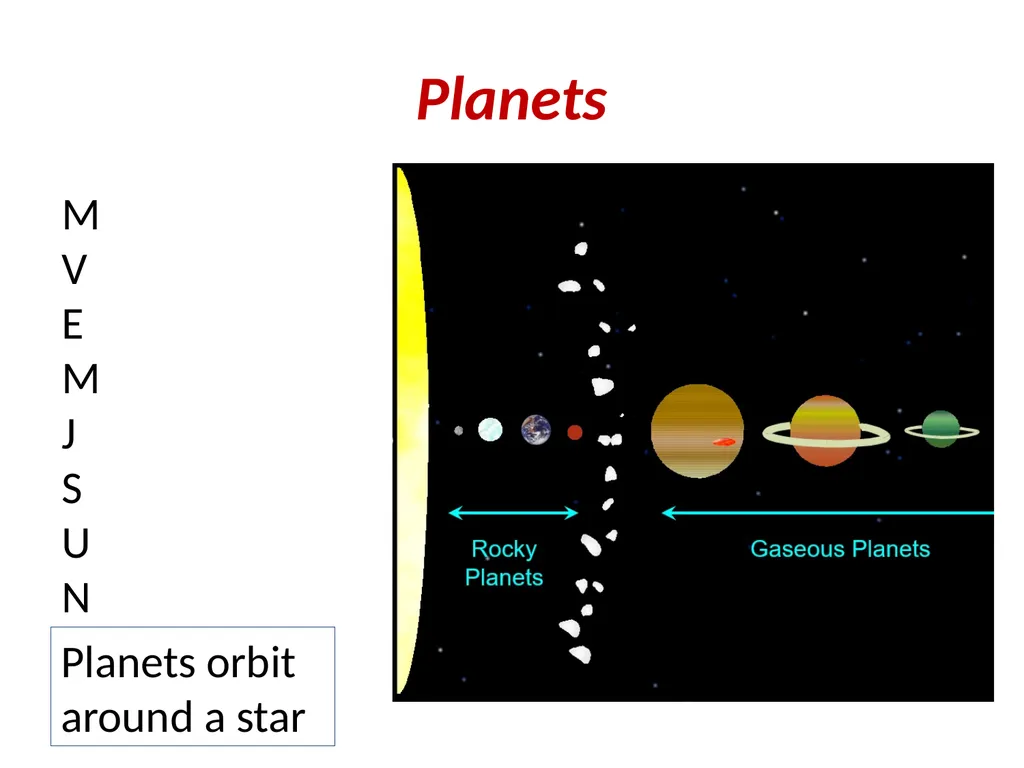
slide5. Planets M V E M J S U N Planets orbit around a star<br>
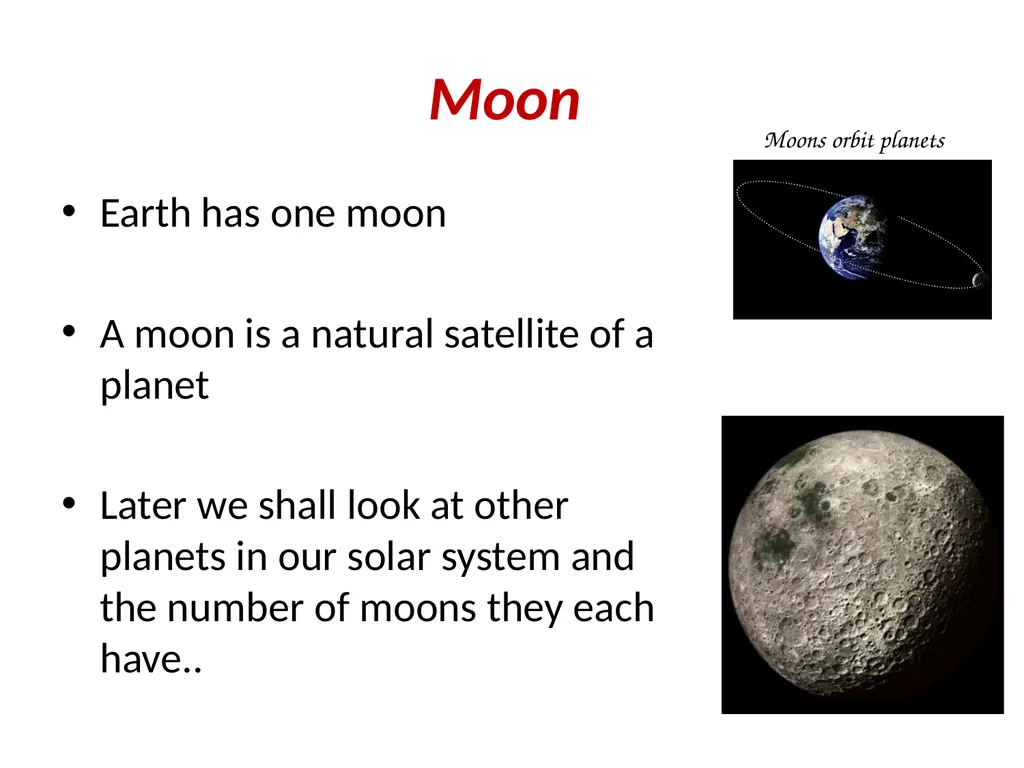
slide6. Moon Earth has one moon
A moon is a natural satellite of a planet
Later we shall look at other planets in our solar system and the number of moons they each have.. Moons orbit planets<br>
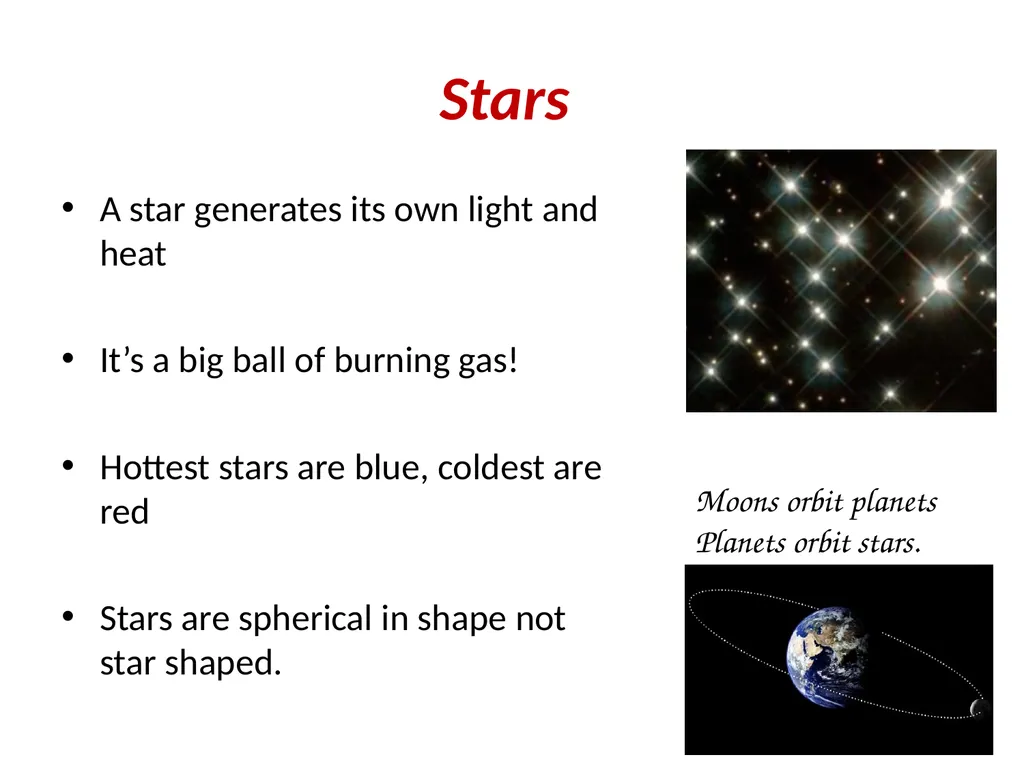
slide7. Stars A star generates its own light and heat
It’s a big ball of burning gas!
Hottest stars are blue, coldest are red
Stars are spherical in shape not star shaped. Moons orbit planets
Planets orbit stars.<br>
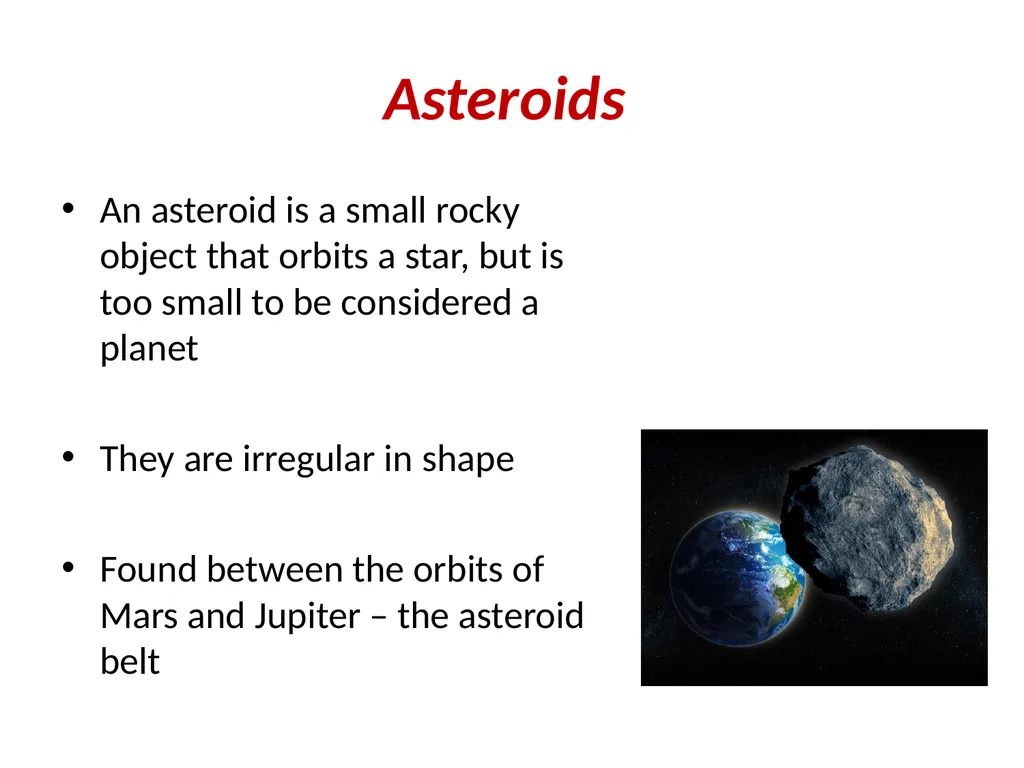
slide8. Asteroids An asteroid is a small rocky object that orbits a star, but is too small to be considered a planet
They are irregular in shape
Found between the orbits of Mars and Jupiter – the asteroid belt<br>
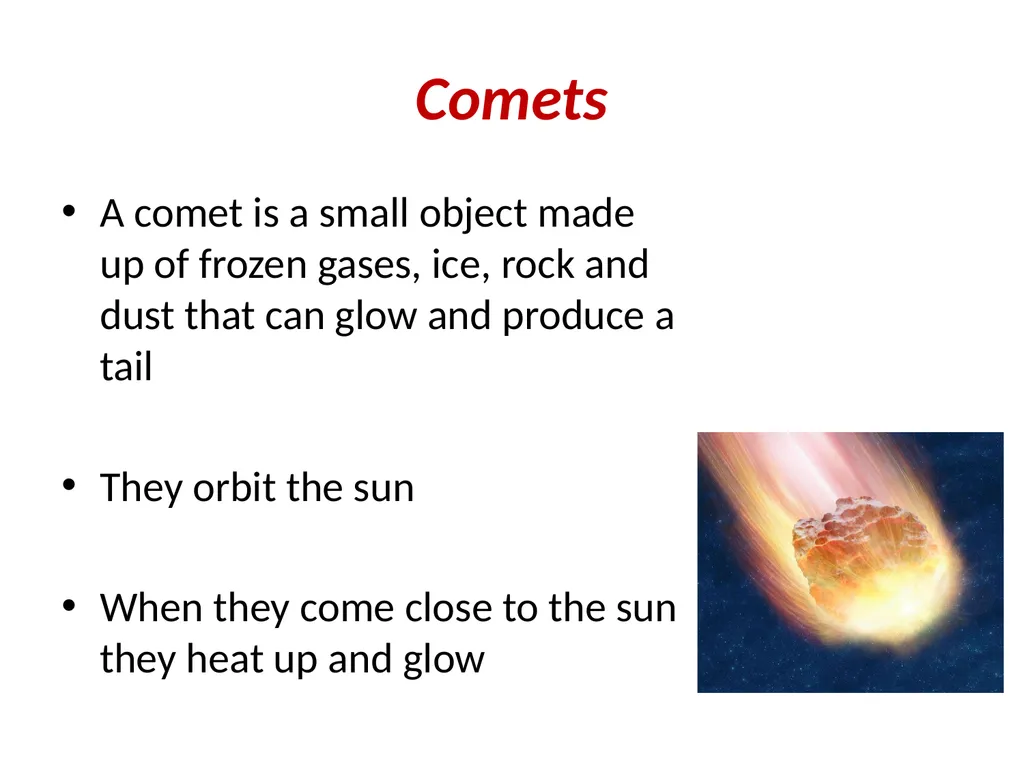
slide9. Comets A comet is a small object made up of frozen gases, ice, rock and dust that can glow and produce a tail
They orbit the sun
When they come close to the sun they heat up and glow<br>
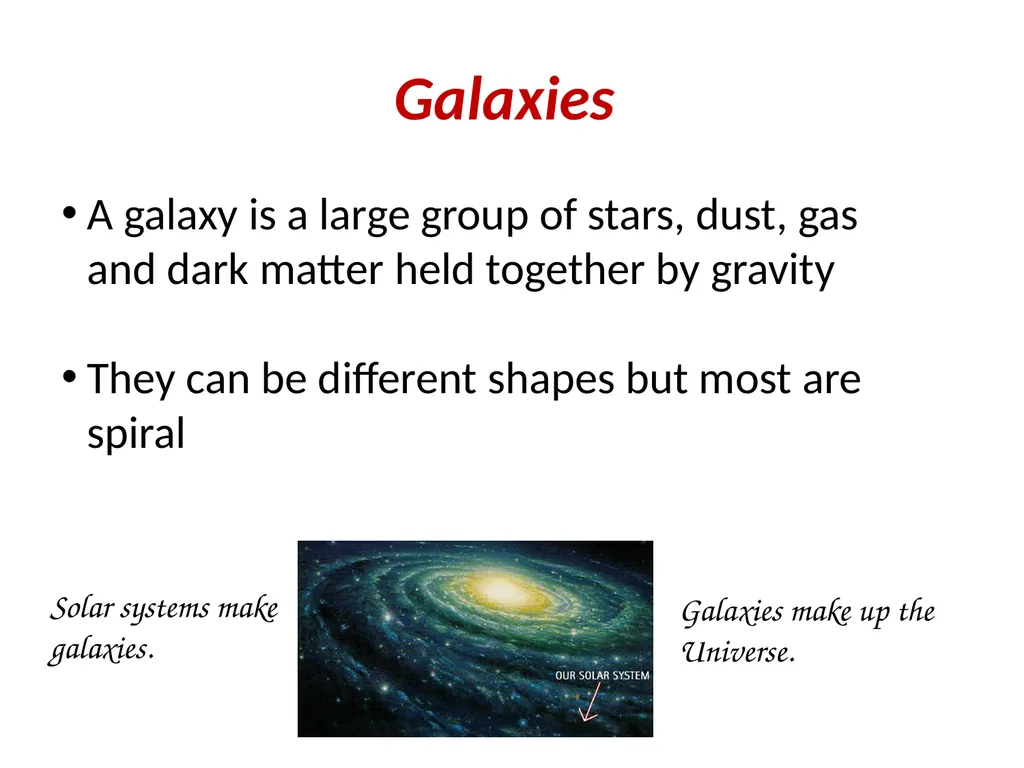
slide10. Galaxies A galaxy is a large group of stars, dust, gas and dark matter held together by gravity
They can be different shapes but most are spiral Solar systems make galaxies. Galaxies make up the Universe.<br>
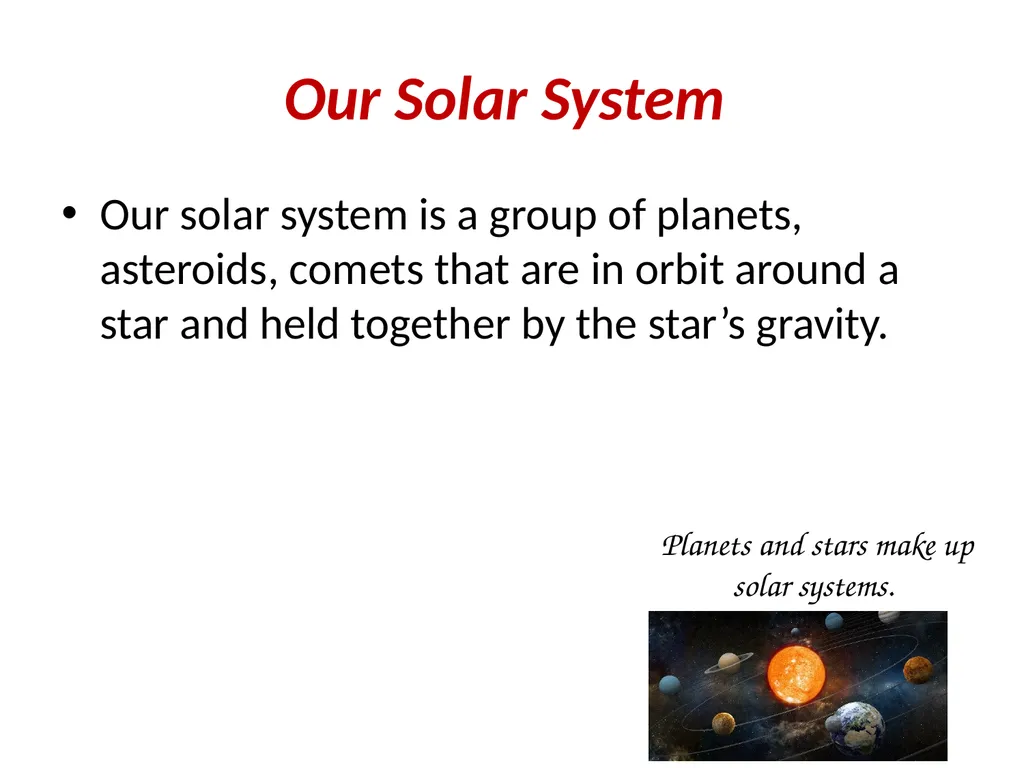
slide11. Our Solar System Our solar system is a group of planets, asteroids, comets that are in orbit around a star and held together by the star’s gravity. Planets and stars make up solar systems.<br>
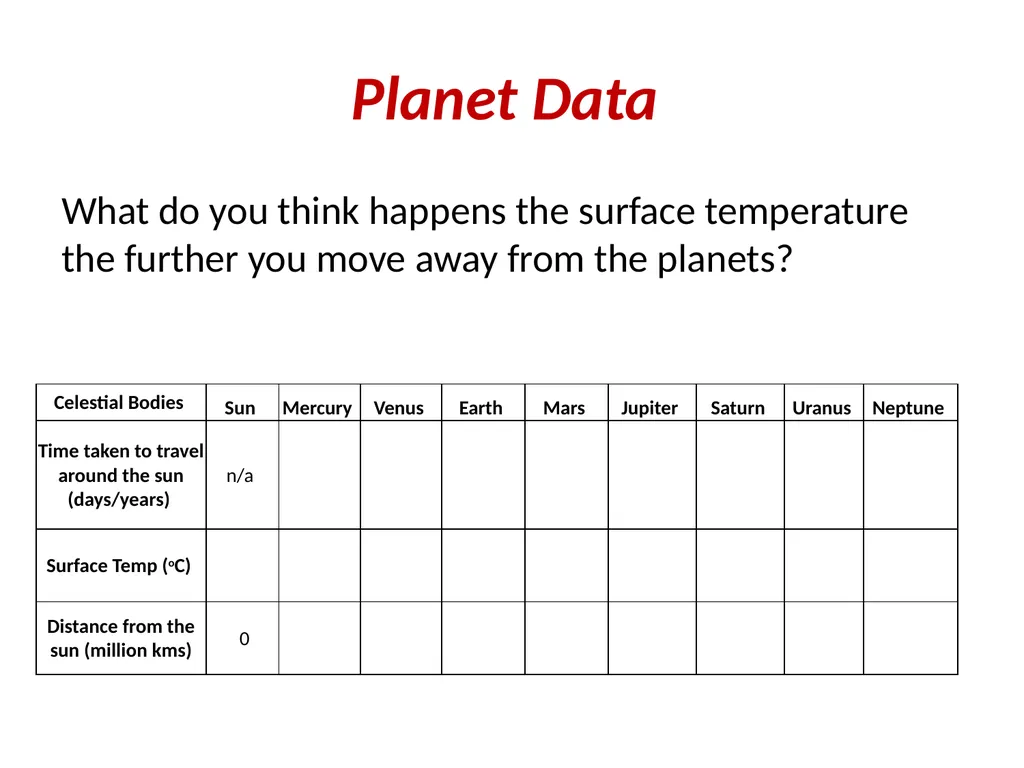
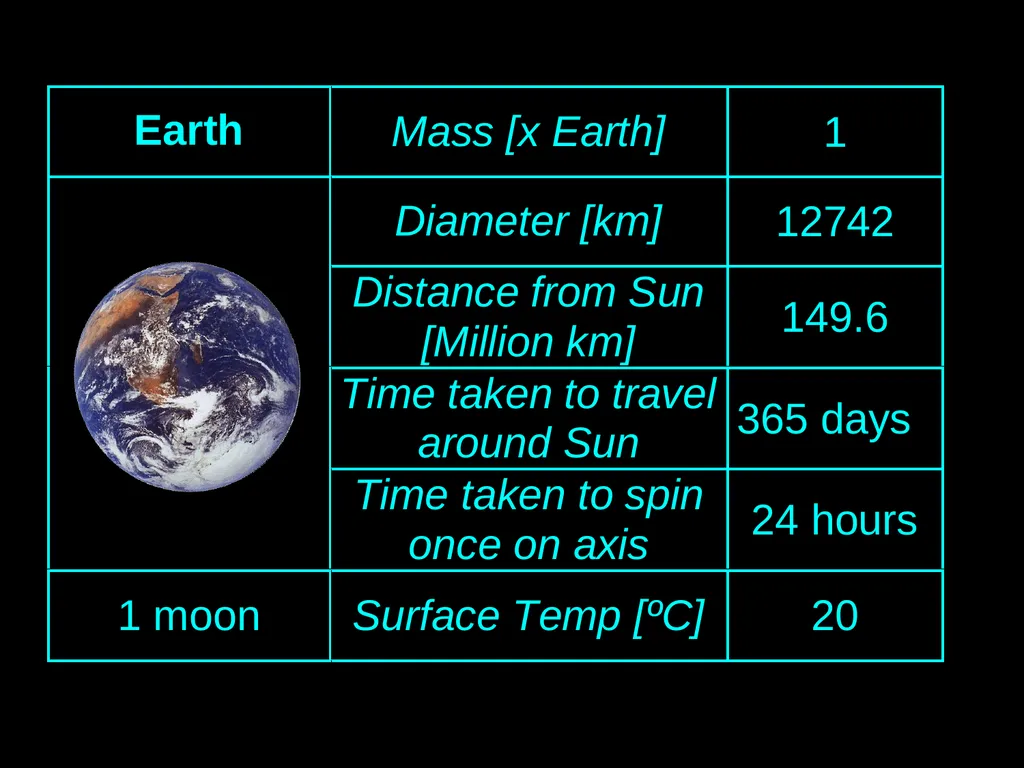
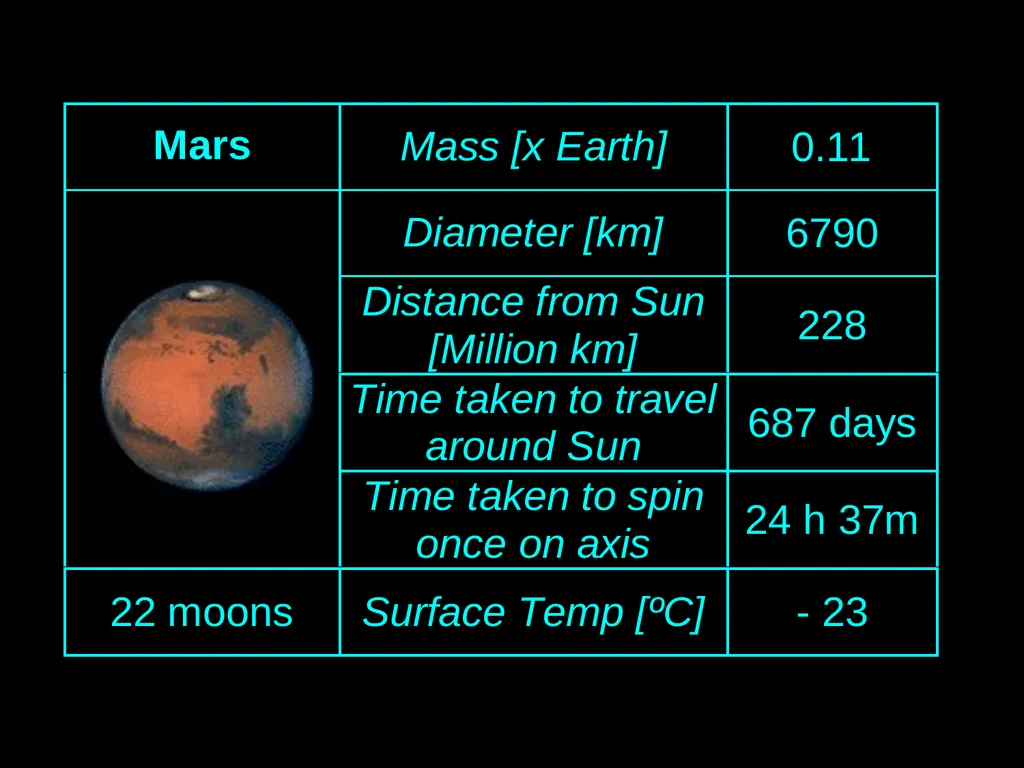
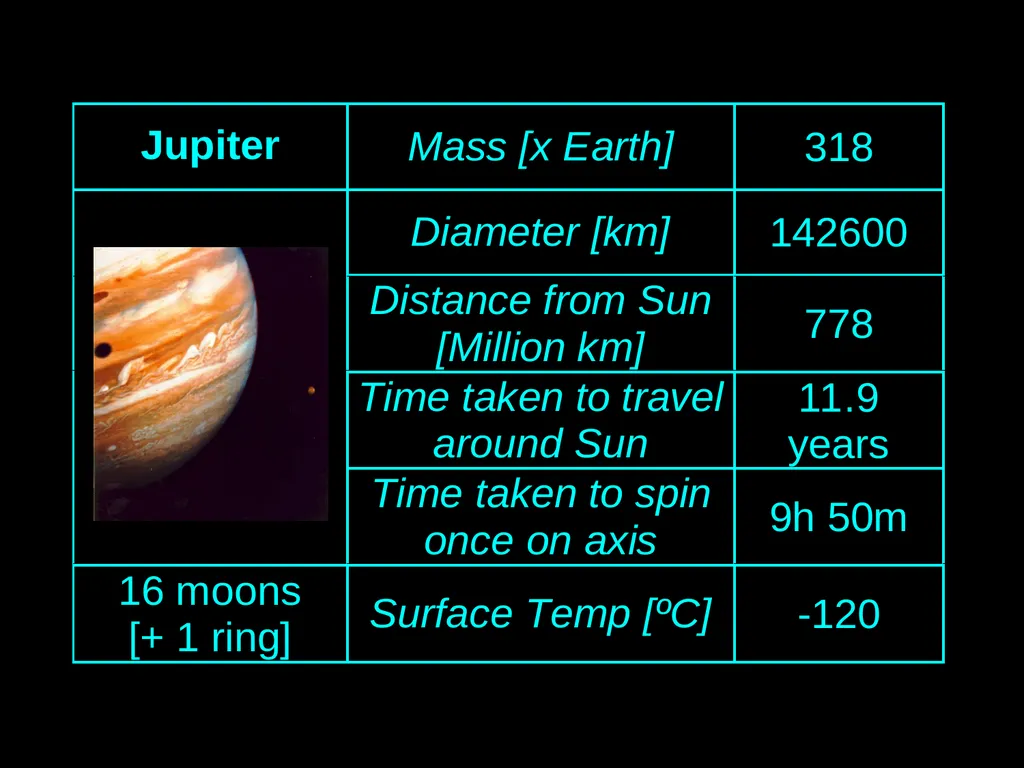
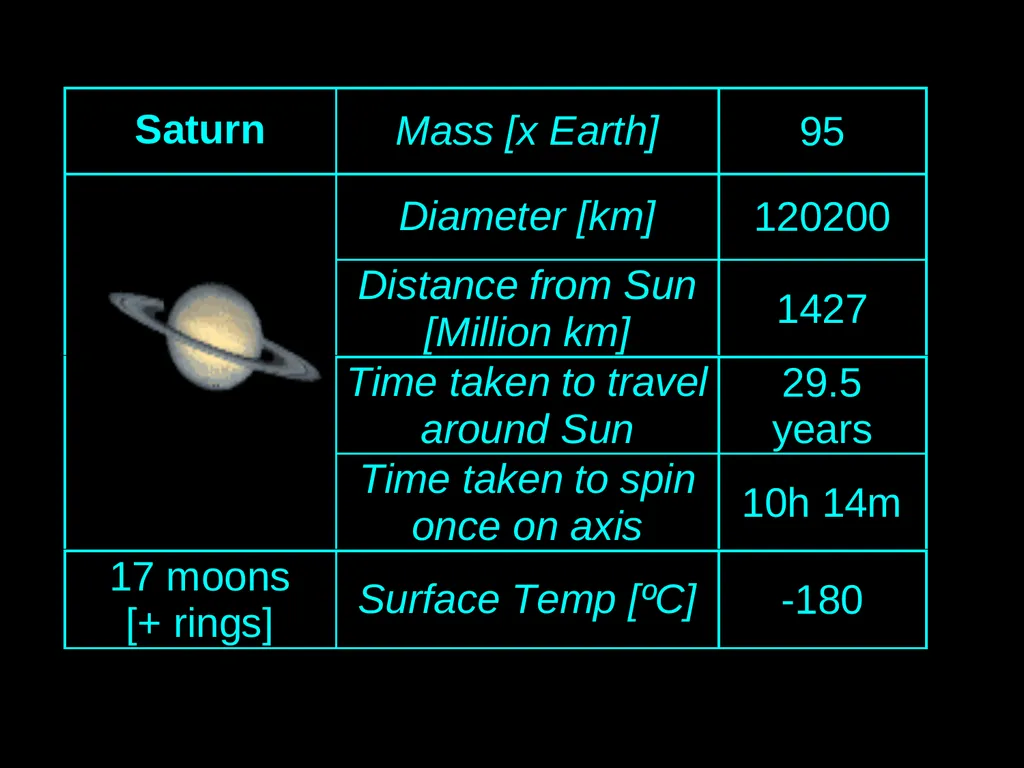
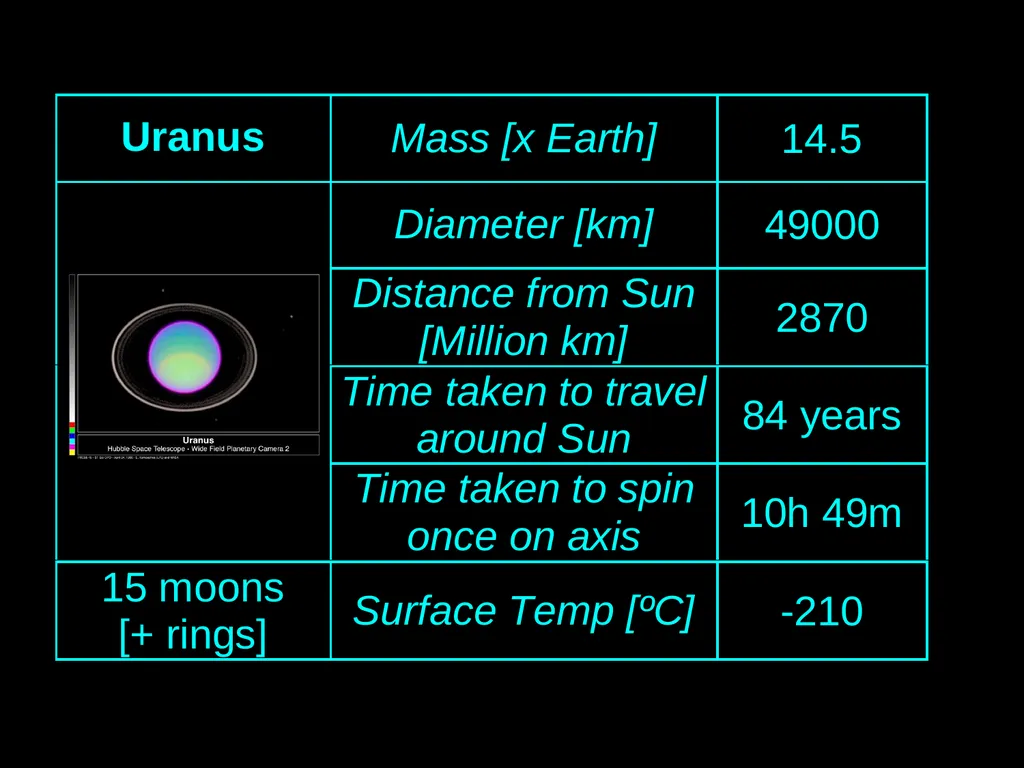
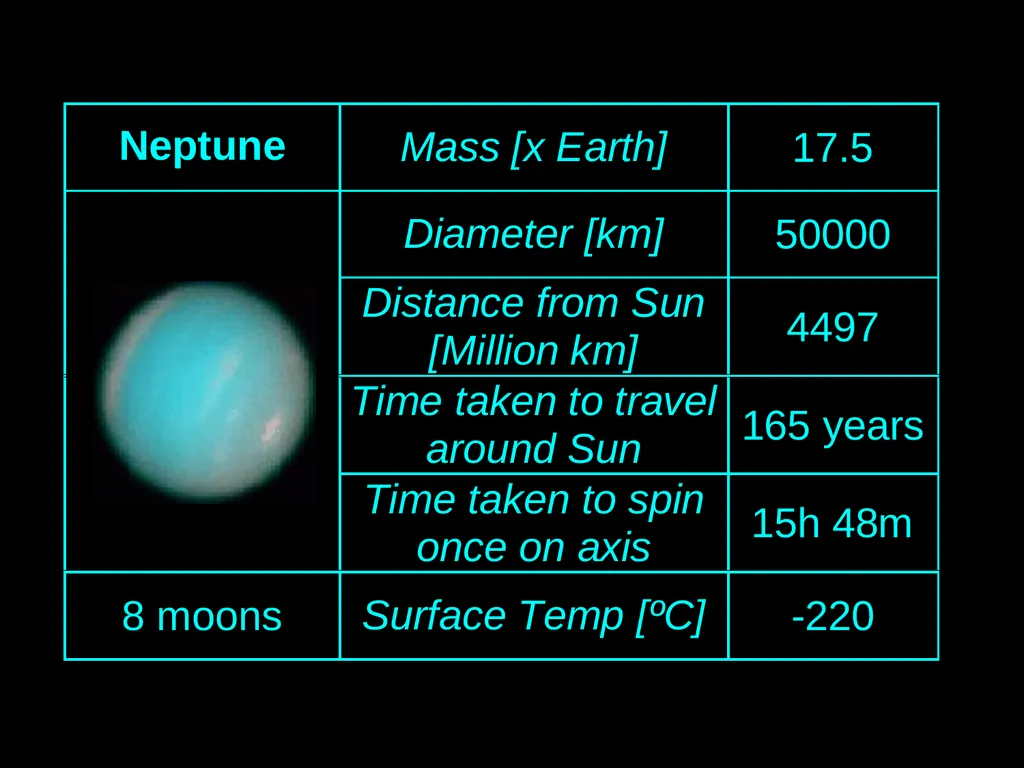
slide12. Planet Data What do you think happens the surface temperature the further you move away from the planets?<br>
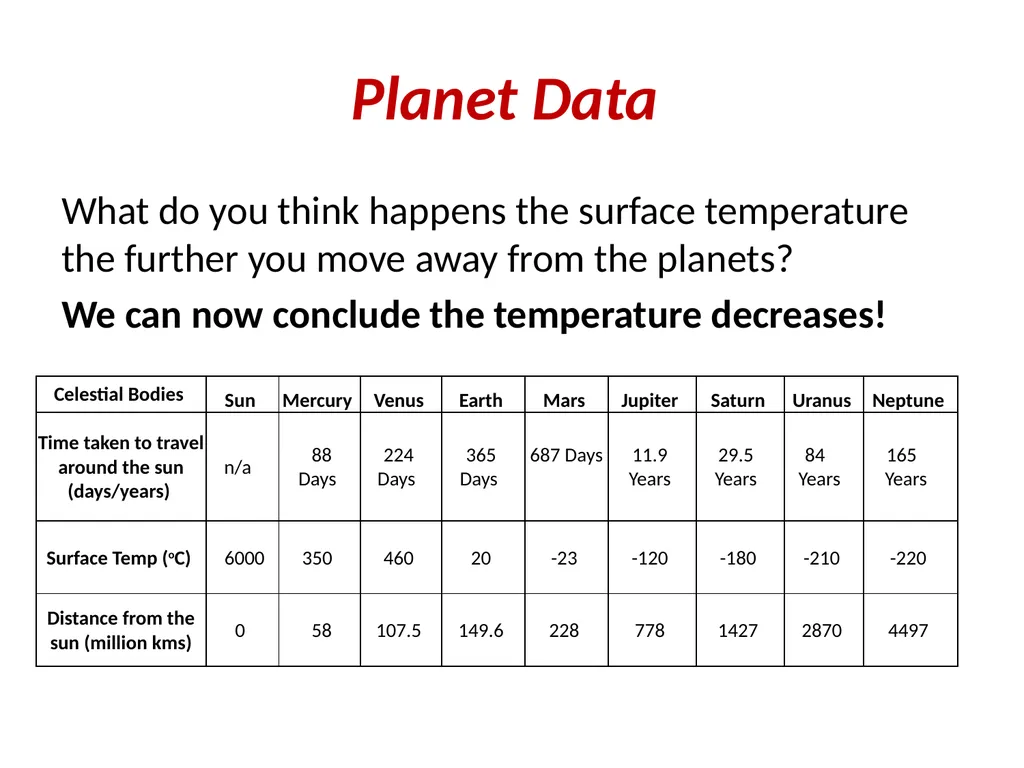
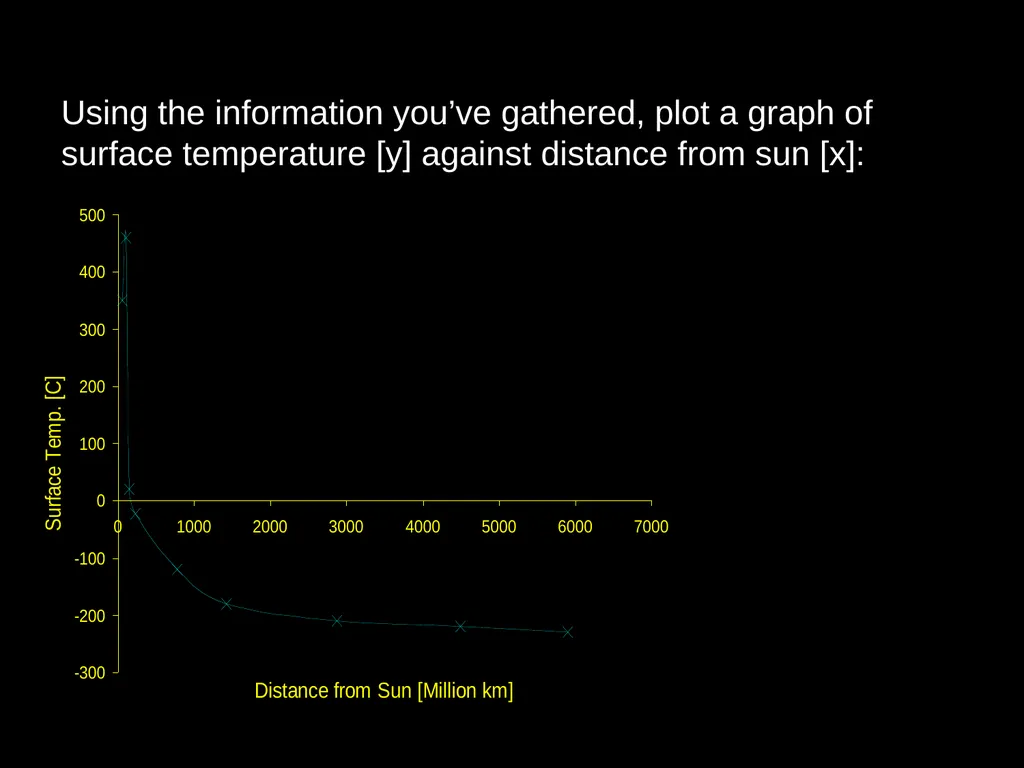
slide22. Planet Data What do you think happens the surface temperature the further you move away from the planets?
We can now conclude the temperature decreases!<br>
slide23. Quiz Quiz Trade Find a partner
Partner A asks Partner B the question on the card.
If Partner B answers correctly, Partner A gives them the card. If the don’t answer correctly. Partner A tells them the answer then repeats the question until they get it right.
Partner B then asks their question.
When both cares are swapped, find a new partner and begin again.<br>
slide24. The Cards There must be at least one question per person in the class.
Find the word doc in the attached file.
9 examples you may add more.<br>
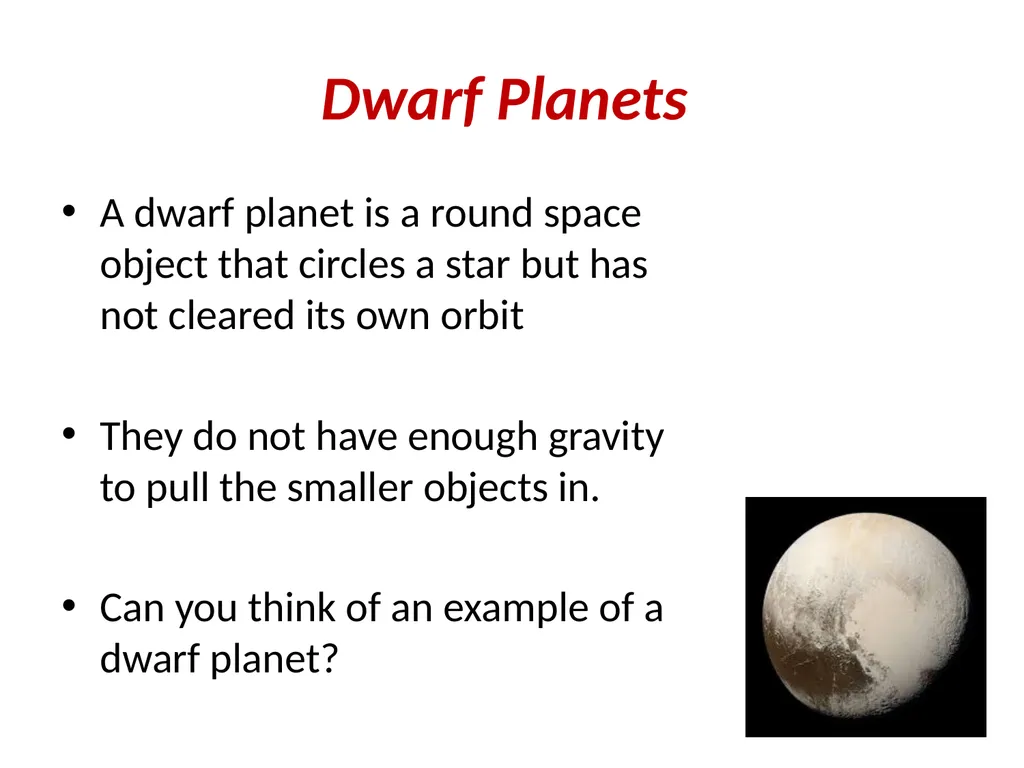
slide25. Dwarf Planets A dwarf planet is a round space object that circles a star but has not cleared its own orbit
They do not have enough gravity to pull the smaller objects in.
Can you think of an example of a dwarf planet?<br>
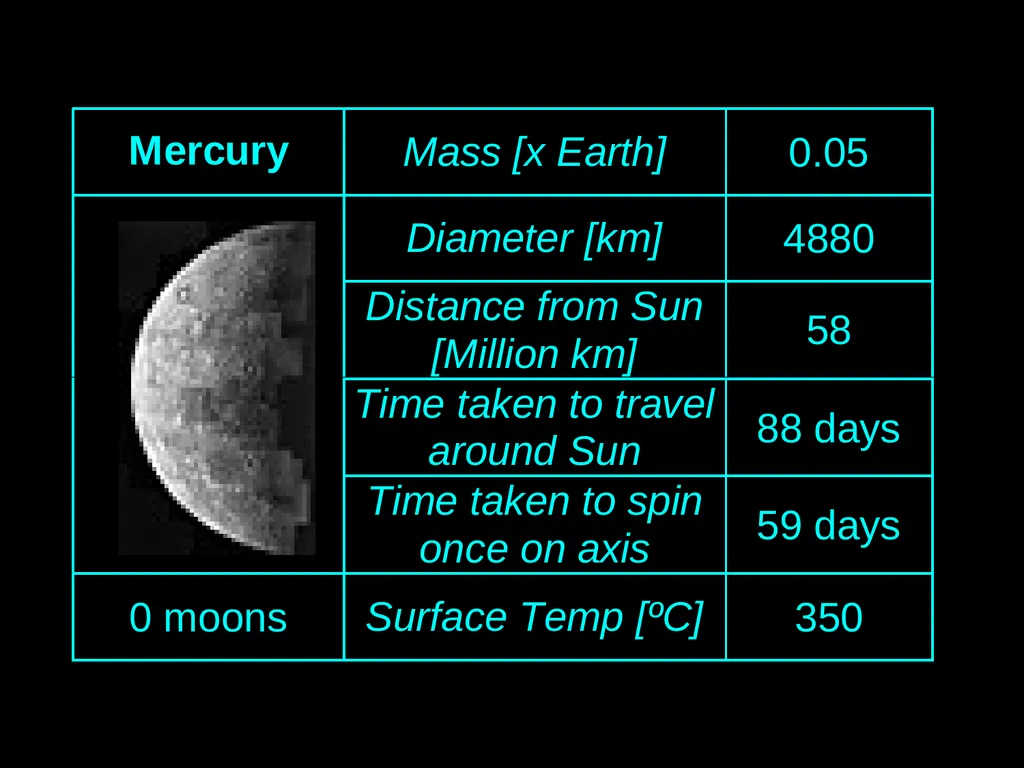
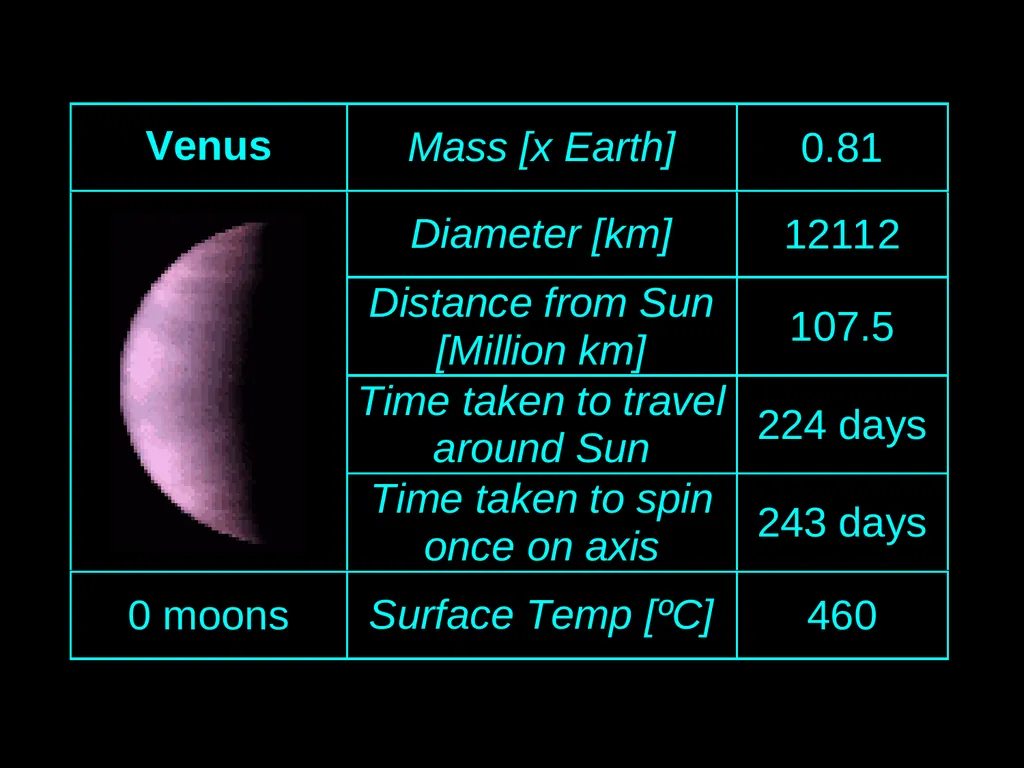
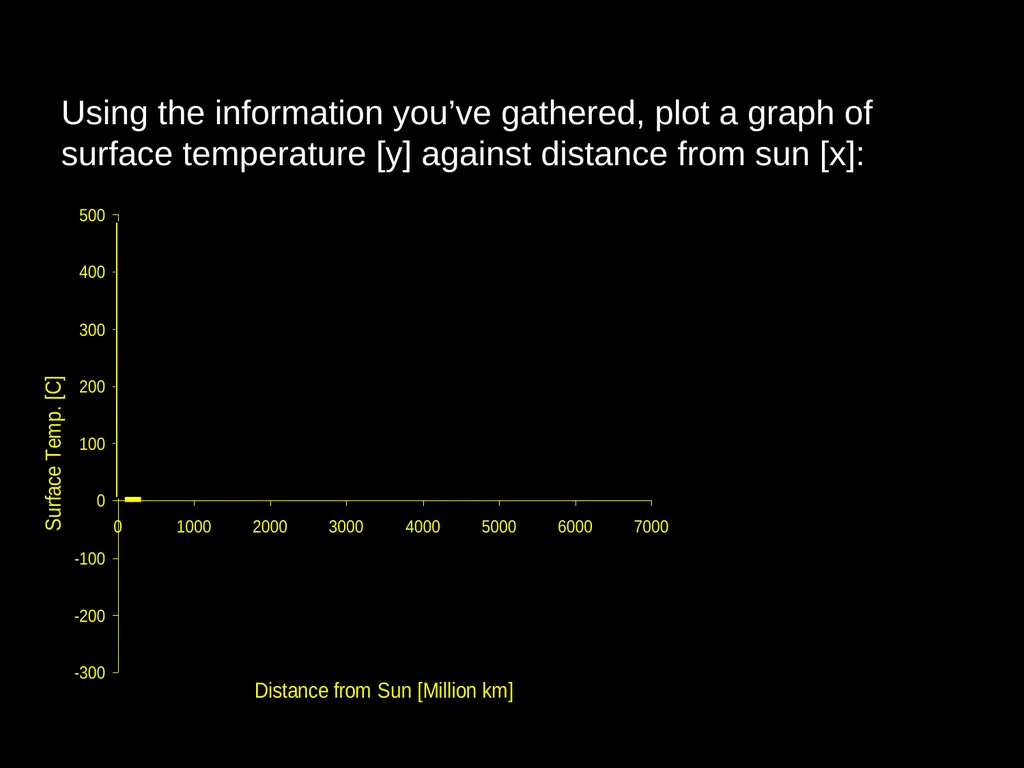
slide26. Using the information you’ve gathered, plot a graph of surface temperature [y] against distance from sun [x]:<br>
slide27. Using the information you’ve gathered, plot a graph of surface temperature [y] against distance from sun [x]:<br>
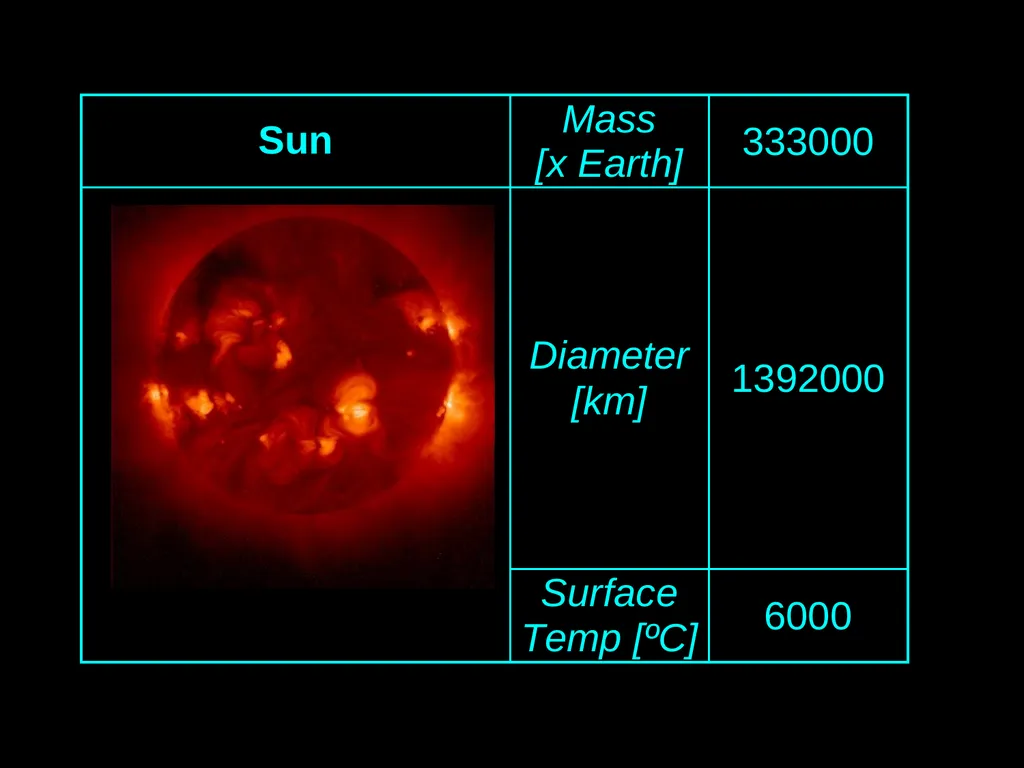
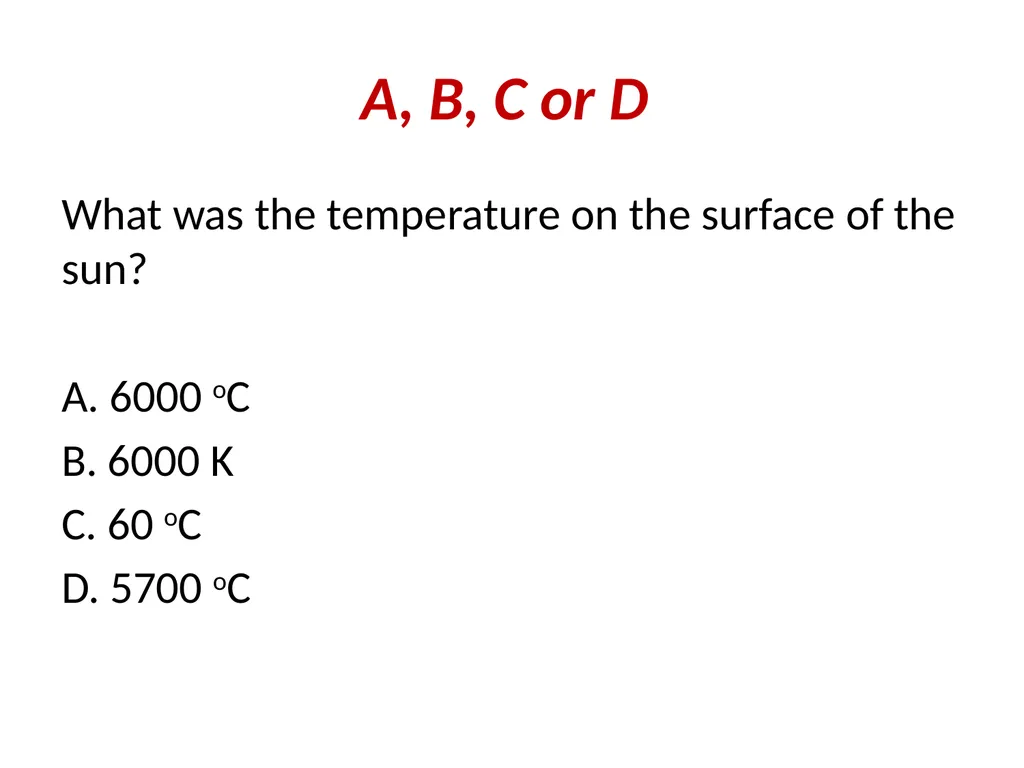
slide28. A, B, C or D What was the temperature on the surface of the sun?
A. 6000 oC
B. 6000 K
C. 60 oC
D. 5700 oC<br>
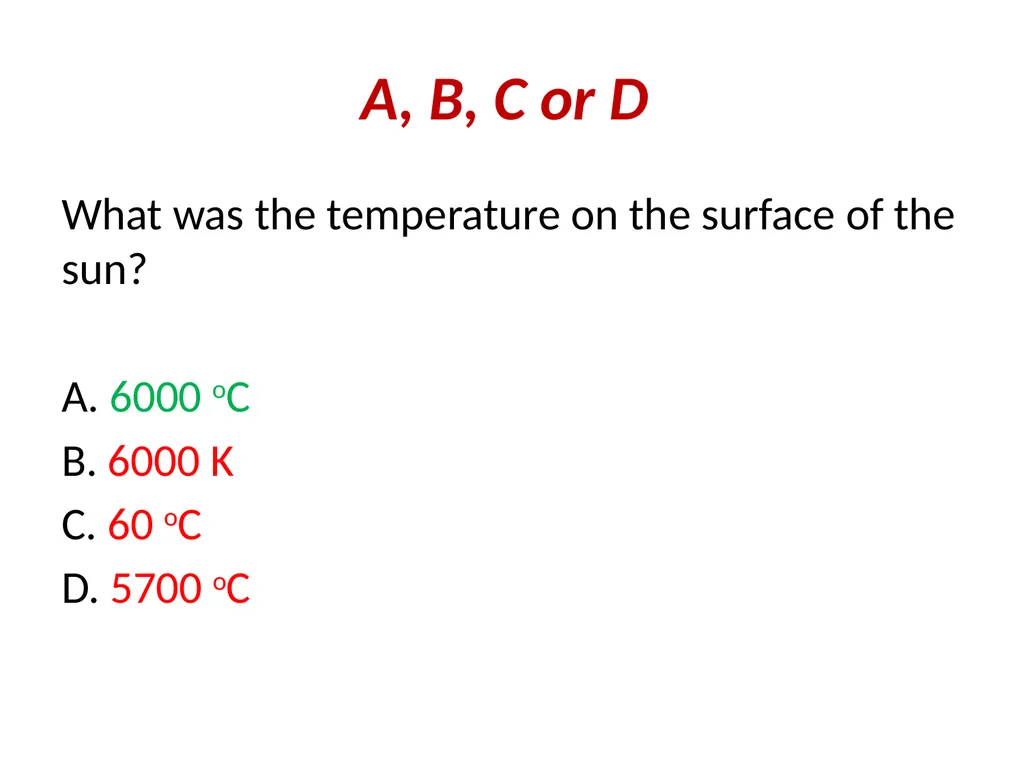
slide29. A, B, C or D What was the temperature on the surface of the sun?
A. 6000 oC
B. 6000 K
C. 60 oC
D. 5700 oC<br>
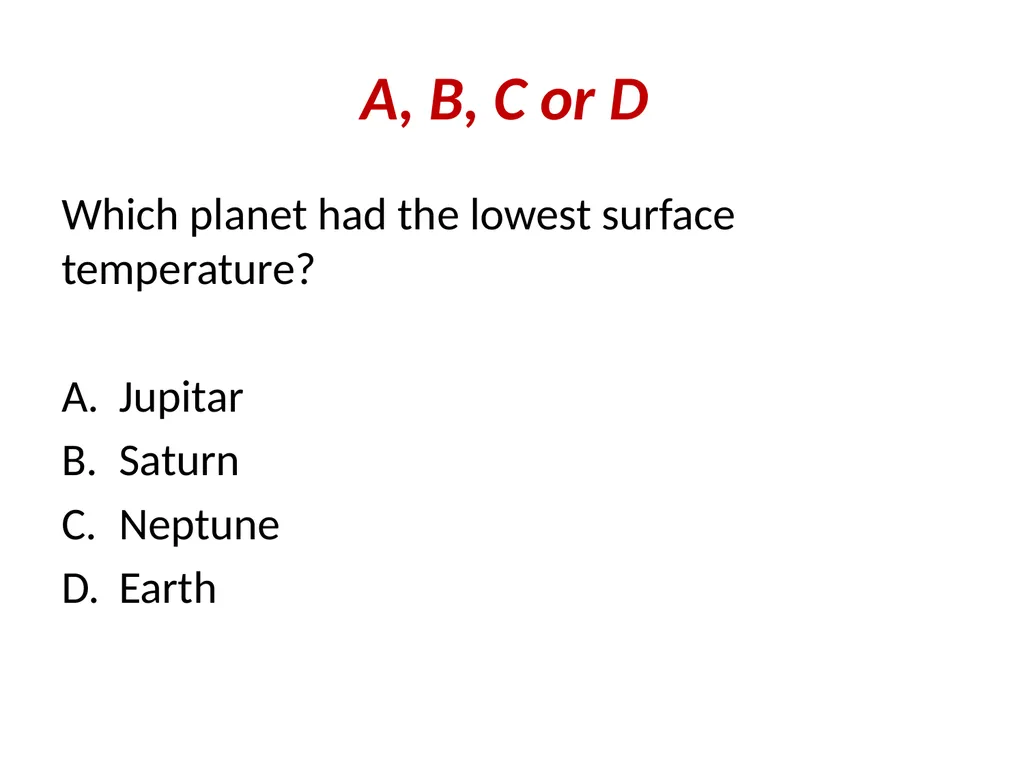
slide30. A, B, C or D Which planet had the lowest surface temperature?
Jupitar
Saturn
Neptune
Earth<br>
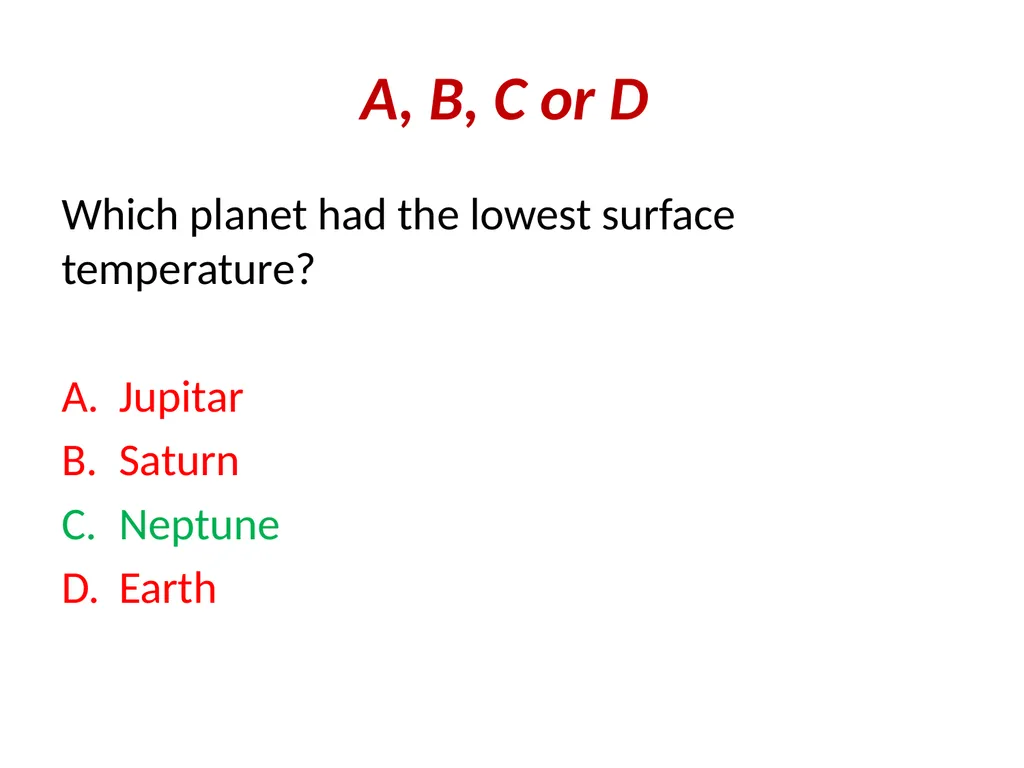
slide31. A, B, C or D Which planet had the lowest surface temperature?
Jupitar
Saturn
Neptune
Earth<br>
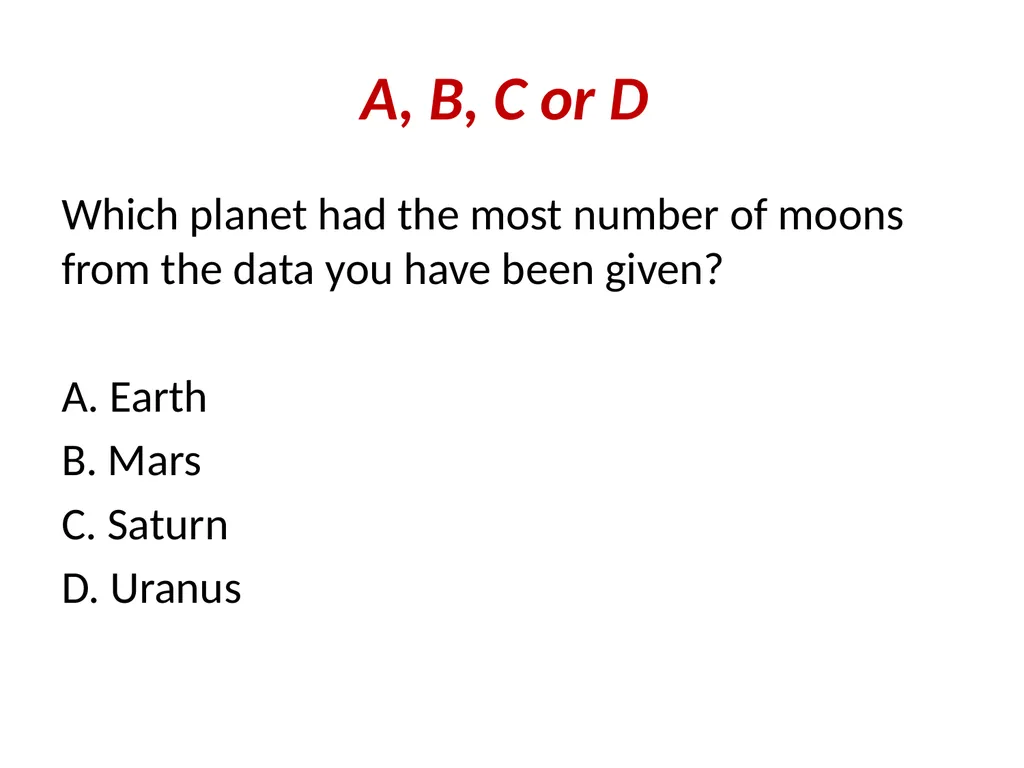
slide32. A, B, C or D Which planet had the most number of moons from the data you have been given?
A. Earth
B. Mars
C. Saturn
D. Uranus<br>
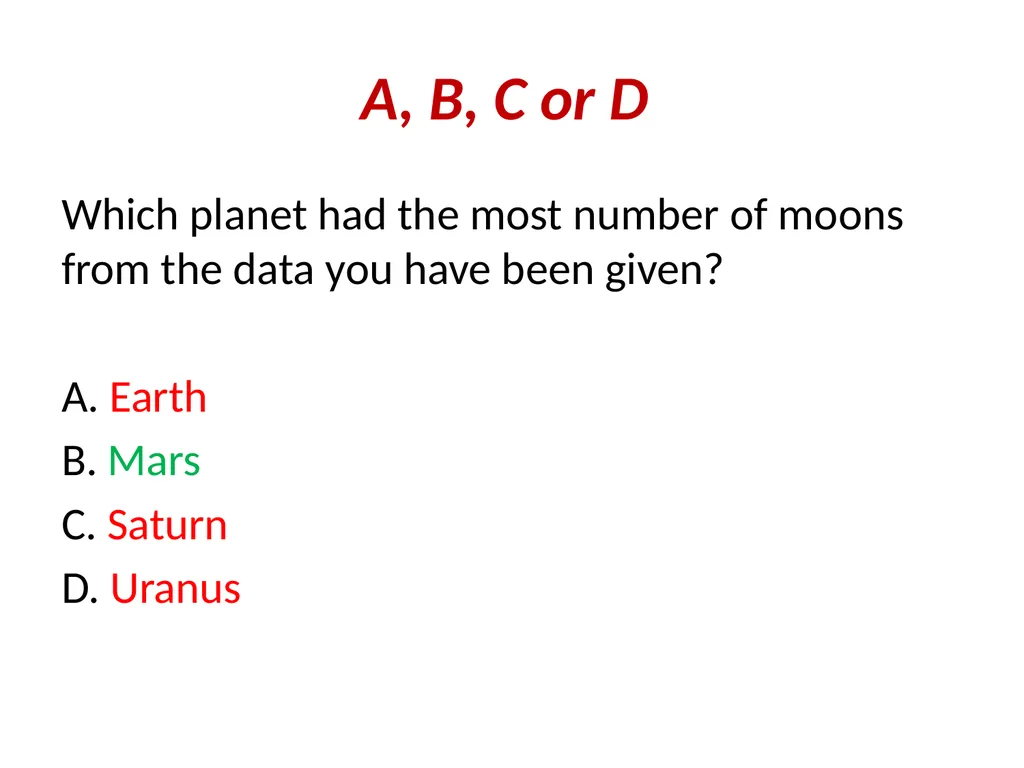
slide33. A, B, C or D Which planet had the most number of moons from the data you have been given?
A. Earth
B. Mars
C. Saturn
D. Uranus<br>
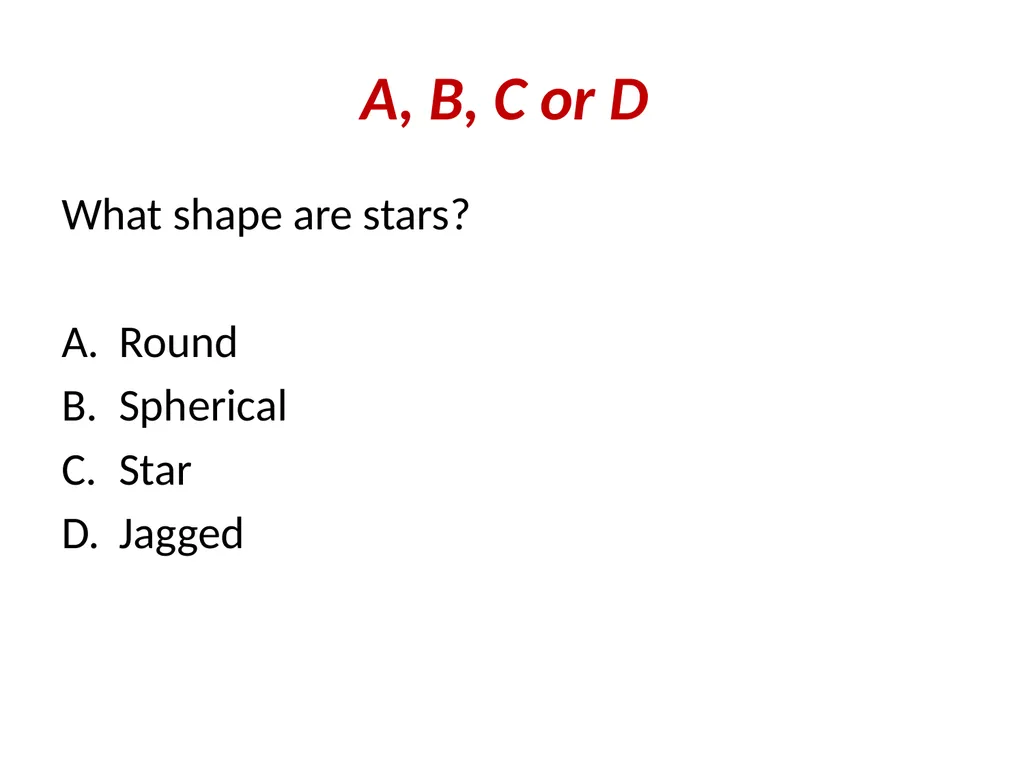
slide34. A, B, C or D What shape are stars?
Round
Spherical
Star
Jagged<br>
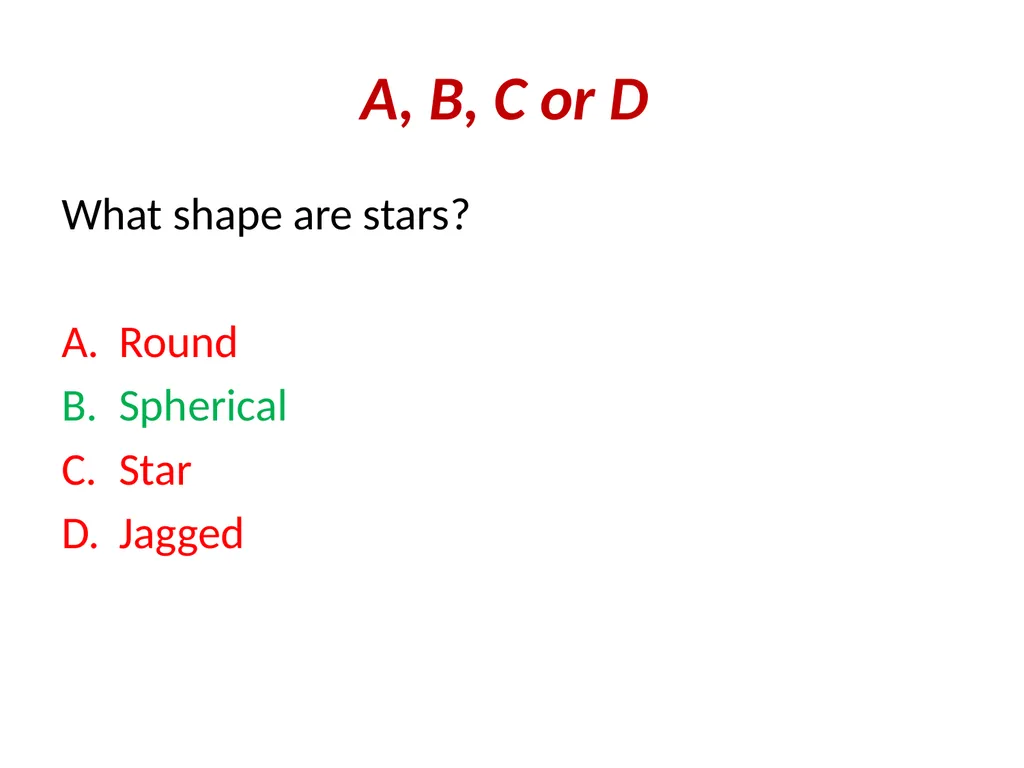
slide35. A, B, C or D What shape are stars?
Round
Spherical
Star
Jagged<br>
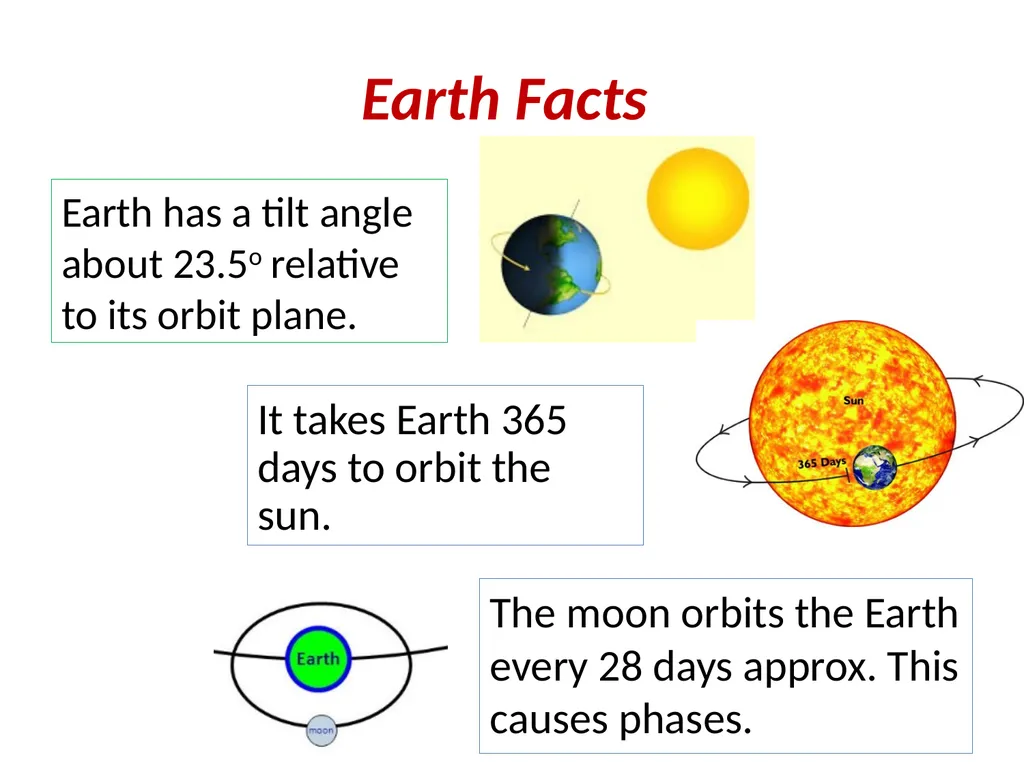
slide36. Earth Facts Earth has a tilt angle about 23.5o relative to its orbit plane. It takes Earth 365 days to orbit the sun. The moon orbits the Earth every 28 days approx. This causes phases.<br>
Only on apple products<br>
slide2. Lesson title: Space – Celestial objects 21st
April Key Words
Astronomy
Star
Planet
Moon
Asteroid
Comet
Galaxy Lesson Objectives:
State the difference between a comet and an asteroid.<br>
slide3. Astronomy What words do you think of when you hear the word ‘Astronomy’? Astronomy is the study of the universe beyond the Earth’s atmosphere.<br>
slide4. Celestial Bodies A celestial body is a naturally made object outside the Earth’s atmosphere.
We shall look at some of these bodies in our universe now..<br>
slide5. Planets M V E M J S U N Planets orbit around a star<br>
slide6. Moon Earth has one moon
A moon is a natural satellite of a planet
Later we shall look at other planets in our solar system and the number of moons they each have.. Moons orbit planets<br>
slide7. Stars A star generates its own light and heat
It’s a big ball of burning gas!
Hottest stars are blue, coldest are red
Stars are spherical in shape not star shaped. Moons orbit planets
Planets orbit stars.<br>
slide8. Asteroids An asteroid is a small rocky object that orbits a star, but is too small to be considered a planet
They are irregular in shape
Found between the orbits of Mars and Jupiter – the asteroid belt<br>
slide9. Comets A comet is a small object made up of frozen gases, ice, rock and dust that can glow and produce a tail
They orbit the sun
When they come close to the sun they heat up and glow<br>
slide10. Galaxies A galaxy is a large group of stars, dust, gas and dark matter held together by gravity
They can be different shapes but most are spiral Solar systems make galaxies. Galaxies make up the Universe.<br>
slide11. Our Solar System Our solar system is a group of planets, asteroids, comets that are in orbit around a star and held together by the star’s gravity. Planets and stars make up solar systems.<br>
slide12. Planet Data What do you think happens the surface temperature the further you move away from the planets?<br>
slide22. Planet Data What do you think happens the surface temperature the further you move away from the planets?
We can now conclude the temperature decreases!<br>
slide23. Quiz Quiz Trade Find a partner
Partner A asks Partner B the question on the card.
If Partner B answers correctly, Partner A gives them the card. If the don’t answer correctly. Partner A tells them the answer then repeats the question until they get it right.
Partner B then asks their question.
When both cares are swapped, find a new partner and begin again.<br>
slide24. The Cards There must be at least one question per person in the class.
Find the word doc in the attached file.
9 examples you may add more.<br>
slide25. Dwarf Planets A dwarf planet is a round space object that circles a star but has not cleared its own orbit
They do not have enough gravity to pull the smaller objects in.
Can you think of an example of a dwarf planet?<br>
slide26. Using the information you’ve gathered, plot a graph of surface temperature [y] against distance from sun [x]:<br>
slide27. Using the information you’ve gathered, plot a graph of surface temperature [y] against distance from sun [x]:<br>
slide28. A, B, C or D What was the temperature on the surface of the sun?
A. 6000 oC
B. 6000 K
C. 60 oC
D. 5700 oC<br>
slide29. A, B, C or D What was the temperature on the surface of the sun?
A. 6000 oC
B. 6000 K
C. 60 oC
D. 5700 oC<br>
slide30. A, B, C or D Which planet had the lowest surface temperature?
Jupitar
Saturn
Neptune
Earth<br>
slide31. A, B, C or D Which planet had the lowest surface temperature?
Jupitar
Saturn
Neptune
Earth<br>
slide32. A, B, C or D Which planet had the most number of moons from the data you have been given?
A. Earth
B. Mars
C. Saturn
D. Uranus<br>
slide33. A, B, C or D Which planet had the most number of moons from the data you have been given?
A. Earth
B. Mars
C. Saturn
D. Uranus<br>
slide34. A, B, C or D What shape are stars?
Round
Spherical
Star
Jagged<br>
slide35. A, B, C or D What shape are stars?
Round
Spherical
Star
Jagged<br>
slide36. Earth Facts Earth has a tilt angle about 23.5o relative to its orbit plane. It takes Earth 365 days to orbit the sun. The moon orbits the Earth every 28 days approx. This causes phases.<br>