
Grammar A1.1 34 PPT Slides Can differentiate





Description: Grammar A1.1 34 PPT Slides Can differentiate between the use of could and should. Can give simple suggestions using could and should. Should And Could I could, but I dont know if I should! I could: This is active because the
Related Topics
Download Presentation
"Grammar A1.1 34 PPT Slides Can differentiate" is the property of its rightful owner. Permission is granted to download and print the materials on this website for personal, non-commercial use only, and to display it on your personal computer provided you do not modify the materials and that you retain all copyright notices contained in the materials. By downloading content from our website, you accept the terms of this agreement.
Presentation Transcript
slide1. Grammar
A1.1
34 PPT Slides
Can differentiate between the use of 'could' and 'should'.
Can give simple suggestions using 'could' and 'should'. Should And Could<br>
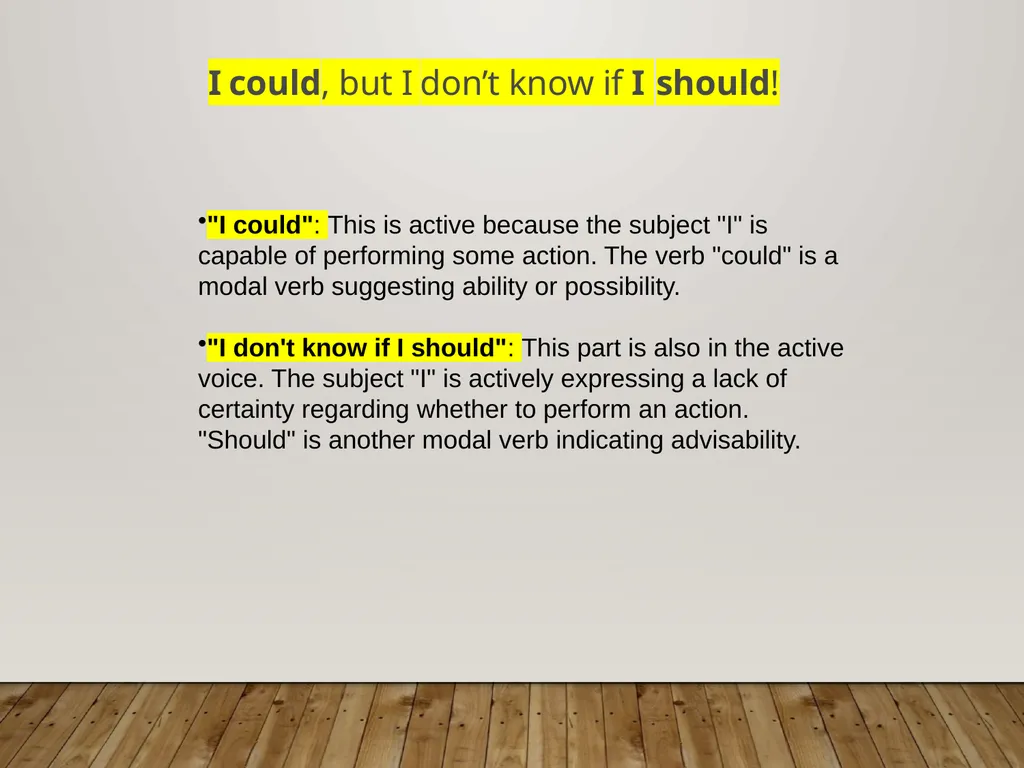
slide2. I could, but I don’t know if I should! "I could": This is active because the subject "I" is capable of performing some action. The verb "could" is a modal verb suggesting ability or possibility.
"I don't know if I should": This part is also in the active voice. The subject "I" is actively expressing a lack of certainty regarding whether to perform an action. "Should" is another modal verb indicating advisability.<br>
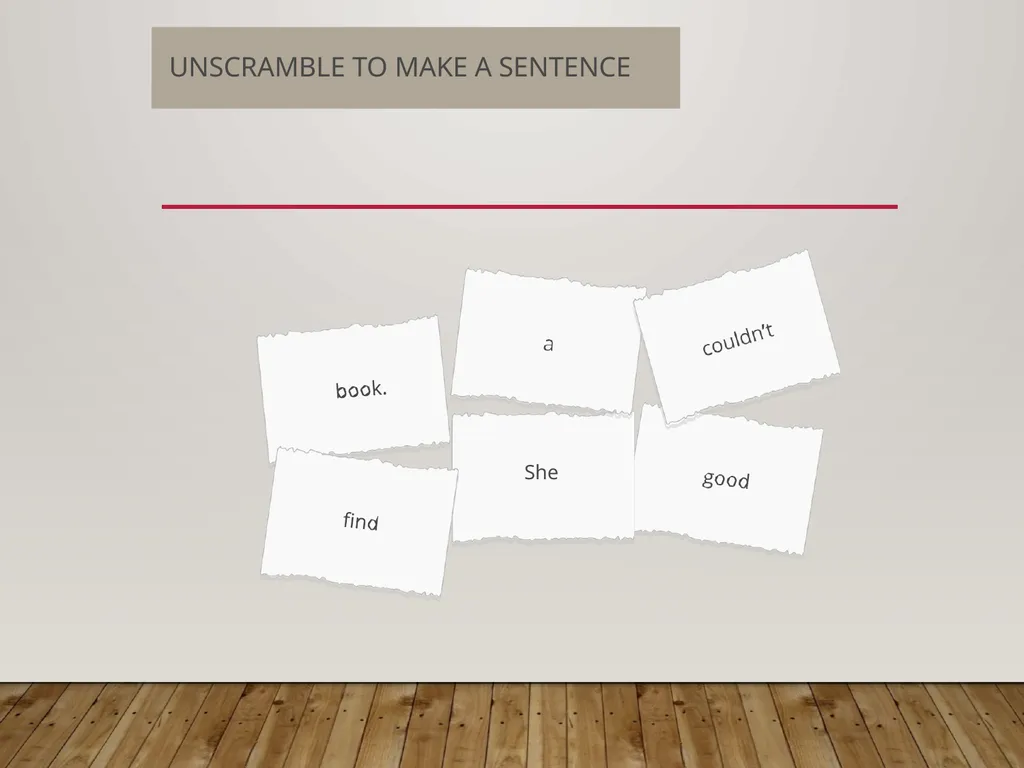
slide3. Unscramble to make a sentence She<br>
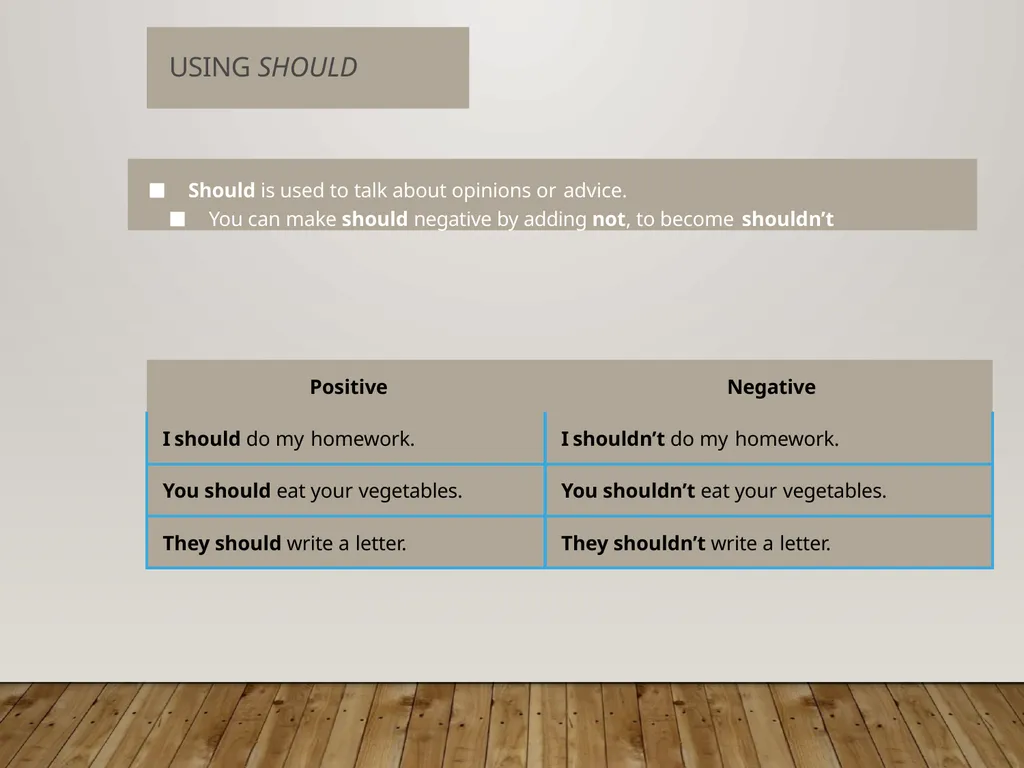
slide4. Using should Should is used to talk about opinions or advice.
You can make should negative by adding not, to become shouldn’t<br>
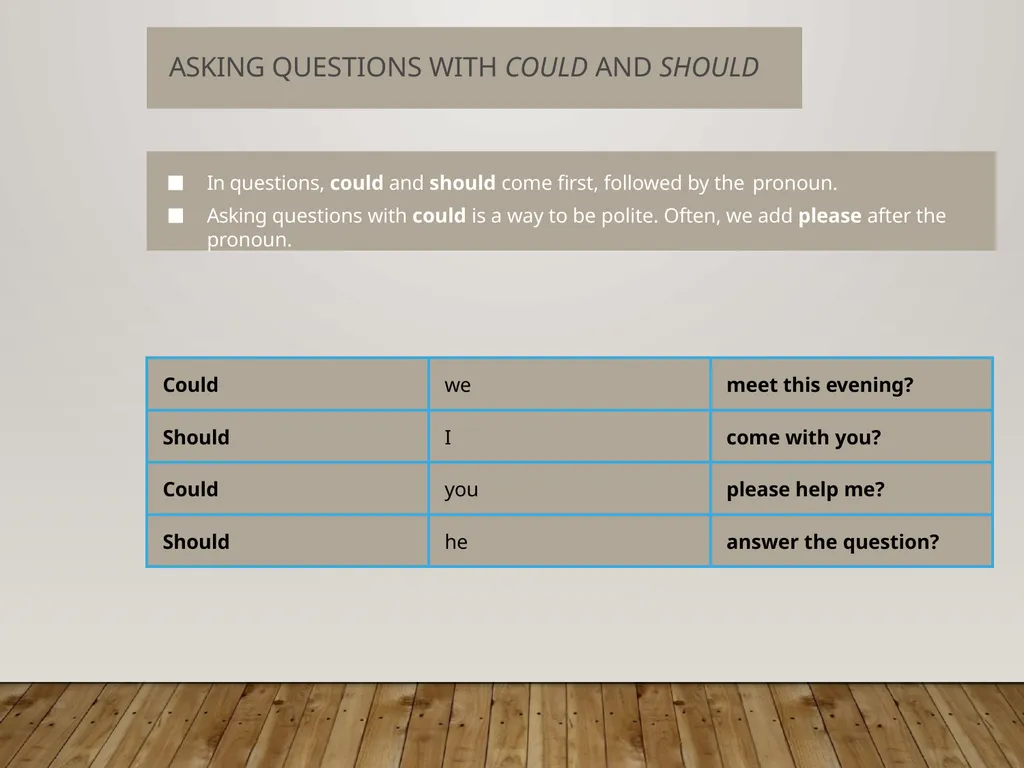
slide5. In questions, could and should come first, followed by the pronoun.
Asking questions with could is a way to be polite. Often, we add please after the pronoun. Asking questions with could and should<br>
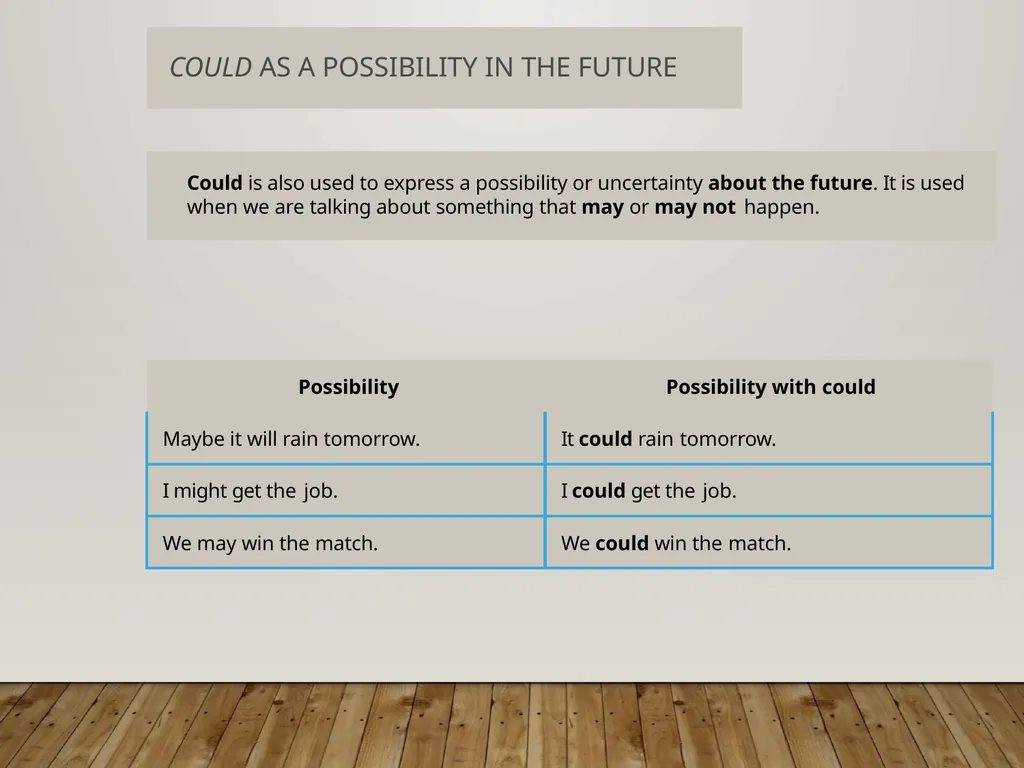
slide6. Could is also used to express a possibility or uncertainty about the future. It is used when we are talking about something that may or may not happen. Could as a possibility in the future<br>
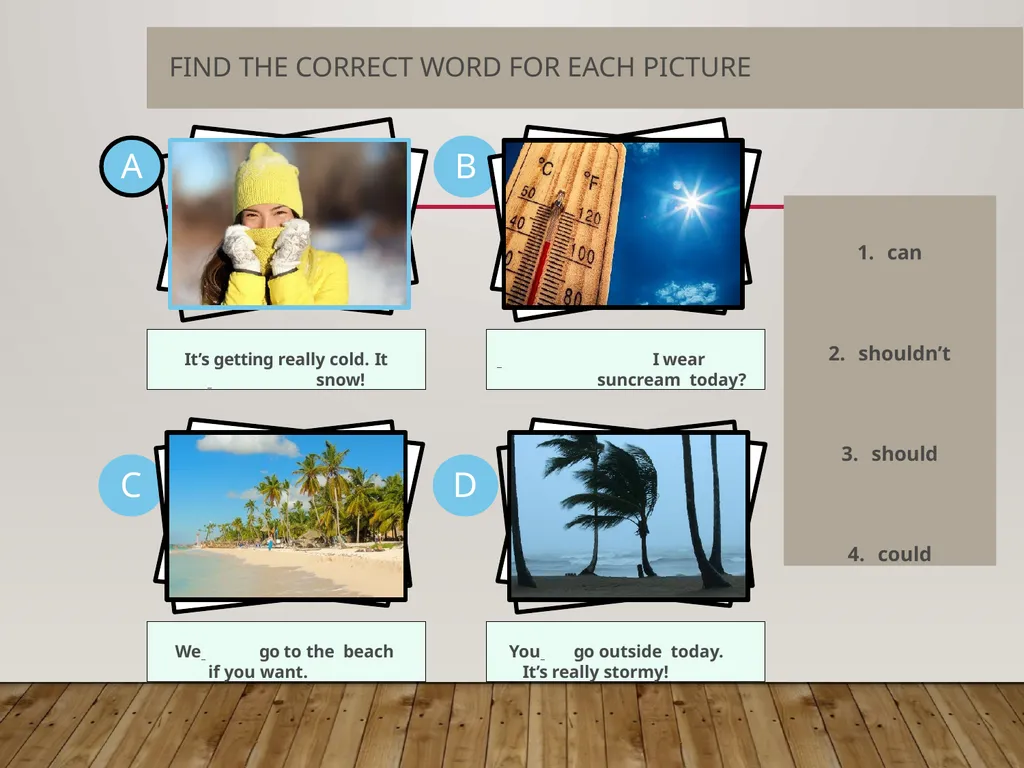
slide7. A B D C Find the correct word for each picture can
shouldn’t
should
could It’s getting really cold. It
snow! I wear suncream today? You go outside today. It’s really stormy! We go to the beach if you want.<br>
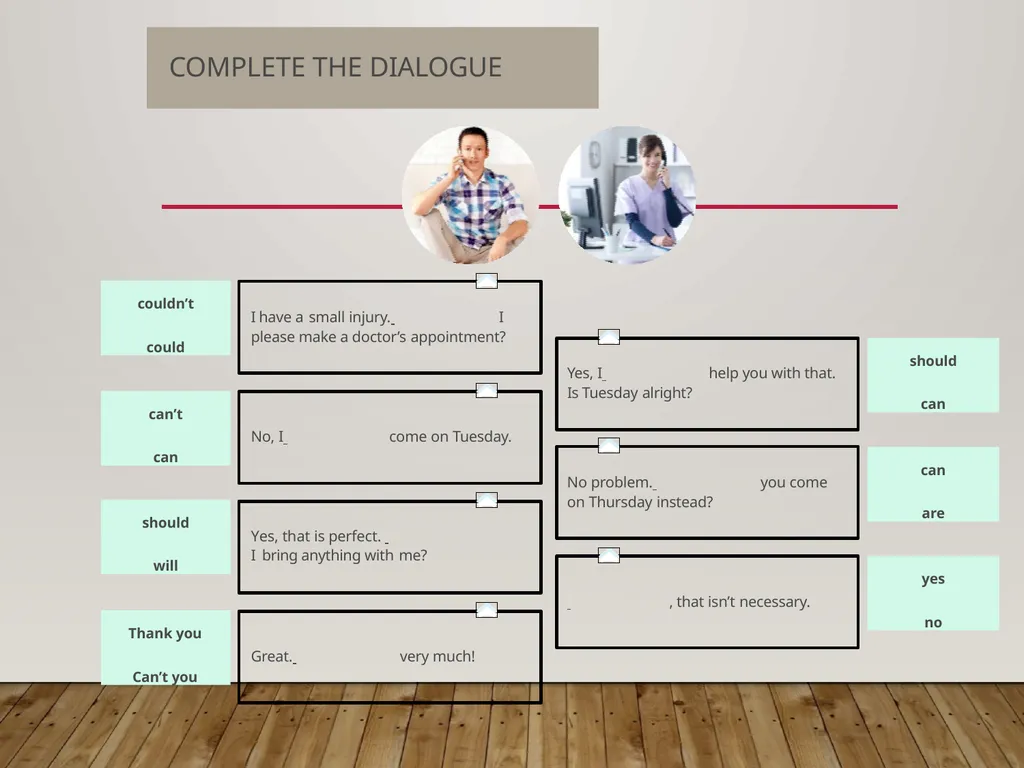
slide8. Complete the dialogue I have a small injury. I please make a doctor’s appointment? No, I come on Tuesday. Yes, that is perfect. I bring anything with me? Great. very much! Yes, I help you with that. Is Tuesday alright? No problem. you come on Thursday instead? , that isn’t necessary. should
can couldn’t
could can’t
can Thank you
Can’t you yes
no should
will can
are<br>
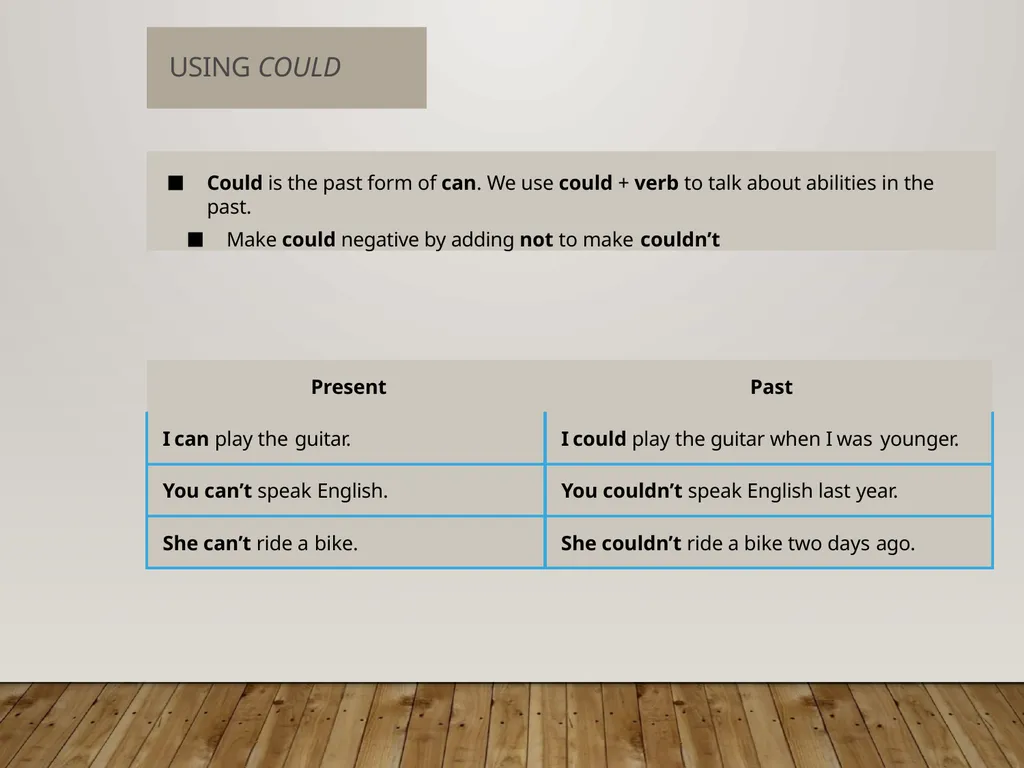
slide9. Using could Could is the past form of can. We use could + verb to talk about abilities in the past.
Make could negative by adding not to make couldn’t<br>
slide10. When I was a child I couldn’t
write. When I was… Now I can write and I do it nearly every day!<br>
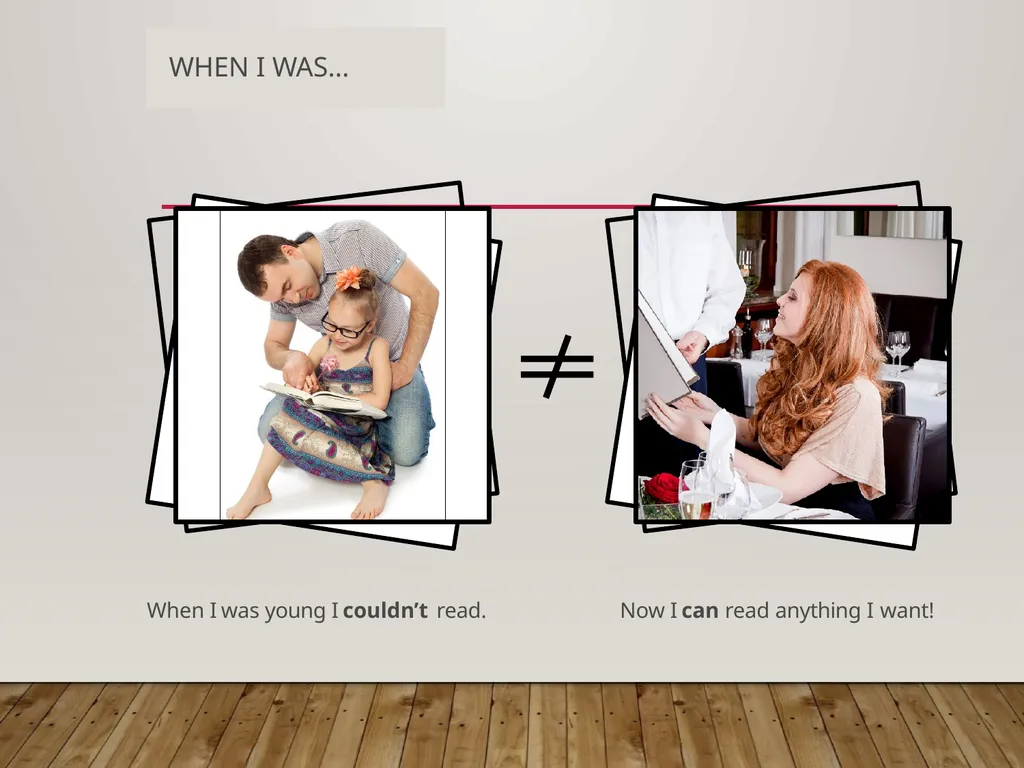
slide11. When I was young I couldn’t read. When I was… Now I can read anything I want!<br>
slide12. As a child I couldn’t play the guitar. I spent all my time playing video games. When I was… I still can’t play the guitar. My friends say I should really take some lessons!<br>
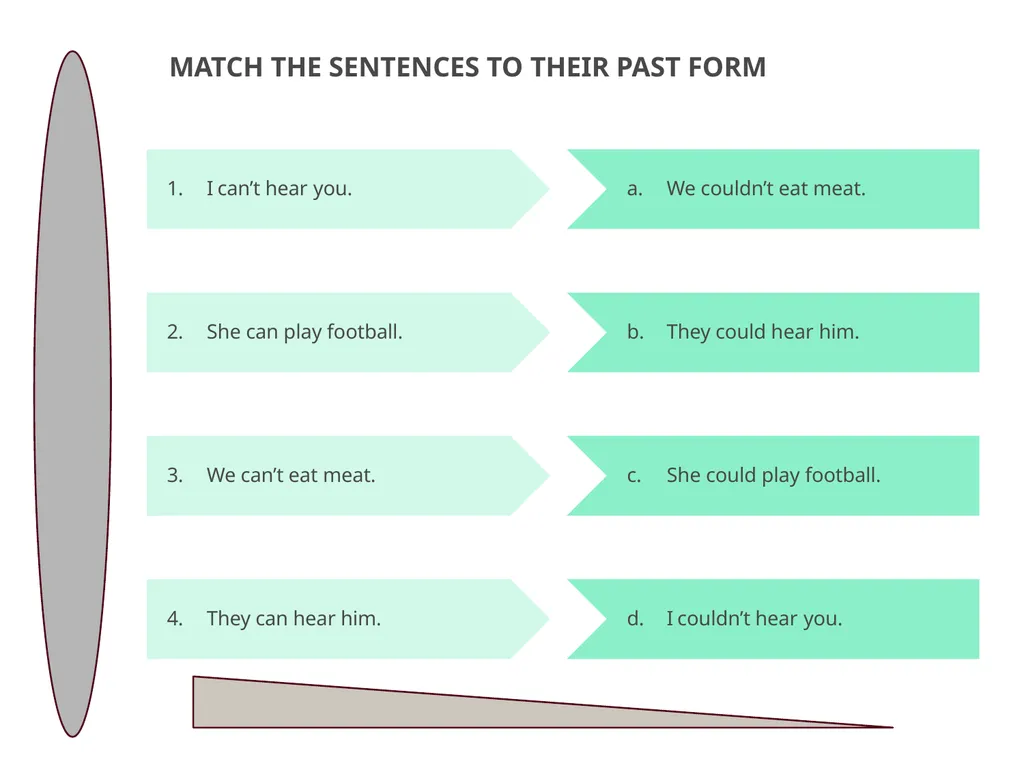
slide13. Match the sentences to their past form 13 1. I can’t hear you. 2. She can play football. 3. We can’t eat meat. 4. They can hear him. a. We couldn’t eat meat. b. They could hear him. c. She could play football. d. I couldn’t hear you.<br>
slide14. 1. When I was a baby, I speak. 2. My doctor says I work today. 3. I have an injury, so I play football. 4. I can play basketball, but I play the guitar. Complete the sentence a. can’t b. couldn’t a. can’t b. am a. can’t b. can a. can b. can’t<br>
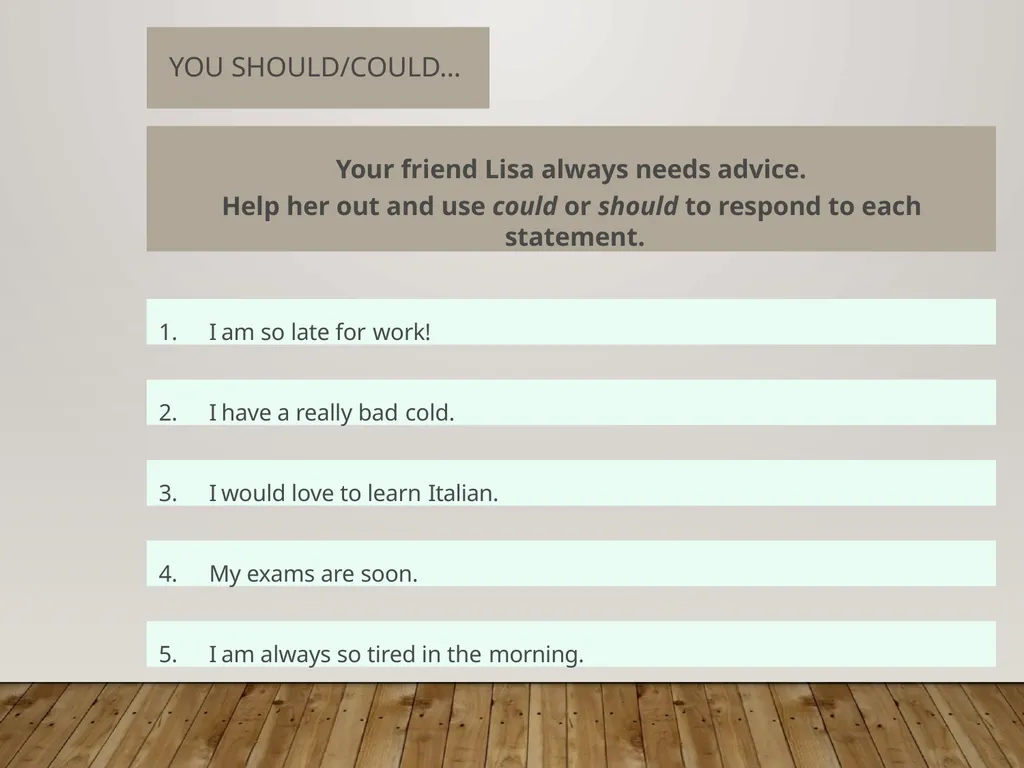
slide15. You should/could… 2. I have a really bad cold. 3. I would love to learn Italian. 4. My exams are soon. 1. I am so late for work! Your friend Lisa always needs advice.
Help her out and use could or should to respond to each statement. 5. I am always so tired in the morning.<br>
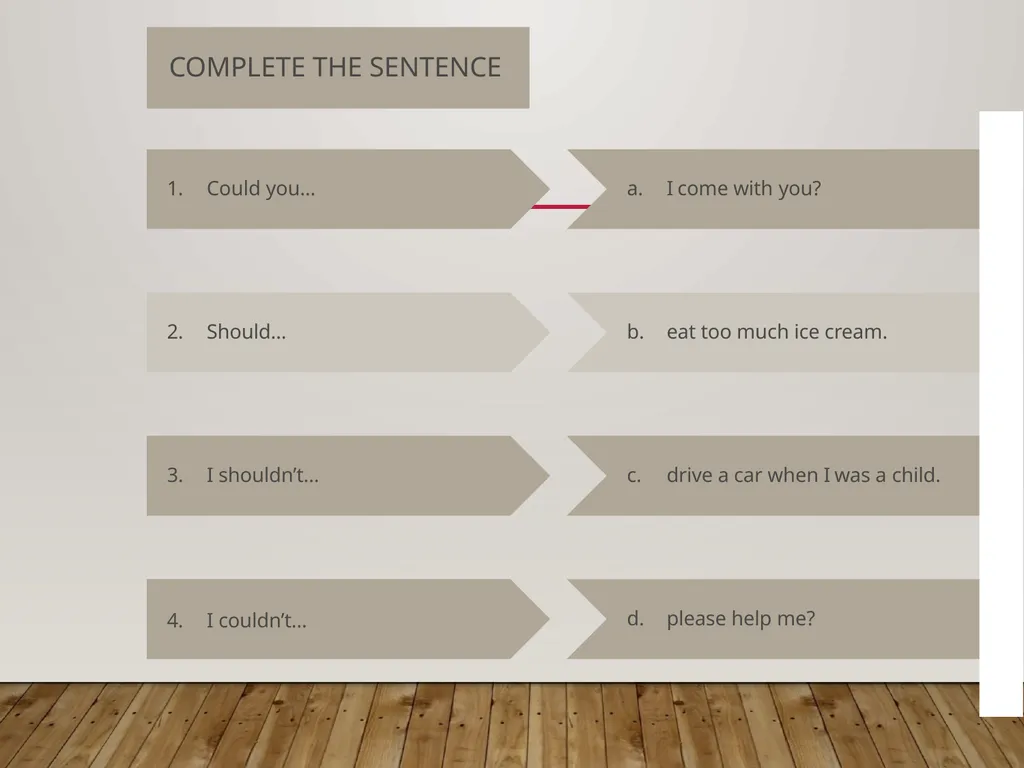
slide16. Complete the sentence 1. Could you… 2. Should… 3. I shouldn’t… 4. I couldn’t… a. I come with you? b. eat too much ice cream. c. drive a car when I was a child. d. please help me?<br>
slide17. 1. Should I stay at home today? Answer the questions using can’t or shouldn’t 17 2. Can you play football? 3. Can you help me? No, you shouldn’t stay at home today. 4. Should you be here? 5. Can I see you?<br>
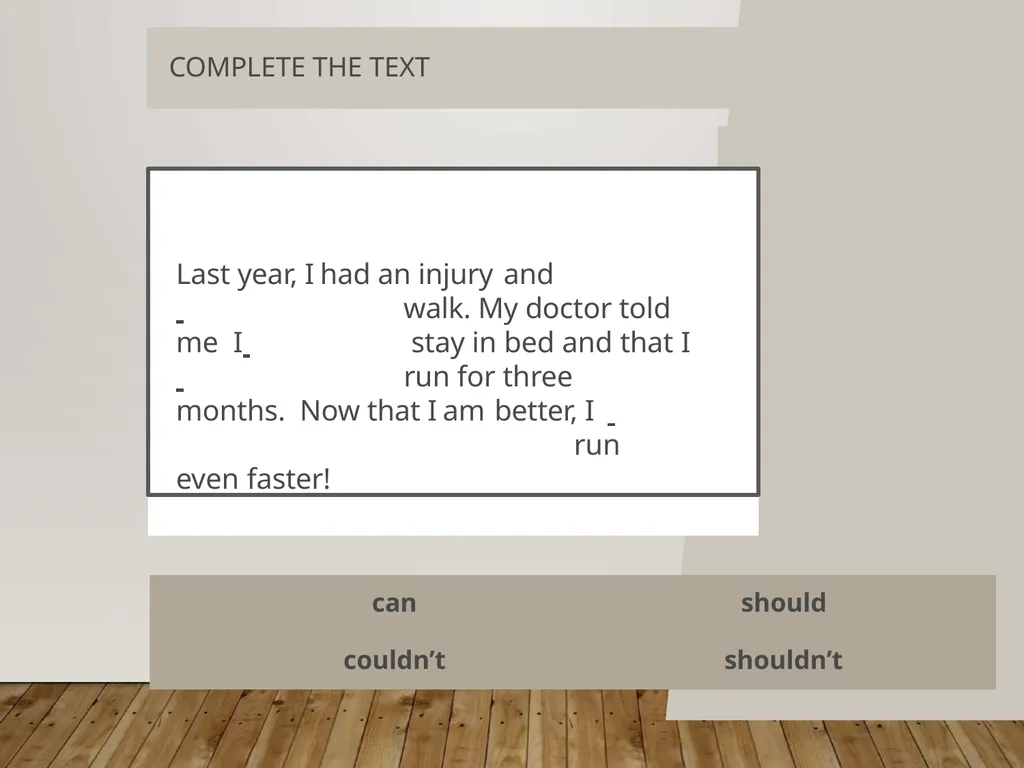
slide18. Complete the text should
shouldn’t can
couldn’t Last year, I had an injury and
walk. My doctor told me I stay in bed and that I
run for three months. Now that I am better, I run even faster!<br>
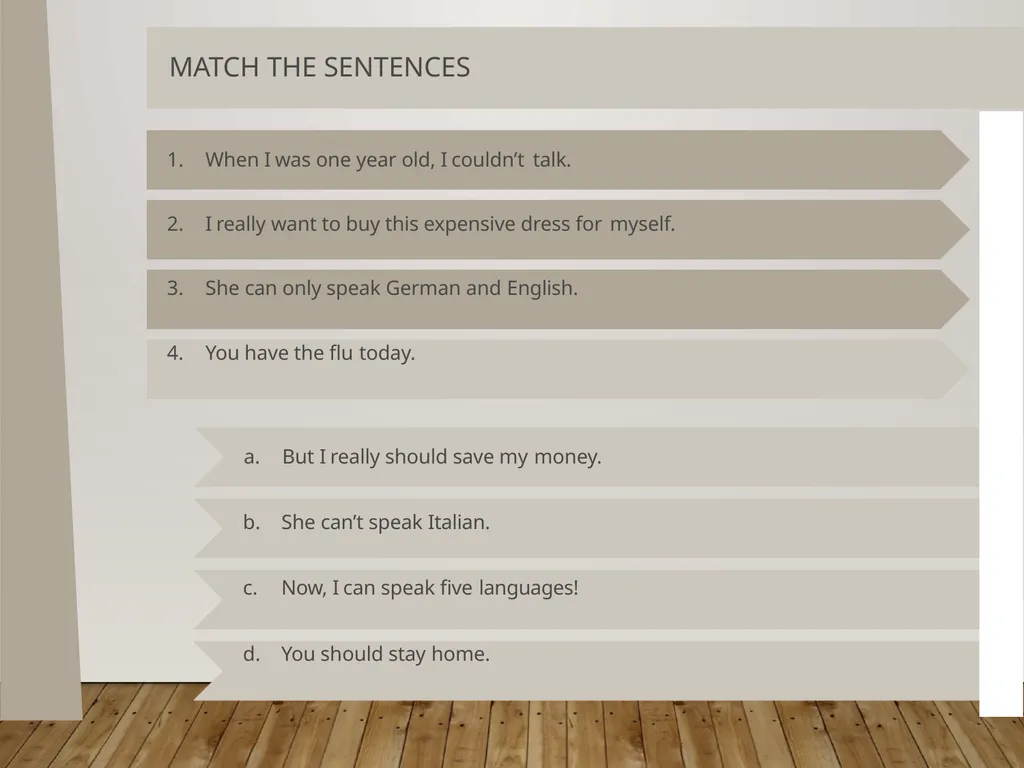
slide19. When I was one year old, I couldn’t talk.
I really want to buy this expensive dress for myself.
She can only speak German and English.
You have the flu today. But I really should save my money.
She can’t speak Italian.
Now, I can speak five languages!
You should stay home. Match the sentences<br>
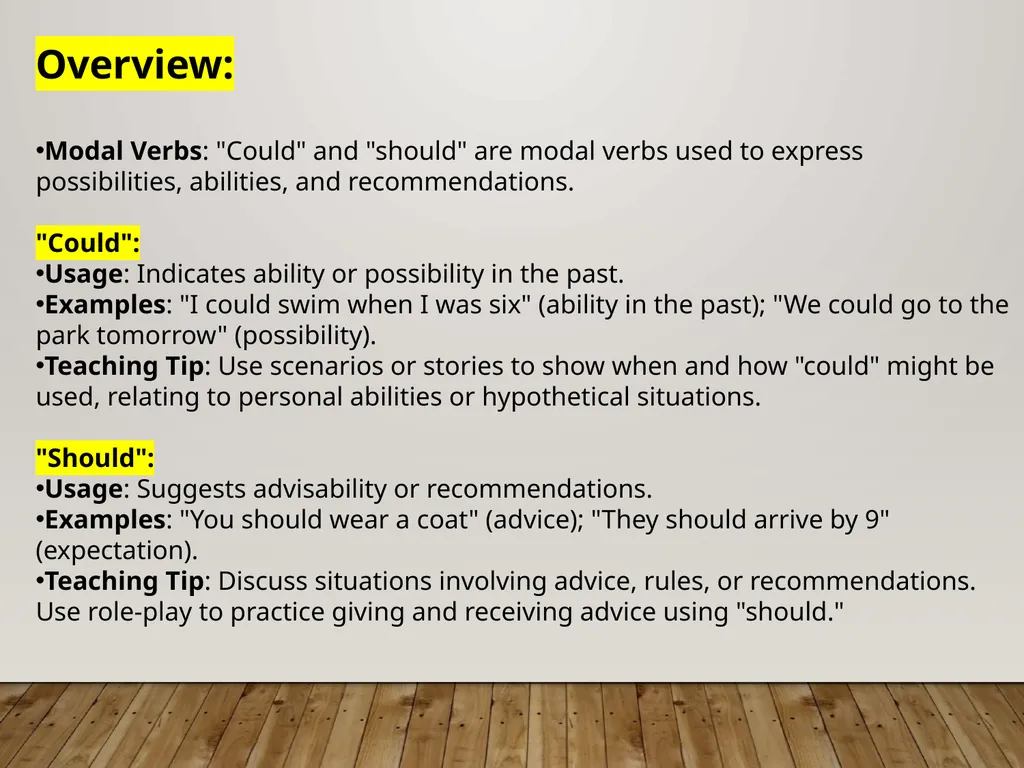
slide20. Overview:
Modal Verbs: "Could" and "should" are modal verbs used to express possibilities, abilities, and recommendations.
"Could":
Usage: Indicates ability or possibility in the past.
Examples: "I could swim when I was six" (ability in the past); "We could go to the park tomorrow" (possibility).
Teaching Tip: Use scenarios or stories to show when and how "could" might be used, relating to personal abilities or hypothetical situations.
"Should":
Usage: Suggests advisability or recommendations.
Examples: "You should wear a coat" (advice); "They should arrive by 9" (expectation).
Teaching Tip: Discuss situations involving advice, rules, or recommendations. Use role-play to practice giving and receiving advice using "should."<br>
A1.1
34 PPT Slides
Can differentiate between the use of 'could' and 'should'.
Can give simple suggestions using 'could' and 'should'. Should And Could<br>
slide2. I could, but I don’t know if I should! "I could": This is active because the subject "I" is capable of performing some action. The verb "could" is a modal verb suggesting ability or possibility.
"I don't know if I should": This part is also in the active voice. The subject "I" is actively expressing a lack of certainty regarding whether to perform an action. "Should" is another modal verb indicating advisability.<br>
slide3. Unscramble to make a sentence She<br>
slide4. Using should Should is used to talk about opinions or advice.
You can make should negative by adding not, to become shouldn’t<br>
slide5. In questions, could and should come first, followed by the pronoun.
Asking questions with could is a way to be polite. Often, we add please after the pronoun. Asking questions with could and should<br>
slide6. Could is also used to express a possibility or uncertainty about the future. It is used when we are talking about something that may or may not happen. Could as a possibility in the future<br>
slide7. A B D C Find the correct word for each picture can
shouldn’t
should
could It’s getting really cold. It
snow! I wear suncream today? You go outside today. It’s really stormy! We go to the beach if you want.<br>
slide8. Complete the dialogue I have a small injury. I please make a doctor’s appointment? No, I come on Tuesday. Yes, that is perfect. I bring anything with me? Great. very much! Yes, I help you with that. Is Tuesday alright? No problem. you come on Thursday instead? , that isn’t necessary. should
can couldn’t
could can’t
can Thank you
Can’t you yes
no should
will can
are<br>
slide9. Using could Could is the past form of can. We use could + verb to talk about abilities in the past.
Make could negative by adding not to make couldn’t<br>
slide10. When I was a child I couldn’t
write. When I was… Now I can write and I do it nearly every day!<br>
slide11. When I was young I couldn’t read. When I was… Now I can read anything I want!<br>
slide12. As a child I couldn’t play the guitar. I spent all my time playing video games. When I was… I still can’t play the guitar. My friends say I should really take some lessons!<br>
slide13. Match the sentences to their past form 13 1. I can’t hear you. 2. She can play football. 3. We can’t eat meat. 4. They can hear him. a. We couldn’t eat meat. b. They could hear him. c. She could play football. d. I couldn’t hear you.<br>
slide14. 1. When I was a baby, I speak. 2. My doctor says I work today. 3. I have an injury, so I play football. 4. I can play basketball, but I play the guitar. Complete the sentence a. can’t b. couldn’t a. can’t b. am a. can’t b. can a. can b. can’t<br>
slide15. You should/could… 2. I have a really bad cold. 3. I would love to learn Italian. 4. My exams are soon. 1. I am so late for work! Your friend Lisa always needs advice.
Help her out and use could or should to respond to each statement. 5. I am always so tired in the morning.<br>
slide16. Complete the sentence 1. Could you… 2. Should… 3. I shouldn’t… 4. I couldn’t… a. I come with you? b. eat too much ice cream. c. drive a car when I was a child. d. please help me?<br>
slide17. 1. Should I stay at home today? Answer the questions using can’t or shouldn’t 17 2. Can you play football? 3. Can you help me? No, you shouldn’t stay at home today. 4. Should you be here? 5. Can I see you?<br>
slide18. Complete the text should
shouldn’t can
couldn’t Last year, I had an injury and
walk. My doctor told me I stay in bed and that I
run for three months. Now that I am better, I run even faster!<br>
slide19. When I was one year old, I couldn’t talk.
I really want to buy this expensive dress for myself.
She can only speak German and English.
You have the flu today. But I really should save my money.
She can’t speak Italian.
Now, I can speak five languages!
You should stay home. Match the sentences<br>
slide20. Overview:
Modal Verbs: "Could" and "should" are modal verbs used to express possibilities, abilities, and recommendations.
"Could":
Usage: Indicates ability or possibility in the past.
Examples: "I could swim when I was six" (ability in the past); "We could go to the park tomorrow" (possibility).
Teaching Tip: Use scenarios or stories to show when and how "could" might be used, relating to personal abilities or hypothetical situations.
"Should":
Usage: Suggests advisability or recommendations.
Examples: "You should wear a coat" (advice); "They should arrive by 9" (expectation).
Teaching Tip: Discuss situations involving advice, rules, or recommendations. Use role-play to practice giving and receiving advice using "should."<br>