Green Tea Beth Kalicki Heli Roy, PhD, RD Division of Education Pennington Biomedical Research Center Types of tea Green tea is one of four types of tea that come from the plant Camellia Sinensis. The types include: White Tea Green Tea Black
"Green Tea Beth Kalicki Heli Roy, PhD, RD Division" is the property of its rightful owner. Permission is granted to
download and print the materials on this website for personal, non-commercial use only, and to display it
on your personal computer provided you do not modify the materials and that you retain all copyright
notices contained in the materials. By downloading content from our website, you accept the terms of this
agreement.
Presentation Transcript
01
Green Tea Beth Kalicki
Heli Roy, PhD, RD
Division of Education Pennington Biomedical Research Center<br>
02
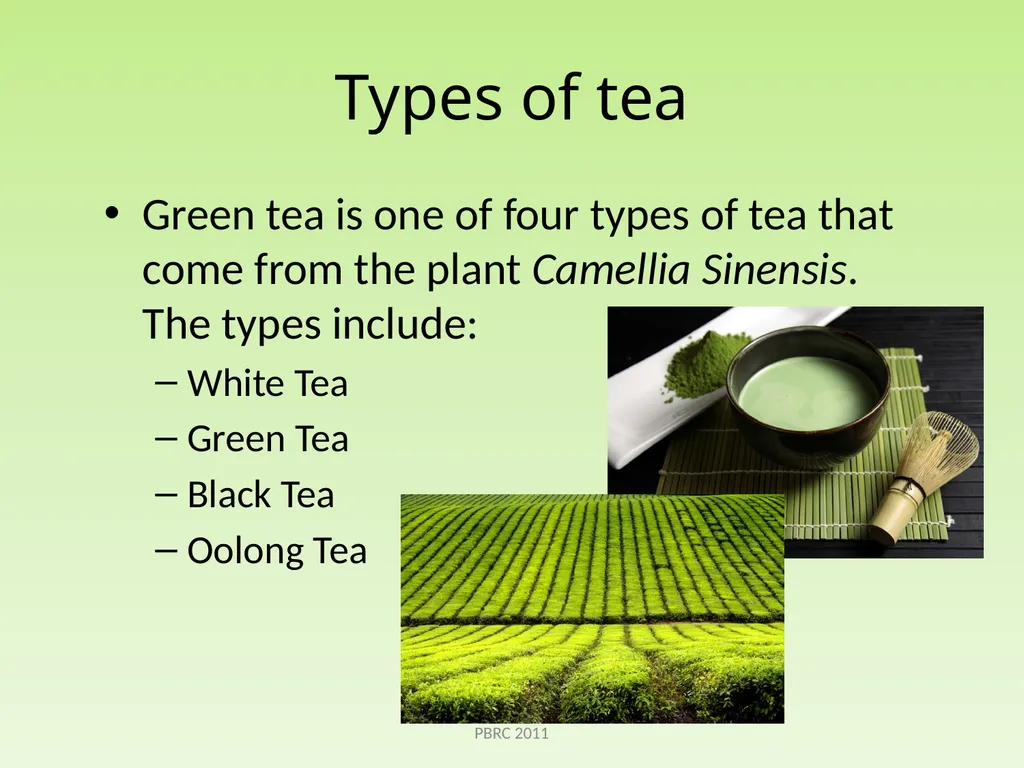
Types of tea Green tea is one of four types of tea that come from the plant Camellia Sinensis. The types include:
White Tea
Green Tea
Black Tea
Oolong Tea PBRC 2011<br>
03
Processing of teas White tea is the least processed form of tea, while black tea leaves are fermented.
Green tea leaves are steamed, not fermented, and hence preserve more polyphenols. PBRC 2011<br>
04
Green Tea and Chronic Diseases Many studies have found beneficial effects associated with the consumption of green tea in six different areas:
Cardiovascular Diseases
Obesity and Weight Loss
Diabetes
Cancer
Microbial Diseases
Neurodegenerative Diseases
Aging
Parkinson’s Disease
Alzheimer’s Disease PBRC 2011<br>
05
Why is Green Tea Beneficial? The benefits are attributed to polyphenols called catechins, which make up 30% of the dry weight of green tea leaves.
Green tea has the highest content of polyphenols compared to black or oolong tea. PBRC 2011<br>
06
EGCG Active ingredients in green tea:
(-)epigallocatechin-3-gallate or EGCG, one of six catechins in green tea and the most abundant.
65% of green tea’s catechin content is due to EGCG.
One cup of green tea contains approximately 100-200 milligrams of EGCG.
Other components found in green tea include: caffeine, theanine, theaflavins, theobromine, theophylline, and phenolic acids such as gallic acid. PBRC 2011<br>
07
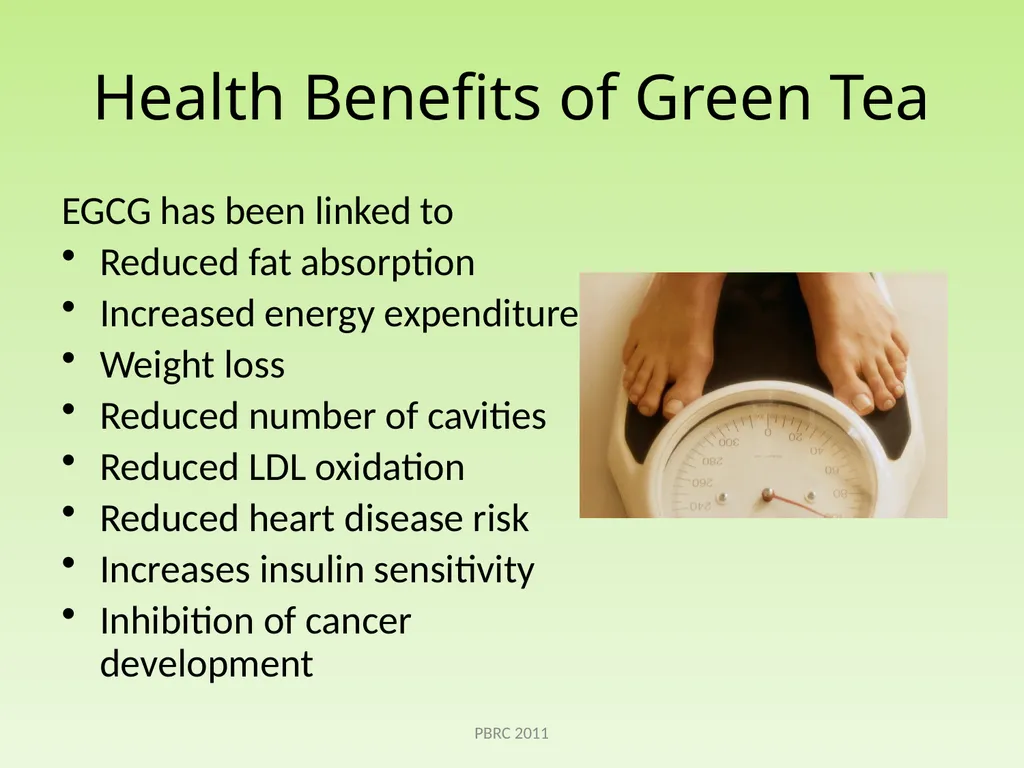
Health Benefits of Green Tea EGCG has been linked to
Reduced fat absorption
Increased energy expenditure
Weight loss
Reduced number of cavities
Reduced LDL oxidation
Reduced heart disease risk
Increases insulin sensitivity
Inhibition of cancer development PBRC 2011<br>
08
Green Tea and Weight Loss Catechins influence intestinal and cell metabolism in several ways:
Inhibiting intestinal lipases
Decreasing fat absorption
Increasing fat excretion
Increasing uncoupling proteins
Increasing thermogenesis
Decreasing lipogenic enzymes
Suppressing appetite PBRC 2011<br>
09
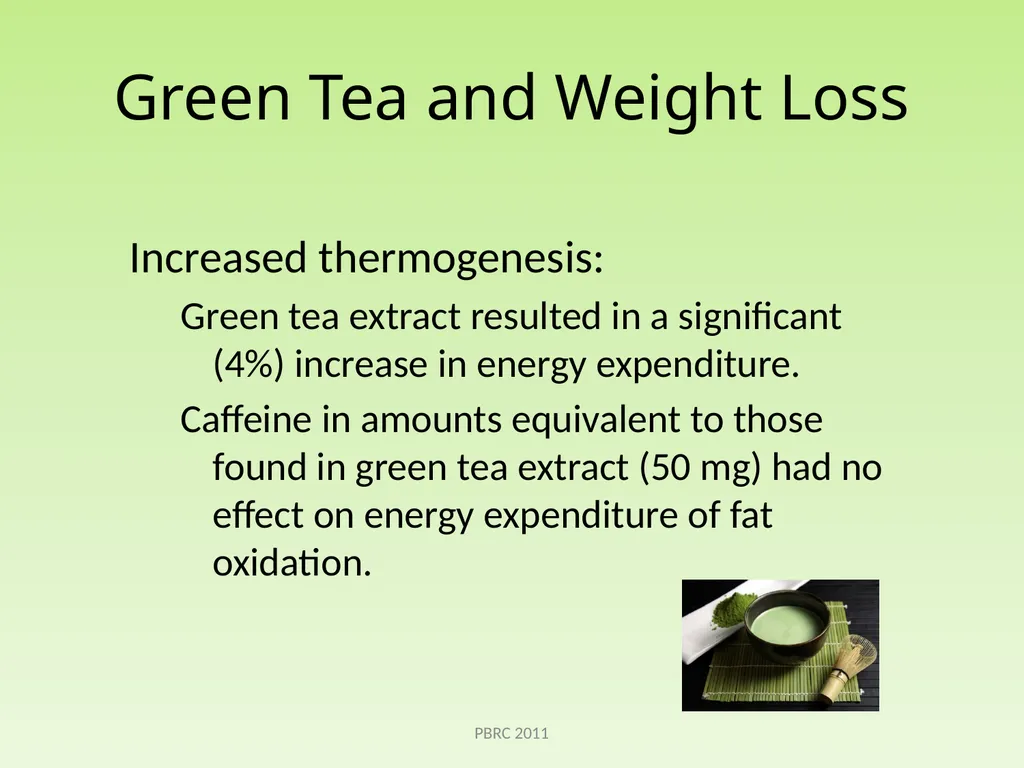
Increased thermogenesis:
Green tea extract resulted in a significant (4%) increase in energy expenditure.
Caffeine in amounts equivalent to those found in green tea extract (50 mg) had no effect on energy expenditure of fat oxidation. Green Tea and Weight Loss PBRC 2011<br>
10
Cardiovascular Disease Consumption of ~32 ounces of green tea by Japanese men resulted in a 58% lower risk of dying from coronary heart disease than those who consumed about 10 ounces per day.
Dutch men and women who consumed about 13 ounces daily of black tea had a 68% lower risk of myocardial infarction (heart attack) than those who did not drink tea. PBRC 2011<br>
11
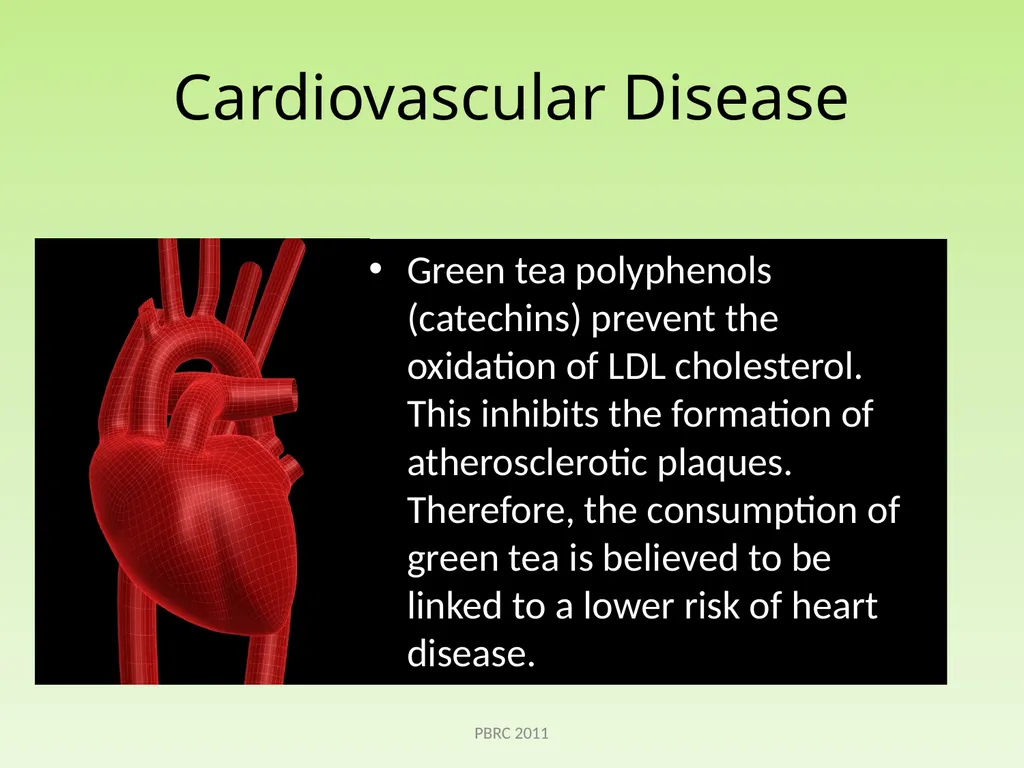
Cardiovascular Disease Green tea polyphenols (catechins) prevent the oxidation of LDL cholesterol. This inhibits the formation of atherosclerotic plaques. Therefore, the consumption of green tea is believed to be linked to a lower risk of heart disease. PBRC 2011<br>
12
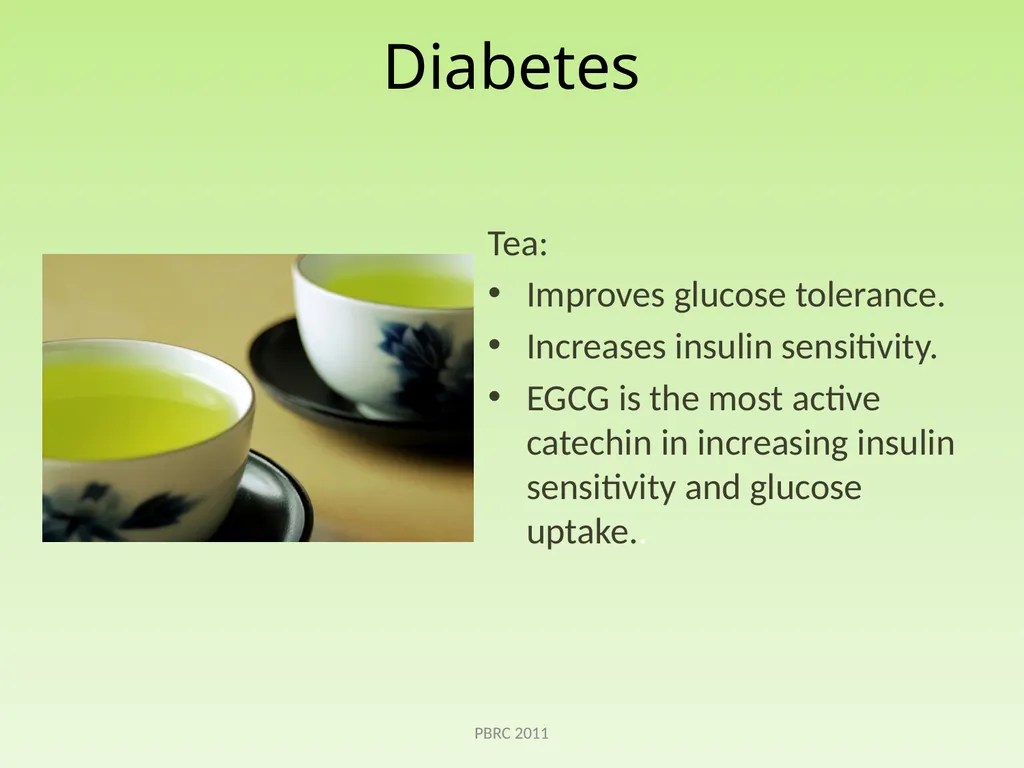
Diabetes Tea:
Improves glucose tolerance.
Increases insulin sensitivity.
EGCG is the most active catechin in increasing insulin sensitivity and glucose uptake.. PBRC 2011<br>
13
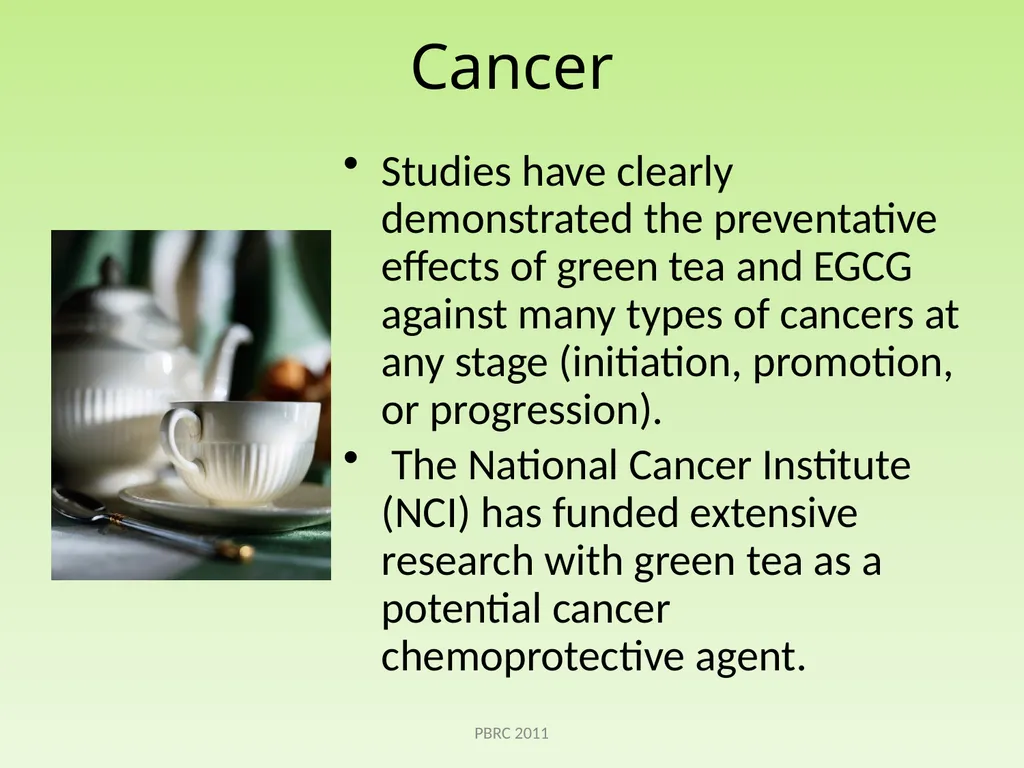
Cancer Studies have clearly demonstrated the preventative effects of green tea and EGCG against many types of cancers at any stage (initiation, promotion, or progression).
The National Cancer Institute (NCI) has funded extensive research with green tea as a potential cancer chemoprotective agent. PBRC 2011<br>
14
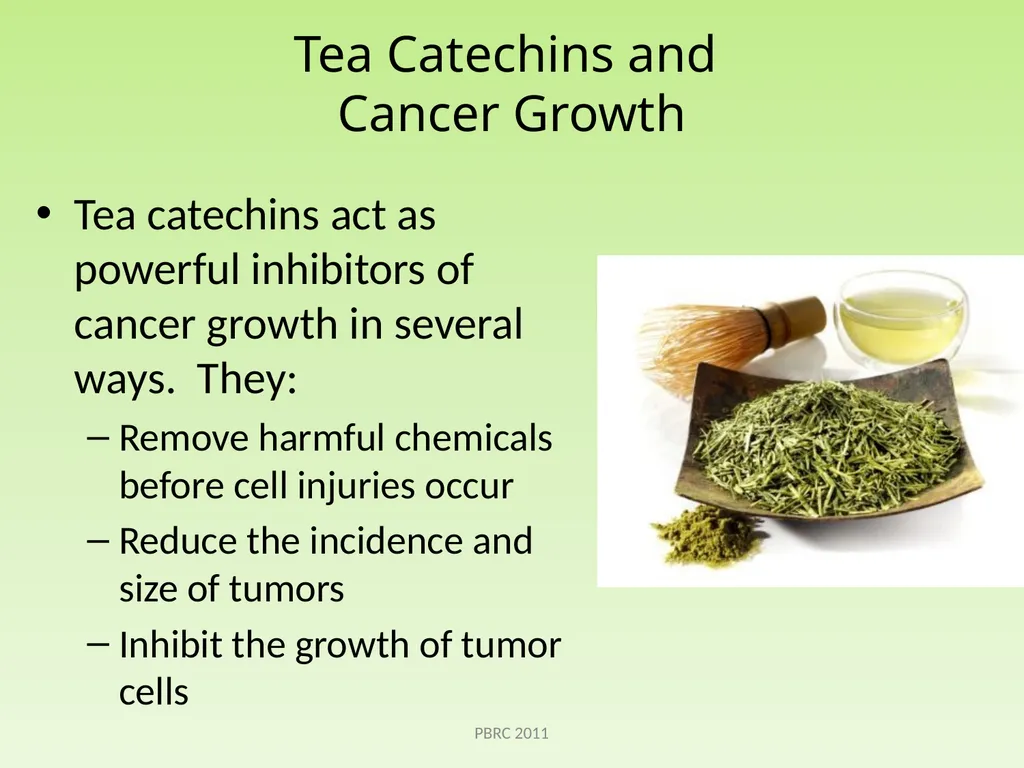
Tea Catechins and Cancer Growth Tea catechins act as powerful inhibitors of cancer growth in several ways. They:
Remove harmful chemicals before cell injuries occur
Reduce the incidence and size of tumors
Inhibit the growth of tumor cells PBRC 2011<br>
15
Dental Benefits Prevents dental caries (cavities) by preventing bacterial growth
Increases the resistance of tooth enamel to acid induced erosion, and displays anti-inflammatory properties by reducing gum disease (gingivitis) PBRC 2011<br>
16
Microbial Diseases Increases antibiotic effectiveness
Effective in preventing HIV infection at the initial step in the HIV-1 infection process PBRC 2011<br>
17
Neurodegenerative Diseases Free radical damage and oxidative stress are thought to lead to:
Parkinson’s disease
Alzheimer’s disease
and other diseases such as diabetes and cancer. Green tea have shown significant protection against the development of these diseases. PBRC 2011<br>
18
Summary The beneficial effects of green tea are attributed to the polyphenols, particularly the catechins, which make up 30% of the dry weight of green tea leaves.
These catechins are present in higher quantities in green tea than in black or oolong tea, because of the differences in the processing of tea leaves after harvest.
Green tea polyphenols are effective in preventing many chronic diseases such as cancer, diabetes, and heart disease and they are effective in helping to maintain healthy weight. PBRC 2011<br>
19
Mission:
To promote healthier lives through research and education in nutrition and preventive medicine.
The Pennington Center has several research areas, including:
Clinical Obesity Research
Experimental Obesity
Functional Foods
Health and Performance Enhancement
Nutrition and Chronic Diseases
Nutrition and the Brain
Dementia, Alzheimer’s and healthy aging
Diet, exercise, weight loss and weight loss maintenance
The research fostered in these areas can have a profound impact on healthy living and on the prevention of common chronic diseases, such as heart disease, cancer, diabetes, hypertension and osteoporosis.
The Division of Education provides education and information to the scientific community and the public about research findings, training programs and research areas, and coordinates educational events for the public on various health issues.
We invite people of all ages and backgrounds to participate in the exciting research studies being conducted at the Pennington Center in Baton Rouge, Louisiana. If you would like to take part, visit the clinical trials web page at www.pbrc.edu or call (225) 763-3000. Authors:
Beth Kalicki
Heli Roy, PhD, RD
2011
Division of Education Pennington Biomedical Research Center PBRC 2011<br>