Hands-on AI based 3D Vision Summer 25 Lecture 10 Organization Prof. Dr.-Ing Gerard Pons-Moll University of Tübingen MPI-Informatics Team Prof. Dr.-Ing. Gerard Pons-Moll 2nd floor Mvl 6, room A19 Niklas Berndt 2nd floor MvL 6, room A14
"Hands-on AI based 3D Vision Summer 25 Lecture 1_0" is the property of its rightful owner. Permission is granted to
download and print the materials on this website for personal, non-commercial use only, and to display it
on your personal computer provided you do not modify the materials and that you retain all copyright
notices contained in the materials. By downloading content from our website, you accept the terms of this
agreement.
Presentation Transcript
01
Hands-on AI based 3D Vision Summer 25 Lecture 1_0 – Organization
Prof. Dr.-Ing Gerard Pons-Moll
University of Tübingen / MPI-Informatics<br>
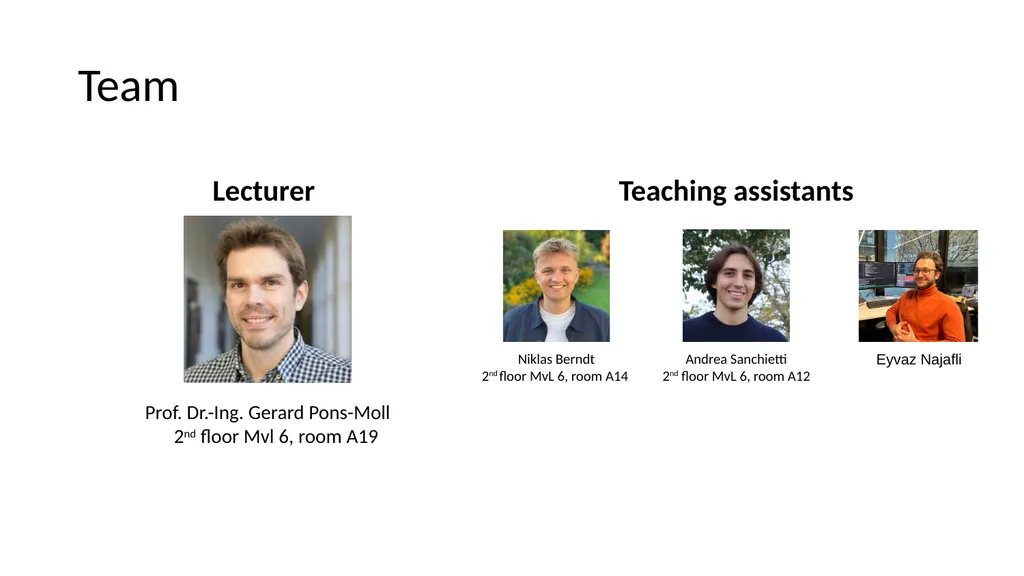
Team Prof. Dr.-Ing. Gerard Pons-Moll
2nd floor Mvl 6, room A19 Lecturer I am a Professor in Computer Science at the University of Tübingen and the Tübingen AI center
My group focuses on 3D computer vision and graphics
Special focus on Virtual Humans – making machines human-like
I want to teach machines to see, perceive and act on the 3D world like humans do<br>
04
Team Niklas Berndt
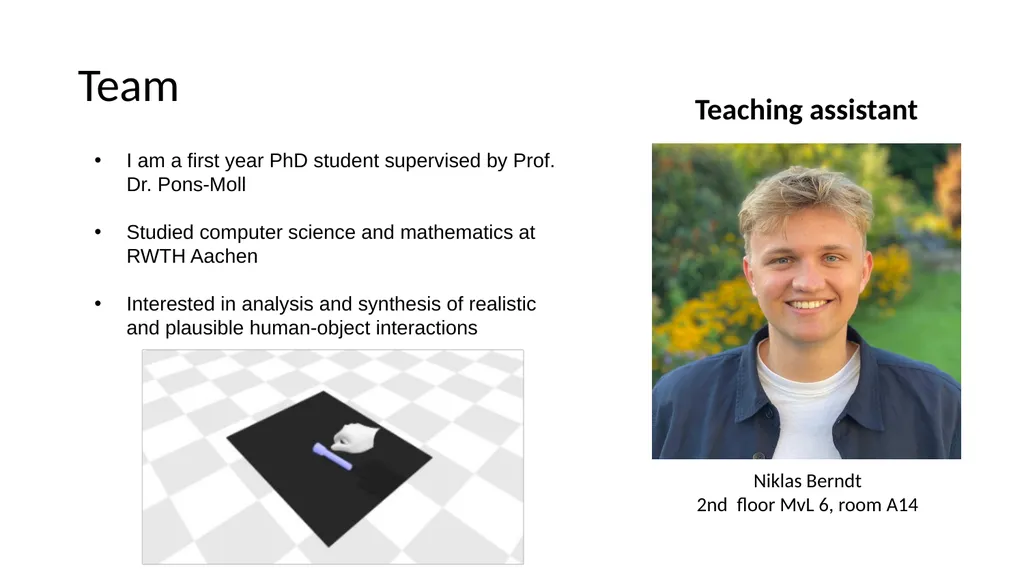
2nd floor MvL 6, room A14 Teaching assistant I am a first year PhD student supervised by Prof. Dr. Pons-Moll
Studied computer science and mathematics at RWTH Aachen
Interested in analysis and synthesis of realistic and plausible human-object interactions<br>
05
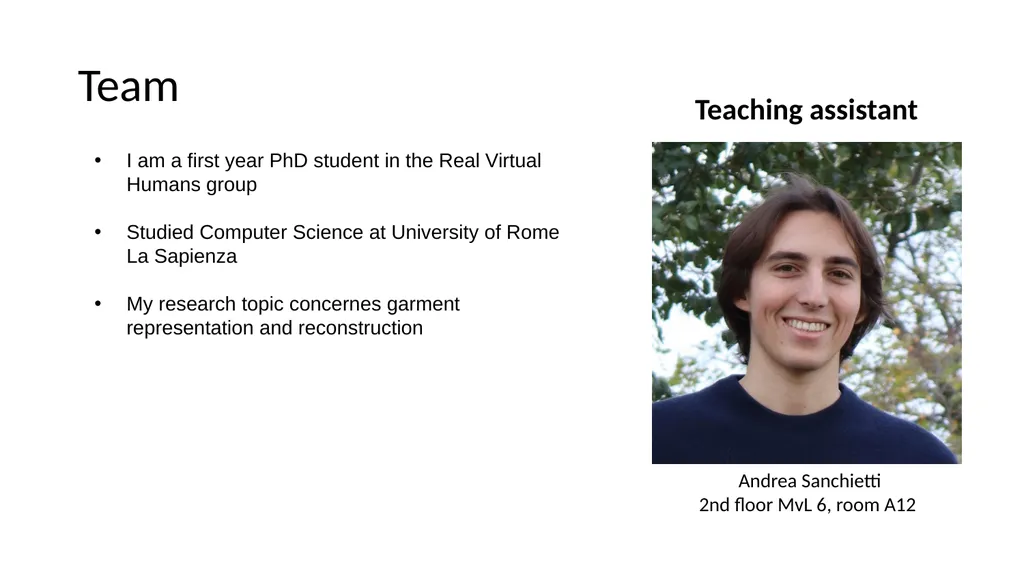
Team Andrea Sanchietti
2nd floor MvL 6, room A12 Teaching assistant I am a first year PhD student in the Real Virtual Humans group
Studied Computer Science at University of Rome La Sapienza
My research topic concernes garment representation and reconstruction<br>
06
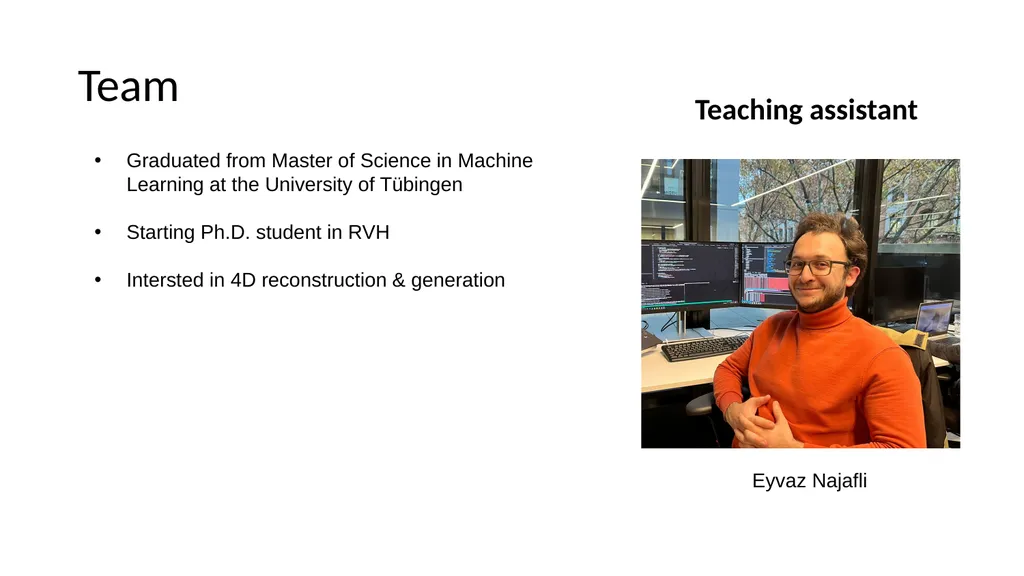
Team Eyvaz Najafli Teaching assistant Graduated from Master of Science in Machine Learning at the University of Tübingen
Starting Ph.D. student in RVH
Intersted in 4D reconstruction & generation<br>
07
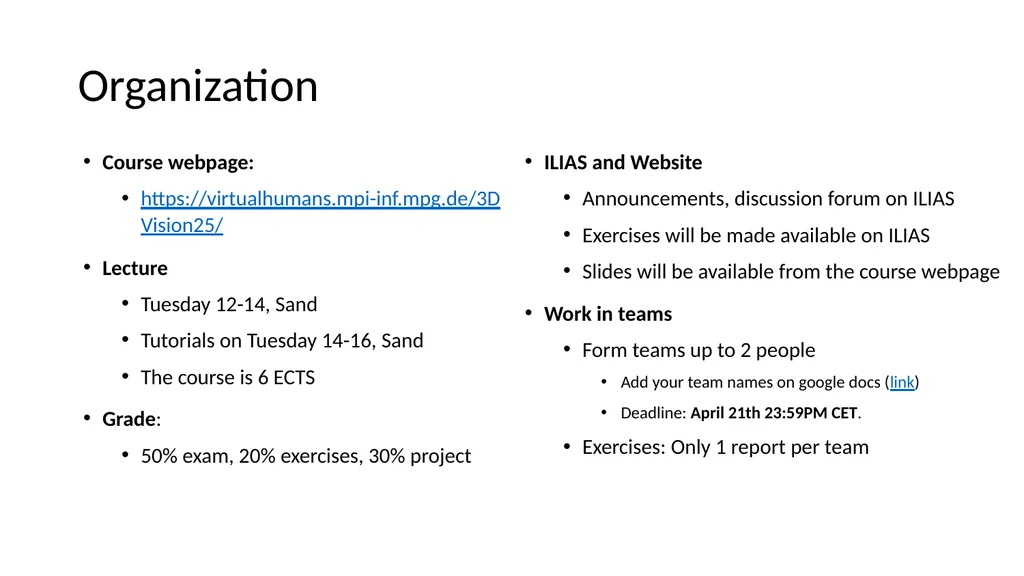
Organization Course webpage:
https://virtualhumans.mpi-inf.mpg.de/3DVision25/
Lecture
Tuesday 12-14, Sand
Tutorials on Tuesday 14-16, Sand
The course is 6 ECTS
Grade:
50% exam, 20% exercises, 30% project ILIAS and Website
Announcements, discussion forum on ILIAS
Exercises will be made available on ILIAS
Slides will be available from the course webpage
Work in teams
Form teams up to 2 people
Add your team names on google docs (link)
Deadline: April 21th 23:59PM CET.
Exercises: Only 1 report per team<br>
08
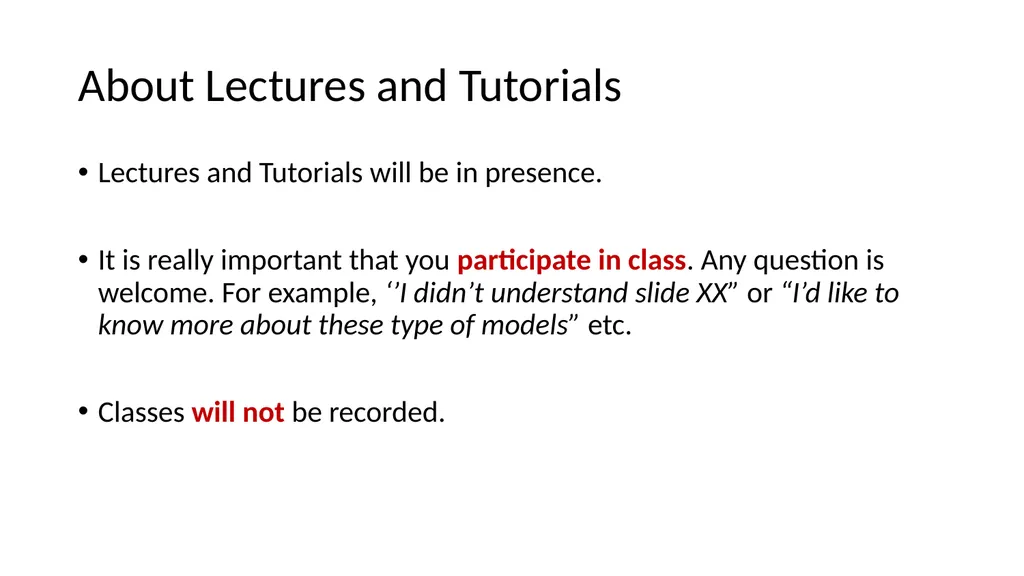
Lectures and Tutorials will be in presence.
It is really important that you participate in class. Any question is welcome. For example, ‘’I didn’t understand slide XX” or “I’d like to know more about these type of models” etc.
Classes will not be recorded. About Lectures and Tutorials<br>
09
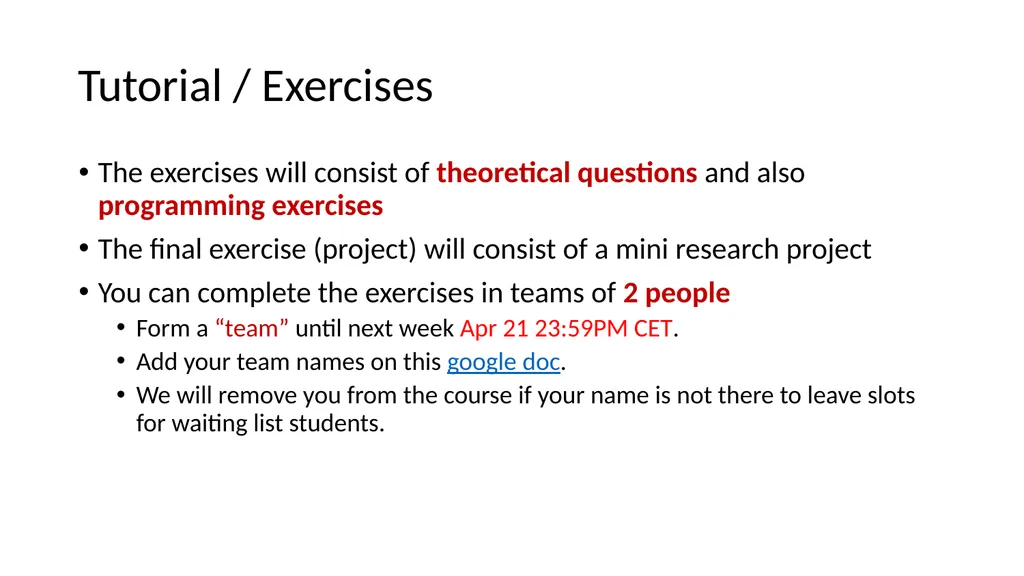
Tutorial / Exercises The exercises will consist of theoretical questions and also programming exercises
The final exercise (project) will consist of a mini research project
You can complete the exercises in teams of 2 people
Form a “team” until next week Apr 21 23:59PM CET.
Add your team names on this google doc.
We will remove you from the course if your name is not there to leave slots for waiting list students.<br>
10
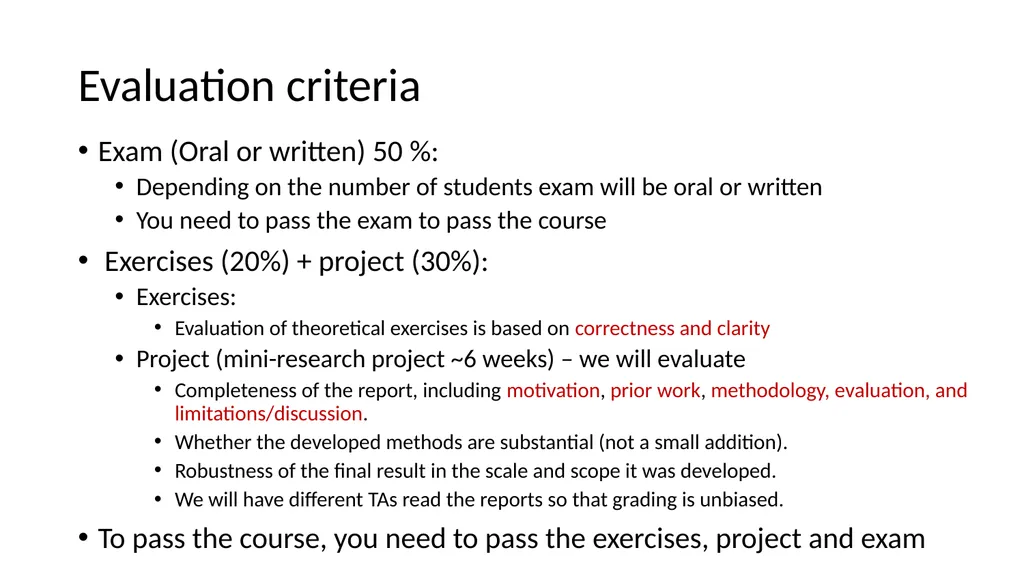
Evaluation criteria Exam (Oral or written) 50 %:
Depending on the number of students exam will be oral or written
You need to pass the exam to pass the course
Exercises (20%) + project (30%):
Exercises:
Evaluation of theoretical exercises is based on correctness and clarity
Project (mini-research project ~6 weeks) – we will evaluate
Completeness of the report, including motivation, prior work, methodology, evaluation, and limitations/discussion.
Whether the developed methods are substantial (not a small addition).
Robustness of the final result in the scale and scope it was developed.
We will have different TAs read the reports so that grading is unbiased.
To pass the course, you need to pass the exercises, project and exam<br>
11
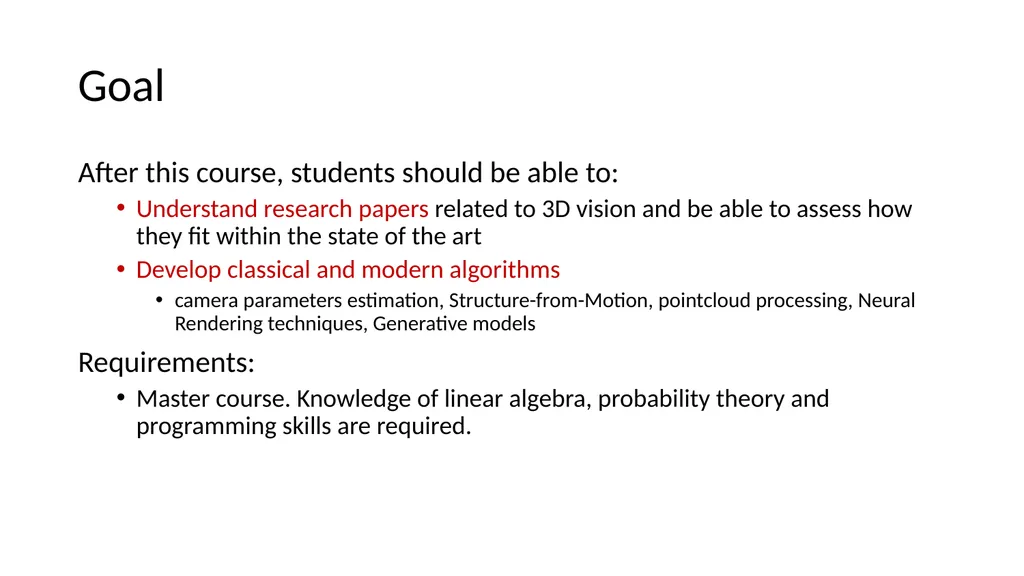
Goal After this course, students should be able to:
Understand research papers related to 3D vision and be able to assess how they fit within the state of the art
Develop classical and modern algorithms
camera parameters estimation, Structure-from-Motion, pointcloud processing, Neural Rendering techniques, Generative models
Requirements:
Master course. Knowledge of linear algebra, probability theory and programming skills are required.<br>