
Happiness and Human Flourishing Positive


Description: Happiness and Human Flourishing Positive Psychology Positive Psychology The scientific study of optimal human functioning; aims to discover and promote strengths and virtues that enable individuals and communities to thrive. Martin E. P.
Related Topics
Download Presentation
"Happiness and Human Flourishing Positive" is the property of its rightful owner. Permission is granted to download and print the materials on this website for personal, non-commercial use only, and to display it on your personal computer provided you do not modify the materials and that you retain all copyright notices contained in the materials. By downloading content from our website, you accept the terms of this agreement.
Presentation Transcript
slide1. Happiness and Human Flourishing Positive Psychology<br>
slide2. Positive Psychology The scientific study of optimal human functioning; aims to discover and promote strengths and virtues that enable individuals and communities to thrive.
Martin E. P. Seligman known as founder of the positive psychology movement.<br>
slide3. Happiness College students’ happiness is a predictor
Women who smiled in 1950s yearbook photos were more likely to be happily married in middle age
Students who were happier in 1976 made more money than their unhappy peers 20 years later
Feel-good, do-good phenomenon – we tend to more helpful toward others when we are in a good mood
Doing good also promotes a good feeling<br>
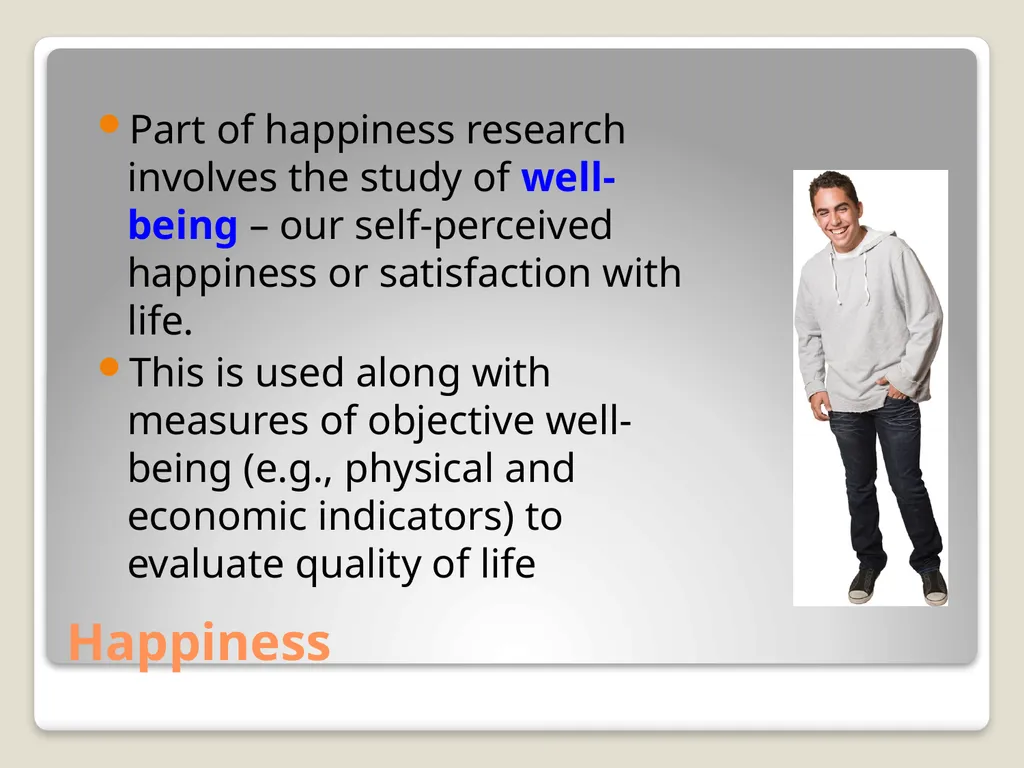
slide4. Happiness Part of happiness research involves the study of well-being – our self-perceived happiness or satisfaction with life.
This is used along with measures of objective well-being (e.g., physical and economic indicators) to evaluate quality of life<br>
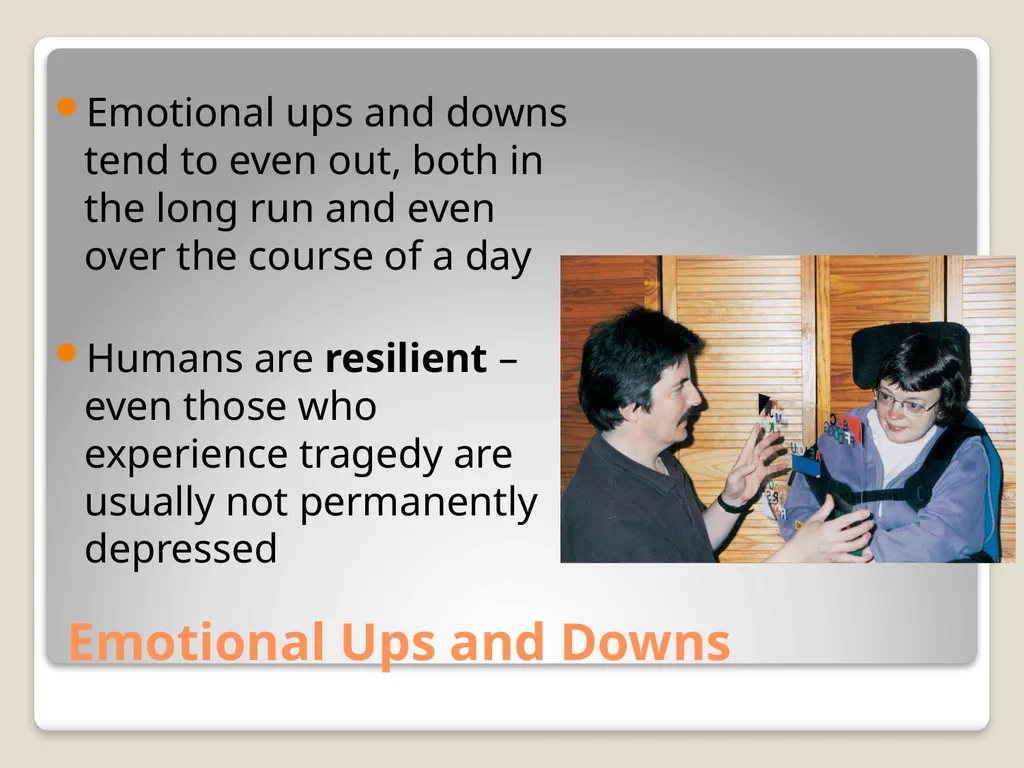
slide5. Emotional Ups and Downs Emotional ups and downs tend to even out, both in the long run and even over the course of a day
Humans are resilient – even those who experience tragedy are usually not permanently depressed<br>
slide6. Wealth and Well-Being In most countries, especially poor ones, those with lots of money tend to be happier than those struggling to afford basic needs
People in rich countries are more satisfied and somewhat happier than those in poor countries<br>
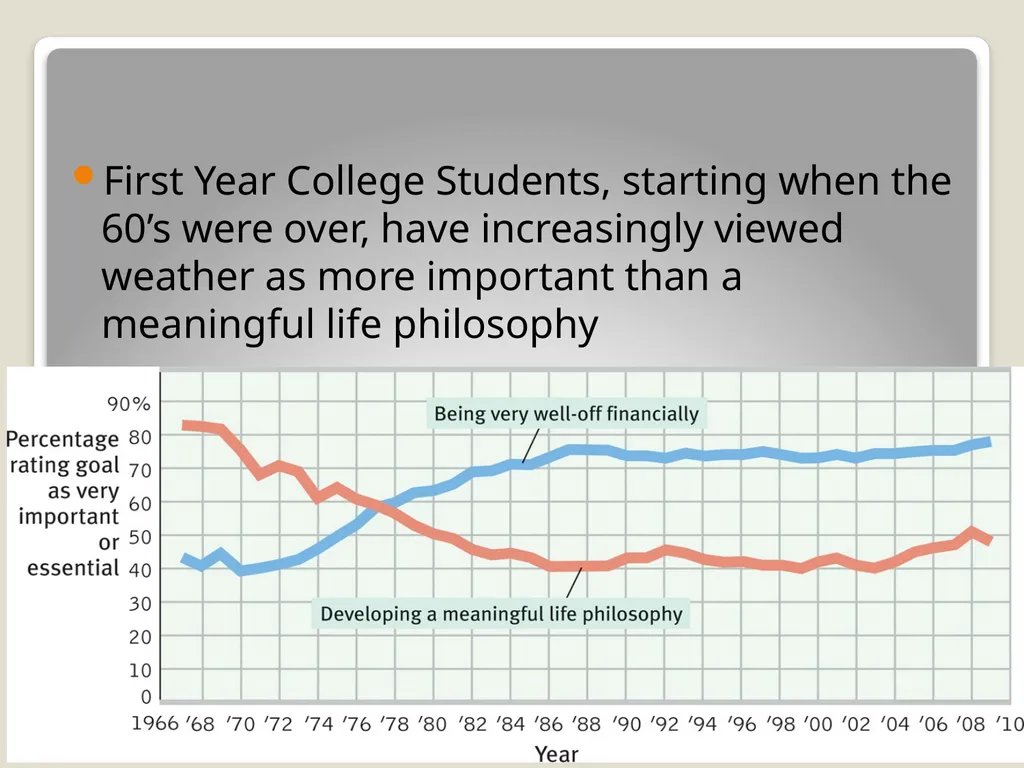
slide7. Wealth and Well-Being First Year College Students, starting when the 60’s were over, have increasingly viewed weather as more important than a meaningful life philosophy<br>
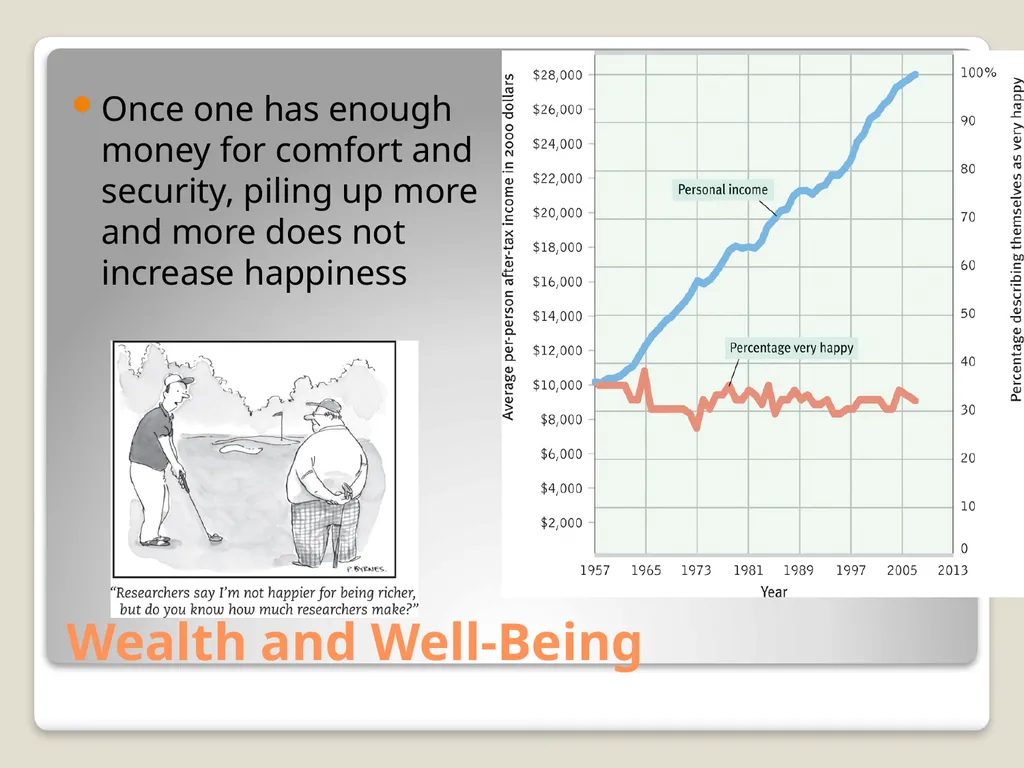
slide8. Wealth and Well-Being Once one has enough money for comfort and security, piling up more and more does not increase happiness<br>
slide9. Why Can’t Money Buy Happiness? My happiness is relative to my own experience.
The adaptation-level phenomenon is our tendency to form judgments relative to past experiences
My happiness is relative to your success
We may experience relative deprivation – the perception that we are worse off relative to those with whom we compare ourselves
To counteract this: thinking about those worse off can reduce our discontent<br>
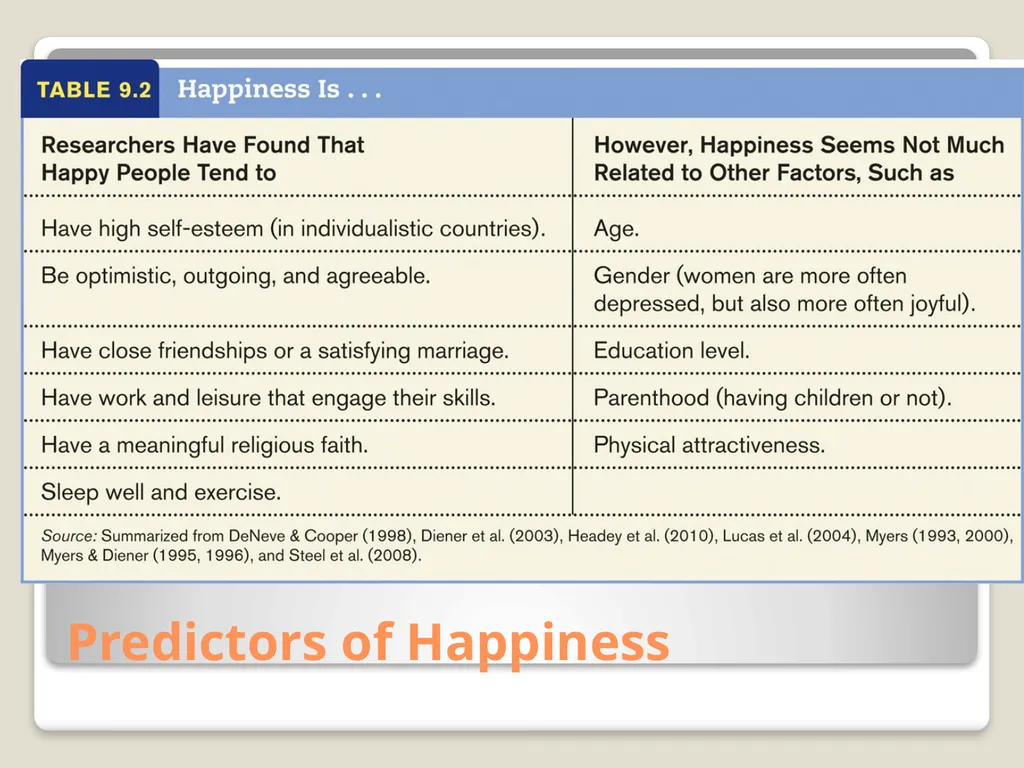
slide10. Predictors of Happiness<br>
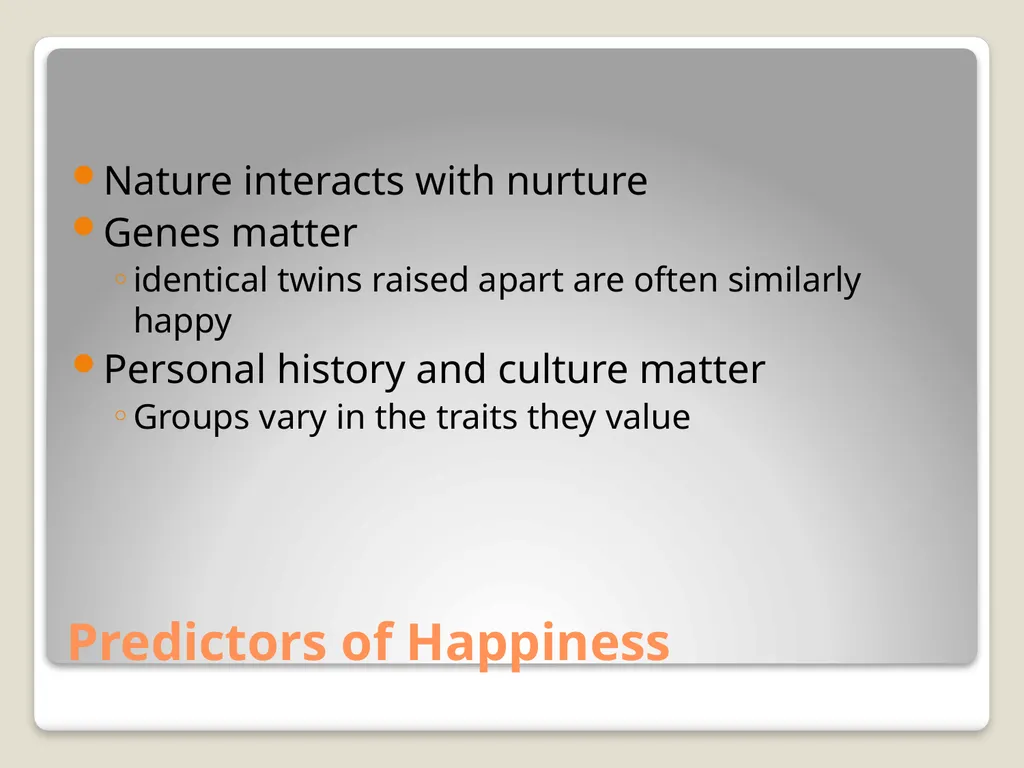
slide11. Predictors of Happiness Nature interacts with nurture
Genes matter
identical twins raised apart are often similarly happy
Personal history and culture matter
Groups vary in the traits they value<br>
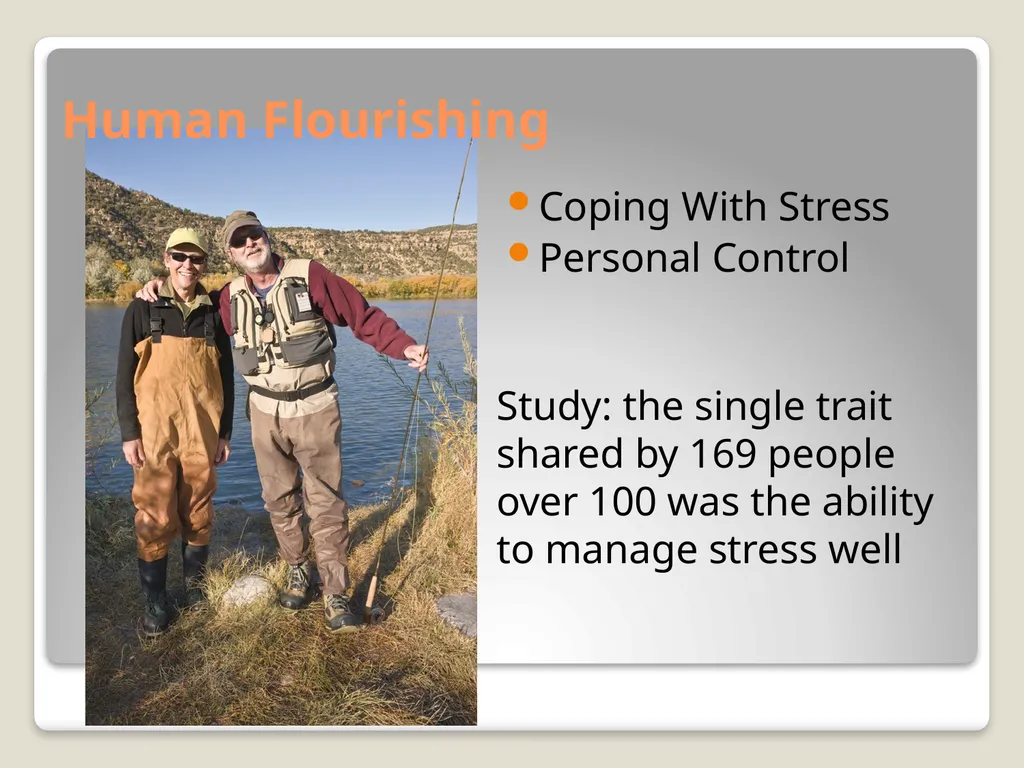
slide12. Human Flourishing Coping With Stress
Personal Control Study: the single trait shared by 169 people over 100 was the ability to manage stress well<br>
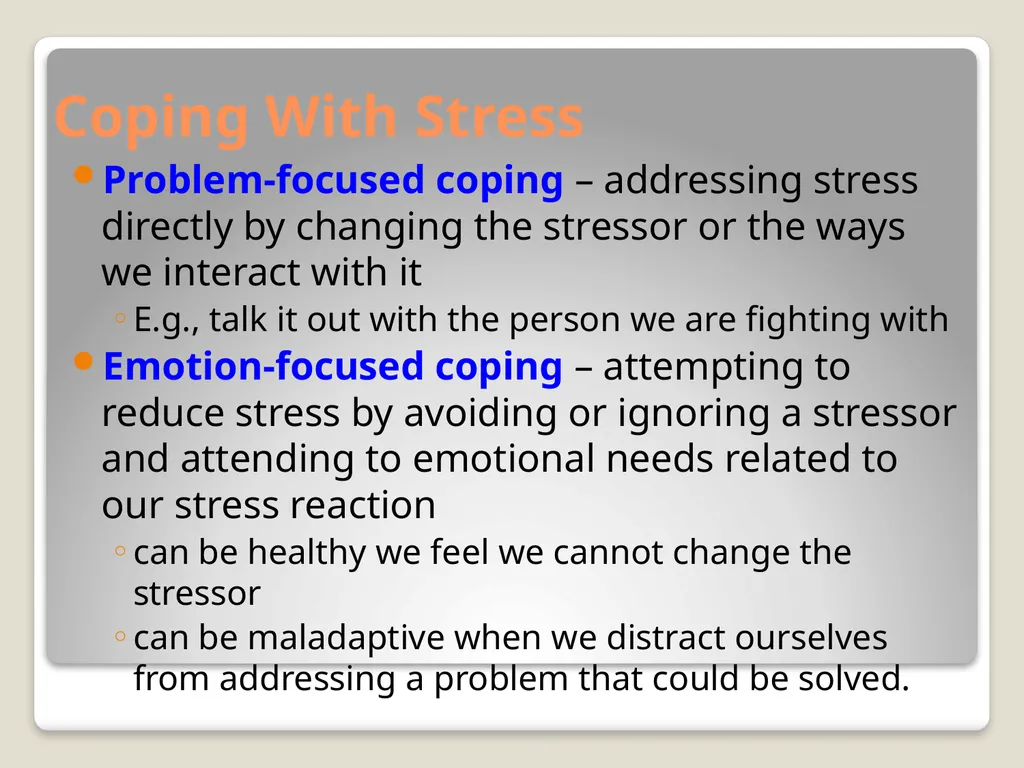
slide13. Coping With Stress Problem-focused coping – addressing stress directly by changing the stressor or the ways we interact with it
E.g., talk it out with the person we are fighting with
Emotion-focused coping – attempting to reduce stress by avoiding or ignoring a stressor and attending to emotional needs related to our stress reaction
can be healthy we feel we cannot change the stressor
can be maladaptive when we distract ourselves from addressing a problem that could be solved.<br>
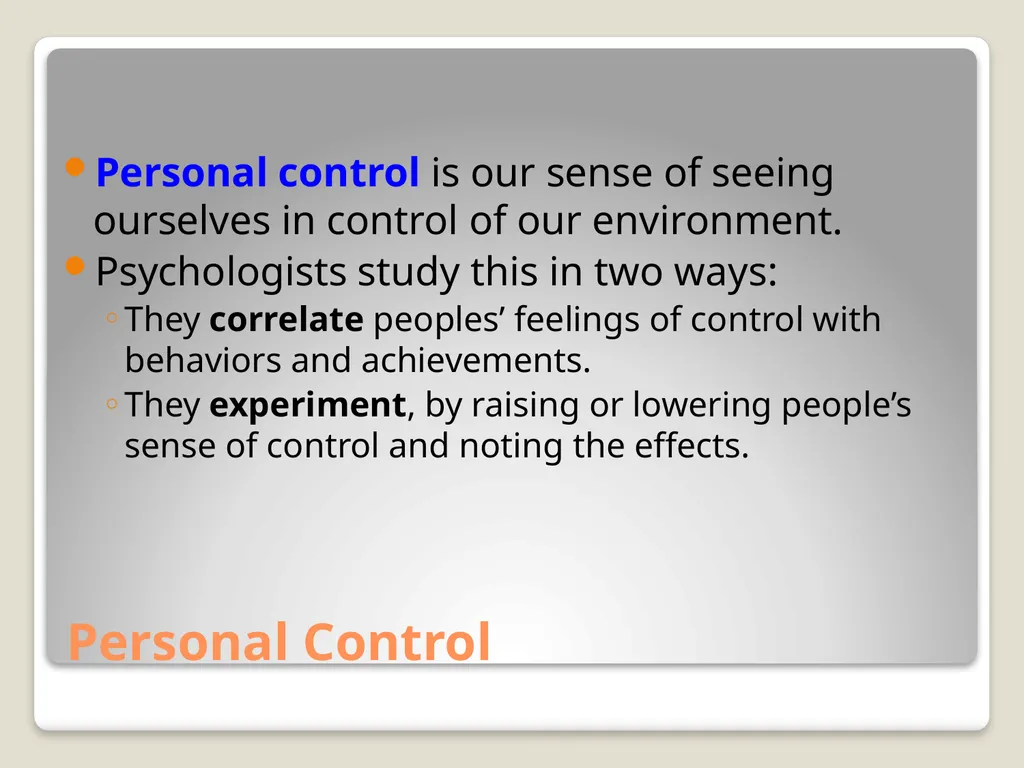
slide14. Personal Control Personal control is our sense of seeing ourselves in control of our environment.
Psychologists study this in two ways:
They correlate peoples’ feelings of control with behaviors and achievements.
They experiment, by raising or lowering people’s sense of control and noting the effects.<br>
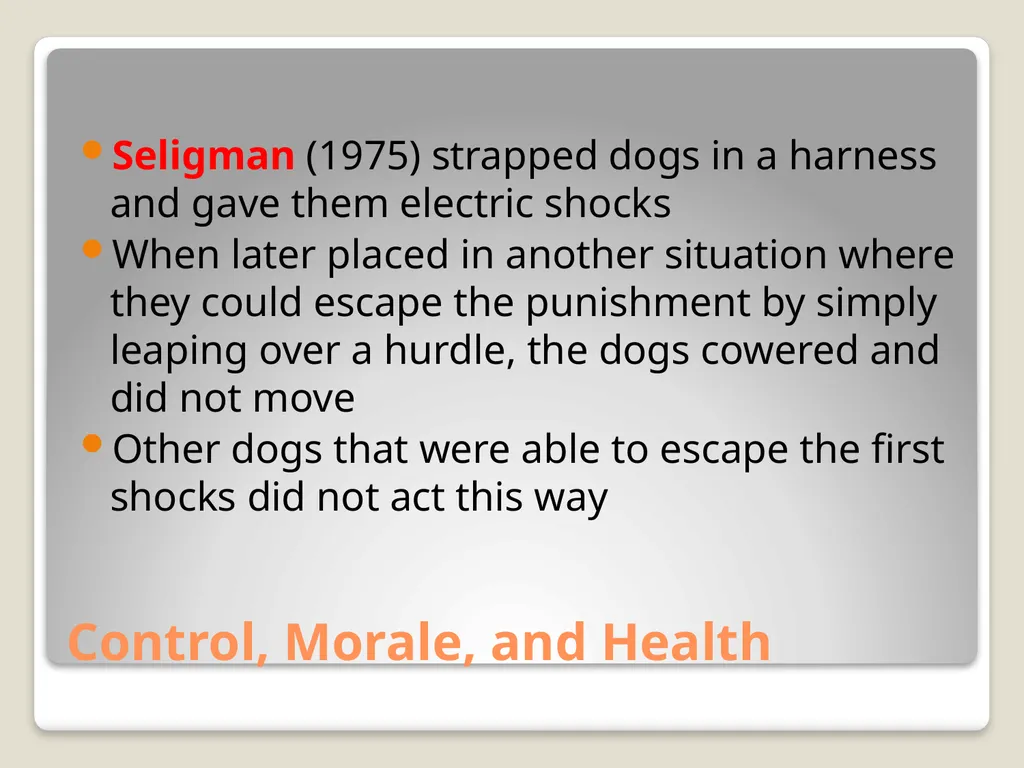
slide15. Control, Morale, and Health Seligman (1975) strapped dogs in a harness and gave them electric shocks
When later placed in another situation where they could escape the punishment by simply leaping over a hurdle, the dogs cowered and did not move
Other dogs that were able to escape the first shocks did not act this way<br>
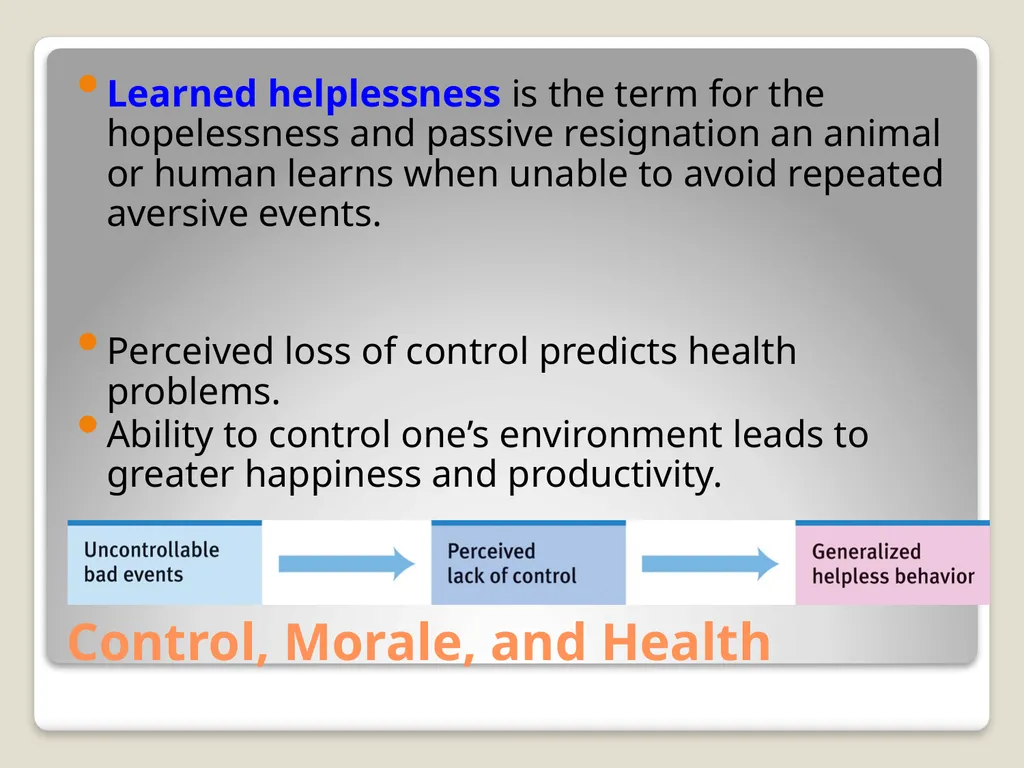
slide16. Control, Morale, and Health Learned helplessness is the term for the hopelessness and passive resignation an animal or human learns when unable to avoid repeated aversive events.
Perceived loss of control predicts health problems.
Ability to control one’s environment leads to greater happiness and productivity.<br>
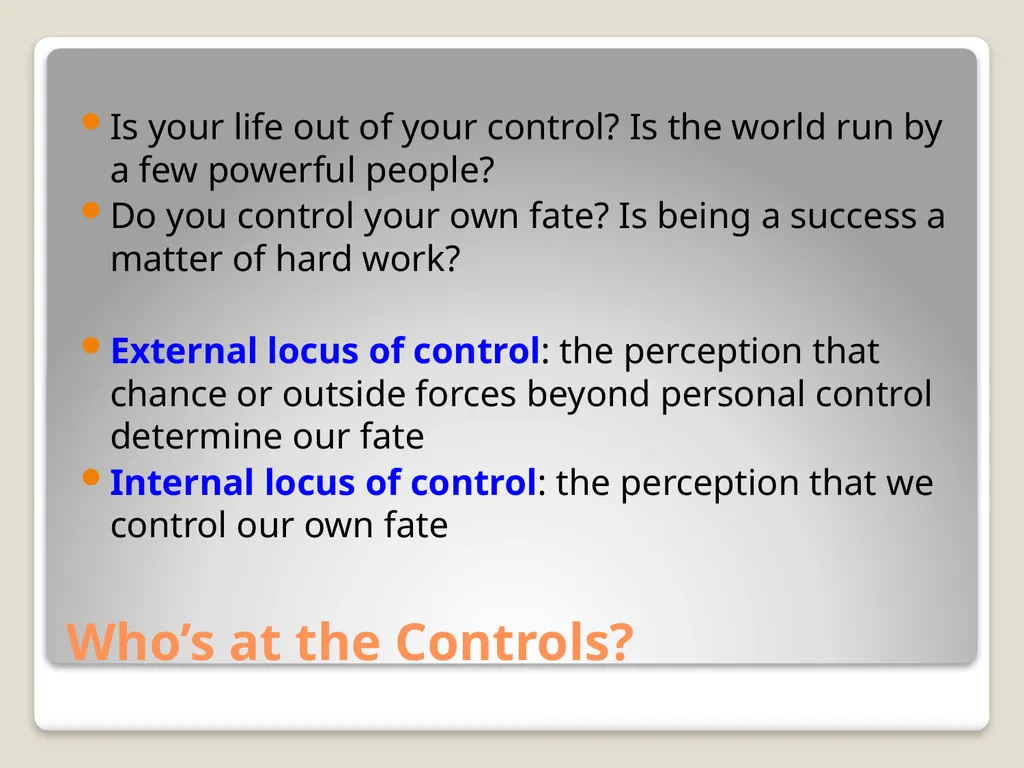
slide17. Who’s at the Controls? Is your life out of your control? Is the world run by a few powerful people?
Do you control your own fate? Is being a success a matter of hard work?
External locus of control: the perception that chance or outside forces beyond personal control determine our fate
Internal locus of control: the perception that we control our own fate<br>
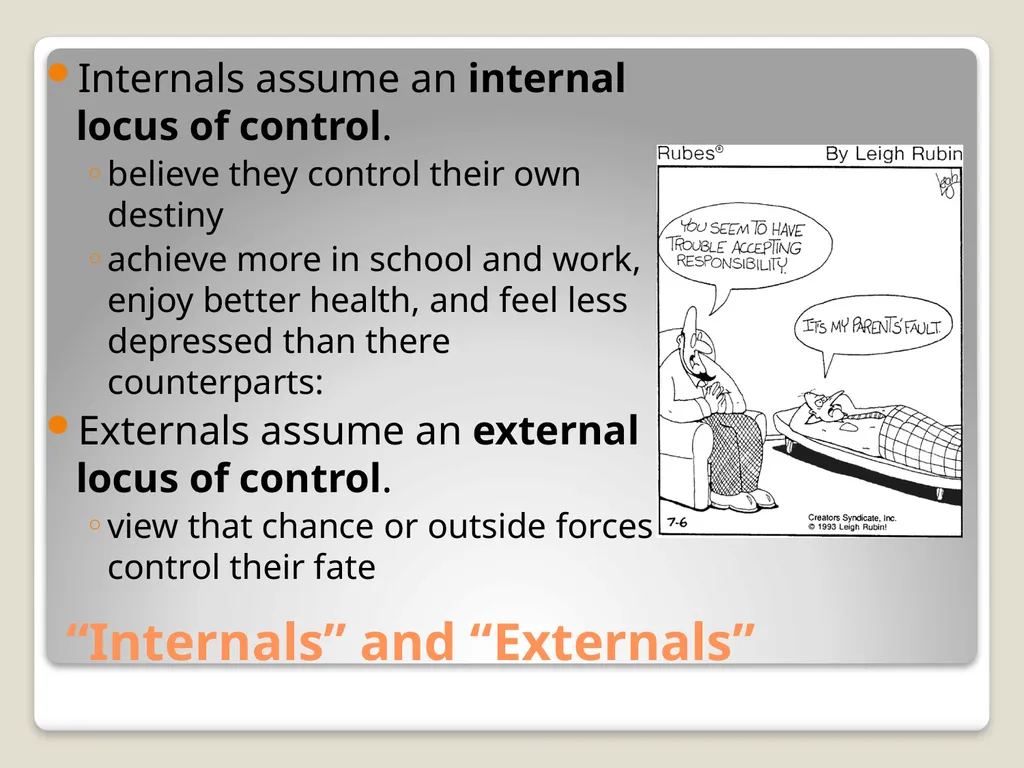
slide18. “Internals” and “Externals” Internals assume an internal locus of control.
believe they control their own destiny
achieve more in school and work, enjoy better health, and feel less depressed than there counterparts:
Externals assume an external locus of control.
view that chance or outside forces control their fate<br>
slide19. Self Control Self Control: The ability to control impulses and delay gratification
Self-control is like a muscle:
Temporarily weakens after use, regains energy with
rest, and grows stronger with exercise
Self-discipline in one area may strengthen self-control in general and lead to a less stressed life<br>
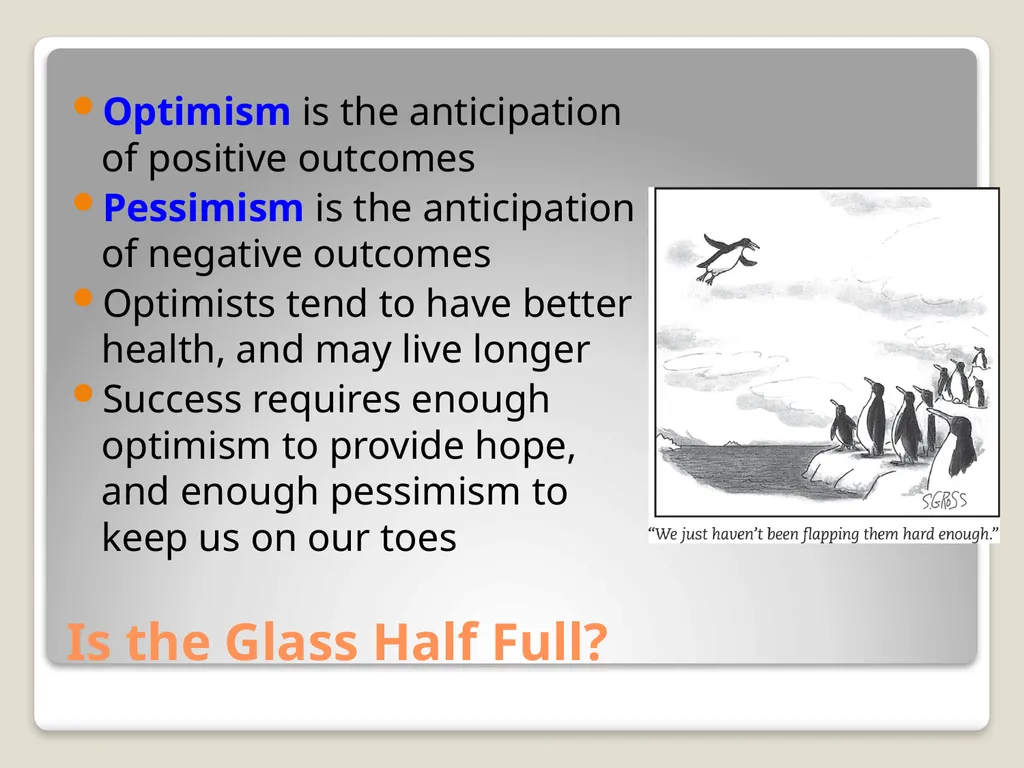
slide20. Is the Glass Half Full? Optimism is the anticipation of positive outcomes
Pessimism is the anticipation of negative outcomes
Optimists tend to have better health, and may live longer
Success requires enough optimism to provide hope, and enough pessimism to keep us on our toes<br>
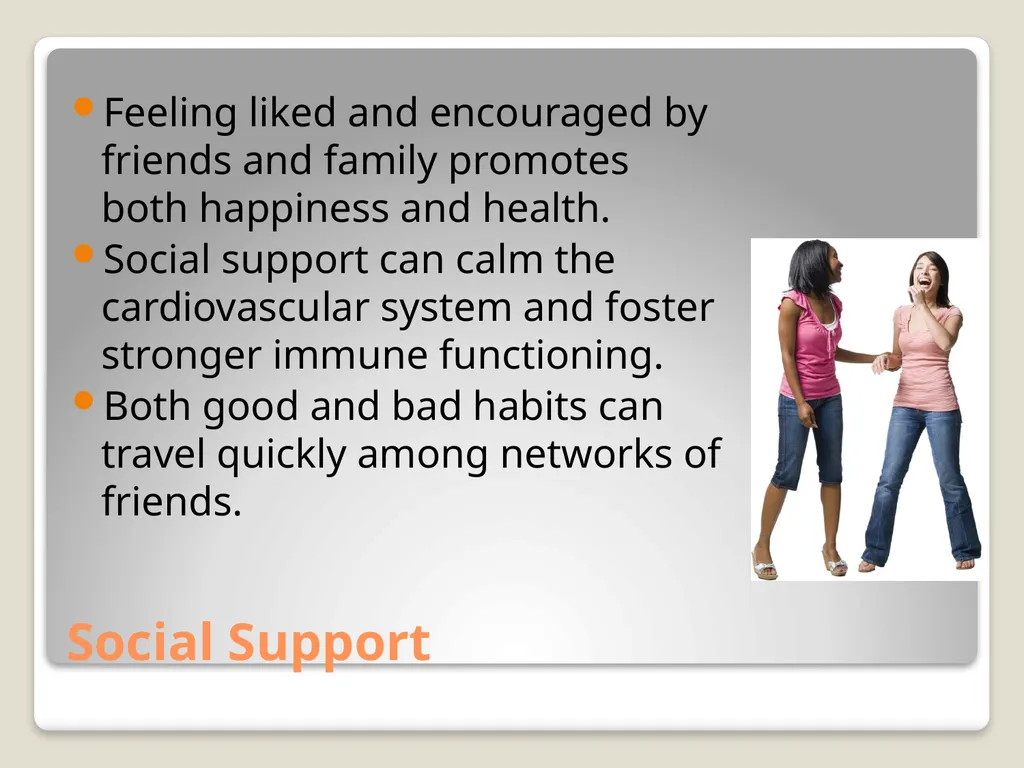
slide21. Social Support Feeling liked and encouraged by friends and family promotes both happiness and health.
Social support can calm the cardiovascular system and foster stronger immune functioning.
Both good and bad habits can travel quickly among networks of friends.<br>
slide22. Finding Meaning Those with a strong sense of meaning for a purpose for which to live, strong values, and a sense of self-worth.
Those who find meaning in a tragic event have fewer adverse health effects and lower rates of depression.<br>
slide23. Managing Stress Effects Sometimes we cannot avoid experiencing stress.
What can we do to manage it?
Aerobic exercise
Relaxation
Meditation
Spirituality<br>
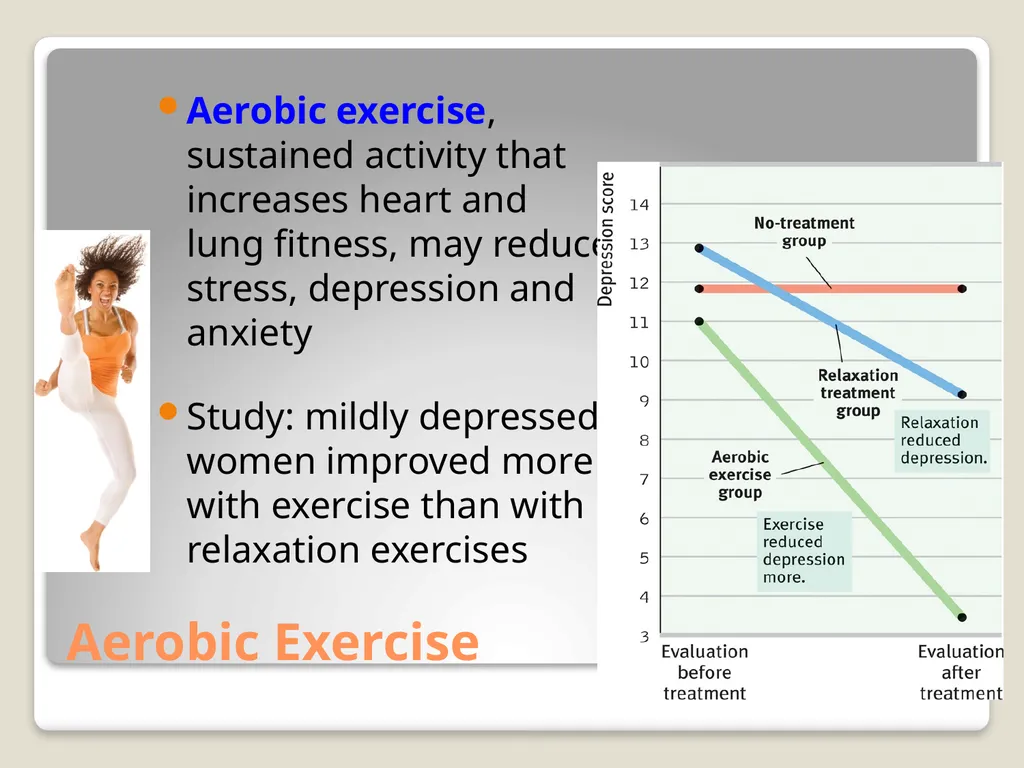
slide24. Aerobic Exercise Aerobic exercise, sustained activity that increases heart and lung fitness, may reduce stress, depression and anxiety
Study: mildly depressed women improved more with exercise than with relaxation exercises<br>
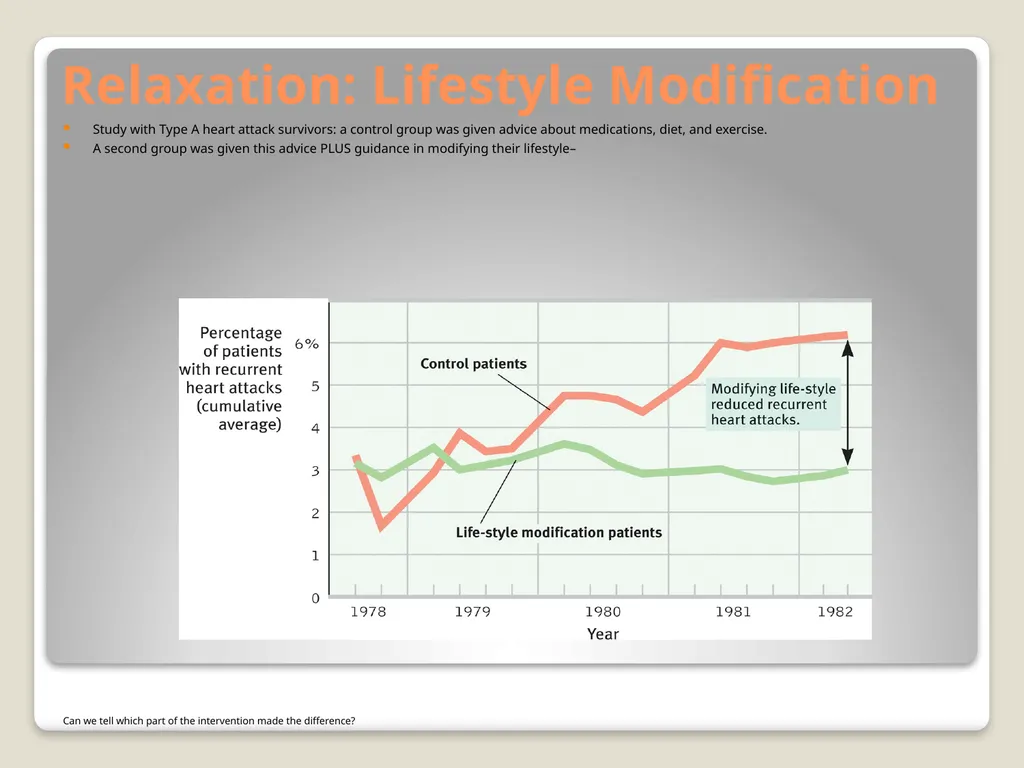
slide25. Relaxation: Lifestyle Modification Study with Type A heart attack survivors: a control group was given advice about medications, diet, and exercise.
A second group was given this advice PLUS guidance in modifying their lifestyle–
Walking, laughing, eating slowly
Can we tell which part of the intervention made the difference?<br>
slide26. Relaxation: Meditation Relaxation procedures can provide relief from headaches, high blood pressure, anxiety, and insomnia.
The relaxation response:
Sit quietly in a comfortable position. Close your eyes. Relax your muscles, starting with your feet and moving slowly upward. Breathe slowly, and on the exhale focus on a word, phrase or prayer. Repeat for 10-20 minutes.
Meditation enhances activity in the left frontal lobe, associated with positive emotions. It also improves immune functioning.<br>
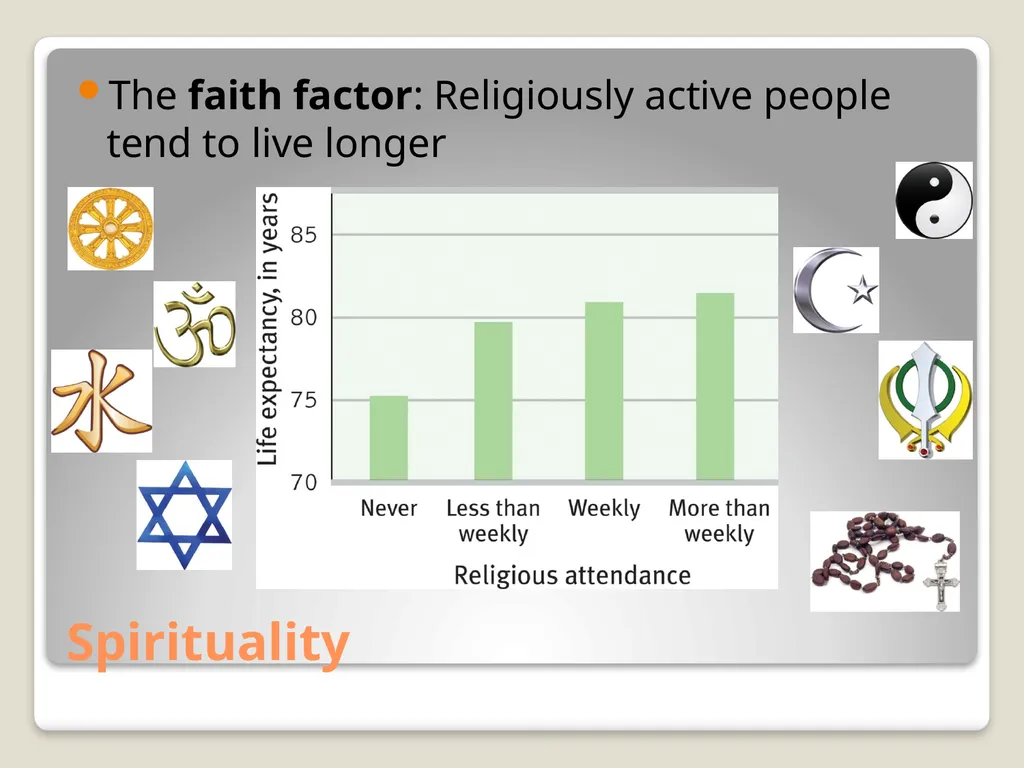
slide27. Spirituality The faith factor: Religiously active people tend to live longer<br>
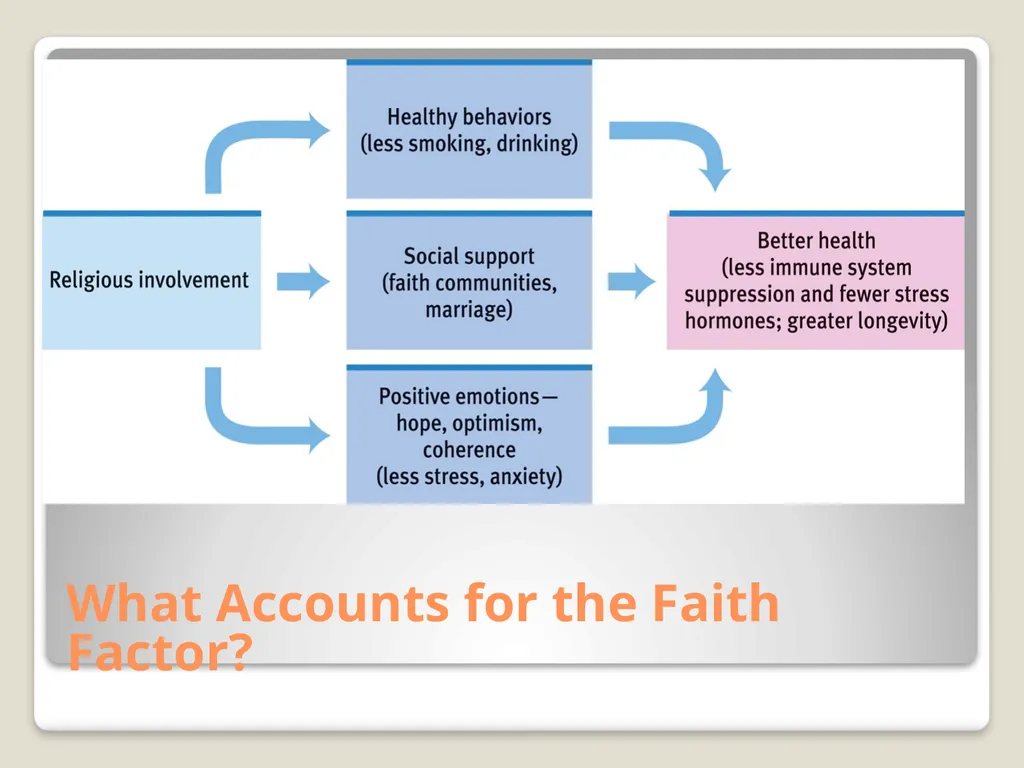
slide28. Possible explanations for the Faith Factor? Religiously active people tend to have healthier life-styles.
less alcohol, dietary fat, and smoking
Belonging to a faith community is to have access to a support network.
Religion encourages marriage, another predictor of health and longevity
Religion promotes positive emotion, optimism, a stable world-view, and relaxed meditation.
These factors correlate with participation in religious activities, not necessarily with strength of belief.<br>
slide29. What Accounts for the Faith Factor?<br>
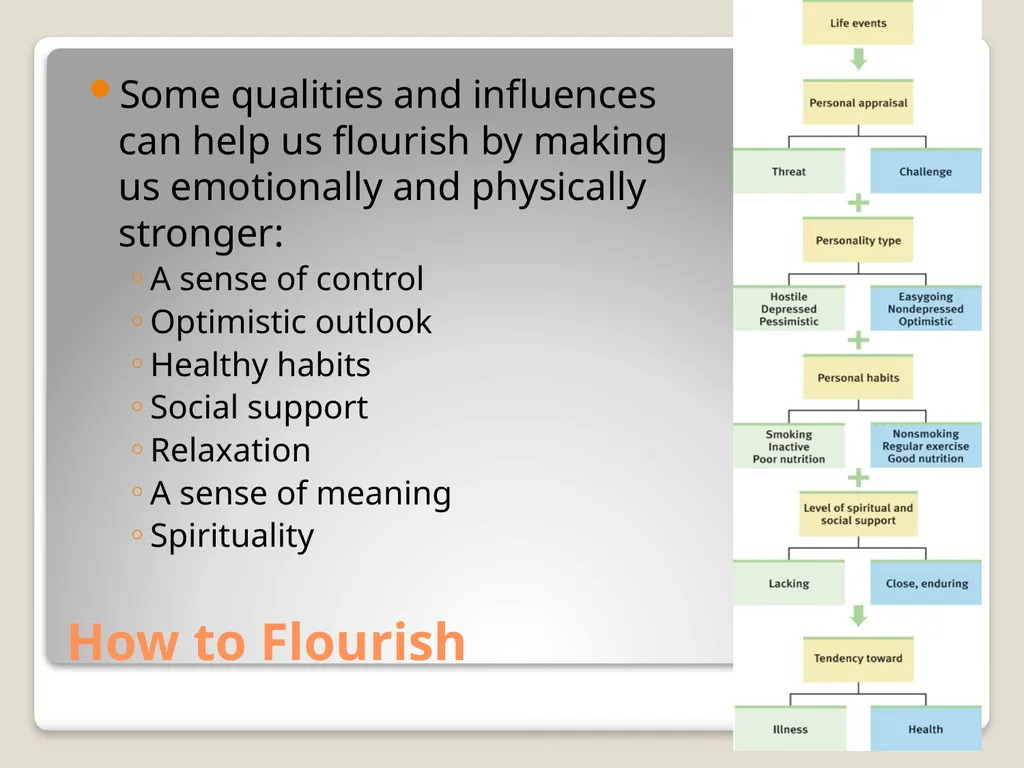
slide30. How to Flourish Some qualities and influences can help us flourish by making us emotionally and physically stronger:
A sense of control
Optimistic outlook
Healthy habits
Social support
Relaxation
A sense of meaning
Spirituality<br>
slide2. Positive Psychology The scientific study of optimal human functioning; aims to discover and promote strengths and virtues that enable individuals and communities to thrive.
Martin E. P. Seligman known as founder of the positive psychology movement.<br>
slide3. Happiness College students’ happiness is a predictor
Women who smiled in 1950s yearbook photos were more likely to be happily married in middle age
Students who were happier in 1976 made more money than their unhappy peers 20 years later
Feel-good, do-good phenomenon – we tend to more helpful toward others when we are in a good mood
Doing good also promotes a good feeling<br>
slide4. Happiness Part of happiness research involves the study of well-being – our self-perceived happiness or satisfaction with life.
This is used along with measures of objective well-being (e.g., physical and economic indicators) to evaluate quality of life<br>
slide5. Emotional Ups and Downs Emotional ups and downs tend to even out, both in the long run and even over the course of a day
Humans are resilient – even those who experience tragedy are usually not permanently depressed<br>
slide6. Wealth and Well-Being In most countries, especially poor ones, those with lots of money tend to be happier than those struggling to afford basic needs
People in rich countries are more satisfied and somewhat happier than those in poor countries<br>
slide7. Wealth and Well-Being First Year College Students, starting when the 60’s were over, have increasingly viewed weather as more important than a meaningful life philosophy<br>
slide8. Wealth and Well-Being Once one has enough money for comfort and security, piling up more and more does not increase happiness<br>
slide9. Why Can’t Money Buy Happiness? My happiness is relative to my own experience.
The adaptation-level phenomenon is our tendency to form judgments relative to past experiences
My happiness is relative to your success
We may experience relative deprivation – the perception that we are worse off relative to those with whom we compare ourselves
To counteract this: thinking about those worse off can reduce our discontent<br>
slide10. Predictors of Happiness<br>
slide11. Predictors of Happiness Nature interacts with nurture
Genes matter
identical twins raised apart are often similarly happy
Personal history and culture matter
Groups vary in the traits they value<br>
slide12. Human Flourishing Coping With Stress
Personal Control Study: the single trait shared by 169 people over 100 was the ability to manage stress well<br>
slide13. Coping With Stress Problem-focused coping – addressing stress directly by changing the stressor or the ways we interact with it
E.g., talk it out with the person we are fighting with
Emotion-focused coping – attempting to reduce stress by avoiding or ignoring a stressor and attending to emotional needs related to our stress reaction
can be healthy we feel we cannot change the stressor
can be maladaptive when we distract ourselves from addressing a problem that could be solved.<br>
slide14. Personal Control Personal control is our sense of seeing ourselves in control of our environment.
Psychologists study this in two ways:
They correlate peoples’ feelings of control with behaviors and achievements.
They experiment, by raising or lowering people’s sense of control and noting the effects.<br>
slide15. Control, Morale, and Health Seligman (1975) strapped dogs in a harness and gave them electric shocks
When later placed in another situation where they could escape the punishment by simply leaping over a hurdle, the dogs cowered and did not move
Other dogs that were able to escape the first shocks did not act this way<br>
slide16. Control, Morale, and Health Learned helplessness is the term for the hopelessness and passive resignation an animal or human learns when unable to avoid repeated aversive events.
Perceived loss of control predicts health problems.
Ability to control one’s environment leads to greater happiness and productivity.<br>
slide17. Who’s at the Controls? Is your life out of your control? Is the world run by a few powerful people?
Do you control your own fate? Is being a success a matter of hard work?
External locus of control: the perception that chance or outside forces beyond personal control determine our fate
Internal locus of control: the perception that we control our own fate<br>
slide18. “Internals” and “Externals” Internals assume an internal locus of control.
believe they control their own destiny
achieve more in school and work, enjoy better health, and feel less depressed than there counterparts:
Externals assume an external locus of control.
view that chance or outside forces control their fate<br>
slide19. Self Control Self Control: The ability to control impulses and delay gratification
Self-control is like a muscle:
Temporarily weakens after use, regains energy with
rest, and grows stronger with exercise
Self-discipline in one area may strengthen self-control in general and lead to a less stressed life<br>
slide20. Is the Glass Half Full? Optimism is the anticipation of positive outcomes
Pessimism is the anticipation of negative outcomes
Optimists tend to have better health, and may live longer
Success requires enough optimism to provide hope, and enough pessimism to keep us on our toes<br>
slide21. Social Support Feeling liked and encouraged by friends and family promotes both happiness and health.
Social support can calm the cardiovascular system and foster stronger immune functioning.
Both good and bad habits can travel quickly among networks of friends.<br>
slide22. Finding Meaning Those with a strong sense of meaning for a purpose for which to live, strong values, and a sense of self-worth.
Those who find meaning in a tragic event have fewer adverse health effects and lower rates of depression.<br>
slide23. Managing Stress Effects Sometimes we cannot avoid experiencing stress.
What can we do to manage it?
Aerobic exercise
Relaxation
Meditation
Spirituality<br>
slide24. Aerobic Exercise Aerobic exercise, sustained activity that increases heart and lung fitness, may reduce stress, depression and anxiety
Study: mildly depressed women improved more with exercise than with relaxation exercises<br>
slide25. Relaxation: Lifestyle Modification Study with Type A heart attack survivors: a control group was given advice about medications, diet, and exercise.
A second group was given this advice PLUS guidance in modifying their lifestyle–
Walking, laughing, eating slowly
Can we tell which part of the intervention made the difference?<br>
slide26. Relaxation: Meditation Relaxation procedures can provide relief from headaches, high blood pressure, anxiety, and insomnia.
The relaxation response:
Sit quietly in a comfortable position. Close your eyes. Relax your muscles, starting with your feet and moving slowly upward. Breathe slowly, and on the exhale focus on a word, phrase or prayer. Repeat for 10-20 minutes.
Meditation enhances activity in the left frontal lobe, associated with positive emotions. It also improves immune functioning.<br>
slide27. Spirituality The faith factor: Religiously active people tend to live longer<br>
slide28. Possible explanations for the Faith Factor? Religiously active people tend to have healthier life-styles.
less alcohol, dietary fat, and smoking
Belonging to a faith community is to have access to a support network.
Religion encourages marriage, another predictor of health and longevity
Religion promotes positive emotion, optimism, a stable world-view, and relaxed meditation.
These factors correlate with participation in religious activities, not necessarily with strength of belief.<br>
slide29. What Accounts for the Faith Factor?<br>
slide30. How to Flourish Some qualities and influences can help us flourish by making us emotionally and physically stronger:
A sense of control
Optimistic outlook
Healthy habits
Social support
Relaxation
A sense of meaning
Spirituality<br>