Heat Stress Body Temperature: The human core temperature is normally kept fairly constant in a range between about 36.5C and 37.5C During work in hot conditions, core temperatures can rise to as much as 38.5C without significant risk of
"Heat Stress Body Temperature: The human core" is the property of its rightful owner. Permission is granted to
download and print the materials on this website for personal, non-commercial use only, and to display it
on your personal computer provided you do not modify the materials and that you retain all copyright
notices contained in the materials. By downloading content from our website, you accept the terms of this
agreement.
Presentation Transcript
01
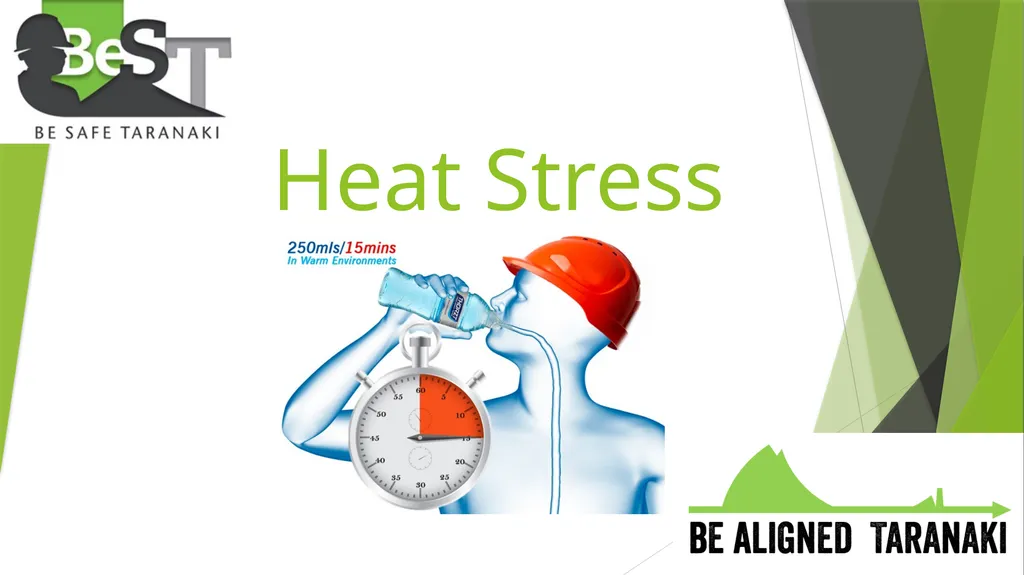
Heat Stress<br>
02
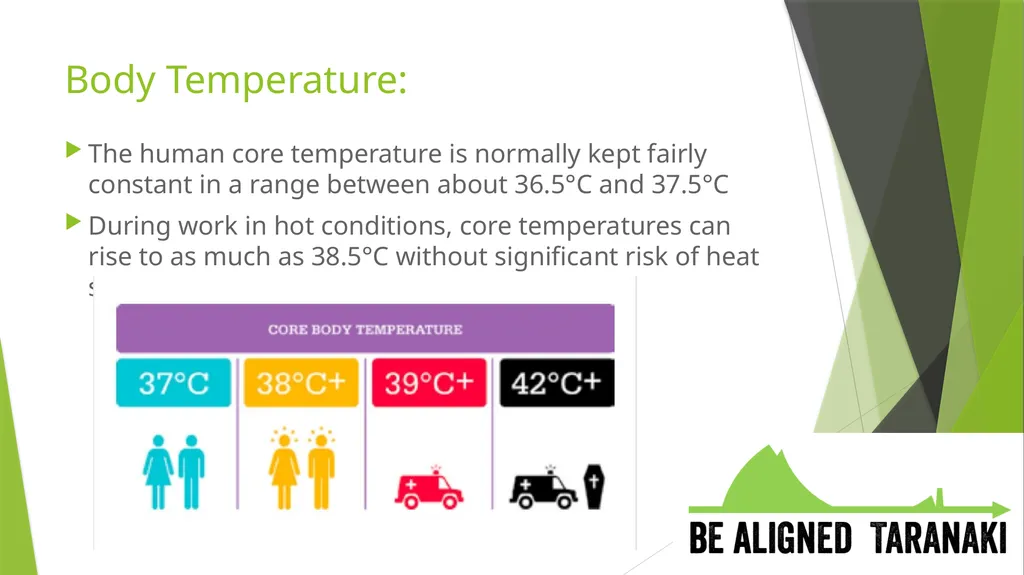
Body Temperature: The human core temperature is normally kept fairly constant in a range between about 36.5°C and 37.5°C
During work in hot conditions, core temperatures can rise to as much as 38.5°C without significant risk of heat stroke<br>
03
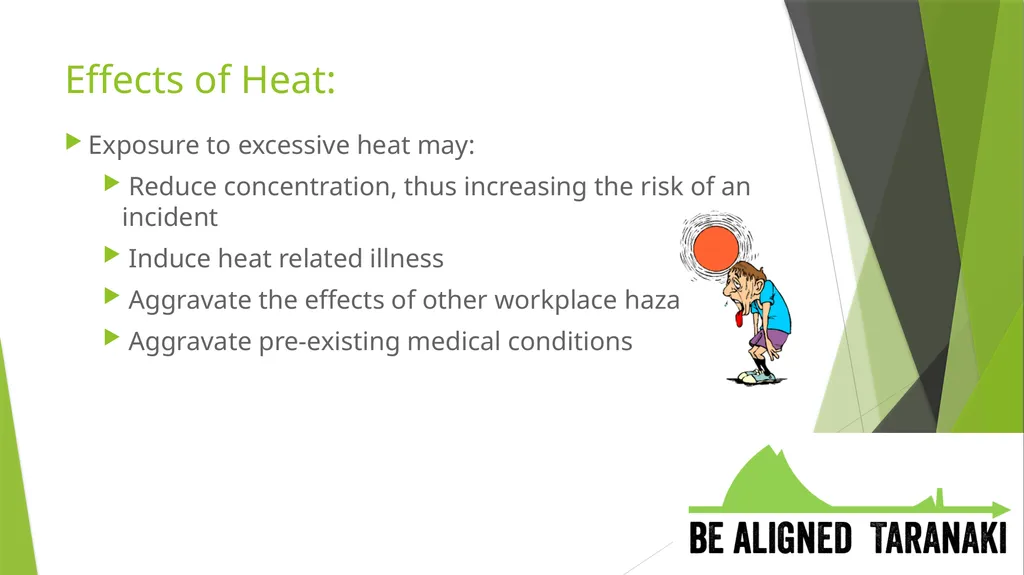
Effects of Heat: Exposure to excessive heat may:
Reduce concentration, thus increasing the risk of an incident
Induce heat related illness
Aggravate the effects of other workplace hazards
Aggravate pre-existing medical conditions<br>
Heat Related Illness: Heat Exhaustion – Symptoms & Treatment In groups, take 5 minutes to discuss and write down what the symptoms of heat exhaustion look like. Then we will report back and discuss.
In groups, take 5 minutes to discuss and write down what treatment is needed for someone suffering heat exhaustion. Then we will report back and discuss.<br>
09
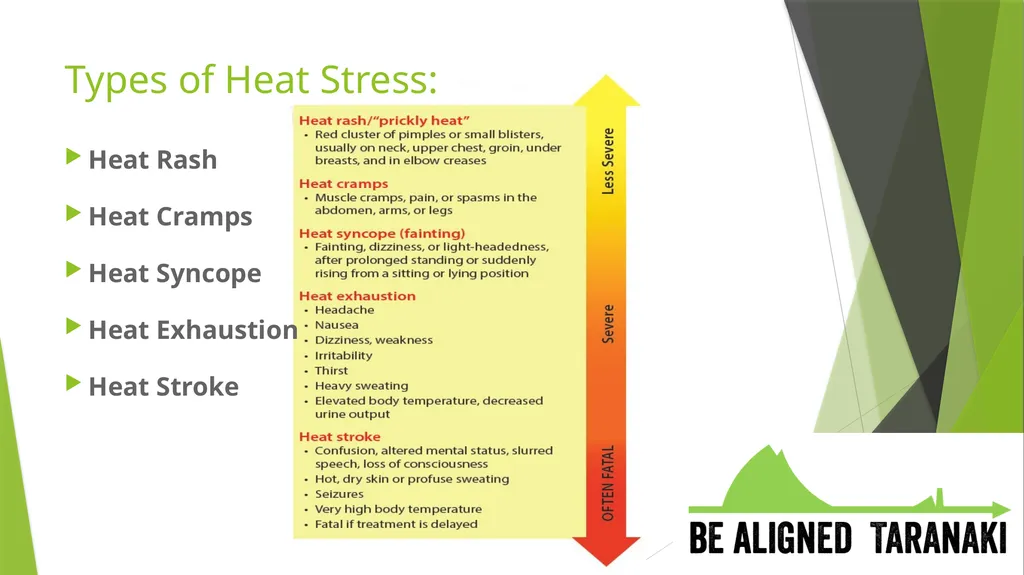
Heat Related Illness: Heat Stroke – A Life Threatening Emergency CORE TEMPERATURE IS SO HIGH THAT THE BODYS ORGANS BECOME SEVERELY DAMAGED AND MALFUNCTION
Characterized by:
Confusion or irrational aggressive behavior
Rapid shallow breathing
Blurred vision
Loss of consciousness may occur
Convulsions / Seizures
The skin may be hot and dry, although it can still be sweaty
Rapid feeble pulse – low pressure<br>
10
Heat Stroke – A Life Threatening Emergency Contact Emergency Services
Follow DRSABCD
Move the patient to a cool place
Remove almost all clothing and loosen anything tight.
Apply cold packs or ice to areas of large blood vessels (neck, groin and armpits) to accelerate cooling
If possible, cover body with a wet sheet: fan to increase air circulation
Stop cooling when the body feels cold to touch
If the patient is fully conscious and is able to swallow – give fluids<br>
11
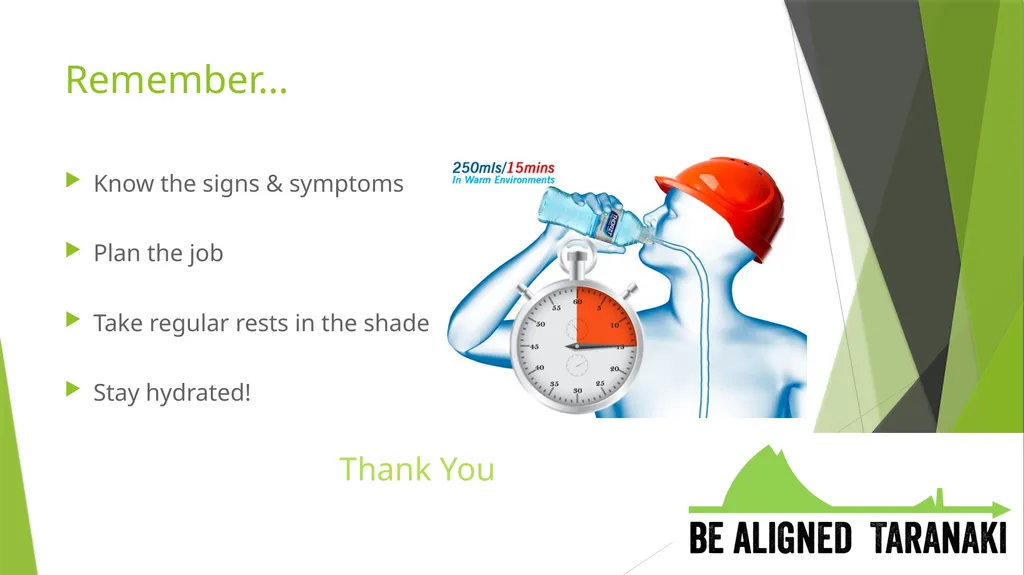
Remember... Know the signs & symptoms
Plan the job
Take regular rests in the shade
Stay hydrated!