Heavy Metal Toxicity (Lead) Presented by:-
Description: Heavy Metal Toxicity (Lead) Presented by:- Dr.Archana Assistant ProfessorcumJr .Scientist Deptt.Of Pharmacology Toxicology Bihar Veterinary College, Patna Content of chapter Sources Toxicokinetic Mechanism of toxicity Clinical
Related Topics
Download Presentation
"Heavy Metal Toxicity (Lead) Presented by:-" is the property of its rightful owner. Permission is granted to download and print the materials on this website for personal, non-commercial use only, and to display it on your personal computer provided you do not modify the materials and that you retain all copyright notices contained in the materials. By downloading content from our website, you accept the terms of this agreement.
Presentation Transcript
slide1. Heavy Metal Toxicity(Lead) Presented by:-
Dr.Archana
Assistant Professor_cum_Jr .Scientist
Deptt.Of Pharmacology & Toxicology
Bihar Veterinary College, Patna<br>
slide2. Content of chapter * Sources
* Toxicokinetic
* Mechanism of toxicity
* Clinical Signs
* Treatment<br>
slide3. Lead Toxicity Lead poisoning is a medical condition caused
by increased levels of the heavy metal lead in
the body, and this can interfere with a variety
of body processes and causes toxicity to
many organs and tissues.
It’s also called plumbism, colica Pictonum or
Saturnism
In veterinary medicine lead is one of the most common cause of metallic poisoning in dogs & cattle.
Goats, swine and chickens are more resistant.<br>
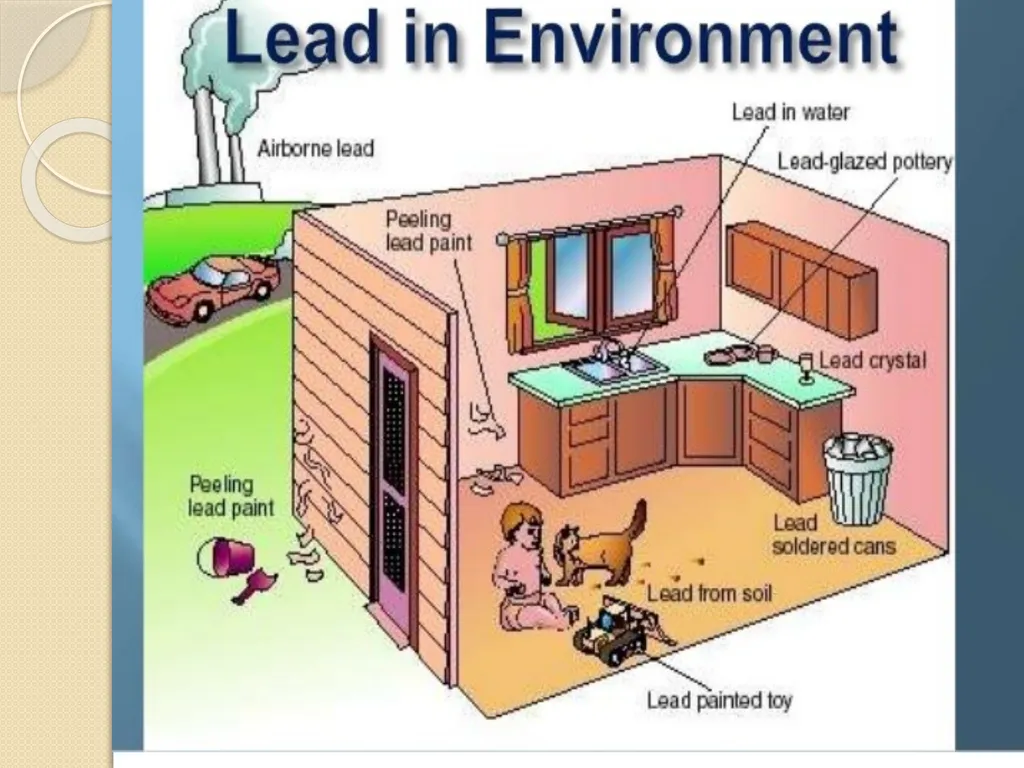
slide4. Source :- Lead poisoning can result when curious animals ingest lead-based paints.
In cattle many cases of lead poisoning is associated with seedling and harvesting activities.
Feeding on crops sprayed with lead insecticides may also result in lead poisoning in animals.
Vegetation grown in lead smelters areas and near highways where plants accumulate lead are other important source of lead poisoning.<br>
slide6. Toxicokinetic Absorption:-
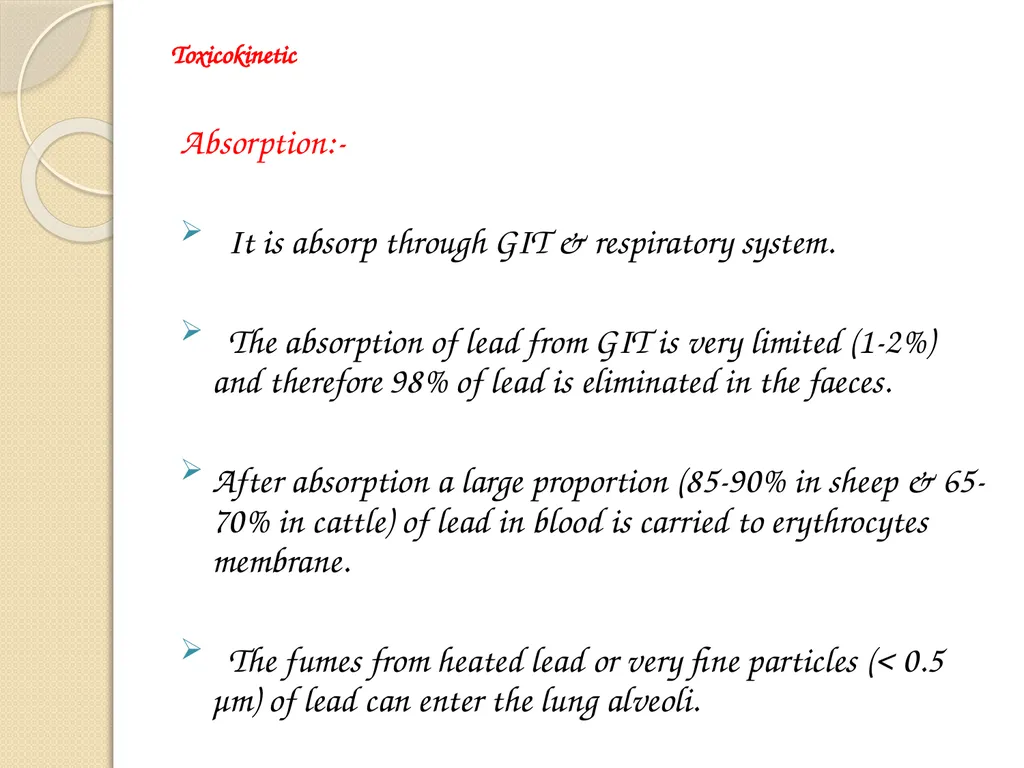
It is absorp through GIT & respiratory system.
The absorption of lead from GIT is very limited (1-2%) and therefore 98% of lead is eliminated in the faeces.
After absorption a large proportion (85-90% in sheep & 65-70% in cattle) of lead in blood is carried to erythrocytes membrane.
The fumes from heated lead or very fine particles (< 0.5 μm) of lead can enter the lung alveoli.<br>
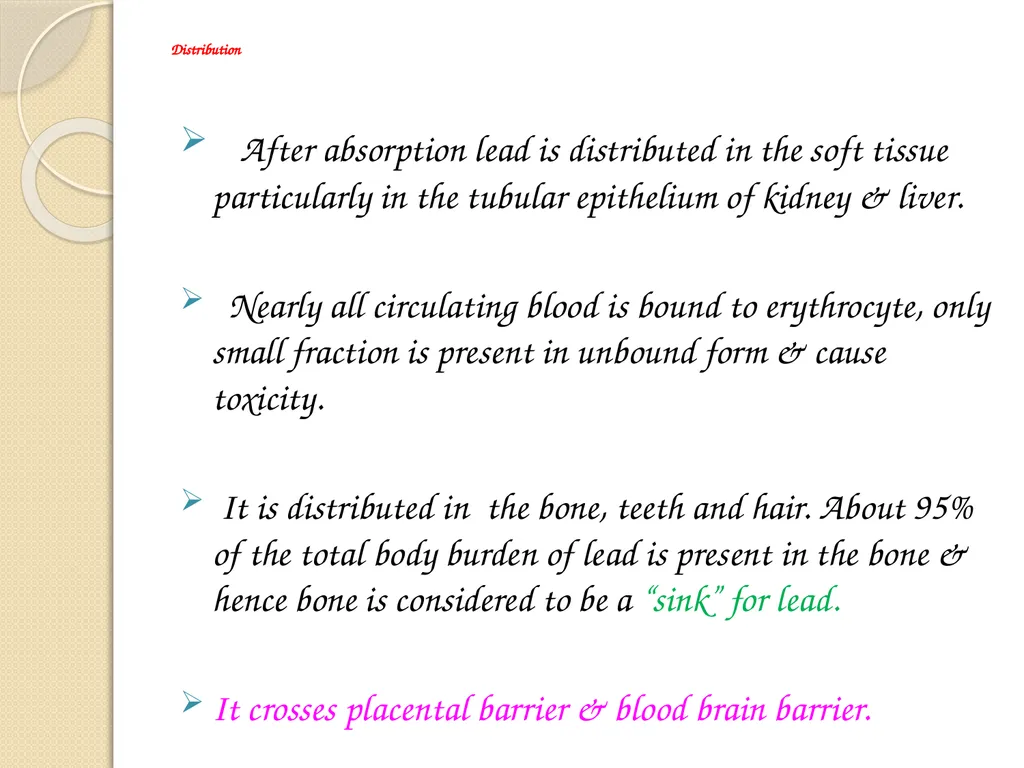
slide7. Distribution After absorption lead is distributed in the soft tissue particularly in the tubular epithelium of kidney & liver.
Nearly all circulating blood is bound to erythrocyte, only small fraction is present in unbound form & cause toxicity.
It is distributed in the bone, teeth and hair. About 95% of the total body burden of lead is present in the bone & hence bone is considered to be a “sink” for lead.
It crosses placental barrier & blood brain barrier.<br>
slide8. Excretion Lead is normally excreted via kidney small amount excreted through bile & sweat.
Lead is also excreted in dangerous amount through milk<br>
slide9. Mechanism of toxicity The exact mechanism of action is poorly understood even the low concentration of lead inhibits various biochemical process :-
Leads depresses aminolevulinic acid(ALA) dehydratase enzyme ( copper containing enzyme) resulting in increase serun level of δ-aminolevulinic acid and its excretion in urine, this is considered major step invoving lead in biochemical process.
Lead appears to inhibit haem synthetase, a thiol containing enzyme which is required to incorporate iron in the haem molecule. It also prevent entry of iron from cytosol to mitochondria.<br>
slide10. Clinical Sign The major systems affected by lead poisoning are gastrointestinal, central nervous system & hematological system.
GIT Symptoms :-
Anorexia, colic, dullness and transient constipation frequently followed by diarrhea can be common clinical signs in animal exposed to excess lead.<br>
slide11. Continue.... CNS symptoms :-
In cattle there is depression, weakness and ataxia can progress to more severe clinical signs of muscle tremors head pressing ,blindness, jaw champing, muscle tremor and convulsion.
Horses develop acute lead toxicosis & show clinical signs of pharyngeal paralysis (roaring) and dysphagia frequently resulting in aspiration pneumonia.
Hematological symptoms:-
Blood capillaries congested with enlarged and increased endothelial cells. Meningeal blood vessels were prominently congested with mild lymphocytic infiltration.
Basophilic stippling (the aggregation of ribonucleic acid) of erythrocytes and inhibition of hemoglobin synthesis are characteristic hematological features of lead poisoning.<br>
slide12. Treatment Specific antidotal therapy
Disodium calcium EDTA(Ethylene diamine tetra acetate)
In horse and cattle it is given intravenously or sub-cutaneously as 1-2% solution in 5% dextrose @ 110mg/kg divided in two treatment daily for 3days. skip for two days & then repeat the dose for two days.
In dogs a similar dose divided into 4 treatments a day is given S/c in 5% dextrose for 2-5 days.<br>
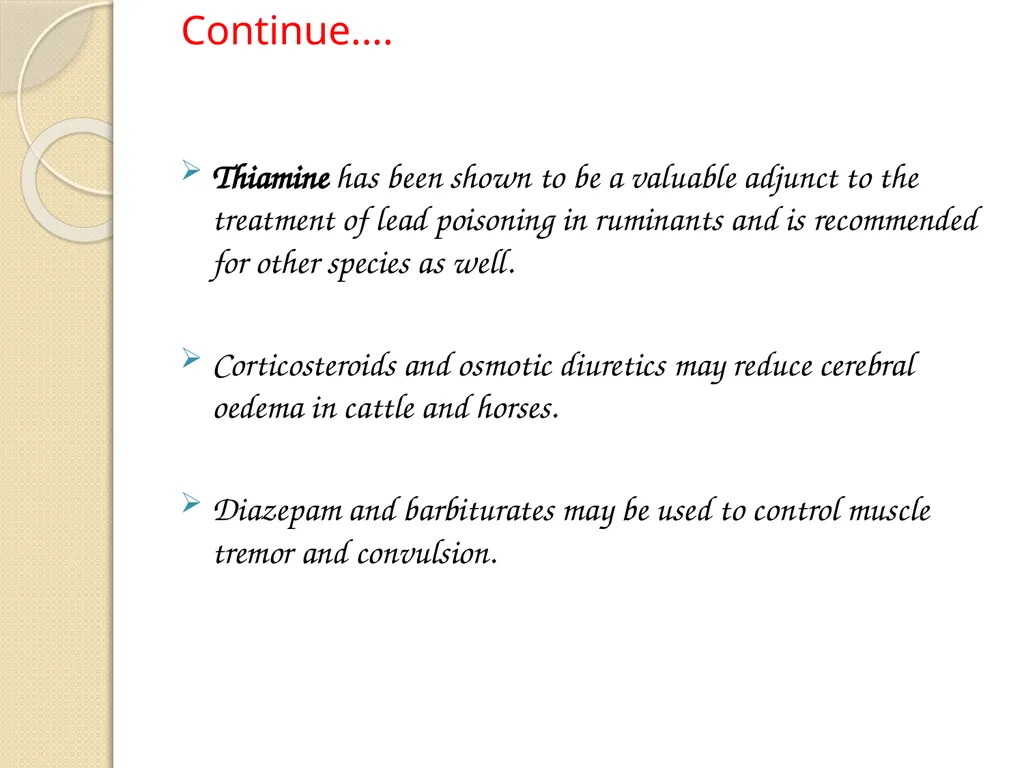
slide13. Continue.... Thiamine has been shown to be a valuable adjunct to the treatment of lead poisoning in ruminants and is recommended for other species as well.
Corticosteroids and osmotic diuretics may reduce cerebral oedema in cattle and horses.
Diazepam and barbiturates may be used to control muscle tremor and convulsion.<br>

Dr.Archana
Assistant Professor_cum_Jr .Scientist
Deptt.Of Pharmacology & Toxicology
Bihar Veterinary College, Patna<br>
slide2. Content of chapter * Sources
* Toxicokinetic
* Mechanism of toxicity
* Clinical Signs
* Treatment<br>
slide3. Lead Toxicity Lead poisoning is a medical condition caused
by increased levels of the heavy metal lead in
the body, and this can interfere with a variety
of body processes and causes toxicity to
many organs and tissues.
It’s also called plumbism, colica Pictonum or
Saturnism
In veterinary medicine lead is one of the most common cause of metallic poisoning in dogs & cattle.
Goats, swine and chickens are more resistant.<br>
slide4. Source :- Lead poisoning can result when curious animals ingest lead-based paints.
In cattle many cases of lead poisoning is associated with seedling and harvesting activities.
Feeding on crops sprayed with lead insecticides may also result in lead poisoning in animals.
Vegetation grown in lead smelters areas and near highways where plants accumulate lead are other important source of lead poisoning.<br>
slide6. Toxicokinetic Absorption:-
It is absorp through GIT & respiratory system.
The absorption of lead from GIT is very limited (1-2%) and therefore 98% of lead is eliminated in the faeces.
After absorption a large proportion (85-90% in sheep & 65-70% in cattle) of lead in blood is carried to erythrocytes membrane.
The fumes from heated lead or very fine particles (< 0.5 μm) of lead can enter the lung alveoli.<br>
slide7. Distribution After absorption lead is distributed in the soft tissue particularly in the tubular epithelium of kidney & liver.
Nearly all circulating blood is bound to erythrocyte, only small fraction is present in unbound form & cause toxicity.
It is distributed in the bone, teeth and hair. About 95% of the total body burden of lead is present in the bone & hence bone is considered to be a “sink” for lead.
It crosses placental barrier & blood brain barrier.<br>
slide8. Excretion Lead is normally excreted via kidney small amount excreted through bile & sweat.
Lead is also excreted in dangerous amount through milk<br>
slide9. Mechanism of toxicity The exact mechanism of action is poorly understood even the low concentration of lead inhibits various biochemical process :-
Leads depresses aminolevulinic acid(ALA) dehydratase enzyme ( copper containing enzyme) resulting in increase serun level of δ-aminolevulinic acid and its excretion in urine, this is considered major step invoving lead in biochemical process.
Lead appears to inhibit haem synthetase, a thiol containing enzyme which is required to incorporate iron in the haem molecule. It also prevent entry of iron from cytosol to mitochondria.<br>
slide10. Clinical Sign The major systems affected by lead poisoning are gastrointestinal, central nervous system & hematological system.
GIT Symptoms :-
Anorexia, colic, dullness and transient constipation frequently followed by diarrhea can be common clinical signs in animal exposed to excess lead.<br>
slide11. Continue.... CNS symptoms :-
In cattle there is depression, weakness and ataxia can progress to more severe clinical signs of muscle tremors head pressing ,blindness, jaw champing, muscle tremor and convulsion.
Horses develop acute lead toxicosis & show clinical signs of pharyngeal paralysis (roaring) and dysphagia frequently resulting in aspiration pneumonia.
Hematological symptoms:-
Blood capillaries congested with enlarged and increased endothelial cells. Meningeal blood vessels were prominently congested with mild lymphocytic infiltration.
Basophilic stippling (the aggregation of ribonucleic acid) of erythrocytes and inhibition of hemoglobin synthesis are characteristic hematological features of lead poisoning.<br>
slide12. Treatment Specific antidotal therapy
Disodium calcium EDTA(Ethylene diamine tetra acetate)
In horse and cattle it is given intravenously or sub-cutaneously as 1-2% solution in 5% dextrose @ 110mg/kg divided in two treatment daily for 3days. skip for two days & then repeat the dose for two days.
In dogs a similar dose divided into 4 treatments a day is given S/c in 5% dextrose for 2-5 days.<br>
slide13. Continue.... Thiamine has been shown to be a valuable adjunct to the treatment of lead poisoning in ruminants and is recommended for other species as well.
Corticosteroids and osmotic diuretics may reduce cerebral oedema in cattle and horses.
Diazepam and barbiturates may be used to control muscle tremor and convulsion.<br>