Hemi section of spinal cord - Brown sequard syndrome Dr. Shubhangi Saxena INTRODUCTION It is the lesion involving one lateral half of the spinal cord CAUSES Gun shot injury Automobile accidents tumours complete hemisection is called BROWN
"Hemi section of spinal cord - Brown sequard" is the property of its rightful owner. Permission is granted to
download and print the materials on this website for personal, non-commercial use only, and to display it
on your personal computer provided you do not modify the materials and that you retain all copyright
notices contained in the materials. By downloading content from our website, you accept the terms of this
agreement.
Presentation Transcript
01
Hemi section of spinal cord - Brown sequard syndrome Dr. Shubhangi Saxena<br>
02
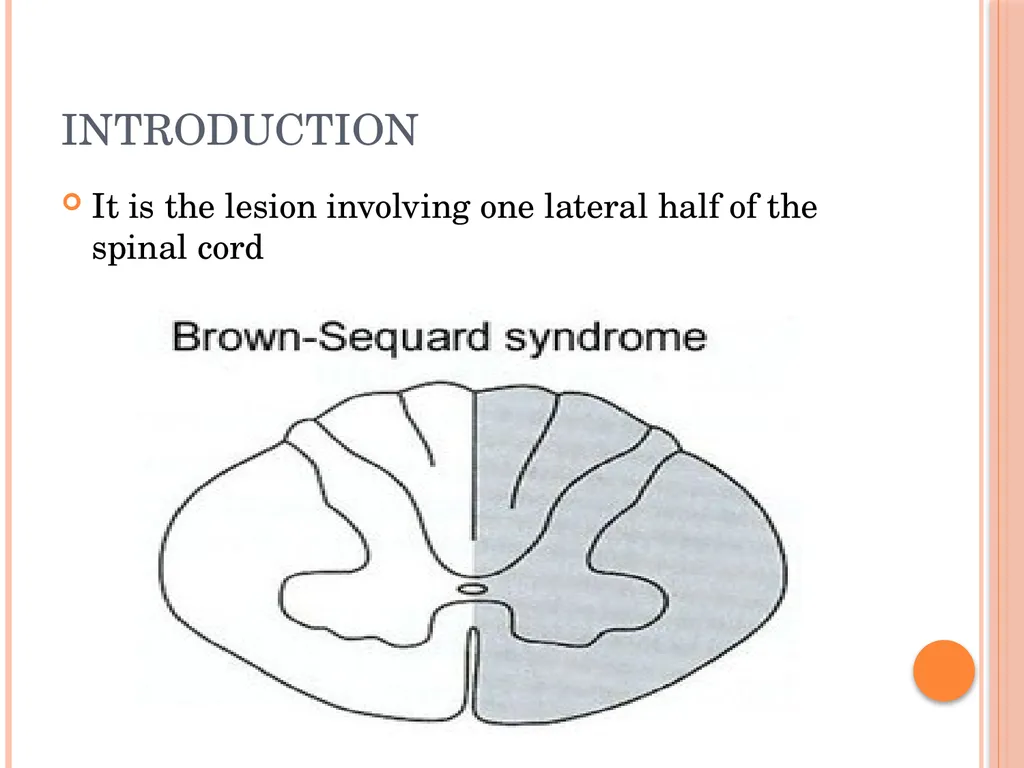
INTRODUCTION It is the lesion involving one lateral half of the spinal cord<br>
complete hemisection is called BROWN SEQUARD SYNDROME<br>
04
symptoms If the hemisection is due to injury.
The spinal shock occur immediately.
the muscles looses the tone and become flaccid
the reflexex are abolished<br>
05
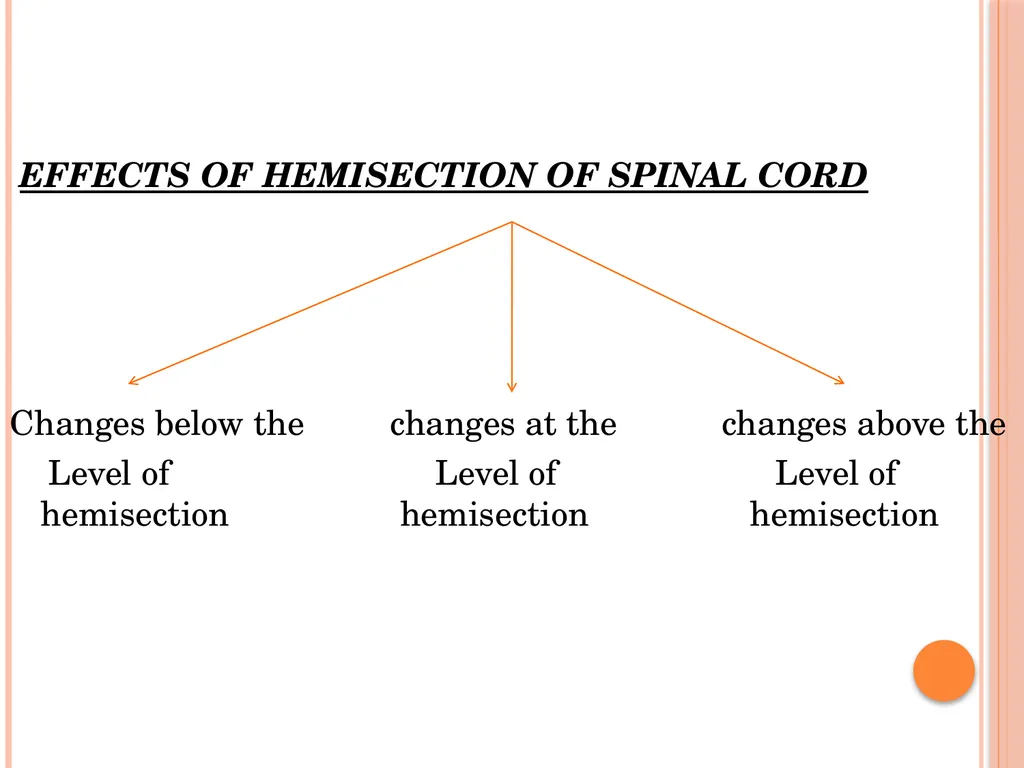
EFFECTS OF HEMISECTION OF SPINAL CORD
Changes below the changes at the changes above the
Level of Level of Level of hemisection hemisection hemisection<br>
06
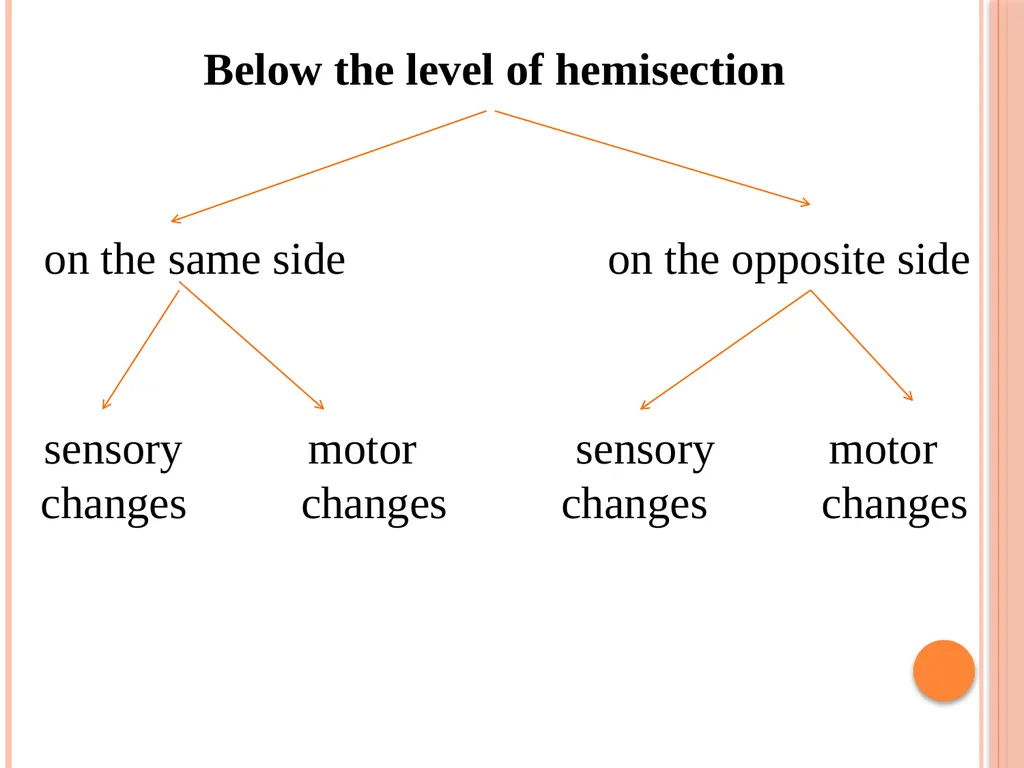
Below the level of hemisection
on the same side on the opposite side
sensory motor sensory motor changes changes changes changes<br>
07
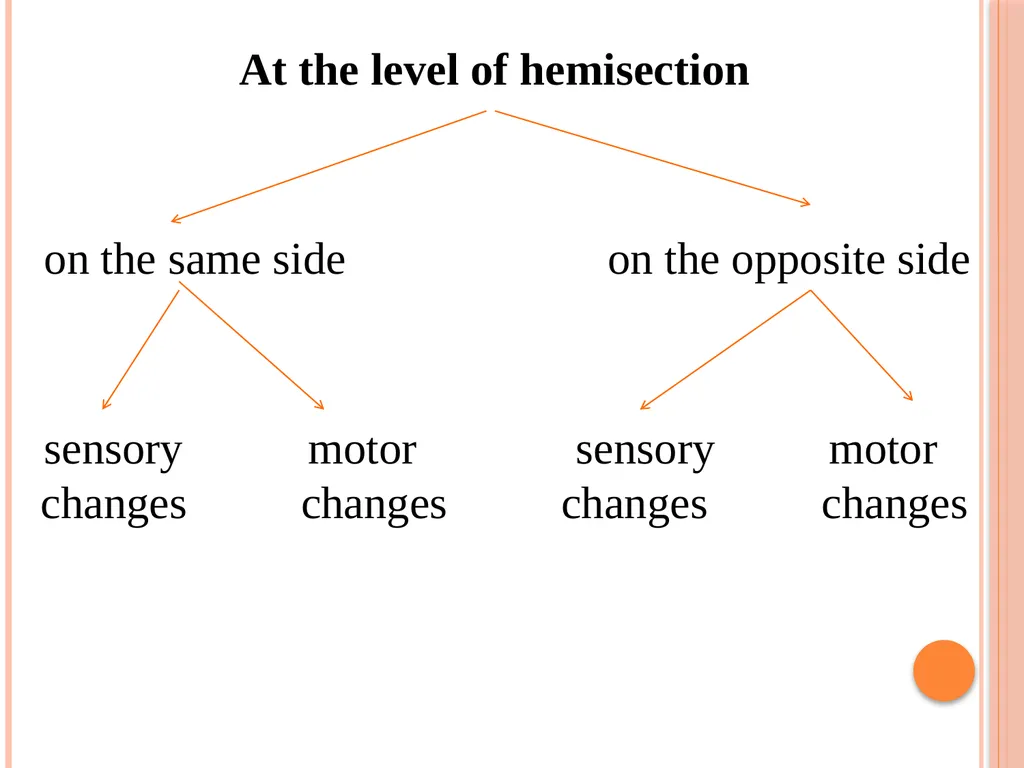
At the level of hemisection
on the same side on the opposite side
sensory motor sensory motor changes changes changes changes<br>
08
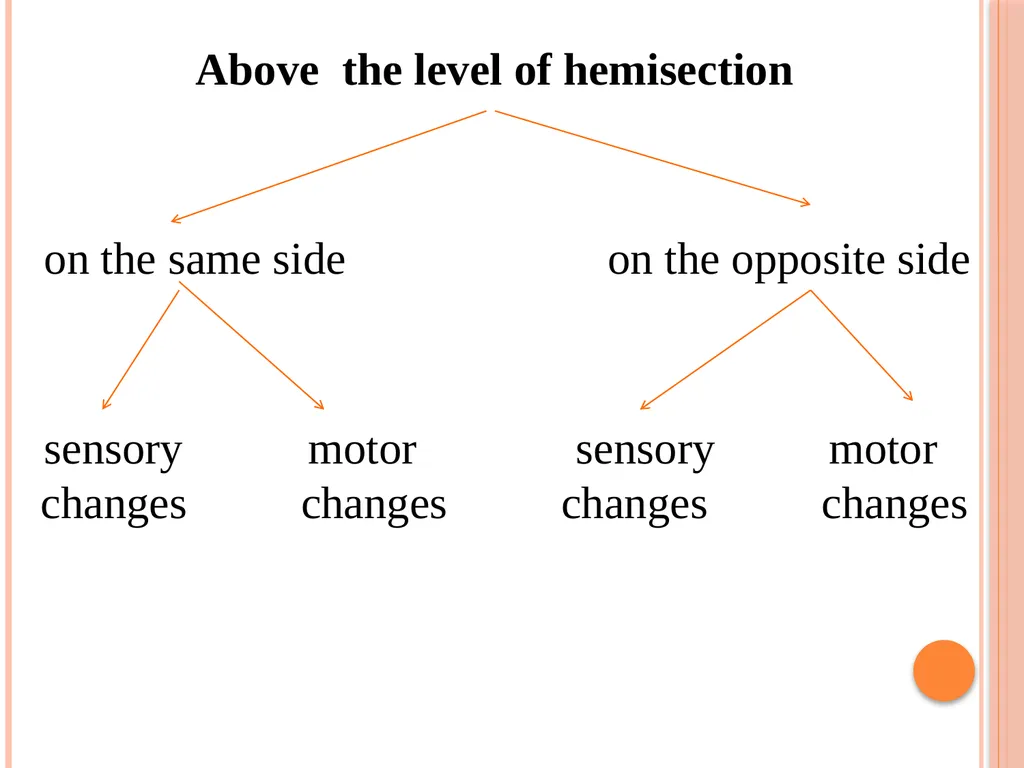
Above the level of hemisection
on the same side on the opposite side
sensory motor sensory motor changes changes changes changes<br>
09
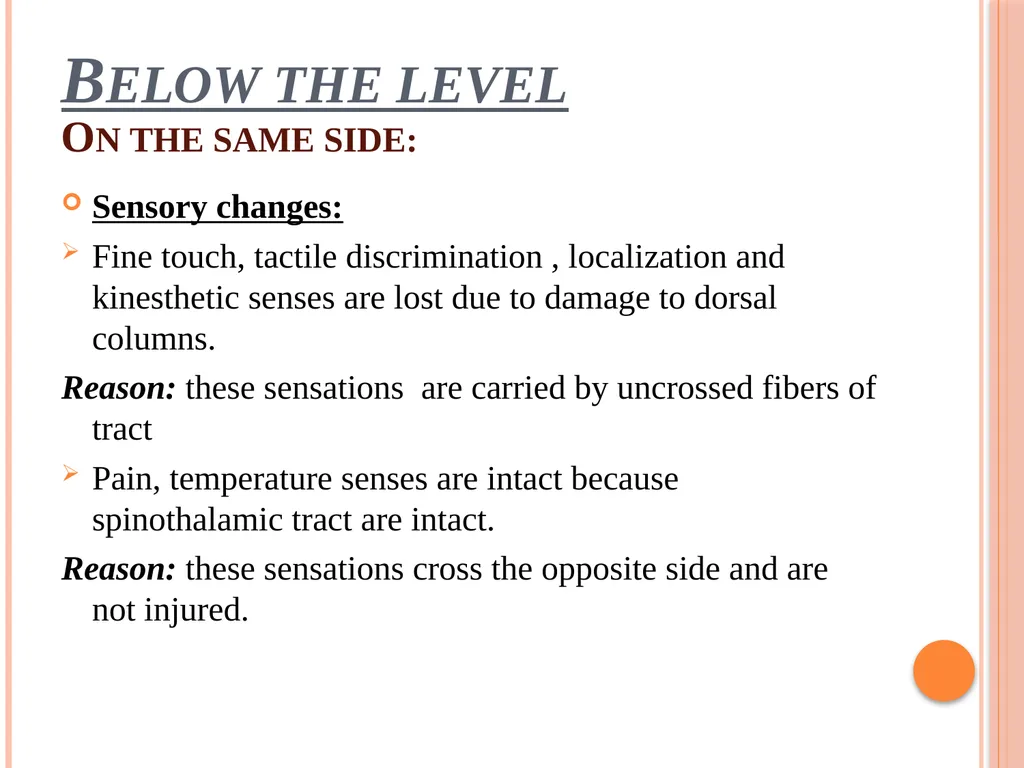
Below the level On the same side: Sensory changes:
Fine touch, tactile discrimination , localization and kinesthetic senses are lost due to damage to dorsal columns.
Reason: these sensations are carried by uncrossed fibers of tract
Pain, temperature senses are intact because spinothalamic tract are intact.
Reason: these sensations cross the opposite side and are not injured.<br>
10
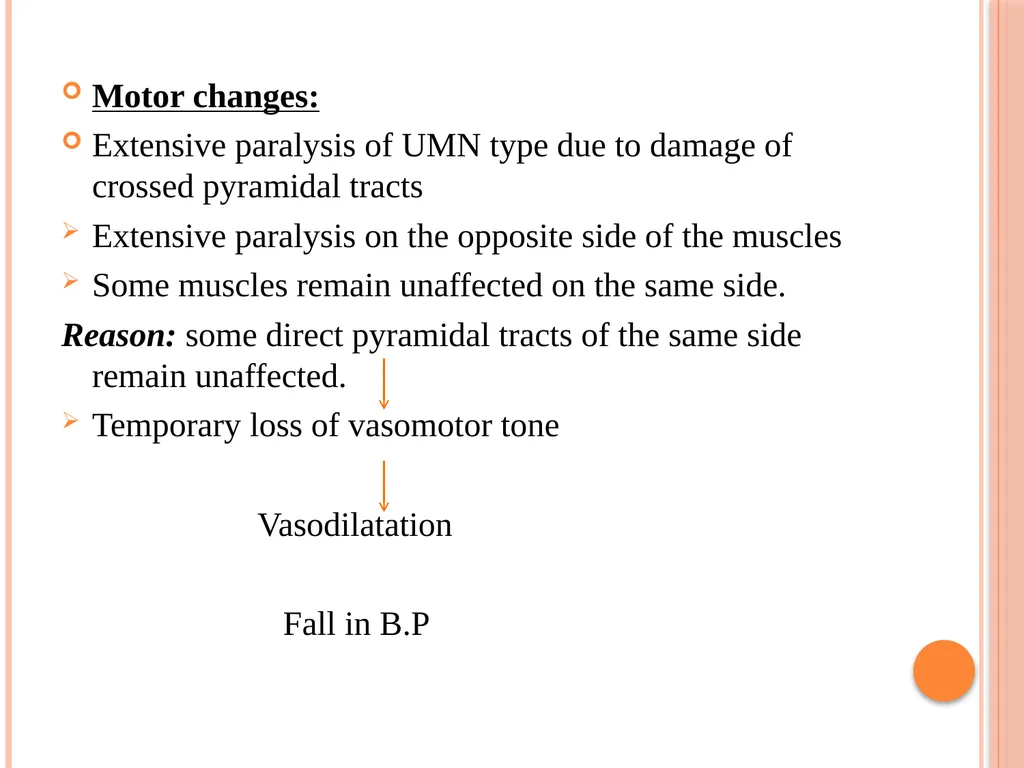
Motor changes:
Extensive paralysis of UMN type due to damage of crossed pyramidal tracts
Extensive paralysis on the opposite side of the muscles
Some muscles remain unaffected on the same side.
Reason: some direct pyramidal tracts of the same side remain unaffected.
Temporary loss of vasomotor tone
Vasodilatation
Fall in B.P<br>
11
Reason: Damage to descending fibers from VMC in the medulla to lateral horn cell.<br>
12
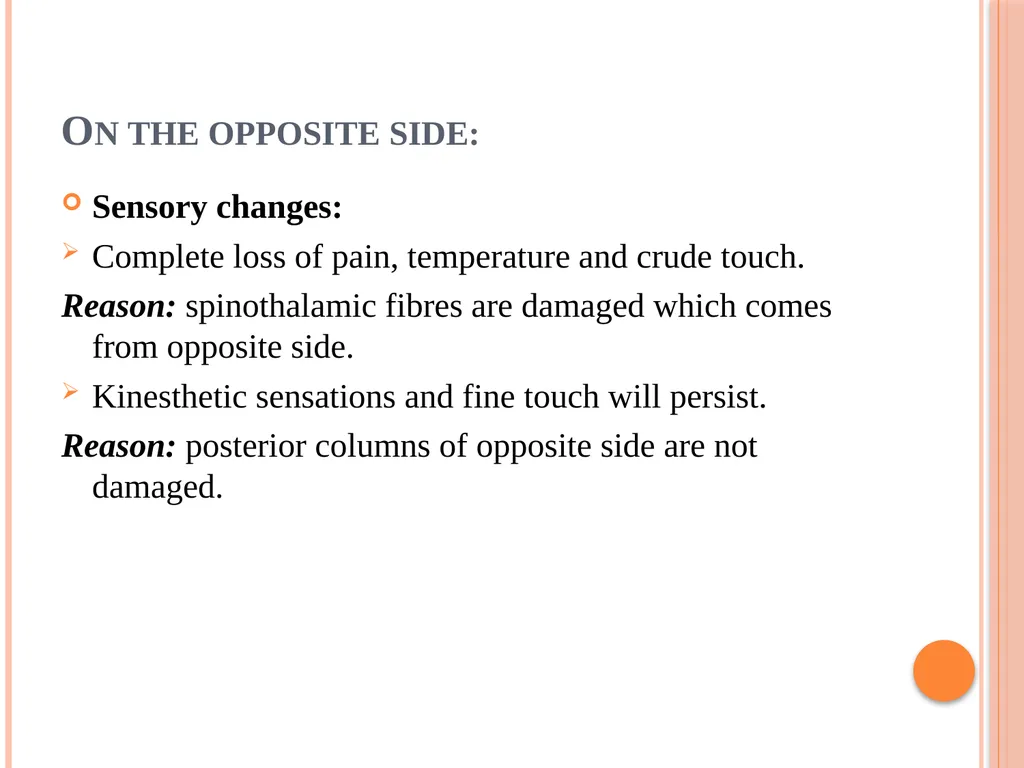
On the opposite side: Sensory changes:
Complete loss of pain, temperature and crude touch.
Reason: spinothalamic fibres are damaged which comes from opposite side.
Kinesthetic sensations and fine touch will persist.
Reason: posterior columns of opposite side are not damaged.<br>
13
Motor changes:
Either no paralysis or paralysis of some muscles occurs.
Reason: involvement of pyramidal tracts of the same side at the level of crossing.
“The phenomenon of extensive motor loss but little sensory loss on the same side and extensive sensory loss but little motor loss on the opposite side is known as BROWN SEQUARD SYNDROME.”<br>
14
At the level: on the same side: Sensory changes:
Complete anaesthesia
Reason: damage to posterior nerve root, posterior horn cell and spinothalamic fibers which cross to the opposite side.<br>
15
Motor changes:
Complete lower motor neurone type paralysis due to damage of anterior horn cell.
Complete vasomotor paralysis due to damage of lateral horn cells.<br>
16
On the opposite side: Sensory changes:
Some loss of pain senses due to injury to pain fibers of spinothalamic tract which cross horizontally in the same segment.
Motor changes: very little or nil due to damage to some pyramidal fibers of the same side.<br>
17
Above the level of lesion: on the same side: A band of hyperesthesia present due to irritation of upper cut end on the damaged fibers.<br>
18
Regional peculiarities: Hemisection in cervical region:
Constriction of pupil because pupillary dilator fibers come from medulla passing T1,2,3
Loss of biceps, triceps and supinators and pronator jerks if C4,5,6 are involved.
Paralysis of diaphragm due to damage to phrenic nerve (C3,5,6 involvement)<br>
19
Hemisection in the lumbar region:
Loss of knee jerk and disturbances in micturition. (L3,4 Involvement)
Hemisection in lumbosacral region:
Loss of control over sphincters of UB and anus.