Holmes Chapel Primary School Art and Design
Description: Holmes Chapel Primary School Art and Design Curriculum Art and design at Holmes Chapel Primary School Art and design at Holmes Chapel Primary School What does our learning in art look like? Sketch books Sketchbooks provide a record of the
Related Topics
Download Presentation
"Holmes Chapel Primary School Art and Design" is the property of its rightful owner. Permission is granted to download and print the materials on this website for personal, non-commercial use only, and to display it on your personal computer provided you do not modify the materials and that you retain all copyright notices contained in the materials. By downloading content from our website, you accept the terms of this agreement.
Presentation Transcript
slide1. Holmes Chapel Primary School Art and Design Curriculum<br>
slide2. Art and design at Holmes Chapel Primary School<br>
slide3. Art and design at Holmes Chapel Primary School<br>
slide4. What does our learning in art look like? Sketch books
Sketchbooks provide a record of the children’s learning and progress in art from EYFS to Year 6. They are used to develop the National Curriculum expectations for Art and to make our children more independent and confident artists.
Investigating and Making
The sketchbook is used as an initial way of recording responses to various stimuli and the most common form of this is through drawing. The children are encouraged to think of it as the place to practice, develop and focus their work. Sometimes work started in the sketchbook is developed into a finished piece of work elsewhere; in some cases it is not. The sketchbook acts as a reference source of what each child has drawn and is a resource for future work. The work dated and given a title to provide a suitable record for both the teacher and the children themselves.
There are three main areas when using sketchbooks:
Taking In, Testing Out and Reflecting,
though in reality these activities will interweave each other throughout the sketchbook.<br>
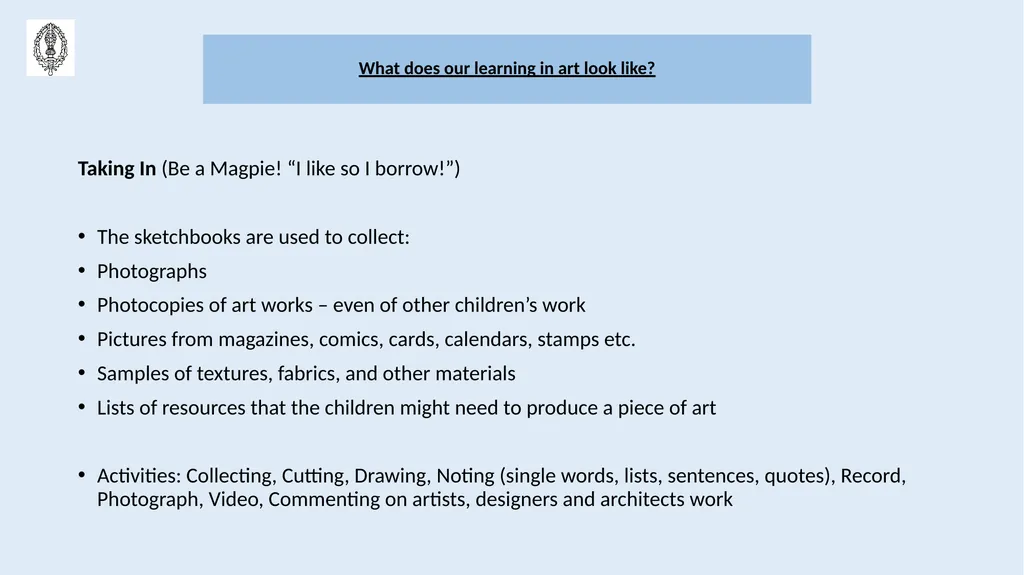
slide5. What does our learning in art look like? Taking In (Be a Magpie! “I like so I borrow!”)
The sketchbooks are used to collect:
Photographs
Photocopies of art works – even of other children’s work
Pictures from magazines, comics, cards, calendars, stamps etc.
Samples of textures, fabrics, and other materials
Lists of resources that the children might need to produce a piece of art
Activities: Collecting, Cutting, Drawing, Noting (single words, lists, sentences, quotes), Record, Photograph, Video, Commenting on artists, designers and architects work<br>
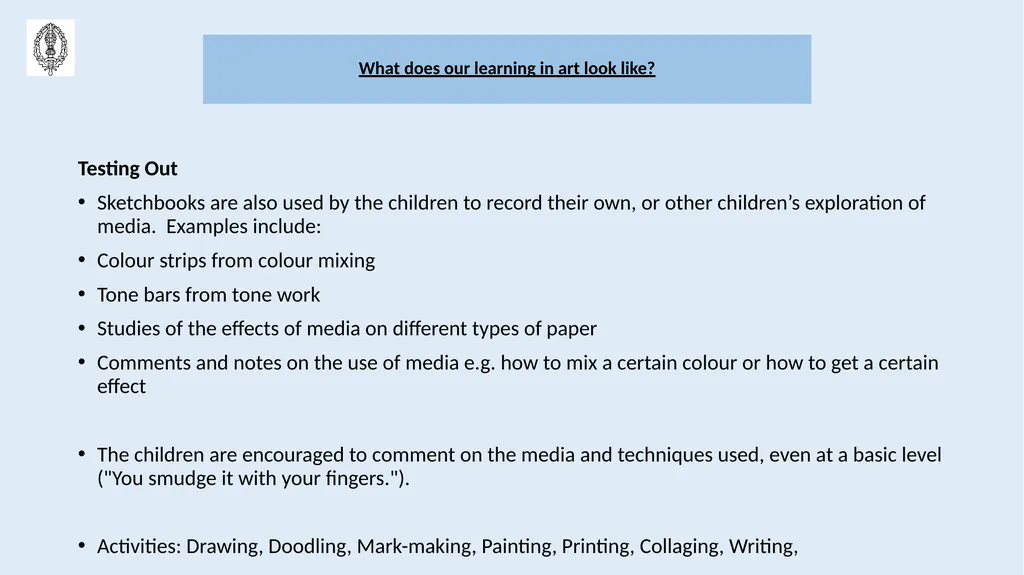
slide6. What does our learning in art look like? Testing Out
Sketchbooks are also used by the children to record their own, or other children’s exploration of media. Examples include:
Colour strips from colour mixing
Tone bars from tone work
Studies of the effects of media on different types of paper
Comments and notes on the use of media e.g. how to mix a certain colour or how to get a certain effect
The children are encouraged to comment on the media and techniques used, even at a basic level ("You smudge it with your fingers.").
Activities: Drawing, Doodling, Mark-making, Painting, Printing, Collaging, Writing,<br>
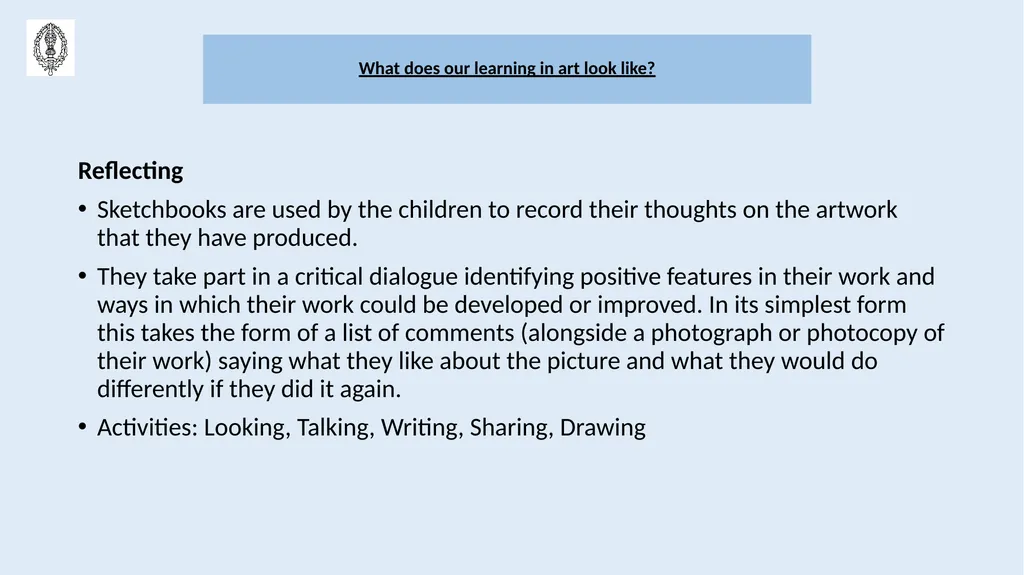
slide7. What does our learning in art look like? Reflecting
Sketchbooks are used by the children to record their thoughts on the artwork that they have produced.
They take part in a critical dialogue identifying positive features in their work and ways in which their work could be developed or improved. In its simplest form this takes the form of a list of comments (alongside a photograph or photocopy of their work) saying what they like about the picture and what they would do differently if they did it again.
Activities: Looking, Talking, Writing, Sharing, Drawing<br>

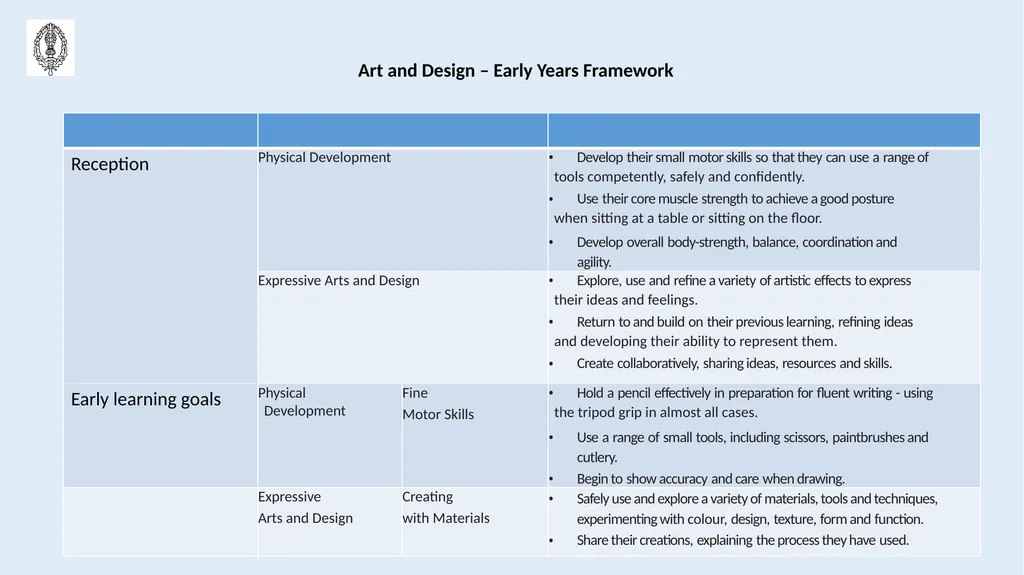
slide8. Art and Design – Early Years Framework<br>
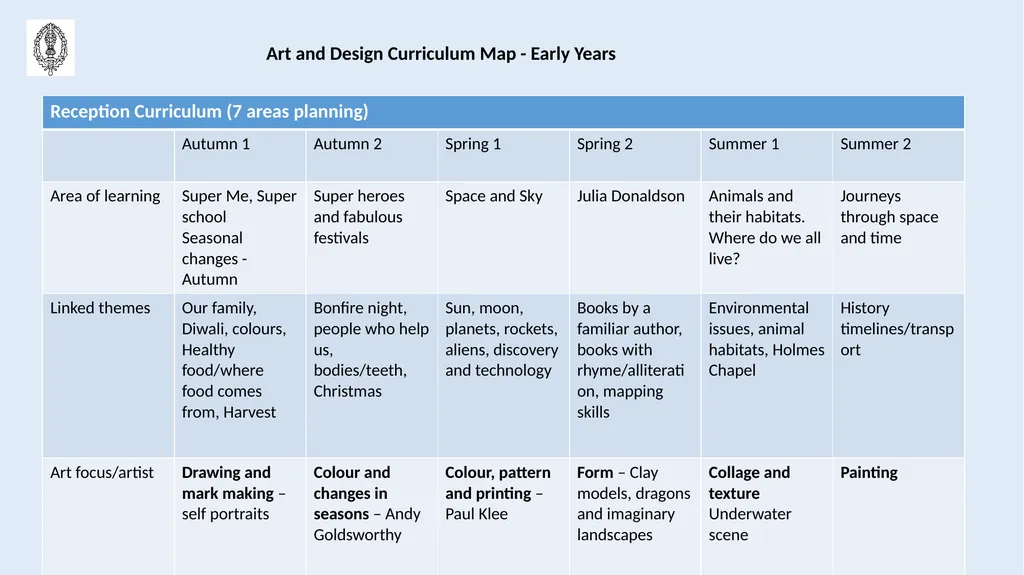
slide9. Art and Design Curriculum Map - Early Years<br>
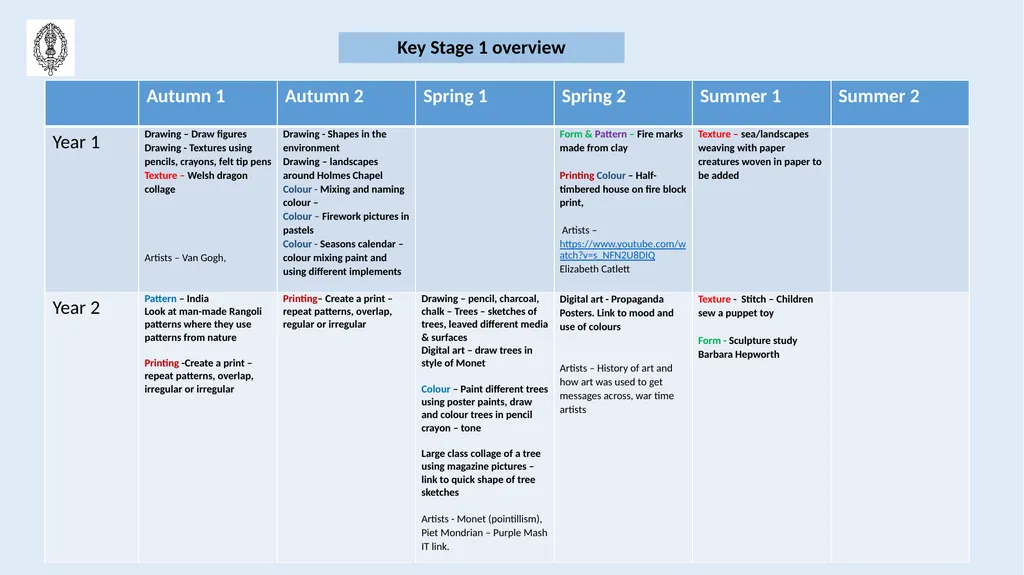
slide10. Key Stage 1 overview<br>
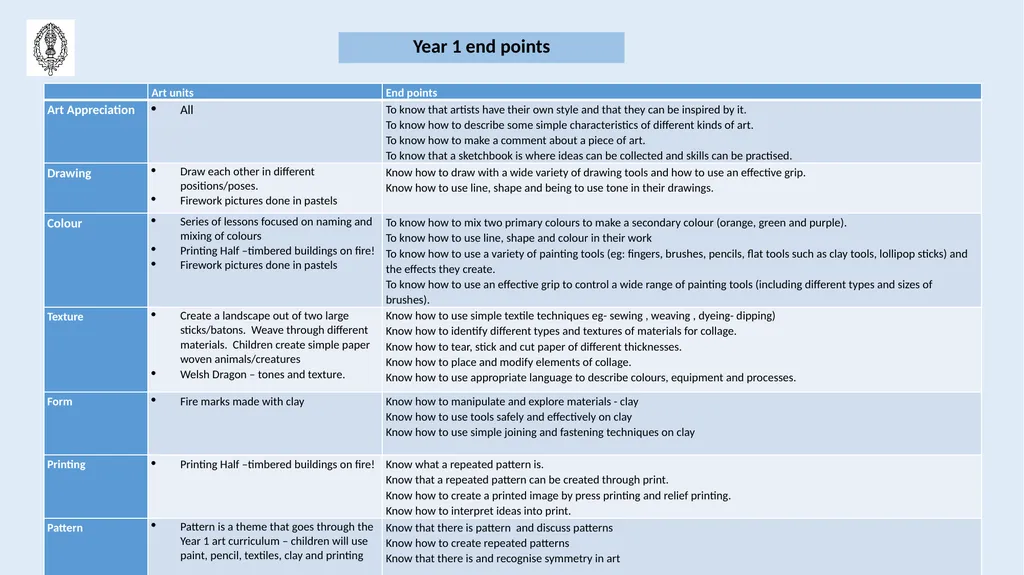
slide11. Year 1 end points<br>
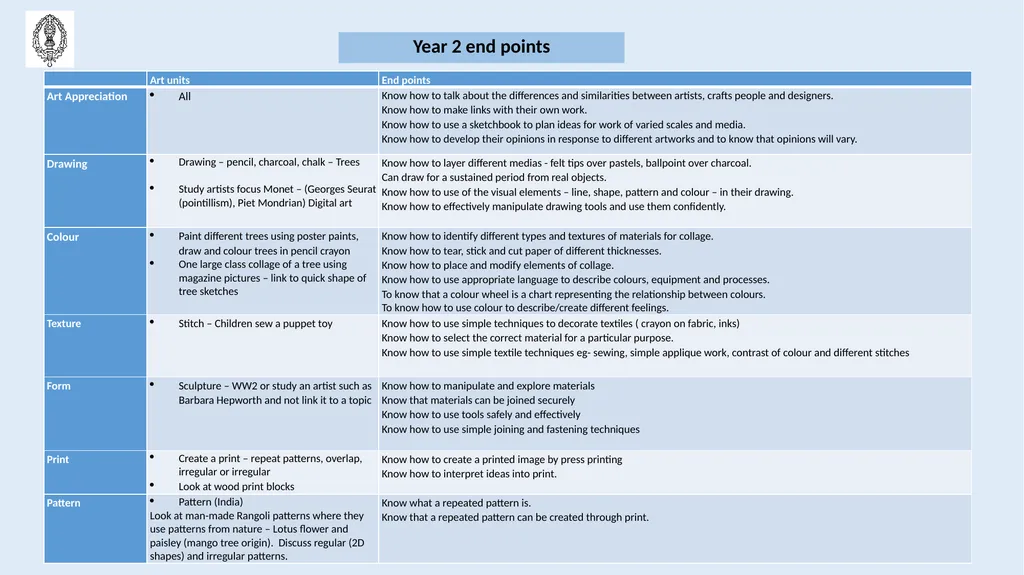
slide12. Year 2 end points<br>
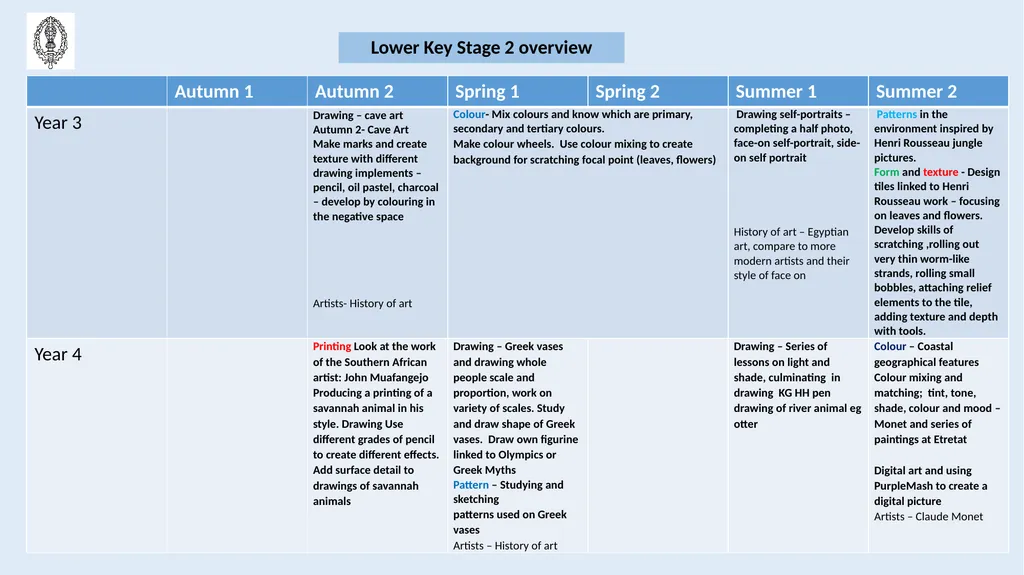
slide13. Lower Key Stage 2 overview<br>
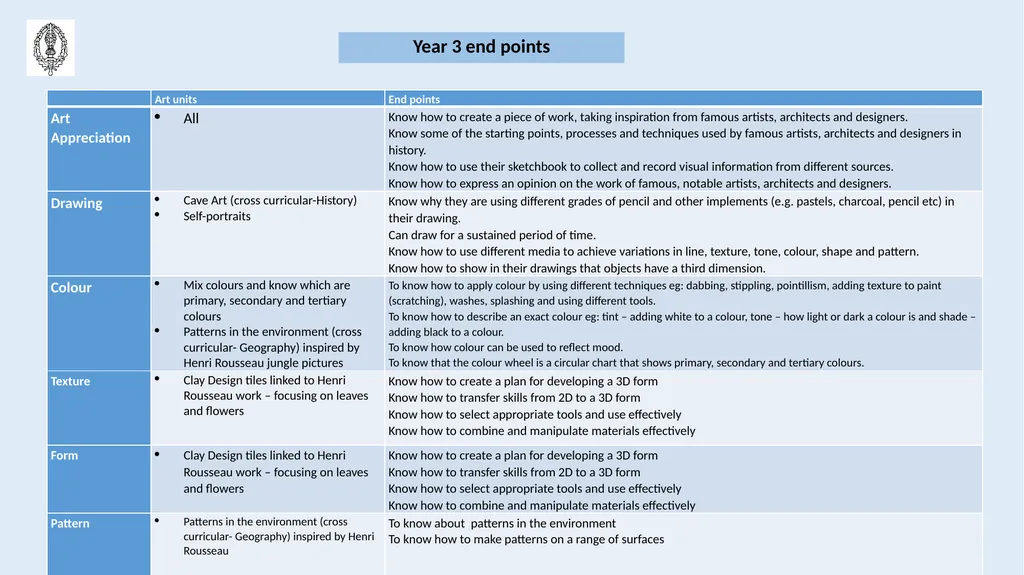
slide14. Year 3 end points<br>
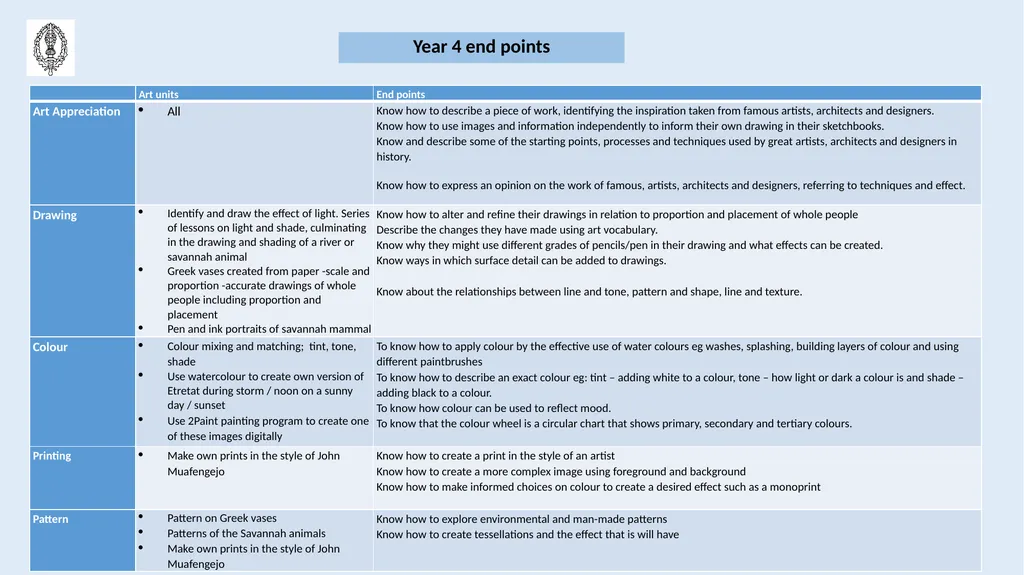
slide15. Year 4 end points<br>
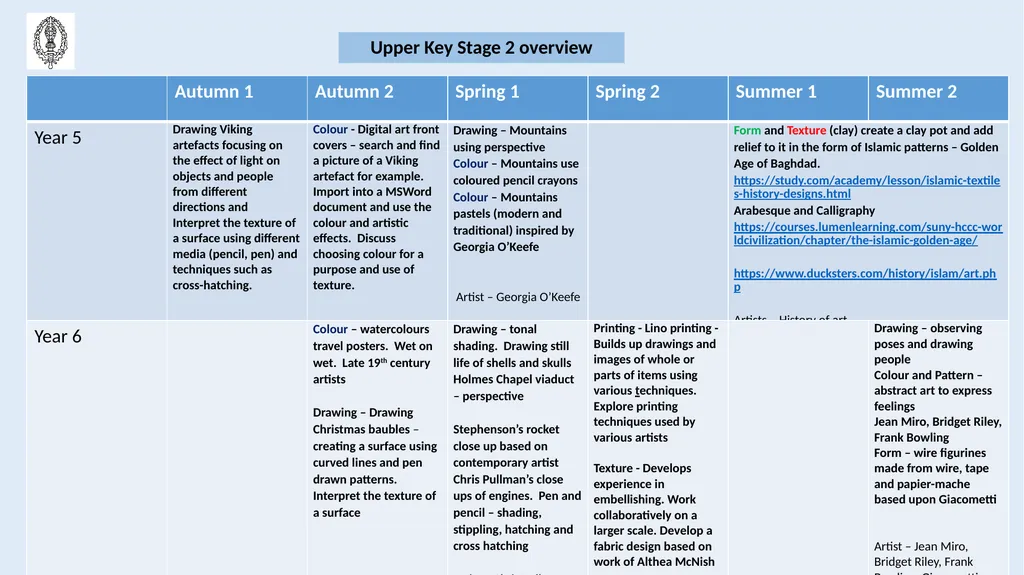
slide16. Upper Key Stage 2 overview<br>
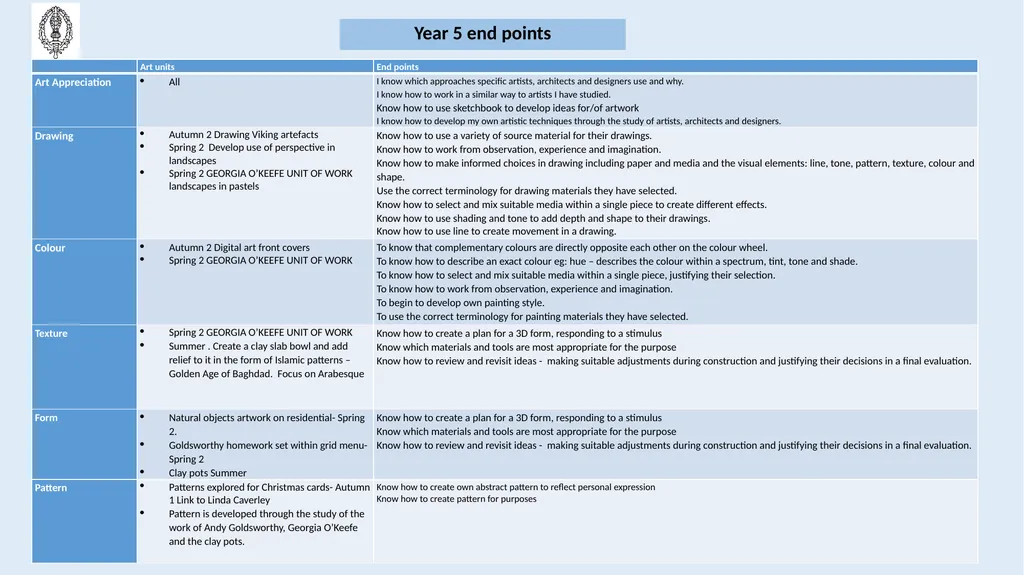
slide17. Year 5 end points<br>
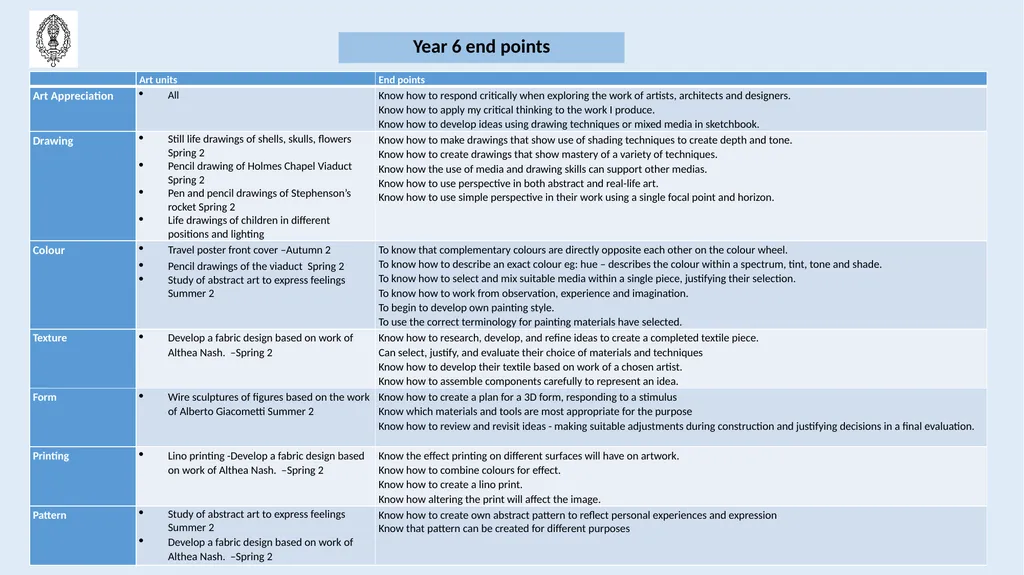
slide18. Year 6 end points<br>
slide2. Art and design at Holmes Chapel Primary School<br>
slide3. Art and design at Holmes Chapel Primary School<br>
slide4. What does our learning in art look like? Sketch books
Sketchbooks provide a record of the children’s learning and progress in art from EYFS to Year 6. They are used to develop the National Curriculum expectations for Art and to make our children more independent and confident artists.
Investigating and Making
The sketchbook is used as an initial way of recording responses to various stimuli and the most common form of this is through drawing. The children are encouraged to think of it as the place to practice, develop and focus their work. Sometimes work started in the sketchbook is developed into a finished piece of work elsewhere; in some cases it is not. The sketchbook acts as a reference source of what each child has drawn and is a resource for future work. The work dated and given a title to provide a suitable record for both the teacher and the children themselves.
There are three main areas when using sketchbooks:
Taking In, Testing Out and Reflecting,
though in reality these activities will interweave each other throughout the sketchbook.<br>
slide5. What does our learning in art look like? Taking In (Be a Magpie! “I like so I borrow!”)
The sketchbooks are used to collect:
Photographs
Photocopies of art works – even of other children’s work
Pictures from magazines, comics, cards, calendars, stamps etc.
Samples of textures, fabrics, and other materials
Lists of resources that the children might need to produce a piece of art
Activities: Collecting, Cutting, Drawing, Noting (single words, lists, sentences, quotes), Record, Photograph, Video, Commenting on artists, designers and architects work<br>
slide6. What does our learning in art look like? Testing Out
Sketchbooks are also used by the children to record their own, or other children’s exploration of media. Examples include:
Colour strips from colour mixing
Tone bars from tone work
Studies of the effects of media on different types of paper
Comments and notes on the use of media e.g. how to mix a certain colour or how to get a certain effect
The children are encouraged to comment on the media and techniques used, even at a basic level ("You smudge it with your fingers.").
Activities: Drawing, Doodling, Mark-making, Painting, Printing, Collaging, Writing,<br>
slide7. What does our learning in art look like? Reflecting
Sketchbooks are used by the children to record their thoughts on the artwork that they have produced.
They take part in a critical dialogue identifying positive features in their work and ways in which their work could be developed or improved. In its simplest form this takes the form of a list of comments (alongside a photograph or photocopy of their work) saying what they like about the picture and what they would do differently if they did it again.
Activities: Looking, Talking, Writing, Sharing, Drawing<br>
slide8. Art and Design – Early Years Framework<br>
slide9. Art and Design Curriculum Map - Early Years<br>
slide10. Key Stage 1 overview<br>
slide11. Year 1 end points<br>
slide12. Year 2 end points<br>
slide13. Lower Key Stage 2 overview<br>
slide14. Year 3 end points<br>
slide15. Year 4 end points<br>
slide16. Upper Key Stage 2 overview<br>
slide17. Year 5 end points<br>
slide18. Year 6 end points<br>