
Housing Case Management Best Practices and


Description: Housing Case Management Best Practices and Resources 2282023 1 L. Andru Dallaly M.Ed , LPC-Candidate Manager of Runaway and Homeless Youth Supports Oklahoma State Department of Mental Health and Substance Abuse Services Housing and
Related Topics
Download Presentation
"Housing Case Management Best Practices and" is the property of its rightful owner. Permission is granted to download and print the materials on this website for personal, non-commercial use only, and to display it on your personal computer provided you do not modify the materials and that you retain all copyright notices contained in the materials. By downloading content from our website, you accept the terms of this agreement.
Presentation Transcript
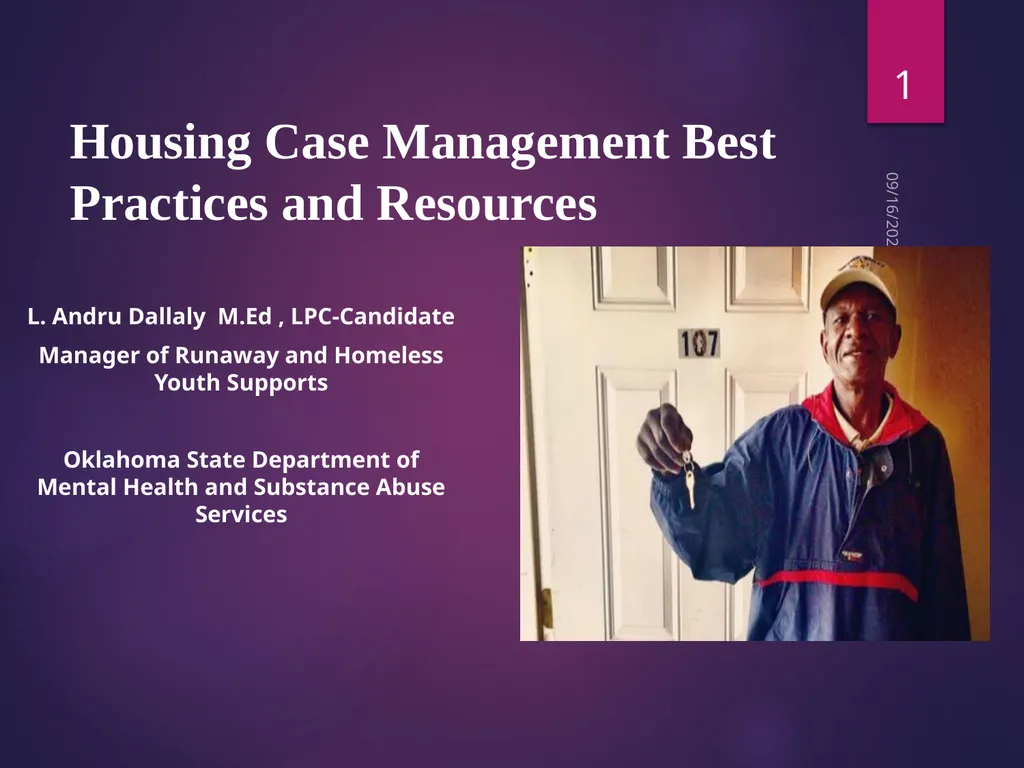
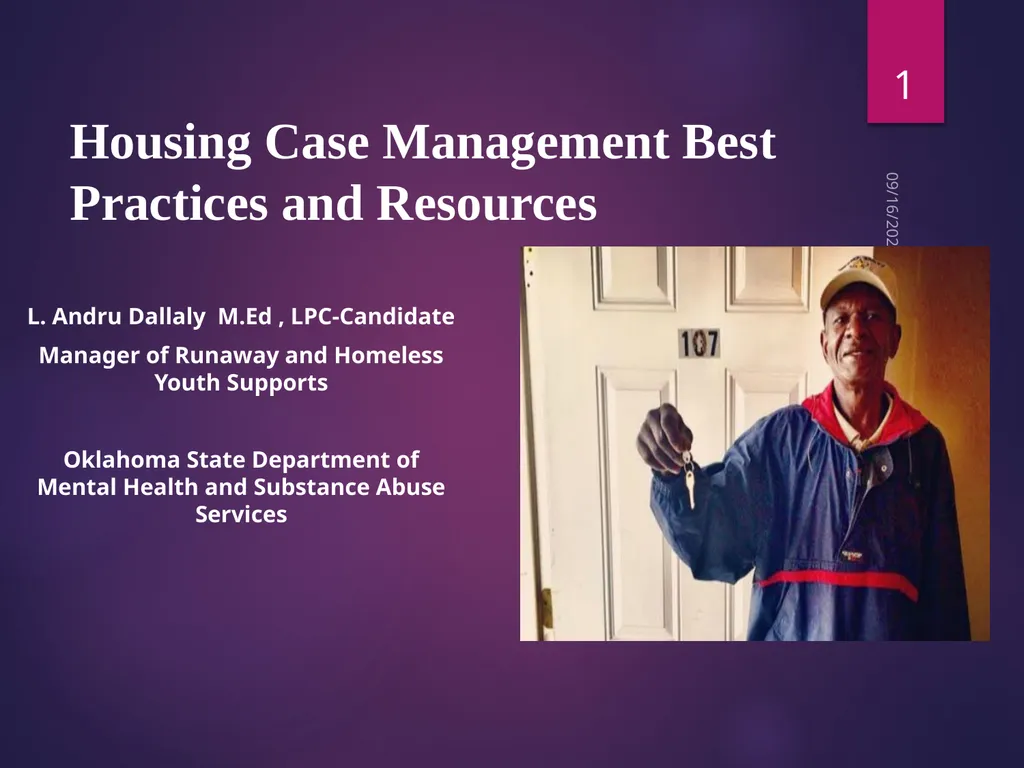
slide1. Housing Case Management Best Practices and Resources 2/28/2023 1 L. Andru Dallaly M.Ed , LPC-Candidate
Manager of Runaway and Homeless Youth Supports
Oklahoma State Department of Mental Health and Substance Abuse Services<br>
slide2. Housing and Homeless Team Andru Dallaly – Manager of Runaway and Homeless Youth Supports
Served as a youth and young adult case manager for 6 years, currently provides pro bono advocacy for homeless youth in OKC
Richard White – Coordinator of Runaway and Homeless Youth Supports
Tijuan Miller - Manager of Community and Recovery Based Housing Supports
Tammie Vail – Manager of Homeless Supports 2/28/2023 2<br>
slide3. DISCLAIMER Based on a blend of research-based strategies and lessons learned during 9 years of case management experiences.
Not EVERY client will benefit from these approaches, but every case manager will benefit from trying.
I do not use this time to go over specific programs – but tools that help you as a case manager to find the best programs for your clients. 2/28/2023 3<br>
slide4. “Housing First” approach to case management An approach that prioritizes permanent, affordable housing as quickly as possible for individuals and families experiencing homelessness, and then provides the supportive services and connections to the community-based supports people need to keep their housing and avoid returning to homelessness. 2/28/2023 4<br>
slide5. Why the shift in culture ? People with the foundation of a home are better positioned to take advantage of supportive services: they have the stability and hopefully the sense of safety in which to engage in treatment services, school, job searches and other ways to live fulfilling lives.
The specific program types that use Housing First approaches are much cheaper to operate than allowing someone to remain homeless.
https://youtu.be/pwdq2VWavtc 2/28/2023 5<br>
slide6. Some components of Housing First Case Management 4 Access to targeted efforts in identifying appropriate and permanent housing solutions is a right and a priority
Housing is a basic human right and is healthcare 4 No requirements to be symptom-free or sober to attain housing. 4 People define their own recovery. 4 People choose their own path to recovery. 4 People define their own needs. 4 People have the right to expect their choices will be respected, including the choice not to engage or accept services. 2/28/2023 6<br>
slide7. Cultivating Formal Resources What is out there?
Resources are always changing- your job is to be an expert on them
GO visit them- get to know the key players
SHARE with your colleagues- create a google doc
KEEP A RECORD of what works, what is missing/needed<br>
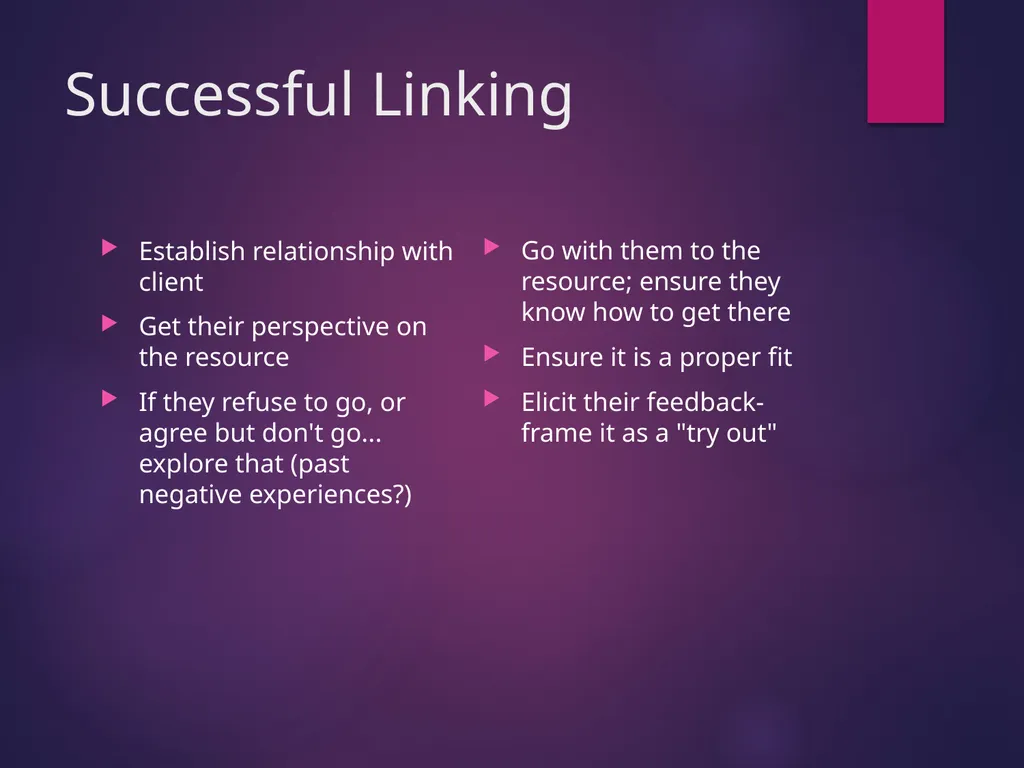
slide8. Successful Linking Establish relationship with client
Get their perspective on the resource
If they refuse to go, or agree but don't go... explore that (past negative experiences?) Go with them to the resource; ensure they know how to get there
Ensure it is a proper fit
Elicit their feedback- frame it as a "try out"<br>
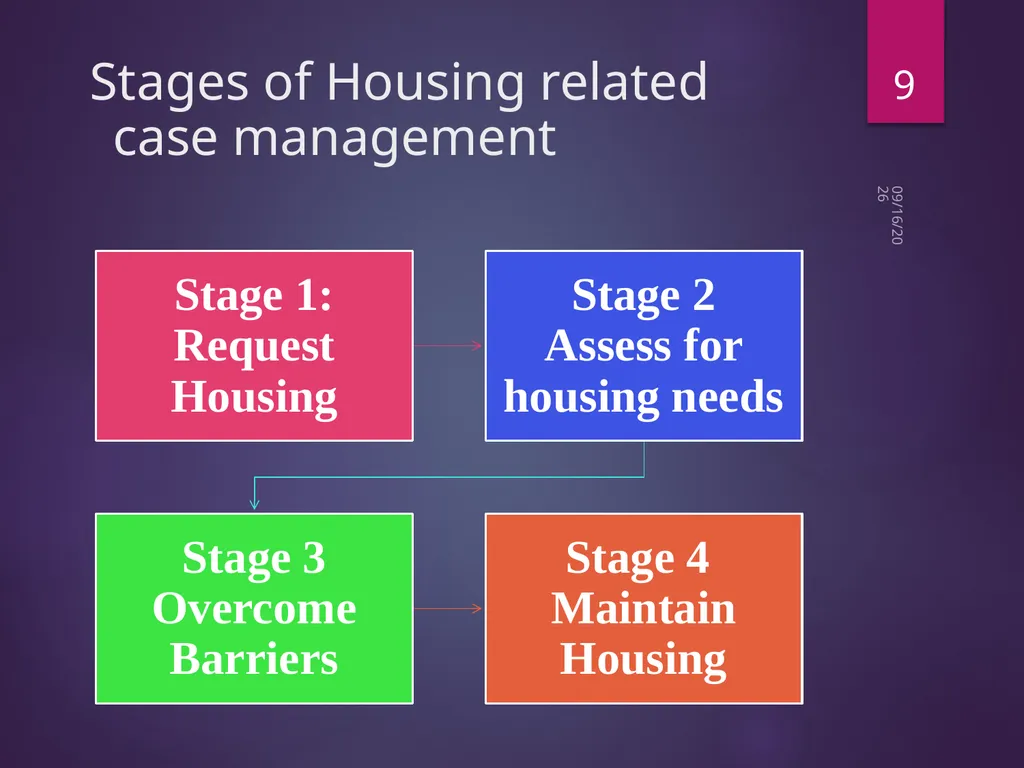
slide9. 2/28/2023 9 Stages of Housing related case management<br>
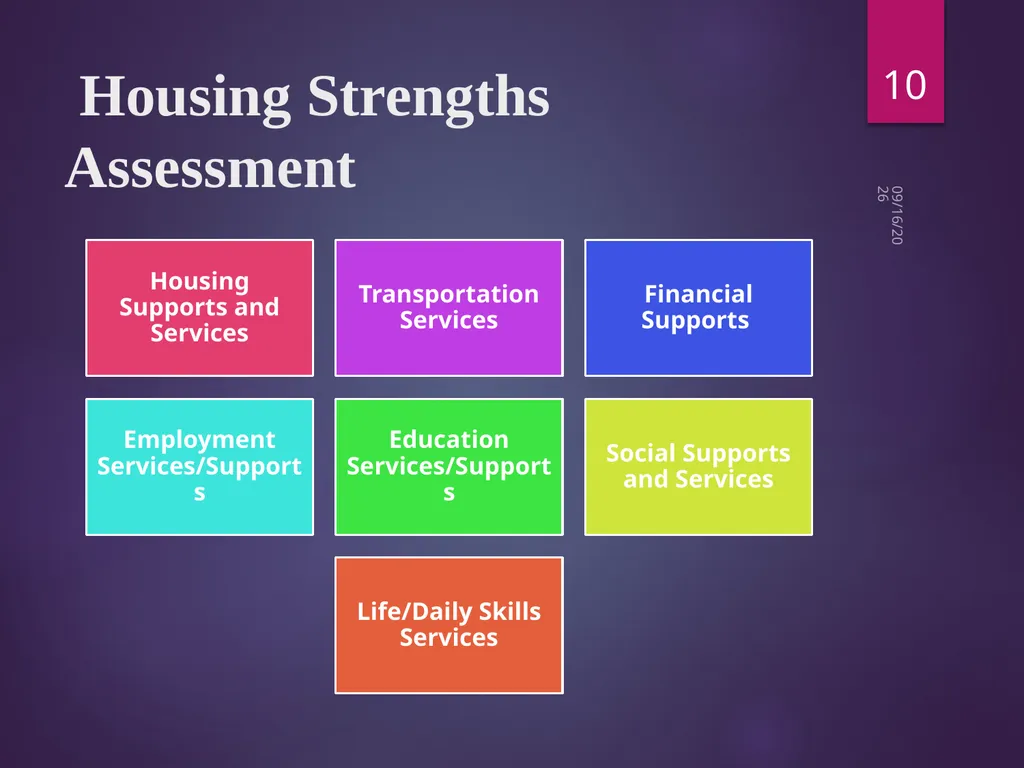
slide10. Housing Strengths Assessment 2/28/2023 10<br>
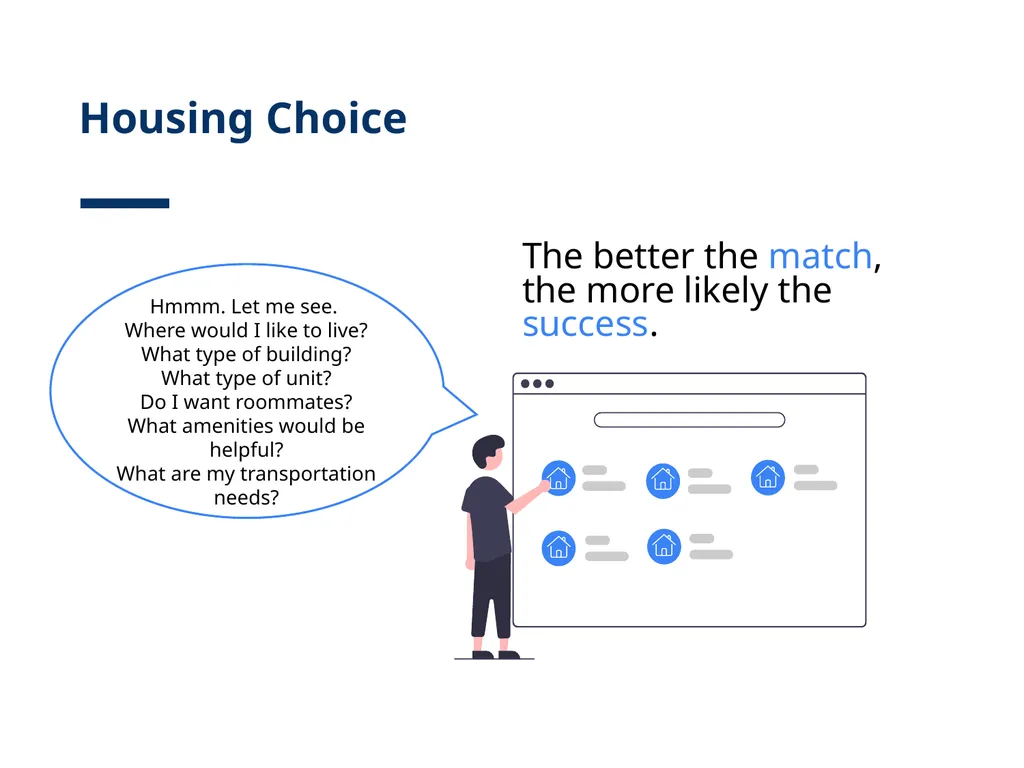
slide11. Housing Choice The better the match, the more likely the success. Hmmm. Let me see.
Where would I like to live?
What type of building?
What type of unit?
Do I want roommates?
What amenities would be helpful?
What are my transportation needs?<br>
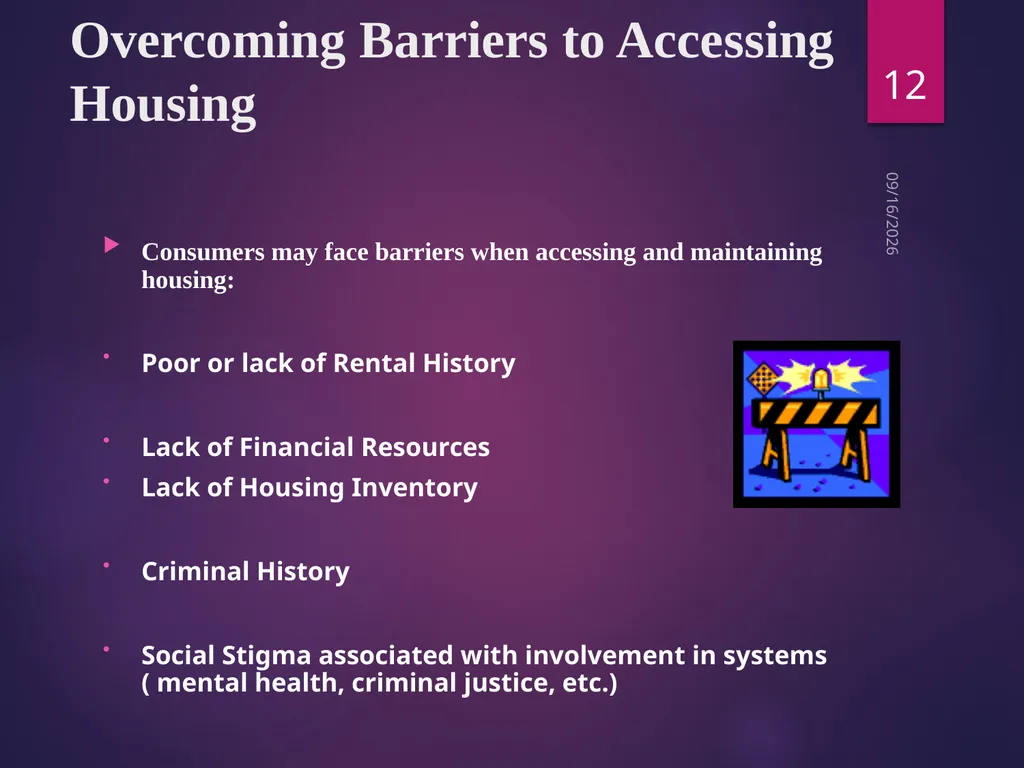
slide12. Overcoming Barriers to Accessing Housing Consumers may face barriers when accessing and maintaining housing:
Poor or lack of Rental History
Lack of Financial Resources
Lack of Housing Inventory
Criminal History
Social Stigma associated with involvement in systems ( mental health, criminal justice, etc.) 2/28/2023 12<br>
slide13. Landlord Engagement Tell them what you offer:
Weekly home visits
24 hr emergency contact
Rent subsidy
Dispute resolution process .<br>
slide14. Maintaining Housing Probably THE MOST important step in any successful housing is a
CASE MANAGEMENT PLAN!
-What barriers still exist that may impede stable placement?
Life skill training – “How to be a good tenant”
Advocacy with landlords – “How to be a landlord for someone with mental illness”
Coping skill training – Living alone, or with others, dealing with neighbors, etc.
It is “Housing First”, not “ Housing Only” 2/28/2023 14<br>
slide15. How much contact? Depends on the person’s need and teams assessment
Person’s needs vary over time
Standard arc –high to low
It is non-linear process
Minimum visits<br>
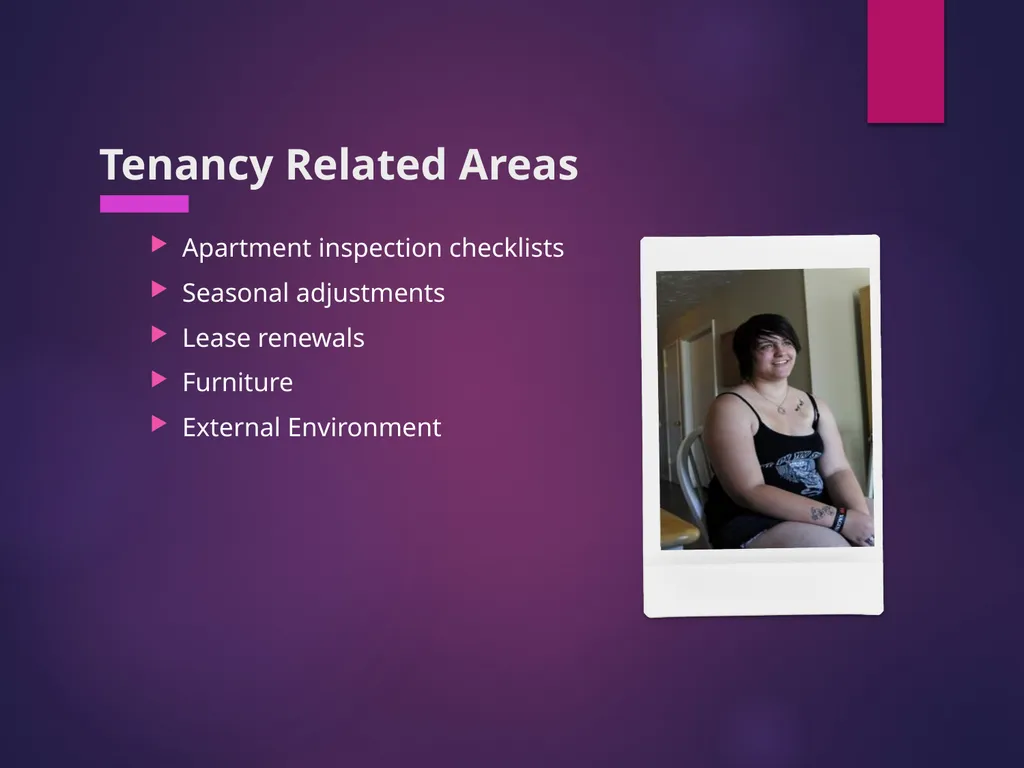
slide16. Tenancy Related Areas Apartment inspection checklists
Seasonal adjustments
Lease renewals
Furniture
External Environment<br>
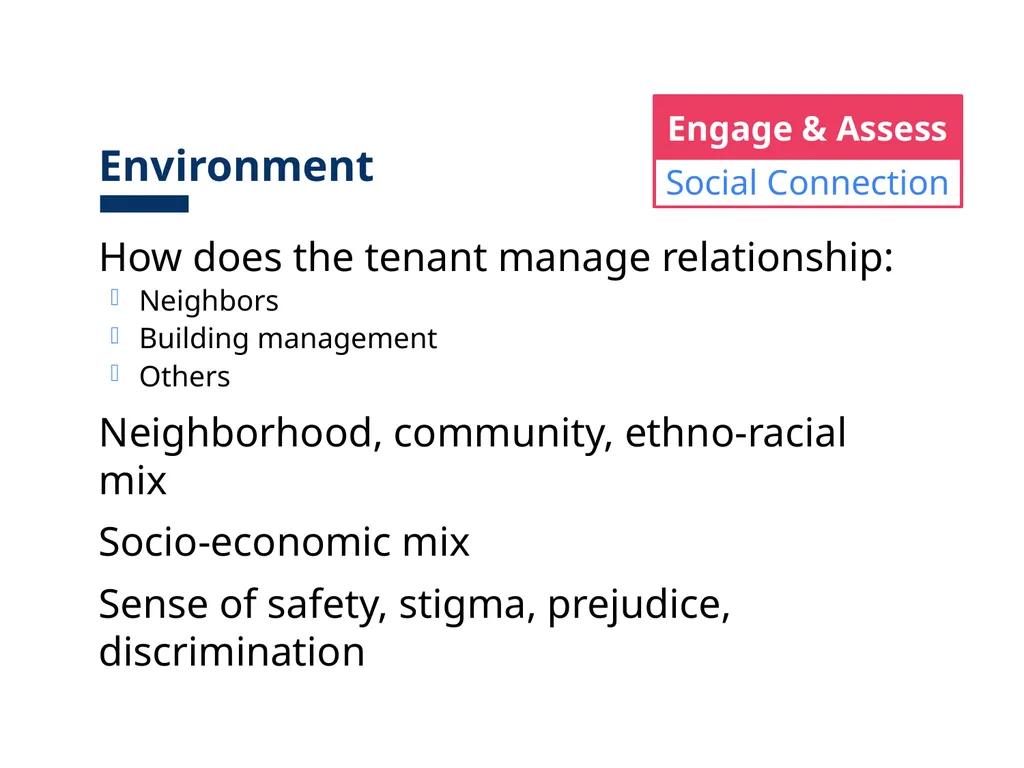
slide17. Environment How does the tenant manage relationship:
Neighbors
Building management
Others
Neighborhood, community, ethno-racial mix
Socio-economic mix
Sense of safety, stigma, prejudice, discrimination Engage & Assess Social Connection<br>
slide18. To do family and natural supports work, you need to unlearn what you know about youth work. Traditional FNS Approach<br>
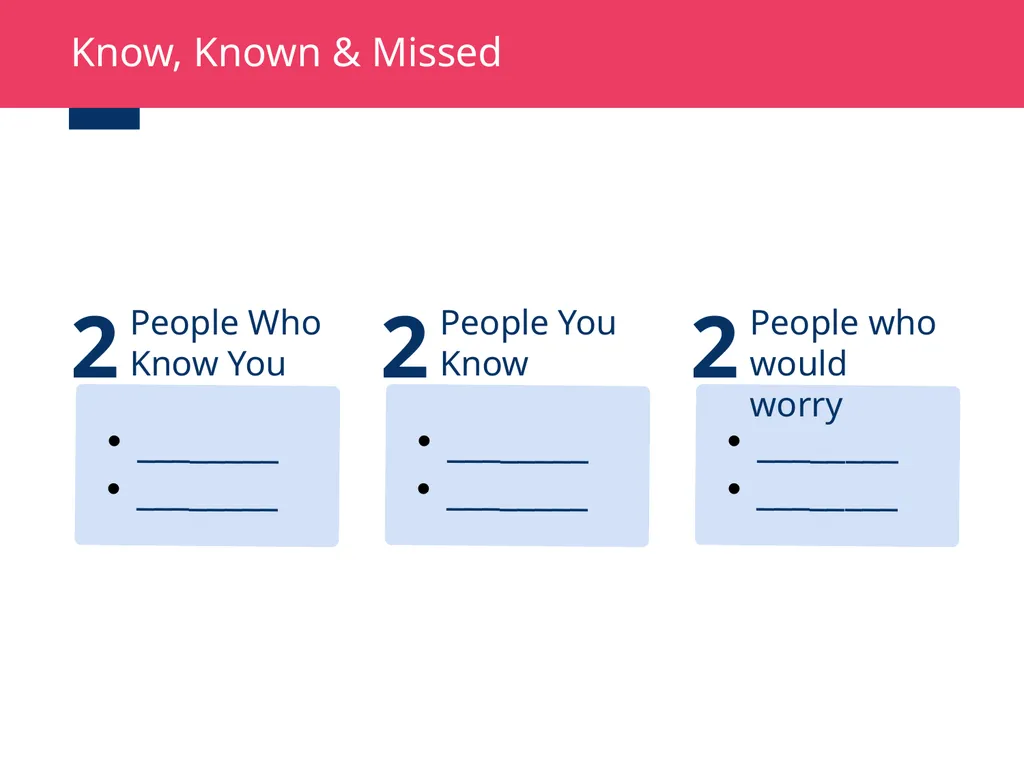
slide19. Know, Known & Missed ________e
________ People Who Know You 2 ________e
________ People You Know 2 ________e
________ People who would worry 2<br>
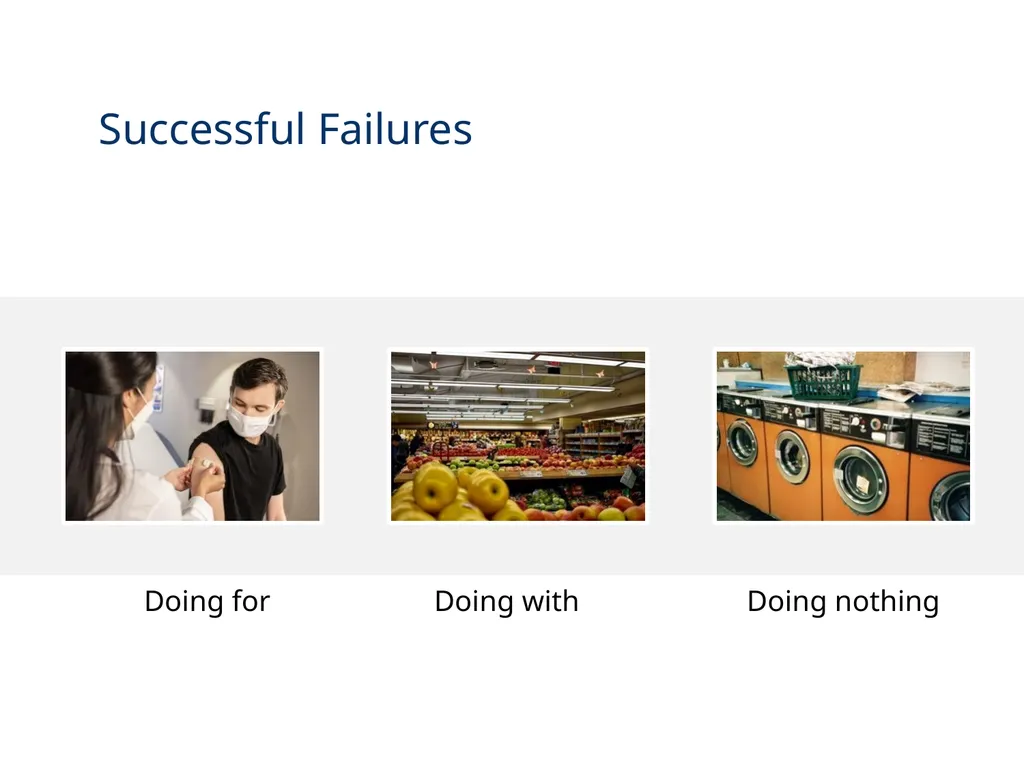
slide20. Successful Failures Doing with Doing for Doing nothing<br>
slide21. CASE EXAMPLE: Your client Judy has been sleeping in her car for several months. She has been approved for emergency voucher program. You have shown her 3 apartments and she did not like any of them and declined to use her voucher. What do you do? 2/28/2023 21<br>
slide22. Types of housing programs that may be available: Permanent supportive housing Permanent supportive housing (PSH) is targeted
to individuals and families with chronic illnesses,
disabilities, mental health issues, or substance
use disorders who have experienced long-term
or repeated homelessness. It provides long term
rental assistance and supportive services.
How Can You Help?
Require documentation from case manager, psychiatrist or other treating providers to validate illness or disability. 2/28/2023 22<br>
slide23. Working with your CoCs A Continuum of Care (CoC) is a regional or local planning body that coordinates housing and services funding for homeless families and individuals
Wide range of agencies and organizations represented
Promotes community-wide commitment to ending homelessness
Required group for applying for HUD Homeless funding
NOT an entity to just send your client to themselves 2/28/2023 23<br>
slide24. Working with your CoCs The best way a case manager can be an asset to their client needing housing supports, is for that case manager to be connected to their local Continuum of Care- Handout of points of contact will be provided
Additionally – most CMHC/CCBHC agencies have a “Housing point of contact” who is specifically trained and supported through ODMHSAS on how their respective agencies can connect their clients to housing or shelter supports. This list will also be shared with you – Note it is subject to change. 2/28/2023 24<br>
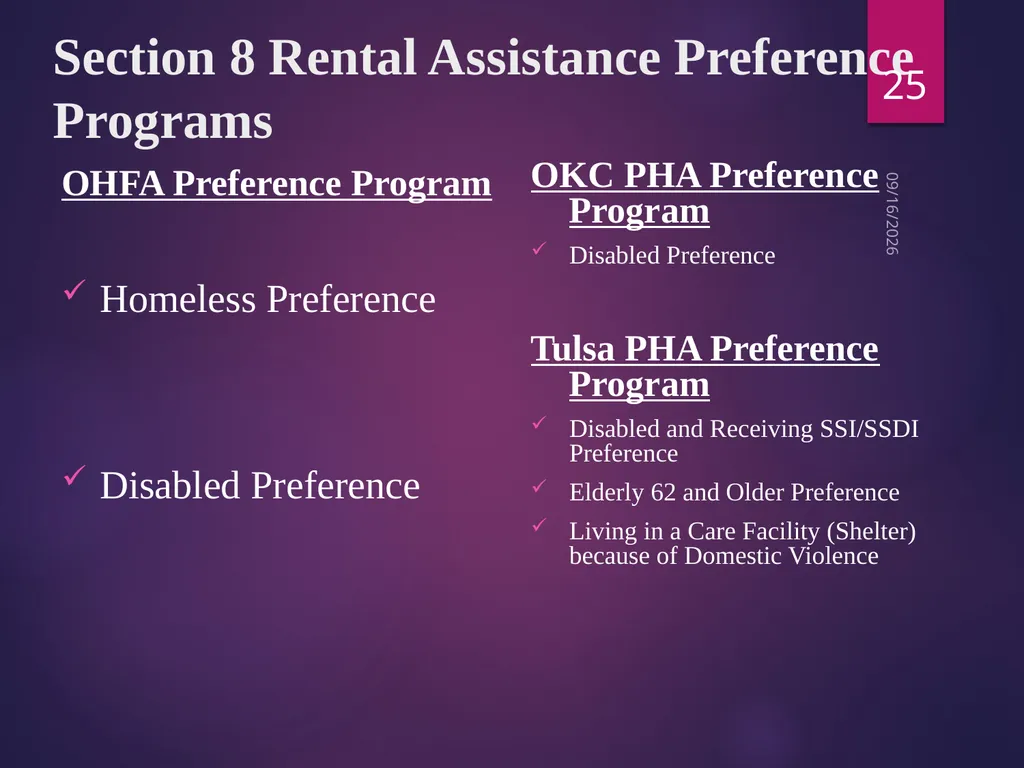
slide25. Section 8 Rental Assistance Preference Programs OHFA Preference Program
Homeless Preference
Disabled Preference OKC PHA Preference Program
Disabled Preference
Tulsa PHA Preference Program
Disabled and Receiving SSI/SSDI Preference
Elderly 62 and Older Preference
Living in a Care Facility (Shelter) because of Domestic Violence 2/28/2023 25<br>
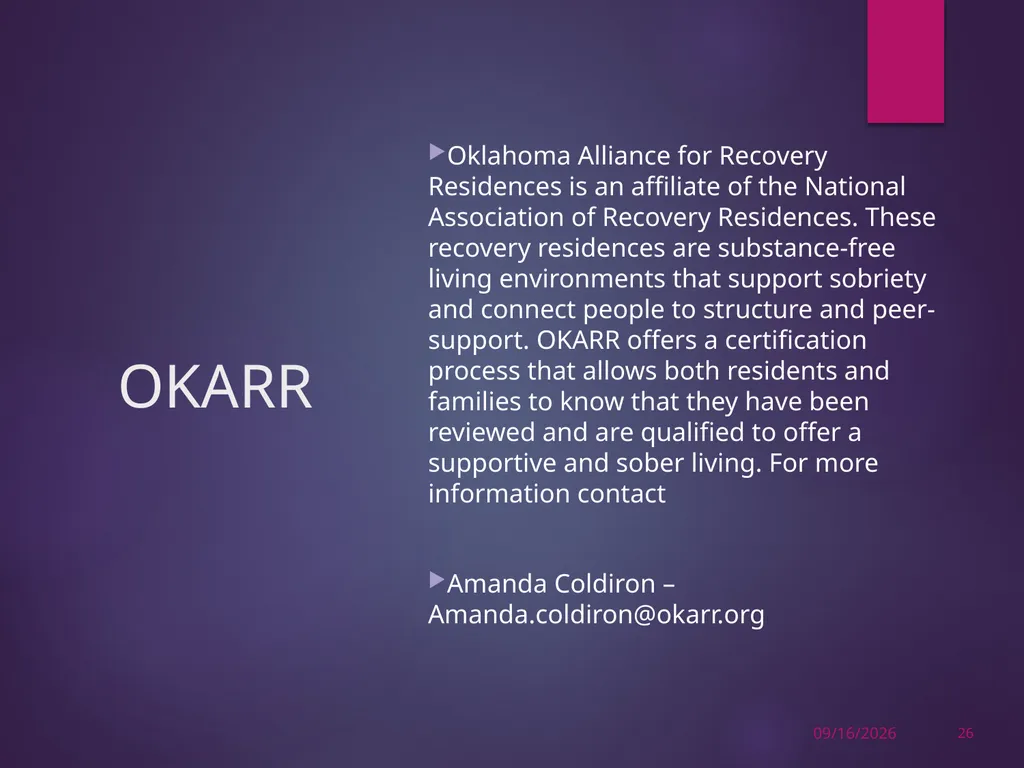
slide26. OKARR 2/28/2023 26 Oklahoma Alliance for Recovery Residences is an affiliate of the National Association of Recovery Residences. These recovery residences are substance-free living environments that support sobriety and connect people to structure and peer-support. OKARR offers a certification process that allows both residents and families to know that they have been reviewed and are qualified to offer a supportive and sober living. For more information contact
Amanda Coldiron – Amanda.coldiron@okarr.org<br>
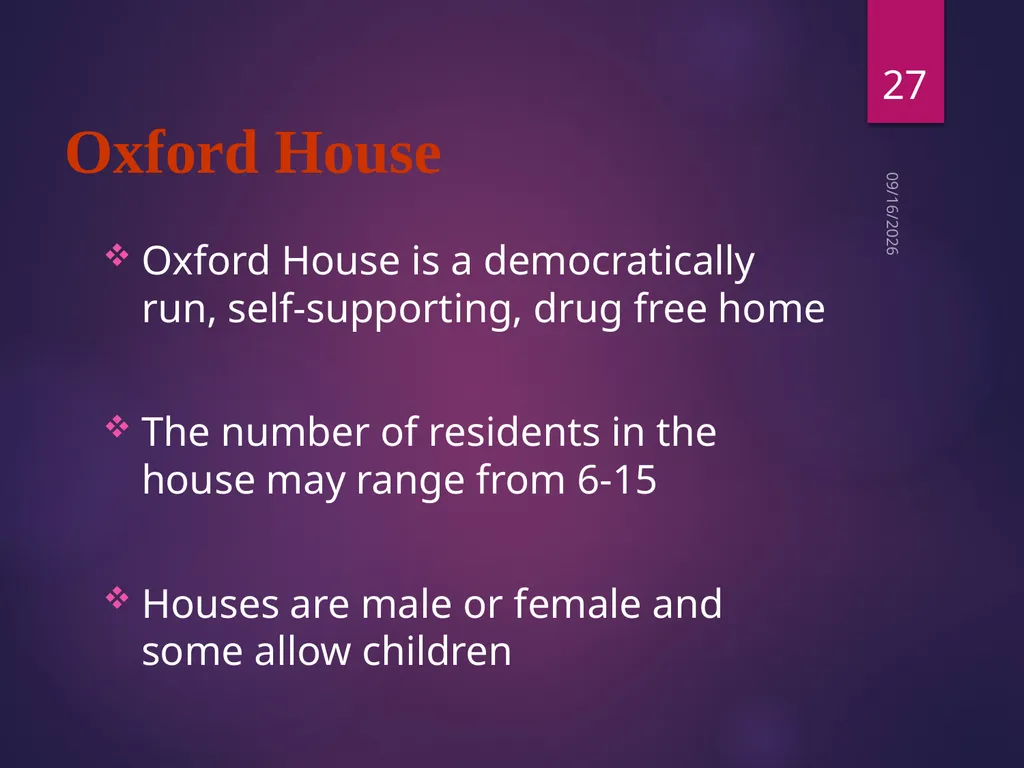
slide27. Oxford House Oxford House is a democratically run, self-supporting, drug free home
The number of residents in the house may range from 6-15
Houses are male or female and some allow children 2/28/2023 27<br>
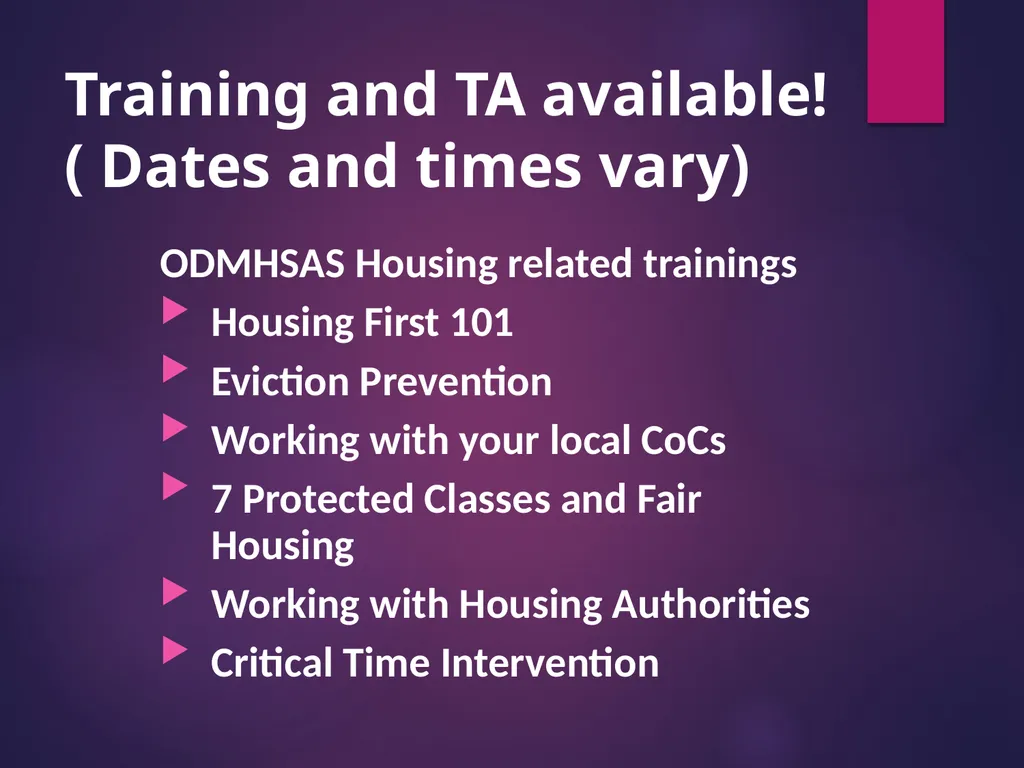
slide28. Training and TA available! ( Dates and times vary) ODMHSAS Housing related trainings
Housing First 101
Eviction Prevention
Working with your local CoCs
7 Protected Classes and Fair Housing
Working with Housing Authorities
Critical Time Intervention<br>
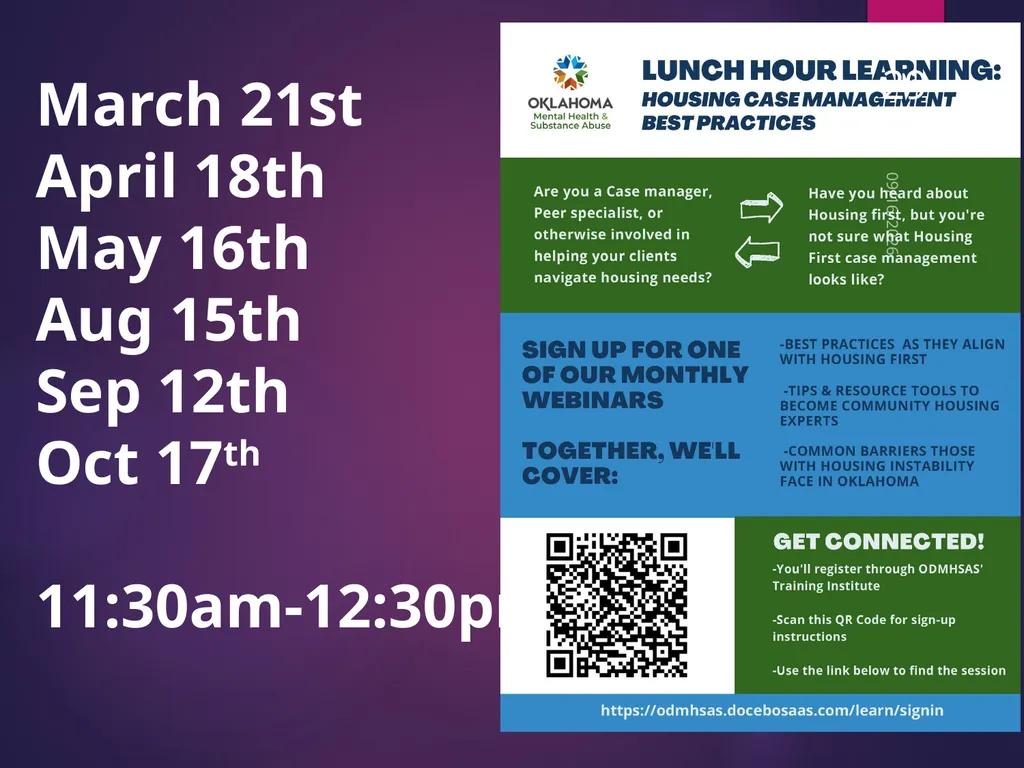
slide29. March 21st April 18th May 16th Aug 15th Sep 12th Oct 17th 11:30am-12:30pm 2/28/2023 29<br>
slide30. Legal Aid Services of Oklahoma
Administrative Offices 2901 North Classen Blvd., Suite 110 Oklahoma City, OK 73106
405-521-1302 2/28/2023 30<br>
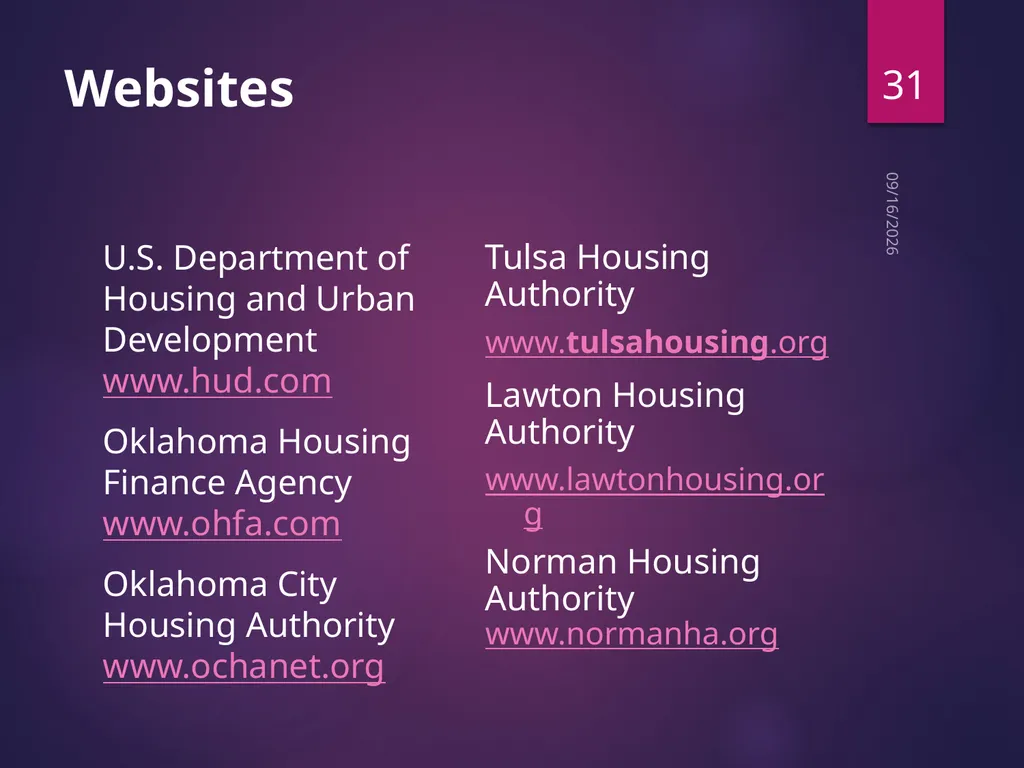
slide31. Websites U.S. Department of Housing and Urban Development www.hud.com
Oklahoma Housing Finance Agency www.ohfa.com
Oklahoma City Housing Authority www.ochanet.org Tulsa Housing Authority
www.tulsahousing.org
Lawton Housing Authority
www.lawtonhousing.org
Norman Housing Authority www.normanha.org 2/28/2023 31<br>
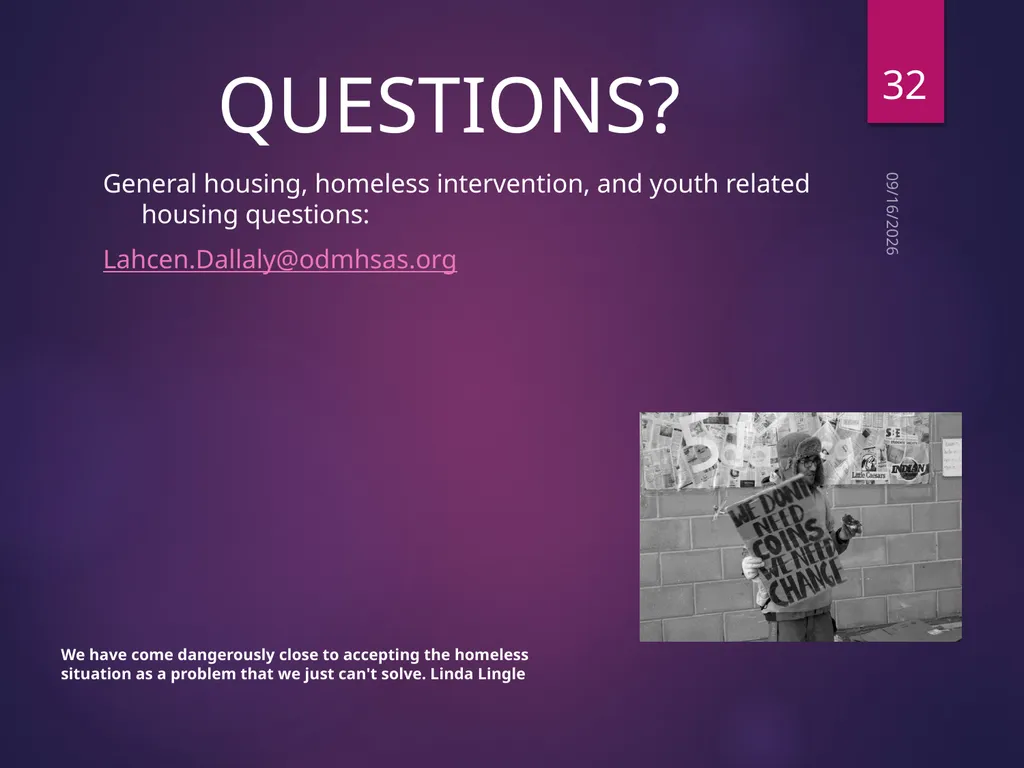
slide32. QUESTIONS? General housing, homeless intervention, and youth related housing questions:
Lahcen.Dallaly@odmhsas.org 2/28/2023 32 We have come dangerously close to accepting the homeless situation as a problem that we just can't solve. Linda Lingle<br>
Manager of Runaway and Homeless Youth Supports
Oklahoma State Department of Mental Health and Substance Abuse Services<br>
slide2. Housing and Homeless Team Andru Dallaly – Manager of Runaway and Homeless Youth Supports
Served as a youth and young adult case manager for 6 years, currently provides pro bono advocacy for homeless youth in OKC
Richard White – Coordinator of Runaway and Homeless Youth Supports
Tijuan Miller - Manager of Community and Recovery Based Housing Supports
Tammie Vail – Manager of Homeless Supports 2/28/2023 2<br>
slide3. DISCLAIMER Based on a blend of research-based strategies and lessons learned during 9 years of case management experiences.
Not EVERY client will benefit from these approaches, but every case manager will benefit from trying.
I do not use this time to go over specific programs – but tools that help you as a case manager to find the best programs for your clients. 2/28/2023 3<br>
slide4. “Housing First” approach to case management An approach that prioritizes permanent, affordable housing as quickly as possible for individuals and families experiencing homelessness, and then provides the supportive services and connections to the community-based supports people need to keep their housing and avoid returning to homelessness. 2/28/2023 4<br>
slide5. Why the shift in culture ? People with the foundation of a home are better positioned to take advantage of supportive services: they have the stability and hopefully the sense of safety in which to engage in treatment services, school, job searches and other ways to live fulfilling lives.
The specific program types that use Housing First approaches are much cheaper to operate than allowing someone to remain homeless.
https://youtu.be/pwdq2VWavtc 2/28/2023 5<br>
slide6. Some components of Housing First Case Management 4 Access to targeted efforts in identifying appropriate and permanent housing solutions is a right and a priority
Housing is a basic human right and is healthcare 4 No requirements to be symptom-free or sober to attain housing. 4 People define their own recovery. 4 People choose their own path to recovery. 4 People define their own needs. 4 People have the right to expect their choices will be respected, including the choice not to engage or accept services. 2/28/2023 6<br>
slide7. Cultivating Formal Resources What is out there?
Resources are always changing- your job is to be an expert on them
GO visit them- get to know the key players
SHARE with your colleagues- create a google doc
KEEP A RECORD of what works, what is missing/needed<br>
slide8. Successful Linking Establish relationship with client
Get their perspective on the resource
If they refuse to go, or agree but don't go... explore that (past negative experiences?) Go with them to the resource; ensure they know how to get there
Ensure it is a proper fit
Elicit their feedback- frame it as a "try out"<br>
slide9. 2/28/2023 9 Stages of Housing related case management<br>
slide10. Housing Strengths Assessment 2/28/2023 10<br>
slide11. Housing Choice The better the match, the more likely the success. Hmmm. Let me see.
Where would I like to live?
What type of building?
What type of unit?
Do I want roommates?
What amenities would be helpful?
What are my transportation needs?<br>
slide12. Overcoming Barriers to Accessing Housing Consumers may face barriers when accessing and maintaining housing:
Poor or lack of Rental History
Lack of Financial Resources
Lack of Housing Inventory
Criminal History
Social Stigma associated with involvement in systems ( mental health, criminal justice, etc.) 2/28/2023 12<br>
slide13. Landlord Engagement Tell them what you offer:
Weekly home visits
24 hr emergency contact
Rent subsidy
Dispute resolution process .<br>
slide14. Maintaining Housing Probably THE MOST important step in any successful housing is a
CASE MANAGEMENT PLAN!
-What barriers still exist that may impede stable placement?
Life skill training – “How to be a good tenant”
Advocacy with landlords – “How to be a landlord for someone with mental illness”
Coping skill training – Living alone, or with others, dealing with neighbors, etc.
It is “Housing First”, not “ Housing Only” 2/28/2023 14<br>
slide15. How much contact? Depends on the person’s need and teams assessment
Person’s needs vary over time
Standard arc –high to low
It is non-linear process
Minimum visits<br>
slide16. Tenancy Related Areas Apartment inspection checklists
Seasonal adjustments
Lease renewals
Furniture
External Environment<br>
slide17. Environment How does the tenant manage relationship:
Neighbors
Building management
Others
Neighborhood, community, ethno-racial mix
Socio-economic mix
Sense of safety, stigma, prejudice, discrimination Engage & Assess Social Connection<br>
slide18. To do family and natural supports work, you need to unlearn what you know about youth work. Traditional FNS Approach<br>
slide19. Know, Known & Missed ________e
________ People Who Know You 2 ________e
________ People You Know 2 ________e
________ People who would worry 2<br>
slide20. Successful Failures Doing with Doing for Doing nothing<br>
slide21. CASE EXAMPLE: Your client Judy has been sleeping in her car for several months. She has been approved for emergency voucher program. You have shown her 3 apartments and she did not like any of them and declined to use her voucher. What do you do? 2/28/2023 21<br>
slide22. Types of housing programs that may be available: Permanent supportive housing Permanent supportive housing (PSH) is targeted
to individuals and families with chronic illnesses,
disabilities, mental health issues, or substance
use disorders who have experienced long-term
or repeated homelessness. It provides long term
rental assistance and supportive services.
How Can You Help?
Require documentation from case manager, psychiatrist or other treating providers to validate illness or disability. 2/28/2023 22<br>
slide23. Working with your CoCs A Continuum of Care (CoC) is a regional or local planning body that coordinates housing and services funding for homeless families and individuals
Wide range of agencies and organizations represented
Promotes community-wide commitment to ending homelessness
Required group for applying for HUD Homeless funding
NOT an entity to just send your client to themselves 2/28/2023 23<br>
slide24. Working with your CoCs The best way a case manager can be an asset to their client needing housing supports, is for that case manager to be connected to their local Continuum of Care- Handout of points of contact will be provided
Additionally – most CMHC/CCBHC agencies have a “Housing point of contact” who is specifically trained and supported through ODMHSAS on how their respective agencies can connect their clients to housing or shelter supports. This list will also be shared with you – Note it is subject to change. 2/28/2023 24<br>
slide25. Section 8 Rental Assistance Preference Programs OHFA Preference Program
Homeless Preference
Disabled Preference OKC PHA Preference Program
Disabled Preference
Tulsa PHA Preference Program
Disabled and Receiving SSI/SSDI Preference
Elderly 62 and Older Preference
Living in a Care Facility (Shelter) because of Domestic Violence 2/28/2023 25<br>
slide26. OKARR 2/28/2023 26 Oklahoma Alliance for Recovery Residences is an affiliate of the National Association of Recovery Residences. These recovery residences are substance-free living environments that support sobriety and connect people to structure and peer-support. OKARR offers a certification process that allows both residents and families to know that they have been reviewed and are qualified to offer a supportive and sober living. For more information contact
Amanda Coldiron – Amanda.coldiron@okarr.org<br>
slide27. Oxford House Oxford House is a democratically run, self-supporting, drug free home
The number of residents in the house may range from 6-15
Houses are male or female and some allow children 2/28/2023 27<br>
slide28. Training and TA available! ( Dates and times vary) ODMHSAS Housing related trainings
Housing First 101
Eviction Prevention
Working with your local CoCs
7 Protected Classes and Fair Housing
Working with Housing Authorities
Critical Time Intervention<br>
slide29. March 21st April 18th May 16th Aug 15th Sep 12th Oct 17th 11:30am-12:30pm 2/28/2023 29<br>
slide30. Legal Aid Services of Oklahoma
Administrative Offices 2901 North Classen Blvd., Suite 110 Oklahoma City, OK 73106
405-521-1302 2/28/2023 30<br>
slide31. Websites U.S. Department of Housing and Urban Development www.hud.com
Oklahoma Housing Finance Agency www.ohfa.com
Oklahoma City Housing Authority www.ochanet.org Tulsa Housing Authority
www.tulsahousing.org
Lawton Housing Authority
www.lawtonhousing.org
Norman Housing Authority www.normanha.org 2/28/2023 31<br>
slide32. QUESTIONS? General housing, homeless intervention, and youth related housing questions:
Lahcen.Dallaly@odmhsas.org 2/28/2023 32 We have come dangerously close to accepting the homeless situation as a problem that we just can't solve. Linda Lingle<br>