How Germs Make People Sick Recognizing Risk Using Reservoirs Session 2 Agenda Welcome Welcome and Introductions How Germs Spread and Make People Sick How Can an Infection Occur? Bringing It Together Conclusion How Germs Spread and Make
"How Germs Make People Sick Recognizing Risk Using" is the property of its rightful owner. Permission is granted to
download and print the materials on this website for personal, non-commercial use only, and to display it
on your personal computer provided you do not modify the materials and that you retain all copyright
notices contained in the materials. By downloading content from our website, you accept the terms of this
agreement.
Presentation Transcript
01
How Germs Make People Sick Recognizing Risk Using Reservoirs Session 2<br>
02
Agenda Welcome Welcome and Introductions
How Germs Spread and Make People Sick
How Can an Infection Occur?
Bringing It Together
Conclusion<br>
03
How Germs Spread and Make People Sick<br>
04
How Germs Spread<br>
05
Video: How Germs Spread in Healthcare<br>
06
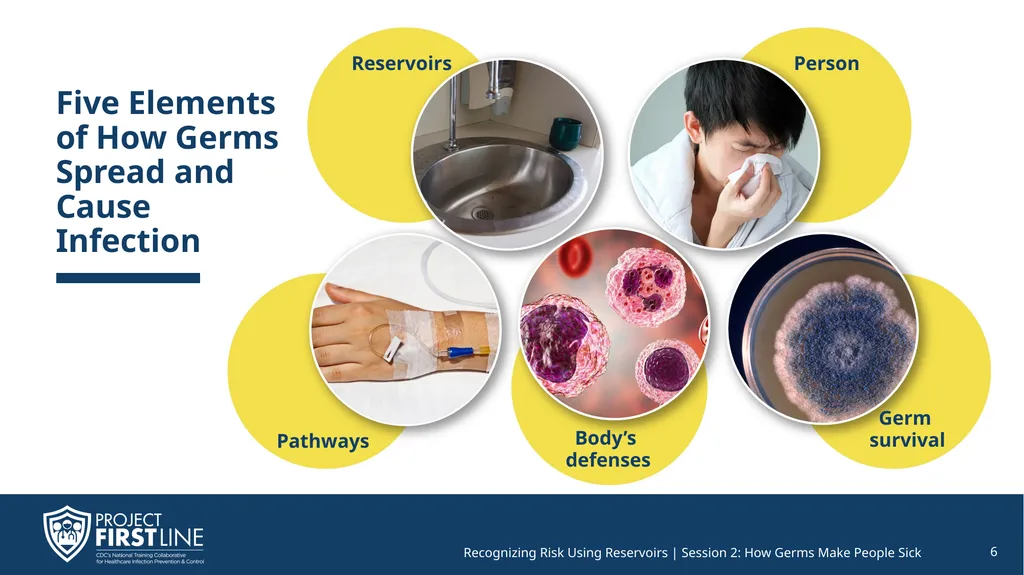
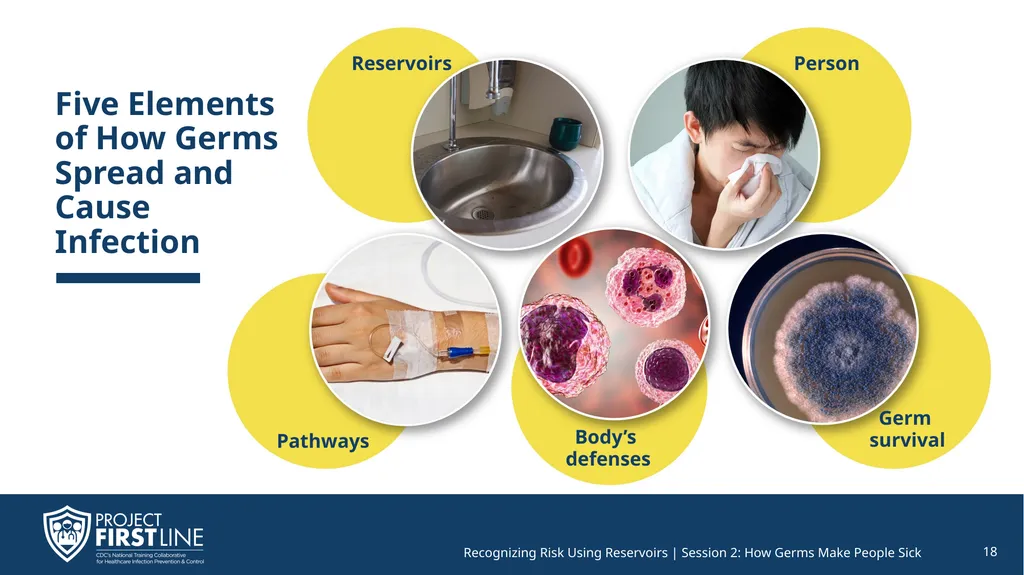
Five Elements of How Germs Spread and Cause Infection Reservoirs Person Pathways Body’s defenses Germ survival<br>
07
Reservoirs Recognizing Risk Using Reservoirs | Session 2: How Germs Make People Sick 7<br>
08
Pathways Recognizing Risk Using Reservoirs | Session 2: How Germs Make People Sick 8<br>
09
A Person to Infect Getting around the Body’s Defenses Recognizing Risk Using Reservoirs | Session 2: How Germs Make People Sick 9<br>
10
Survival Recognizing Risk Using Reservoirs | Session 2: How Germs Make People Sick 10<br>
11
How Germs Spread in Healthcare: Four Main Pathways Through touch When they’re breathed in Through splashes or sprays Through clinical care tasks that bypass or break down the body’s natural defenses<br>
12
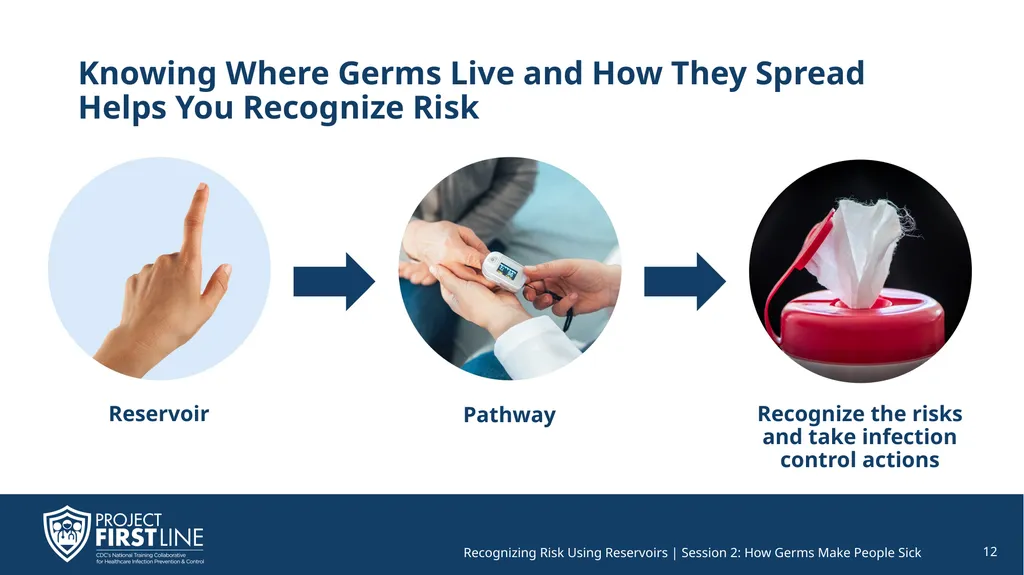
Knowing Where Germs Live and How They Spread Helps You Recognize Risk Reservoir Pathway Recognize the risks and take infection control actions<br>
13
How Can an Infection Occur?<br>
14
Scenarios: How Can an Infection Occur? Example scenario:
Start with a germ and a reservoir.
Walk through the five elements of germ spread.
Create your own scenario!<br>
15
Example Scenario Strep on a Healthcare Worker’s Hand Germ:
Strep Reservoir:
Healthcare worker’s hand Five Elements:
Reservoirs
Pathways
Person
Body’s defenses
Survival<br>
16
How Germs Spread and Make People Sick Example Example Scenario The germ is on the healthcare worker’s hands (skin) Reservoir The healthcare worker could touch the patient’s bed rail. Pathway The patient could touch the bed rail before it is cleaned and disinfected. Person + Survival The patient could touch their eye, bypassing the body’s defenses (skin) and delivering germs into the body. Body’s Defenses<br>
17
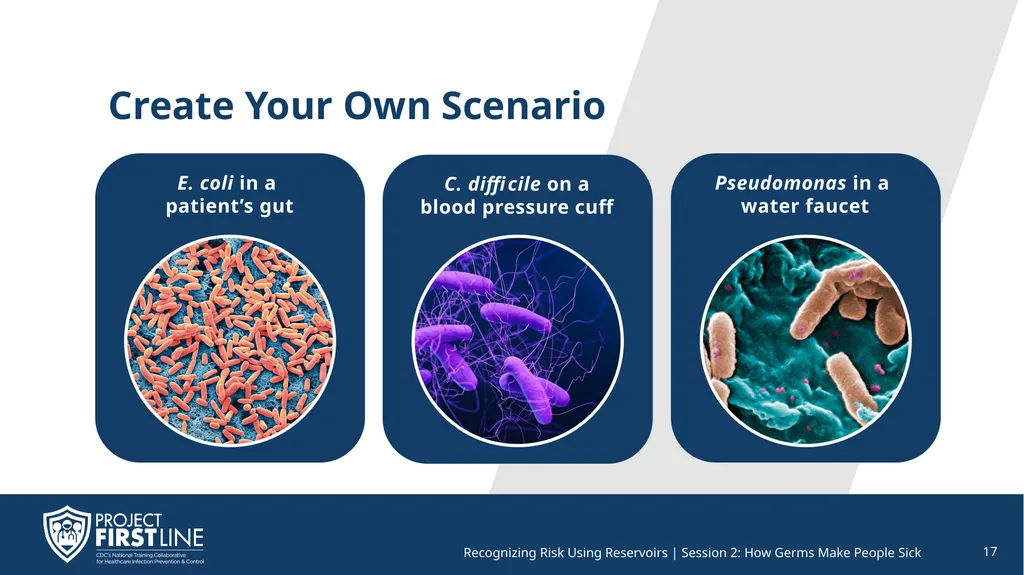
Create Your Own Scenario E. coli in a patient’s gut C. difficile on a blood pressure cuff Pseudomonas in a water faucet<br>
18
Five Elements of How Germs Spread and Cause Infection Reservoirs Person Pathways Body’s defenses Germ survival<br>
19
Scenario Summaries E. coli in a patient’s gut C. difficile on a blood pressure cuff Pseudomonas in a water faucet<br>
20
Bringing It Together<br>
21
Reflection Thinking about your daily work, can you identify any of your tasks that are related to any of the five elements?
Jot down in your participant booklet two actions you can take to stop the spread of germs to you or your patients.<br>
22
Questions<br>
23
Conclusion<br>
24
Key Takeaways Five elements for a germ to spread and cause an infection: reservoir, pathway, person to infect, getting around the body’s defenses, survival.
Infection control actions at any one of these key points stop germs from spreading and causing infection.
Main pathways for germs to spread in healthcare: touch, breathing in, splashes or sprays, bypassing or breaking down the body’s natural defenses.<br>
25
How to Get Involved and Feedback Project Firstline on CDC:
https://www.cdc.gov/infection control/projectfirstline/index.html
CDC’s Project Firstline on Facebook:
https://www.facebook.com/CDCProjectFirstline
CDC’s Project Firstline on Twitter:
https://twitter.com/CDC_Firstline
Project Firstline Inside Infection Control on YouTube:
https://www.youtube.com/playlist?list=PLvrp9iOILTQZQGtDnSDGViKDdRtIc13VX
To sign up for Project Firstline e-mails, click here: https://tools.cdc.gov/campaignproxyservice/subscriptions.aspx?topic_id=USCDC_2104 How Germs Spread in Healthcare video clip: https://www.cdc.gov/infectioncontrol/projectfirstline/videos/HowGermsSpread-LowRes.mp4
Project Firstline feedback form: https://www.cdc.gov/infectioncontrol/pdf/projectfirstline/TTK-ParticipantFeedback-508.pdf
Placeholder for partners to add their own links<br>