How to use this PowerPoint This is the first of four lessons from Brian Conaghan on creative writing for young people. You can find the rest via the Scottish Book Trust website: Lesson 1: Developing your writing skills Lesson 2: Developing
"How to use this PowerPoint This is the first of" is the property of its rightful owner. Permission is granted to
download and print the materials on this website for personal, non-commercial use only, and to display it
on your personal computer provided you do not modify the materials and that you retain all copyright
notices contained in the materials. By downloading content from our website, you accept the terms of this
agreement.
Presentation Transcript
01
How to use this PowerPoint This is the first of four lessons from Brian Conaghan on creative writing for young people. You can find the rest via the Scottish Book Trust website:
Lesson 1: Developing your writing skills
Lesson 2: Developing your writing style
Lesson 3: How to write with empathy
Lesson 4: Developing your editing skills
Each PowerPoint shares tips that can be used throughout a pupil’s writing experience, as well as activities you can do in your class or library. Where possible, we have highlighted how long an activity takes. Please do adapt this based upon the pupils you work with and/or if you would like to add in some time for reflection. Feel free to use this entire PowerPoint as one lesson, or to dip in and out and use some of the tips and activities. scottishbooktrust.com<br>
02
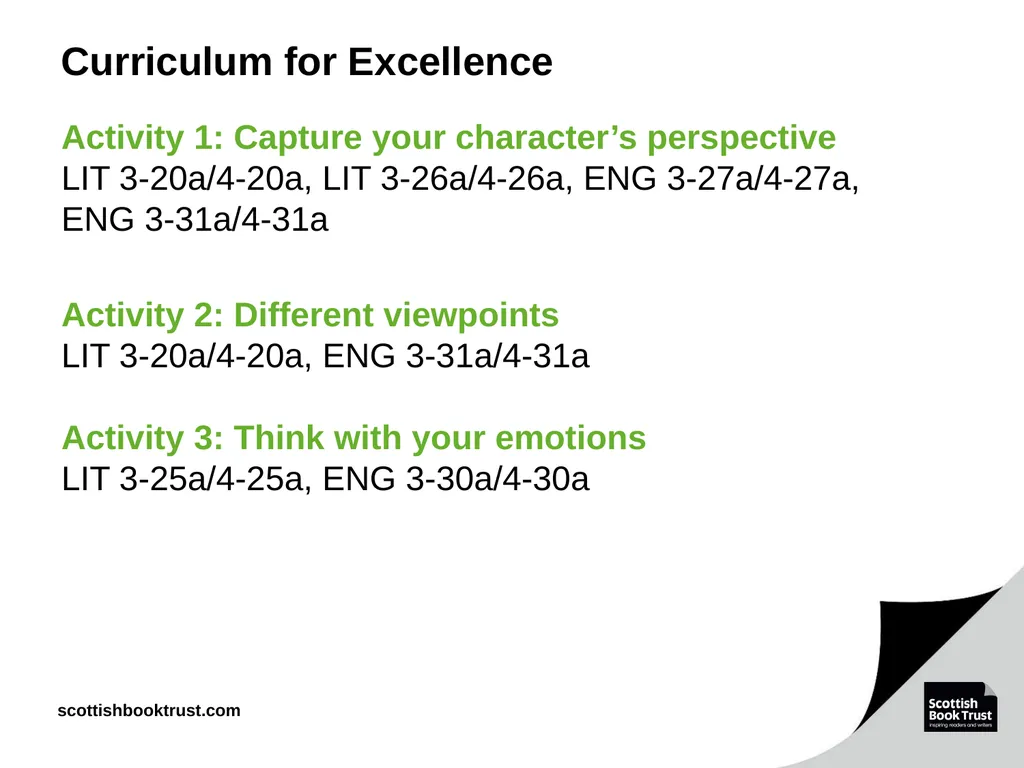
Curriculum for Excellence Activity 1: Capture your character’s perspective LIT 3-20a/4-20a, LIT 3-26a/4-26a, ENG 3-27a/4-27a, ENG 3-31a/4-31a
Activity 2: Different viewpoints LIT 3-20a/4-20a, ENG 3-31a/4-31a Activity 3: Think with your emotions LIT 3-25a/4-25a, ENG 3-30a/4-30a scottishbooktrust.com<br>
03
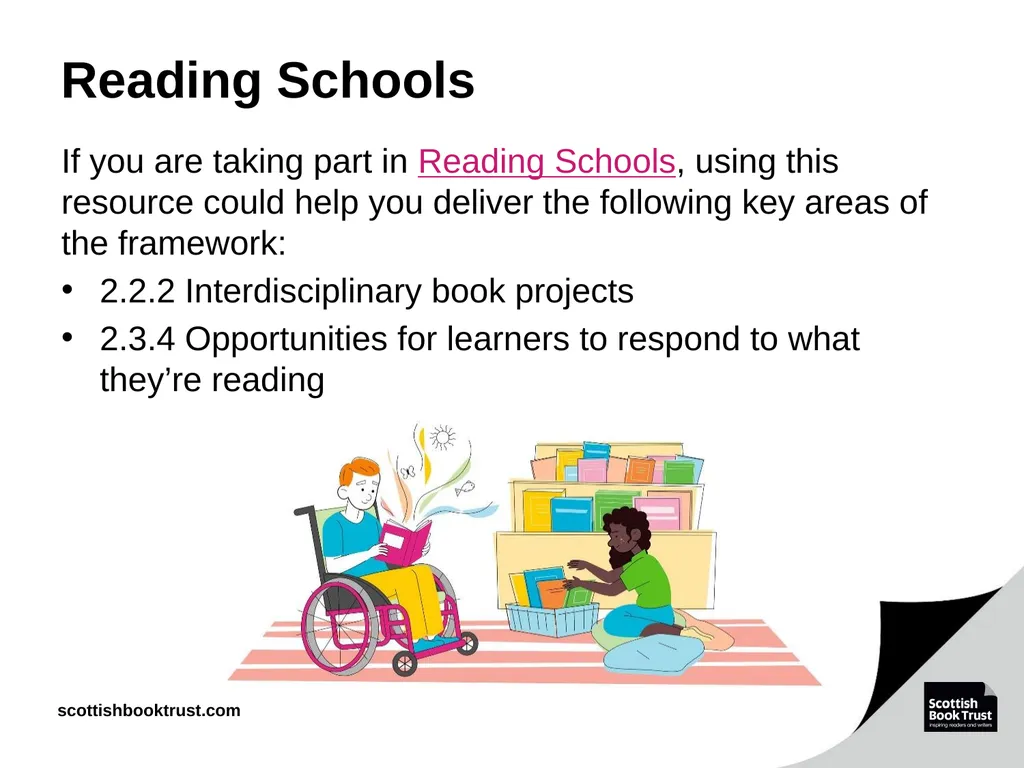
Reading Schools If you are taking part in Reading Schools, using this resource could help you deliver the following key areas of the framework:
2.2.2 Interdisciplinary book projects
2.3.4 Opportunities for learners to respond to what they’re reading scottishbooktrust.com<br>
04
Brian Conaghan’s creative writing lessons Lesson 3: How to write with empathy scottishbooktrust.com<br>
05
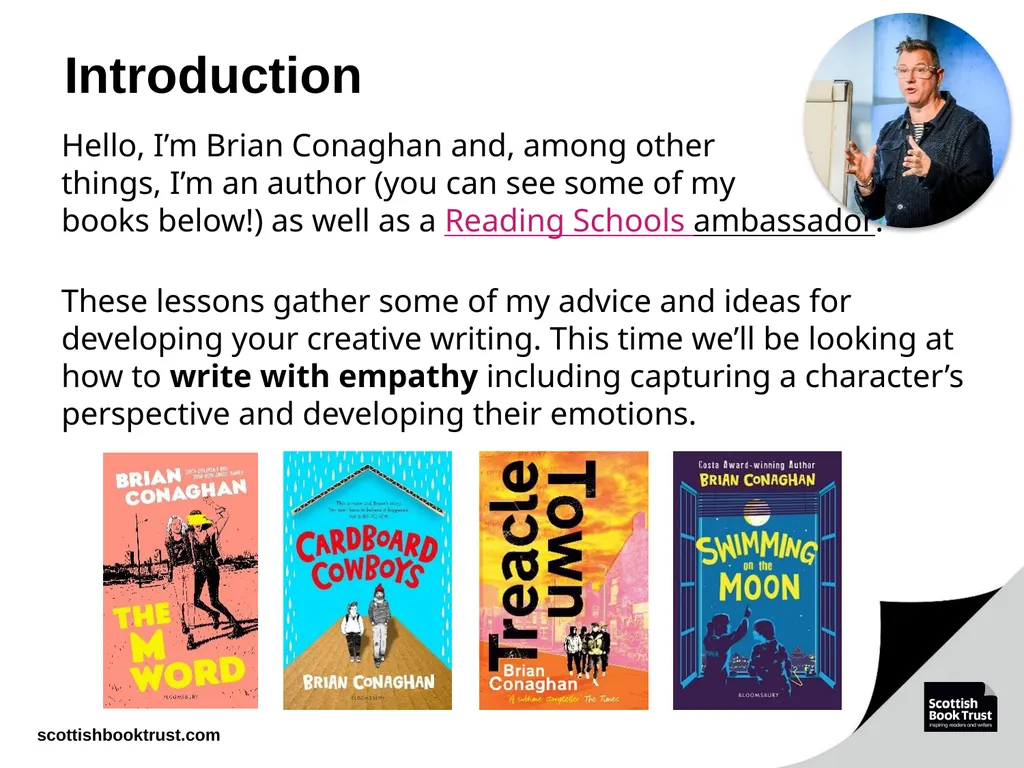
Introduction Hello, I’m Brian Conaghan and, among other things, I’m an author (you can see some of my books below!) as well as a Reading Schools ambassador. These lessons gather some of my advice and ideas for developing your creative writing. This time we’ll be looking at how to write with empathy including capturing a character’s perspective and developing their emotions. scottishbooktrust.com<br>
06
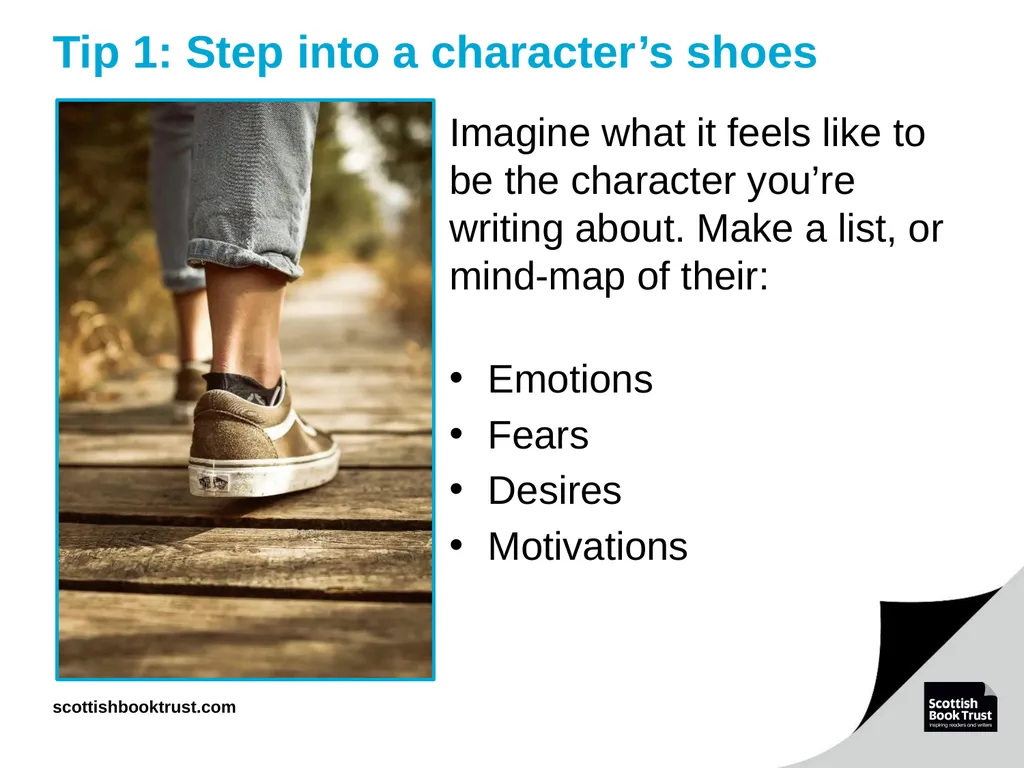
Tip 1: Step into a character’s shoes Imagine what it feels like to be the character you’re writing about. Make a list, or mind-map of their:
Emotions
Fears
Desires
Motivations scottishbooktrust.com<br>
07
Activity 1: Capture your character’s perspective 30+ minutes Write a scene from the character's perspective, focusing on internal thoughts and emotions rather than just actions and/or dialogue. scottishbooktrust.com<br>
08
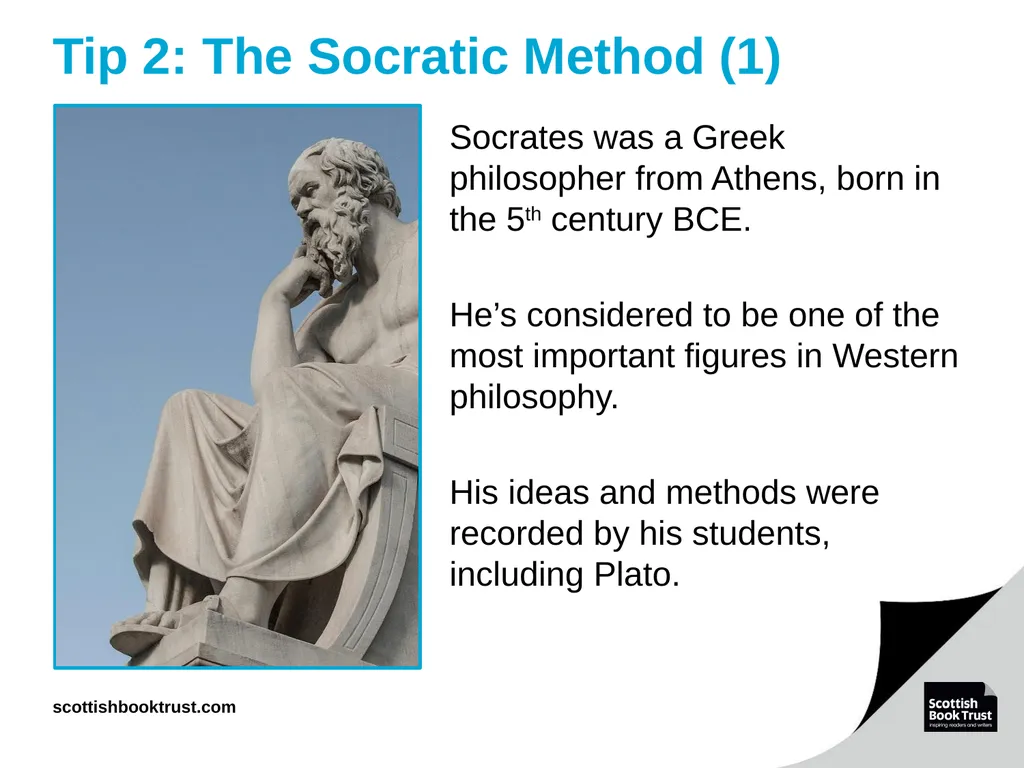
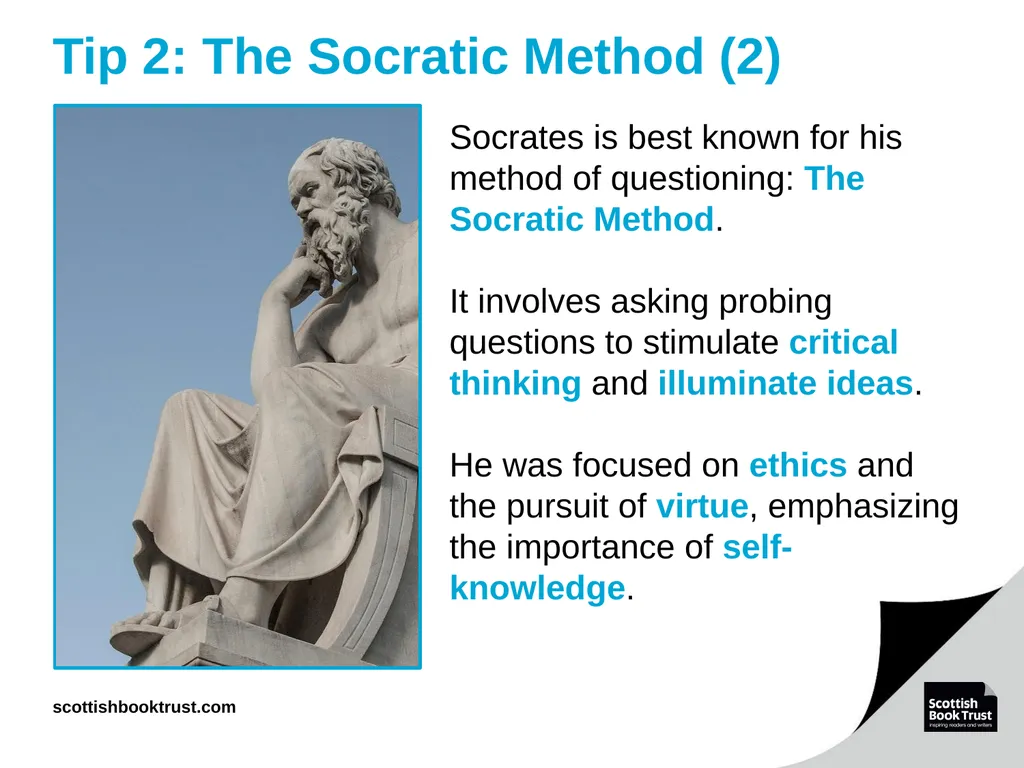
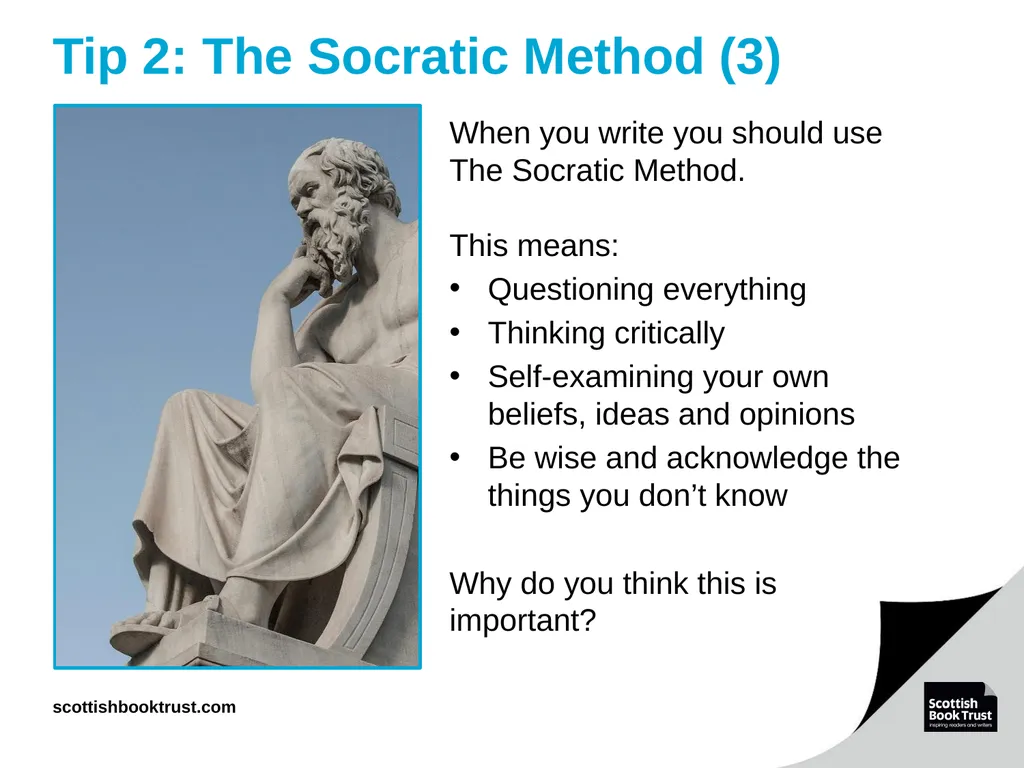
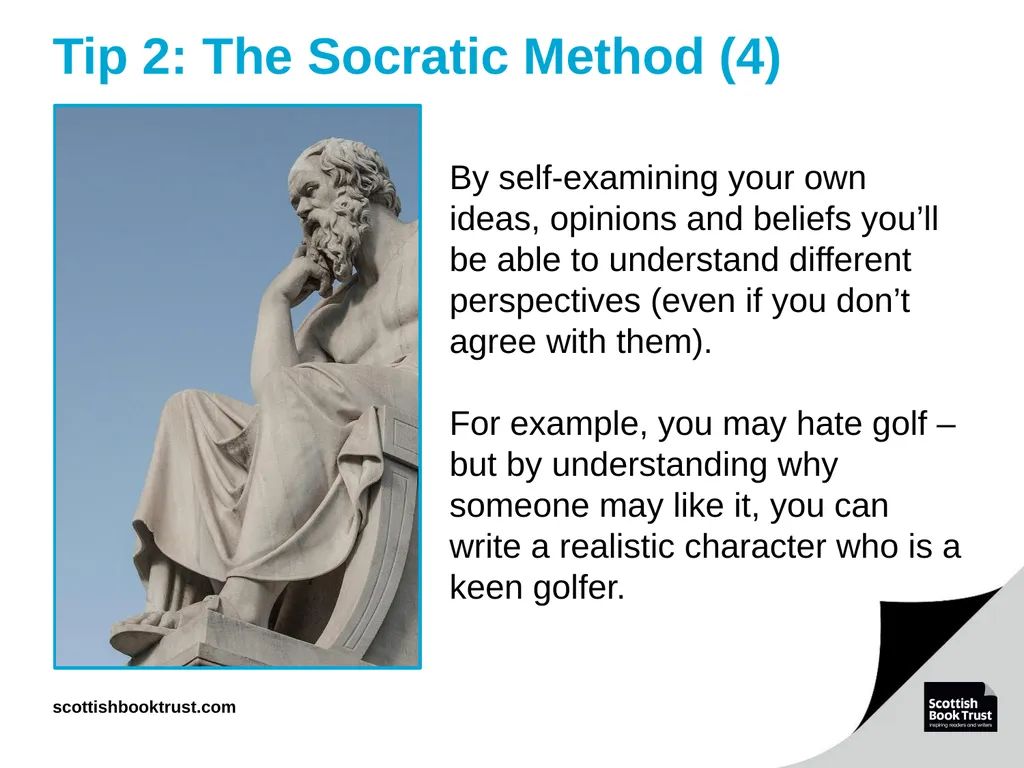
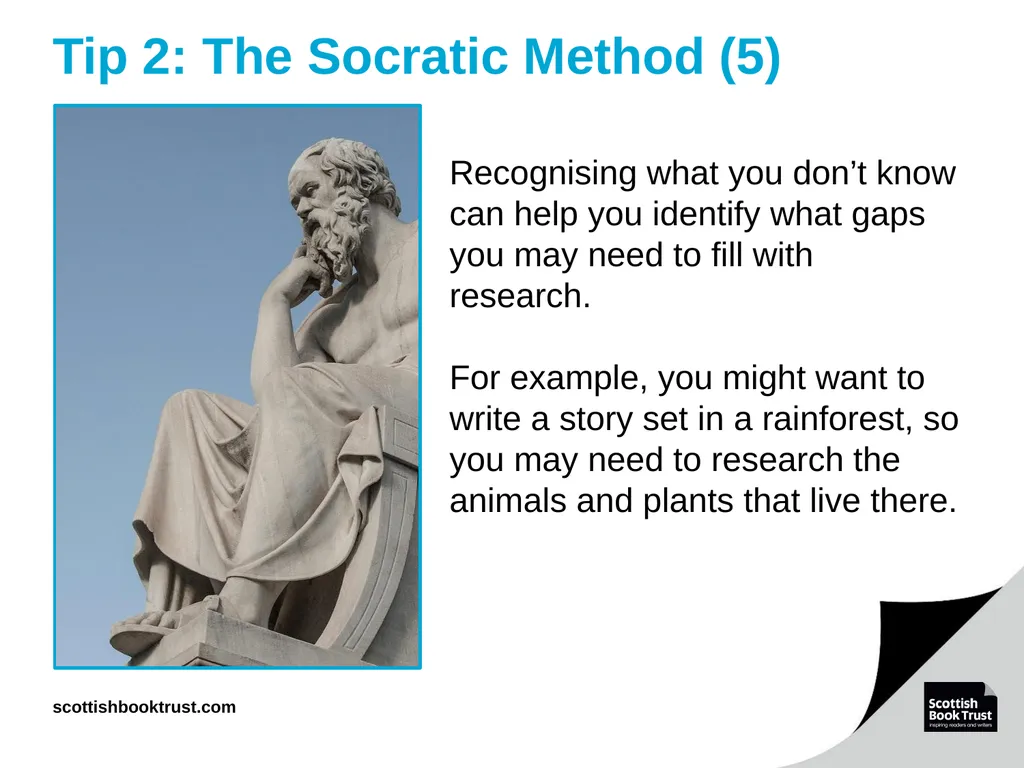
Tip 2: The Socratic Method (1) Socrates was a Greek philosopher from Athens, born in the 5th century BCE.
He’s considered to be one of the most important figures in Western philosophy.
His ideas and methods were recorded by his students, including Plato. scottishbooktrust.com<br>
09
Tip 2: The Socratic Method (2) Socrates is best known for his method of questioning: The Socratic Method. It involves asking probing questions to stimulate critical thinking and illuminate ideas. He was focused on ethics and the pursuit of virtue, emphasizing the importance of self-knowledge. scottishbooktrust.com<br>
10
Tip 2: The Socratic Method (3) When you write you should use The Socratic Method. This means:
Questioning everything
Thinking critically
Self-examining your own beliefs, ideas and opinions
Be wise and acknowledge the things you don’t know
Why do you think this is important? scottishbooktrust.com<br>
11
Tip 2: The Socratic Method (4) By self-examining your own ideas, opinions and beliefs you’ll be able to understand different perspectives (even if you don’t agree with them). For example, you may hate golf – but by understanding why someone may like it, you can write a realistic character who is a keen golfer. scottishbooktrust.com<br>
12
Tip 2: The Socratic Method (5) Recognising what you don’t know can help you identify what gaps you may need to fill with research. For example, you might want to write a story set in a rainforest, so you may need to research the animals and plants that live there. scottishbooktrust.com<br>
13
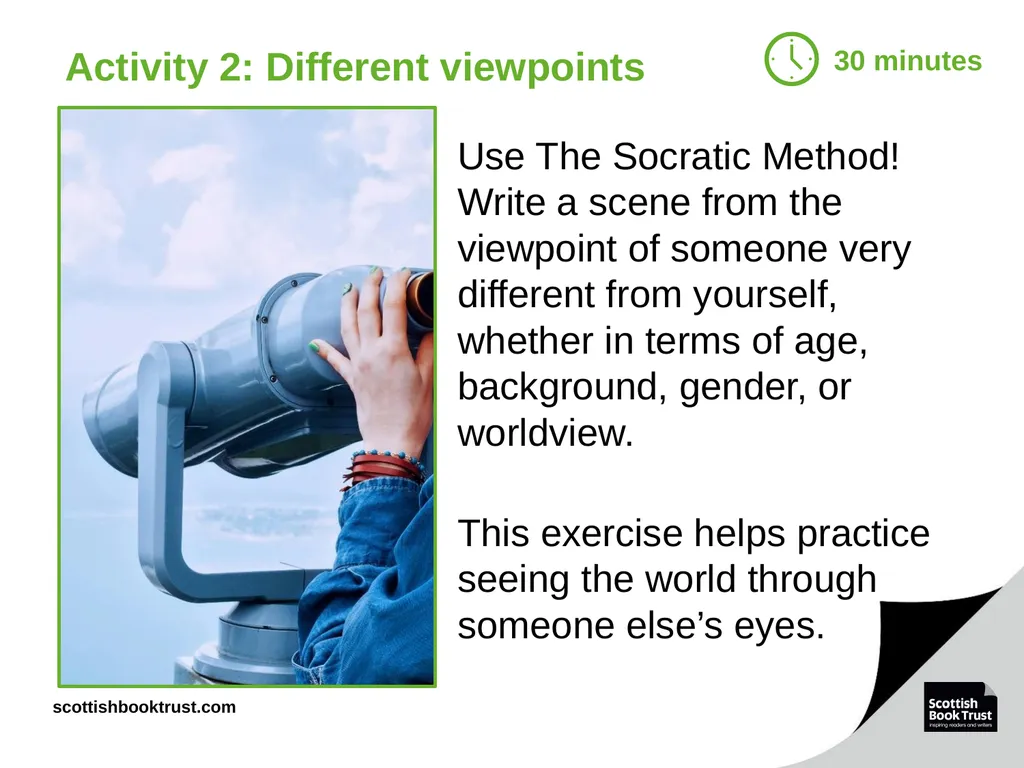
Activity 2: Different viewpoints 30 minutes Use The Socratic Method! Write a scene from the viewpoint of someone very different from yourself, whether in terms of age, background, gender, or worldview.
This exercise helps practice seeing the world through someone else’s eyes. scottishbooktrust.com<br>
14
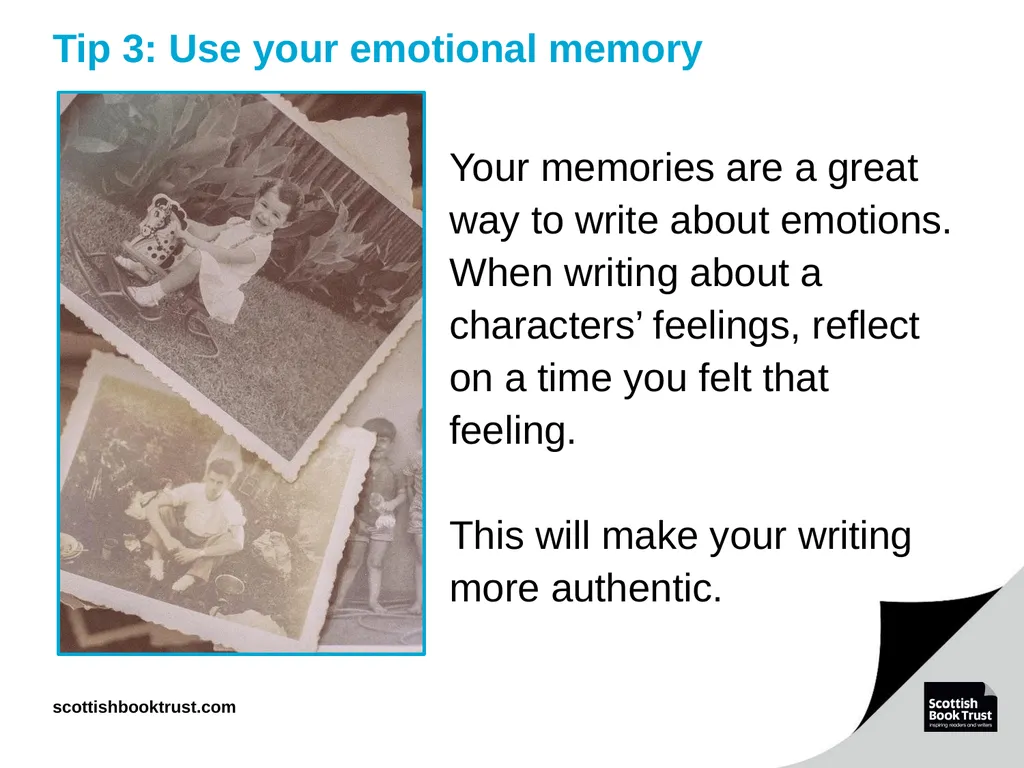
Tip 3: Use your emotional memory Your memories are a great way to write about emotions. When writing about a characters’ feelings, reflect on a time you felt that feeling. This will make your writing more authentic. scottishbooktrust.com<br>
15
Activity 3: Think with your emotions 15 minutes Choose an emotion (e.g. happiness, anger, fear, excitement). Write about the following:
Think about a time where you felt this feeling. What was happening? What did you notice?
Where in your body did you feel this feeling?
What did this feeling look like? scottishbooktrust.com<br>
16
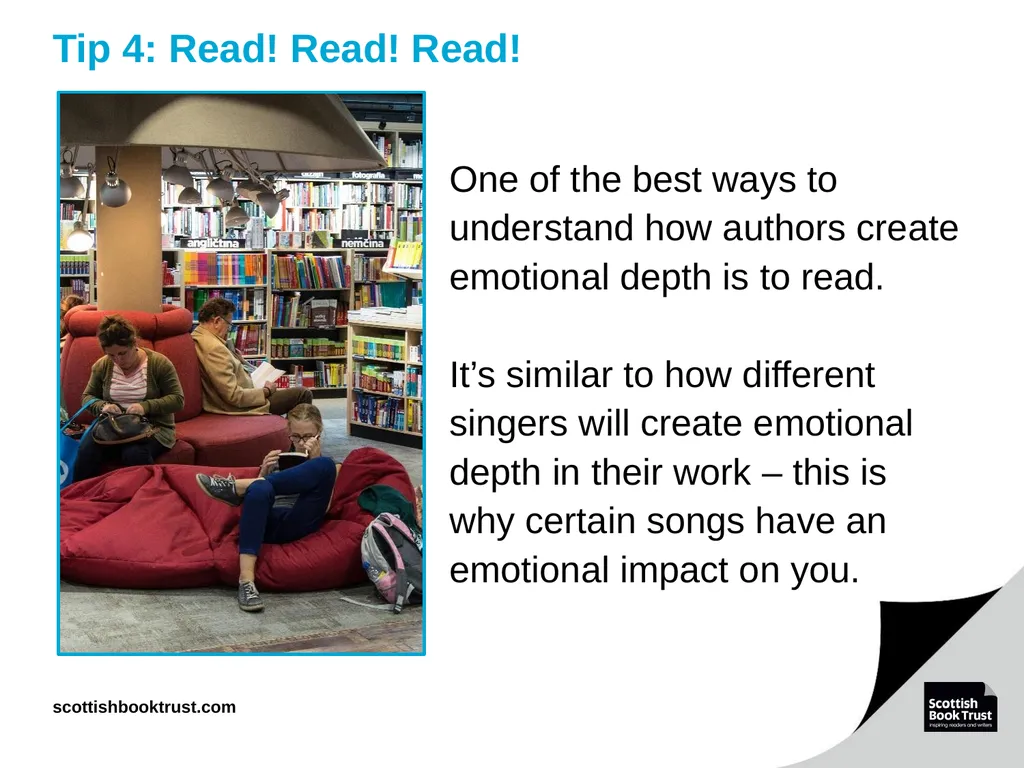
Tip 4: Read! Read! Read! One of the best ways to understand how authors create emotional depth is to read. It’s similar to how different singers will create emotional depth in their work – this is why certain songs have an emotional impact on you. scottishbooktrust.com<br>
17
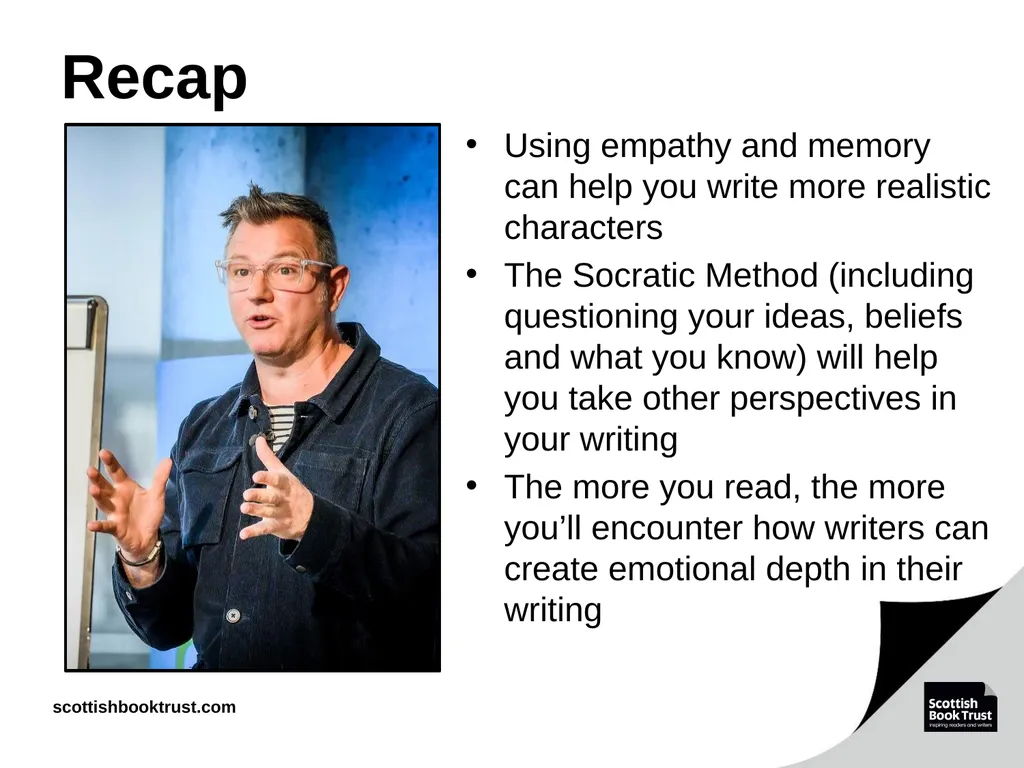
Recap Using empathy and memory can help you write more realistic characters
The Socratic Method (including questioning your ideas, beliefs and what you know) will help you take other perspectives in your writing
The more you read, the more you’ll encounter how writers can create emotional depth in their writing scottishbooktrust.com<br>
18
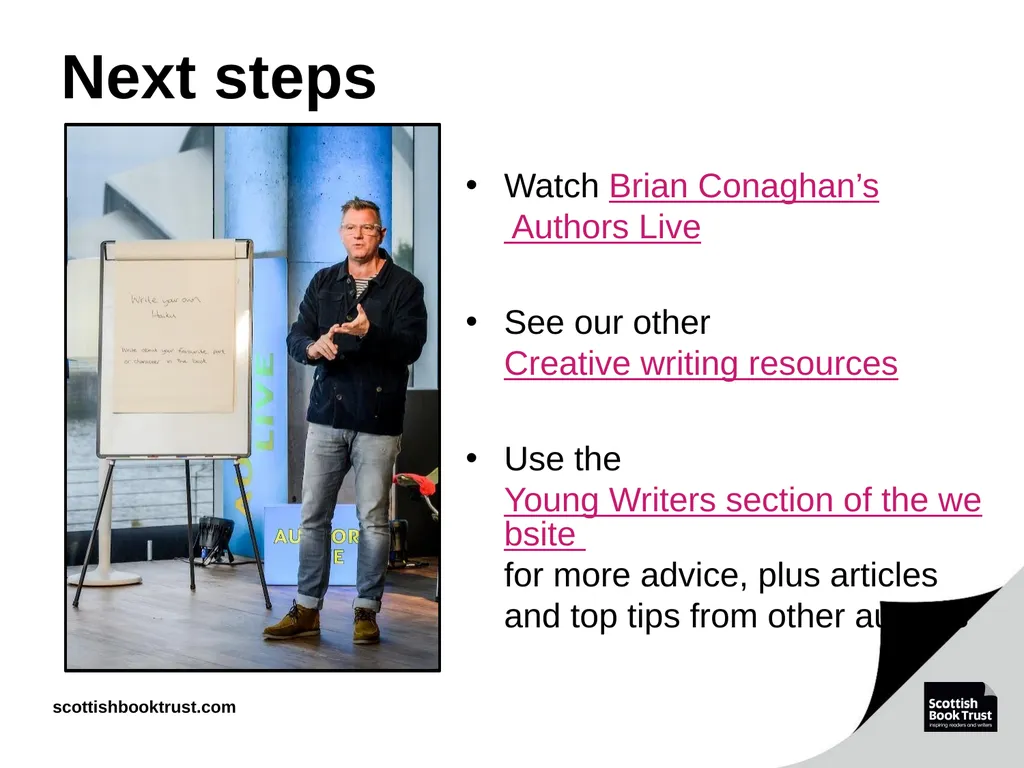
Next steps Watch Brian Conaghan’s Authors Live
See our other Creative writing resources
Use the Young Writers section of the website for more advice, plus articles and top tips from other authors scottishbooktrust.com<br>
19
Thank you scottishbooktrust.com Scottish Book Trust is a national charity changing lives through reading and writing. Registered company SC184248 | Scottish charity SC027669<br>