
Human evolution Manish Kumar "Hominid" refers to



Description: Human evolution Manish Kumar Hominid refers to members of the human family, Hominidae, which consist of all species from the point where the human line splits from apes towards present day humans. Habitual bipedal locomotion (movement on
Related Topics
Download Presentation
"Human evolution Manish Kumar "Hominid" refers to" is the property of its rightful owner. Permission is granted to download and print the materials on this website for personal, non-commercial use only, and to display it on your personal computer provided you do not modify the materials and that you retain all copyright notices contained in the materials. By downloading content from our website, you accept the terms of this agreement.
Presentation Transcript
slide1. Human evolution Manish Kumar<br>
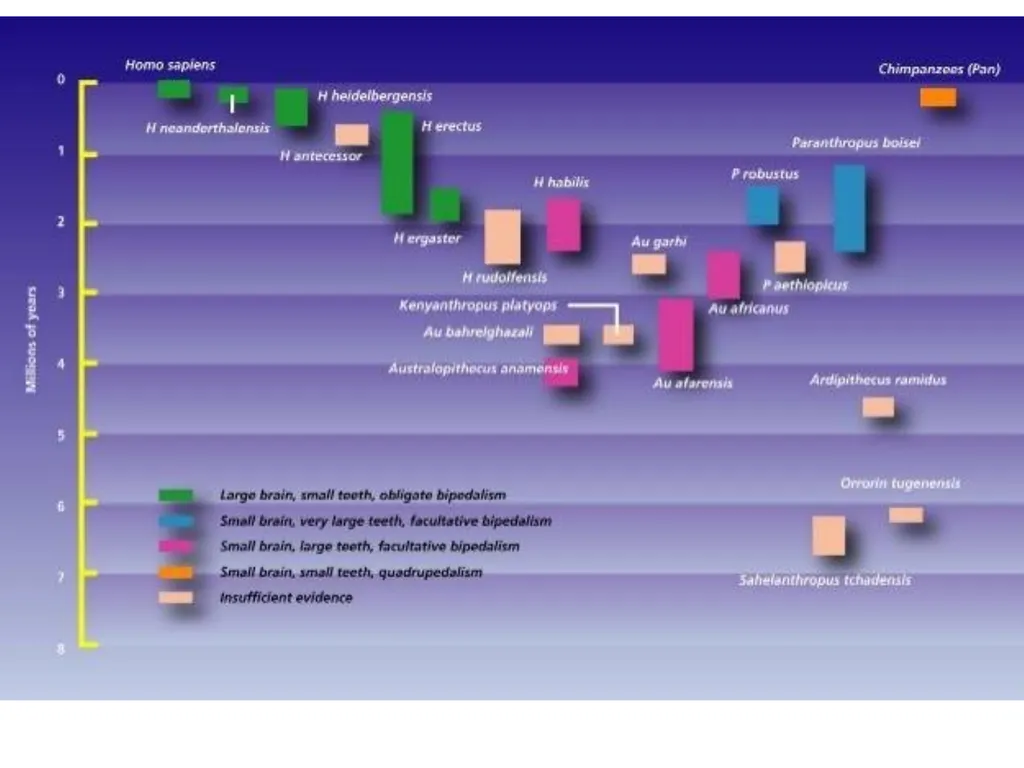
slide2. "Hominid" refers to members of the human family, Hominidae, which consist of all species from the point where the human line splits from apes towards present day humans. Habitual bipedal locomotion (movement on two legs), an upright position, and a large brain that has lead to: tool use, language, and culture characterize hominids.<br>
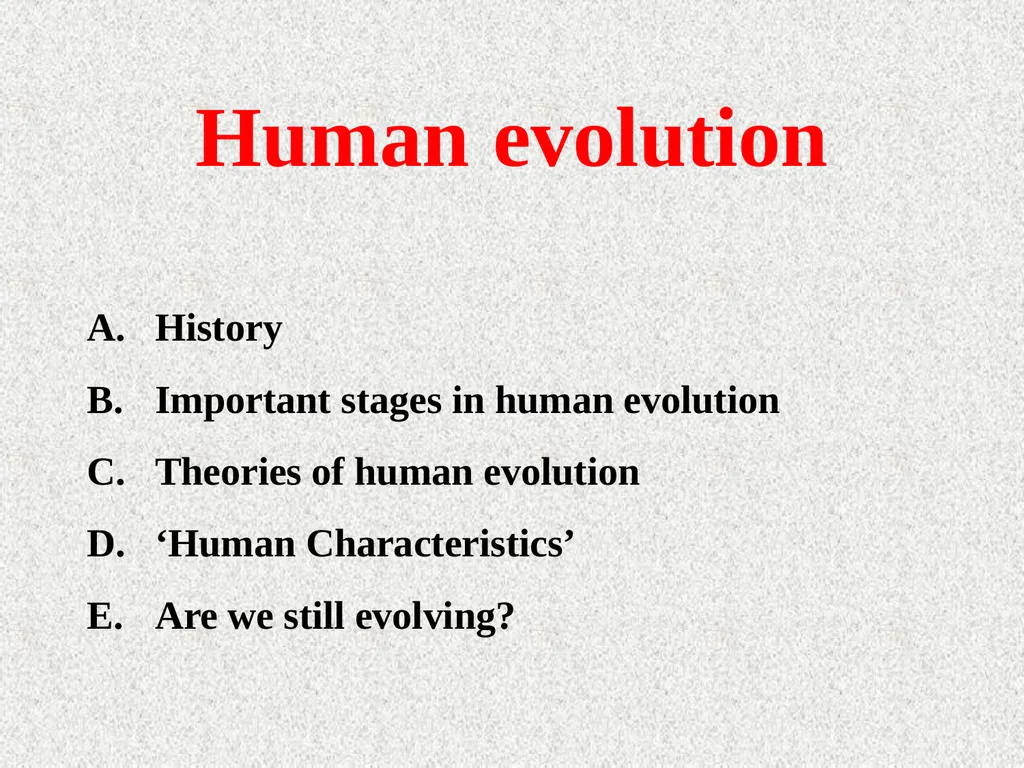
slide3. Human evolution History
Important stages in human evolution
Theories of human evolution
‘Human Characteristics’
Are we still evolving?<br>
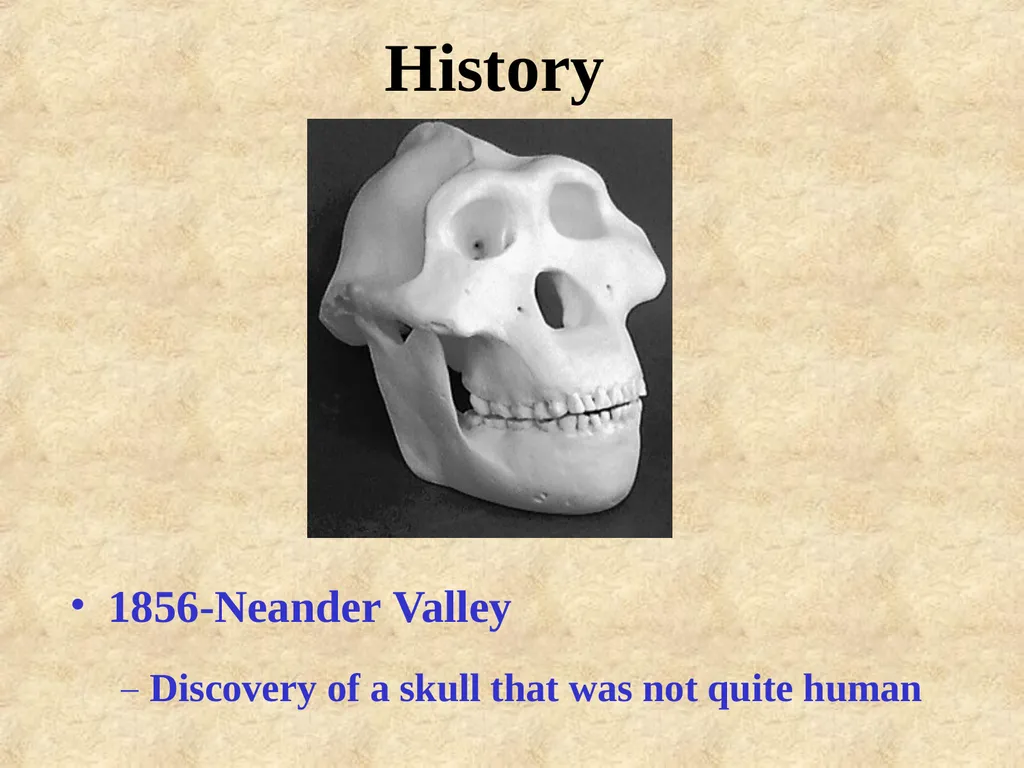
slide4. History 1856-Neander Valley
– Discovery of a skull that was not quite human<br>
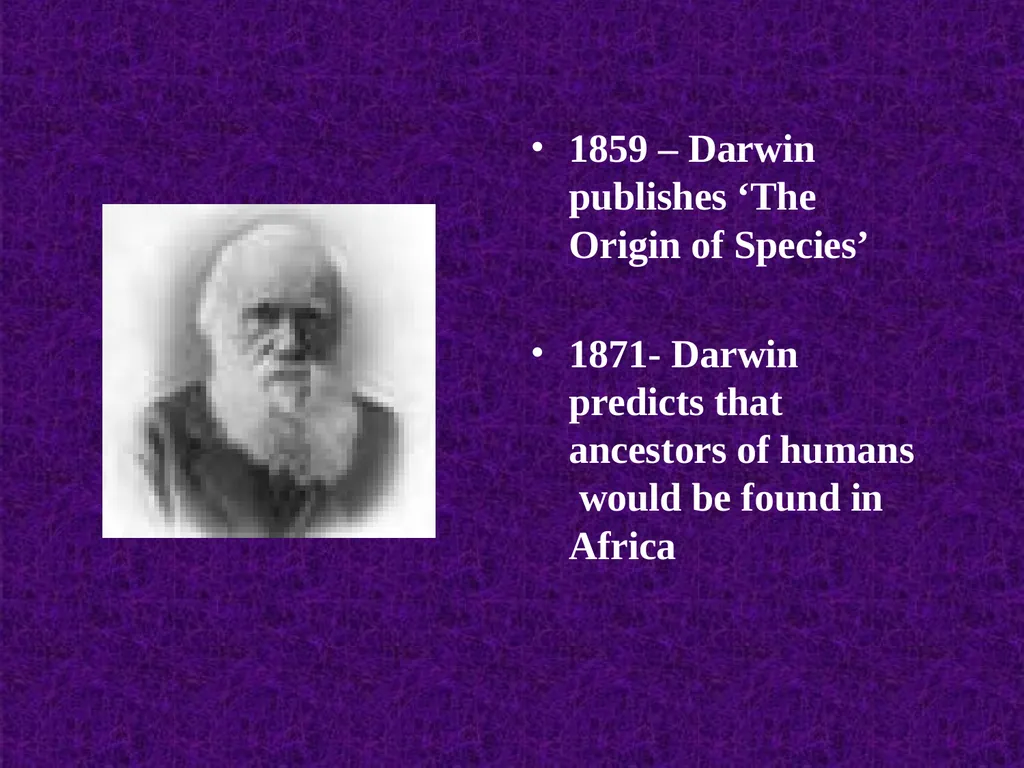
slide5. 1859 – Darwin publishes ‘The Origin of Species’
1871- Darwin predicts that ancestors of humans would be found in Africa<br>
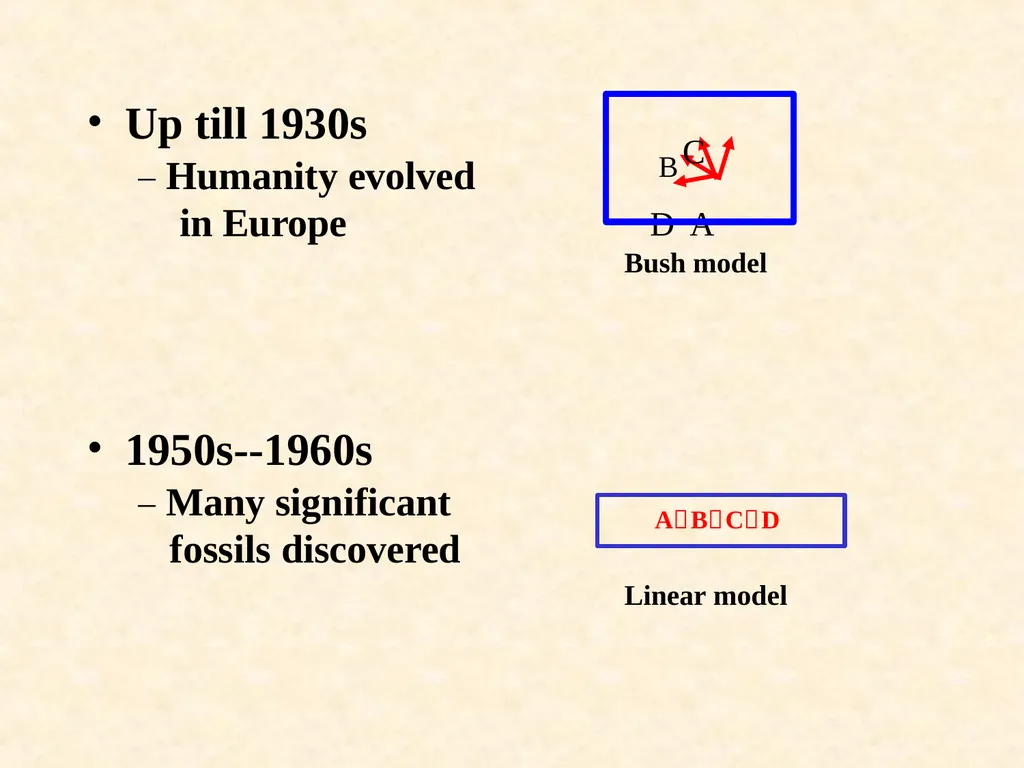
slide6. Up till 1930s
– Humanity evolved in Europe 1950s--1960s
– Many significant fossils discovered BC D A ABCD Bush model Linear model<br>
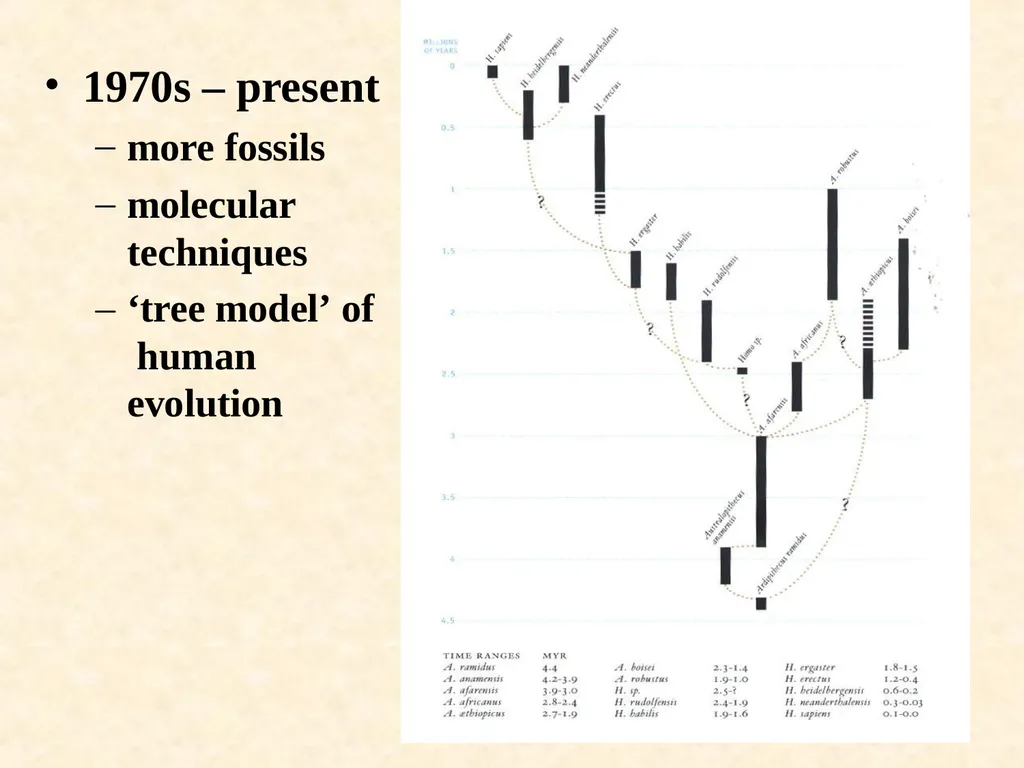
slide7. 1970s – present
more fossils
molecular techniques
‘tree model’ of human evolution<br>
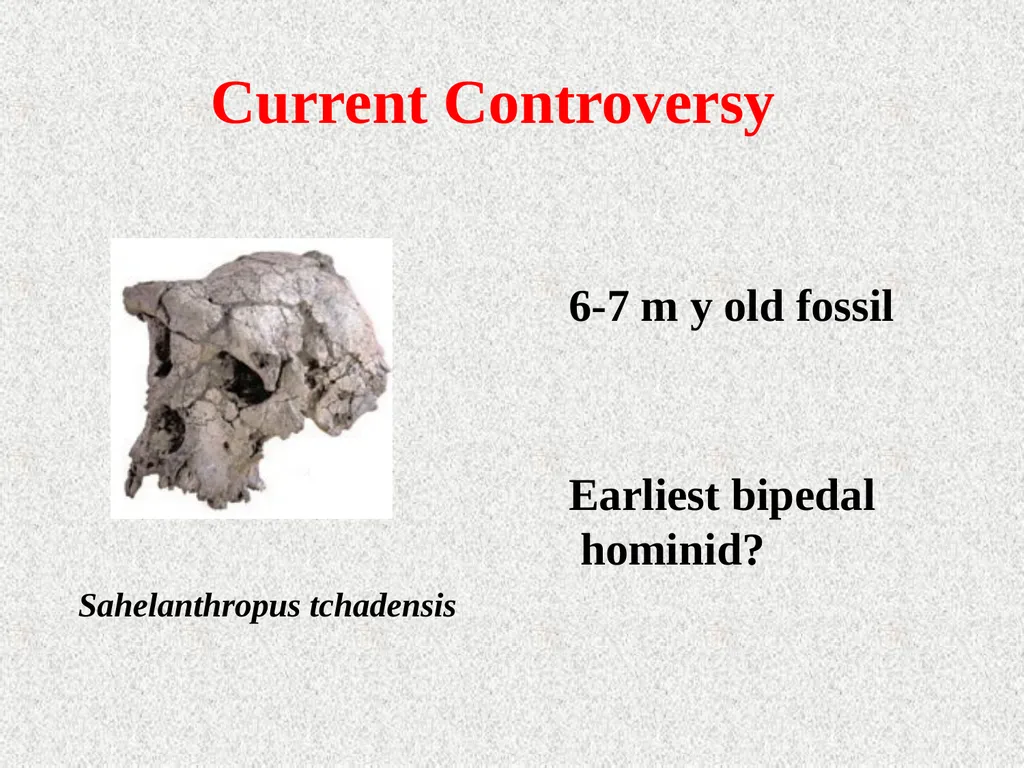
slide8. Current Controversy 6-7 m y old fossil
Earliest bipedal hominid?
Sahelanthropus tchadensis<br>
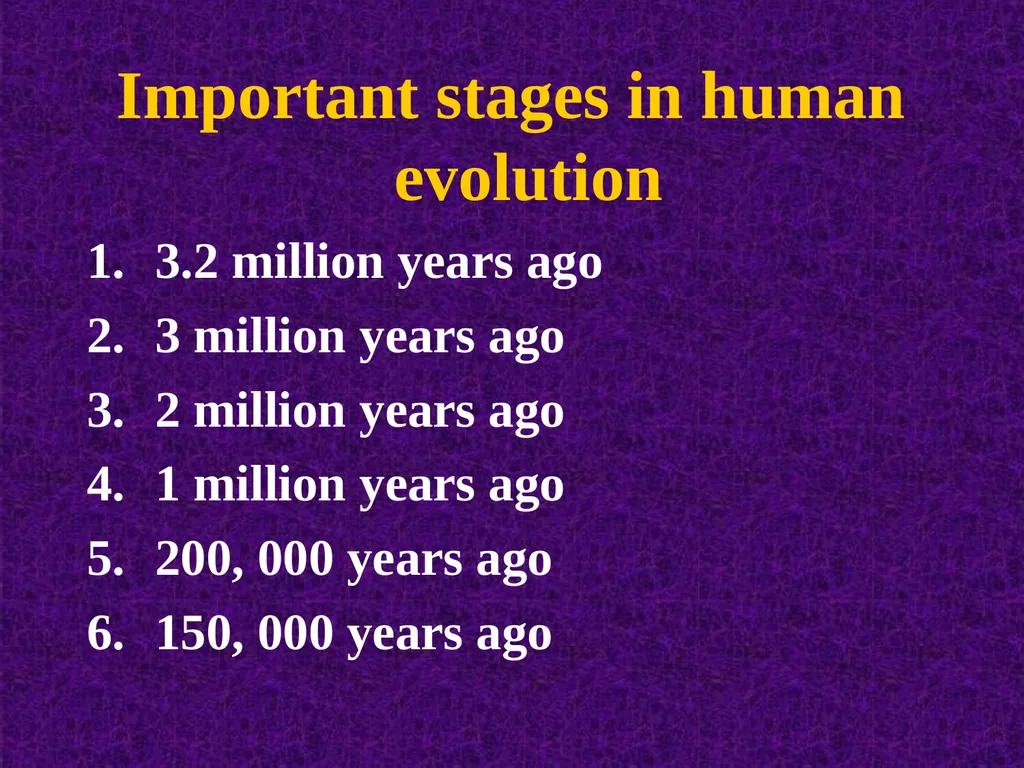
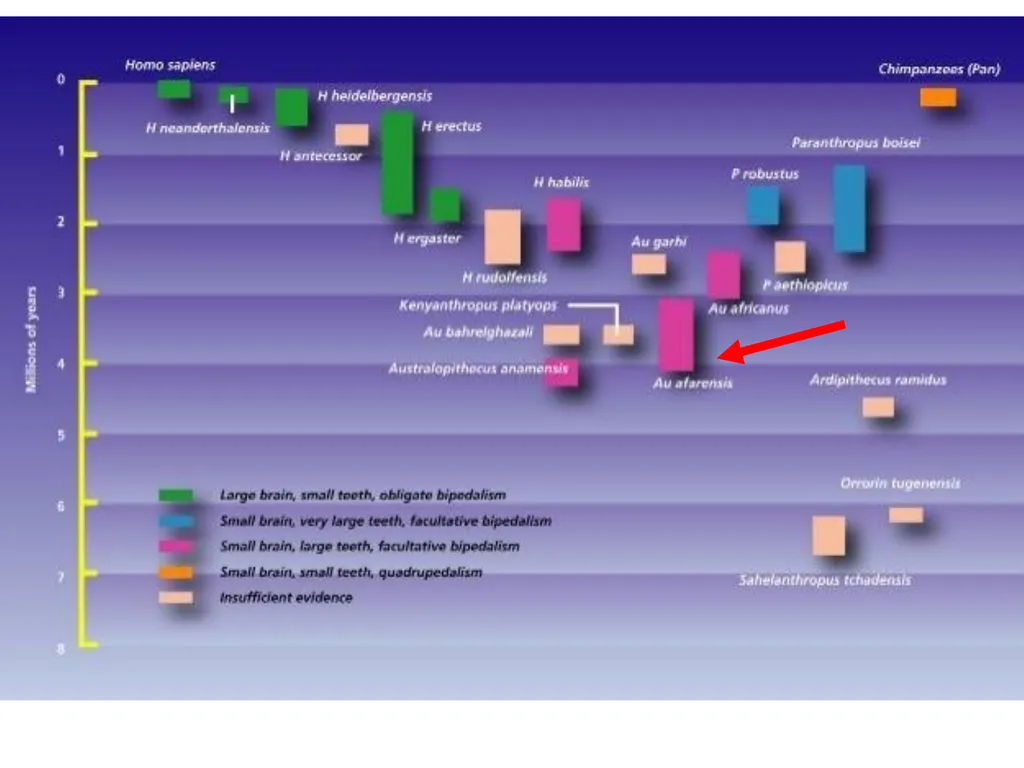
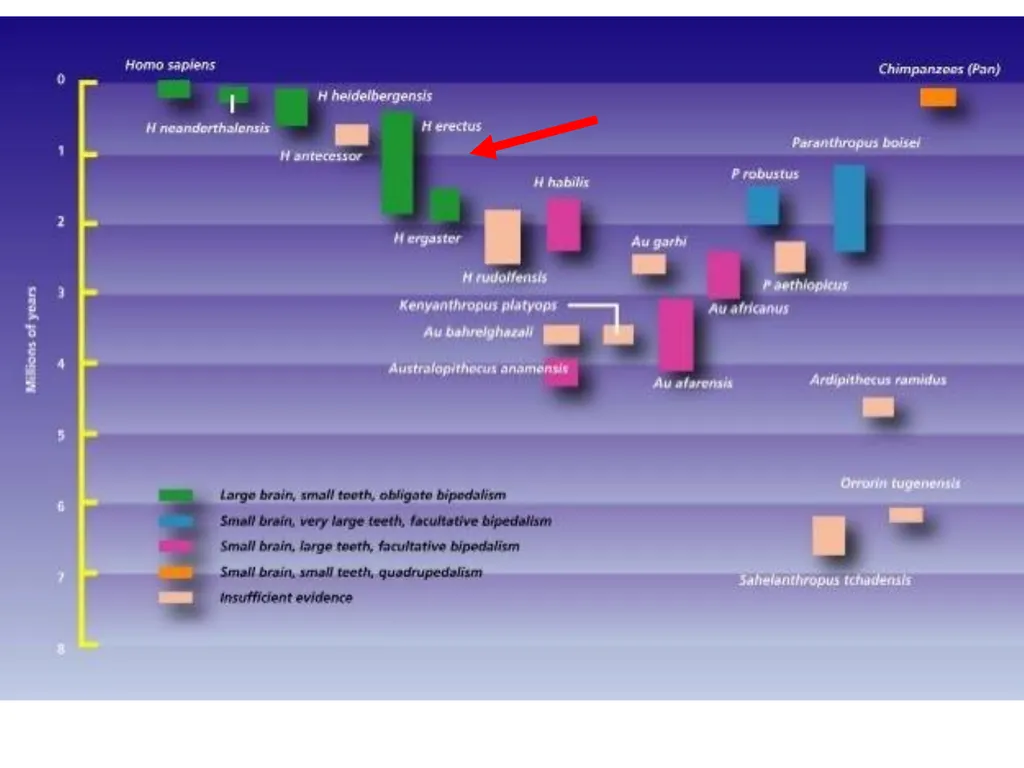
slide10. Important stages in human evolution 3.2 million years ago
3 million years ago
2 million years ago
1 million years ago
200, 000 years ago
150, 000 years ago<br>
slide11. "Hominid" refers to members of the human family, Hominidae, which consist of all species from the point where the human line splits from apes towards present day humans. Habitual bipedal locomotion (movement on two legs), an upright position, and a large brain that has lead to: tool use, language, and culture characterize hominids.<br>
slide13. 3 mya: Homo habilis-the ‘handy man’ Habitat: open terrain
Food: Scavenged for meat
Physical characteristics:
small jaw and teeth
shorter arms
increase in brain size (because of carnivorous diet and mode of feeding)
capable of speech<br>
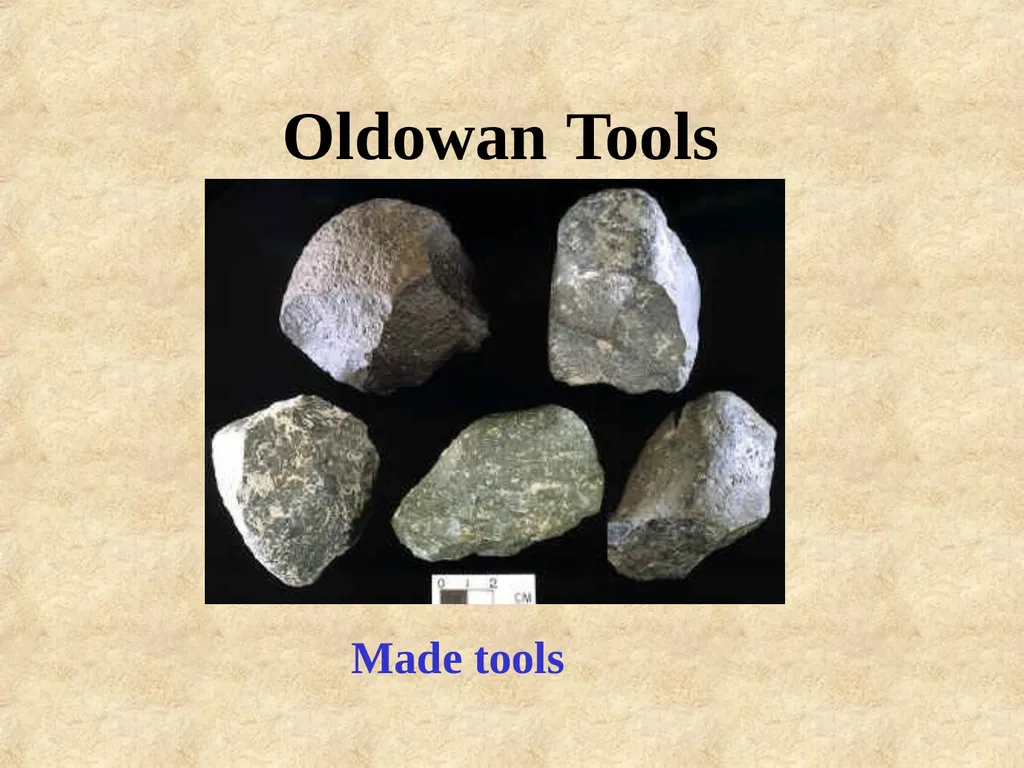
slide14. Oldowan Tools Made tools<br>
slide16. Human migration 1.9 mya humans began to leave Africa to other continents<br>
slide17. 2 mya: Homo ergaster Habitat: dry -hot habitat
Food: scavenger for meat
Physical characteristics:
Tall with long limbs
Smooth and dark skin
Temperature regulation through sweating
Narrow pelvis (lead to narrow birth canal)
Mothers needed support of partner and group to raise babies<br>
slide18. 120, 000 ya
Physical characteristics:
Eyebrow ridge small or absent
Prominent chin
Tools --antler, bone, stone
Clothing, jewelry, artwork, musical instruments Homo sapiens<br>
slide2. "Hominid" refers to members of the human family, Hominidae, which consist of all species from the point where the human line splits from apes towards present day humans. Habitual bipedal locomotion (movement on two legs), an upright position, and a large brain that has lead to: tool use, language, and culture characterize hominids.<br>
slide3. Human evolution History
Important stages in human evolution
Theories of human evolution
‘Human Characteristics’
Are we still evolving?<br>
slide4. History 1856-Neander Valley
– Discovery of a skull that was not quite human<br>
slide5. 1859 – Darwin publishes ‘The Origin of Species’
1871- Darwin predicts that ancestors of humans would be found in Africa<br>
slide6. Up till 1930s
– Humanity evolved in Europe 1950s--1960s
– Many significant fossils discovered BC D A ABCD Bush model Linear model<br>
slide7. 1970s – present
more fossils
molecular techniques
‘tree model’ of human evolution<br>
slide8. Current Controversy 6-7 m y old fossil
Earliest bipedal hominid?
Sahelanthropus tchadensis<br>
slide10. Important stages in human evolution 3.2 million years ago
3 million years ago
2 million years ago
1 million years ago
200, 000 years ago
150, 000 years ago<br>
slide11. "Hominid" refers to members of the human family, Hominidae, which consist of all species from the point where the human line splits from apes towards present day humans. Habitual bipedal locomotion (movement on two legs), an upright position, and a large brain that has lead to: tool use, language, and culture characterize hominids.<br>
slide13. 3 mya: Homo habilis-the ‘handy man’ Habitat: open terrain
Food: Scavenged for meat
Physical characteristics:
small jaw and teeth
shorter arms
increase in brain size (because of carnivorous diet and mode of feeding)
capable of speech<br>
slide14. Oldowan Tools Made tools<br>
slide16. Human migration 1.9 mya humans began to leave Africa to other continents<br>
slide17. 2 mya: Homo ergaster Habitat: dry -hot habitat
Food: scavenger for meat
Physical characteristics:
Tall with long limbs
Smooth and dark skin
Temperature regulation through sweating
Narrow pelvis (lead to narrow birth canal)
Mothers needed support of partner and group to raise babies<br>
slide18. 120, 000 ya
Physical characteristics:
Eyebrow ridge small or absent
Prominent chin
Tools --antler, bone, stone
Clothing, jewelry, artwork, musical instruments Homo sapiens<br>