03
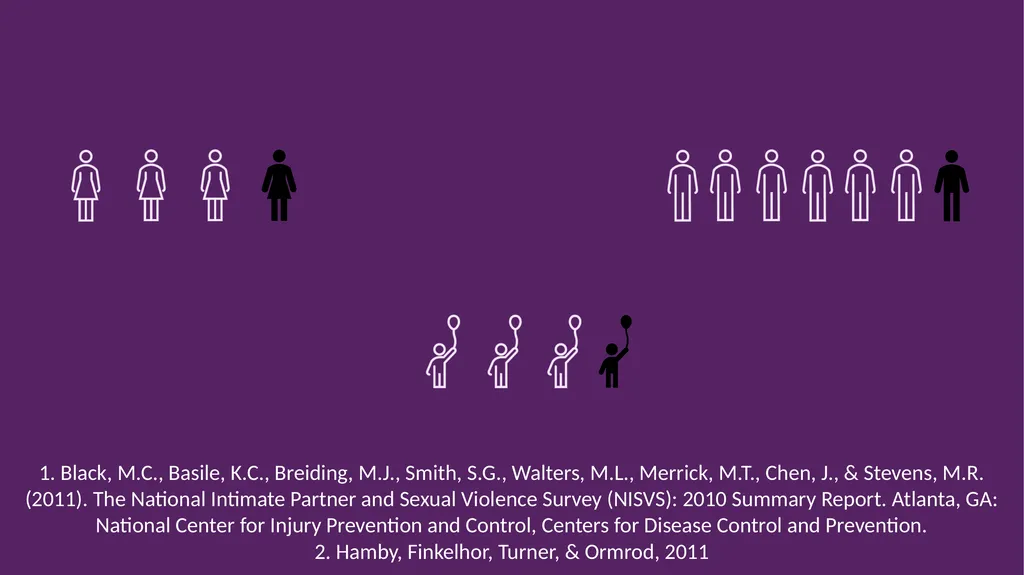
1. Black, M.C., Basile, K.C., Breiding, M.J., Smith, S.G., Walters, M.L., Merrick, M.T., Chen, J., & Stevens, M.R. (2011). The National Intimate Partner and Sexual Violence Survey (NISVS): 2010 Summary Report. Atlanta, GA: National Center for Injury Prevention and Control, Centers for Disease Control and Prevention.
2. Hamby, Finkelhor, Turner, & Ormrod, 2011<br>
04
What do you think when you hear “Domestic Violence”?<br>
05
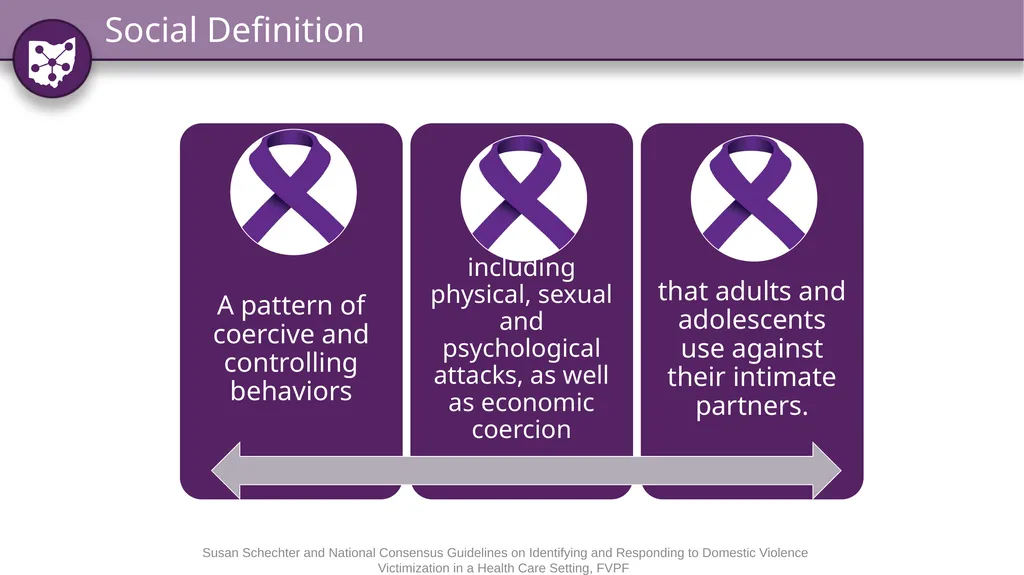
Susan Schechter and National Consensus Guidelines on Identifying and Responding to Domestic Violence Victimization in a Health Care Setting, FVPF Social Definition<br>
06
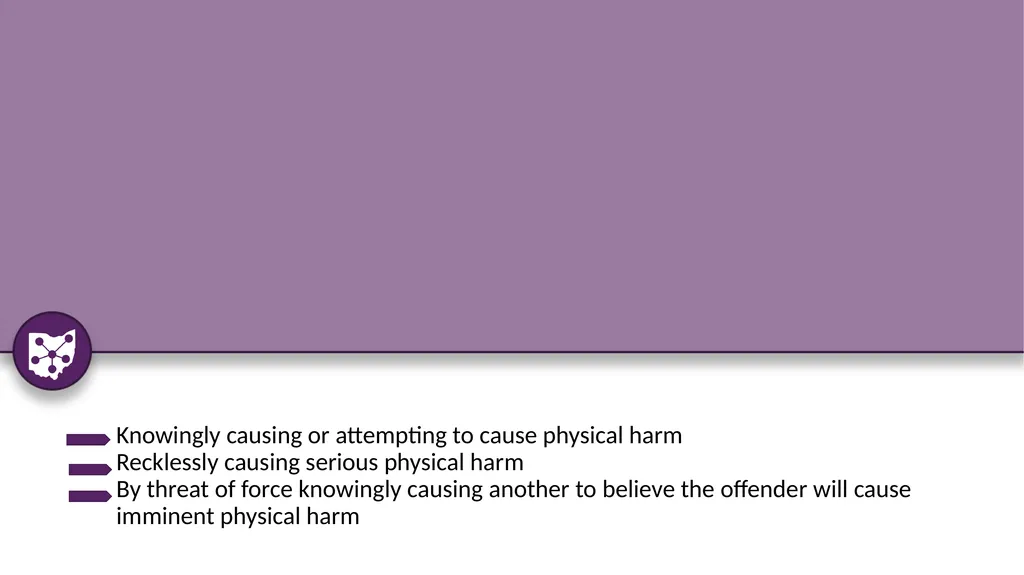
Knowingly causing or attempting to cause physical harm�Recklessly causing serious physical harm�By threat of force knowingly causing another to believe the offender will cause imminent physical harm Ohio Revised Code Definition (ORC 2919.25)
The criminal law defines domestic violence as doing any of the following to a Family or Household Member<br>
07
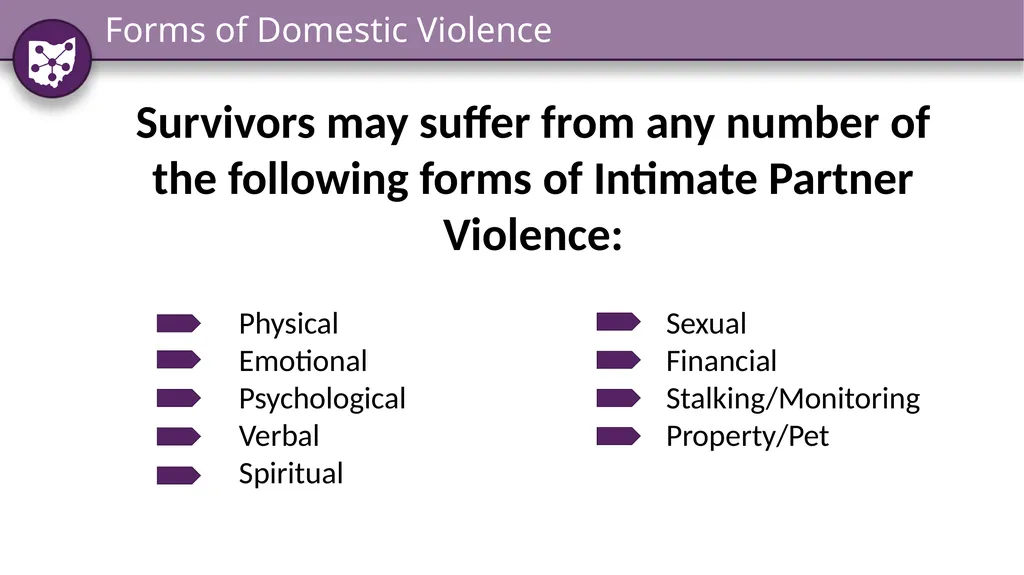
Forms of Domestic Violence Survivors may suffer from any number of the following forms of Intimate Partner Violence: Sexual
Financial
Stalking/Monitoring
Property/Pet Physical
Emotional
Psychological
Verbal
Spiritual<br>
08
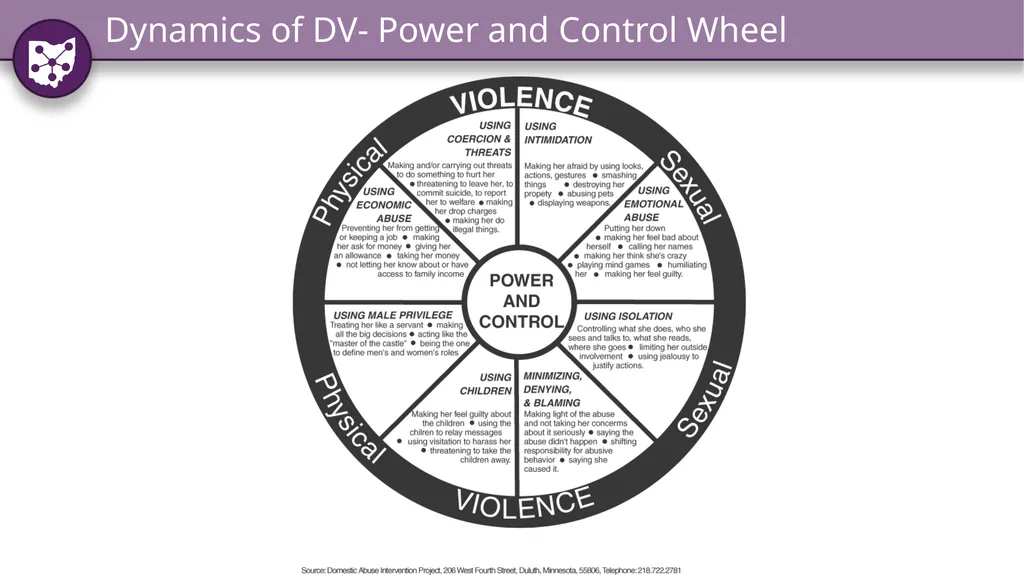
Dynamics of DV- Power and Control Wheel<br>
09
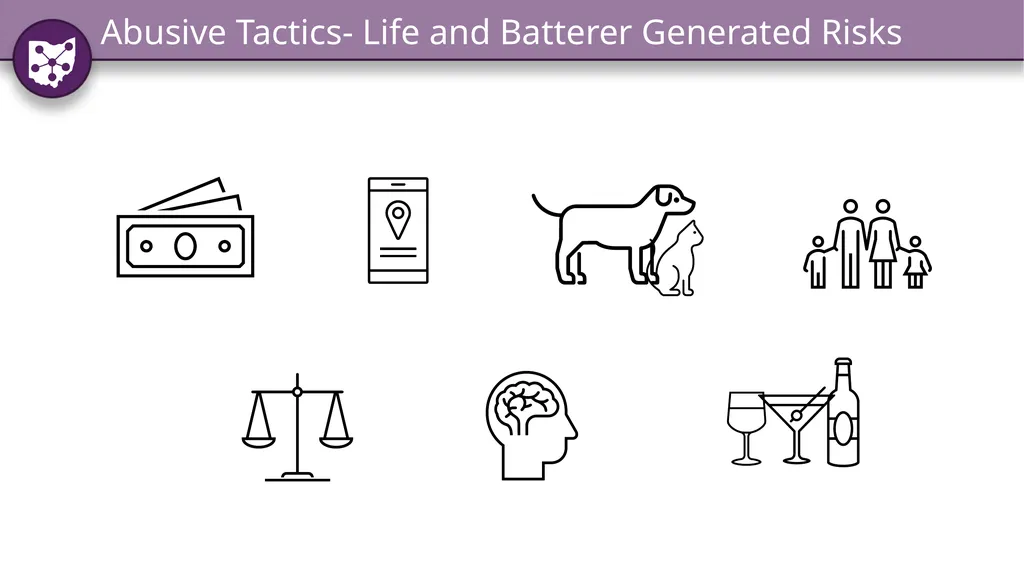
Abusive Tactics- Life and Batterer Generated Risks<br>
10
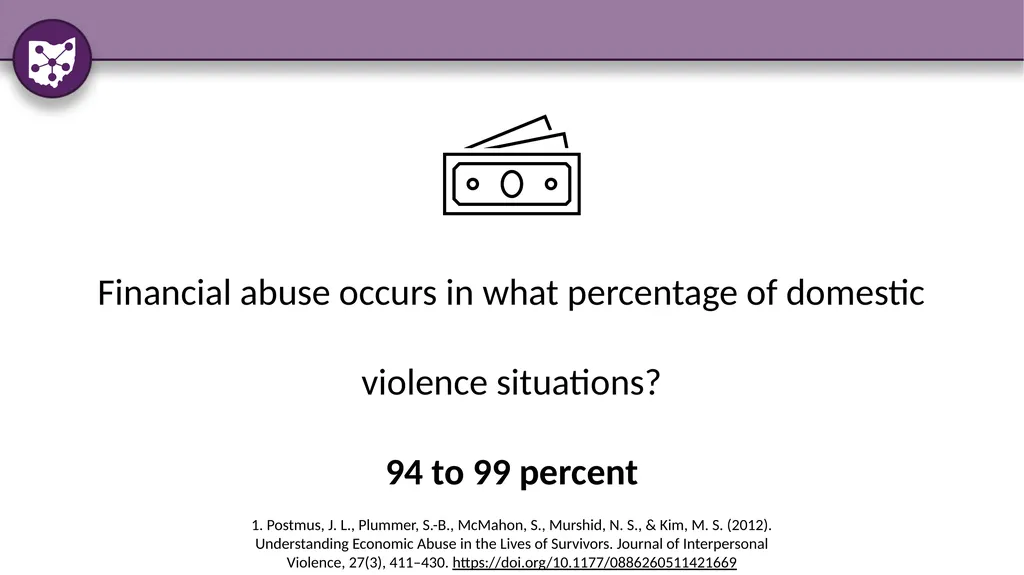
Financial abuse occurs in what percentage of domestic violence situations?
94 to 99 percent 1. Postmus, J. L., Plummer, S.-B., McMahon, S., Murshid, N. S., & Kim, M. S. (2012). Understanding Economic Abuse in the Lives of Survivors. Journal of Interpersonal Violence, 27(3), 411–430. https://doi.org/10.1177/0886260511421669<br>
11
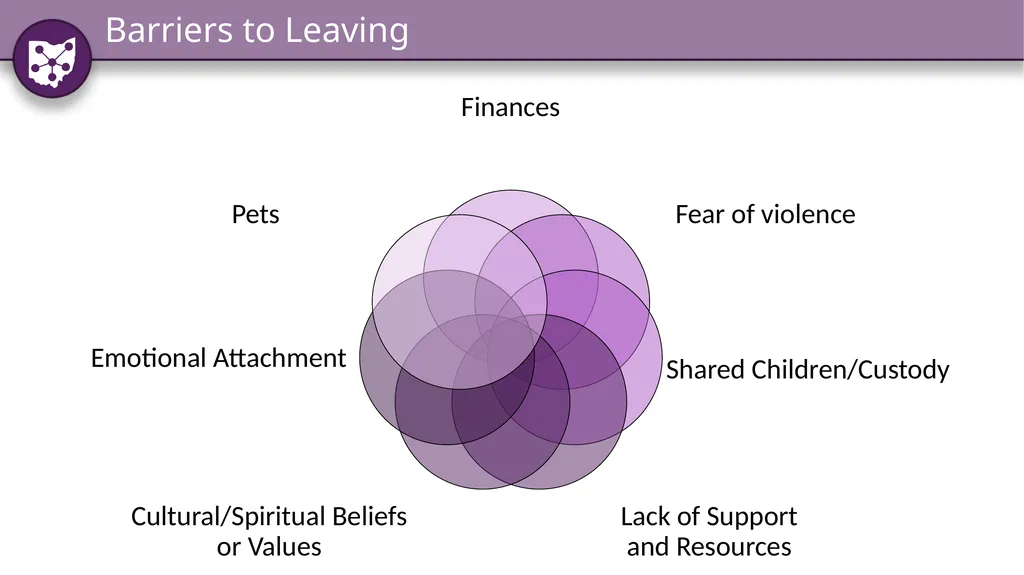
Barriers to Leaving<br>
12
If I stay or if I go<br>
13
Why don’t they just leave? The most dangerous time for a survivor is in the 3 to 18 months after leaving an abusive relationship, with 75% of domestic violence related homicides occurring post-separation. McFarlane J, Nava A, Gilroy H, Maddoux J. Risk of behaviors associated with lethal violence and functional outcomes for abused women who do and do not return to the abuser following a community-based intervention. J Womens Health (Larchmt). 2015 Apr;24(4):272-80. doi: 10.1089/jwh.2014.5064. Epub 2015 Feb 25. PMID: 25714332; PMCID: PMC4394888.<br>
14
Why are they so afraid of this person just calling? 89 percent of femicide victims who had been physically assaulted had also been stalked in the 12 months before their murder. McFarlane, J., Campbell, J.C., Wilt, S., Ulrich, Y., & Xu, X. (1999). Stalking and Intimate Partner Femicide. Homicide Studies 3 (4), 300-316.<br>
15
Won’t he be less violent because she’s pregnant? Homicide is the leading causes of death for pregnant women in the United States. Wallace M, Gillispie-Bell V, Cruz K, Davis K, Vilda D. Homicide During Pregnancy and the Postpartum Period in the United States, 2018-2019. Obstet Gynecol. 2021 Nov 1;138(5):762-769. doi: 10.1097/AOG.0000000000004567. Erratum in: Obstet Gynecol. 2022 Feb 1;139(2):347. doi: 10.1097/AOG.0000000000004671. PMID: 34619735; PMCID: PMC9134264.<br>
16
If they were choked, why aren’t there bruises? Non-fatal strangulation is the highest predictor of murder. https://www.domesticshelters.org/articles/identifying-abuse/strangulation-is-the-highest-predictor-of-murder<br>
18
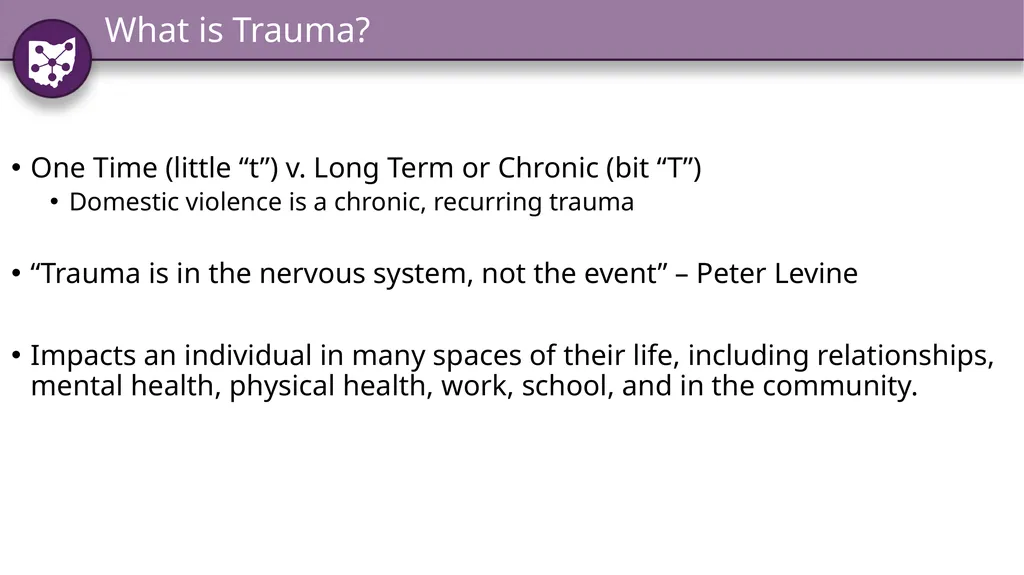
What is Trauma? One Time (little “t”) v. Long Term or Chronic (bit “T”)
Domestic violence is a chronic, recurring trauma
“Trauma is in the nervous system, not the event” – Peter Levine
Impacts an individual in many spaces of their life, including relationships, mental health, physical health, work, school, and in the community.<br>
19
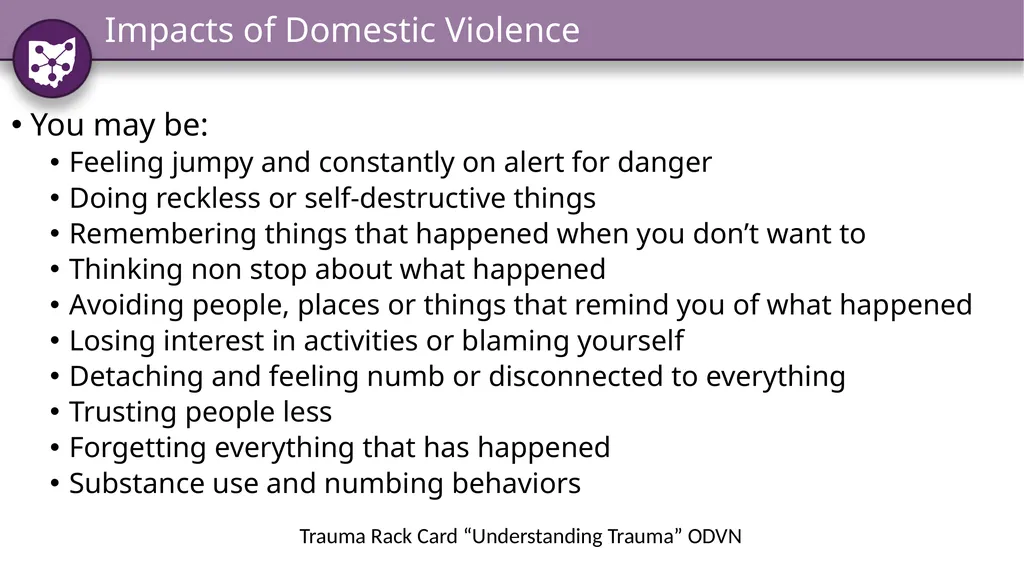
Impacts of Domestic Violence You may be:
Feeling jumpy and constantly on alert for danger
Doing reckless or self-destructive things
Remembering things that happened when you don’t want to
Thinking non stop about what happened
Avoiding people, places or things that remind you of what happened
Losing interest in activities or blaming yourself
Detaching and feeling numb or disconnected to everything
Trusting people less
Forgetting everything that has happened
Substance use and numbing behaviors Trauma Rack Card “Understanding Trauma” ODVN<br>
20
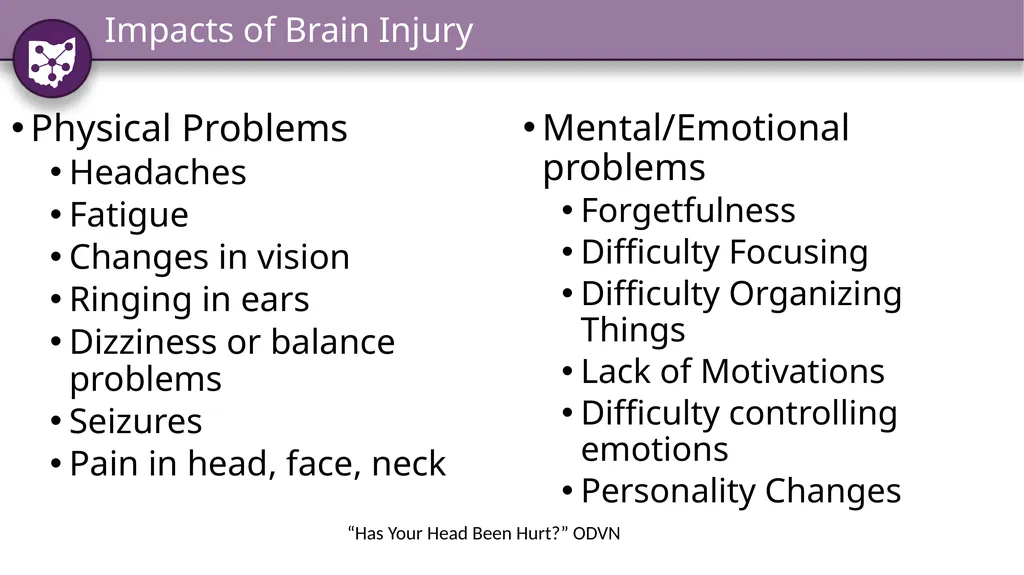
Impacts of Brain Injury Physical Problems
Headaches
Fatigue
Changes in vision
Ringing in ears
Dizziness or balance problems
Seizures
Pain in head, face, neck Mental/Emotional problems
Forgetfulness
Difficulty Focusing
Difficulty Organizing Things
Lack of Motivations
Difficulty controlling emotions
Personality Changes “Has Your Head Been Hurt?” ODVN<br>
21
Signs of Abuse in Relationships Person is starting to isolate from those around them.
Person may often cancel plans at the last minute.
Person may get frequent calls from their partner, their partner “checking in” on them at work, or be frequently and urgently responding to texts from their partner.
Person expresses fear or is in crisis about their partner being angry with them, may go out of their way to placate their partner.
Person may casually mention abusive behavior but brush off reactions or say “It’s not big deal.”
Person may have unexplained injuries or offer explanations that don’t make sense.<br>
22
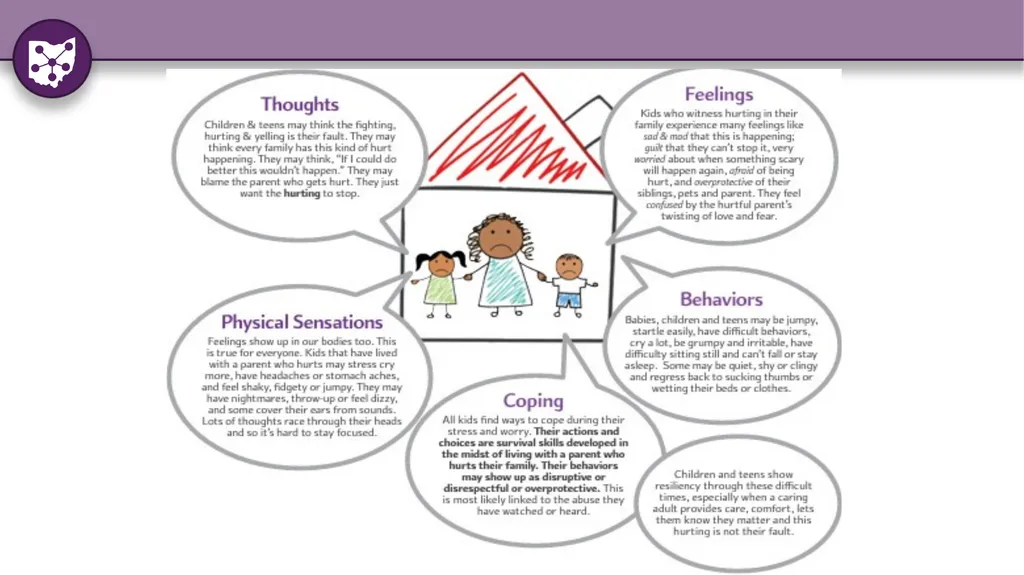
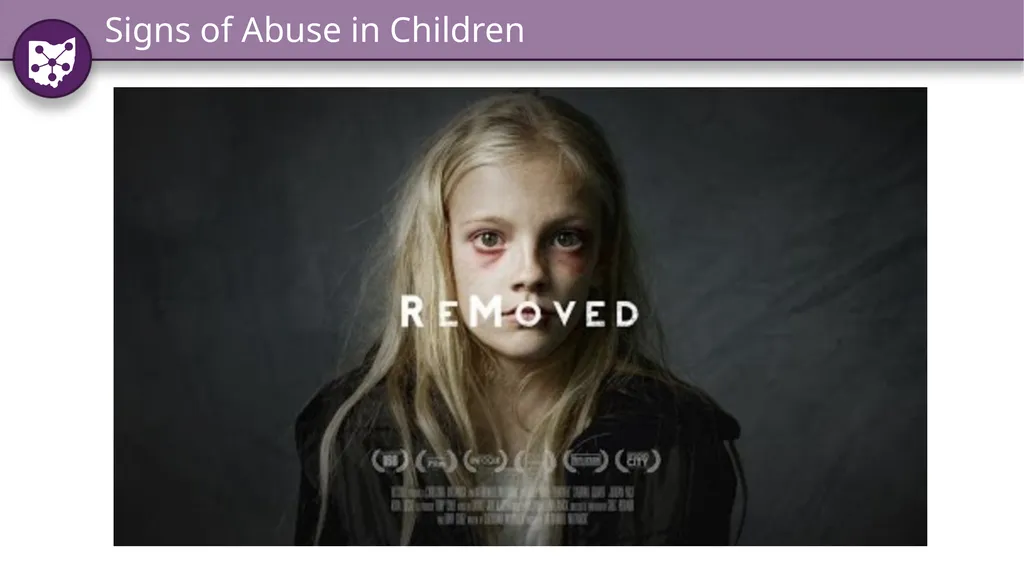
Signs of Abuse in Children<br>
23
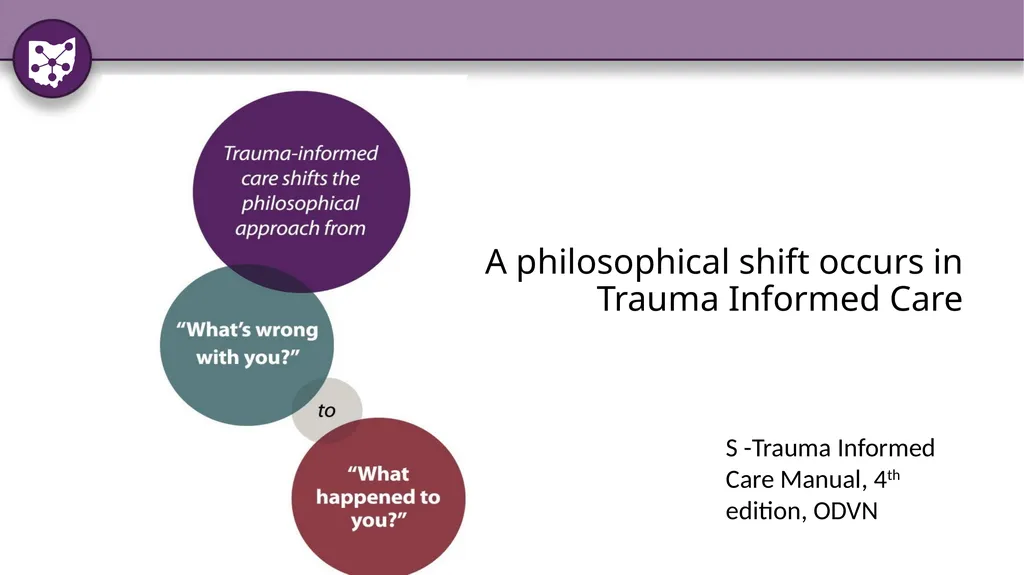
A philosophical shift occurs in Trauma Informed Care S -Trauma Informed Care Manual, 4th edition, ODVN<br>
24
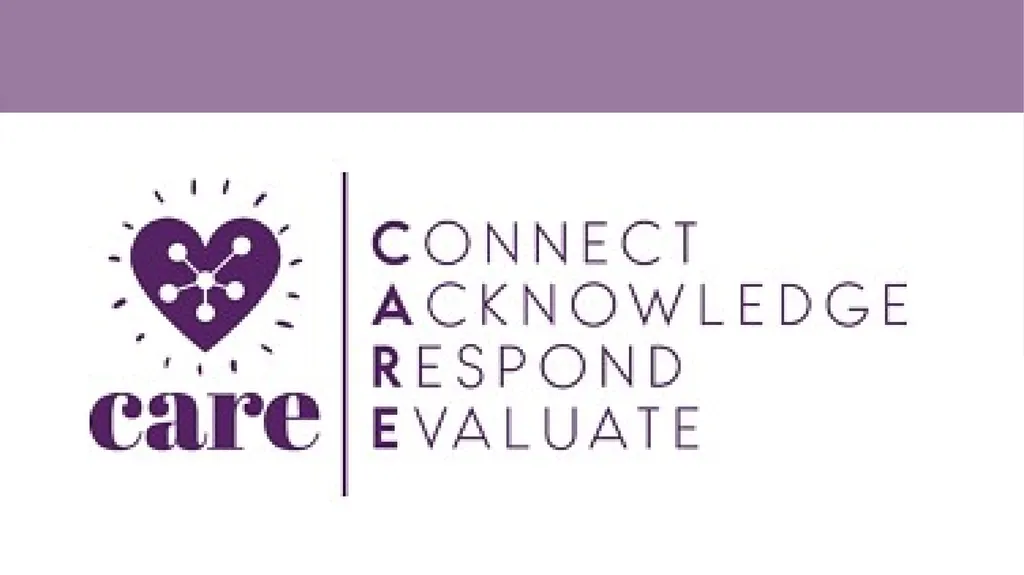
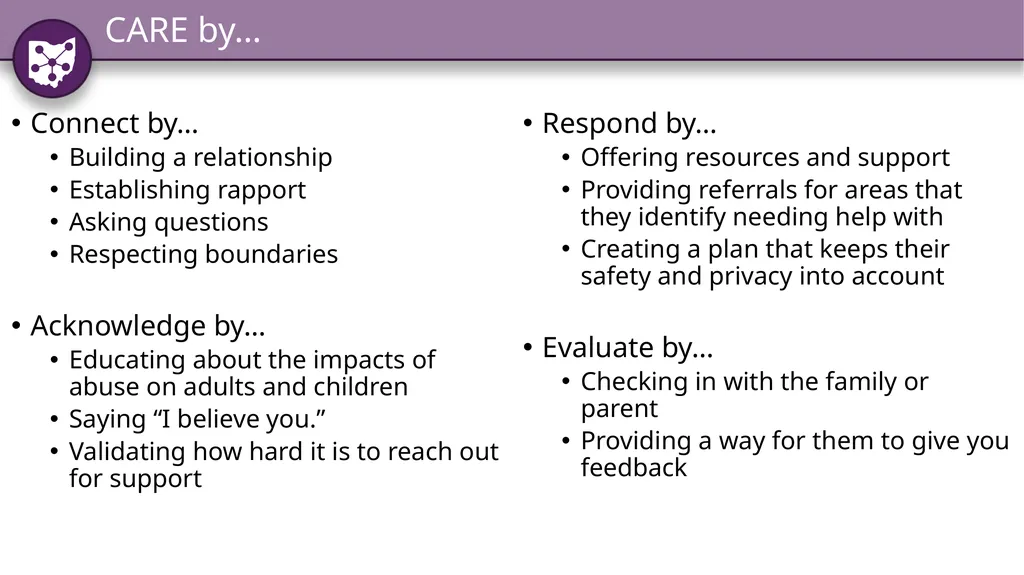
CARE by… Connect by…
Building a relationship
Establishing rapport
Asking questions
Respecting boundaries
Acknowledge by…
Educating about the impacts of abuse on adults and children
Saying “I believe you.”
Validating how hard it is to reach out for support Respond by…
Offering resources and support
Providing referrals for areas that they identify needing help with
Creating a plan that keeps their safety and privacy into account
Evaluate by…
Checking in with the family or parent
Providing a way for them to give you feedback<br>
25
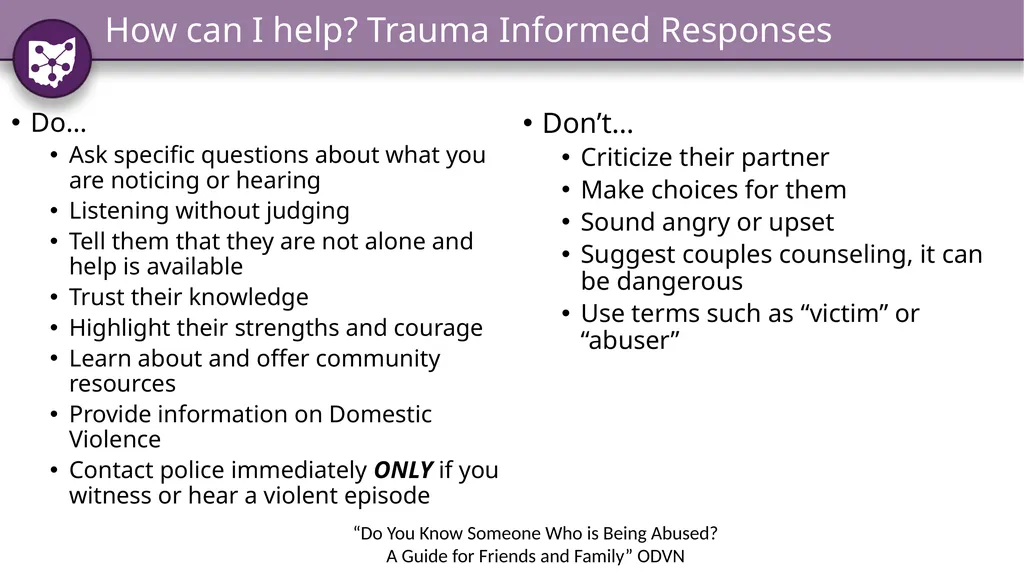
How can I help? Trauma Informed Responses Do…
Ask specific questions about what you are noticing or hearing
Listening without judging
Tell them that they are not alone and help is available
Trust their knowledge
Highlight their strengths and courage
Learn about and offer community resources
Provide information on Domestic Violence
Contact police immediately ONLY if you witness or hear a violent episode Don’t…
Criticize their partner
Make choices for them
Sound angry or upset
Suggest couples counseling, it can be dangerous
Use terms such as “victim” or “abuser” “Do You Know Someone Who is Being Abused?
A Guide for Friends and Family” ODVN<br>
26
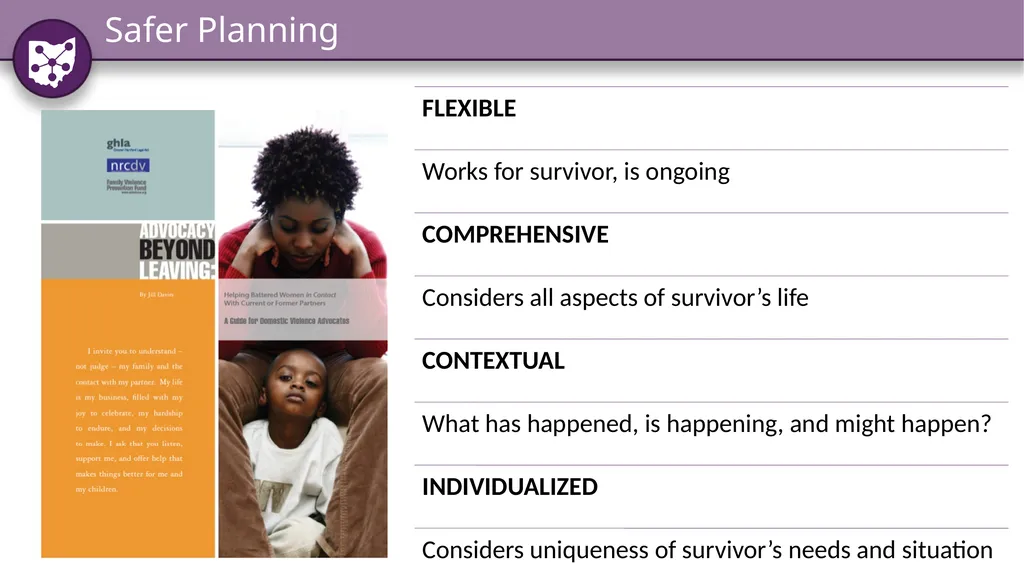
Effective Safer Planning is... Safer Planning<br>
27
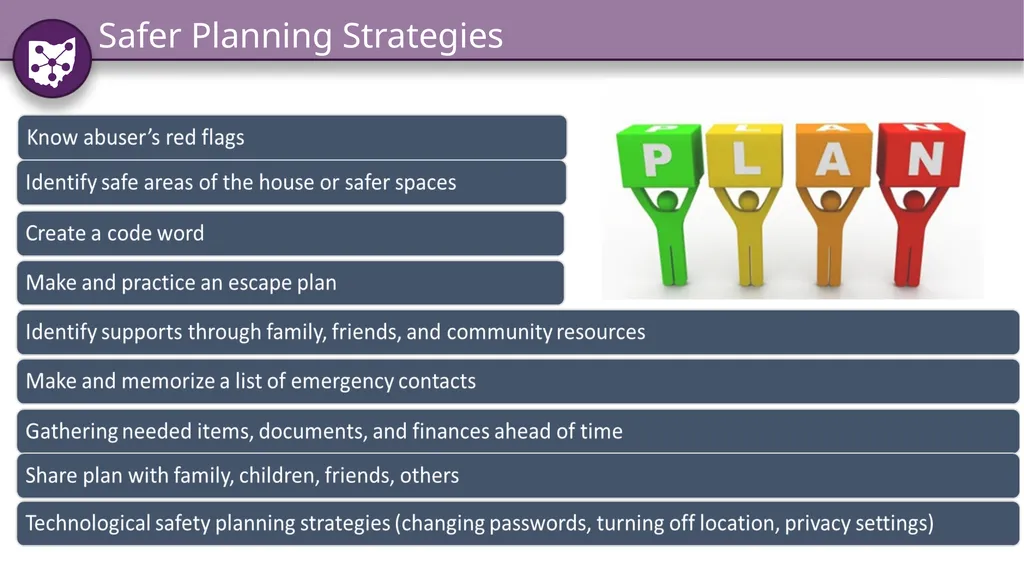
Safer Planning Strategies<br>
28
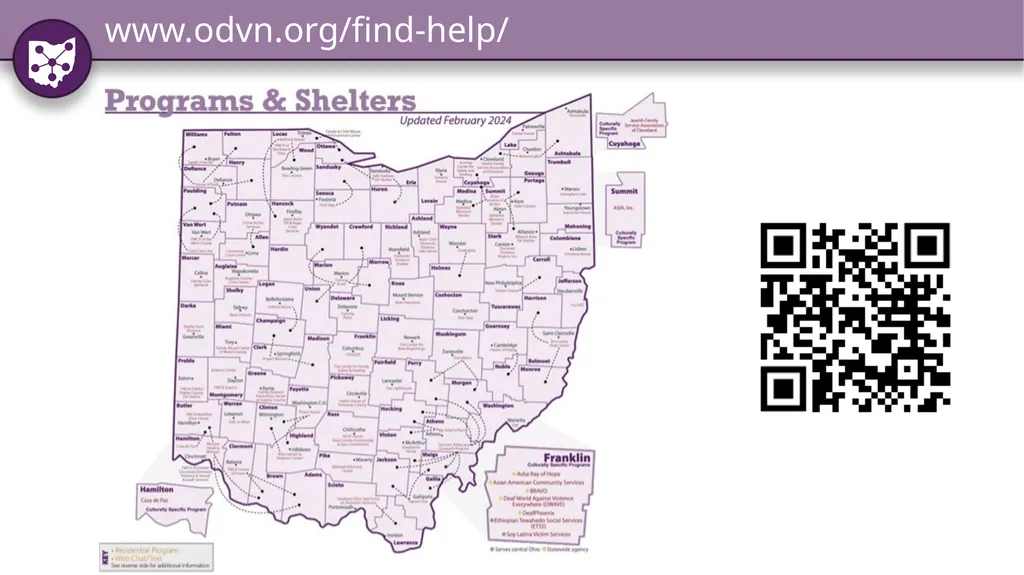
Local and ODVN Resources<br>
29
www.odvn.org/find-help/<br>
30
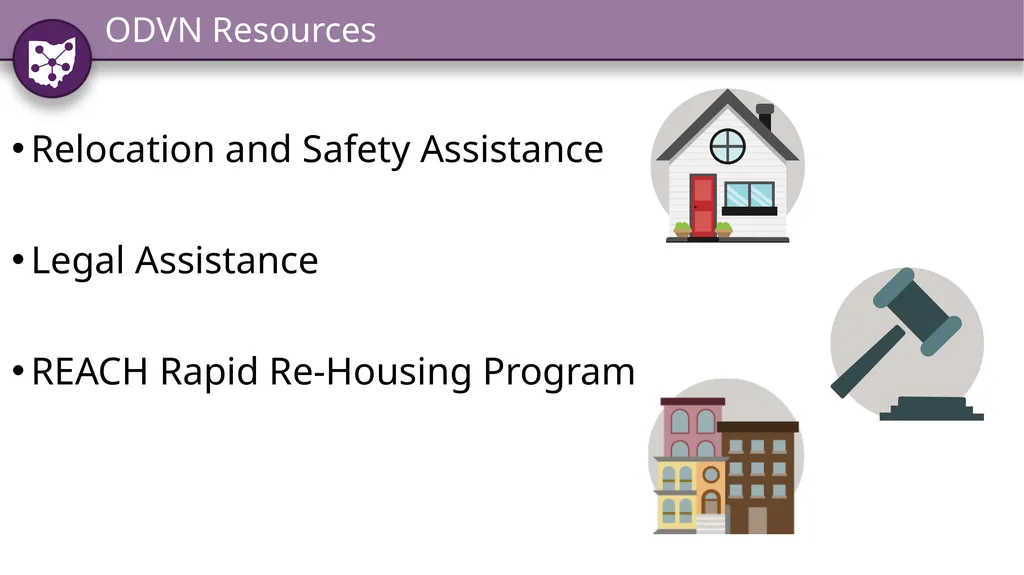
Relocation and Safety Assistance
Legal Assistance
REACH Rapid Re-Housing Program ODVN Resources<br>
31
Ohio Domestic Violence Network<br>