04
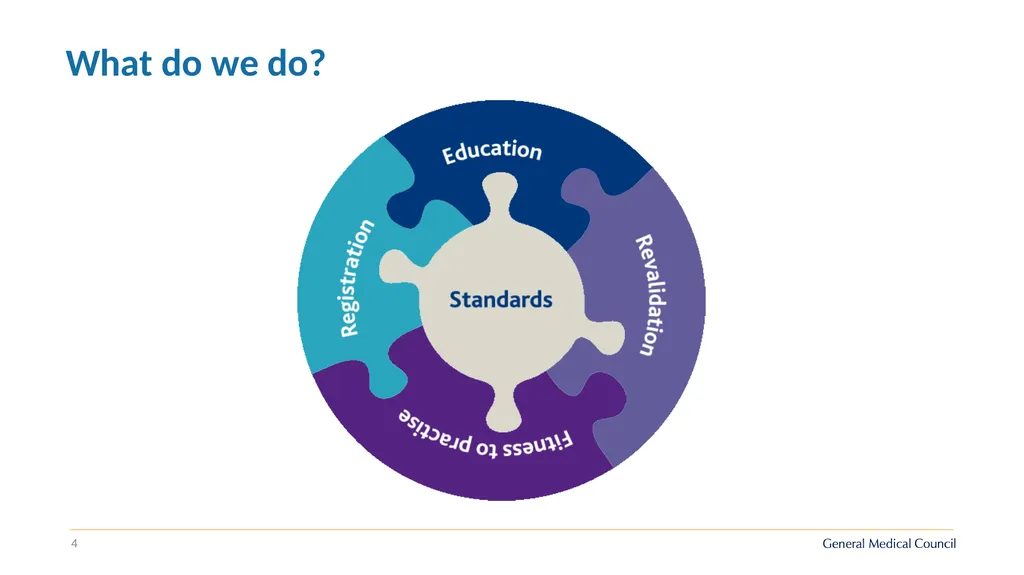
What do we do? What do we do? 4<br>
05
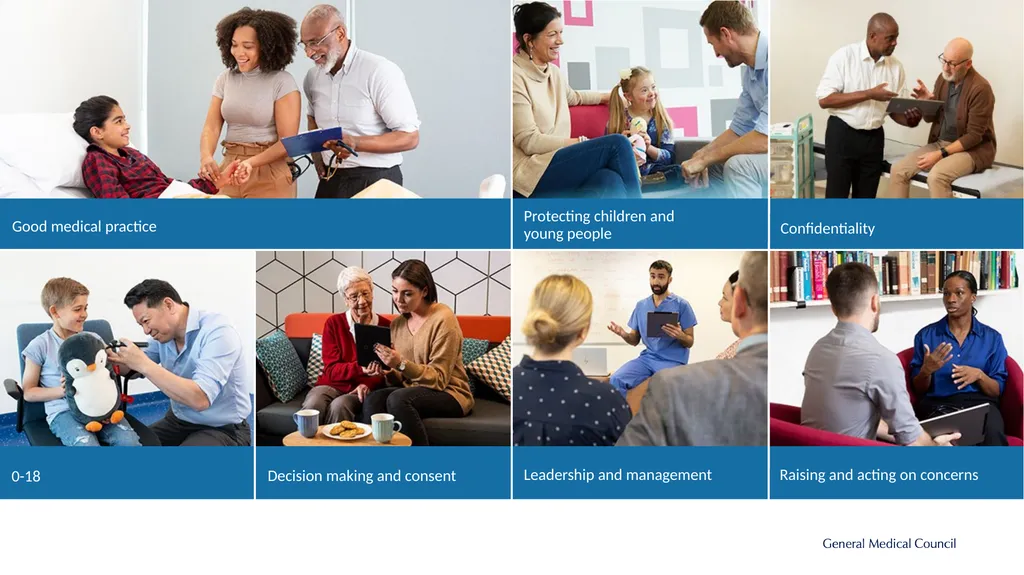
Good medical practice Protecting children and young people Confidentiality Leadership and management Decision making and consent 0-18 Raising and acting on concerns<br>
06
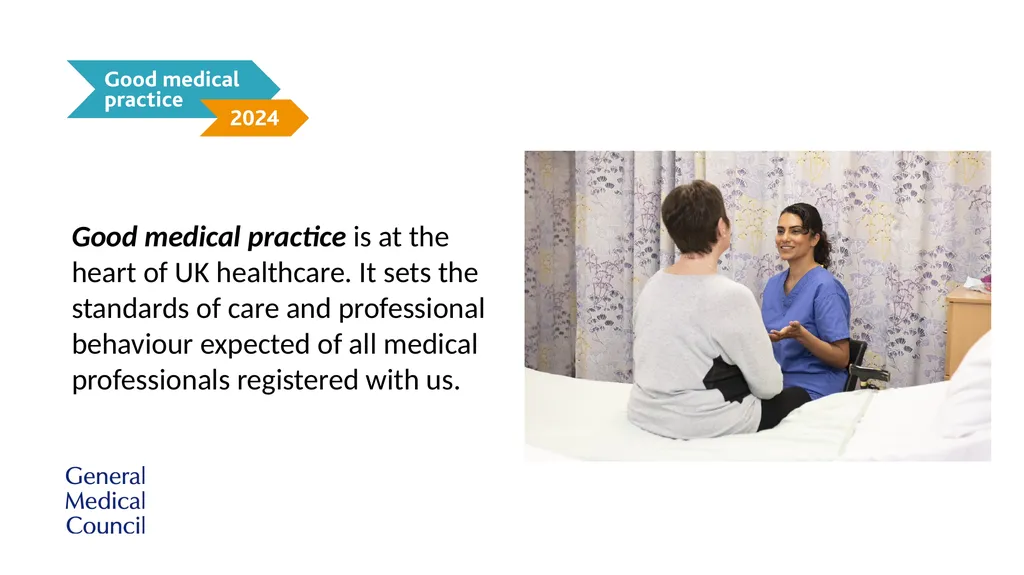
Good medical practice is at the heart of UK healthcare. It sets the standards of care and professional behaviour expected of all medical professionals registered with us.<br>
08
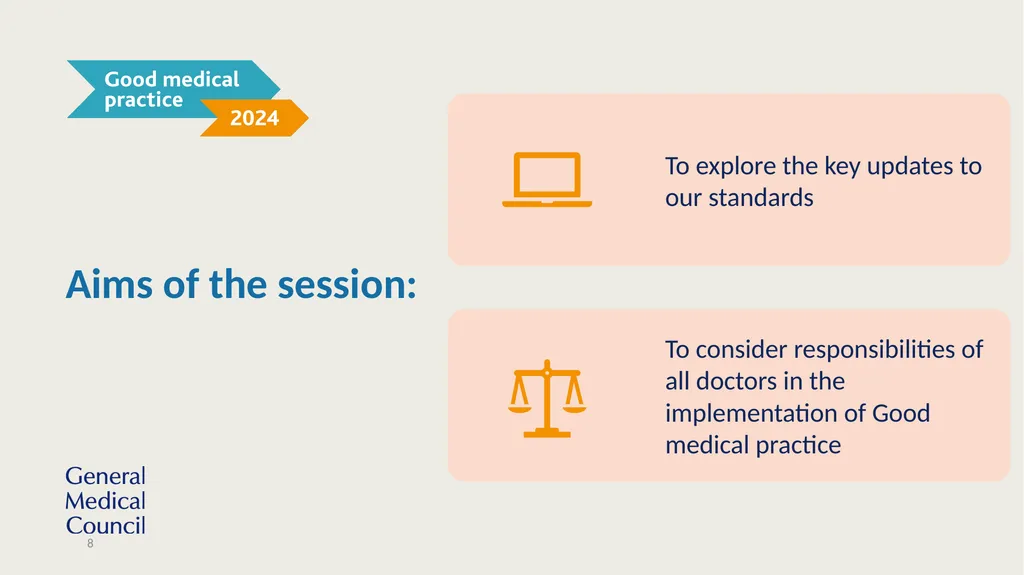
Aims of the session: 8<br>
14
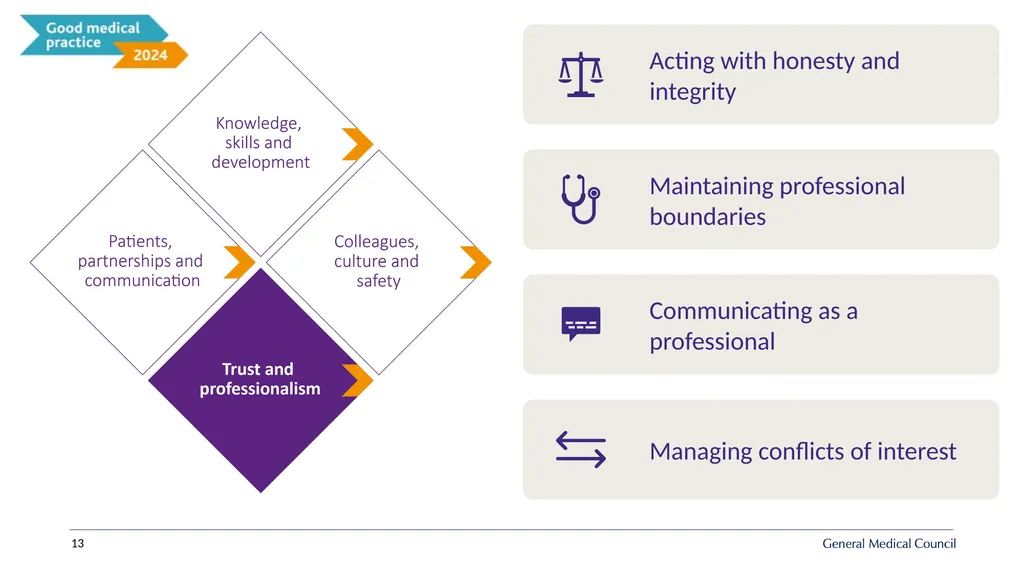
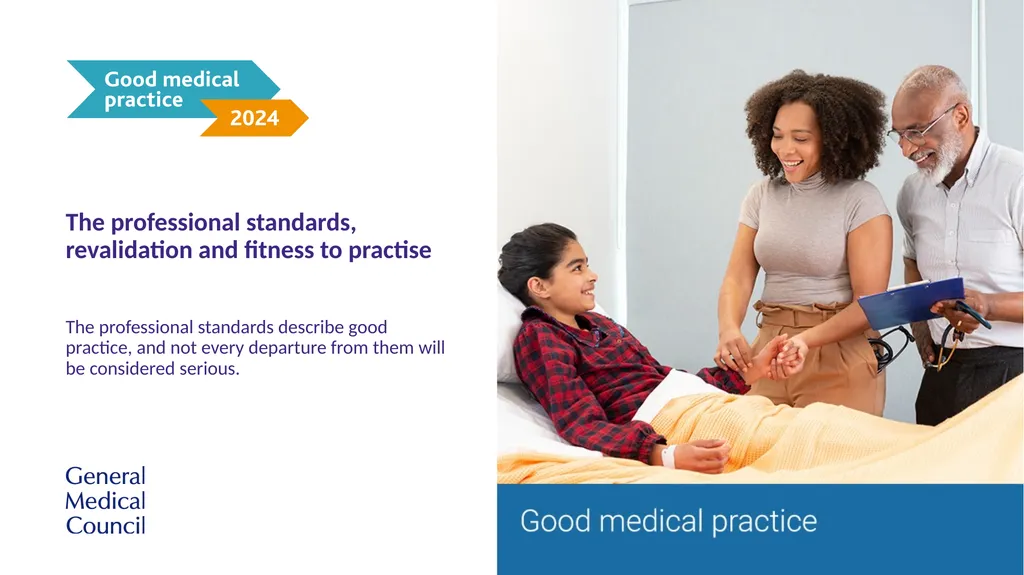
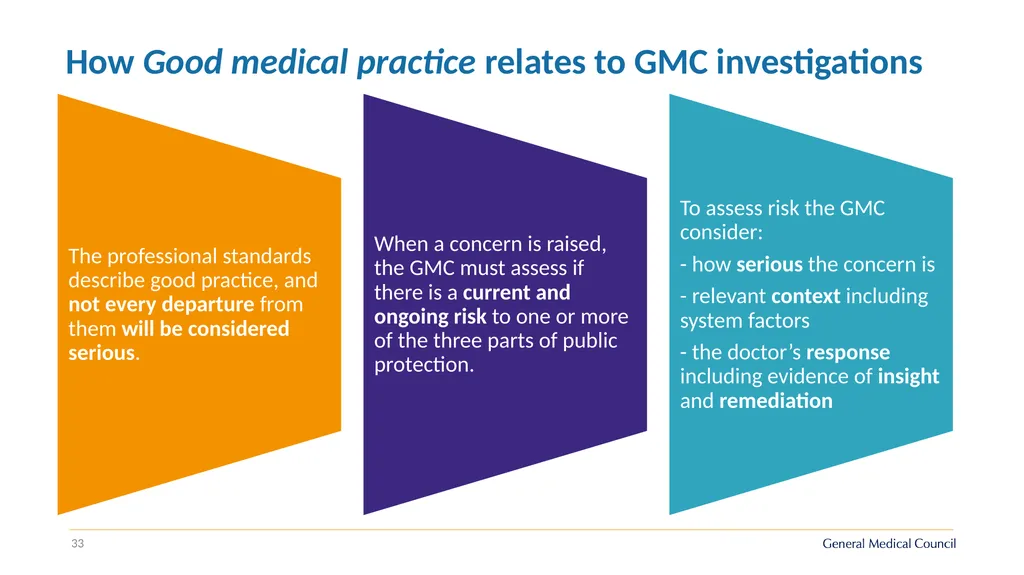
The professional standards, revalidation and fitness to practise The professional standards describe good practice, and not every departure from them will be considered serious.<br>
15
The five key themes:�
A new approach?<br>
16
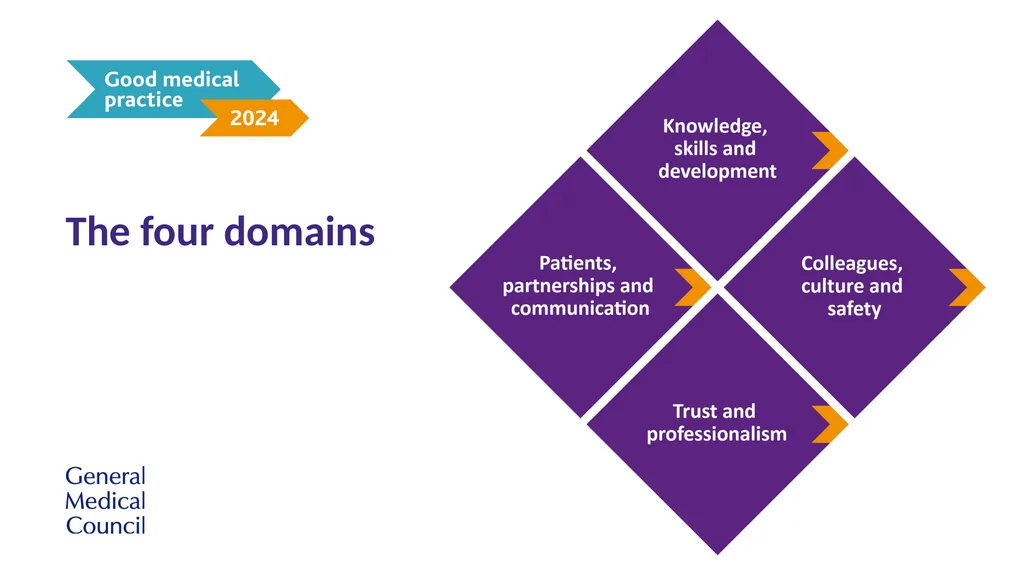
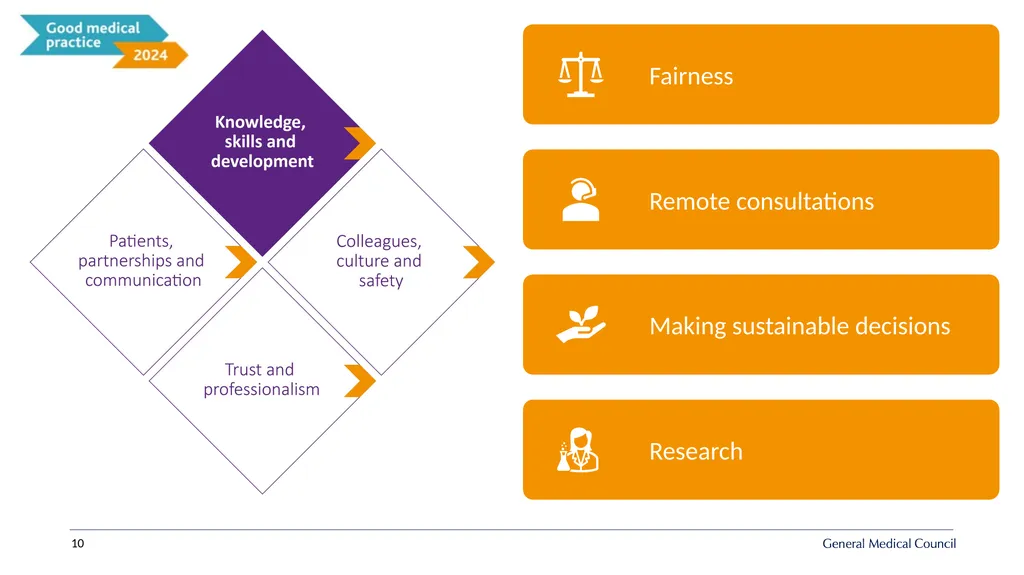
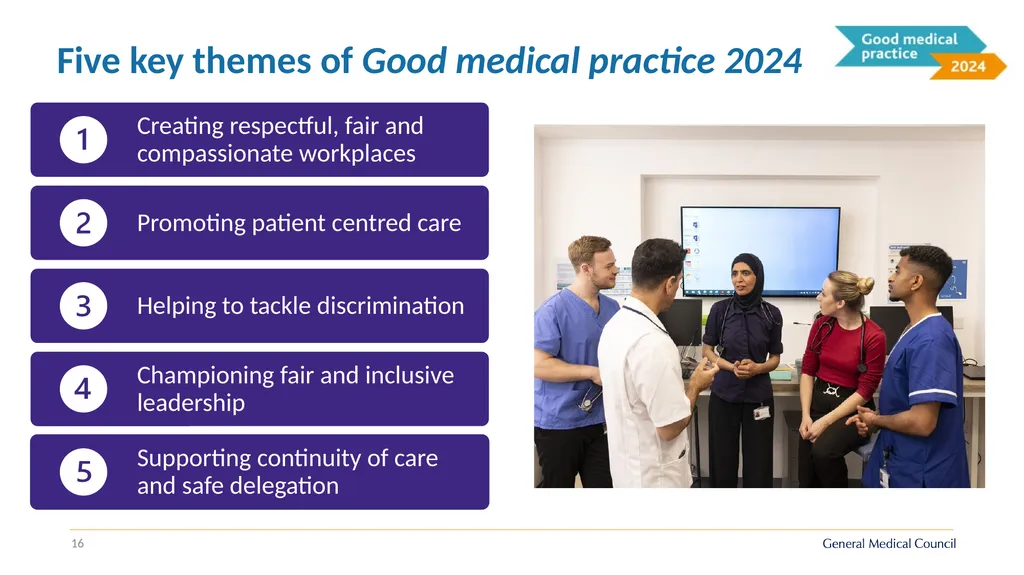
Five key themes of Good medical practice 2024 16<br>
17
Implementing the standards<br>
18
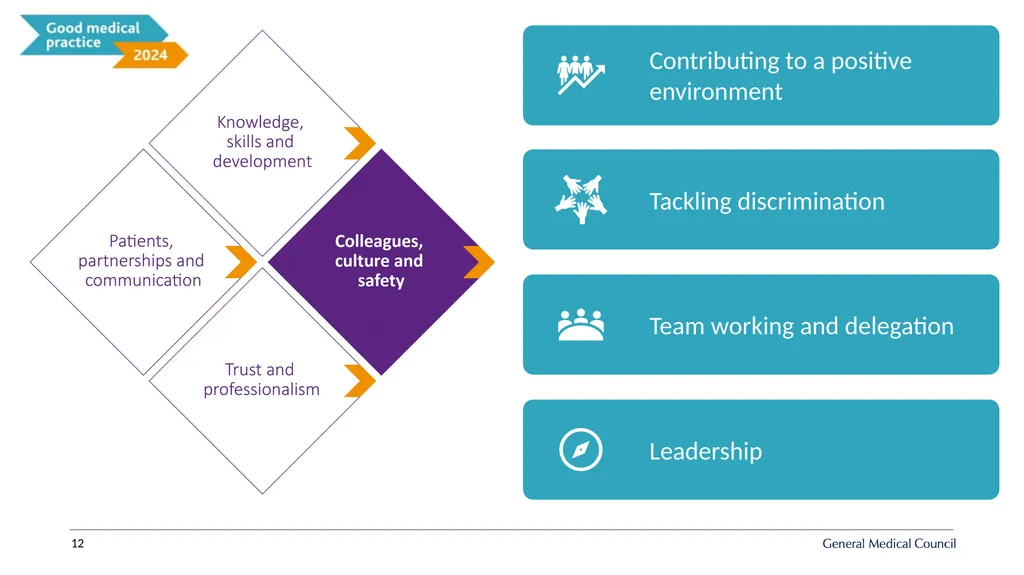
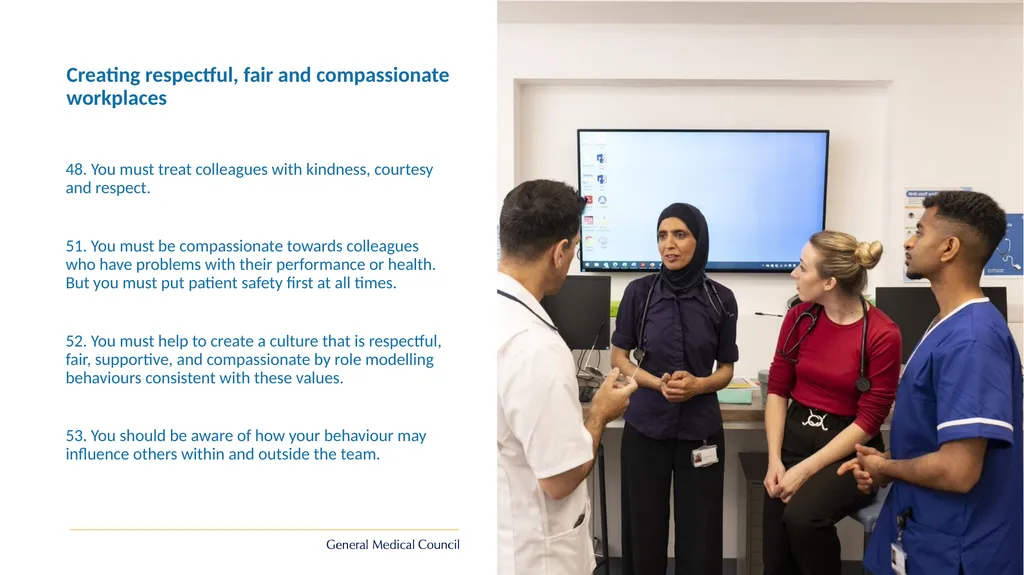
Creating respectful, fair and compassionate workplaces 48. You must treat colleagues with kindness, courtesy and respect.
51. You must be compassionate towards colleagues who have problems with their performance or health. But you must put patient safety first at all times.
52. You must help to create a culture that is respectful, fair, supportive, and compassionate by role modelling behaviours consistent with these values.
53. You should be aware of how your behaviour may influence others within and outside the team.<br>
19
What are you doing in your workplace that contributes to a positive culture? 19<br>
20
Promoting patient centred care<br>
21
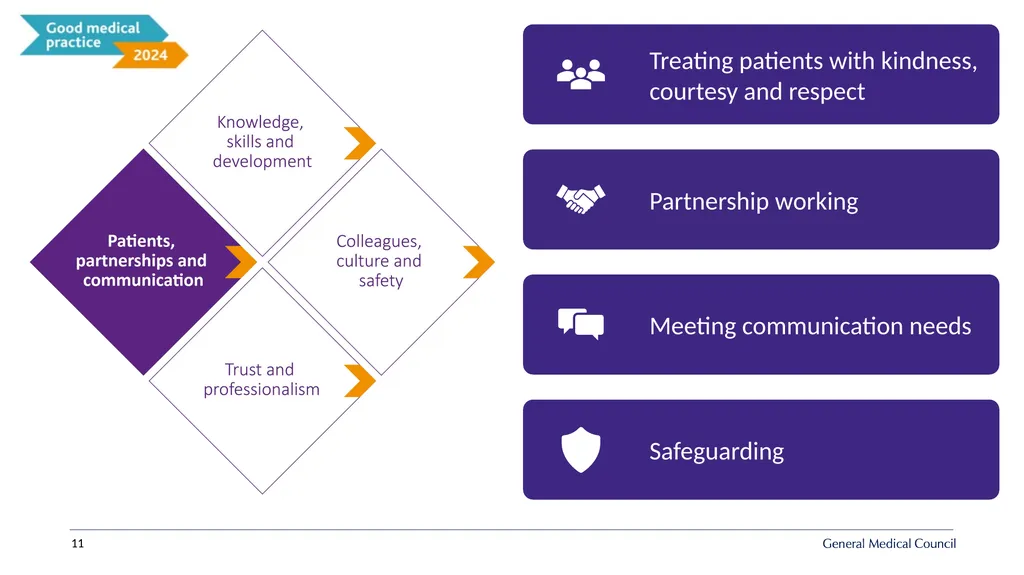
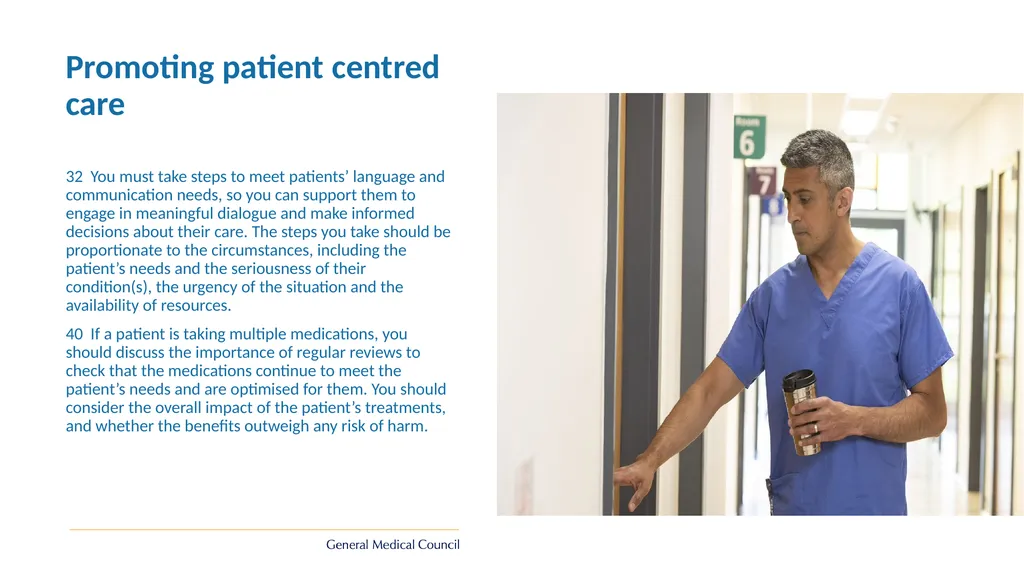
Promoting patient centred care 32 You must take steps to meet patients’ language and communication needs, so you can support them to engage in meaningful dialogue and make informed decisions about their care. The steps you take should be proportionate to the circumstances, including the patient’s needs and the seriousness of their condition(s), the urgency of the situation and the availability of resources.
40 If a patient is taking multiple medications, you should discuss the importance of regular reviews to check that the medications continue to meet the patient’s needs and are optimised for them. You should consider the overall impact of the patient’s treatments, and whether the benefits outweigh any risk of harm.<br>
22
What helps create a patient centred approach where you work? 22<br>
23
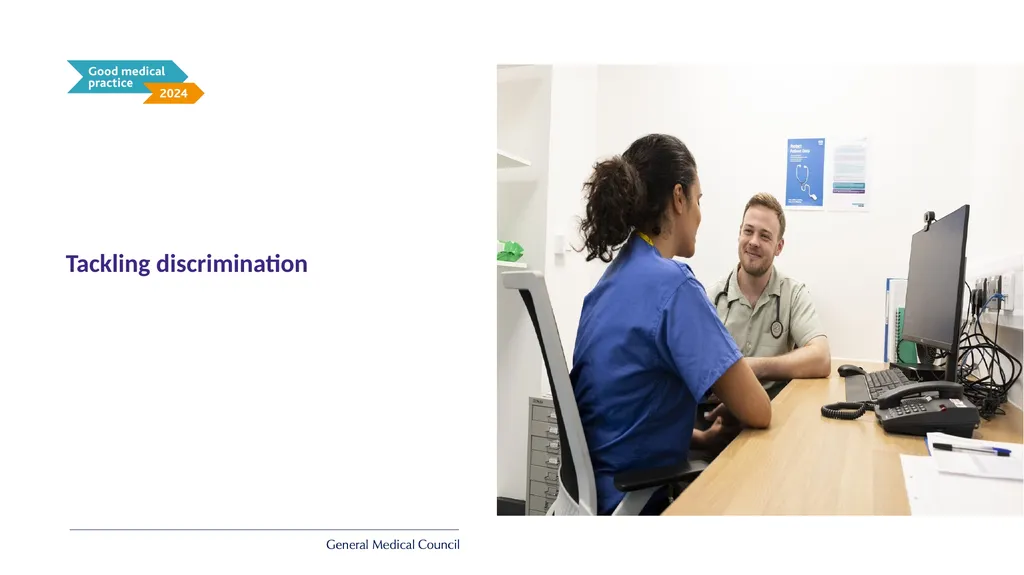
Tackling discrimination<br>
24
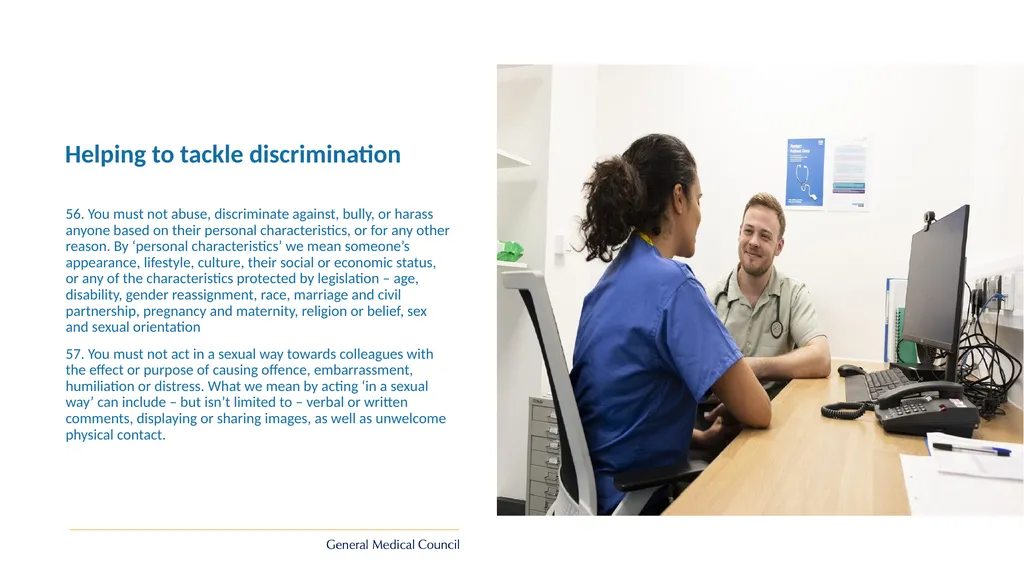
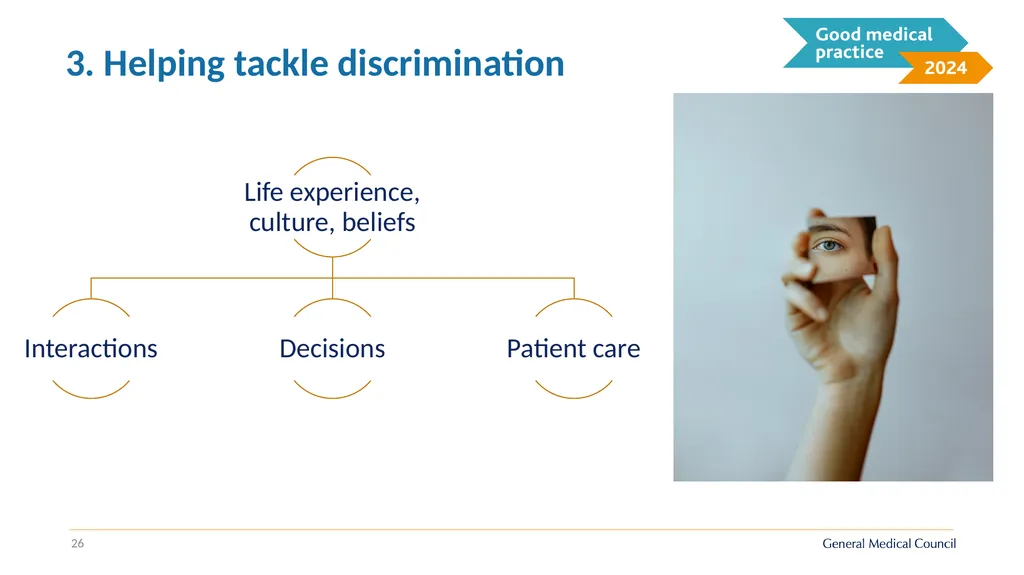
Helping to tackle discrimination 56. You must not abuse, discriminate against, bully, or harass anyone based on their personal characteristics, or for any other reason. By ‘personal characteristics’ we mean someone’s appearance, lifestyle, culture, their social or economic status, or any of the characteristics protected by legislation – age, disability, gender reassignment, race, marriage and civil partnership, pregnancy and maternity, religion or belief, sex and sexual orientation
57. You must not act in a sexual way towards colleagues with the effect or purpose of causing offence, embarrassment, humiliation or distress. What we mean by acting ‘in a sexual way’ can include – but isn’t limited to – verbal or written comments, displaying or sharing images, as well as unwelcome physical contact.<br>
25
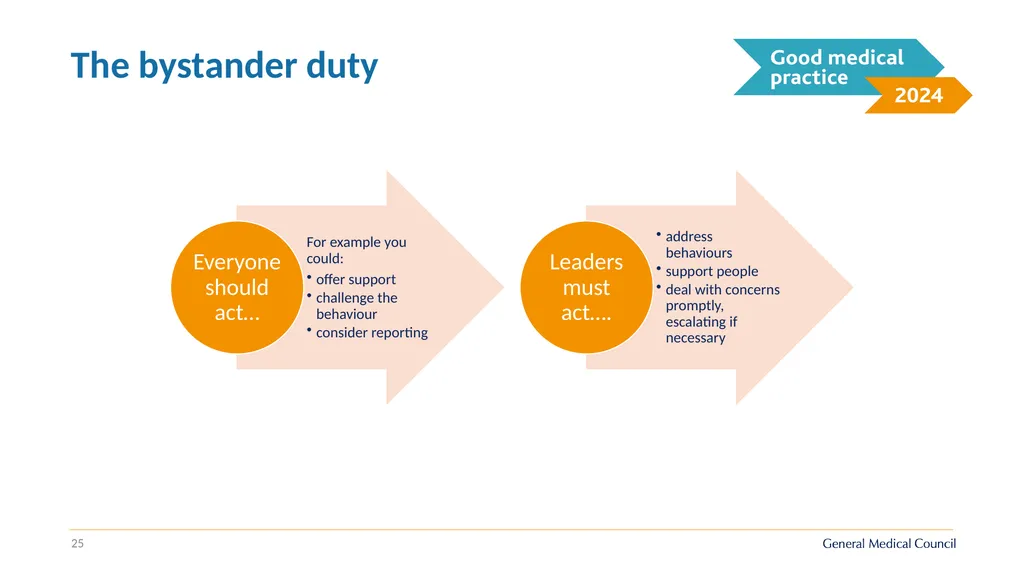
The bystander duty 25<br>
26
3. Helping tackle discrimination 26<br>
27
How do you raise awareness about discrimination where you work? 27<br>
28
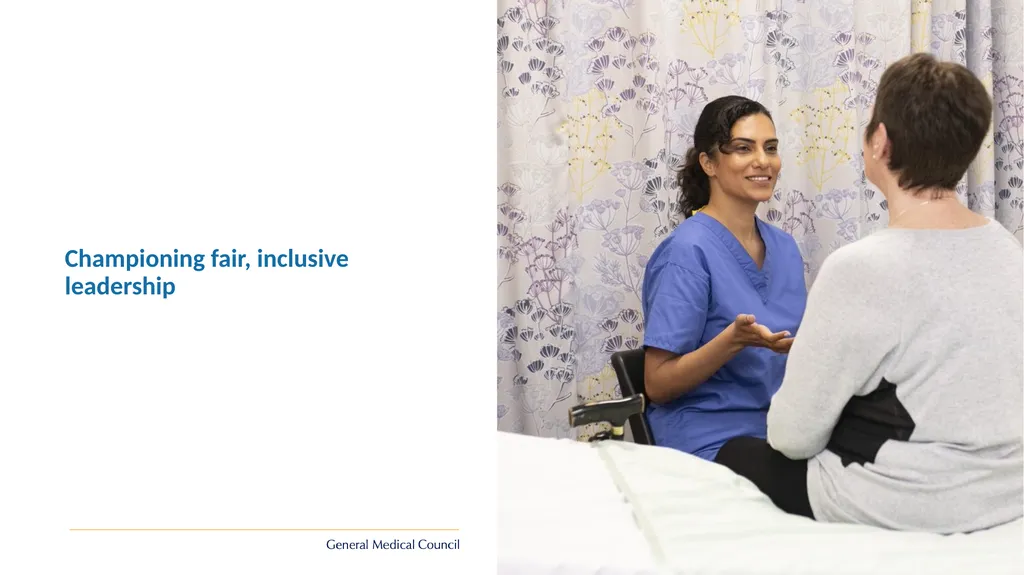
Championing fair, inclusive leadership<br>
29
4. Championing fair and inclusive leadership Support colleagues through mentoring, coaching, teaching or training
Fair access to training, development and employment opportunities
Taking active steps to create environment where it’s safe to
Talk about errors
Raise concerns
Ask questions
Dealing promptly and adequately with concerns 29<br>
30
What can support Doctors to be more confident to raise concerns and talk about errors to support learning? 30<br>
31
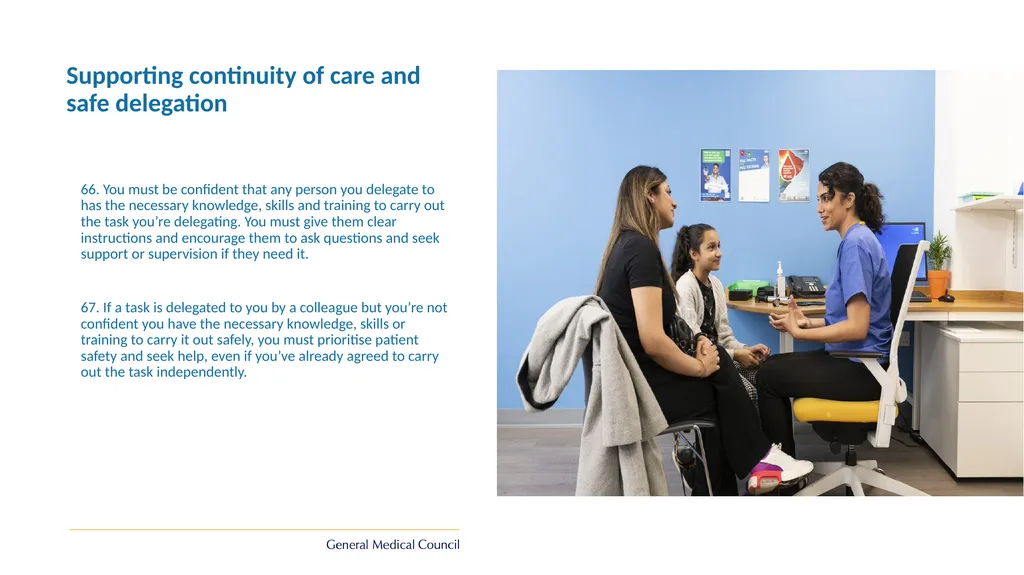
Supporting continuity of care and safe delegation 66. You must be confident that any person you delegate to has the necessary knowledge, skills and training to carry out the task you’re delegating. You must give them clear instructions and encourage them to ask questions and seek support or supervision if they need it.
67. If a task is delegated to you by a colleague but you’re not confident you have the necessary knowledge, skills or training to carry it out safely, you must prioritise patient safety and seek help, even if you’ve already agreed to carry out the task independently.<br>
32
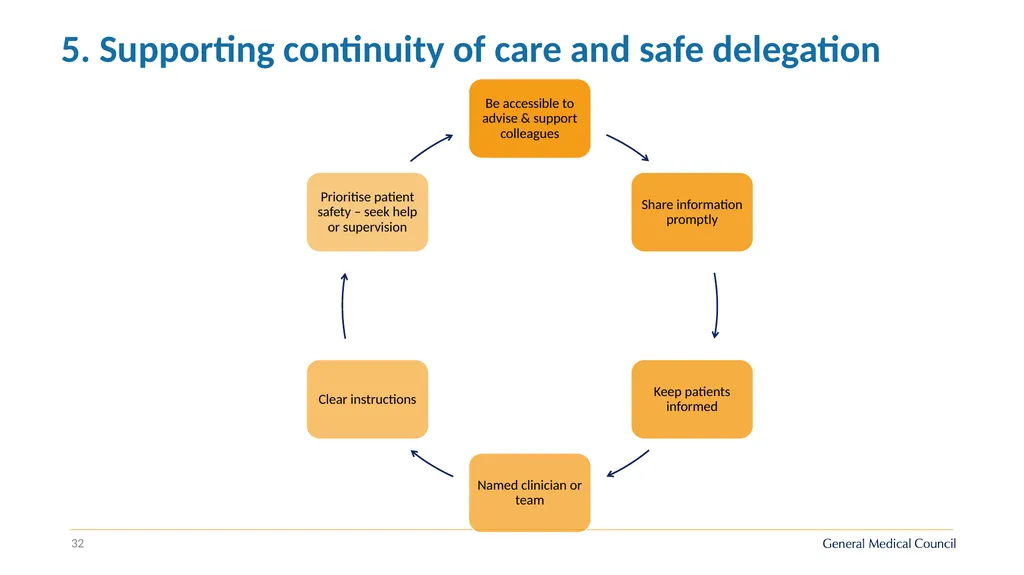
5. Supporting continuity of care and safe delegation 32<br>
33
How Good medical practice relates to GMC investigations 33<br>
34
How we can support you<br>
35
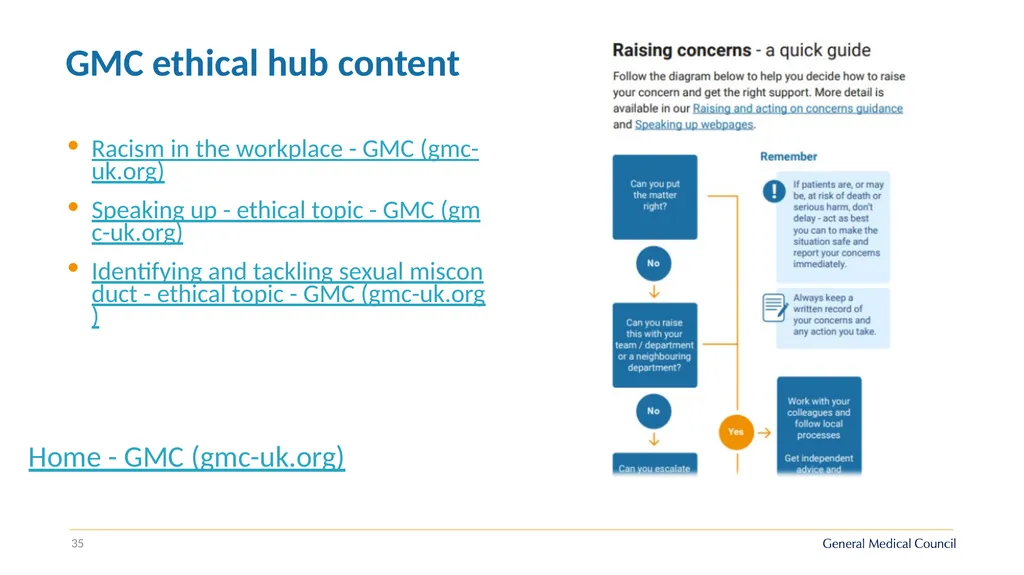
GMC ethical hub content 35 Racism in the workplace - GMC (gmc-uk.org)
Speaking up - ethical topic - GMC (gmc-uk.org)
Identifying and tackling sexual misconduct - ethical topic - GMC (gmc-uk.org) Home - GMC (gmc-uk.org)<br>
36
Questions / comments professionalstandards@gmc-uk.org<br>
37
Evaluation and session certificate https://www.smartsurvey.co.uk/s/N1IWPU/ Session delivered by: Rachel Ball<br>
38
Regional Liaison Adviser Rachel.Ball@gmc-uk.org
@gmcuk
0161 923 6602: GMC Contact Centre
0161 923 6399: GMC Confidential Helpline<br>