
Improving Health Care Response to Hypertensive
PT
Published · 81 slides · 0 views
1 / 1




Description
Improving Health Care Response to Hypertensive Disorders of Pregnancy A California Quality Improvement Toolkit November 2021 You are welcome to use any of the slides provided for educational purposes If you modify or add a slide, please
Related Topics
Share
Embed code
Download this presentation From Below
"Improving Health Care Response to Hypertensive" is the property of its rightful owner. Permission is granted to download and print the materials on this website for personal, non-commercial use only, and to display it on your personal computer provided you do not modify the materials and that you retain all copyright notices contained in the materials. By downloading content from our website, you accept the terms of this agreement.
Presentation Transcript
01
Improving Health Care Response to Hypertensive Disorders of Pregnancy A California Quality Improvement Toolkit
November 2021<br>
November 2021<br>
02
You are welcome to use any of the slides provided for educational purposes
If you modify or add a slide, please substitute your institutional logo and do not use the CMQCC logos
We welcome your feedback and recommendations for improving the slide set
This deck includes screen captures of sample algorithms, a case study, and additional slides appropriate for use to certain audiences. Instructions<br>
03
This slide set is considered an educational resource but does not define the standard of care in California or elsewhere. Readers are advised to adapt the guidelines and resources based on their local facility’s level of care and patient populations served and are also advised to not rely solely on the guidelines presented here.<br>
04
Notes on terminology Throughout the toolkit, the terms ‘mother’ or ‘maternal’ or ‘she’ or ‘her’ are used in reference to the birthing person. We recognize not all birthing people identify as mothers or women. We believe all birthing people are equally deserving of patient-centered care that helps them attain their full potential and live authentic, healthy lives.
The term family is used to refer to any persons the pregnant or postpartum patient designates as such (alternatives: partners, husbands, support persons, loved ones).
The term clinician is used to denote nursing and medical staff; whereas the term providers refers to clinicians with diagnosing and prescribing authority.
The language around disclaimers and terminology are committee opinions and your own institution should be consulted for appropriate language to utilize.<br>
05
Learning Objectives Know the impact of Hypertensive Disorders of Pregnancy (HDP) on morbidity and mortality
Define the current terminology and understand the updated diagnostic criteria for HDP
Describe the management guidelines for HDP
Identify systems of support on your unit for women and families before, during and after a severe HDP experience<br>
Define the current terminology and understand the updated diagnostic criteria for HDP
Describe the management guidelines for HDP
Identify systems of support on your unit for women and families before, during and after a severe HDP experience<br>
06
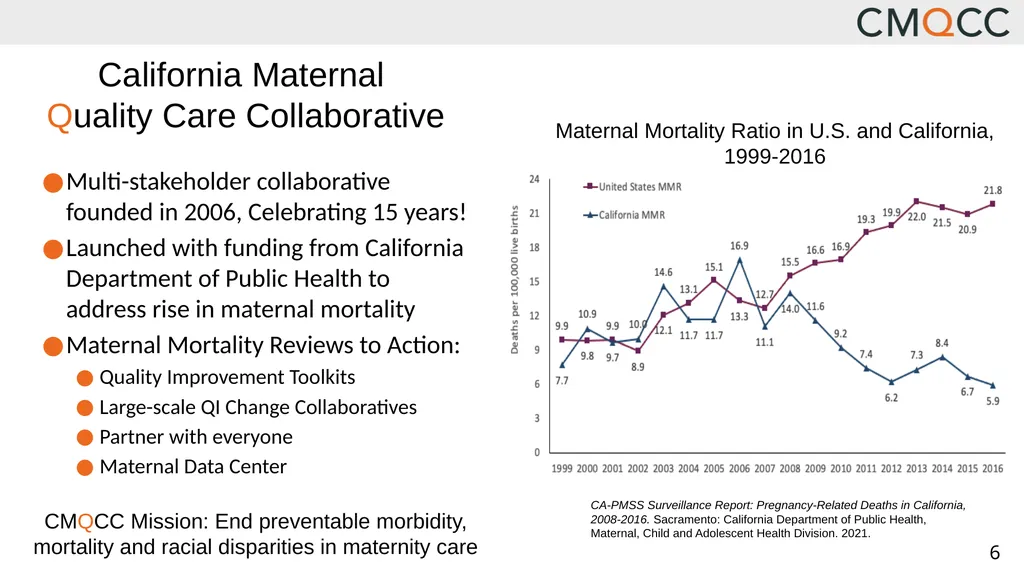
Multi-stakeholder collaborative founded in 2006, Celebrating 15 years!
Launched with funding from California Department of Public Health to address rise in maternal mortality
Maternal Mortality Reviews to Action:
Quality Improvement Toolkits
Large-scale QI Change Collaboratives
Partner with everyone
Maternal Data Center California Maternal Quality Care Collaborative CMQCC Mission: End preventable morbidity, mortality and racial disparities in maternity care CA-PMSS Surveillance Report: Pregnancy-Related Deaths in California, 2008-2016. Sacramento: California Department of Public Health, Maternal, Child and Adolescent Health Division. 2021. Maternal Mortality Ratio in U.S. and California, 1999-2016<br>
07
CMQCC Hypertensive Disorders of Pregnancy (HDP) Task Force Chairs Maurice Druzin, MD
Nancy Peterson, MSN, RNC-OB, PNNP
Larry Shields, MD
Valerie Cape
Christa Sakowski, MSN, RN, C-EFM, CLE
Christine H. Morton, PhD Stanford School of Medicine (SoM) CommonSpirit Health CommonSpirit Health Stanford SoM, CMQCC Stanford SoM, CMQCC Stanford SoM, CMQCC<br>
Nancy Peterson, MSN, RNC-OB, PNNP
Larry Shields, MD
Valerie Cape
Christa Sakowski, MSN, RN, C-EFM, CLE
Christine H. Morton, PhD Stanford School of Medicine (SoM) CommonSpirit Health CommonSpirit Health Stanford SoM, CMQCC Stanford SoM, CMQCC Stanford SoM, CMQCC<br>
08
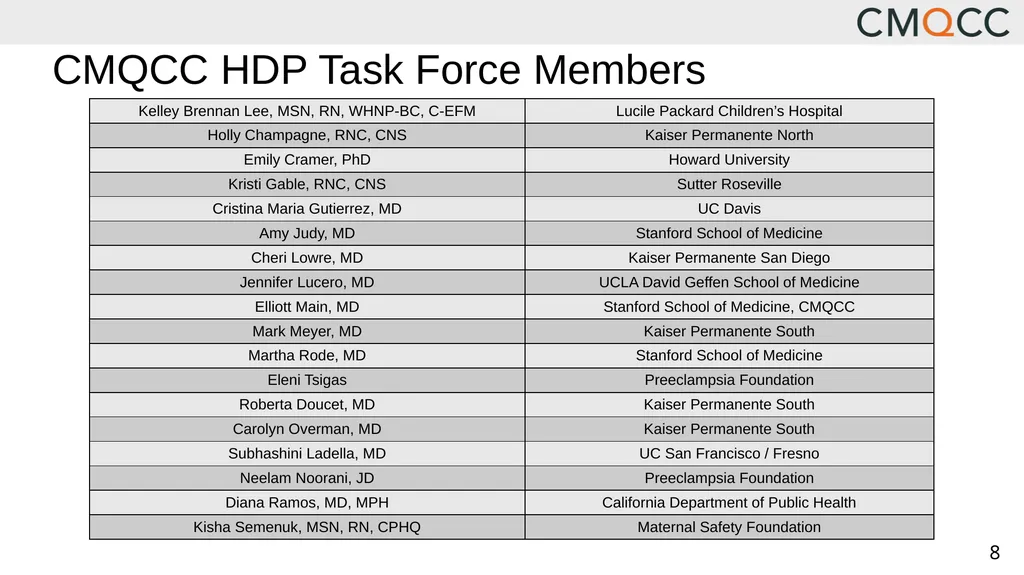
CMQCC HDP Task Force Members<br>
09
Hypertensive Disorders of Pregnancy in the U.S. and California<br>
10
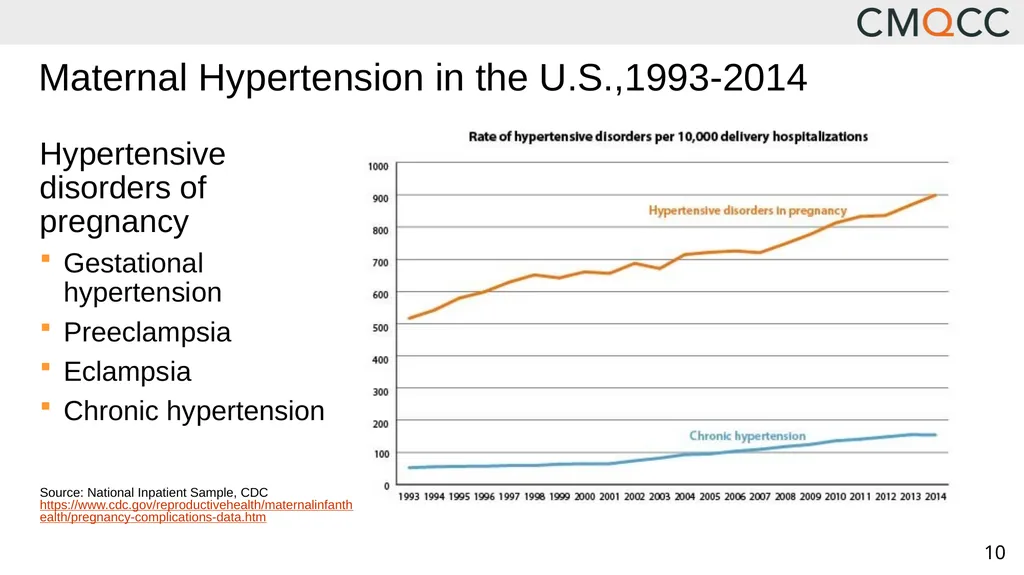
Maternal Hypertension in the U.S.,1993-2014 Hypertensive disorders of pregnancy
Gestational hypertension
Preeclampsia
Eclampsia
Chronic hypertension
Source: National Inpatient Sample, CDC https://www.cdc.gov/reproductivehealth/maternalinfanthealth/pregnancy-complications-data.htm<br>
Gestational hypertension
Preeclampsia
Eclampsia
Chronic hypertension
Source: National Inpatient Sample, CDC https://www.cdc.gov/reproductivehealth/maternalinfanthealth/pregnancy-complications-data.htm<br>
11
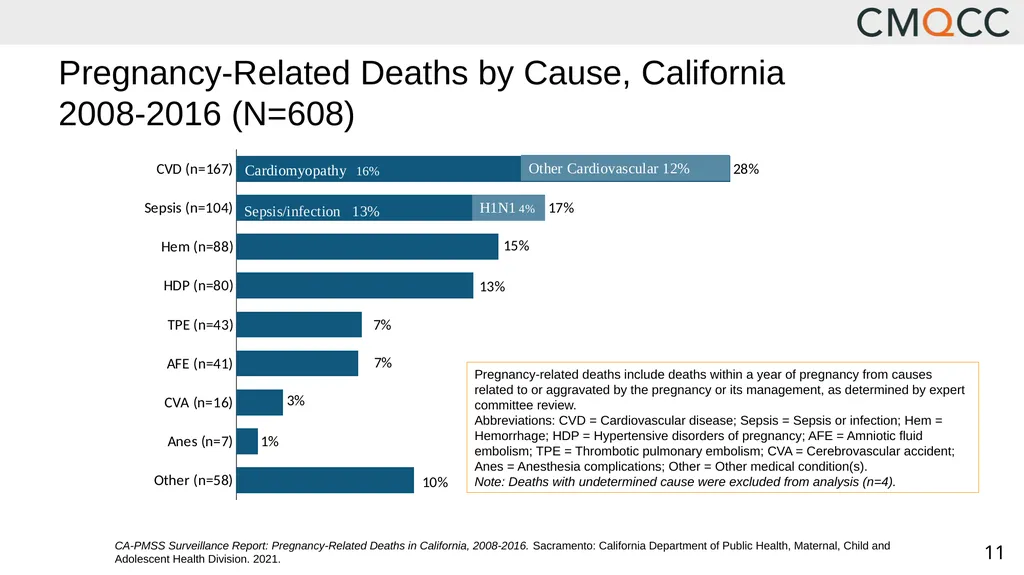
Pregnancy-Related Deaths by Cause, California
2008-2016 (N=608) Pregnancy-related deaths include deaths within a year of pregnancy from causes related to or aggravated by the pregnancy or its management, as determined by expert committee review.
Abbreviations: CVD = Cardiovascular disease; Sepsis = Sepsis or infection; Hem = Hemorrhage; HDP = Hypertensive disorders of pregnancy; AFE = Amniotic fluid embolism; TPE = Thrombotic pulmonary embolism; CVA = Cerebrovascular accident; Anes = Anesthesia complications; Other = Other medical condition(s).
Note: Deaths with undetermined cause were excluded from analysis (n=4). CA-PMSS Surveillance Report: Pregnancy-Related Deaths in California, 2008-2016. Sacramento: California Department of Public Health, Maternal, Child and Adolescent Health Division. 2021.<br>
12
Introducing the Toolkit<br>
13
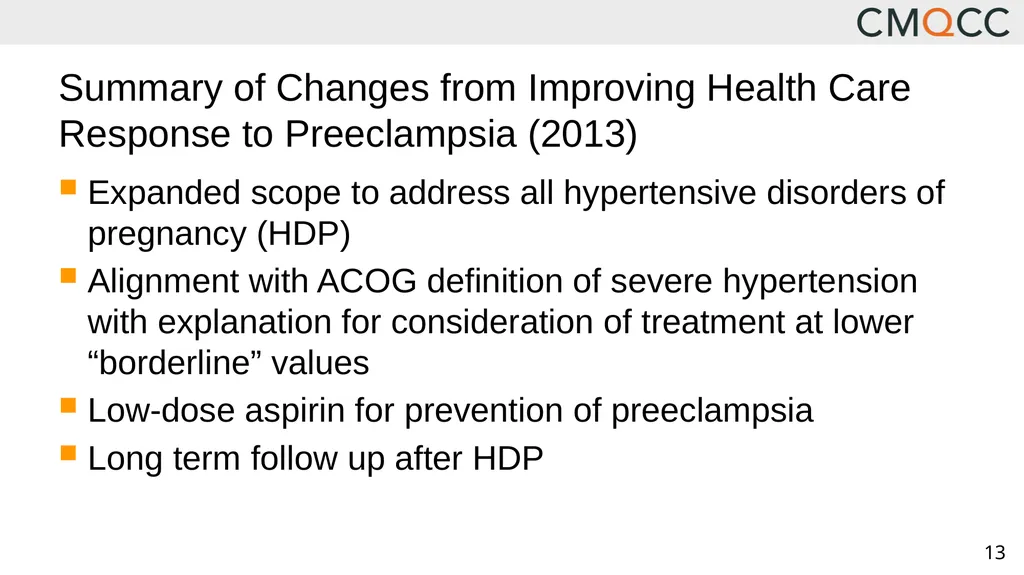
Summary of Changes from Improving Health Care Response to Preeclampsia (2013) Expanded scope to address all hypertensive disorders of pregnancy (HDP)
Alignment with ACOG definition of severe hypertension with explanation for consideration of treatment at lower “borderline” values
Low-dose aspirin for prevention of preeclampsia
Long term follow up after HDP<br>
Alignment with ACOG definition of severe hypertension with explanation for consideration of treatment at lower “borderline” values
Low-dose aspirin for prevention of preeclampsia
Long term follow up after HDP<br>
14
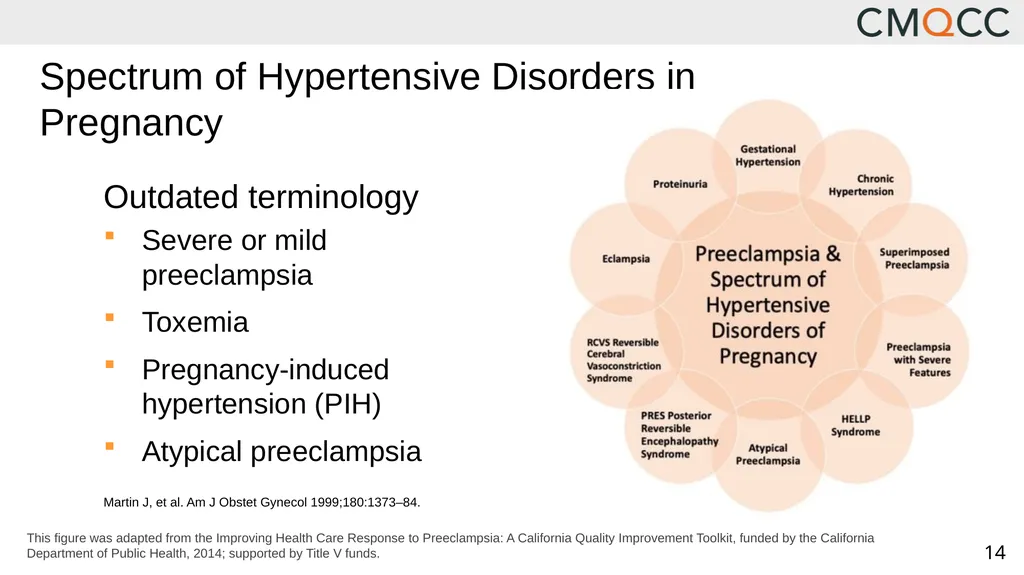
Outdated terminology
Severe or mild preeclampsia
Toxemia
Pregnancy-induced hypertension (PIH)
Atypical preeclampsia Martin J, et al. Am J Obstet Gynecol 1999;180:1373–84. Spectrum of Hypertensive Disorders in Pregnancy This figure was adapted from the Improving Health Care Response to Preeclampsia: A California Quality Improvement Toolkit, funded by the California Department of Public Health, 2014; supported by Title V funds.<br>
15
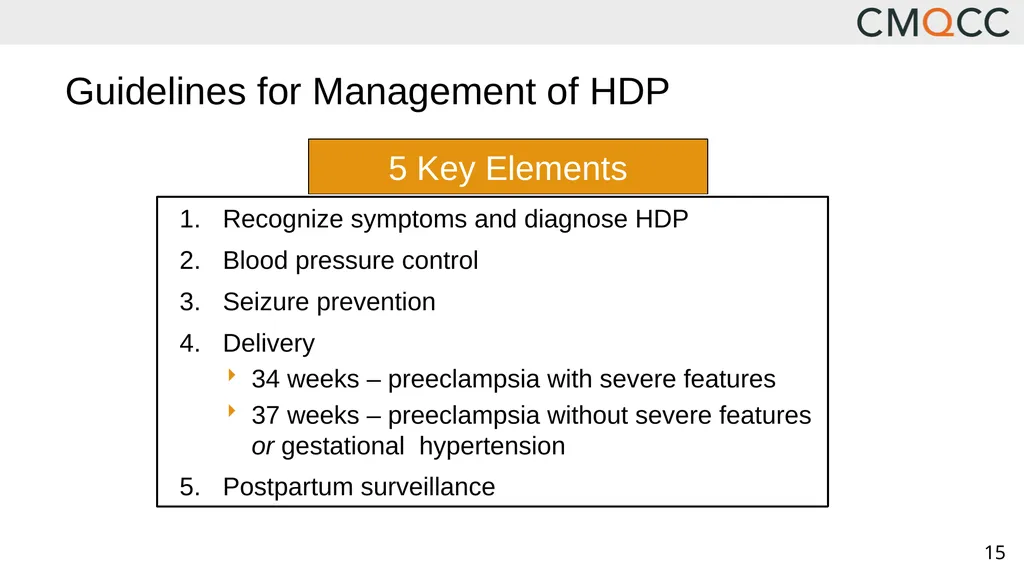
Guidelines for Management of HDP<br>
16
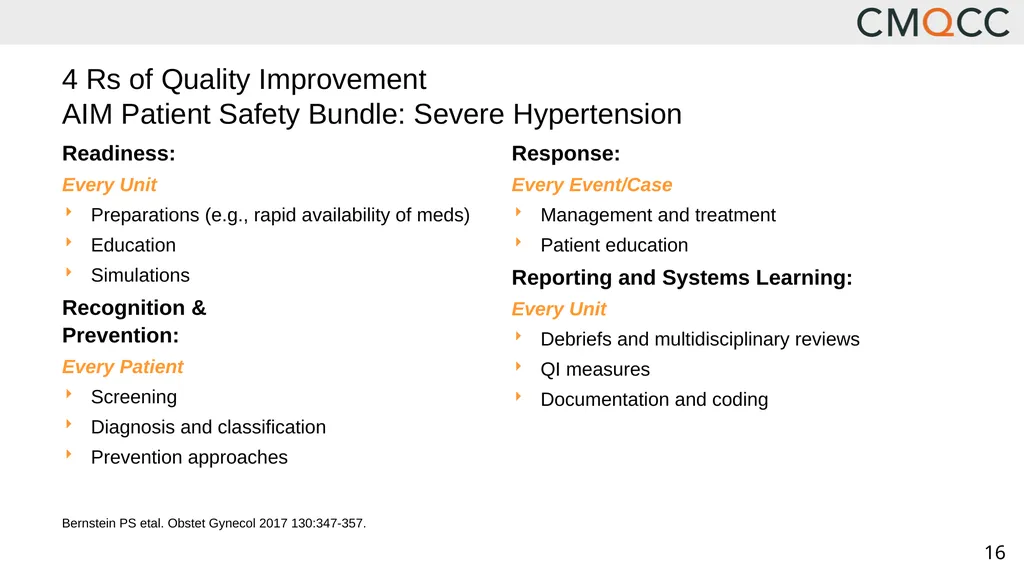
4 Rs of Quality Improvement
AIM Patient Safety Bundle: Severe Hypertension Readiness:
Every Unit
Preparations (e.g., rapid availability of meds)
Education
Simulations
Recognition & Prevention:
Every Patient
Screening
Diagnosis and classification
Prevention approaches
Response:
Every Event/Case
Management and treatment
Patient education
Reporting and Systems Learning:
Every Unit
Debriefs and multidisciplinary reviews
QI measures
Documentation and coding Bernstein PS etal. Obstet Gynecol 2017 130:347-357.<br>
Every Unit
Preparations (e.g., rapid availability of meds)
Education
Simulations
Recognition & Prevention:
Every Patient
Screening
Diagnosis and classification
Prevention approaches
Response:
Every Event/Case
Management and treatment
Patient education
Reporting and Systems Learning:
Every Unit
Debriefs and multidisciplinary reviews
QI measures
Documentation and coding Bernstein PS etal. Obstet Gynecol 2017 130:347-357.<br>
17
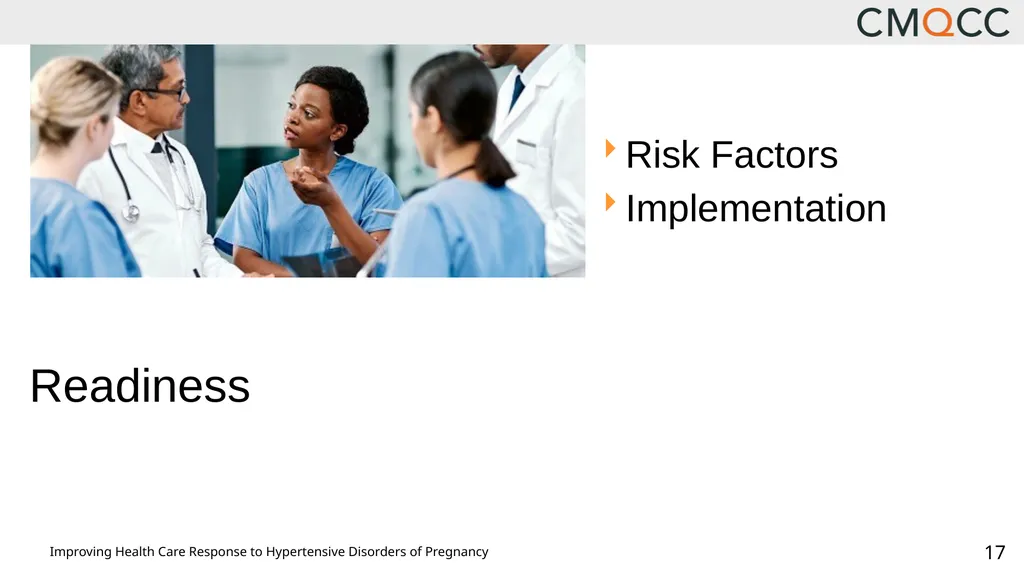
Readiness Risk Factors
Implementation<br>
Implementation<br>
18
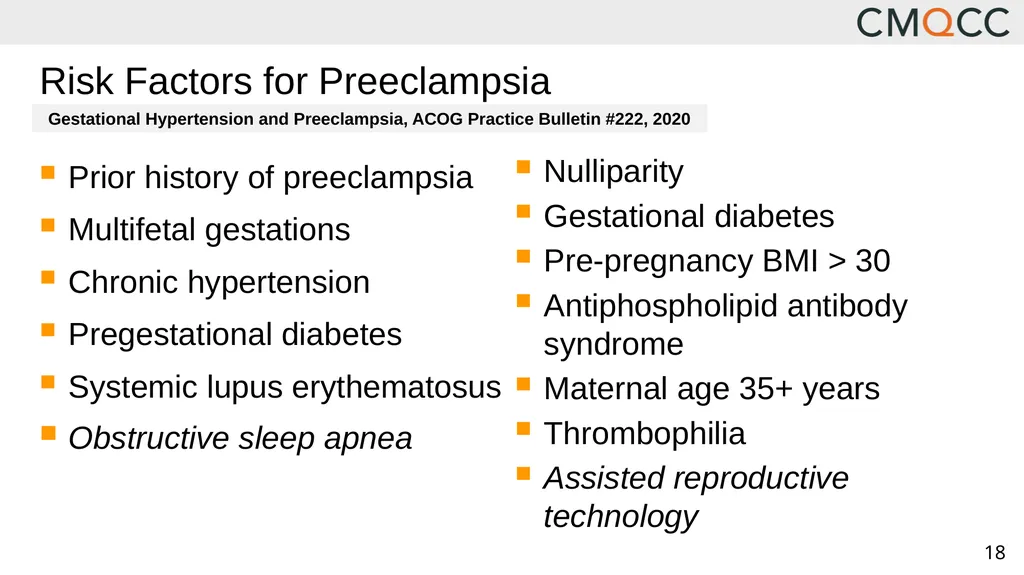
Risk Factors for Preeclampsia Prior history of preeclampsia
Multifetal gestations
Chronic hypertension
Pregestational diabetes
Systemic lupus erythematosus
Obstructive sleep apnea Nulliparity
Gestational diabetes
Pre-pregnancy BMI > 30
Antiphospholipid antibody syndrome
Maternal age 35+ years
Thrombophilia
Assisted reproductive technology Gestational Hypertension and Preeclampsia, ACOG Practice Bulletin #222, 2020<br>
19
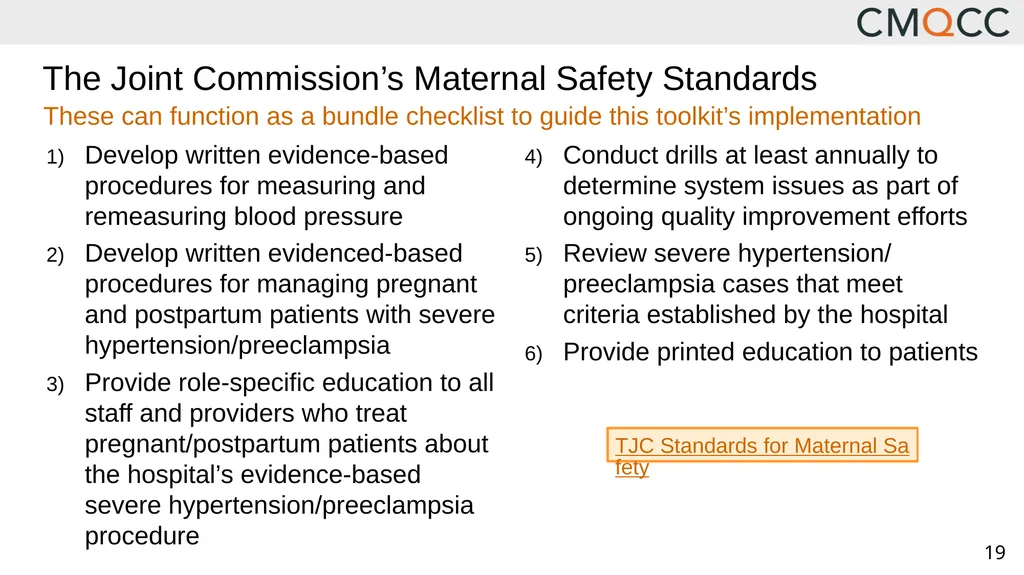
The Joint Commission’s Maternal Safety Standards Develop written evidence-based procedures for measuring and remeasuring blood pressure
Develop written evidenced-based procedures for managing pregnant and postpartum patients with severe hypertension/preeclampsia
Provide role-specific education to all staff and providers who treat pregnant/postpartum patients about the hospital’s evidence-based severe hypertension/preeclampsia procedure
Conduct drills at least annually to determine system issues as part of ongoing quality improvement efforts
Review severe hypertension/ preeclampsia cases that meet criteria established by the hospital
Provide printed education to patients These can function as a bundle checklist to guide this toolkit’s implementation TJC Standards for Maternal Safety<br>
20
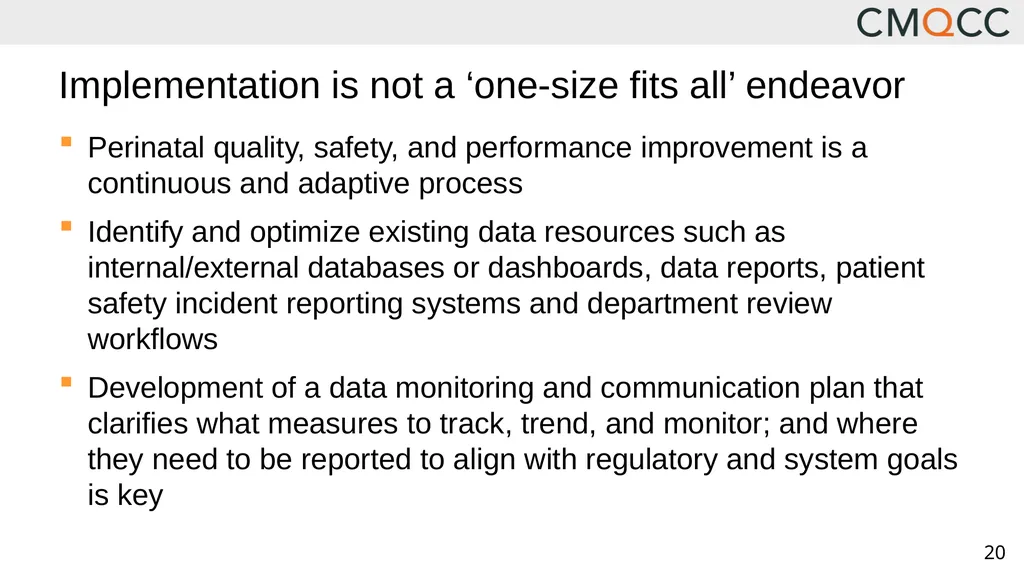
Implementation is not a ‘one-size fits all’ endeavor Perinatal quality, safety, and performance improvement is a continuous and adaptive process
Identify and optimize existing data resources such as internal/external databases or dashboards, data reports, patient safety incident reporting systems and department review workflows
Development of a data monitoring and communication plan that clarifies what measures to track, trend, and monitor; and where they need to be reported to align with regulatory and system goals is key<br>
21
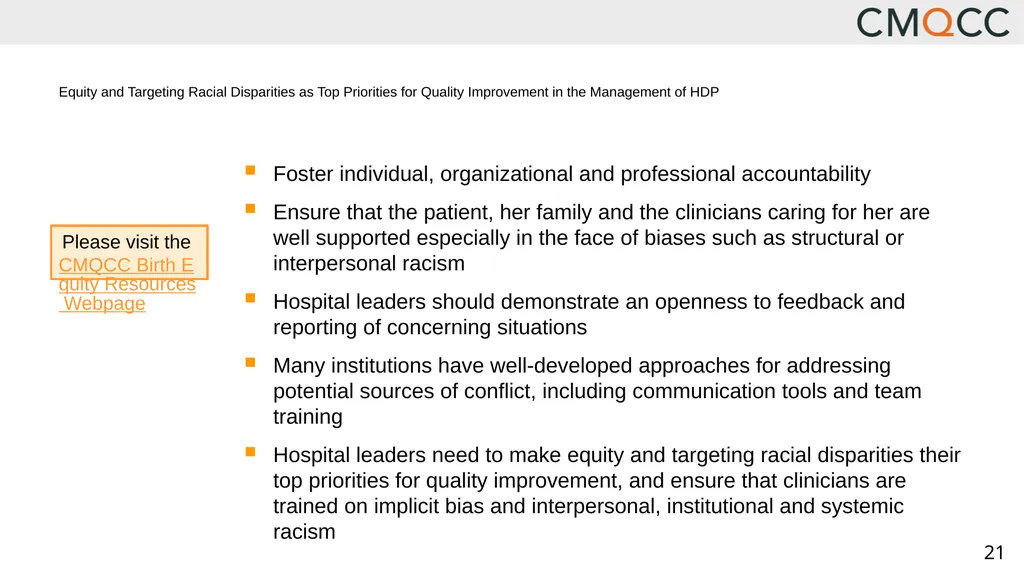
Equity and Targeting Racial Disparities as Top Priorities for Quality Improvement in the Management of HDP Foster individual, organizational and professional accountability
Ensure that the patient, her family and the clinicians caring for her are well supported especially in the face of biases such as structural or interpersonal racism
Hospital leaders should demonstrate an openness to feedback and reporting of concerning situations
Many institutions have well-developed approaches for addressing potential sources of conflict, including communication tools and team training
Hospital leaders need to make equity and targeting racial disparities their top priorities for quality improvement, and ensure that clinicians are trained on implicit bias and interpersonal, institutional and systemic racism Please visit the CMQCC Birth Equity Resources Webpage<br>
22
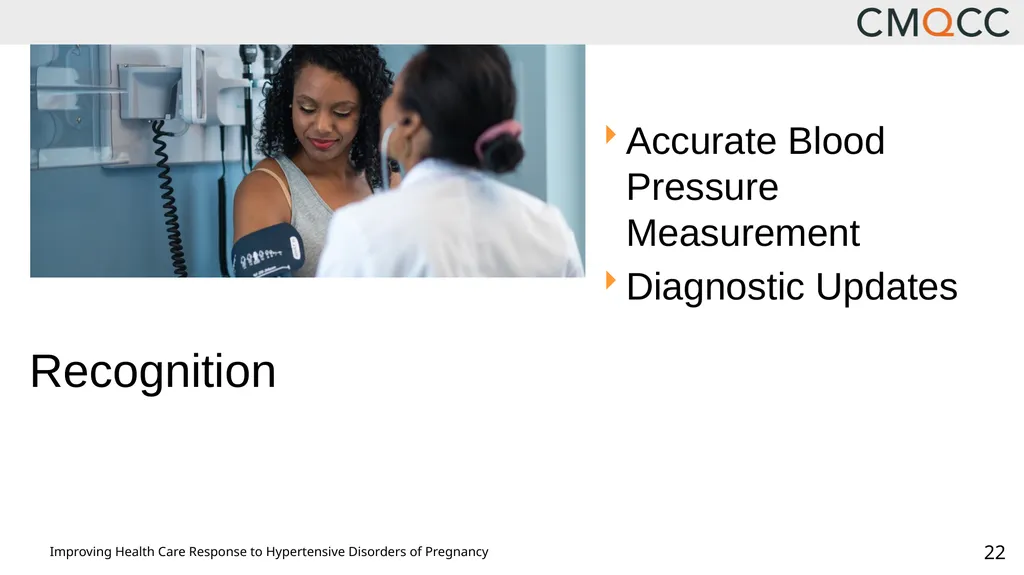
Recognition Accurate Blood Pressure Measurement
Diagnostic Updates<br>
Diagnostic Updates<br>
23
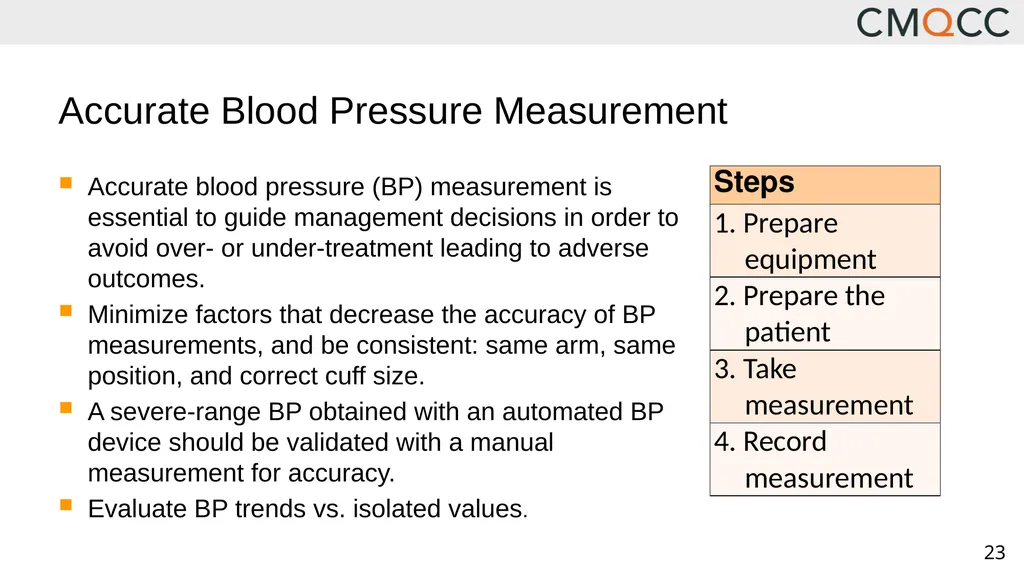
Accurate Blood Pressure Measurement Accurate blood pressure (BP) measurement is essential to guide management decisions in order to avoid over- or under-treatment leading to adverse outcomes.
Minimize factors that decrease the accuracy of BP measurements, and be consistent: same arm, same position, and correct cuff size.
A severe-range BP obtained with an automated BP device should be validated with a manual measurement for accuracy.
Evaluate BP trends vs. isolated values.<br>
Minimize factors that decrease the accuracy of BP measurements, and be consistent: same arm, same position, and correct cuff size.
A severe-range BP obtained with an automated BP device should be validated with a manual measurement for accuracy.
Evaluate BP trends vs. isolated values.<br>
24
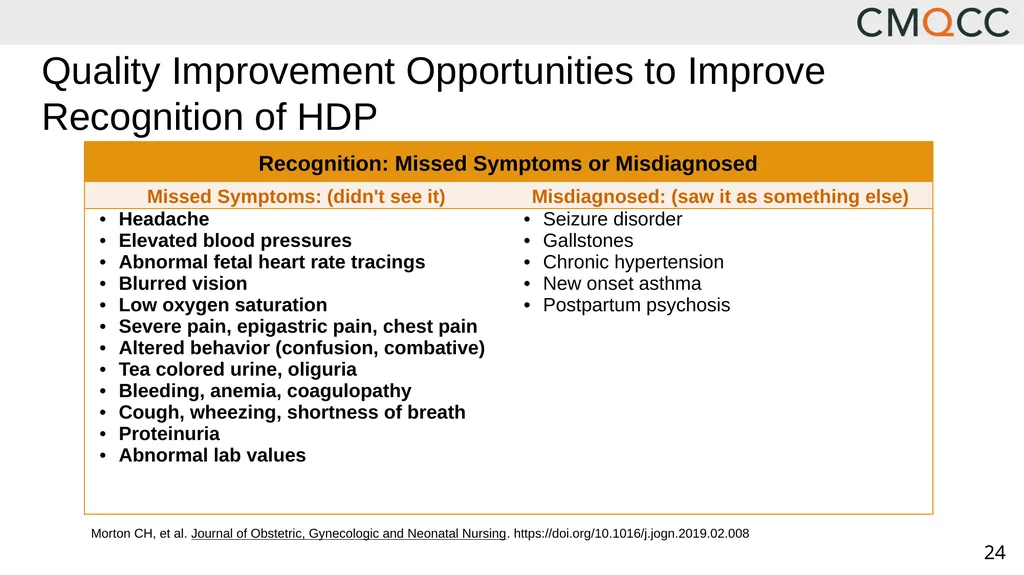
Quality Improvement Opportunities to Improve Recognition of HDP Morton CH, et al. Journal of Obstetric, Gynecologic and Neonatal Nursing. https://doi.org/10.1016/j.jogn.2019.02.008<br>
25
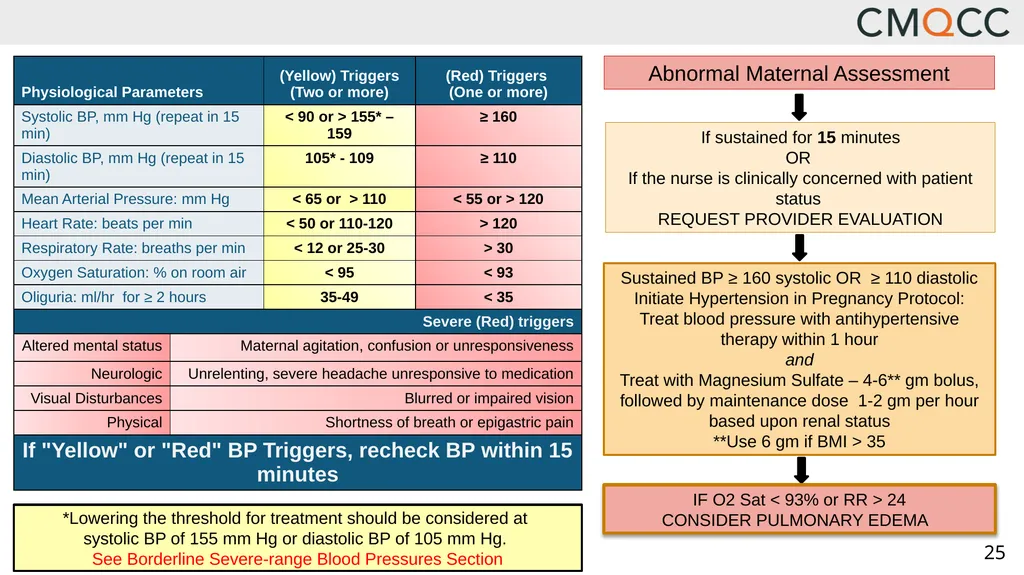
Abnormal Maternal Assessment If sustained for 15 minutes
OR
If the nurse is clinically concerned with patient status
REQUEST PROVIDER EVALUATION Sustained BP ≥ 160 systolic OR ≥ 110 diastolic
Initiate Hypertension in Pregnancy Protocol:
Treat blood pressure with antihypertensive therapy within 1 hour
and
Treat with Magnesium Sulfate – 4-6** gm bolus, followed by maintenance dose 1-2 gm per hour based upon renal status
**Use 6 gm if BMI > 35 IF O2 Sat < 93% or RR > 24
CONSIDER PULMONARY EDEMA *Lowering the threshold for treatment should be considered at
systolic BP of 155 mm Hg or diastolic BP of 105 mm Hg.
See Borderline Severe-range Blood Pressures Section<br>
26
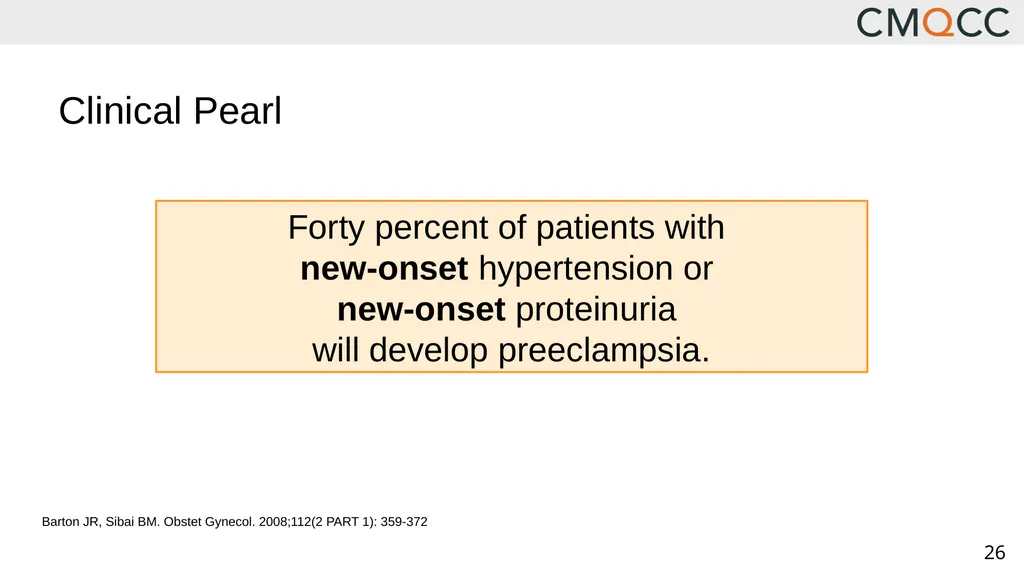
Clinical Pearl Forty percent of patients with
new-onset hypertension or
new-onset proteinuria
will develop preeclampsia. Barton JR, Sibai BM. Obstet Gynecol. 2008;112(2 PART 1): 359-372<br>
new-onset hypertension or
new-onset proteinuria
will develop preeclampsia. Barton JR, Sibai BM. Obstet Gynecol. 2008;112(2 PART 1): 359-372<br>
27
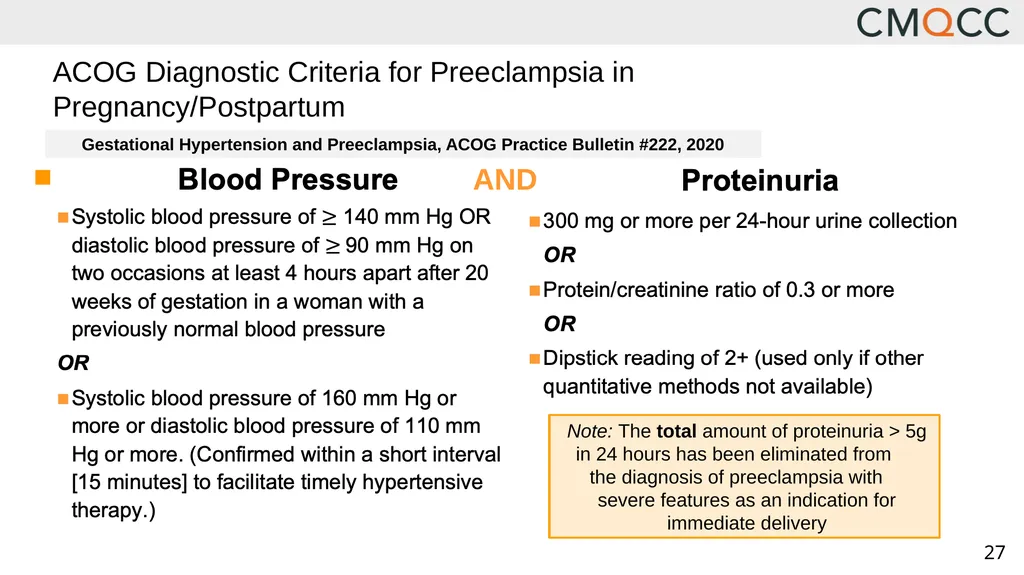
Note: The total amount of proteinuria > 5g in 24 hours has been eliminated from the diagnosis of preeclampsia with severe features as an indication for immediate delivery ACOG Diagnostic Criteria for Preeclampsia in Pregnancy/Postpartum Gestational Hypertension and Preeclampsia, ACOG Practice Bulletin #222, 2020 AND<br>
28
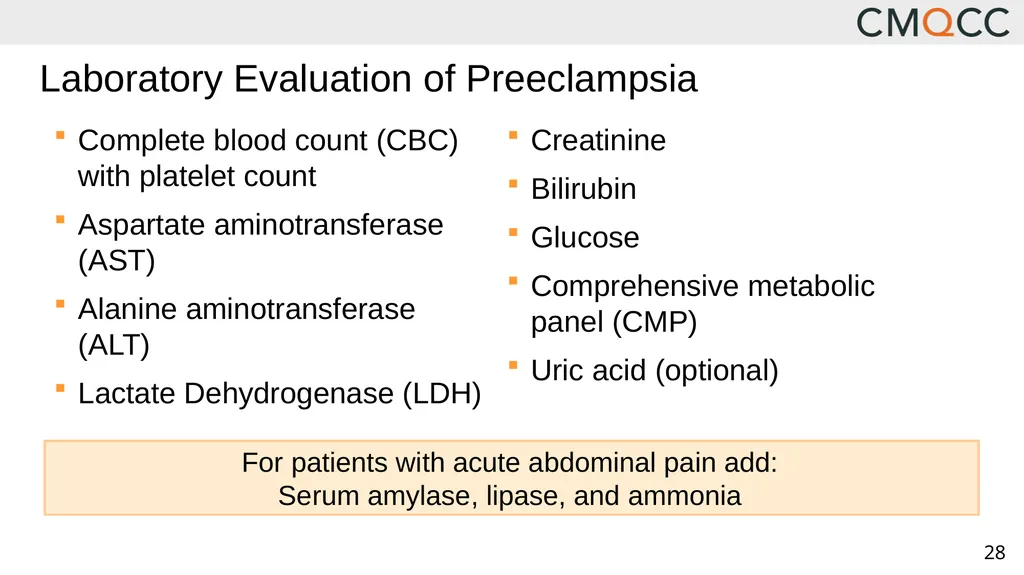
Laboratory Evaluation of Preeclampsia Complete blood count (CBC) with platelet count
Aspartate aminotransferase (AST)
Alanine aminotransferase (ALT)
Lactate Dehydrogenase (LDH)
Creatinine
Bilirubin
Glucose
Comprehensive metabolic panel (CMP)
Uric acid (optional) For patients with acute abdominal pain add:
Serum amylase, lipase, and ammonia<br>
Aspartate aminotransferase (AST)
Alanine aminotransferase (ALT)
Lactate Dehydrogenase (LDH)
Creatinine
Bilirubin
Glucose
Comprehensive metabolic panel (CMP)
Uric acid (optional) For patients with acute abdominal pain add:
Serum amylase, lipase, and ammonia<br>
29
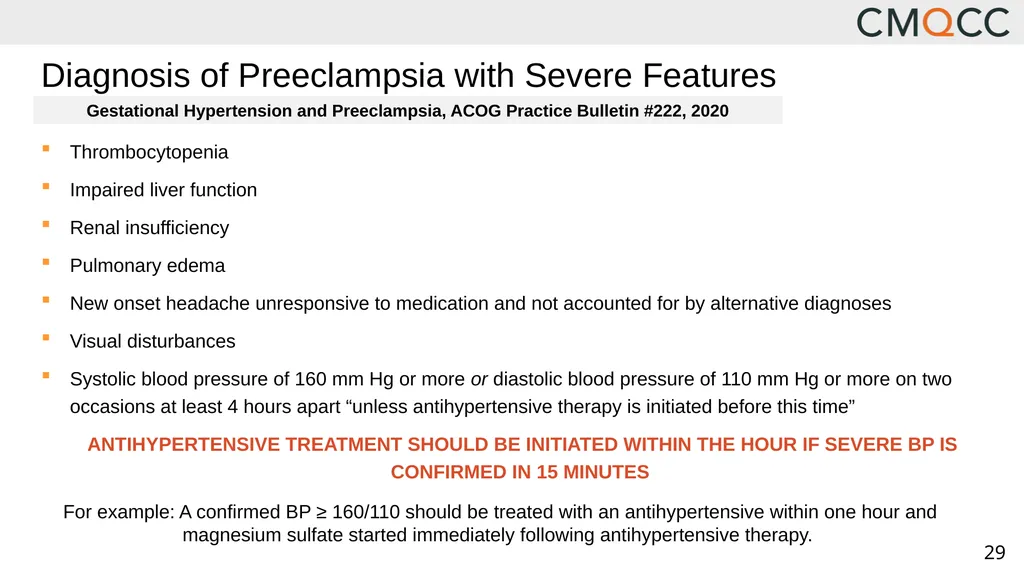
Diagnosis of Preeclampsia with Severe Features Thrombocytopenia
Impaired liver function
Renal insufficiency
Pulmonary edema
New onset headache unresponsive to medication and not accounted for by alternative diagnoses
Visual disturbances
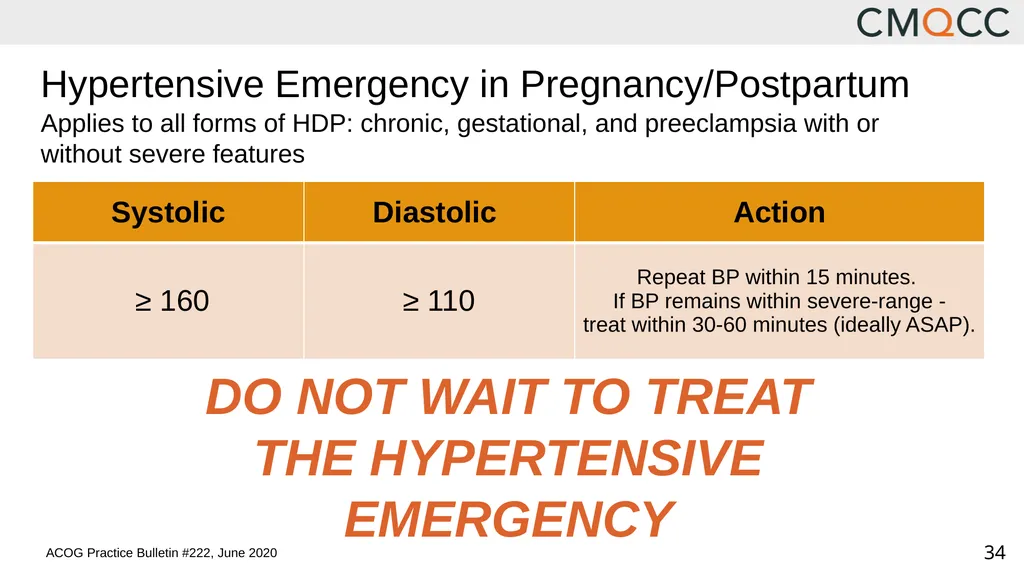
Systolic blood pressure of 160 mm Hg or more or diastolic blood pressure of 110 mm Hg or more on two occasions at least 4 hours apart “unless antihypertensive therapy is initiated before this time”
ANTIHYPERTENSIVE TREATMENT SHOULD BE INITIATED WITHIN THE HOUR IF SEVERE BP IS CONFIRMED IN 15 MINUTES Gestational Hypertension and Preeclampsia, ACOG Practice Bulletin #222, 2020 For example: A confirmed BP ≥ 160/110 should be treated with an antihypertensive within one hour and magnesium sulfate started immediately following antihypertensive therapy.<br>
30
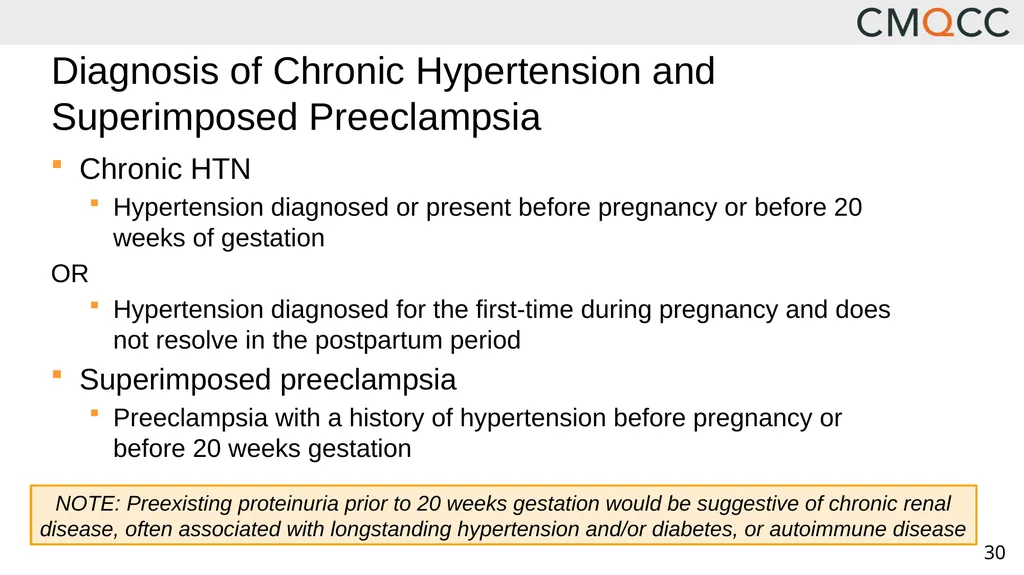
Diagnosis of Chronic Hypertension and Superimposed Preeclampsia Chronic HTN
Hypertension diagnosed or present before pregnancy or before 20 weeks of gestation
OR
Hypertension diagnosed for the first-time during pregnancy and does not resolve in the postpartum period
Superimposed preeclampsia
Preeclampsia with a history of hypertension before pregnancy or before 20 weeks gestation NOTE: Preexisting proteinuria prior to 20 weeks gestation would be suggestive of chronic renal disease, often associated with longstanding hypertension and/or diabetes, or autoimmune disease<br>
31
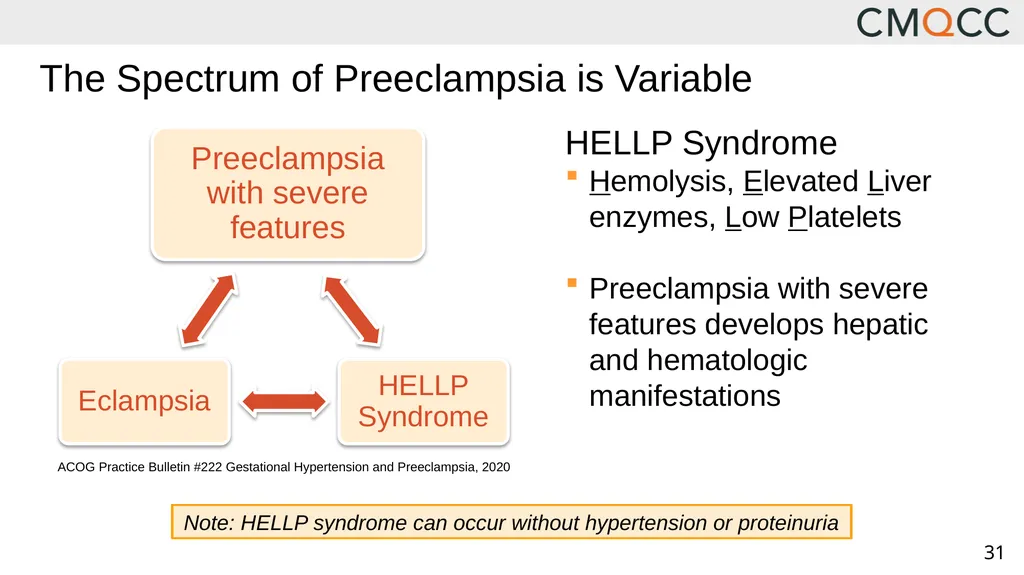
The Spectrum of Preeclampsia is Variable ACOG Practice Bulletin #222 Gestational Hypertension and Preeclampsia, 2020 HELLP Syndrome
Hemolysis, Elevated Liver enzymes, Low Platelets
Preeclampsia with severe features develops hepatic and hematologic manifestations Note: HELLP syndrome can occur without hypertension or proteinuria<br>
Hemolysis, Elevated Liver enzymes, Low Platelets
Preeclampsia with severe features develops hepatic and hematologic manifestations Note: HELLP syndrome can occur without hypertension or proteinuria<br>
32
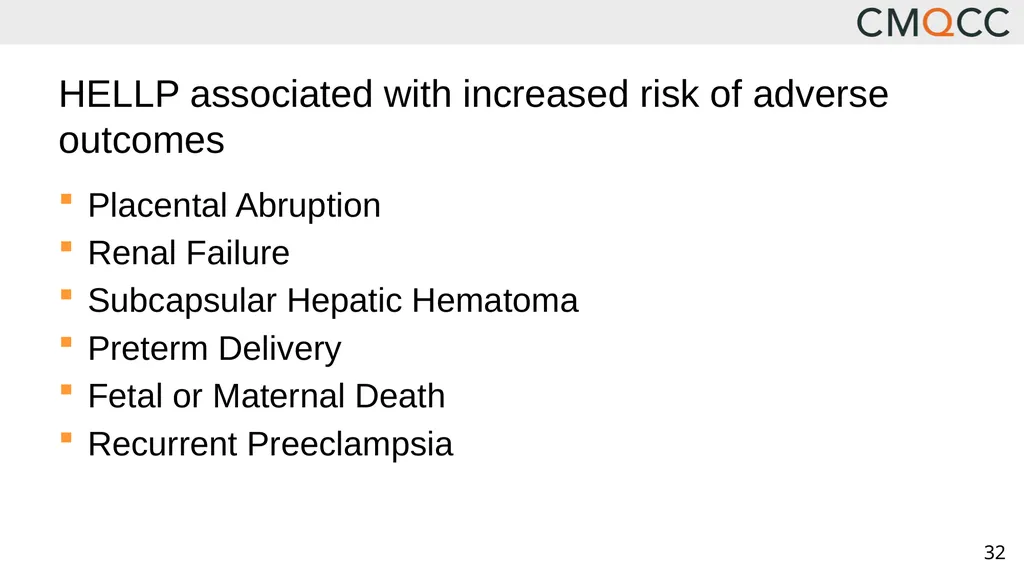
HELLP associated with increased risk of adverse outcomes Placental Abruption
Renal Failure
Subcapsular Hepatic Hematoma
Preterm Delivery
Fetal or Maternal Death
Recurrent Preeclampsia<br>
Renal Failure
Subcapsular Hepatic Hematoma
Preterm Delivery
Fetal or Maternal Death
Recurrent Preeclampsia<br>
33
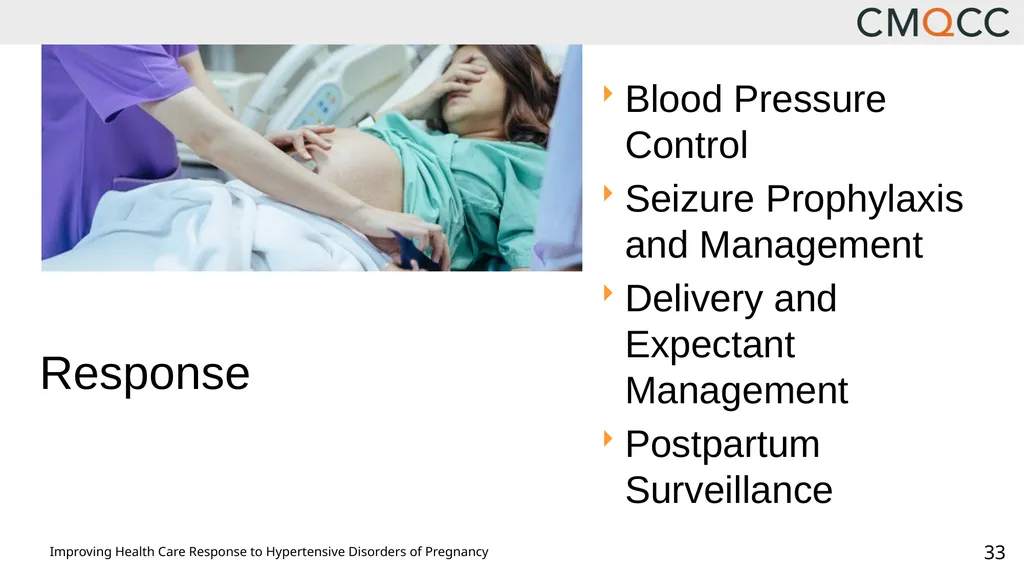
Response Blood Pressure Control
Seizure Prophylaxis and Management
Delivery and Expectant Management
Postpartum Surveillance<br>
Seizure Prophylaxis and Management
Delivery and Expectant Management
Postpartum Surveillance<br>
34
Applies to all forms of HDP: chronic, gestational, and preeclampsia with or without severe features Hypertensive Emergency in Pregnancy/Postpartum DO NOT WAIT TO TREAT THE HYPERTENSIVE EMERGENCY ACOG Practice Bulletin #222, June 2020<br>
35
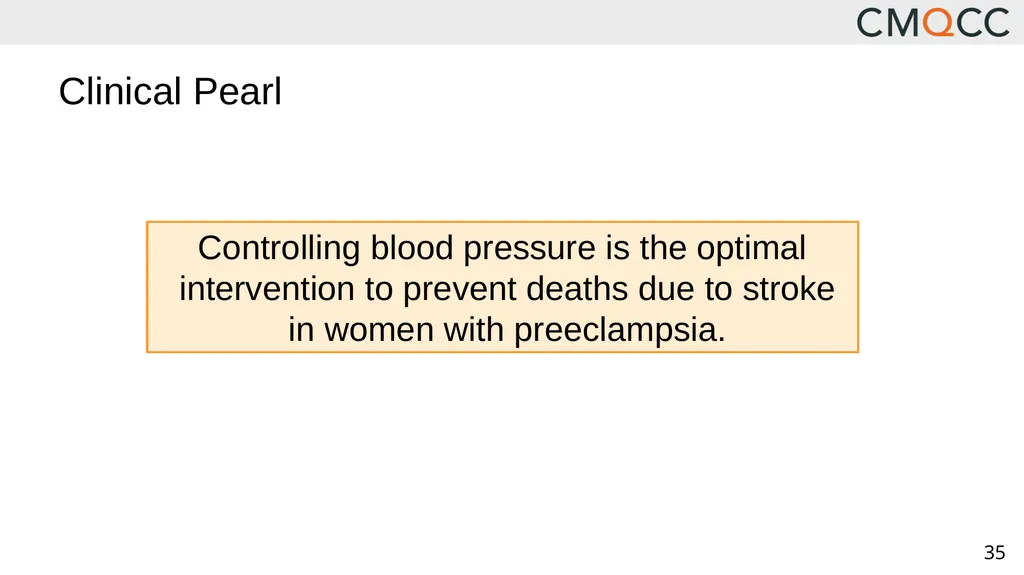
Clinical Pearl Controlling blood pressure is the optimal intervention to prevent deaths due to stroke in women with preeclampsia.<br>
36
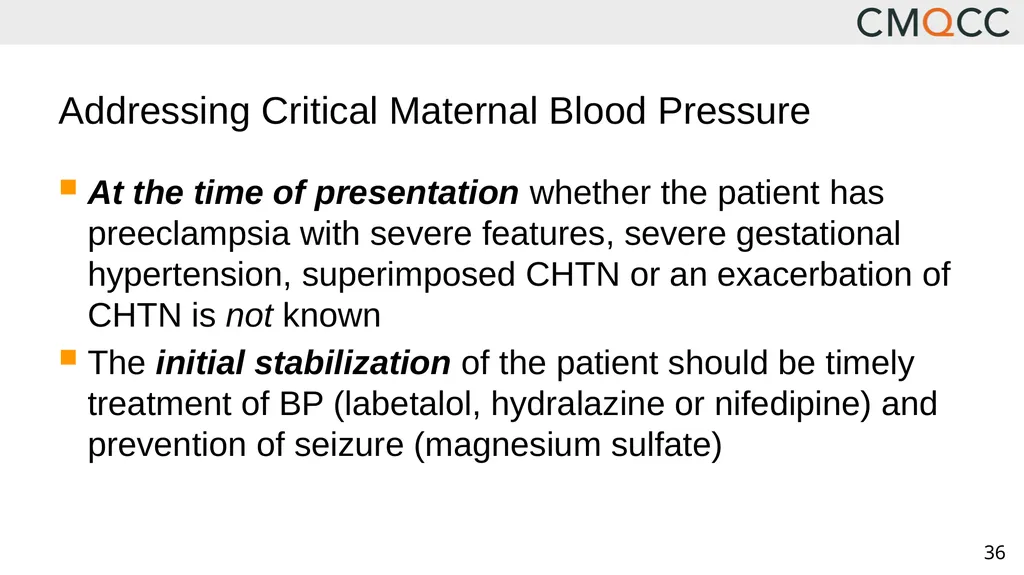
Addressing Critical Maternal Blood Pressure At the time of presentation whether the patient has preeclampsia with severe features, severe gestational hypertension, superimposed CHTN or an exacerbation of CHTN is not known
The initial stabilization of the patient should be timely treatment of BP (labetalol, hydralazine or nifedipine) and prevention of seizure (magnesium sulfate)<br>
The initial stabilization of the patient should be timely treatment of BP (labetalol, hydralazine or nifedipine) and prevention of seizure (magnesium sulfate)<br>
37
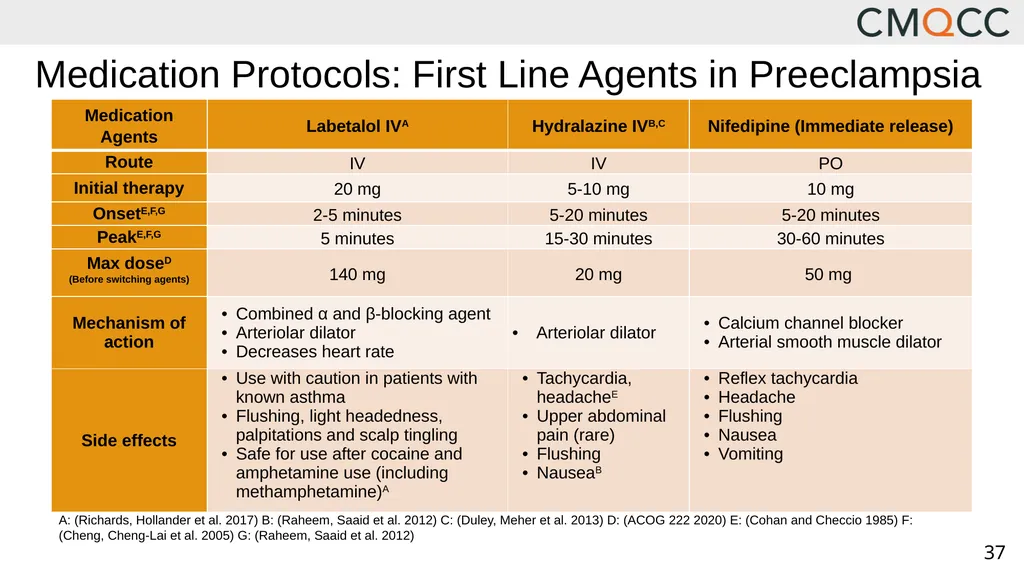
Click to add text A: (Richards, Hollander et al. 2017) B: (Raheem, Saaid et al. 2012) C: (Duley, Meher et al. 2013) D: (ACOG 222 2020) E: (Cohan and Checcio 1985) F: (Cheng, Cheng-Lai et al. 2005) G: (Raheem, Saaid et al. 2012) Medication Protocols: First Line Agents in Preeclampsia<br>
38
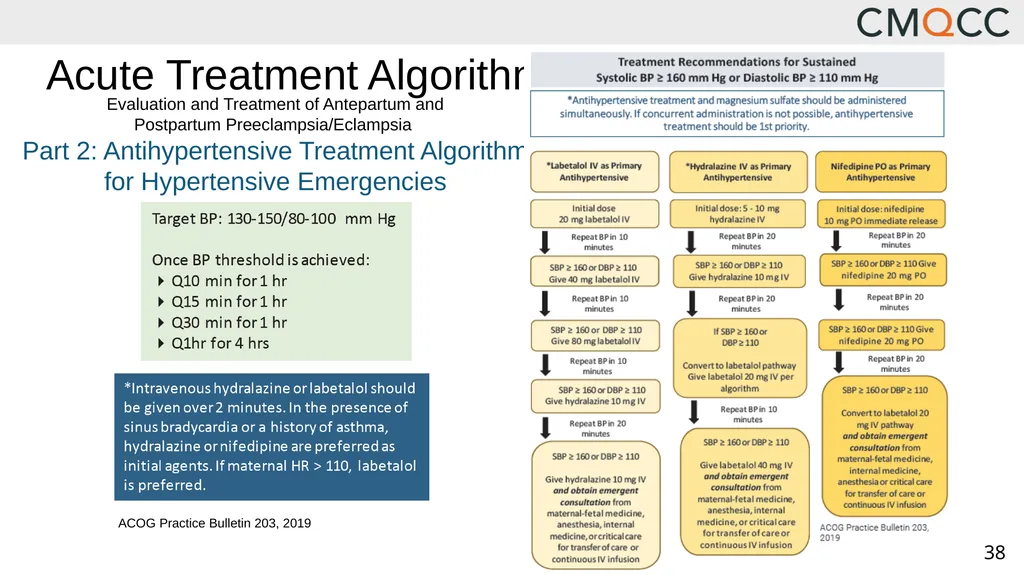
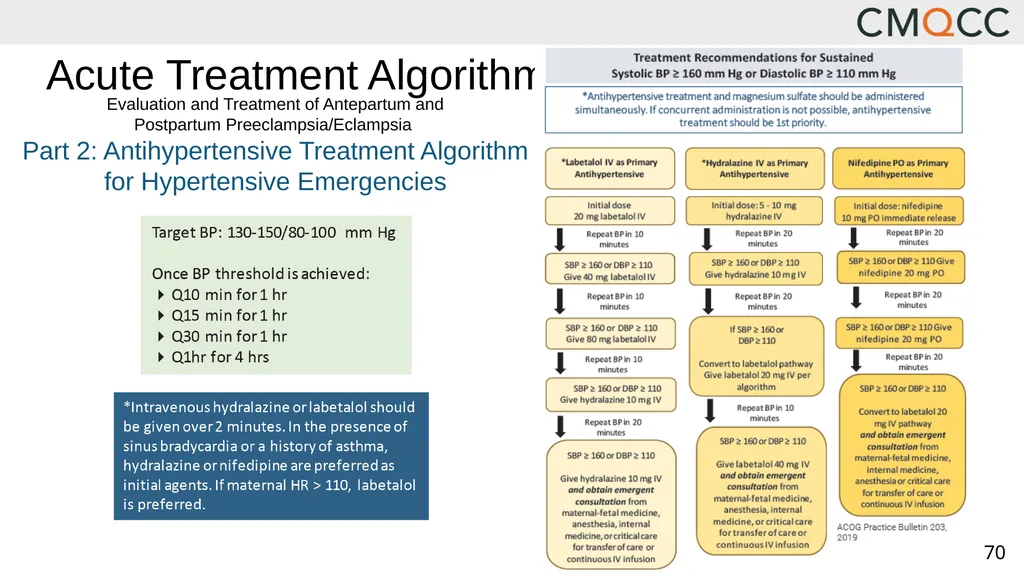
Acute Treatment Algorithm Evaluation and Treatment of Antepartum and Postpartum Preeclampsia/Eclampsia
Part 2: Antihypertensive Treatment Algorithm for Hypertensive Emergencies ACOG Practice Bulletin 203, 2019<br>
Part 2: Antihypertensive Treatment Algorithm for Hypertensive Emergencies ACOG Practice Bulletin 203, 2019<br>
39
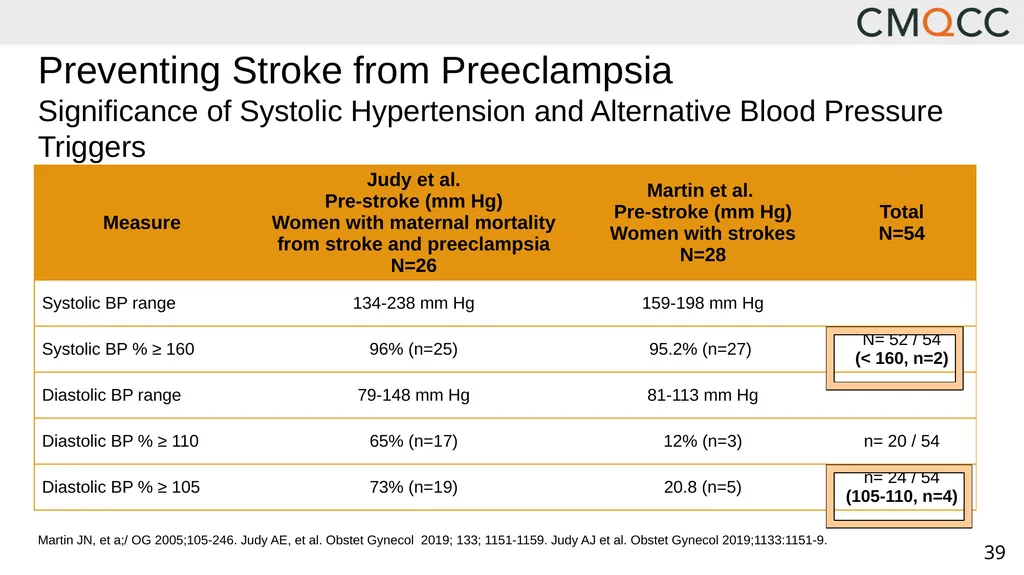
Preventing Stroke from Preeclampsia
Significance of Systolic Hypertension and Alternative Blood Pressure Triggers Martin JN, et a;/ OG 2005;105-246. Judy AE, et al. Obstet Gynecol 2019; 133; 1151-1159. Judy AJ et al. Obstet Gynecol 2019;1133:1151-9.<br>
40
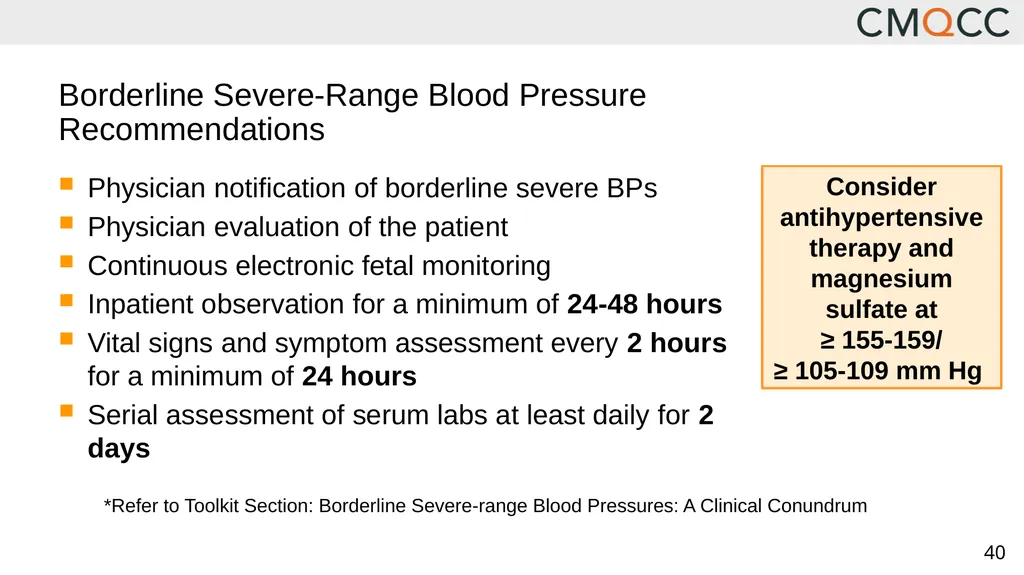
Borderline Severe-Range Blood Pressure Recommendations Physician notification of borderline severe BPs
Physician evaluation of the patient
Continuous electronic fetal monitoring
Inpatient observation for a minimum of 24-48 hours
Vital signs and symptom assessment every 2 hours for a minimum of 24 hours
Serial assessment of serum labs at least daily for 2 days *Refer to Toolkit Section: Borderline Severe-range Blood Pressures: A Clinical Conundrum Consider antihypertensive therapy and magnesium sulfate at
≥ 155-159/
≥ 105-109 mm Hg<br>
41
Magnesium Sulfate Magnesium sulfate for seizure prophylaxis is indicated for:
Preeclampsia with severe features and severe gestational hypertension
All cases of severe (≥ 160 mm Hg / ≥ 110 mm Hg), sustained (lasting 15 minutes or more) hypertension regardless of classification
Magnesium Sulfate is not universally recommended for preeclampsia without severe features<br>
Preeclampsia with severe features and severe gestational hypertension
All cases of severe (≥ 160 mm Hg / ≥ 110 mm Hg), sustained (lasting 15 minutes or more) hypertension regardless of classification
Magnesium Sulfate is not universally recommended for preeclampsia without severe features<br>
42
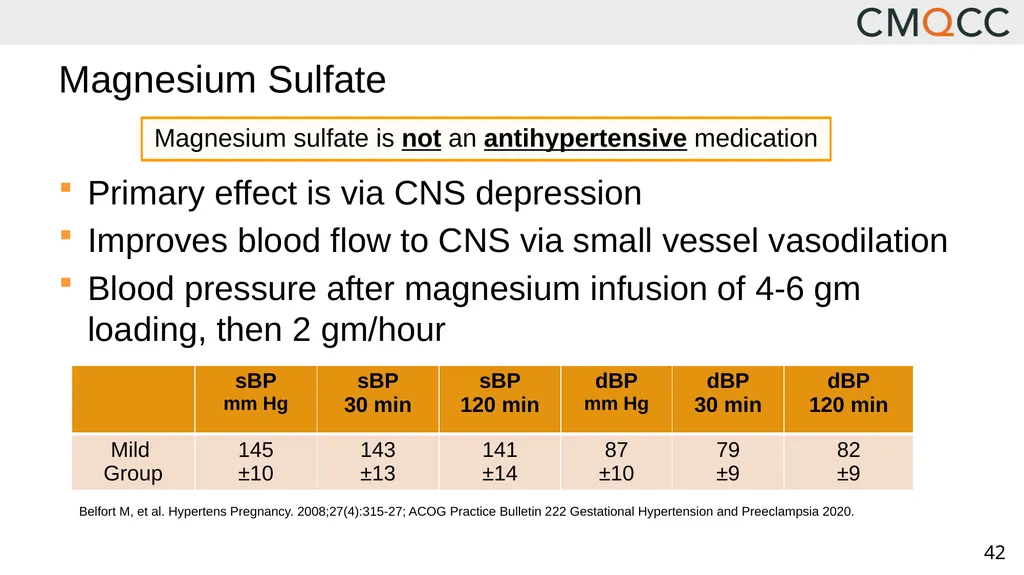
Magnesium Sulfate Primary effect is via CNS depression
Improves blood flow to CNS via small vessel vasodilation
Blood pressure after magnesium infusion of 4-6 gm loading, then 2 gm/hour Belfort M, et al. Hypertens Pregnancy. 2008;27(4):315-27; ACOG Practice Bulletin 222 Gestational Hypertension and Preeclampsia 2020. Magnesium sulfate is not an antihypertensive medication<br>
43
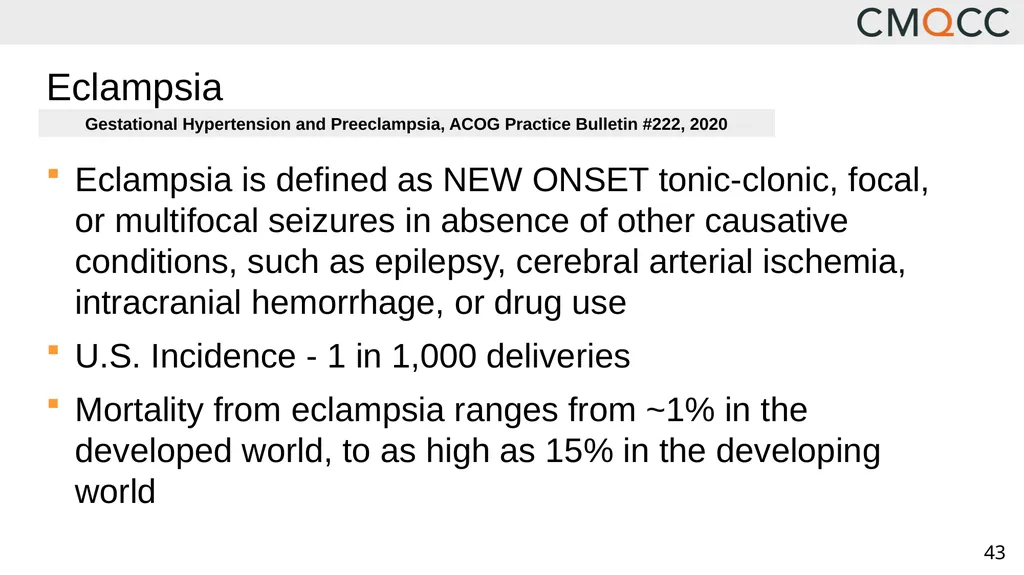
Eclampsia Eclampsia is defined as NEW ONSET tonic-clonic, focal, or multifocal seizures in absence of other causative conditions, such as epilepsy, cerebral arterial ischemia, intracranial hemorrhage, or drug use
U.S. Incidence - 1 in 1,000 deliveries
Mortality from eclampsia ranges from ~1% in the developed world, to as high as 15% in the developing world Gestational Hypertension and Preeclampsia, ACOG Practice Bulletin #222, 2020<br>
U.S. Incidence - 1 in 1,000 deliveries
Mortality from eclampsia ranges from ~1% in the developed world, to as high as 15% in the developing world Gestational Hypertension and Preeclampsia, ACOG Practice Bulletin #222, 2020<br>
44
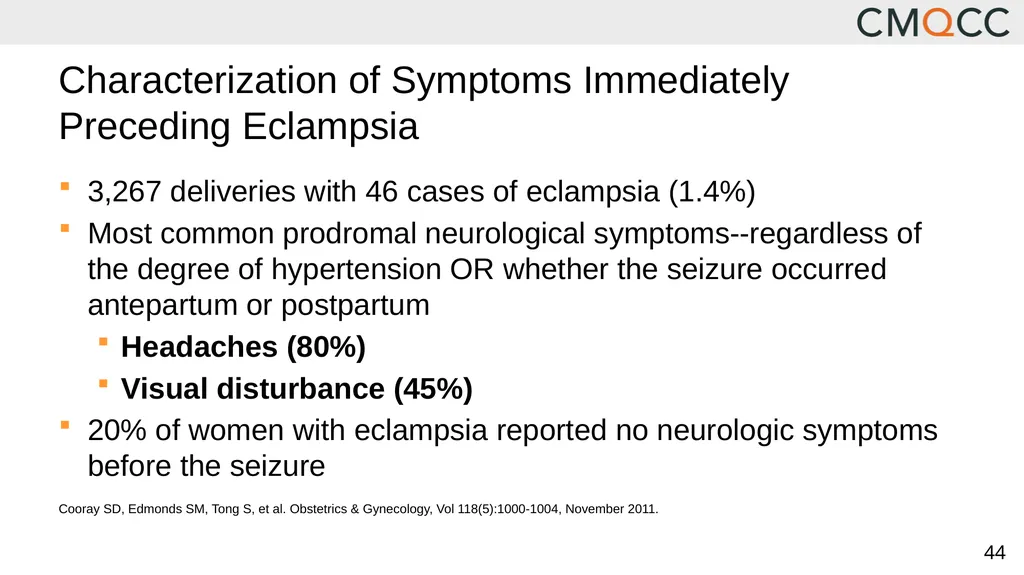
Characterization of Symptoms Immediately Preceding Eclampsia 3,267 deliveries with 46 cases of eclampsia (1.4%)
Most common prodromal neurological symptoms--regardless of the degree of hypertension OR whether the seizure occurred antepartum or postpartum
Headaches (80%)
Visual disturbance (45%)
20% of women with eclampsia reported no neurologic symptoms before the seizure Cooray SD, Edmonds SM, Tong S, et al. Obstetrics & Gynecology, Vol 118(5):1000-1004, November 2011.<br>
45
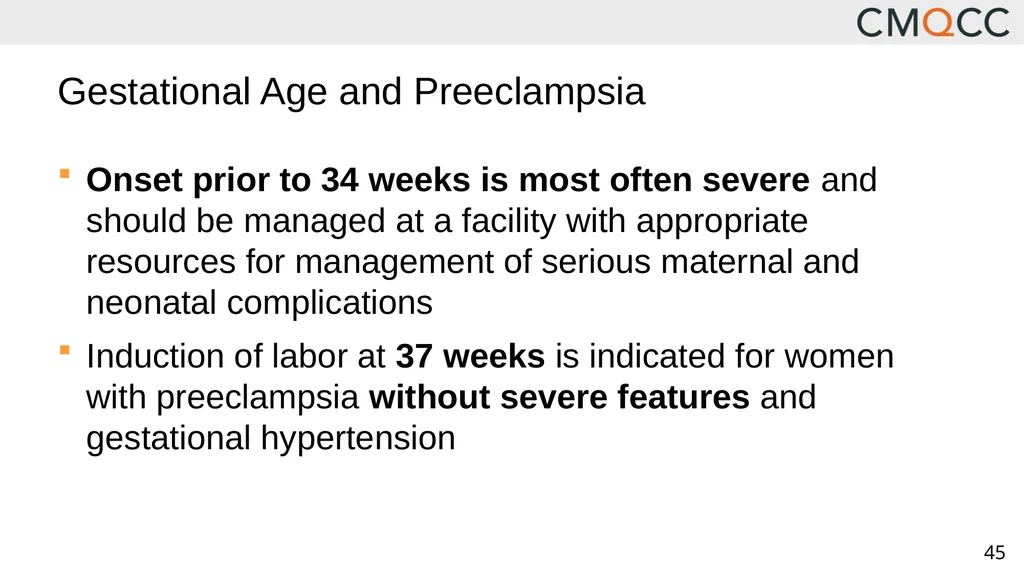
Gestational Age and Preeclampsia Onset prior to 34 weeks is most often severe and should be managed at a facility with appropriate resources for management of serious maternal and neonatal complications
Induction of labor at 37 weeks is indicated for women with preeclampsia without severe features and gestational hypertension<br>
Induction of labor at 37 weeks is indicated for women with preeclampsia without severe features and gestational hypertension<br>
46
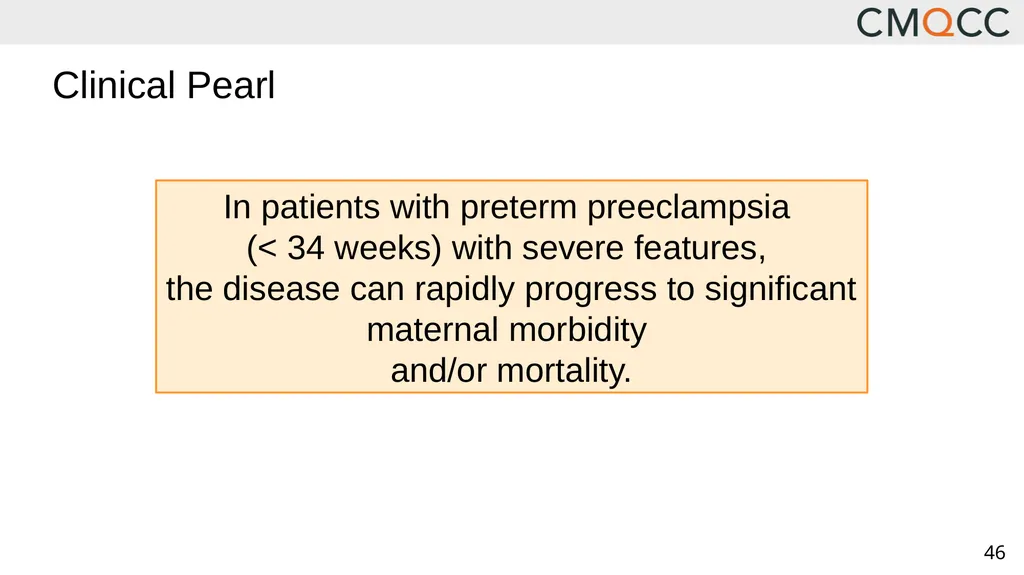
Clinical Pearl In patients with preterm preeclampsia
(< 34 weeks) with severe features,
the disease can rapidly progress to significant maternal morbidity and/or mortality.<br>
(< 34 weeks) with severe features,
the disease can rapidly progress to significant maternal morbidity and/or mortality.<br>
47
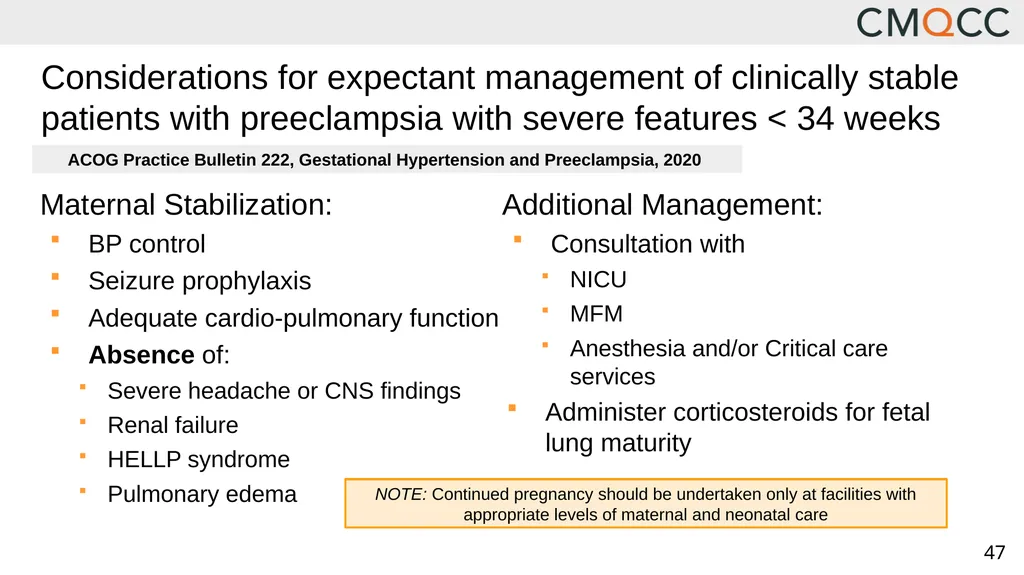
Considerations for expectant management of clinically stable patients with preeclampsia with severe features < 34 weeks Maternal Stabilization:
BP control
Seizure prophylaxis
Adequate cardio-pulmonary function
Absence of:
Severe headache or CNS findings
Renal failure
HELLP syndrome
Pulmonary edema
Additional Management:
Consultation with
NICU
MFM
Anesthesia and/or Critical care services
Administer corticosteroids for fetal lung maturity ACOG Practice Bulletin 222, Gestational Hypertension and Preeclampsia, 2020 NOTE: Continued pregnancy should be undertaken only at facilities with appropriate levels of maternal and neonatal care<br>
48
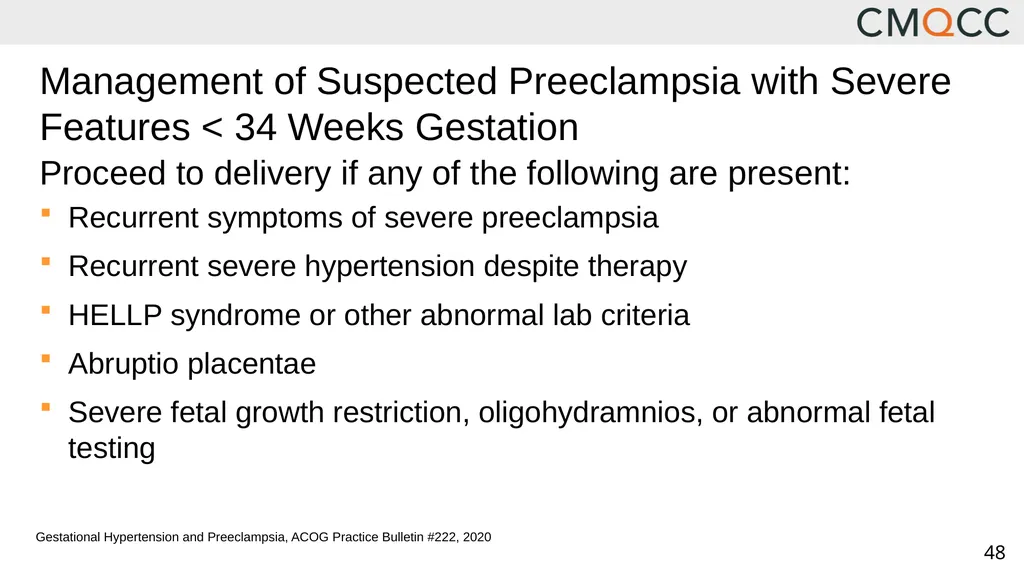
Management of Suspected Preeclampsia with Severe Features < 34 Weeks Gestation Proceed to delivery if any of the following are present:
Recurrent symptoms of severe preeclampsia
Recurrent severe hypertension despite therapy
HELLP syndrome or other abnormal lab criteria
Abruptio placentae
Severe fetal growth restriction, oligohydramnios, or abnormal fetal testing Gestational Hypertension and Preeclampsia, ACOG Practice Bulletin #222, 2020<br>
49
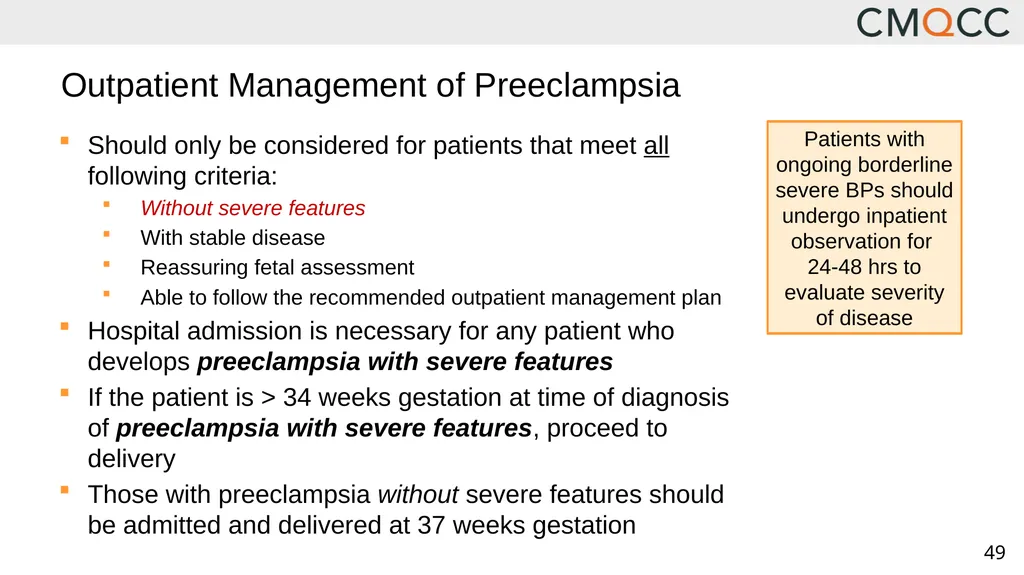
Outpatient Management of Preeclampsia Should only be considered for patients that meet all following criteria:
Without severe features
With stable disease
Reassuring fetal assessment
Able to follow the recommended outpatient management plan
Hospital admission is necessary for any patient who develops preeclampsia with severe features
If the patient is > 34 weeks gestation at time of diagnosis of preeclampsia with severe features, proceed to delivery
Those with preeclampsia without severe features should be admitted and delivered at 37 weeks gestation Patients with ongoing borderline severe BPs should undergo inpatient observation for 24-48 hrs to evaluate severity of disease<br>
50
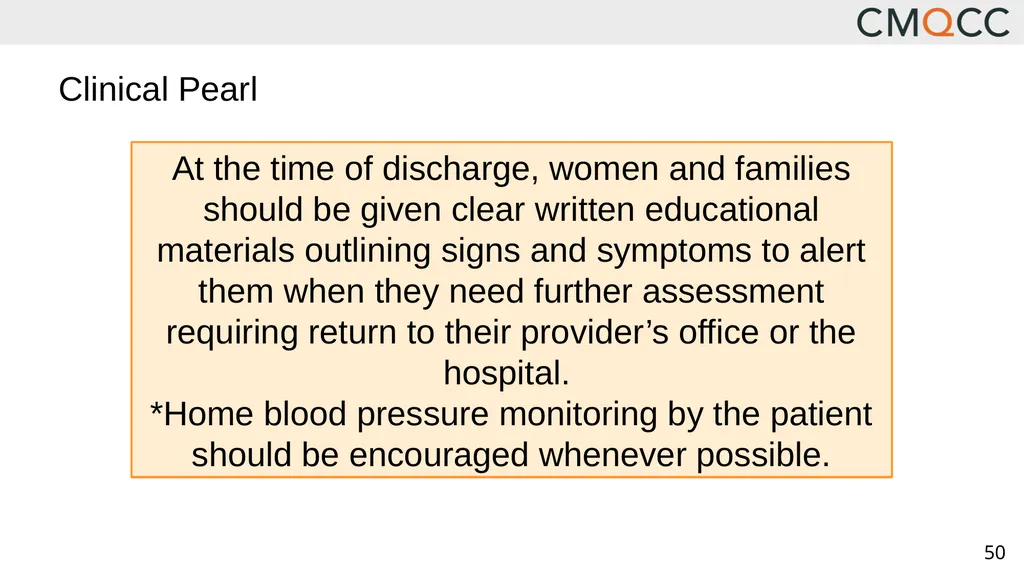
Clinical Pearl At the time of discharge, women and families should be given clear written educational materials outlining signs and symptoms to alert them when they need further assessment requiring return to their provider’s office or the hospital.
*Home blood pressure monitoring by the patient should be encouraged whenever possible.<br>
*Home blood pressure monitoring by the patient should be encouraged whenever possible.<br>
51
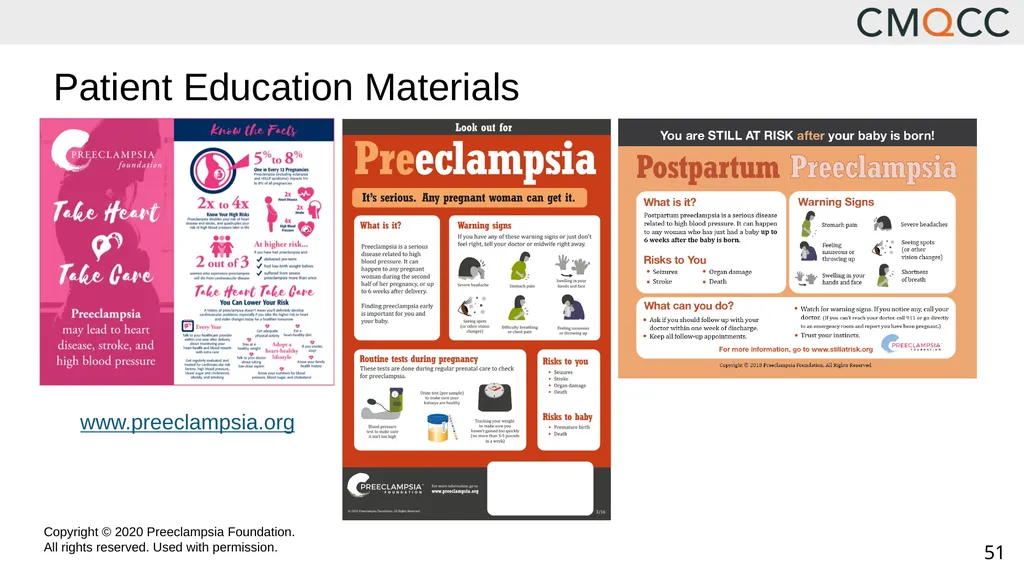
Patient Education Materials www.preeclampsia.org Copyright © 2020 Preeclampsia Foundation.
All rights reserved. Used with permission.<br>
All rights reserved. Used with permission.<br>
52
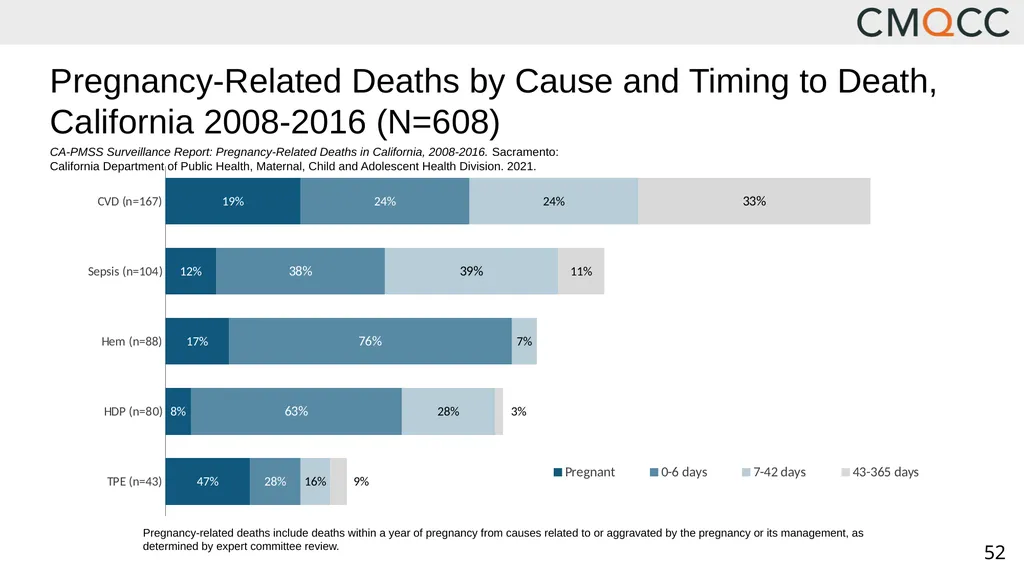
Pregnancy-Related Deaths by Cause and Timing to Death, California 2008-2016 (N=608) Pregnancy-related deaths include deaths within a year of pregnancy from causes related to or aggravated by the pregnancy or its management, as determined by expert committee review. CA-PMSS Surveillance Report: Pregnancy-Related Deaths in California, 2008-2016. Sacramento: California Department of Public Health, Maternal, Child and Adolescent Health Division. 2021.<br>
53
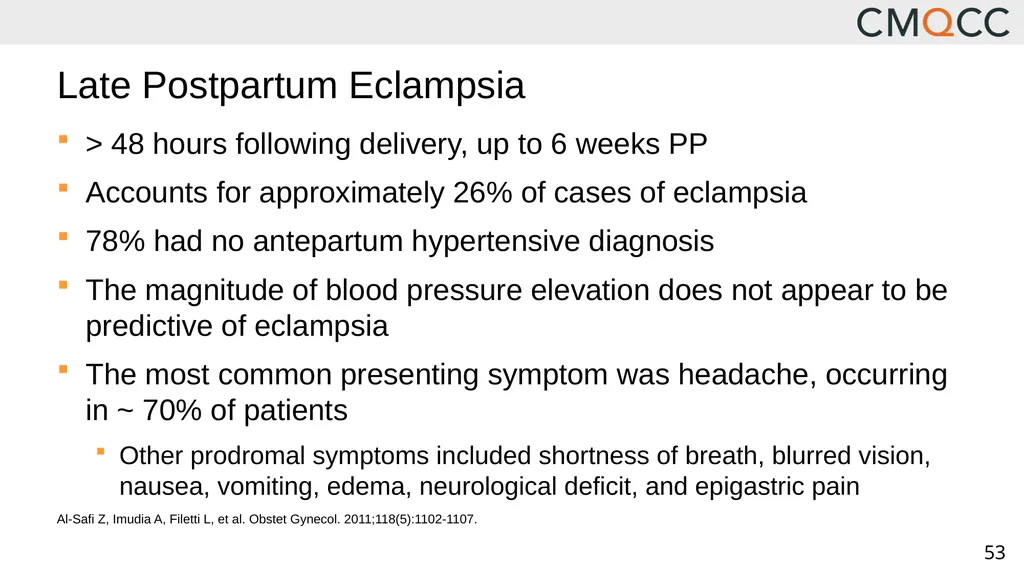
Late Postpartum Eclampsia > 48 hours following delivery, up to 6 weeks PP
Accounts for approximately 26% of cases of eclampsia
78% had no antepartum hypertensive diagnosis
The magnitude of blood pressure elevation does not appear to be predictive of eclampsia
The most common presenting symptom was headache, occurring in ~ 70% of patients
Other prodromal symptoms included shortness of breath, blurred vision, nausea, vomiting, edema, neurological deficit, and epigastric pain Al-Safi Z, Imudia A, Filetti L, et al. Obstet Gynecol. 2011;118(5):1102-1107.<br>
54
Clinical Pearl Postpartum women who present to the emergency department and have “trigger or critical hypertension” or suspected preeclampsia should be assessed by and/or admitted to obstetrical service.<br>
55
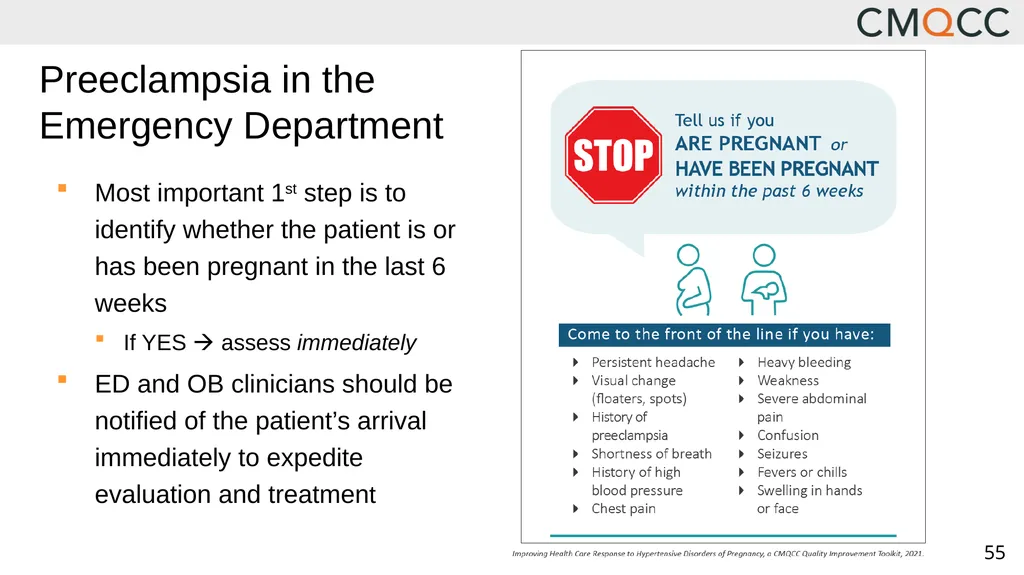
Preeclampsia in the
Emergency Department Most important 1st step is to identify whether the patient is or has been pregnant in the last 6 weeks
If YES assess immediately
ED and OB clinicians should be notified of the patient’s arrival immediately to expedite evaluation and treatment<br>
If YES assess immediately
ED and OB clinicians should be notified of the patient’s arrival immediately to expedite evaluation and treatment<br>
56
Preeclampsia in the Emergency Department The “trigger” BP in pregnancy/postpartum (≥ 160/110) is lower than values for hypertensive emergencies in non-OB patients
ED personnel should be familiar with risk factors and signs and symptoms of postpartum preeclampsia and eclampsia
Develop a workflow for your hospital between ED and OB teams ED clinicians should focus on:
Maternal resuscitation
BP management
Seizure prophylaxis
Notifying OB team<br>
ED personnel should be familiar with risk factors and signs and symptoms of postpartum preeclampsia and eclampsia
Develop a workflow for your hospital between ED and OB teams ED clinicians should focus on:
Maternal resuscitation
BP management
Seizure prophylaxis
Notifying OB team<br>
57
Long-Term Risk after Hypertensive Disorders of Pregnancy Patients with a history of HDP during pregnancy or the postpartum period are at increased risk for:
Pulmonary edema
Cardiomyopathy
Those with low oxygen saturation, shortness of breath, or dyspnea should be evaluated and treated
BNP, EKG, CXR, cardiac echo, cardiology consultation
Patients should be counseled that HDP increases risk of future cardiovascular disease and their primary care provider should be made aware of their pregnancy history<br>
58
Talking with Women and their Families About HDP To ensure optimal physical and emotional wellbeing:
Educate women and families about how to identify early warning signs and when to seek medical care
Acknowledge the impact of HDP diagnoses on women’s lives and mental health to promote effective communication and education
Talk with birthing people and their support persons in a way that is mindful of a variety of emotional states, education levels, health literacy, cultural practices and languages spoken.
Rely on evidence-based communication protocols when sharing information to ensure woman-centered care, promote shared decision-making and embrace the diversity of family structures and cultural practices.<br>
59
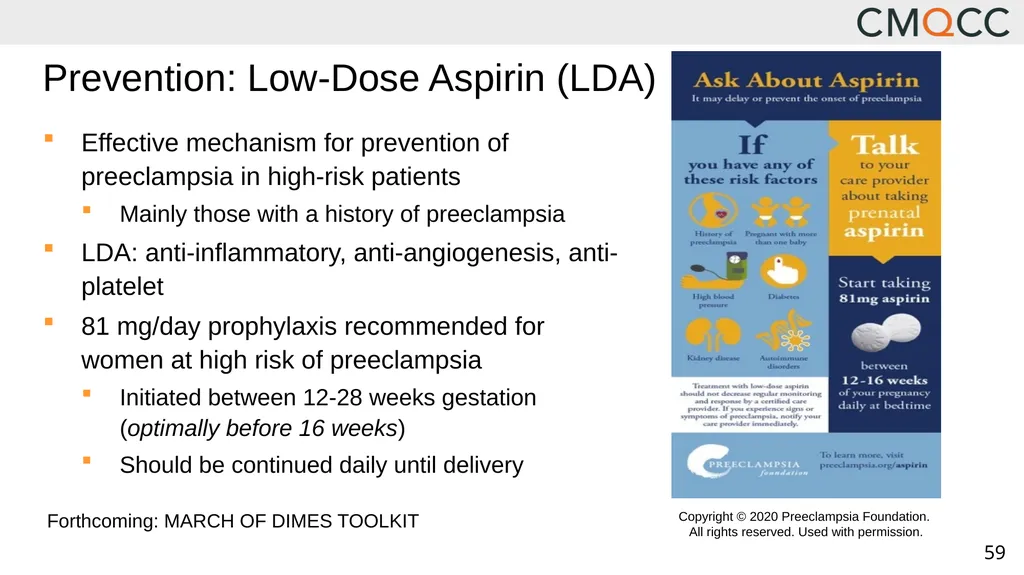
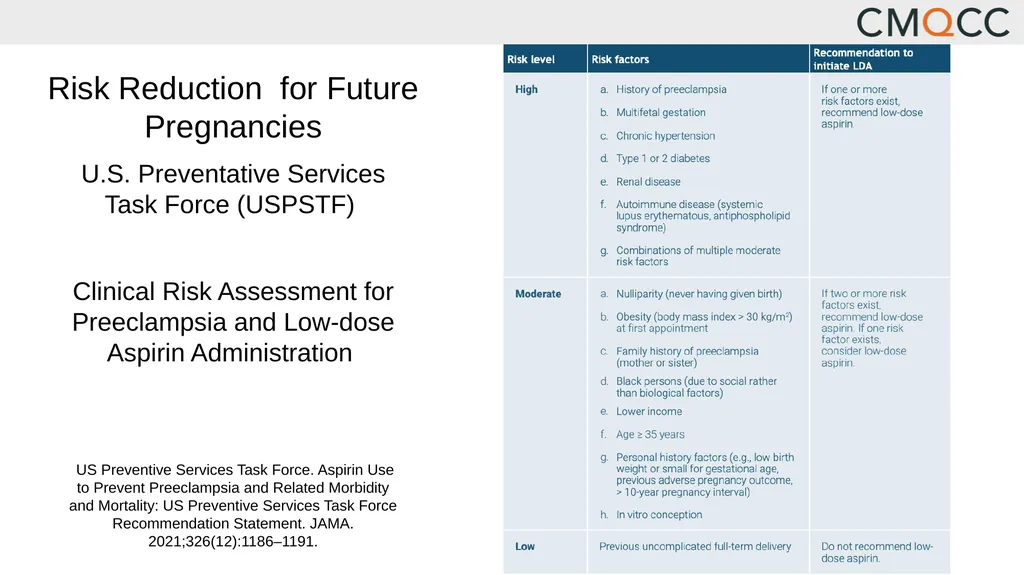
Prevention: Low-Dose Aspirin (LDA) Effective mechanism for prevention of preeclampsia in high-risk patients
Mainly those with a history of preeclampsia
LDA: anti-inflammatory, anti-angiogenesis, anti-platelet
81 mg/day prophylaxis recommended for women at high risk of preeclampsia
Initiated between 12-28 weeks gestation (optimally before 16 weeks)
Should be continued daily until delivery Forthcoming: MARCH OF DIMES TOOLKIT Copyright © 2020 Preeclampsia Foundation.
All rights reserved. Used with permission.<br>
60
U.S. Preventative Services Task Force (USPSTF)
Clinical Risk Assessment for Preeclampsia and Low-dose Aspirin Administration US Preventive Services Task Force. Aspirin Use to Prevent Preeclampsia and Related Morbidity and Mortality: US Preventive Services Task Force Recommendation Statement. JAMA. 2021;326(12):1186–1191. Risk Reduction for Future Pregnancies<br>
Clinical Risk Assessment for Preeclampsia and Low-dose Aspirin Administration US Preventive Services Task Force. Aspirin Use to Prevent Preeclampsia and Related Morbidity and Mortality: US Preventive Services Task Force Recommendation Statement. JAMA. 2021;326(12):1186–1191. Risk Reduction for Future Pregnancies<br>
61
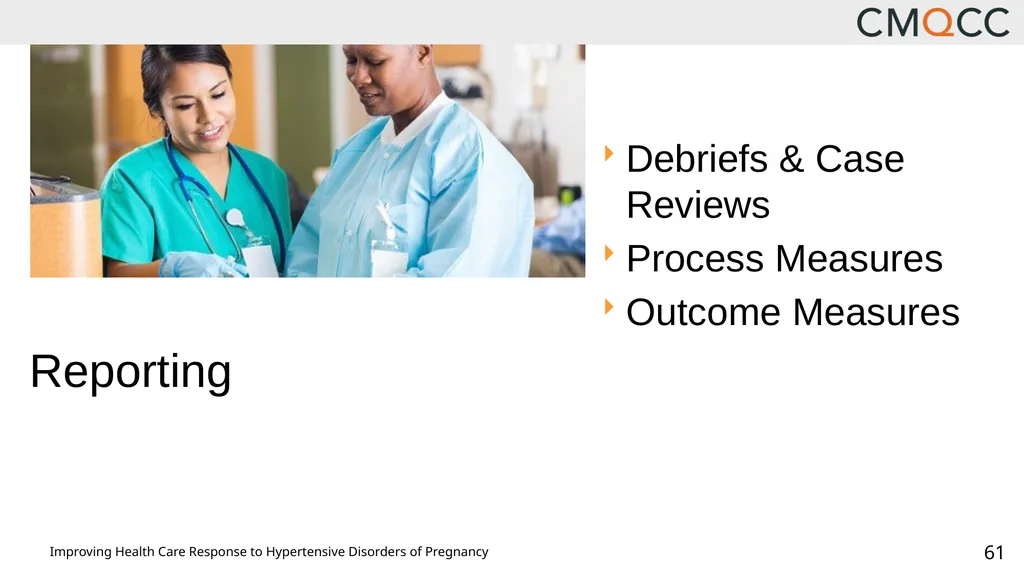
Reporting Debriefs & Case Reviews
Process Measures
Outcome Measures<br>
Process Measures
Outcome Measures<br>
62
Debriefs and multidisciplinary reviews are foundational learning about improvement activities for creating a highly-reliable clinical team and maintaining a culture of safety Debriefs and Case Reviews Debrief
Allows the team to reflect on performance and problem-solve in real time
Should become a routine part of activities on the unit Case Review
Thorough and structured evaluation of patient care
Identified deficits are used to inform and guide system-level improvements to prevent similar morbidities in the future A multi-faceted communication plan is needed to share meaningful learnings and subsequent process improvement work to the clinical team<br>
63
Process Measures and Outcome Measures Timely Treatment of Hypertension – strongly recommended
Most important action to reduce severe maternal mortality and morbidity from hypertensive disorders of pregnancy is the rapid timely treatment of severe hypertension
Severe Maternal Morbidity (SMM)
At a minimum, serves as an indicator for multidisciplinary case review
The AIM Program and CMQCC are using the CDC metric to track the rate of SMM complications in women with HDP (with and without transfusions)<br>
64
Thank you! For More Information
and to Download the Toolkit www.CMQCC.org/toolkits Contact us:
info@cmqcc.org<br>
and to Download the Toolkit www.CMQCC.org/toolkits Contact us:
info@cmqcc.org<br>
65
Appendix –
Optional Slides<br>
66
Hypertensive Disorders of Pregnancy Toolkit Treatment Algorithms<br>
67
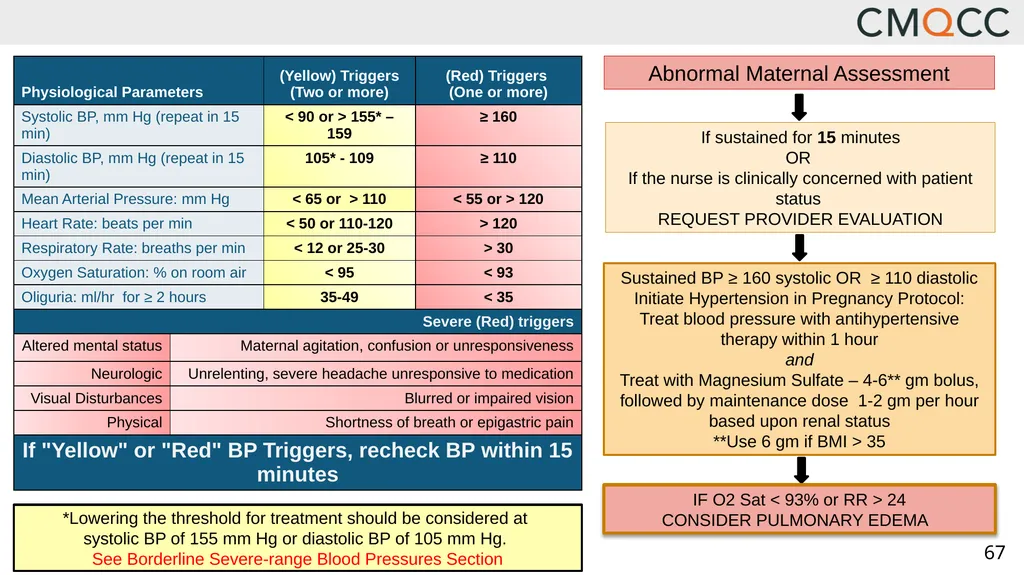
Abnormal Maternal Assessment If sustained for 15 minutes
OR
If the nurse is clinically concerned with patient status
REQUEST PROVIDER EVALUATION Sustained BP ≥ 160 systolic OR ≥ 110 diastolic
Initiate Hypertension in Pregnancy Protocol:
Treat blood pressure with antihypertensive therapy within 1 hour
and
Treat with Magnesium Sulfate – 4-6** gm bolus, followed by maintenance dose 1-2 gm per hour based upon renal status
**Use 6 gm if BMI > 35 IF O2 Sat < 93% or RR > 24
CONSIDER PULMONARY EDEMA *Lowering the threshold for treatment should be considered at
systolic BP of 155 mm Hg or diastolic BP of 105 mm Hg.
See Borderline Severe-range Blood Pressures Section<br>
OR
If the nurse is clinically concerned with patient status
REQUEST PROVIDER EVALUATION Sustained BP ≥ 160 systolic OR ≥ 110 diastolic
Initiate Hypertension in Pregnancy Protocol:
Treat blood pressure with antihypertensive therapy within 1 hour
and
Treat with Magnesium Sulfate – 4-6** gm bolus, followed by maintenance dose 1-2 gm per hour based upon renal status
**Use 6 gm if BMI > 35 IF O2 Sat < 93% or RR > 24
CONSIDER PULMONARY EDEMA *Lowering the threshold for treatment should be considered at
systolic BP of 155 mm Hg or diastolic BP of 105 mm Hg.
See Borderline Severe-range Blood Pressures Section<br>
68
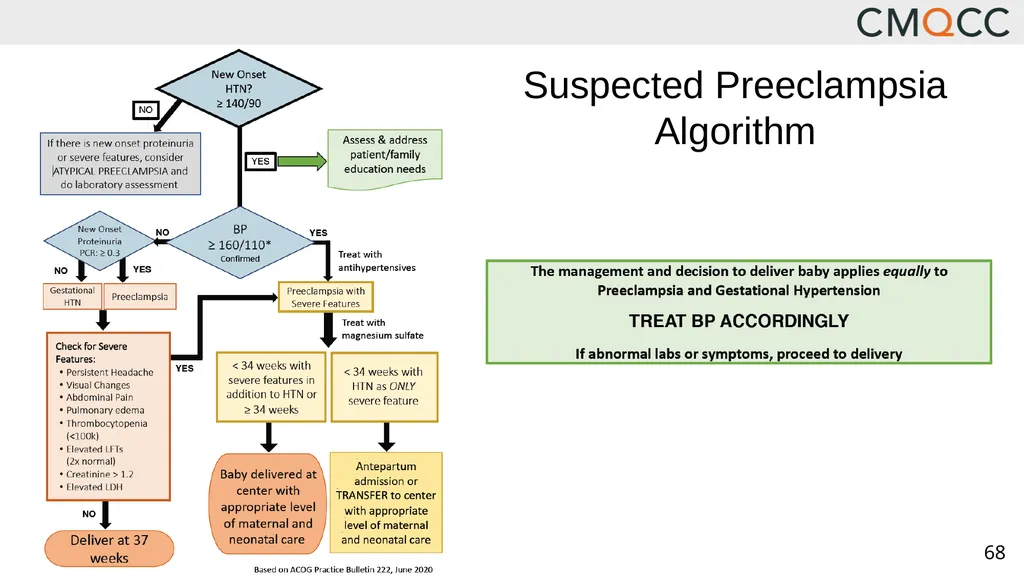
Suspected Preeclampsia Algorithm<br>
69
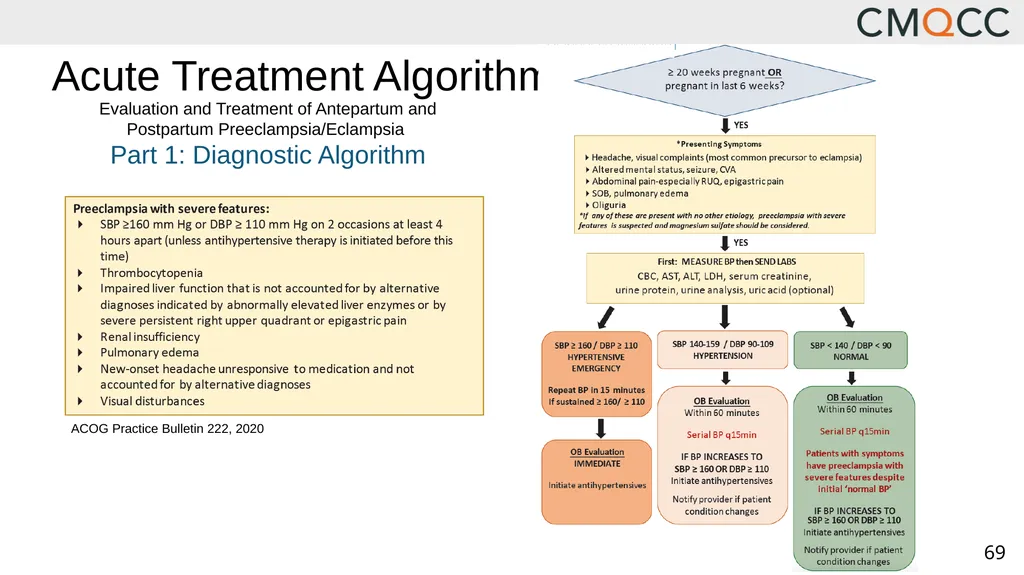
Acute Treatment Algorithm Evaluation and Treatment of Antepartum and Postpartum Preeclampsia/Eclampsia
Part 1: Diagnostic Algorithm ACOG Practice Bulletin 222, 2020<br>
Part 1: Diagnostic Algorithm ACOG Practice Bulletin 222, 2020<br>
70
Acute Treatment Algorithm Evaluation and Treatment of Antepartum and Postpartum Preeclampsia/Eclampsia
Part 2: Antihypertensive Treatment Algorithm for Hypertensive Emergencies<br>
Part 2: Antihypertensive Treatment Algorithm for Hypertensive Emergencies<br>
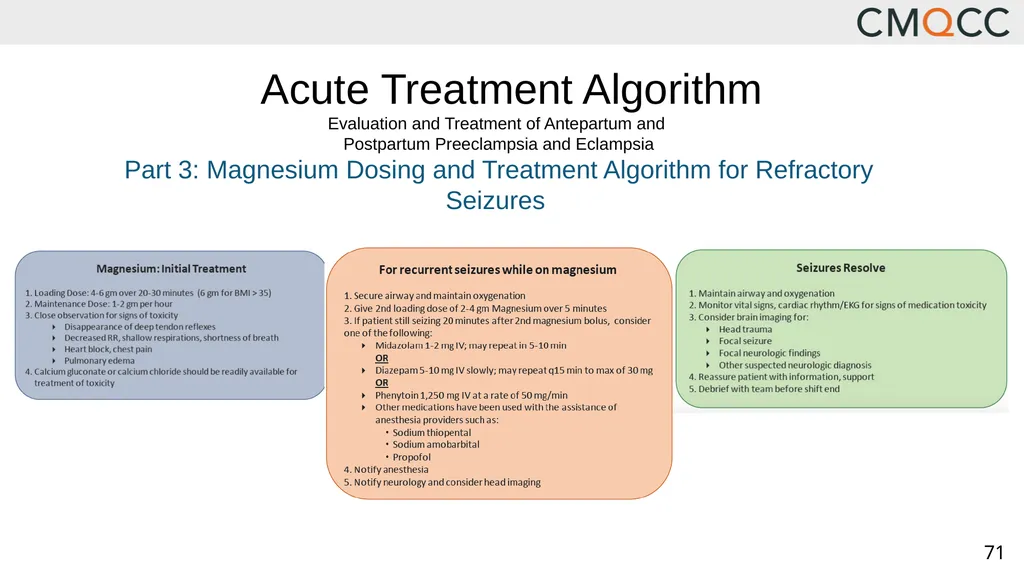
71
Acute Treatment Algorithm Evaluation and Treatment of Antepartum and
Postpartum Preeclampsia and Eclampsia
Part 3: Magnesium Dosing and Treatment Algorithm for Refractory Seizures<br>
Part 3: Magnesium Dosing and Treatment Algorithm for Refractory Seizures<br>
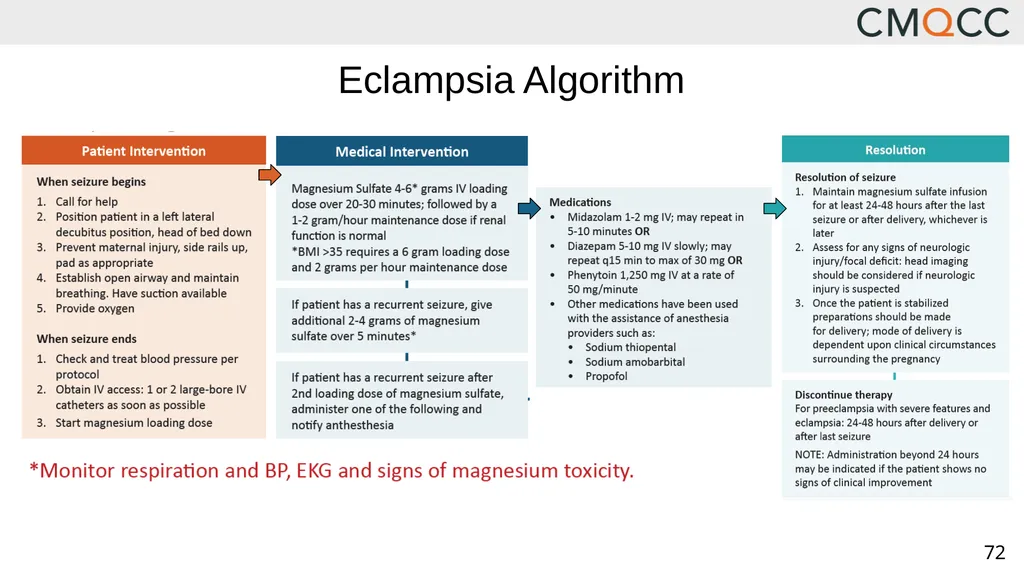
72
Eclampsia Algorithm<br>
73
Case Study<br>
74
Postpartum Case Study 24-year-old G2, P0-0-1-0, 39 weeks
Prenatal course unremarkable, GBS (+)
Blood pressure normal throughout prenatal period
Presented to the office with complaint of regular uterine contractions
Cervical exam: 3 cm dilated
BP: 142/95
Urinalysis negative for protein<br>
Prenatal course unremarkable, GBS (+)
Blood pressure normal throughout prenatal period
Presented to the office with complaint of regular uterine contractions
Cervical exam: 3 cm dilated
BP: 142/95
Urinalysis negative for protein<br>
75
Postpartum Case Study Status on Admission
The patient admitted for spontaneous labor and gestational hypertension
On admission to Labor and Delivery
BP 133/74
Urinalysis negative
Platelet count: 187,000/unit
AST 14
ALT 18
Uric Acid 5.5<br>
The patient admitted for spontaneous labor and gestational hypertension
On admission to Labor and Delivery
BP 133/74
Urinalysis negative
Platelet count: 187,000/unit
AST 14
ALT 18
Uric Acid 5.5<br>
76
Postpartum Case Study Labor course
BP remained elevated throughout labor and the postpartum stay
Fetal heart rate consistently Category I (normal) tracing
Patient had primary late term c-section for failure to progress on day 2
Postpartum course was unremarkable. No documented complaints of headache, blurred vision or epigastric pain<br>
77
Postpartum Case Study Post-op Day #3
Patient complained of “acute, crushing headache”, pain rated 8/10
D/C orders already written
Pain treated with hydrocodone 15 mg/acetaminophen 650 mg
Discharged 30 minutes later; no follow-up of headache documented<br>
Patient complained of “acute, crushing headache”, pain rated 8/10
D/C orders already written
Pain treated with hydrocodone 15 mg/acetaminophen 650 mg
Discharged 30 minutes later; no follow-up of headache documented<br>
78
Postpartum Case Study Post Discharge
Post-op day #4: Patient reported worsening headache to family
Post-op day #5:
Progressively worsening headache and new-onset visual changes
911 call placed by family
Initial seizure occurred shortly thereafter
Multiple seizures witnessed by family
Intubated in the field and transported to hospital
Started on magnesium sulfate, lorazepam, levetiracetam, labetalol
Helicopter transport to tertiary center, neurology ICU<br>
79
Postpartum Case Study Post-op Day #6 - #9
Extubated shortly after admission
BPs remained elevated; BP max 148/98; SBP mostly 130s; DBP mostly 80’s
Platelet count 370,000, AST 30, ALT 33, Creatinine 0.9 mg/dl
Urinalysis: Negative for protein
Persistent, mild headache with some postural component
Anesthesia consult obtained; Conservative treatment
MRI: “no evidence of ischemic injury”; no parieto-occipital edema suggestive of PRES (Posterior Reversible Encephalopathy Syndrome)<br>