IMPROVING POLICY MAKING WHAT ARE THE OPTIONS FOR GOVERNMENTS? An OECD Perspective Stephane Jacobzone OECD Public Governance and Territorial Development 8th European Quality Conference 1 October 2015, Luxembourg INTRODUCTION Well established
"IMPROVING POLICY MAKING WHAT ARE THE OPTIONS FOR" is the property of its rightful owner. Permission is granted to
download and print the materials on this website for personal, non-commercial use only, and to display it
on your personal computer provided you do not modify the materials and that you retain all copyright
notices contained in the materials. By downloading content from our website, you accept the terms of this
agreement.
Presentation Transcript
01
IMPROVING POLICY MAKING WHAT ARE THE OPTIONS FOR GOVERNMENTS? An OECD Perspective Stephane Jacobzone
OECD
Public Governance and Territorial Development
8th European Quality Conference
1 October 2015, Luxembourg<br>
02
INTRODUCTION Well established tools:
Foresight/scenarios, Cost benefit analysis, modelling, micro simulation, etc..
The policy cycle approach
The EU toolbox for practitionners (2015)
Tools for policy formulation (Jordan Turnpenny 2015)
Regulatory tools, budgeting
BUT GAP REMAINS
GOVERNMENTS ARE DEMANDING FOR MORE<br>
03
A NEW CONTEXT Complex policy challenges
inclusive growth, wicked issues
Reduced fiscal space
Technological trends
Potential of open data, crowd sourcing
Role of the social media
New demands from citizens
Open government
Transparency, co involvement in policy decisions
Challenges to the internal workings of government:
Policy siloes and fragmented institutions
Need to transform “information” into “actionable evidence”
Formulating coherent strategies that will connect with implementation
Effectively integrating the results of ex post evaluation<br>
04
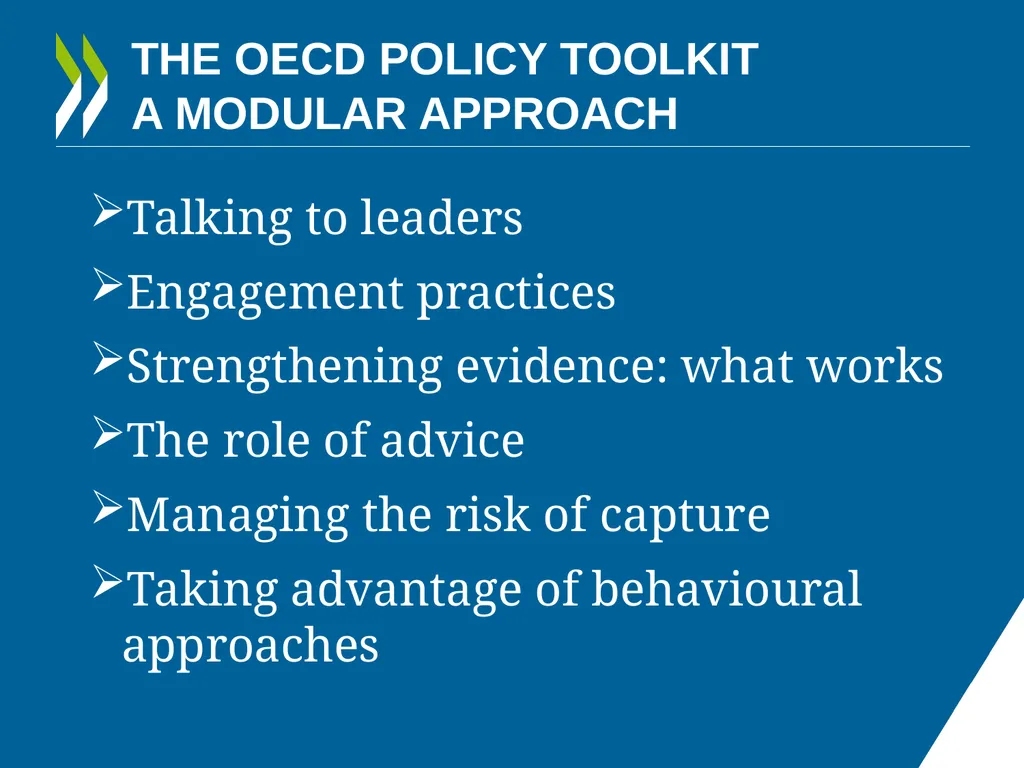
THE OECD POLICY TOOLKIT A modular approach Talking to leaders
Engagement practices
Strengthening evidence: what works
The role of advice
Managing the risk of capture
Taking advantage of behavioural approaches<br>
05
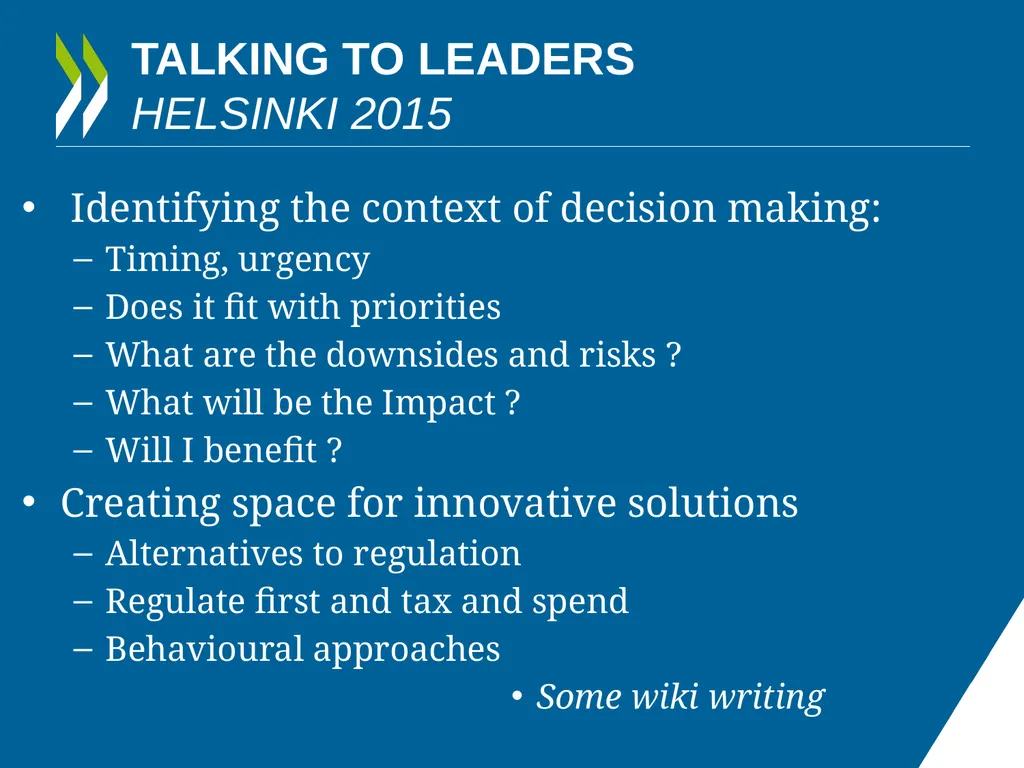
Talking to leaders Helsinki 2015 Identifying the context of decision making:
Timing, urgency
Does it fit with priorities
What are the downsides and risks ?
What will be the Impact ?
Will I benefit ?
Creating space for innovative solutions
Alternatives to regulation
Regulate first and tax and spend
Behavioural approaches
Some wiki writing<br>
06
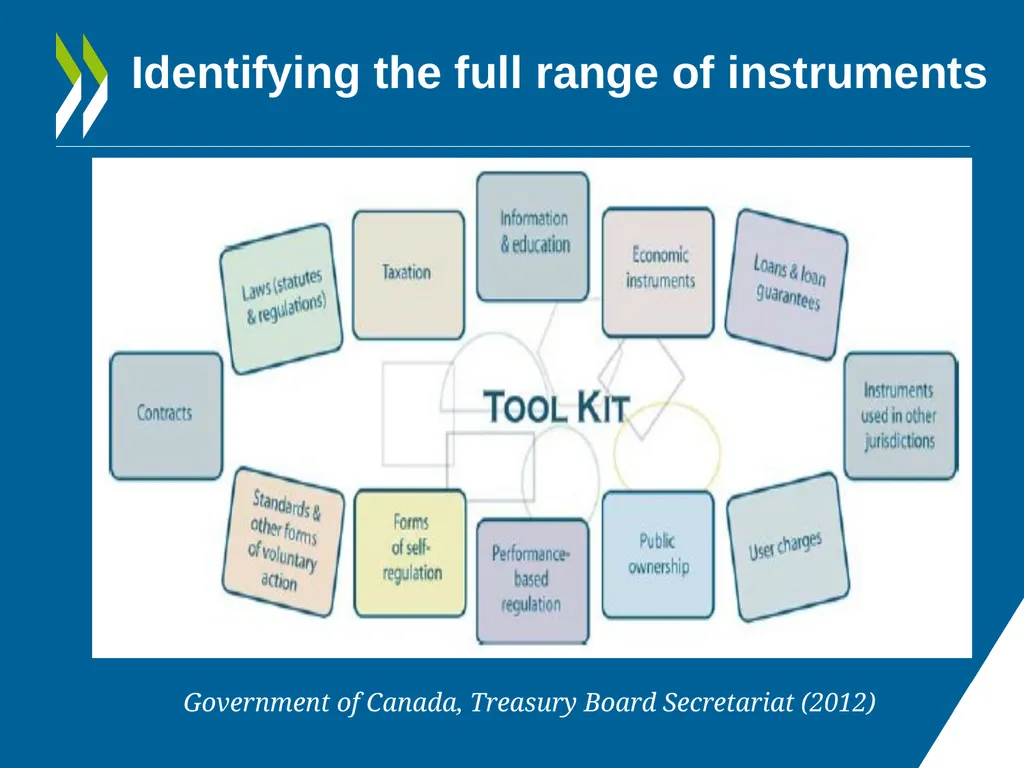
Identifying the full range of instruments Government of Canada, Treasury Board Secretariat (2012)<br>
07
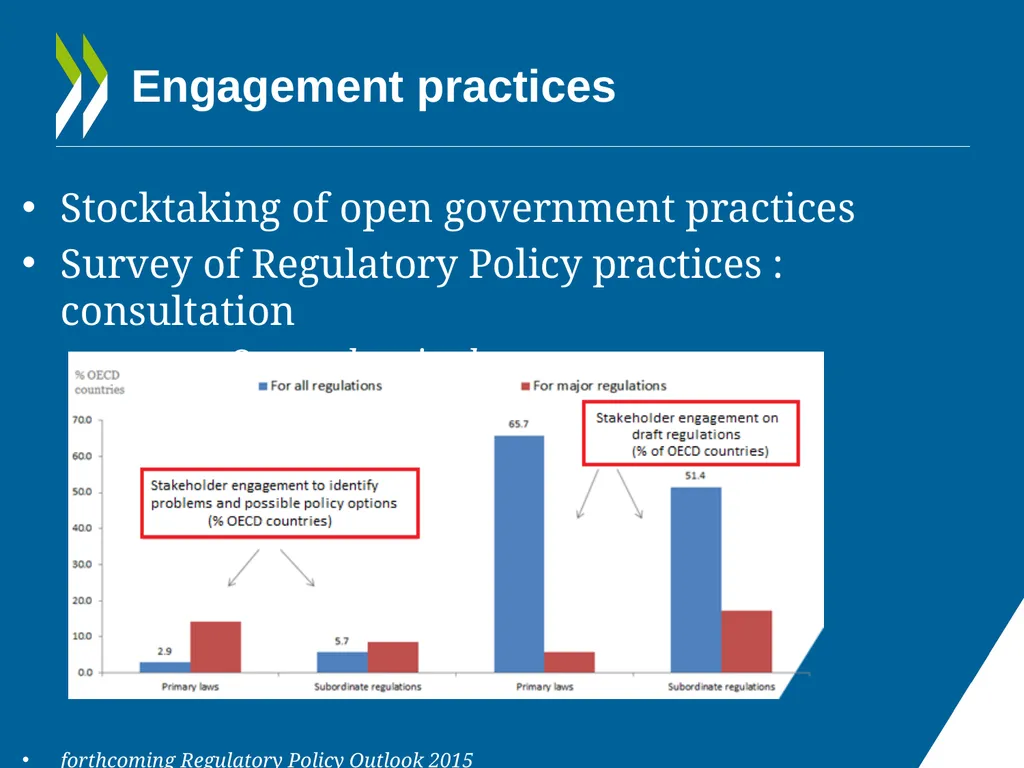
Engagement practices Stocktaking of open government practices
Survey of Regulatory Policy practices : consultation
Occurs late in the process
forthcoming Regulatory Policy Outlook 2015<br>
08
Evidence-based Decision-making Challenges in operationalising evidence in decision-making
Silos in knowledge across government, moderate use of regulatory impact analysis
Co-ordinating various sources of foresight evidence<br>
09
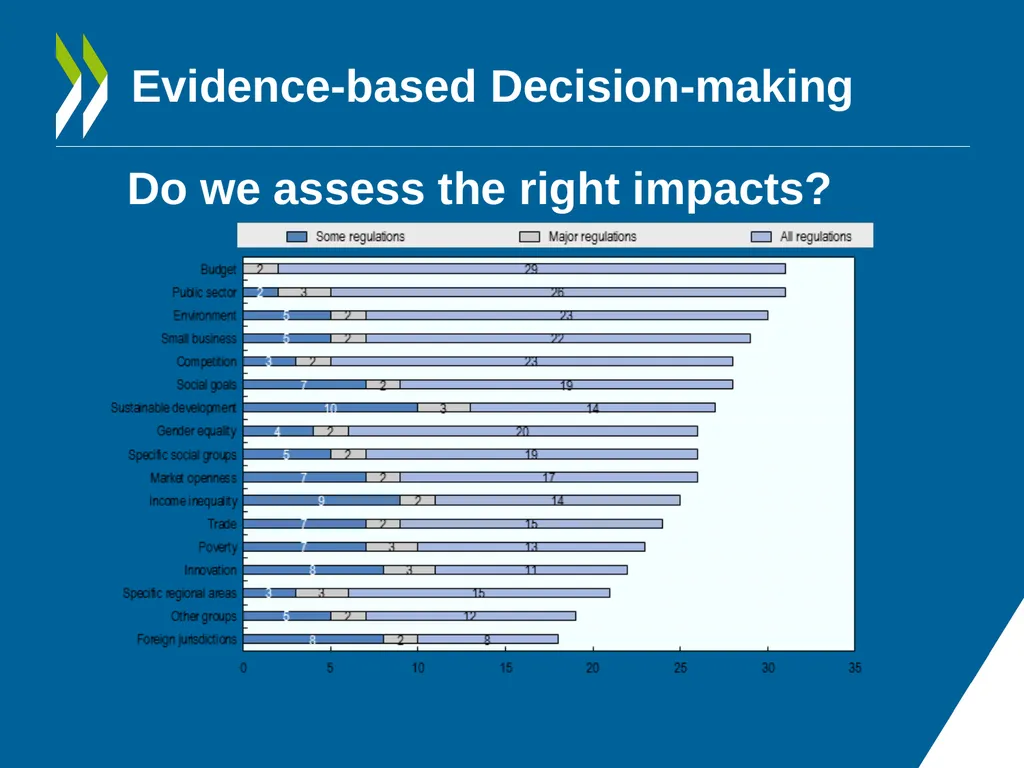
Evidence-based Decision-making Do we assess the right impacts?<br>
10
The role of crowd sourcing Crowdsourcing
Facts
Views and opinions
Potential for open data
Expertise in the public
Role of new media channels<br>
11
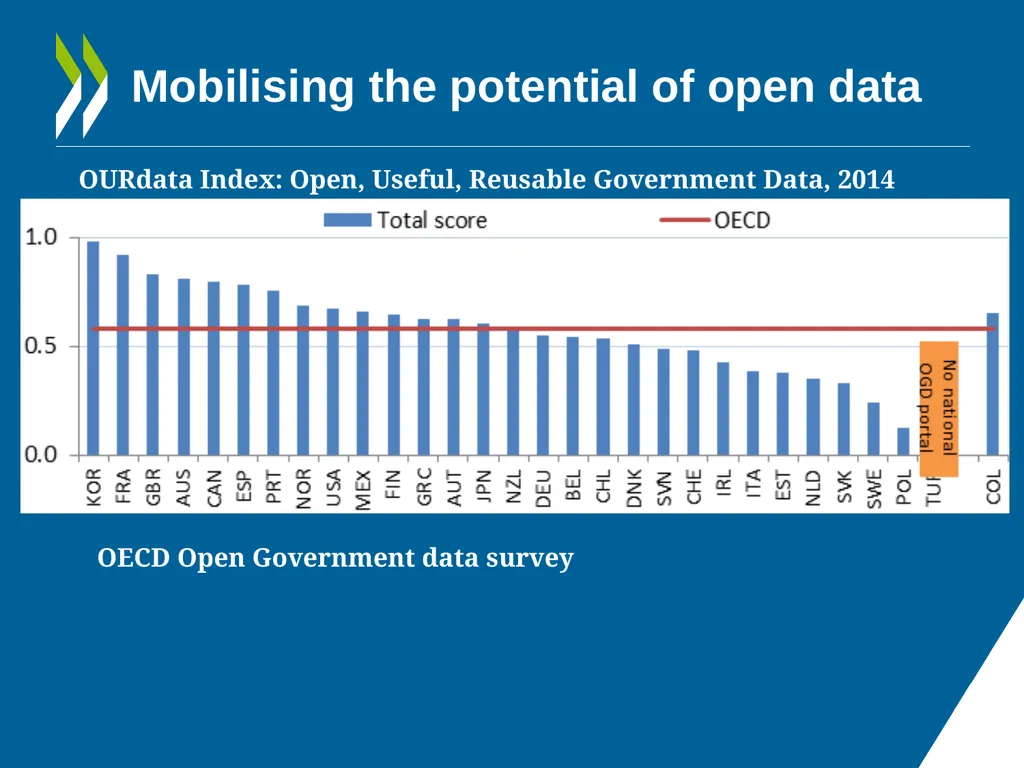
Mobilising the potential of open data OURdata Index: Open, Useful, Reusable Government Data, 2014 OECD Open Government data survey<br>
12
The role of crowd sourcing Crowdsourcing
Facts
Views and opinions
Potential for open data
Expertise in the public
Role of new media channels<br>
13
THE UK “WHAT WORKS” APPROACH Using new evidence all the time ?
…Or taking stock of robust evidence ?
Increasing productivity of policy making: directing resources where they are known to be more effective a achieving outcomes
The example of health for medical practices (NICE, Health Technology Assessment, meta reviews of evidence
Could we do the same for policies and policy making ?<br>
14
A networked approach: the ‘What Works’ Centres Centres for Health, Education, Crime reduction, Better Ageing, local economic growth etc.
Standardising evidence of impact of policy intervention
No good practice judgement: just a tool guide of what does work
Strong empirical background<br>
15
Expanding “What Works” at the international level First steps
Publishing and incentives
Mapping national initiatives
Building capacity: meta evidence reviews, training foir civil servants
Meta evidence reviews, Data labs<br>
16
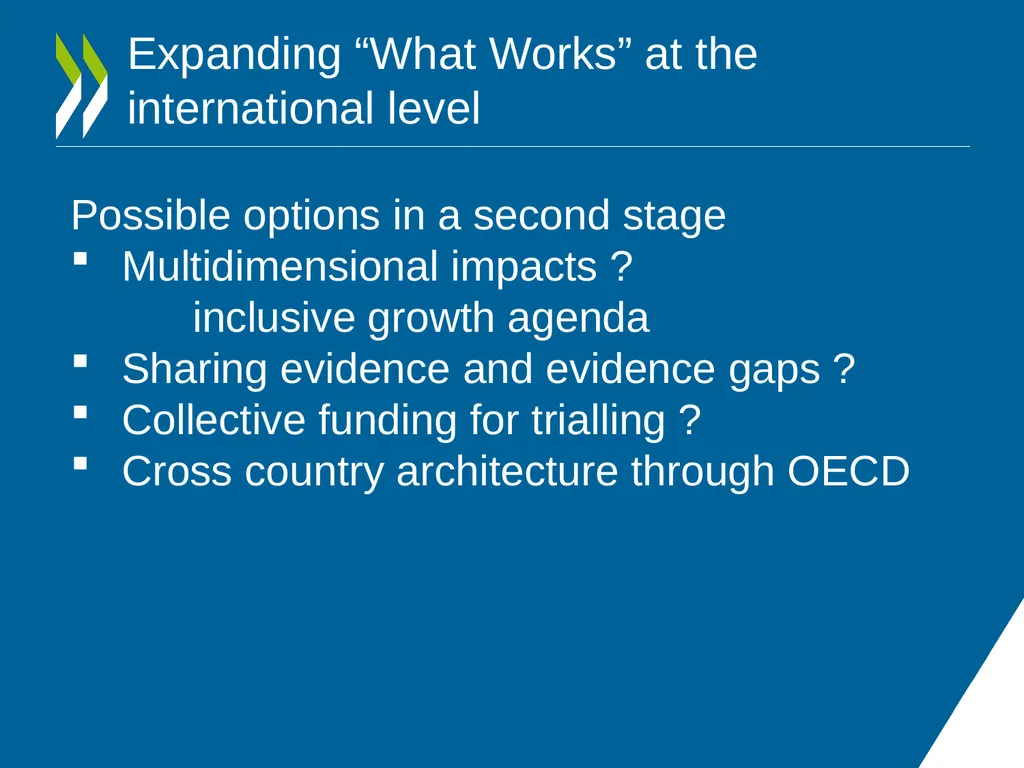
Expanding “What Works” at the international level Possible options in a second stage
Multidimensional impacts ? inclusive growth agenda
Sharing evidence and evidence gaps ?
Collective funding for trialling ?
Cross country architecture through OECD<br>
17
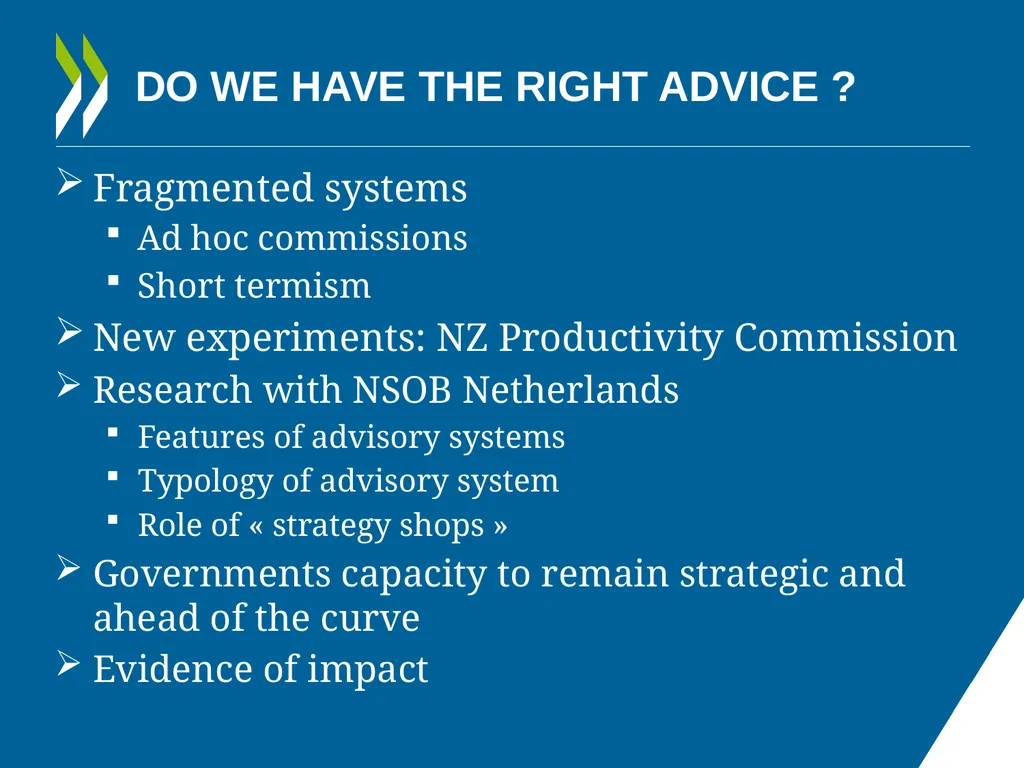
Do we have the right advice ? Fragmented systems
Ad hoc commissions
Short termism
New experiments: NZ Productivity Commission
Research with NSOB Netherlands
Features of advisory systems
Typology of advisory system
Role of « strategy shops »
Governments capacity to remain strategic and ahead of the curve
Evidence of impact<br>
18
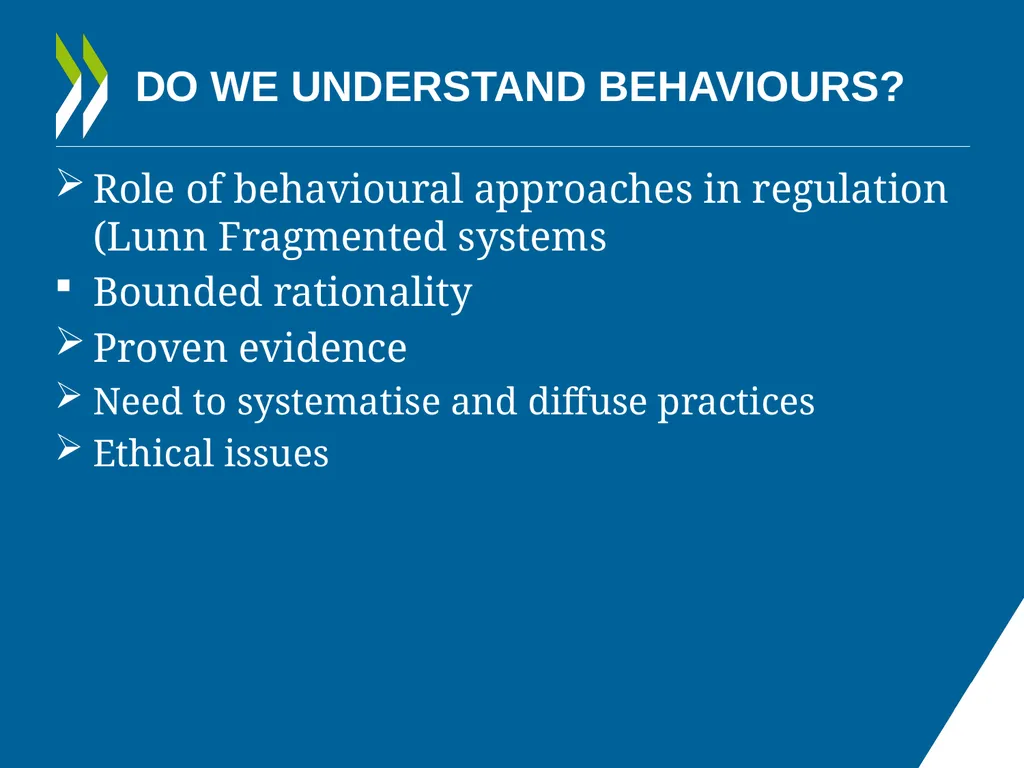
Do we UNDERSTAND BEHAVIOURS? Role of behavioural approaches in regulation (Lunn Fragmented systems
Bounded rationality
Proven evidence
Need to systematise and diffuse practices
Ethical issues<br>
19
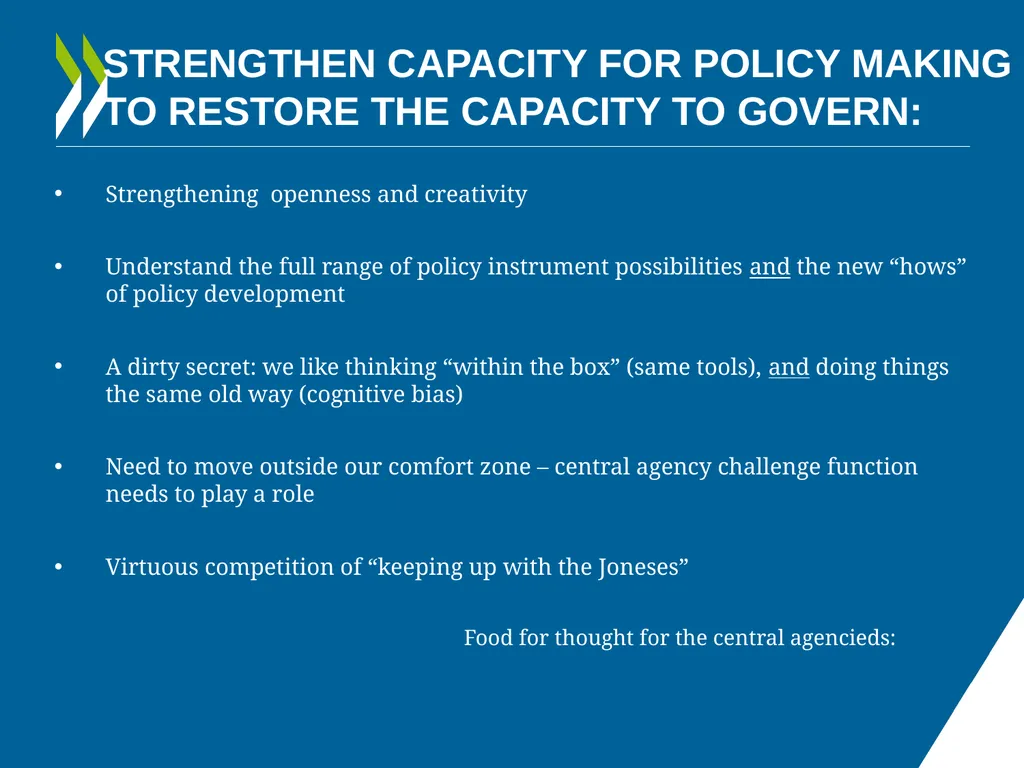
Strengthen capacity for policy making to restore the capacity to govern: Strengthening openness and creativity
Understand the full range of policy instrument possibilities and the new “hows” of policy development
A dirty secret: we like thinking “within the box” (same tools), and doing things the same old way (cognitive bias)
Need to move outside our comfort zone – central agency challenge function needs to play a role
Virtuous competition of “keeping up with the Joneses”