Inalienability: restricting property rights in cultural heritage Dr Charlotte Woodhead Warwick Law School, University of Warwick Summary of talk Given the overall importance of cultural heritage to a variety of different communities over
"Inalienability: restricting property rights in" is the property of its rightful owner. Permission is granted to
download and print the materials on this website for personal, non-commercial use only, and to display it
on your personal computer provided you do not modify the materials and that you retain all copyright
notices contained in the materials. By downloading content from our website, you accept the terms of this
agreement.
Presentation Transcript
01
Inalienability: restricting property rights in cultural heritage Dr Charlotte Woodhead
Warwick Law School, University of Warwick<br>
02
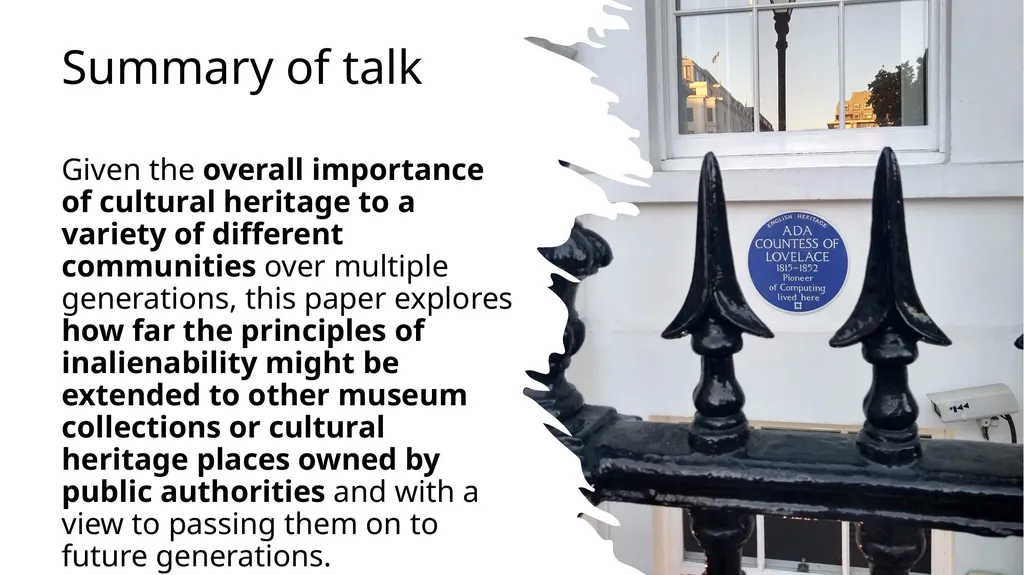
Summary of talk Given the overall importance of cultural heritage to a variety of different communities over multiple generations, this paper explores how far the principles of inalienability might be extended to other museum collections or cultural heritage places owned by public authorities and with a view to passing them on to future generations.<br>
03
Outline of talk Identify why there may be restrictions relating to ownership of heritage
Outline of qualifications on ownership
Unpackage inalienability
Examples of de jure and de facto inalienability
Situations where inalienable property might be relevant
Conclusions<br>
04
Heritage and the public interest Importance to communities, sense of identity, place and memory.
Avoidance of physical and intangible harm to places and objects (and their settings/context) – linked with concern about passing on to future generations.
Desire to maintain associations.<br>
05
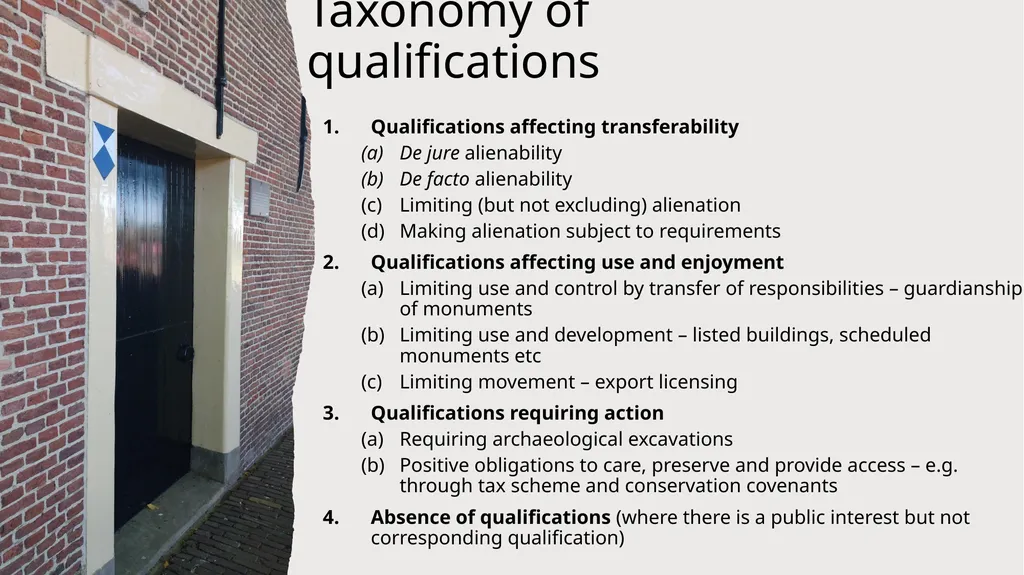
Taxonomy of qualifications Qualifications affecting transferability
De jure alienability
De facto alienability
Limiting (but not excluding) alienation
Making alienation subject to requirements
Qualifications affecting use and enjoyment
Limiting use and control by transfer of responsibilities – guardianship of monuments
Limiting use and development – listed buildings, scheduled monuments etc
Limiting movement – export licensing
Qualifications requiring action
Requiring archaeological excavations
Positive obligations to care, preserve and provide access – e.g. through tax scheme and conservation covenants
Absence of qualifications (where there is a public interest but not corresponding qualification)<br>
06
Inalienable (adj.) Not alienable; that cannot be alienated or transferred from its present ownership or relation [OED Online]<br>
07
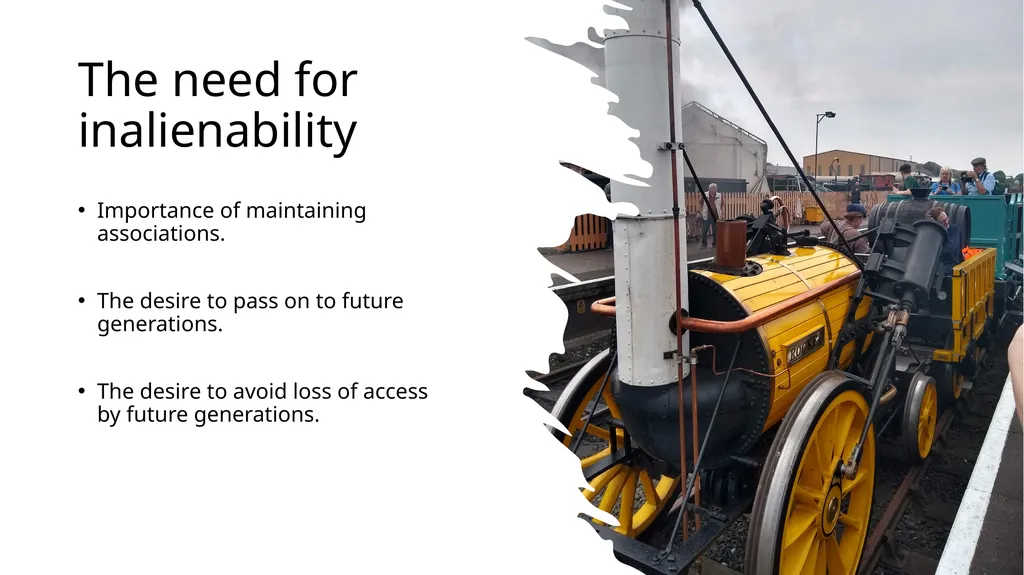
The need for inalienability Importance of maintaining associations.
The desire to pass on to future generations.
The desire to avoid loss of access by future generations.<br>
08
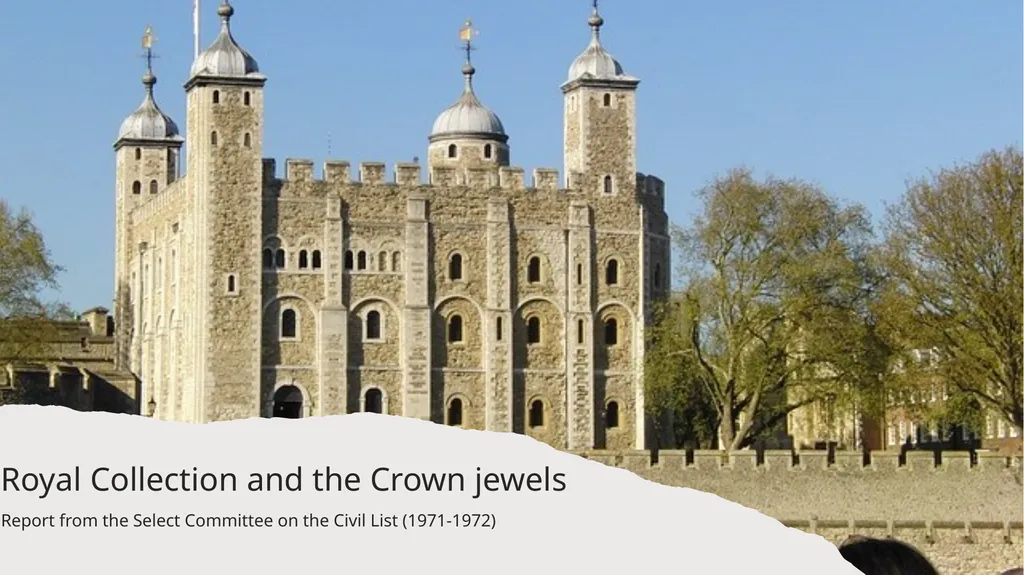
Royal Collection and the Crown jewels Report from the Select Committee on the Civil List (1971-1972)<br>
09
Provisions relating to inalienable land National Trust Act 1907, section 21 National Trust Act 1939, section 8<br>
10
Background: the National Trust 1894 – incorporated as an association not for profit under the Companies Acts (liability limited by guarantee)<br>
11
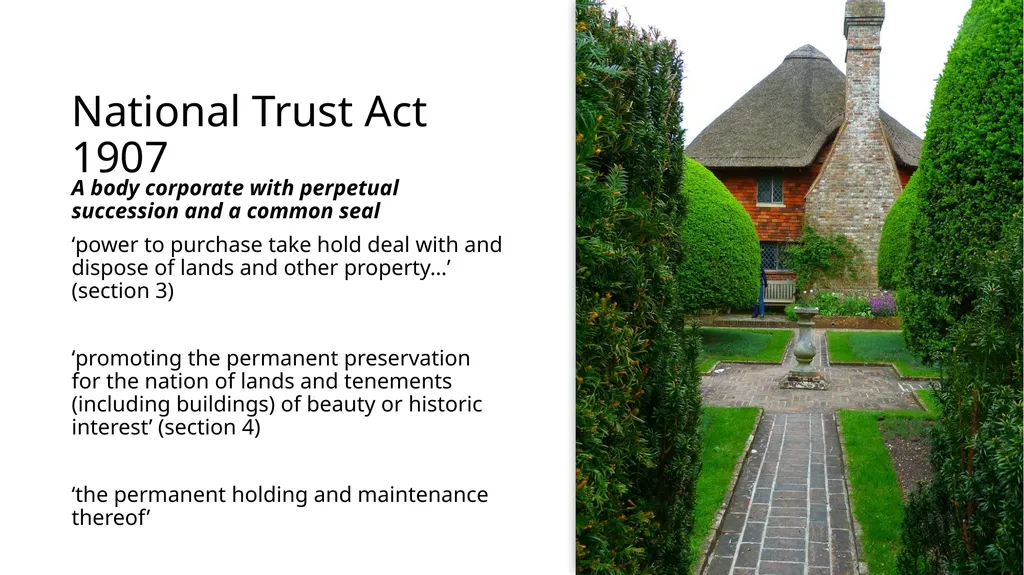
National Trust Act 1907 A body corporate with perpetual succession and a common seal
‘power to purchase take hold deal with and dispose of lands and other property…’ (section 3)
‘promoting the permanent preservation for the nation of lands and tenements (including buildings) of beauty or historic interest’ (section 4)
‘the permanent holding and maintenance thereof’<br>
12
National Trust Act 1907, section 21 Specified properties in the schedule which ‘shall not be chargeable with any debts or liabilities of the National Trust and shall be inalienable’ (section 21(1).
‘the Board of Trustees may by resolution determine that such lands or tenements…are…to be held for the benefit of the nation…and shall be inalienable’. (section 21(2) (as amended by National Trust Act 1971, s. 27)<br>
13
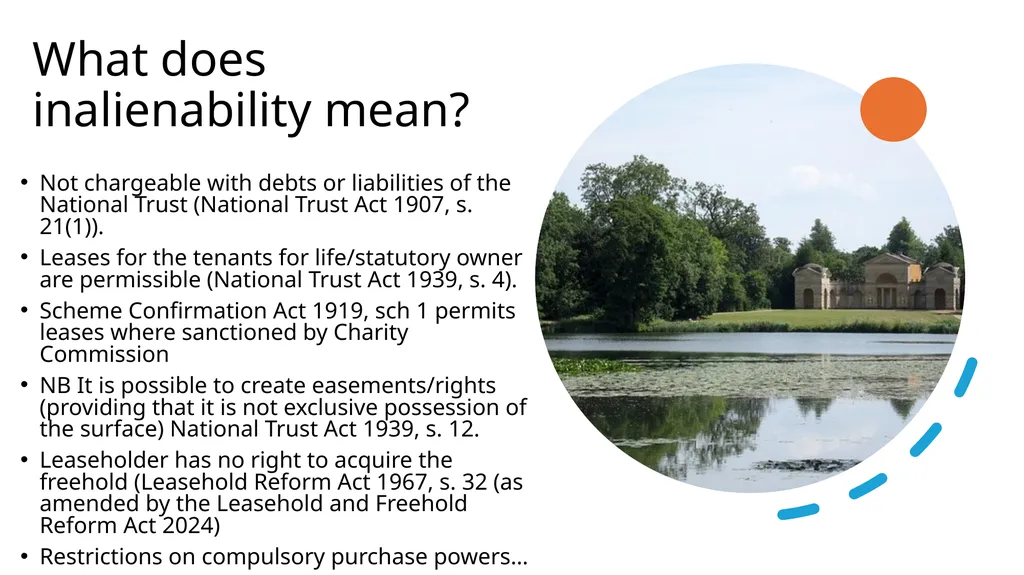
What does inalienability mean? Not chargeable with debts or liabilities of the National Trust (National Trust Act 1907, s. 21(1)).
Leases for the tenants for life/statutory owner are permissible (National Trust Act 1939, s. 4).
Scheme Confirmation Act 1919, sch 1 permits leases where sanctioned by Charity Commission
NB It is possible to create easements/rights (providing that it is not exclusive possession of the surface) National Trust Act 1939, s. 12.
Leaseholder has no right to acquire the freehold (Leasehold Reform Act 1967, s. 32 (as amended by the Leasehold and Freehold Reform Act 2024)
Restrictions on compulsory purchase powers…<br>
14
Compulsory purchase Compulsory purchase of National Trust inalienable land subject to a special parliamentary procedure where the National Trust objects
Acquisition of Land Act 1981, section 5(1)
Planning Act 2008, ss.130
Statutory Orders (Special Procedure) Act 1945<br>
15
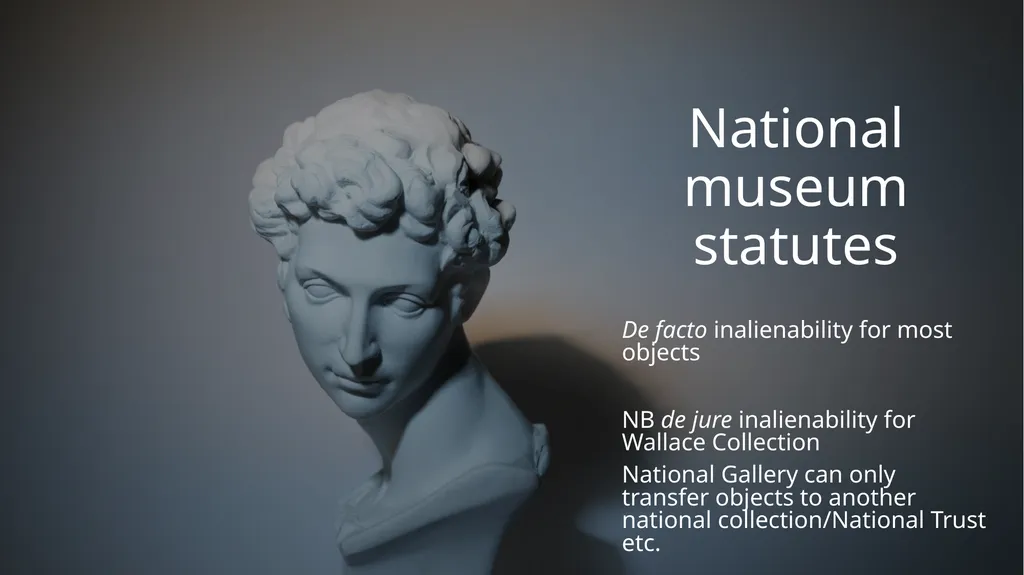
National museum statutes De facto inalienability for most objects
NB de jure inalienability for Wallace Collection
National Gallery can only transfer objects to another national collection/National Trust etc.<br>
16
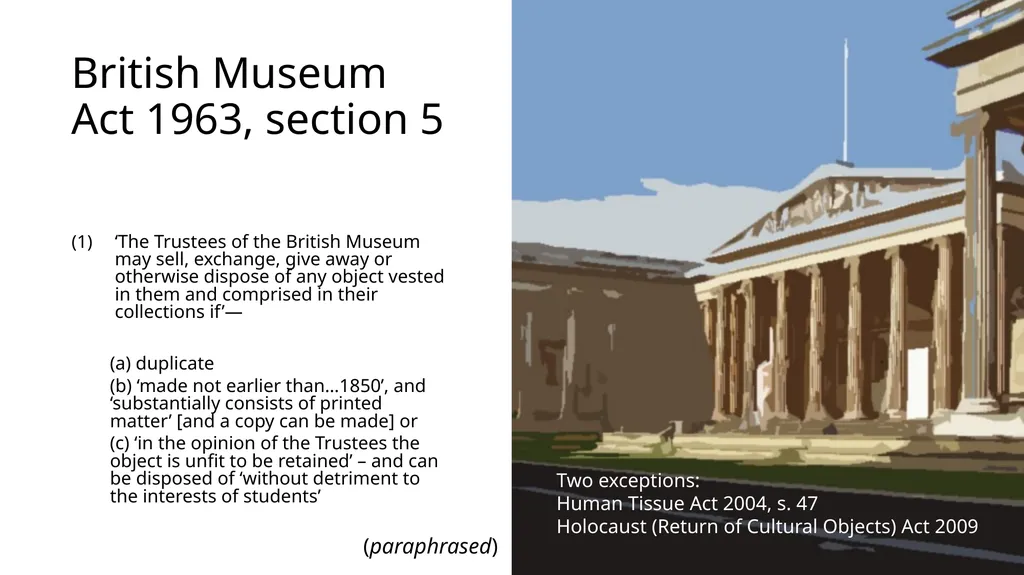
British Museum Act 1963, section 5 ‘The Trustees of the British Museum may sell, exchange, give away or otherwise dispose of any object vested in them and comprised in their collections if’—
(a) duplicate
(b) ‘made not earlier than…1850’, and ‘substantially consists of printed matter’ [and a copy can be made] or
(c) ‘in the opinion of the Trustees the object is unfit to be retained’ – and can be disposed of ‘without detriment to the interests of students’ (paraphrased) Two exceptions:
Human Tissue Act 2004, s. 47
Holocaust (Return of Cultural Objects) Act 2009<br>
17
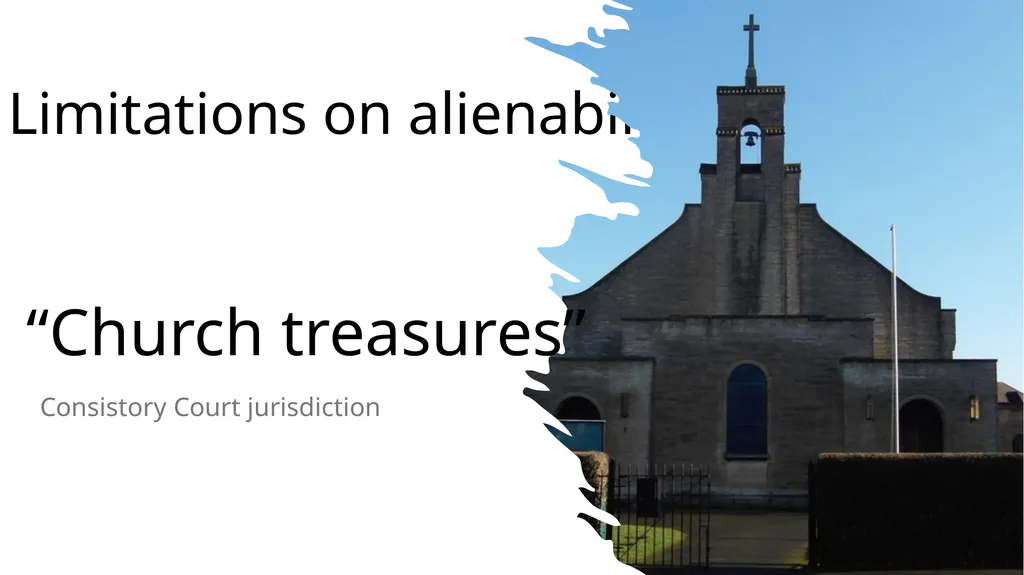
Limitations on alienability Consistory Court jurisdiction “Church treasures”<br>
18
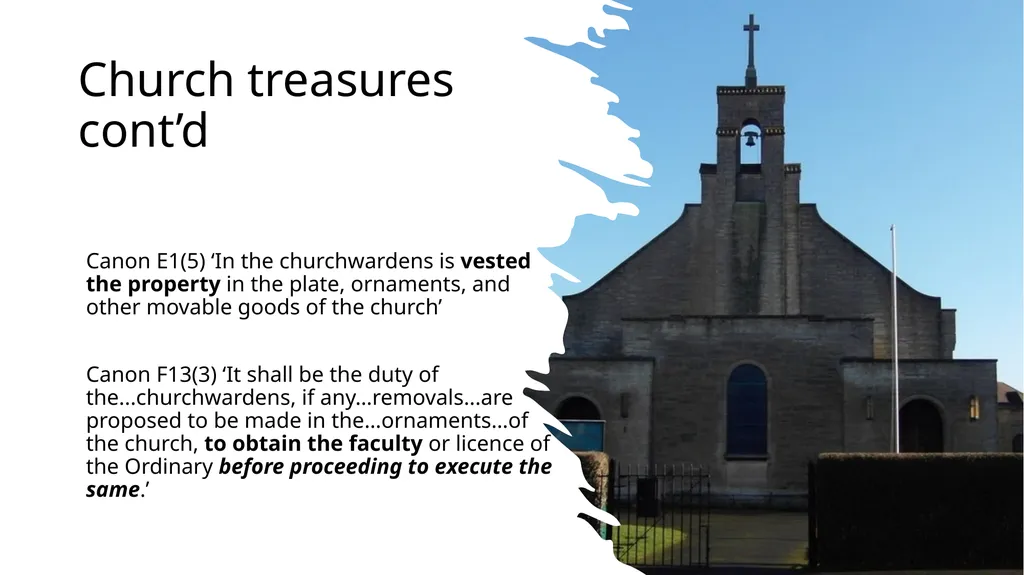
Church treasures cont’d Canon E1(5) ‘In the churchwardens is vested the property in the plate, ornaments, and other movable goods of the church’
Canon F13(3) ‘It shall be the duty of the...churchwardens, if any…removals...are proposed to be made in the…ornaments…of the church, to obtain the faculty or licence of the Ordinary before proceeding to execute the same.’<br>
19
Other uses for inalienable cultural heritage To recognise more locally important cultural heritage
Ensure that important heritage places are not sold and lost to future generations - e.g. those owned by local authorities.<br>
20
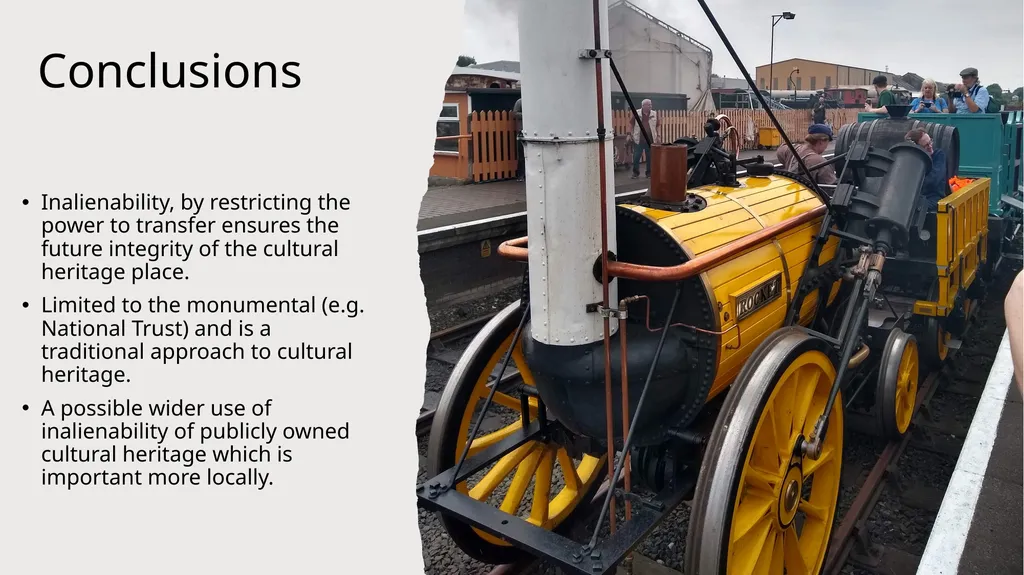
Conclusions Inalienability, by restricting the power to transfer ensures the future integrity of the cultural heritage place.
Limited to the monumental (e.g. National Trust) and is a traditional approach to cultural heritage.
A possible wider use of inalienability of publicly owned cultural heritage which is important more locally.<br>