
Incident Command System Overview Incident Command
Description: Incident Command System Overview Incident Command System On-scene incident management Standard terminology Modular, flexible and adaptable Adjusts to incident size and complexity Multiple agency cooperation Efficient and effective
Related Topics
Download Presentation
"Incident Command System Overview Incident Command" is the property of its rightful owner. Permission is granted to download and print the materials on this website for personal, non-commercial use only, and to display it on your personal computer provided you do not modify the materials and that you retain all copyright notices contained in the materials. By downloading content from our website, you accept the terms of this agreement.
Presentation Transcript
slide1. Incident Command System Overview<br>
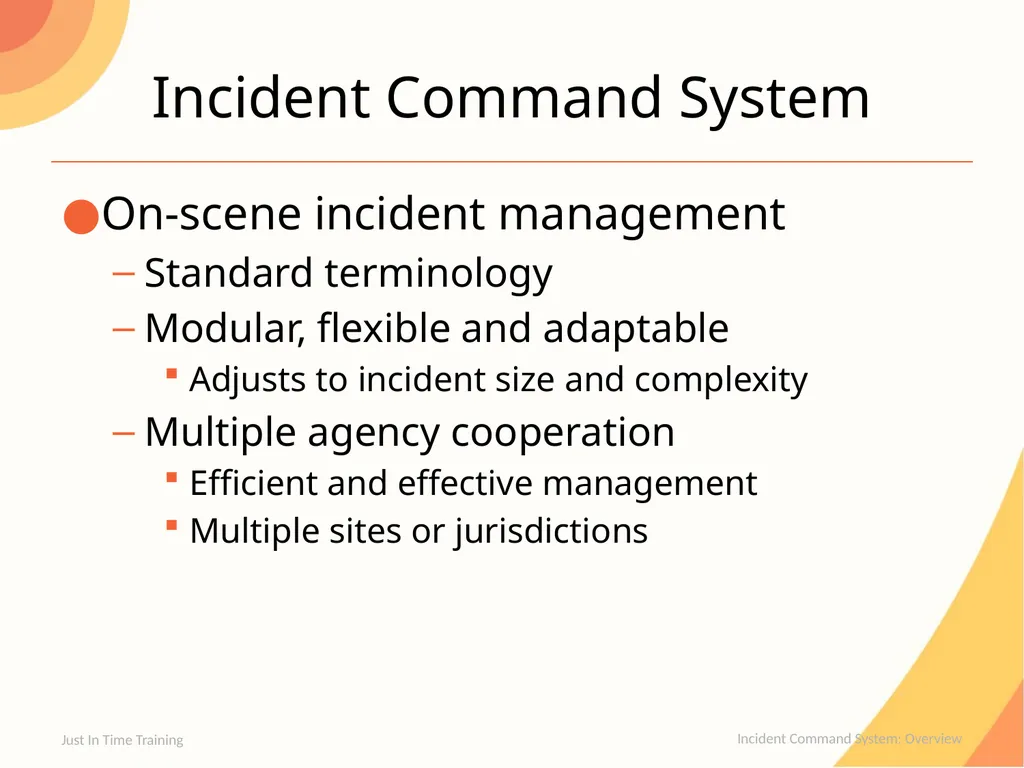
slide2. Incident Command System On-scene incident management
Standard terminology
Modular, flexible and adaptable
Adjusts to incident size and complexity
Multiple agency cooperation
Efficient and effective management
Multiple sites or jurisdictions Just In Time Training Incident Command System: Overview<br>
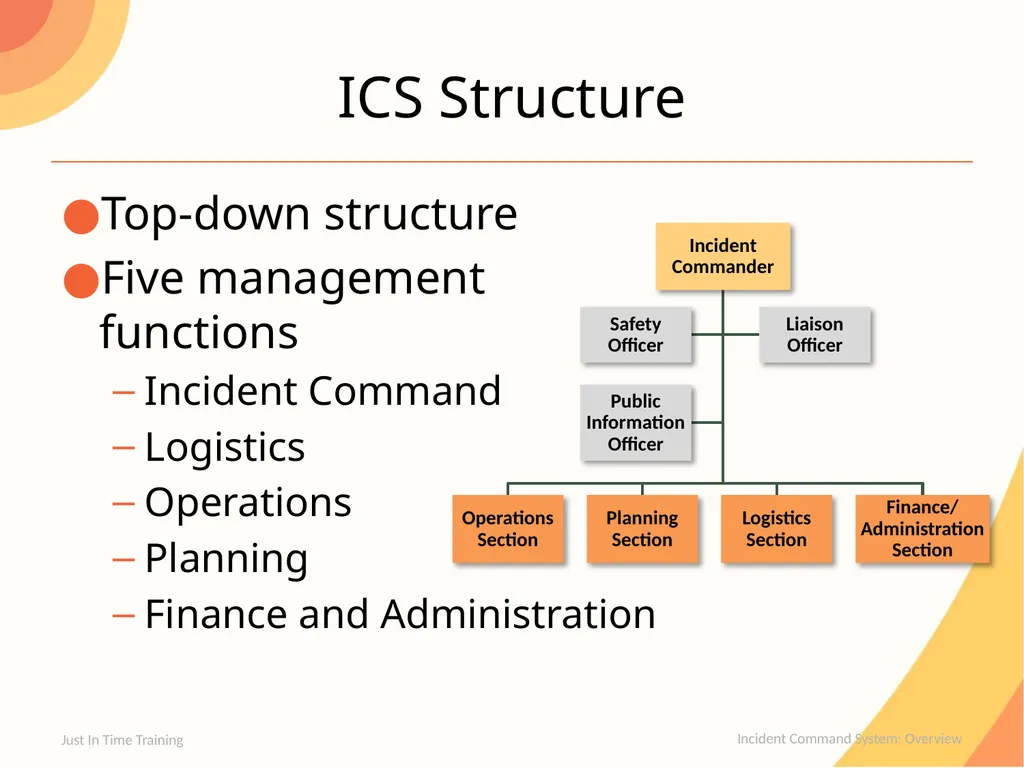
slide3. ICS Structure Top-down structure
Five management functions
Incident Command
Logistics
Operations
Planning
Finance and Administration Just In Time Training Incident Command System: Overview<br>
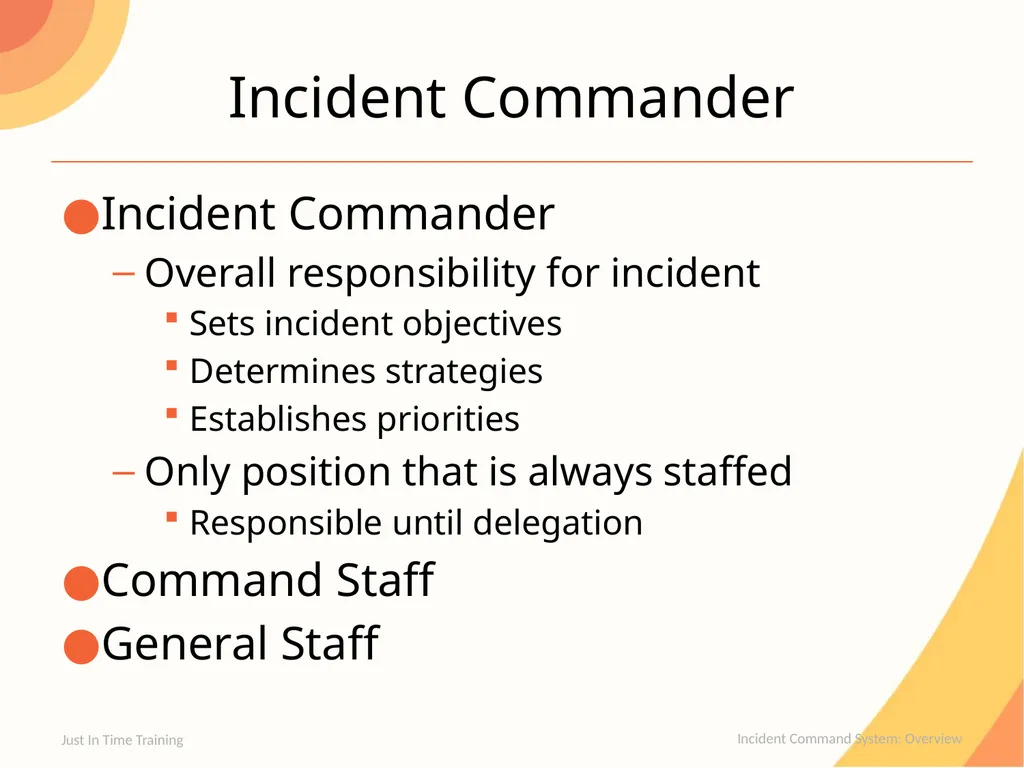
slide4. Incident Commander Incident Commander
Overall responsibility for incident
Sets incident objectives
Determines strategies
Establishes priorities
Only position that is always staffed
Responsible until delegation
Command Staff
General Staff Just In Time Training Incident Command System: Overview<br>
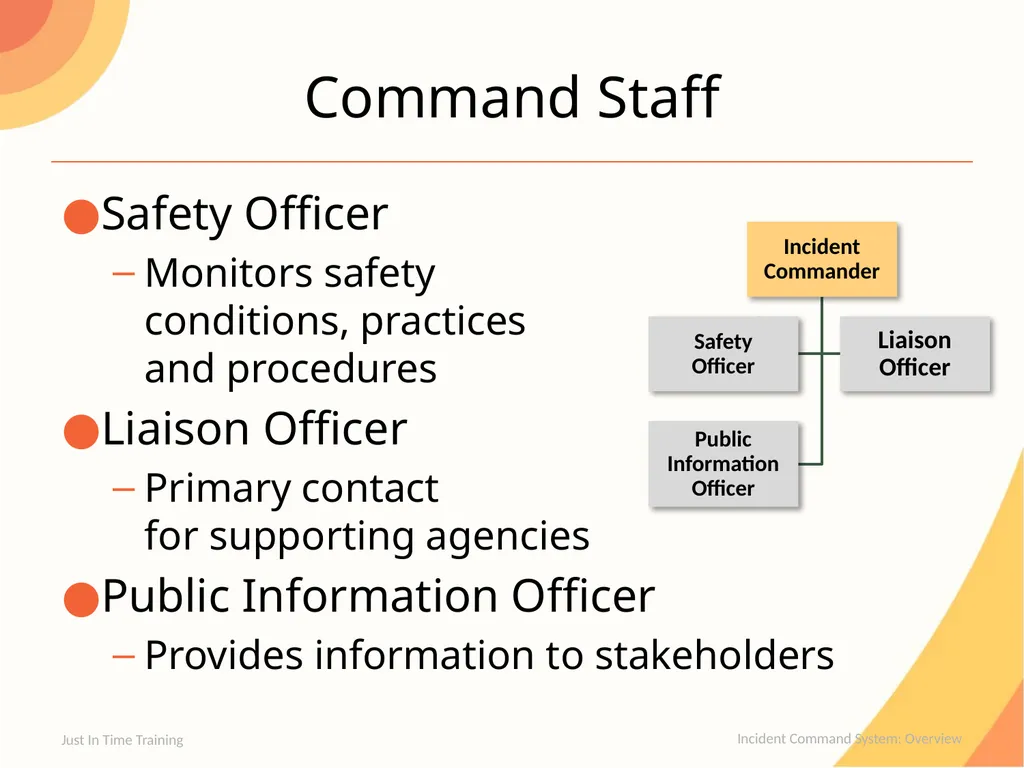
slide5. Command Staff Safety Officer
Monitors safety conditions, practices and procedures
Liaison Officer
Primary contact for supporting agencies
Public Information Officer
Provides information to stakeholders Just In Time Training Incident Command System: Overview<br>
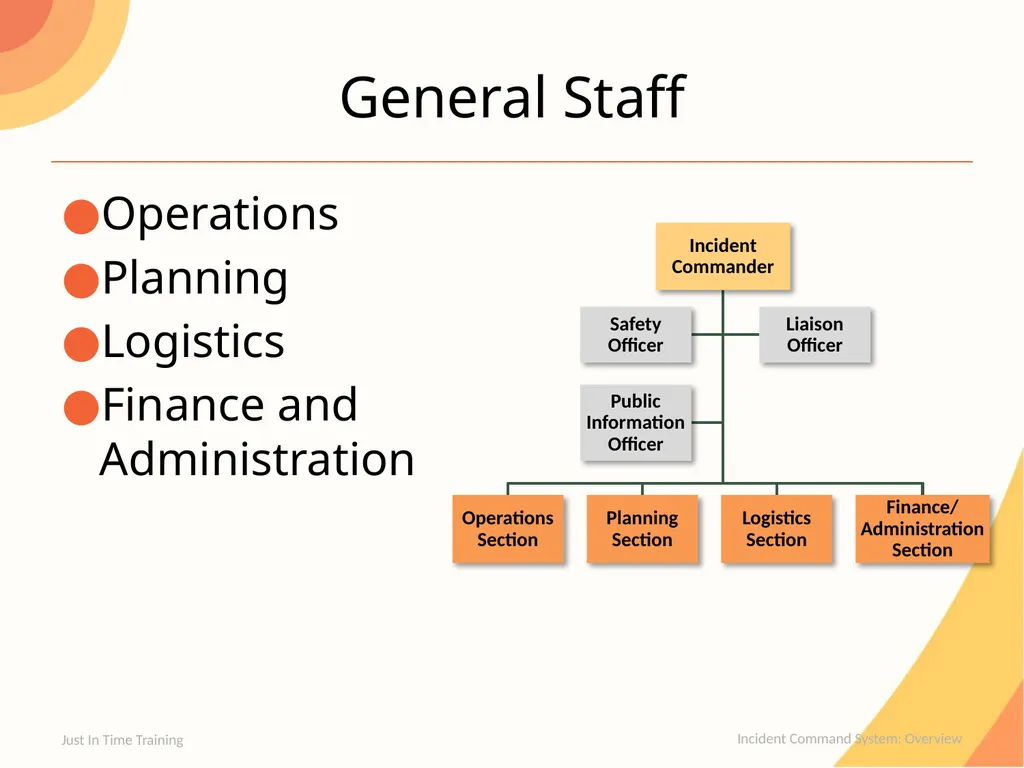
slide6. General Staff Operations
Planning
Logistics
Finance and Administration Just In Time Training Incident Command System: Overview<br>
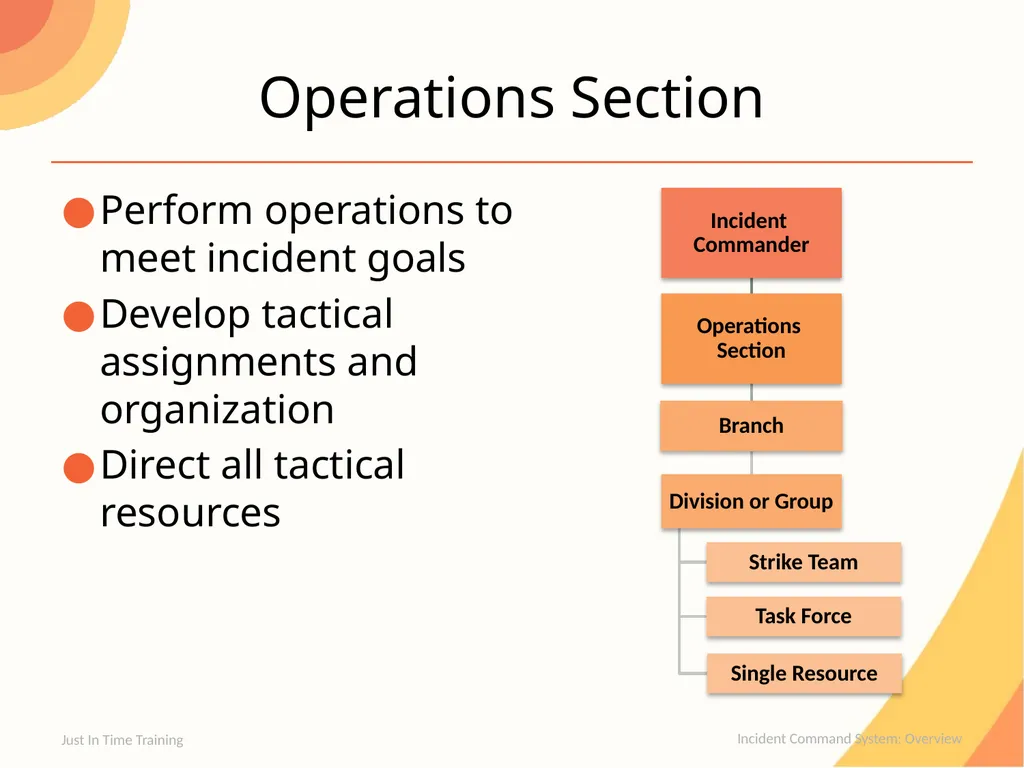
slide7. Operations Section Perform operations to meet incident goals
Develop tactical assignments and organization
Direct all tactical resources Just In Time Training Incident Command System: Overview<br>
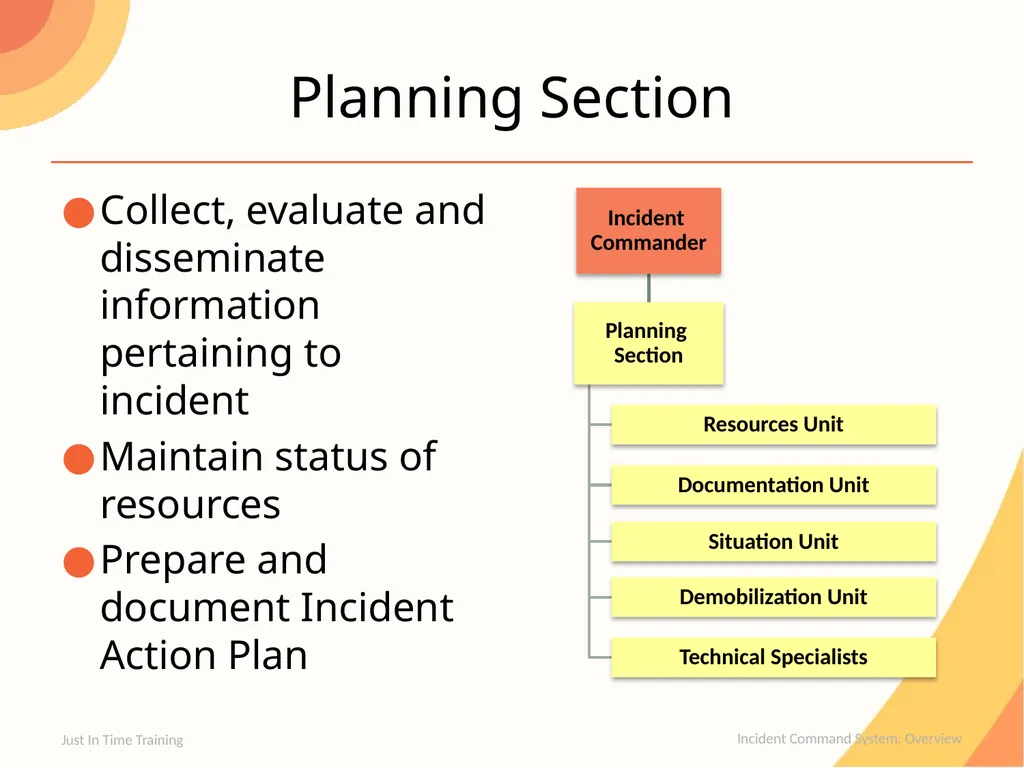
slide8. Planning Section Collect, evaluate and disseminate information pertaining to incident
Maintain status of resources
Prepare and document Incident Action Plan Just In Time Training Incident Command System: Overview<br>
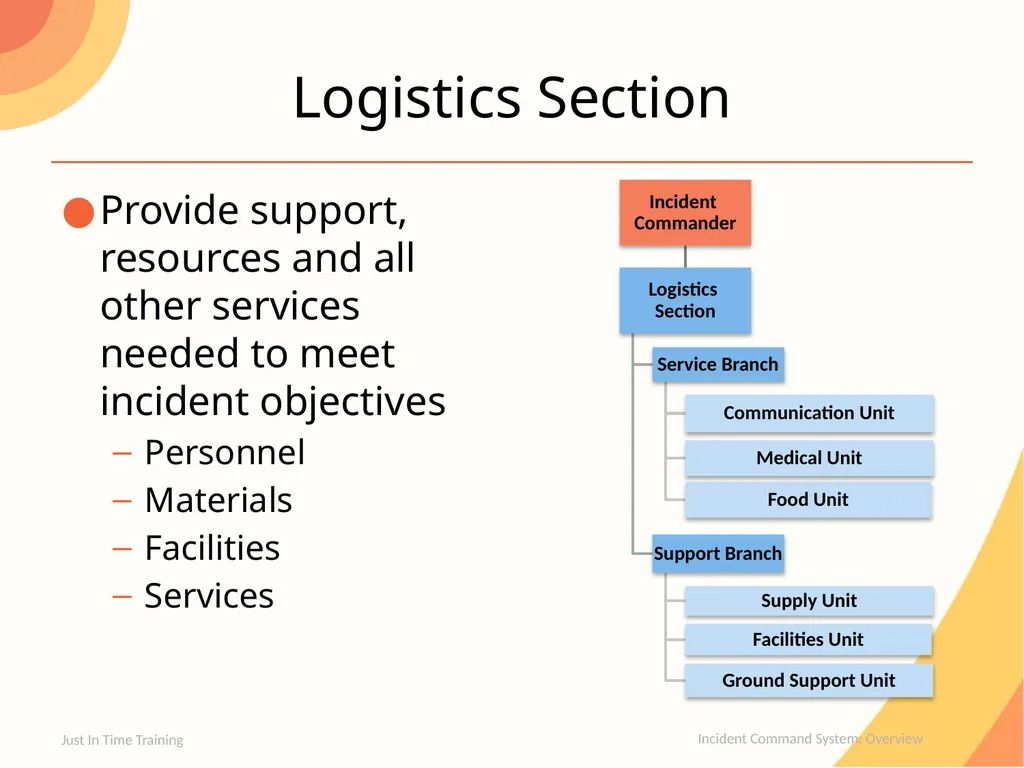
slide9. Logistics Section Provide support, resources and all other services needed to meet incident objectives
Personnel
Materials
Facilities
Services Just In Time Training Incident Command System: Overview<br>
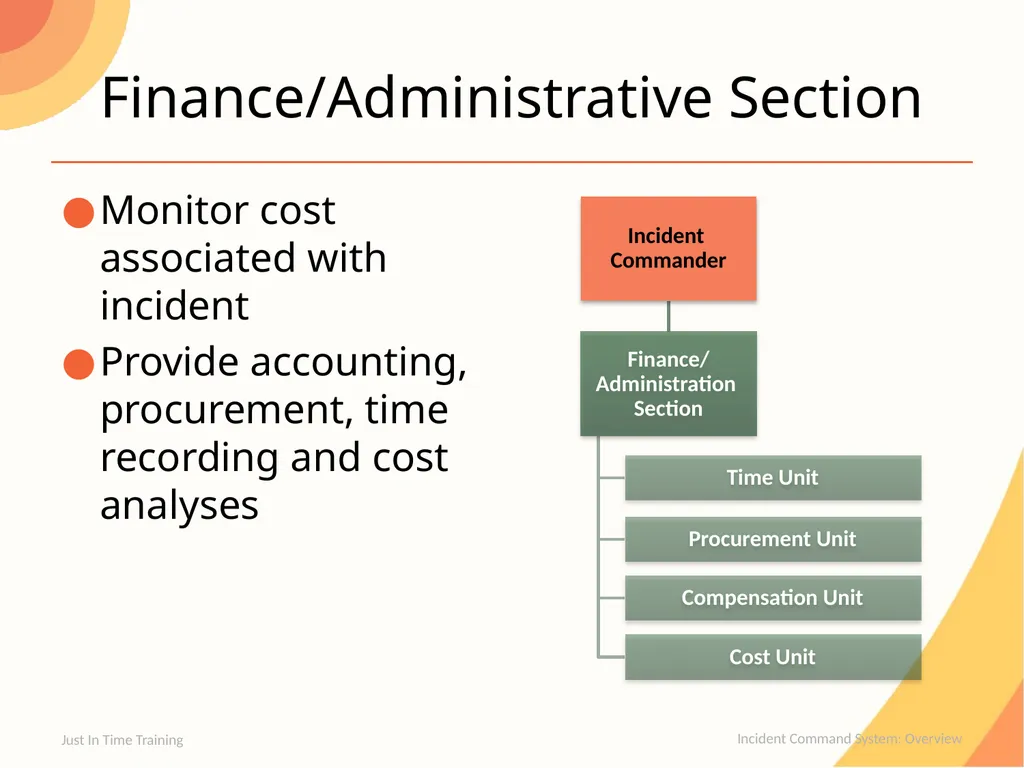
slide10. Finance/Administrative Section Monitor cost associated with incident
Provide accounting, procurement, time recording and cost analyses Just In Time Training Incident Command System: Overview<br>
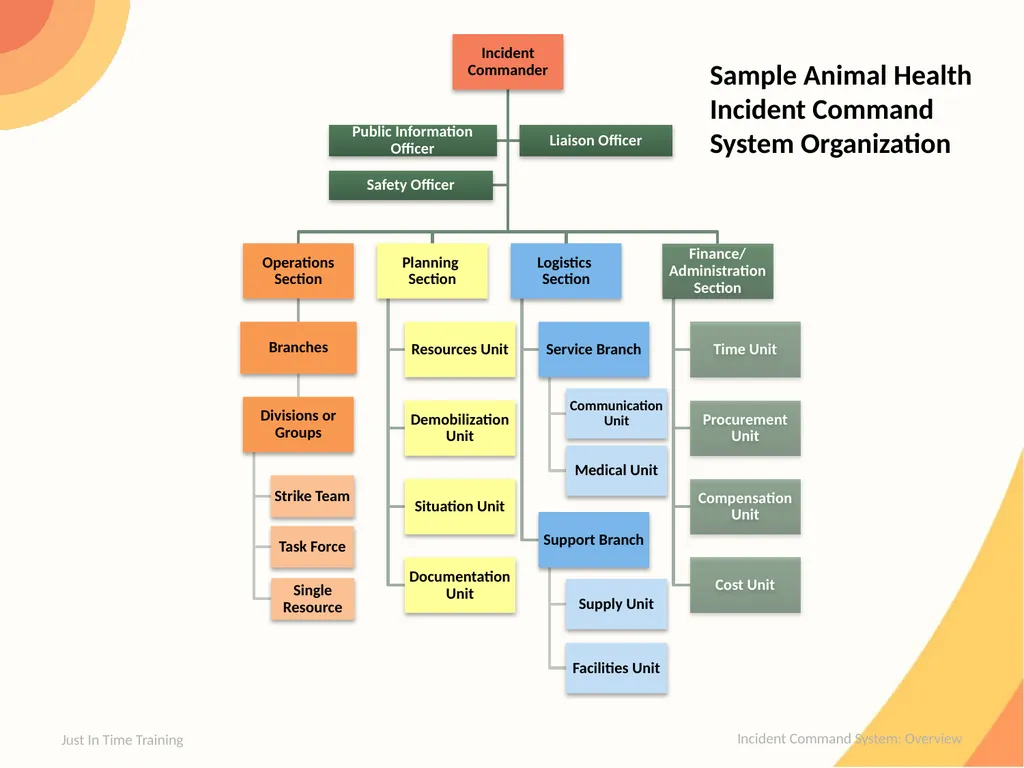
slide11. Just In Time Training Incident Command System: Overview Sample Animal Health Incident Command System Organization<br>
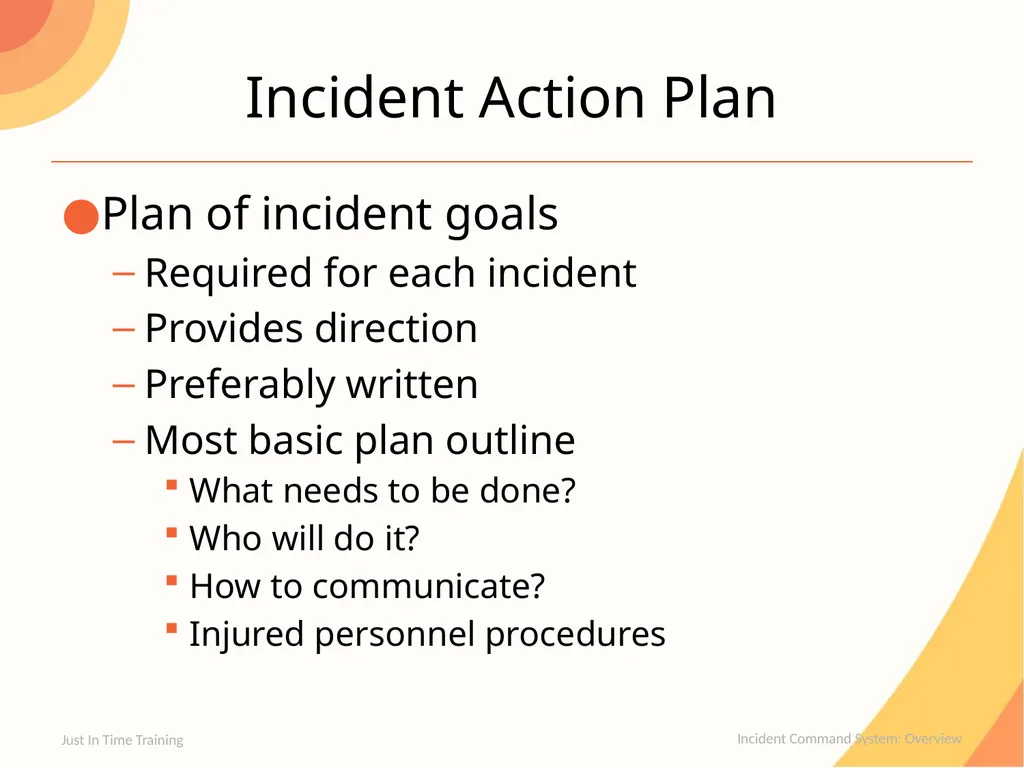
slide12. Incident Action Plan Plan of incident goals
Required for each incident
Provides direction
Preferably written
Most basic plan outline
What needs to be done?
Who will do it?
How to communicate?
Injured personnel procedures Just In Time Training Incident Command System: Overview<br>
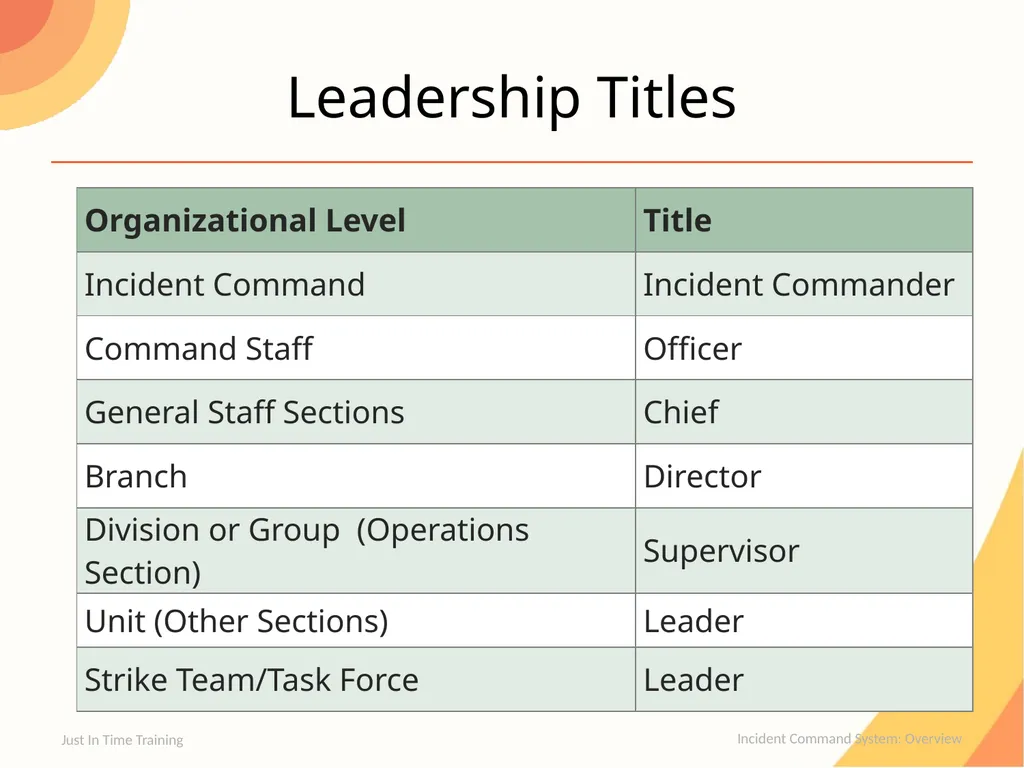
slide13. Leadership Titles Just In Time Training Incident Command System: Overview<br>
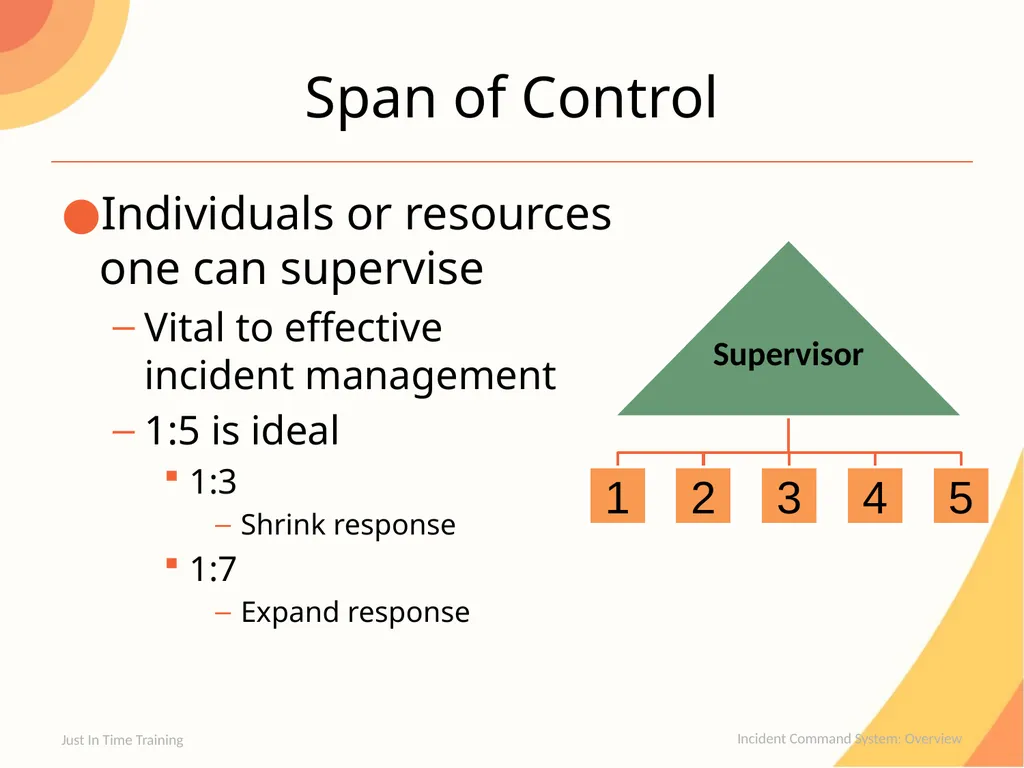
slide14. Span of Control Individuals or resources one can supervise
Vital to effective incident management
1:5 is ideal
1:3
Shrink response
1:7
Expand response Just In Time Training Incident Command System: Overview<br>
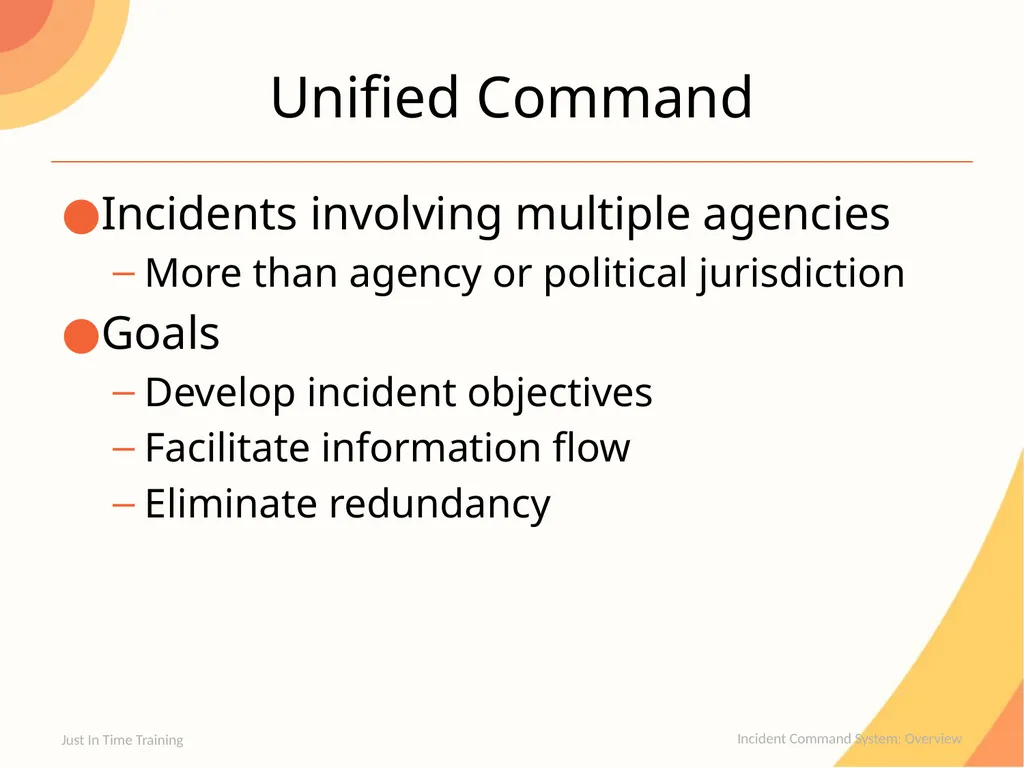
slide15. Unified Command Incidents involving multiple agencies
More than agency or political jurisdiction
Goals
Develop incident objectives
Facilitate information flow
Eliminate redundancy Just In Time Training Incident Command System: Overview<br>
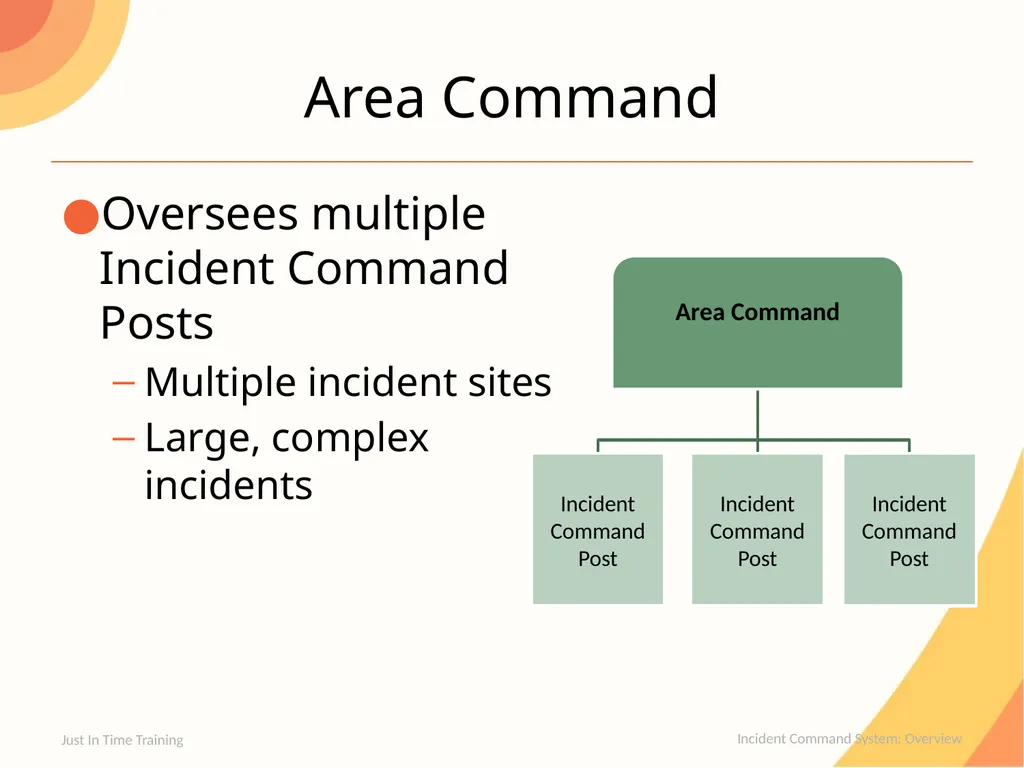
slide16. Area Command Oversees multiple Incident Command Posts
Multiple incident sites
Large, complex incidents Just In Time Training Incident Command System: Overview<br>
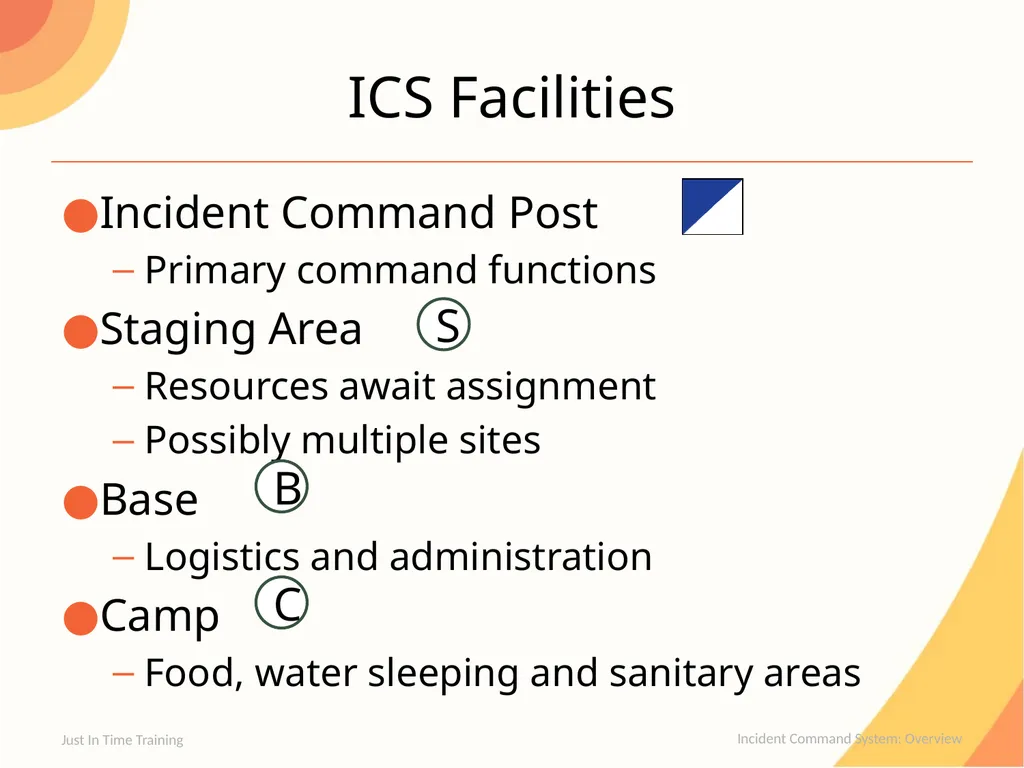
slide17. ICS Facilities Incident Command Post
Primary command functions
Staging Area
Resources await assignment
Possibly multiple sites
Base
Logistics and administration
Camp
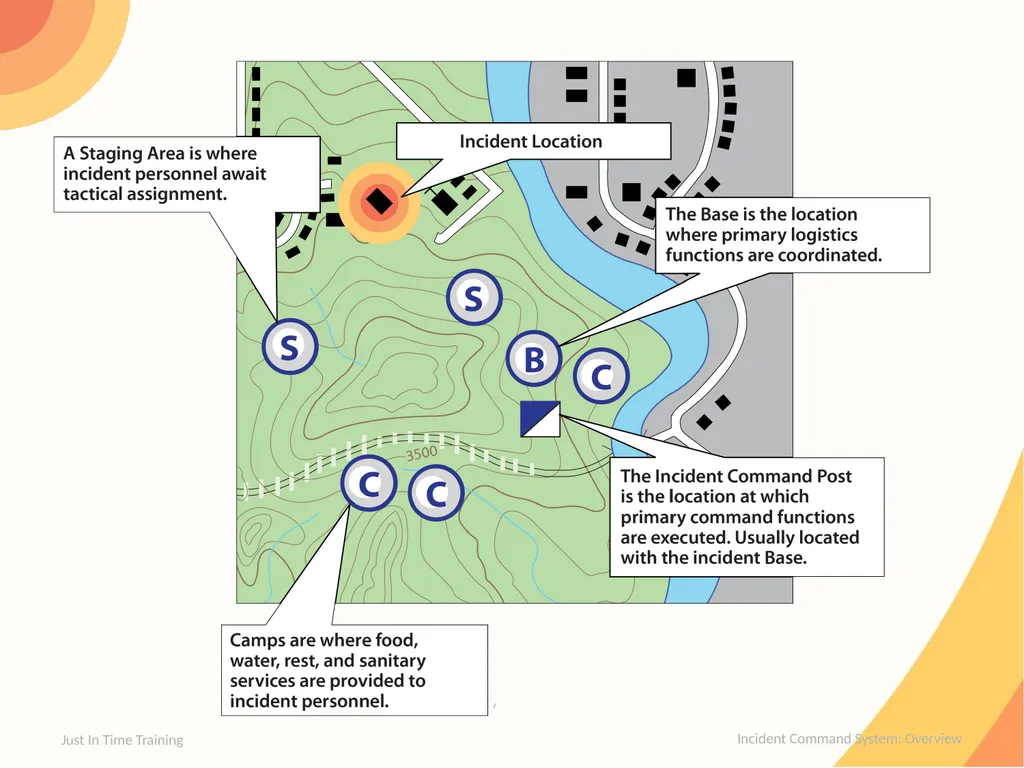
Food, water sleeping and sanitary areas Just In Time Training Incident Command System: Overview S B C<br>
slide18. Just In Time Training Incident Command System: Overview<br>
slide19. On the Incident Scene Incident command established
Command post identified
Call up ICS staff as needed
Information to responders/stakeholders
Incident Response Plan
Utilize local plans
Assessments & documentation
Evaluation Just In Time Training Incident Command System: Overview<br>
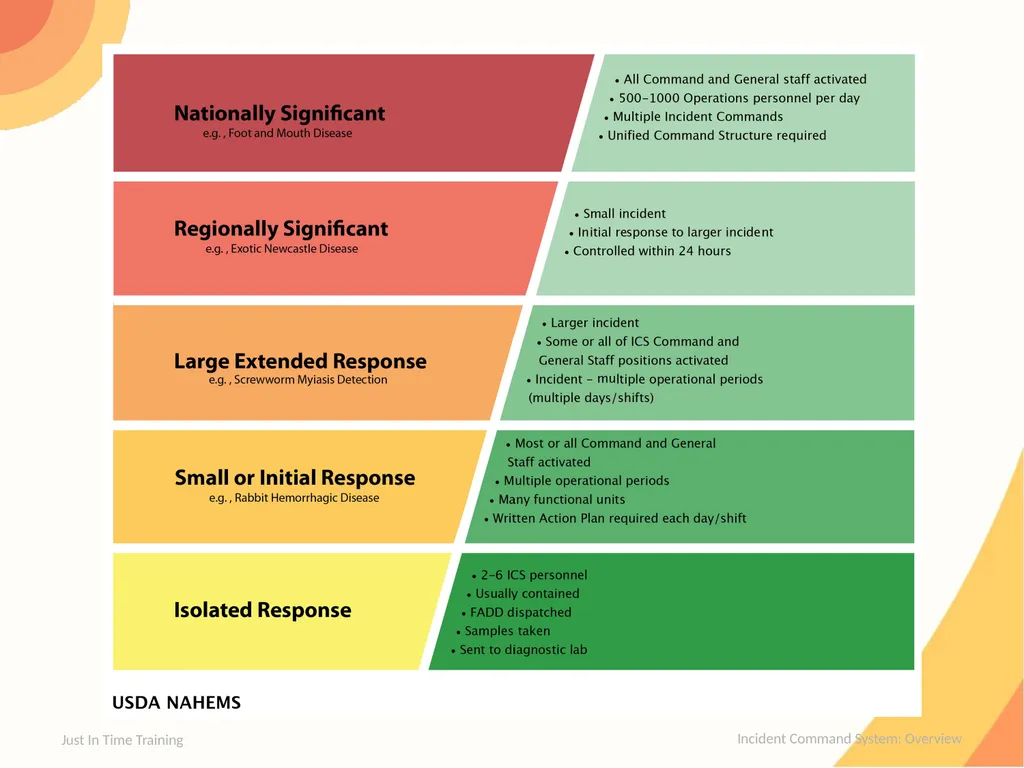
slide20. Just In Time Training Incident Command System: Overview<br>
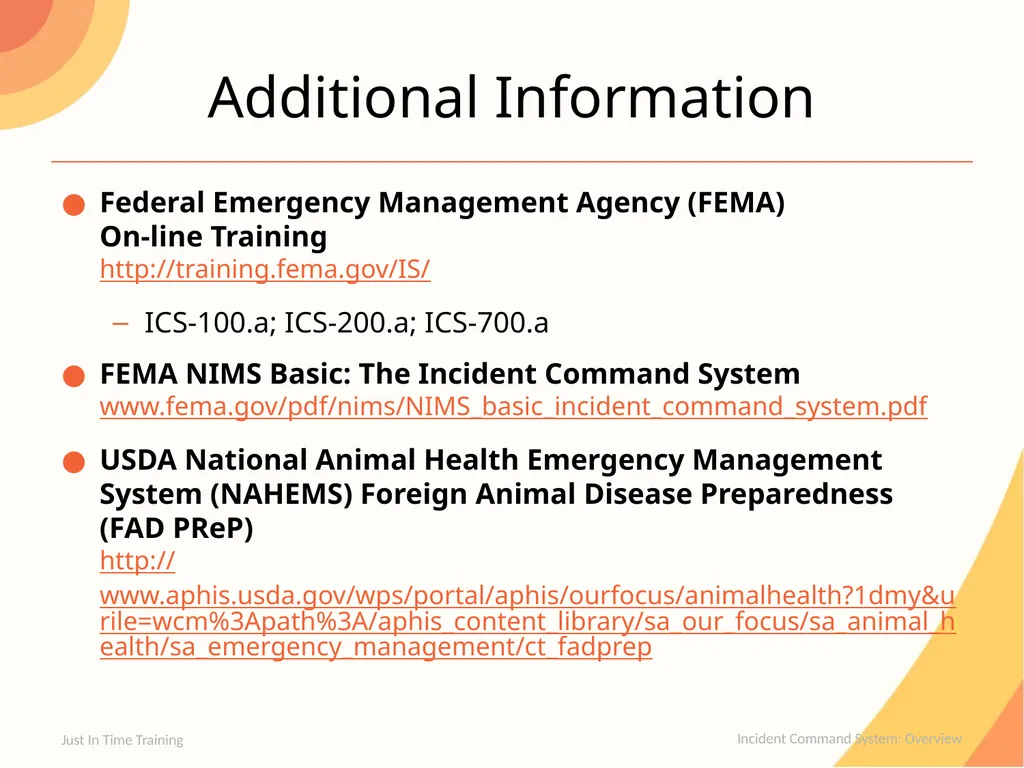
slide21. Additional Information Federal Emergency Management Agency (FEMA) On-line Training http://training.fema.gov/IS/
ICS-100.a; ICS-200.a; ICS-700.a
FEMA NIMS Basic: The Incident Command System www.fema.gov/pdf/nims/NIMS_basic_incident_command_system.pdf
USDA National Animal Health Emergency Management System (NAHEMS) Foreign Animal Disease Preparedness (FAD PReP) http://www.aphis.usda.gov/wps/portal/aphis/ourfocus/animalhealth?1dmy&urile=wcm%3Apath%3A/aphis_content_library/sa_our_focus/sa_animal_health/sa_emergency_management/ct_fadprep Just In Time Training Incident Command System: Overview<br>
slide22. Acknowledgments Development of this presentation was by the Center for Food Security and Public Health at Iowa State University through funding from the Multi-State Partnership for Security in Agriculture Authors: Dan Taylor, DVM, MPH; Glenda Dvorak, DVM, MPH, DACVPM
Reviewers: Janice Mogan, DVM; Leslie Cole, DVM<br>
slide2. Incident Command System On-scene incident management
Standard terminology
Modular, flexible and adaptable
Adjusts to incident size and complexity
Multiple agency cooperation
Efficient and effective management
Multiple sites or jurisdictions Just In Time Training Incident Command System: Overview<br>
slide3. ICS Structure Top-down structure
Five management functions
Incident Command
Logistics
Operations
Planning
Finance and Administration Just In Time Training Incident Command System: Overview<br>
slide4. Incident Commander Incident Commander
Overall responsibility for incident
Sets incident objectives
Determines strategies
Establishes priorities
Only position that is always staffed
Responsible until delegation
Command Staff
General Staff Just In Time Training Incident Command System: Overview<br>
slide5. Command Staff Safety Officer
Monitors safety conditions, practices and procedures
Liaison Officer
Primary contact for supporting agencies
Public Information Officer
Provides information to stakeholders Just In Time Training Incident Command System: Overview<br>
slide6. General Staff Operations
Planning
Logistics
Finance and Administration Just In Time Training Incident Command System: Overview<br>
slide7. Operations Section Perform operations to meet incident goals
Develop tactical assignments and organization
Direct all tactical resources Just In Time Training Incident Command System: Overview<br>
slide8. Planning Section Collect, evaluate and disseminate information pertaining to incident
Maintain status of resources
Prepare and document Incident Action Plan Just In Time Training Incident Command System: Overview<br>
slide9. Logistics Section Provide support, resources and all other services needed to meet incident objectives
Personnel
Materials
Facilities
Services Just In Time Training Incident Command System: Overview<br>
slide10. Finance/Administrative Section Monitor cost associated with incident
Provide accounting, procurement, time recording and cost analyses Just In Time Training Incident Command System: Overview<br>
slide11. Just In Time Training Incident Command System: Overview Sample Animal Health Incident Command System Organization<br>
slide12. Incident Action Plan Plan of incident goals
Required for each incident
Provides direction
Preferably written
Most basic plan outline
What needs to be done?
Who will do it?
How to communicate?
Injured personnel procedures Just In Time Training Incident Command System: Overview<br>
slide13. Leadership Titles Just In Time Training Incident Command System: Overview<br>
slide14. Span of Control Individuals or resources one can supervise
Vital to effective incident management
1:5 is ideal
1:3
Shrink response
1:7
Expand response Just In Time Training Incident Command System: Overview<br>
slide15. Unified Command Incidents involving multiple agencies
More than agency or political jurisdiction
Goals
Develop incident objectives
Facilitate information flow
Eliminate redundancy Just In Time Training Incident Command System: Overview<br>
slide16. Area Command Oversees multiple Incident Command Posts
Multiple incident sites
Large, complex incidents Just In Time Training Incident Command System: Overview<br>
slide17. ICS Facilities Incident Command Post
Primary command functions
Staging Area
Resources await assignment
Possibly multiple sites
Base
Logistics and administration
Camp
Food, water sleeping and sanitary areas Just In Time Training Incident Command System: Overview S B C<br>
slide18. Just In Time Training Incident Command System: Overview<br>
slide19. On the Incident Scene Incident command established
Command post identified
Call up ICS staff as needed
Information to responders/stakeholders
Incident Response Plan
Utilize local plans
Assessments & documentation
Evaluation Just In Time Training Incident Command System: Overview<br>
slide20. Just In Time Training Incident Command System: Overview<br>
slide21. Additional Information Federal Emergency Management Agency (FEMA) On-line Training http://training.fema.gov/IS/
ICS-100.a; ICS-200.a; ICS-700.a
FEMA NIMS Basic: The Incident Command System www.fema.gov/pdf/nims/NIMS_basic_incident_command_system.pdf
USDA National Animal Health Emergency Management System (NAHEMS) Foreign Animal Disease Preparedness (FAD PReP) http://www.aphis.usda.gov/wps/portal/aphis/ourfocus/animalhealth?1dmy&urile=wcm%3Apath%3A/aphis_content_library/sa_our_focus/sa_animal_health/sa_emergency_management/ct_fadprep Just In Time Training Incident Command System: Overview<br>
slide22. Acknowledgments Development of this presentation was by the Center for Food Security and Public Health at Iowa State University through funding from the Multi-State Partnership for Security in Agriculture Authors: Dan Taylor, DVM, MPH; Glenda Dvorak, DVM, MPH, DACVPM
Reviewers: Janice Mogan, DVM; Leslie Cole, DVM<br>