Inclusion Quality Mark Reinventing Reading: KS3 and Beyond Lord Derby Academy Elizabeth Pope Assistant Headteacher, KS4 PastoralWhole School Attendance Lead elizabethpopelordderbyacademy.co.uk Claire Sergison Assistant
"Inclusion Quality Mark Reinventing Reading: KS3" is the property of its rightful owner. Permission is granted to
download and print the materials on this website for personal, non-commercial use only, and to display it
on your personal computer provided you do not modify the materials and that you retain all copyright
notices contained in the materials. By downloading content from our website, you accept the terms of this
agreement.
Presentation Transcript
01
Inclusion Quality Mark Reinventing Reading: KS3 and Beyond
Lord Derby Academy
Elizabeth Pope – Assistant Headteacher, KS4 Pastoral/Whole School Attendance Lead
elizabethpope@lordderbyacademy.co.uk
Claire Sergison – Assistant Headteacher, Professional Development / Designated Safeguarding Lead
clairesergison@lordderbyacademy.co.uk<br>
02
1100 on roll (18% on SEN register)
46 pupils with an EHCP (4%)
Primary need typically: ASD/SEMH/SLC
56% pupils in receipt of PP
97% White British Lord Derby Academy
Context<br>
03
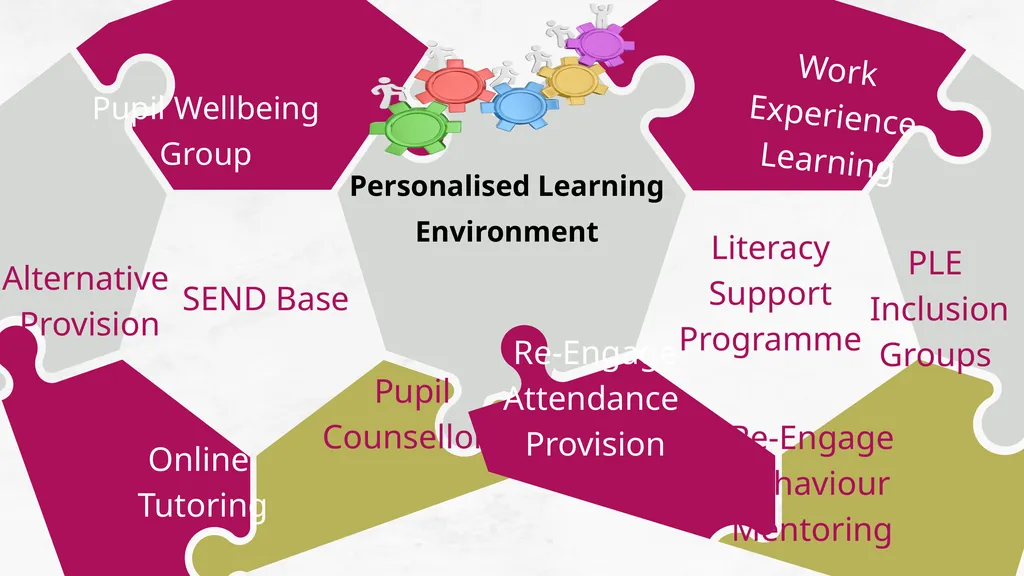
Alternative
Provision Pupil Wellbeing Group PLE
Inclusion Groups Online
Tutoring Pupil Counsellors Work Experience
Learning Literacy Support Programme SEND Base Re-Engage Behaviour Mentoring Re-Engage Attendance
Provision Personalised Learning Environment<br>
To reduce the gap between chronological and reading age across Key Stage 3.
To make reading, oracy and vocabulary instruction an integral part of every lesson across the curriculum.
To support departments in developing disciplinary reading, writing and oracy.<br>
07
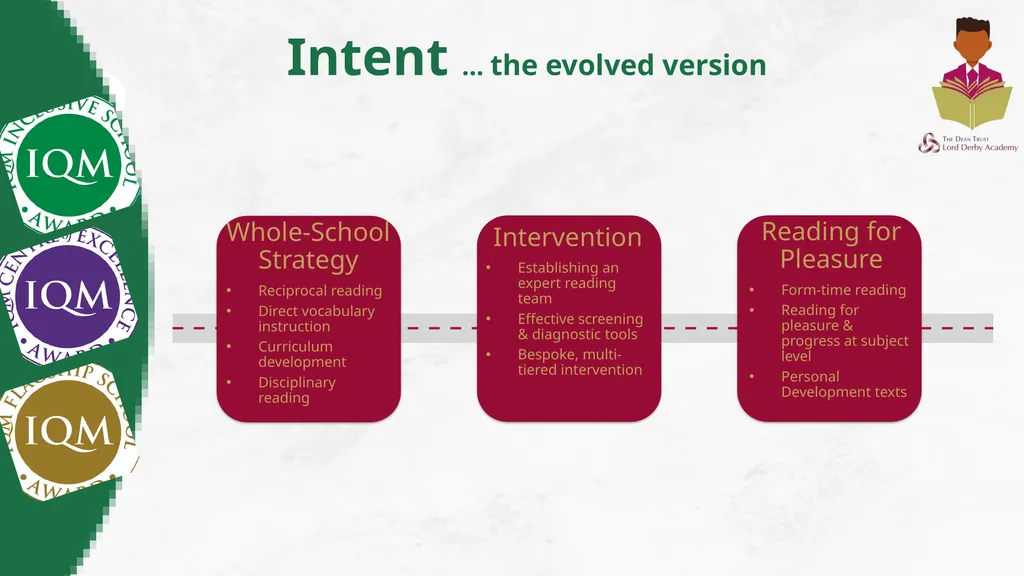
Intent … the evolved version<br>
08
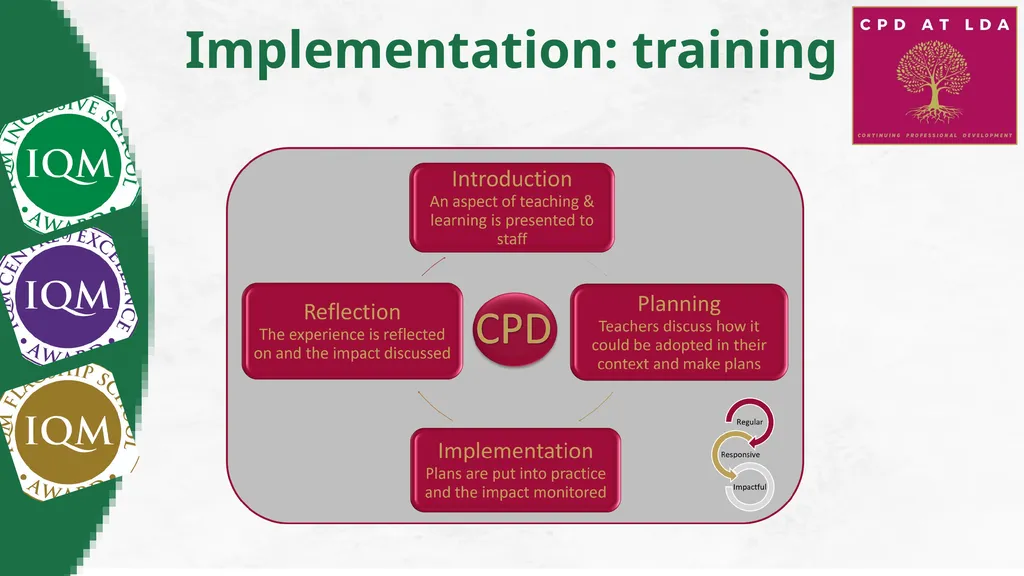
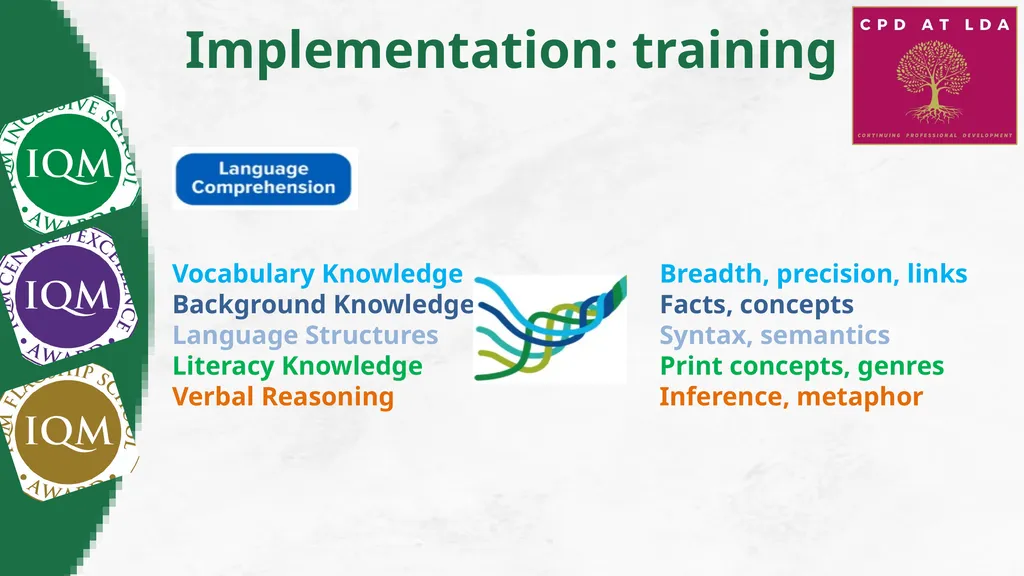
Implementation: training<br>
09
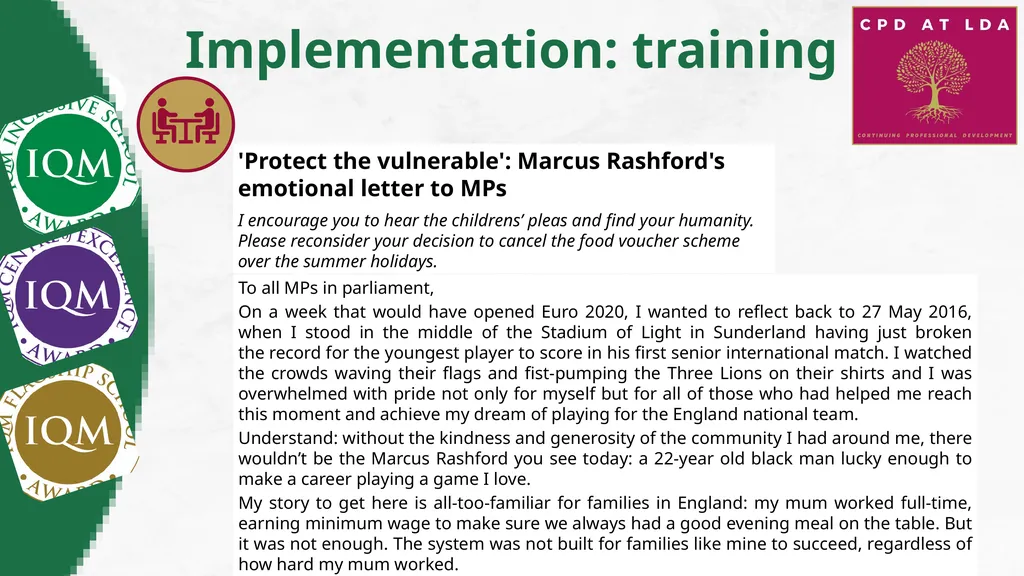
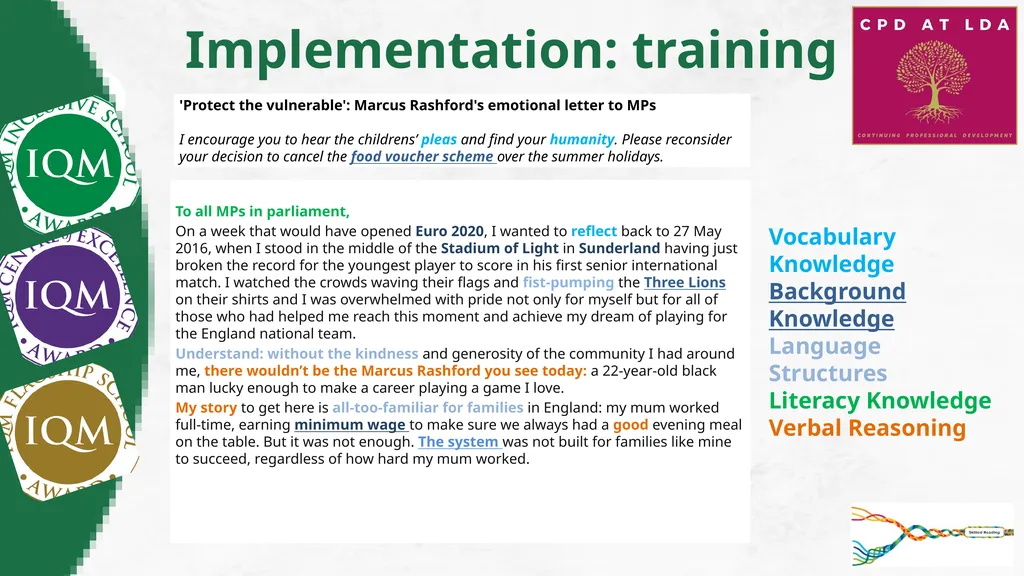
'Protect the vulnerable': Marcus Rashford's emotional letter to MPs
I encourage you to hear the childrens’ pleas and find your humanity. Please reconsider your decision to cancel the food voucher scheme over the summer holidays. To all MPs in parliament,
On a week that would have opened Euro 2020, I wanted to reflect back to 27 May 2016, when I stood in the middle of the Stadium of Light in Sunderland having just broken the record for the youngest player to score in his first senior international match. I watched the crowds waving their flags and fist-pumping the Three Lions on their shirts and I was overwhelmed with pride not only for myself but for all of those who had helped me reach this moment and achieve my dream of playing for the England national team.
Understand: without the kindness and generosity of the community I had around me, there wouldn’t be the Marcus Rashford you see today: a 22-year old black man lucky enough to make a career playing a game I love.
My story to get here is all-too-familiar for families in England: my mum worked full-time, earning minimum wage to make sure we always had a good evening meal on the table. But it was not enough. The system was not built for families like mine to succeed, regardless of how hard my mum worked. Implementation: training<br>
To all MPs in parliament,
On a week that would have opened Euro 2020, I wanted to reflect back to 27 May 2016, when I stood in the middle of the Stadium of Light in Sunderland having just broken the record for the youngest player to score in his first senior international match. I watched the crowds waving their flags and fist-pumping the Three Lions on their shirts and I was overwhelmed with pride not only for myself but for all of those who had helped me reach this moment and achieve my dream of playing for the England national team.
Understand: without the kindness and generosity of the community I had around me, there wouldn’t be the Marcus Rashford you see today: a 22-year-old black man lucky enough to make a career playing a game I love.
My story to get here is all-too-familiar for families in England: my mum worked full-time, earning minimum wage to make sure we always had a good evening meal on the table. But it was not enough. The system was not built for families like mine to succeed, regardless of how hard my mum worked. Vocabulary Knowledge
Background Knowledge
Language Structures
Literacy Knowledge
Verbal Reasoning 'Protect the vulnerable': Marcus Rashford's emotional letter to MPs
I encourage you to hear the childrens’ pleas and find your humanity. Please reconsider your decision to cancel the food voucher scheme over the summer holidays. Implementation: training<br>
13
Implementation<br>
14
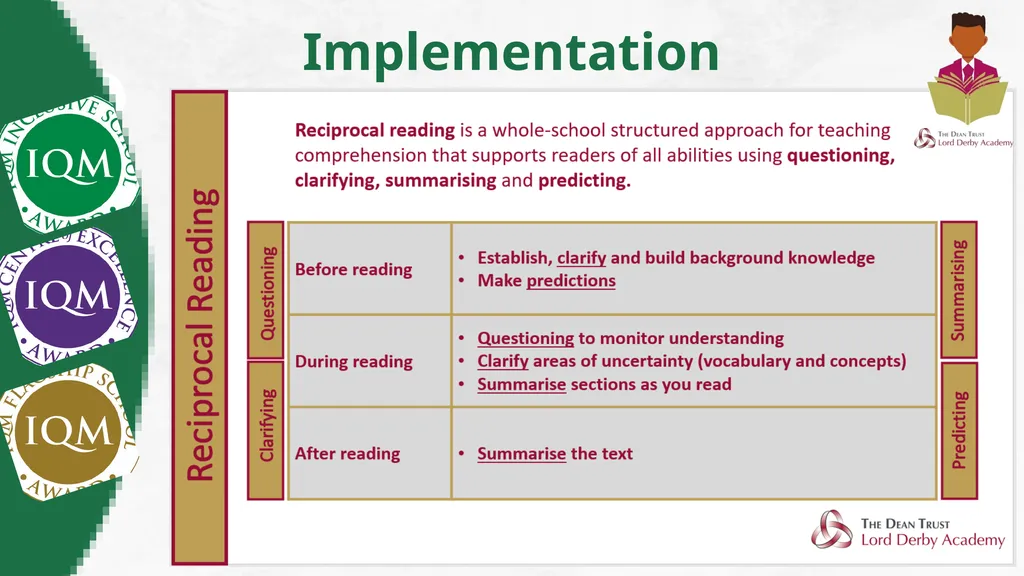
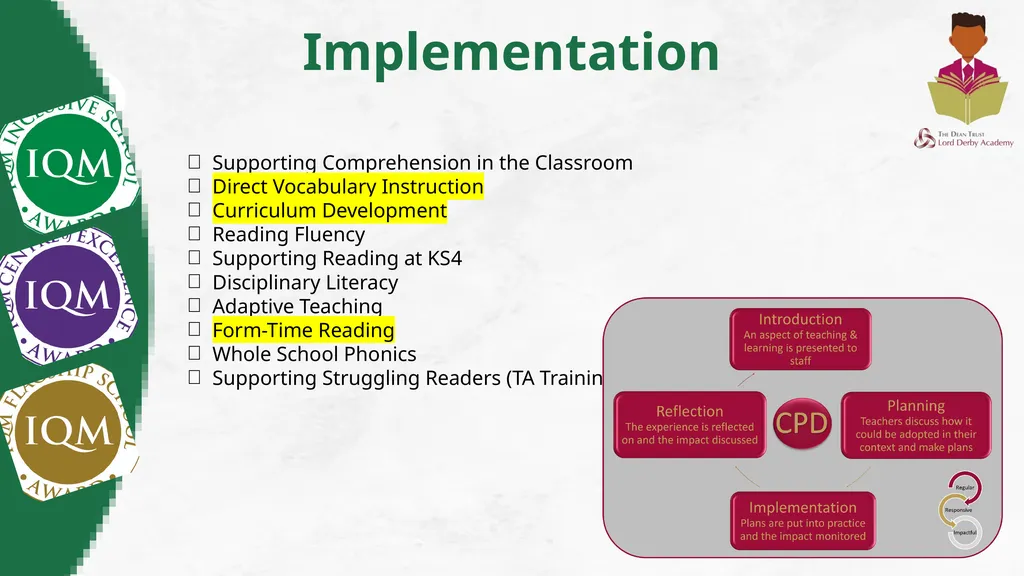
Implementation Supporting Comprehension in the Classroom
Direct Vocabulary Instruction
Curriculum Development
Reading Fluency
Supporting Reading at KS4
Disciplinary Literacy
Adaptive Teaching
Form-Time Reading
Whole School Phonics
Supporting Struggling Readers (TA Training)<br>
15
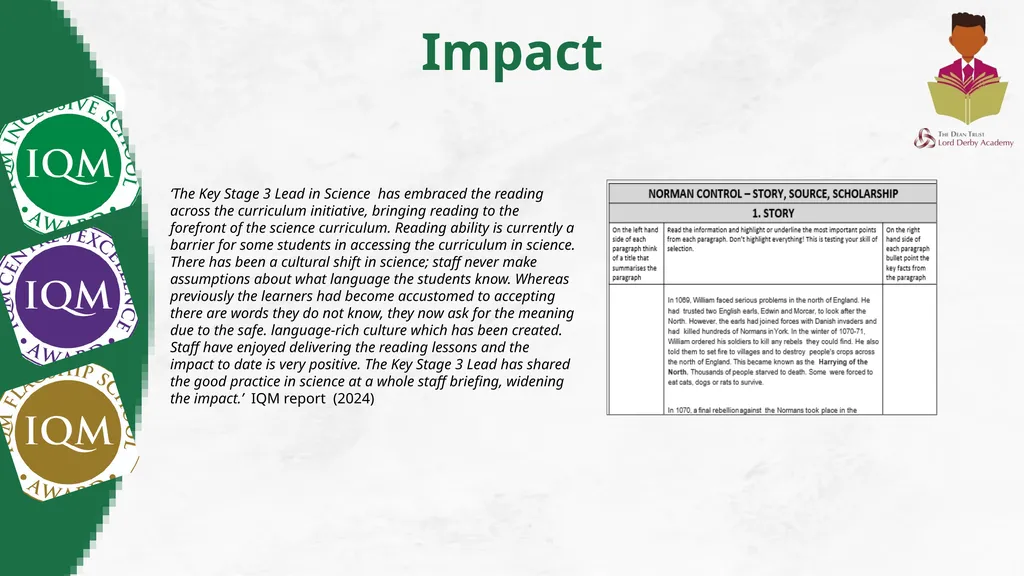
Impact ‘The Key Stage 3 Lead in Science has embraced the reading across the curriculum initiative, bringing reading to the forefront of the science curriculum. Reading ability is currently a barrier for some students in accessing the curriculum in science. There has been a cultural shift in science; staff never make assumptions about what language the students know. Whereas previously the learners had become accustomed to accepting there are words they do not know, they now ask for the meaning due to the safe. language-rich culture which has been created. Staff have enjoyed delivering the reading lessons and the impact to date is very positive. The Key Stage 3 Lead has shared the good practice in science at a whole staff briefing, widening the impact.’ IQM report (2024)<br>
16
Implementation<br>
17
‘Leaders have strengthened their processes for identifying pupils who struggle with their reading knowledge.’ Ofsted report (2023) Screening & Diagnostic Diagnostic assessment to ensure accurate understanding of precise barriers
Individual evaluation
Entry level phonics screening
WRAT testing
Rasinski’s Fluency Rubric Multiple tools to identify struggling readers
Screening programme (reading age / standard score / CATS)
Key Stage 2 data (SATS, teacher assessments & feedback)<br>
18
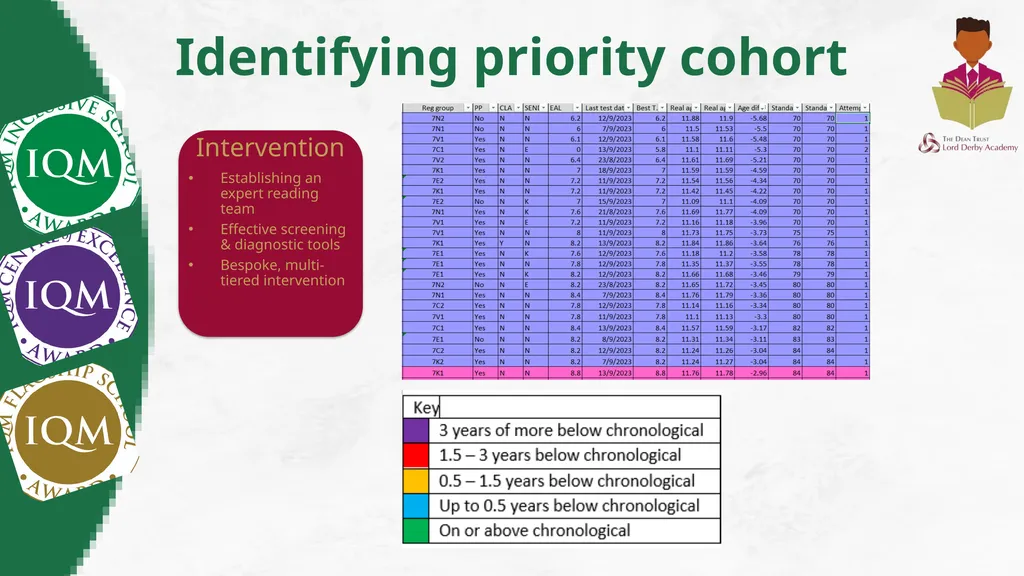
Identifying priority cohort<br>
19
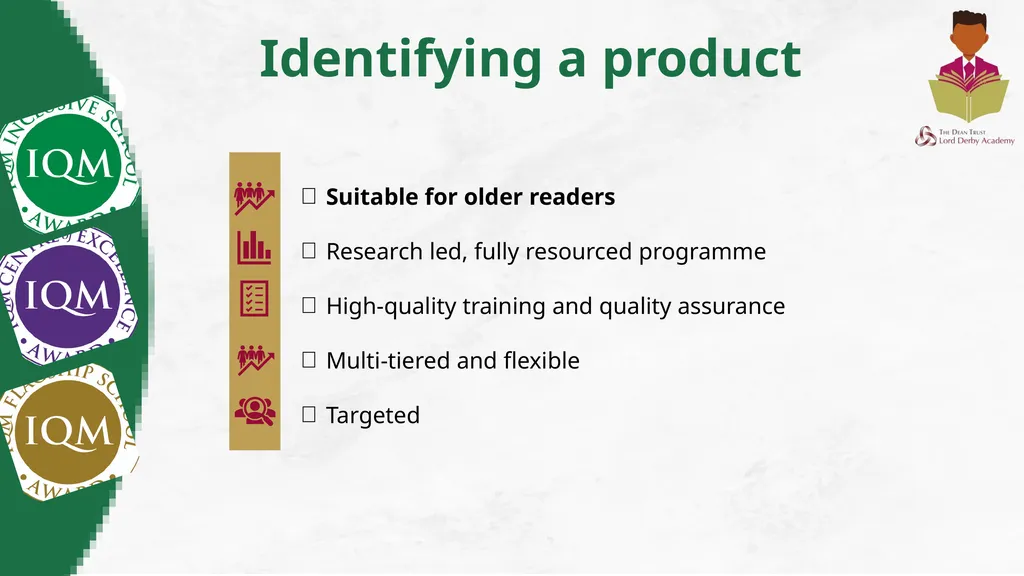
Identifying a product<br>
20
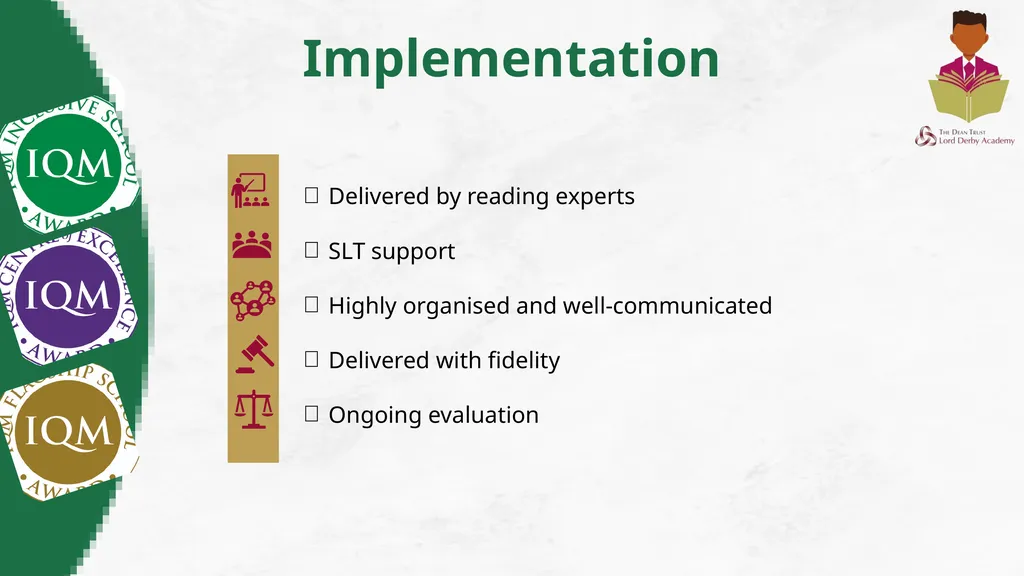
Implementation<br>
21
Impact: evaluating success Last year, the average gains for those pupils based on their exit tests suggested they had made 51 months progress in terms of reading age and 15 points progress on standard score.
Whilst this data reveals rapid success in a short period of time, this data should be treated with some caution. The WRAT exit test does not assess unfamiliar vocabulary or comprehension in the same way reading age screening does and these two scores did not always correlate .
The data did prove that the intervention was delivered with fidelity and the decoding gaps had been filled, however this did not appear to immediately support pupils in their comprehension.
The team decided that an additional layer of intervention was required that incorporated the application of reading skills at whole text level and increasing exposure to a variety of texts.<br>
22
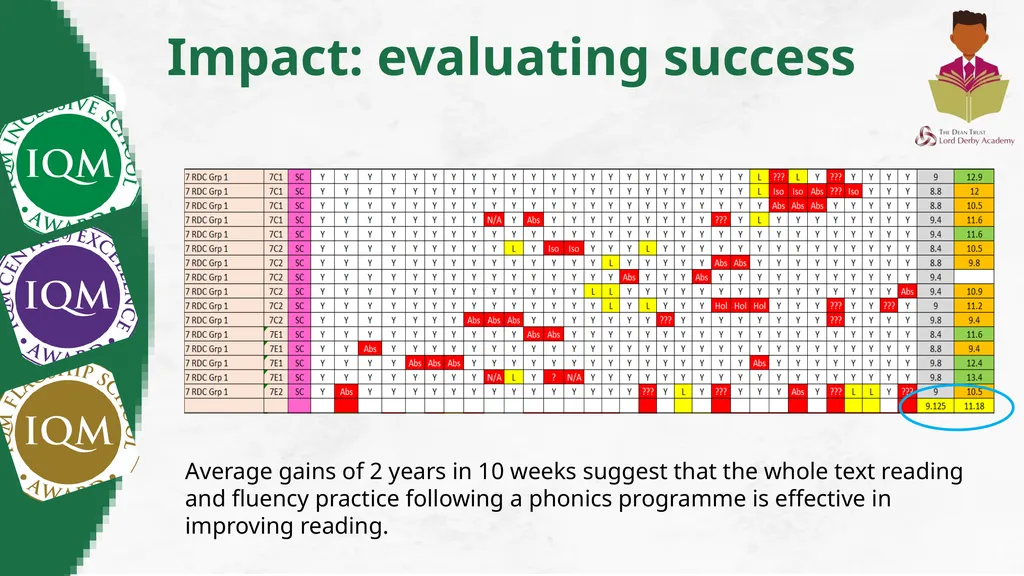
Impact: evaluating success Average gains of 2 years in 10 weeks suggest that the whole text reading and fluency practice following a phonics programme is effective in improving reading.<br>
23
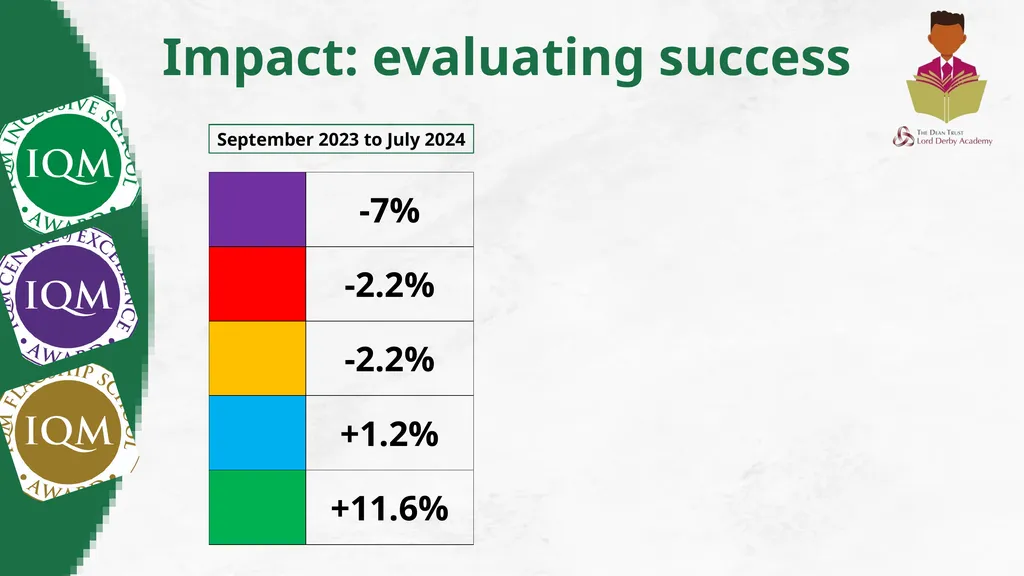
Impact: evaluating success September 2023 to July 2024<br>