
Insomnia: A Case Presentation Emily Medina Pharm.D
PT
Published · 35 slides · 0 views

1 / 1


Description
Insomnia: A Case Presentation Emily Medina Pharm.D Candidate 2023 AD is a 31-year-old female with a PMH of migraines (with aura), adult acne vulgaris, and subclinical hyperthyroidism. She presented to her PCP with a chief complaint of
Related Topics
Share
Embed code
Download this presentation From Below
"Insomnia: A Case Presentation Emily Medina Pharm.D" is the property of its rightful owner. Permission is granted to download and print the materials on this website for personal, non-commercial use only, and to display it on your personal computer provided you do not modify the materials and that you retain all copyright notices contained in the materials. By downloading content from our website, you accept the terms of this agreement.
Presentation Transcript
01
Insomnia: A Case Presentation Emily Medina Pharm.D Candidate 2023<br>
02
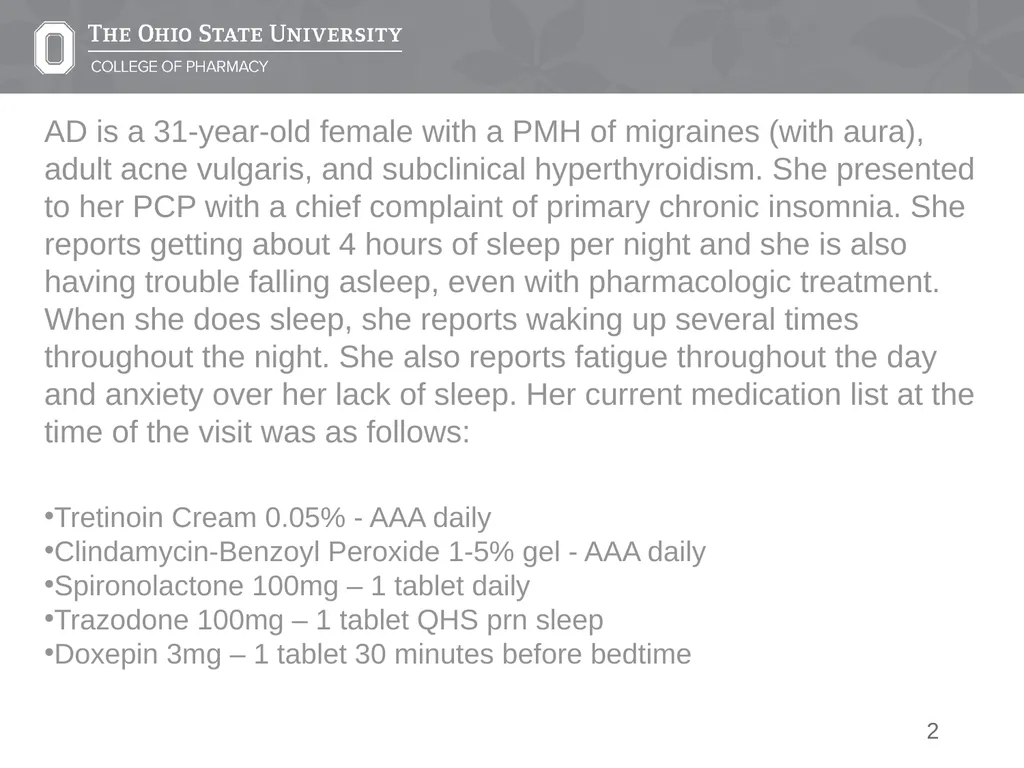
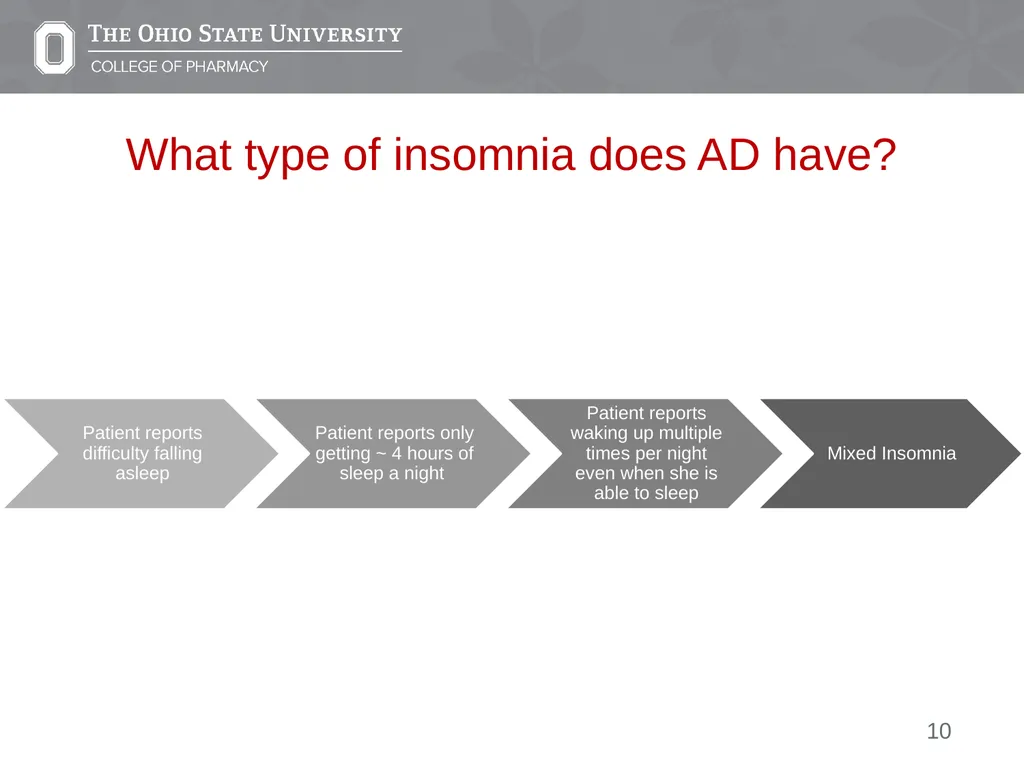
AD is a 31-year-old female with a PMH of migraines (with aura), adult acne vulgaris, and subclinical hyperthyroidism. She presented to her PCP with a chief complaint of primary chronic insomnia. She reports getting about 4 hours of sleep per night and she is also having trouble falling asleep, even with pharmacologic treatment. When she does sleep, she reports waking up several times throughout the night. She also reports fatigue throughout the day and anxiety over her lack of sleep. Her current medication list at the time of the visit was as follows:
Tretinoin Cream 0.05% - AAA daily
Clindamycin-Benzoyl Peroxide 1-5% gel - AAA daily
Spironolactone 100mg – 1 tablet daily
Trazodone 100mg – 1 tablet QHS prn sleep
Doxepin 3mg – 1 tablet 30 minutes before bedtime<br>
Tretinoin Cream 0.05% - AAA daily
Clindamycin-Benzoyl Peroxide 1-5% gel - AAA daily
Spironolactone 100mg – 1 tablet daily
Trazodone 100mg – 1 tablet QHS prn sleep
Doxepin 3mg – 1 tablet 30 minutes before bedtime<br>
03
Question from provider:
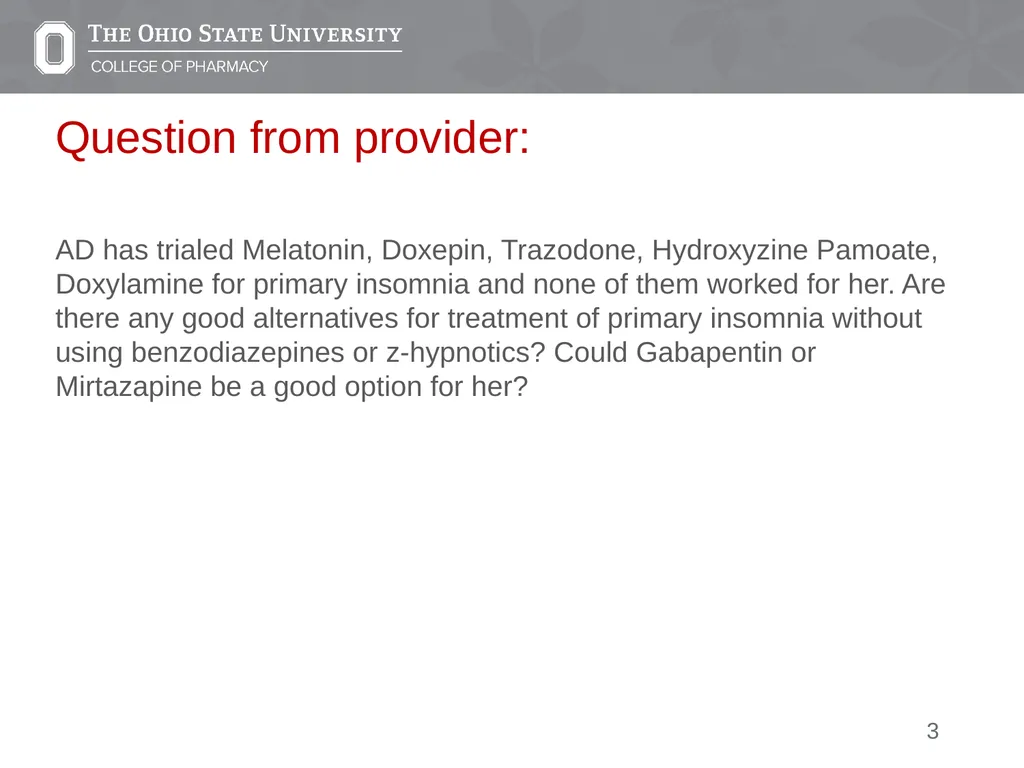
AD has trialed Melatonin, Doxepin, Trazodone, Hydroxyzine Pamoate, Doxylamine for primary insomnia and none of them worked for her. Are there any good alternatives for treatment of primary insomnia without using benzodiazepines or z-hypnotics? Could Gabapentin or Mirtazapine be a good option for her?<br>
AD has trialed Melatonin, Doxepin, Trazodone, Hydroxyzine Pamoate, Doxylamine for primary insomnia and none of them worked for her. Are there any good alternatives for treatment of primary insomnia without using benzodiazepines or z-hypnotics? Could Gabapentin or Mirtazapine be a good option for her?<br>
04
Insomnia
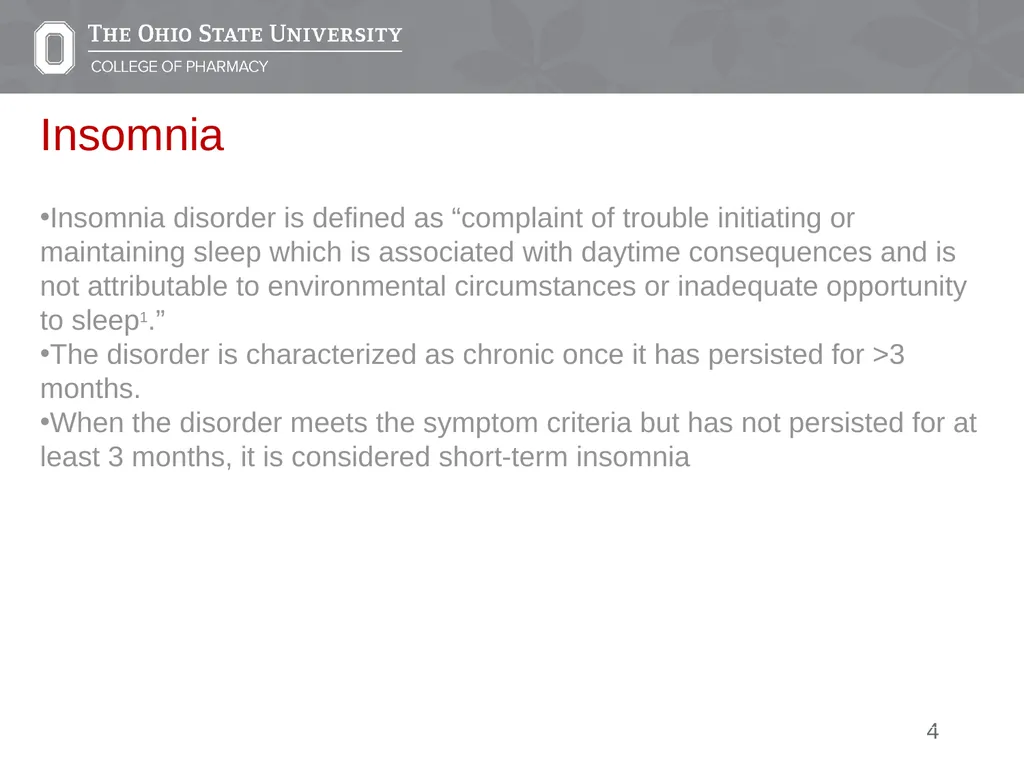
Insomnia disorder is defined as “complaint of trouble initiating or maintaining sleep which is associated with daytime consequences and is not attributable to environmental circumstances or inadequate opportunity to sleep1.”
The disorder is characterized as chronic once it has persisted for >3 months.
When the disorder meets the symptom criteria but has not persisted for at least 3 months, it is considered short-term insomnia<br>
Insomnia disorder is defined as “complaint of trouble initiating or maintaining sleep which is associated with daytime consequences and is not attributable to environmental circumstances or inadequate opportunity to sleep1.”
The disorder is characterized as chronic once it has persisted for >3 months.
When the disorder meets the symptom criteria but has not persisted for at least 3 months, it is considered short-term insomnia<br>
05
Insomnia
Occasional, short-term insomnia affects 30-50% of the population, while the prevalence of long-term insomnia is estimated to be at least 5-10% in industrialized nations.1
The prevalence is significantly increased in medically and psychiatrically ill populations, and in older age groups.1
Chronic insomnia is associated with many adverse effects on health and function.<br>
Occasional, short-term insomnia affects 30-50% of the population, while the prevalence of long-term insomnia is estimated to be at least 5-10% in industrialized nations.1
The prevalence is significantly increased in medically and psychiatrically ill populations, and in older age groups.1
Chronic insomnia is associated with many adverse effects on health and function.<br>
06
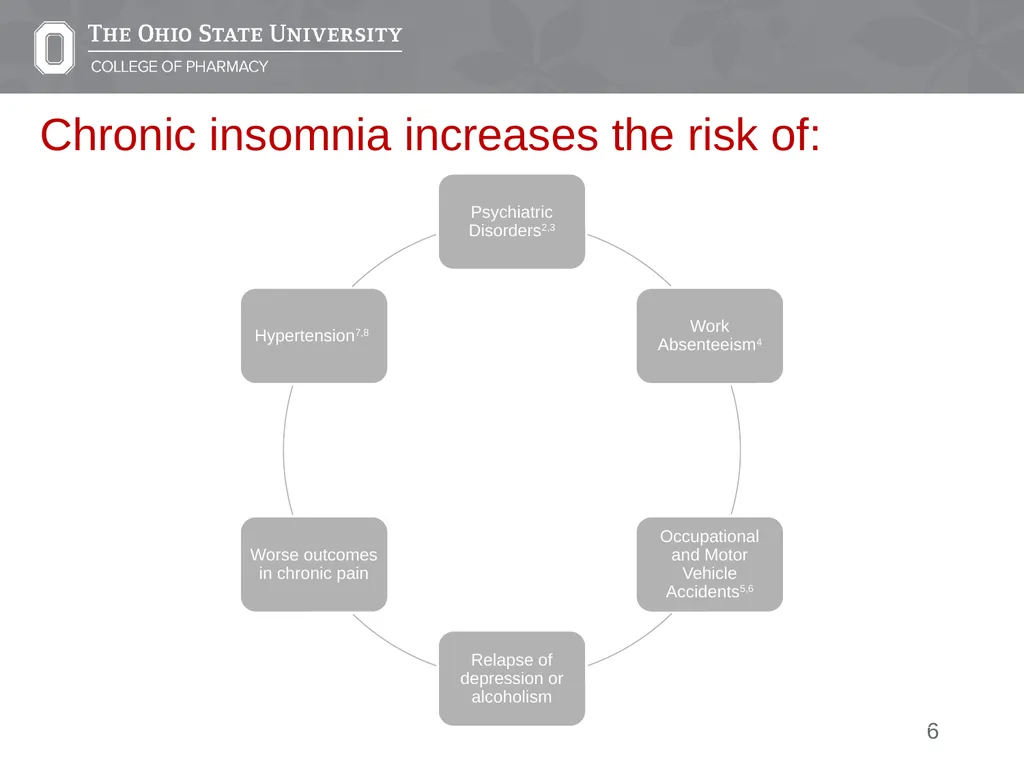
Chronic insomnia increases the risk of:<br>
07
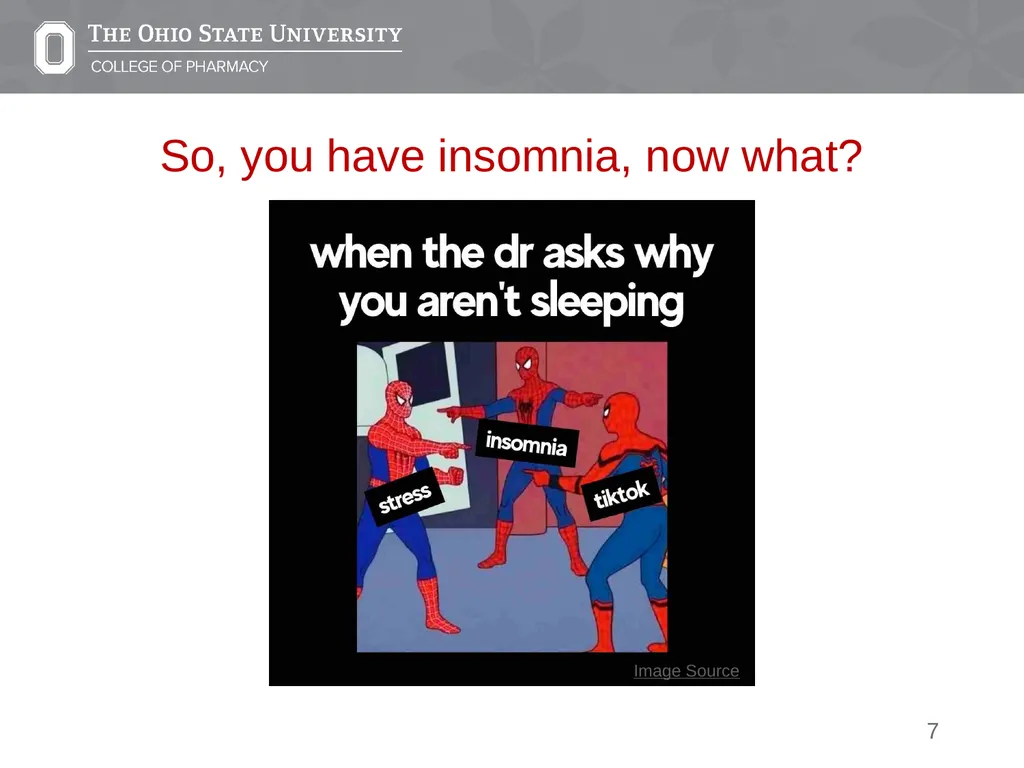
So, you have insomnia, now what? Image Source<br>
08
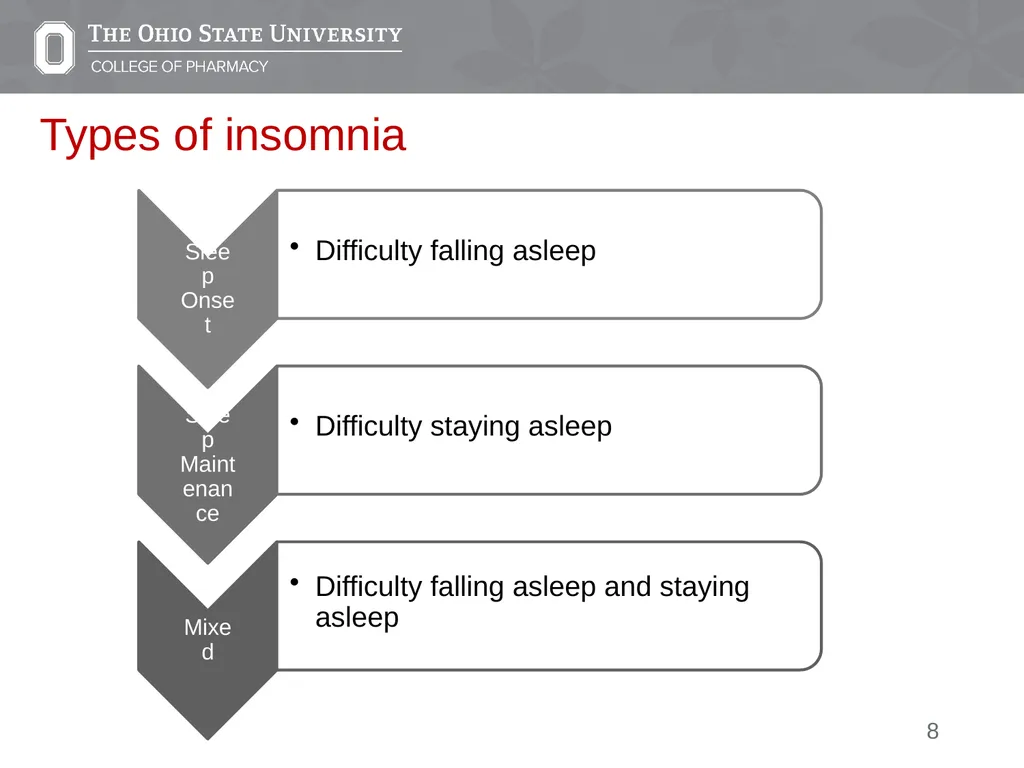
Types of insomnia<br>
09
What type of insomnia does AD have?<br>
10
What type of insomnia does AD have?<br>
11
Could AD’s chronic mixed insomnia be caused by something else?<br>
12
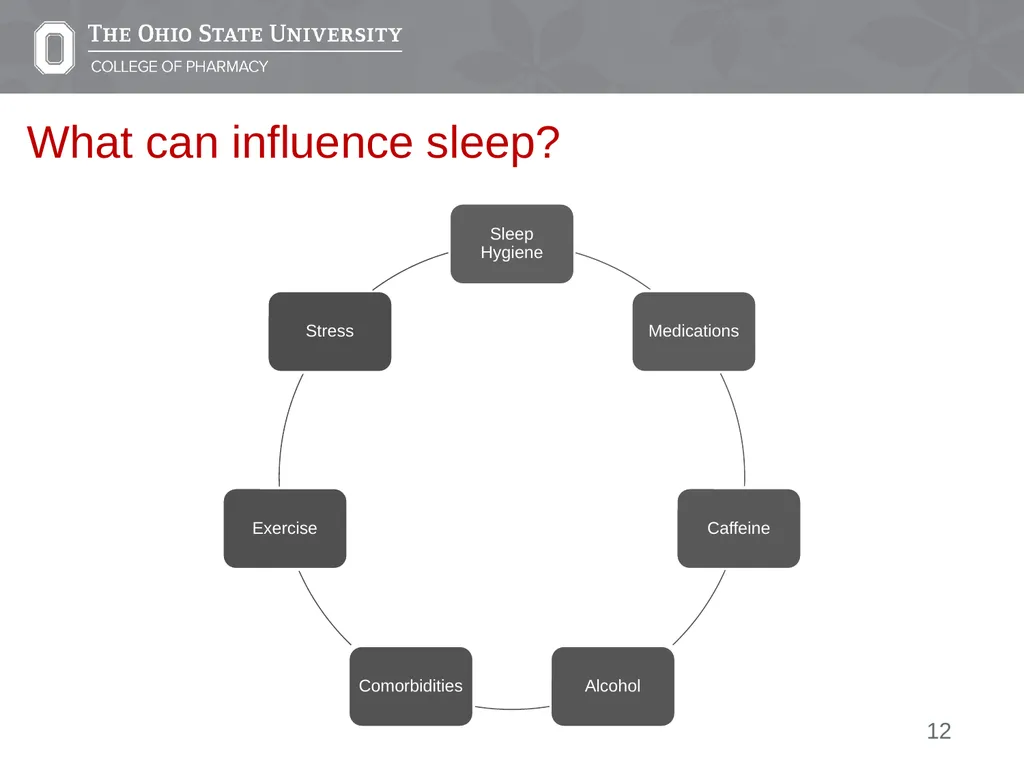
What can influence sleep?<br>
13
In AD’s case she is not on any medications that are known to cause or contribute to Insomnia. However…<br>
14
Her toxicology screen did come back positive for both caffeine and diphenhydramine
She is in nursing school, working a full-time job, and is caring for her young child, and reports a fair amount of stress, and lack of opportunity for sleep some nights
She reported a fair amount of anxiety, and has been visibly anxious in clinic multiple times, so there is a possibility of an underlying anxiety disorder<br>
She is in nursing school, working a full-time job, and is caring for her young child, and reports a fair amount of stress, and lack of opportunity for sleep some nights
She reported a fair amount of anxiety, and has been visibly anxious in clinic multiple times, so there is a possibility of an underlying anxiety disorder<br>
15
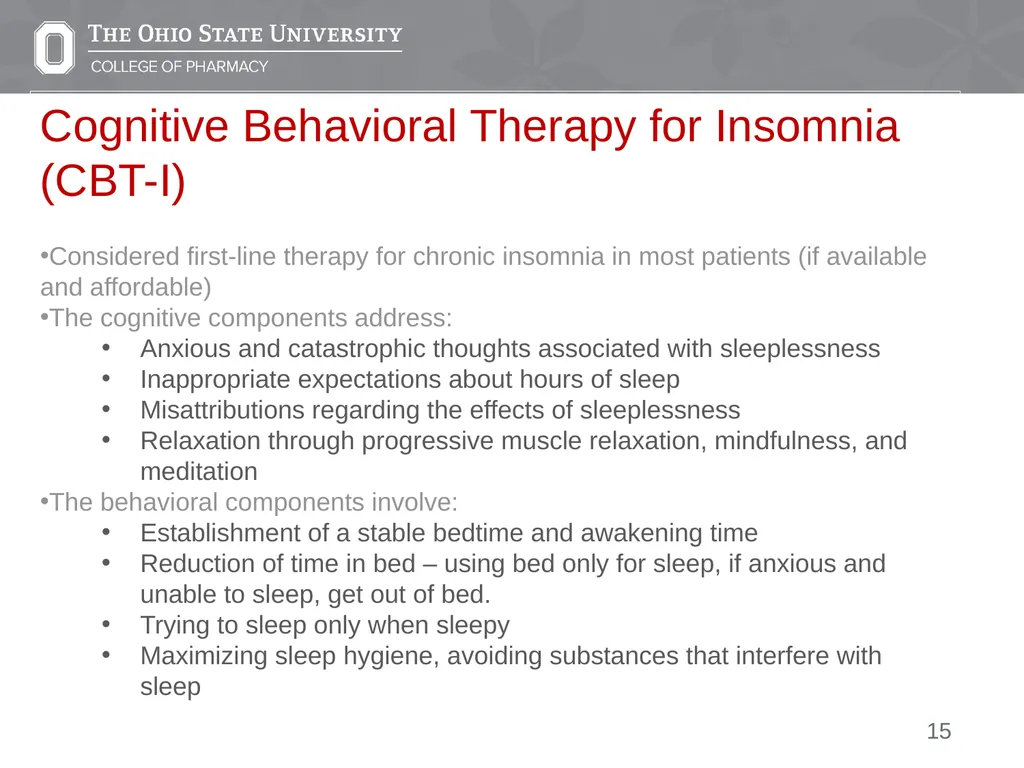
Cognitive Behavioral Therapy for Insomnia (CBT-I)
Considered first-line therapy for chronic insomnia in most patients (if available and affordable)
The cognitive components address:
Anxious and catastrophic thoughts associated with sleeplessness
Inappropriate expectations about hours of sleep
Misattributions regarding the effects of sleeplessness
Relaxation through progressive muscle relaxation, mindfulness, and meditation
The behavioral components involve:
Establishment of a stable bedtime and awakening time
Reduction of time in bed – using bed only for sleep, if anxious and unable to sleep, get out of bed.
Trying to sleep only when sleepy
Maximizing sleep hygiene, avoiding substances that interfere with sleep<br>
Considered first-line therapy for chronic insomnia in most patients (if available and affordable)
The cognitive components address:
Anxious and catastrophic thoughts associated with sleeplessness
Inappropriate expectations about hours of sleep
Misattributions regarding the effects of sleeplessness
Relaxation through progressive muscle relaxation, mindfulness, and meditation
The behavioral components involve:
Establishment of a stable bedtime and awakening time
Reduction of time in bed – using bed only for sleep, if anxious and unable to sleep, get out of bed.
Trying to sleep only when sleepy
Maximizing sleep hygiene, avoiding substances that interfere with sleep<br>
16
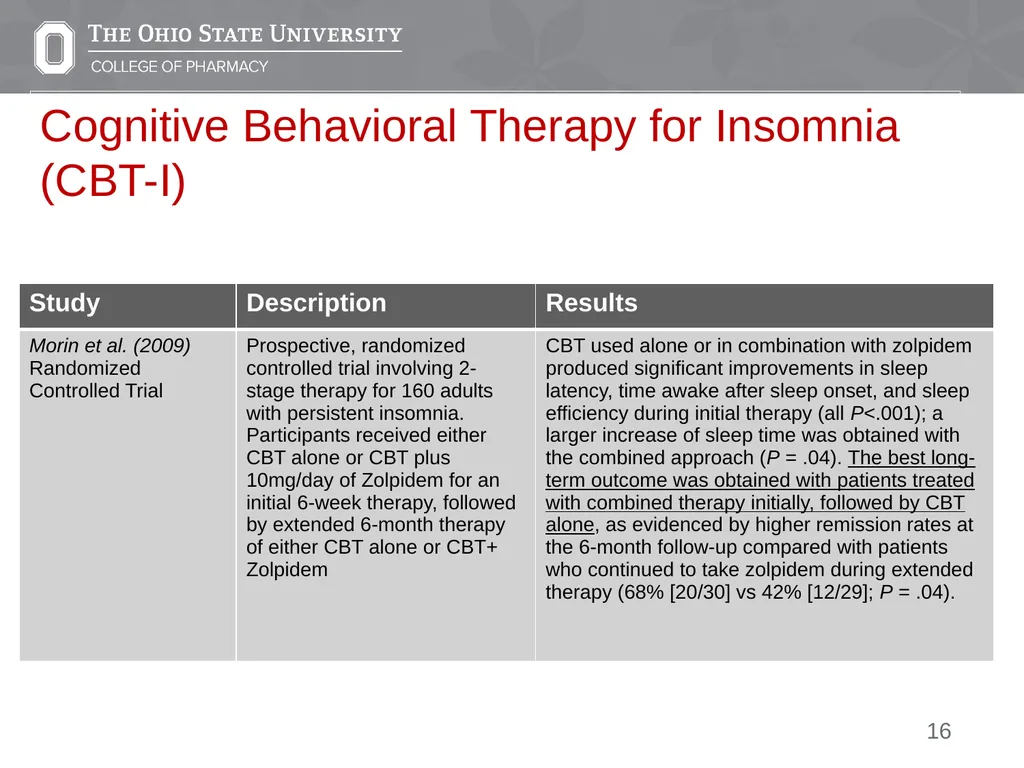
Cognitive Behavioral Therapy for Insomnia (CBT-I)<br>
17
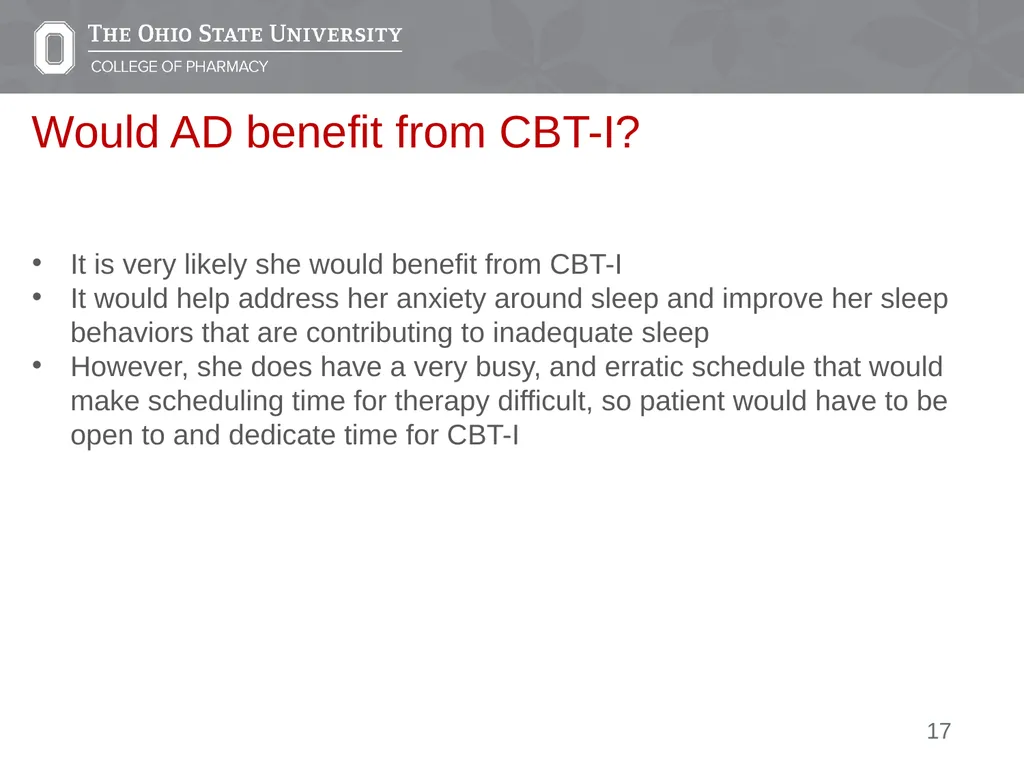
Would AD benefit from CBT-I? It is very likely she would benefit from CBT-I
It would help address her anxiety around sleep and improve her sleep behaviors that are contributing to inadequate sleep
However, she does have a very busy, and erratic schedule that would make scheduling time for therapy difficult, so patient would have to be open to and dedicate time for CBT-I<br>
It would help address her anxiety around sleep and improve her sleep behaviors that are contributing to inadequate sleep
However, she does have a very busy, and erratic schedule that would make scheduling time for therapy difficult, so patient would have to be open to and dedicate time for CBT-I<br>
18
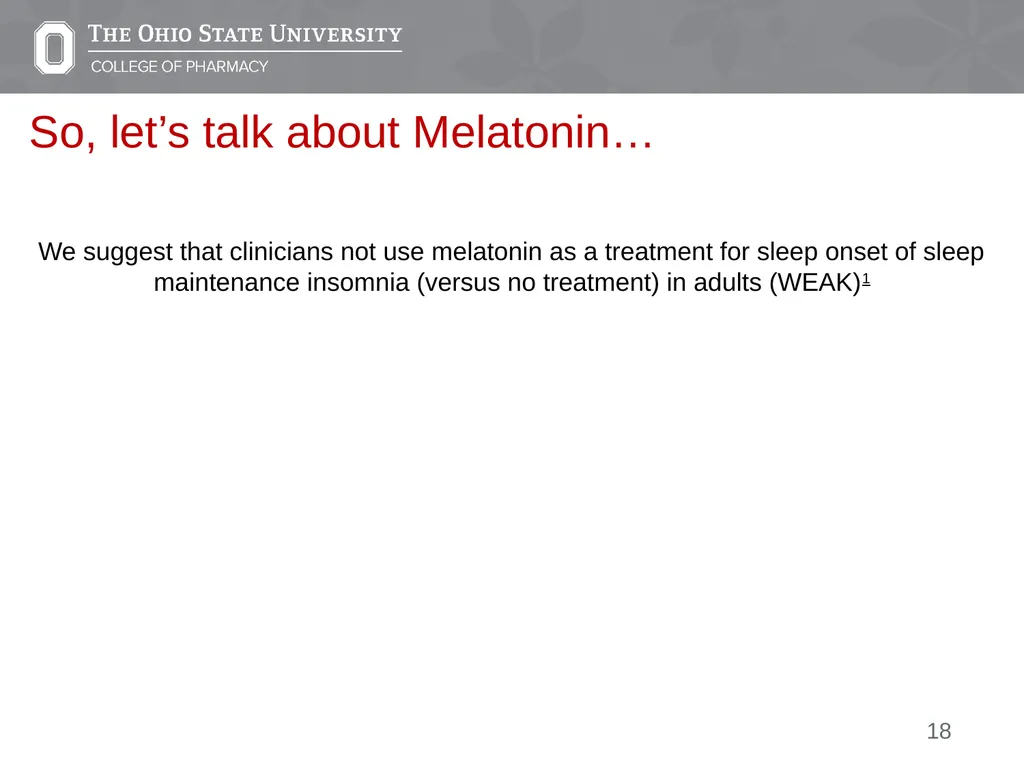
So, let’s talk about Melatonin… We suggest that clinicians not use melatonin as a treatment for sleep onset of sleep maintenance insomnia (versus no treatment) in adults (WEAK)1<br>
19
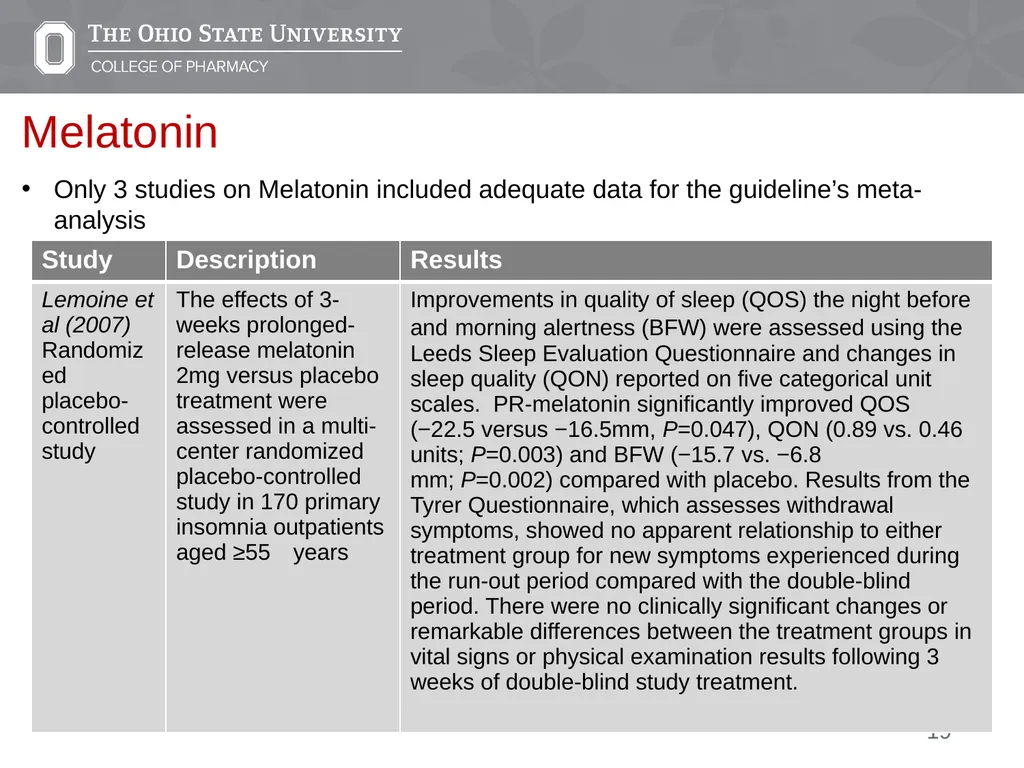
Melatonin Only 3 studies on Melatonin included adequate data for the guideline’s meta-analysis<br>
20
Melatonin<br>
21
Melatonin<br>
22
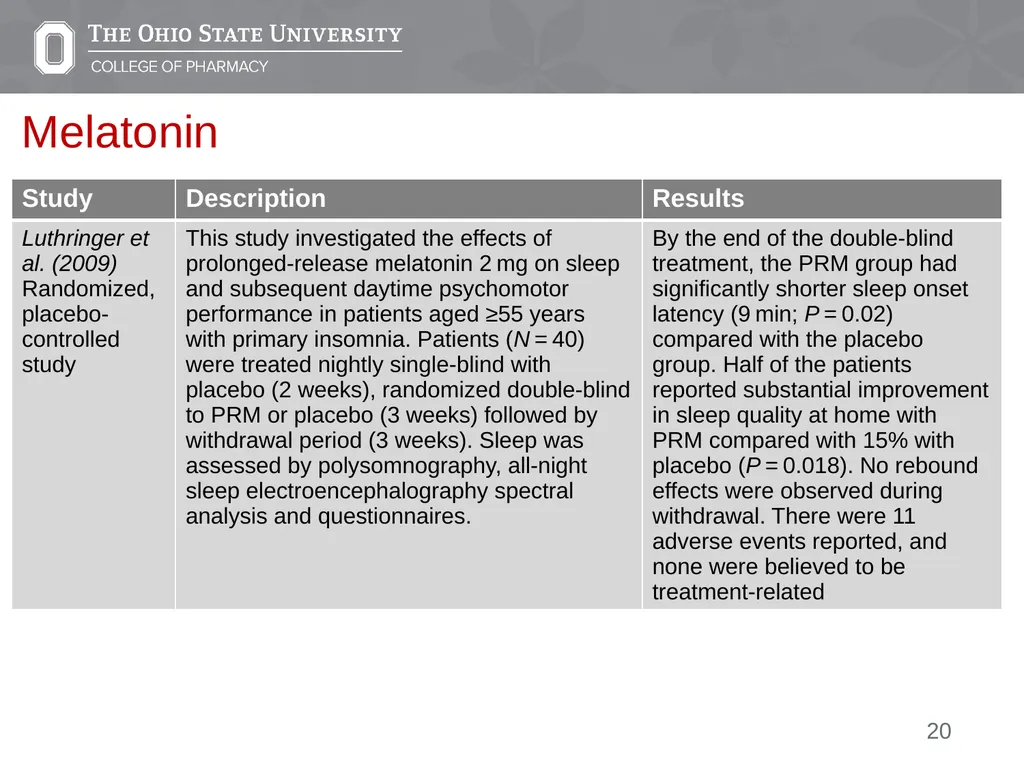
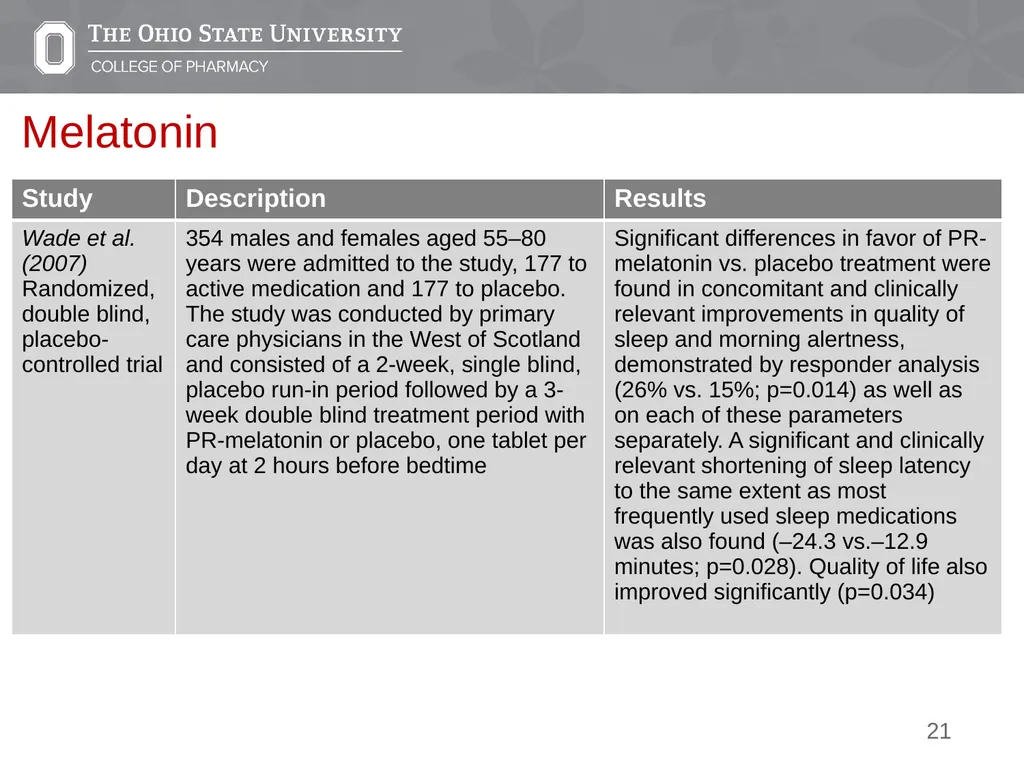
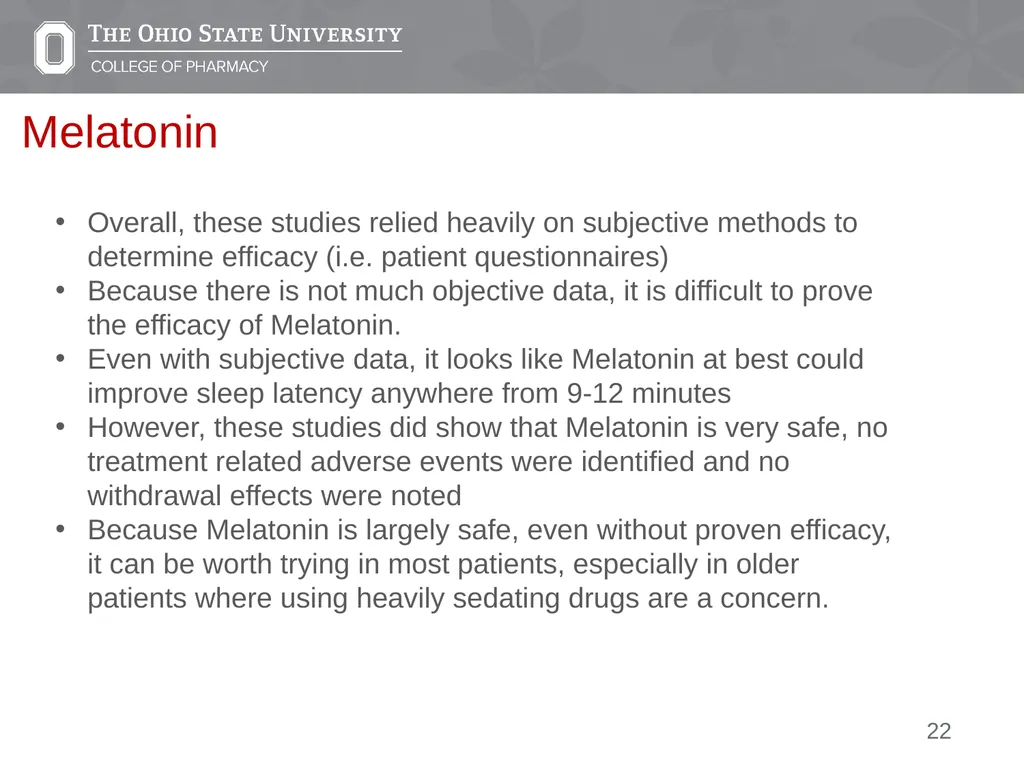
Melatonin Overall, these studies relied heavily on subjective methods to determine efficacy (i.e. patient questionnaires)
Because there is not much objective data, it is difficult to prove the efficacy of Melatonin.
Even with subjective data, it looks like Melatonin at best could improve sleep latency anywhere from 9-12 minutes
However, these studies did show that Melatonin is very safe, no treatment related adverse events were identified and no withdrawal effects were noted
Because Melatonin is largely safe, even without proven efficacy, it can be worth trying in most patients, especially in older patients where using heavily sedating drugs are a concern.<br>
Because there is not much objective data, it is difficult to prove the efficacy of Melatonin.
Even with subjective data, it looks like Melatonin at best could improve sleep latency anywhere from 9-12 minutes
However, these studies did show that Melatonin is very safe, no treatment related adverse events were identified and no withdrawal effects were noted
Because Melatonin is largely safe, even without proven efficacy, it can be worth trying in most patients, especially in older patients where using heavily sedating drugs are a concern.<br>
23
We tried Melatonin, what next? Type of insomnia can help guide which treatment to choose<br>
24
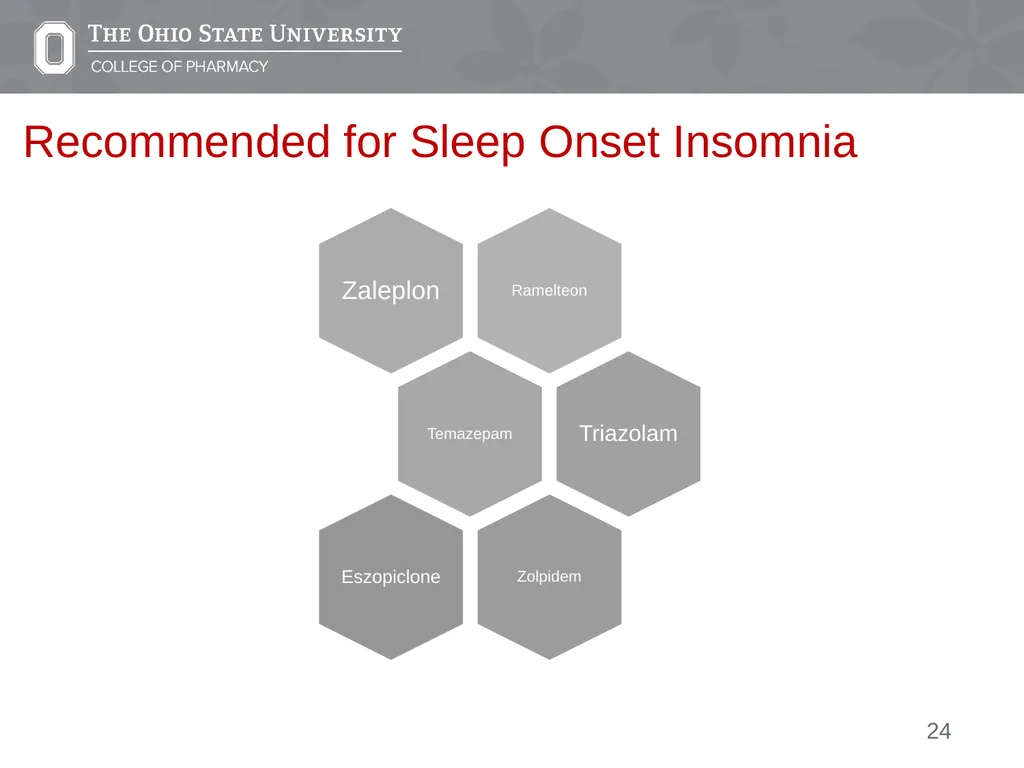
Recommended for Sleep Onset Insomnia<br>
25
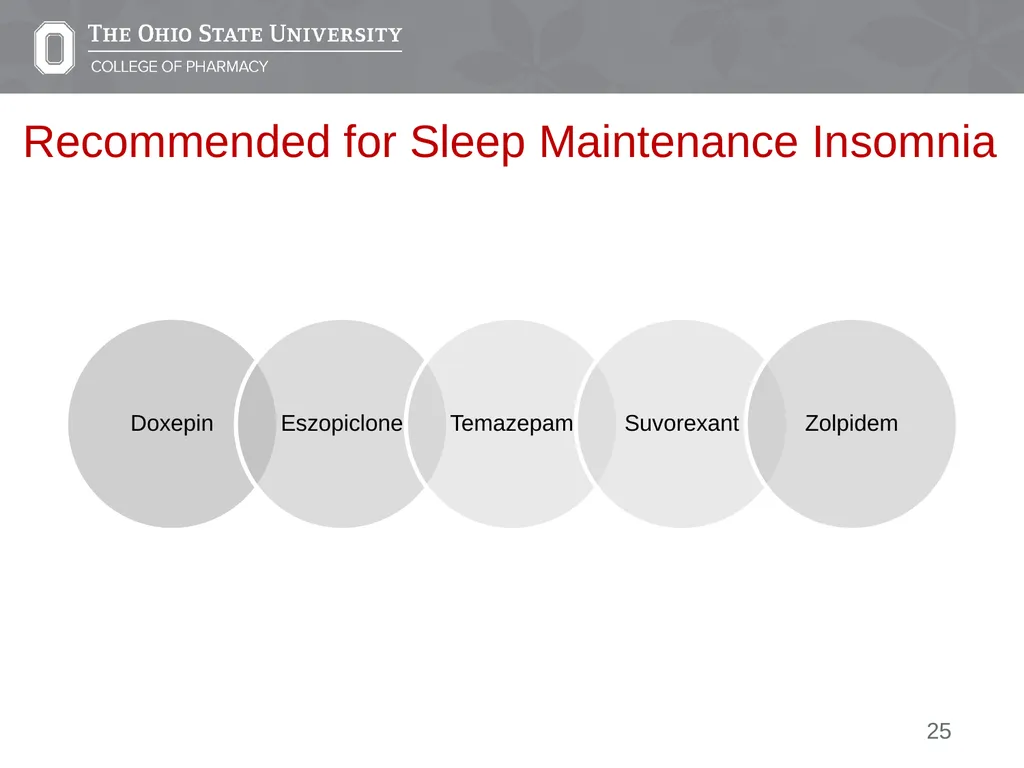
Recommended for Sleep Maintenance Insomnia<br>
26
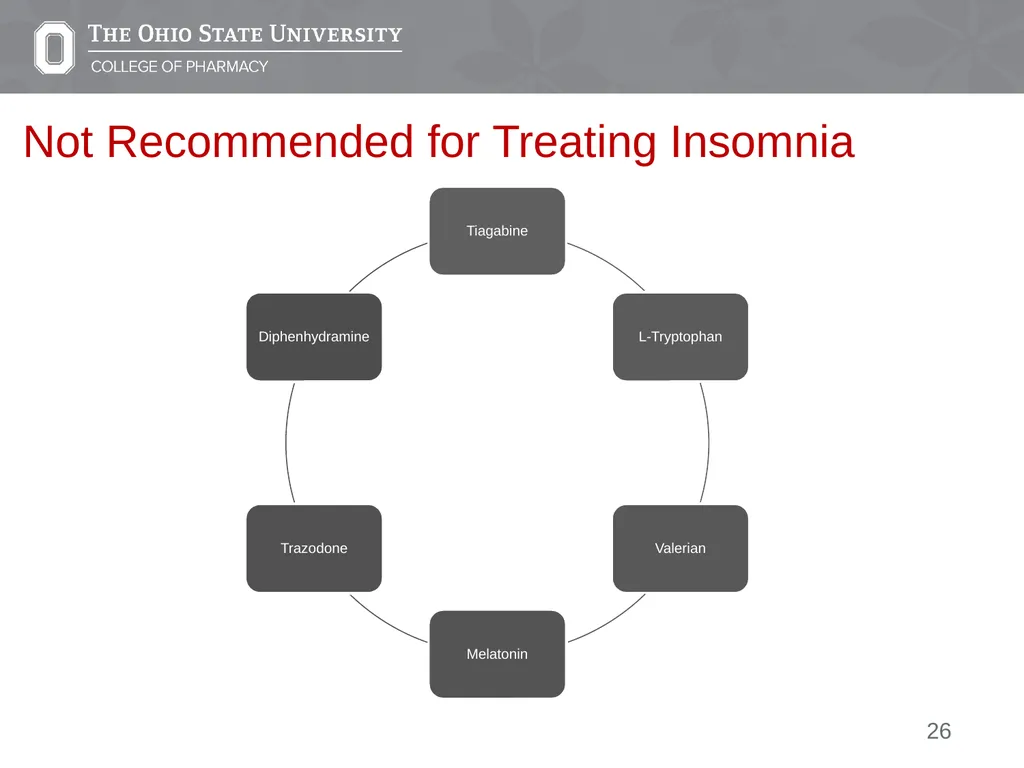
Not Recommended for Treating Insomnia<br>
27
New insomnia medications – DORAs
DORA – Dual orexin receptor antagonists
They treat insomnia by blocking orexin signals in the brain that are believed to play a role in wakefulness
These medications have antagonist activity at both orexin receptors (OX1R and OX2R), thereby facilitating sleep by decreasing the wake drive
3 are currently on the market, Suvorexant (Belsomra), Lemborexant (Dayvigo) and the newest medication to the market, Daridorexant (Quviviq)<br>
DORA – Dual orexin receptor antagonists
They treat insomnia by blocking orexin signals in the brain that are believed to play a role in wakefulness
These medications have antagonist activity at both orexin receptors (OX1R and OX2R), thereby facilitating sleep by decreasing the wake drive
3 are currently on the market, Suvorexant (Belsomra), Lemborexant (Dayvigo) and the newest medication to the market, Daridorexant (Quviviq)<br>
28
DORAs – Things to consider No long-term safety data is available yet
They are all schedule IV-controlled medications (very-low abuse potential, no evidence of physical dependence)
A recent meal can delay onset of action, and beware of CYP3A4 interactions
All DORAs should be avoided in patients with severe hepatic impairment
Most common adverse effect is somnolence, with some patient’s experiencing dose-dependent impairment in driving the next morning
They do not appear to cause respiratory depression; however, they have not been studied in patients with severe lung disease or sleep apnea
Cost can be a limiting factor for patients<br>
They are all schedule IV-controlled medications (very-low abuse potential, no evidence of physical dependence)
A recent meal can delay onset of action, and beware of CYP3A4 interactions
All DORAs should be avoided in patients with severe hepatic impairment
Most common adverse effect is somnolence, with some patient’s experiencing dose-dependent impairment in driving the next morning
They do not appear to cause respiratory depression; however, they have not been studied in patients with severe lung disease or sleep apnea
Cost can be a limiting factor for patients<br>
29
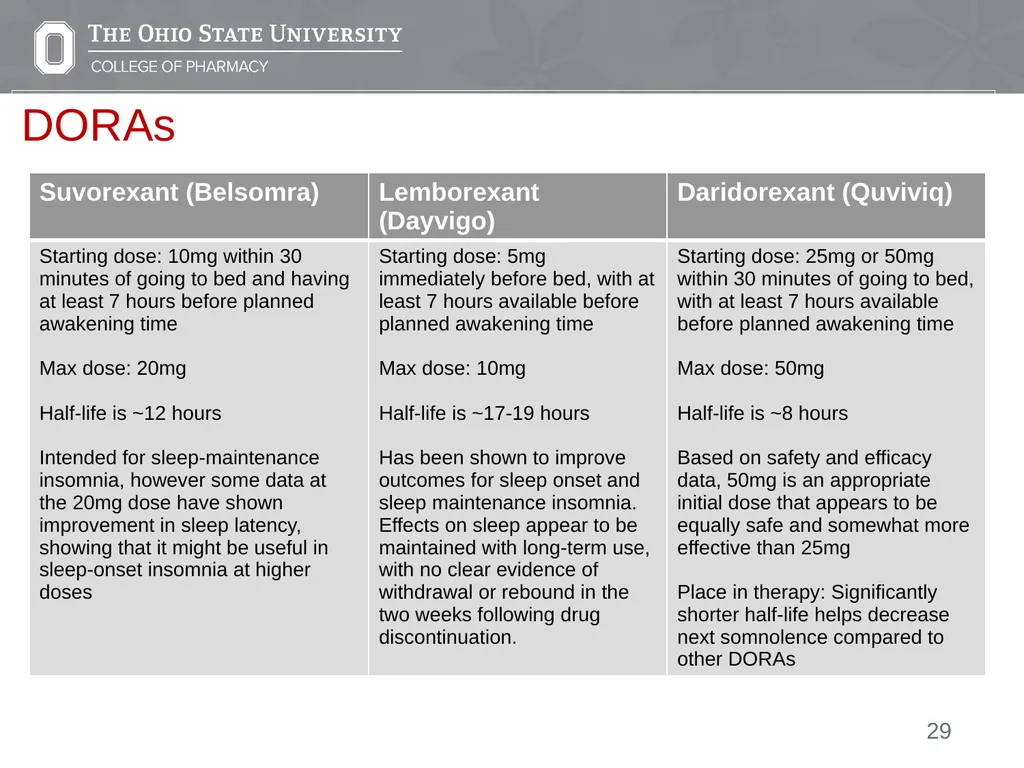
DORAs<br>
30
Back to the question, would Mirtazapine or Gabapentin be good options for AD? There is limited efficacy data for treatment of insomnia with Mirtazapine
However, it is used commonly in practice, and some experts find it useful in certain patients.
Most of the data that supports Mirtazapine use in insomnia is in patients with a comorbid diagnosis of major depression
Because our patient does not have comorbid depression, and has struggled with weight gain recently, I would not recommend Mirtazapine<br>
However, it is used commonly in practice, and some experts find it useful in certain patients.
Most of the data that supports Mirtazapine use in insomnia is in patients with a comorbid diagnosis of major depression
Because our patient does not have comorbid depression, and has struggled with weight gain recently, I would not recommend Mirtazapine<br>
31
Back to the question, would Mirtazapine or Gabapentin be good options for AD? There is limited efficacy data for treatment of insomnia with Gabapentin as well
Gabapentin can be useful as a treatment of insomnia with certain patient populations including those with insomnia as well as comorbid chronic pain, restless leg syndrome, or those with alcohol use disorder
As the patient does not have any chronic pain, alcohol use disorder, or restless leg syndrome, I would not recommend gabapentin either, as the potential for harm seems higher than the potential benefit.<br>
Gabapentin can be useful as a treatment of insomnia with certain patient populations including those with insomnia as well as comorbid chronic pain, restless leg syndrome, or those with alcohol use disorder
As the patient does not have any chronic pain, alcohol use disorder, or restless leg syndrome, I would not recommend gabapentin either, as the potential for harm seems higher than the potential benefit.<br>
32
So, what should we do for AD? Since the patient has failed many options, I do think a DORA could potentially be helpful for AD
However, during patient interview, it was unclear if she would be able to dedicate at least 7 hours a night to sleep.
If the patient could commit to 7 hours of sleep a night and a DORA was an option, I would choose Quviviq due to its shorter half-life leading to decreased next-day sleepiness
If the patient is unable to make that work with her schedule, I would recommend a combination of CBT-I with a short 6-week maximum course of either Zolpidem IR or Zaleplon
I would also consider screening the patient for an underlying anxiety disorder<br>
However, during patient interview, it was unclear if she would be able to dedicate at least 7 hours a night to sleep.
If the patient could commit to 7 hours of sleep a night and a DORA was an option, I would choose Quviviq due to its shorter half-life leading to decreased next-day sleepiness
If the patient is unable to make that work with her schedule, I would recommend a combination of CBT-I with a short 6-week maximum course of either Zolpidem IR or Zaleplon
I would also consider screening the patient for an underlying anxiety disorder<br>
33
What did the provider end up doing for AD? There was not much documentation in the chart, but the PCP did prescribe a 2-week course of Zolpidem IR 5mg with a follow-up scheduled 2 months later
While I do not disagree with the medication choice, I do think the patient should have been referred to CBT-I, as that is proven to improve chance of treatment success
Even without CBT-I, I would continue to work on sleep hygiene with the patient, as it appears that improving her sleep hygiene would influence her insomnia
I would also still screen her for an underlying anxiety disorder at a follow-up appointment<br>
While I do not disagree with the medication choice, I do think the patient should have been referred to CBT-I, as that is proven to improve chance of treatment success
Even without CBT-I, I would continue to work on sleep hygiene with the patient, as it appears that improving her sleep hygiene would influence her insomnia
I would also still screen her for an underlying anxiety disorder at a follow-up appointment<br>
34
Questions?<br>
35
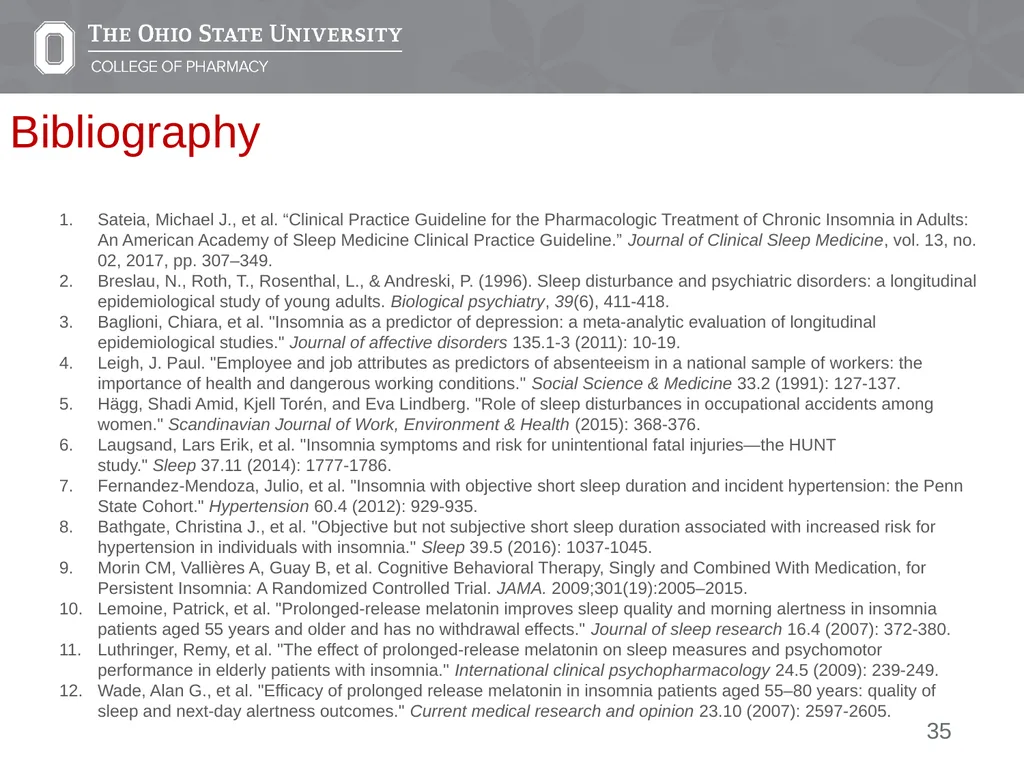
Bibliography Sateia, Michael J., et al. “Clinical Practice Guideline for the Pharmacologic Treatment of Chronic Insomnia in Adults: An American Academy of Sleep Medicine Clinical Practice Guideline.” Journal of Clinical Sleep Medicine, vol. 13, no. 02, 2017, pp. 307–349.
Breslau, N., Roth, T., Rosenthal, L., & Andreski, P. (1996). Sleep disturbance and psychiatric disorders: a longitudinal epidemiological study of young adults. Biological psychiatry, 39(6), 411-418.
Baglioni, Chiara, et al. "Insomnia as a predictor of depression: a meta-analytic evaluation of longitudinal epidemiological studies." Journal of affective disorders 135.1-3 (2011): 10-19.
Leigh, J. Paul. "Employee and job attributes as predictors of absenteeism in a national sample of workers: the importance of health and dangerous working conditions." Social Science & Medicine 33.2 (1991): 127-137.
Hägg, Shadi Amid, Kjell Torén, and Eva Lindberg. "Role of sleep disturbances in occupational accidents among women." Scandinavian Journal of Work, Environment & Health (2015): 368-376.
Laugsand, Lars Erik, et al. "Insomnia symptoms and risk for unintentional fatal injuries—the HUNT study." Sleep 37.11 (2014): 1777-1786.
Fernandez-Mendoza, Julio, et al. "Insomnia with objective short sleep duration and incident hypertension: the Penn State Cohort." Hypertension 60.4 (2012): 929-935.
Bathgate, Christina J., et al. "Objective but not subjective short sleep duration associated with increased risk for hypertension in individuals with insomnia." Sleep 39.5 (2016): 1037-1045.
Morin CM, Vallières A, Guay B, et al. Cognitive Behavioral Therapy, Singly and Combined With Medication, for Persistent Insomnia: A Randomized Controlled Trial. JAMA. 2009;301(19):2005–2015.
Lemoine, Patrick, et al. "Prolonged‐release melatonin improves sleep quality and morning alertness in insomnia patients aged 55 years and older and has no withdrawal effects." Journal of sleep research 16.4 (2007): 372-380.
Luthringer, Remy, et al. "The effect of prolonged-release melatonin on sleep measures and psychomotor performance in elderly patients with insomnia." International clinical psychopharmacology 24.5 (2009): 239-249.
Wade, Alan G., et al. "Efficacy of prolonged release melatonin in insomnia patients aged 55–80 years: quality of sleep and next-day alertness outcomes." Current medical research and opinion 23.10 (2007): 2597-2605.<br>
Breslau, N., Roth, T., Rosenthal, L., & Andreski, P. (1996). Sleep disturbance and psychiatric disorders: a longitudinal epidemiological study of young adults. Biological psychiatry, 39(6), 411-418.
Baglioni, Chiara, et al. "Insomnia as a predictor of depression: a meta-analytic evaluation of longitudinal epidemiological studies." Journal of affective disorders 135.1-3 (2011): 10-19.
Leigh, J. Paul. "Employee and job attributes as predictors of absenteeism in a national sample of workers: the importance of health and dangerous working conditions." Social Science & Medicine 33.2 (1991): 127-137.
Hägg, Shadi Amid, Kjell Torén, and Eva Lindberg. "Role of sleep disturbances in occupational accidents among women." Scandinavian Journal of Work, Environment & Health (2015): 368-376.
Laugsand, Lars Erik, et al. "Insomnia symptoms and risk for unintentional fatal injuries—the HUNT study." Sleep 37.11 (2014): 1777-1786.
Fernandez-Mendoza, Julio, et al. "Insomnia with objective short sleep duration and incident hypertension: the Penn State Cohort." Hypertension 60.4 (2012): 929-935.
Bathgate, Christina J., et al. "Objective but not subjective short sleep duration associated with increased risk for hypertension in individuals with insomnia." Sleep 39.5 (2016): 1037-1045.
Morin CM, Vallières A, Guay B, et al. Cognitive Behavioral Therapy, Singly and Combined With Medication, for Persistent Insomnia: A Randomized Controlled Trial. JAMA. 2009;301(19):2005–2015.
Lemoine, Patrick, et al. "Prolonged‐release melatonin improves sleep quality and morning alertness in insomnia patients aged 55 years and older and has no withdrawal effects." Journal of sleep research 16.4 (2007): 372-380.
Luthringer, Remy, et al. "The effect of prolonged-release melatonin on sleep measures and psychomotor performance in elderly patients with insomnia." International clinical psychopharmacology 24.5 (2009): 239-249.
Wade, Alan G., et al. "Efficacy of prolonged release melatonin in insomnia patients aged 55–80 years: quality of sleep and next-day alertness outcomes." Current medical research and opinion 23.10 (2007): 2597-2605.<br>