
Instructional Design for Online Courses Michael W.

Description: Instructional Design for Online Courses Michael W. Lindeman Illinois Online Network What is Instructional Design? Instructional Design is the systematic process of translating general principles of learning and instruction into plans for
Related Topics
Download Presentation
"Instructional Design for Online Courses Michael W." is the property of its rightful owner. Permission is granted to download and print the materials on this website for personal, non-commercial use only, and to display it on your personal computer provided you do not modify the materials and that you retain all copyright notices contained in the materials. By downloading content from our website, you accept the terms of this agreement.
Presentation Transcript
slide1. Instructional Design for Online
Courses Michael W. Lindeman
Illinois Online Network<br>
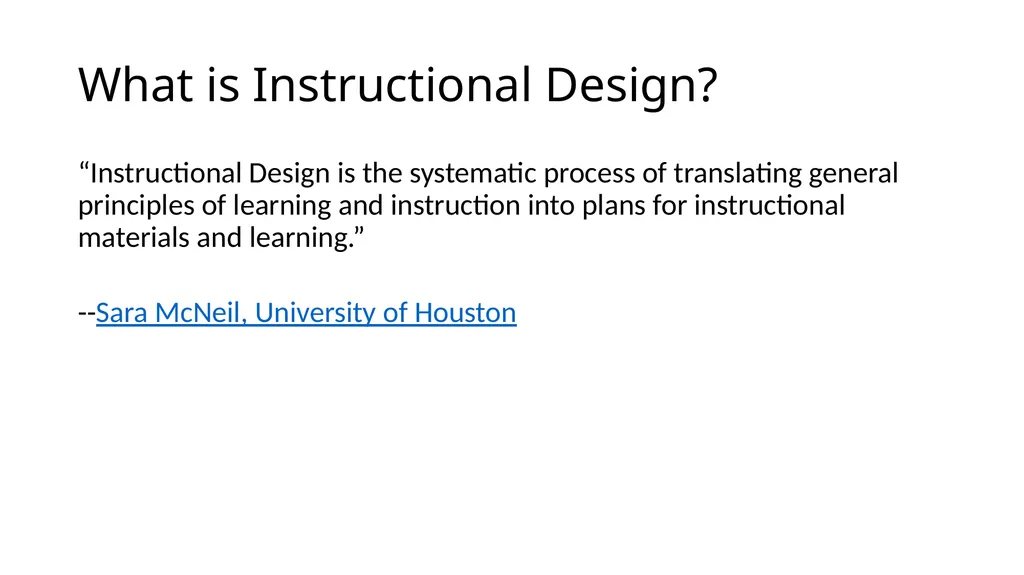
slide2. What is Instructional Design? “Instructional Design is the systematic process of translating general principles of learning and instruction into plans for instructional materials and learning.”
--Sara McNeil, University of Houston<br>
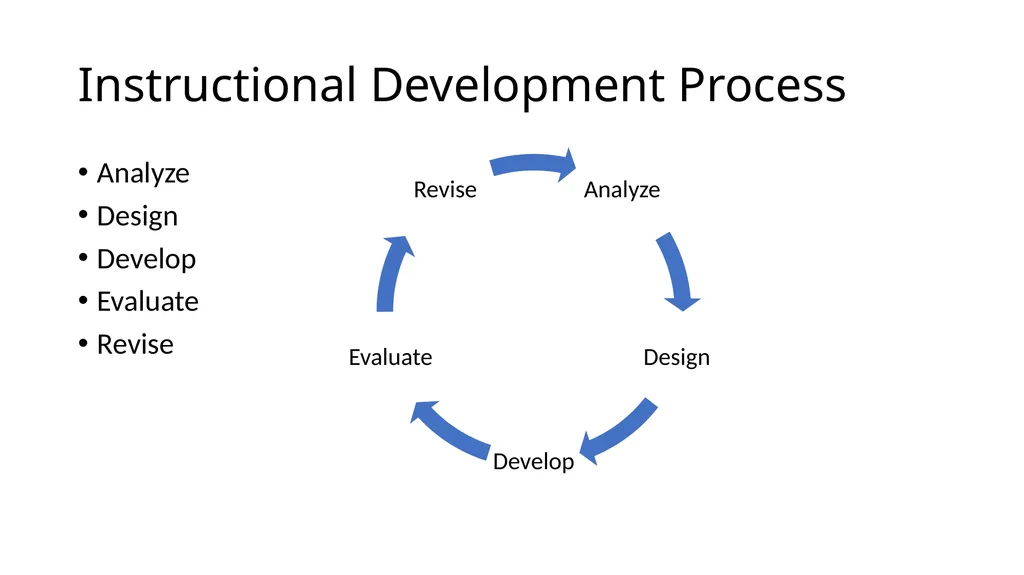
slide3. Instructional Development Process Analyze
Design
Develop
Evaluate
Revise<br>
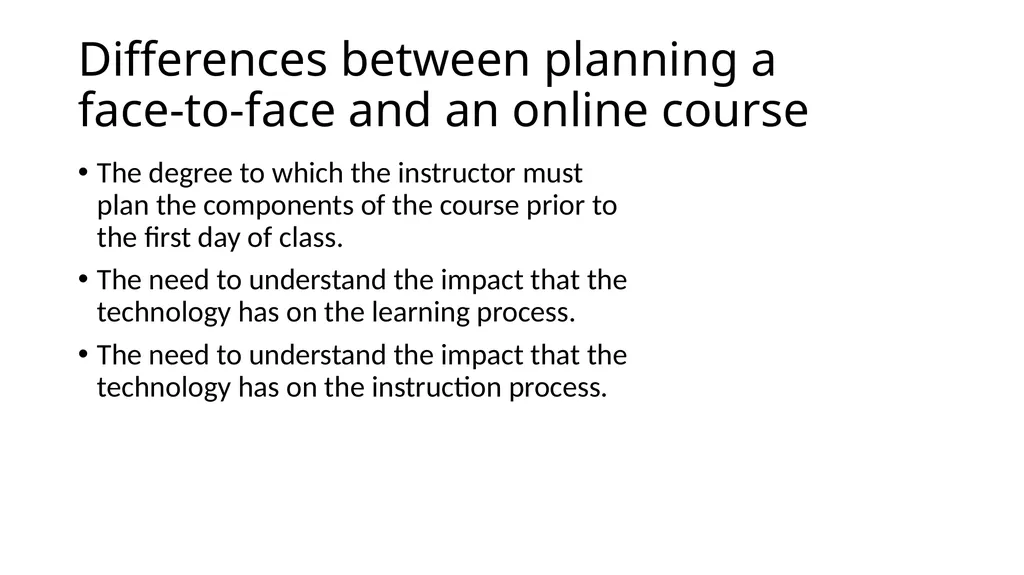
slide4. Differences between planning a face-to-face and an online course The degree to which the instructor must plan the components of the course prior to the first day of class.
The need to understand the impact that the technology has on the learning process.
The need to understand the impact that the technology has on the instruction process.<br>
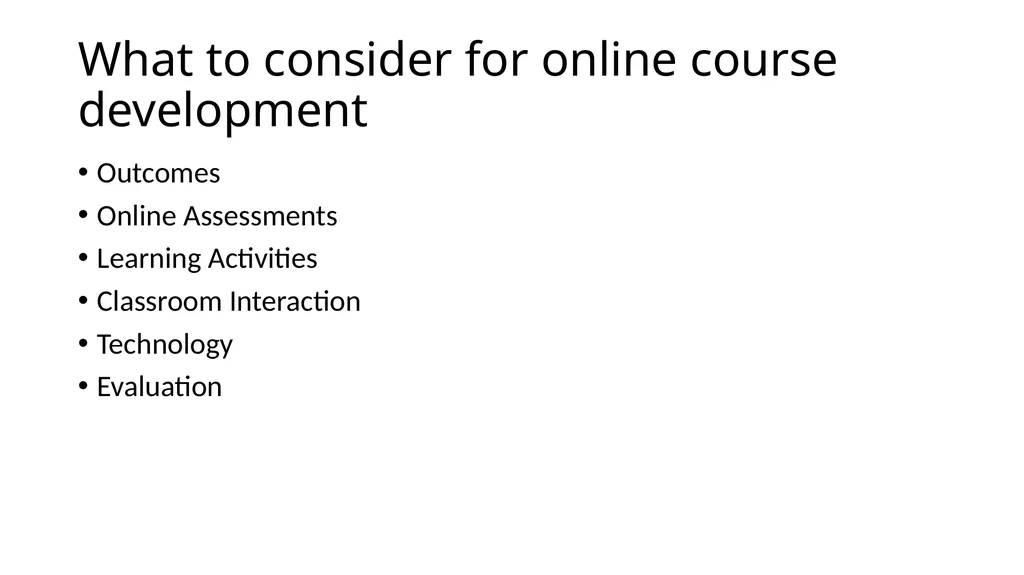
slide5. What to consider for online course development Outcomes
Online Assessments
Learning Activities
Classroom Interaction
Technology
Evaluation<br>
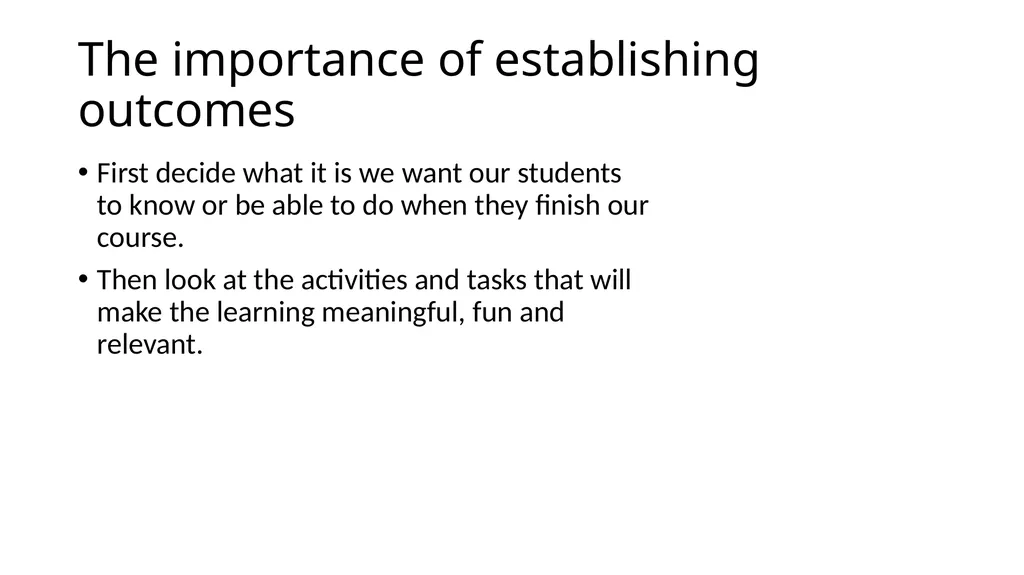
slide6. The importance of establishing outcomes First decide what it is we want our students to know or be able to do when they finish our course.
Then look at the activities and tasks that will make the learning meaningful, fun and relevant.<br>
slide7. A question to ask…. How do we stop asking ourselves, “How am I going to teach this topic”
and instead ask, ourselves, “What are my students going to learn…?”<br>
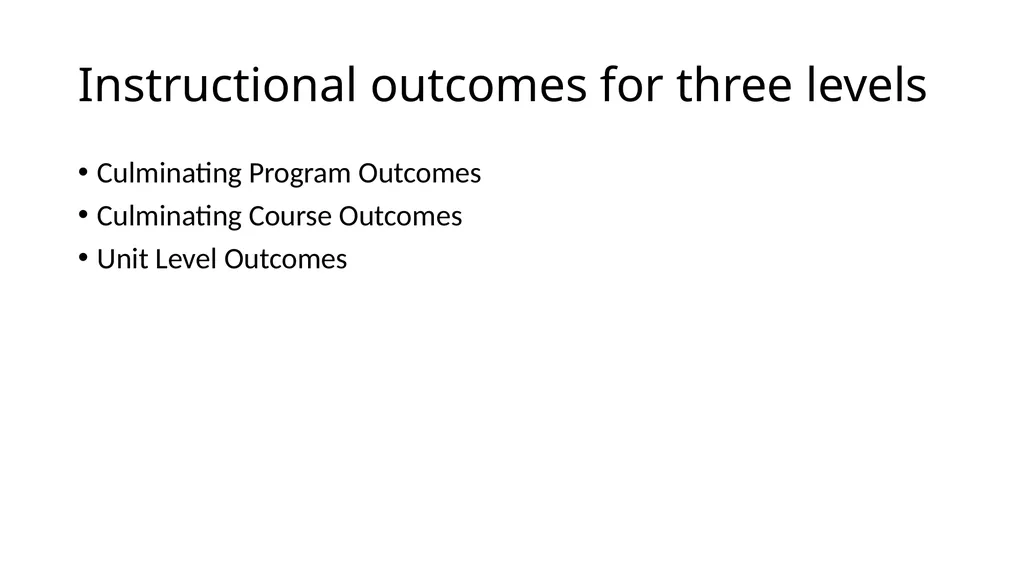
slide8. Instructional outcomes for three levels Culminating Program Outcomes
Culminating Course Outcomes
Unit Level Outcomes<br>
slide9. Writing instructional outcomes Follow a process
Apply Bloom’s Taxonomy<br>
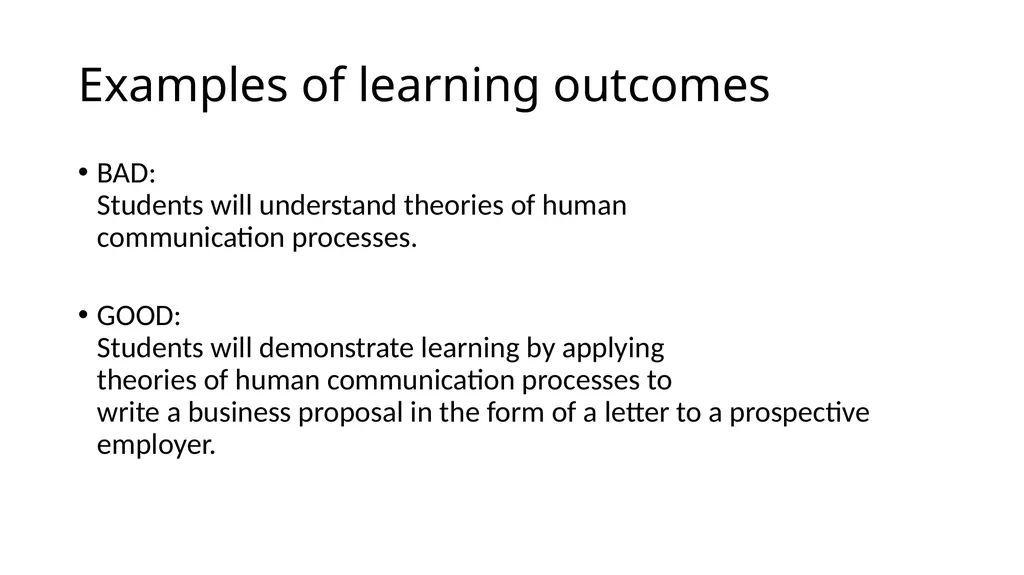
slide10. Examples of learning outcomes BAD: Students will understand theories of human communication processes.
GOOD: Students will demonstrate learning by applying theories of human communication processes to write a business proposal in the form of a letter to a prospective employer.<br>
slide11. Creating online assessments based on current research Constructivism
Multiple Intelligence Theory
Brain-Based Research<br>
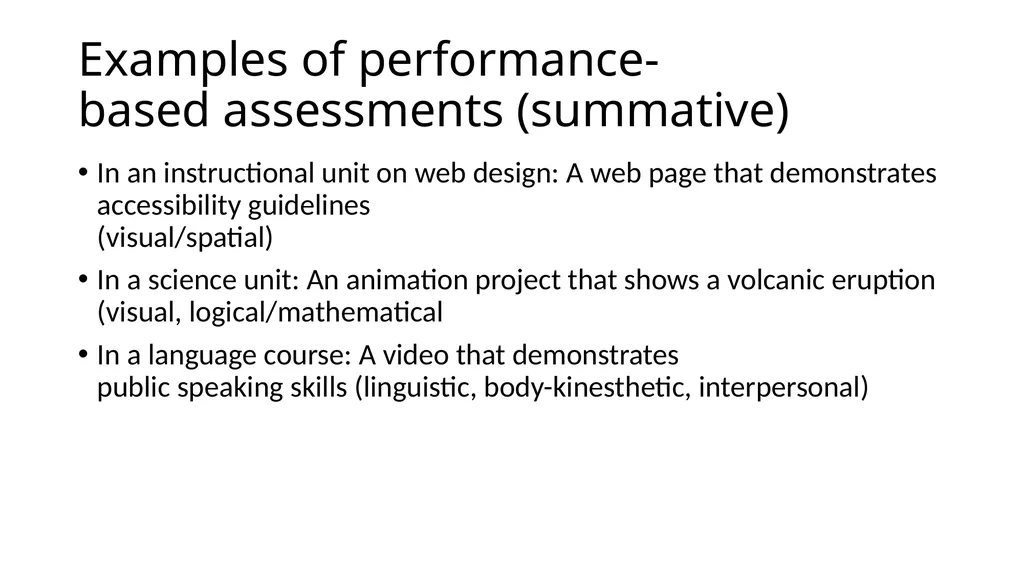
slide12. Examples of performance- based assessments (summative) In an instructional unit on web design: A web page that demonstrates accessibility guidelines (visual/spatial)
In a science unit: An animation project that shows a volcanic eruption (visual, logical/mathematical
In a language course: A video that demonstrates public speaking skills (linguistic, body-kinesthetic, interpersonal)<br>
slide13. Creating online assessments based on current research Constructivism
Multiple Intelligence Theory
Brain-Based Research<br>
slide14. Examples of performance-based assessments (summative) In an instructional unit on web design: A web page that demonstrates accessibility guidelines (visual/spatial)
In a science unit: An animation project that shows a volcanic eruption (visual, logical/mathematical
In a language course: A video that demonstrates public speaking skills (linguistic, body-kinesthetic, interpersonal)<br>
slide15. Examples of other alternative assessments Portfolios
Learning contracts
Self assessments
Peer assessments<br>
slide16. Importance or using rubrics Describes how the student will be graded
Helps the instructor match learning outcomes with assessment instruments<br>
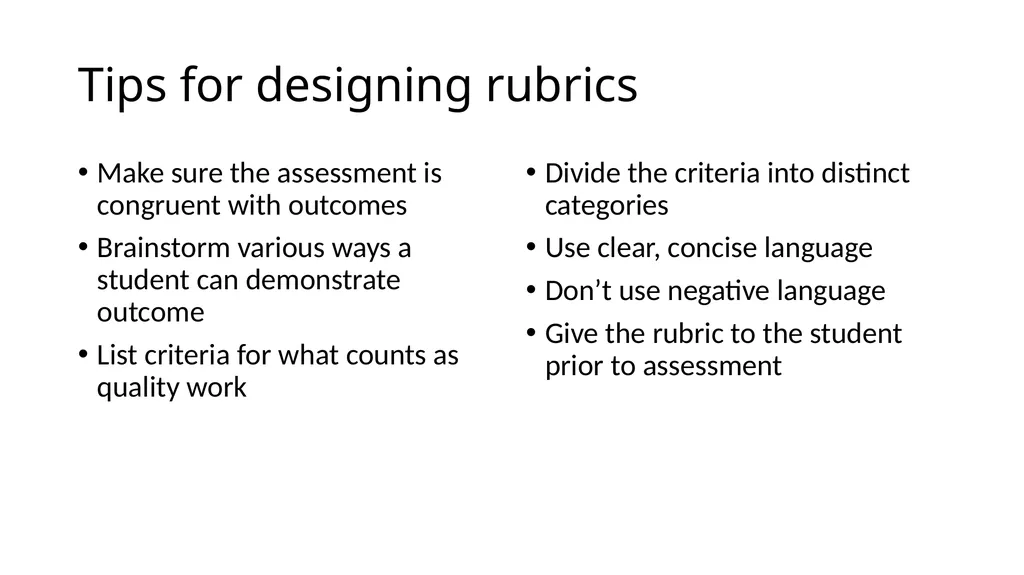
slide17. Tips for designing rubrics Make sure the assessment is congruent with outcomes
Brainstorm various ways a student can demonstrate outcome
List criteria for what counts as quality work Divide the criteria into distinct categories
Use clear, concise language
Don’t use negative language
Give the rubric to the student prior to assessment<br>
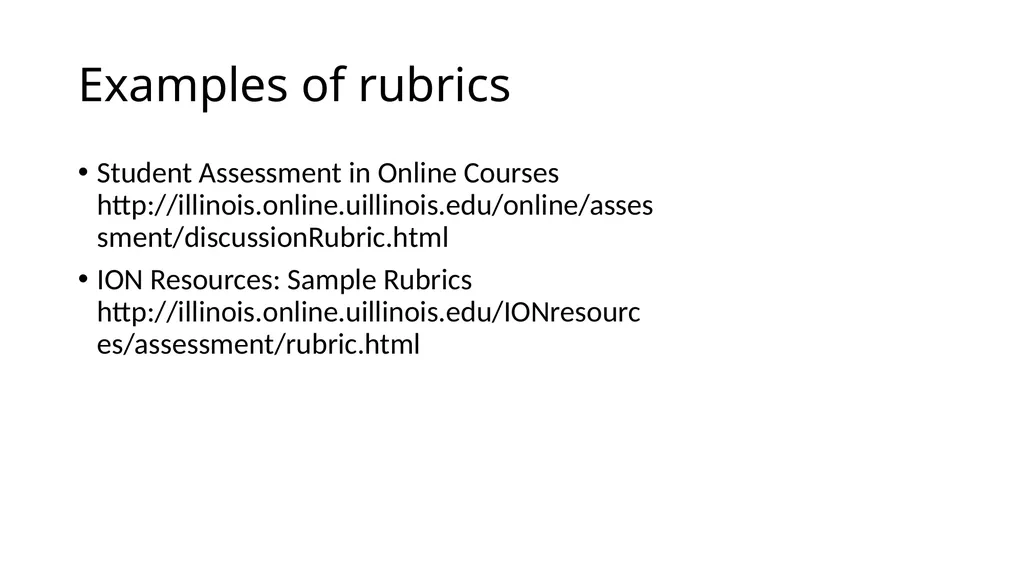
slide18. Examples of rubrics Student Assessment in Online Courses http://illinois.online.uillinois.edu/online/asses sment/discussionRubric.html
ION Resources: Sample Rubrics http://illinois.online.uillinois.edu/IONresourc es/assessment/rubric.html<br>
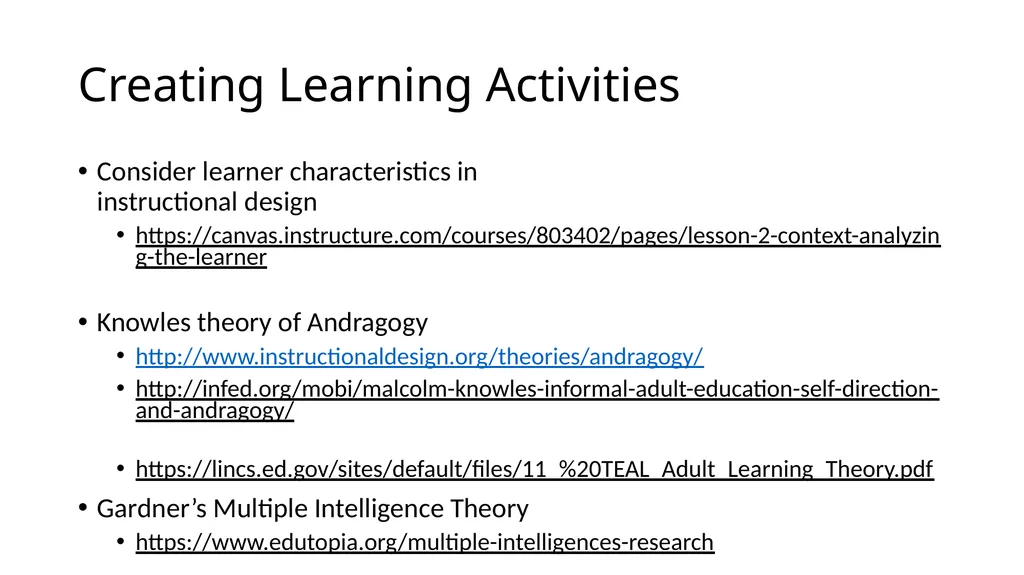
slide19. Creating Learning Activities Consider learner characteristics in instructional design
https://canvas.instructure.com/courses/803402/pages/lesson-2-context-analyzing-the-learner
Knowles theory of Andragogy
http://www.instructionaldesign.org/theories/andragogy/
http://infed.org/mobi/malcolm-knowles-informal-adult-education-self-direction-and-andragogy/
https://lincs.ed.gov/sites/default/files/11_%20TEAL_Adult_Learning_Theory.pdf
Gardner’s Multiple Intelligence Theory
https://www.edutopia.org/multiple-intelligences-research<br>
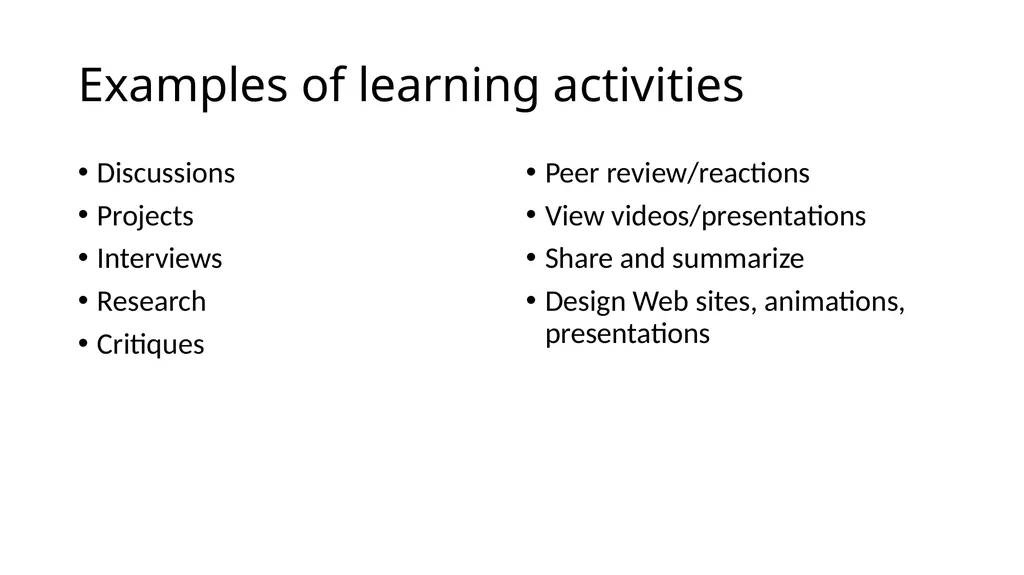
slide20. Examples of learning activities Discussions
Projects
Interviews
Research
Critiques Peer review/reactions
View videos/presentations
Share and summarize
Design Web sites, animations, presentations<br>
slide21. Creating classroom interaction Create an online learning environment that is interactive, collaborative, and will help people connect in meaningful, personal ways.<br>
slide22. Designing online conferences Provide clear guidelines
Establish specific “conference rooms”
Elicit individual AND group postings
Encourage peer-to-peer communication
Use a combination of asynchronous and synchronous<br>
slide23. Technology considerations Clearly list minimum requirements
Provide training during orientation period
Anticipate problems
Provide technical support for students<br>
slide24. Purpose of course evaluation A course evaluation in an instrument designed to give you feedback on how well you have:
Enabled your students to meet the stated course outcomes
Created a viable and rich learning environment
Provided for quality instructor feedback, interaction and facilitation
Included relevant and meaningful resources and activities
Resulted in a rich successful learning experience<br>
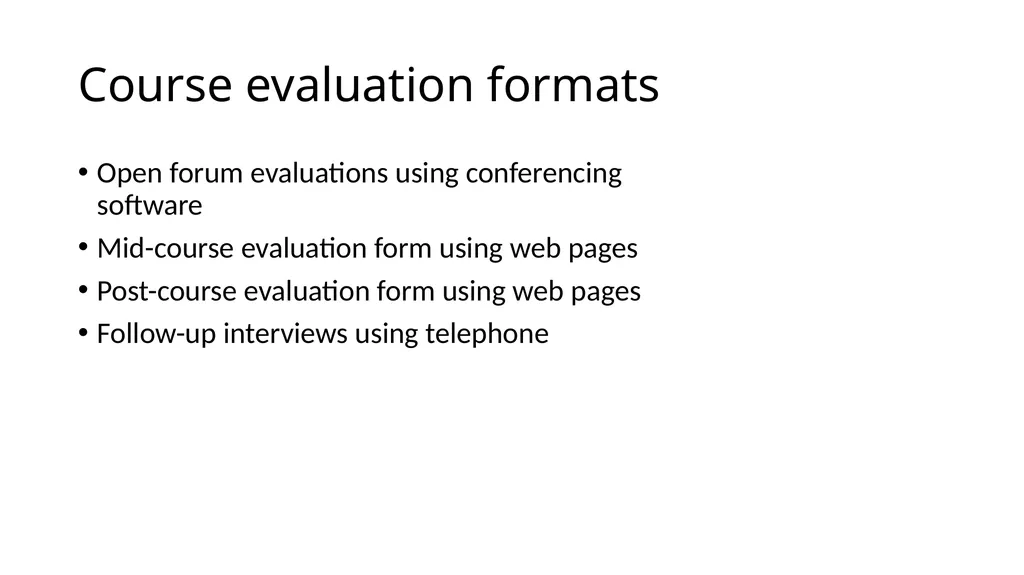
slide25. Course evaluation formats Open forum evaluations using conferencing software
Mid-course evaluation form using web pages
Post-course evaluation form using web pages
Follow-up interviews using telephone<br>
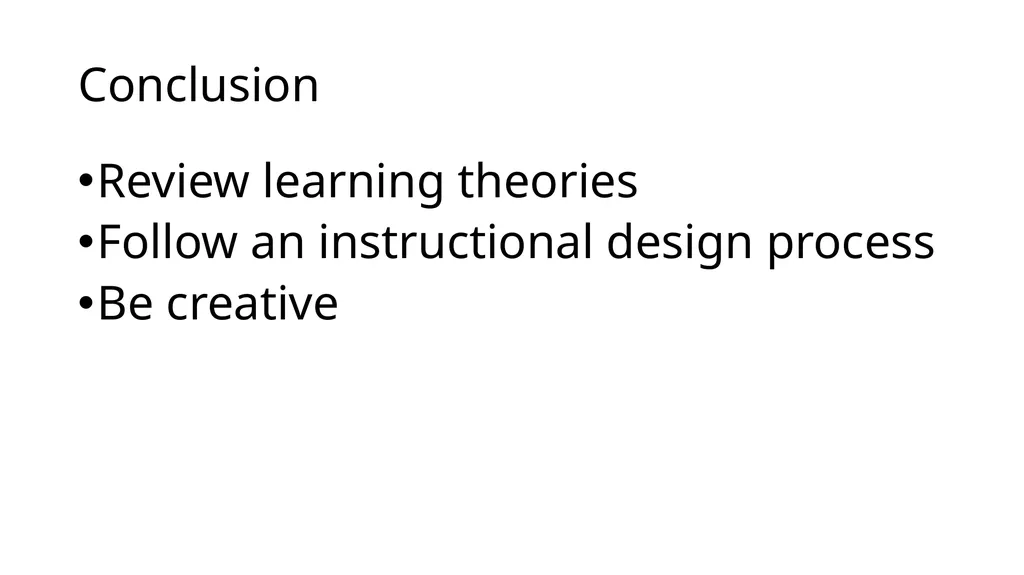
slide26. Conclusion Review learning theories
Follow an instructional design process
Be creative<br>
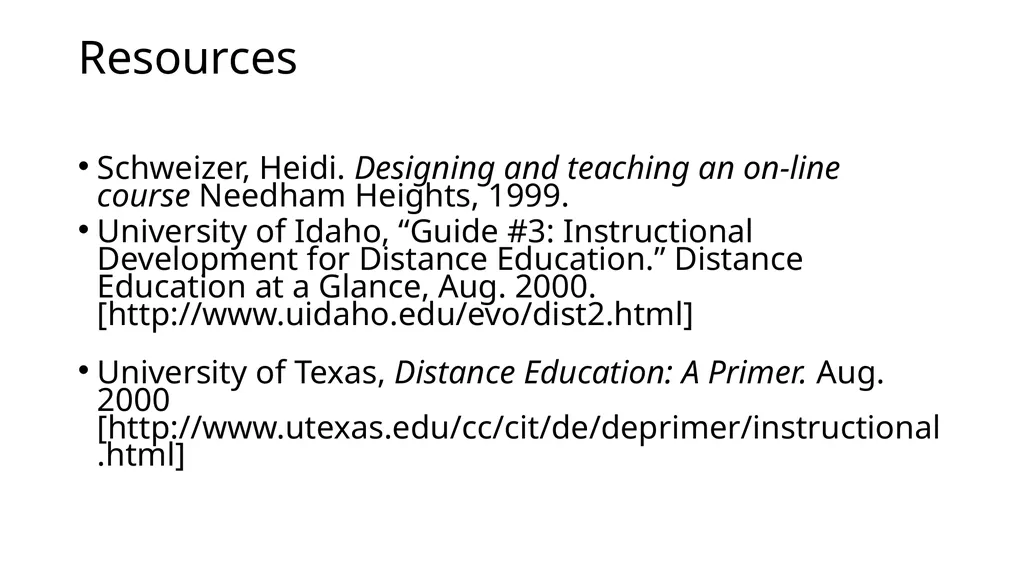
slide27. Resources Schweizer, Heidi. Designing and teaching an on-line course Needham Heights, 1999.
University of Idaho, “Guide #3: Instructional Development for Distance Education.” Distance Education at a Glance, Aug. 2000. [http://www.uidaho.edu/evo/dist2.html]
University of Texas, Distance Education: A Primer. Aug. 2000 [http://www.utexas.edu/cc/cit/de/deprimer/instructional.html]<br>
slide2. What is Instructional Design? “Instructional Design is the systematic process of translating general principles of learning and instruction into plans for instructional materials and learning.”
--Sara McNeil, University of Houston<br>
slide3. Instructional Development Process Analyze
Design
Develop
Evaluate
Revise<br>
slide4. Differences between planning a face-to-face and an online course The degree to which the instructor must plan the components of the course prior to the first day of class.
The need to understand the impact that the technology has on the learning process.
The need to understand the impact that the technology has on the instruction process.<br>
slide5. What to consider for online course development Outcomes
Online Assessments
Learning Activities
Classroom Interaction
Technology
Evaluation<br>
slide6. The importance of establishing outcomes First decide what it is we want our students to know or be able to do when they finish our course.
Then look at the activities and tasks that will make the learning meaningful, fun and relevant.<br>
slide7. A question to ask…. How do we stop asking ourselves, “How am I going to teach this topic”
and instead ask, ourselves, “What are my students going to learn…?”<br>
slide8. Instructional outcomes for three levels Culminating Program Outcomes
Culminating Course Outcomes
Unit Level Outcomes<br>
slide9. Writing instructional outcomes Follow a process
Apply Bloom’s Taxonomy<br>
slide10. Examples of learning outcomes BAD: Students will understand theories of human communication processes.
GOOD: Students will demonstrate learning by applying theories of human communication processes to write a business proposal in the form of a letter to a prospective employer.<br>
slide11. Creating online assessments based on current research Constructivism
Multiple Intelligence Theory
Brain-Based Research<br>
slide12. Examples of performance- based assessments (summative) In an instructional unit on web design: A web page that demonstrates accessibility guidelines (visual/spatial)
In a science unit: An animation project that shows a volcanic eruption (visual, logical/mathematical
In a language course: A video that demonstrates public speaking skills (linguistic, body-kinesthetic, interpersonal)<br>
slide13. Creating online assessments based on current research Constructivism
Multiple Intelligence Theory
Brain-Based Research<br>
slide14. Examples of performance-based assessments (summative) In an instructional unit on web design: A web page that demonstrates accessibility guidelines (visual/spatial)
In a science unit: An animation project that shows a volcanic eruption (visual, logical/mathematical
In a language course: A video that demonstrates public speaking skills (linguistic, body-kinesthetic, interpersonal)<br>
slide15. Examples of other alternative assessments Portfolios
Learning contracts
Self assessments
Peer assessments<br>
slide16. Importance or using rubrics Describes how the student will be graded
Helps the instructor match learning outcomes with assessment instruments<br>
slide17. Tips for designing rubrics Make sure the assessment is congruent with outcomes
Brainstorm various ways a student can demonstrate outcome
List criteria for what counts as quality work Divide the criteria into distinct categories
Use clear, concise language
Don’t use negative language
Give the rubric to the student prior to assessment<br>
slide18. Examples of rubrics Student Assessment in Online Courses http://illinois.online.uillinois.edu/online/asses sment/discussionRubric.html
ION Resources: Sample Rubrics http://illinois.online.uillinois.edu/IONresourc es/assessment/rubric.html<br>
slide19. Creating Learning Activities Consider learner characteristics in instructional design
https://canvas.instructure.com/courses/803402/pages/lesson-2-context-analyzing-the-learner
Knowles theory of Andragogy
http://www.instructionaldesign.org/theories/andragogy/
http://infed.org/mobi/malcolm-knowles-informal-adult-education-self-direction-and-andragogy/
https://lincs.ed.gov/sites/default/files/11_%20TEAL_Adult_Learning_Theory.pdf
Gardner’s Multiple Intelligence Theory
https://www.edutopia.org/multiple-intelligences-research<br>
slide20. Examples of learning activities Discussions
Projects
Interviews
Research
Critiques Peer review/reactions
View videos/presentations
Share and summarize
Design Web sites, animations, presentations<br>
slide21. Creating classroom interaction Create an online learning environment that is interactive, collaborative, and will help people connect in meaningful, personal ways.<br>
slide22. Designing online conferences Provide clear guidelines
Establish specific “conference rooms”
Elicit individual AND group postings
Encourage peer-to-peer communication
Use a combination of asynchronous and synchronous<br>
slide23. Technology considerations Clearly list minimum requirements
Provide training during orientation period
Anticipate problems
Provide technical support for students<br>
slide24. Purpose of course evaluation A course evaluation in an instrument designed to give you feedback on how well you have:
Enabled your students to meet the stated course outcomes
Created a viable and rich learning environment
Provided for quality instructor feedback, interaction and facilitation
Included relevant and meaningful resources and activities
Resulted in a rich successful learning experience<br>
slide25. Course evaluation formats Open forum evaluations using conferencing software
Mid-course evaluation form using web pages
Post-course evaluation form using web pages
Follow-up interviews using telephone<br>
slide26. Conclusion Review learning theories
Follow an instructional design process
Be creative<br>
slide27. Resources Schweizer, Heidi. Designing and teaching an on-line course Needham Heights, 1999.
University of Idaho, “Guide #3: Instructional Development for Distance Education.” Distance Education at a Glance, Aug. 2000. [http://www.uidaho.edu/evo/dist2.html]
University of Texas, Distance Education: A Primer. Aug. 2000 [http://www.utexas.edu/cc/cit/de/deprimer/instructional.html]<br>